T- 1-855-694-8886
Email- info@iTutor.com
By iTutor.com
The cause of forces
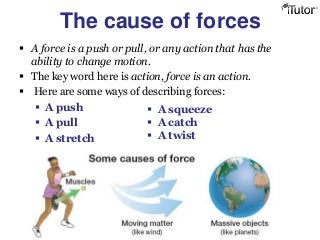
 A force is a push or pull, or any action that has the
ability to change motion.
 The key word here is action, force is an action.
 Here are some ways of describing forces:
 A push
 A pull
 A stretch
 A squeeze
 A catch
 A twist
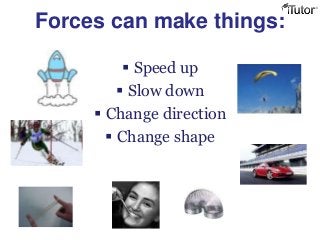
Forces can make things:
 Speed up
 Slow down
 Change direction
 Change shape
Units of force
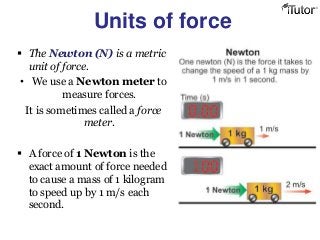
 The Newton (N) is a metric
unit of force.
• We use a Newton meter to
measure forces.
It is sometimes called a force
meter.
 A force of 1 Newton is the
exact amount of force needed
to cause a mass of 1 kilogram
to speed up by 1 m/s each
second.
Example of Newton
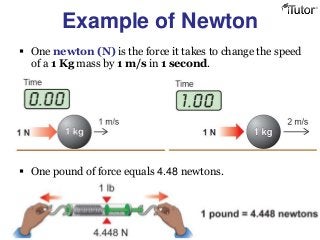
 One newton (N) is the force it takes to change the speed
of a 1 Kg mass by 1 m/s in 1 second.
 One pound of force equals 4.48 newtons.
Gravity and weight
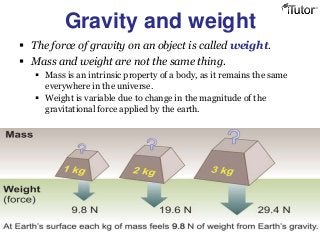
 The force of gravity on an object is called weight.
 Mass and weight are not the same thing.
 Mass is an intrinsic property of a body, as it remains the same
everywhere in the universe.
 Weight is variable due to change in the magnitude of the
gravitational force applied by the earth.
The force vector
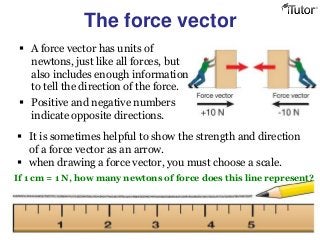
 A force vector has units of
newtons, just like all forces, but
also includes enough information
to tell the direction of the force.
 Positive and negative numbers
indicate opposite directions.
 It is sometimes helpful to show the strength and direction
of a force vector as an arrow.
 when drawing a force vector, you must choose a scale.
If 1 cm = 1 N, how many newtons of force does this line represent?
Forces in springs and ropes
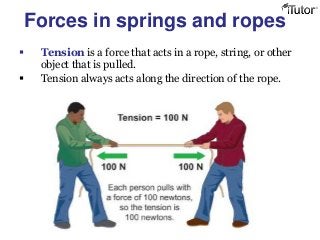
 Tension is a force that acts in a rope, string, or other
object that is pulled.
 Tension always acts along the direction of the rope.
Forces in springs and ropes
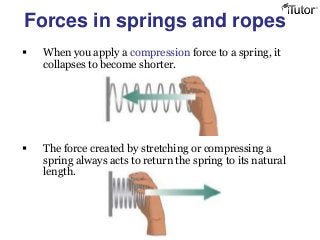
 When you apply a compression force to a spring, it
collapses to become shorter.
 The force created by stretching or compressing a
spring always acts to return the spring to its natural
length.
The End
Call us for more
information:
1-855-694-8886
www.iTutor.com
Visit
Force

  • 1.
  • 2.
    The cause offorces  A force is a push or pull, or any action that has the ability to change motion.  The key word here is action, force is an action.  Here are some ways of describing forces:  A push  A pull  A stretch  A squeeze  A catch  A twist
  • 3.
    Forces can makethings:  Speed up  Slow down  Change direction  Change shape
  • 5.
    Units of force The Newton (N) is a metric unit of force. • We use a Newton meter to measure forces. It is sometimes called a force meter.  A force of 1 Newton is the exact amount of force needed to cause a mass of 1 kilogram to speed up by 1 m/s each second.
  • 6.
    Example of Newton One newton (N) is the force it takes to change the speed of a 1 Kg mass by 1 m/s in 1 second.  One pound of force equals 4.48 newtons.
  • 7.
    Gravity and weight The force of gravity on an object is called weight.  Mass and weight are not the same thing.  Mass is an intrinsic property of a body, as it remains the same everywhere in the universe.  Weight is variable due to change in the magnitude of the gravitational force applied by the earth.
  • 8.
    The force vector A force vector has units of newtons, just like all forces, but also includes enough information to tell the direction of the force.  Positive and negative numbers indicate opposite directions.  It is sometimes helpful to show the strength and direction of a force vector as an arrow.  when drawing a force vector, you must choose a scale. If 1 cm = 1 N, how many newtons of force does this line represent?
  • 9.
    Forces in springsand ropes  Tension is a force that acts in a rope, string, or other object that is pulled.  Tension always acts along the direction of the rope.
  • 10.
    Forces in springsand ropes  When you apply a compression force to a spring, it collapses to become shorter.  The force created by stretching or compressing a spring always acts to return the spring to its natural length.
  • 11.
    The End Call usfor more information: 1-855-694-8886 www.iTutor.com Visit