Social Media  in the European Institutions Prof. Dr. Fernando Checa Euro-Mediterranean University Institute Universidad Complutense de Madrid [email_address]
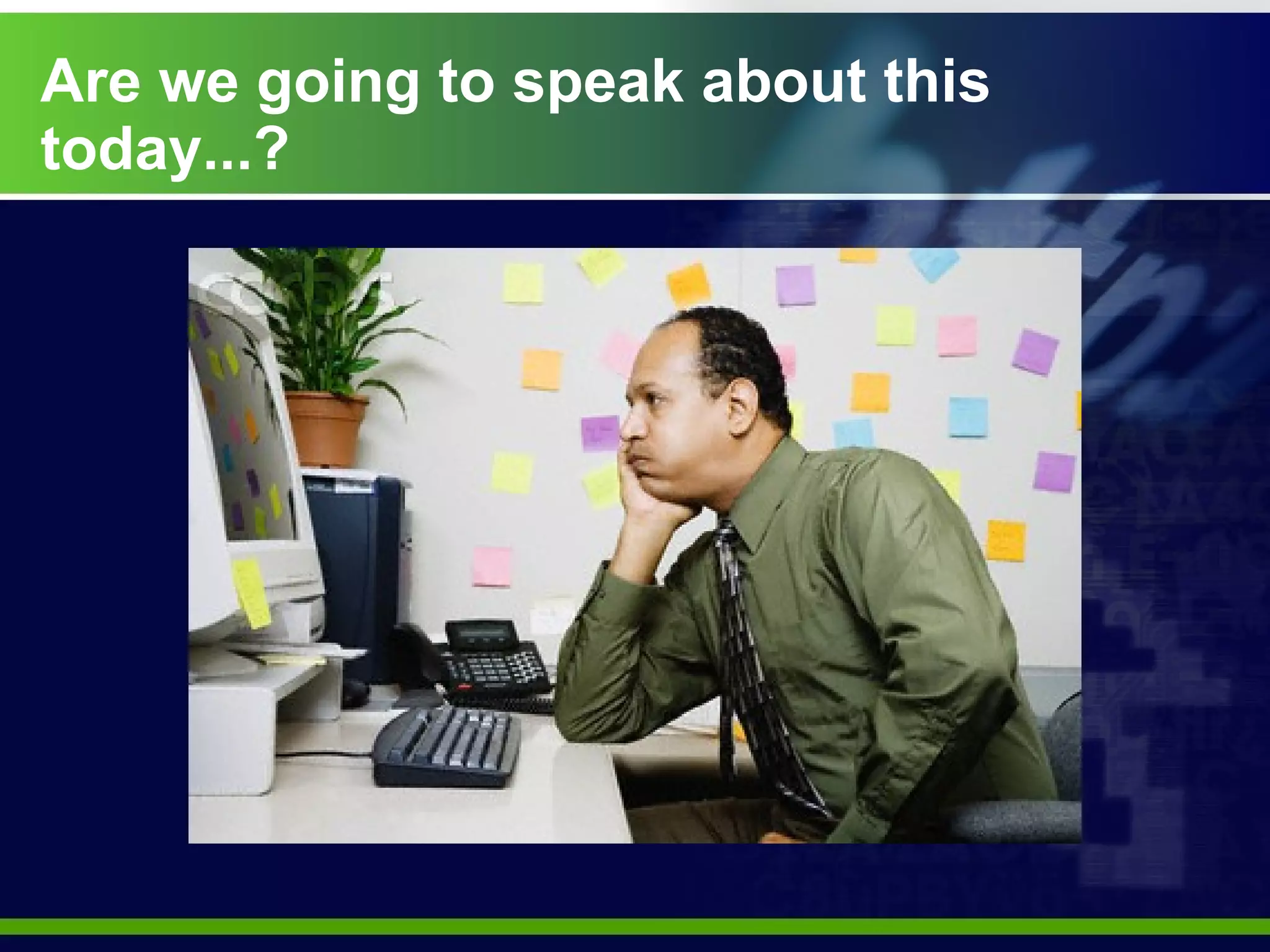
Are we going to speak about this today...?
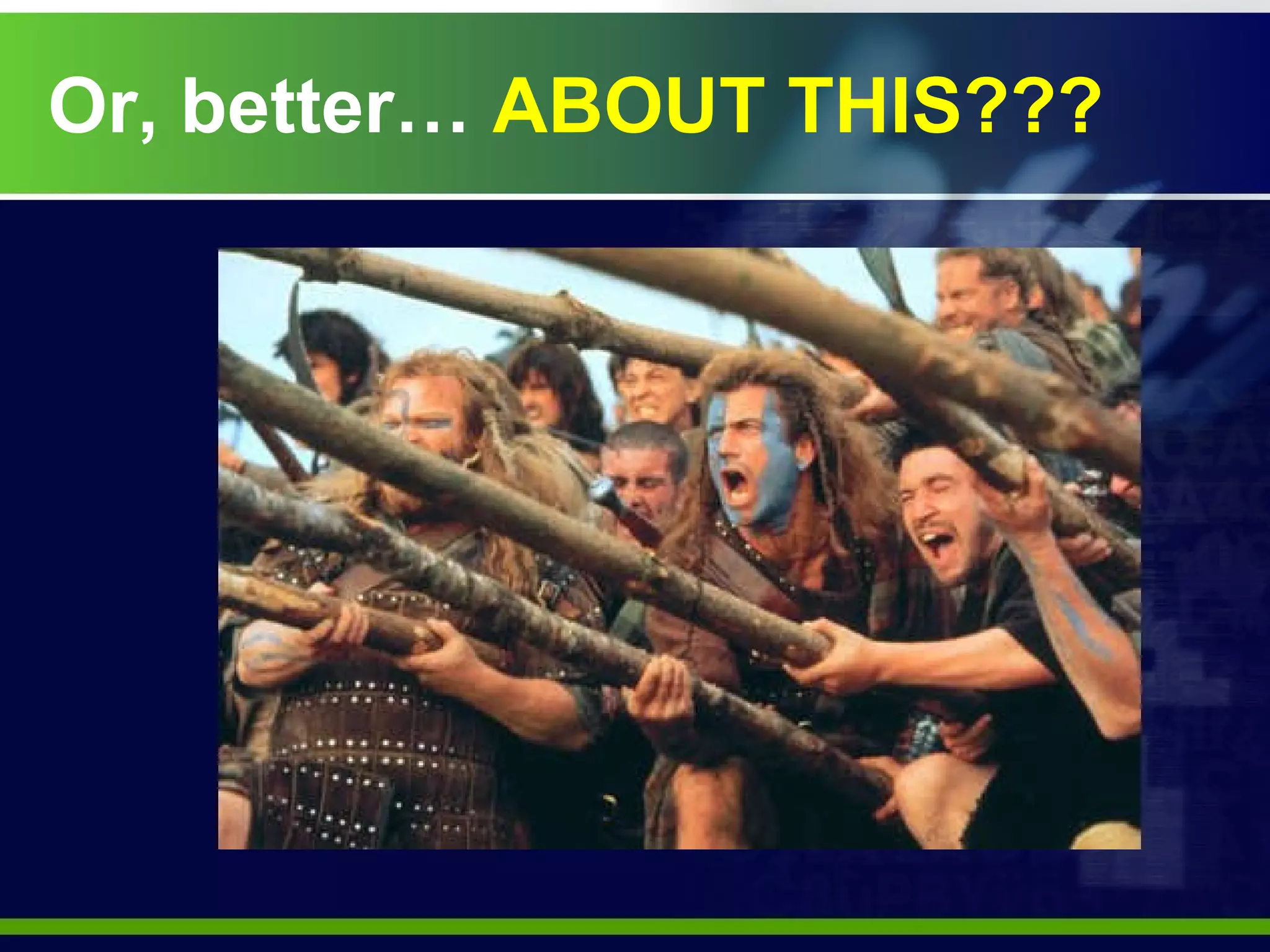
Or, better…  ABOUT THIS???
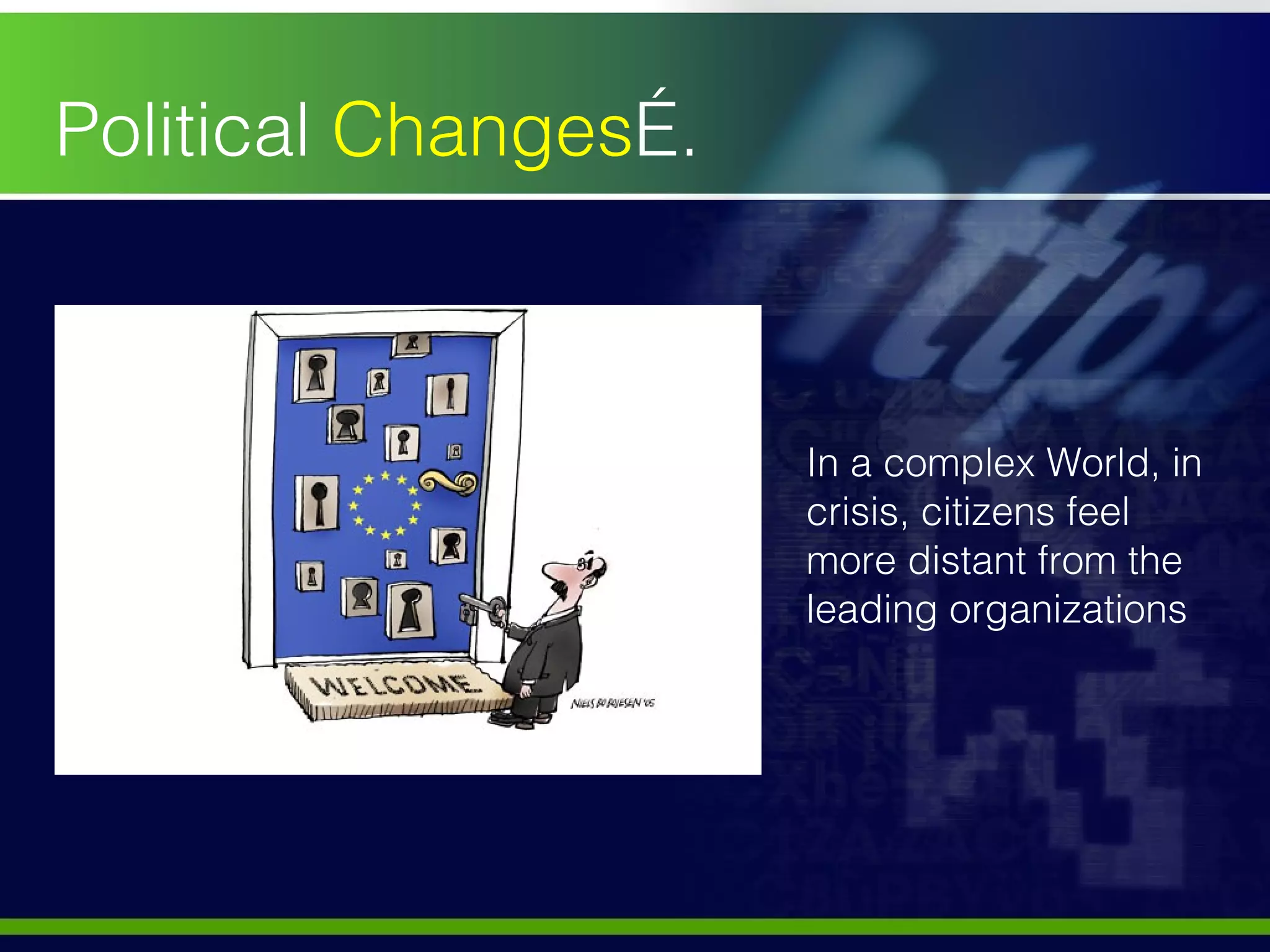
In a complex World, in crisis, citizens feel  more distant from the leading organizations Political  Changes ….
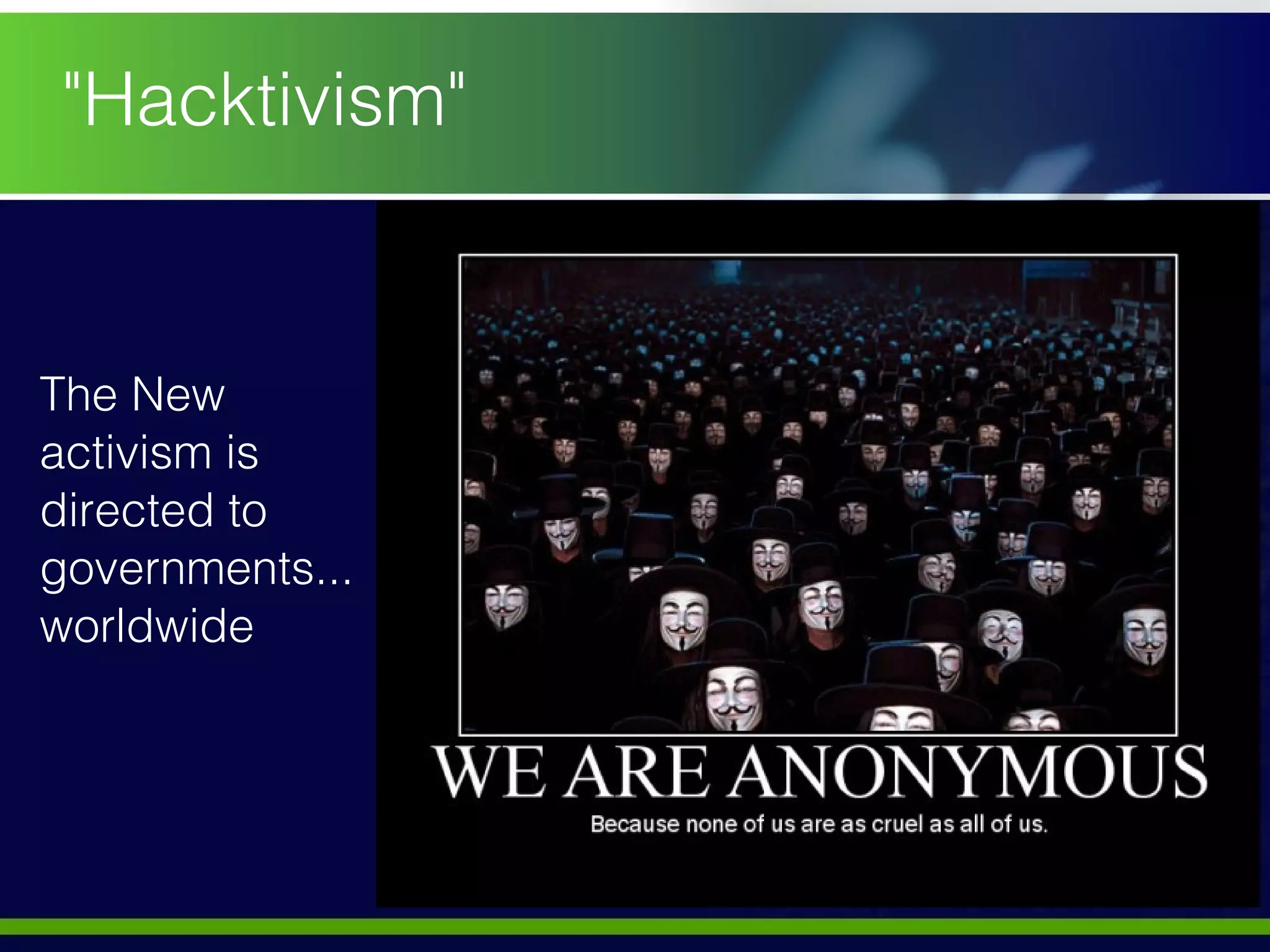
"Hacktivism" The New activism is directed to governments... worldwide
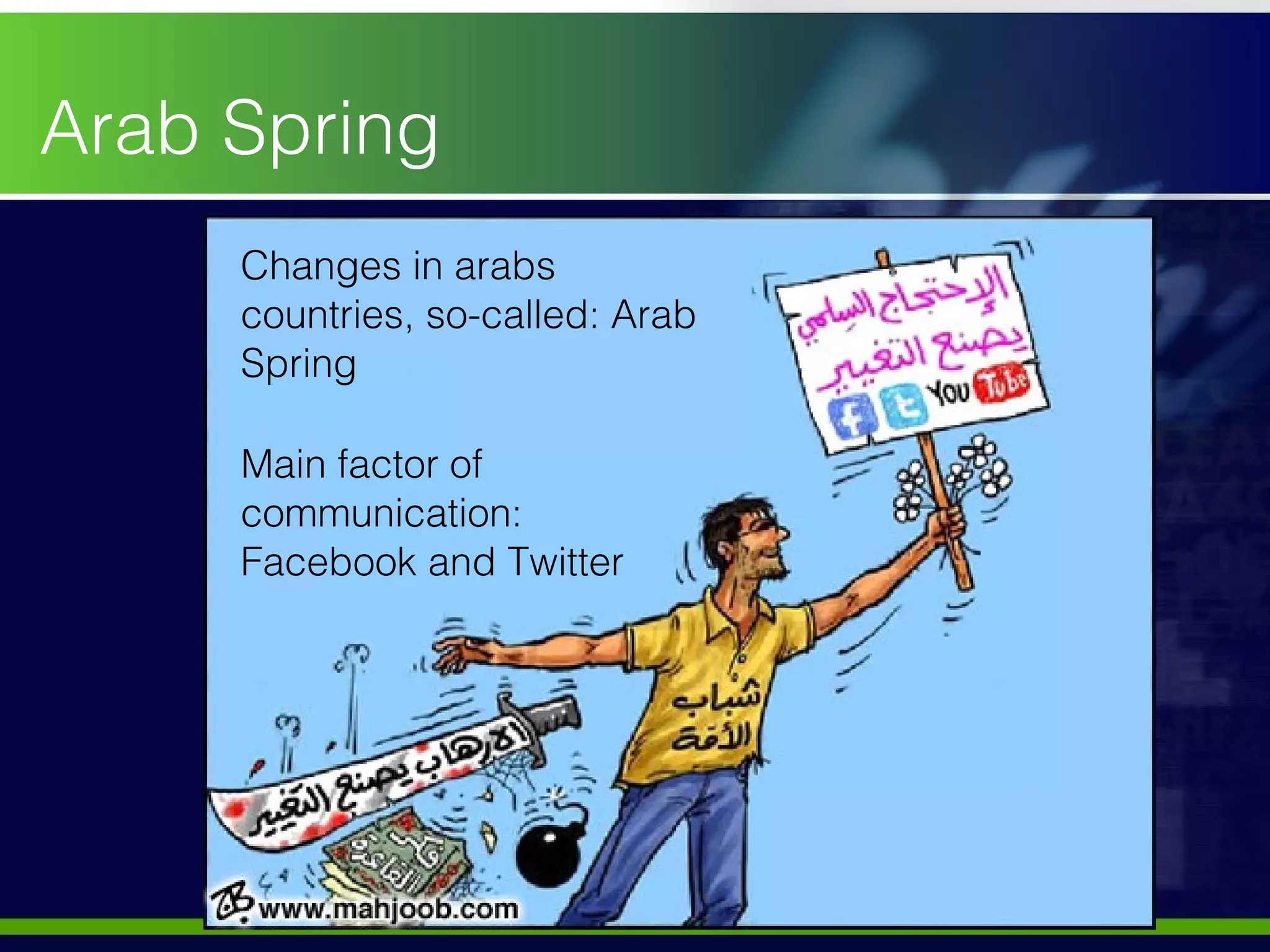
Arab Spring Changes in arabs countries, so-called: Arab Spring Main factor of communication: Facebook and Twitter
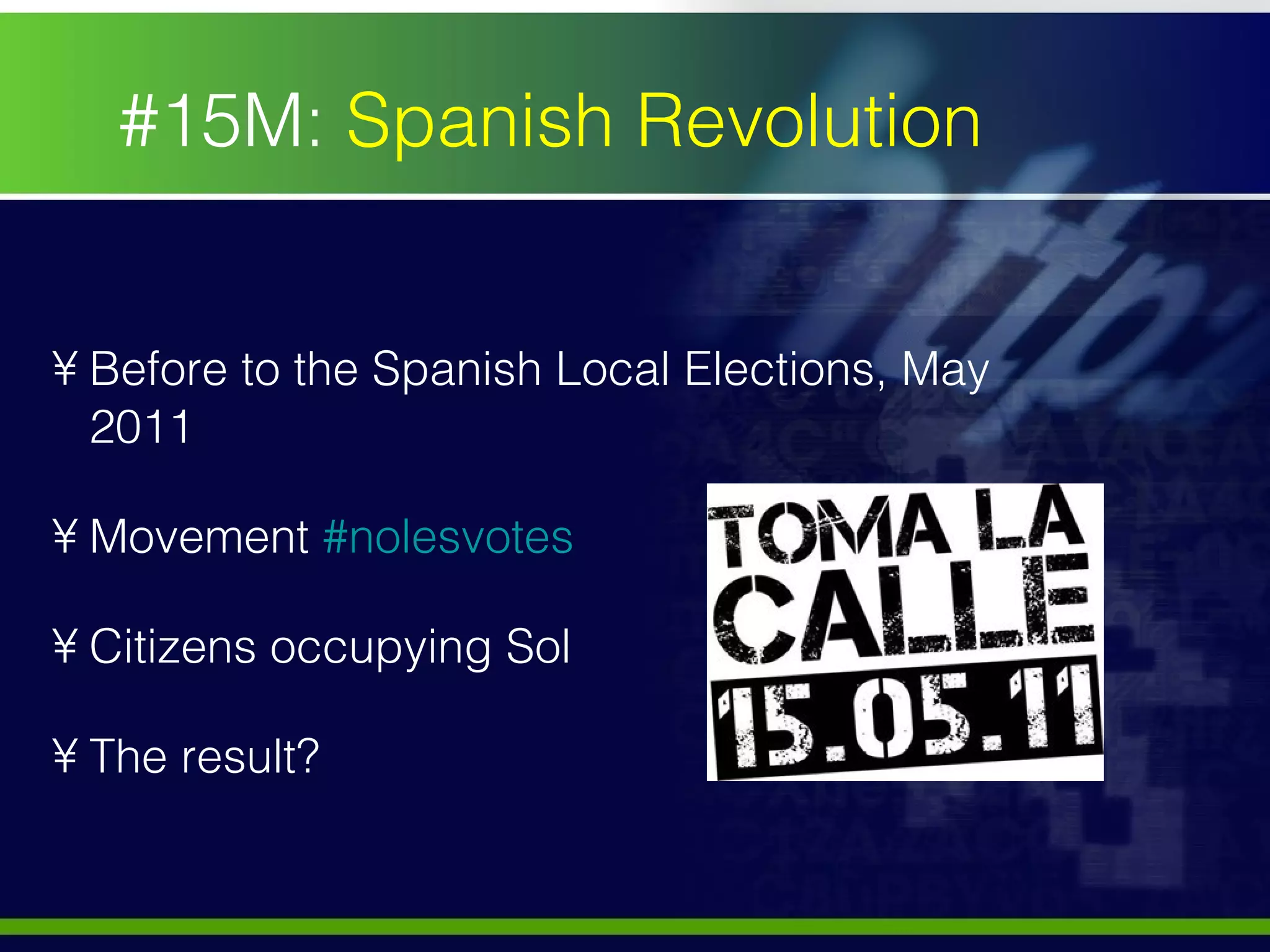
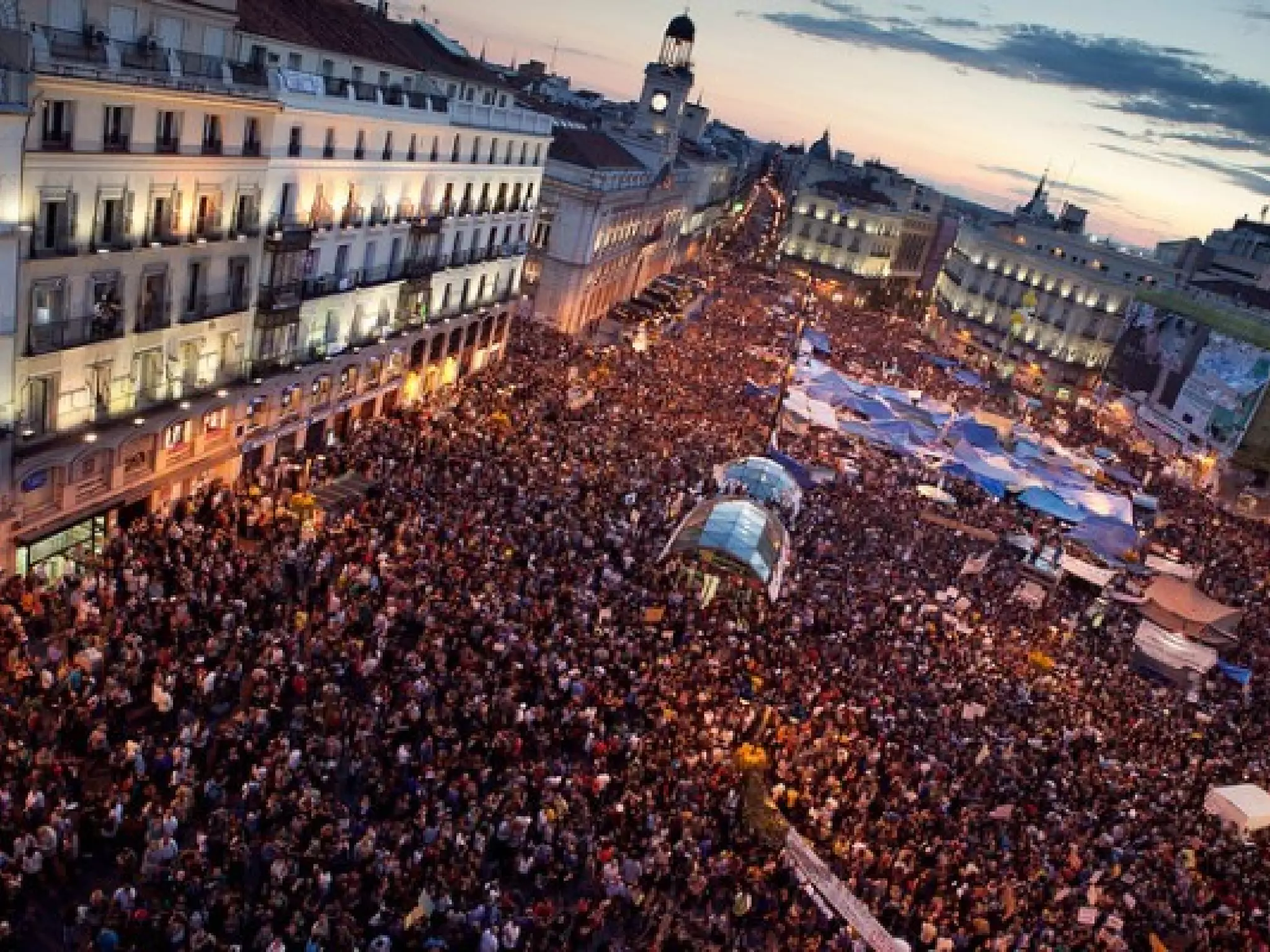
#15M:  Spanish Revolution Before to the Spanish Local Elections, May 2011 Movement  # nolesvotes Citizens occupying Sol The result?
 
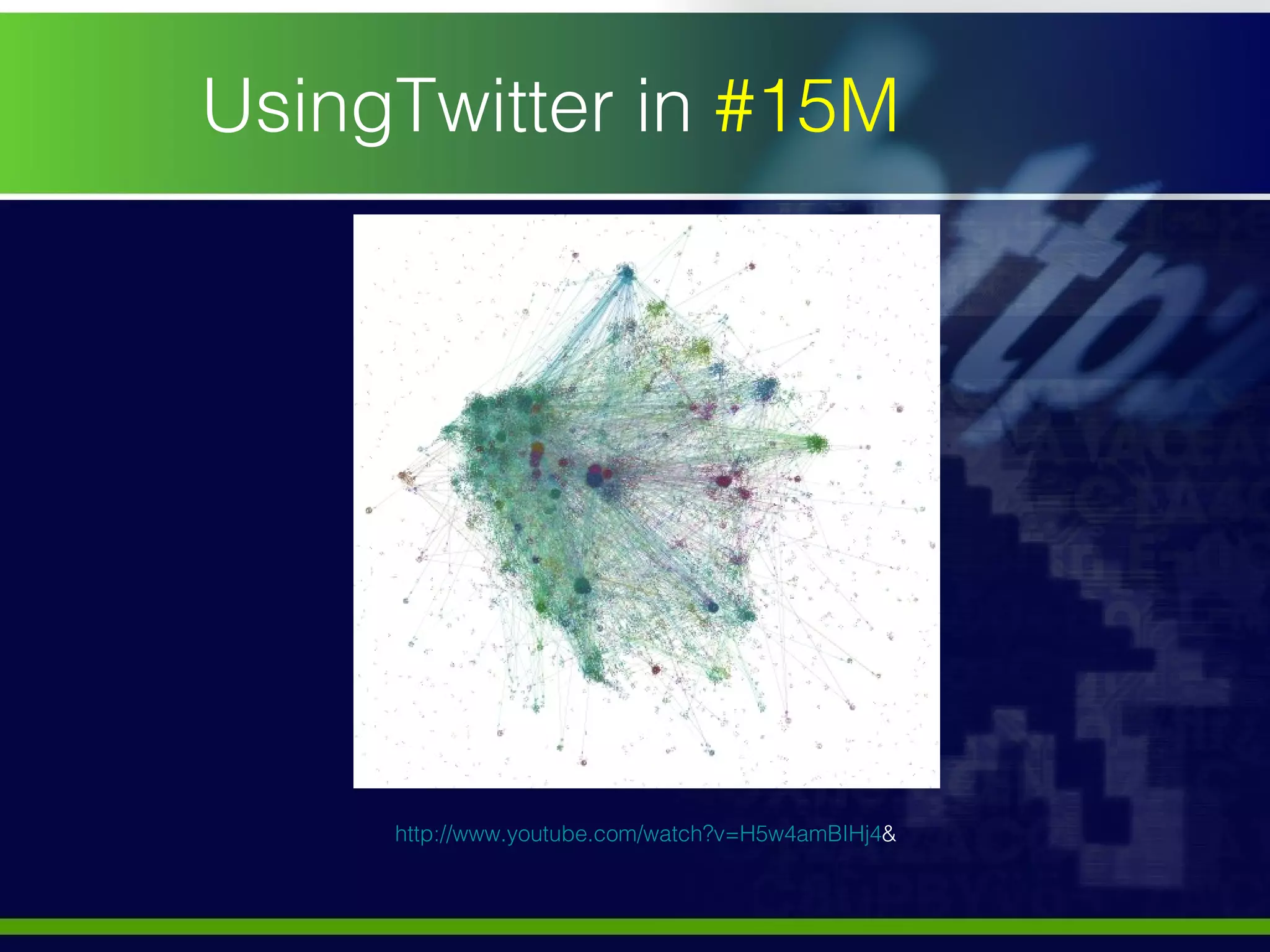
UsingTwitter in  #15M http://www.youtube.com/watch?v=H5w4amBIHj4 &
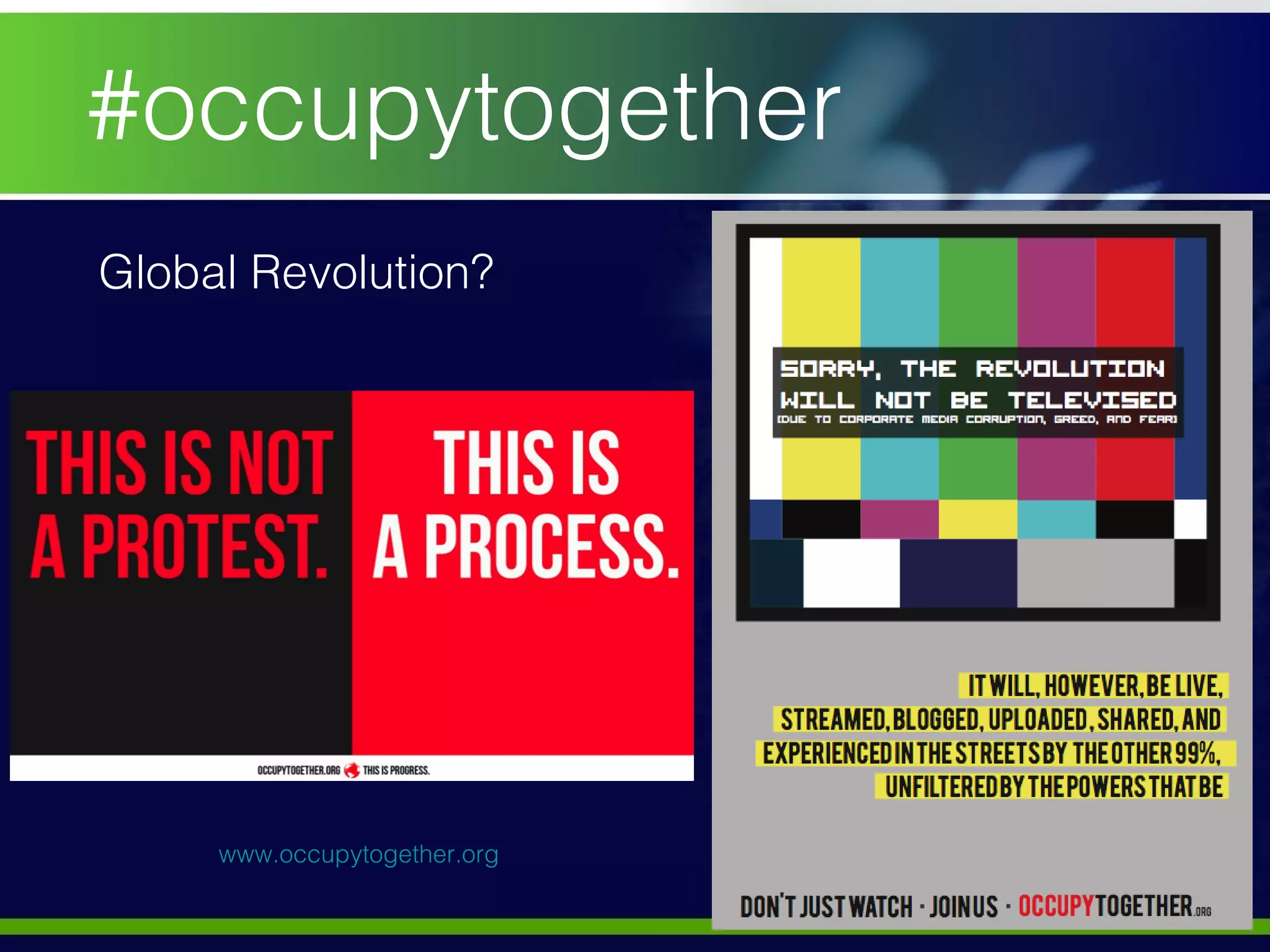
Global Revolution? #occupytogether www.occupytogether.org
But now… coming back to the Web… First... do you remember the past? Some typical features of Web 1.0 Read-only Web  Search for information and read it   Static pages and no user-generated content User as a passive participant (one-way flow of information)
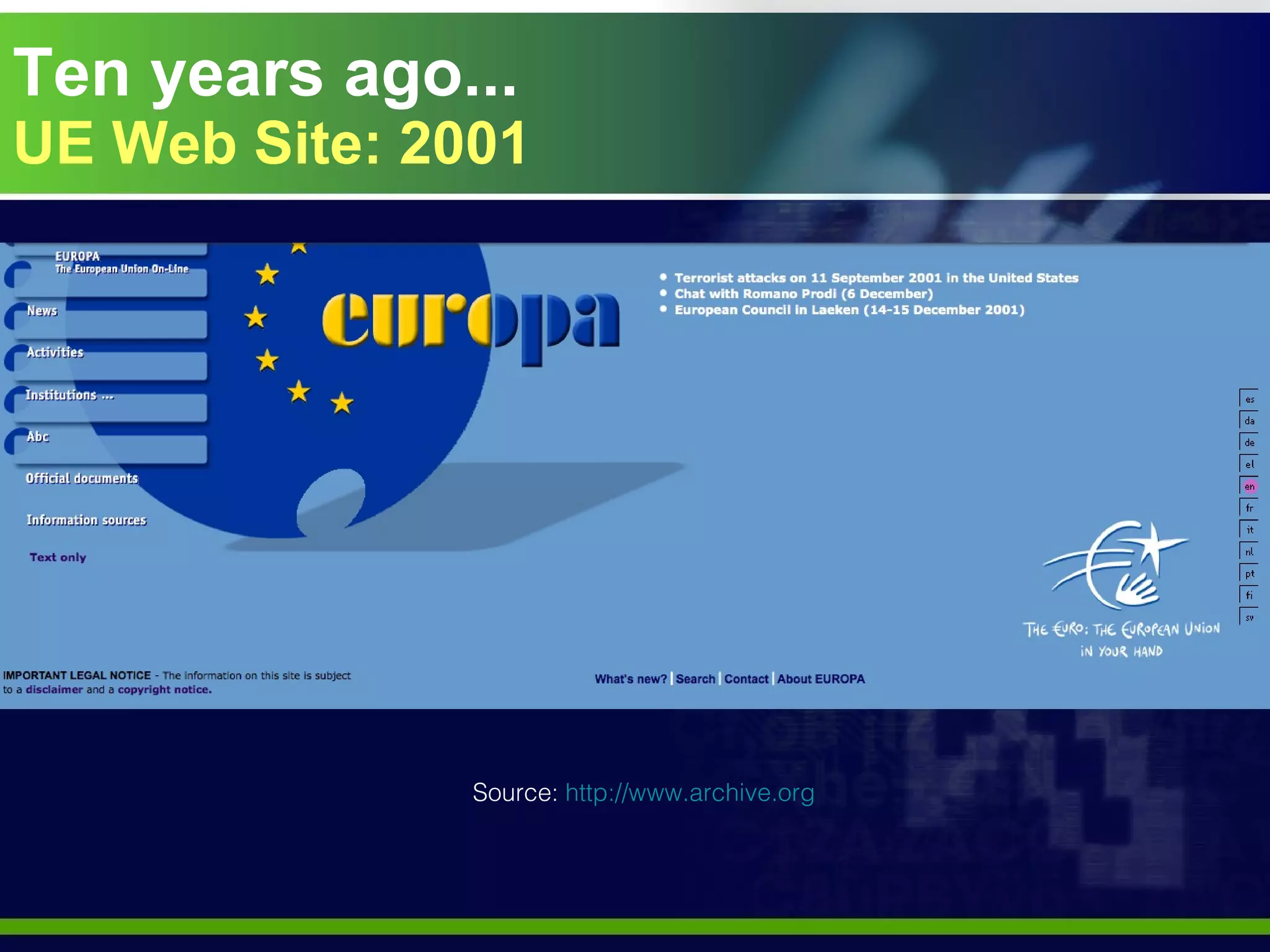
Ten years ago... UE Web Site: 2001 Source:  http://www.archive.org
Today, the "hype":  Web 2.0/Social Media Web 2.0, refers to a  supposed  second generation of Internet-based services that emphasize  online collaboration  and  sharing among users New Media: BE SOCIAL http://www.youtube.com/watch?v=3SuNx0UrnEo
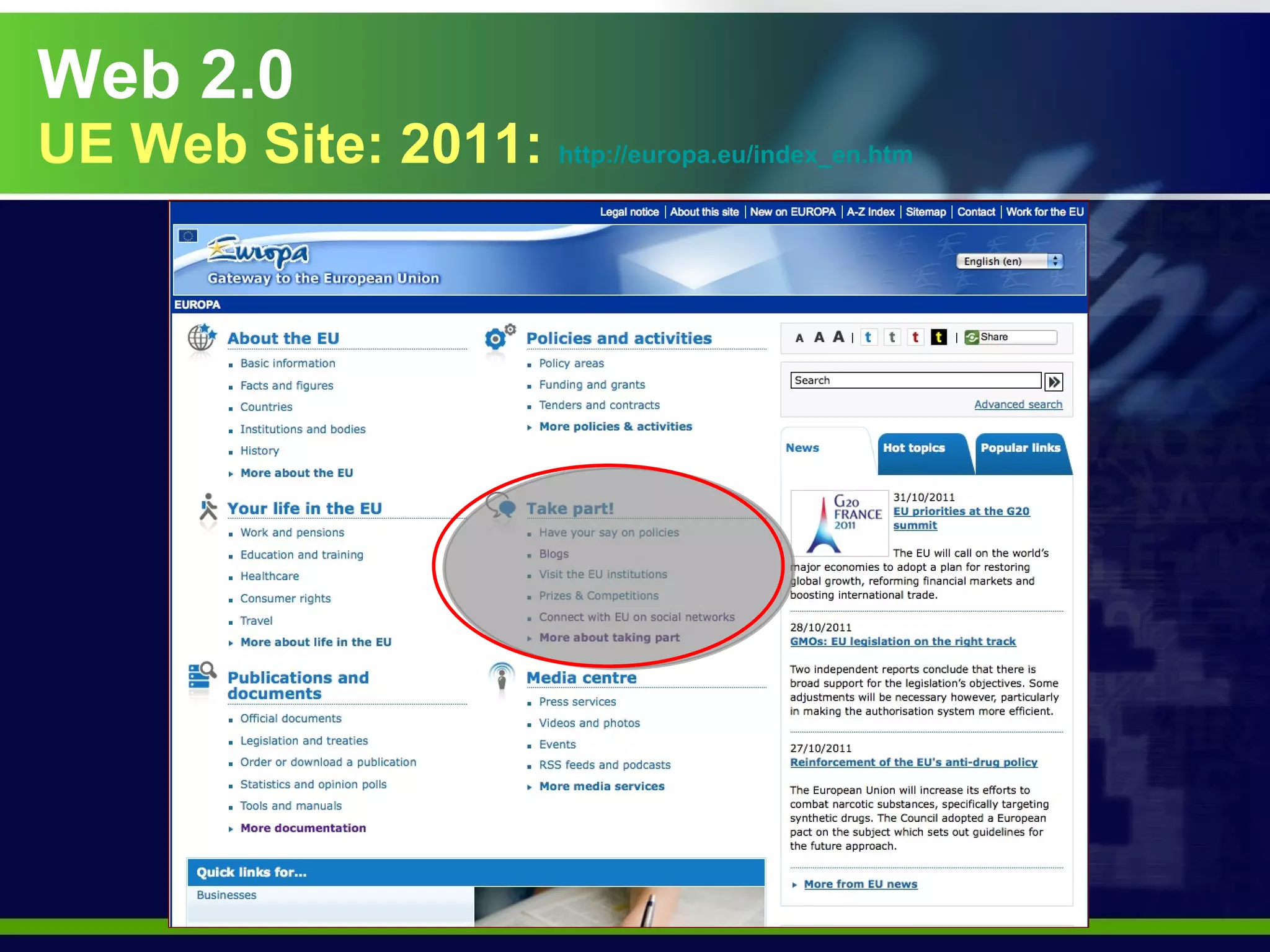
Web 2.0 UE Web Site: 2011:  http://europa.eu/index_en.htm
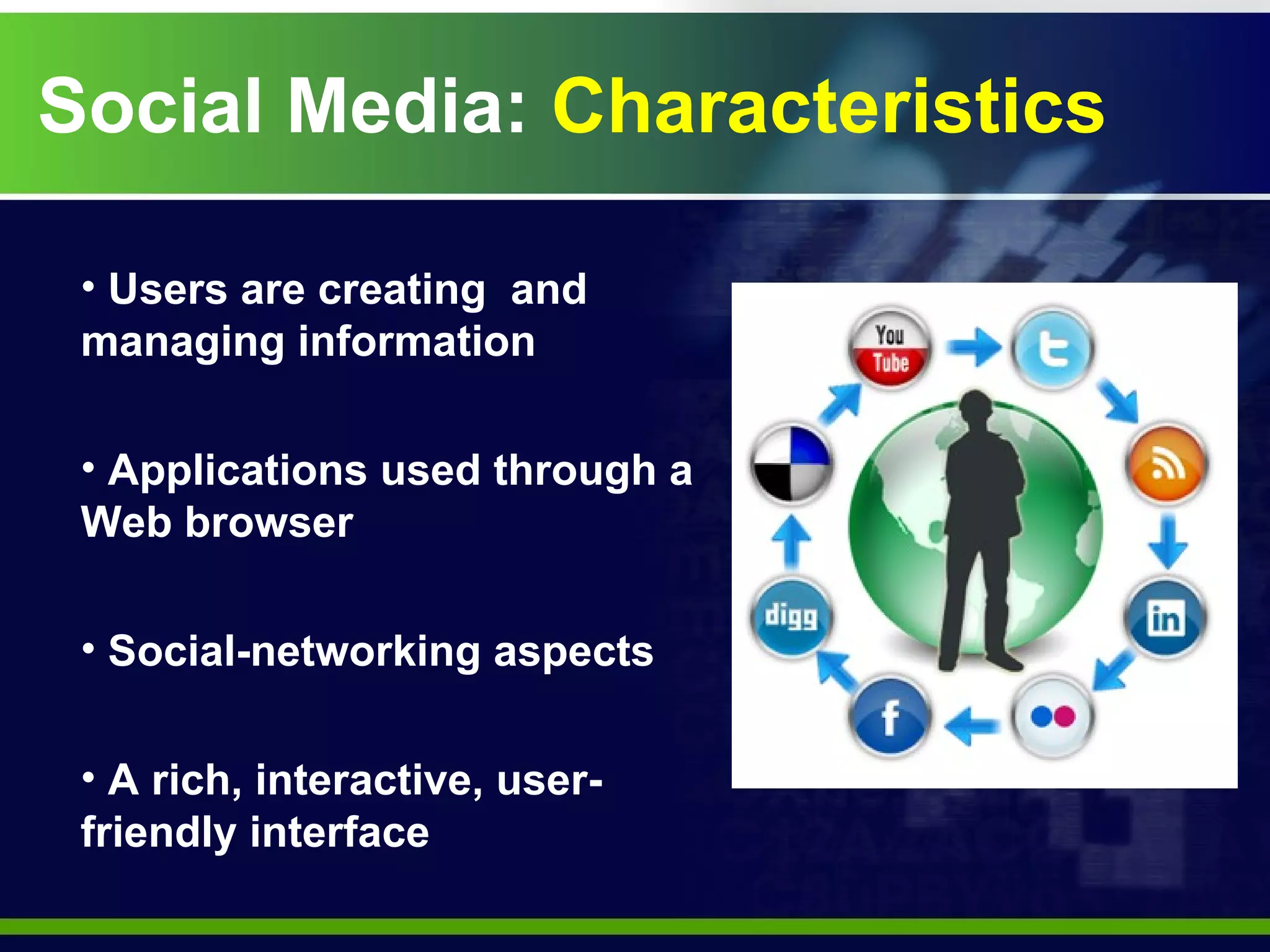
Social Media:  Characteristics Users are creating  and managing information  Applications used through a Web browser Social-networking aspects A rich, interactive, user-friendly interface
Social Media  Characteristics Access to  info Add new  content  (knowledge, opinions, experiences) Share  your things (photos, videos, writings, musics, etc) Control  the info (delete, promote, correct or complete) Summing up ( Recomend  the best places to travel, the most interesting news, etc) Put your  affaires online  (tasks, meetings, list of books, gift lists, etc) User is the Main Actor
Web 2.0:  Blogs Web + log = Blog Blogs are websites where entries are made in journal style and displayed in a reverse chronological order You write everything you want (without specialized knowledge) You are connected with other people (blogosphere) Primary textual, but no restrictions (photo, video, audio, etc).
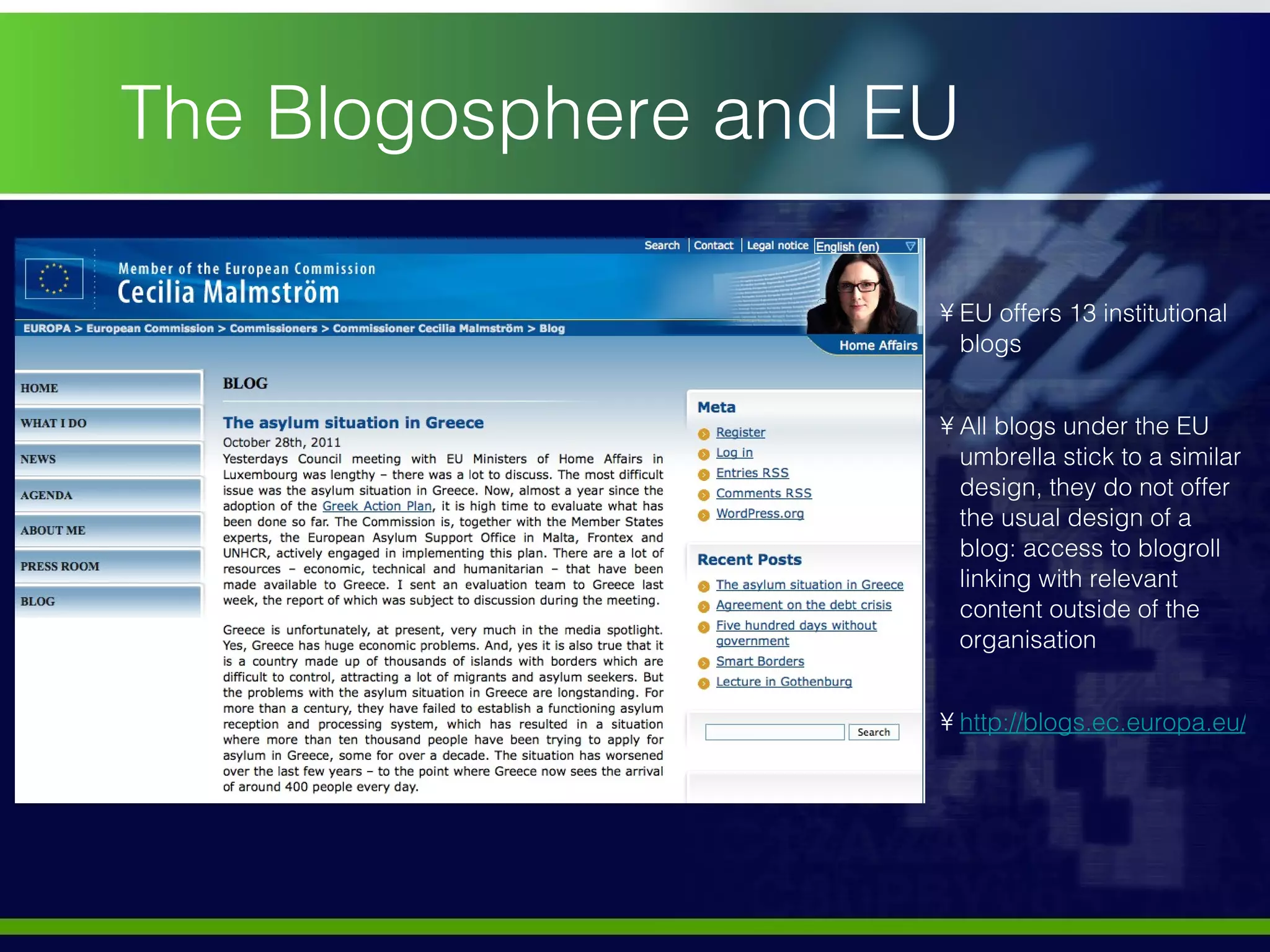
The Blogosphere and EU  EU offers 13 institutional blogs  All blogs under the EU umbrella stick to a similar design, they do not offer the usual design of a blog: access to blogroll linking with relevant content outside of the organisation  http://blogs.ec.europa.eu/malmstrom/
Social Media:  Photo/Video Sharing A photo/video sharing service allows individuals to upload photos and video clips to an Internet website.  The photo/video host store files on its server, and show the individual different types of code to allow others to view your files.  Using Web 2.0 features, one can be part of communities of users (inside a certain category for example), interact with other users, etc.
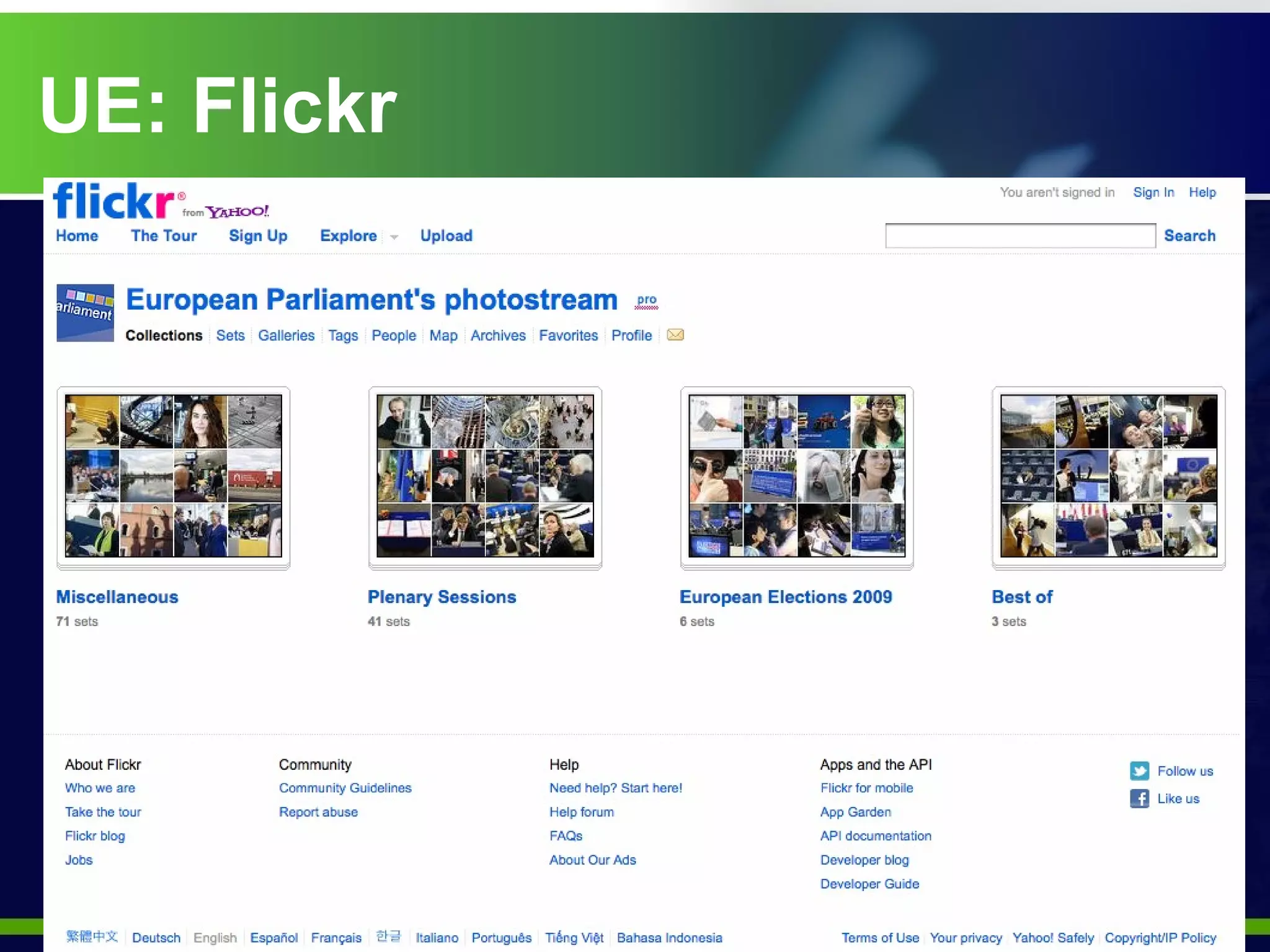
Four Main Accounts:  European Parliament:   http://www.flickr.com/photos/european_parliament/   European Council Presidency:  http://www.flickr.com/photos/europeancouncil   EU Social:   http://www.flickr.com/photos/46889122@N03/   European Commission:  http://www.flickr.com/photos/eu_development   + 5200 pictures shared: EU on  Flickr
UE: Flickr
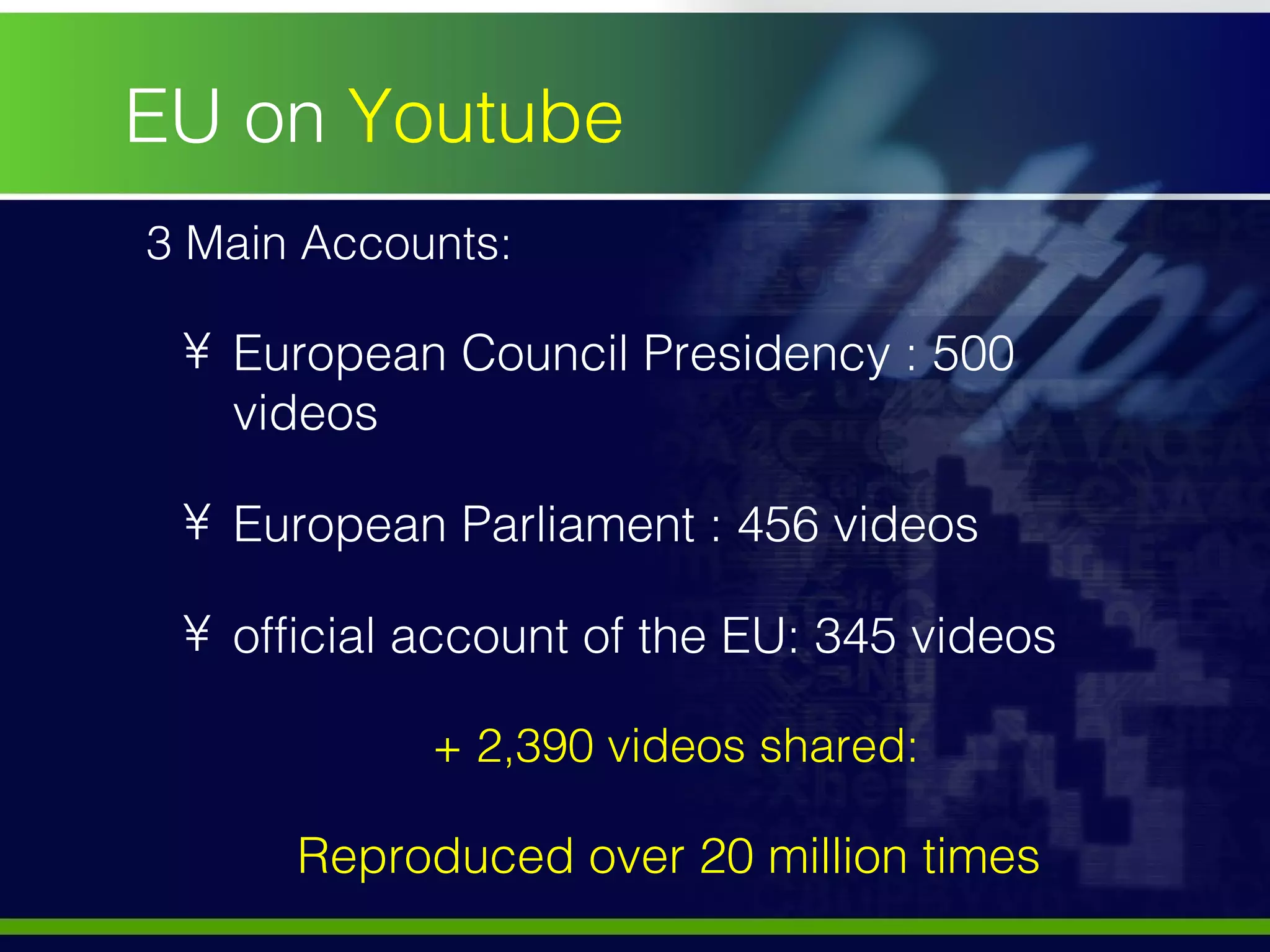
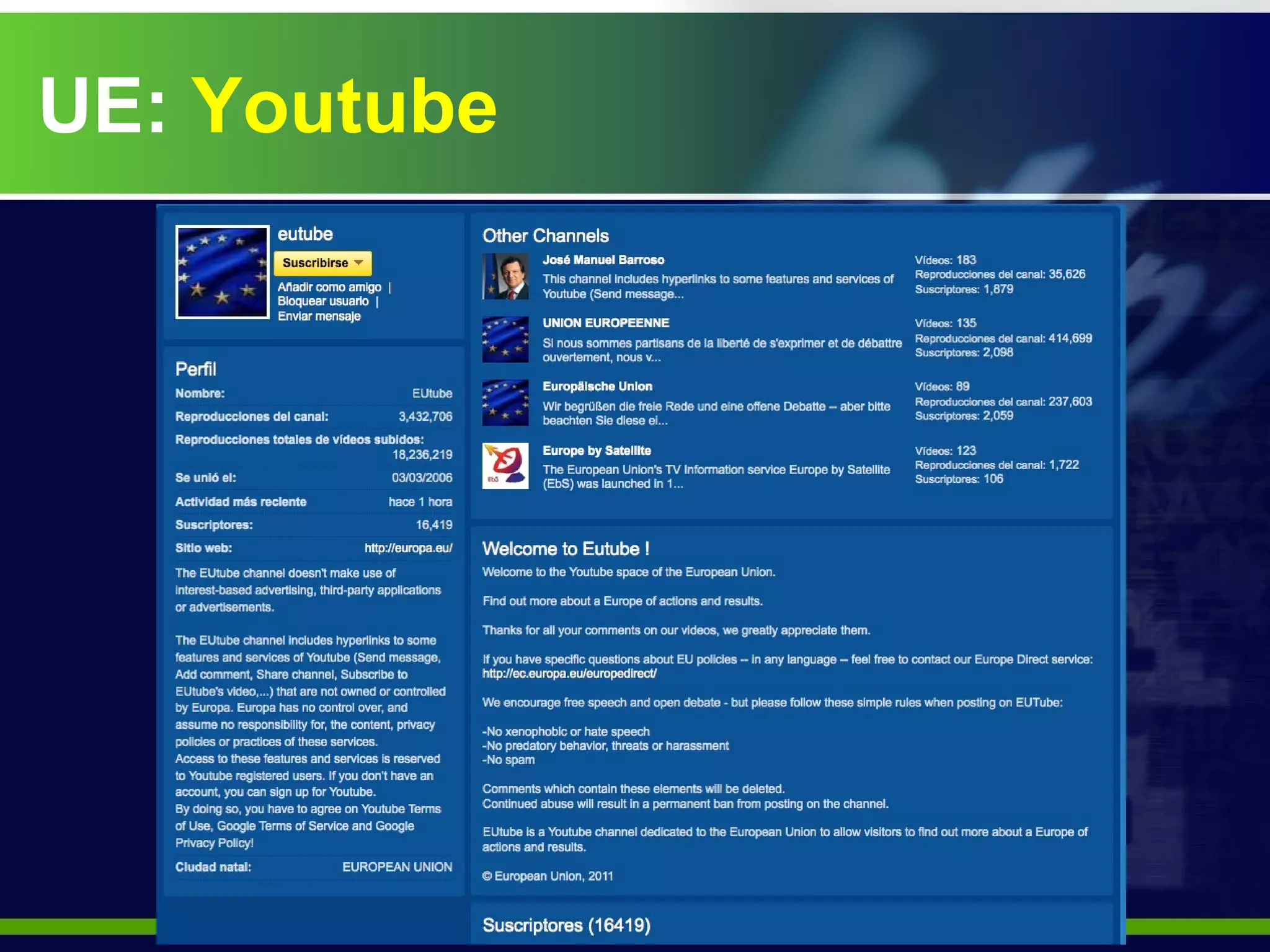
EU on  Youtube 3 Main Accounts:  European Council Presidency : 500 videos   European Parliament : 456 videos official account of the EU: 345 videos + 2,390 videos shared: Reproduced over 20 million times
UE:  Youtube
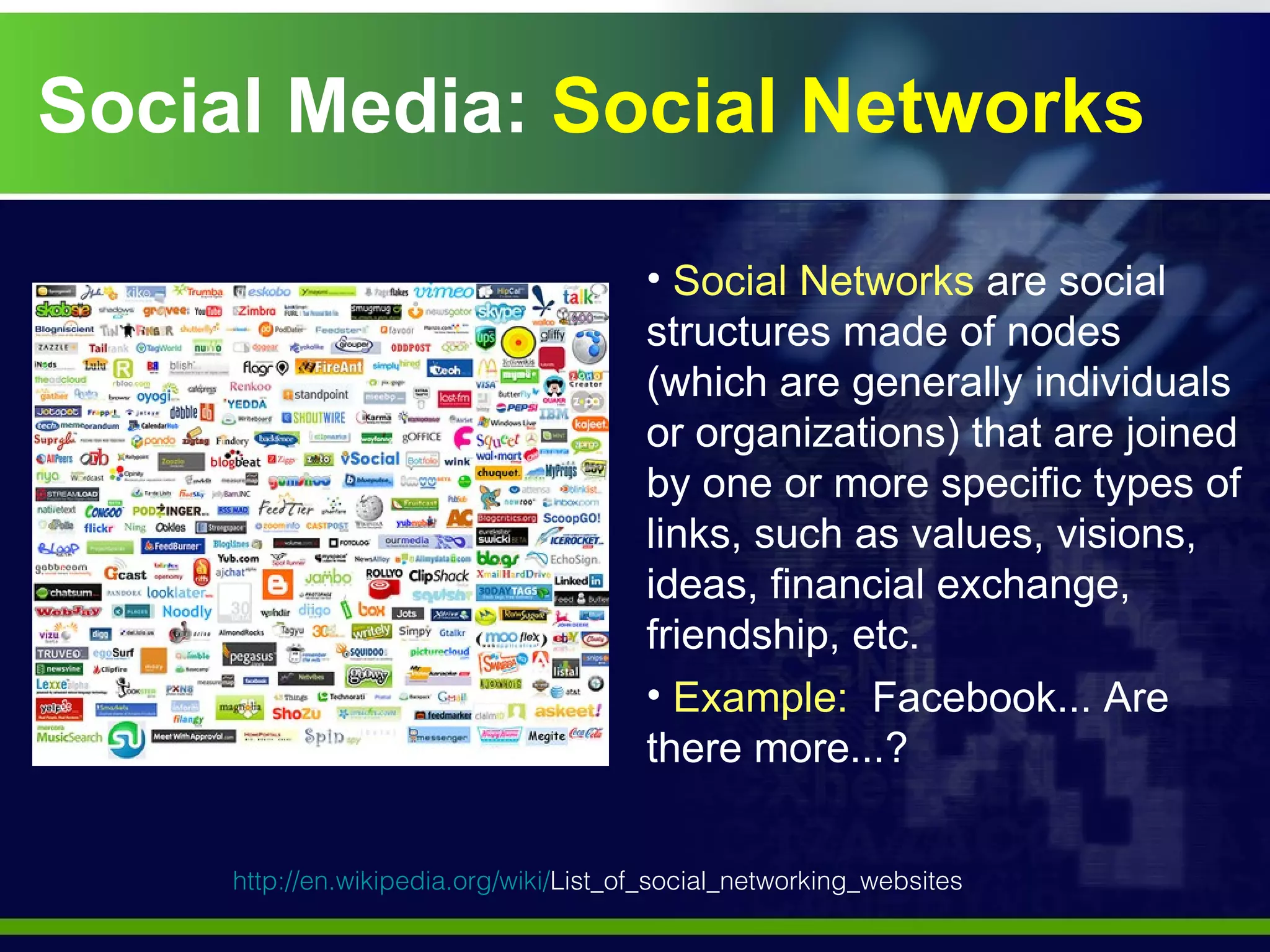
Social Media:  Social Networks Social Networks  are social structures made of nodes (which are generally individuals or organizations) that are joined by one or more specific types of links, such as values, visions, ideas, financial exchange, friendship, etc. Example:   Facebook... Are there more...?  http://en.wikipedia.org/wiki/ List_of_social_networking_websites
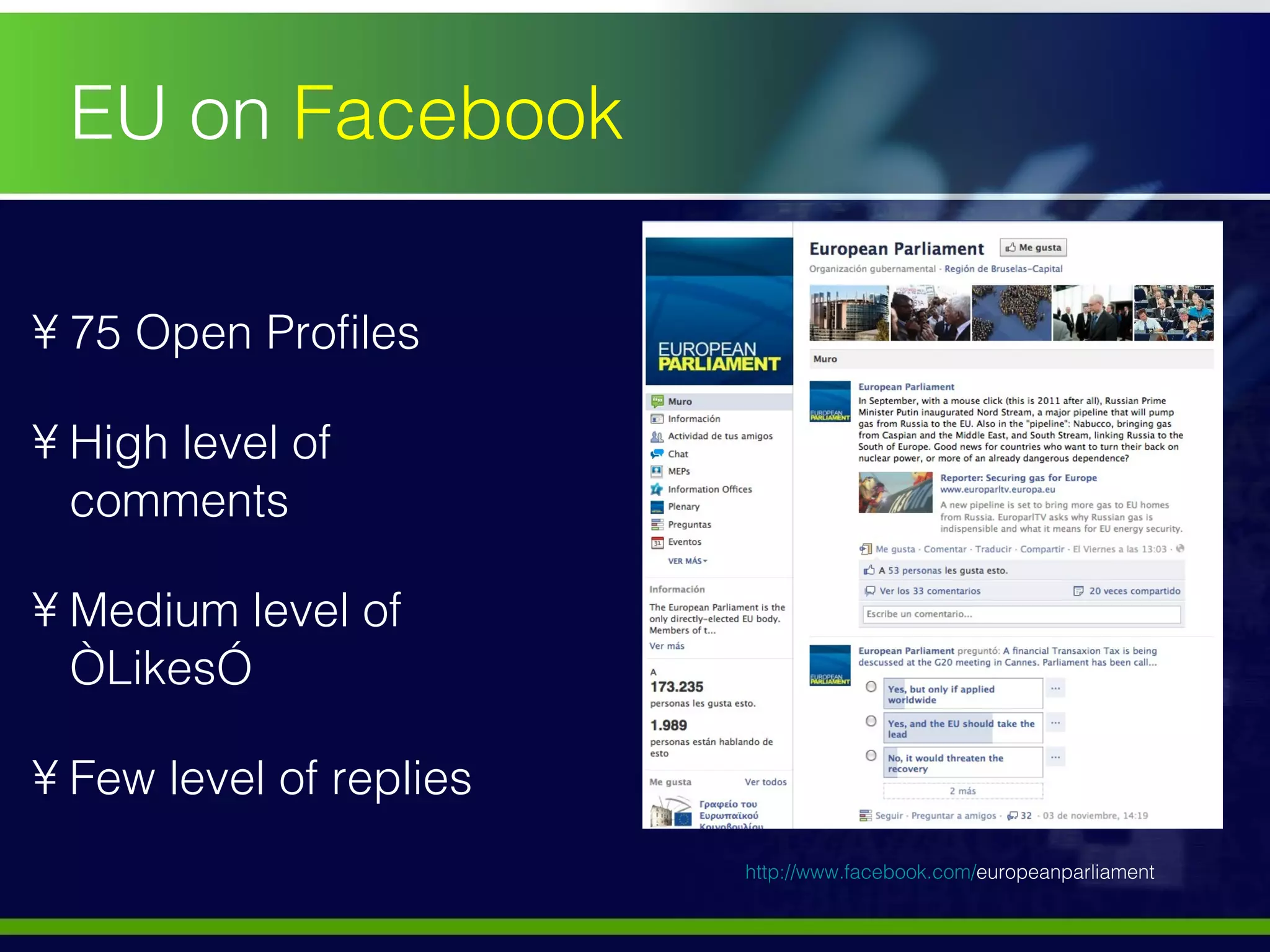
EU on  Facebook 75 Open Profiles High level of comments Medium level of “Likes” Few level of replies http://www.facebook.com/ europeanparliament
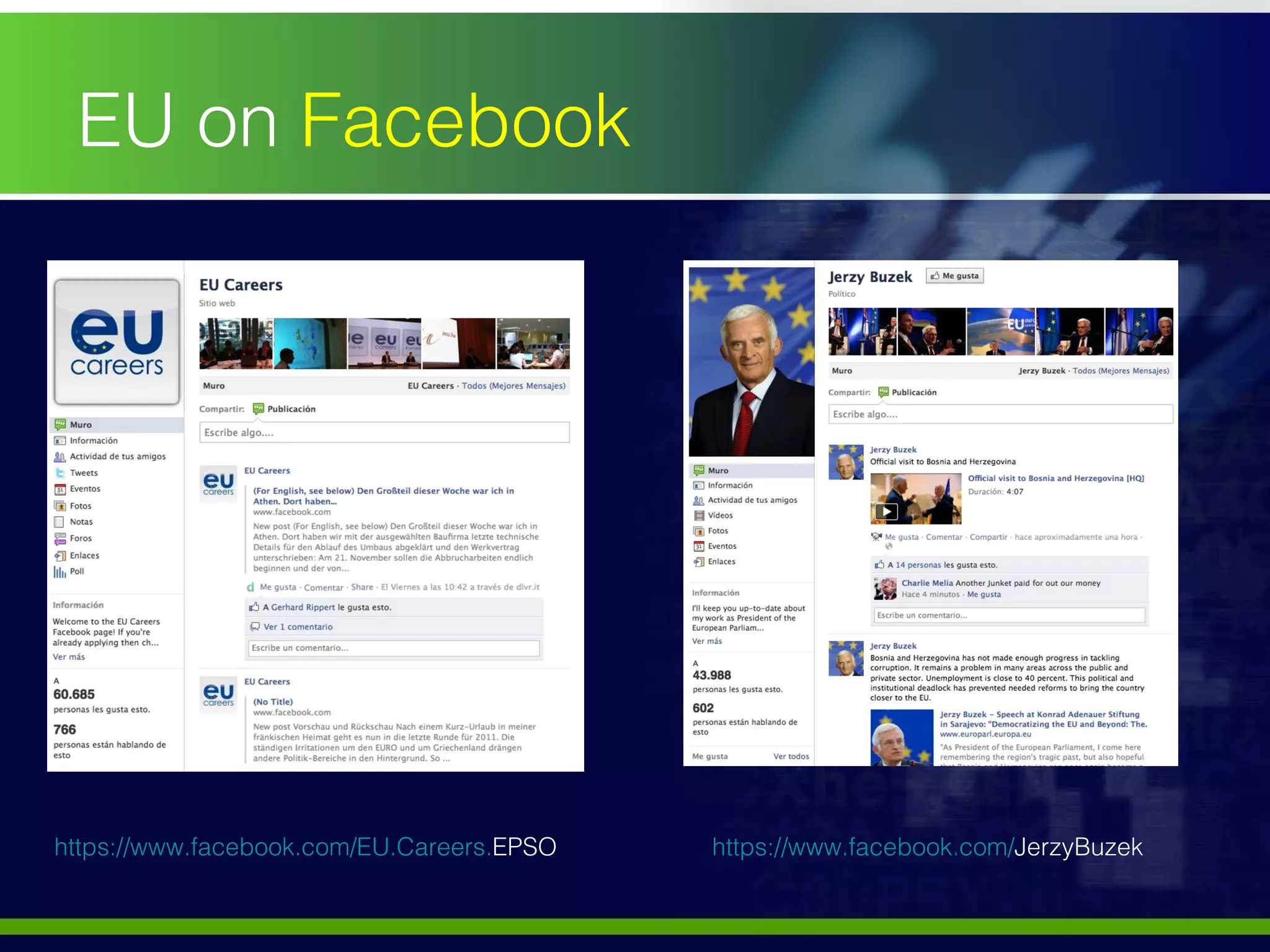
EU on  Facebook https://www.facebook.com/EU.Careers. EPSO   https://www.facebook.com/ JerzyBuzek
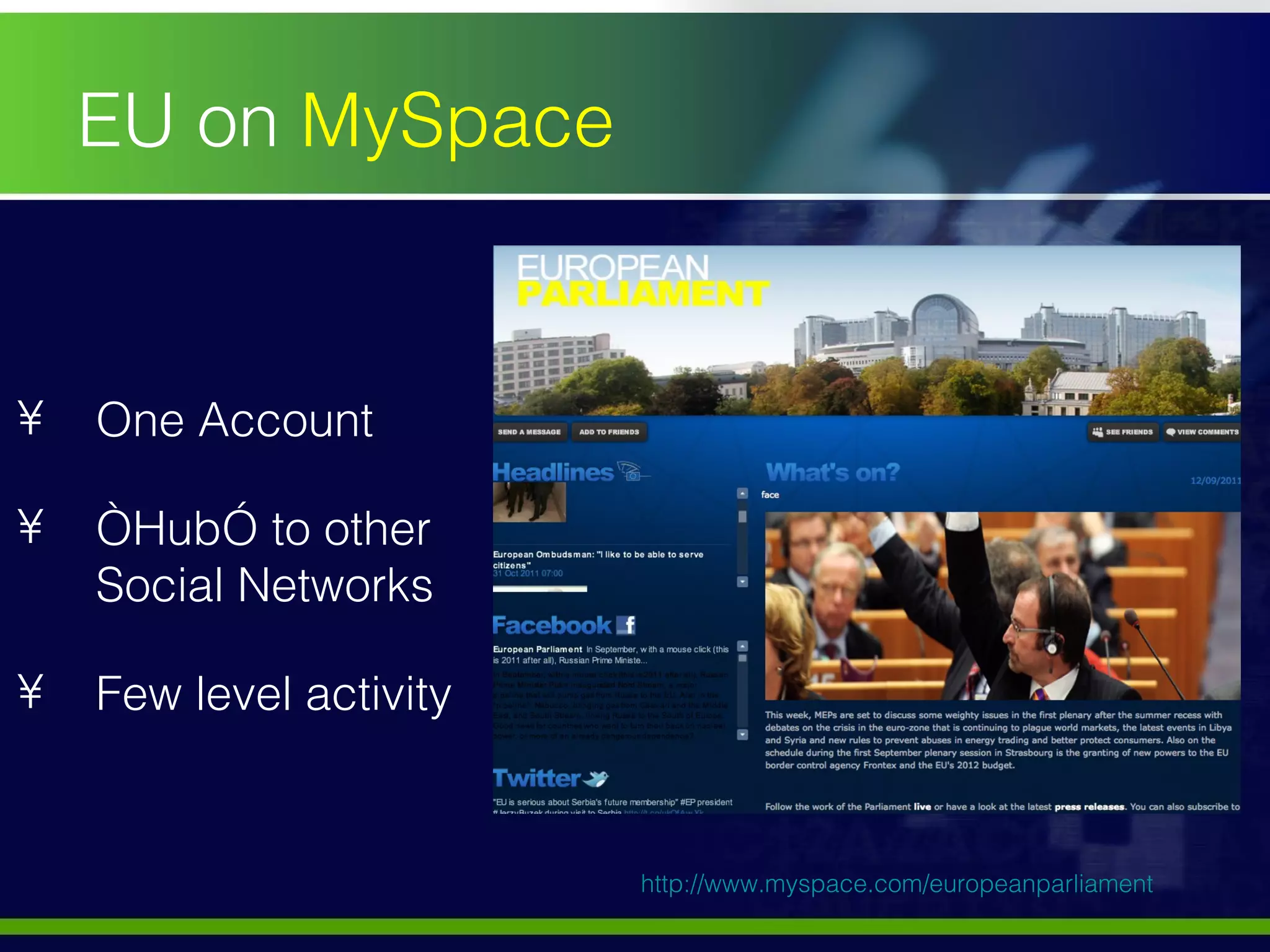
EU on  MySpace One Account “ Hub” to other Social Networks Few level activity http://www.myspace.com/europeanparliament
Social Media:  Microblogging Twitter  … is a service for friends, family, co-workers and organizations to communicate and stay connected through the exchange of quick, frequently answers. Users can inform followers of their current work, research, interest, reading, website, browsing, etc. …  is network formed around a shared interest.
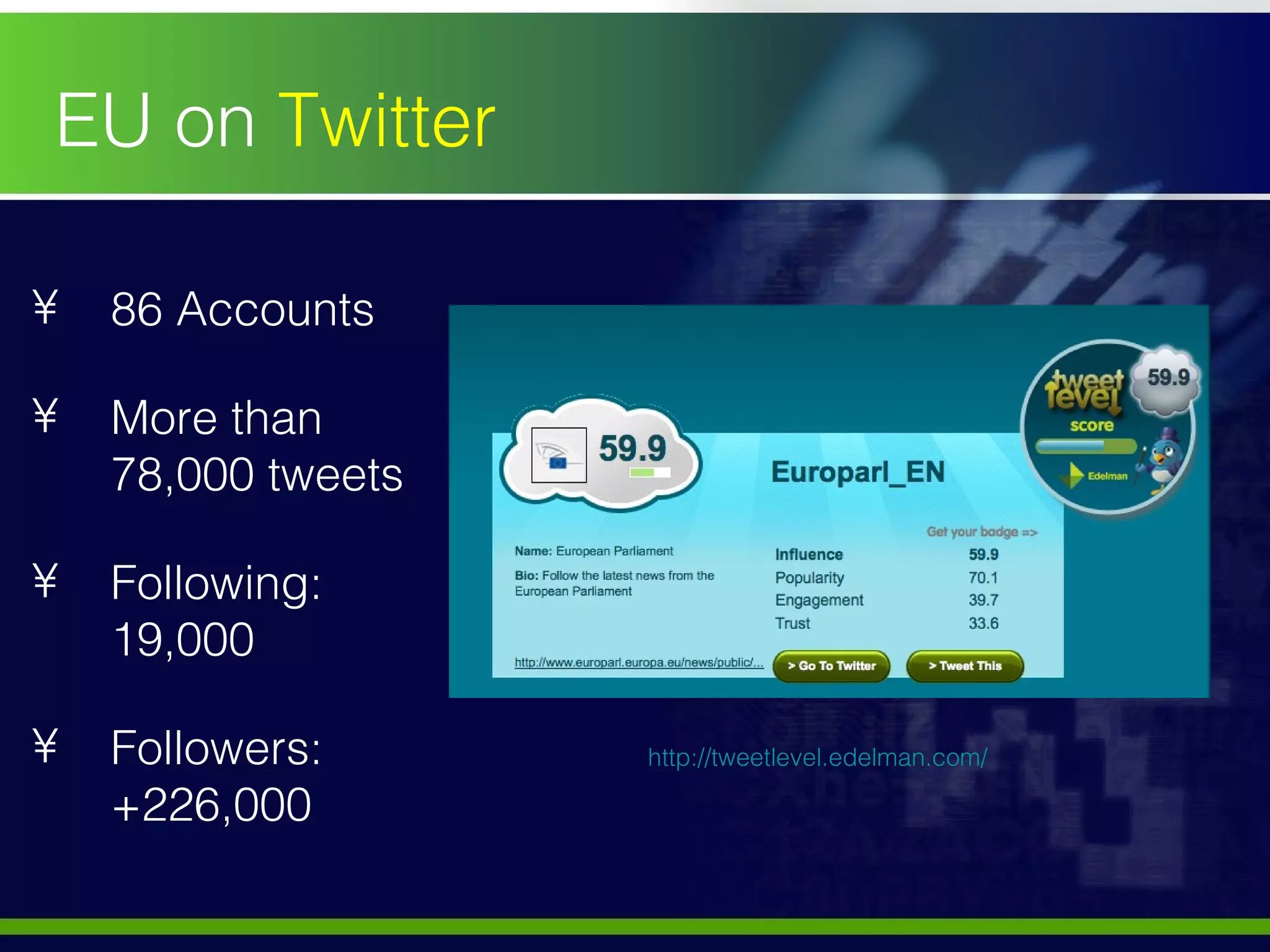
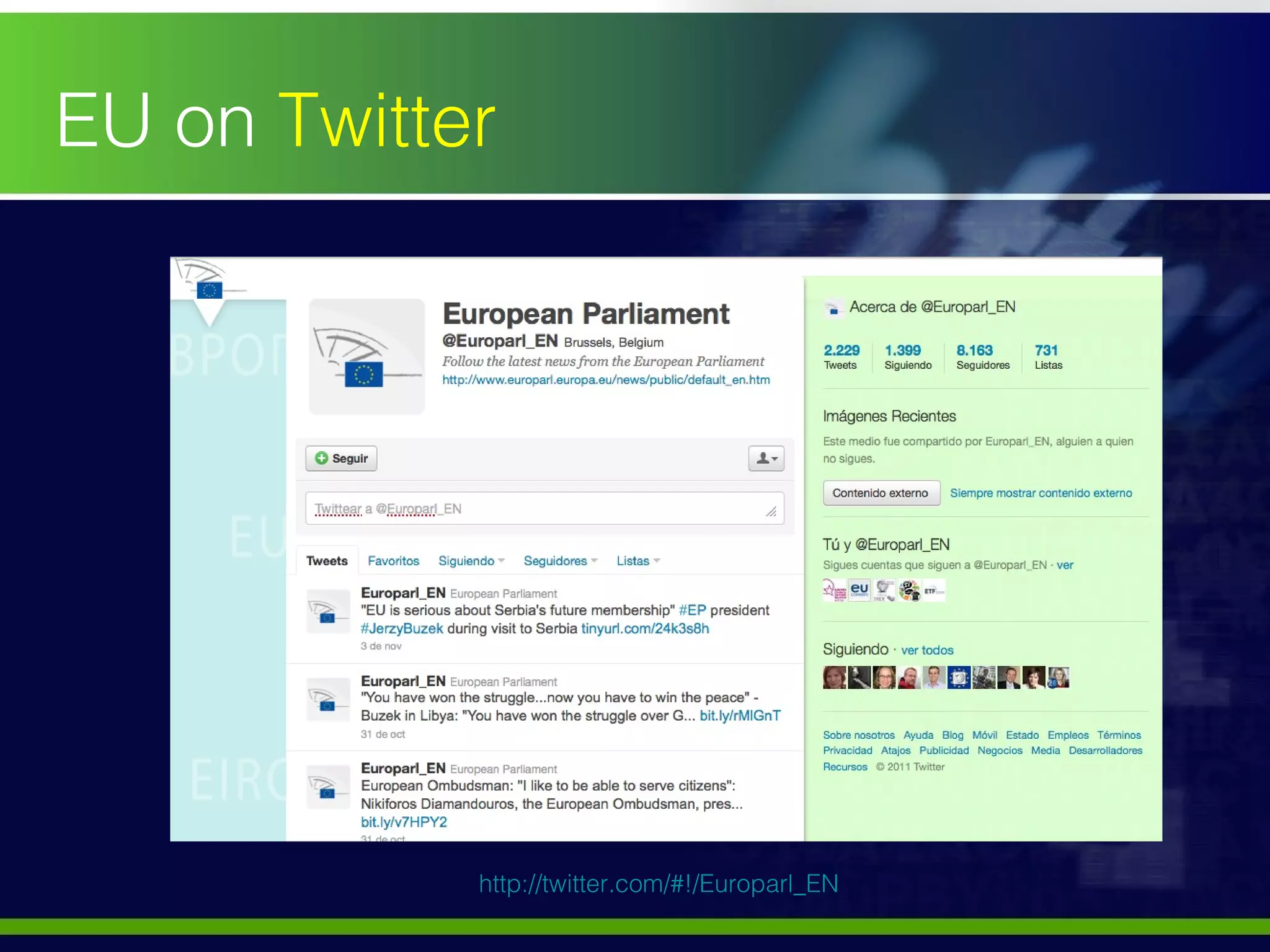
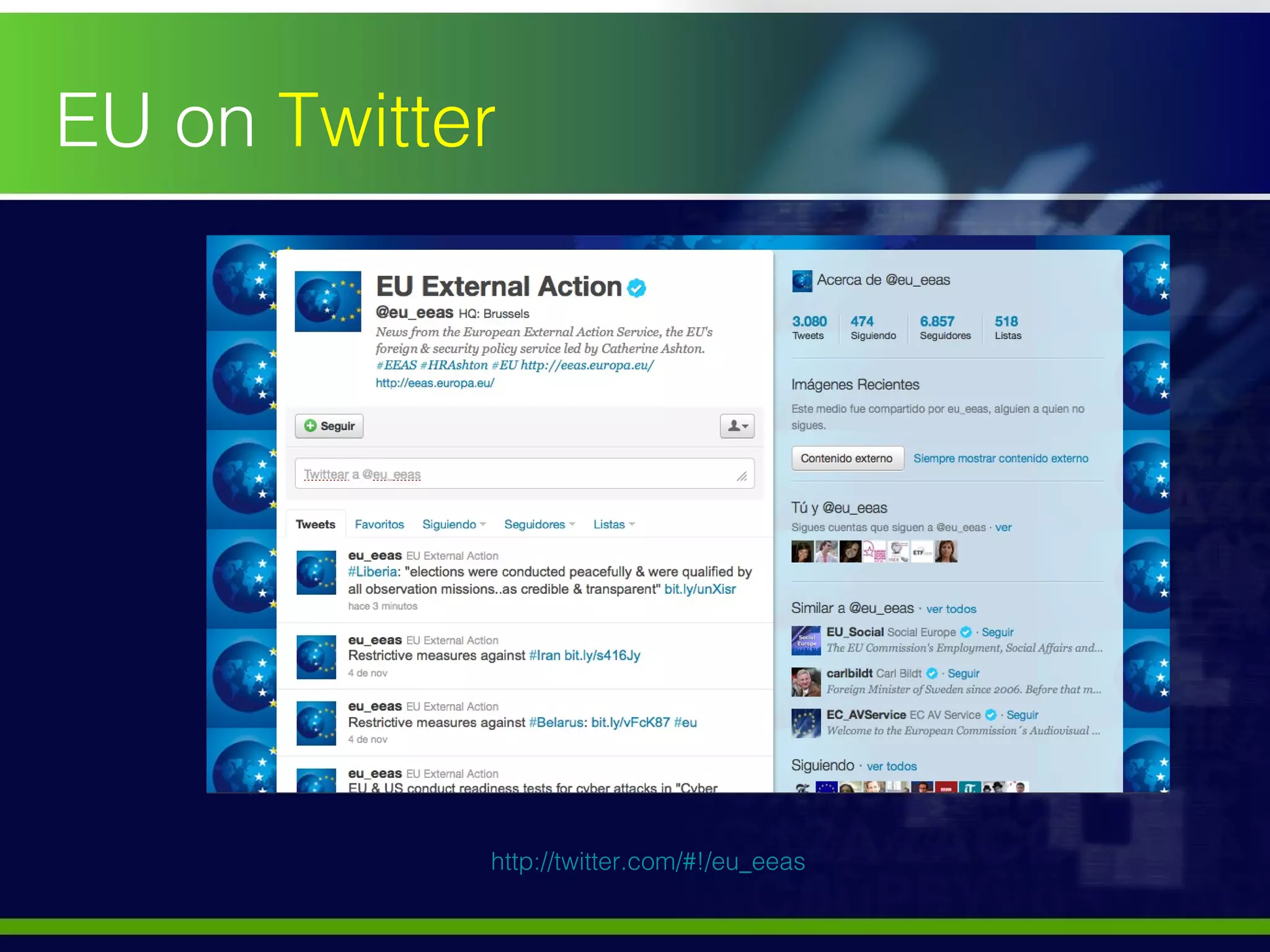
EU on  Twitter 86 Accounts More than 78,000 tweets Following: 19,000 Followers: +226,000 http://tweetlevel.edelman.com/
EU on  Twitter http://twitter.com/#!/Europarl_EN
EU on  Twitter http://twitter.com/#!/eu_eeas
Conclusion The world changes every day faster and global citizens demands their voice could be listened The spread of technology leads to the "hacking" is closer to citizens' movements Some institutions are beginning to get closer to citizens using new forms of contact (Social Media) The EU has developed a large number of these initiatives It need greater interaction and increased transparency
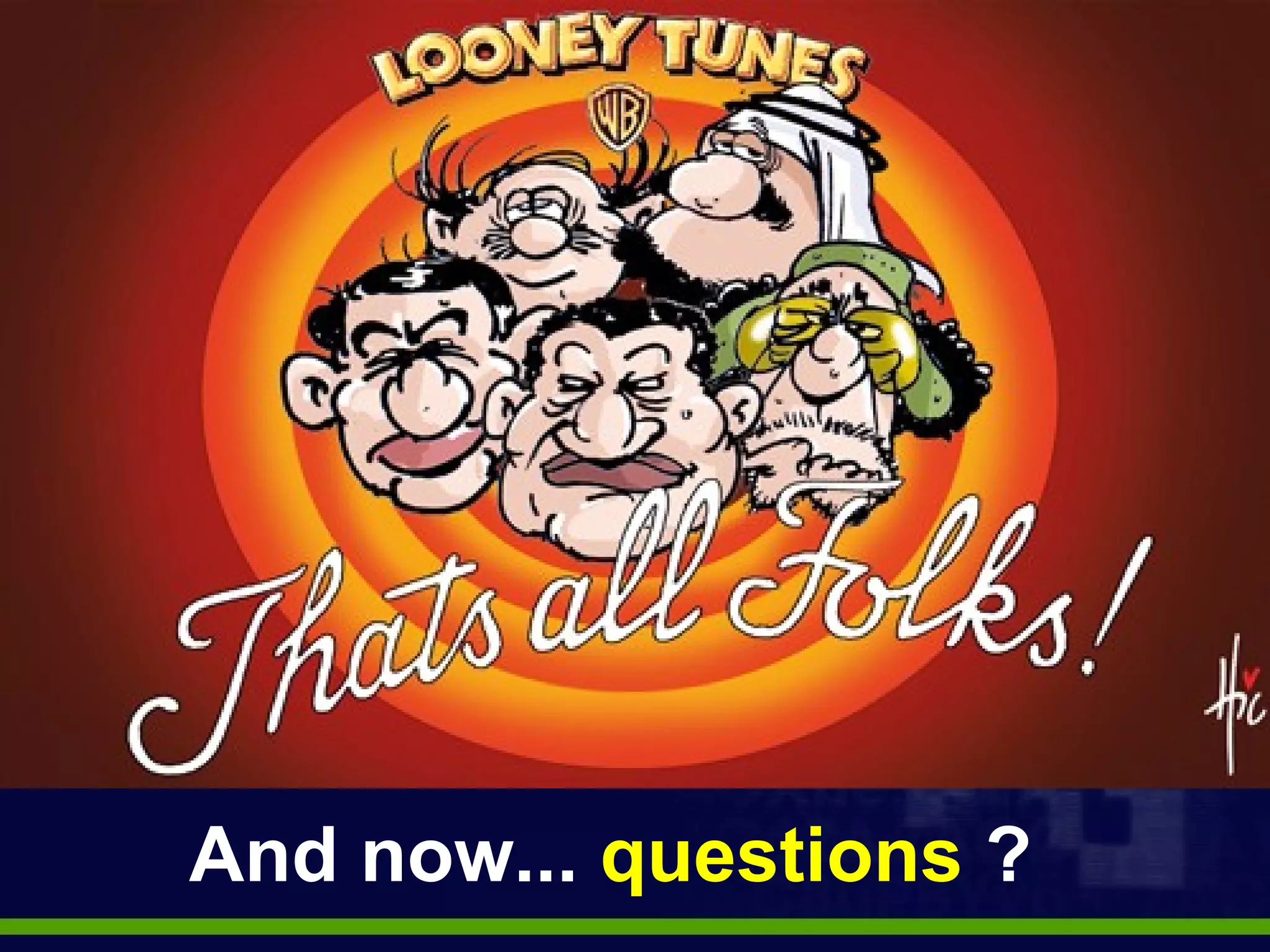
And now...  questions  ?

U eworkshop

  • 1.
    Social Media in the European Institutions Prof. Dr. Fernando Checa Euro-Mediterranean University Institute Universidad Complutense de Madrid [email_address]
  • 2.
    Are we goingto speak about this today...?
  • 3.
    Or, better… ABOUT THIS???
  • 4.
    In a complexWorld, in crisis, citizens feel more distant from the leading organizations Political Changes ….
  • 5.
    "Hacktivism" The Newactivism is directed to governments... worldwide
  • 6.
    Arab Spring Changesin arabs countries, so-called: Arab Spring Main factor of communication: Facebook and Twitter
  • 7.
    #15M: SpanishRevolution Before to the Spanish Local Elections, May 2011 Movement # nolesvotes Citizens occupying Sol The result?
  • 8.
  • 9.
    UsingTwitter in #15M http://www.youtube.com/watch?v=H5w4amBIHj4 &
  • 10.
    Global Revolution? #occupytogetherwww.occupytogether.org
  • 11.
    But now… comingback to the Web… First... do you remember the past? Some typical features of Web 1.0 Read-only Web Search for information and read it Static pages and no user-generated content User as a passive participant (one-way flow of information)
  • 12.
    Ten years ago...UE Web Site: 2001 Source: http://www.archive.org
  • 13.
    Today, the "hype": Web 2.0/Social Media Web 2.0, refers to a supposed second generation of Internet-based services that emphasize online collaboration and sharing among users New Media: BE SOCIAL http://www.youtube.com/watch?v=3SuNx0UrnEo
  • 14.
    Web 2.0 UEWeb Site: 2011: http://europa.eu/index_en.htm
  • 15.
    Social Media: Characteristics Users are creating and managing information Applications used through a Web browser Social-networking aspects A rich, interactive, user-friendly interface
  • 16.
    Social Media Characteristics Access to info Add new content (knowledge, opinions, experiences) Share your things (photos, videos, writings, musics, etc) Control the info (delete, promote, correct or complete) Summing up ( Recomend the best places to travel, the most interesting news, etc) Put your affaires online (tasks, meetings, list of books, gift lists, etc) User is the Main Actor
  • 17.
    Web 2.0: Blogs Web + log = Blog Blogs are websites where entries are made in journal style and displayed in a reverse chronological order You write everything you want (without specialized knowledge) You are connected with other people (blogosphere) Primary textual, but no restrictions (photo, video, audio, etc).
  • 18.
    The Blogosphere andEU EU offers 13 institutional blogs All blogs under the EU umbrella stick to a similar design, they do not offer the usual design of a blog: access to blogroll linking with relevant content outside of the organisation http://blogs.ec.europa.eu/malmstrom/
  • 19.
    Social Media: Photo/Video Sharing A photo/video sharing service allows individuals to upload photos and video clips to an Internet website. The photo/video host store files on its server, and show the individual different types of code to allow others to view your files. Using Web 2.0 features, one can be part of communities of users (inside a certain category for example), interact with other users, etc.
  • 20.
    Four Main Accounts: European Parliament: http://www.flickr.com/photos/european_parliament/ European Council Presidency: http://www.flickr.com/photos/europeancouncil EU Social: http://www.flickr.com/photos/46889122@N03/ European Commission: http://www.flickr.com/photos/eu_development + 5200 pictures shared: EU on Flickr
  • 21.
  • 22.
    EU on Youtube 3 Main Accounts: European Council Presidency : 500 videos European Parliament : 456 videos official account of the EU: 345 videos + 2,390 videos shared: Reproduced over 20 million times
  • 23.
  • 24.
    Social Media: Social Networks Social Networks are social structures made of nodes (which are generally individuals or organizations) that are joined by one or more specific types of links, such as values, visions, ideas, financial exchange, friendship, etc. Example: Facebook... Are there more...? http://en.wikipedia.org/wiki/ List_of_social_networking_websites
  • 25.
    EU on Facebook 75 Open Profiles High level of comments Medium level of “Likes” Few level of replies http://www.facebook.com/ europeanparliament
  • 26.
    EU on Facebook https://www.facebook.com/EU.Careers. EPSO https://www.facebook.com/ JerzyBuzek
  • 27.
    EU on MySpace One Account “ Hub” to other Social Networks Few level activity http://www.myspace.com/europeanparliament
  • 28.
    Social Media: Microblogging Twitter … is a service for friends, family, co-workers and organizations to communicate and stay connected through the exchange of quick, frequently answers. Users can inform followers of their current work, research, interest, reading, website, browsing, etc. … is network formed around a shared interest.
  • 29.
    EU on Twitter 86 Accounts More than 78,000 tweets Following: 19,000 Followers: +226,000 http://tweetlevel.edelman.com/
  • 30.
    EU on Twitter http://twitter.com/#!/Europarl_EN
  • 31.
    EU on Twitter http://twitter.com/#!/eu_eeas
  • 32.
    Conclusion The worldchanges every day faster and global citizens demands their voice could be listened The spread of technology leads to the "hacking" is closer to citizens' movements Some institutions are beginning to get closer to citizens using new forms of contact (Social Media) The EU has developed a large number of these initiatives It need greater interaction and increased transparency
  • 33.
    And now... questions ?