Big Idea

              Art is Experience

“Art is not the possession of the few who are
recognized writers, painters, musicians; it is the
authentic expression of any and all individuality.”
                              -John Dewey
Key Concepts
•   Art is the experience of making art
•   Art is the experience of encountering art
•   Art can convey a message.
•   Art can convey a mood.
•   Art can convey symbolism that the viewer
    interprets.
Essential Questions
•   How do we experience making art?
•   How do we encounter art?
•   How do artists convey messages?
•   How do artists convey moods?
•   How do artists use symbols?
Objectives
s
• The student will discuss artworks with peers using VTS
  strategies.
• The student will use a variety of line to types to
  communicate a message.
• The student will identify colors with emotions.
• The student will use colors as symbols for emotion.
• The students will create line drawing schemas that
  communicate emotion
• The student will identify meaning expressed their
  artworks.
• The student will communicate personal experience in
  an artwork using line and color.
Day One


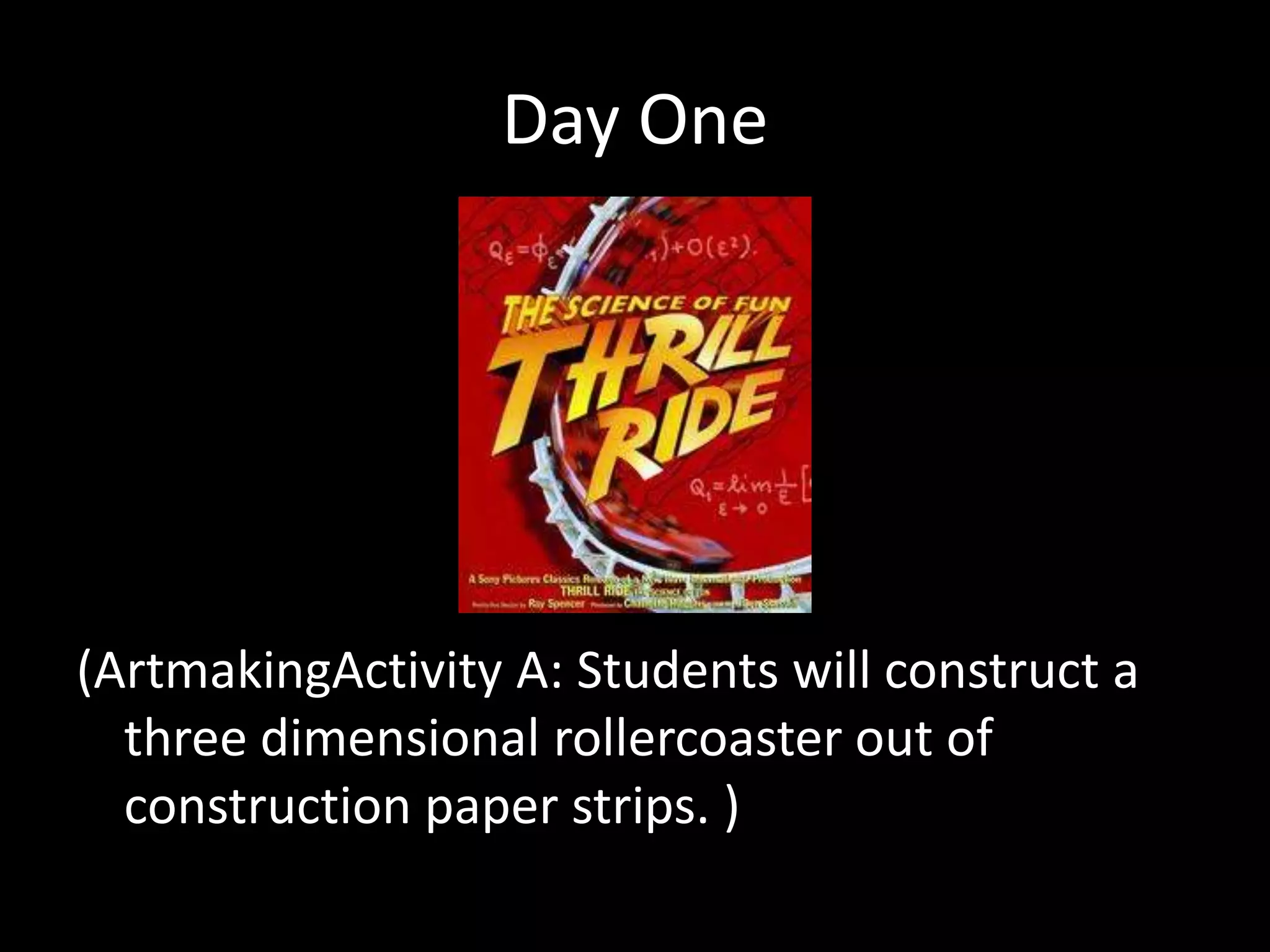
(ArtmakingActivity A: Students will construct a
  three dimensional rollercoaster out of
  construction paper strips. )
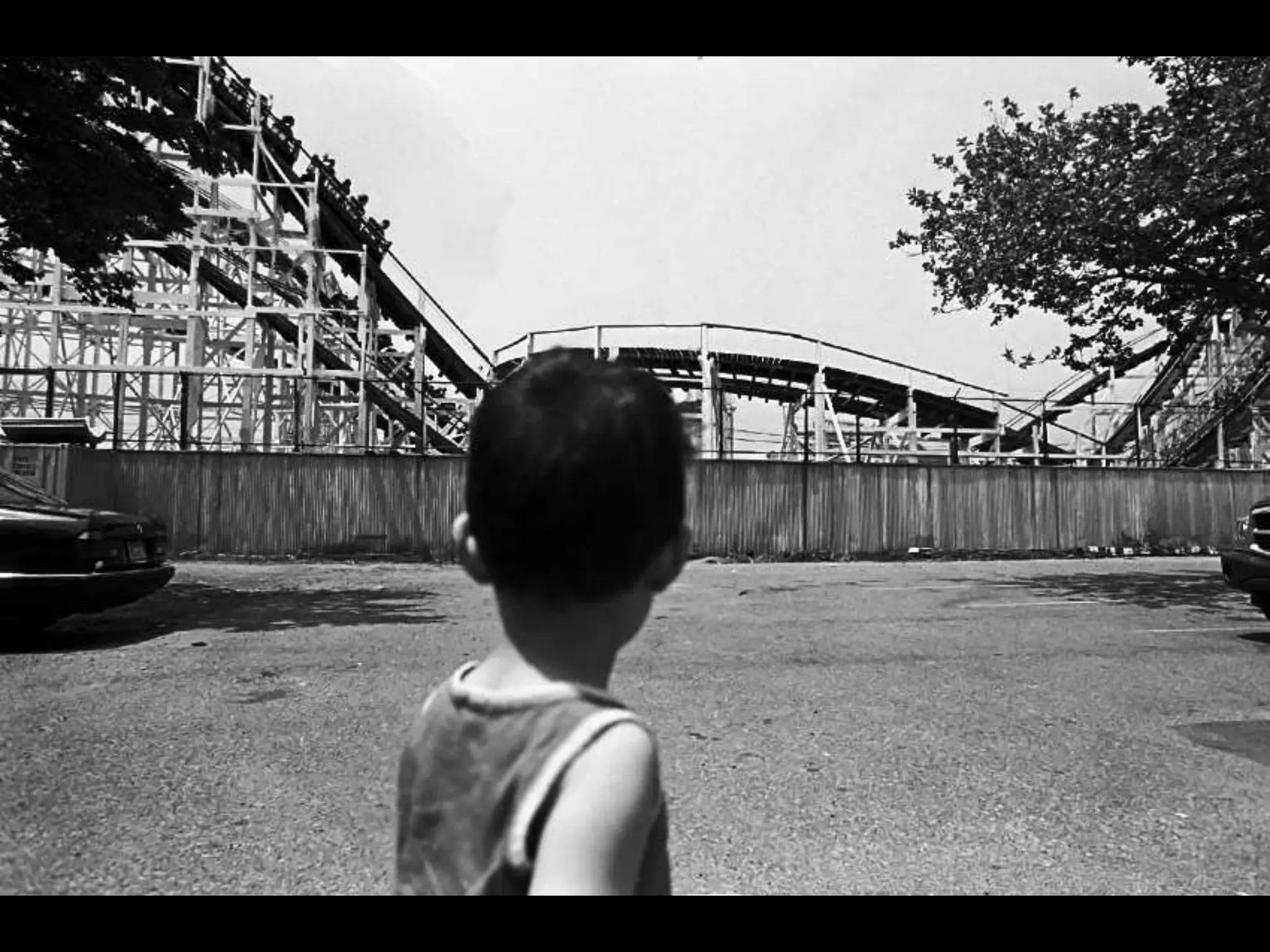
Day Two


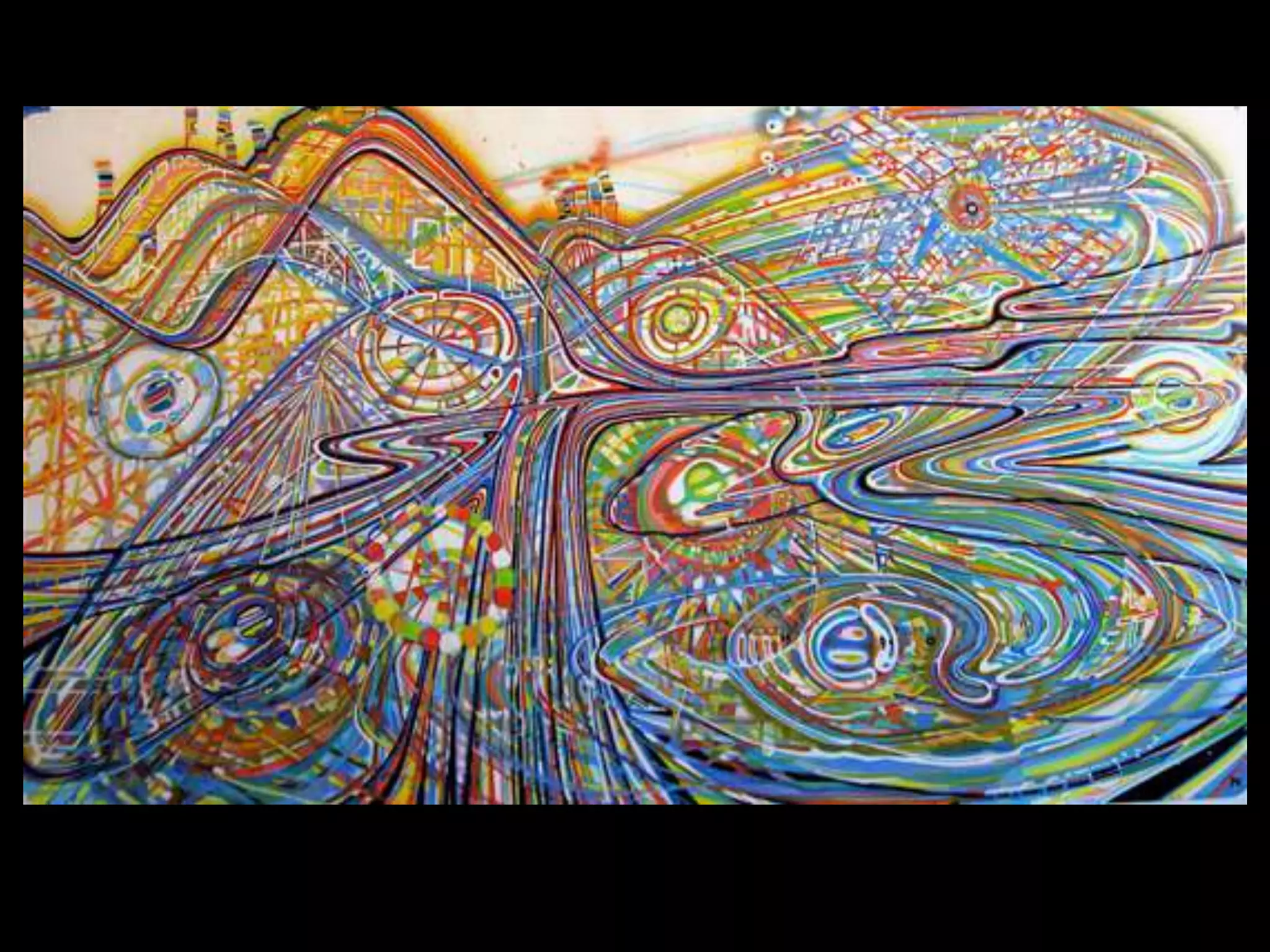
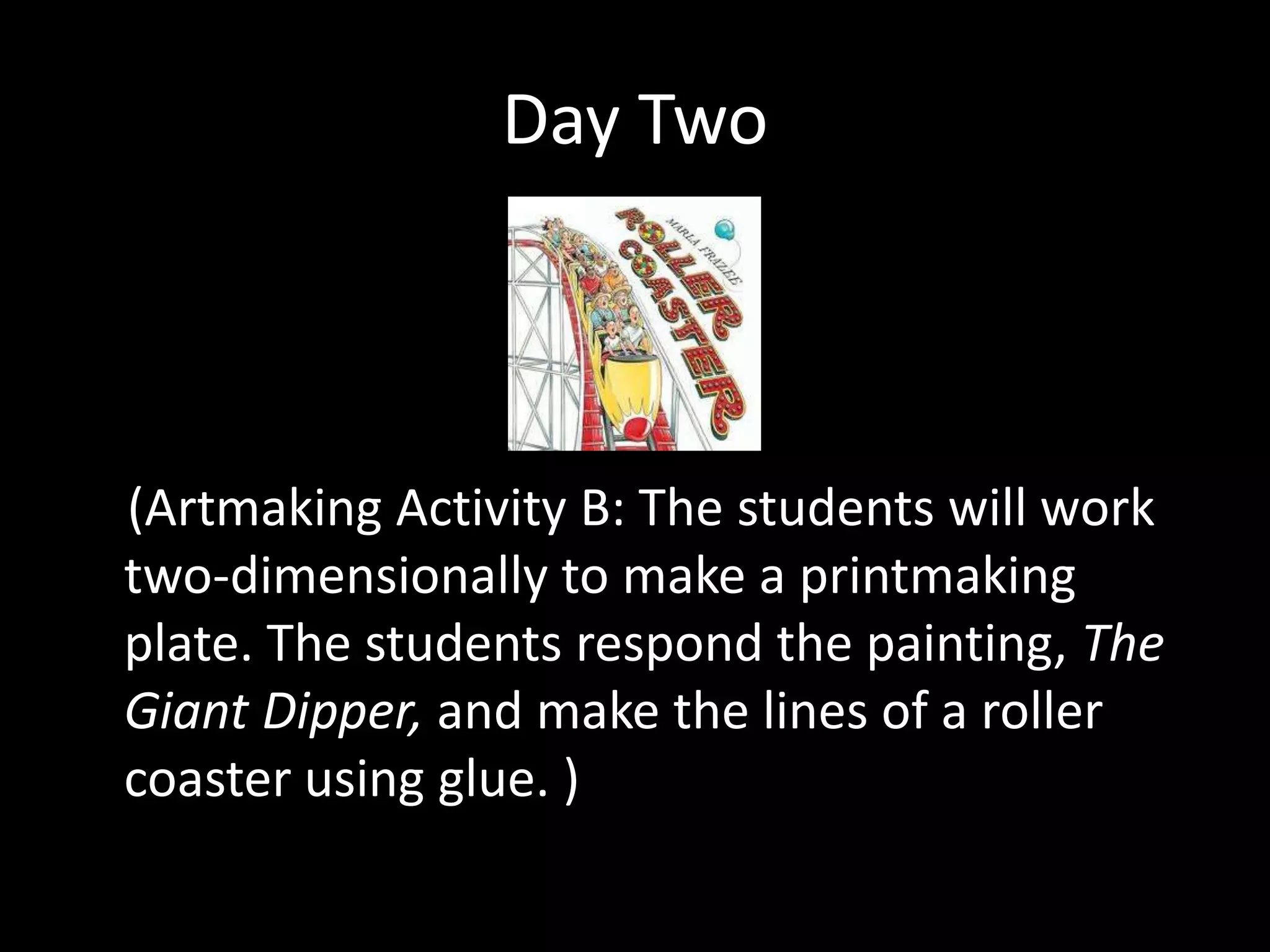
(Artmaking Activity B: The students will work
two-dimensionally to make a printmaking
plate. The students respond the painting, The
Giant Dipper, and make the lines of a roller
coaster using glue. )
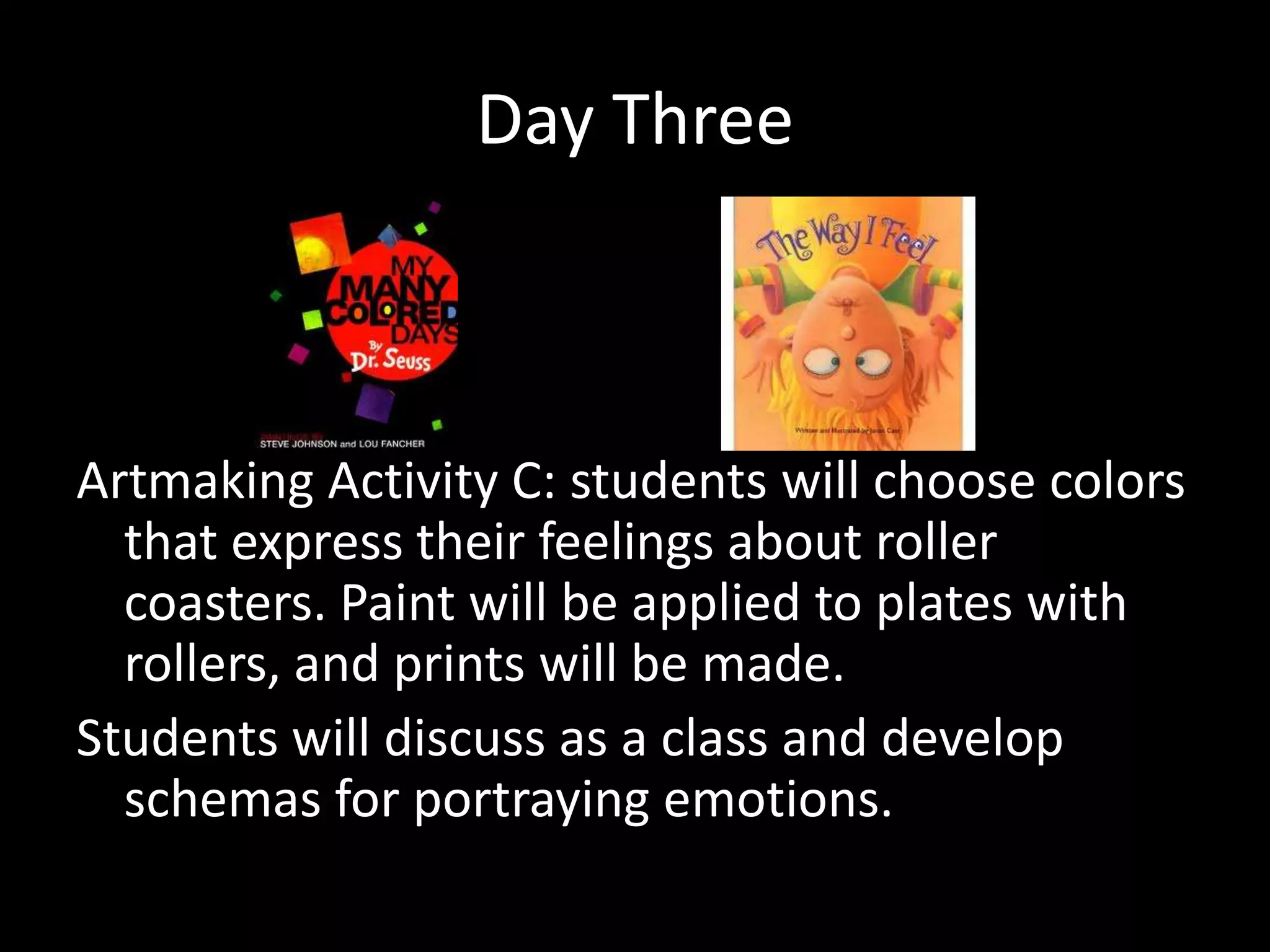
Day Three


Artmaking Activity C: students will choose colors
  that express their feelings about roller
  coasters. Paint will be applied to plates with
  rollers, and prints will be made.
Students will discuss as a class and develop
  schemas for portraying emotions.
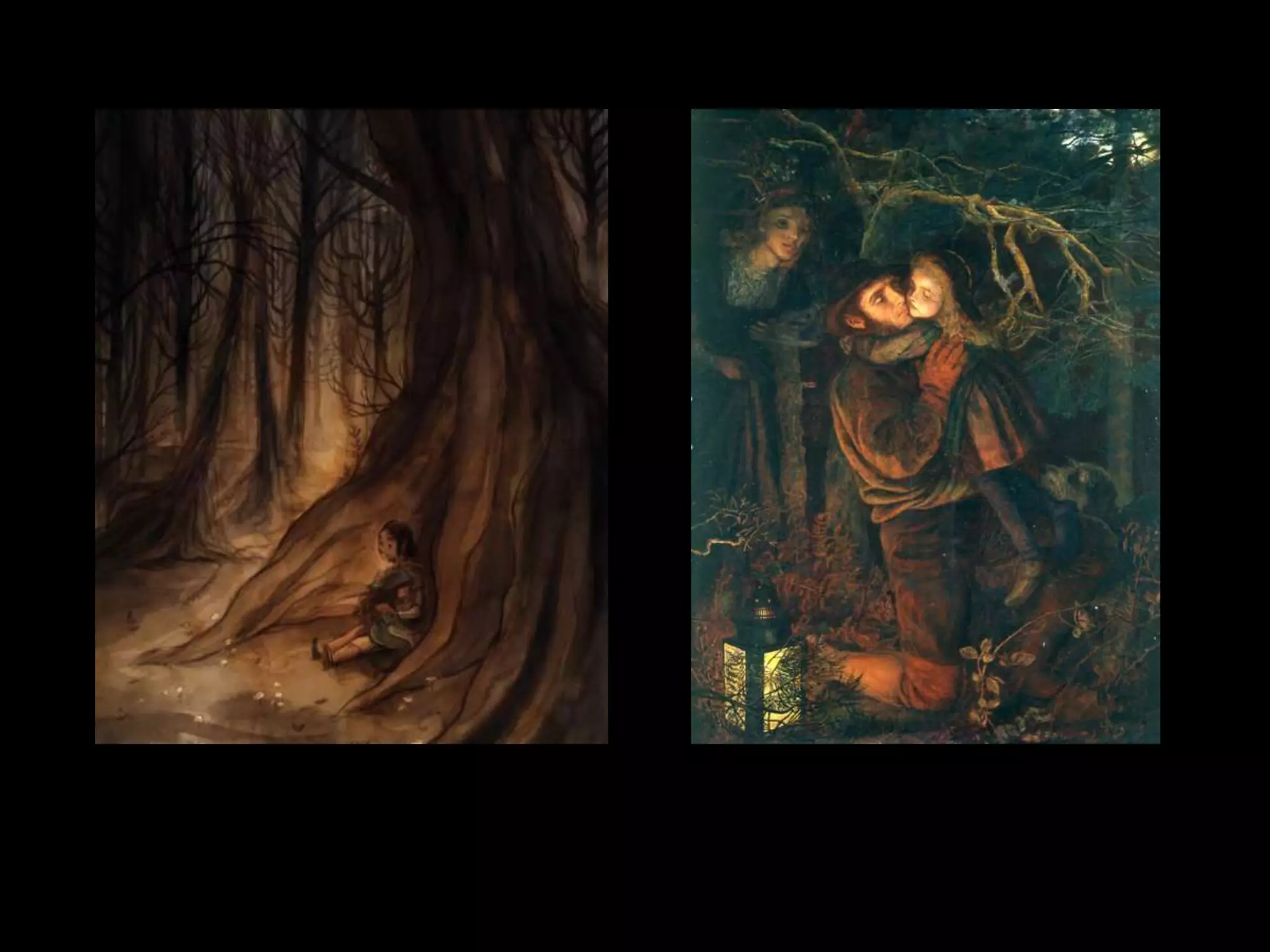
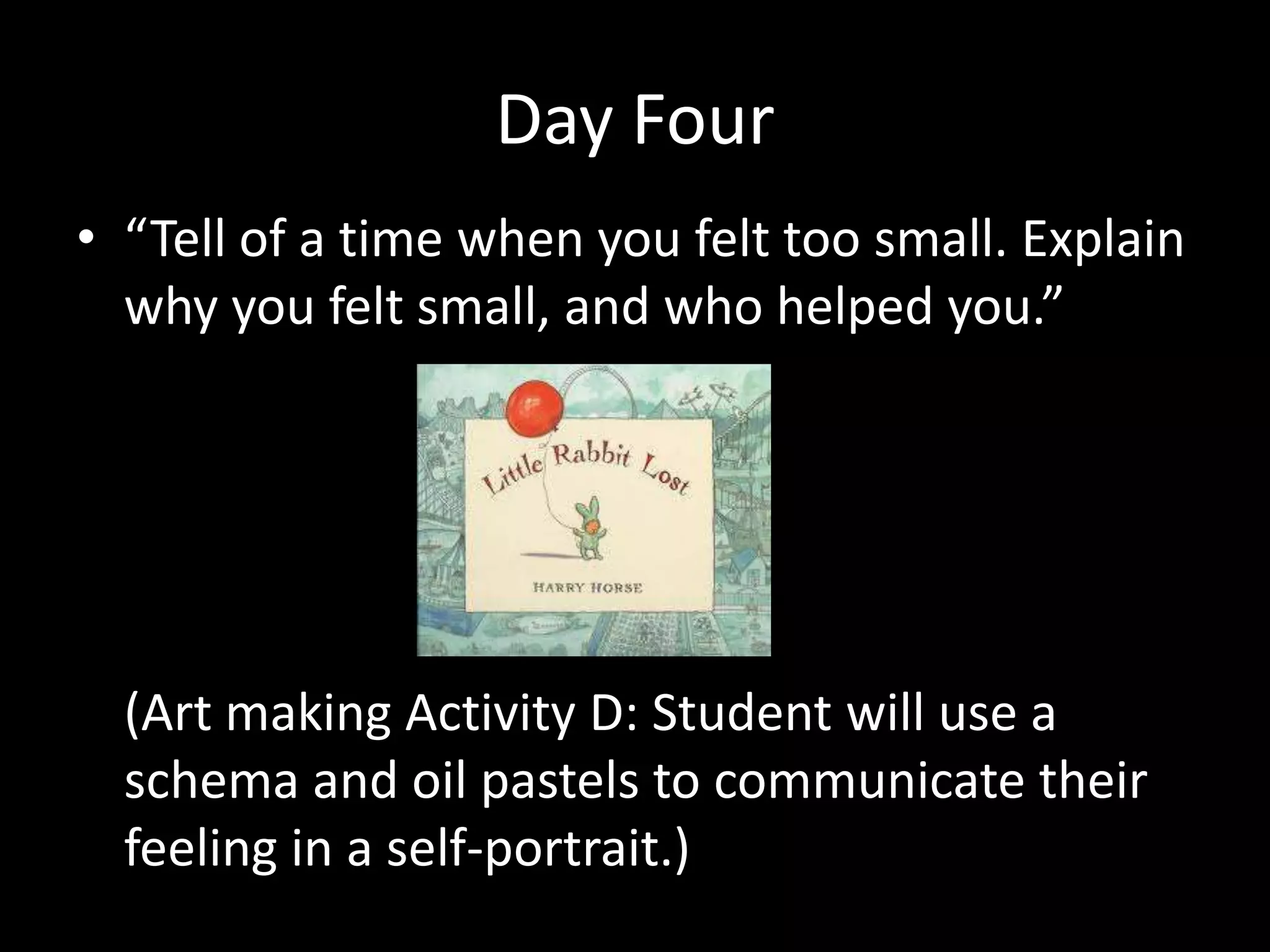
Day Four
• “Tell of a time when you felt too small. Explain
  why you felt small, and who helped you.”


  (Art making Activity D: Student will use a
  schema and oil pastels to communicate their
  feeling in a self-portrait.)
Assessment Strategies

• Pre-assessment/Post-assessment
• Checklist: Auditory-Sequential vs. Visual-
  Spatial Learning Styles
• Checklist: Fine Motor Skill Assessment
• Student Product Self-Assessment

Ozbun VTSII

  • 2.
    Big Idea Art is Experience “Art is not the possession of the few who are recognized writers, painters, musicians; it is the authentic expression of any and all individuality.” -John Dewey
  • 3.
    Key Concepts • Art is the experience of making art • Art is the experience of encountering art • Art can convey a message. • Art can convey a mood. • Art can convey symbolism that the viewer interprets.
  • 4.
    Essential Questions • How do we experience making art? • How do we encounter art? • How do artists convey messages? • How do artists convey moods? • How do artists use symbols?
  • 5.
    Objectives s • The studentwill discuss artworks with peers using VTS strategies. • The student will use a variety of line to types to communicate a message. • The student will identify colors with emotions. • The student will use colors as symbols for emotion. • The students will create line drawing schemas that communicate emotion • The student will identify meaning expressed their artworks. • The student will communicate personal experience in an artwork using line and color.
  • 7.
    Day One (ArtmakingActivity A:Students will construct a three dimensional rollercoaster out of construction paper strips. )
  • 9.
    Day Two (Artmaking ActivityB: The students will work two-dimensionally to make a printmaking plate. The students respond the painting, The Giant Dipper, and make the lines of a roller coaster using glue. )
  • 10.
    Day Three Artmaking ActivityC: students will choose colors that express their feelings about roller coasters. Paint will be applied to plates with rollers, and prints will be made. Students will discuss as a class and develop schemas for portraying emotions.
  • 12.
    Day Four • “Tellof a time when you felt too small. Explain why you felt small, and who helped you.” (Art making Activity D: Student will use a schema and oil pastels to communicate their feeling in a self-portrait.)
  • 14.
    Assessment Strategies • Pre-assessment/Post-assessment •Checklist: Auditory-Sequential vs. Visual- Spatial Learning Styles • Checklist: Fine Motor Skill Assessment • Student Product Self-Assessment