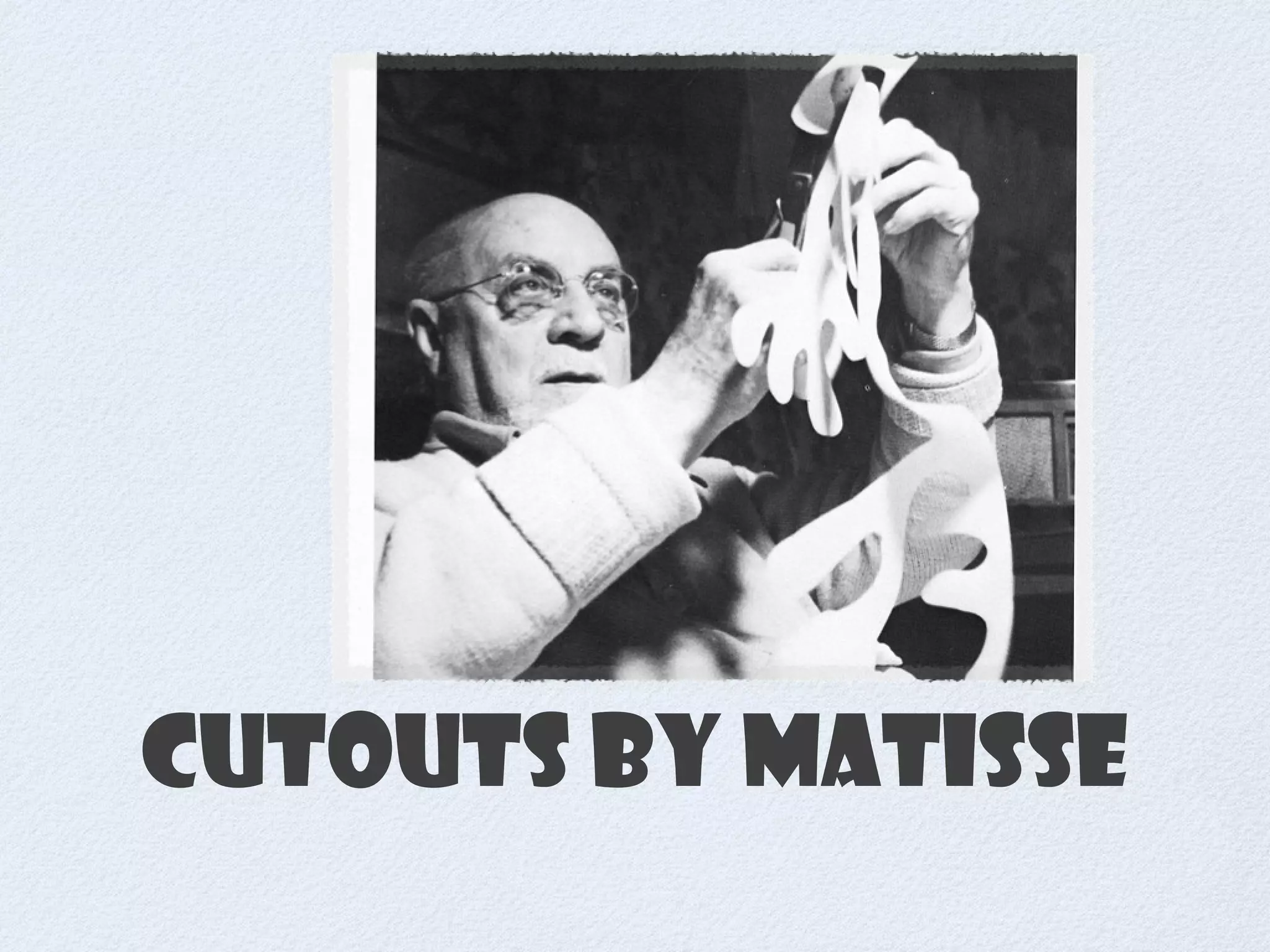
Cutouts by matisse
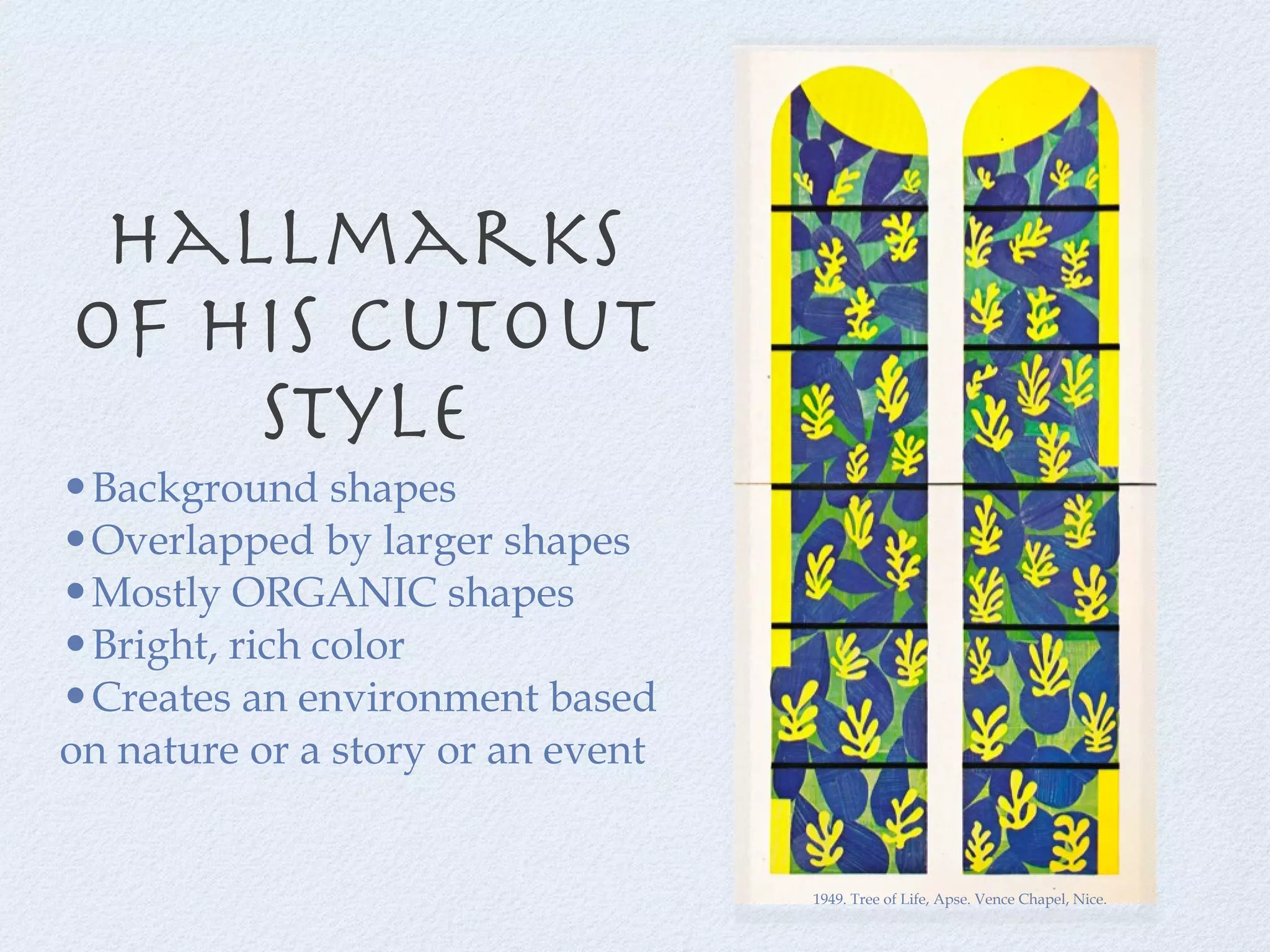
Hallmarks of his cutout style Background shapes  Overlapped by larger shapes Mostly ORGANIC shapes Bright, rich color Creates an environment based on nature or a story or an event 1949. Tree of Life, Apse. Vence Chapel, Nice.
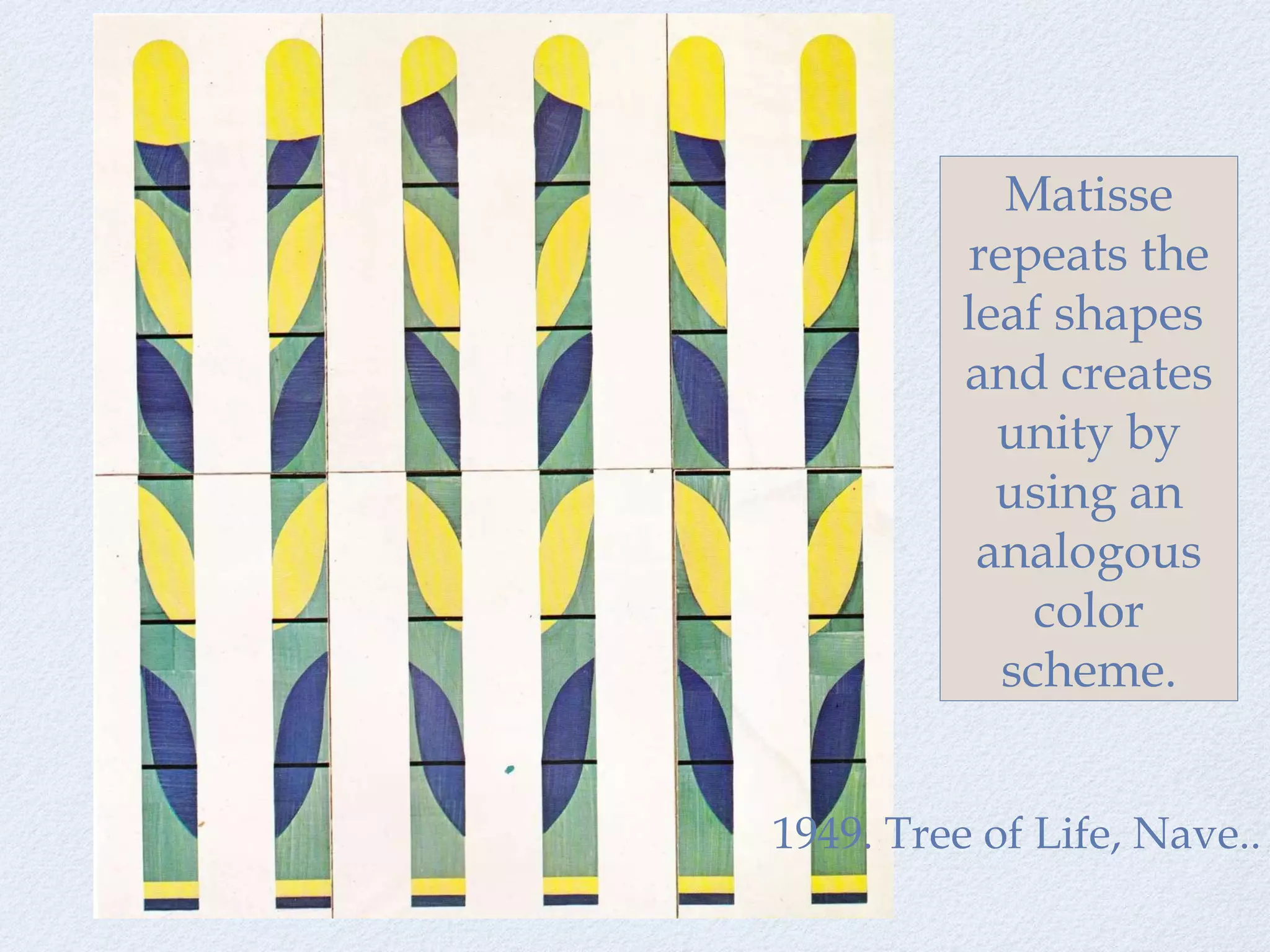
1949. Tree of Life, Nave.. Matisse repeats the leaf shapes  and creates unity by using an analogous color scheme.
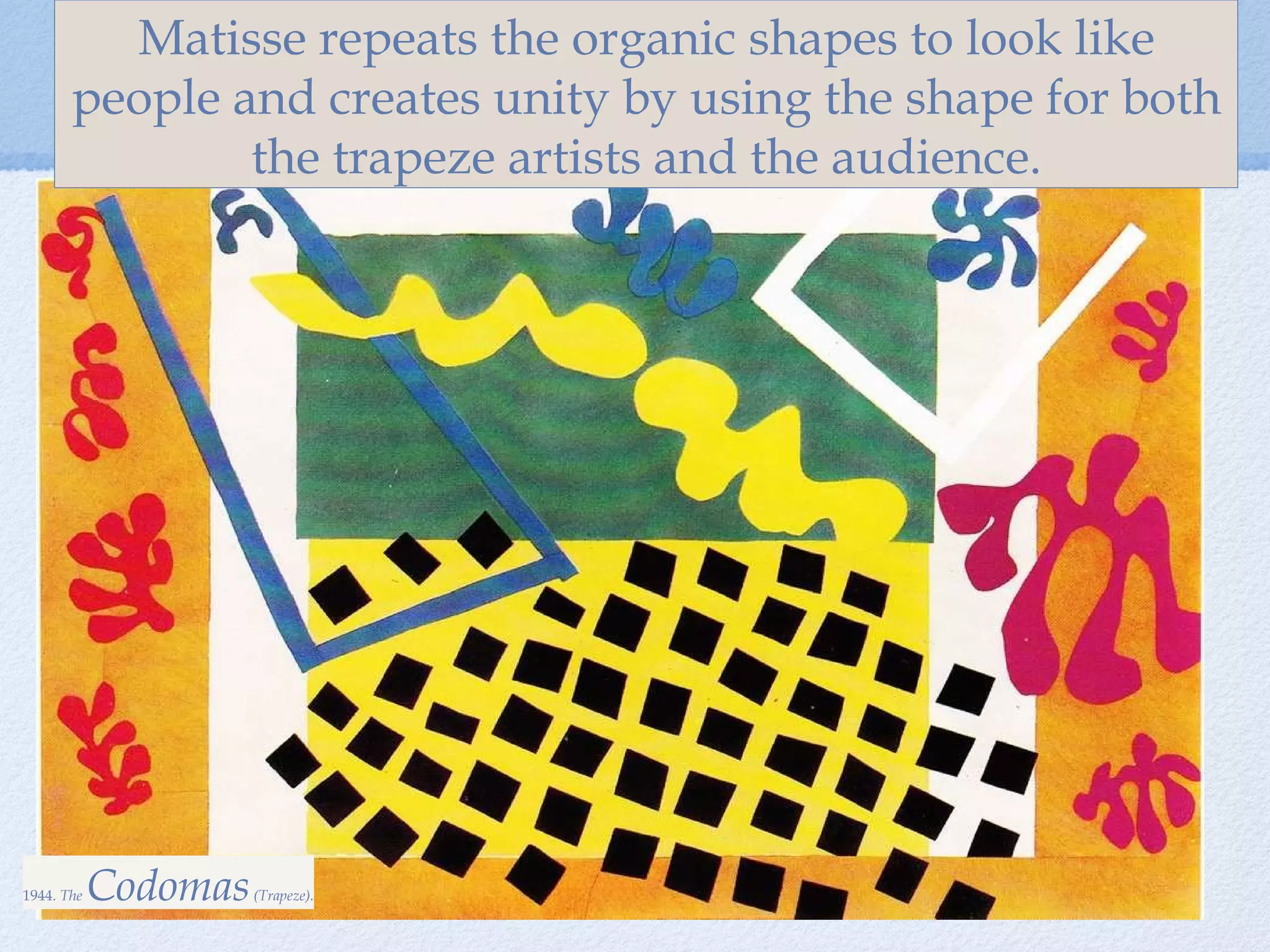
1944.  The  Codomas  (Trapeze). Matisse repeats the organic shapes to look like people and creates unity by using the shape for both the trapeze artists and the audience.
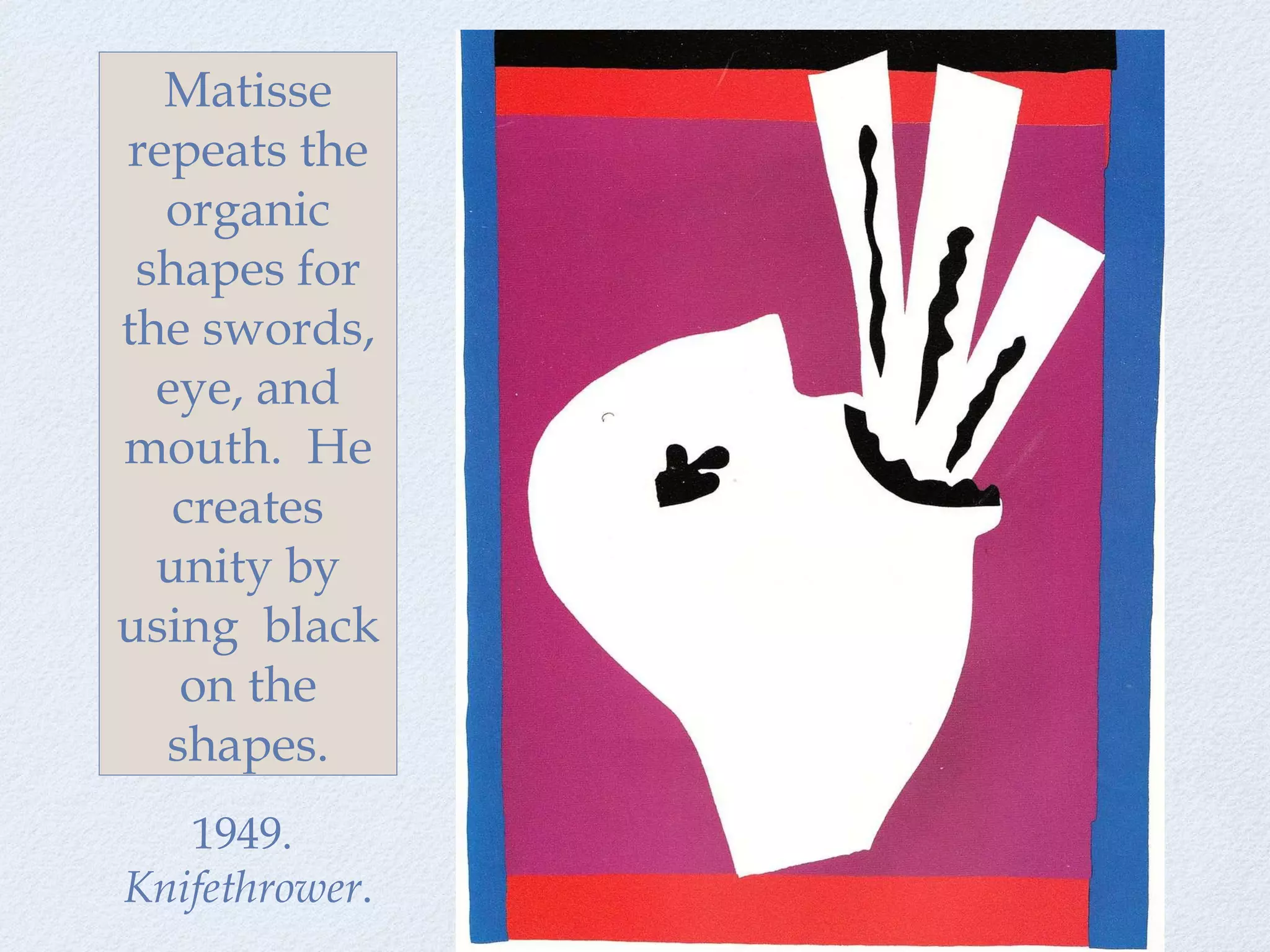
1949.  Knifethrower . Matisse repeats the organic shapes for the swords, eye, and mouth.  He creates unity by using  black on the shapes.
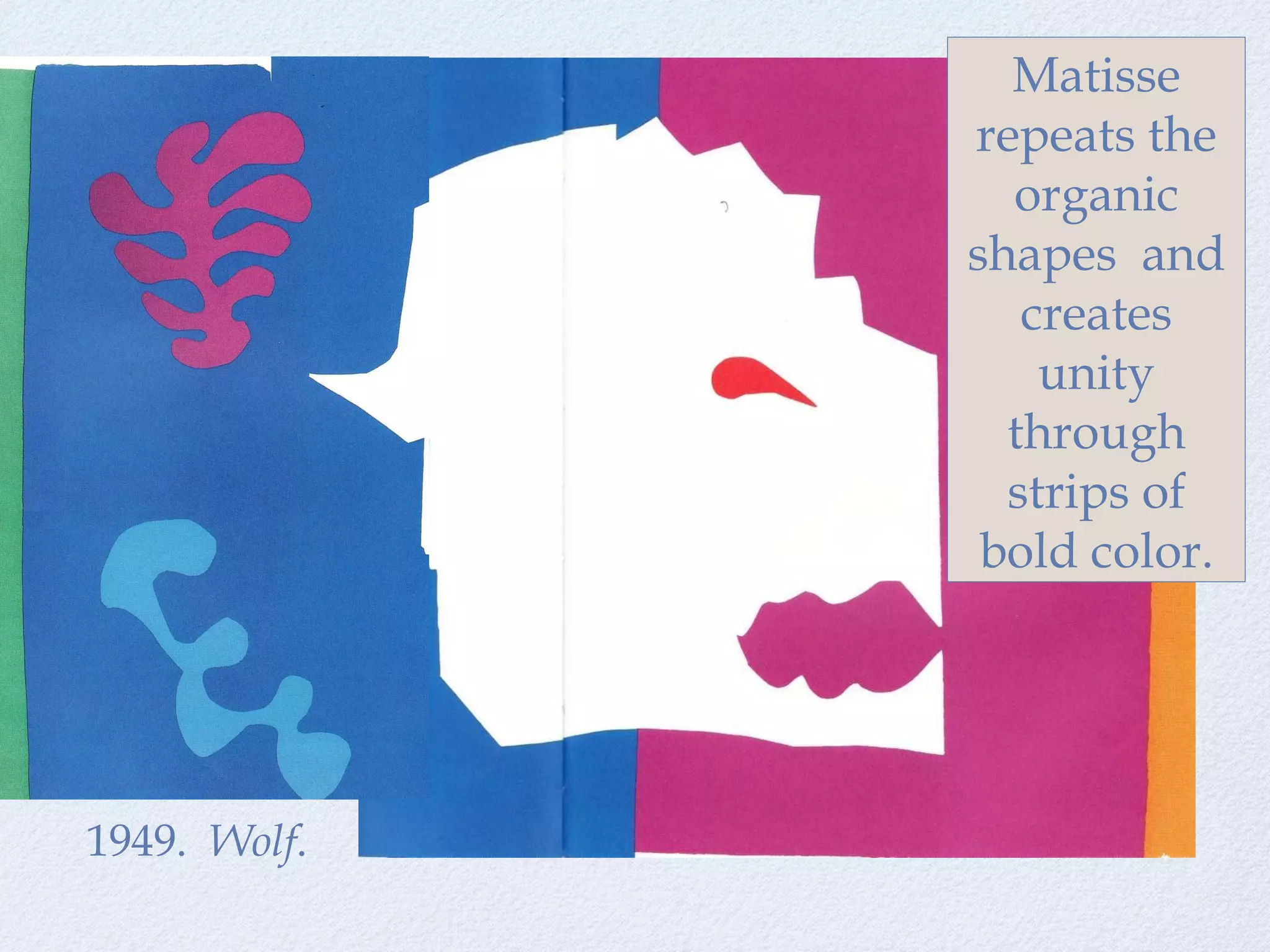
1949.  Wolf . Matisse repeats the organic shapes  and creates unity through strips of bold color.
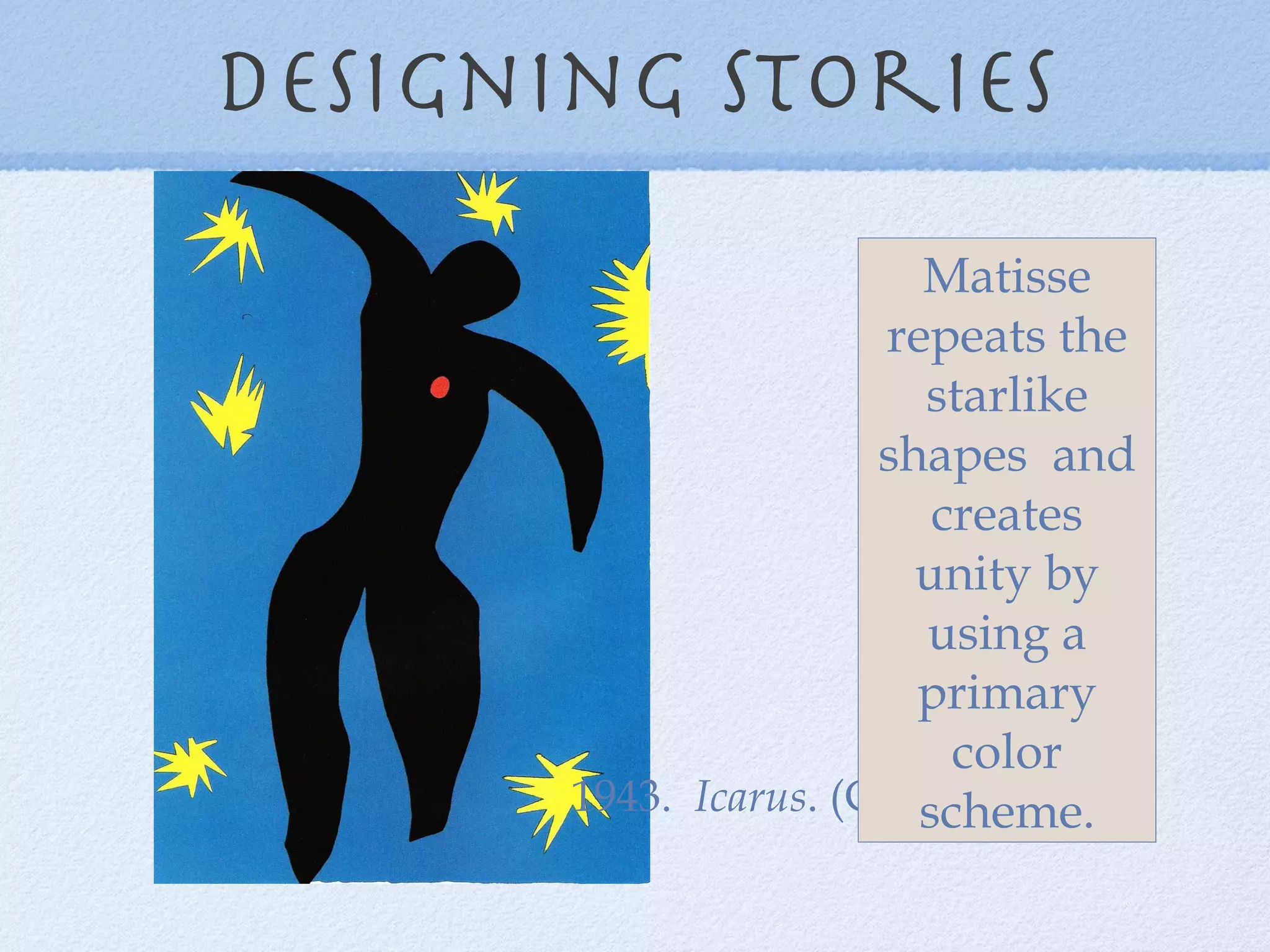
Designing Stories 1943.  Icarus . (Cover for  Jazz ) Matisse repeats the starlike shapes  and creates unity by using a primary color scheme.
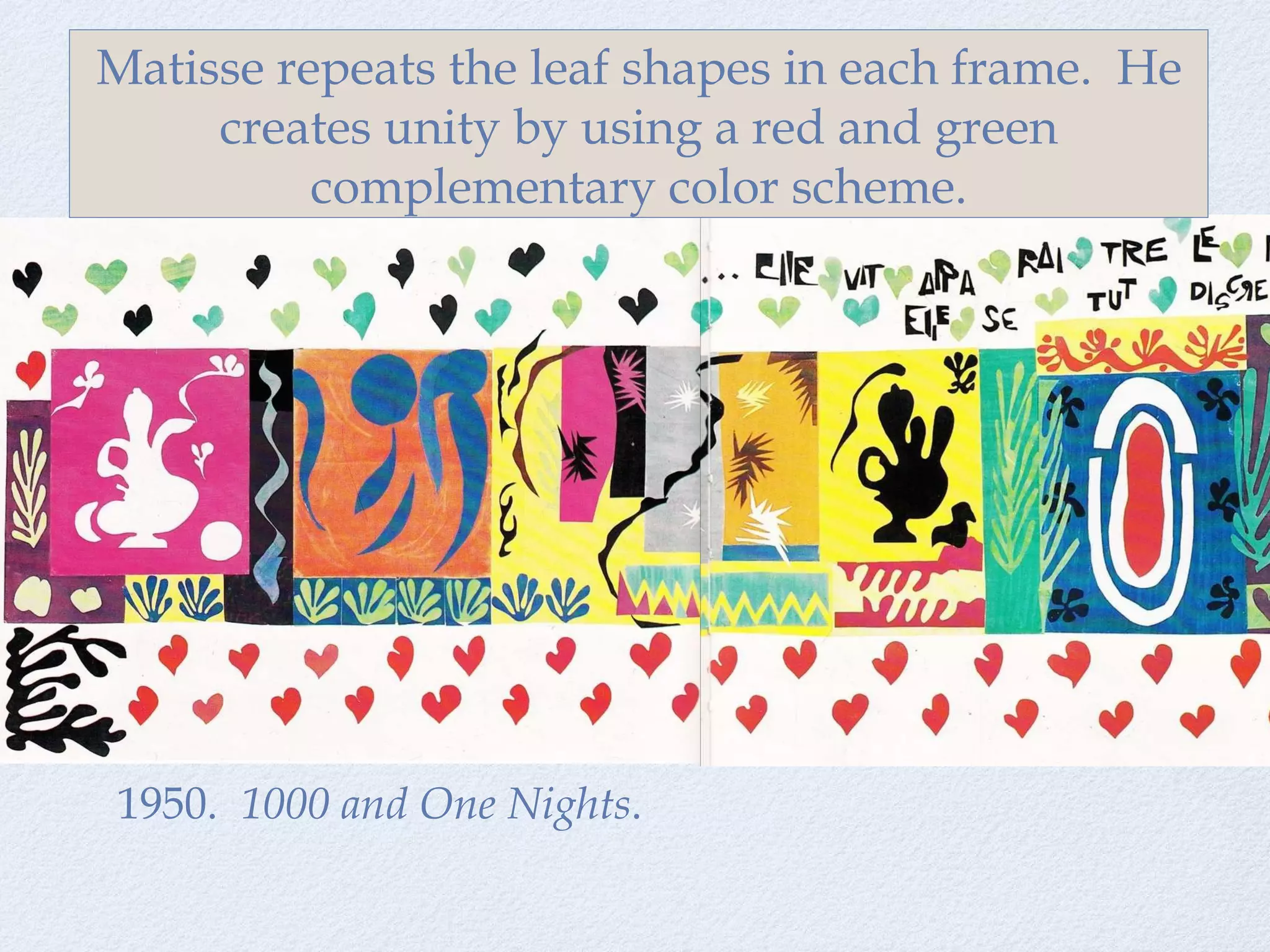
1950.  1000 and One Nights . Matisse repeats the leaf shapes in each frame.  He creates unity by using a red and green complementary color scheme.
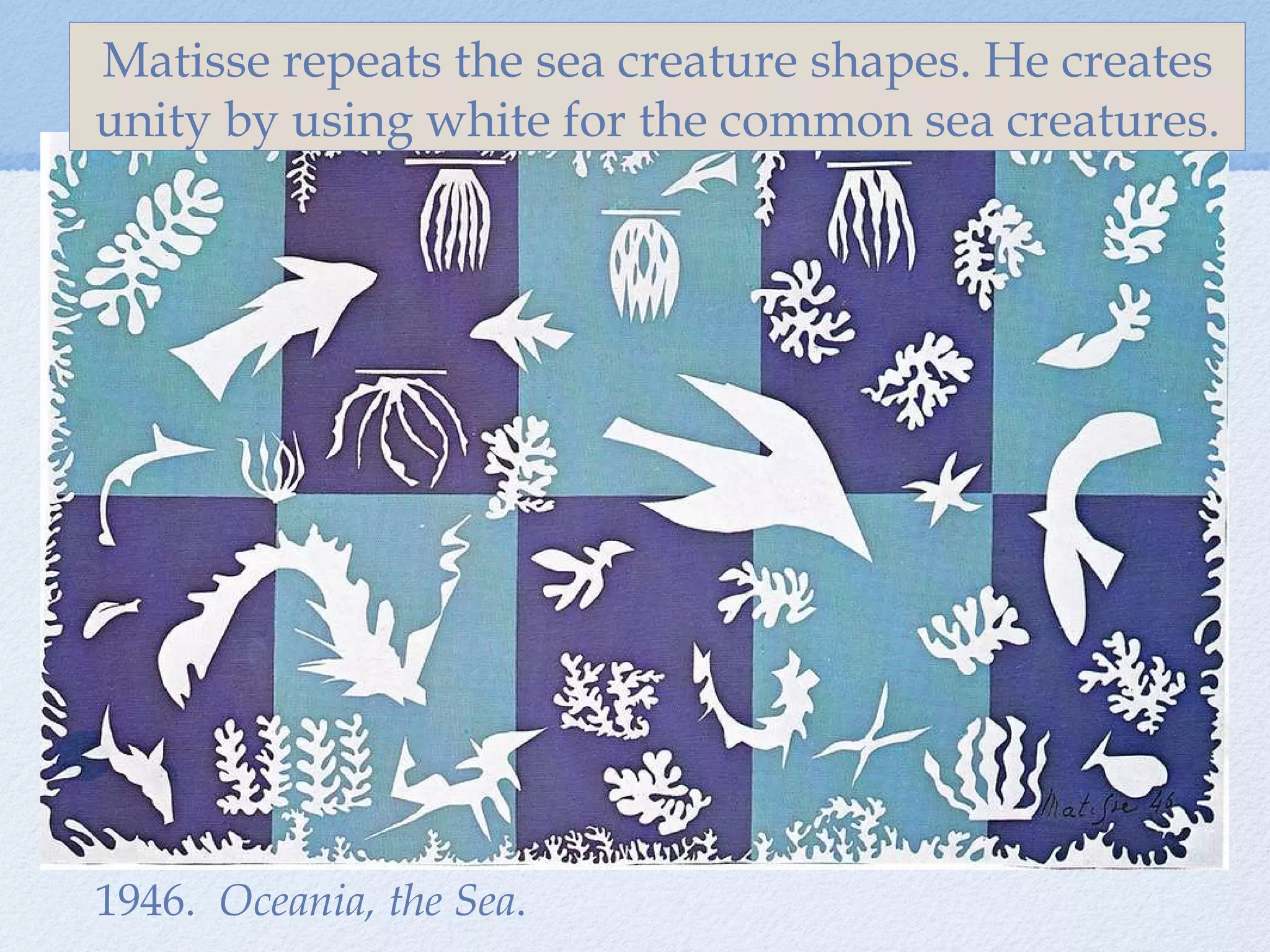
1946.  Oceania, the Sea . Matisse repeats the sea creature shapes. He creates unity by using white for the common sea creatures.
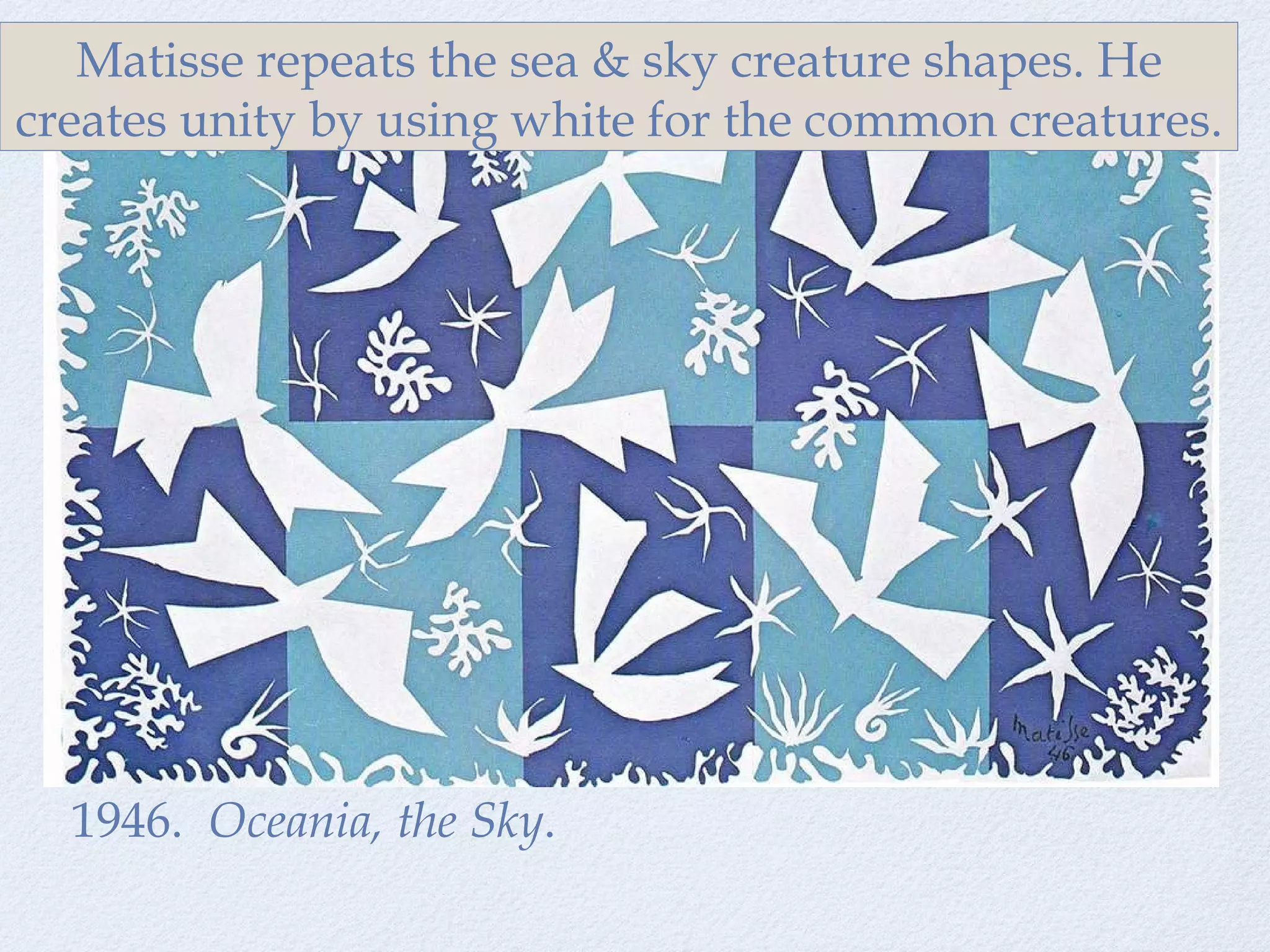
1946.  Oceania, the Sky . Matisse repeats the sea & sky creature shapes. He creates unity by using white for the common creatures.
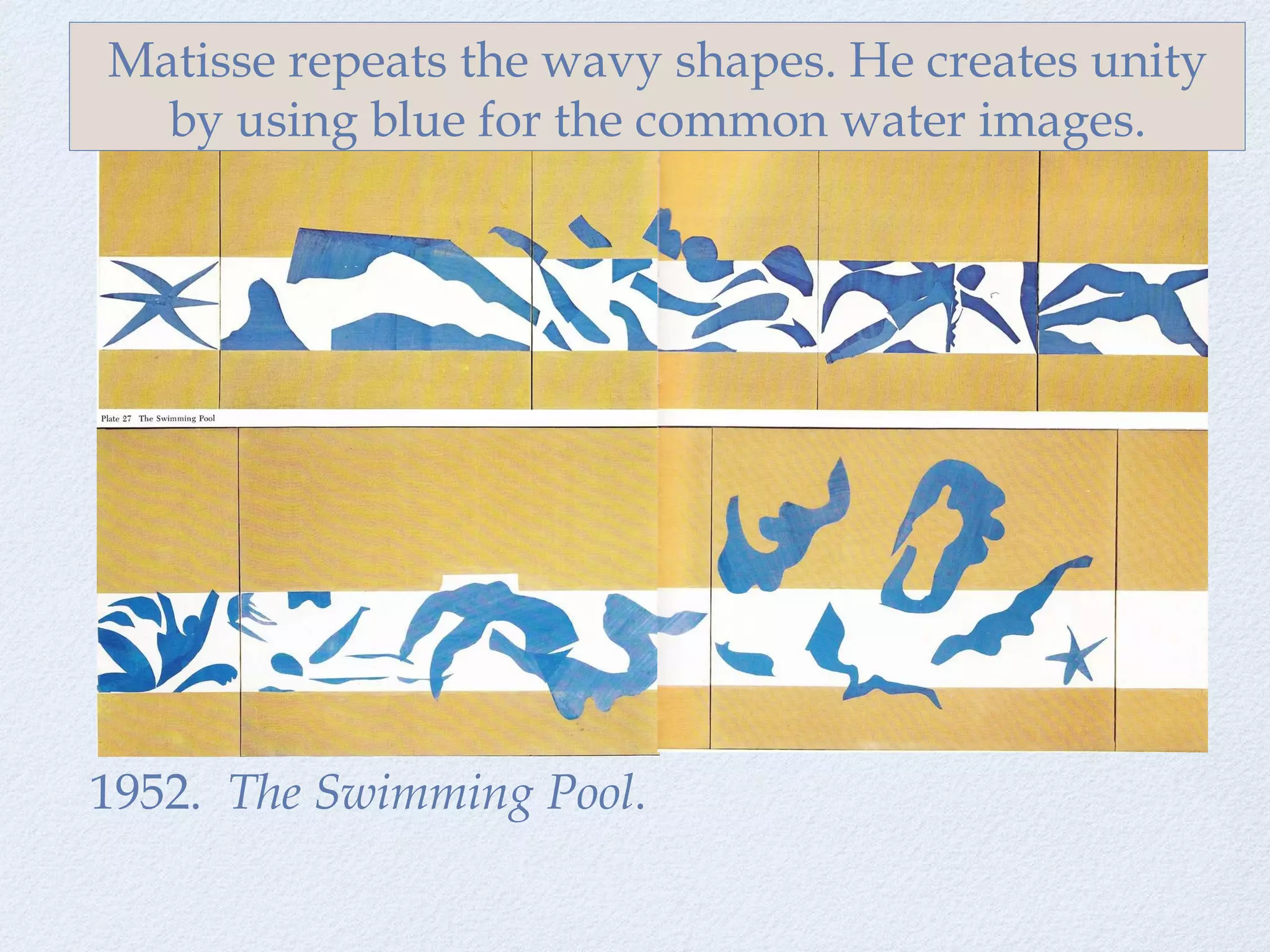
1952.  The Swimming Pool . Matisse repeats the wavy shapes. He creates unity by using blue for the common water images.

Matisse drawing with color unity and repetition

  • 1.
  • 2.
    Hallmarks of hiscutout style Background shapes Overlapped by larger shapes Mostly ORGANIC shapes Bright, rich color Creates an environment based on nature or a story or an event 1949. Tree of Life, Apse. Vence Chapel, Nice.
  • 3.
    1949. Tree ofLife, Nave.. Matisse repeats the leaf shapes and creates unity by using an analogous color scheme.
  • 4.
    1944. The Codomas (Trapeze). Matisse repeats the organic shapes to look like people and creates unity by using the shape for both the trapeze artists and the audience.
  • 5.
    1949. Knifethrower. Matisse repeats the organic shapes for the swords, eye, and mouth. He creates unity by using black on the shapes.
  • 6.
    1949. Wolf. Matisse repeats the organic shapes and creates unity through strips of bold color.
  • 7.
    Designing Stories 1943. Icarus . (Cover for Jazz ) Matisse repeats the starlike shapes and creates unity by using a primary color scheme.
  • 8.
    1950. 1000and One Nights . Matisse repeats the leaf shapes in each frame. He creates unity by using a red and green complementary color scheme.
  • 9.
    1946. Oceania,the Sea . Matisse repeats the sea creature shapes. He creates unity by using white for the common sea creatures.
  • 10.
    1946. Oceania,the Sky . Matisse repeats the sea & sky creature shapes. He creates unity by using white for the common creatures.
  • 11.
    1952. TheSwimming Pool . Matisse repeats the wavy shapes. He creates unity by using blue for the common water images.