PREVENTING THE CAUSES OF DISEASEDavid Kim, PhDVestergaardFrandsen West Africa18 March 2011
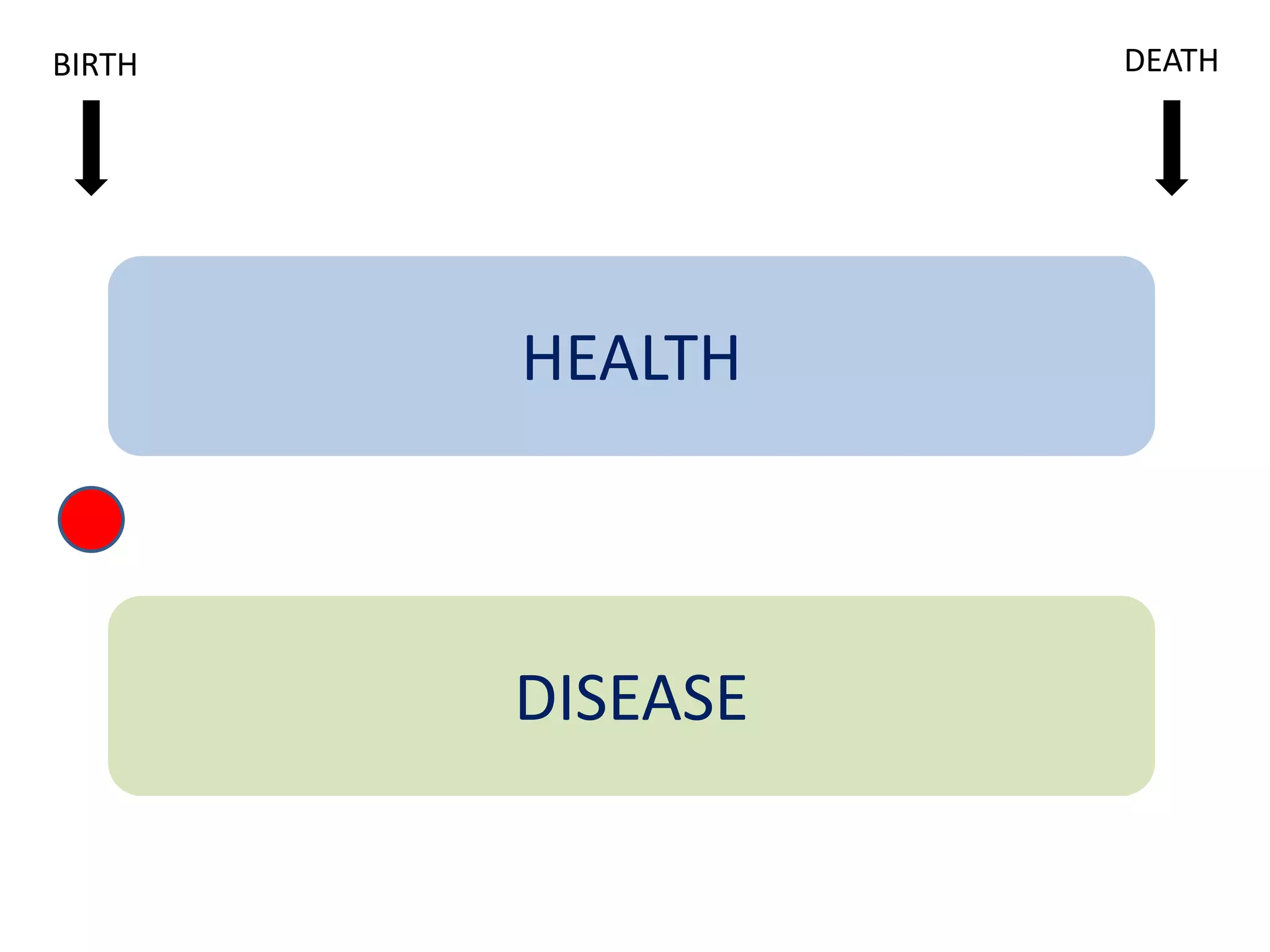
DEATHBIRTHHEALTHDISEASE
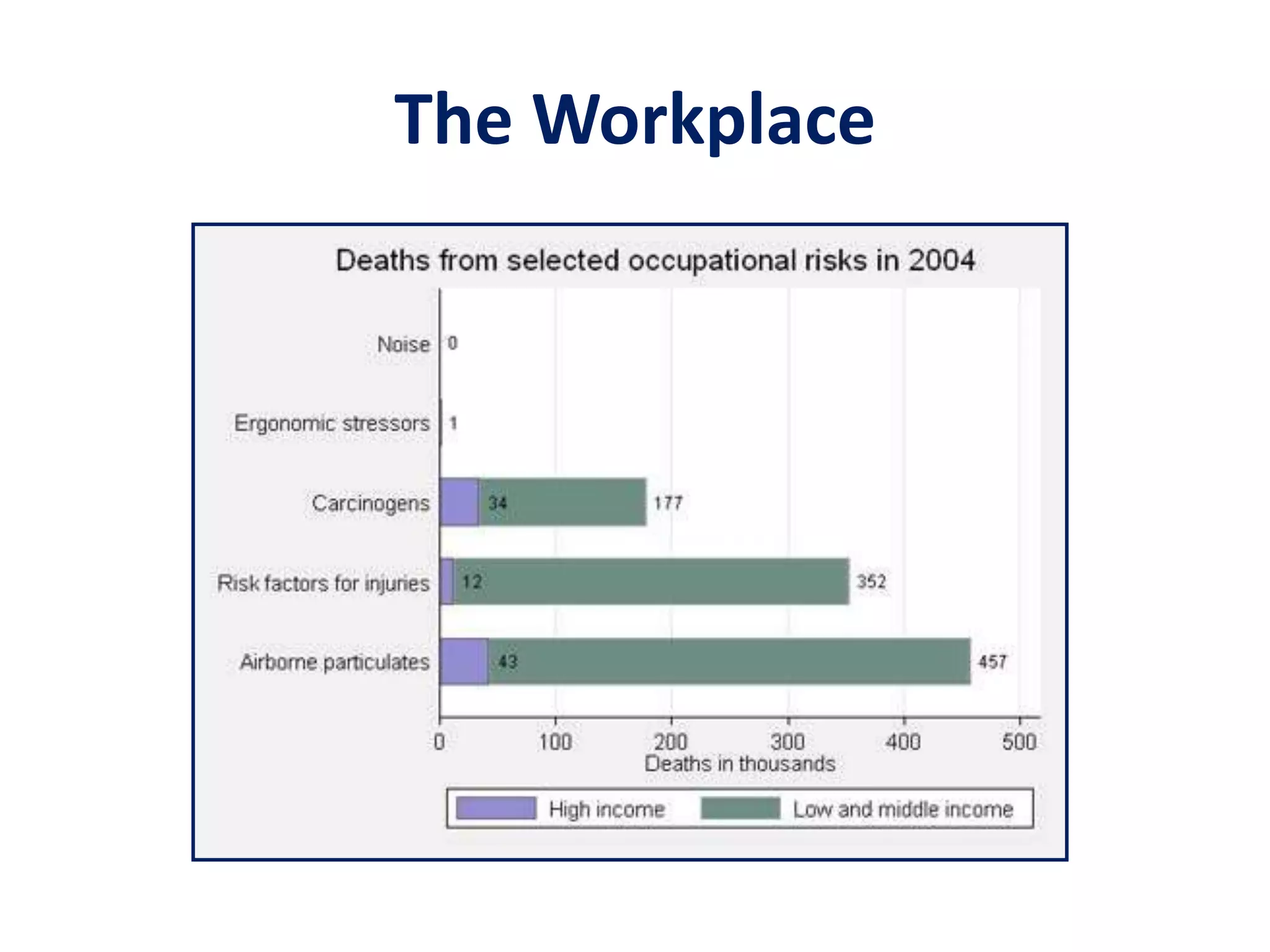
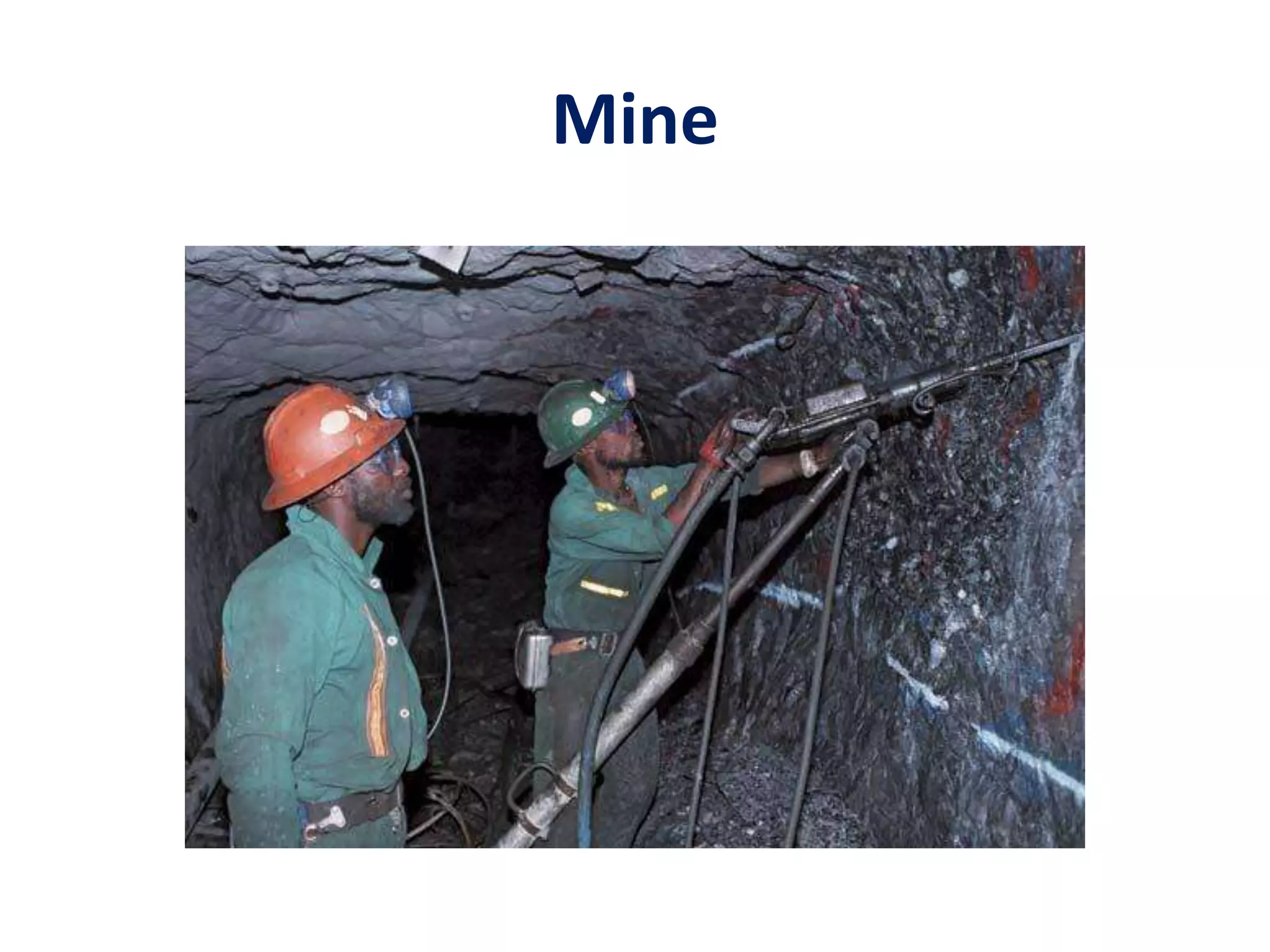
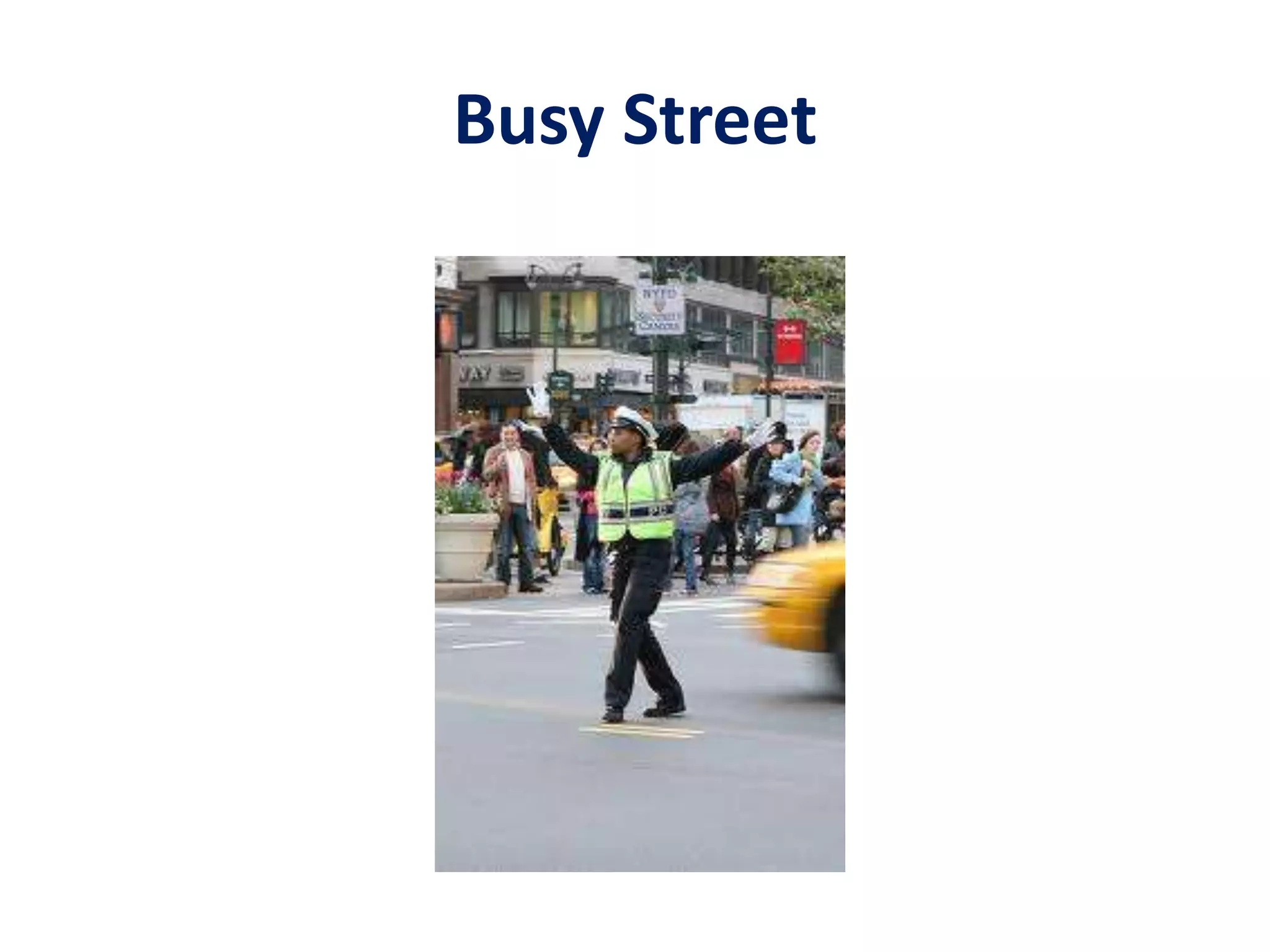
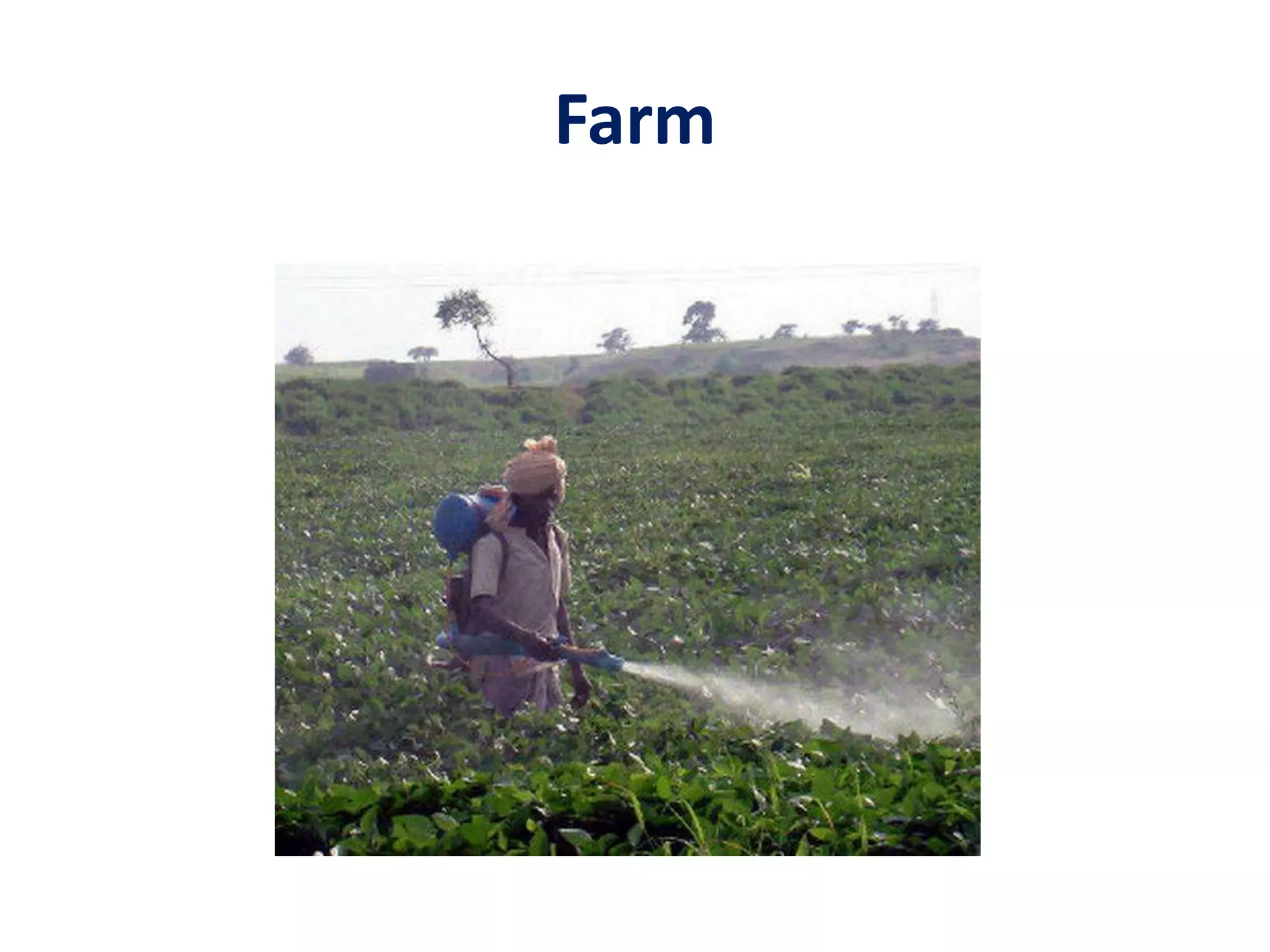
The Workplace
Mine
Busy Street
Farm
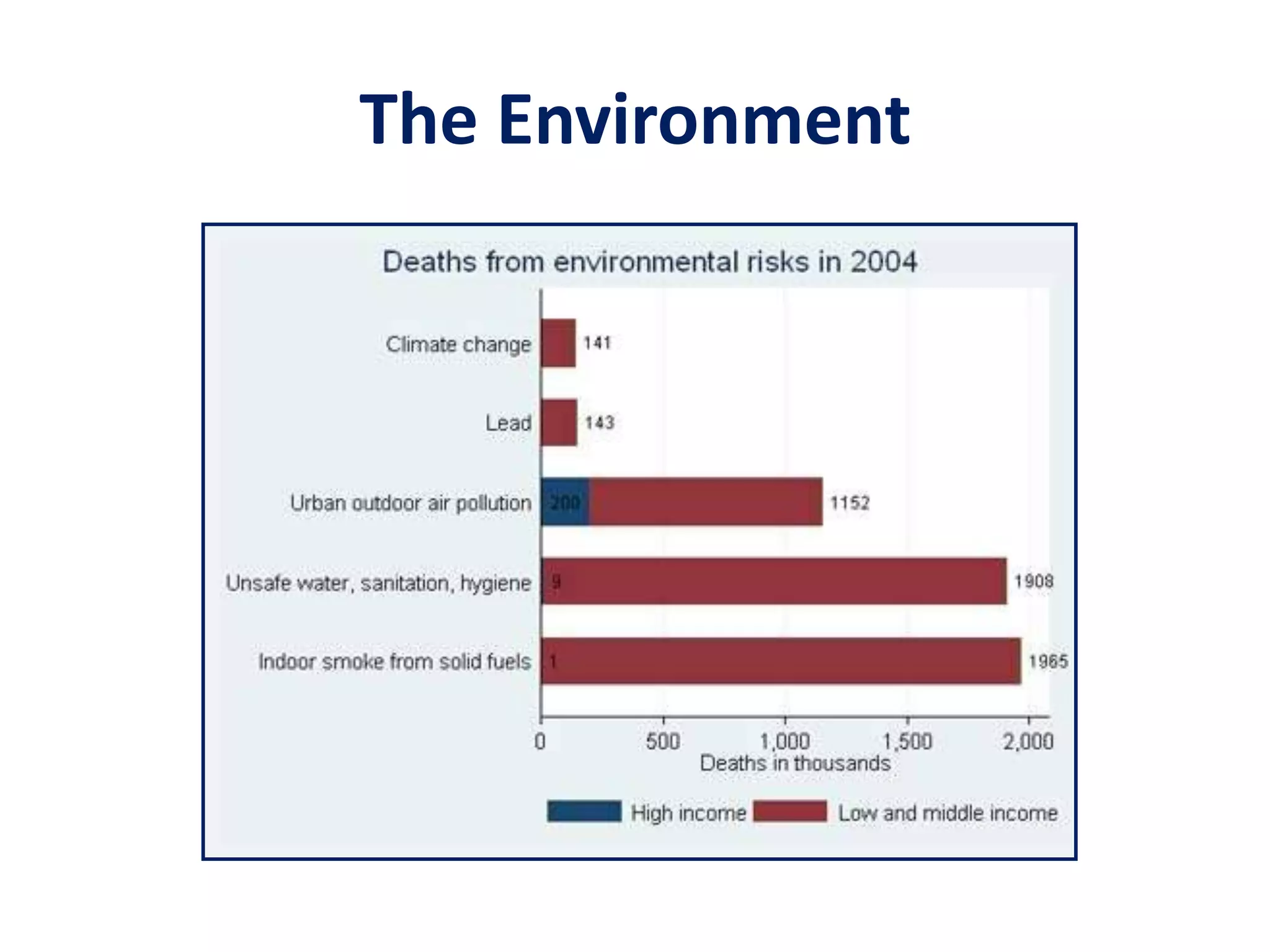
The Environment
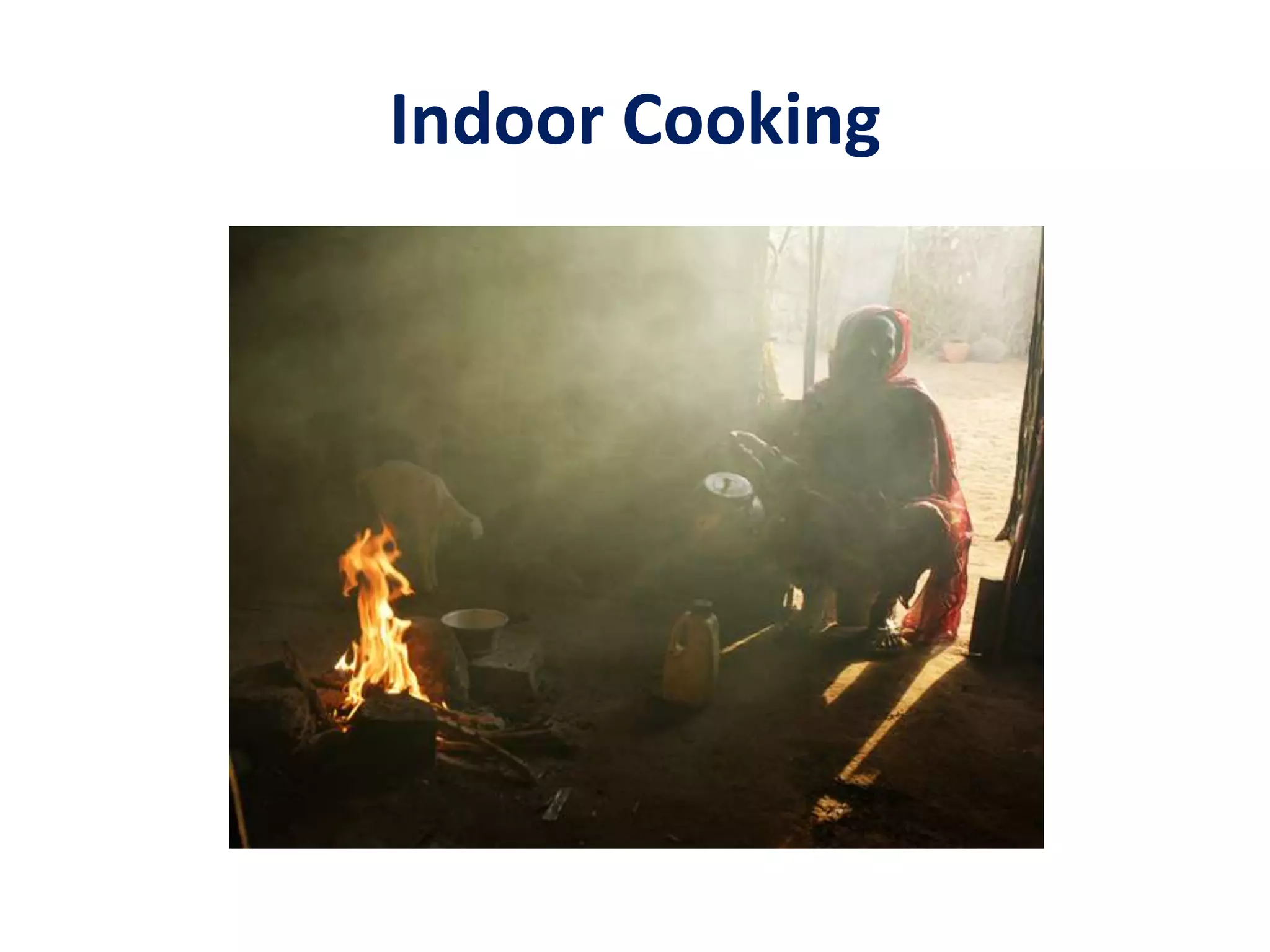
Indoor Cooking
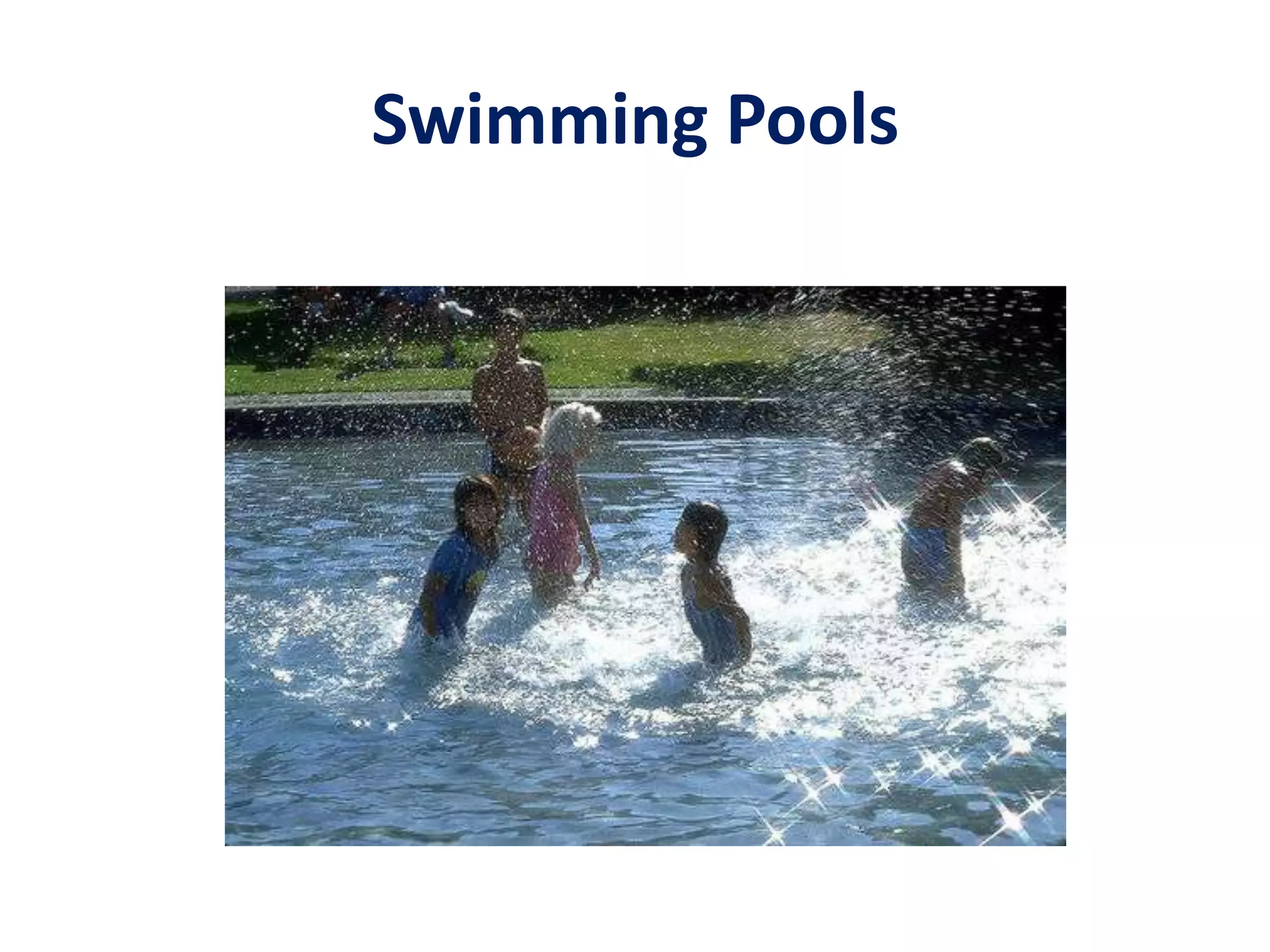
Swimming Pools
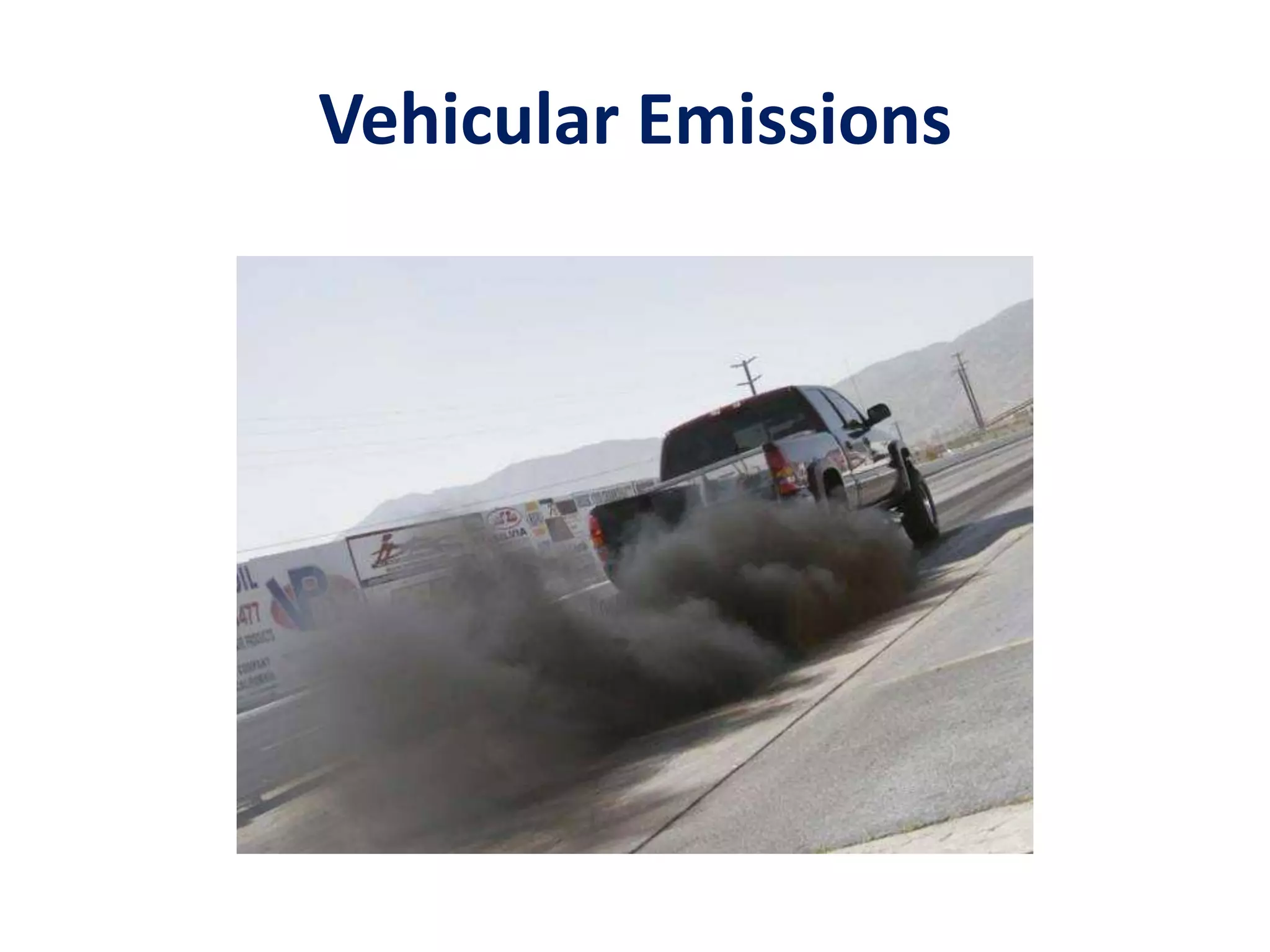
Vehicular Emissions
PreventionThe act of hinderingMerriam-Webter’s dictionary
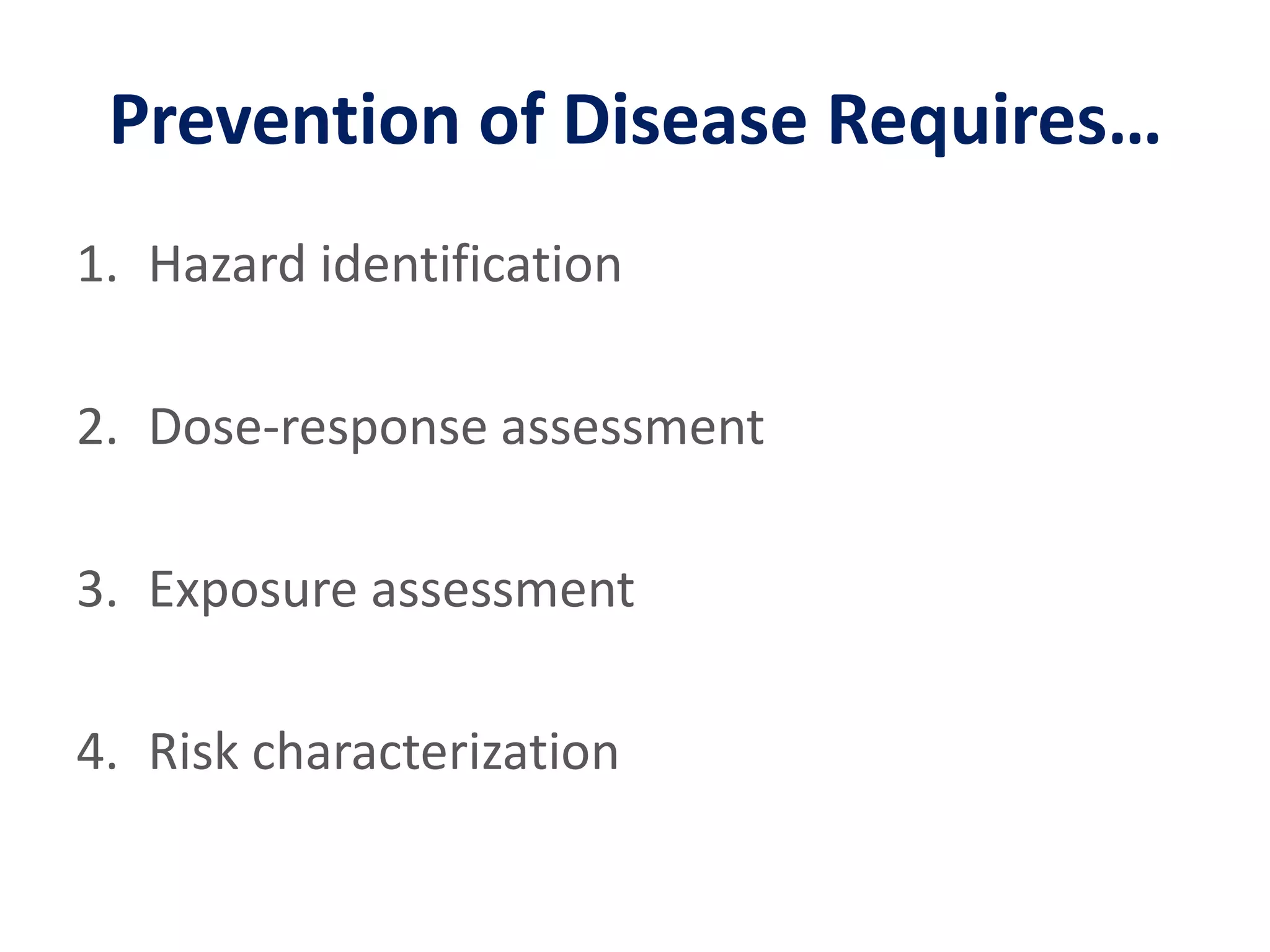
Prevention of Disease Requires…Hazard identificationDose-response assessmentExposure assessmentRisk characterization
Hazard IdentificationGroup Exercise:You are part of a public health team that has been sent to a neighbourhood of a city where parents have been complaining of their children experiencing coughing, runny noses, and fevers that won’t go away.  The number of children with these symptoms is growing every year; the numbers are 4 times larger than expected.  With your team, discuss the possible causes of these symptoms.
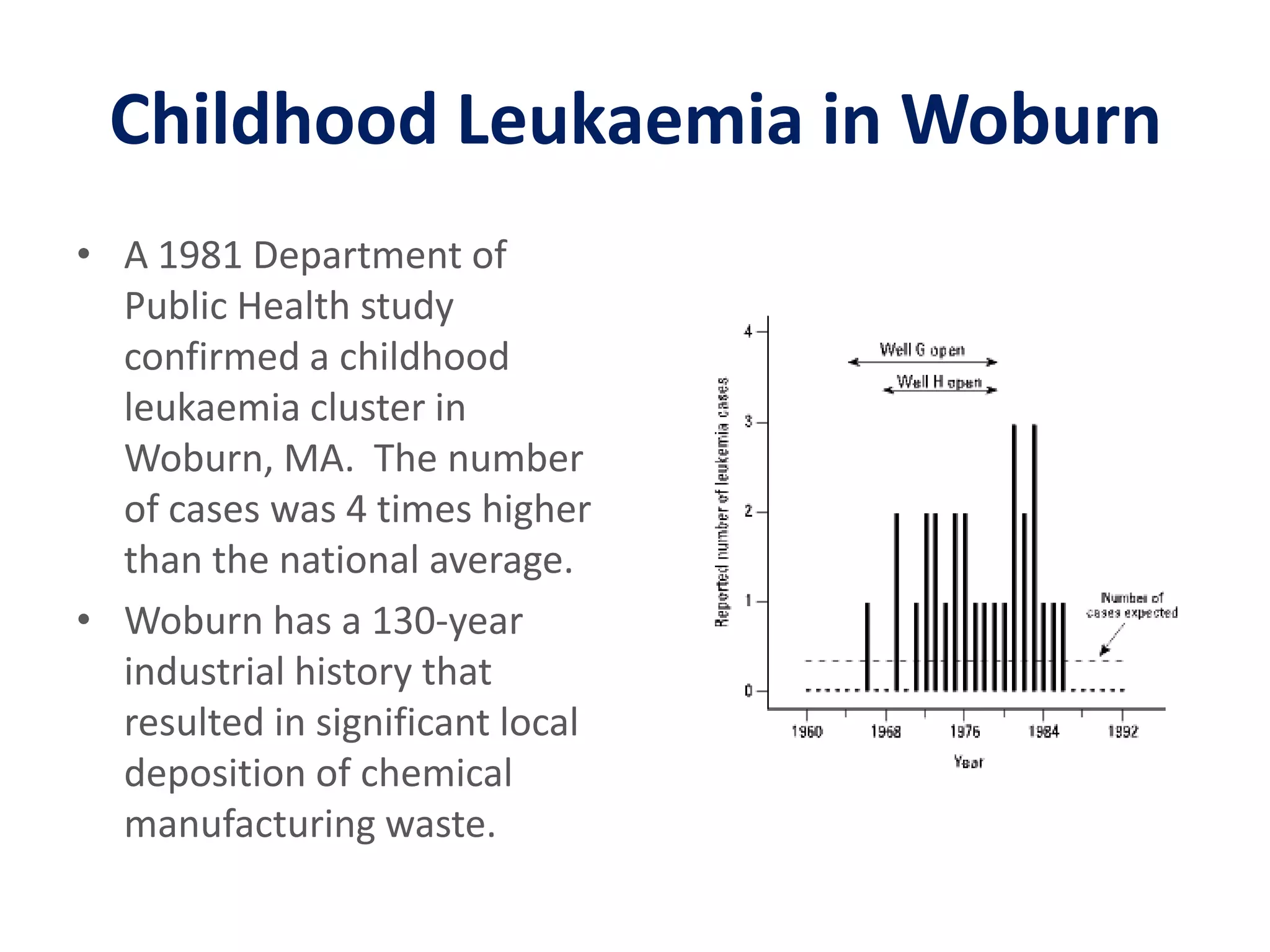
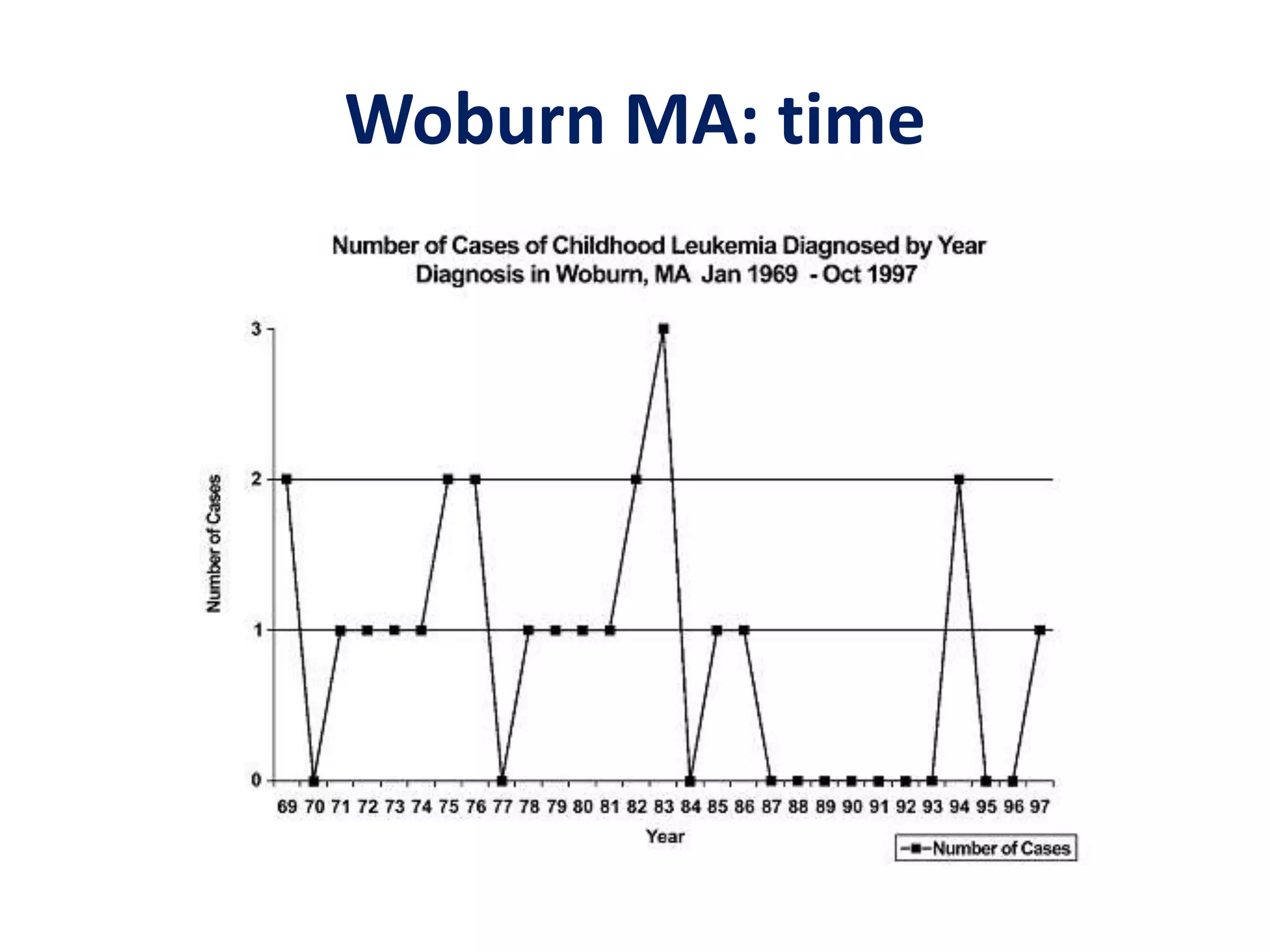
Childhood Leukaemia in WoburnA 1981 Department of Public Health study confirmed a childhood leukaemia cluster in Woburn, MA.  The number of cases was 4 times higher than the national average.Woburn has a 130-year industrial history that resulted in significant local deposition of chemical manufacturing waste.
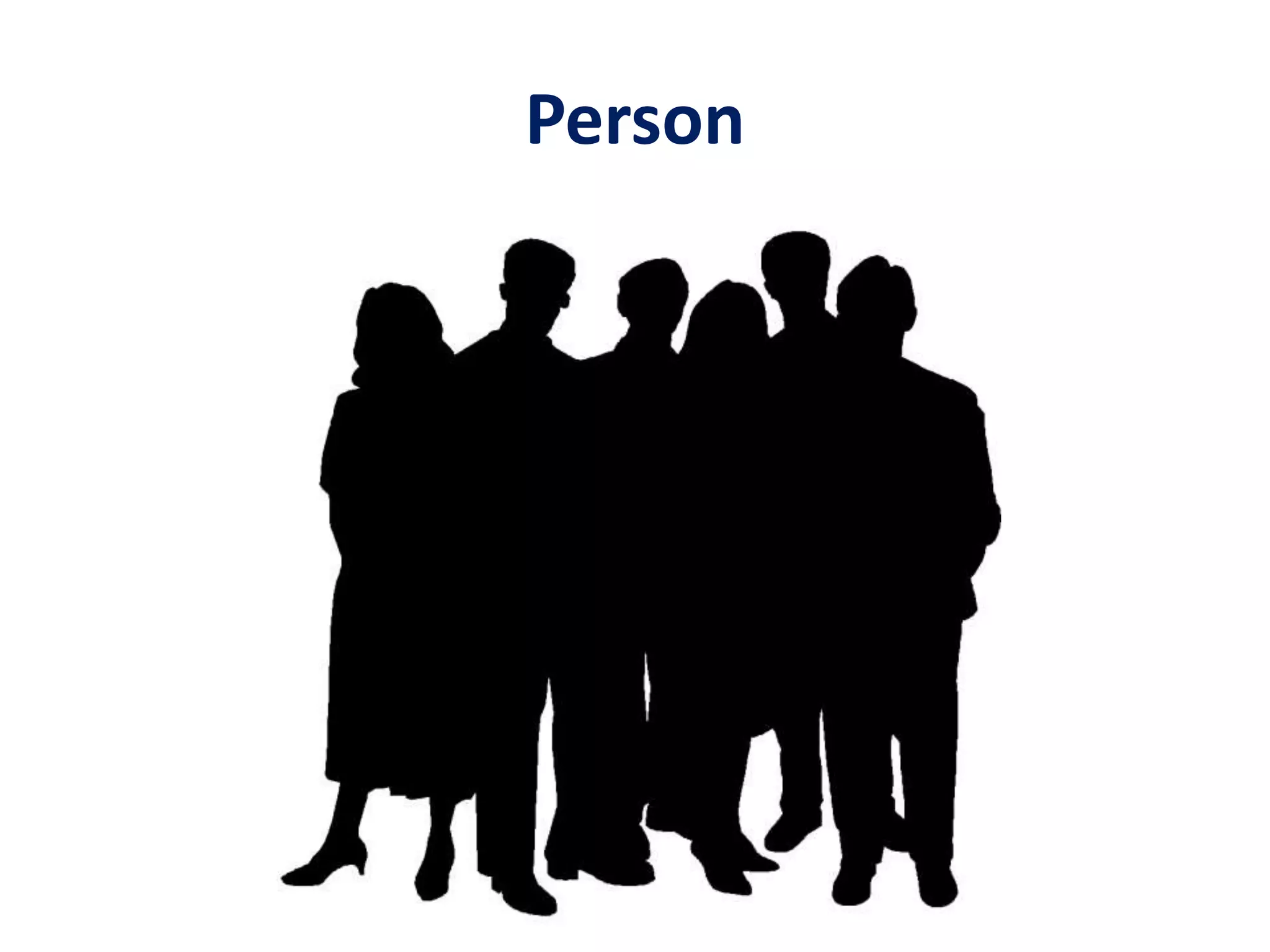
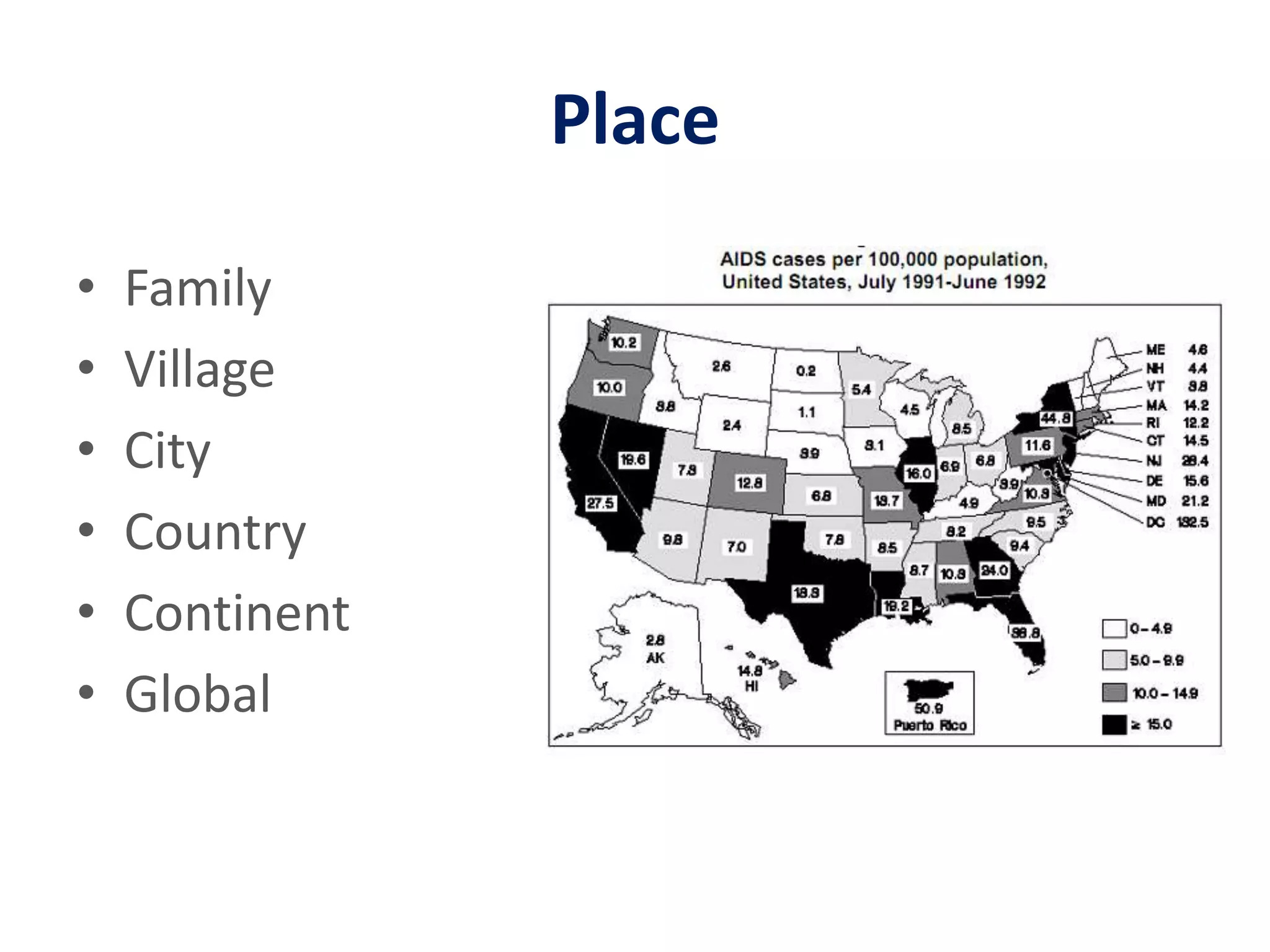
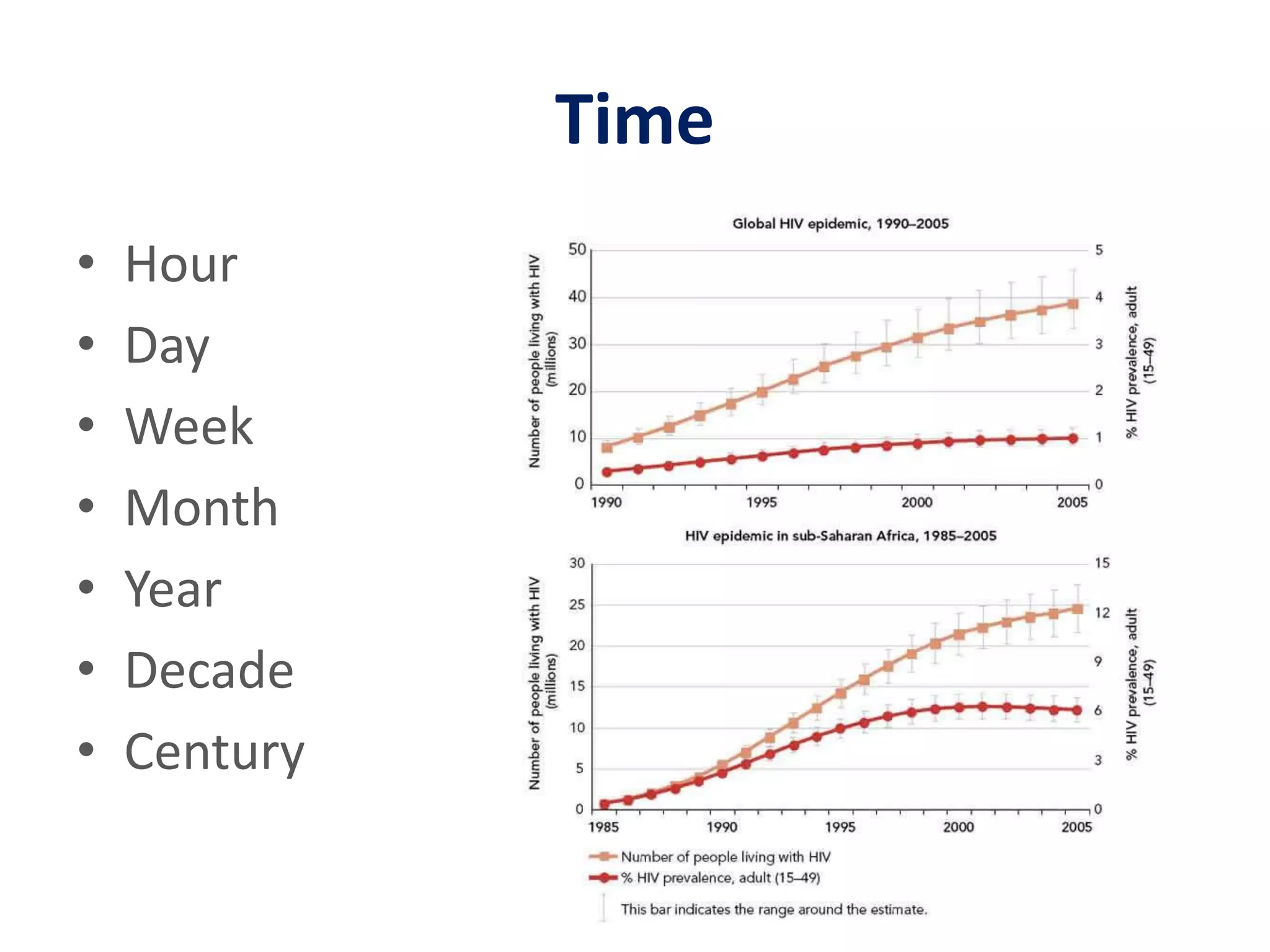
EpidemiologyEpidemiology is the basic science of public health.Purpose is to study (1) the distribution of disease in a population, and (2) the determinants of that disease.Concerned with person, place, and time.
Person
PlaceFamilyVillageCityCountryContinentGlobal
TimeHourDayWeekMonthYearDecadeCentury
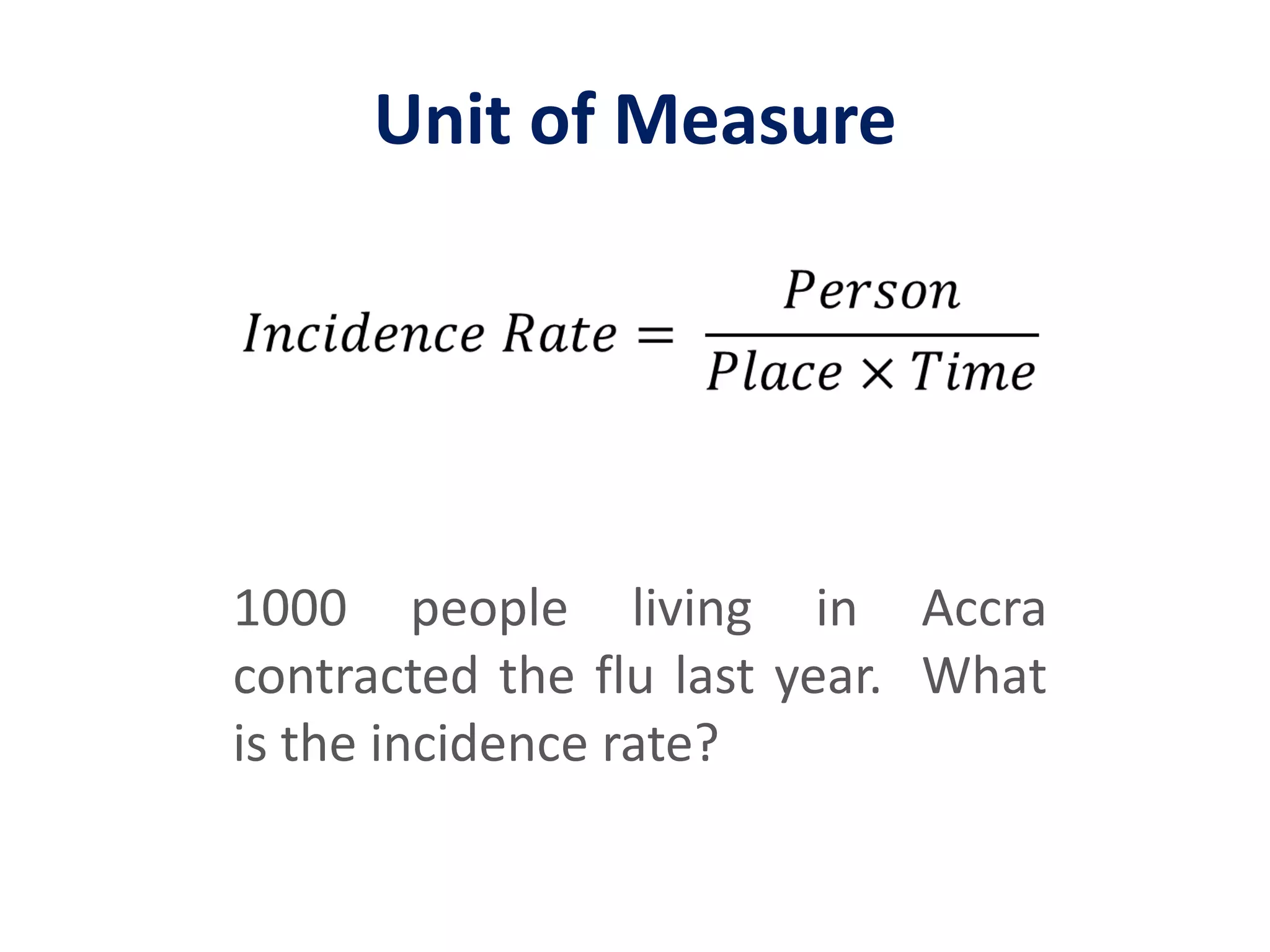
Unit of Measure𝐼𝑛𝑐𝑖𝑑𝑒𝑛𝑐𝑒 𝑅𝑎𝑡𝑒= 𝑃𝑒𝑟𝑠𝑜𝑛𝑃𝑙𝑎𝑐𝑒×𝑇𝑖𝑚𝑒 1000 people living in Accra contracted the flu last year.  What is the incidence rate?
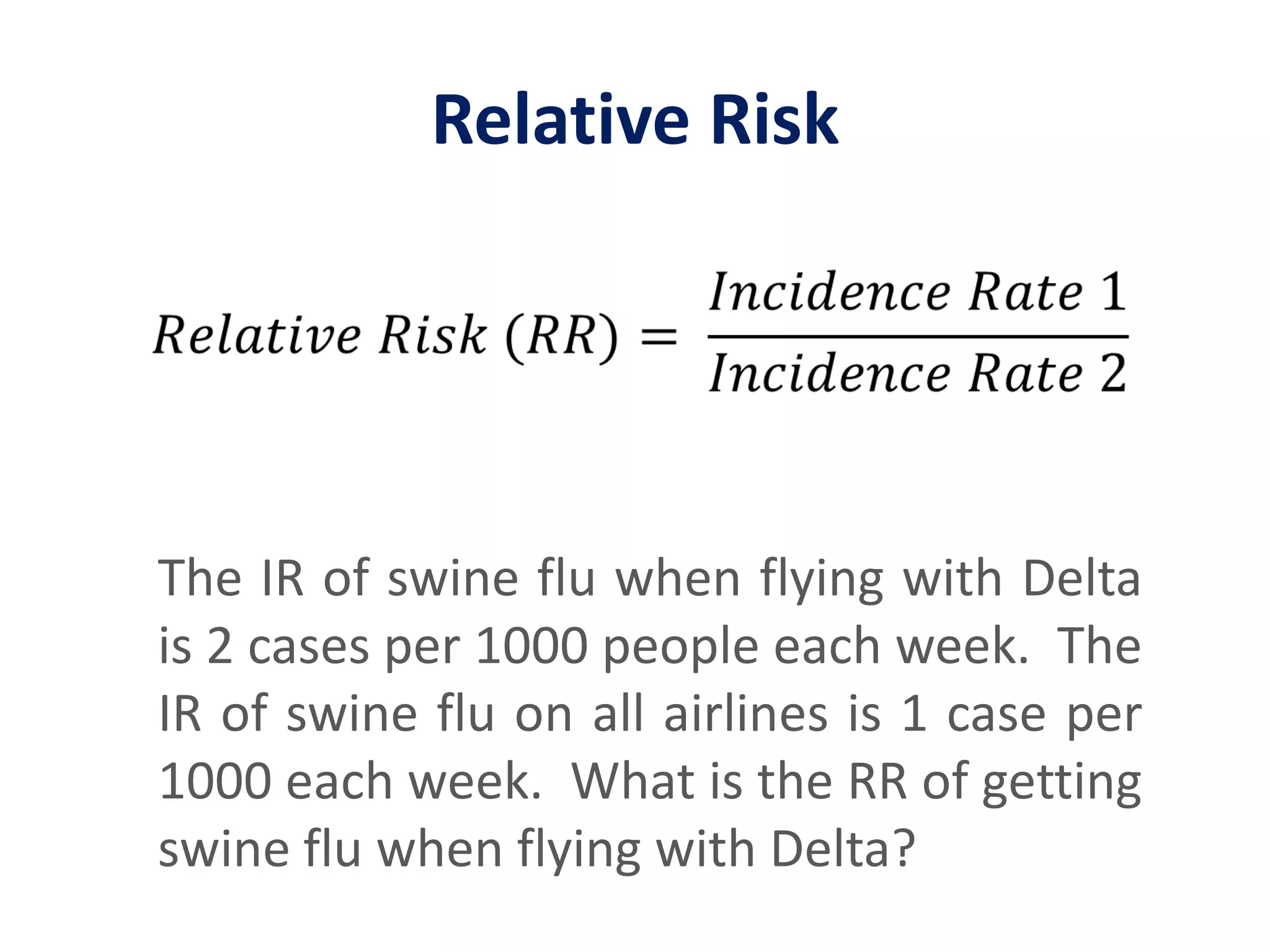
Relative Risk𝑅𝑒𝑙𝑎𝑡𝑖𝑣𝑒 𝑅𝑖𝑠𝑘 (𝑅𝑅)= 𝐼𝑛𝑐𝑖𝑑𝑒𝑛𝑐𝑒 𝑅𝑎𝑡𝑒 1𝐼𝑛𝑐𝑖𝑑𝑒𝑛𝑐𝑒 𝑅𝑎𝑡𝑒 2 The IR of swine flu when flying with Delta is 2 cases per 1000 people each week.  The IR of swine flu on all airlines is 1 case per 1000 each week.  What is the RR of getting swine flu when flying with Delta?
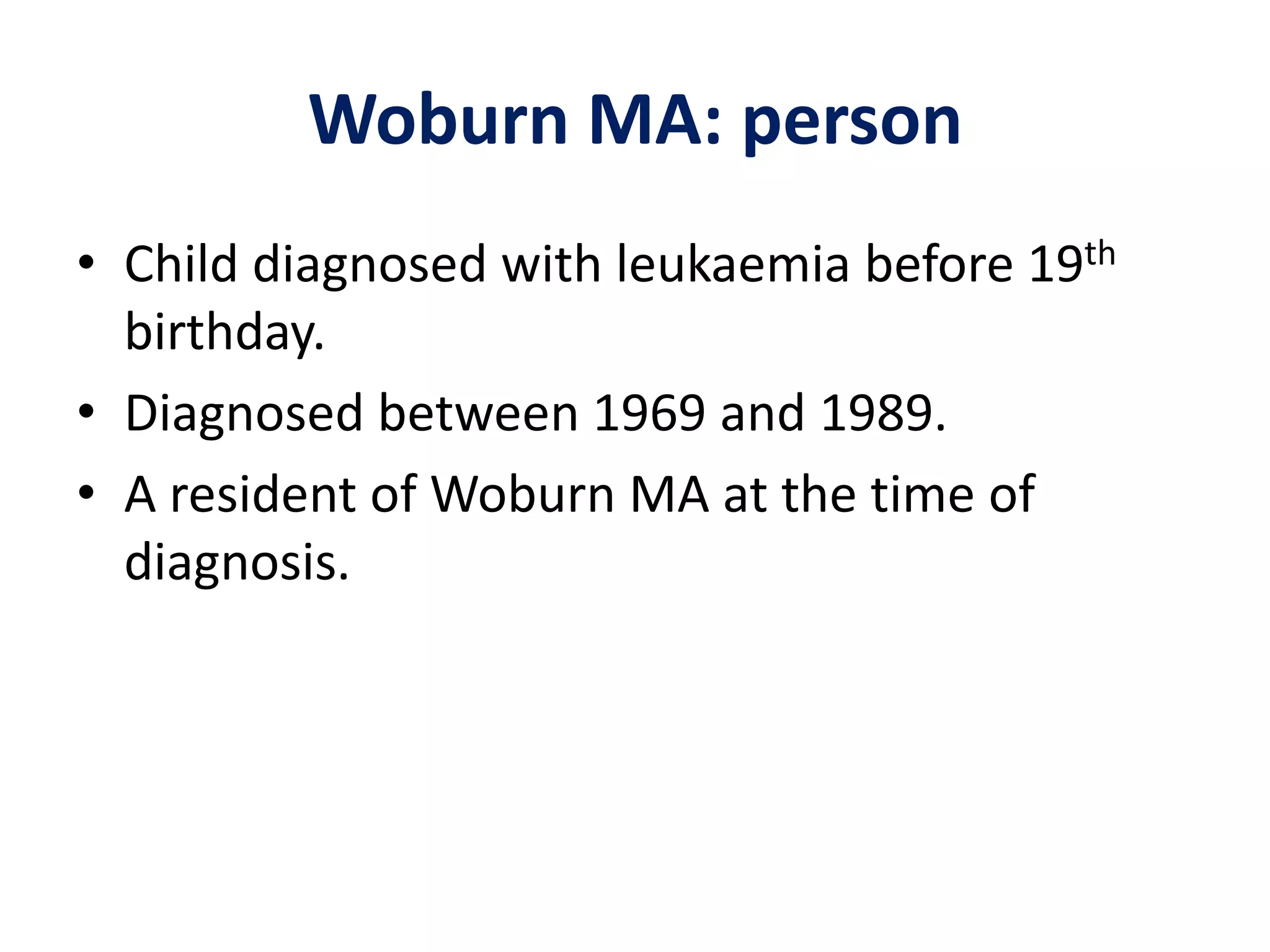
Woburn MA: personChild diagnosed with leukaemia before 19th birthday.Diagnosed between 1969 and 1989.A resident of Woburn MA at the time of diagnosis.
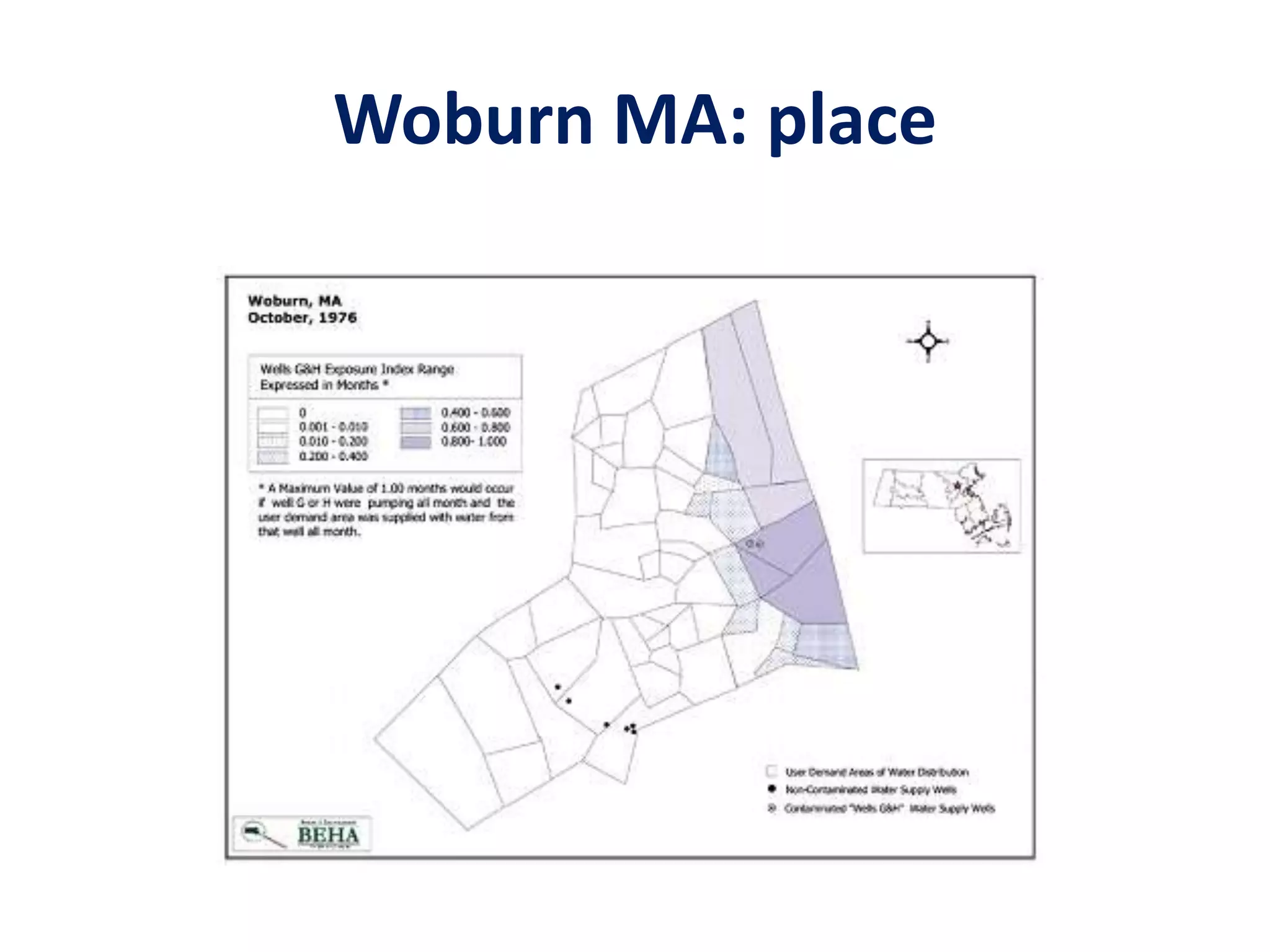
Woburn MA: place
Woburn MA: time
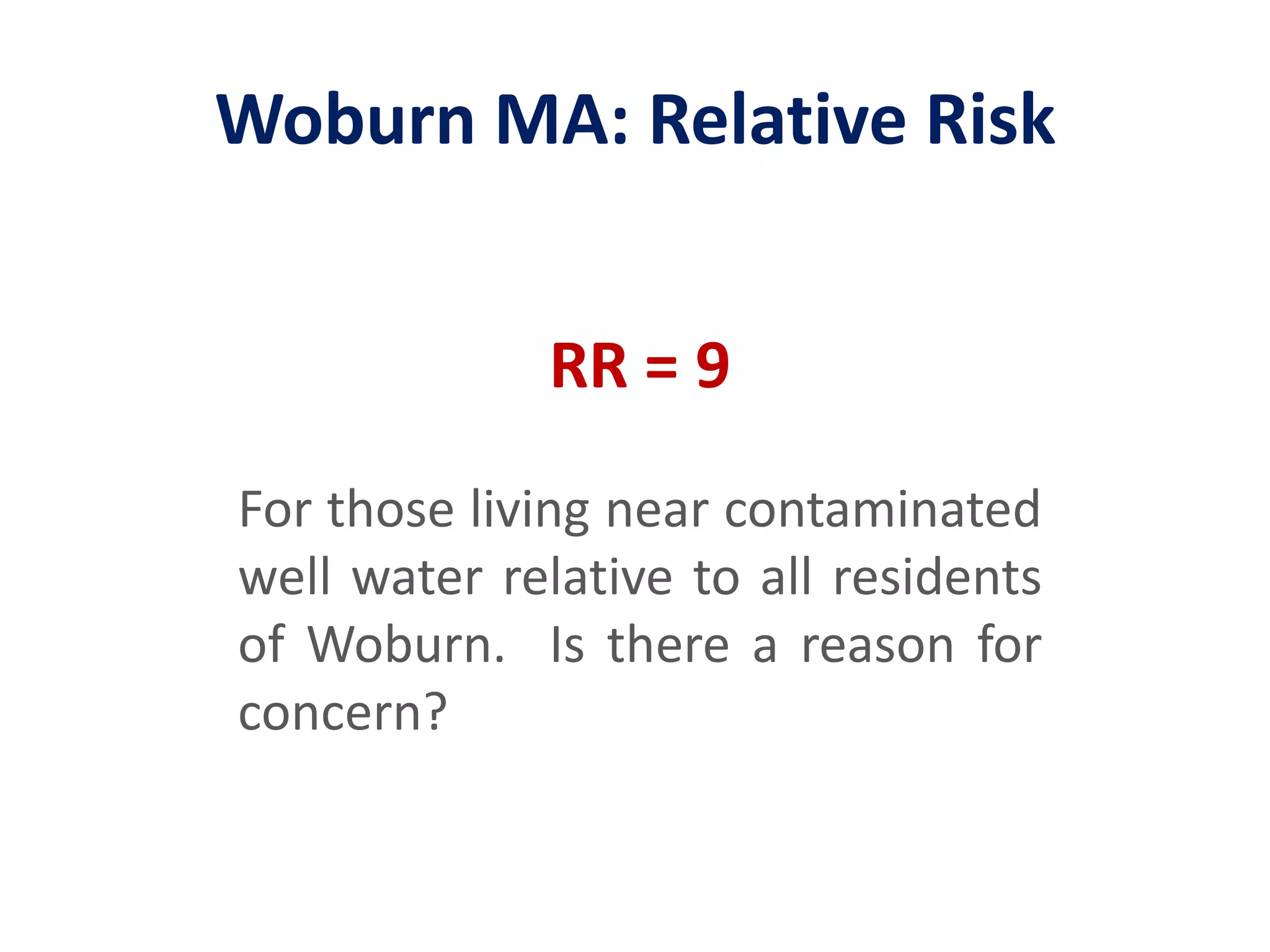
Woburn MA: Relative RiskRR = 9 For those living near contaminated well water relative to all residents of Woburn.  Is there a reason for concern?
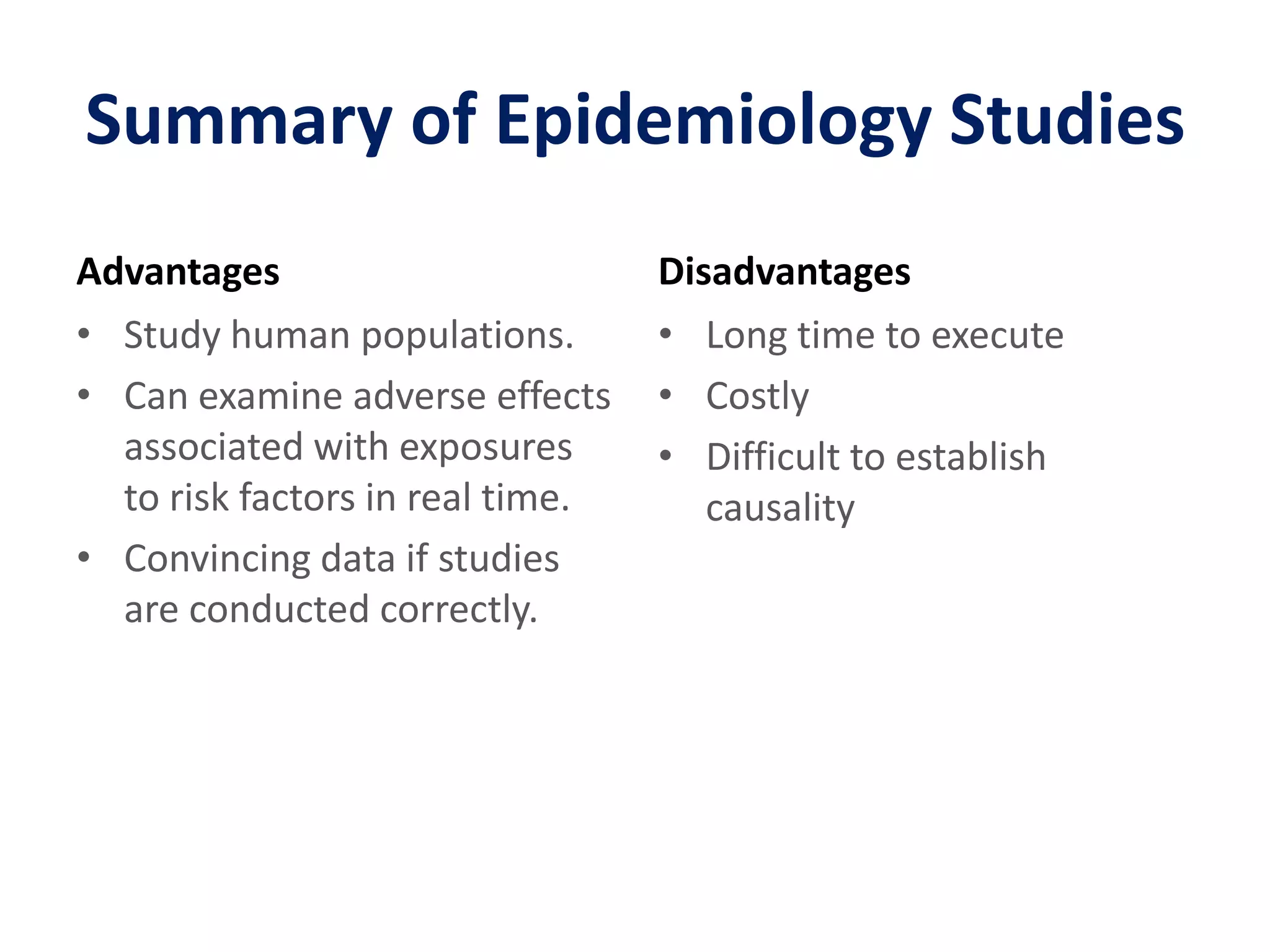
Summary of Epidemiology StudiesAdvantagesStudy human populations.Can examine adverse effects associated with exposures to risk factors in real time.Convincing data if studies are conducted correctly.DisadvantagesLong time to executeCostlyDifficult to establish causality
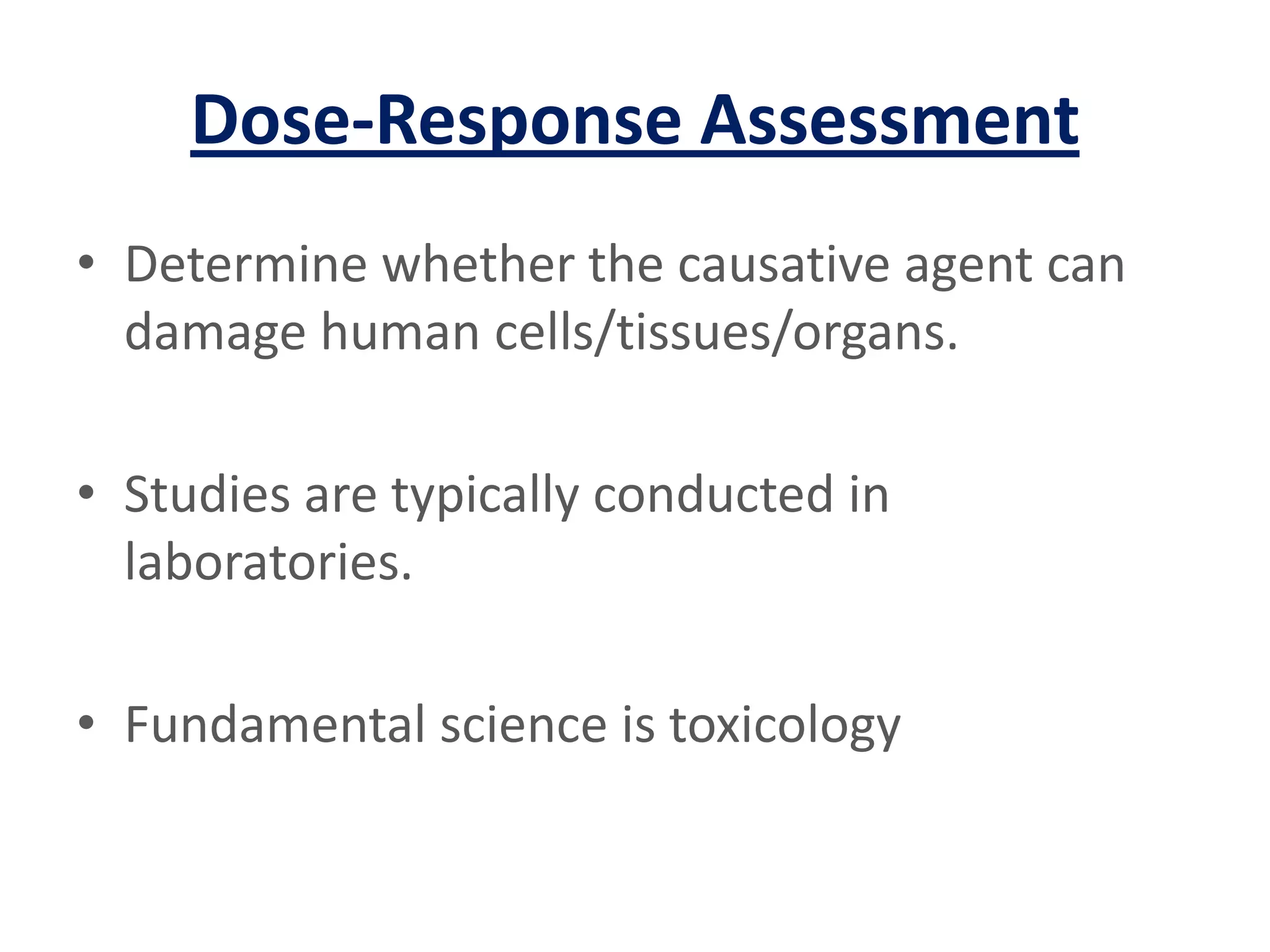
Dose-Response AssessmentDetermine whether the causative agent can damage human cells/tissues/organs.Studies are typically conducted in laboratories.Fundamental science is toxicology
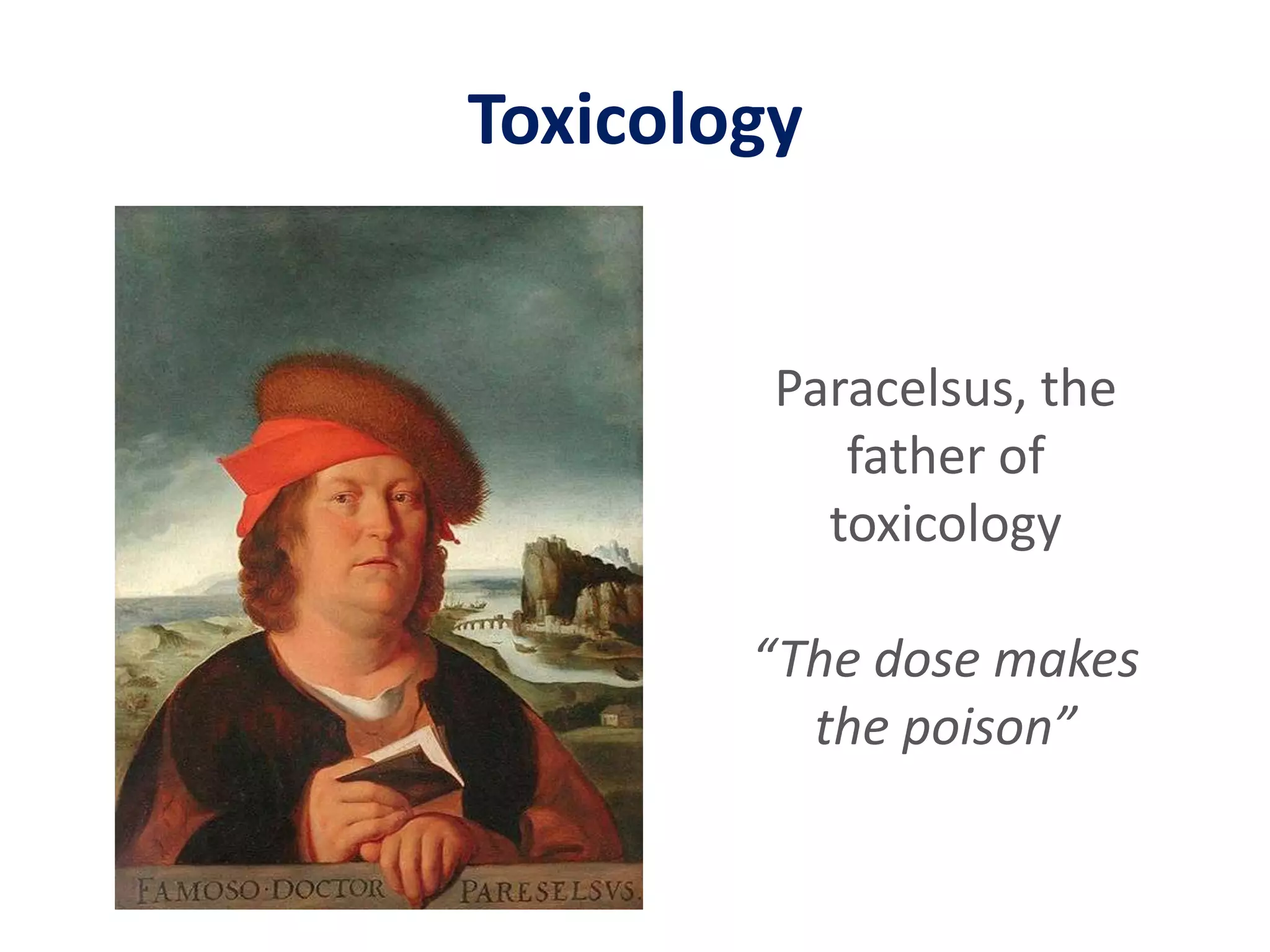
ToxicologyParacelsus, the father of toxicology“The dose makes the poison”
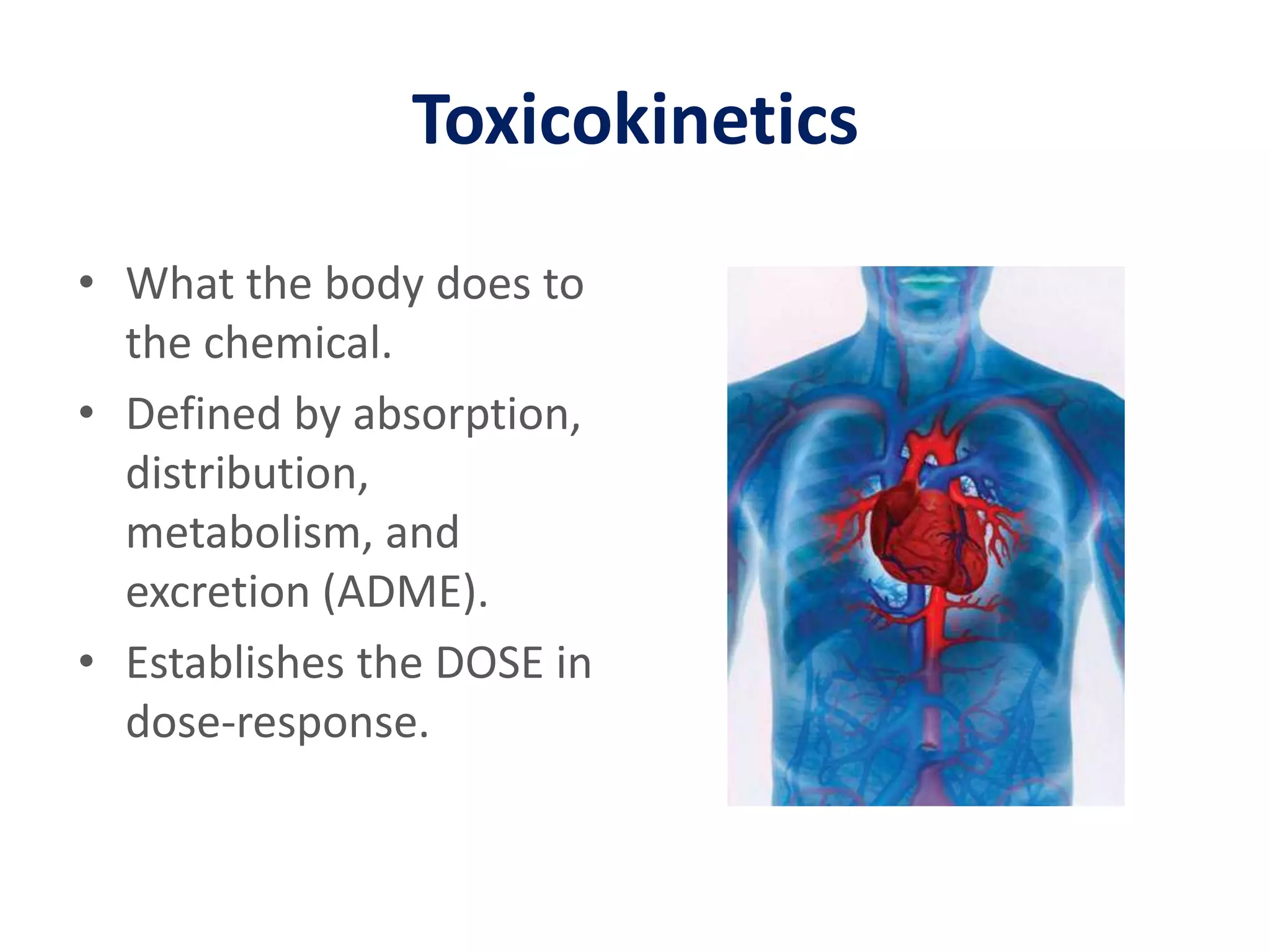
ToxicokineticsWhat the body does to the chemical.Defined by absorption, distribution, metabolism, and excretion (ADME).Establishes the DOSE in dose-response.
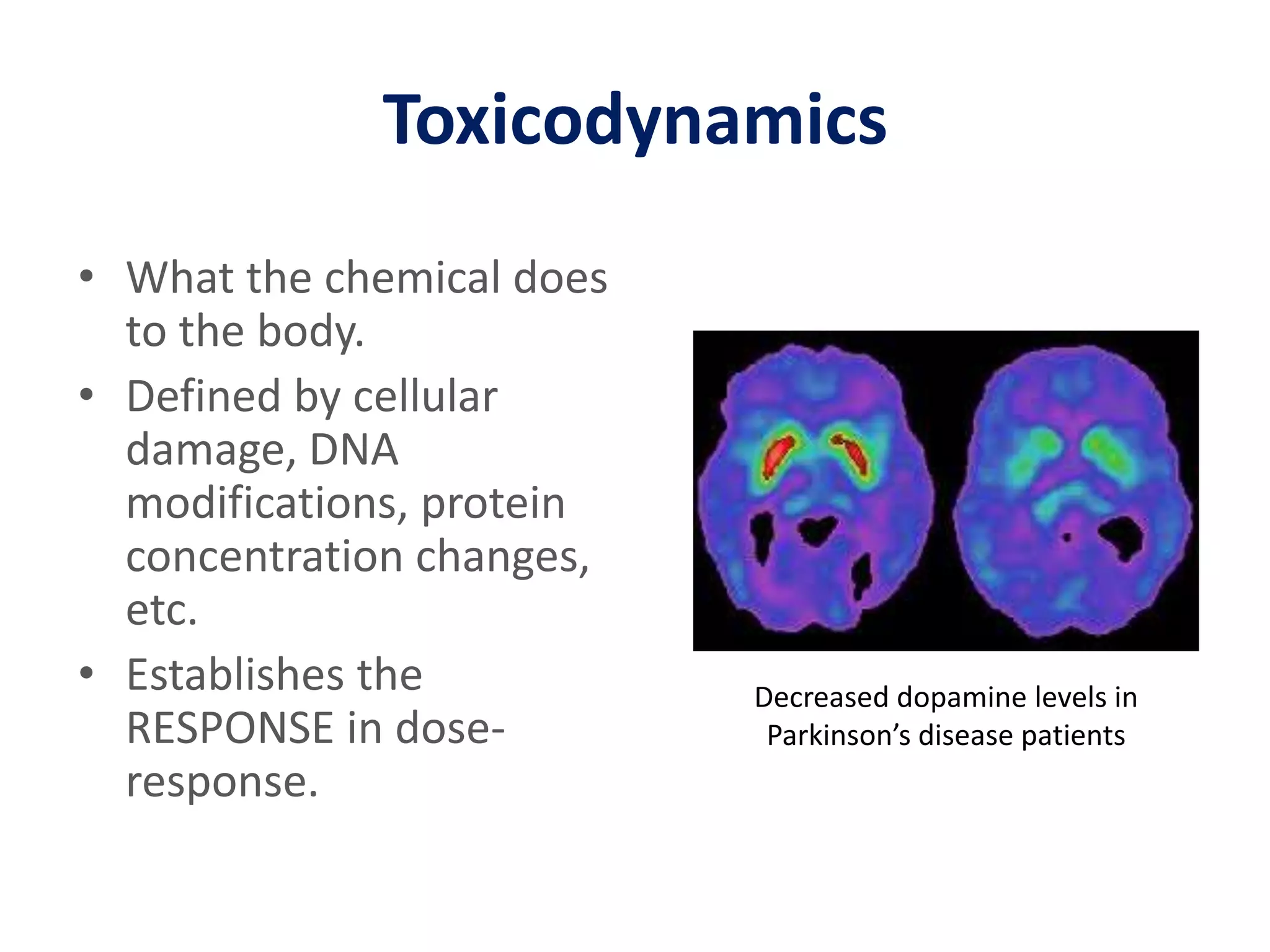
ToxicodynamicsWhat the chemical does to the body.Defined by cellular damage, DNA modifications, protein concentration changes, etc.Establishes the RESPONSE in dose-response.Decreased dopamine levels in Parkinson’s disease patients
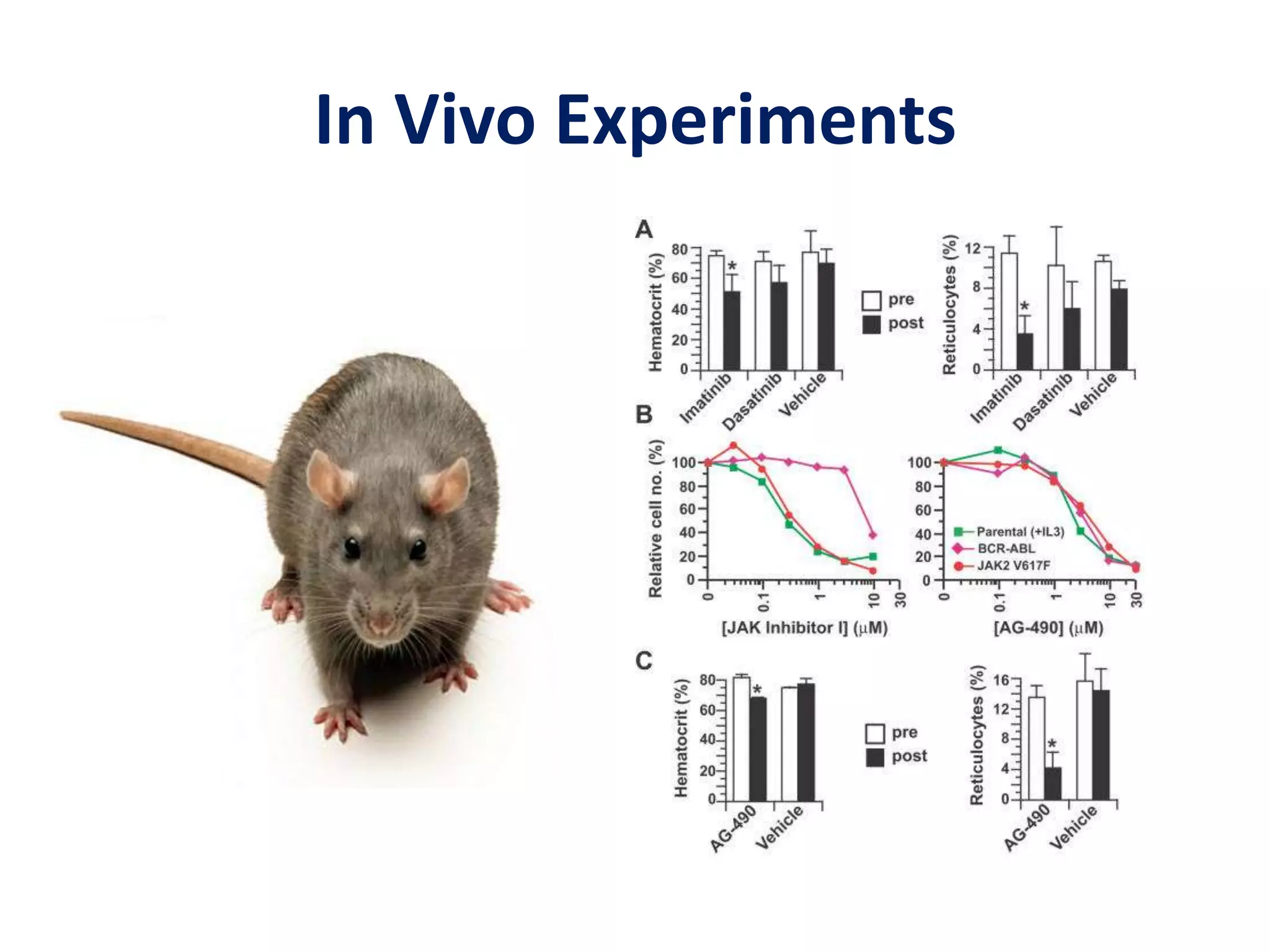
In Vivo Experiments
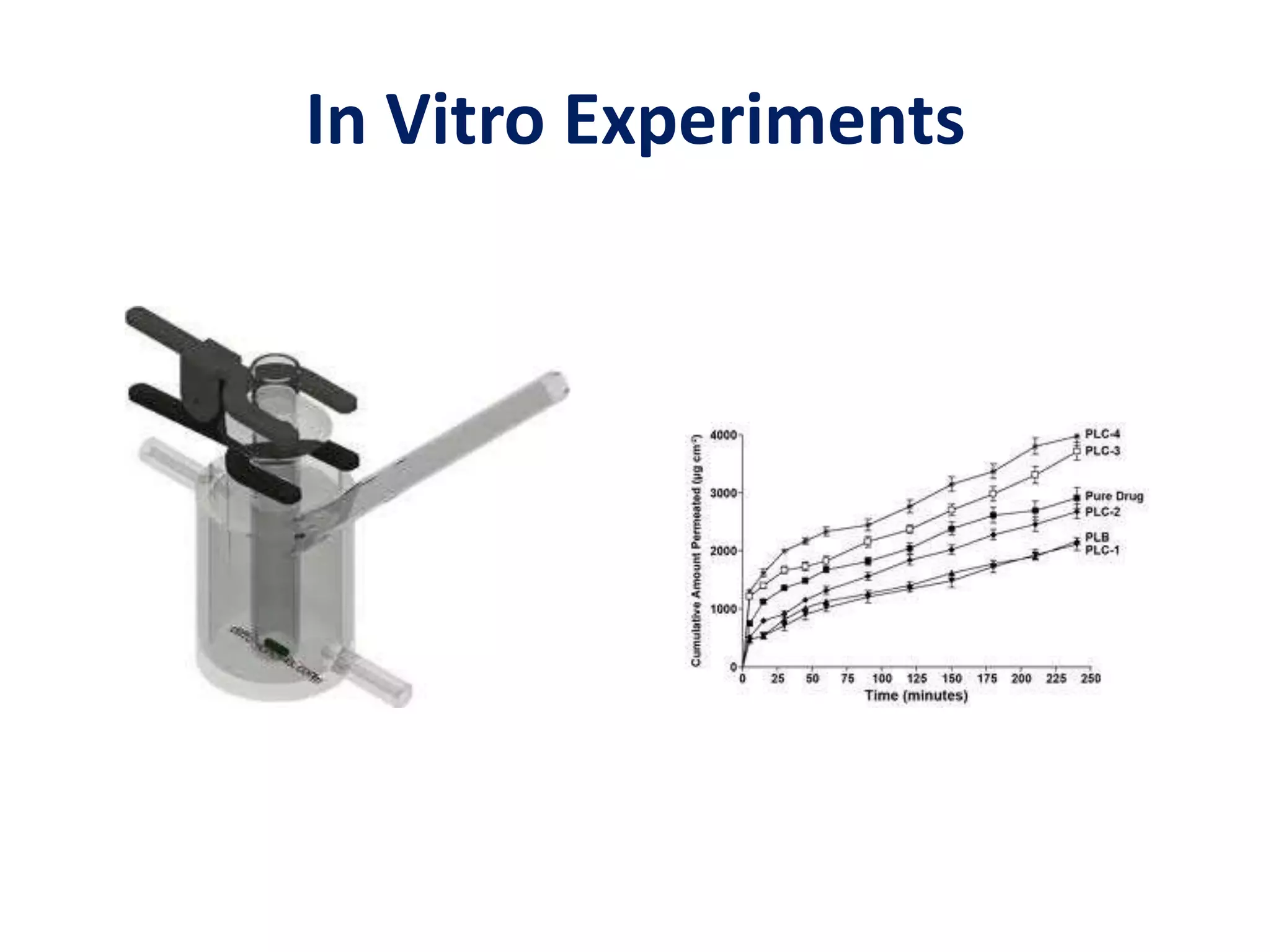
In Vitro Experiments
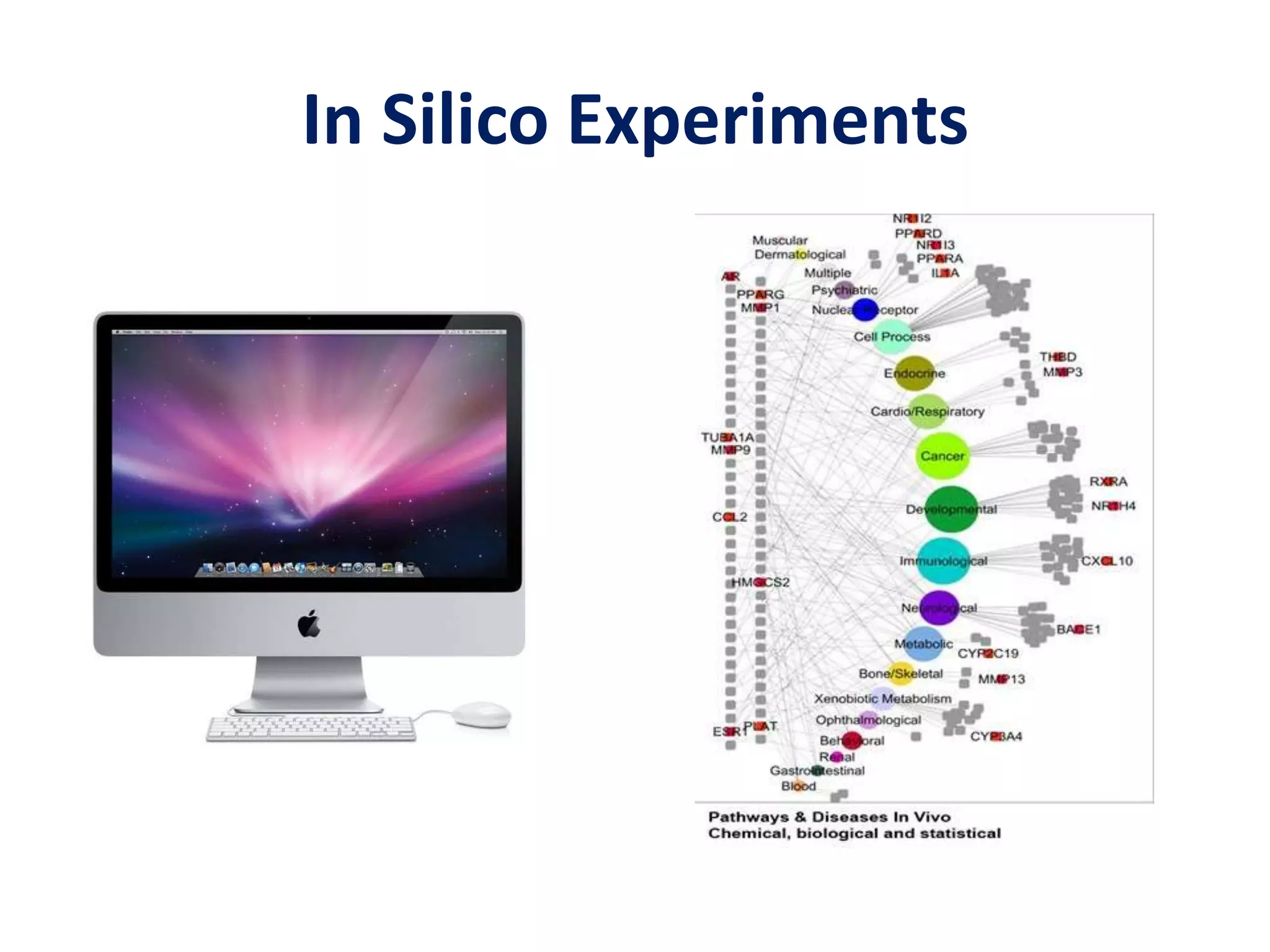
In Silico Experiments
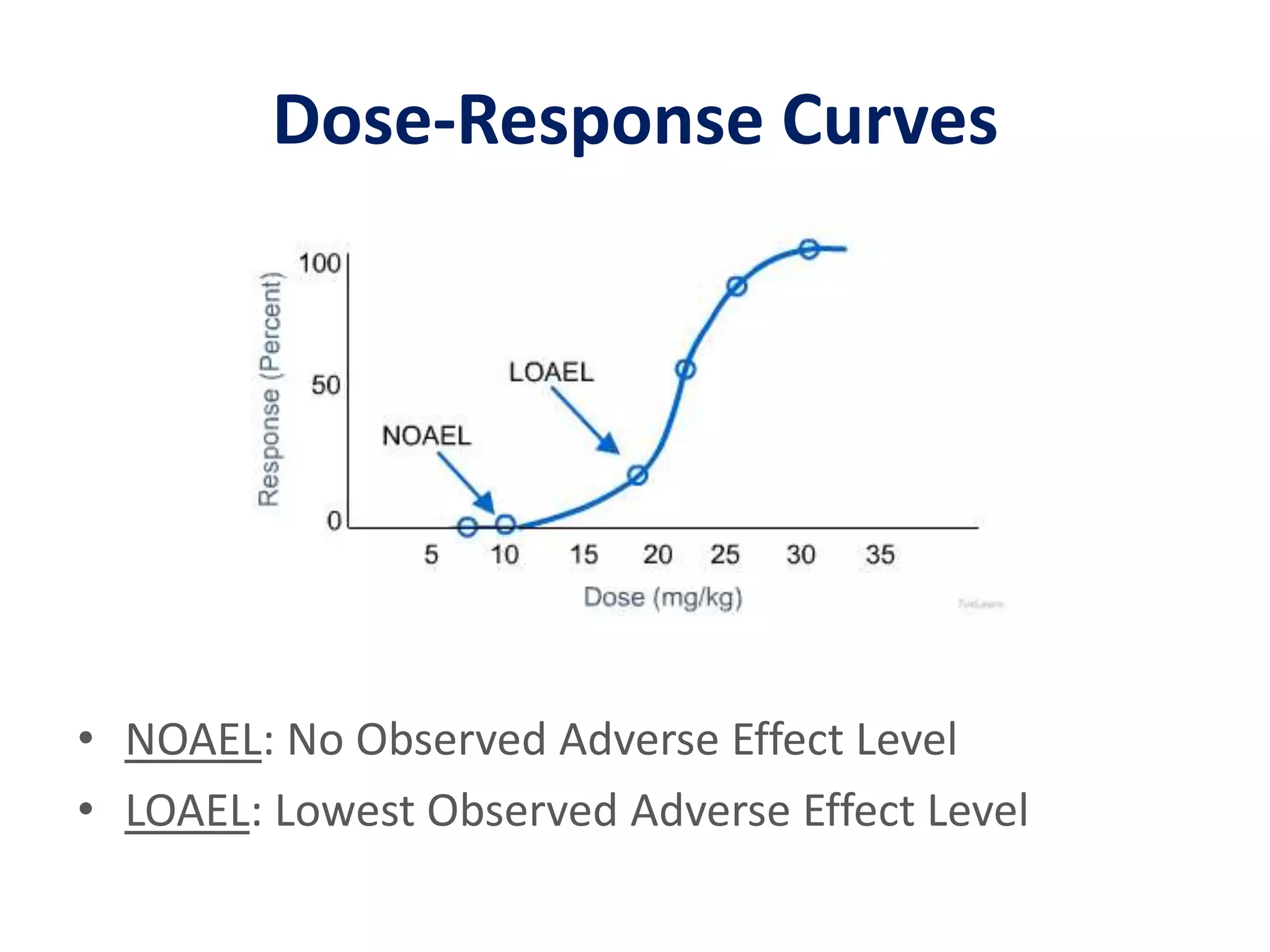
Dose-Response CurvesNOAEL: No Observed Adverse Effect LevelLOAEL: Lowest Observed Adverse Effect Level
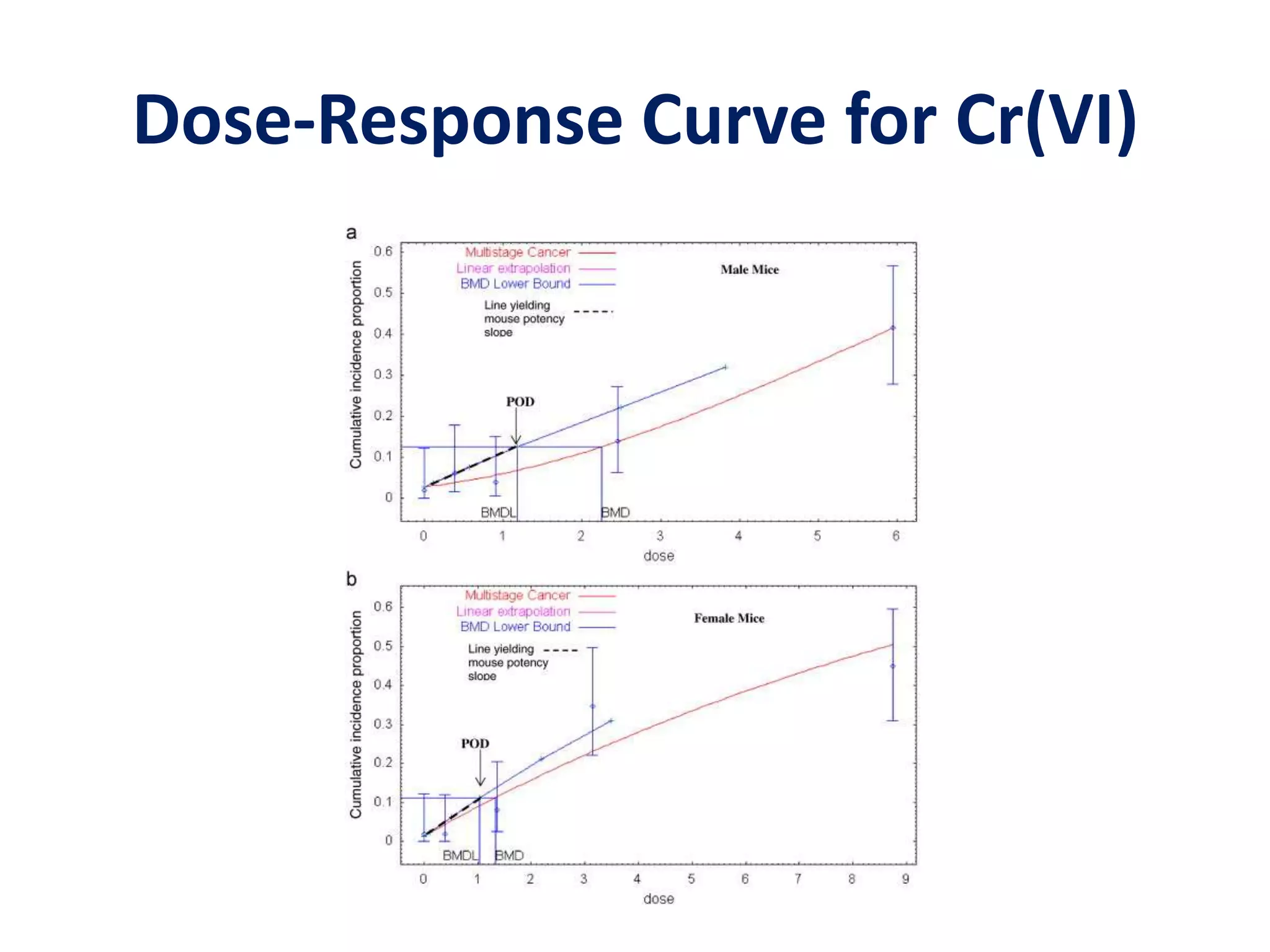
Dose-Response Curve for Cr(VI)
Summary of Toxicology StudiesAdvantagesHighly controlled.Fast results.Can better establish causal relationship between dose and effect.DisadvantagesLaboratory conditionsExtensive use of animalsQuestionable relevance to humans
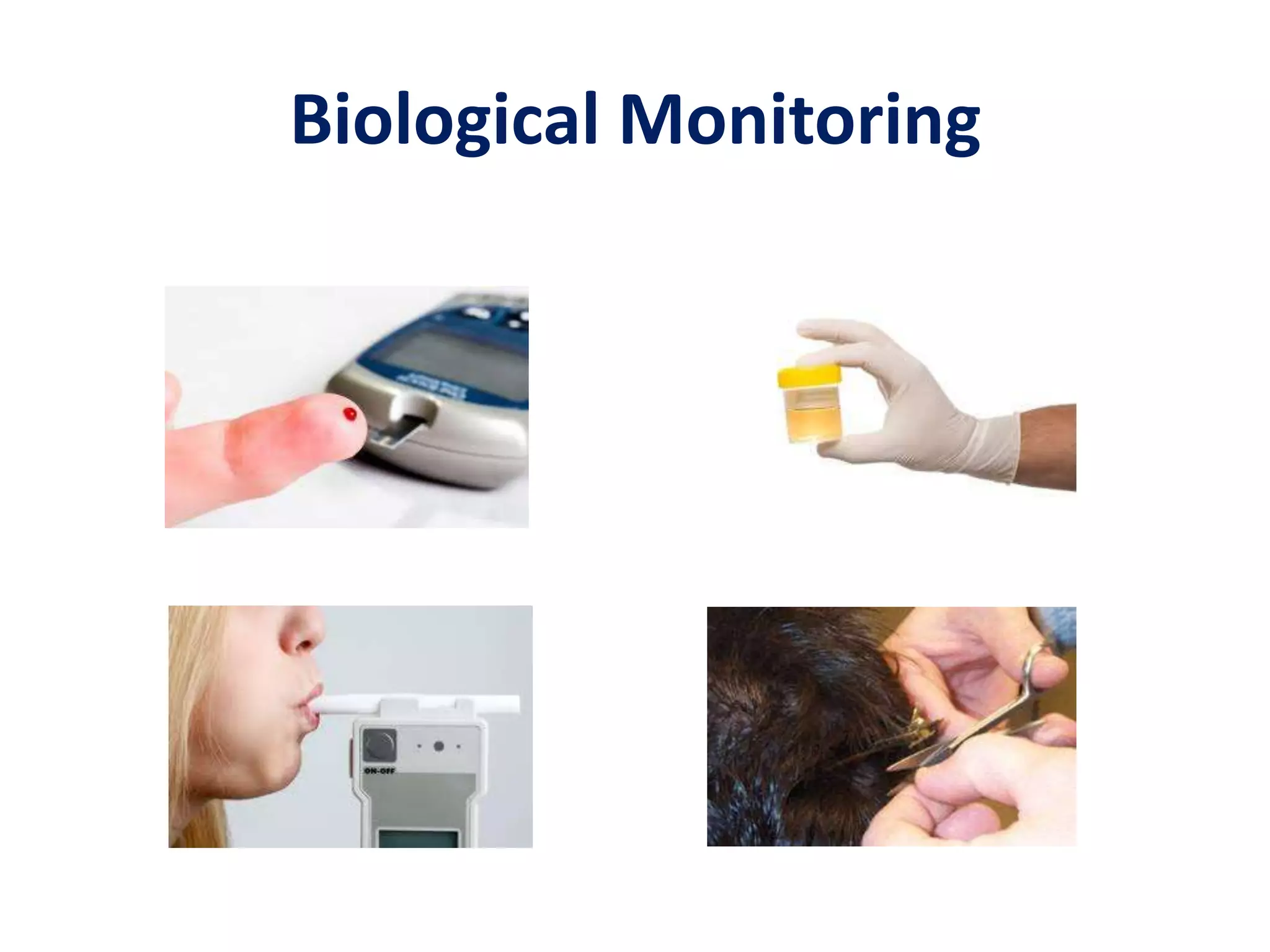
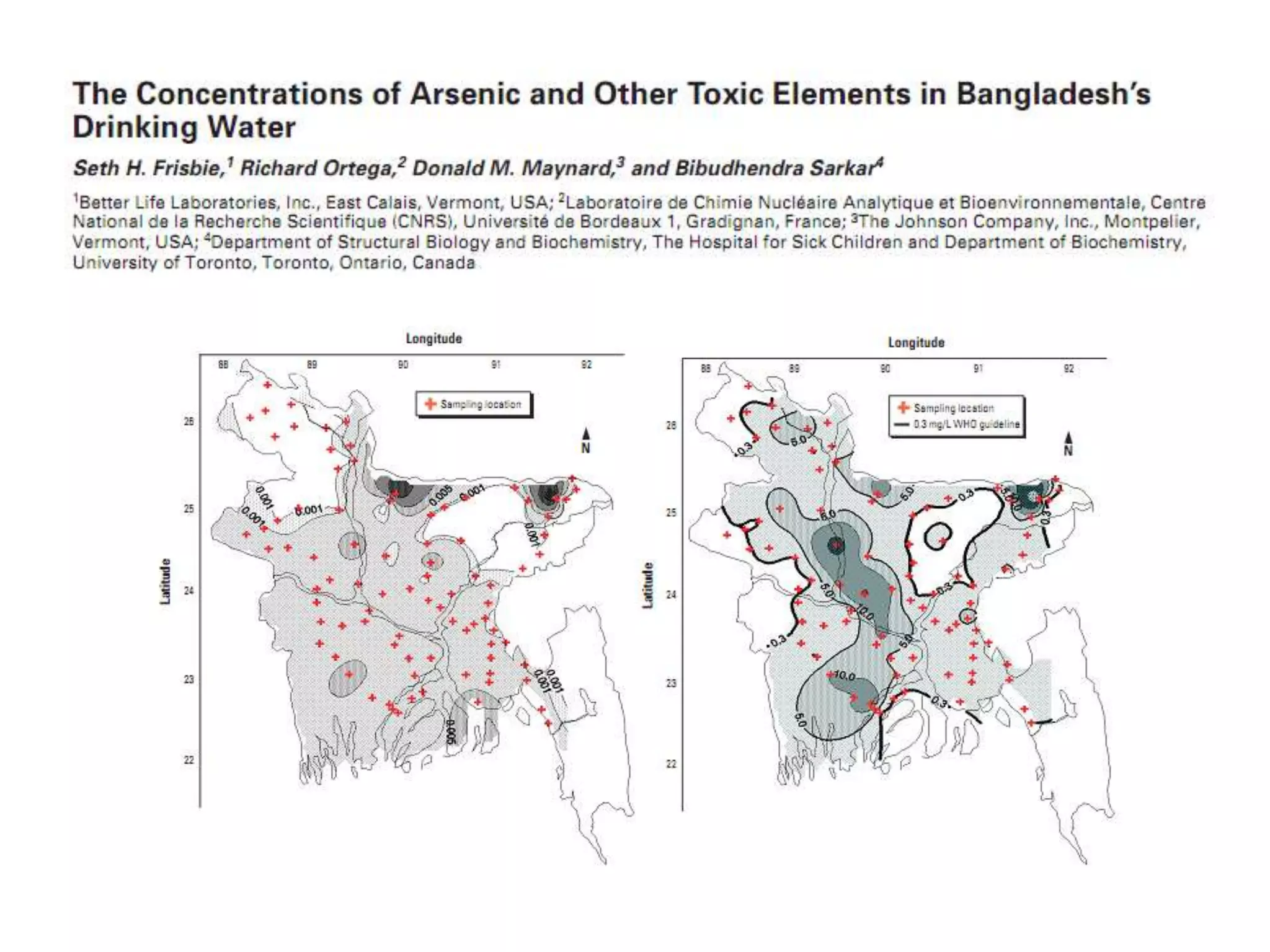
Exposure AssessmentStudy of contaminant levels in:AirWaterSoilBiological SamplesFood
Objectives of Exposure AssessmentMeasure the amount of contaminant in the environment.Record how often humans come into contact with the contaminant.Identify who comes into contact with the contaminant.
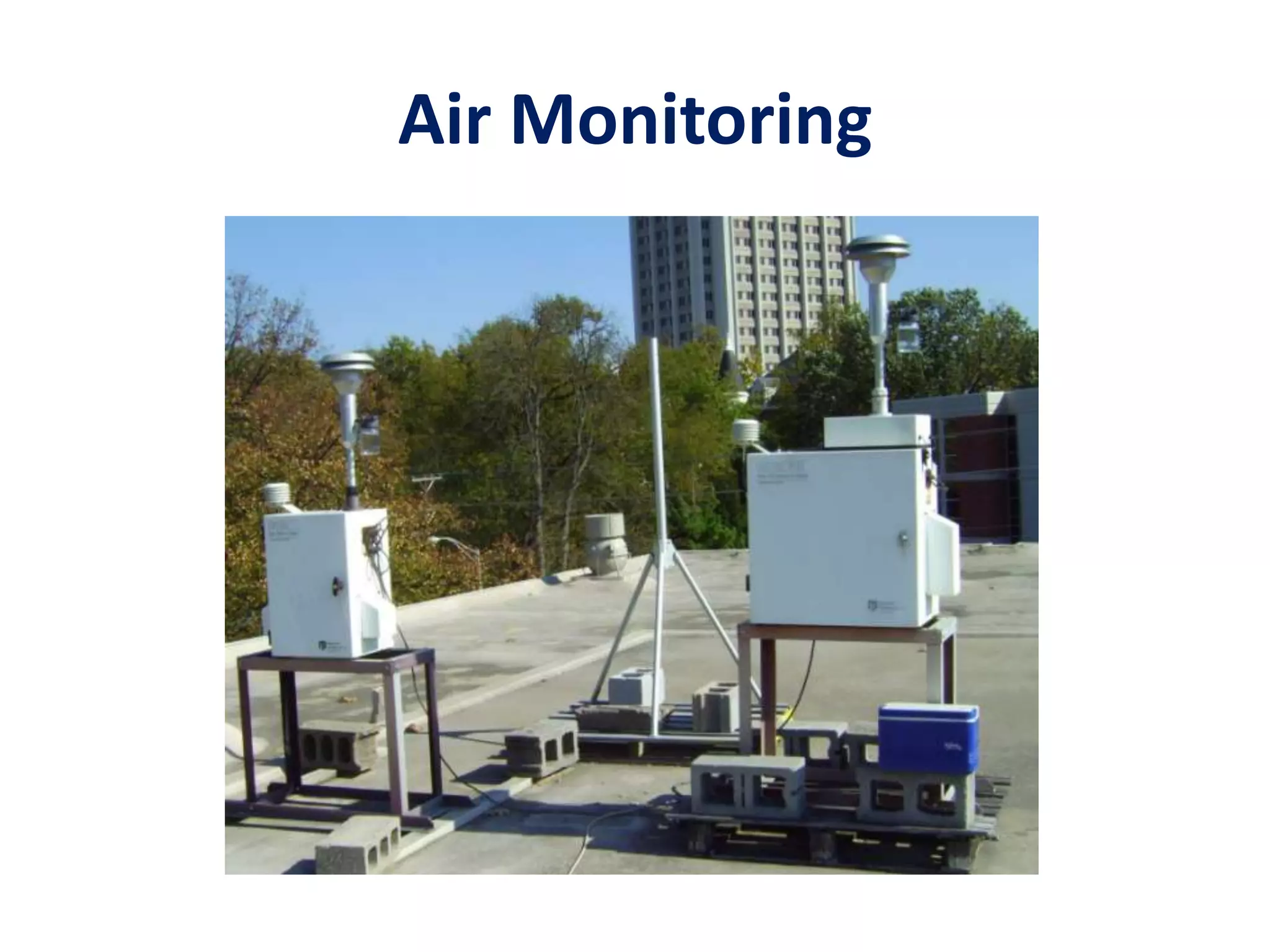
Air Monitoring
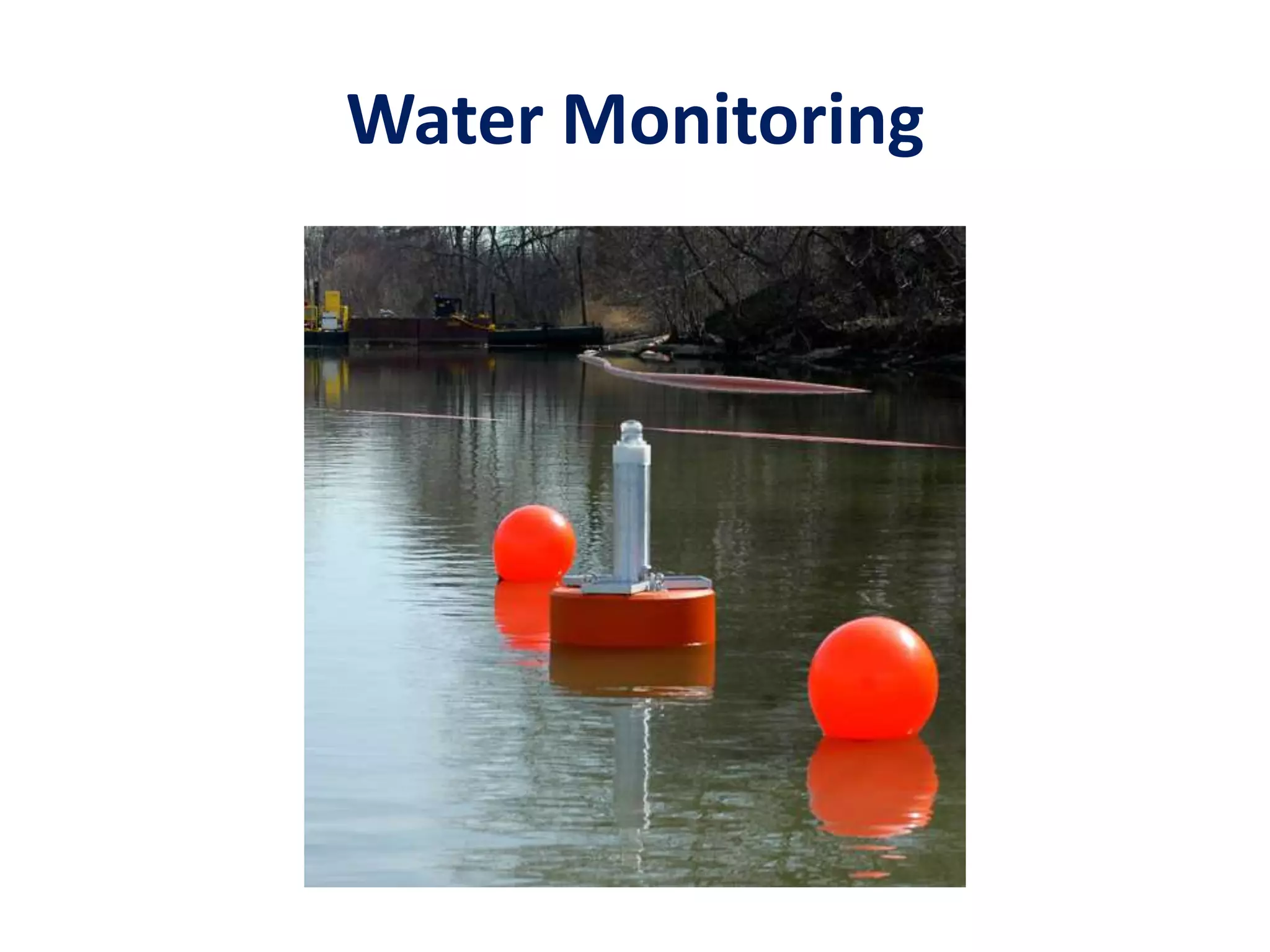
Water Monitoring
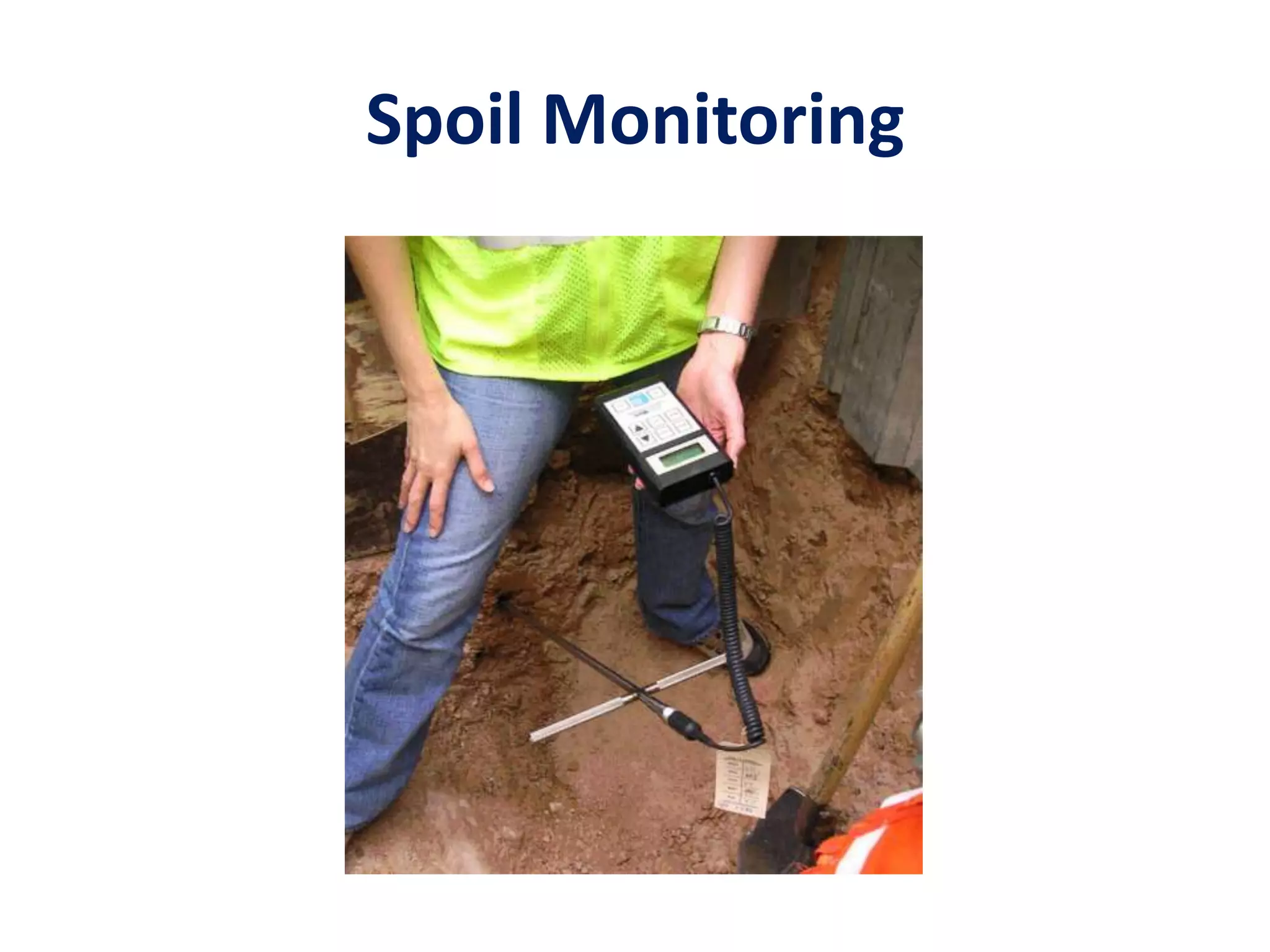
Spoil Monitoring
Biological Monitoring
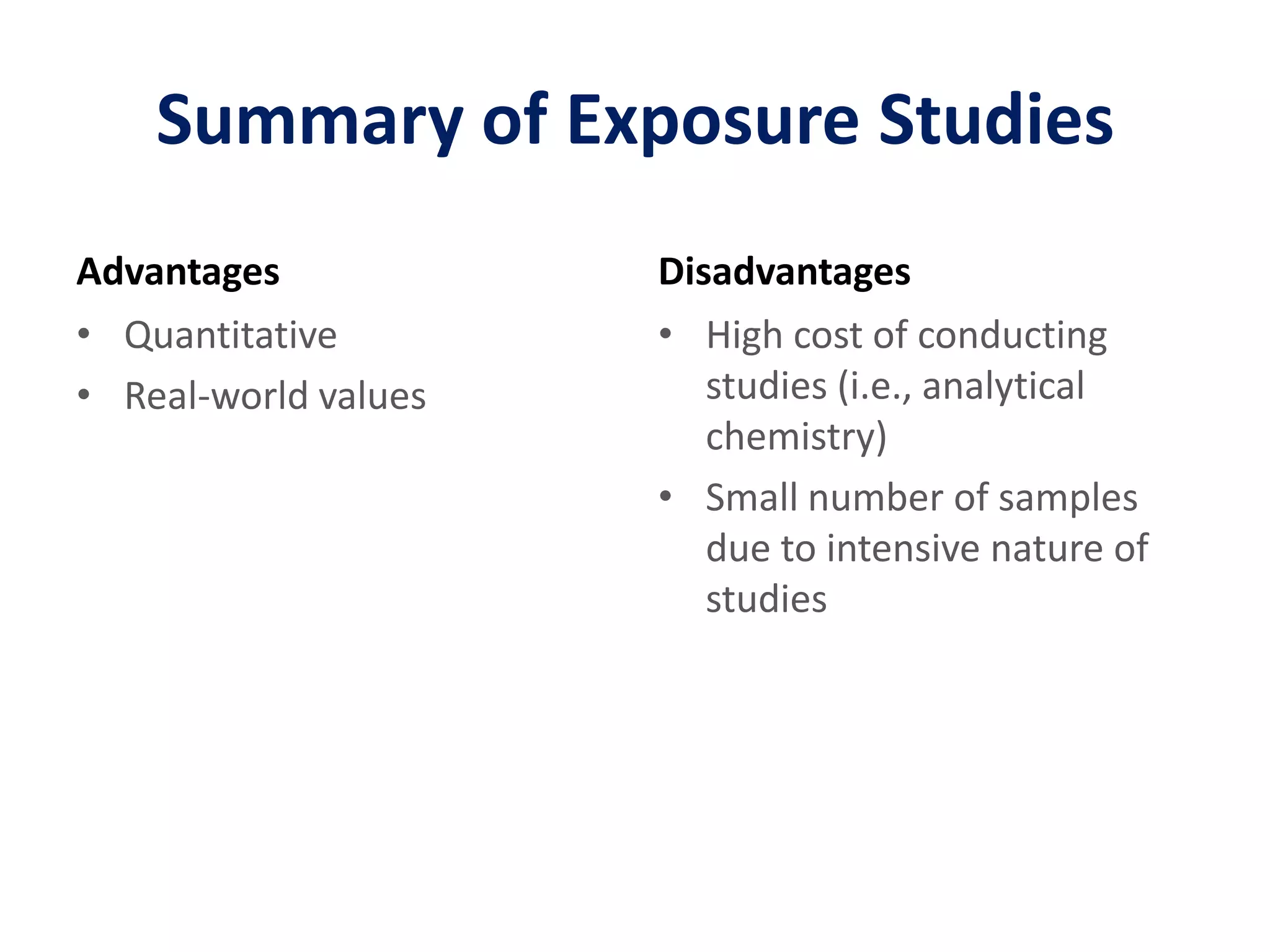
Summary of Exposure StudiesAdvantagesQuantitativeReal-world valuesDisadvantagesHigh cost of conducting studies (i.e., analytical chemistry)Small number of samples due to intensive nature of studies
Risk CharacterizationFinal phase of a risk assessment.Integrates information collected from EPIDEMIOLOGY, TOXICOLOGY, and EXPOSURE ASSESSMENT studies.Qualitative and quantitative conclusions.Synthesizes all the information and recommends actions to prevent diseases from spreading.
Risk Characterization for Cr(VI)Clearly there is an association between leukaemia and living where Cr(VI) levels are high.Toxicological studies demonstrate a positive dose-response, suggesting a causal relationship.Exposure studies have measured presence of Cr(VI) levels in drinking water that exceed health standards.All evidence seems to point to the need to reduce Cr(VI) levels in order to prevent childhood leukaemia from occurring.
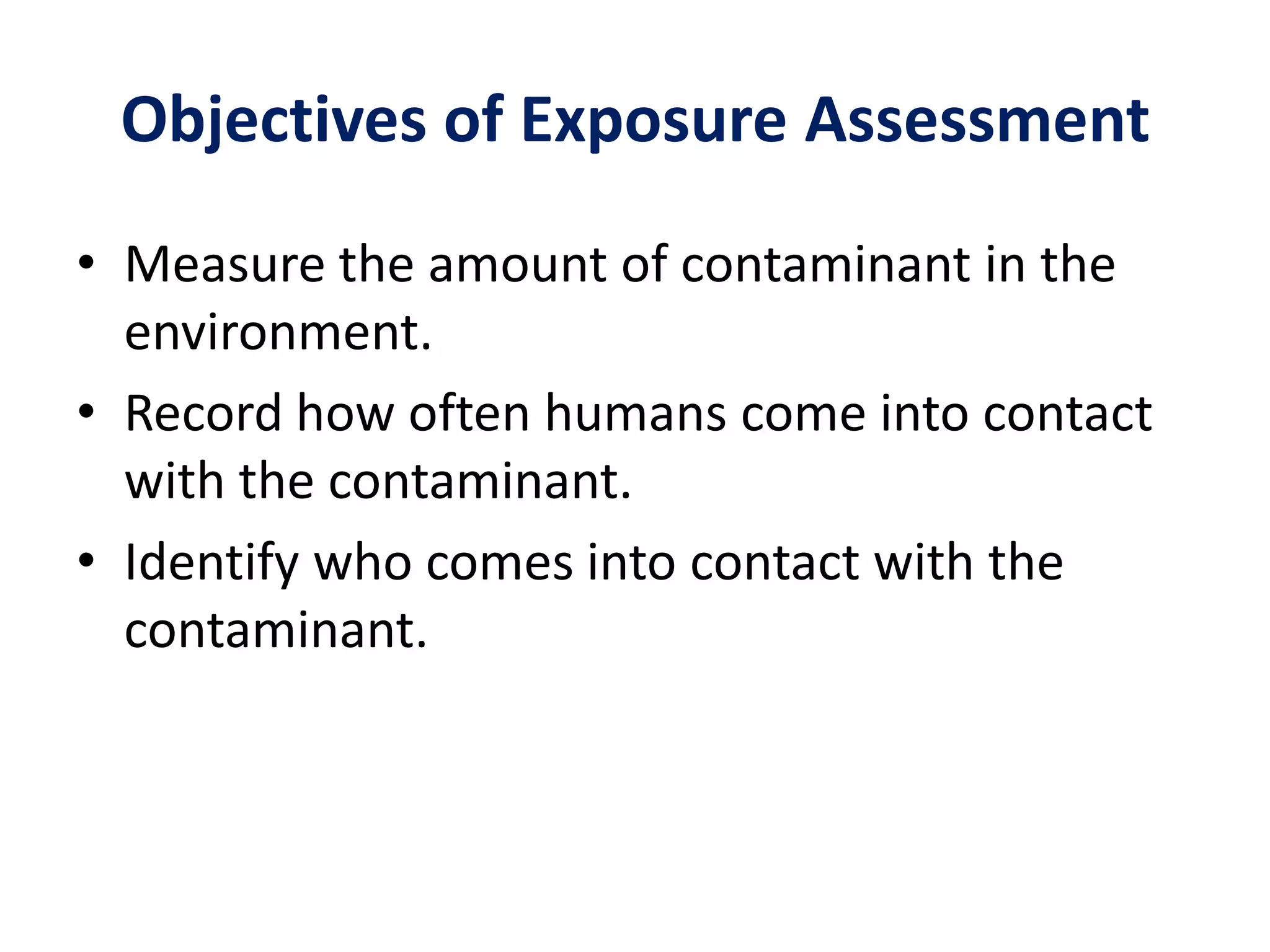
Final Group ExerciseSmall-scale mining in Ghana.

University of Ghana SPH Lecture on Prevention