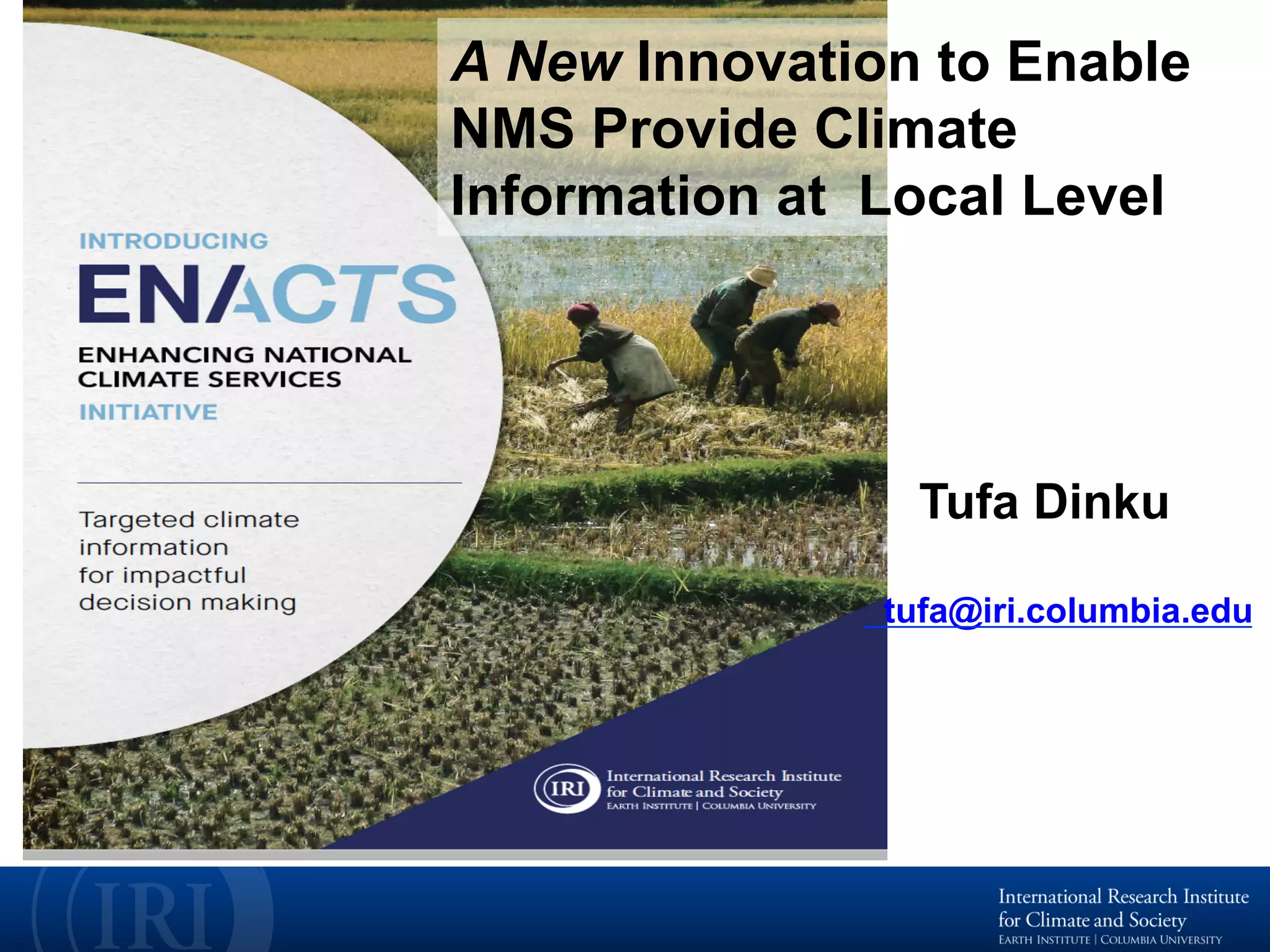
A New Innovation to Enable
NMS Provide Climate
Information at Local Level
Tufa Dinku
tufa@iri.columbia.edu
Outline	
	
I.  The	value	of	Climate	Data	
II.  Challenges	to	Availability	Climate	Data	
III.  The	ENACTS	Approach		
IV.  What	is	Next
•  PuCng	observed	and	anEcipated	climate	into	context;		
•  Assessing	climate-related	baseline	risks;		
•  Understanding		the	nature	of	climate	variability	and	trends;	
•  Understanding	the	impacts	of	climate	on	agricultural	
producEon;	
•  Improving	crop	producEon	forecasts	for	agricultural	planning	
and	food	security	management;	
•  Index-based	agricultural	insurance	that	allows	farmers	to	
spread	risk;	
•  ….	
I.	The	Value	Climate	Data
II.	Challenges	to	Availability	of	Climate	Data	
•  Number	of	weather	staEons	not	adequate	over	many	
parts		Africa	
•  Most	staEons	are	located	along	main	roads	
è	Limited	availability	climate	informaEon	and	services	
to	the	rural	community	
•  Serious	gaps	in	observaEons	(missing	data)	
•  QuesEonable	data	quality	
•  Limited	access	and	use	of	the	available	data
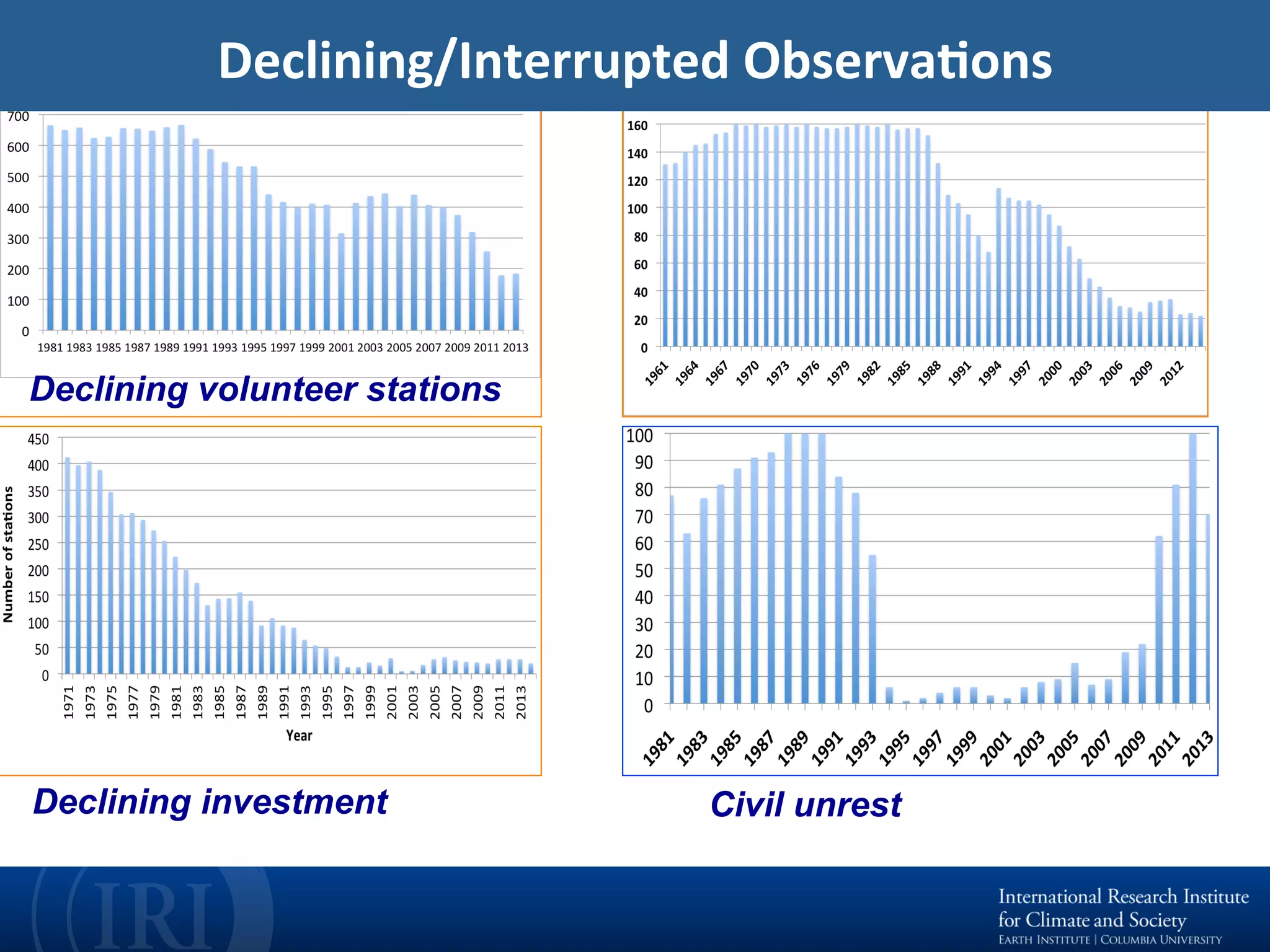
Declining/Interrupted	ObservaEons	
Declining investment Civil unrest
Declining volunteer stations
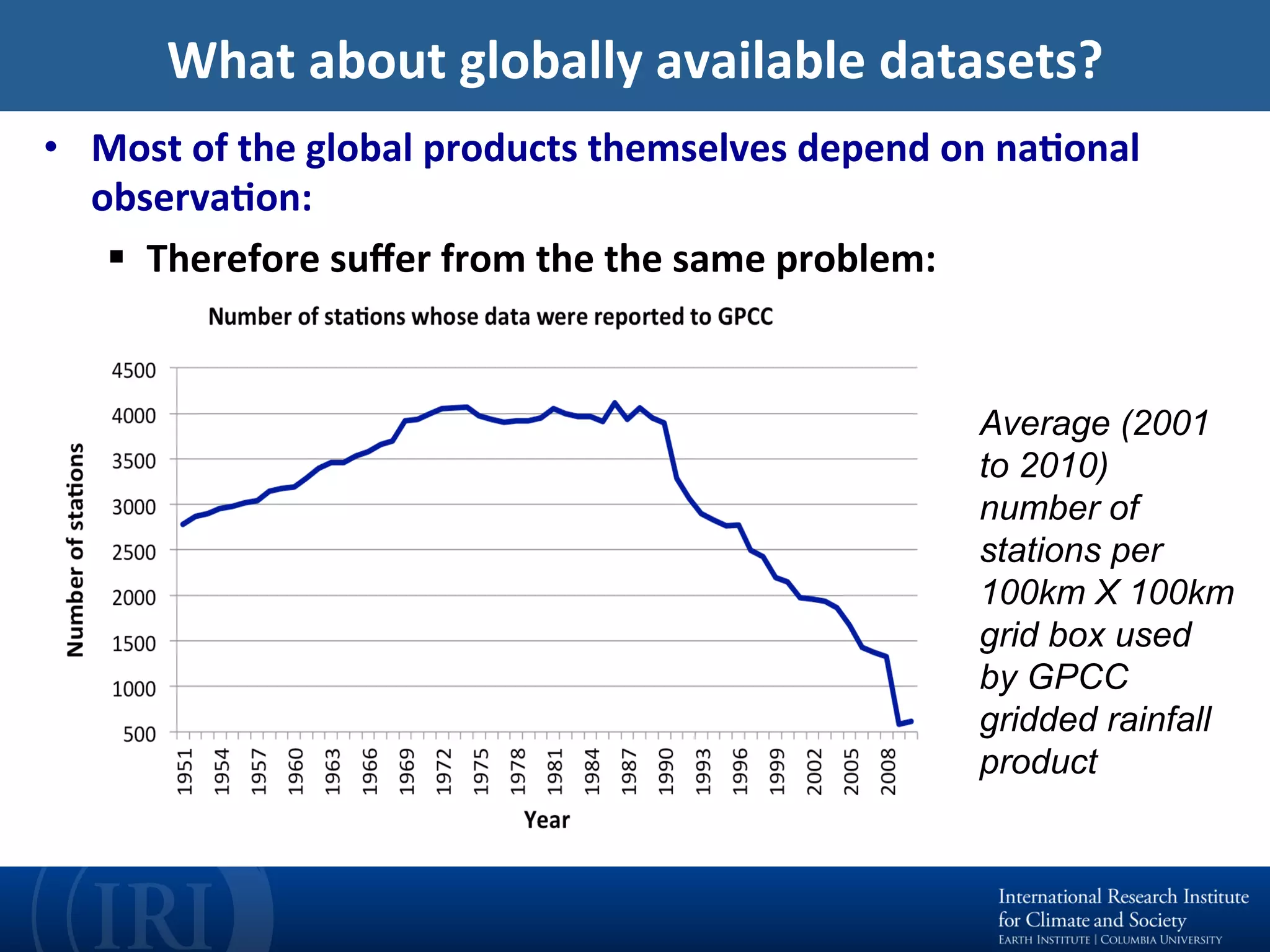
What	about	globally	available	datasets?	
•  Most	of	the	global	products	themselves	depend	on	naEonal	
observaEon:	
§  Therefore	suffer	from	the	the	same	problem:	
Average (2001
to 2010)
number of
stations per
100km X 100km
grid box used
by GPCC
gridded rainfall
product
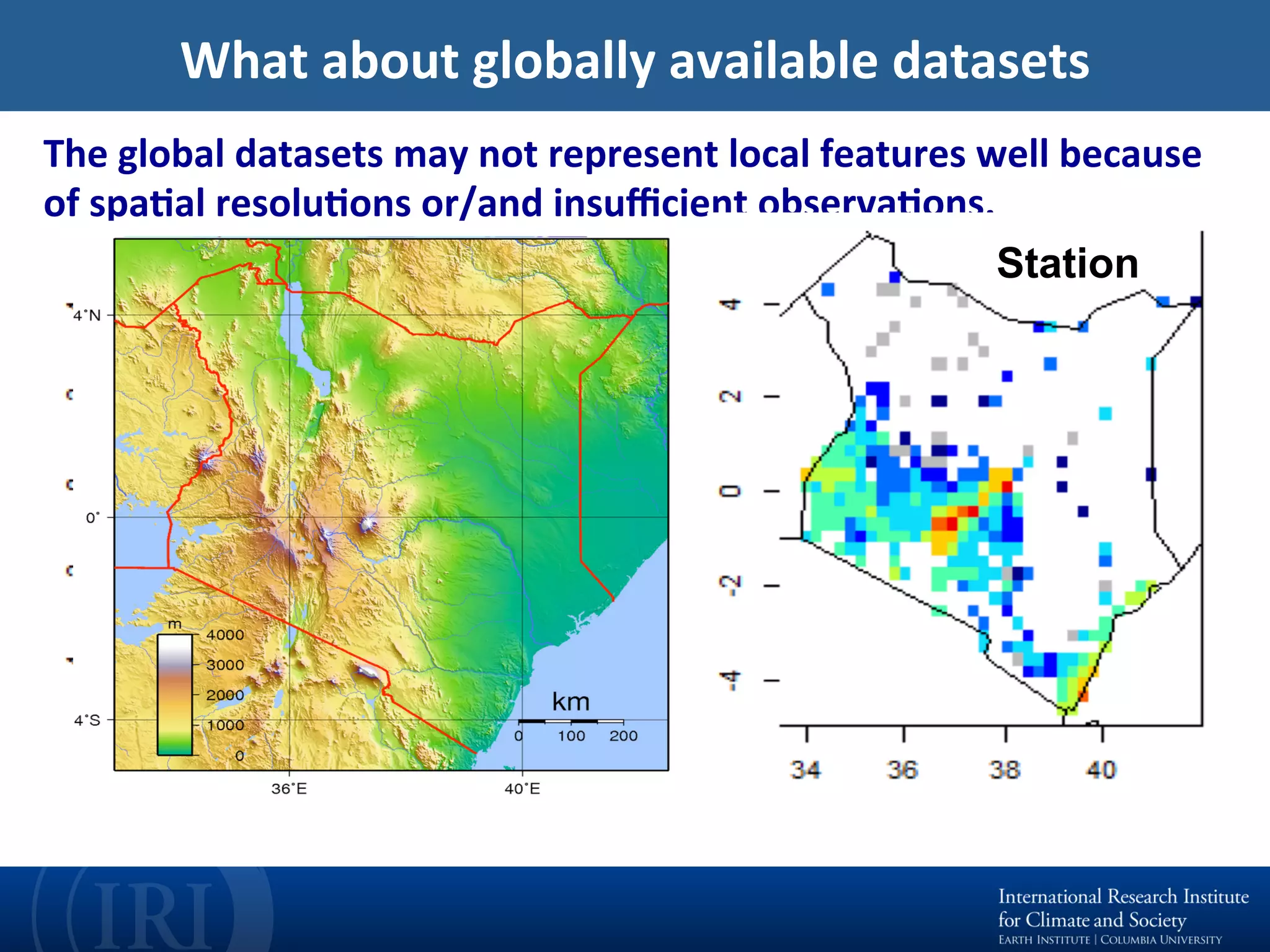
What	about	globally	available	datasets	
The	global	datasets	may	not	represent	local	features	well	because	
of	spaEal	resoluEons	or/and	insufficient	observaEons.	
StationSatellite
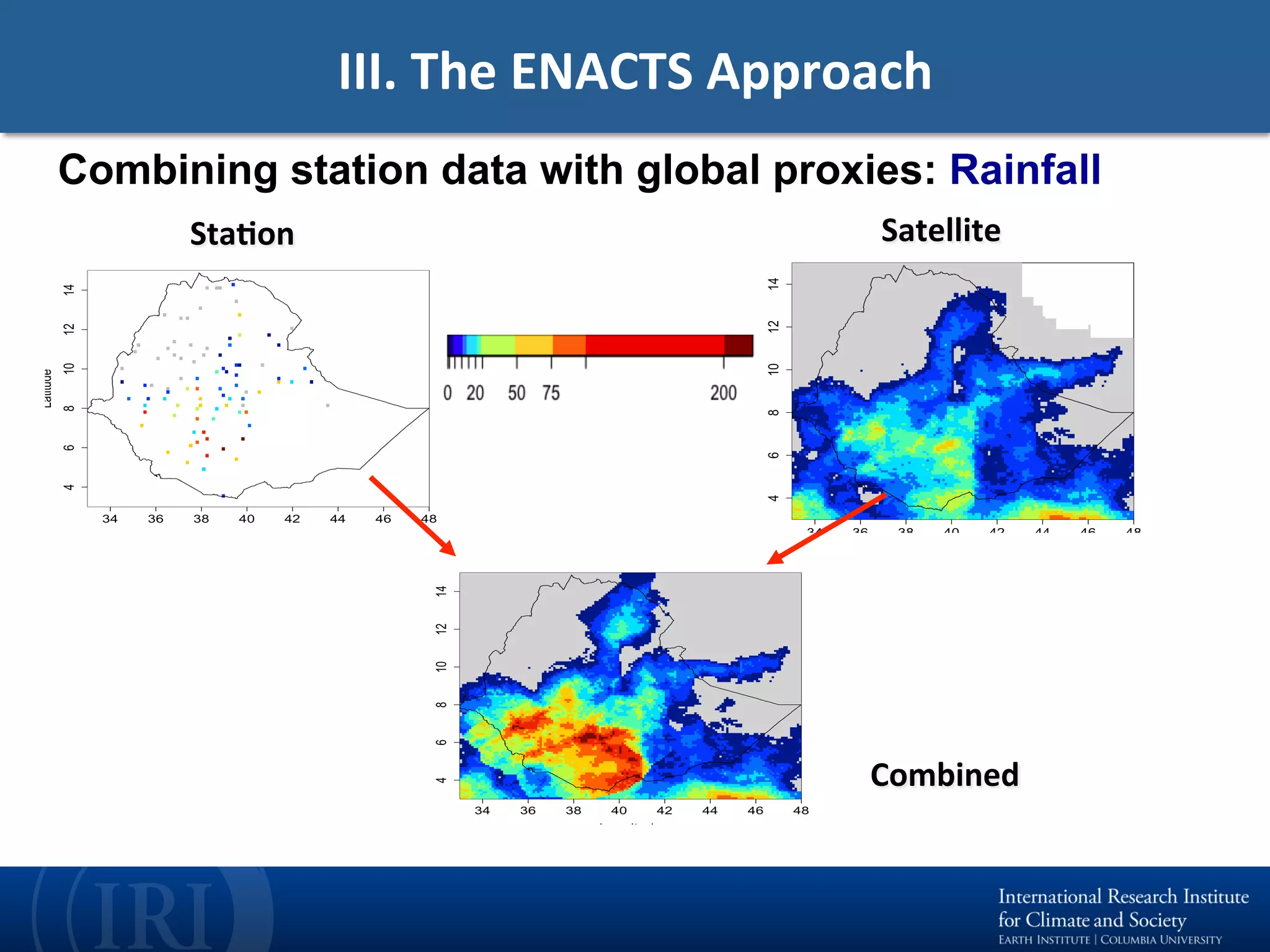
III.	The	ENACTS	Approach		
StaEon	 Satellite	
Combined		
Combining station data with global proxies: Rainfall
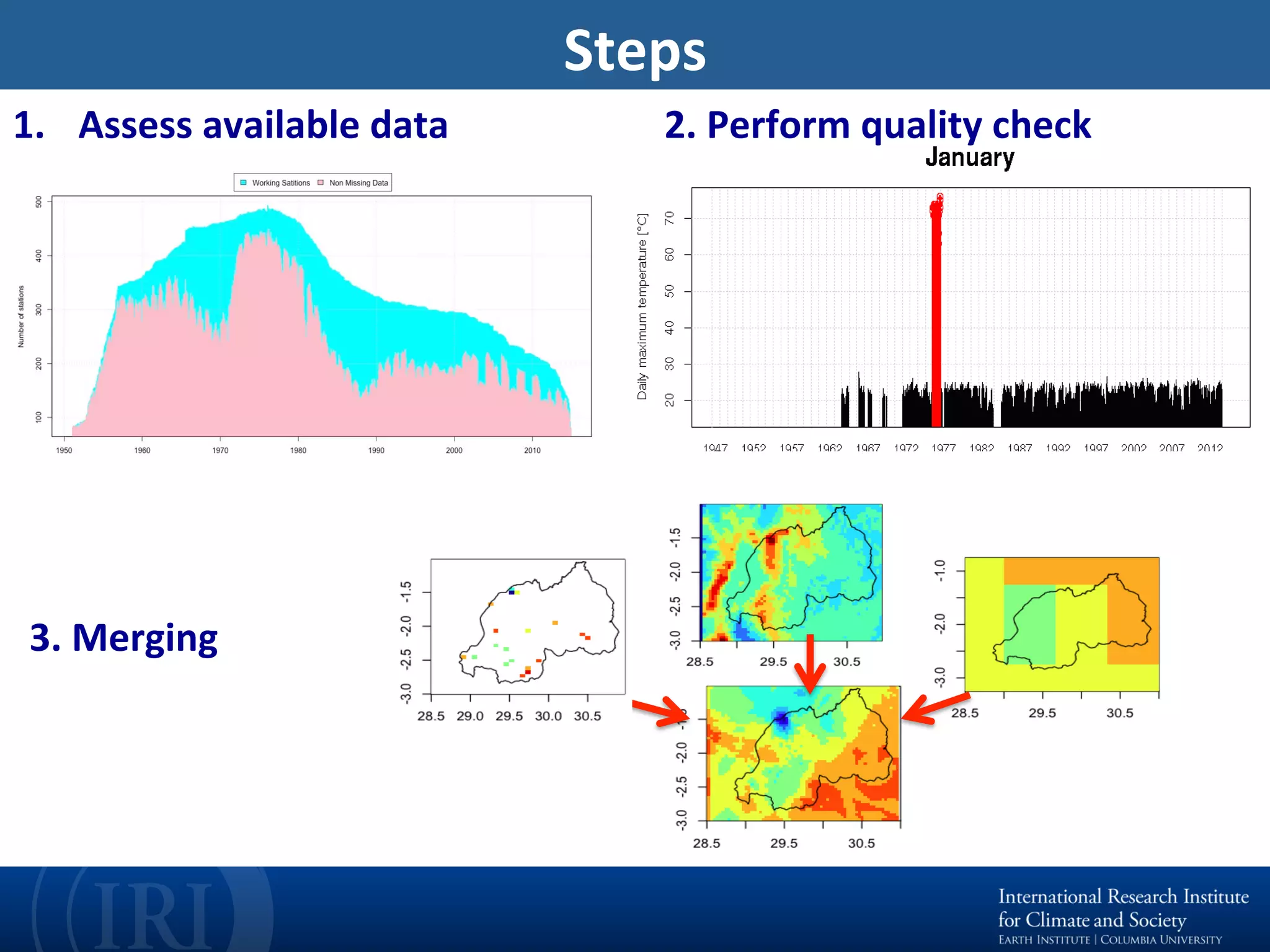
Steps	
1.  Assess	available	data	 2.	Perform	quality	check	
3.	Merging
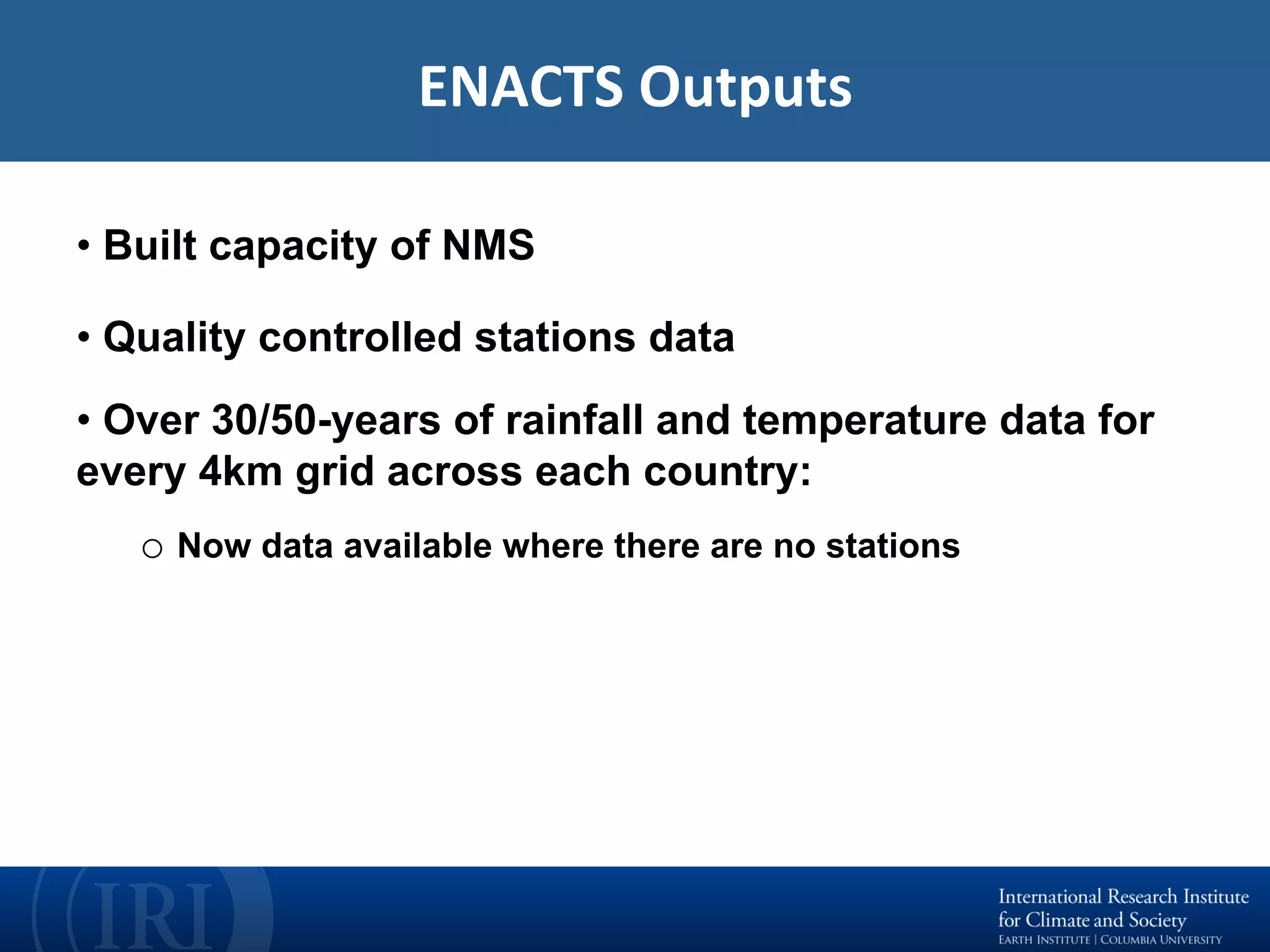
ENACTS	Outputs	
• Built capacity of NMS
• Quality controlled stations data
• Over 30/50-years of rainfall and temperature data for
every 4km grid across each country:
o Now data available where there are no stations
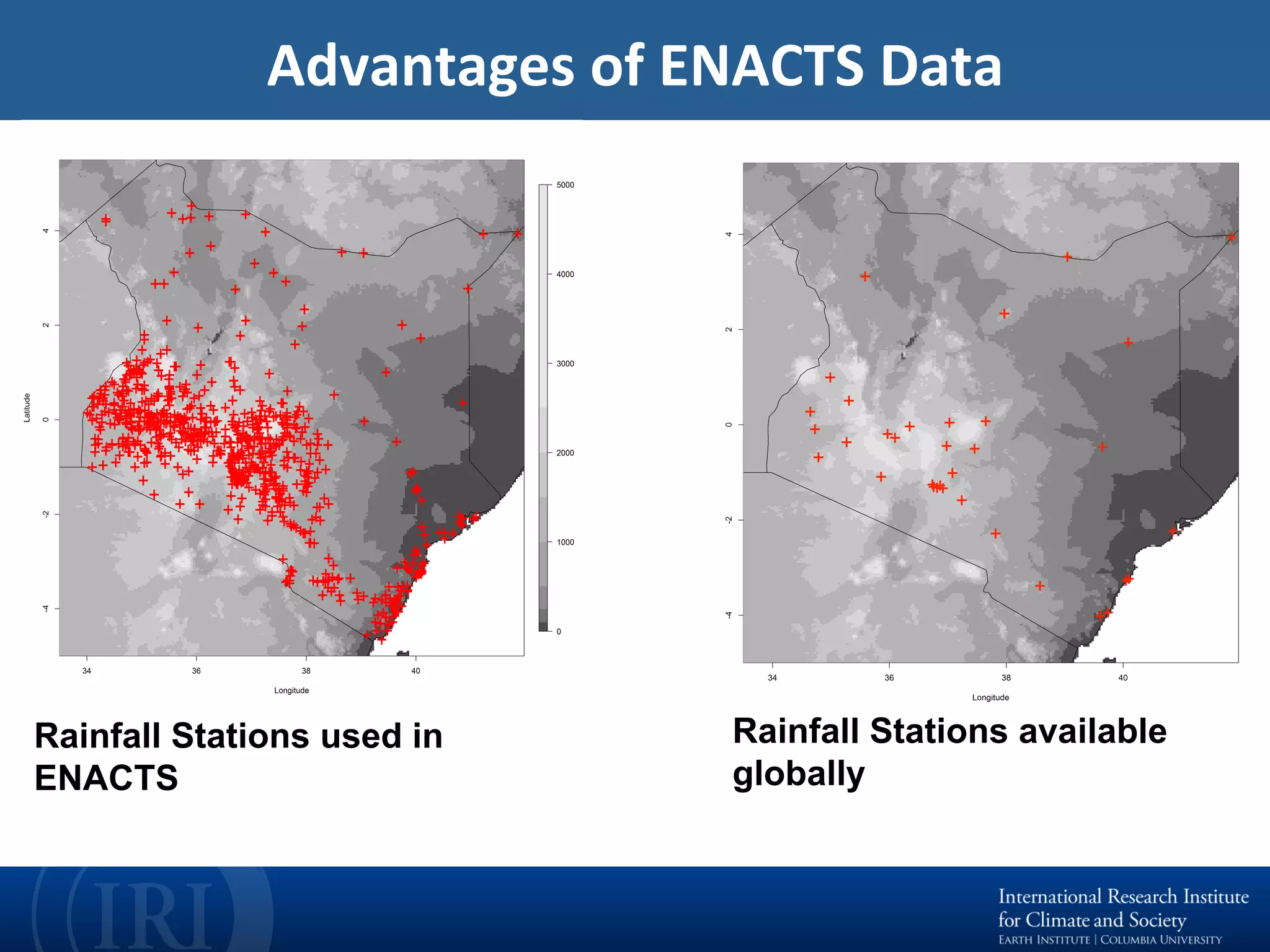
Advantages	of	ENACTS	Data	
Rainfall Stations used in
ENACTS
Rainfall Stations available
globally
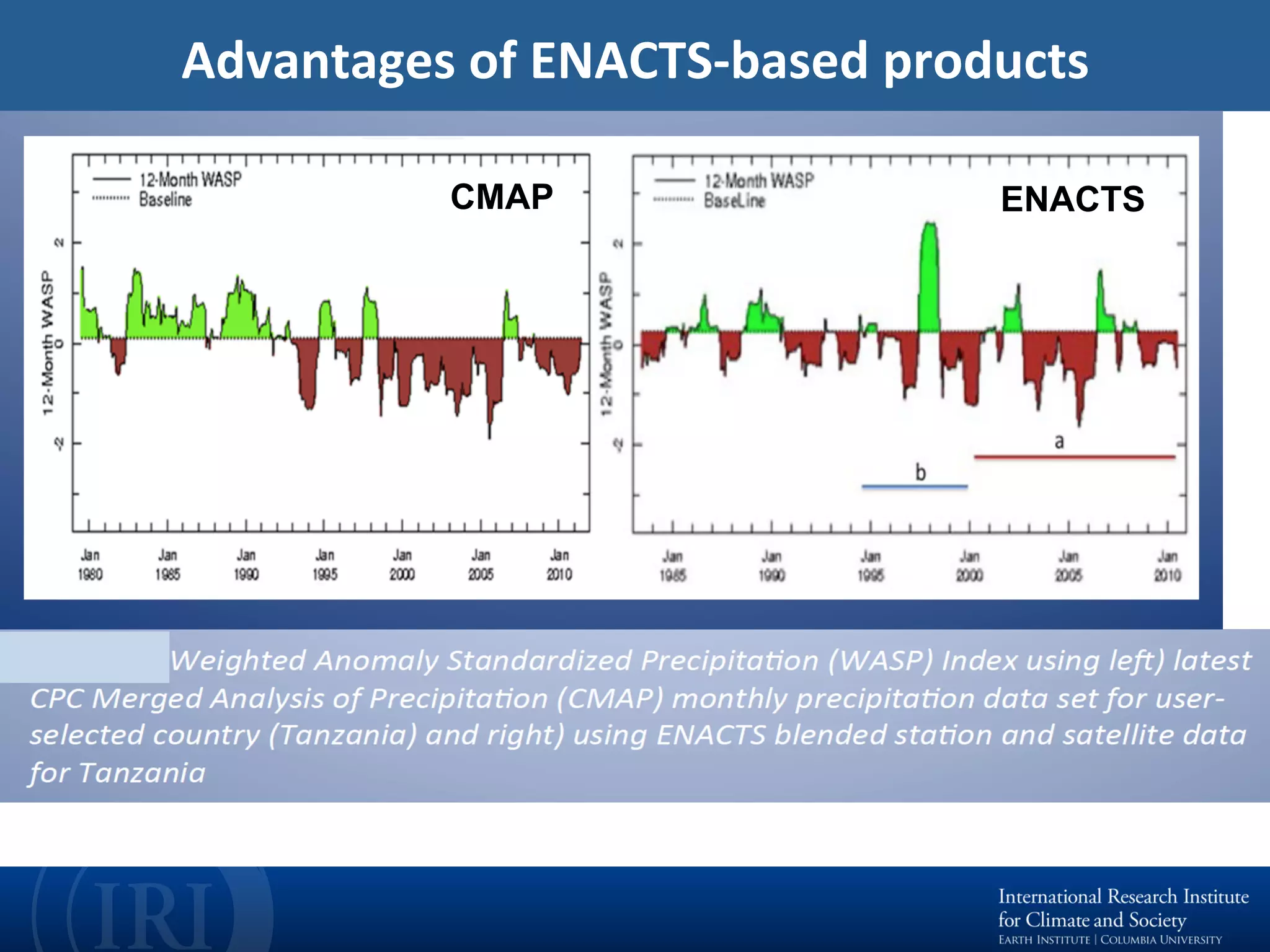
Advantages	of	ENACTS-based	products	
CMAP ENACTS
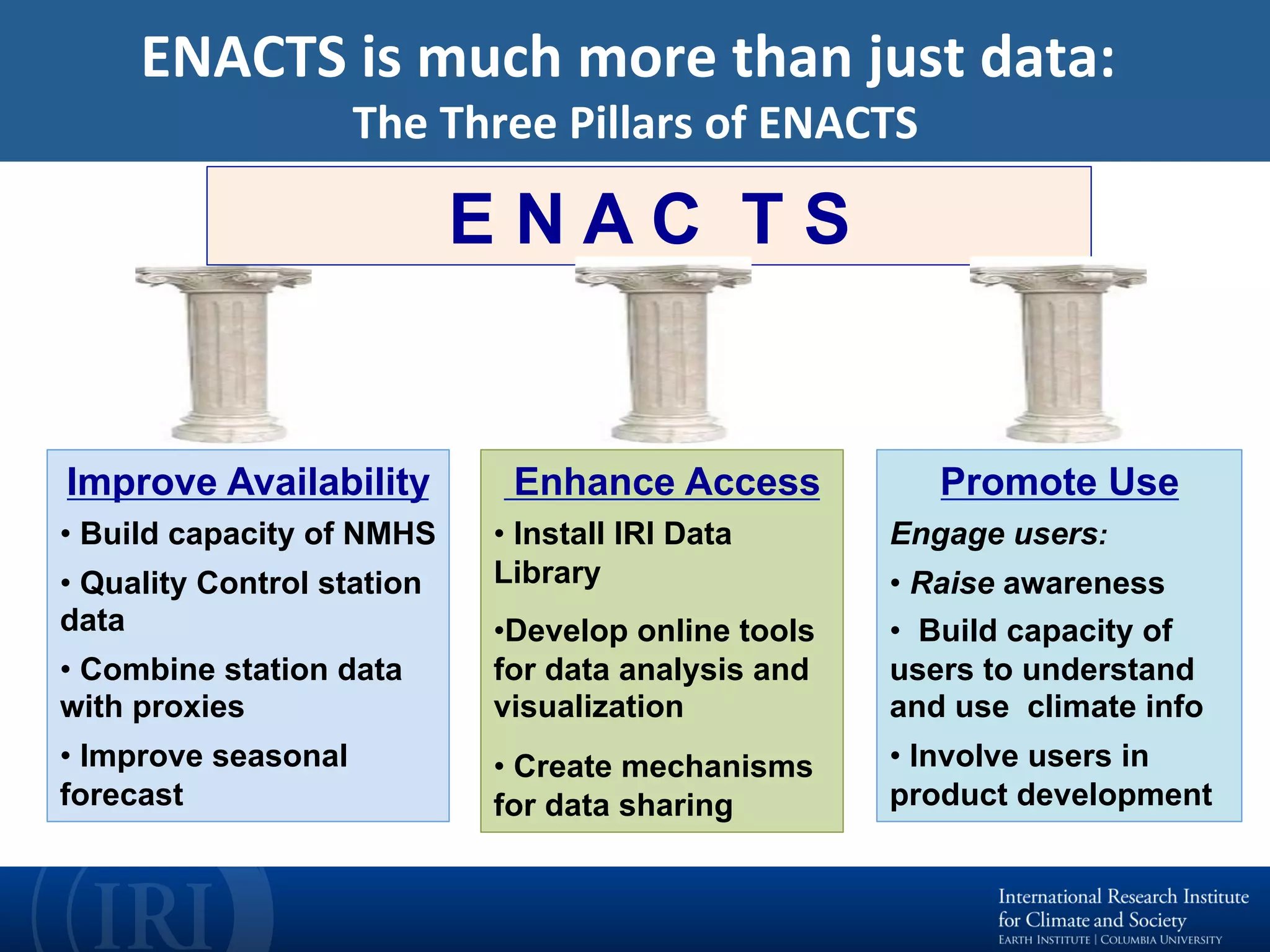
ENACTS	is	much	more	than	just	data:		
The	Three	Pillars	of	ENACTS	
Improve Availability
• Build capacity of NMHS
• Quality Control station
data
• Combine station data
with proxies
• Improve seasonal
forecast
E N A C T S
Enhance Access
• Install IRI Data
Library
• Develop online tools
for data analysis and
visualization
• Create mechanisms
for data sharing
Promote Use
Engage users:
• Raise awareness
•  Build capacity of
users to understand
and use climate info
• Involve users in
product development
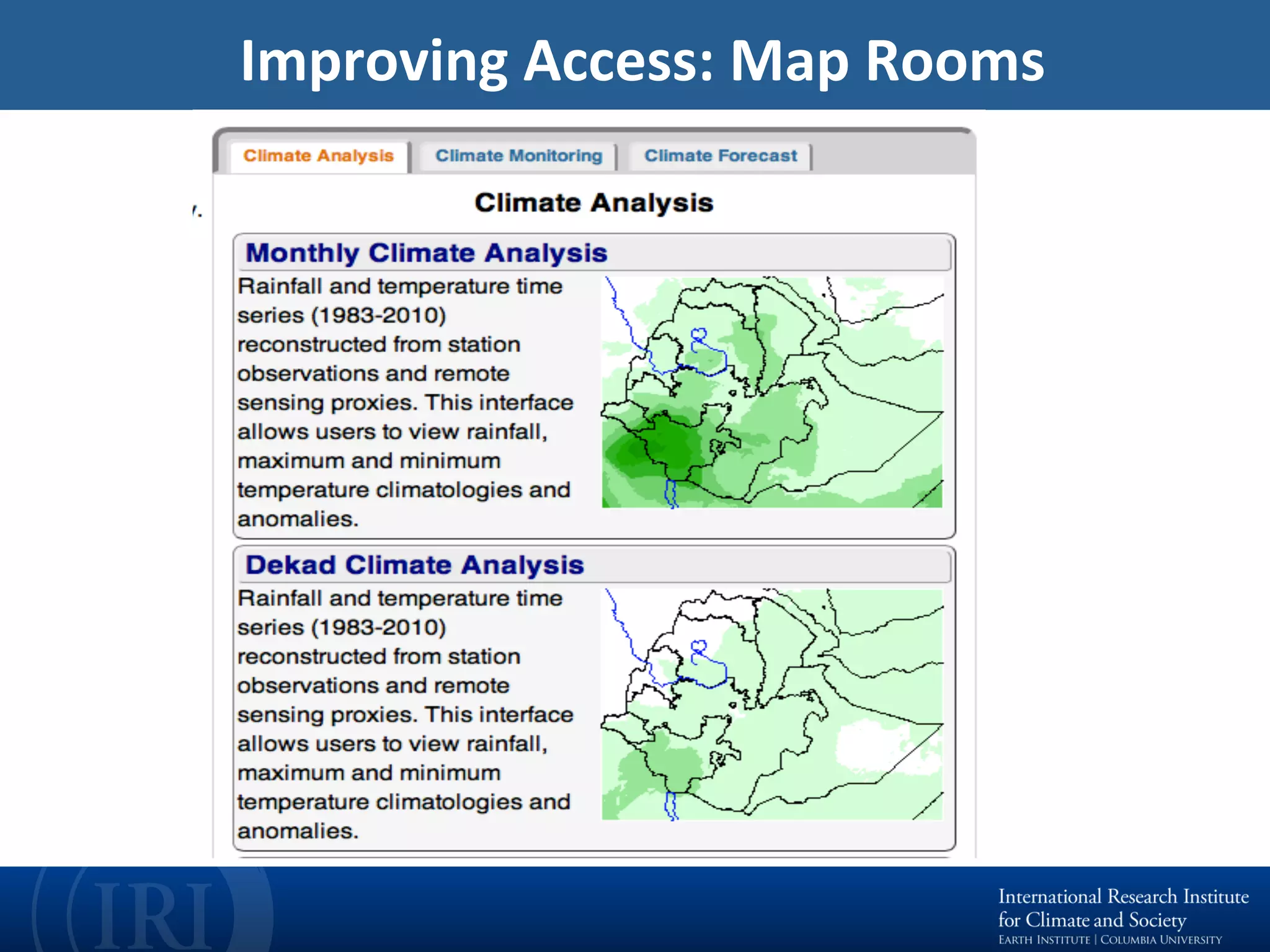
Improving	Access:	Map	Rooms
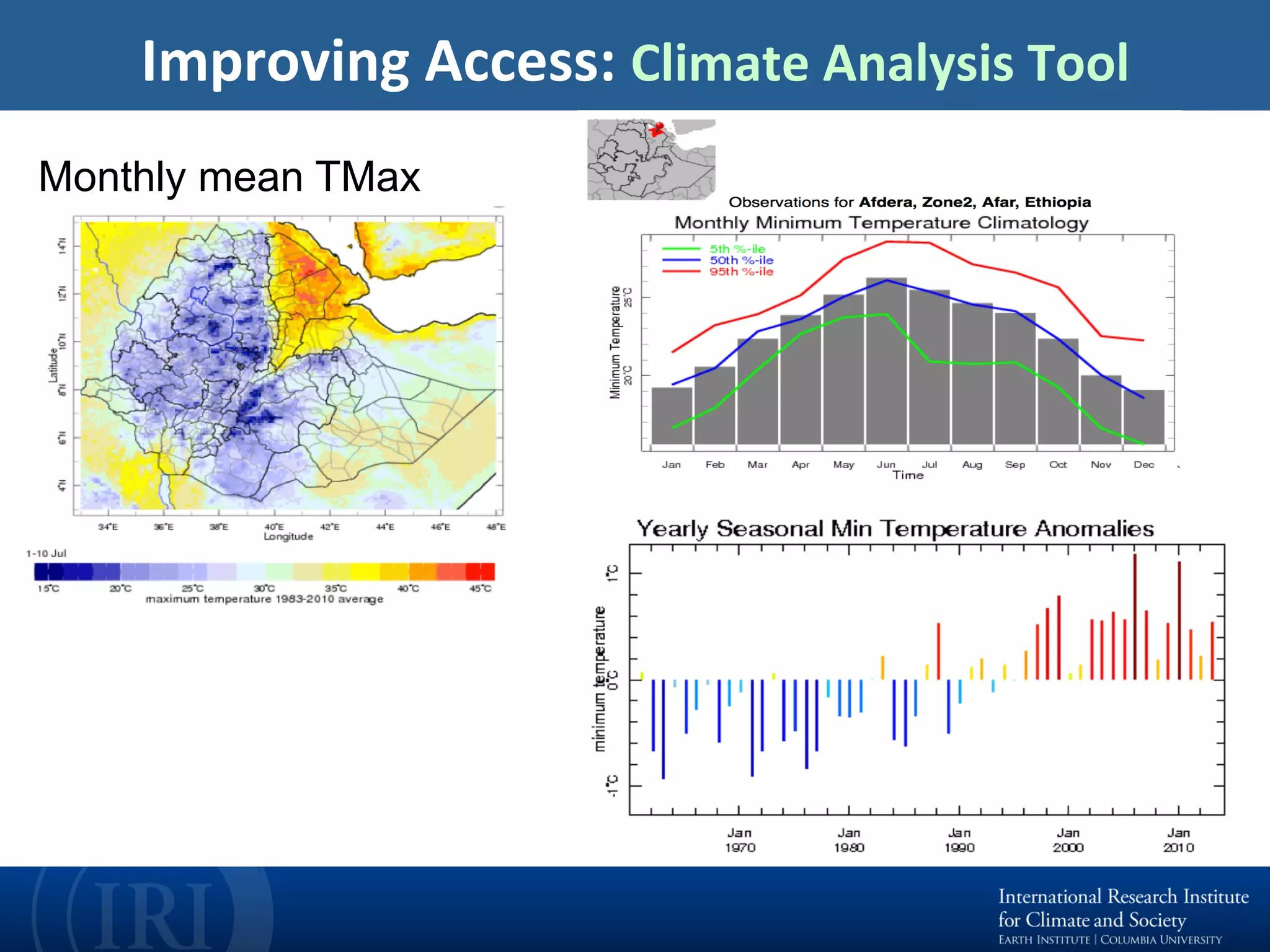
Improving	Access:	Climate	Analysis	Tool	
Monthly mean TMax
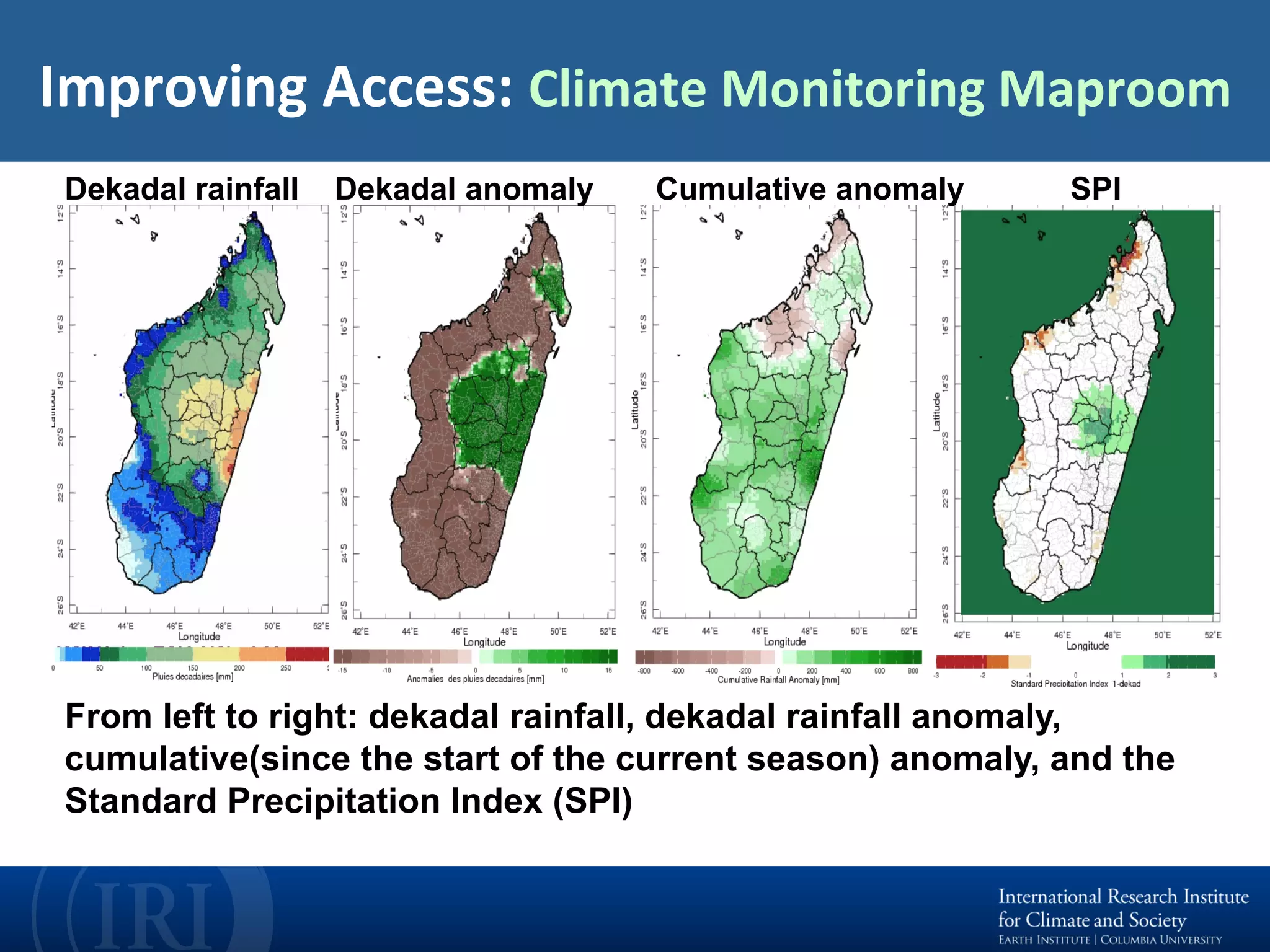
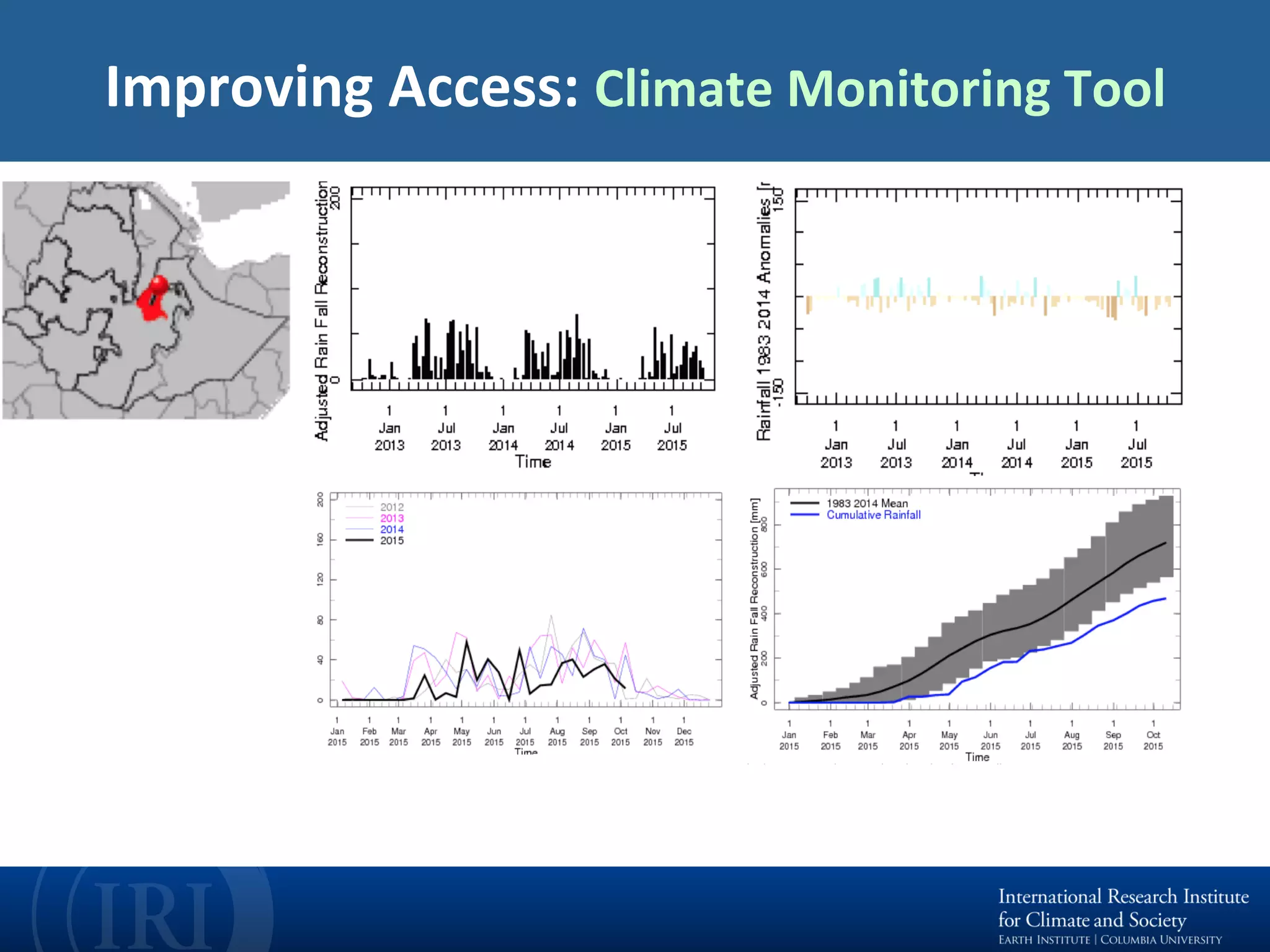
Improving	Access:	Climate	Monitoring	Maproom	
From left to right: dekadal rainfall, dekadal rainfall anomaly,
cumulative(since the start of the current season) anomaly, and the
Standard Precipitation Index (SPI)
Dekadal rainfall Dekadal anomaly Cumulative anomaly SPI
Improving	Access:	Climate	Monitoring	Tool
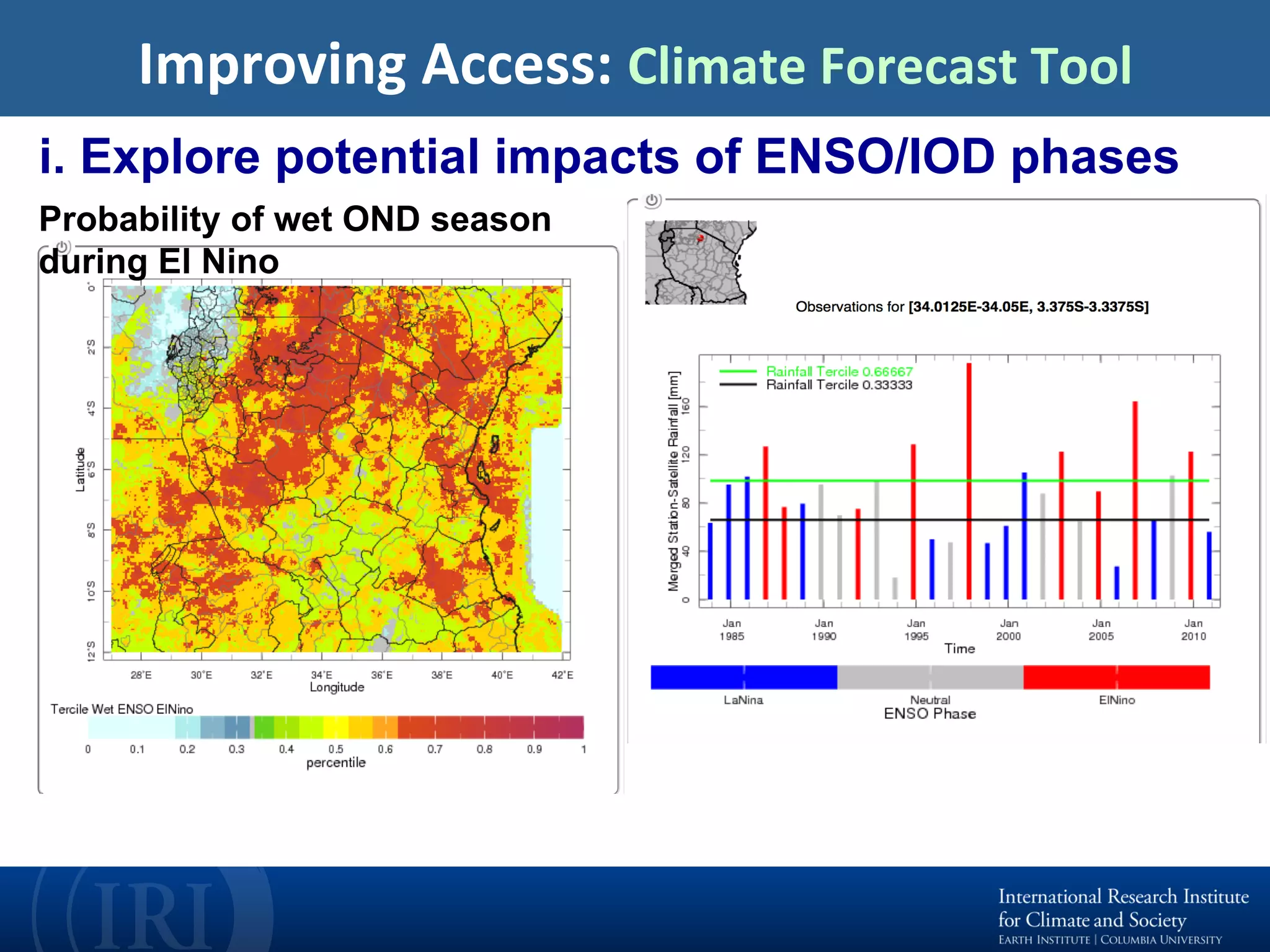
Probability of wet OND season
during El Nino
Improving	Access:	Climate	Forecast	Tool	
i. Explore potential impacts of ENSO/IOD phases
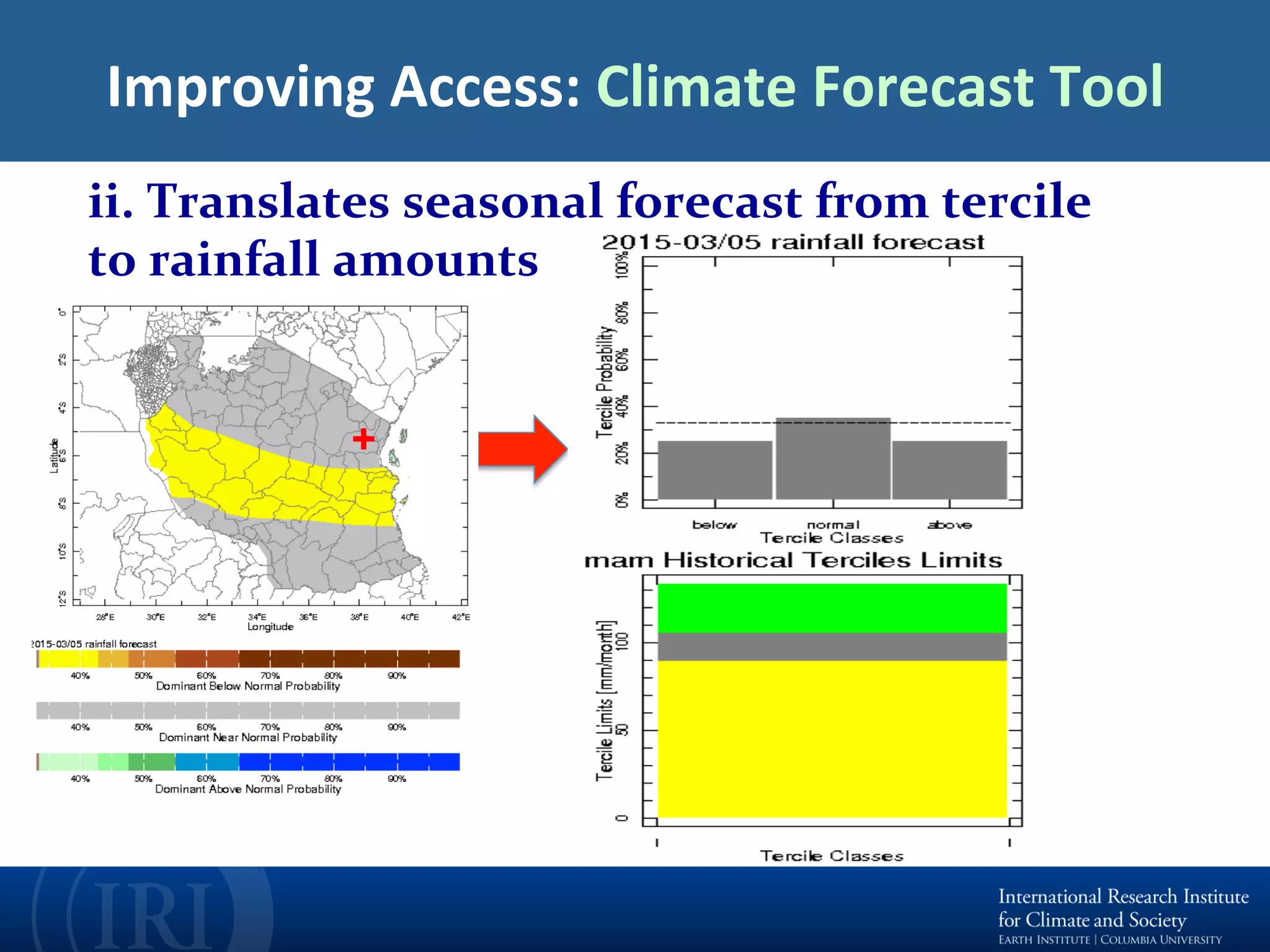
Improving	Access:	Climate	Forecast	Tool	
ii.	Translates	seasonal	forecast	from	tercile	
to	rainfall	amounts	
+
More	Outputs	
• Installation of the IRI Data Library at NMHS
o  A powerful tool for generating climate information
• Unprecedented online access to information products:
o Satisfies the needs of many users
o Overcomes (partly) the challenges of data access
•  Engagement with user communities
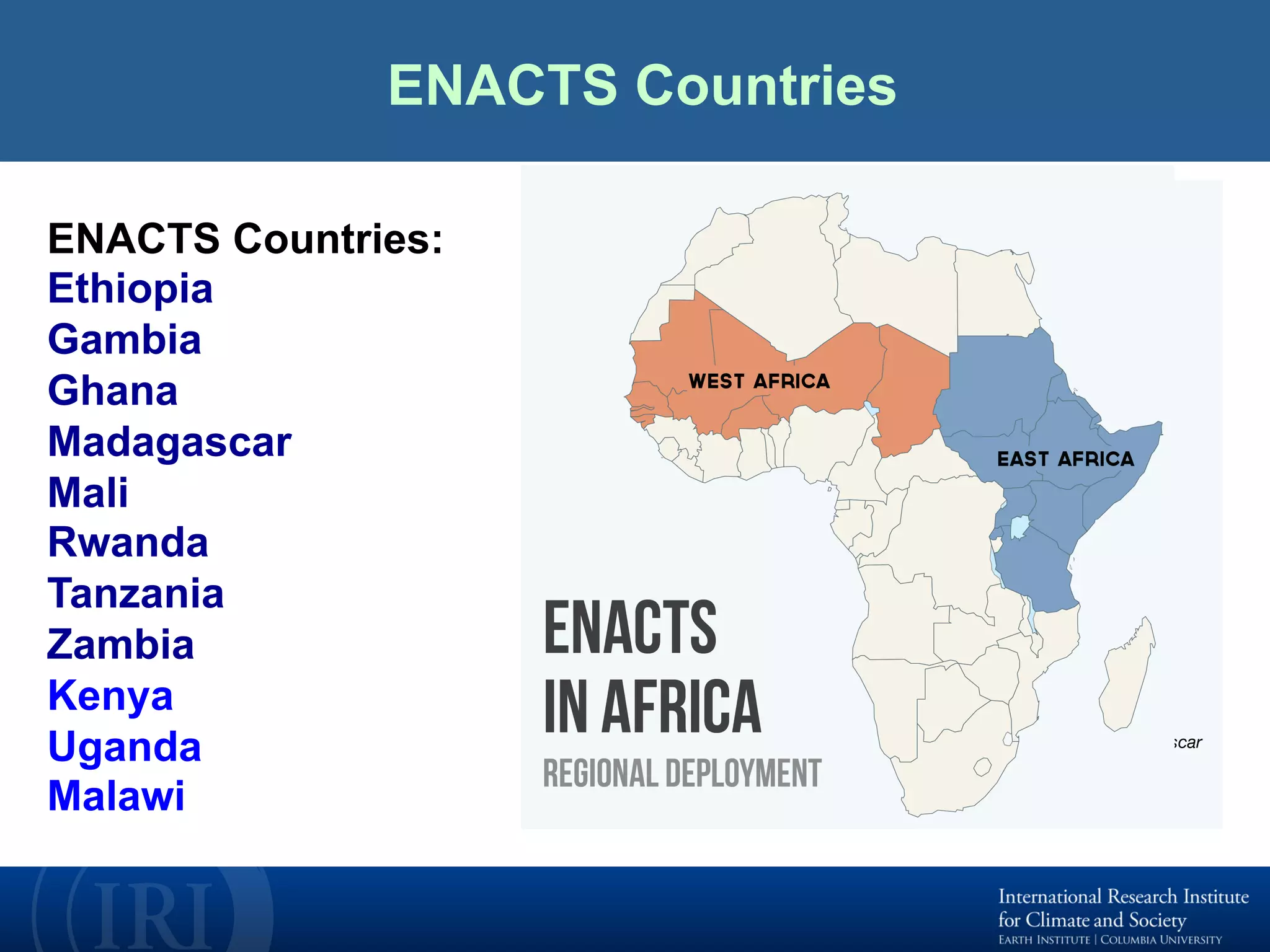
ENACTS Countries	
ENACTS Countries:
Ethiopia
Gambia
Ghana
Madagascar
Mali
Rwanda
Tanzania
Zambia
Kenya
Uganda
Malawi
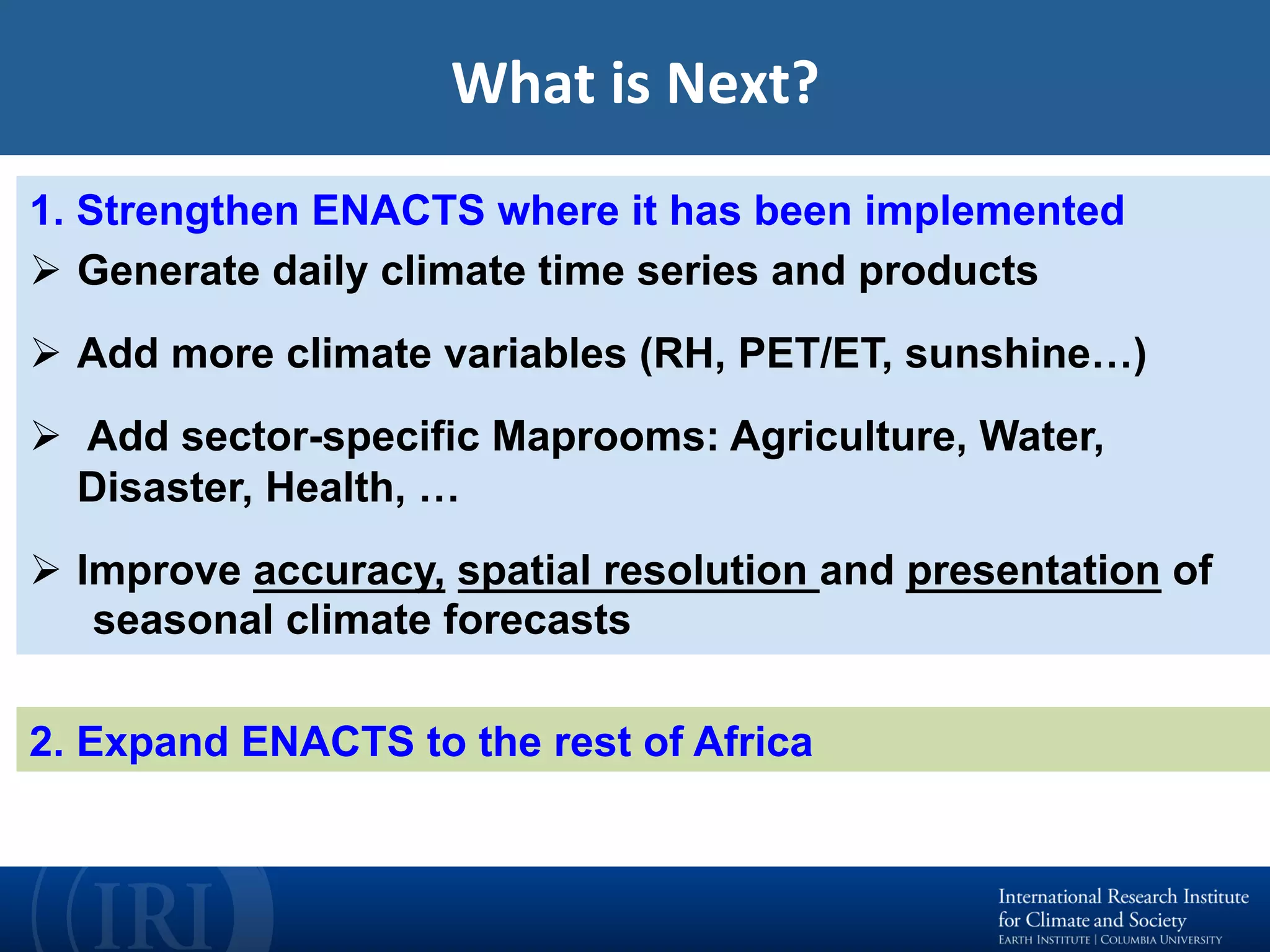
What	is	Next?	
2. Expand ENACTS to the rest of Africa
1. Strengthen ENACTS where it has been implemented
Ø  Generate daily climate time series and products
Ø  Add more climate variables (RH, PET/ET, sunshine…)
Ø  Add sector-specific Maprooms: Agriculture, Water,
Disaster, Health, …
Ø  Improve accuracy, spatial resolution and presentation of
seasonal climate forecasts
Tufa Dinku
tufa@iri.columbia.edu
web: iri.columbia.edu
@climatesociety
…/climatesociety
ThankYou

A New Innovation to Enable NMS Provide Climate Information at Local Level