Jonathan Aronson ARNIC Presentation April 11, 2008
My co-conspirators Peter F. Cowhey John Richards Donald Abelson
The Big Picture Information and Communication Technology Are Merging—This Creates A Brand New Market Dynamic Good Public Policy Should Facilitate the Growth of Modularity—The Key Characteristic of the New Technology Architecture Modularity Creates Huge Global Opportunities and Challenges
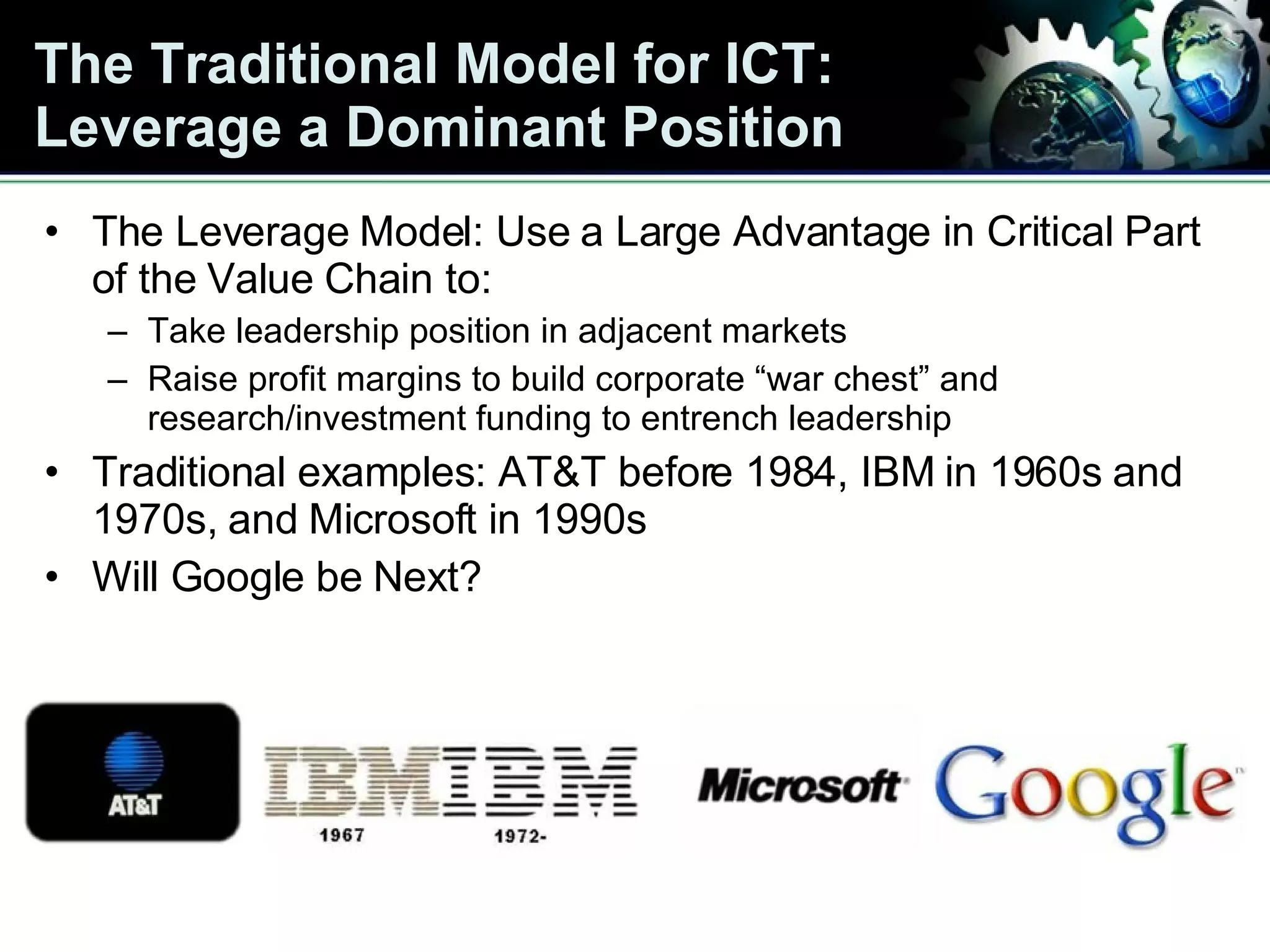
The Traditional Model for ICT: Leverage a Dominant Position The Leverage Model: Use a Large Advantage in Critical Part of the Value Chain to: Take leadership position in adjacent markets Raise profit margins to build corporate “war chest” and research/investment funding to entrench leadership Traditional examples: AT&T before 1984, IBM in 1960s and 1970s, and Microsoft in 1990s Will Google be Next?
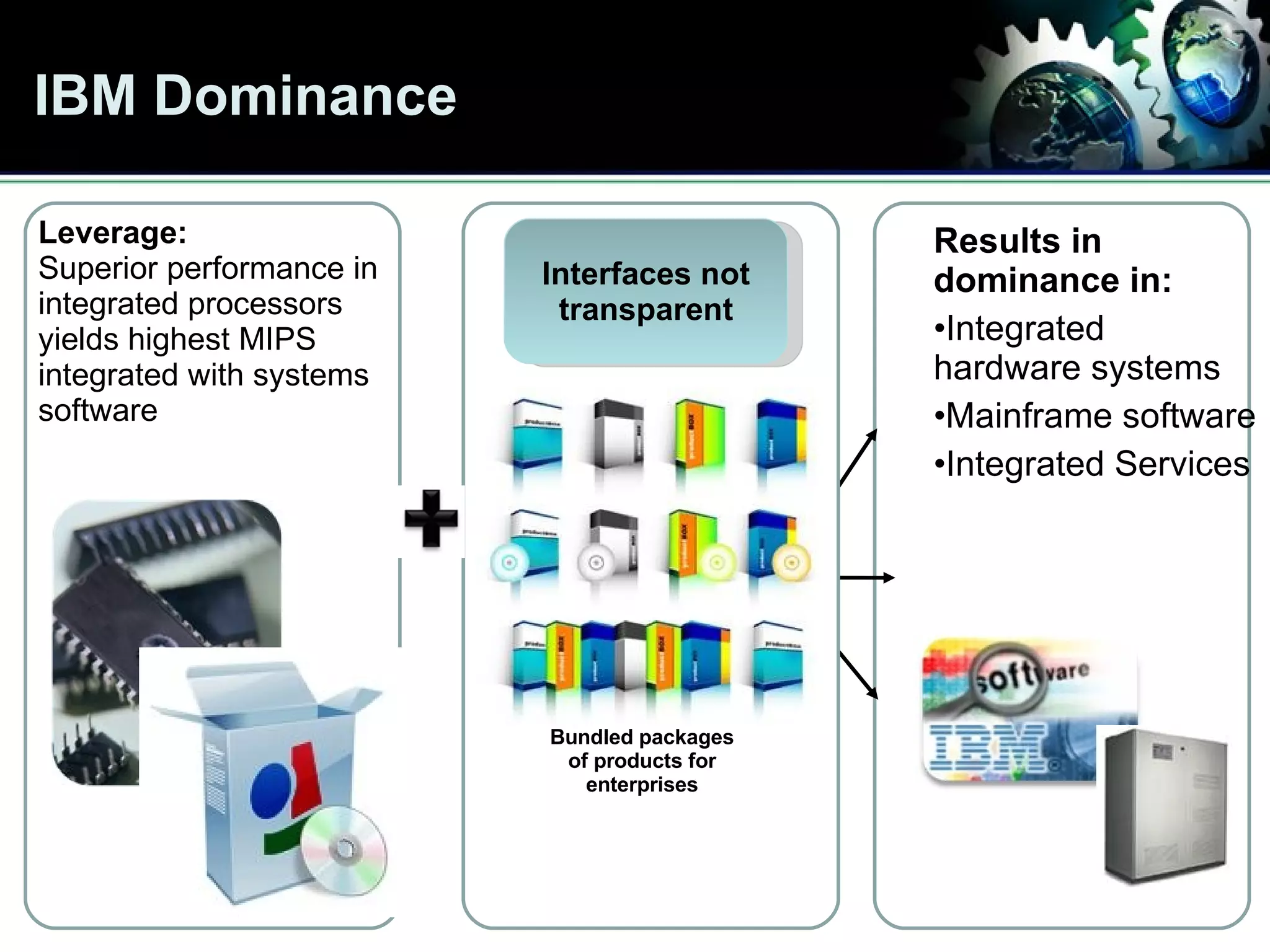
IBM Dominance Results in dominance in: Integrated hardware systems  Mainframe software Integrated Services Interfaces not transparent Leverage:  Superior performance in integrated processors yields highest MIPS integrated with systems software Bundled packages of products for enterprises
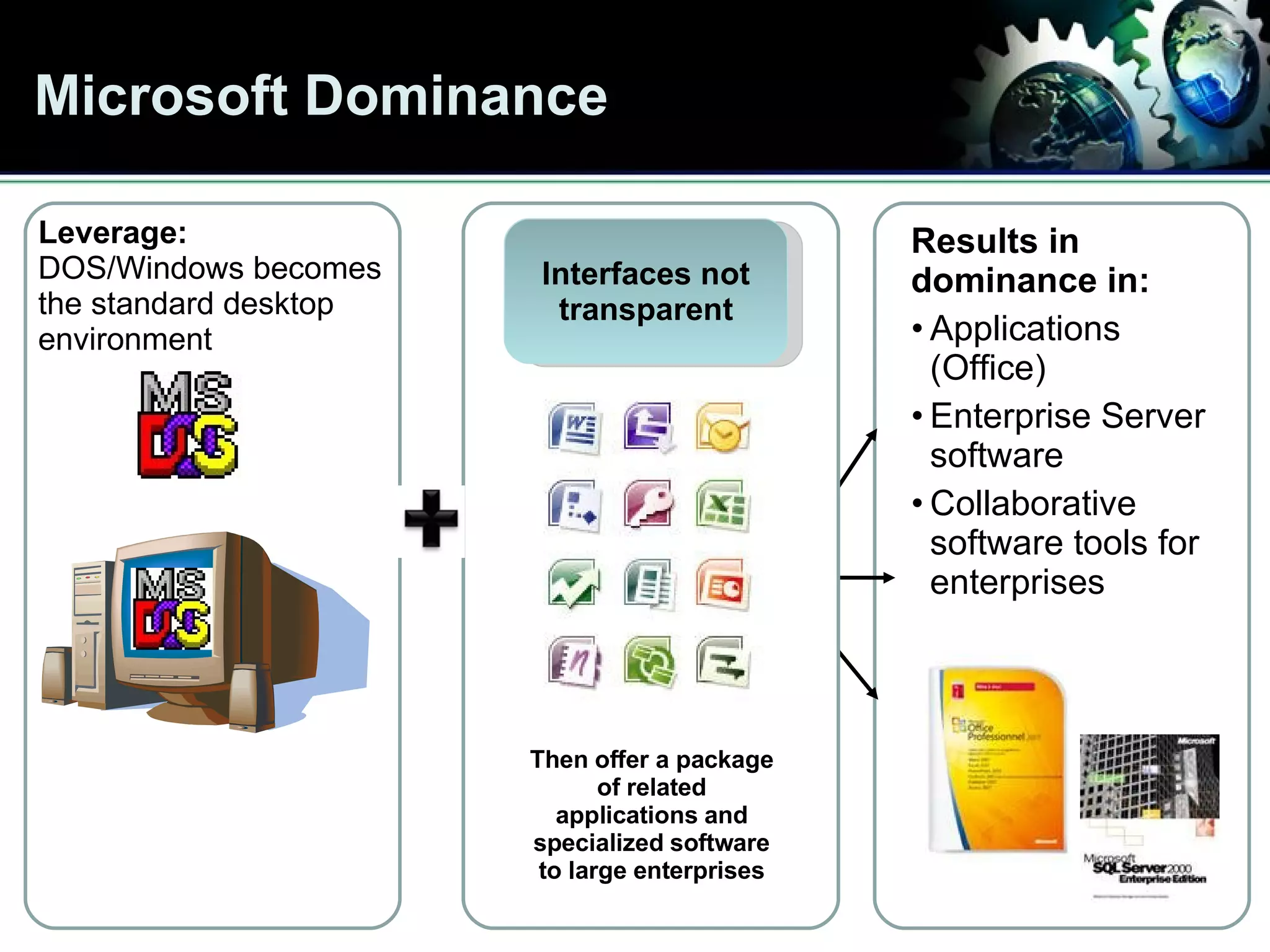
Microsoft Dominance Results in dominance in: Applications (Office) Enterprise Server  software Collaborative software tools for enterprises Interfaces not transparent Leverage:  DOS/Windows becomes the standard desktop environment Then offer a package of related applications and specialized software to large enterprises
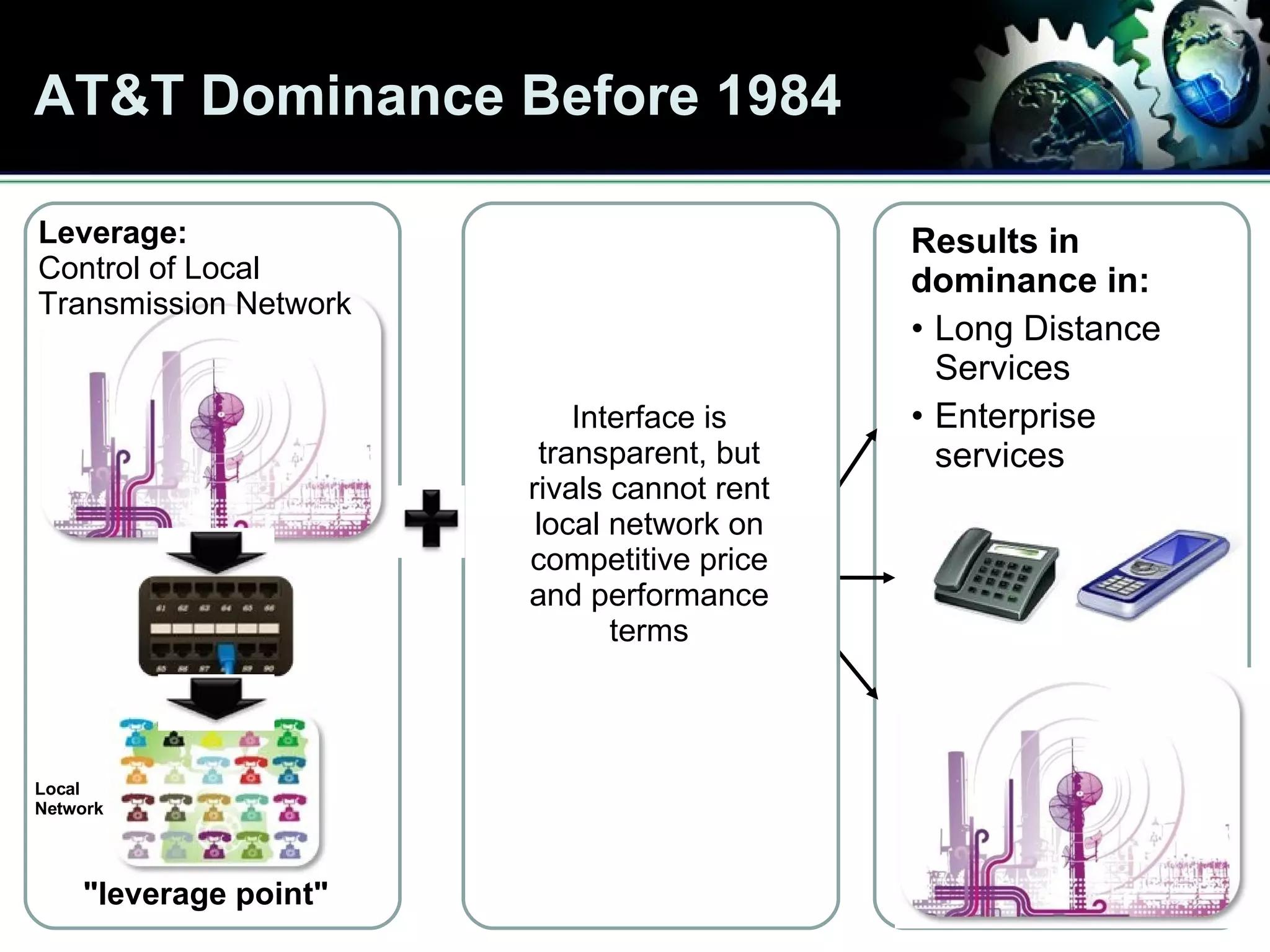
AT&T Dominance Before 1984 Leverage:  Control of Local Transmission Network  "leverage point" Interface is transparent, but rivals cannot rent local network on competitive price and performance terms Results in dominance in: Long Distance Services Enterprise services Local Network
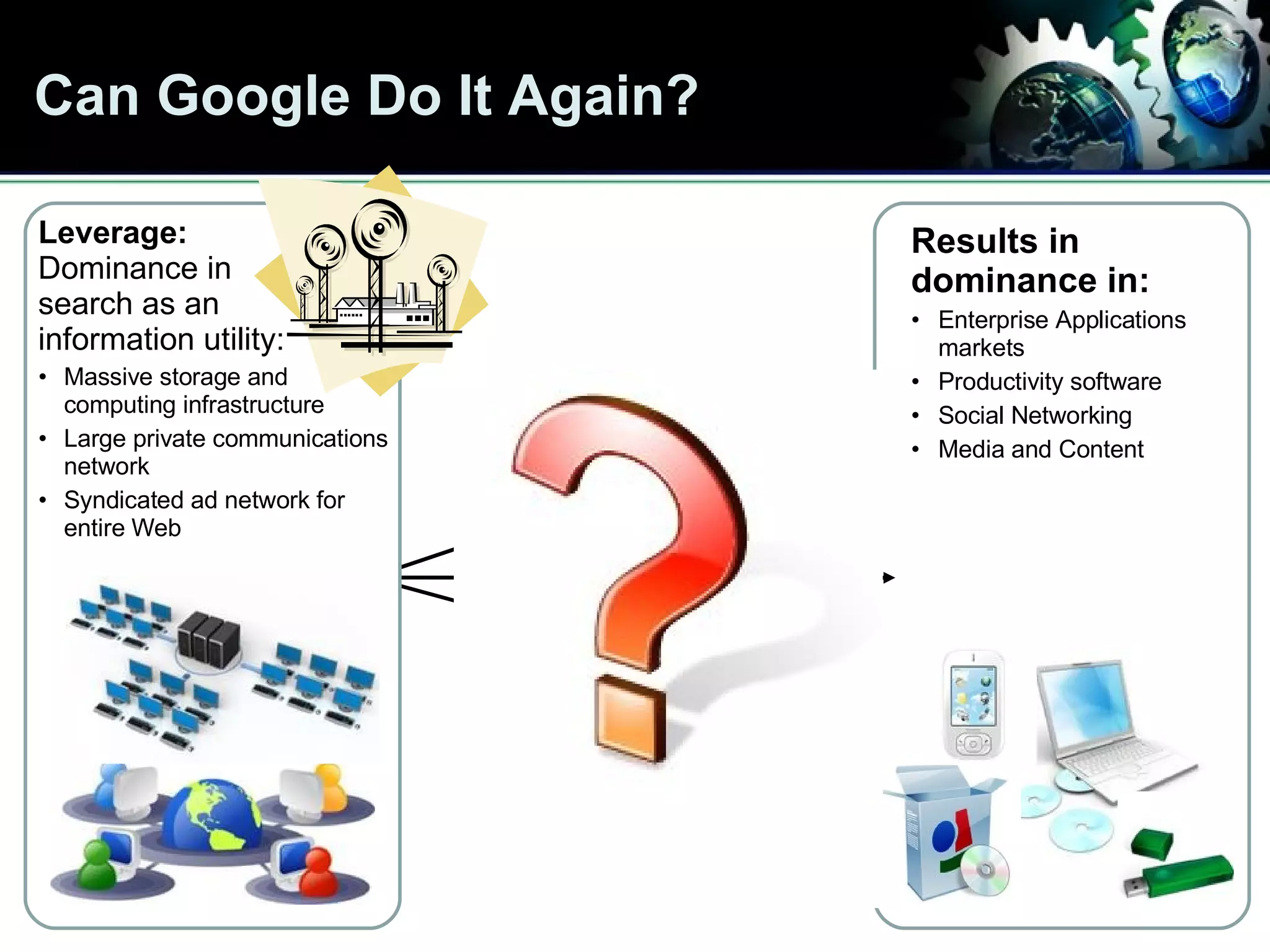
Can Google Do It Again? Leverage:  Dominance in  search as an  information utility: Massive storage and computing infrastructure Large private communications network Syndicated ad network for entire Web Results in dominance in: Enterprise Applications markets Productivity software Social Networking  Media and Content
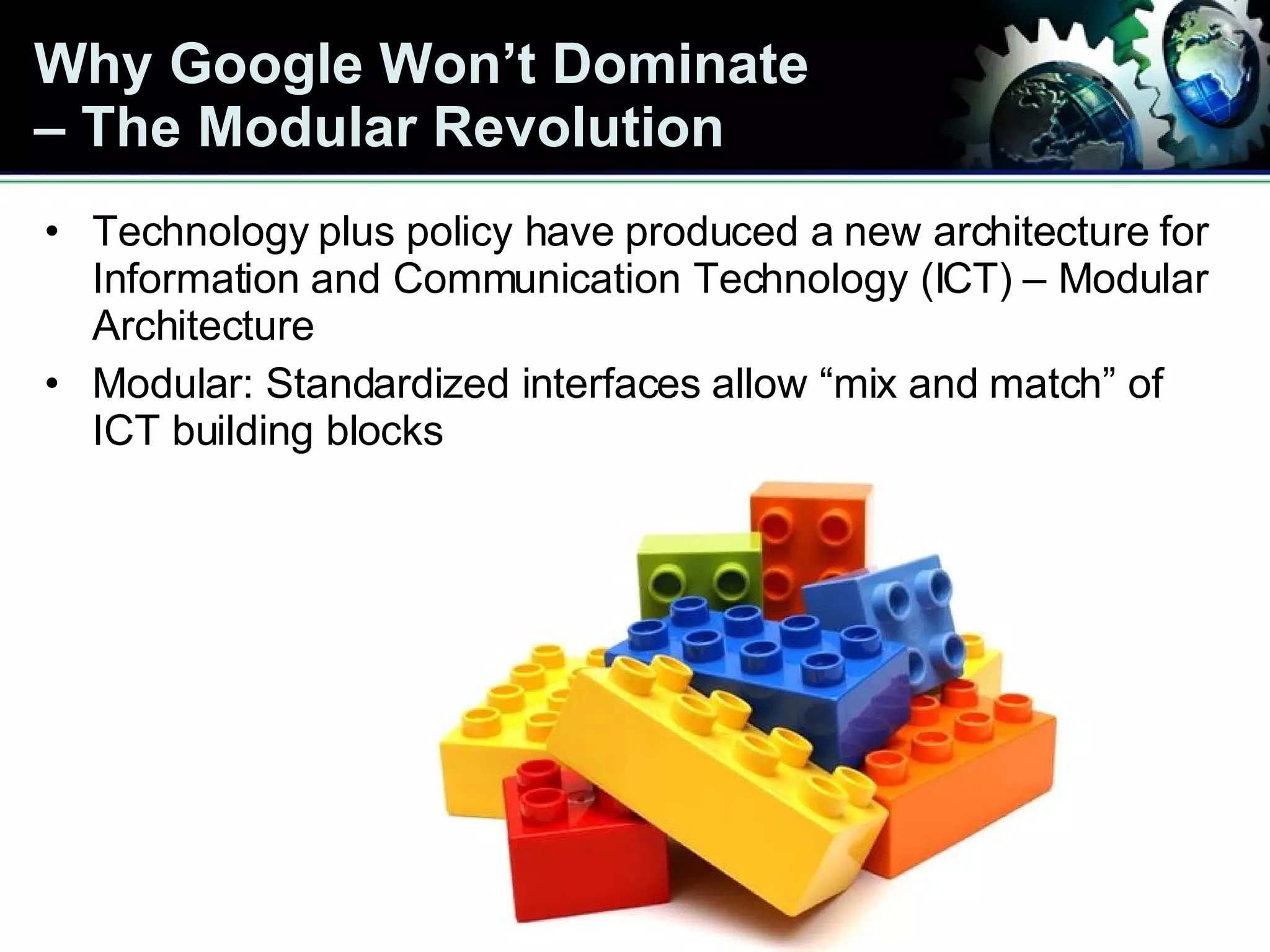
Why Google Won’t Dominate  – The Modular Revolution Technology plus policy have produced a new architecture for Information and Communication Technology (ICT) – Modular Architecture Modular: Standardized interfaces allow “mix and match” of ICT building blocks
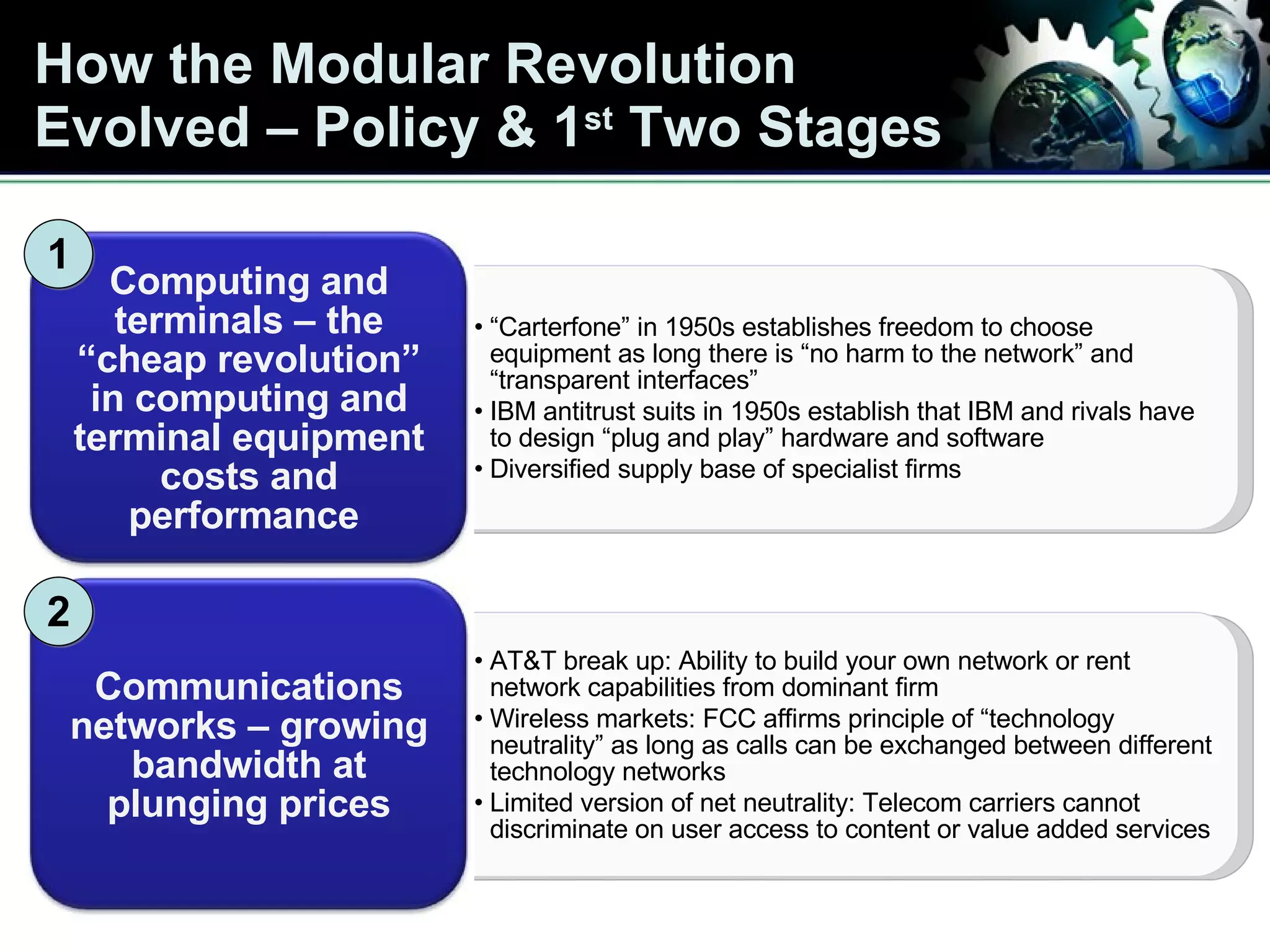
How the Modular Revolution  Evolved – Policy & 1 st  Two Stages “ Carterfone” in 1950s establishes freedom to choose equipment as long there is “no harm to the network” and “transparent interfaces” IBM antitrust suits in 1950s establish that IBM and rivals have to design “plug and play” hardware and software Diversified supply base of specialist firms  Computing and terminals – the “cheap revolution” in computing and terminal equipment costs and performance  AT&T break up: Ability to build your own network or rent network capabilities from dominant firm Wireless markets: FCC affirms principle of “technology neutrality” as long as calls can be exchanged between different technology networks  Limited version of net neutrality: Telecom carriers cannot discriminate on user access to content or value added services Communications networks – growing bandwidth at plunging prices 1 2
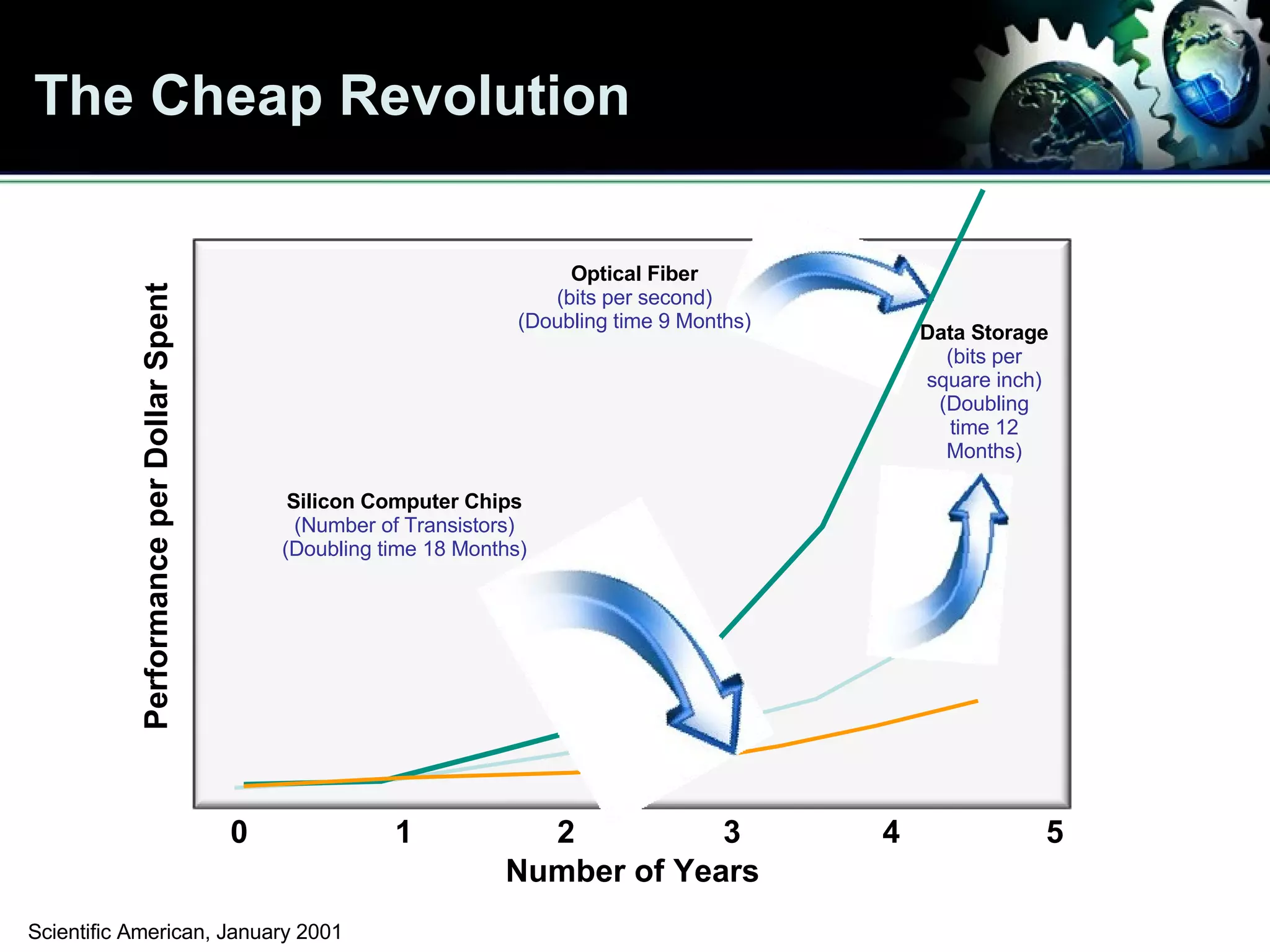
The Cheap Revolution Scientific American, January 2001 Number of Years 0 1 2 3 4 5 Performance per Dollar Spent Data Storage (bits per square inch) (Doubling time 12 Months) Optical Fiber (bits per second) (Doubling time 9 Months) Silicon Computer Chips (Number of Transistors) (Doubling time 18 Months)
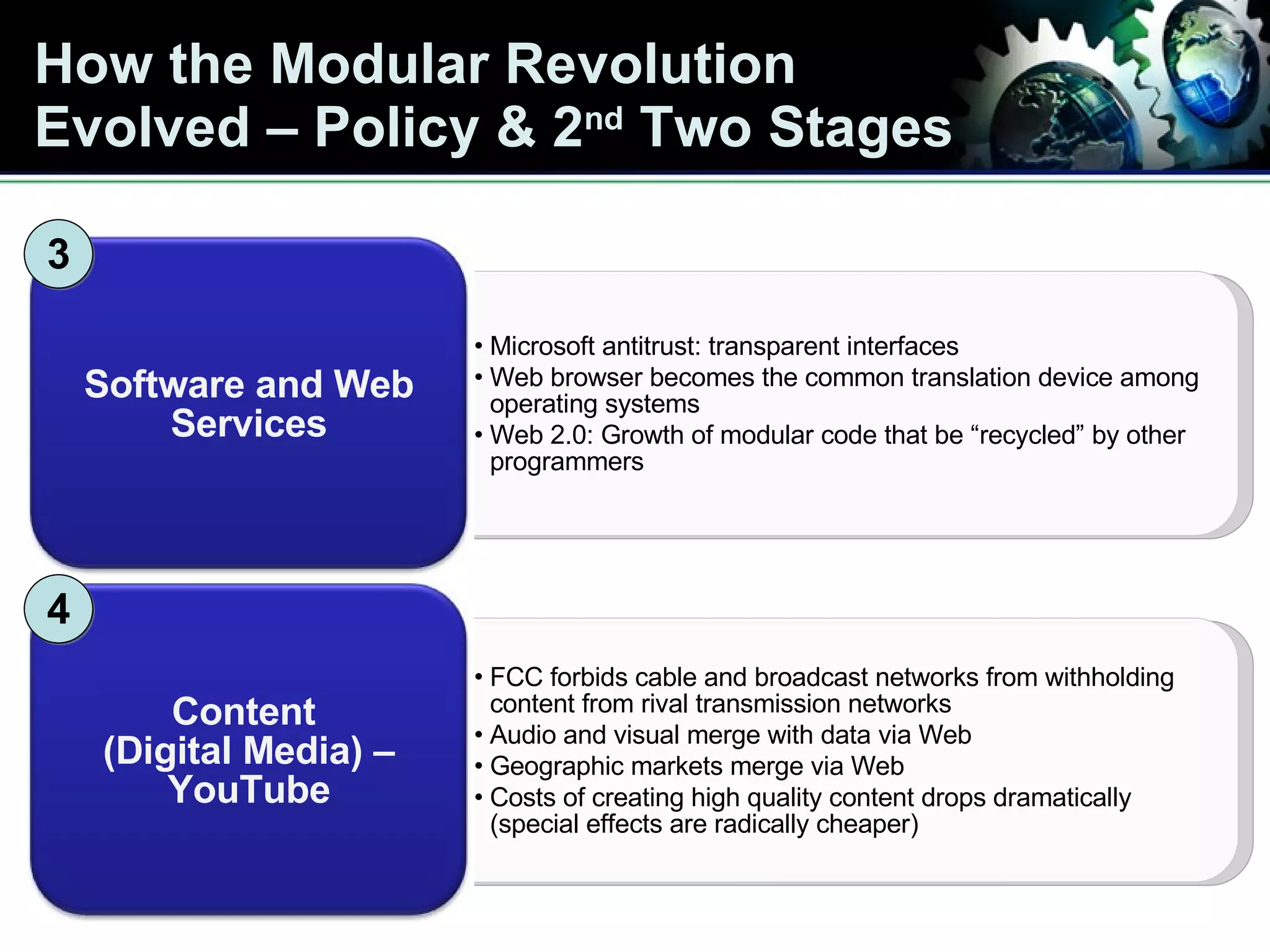
How the Modular Revolution  Evolved – Policy & 2 nd  Two Stages Microsoft antitrust: transparent interfaces Web browser becomes the common translation device among operating systems Web 2.0: Growth of modular code that be “recycled” by other programmers Software and Web Services FCC forbids cable and broadcast networks from withholding content from rival transmission networks Audio and visual merge with data via Web Geographic markets merge via Web Costs of creating high quality content drops dramatically (special effects are radically cheaper) Content  (Digital Media) – YouTube 3 4
Why Winners Don’t Take All in the New Era  Source: Gartner (August 2006) Figure 1. Percentage of OS-Specific (Generally Windows)  vs. OS-Agnostic Applications Figure 3. Application Development Mix — New Applications Figure 2. Number of OS-Specific (Generally Windows)  vs. OS-Agnostic Applications in Our Model Organization (Installed Base)
Some Examples of Modularity and Market Evolution Apple’s “iPod”:  makes its money on selling the terminal – the networked information is a commodity Salesforce.com:  provides customers with on-demand computing that supports a powerful customer relations management platform – unlike Google, it simply rents the computing infrastructure Orkut (Brazil) vs. Facebook:  Google has limited success in social networking Asian gaming market:  Only one of top fifty networked games in East Asia are from U.S. vs.
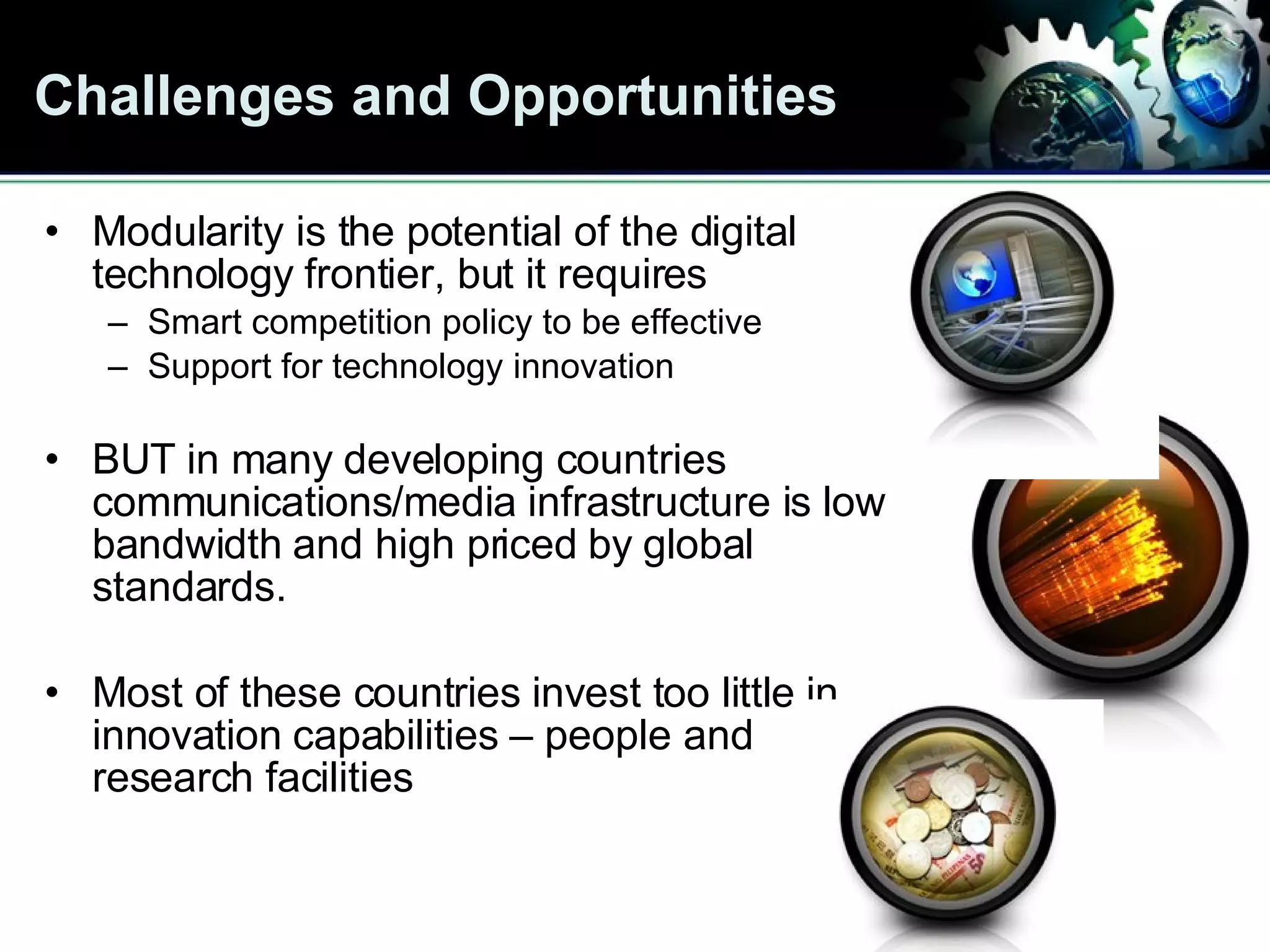
Challenges and Opportunities Modularity is the potential of the digital technology frontier, but it requires Smart competition policy to be effective Support for technology innovation BUT in many developing countries  communications/media infrastructure is low bandwidth and high priced by global standards.  Most of these countries invest too little in innovation capabilities – people and research facilities
Opportunities The rise of modularity and decline of leveraging opens many global opportunities The costs for being a global media and content provider are declining rapidly The ability to innovate specialized global applications for consumers and enterprises is disseminating rapidly
Four Examples to Consider Web 2.0 applications will be driven by ad revenues Networked medical innovations Environmental policy depends on good data—breakthroughs on networks of air monitoring sensors The implications of high end research networks for economic growth and modernization
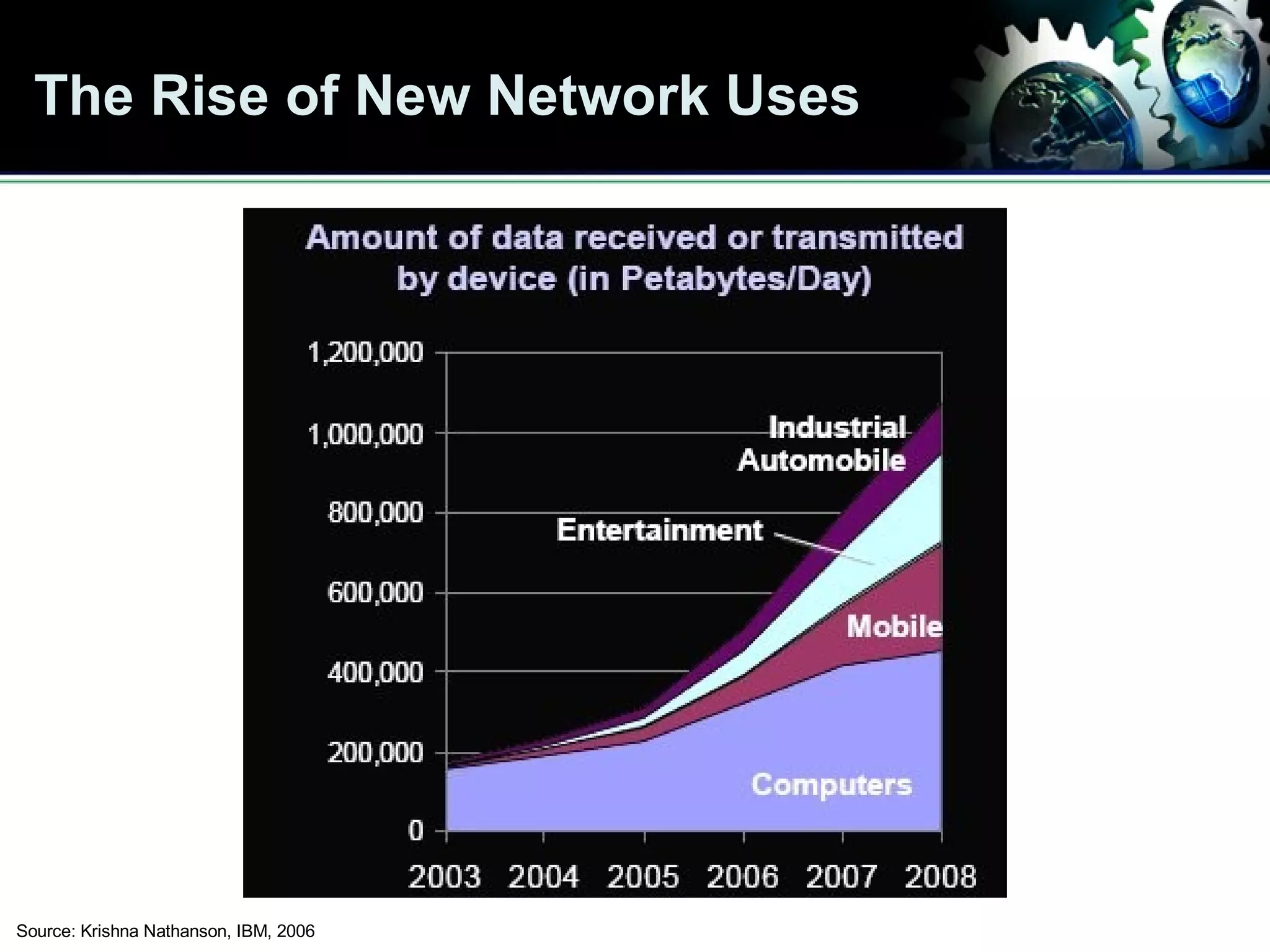
The Rise of New Network Uses Source: Krishna Nathanson, IBM, 2006
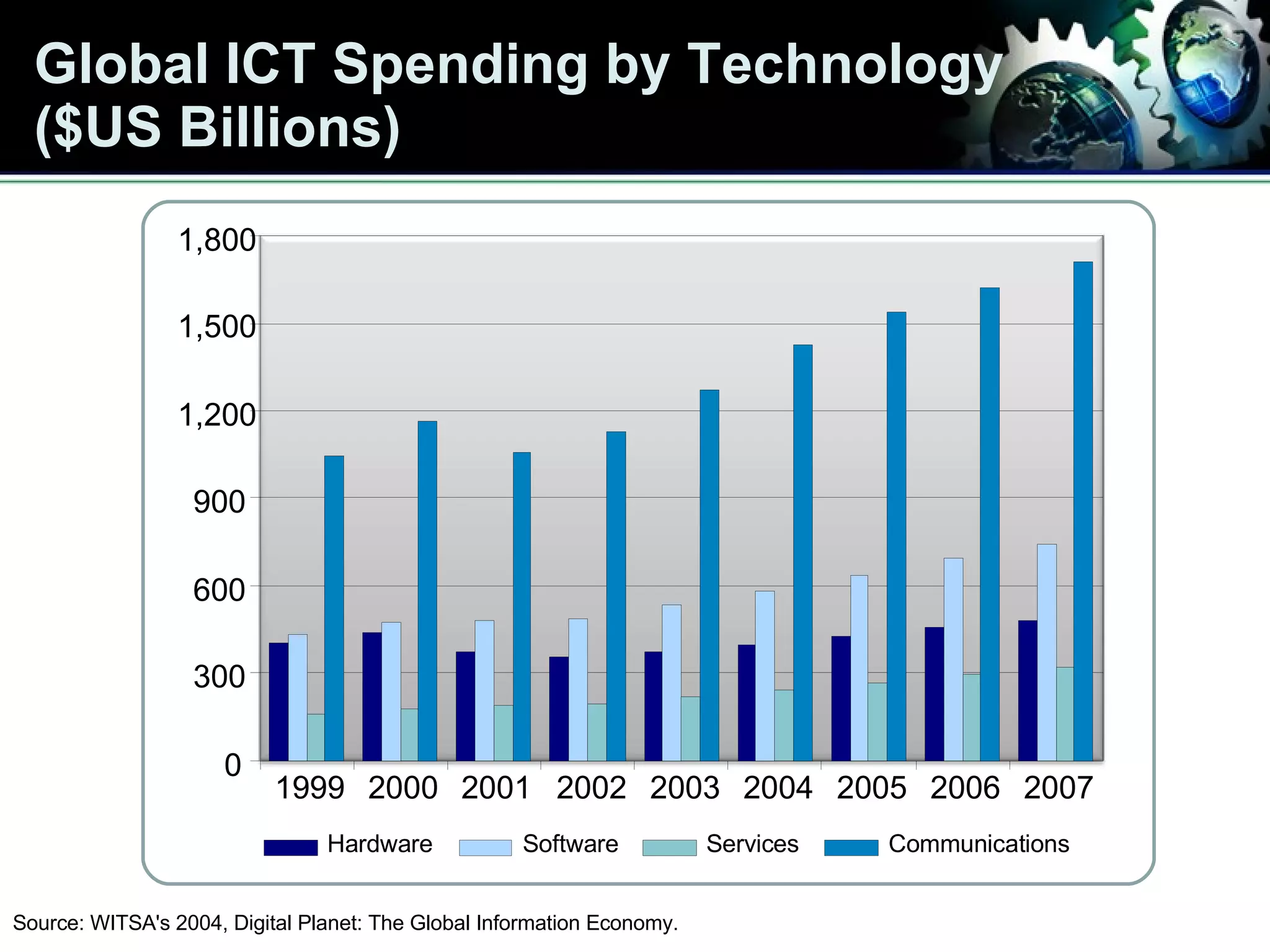
Global ICT Spending by Technology  ($US Billions) Source: WITSA's 2004, Digital Planet: The Global Information Economy.  2007 2006 2005 2004 2003 2002 2001 2000 1999 1,800 1,500 1,200 900 600 300 0 Hardware Software Services Communications
Policy is Political Policy is Political and Cannot be Micromanaged Aronson’s 3 Laws Every sector believes they are unique and deserve special treatment -  they are not 2. Ever firm believes competition is great in market’s they want to enter -  but not in those where they already dominate. Regulators are needed and won’t go away - “pretty good” policy is possible - “terrible” policy is common - So, getting it right is critical
Four Guiding Principles Principle 1:  Enable transactions among modular ICT building blocks Principle 2:  Facilitate interconnection of modular capabilities Principle 3:  Facilitate supply chain efficiency, reduce transaction costs Principle 4:  Reform domestically to help reorganize global governance
10 Norms to Implement Principles A. Institutional Design Norm 1:  Emphasize flexible, sometimes experimental, choices of agents, including mixed authority structures   when delegating authority globally.
Norms to Enable the Modular Supply Chain B. Enabling the Modular Supply Chain  Norm 2:   Invest heavily in the creation of virtual common capabilities for the Internet, and its successors, in a competitively neutral manner. Norm 3:   Reinforce the growing competitiveness of the supply  chain by partly refocusing competition policy .
Norms for the Network Infrastructure The 10 Norms C.  Norms for the Network Infrastructure Norm 4: Use  a light regulatory touch regarding pricing, investment,  and assets crucial to providing ICT networks and services. Norm 5:  Narrow and reset network competition policy .   -  all networks must accept all traffic from other networks . -  adopt a narrow scope for rules to assure network neutrality - separate decisions about peering from decisions about  about interconnection when dealing with VAN functions
Norms for Consumer Services (1) Norms for Consumer Services D. Norms for Consumer Services Norm 6:  Government policies generally should not restrict experiments  new applications by limiting mixing and matching of services Or  through  pricing rules that limit experimentation Norm 7:  Create rules for the globalization of multimedia AV content that balance the goals of encouraging the trade in services and fostering legitimate domestic media policies. Norm 8:  Use networked ICT techniques and changes to tip practices toward new markets for trading and transacting digital rights.
Norms for Consumer Services (2) Norm 9:  Enhance property rights for personal data and create mechanisms to allow commercial exchanges involving those rights on standard terms .   Norm 10:   Users may take their information with them when  they depart from specific applications and experiences and own their “click-streams.”.

Global Governance in the Digital Era

  • 1.
    Jonathan Aronson ARNICPresentation April 11, 2008
  • 2.
    My co-conspirators PeterF. Cowhey John Richards Donald Abelson
  • 3.
    The Big PictureInformation and Communication Technology Are Merging—This Creates A Brand New Market Dynamic Good Public Policy Should Facilitate the Growth of Modularity—The Key Characteristic of the New Technology Architecture Modularity Creates Huge Global Opportunities and Challenges
  • 4.
    The Traditional Modelfor ICT: Leverage a Dominant Position The Leverage Model: Use a Large Advantage in Critical Part of the Value Chain to: Take leadership position in adjacent markets Raise profit margins to build corporate “war chest” and research/investment funding to entrench leadership Traditional examples: AT&T before 1984, IBM in 1960s and 1970s, and Microsoft in 1990s Will Google be Next?
  • 5.
    IBM Dominance Resultsin dominance in: Integrated hardware systems Mainframe software Integrated Services Interfaces not transparent Leverage: Superior performance in integrated processors yields highest MIPS integrated with systems software Bundled packages of products for enterprises
  • 6.
    Microsoft Dominance Resultsin dominance in: Applications (Office) Enterprise Server software Collaborative software tools for enterprises Interfaces not transparent Leverage: DOS/Windows becomes the standard desktop environment Then offer a package of related applications and specialized software to large enterprises
  • 7.
    AT&T Dominance Before1984 Leverage: Control of Local Transmission Network "leverage point" Interface is transparent, but rivals cannot rent local network on competitive price and performance terms Results in dominance in: Long Distance Services Enterprise services Local Network
  • 8.
    Can Google DoIt Again? Leverage: Dominance in search as an information utility: Massive storage and computing infrastructure Large private communications network Syndicated ad network for entire Web Results in dominance in: Enterprise Applications markets Productivity software Social Networking Media and Content
  • 9.
    Why Google Won’tDominate – The Modular Revolution Technology plus policy have produced a new architecture for Information and Communication Technology (ICT) – Modular Architecture Modular: Standardized interfaces allow “mix and match” of ICT building blocks
  • 10.
    How the ModularRevolution Evolved – Policy & 1 st Two Stages “ Carterfone” in 1950s establishes freedom to choose equipment as long there is “no harm to the network” and “transparent interfaces” IBM antitrust suits in 1950s establish that IBM and rivals have to design “plug and play” hardware and software Diversified supply base of specialist firms Computing and terminals – the “cheap revolution” in computing and terminal equipment costs and performance AT&T break up: Ability to build your own network or rent network capabilities from dominant firm Wireless markets: FCC affirms principle of “technology neutrality” as long as calls can be exchanged between different technology networks Limited version of net neutrality: Telecom carriers cannot discriminate on user access to content or value added services Communications networks – growing bandwidth at plunging prices 1 2
  • 11.
    The Cheap RevolutionScientific American, January 2001 Number of Years 0 1 2 3 4 5 Performance per Dollar Spent Data Storage (bits per square inch) (Doubling time 12 Months) Optical Fiber (bits per second) (Doubling time 9 Months) Silicon Computer Chips (Number of Transistors) (Doubling time 18 Months)
  • 12.
    How the ModularRevolution Evolved – Policy & 2 nd Two Stages Microsoft antitrust: transparent interfaces Web browser becomes the common translation device among operating systems Web 2.0: Growth of modular code that be “recycled” by other programmers Software and Web Services FCC forbids cable and broadcast networks from withholding content from rival transmission networks Audio and visual merge with data via Web Geographic markets merge via Web Costs of creating high quality content drops dramatically (special effects are radically cheaper) Content (Digital Media) – YouTube 3 4
  • 13.
    Why Winners Don’tTake All in the New Era Source: Gartner (August 2006) Figure 1. Percentage of OS-Specific (Generally Windows) vs. OS-Agnostic Applications Figure 3. Application Development Mix — New Applications Figure 2. Number of OS-Specific (Generally Windows) vs. OS-Agnostic Applications in Our Model Organization (Installed Base)
  • 14.
    Some Examples ofModularity and Market Evolution Apple’s “iPod”: makes its money on selling the terminal – the networked information is a commodity Salesforce.com: provides customers with on-demand computing that supports a powerful customer relations management platform – unlike Google, it simply rents the computing infrastructure Orkut (Brazil) vs. Facebook: Google has limited success in social networking Asian gaming market: Only one of top fifty networked games in East Asia are from U.S. vs.
  • 15.
    Challenges and OpportunitiesModularity is the potential of the digital technology frontier, but it requires Smart competition policy to be effective Support for technology innovation BUT in many developing countries communications/media infrastructure is low bandwidth and high priced by global standards. Most of these countries invest too little in innovation capabilities – people and research facilities
  • 16.
    Opportunities The riseof modularity and decline of leveraging opens many global opportunities The costs for being a global media and content provider are declining rapidly The ability to innovate specialized global applications for consumers and enterprises is disseminating rapidly
  • 17.
    Four Examples toConsider Web 2.0 applications will be driven by ad revenues Networked medical innovations Environmental policy depends on good data—breakthroughs on networks of air monitoring sensors The implications of high end research networks for economic growth and modernization
  • 18.
    The Rise ofNew Network Uses Source: Krishna Nathanson, IBM, 2006
  • 19.
    Global ICT Spendingby Technology ($US Billions) Source: WITSA's 2004, Digital Planet: The Global Information Economy. 2007 2006 2005 2004 2003 2002 2001 2000 1999 1,800 1,500 1,200 900 600 300 0 Hardware Software Services Communications
  • 20.
    Policy is PoliticalPolicy is Political and Cannot be Micromanaged Aronson’s 3 Laws Every sector believes they are unique and deserve special treatment - they are not 2. Ever firm believes competition is great in market’s they want to enter - but not in those where they already dominate. Regulators are needed and won’t go away - “pretty good” policy is possible - “terrible” policy is common - So, getting it right is critical
  • 21.
    Four Guiding PrinciplesPrinciple 1: Enable transactions among modular ICT building blocks Principle 2: Facilitate interconnection of modular capabilities Principle 3: Facilitate supply chain efficiency, reduce transaction costs Principle 4: Reform domestically to help reorganize global governance
  • 22.
    10 Norms toImplement Principles A. Institutional Design Norm 1: Emphasize flexible, sometimes experimental, choices of agents, including mixed authority structures when delegating authority globally.
  • 23.
    Norms to Enablethe Modular Supply Chain B. Enabling the Modular Supply Chain Norm 2: Invest heavily in the creation of virtual common capabilities for the Internet, and its successors, in a competitively neutral manner. Norm 3: Reinforce the growing competitiveness of the supply chain by partly refocusing competition policy .
  • 24.
    Norms for theNetwork Infrastructure The 10 Norms C. Norms for the Network Infrastructure Norm 4: Use a light regulatory touch regarding pricing, investment, and assets crucial to providing ICT networks and services. Norm 5: Narrow and reset network competition policy . - all networks must accept all traffic from other networks . - adopt a narrow scope for rules to assure network neutrality - separate decisions about peering from decisions about about interconnection when dealing with VAN functions
  • 25.
    Norms for ConsumerServices (1) Norms for Consumer Services D. Norms for Consumer Services Norm 6: Government policies generally should not restrict experiments new applications by limiting mixing and matching of services Or through pricing rules that limit experimentation Norm 7: Create rules for the globalization of multimedia AV content that balance the goals of encouraging the trade in services and fostering legitimate domestic media policies. Norm 8: Use networked ICT techniques and changes to tip practices toward new markets for trading and transacting digital rights.
  • 26.
    Norms for ConsumerServices (2) Norm 9: Enhance property rights for personal data and create mechanisms to allow commercial exchanges involving those rights on standard terms . Norm 10: Users may take their information with them when they depart from specific applications and experiences and own their “click-streams.”.