This document discusses likes, dislikes, and preferences using various expressions. It provides examples of saying if you, someone, or somebody likes or dislikes something. Additionally, it discusses using words like "fond," "loathe," and expressions like "can't stand." It also includes questions to check comprehension and things to remember when discussing likes and dislikes.
In this document
Powered by AI
Slides discuss expressing personal likes and dislikes, using examples like 'I like cooking' and 'I hate crowded supermarkets'.
Slide explains how to express indifference, using 'I don't mind doing the housework' and examines usage of terms like 'loathe'.
Slide presents Q&A format for asking about likes, including example questions and answers for various subjects.
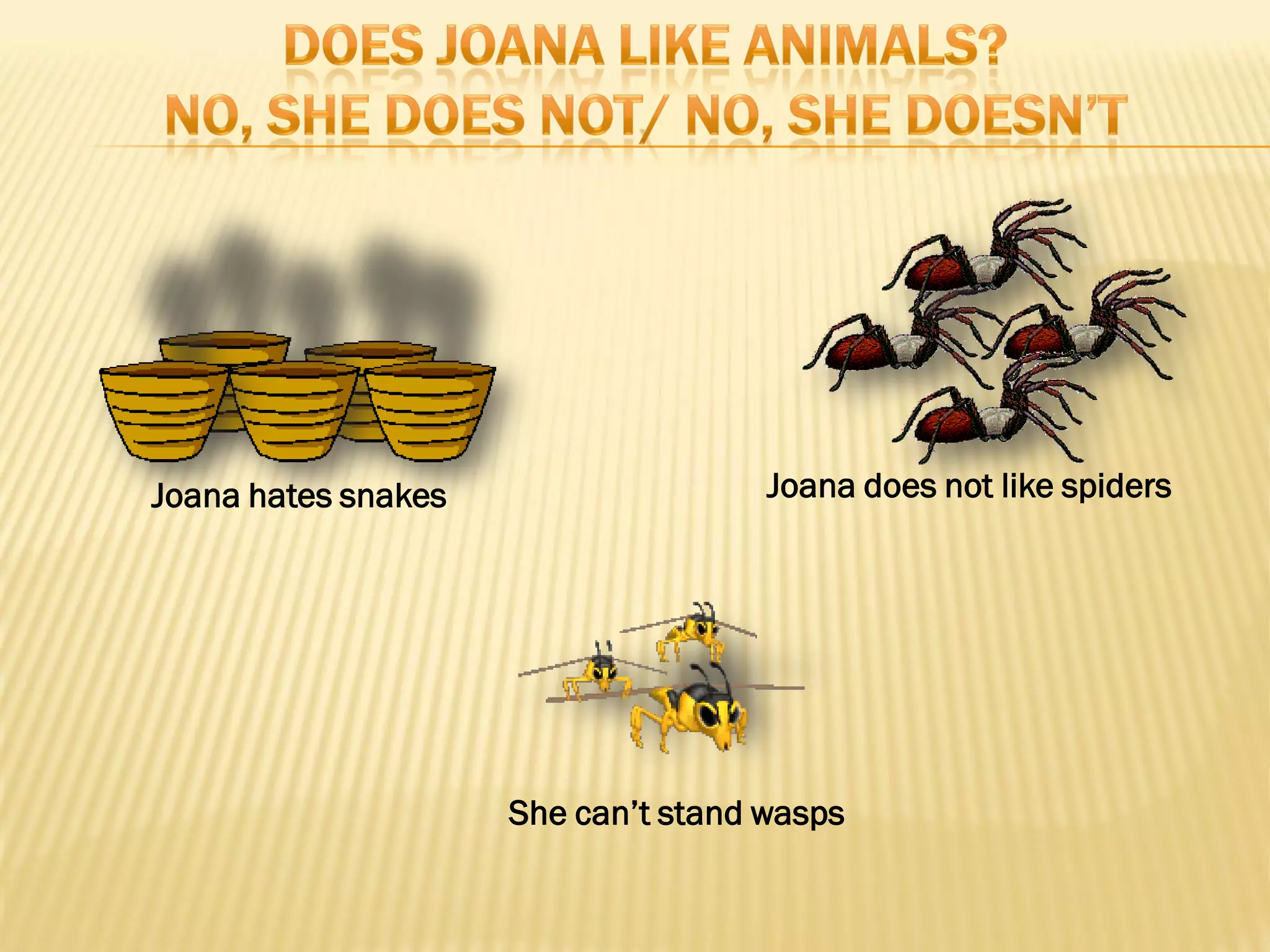
Slides show expressions of affection for animals, detailing likes and dislikes, such as 'I love cats' and 'Joana hates snakes'.
This slide provides guidance on how to articulate general likes and dislikes, including sentence structure tips.
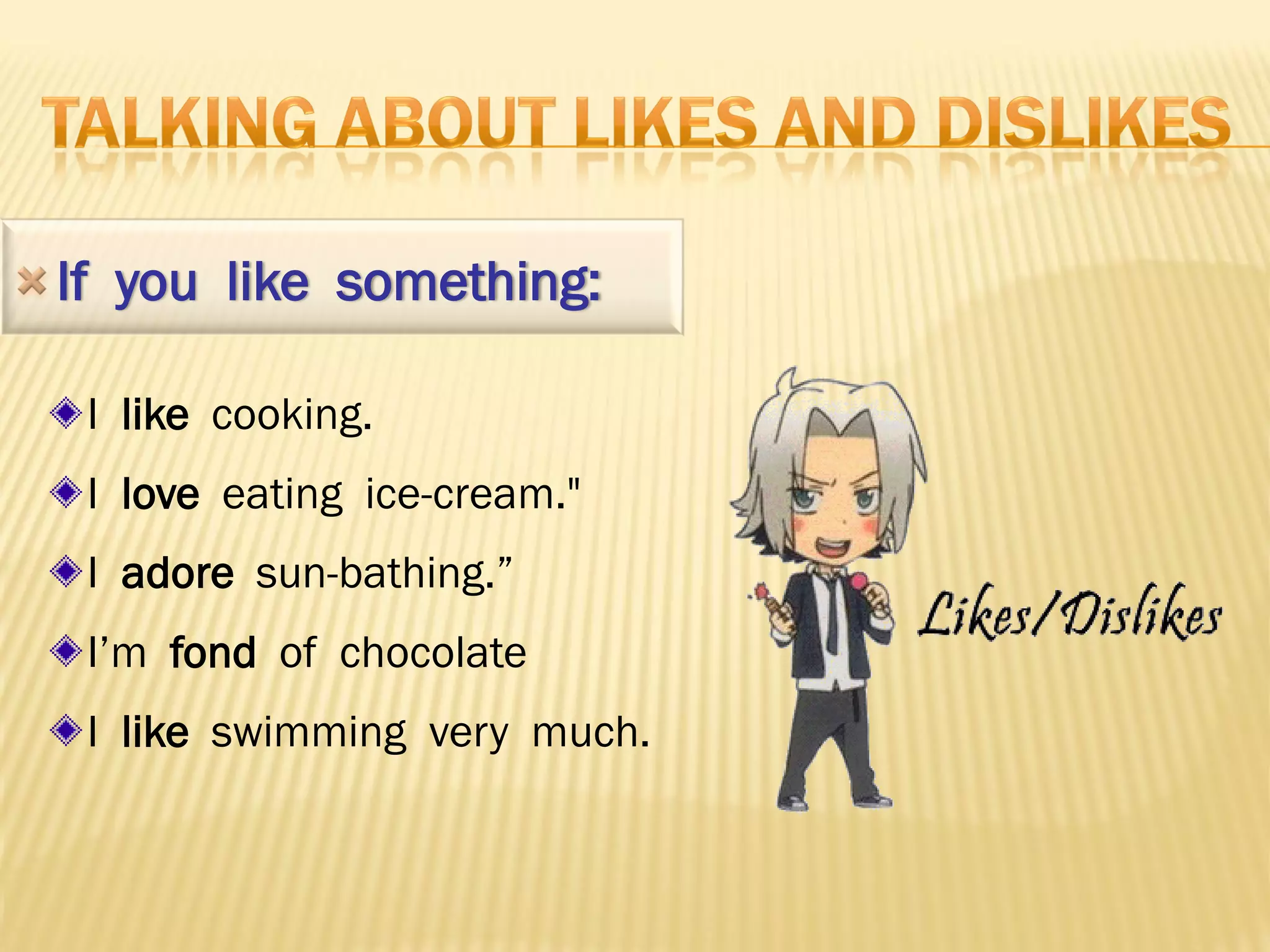
If you likesomething:
I like cooking.
I love eating ice-cream."
I adore sun-bathing.”
I’m fond of chocolate
I like swimming very much.
3.
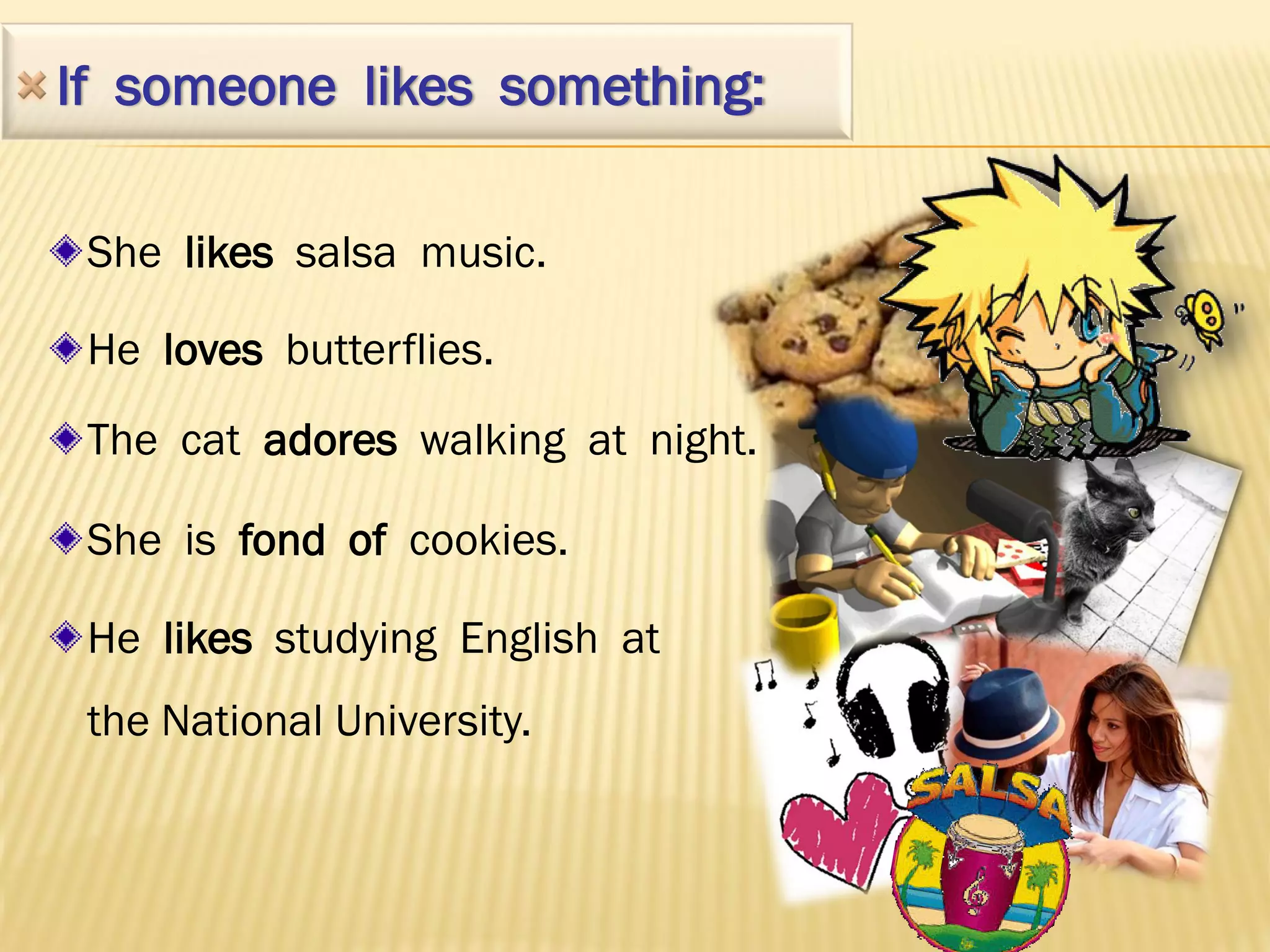
If someone likessomething:
She likes salsa music.
He loves butterflies.
The cat adores walking at night.
She is fond of cookies.
He likes studying English at
the National University.
4.
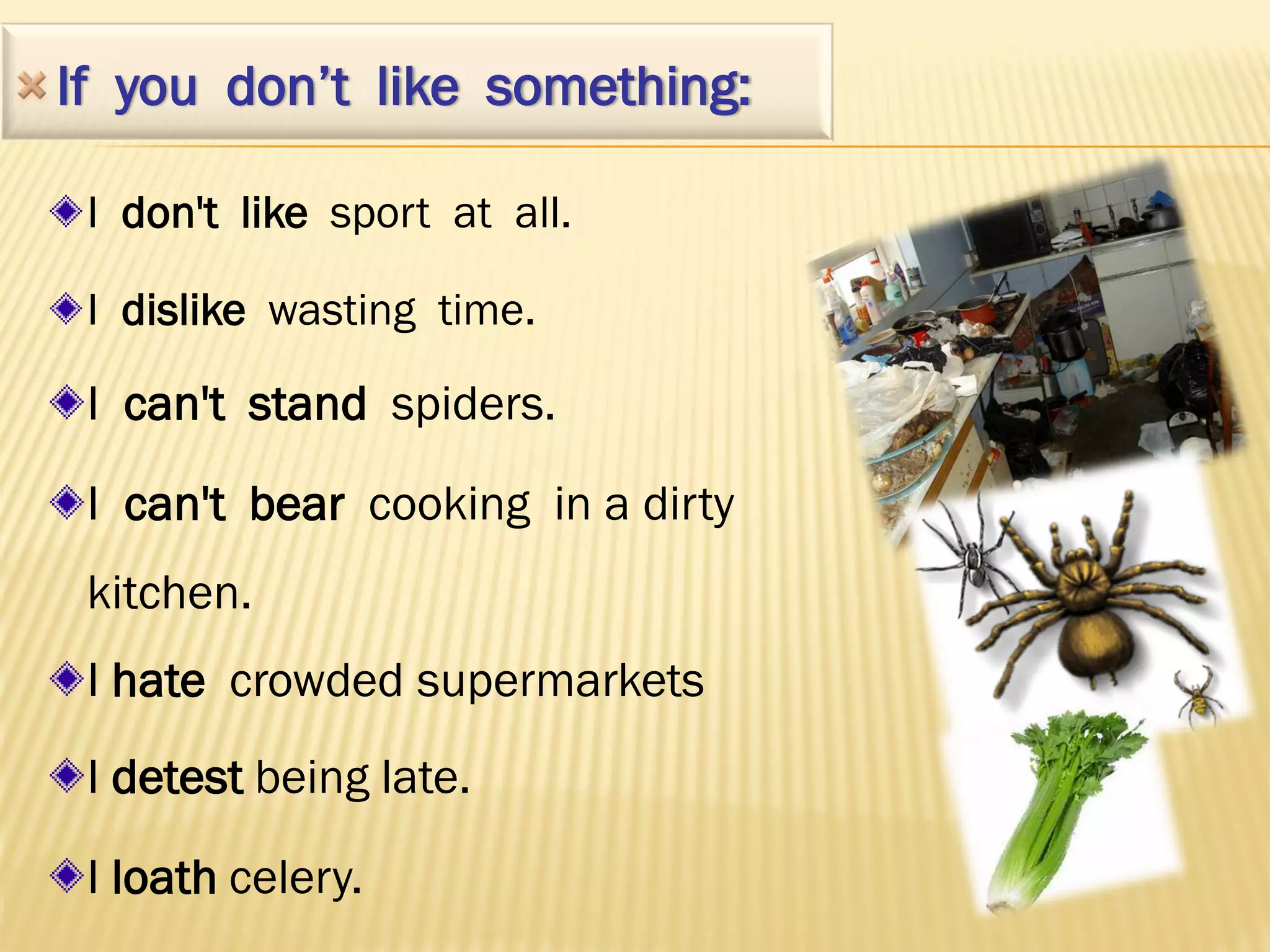
If you don’tlike something:
I don't like sport at all.
I dislike wasting time.
I can't stand spiders.
I can't bear cooking in a dirty
kitchen.
I hate crowded supermarkets
I detest being late.
I loath celery.
5.
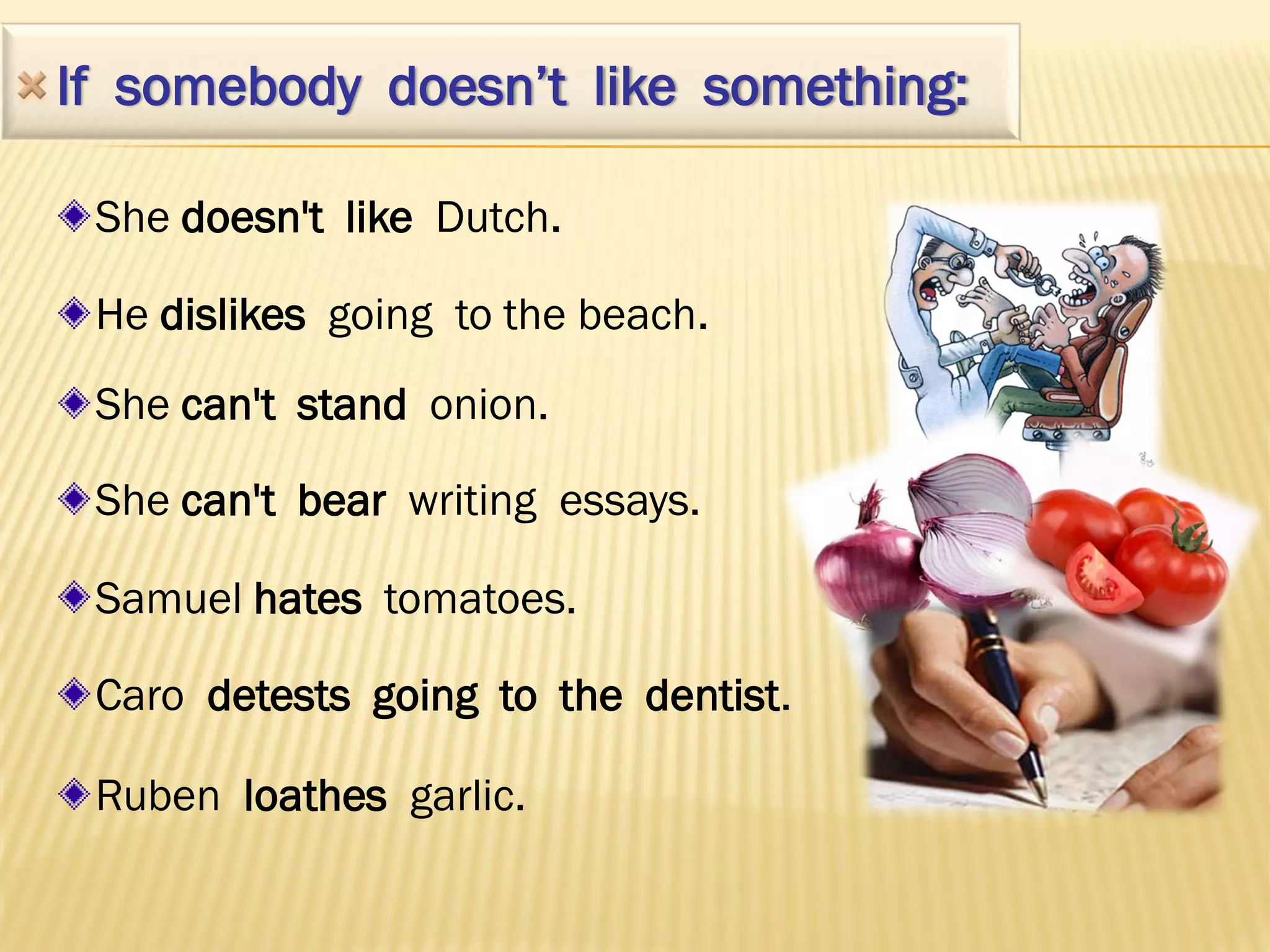
If somebody doesn’tlike something:
She doesn't like Dutch.
He dislikes going to the beach.
She can't stand onion.
She can't bear writing essays.
Samuel hates tomatoes.
Caro detests going to the dentist.
Ruben loathes garlic.
6.
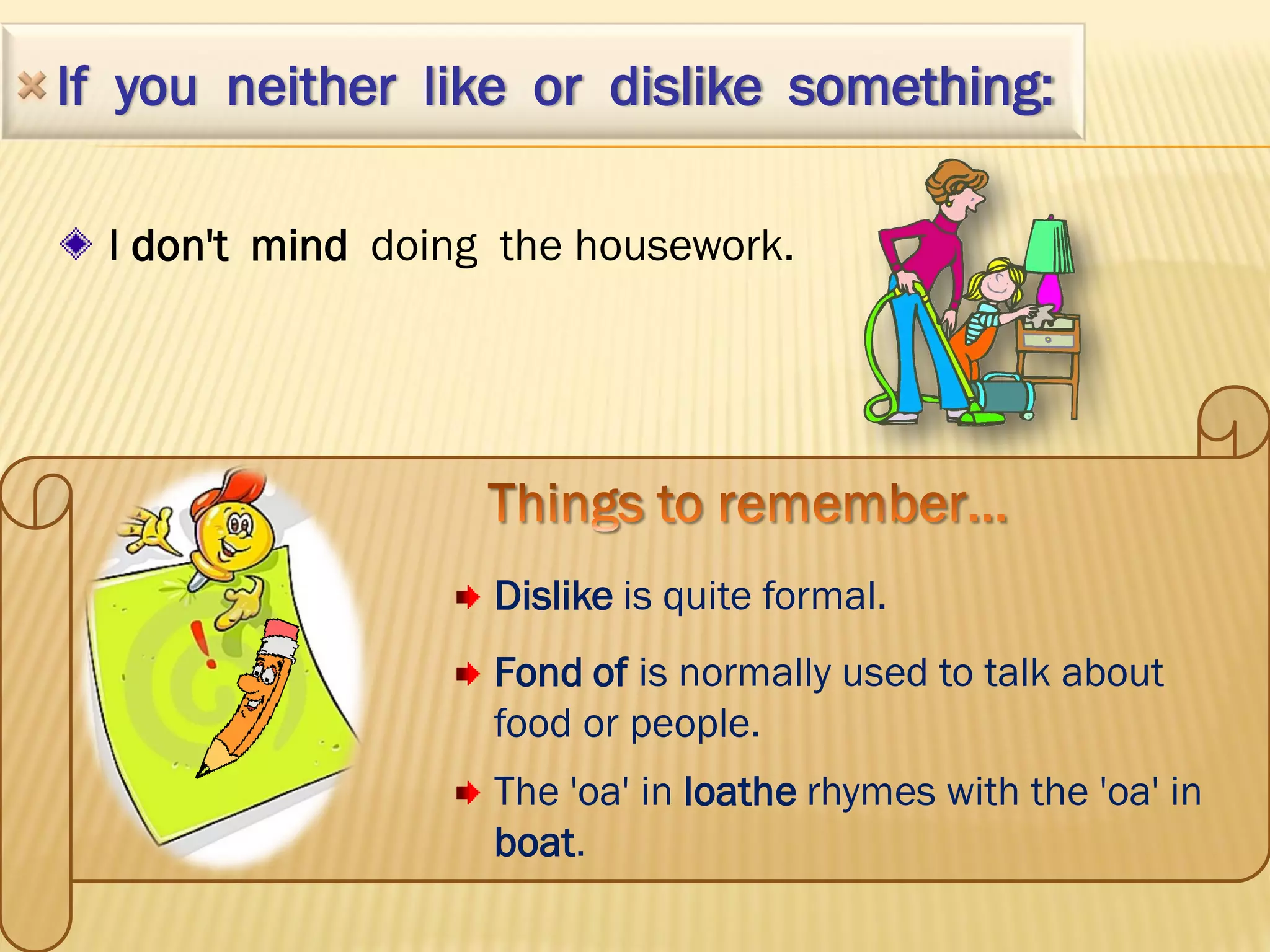
If you neitherlike or dislike something:
I don't mind doing the housework.
Dislike is quite formal.
Fond of is normally used to talk about
food or people.
The 'oa' in loathe rhymes with the 'oa' in
boat.
7.
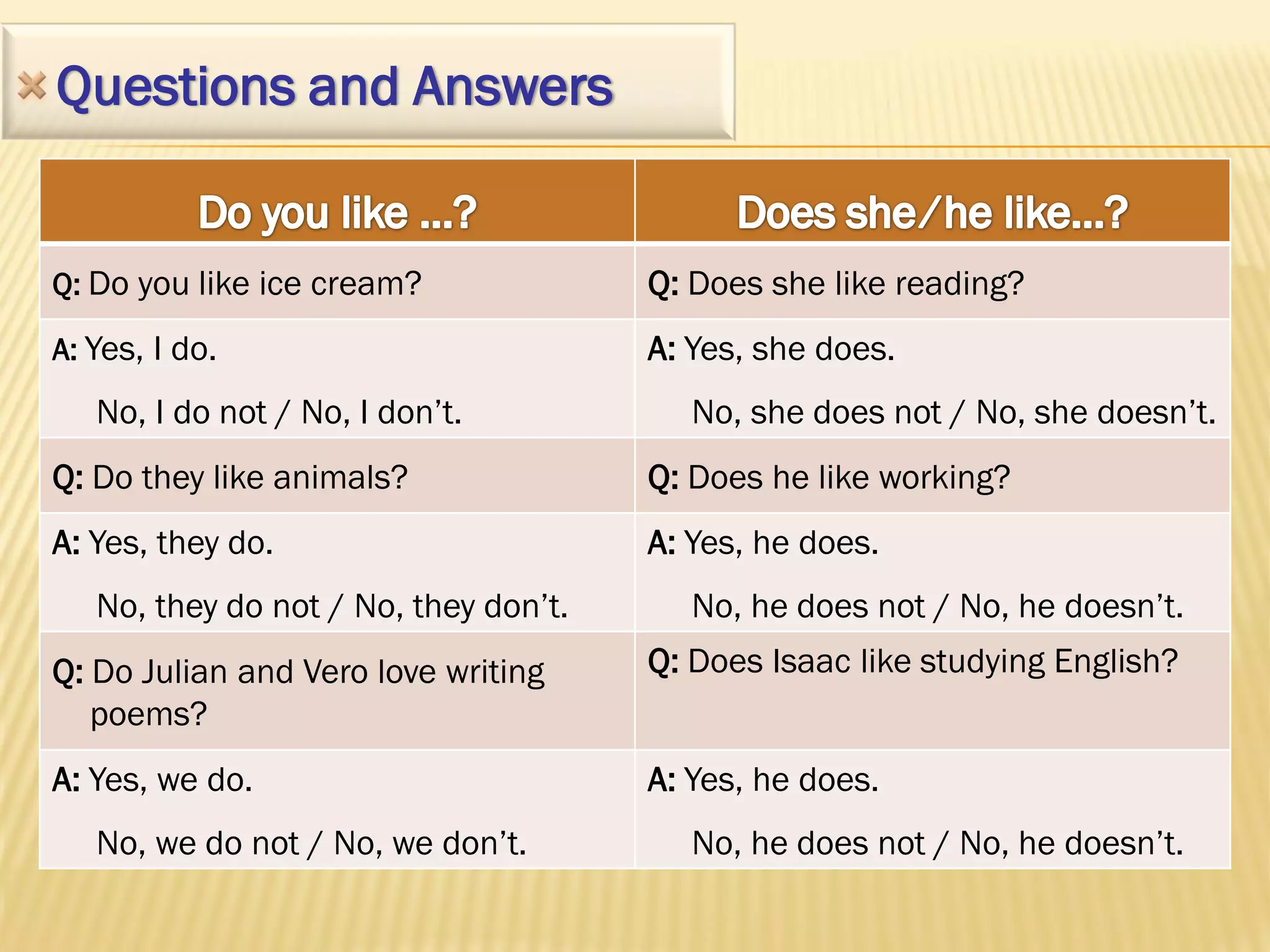
Questions and Answers
Q:Do you like ice cream? Q: Does she like reading?
A: Yes, I do. A: Yes, she does.
No, I do not / No, I don’t. No, she does not / No, she doesn’t.
Q: Do they like animals? Q: Does he like working?
A: Yes, they do. A: Yes, he does.
No, they do not / No, they don’t. No, he does not / No, he doesn’t.
Q: Do Julian and Vero love writing Q: Does Isaac like studying English?
poems?
A: Yes, we do. A: Yes, he does.
No, we do not / No, we don’t. No, he does not / No, he doesn’t.
8.
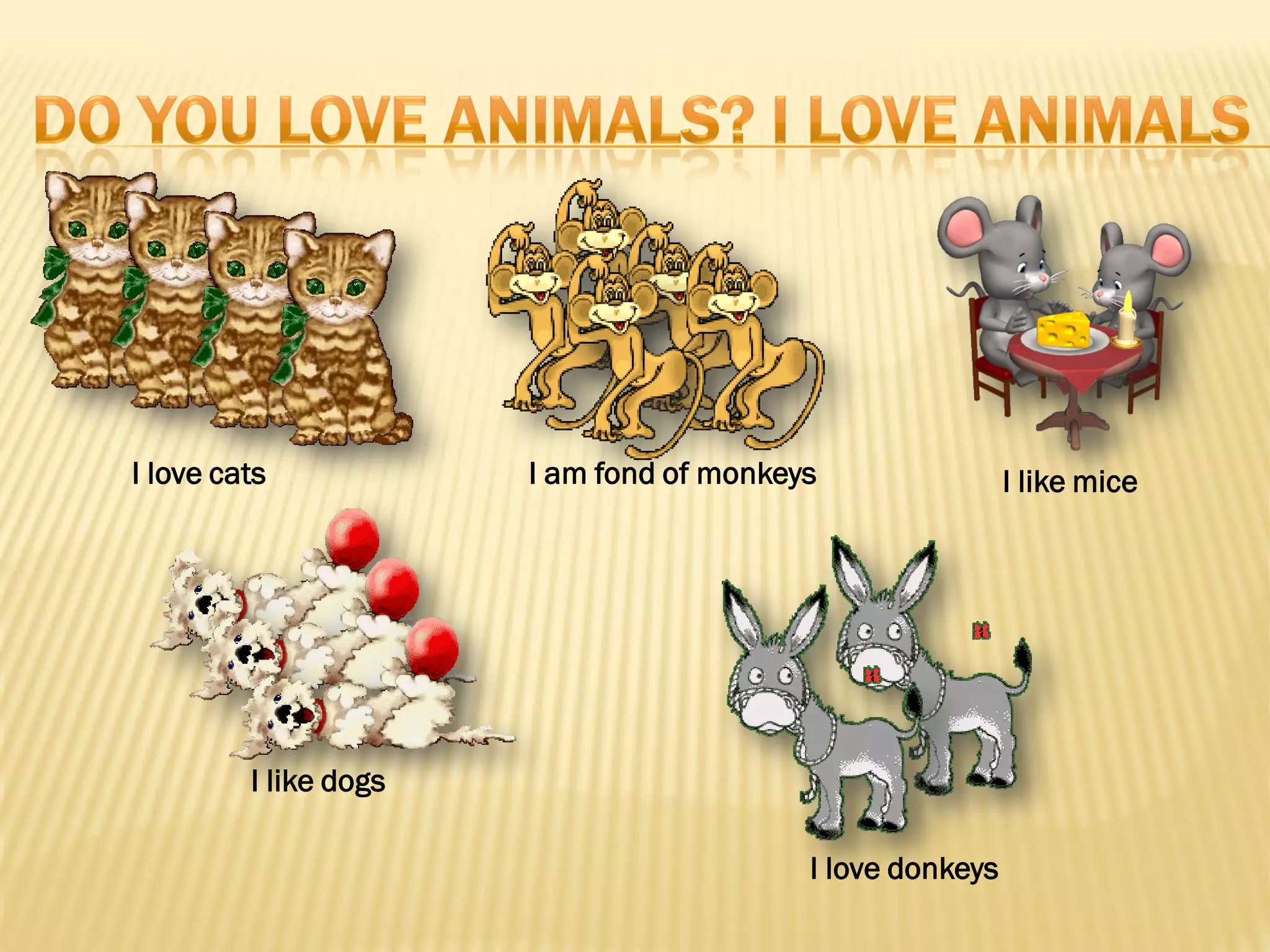
I love cats I am fond of monkeys I like mice
I like dogs
I love donkeys
Things to remember
To talk about your general likes or dislikes,
follow this pattern: like something or like
doing something.
Be careful where you put very much or a lot.
These words should go after the thing that
you like.
For example, "I like reading very much." NOT
"I like very much reading."