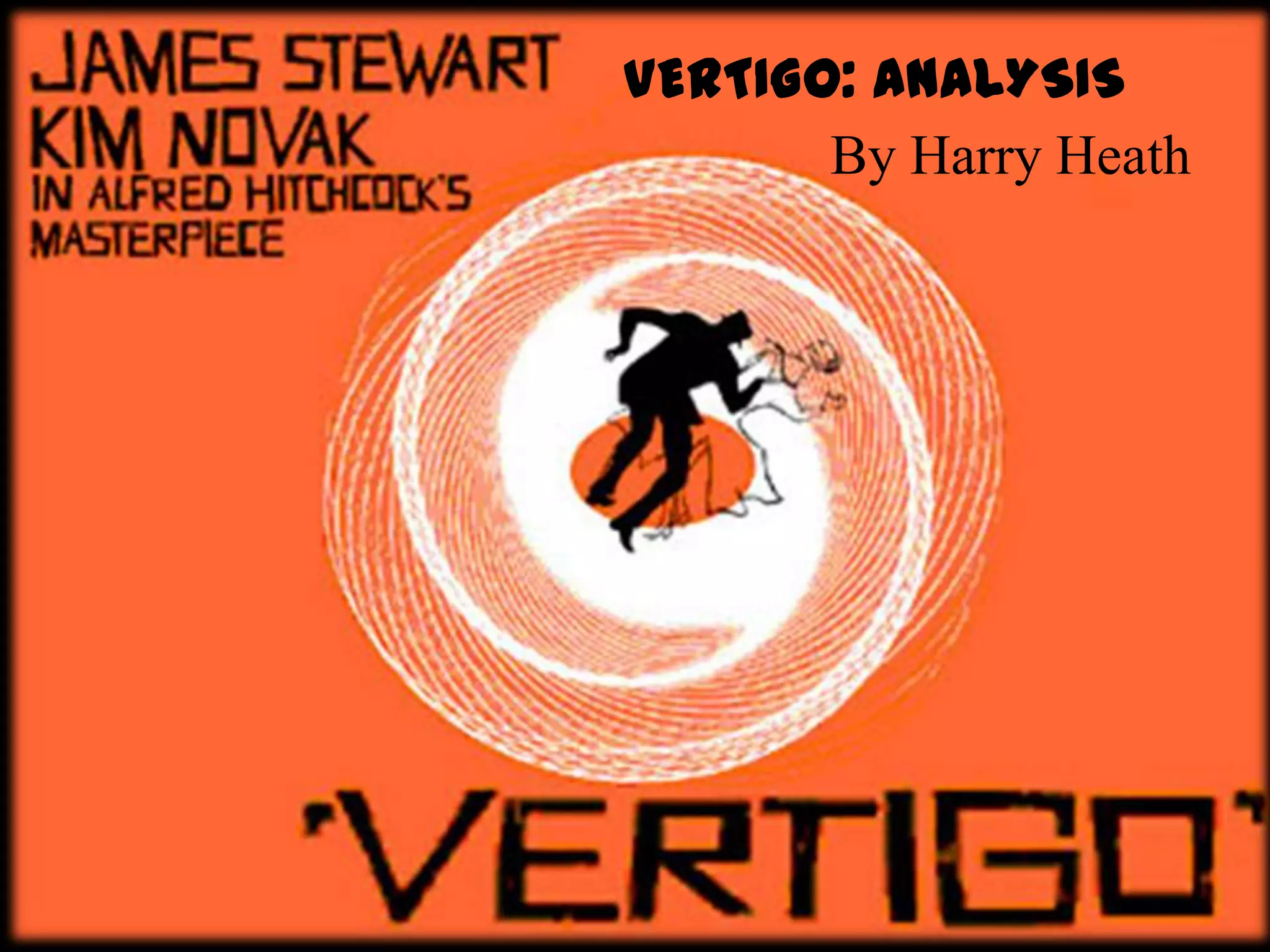
VERTIGO: ANALYSIS
       By Harry Heath
CAMERA ANGLES
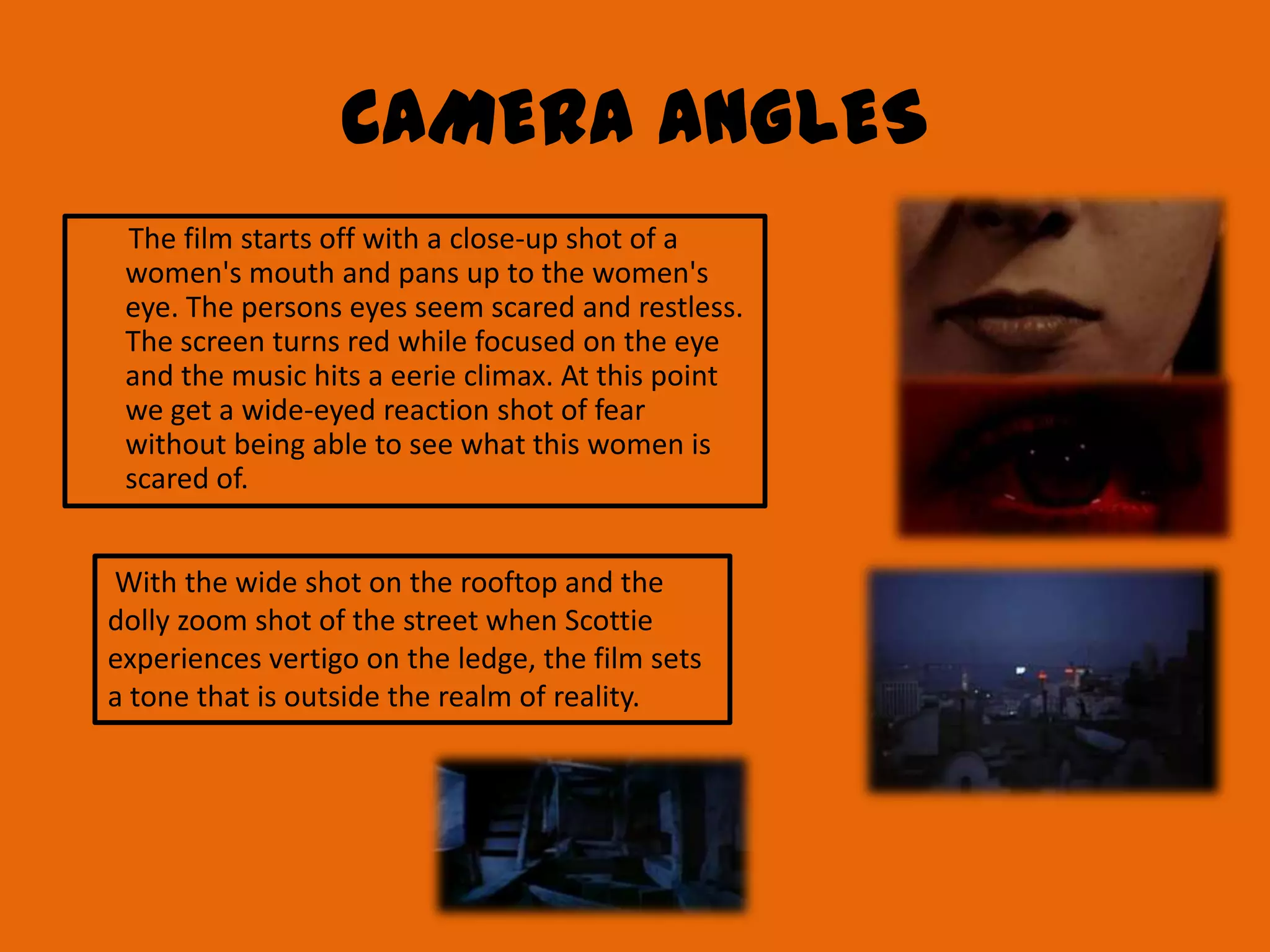
 The film starts off with a close-up shot of a
 women's mouth and pans up to the women's
 eye. The persons eyes seem scared and restless.
 The screen turns red while focused on the eye
 and the music hits a eerie climax. At this point
 we get a wide-eyed reaction shot of fear
 without being able to see what this women is
 scared of.


With the wide shot on the rooftop and the
dolly zoom shot of the street when Scottie
experiences vertigo on the ledge, the film sets
a tone that is outside the realm of reality.
SOUNDTRACK
•   The non diagetic music is eerie and helps to builds up the suspense. The
    soundtrack then gets much faster paced so as a result the audience can expect
    something to happen.
•   When the policeman is falling to his death, the music gets much deeper, echoing
    the mood of the scene.
•   There is not much diagetic sound, but when there is it is over emphasized, such as
    the metal guttering bending, enhancing fear.
•   The incidental music begins with a simple melody which is reminiscent of a child's
    lullaby. However, the tune has eerie undertones that build up to reverberating,
    broken chords. The use of a childish melody subliminally suggests the idea of
    haunted past or disturbed childhood, themes that reinforce the ominous and
    sinister feel of the sequence.
Editing
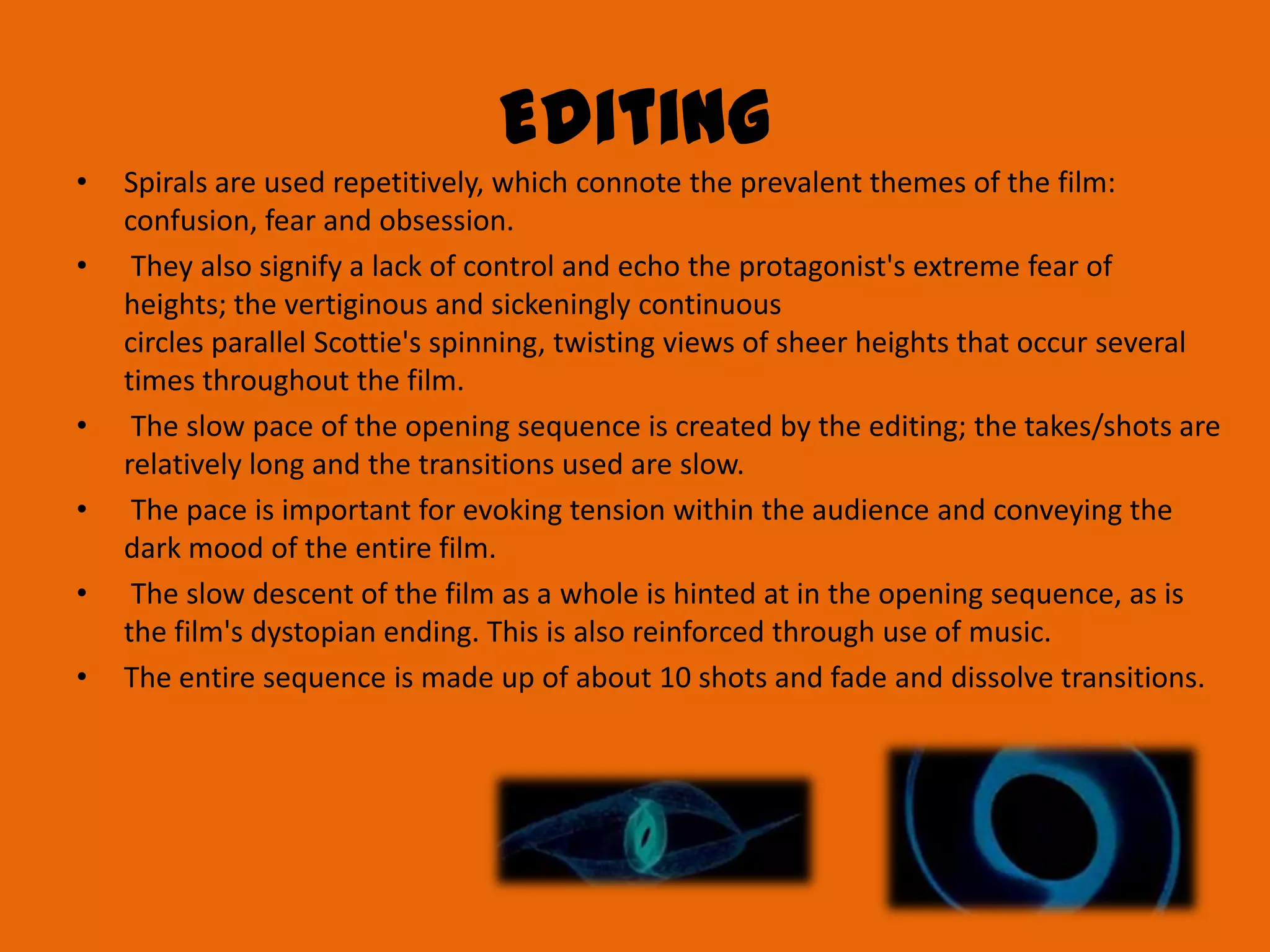
•   Spirals are used repetitively, which connote the prevalent themes of the film:
    confusion, fear and obsession.
•    They also signify a lack of control and echo the protagonist's extreme fear of
    heights; the vertiginous and sickeningly continuous
    circles parallel Scottie's spinning, twisting views of sheer heights that occur several
    times throughout the film.
•    The slow pace of the opening sequence is created by the editing; the takes/shots are
    relatively long and the transitions used are slow.
•    The pace is important for evoking tension within the audience and conveying the
    dark mood of the entire film.
•    The slow descent of the film as a whole is hinted at in the opening sequence, as is
    the film's dystopian ending. This is also reinforced through use of music.
•   The entire sequence is made up of about 10 shots and fade and dissolve transitions.
Editing
•   The opening credits hypnotically spiral out of a mysterious eye- setting an enigma code of
    who’s eye it is?
•   The editing is slow paced with straight cuts- this is due to the age of the film as they did
    not have the same availability of technology as we have today.
•   Slowly, coloured spirals come out of the persons eyes and slowly spin their way towards
    the camera. This intensifies the air of suspense and creates a very stereotypical thriller
    atmosphere, since the red connotes blood and murder, and the spirals and very intimate
    portrayal of the eye seem both supernatural and makes the audience think of a person in
    some kind of distress, respectively.
•   The effect of the transition from the woman’s eye to a spiral is that the audience can make
    the connection between the spiral and the inner workings of the woman's mind. The
    suggestion of an unstable mind is then created and a stronger enigma is evoked within
    the audience.
MISE EN SCENE
•   The coloured spirals continue for much of the opening sequence, and their
    changing colour, shape, and consistency aids to give the audience the feel of a
    never ending fall, and it also has an hypnotic quality, which is in keeping with the
    films thriller theme.
•   The uniform of the policeman gives the impression of authority, implying who the
    ‘good guy’ should technically be.
•   The colour of the sequence is predominantly washed-out and colourless; it’s
    nearly black and white. However, as the camera moves closer to the woman's right
    eye, the screen is flooded with red. This use of colour connotes danger, violence,
    blood etc. and reinforces the dark and ominous atmosphere.
•

VERTIGO ANALYSIS

  • 1.
    VERTIGO: ANALYSIS By Harry Heath
  • 2.
    CAMERA ANGLES Thefilm starts off with a close-up shot of a women's mouth and pans up to the women's eye. The persons eyes seem scared and restless. The screen turns red while focused on the eye and the music hits a eerie climax. At this point we get a wide-eyed reaction shot of fear without being able to see what this women is scared of. With the wide shot on the rooftop and the dolly zoom shot of the street when Scottie experiences vertigo on the ledge, the film sets a tone that is outside the realm of reality.
  • 3.
    SOUNDTRACK • The non diagetic music is eerie and helps to builds up the suspense. The soundtrack then gets much faster paced so as a result the audience can expect something to happen. • When the policeman is falling to his death, the music gets much deeper, echoing the mood of the scene. • There is not much diagetic sound, but when there is it is over emphasized, such as the metal guttering bending, enhancing fear. • The incidental music begins with a simple melody which is reminiscent of a child's lullaby. However, the tune has eerie undertones that build up to reverberating, broken chords. The use of a childish melody subliminally suggests the idea of haunted past or disturbed childhood, themes that reinforce the ominous and sinister feel of the sequence.
  • 4.
    Editing • Spirals are used repetitively, which connote the prevalent themes of the film: confusion, fear and obsession. • They also signify a lack of control and echo the protagonist's extreme fear of heights; the vertiginous and sickeningly continuous circles parallel Scottie's spinning, twisting views of sheer heights that occur several times throughout the film. • The slow pace of the opening sequence is created by the editing; the takes/shots are relatively long and the transitions used are slow. • The pace is important for evoking tension within the audience and conveying the dark mood of the entire film. • The slow descent of the film as a whole is hinted at in the opening sequence, as is the film's dystopian ending. This is also reinforced through use of music. • The entire sequence is made up of about 10 shots and fade and dissolve transitions.
  • 5.
    Editing • The opening credits hypnotically spiral out of a mysterious eye- setting an enigma code of who’s eye it is? • The editing is slow paced with straight cuts- this is due to the age of the film as they did not have the same availability of technology as we have today. • Slowly, coloured spirals come out of the persons eyes and slowly spin their way towards the camera. This intensifies the air of suspense and creates a very stereotypical thriller atmosphere, since the red connotes blood and murder, and the spirals and very intimate portrayal of the eye seem both supernatural and makes the audience think of a person in some kind of distress, respectively. • The effect of the transition from the woman’s eye to a spiral is that the audience can make the connection between the spiral and the inner workings of the woman's mind. The suggestion of an unstable mind is then created and a stronger enigma is evoked within the audience.
  • 6.
    MISE EN SCENE • The coloured spirals continue for much of the opening sequence, and their changing colour, shape, and consistency aids to give the audience the feel of a never ending fall, and it also has an hypnotic quality, which is in keeping with the films thriller theme. • The uniform of the policeman gives the impression of authority, implying who the ‘good guy’ should technically be. • The colour of the sequence is predominantly washed-out and colourless; it’s nearly black and white. However, as the camera moves closer to the woman's right eye, the screen is flooded with red. This use of colour connotes danger, violence, blood etc. and reinforces the dark and ominous atmosphere. •