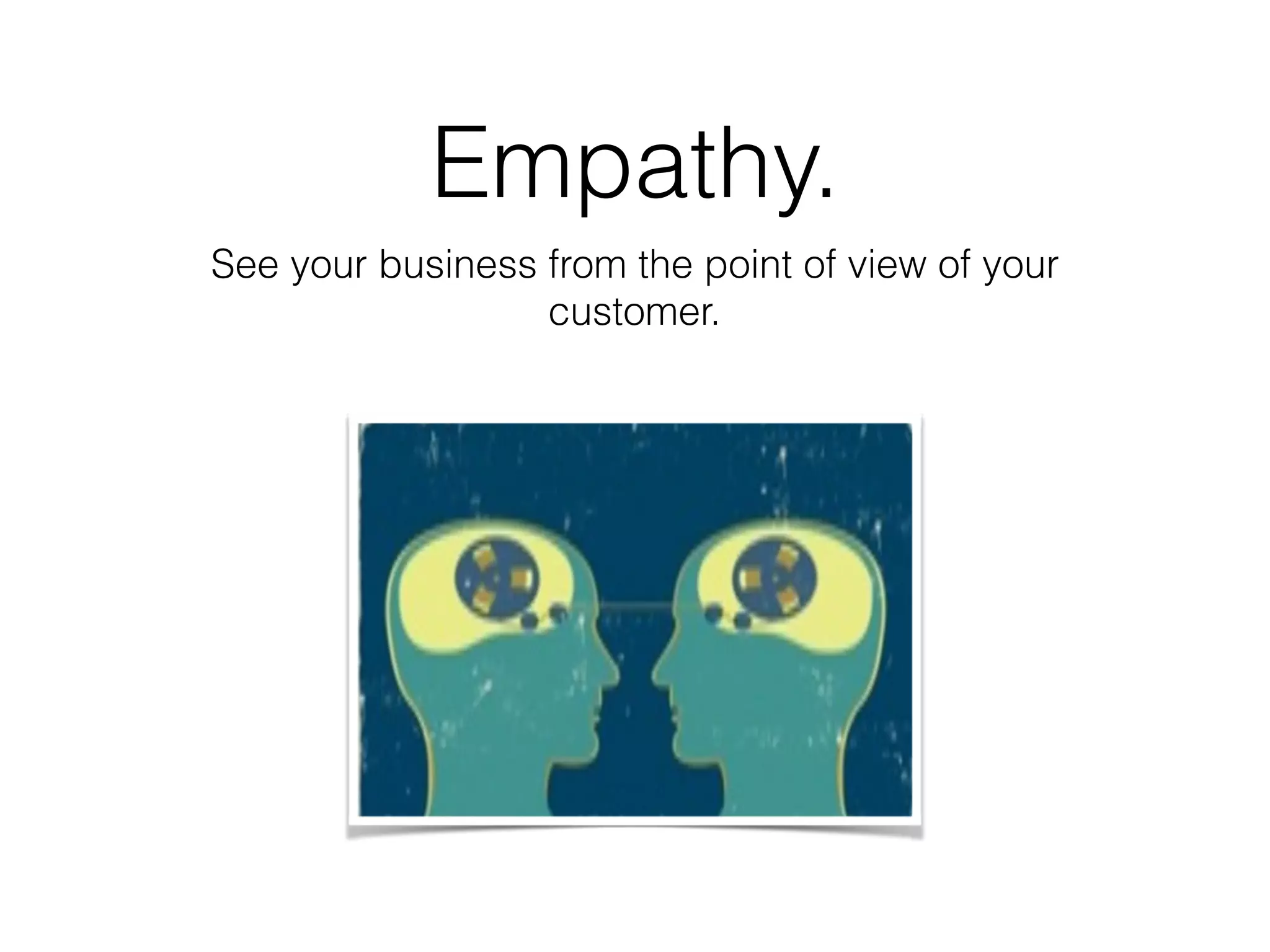
Empathy.
See your business from the point of view of your
customer.
Review.
Calculate business
risks.
Only make informed (researched) decisions.
❶ What is the
competition?
❷ What is the demand?
❸ What are the costs?
❹ What is the ROI?
What tools can you use to
research your decisions?
Online research tools.
• You can use Google to find most of the
information available on the internet.
• TripAdvisor could give you a good
idea about local travel business
landscape.
• Check out your competitors’ Facebook
pages.
• See what tourists might be posting on
Instagram, Twitter or Pinterest - what
do they enjoy?
• Do you know any other places your
clients and fellow business owners
could have information on? Be in the
know.
Don’t forget “real-
world” research.
Pay attention to the news, talk to customers and fellow
business owners. Create and benefit from community.
What is
diversification?
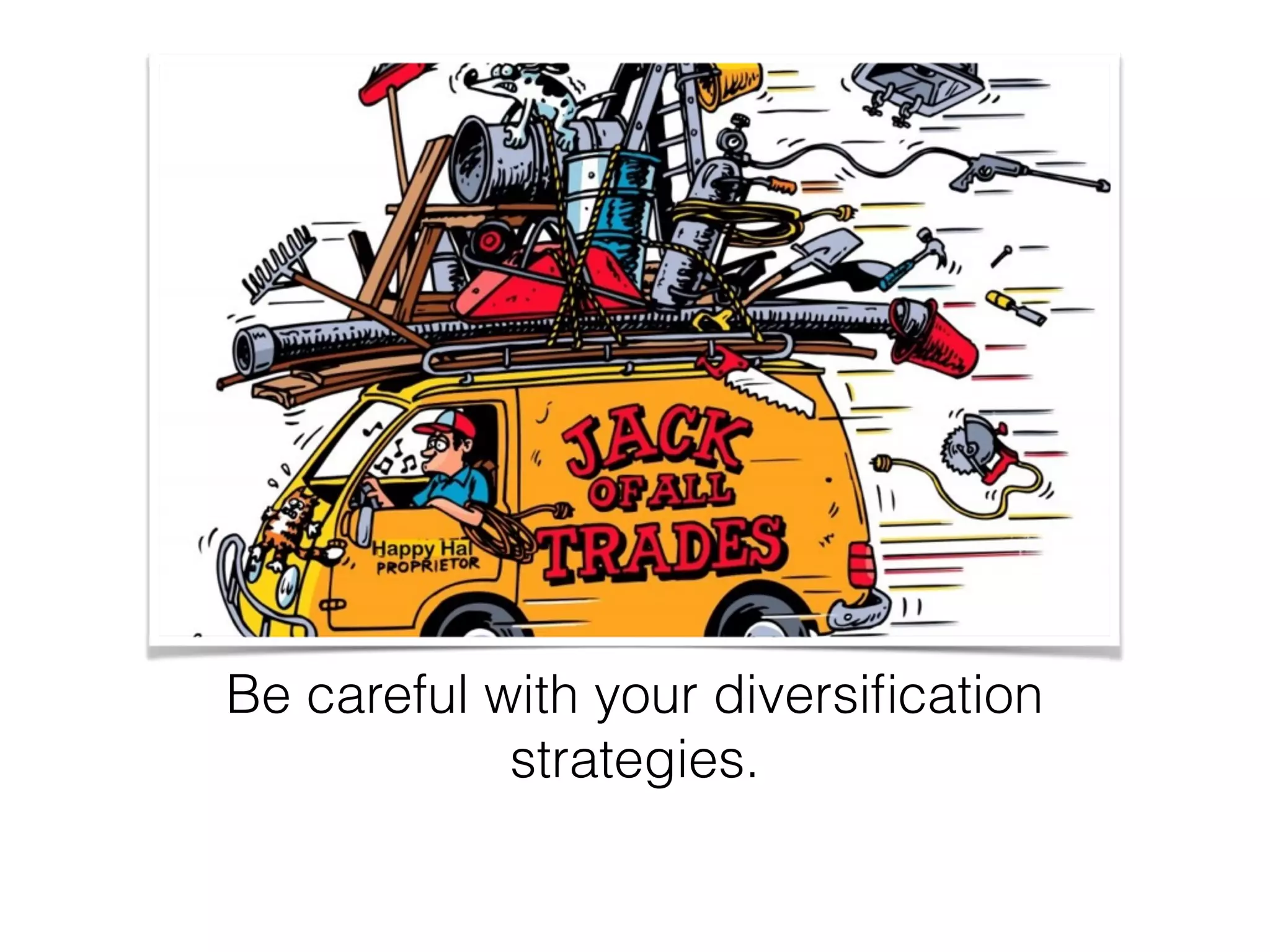
Be careful with your diversification
strategies.
Experiments.
• Try your ideas on small scale
before going big.
• Learn from those test runs
whether it is a good idea.
• Not the same as market
research, your own opinion or
prediction about what would
happen. Experiments are
actually you conducting the
business on a small scale.
Measure, individually.
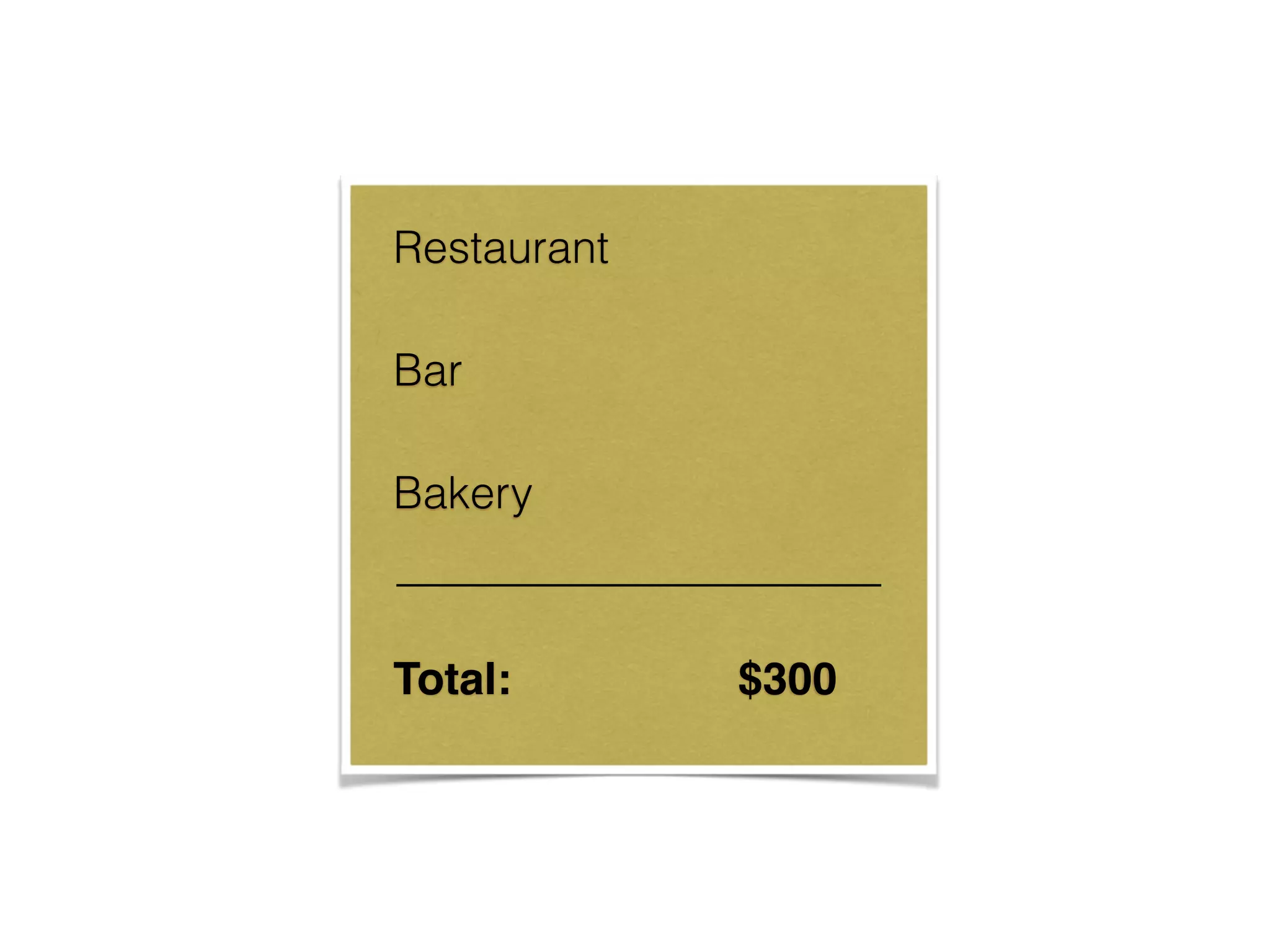
Restaurant
Bar
Bakery
Total: $300
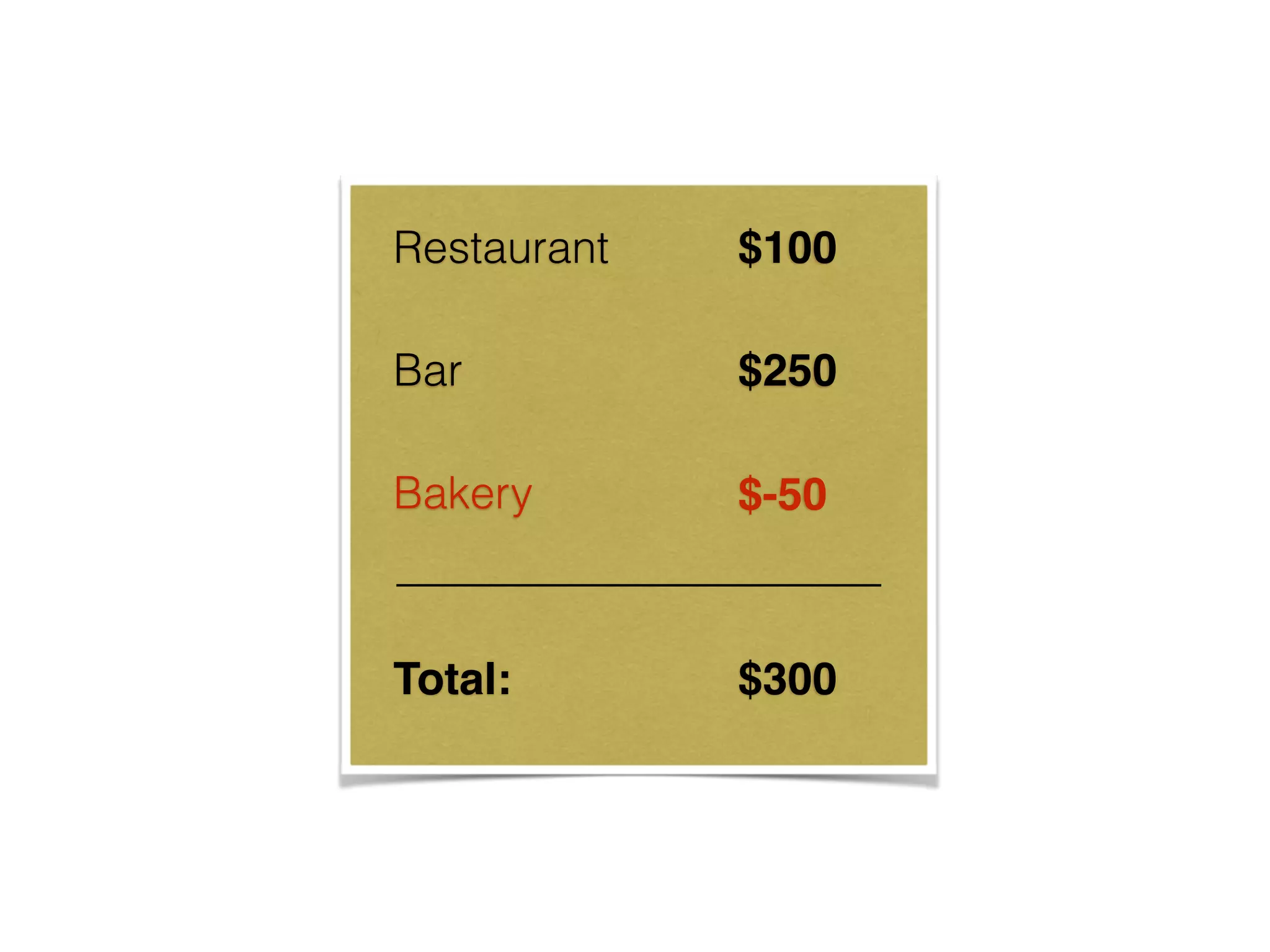
Restaurant
Bar
Bakery
Total: $300
$-50
$250
$100
(Looks can be
deceiving).
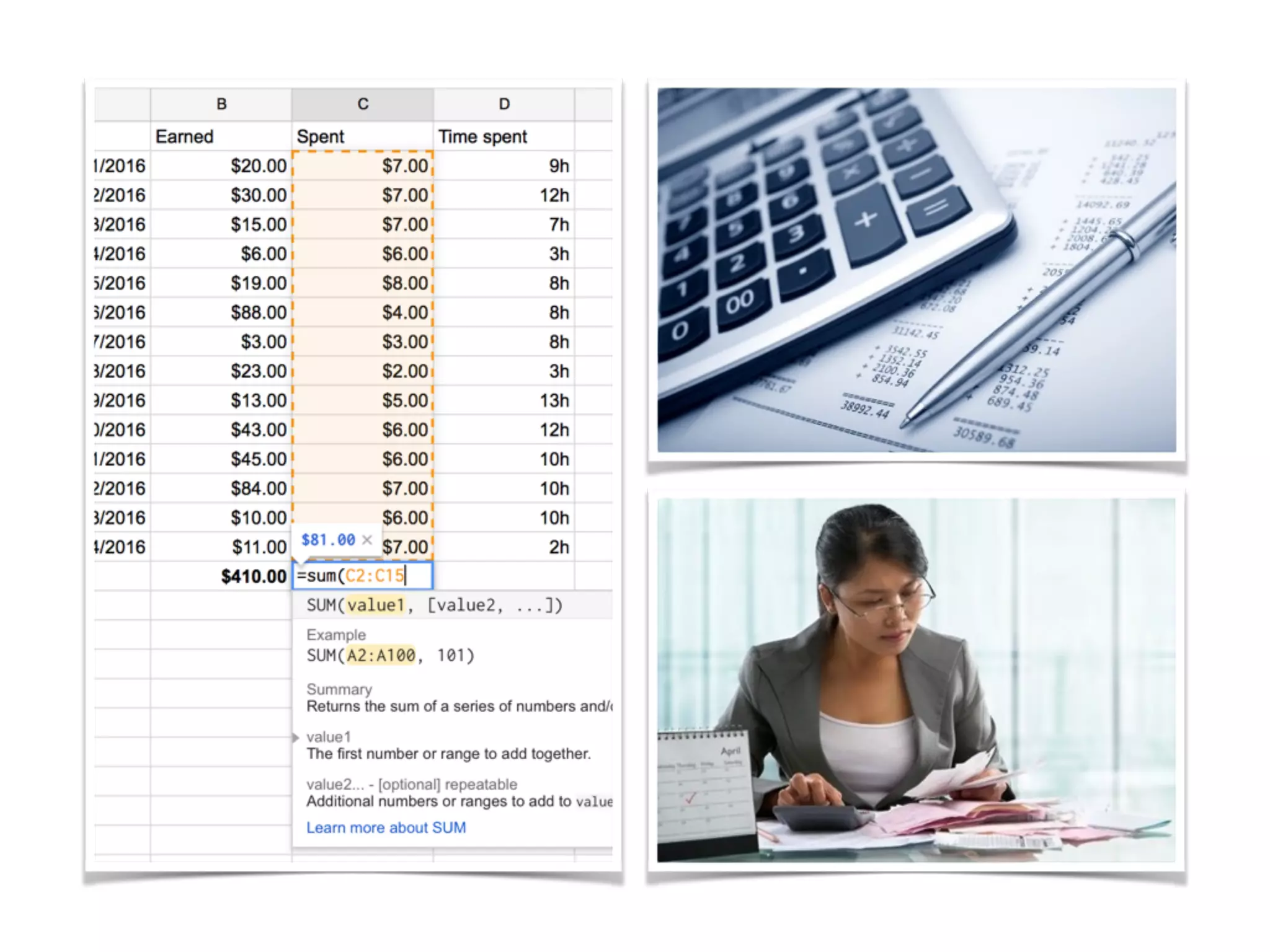
Things you can measure:
• Income.
• Costs.
• Amount of work required.
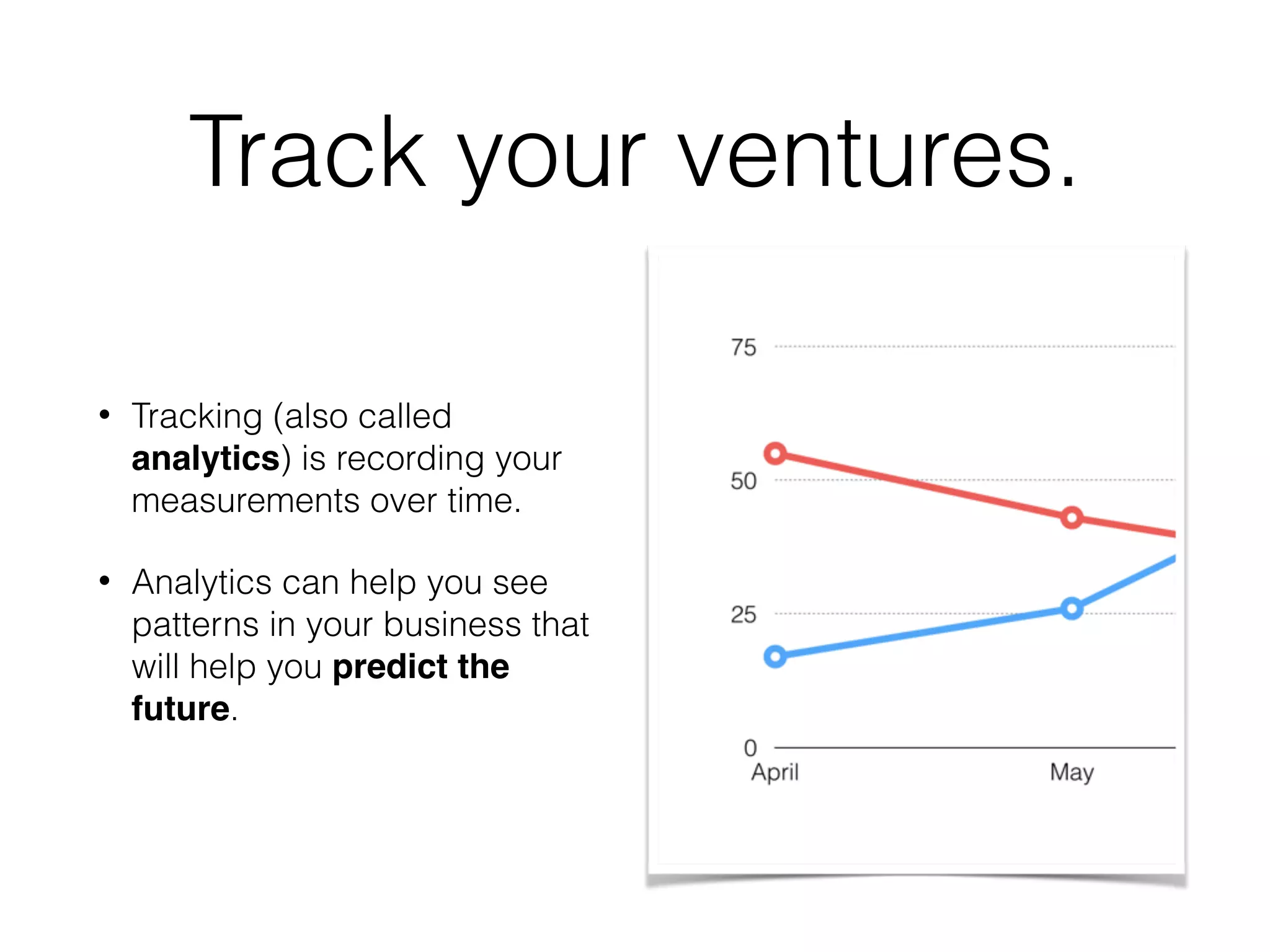
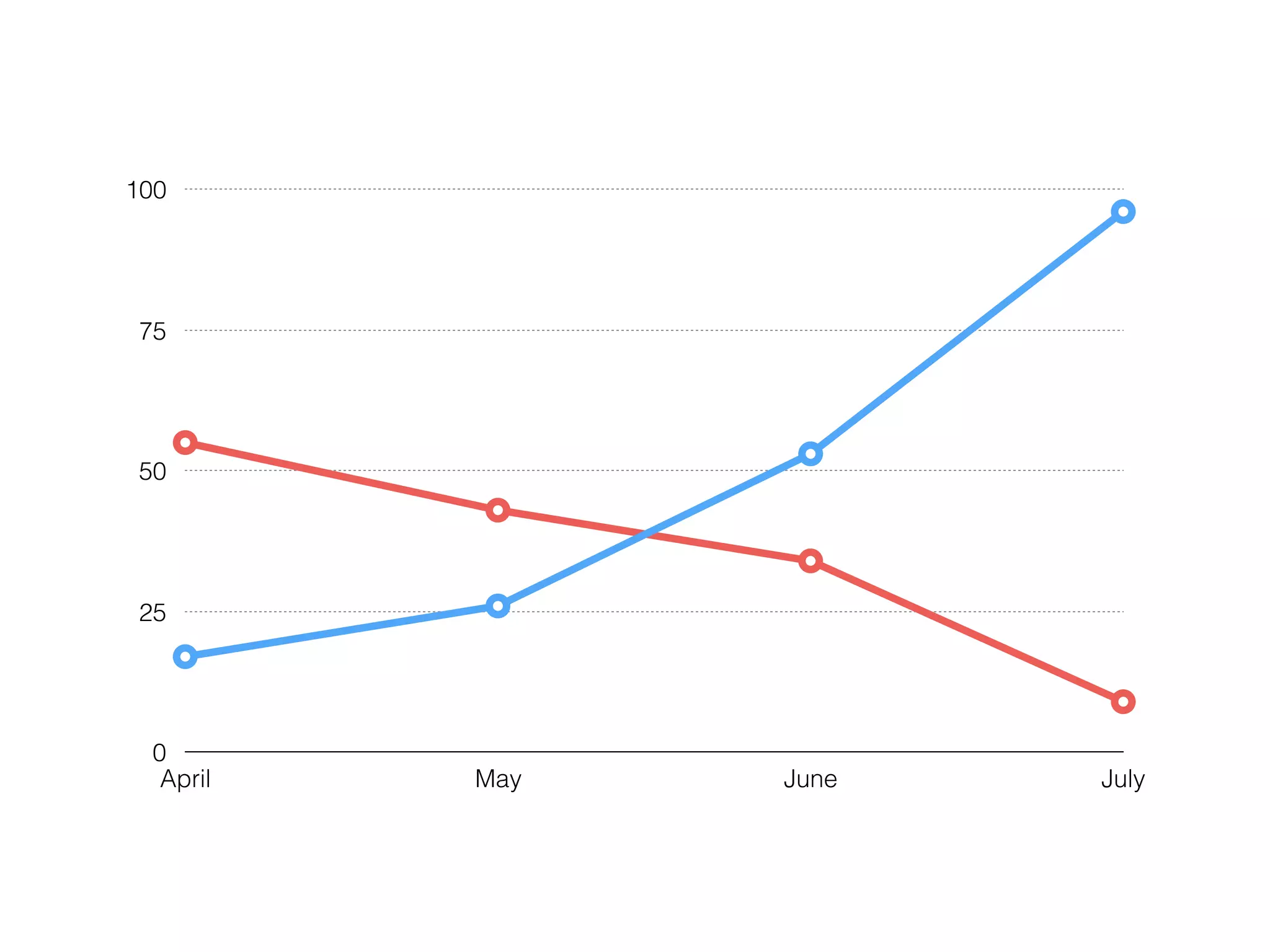
Track your ventures.
• Tracking (also called
analytics) is recording your
measurements over time.
• Analytics can help you see
patterns in your business that
will help you predict the
future.
0
25
50
75
100
April May June July
Feedback is a gift.
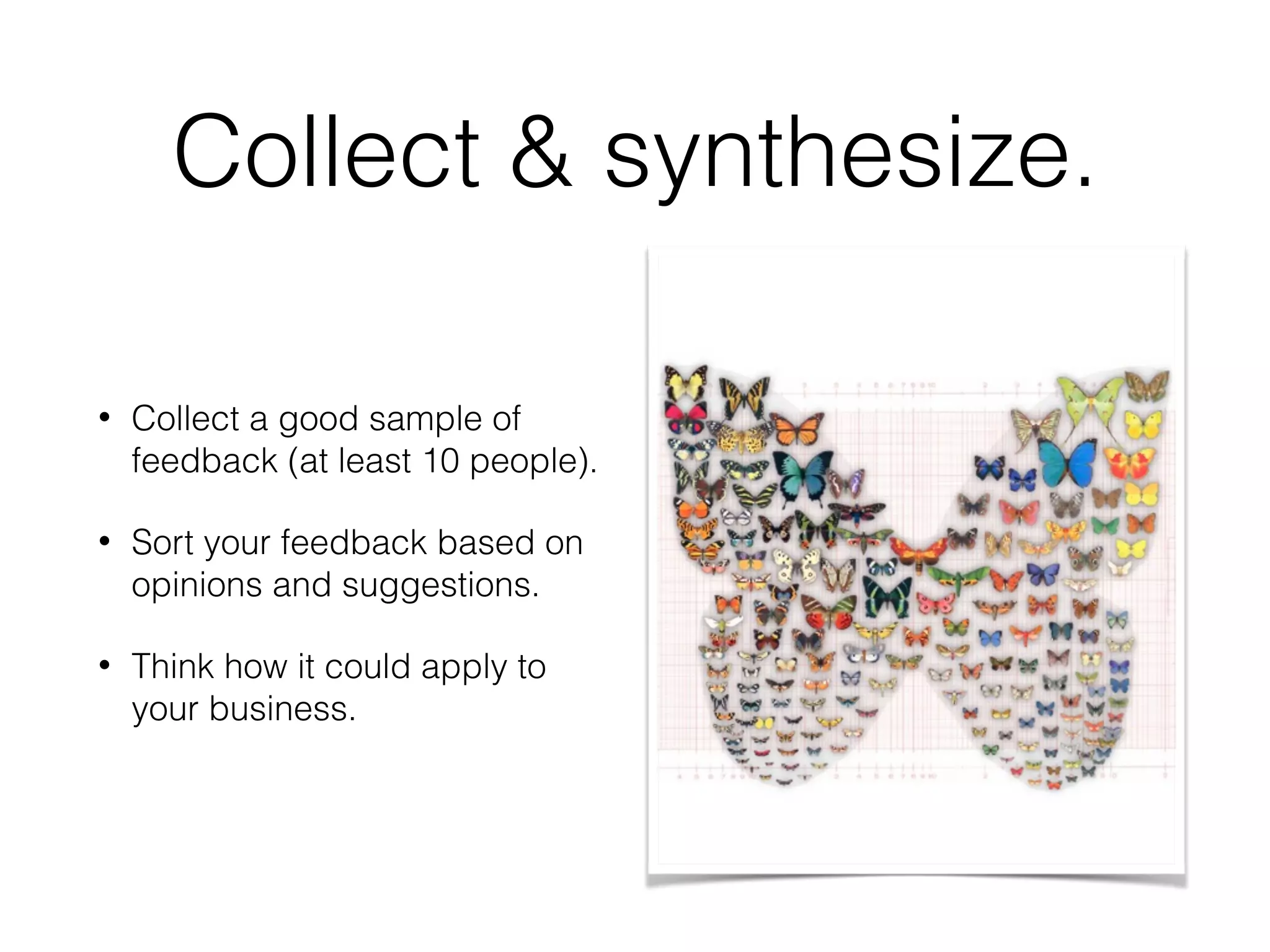
Collect & synthesize.
• Collect a good sample of
feedback (at least 10 people).
• Sort your feedback based on
opinions and suggestions.
• Think how it could apply to
your business.
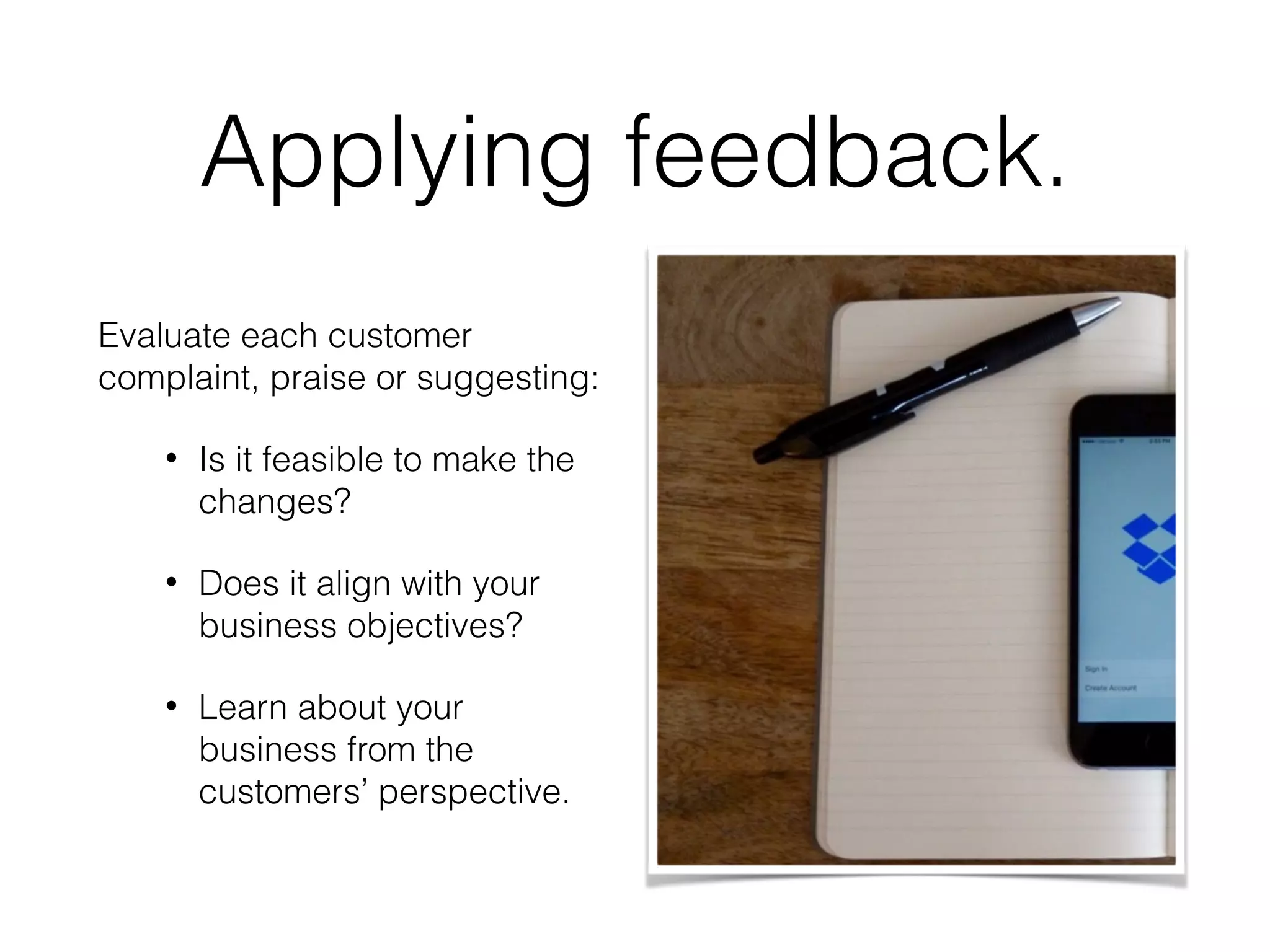
Applying feedback.
Evaluate each customer
complaint, praise or suggesting:
• Is it feasible to make the
changes?
• Does it align with your
business objectives?
• Learn about your
business from the
customers’ perspective.
Replying to online reviews.
• You don’t have to.
• You can correct them if they were clearly wrong. Be polite.
• You can tell them you fixed the problem and offer a small gift.
• If you made a mistake, own up to it. Everyone makes mistakes.
• Keep it short.
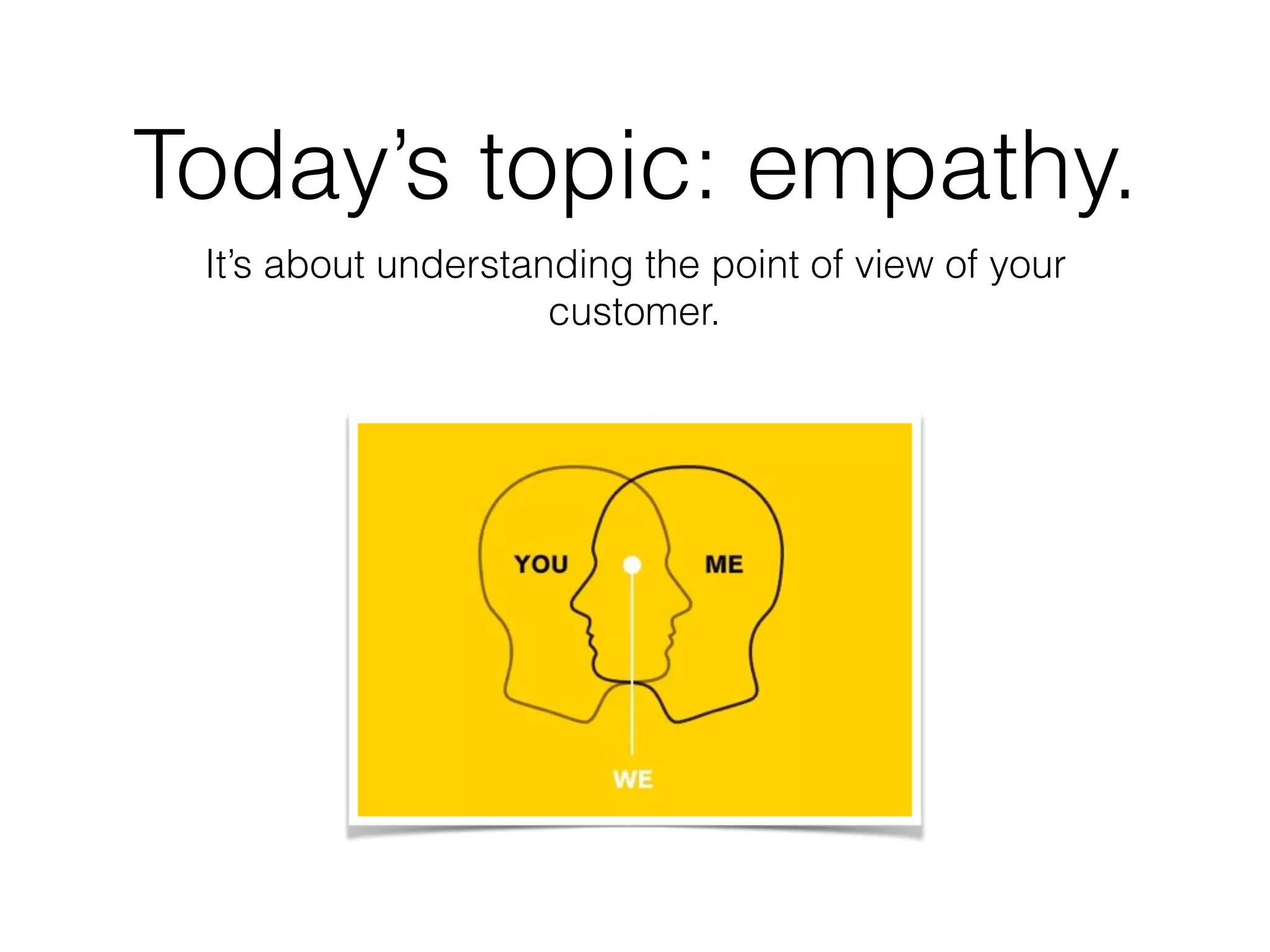
Today’s topic: empathy.
It’s about understanding the point of view of your
customer.
Why do some businesses
fail?
The aren’t making their
products for the
customers.
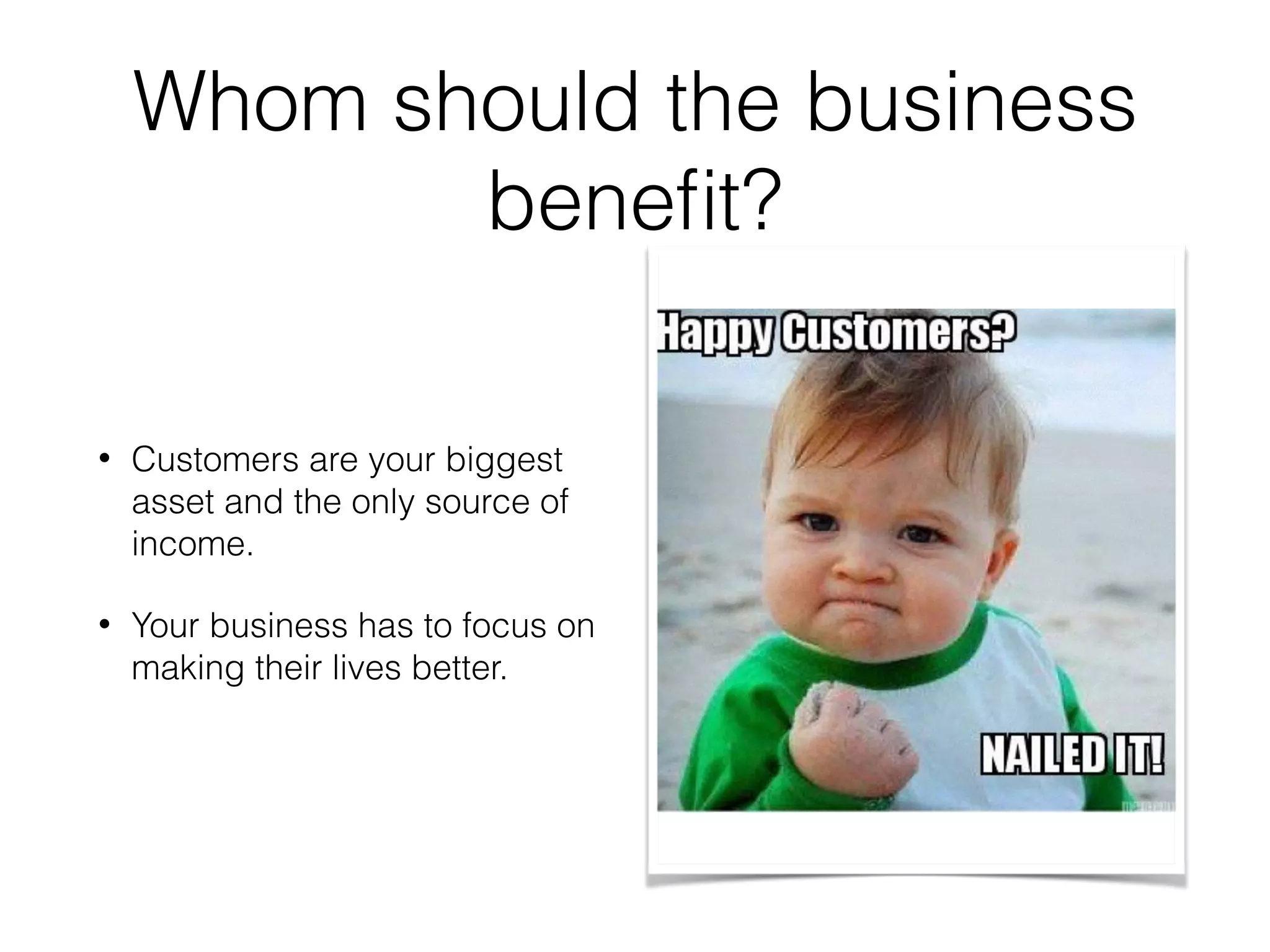
Whom should the business
benefit?
• Customers are your biggest
asset and the only source of
income.
• Your business has to focus on
making their lives better.
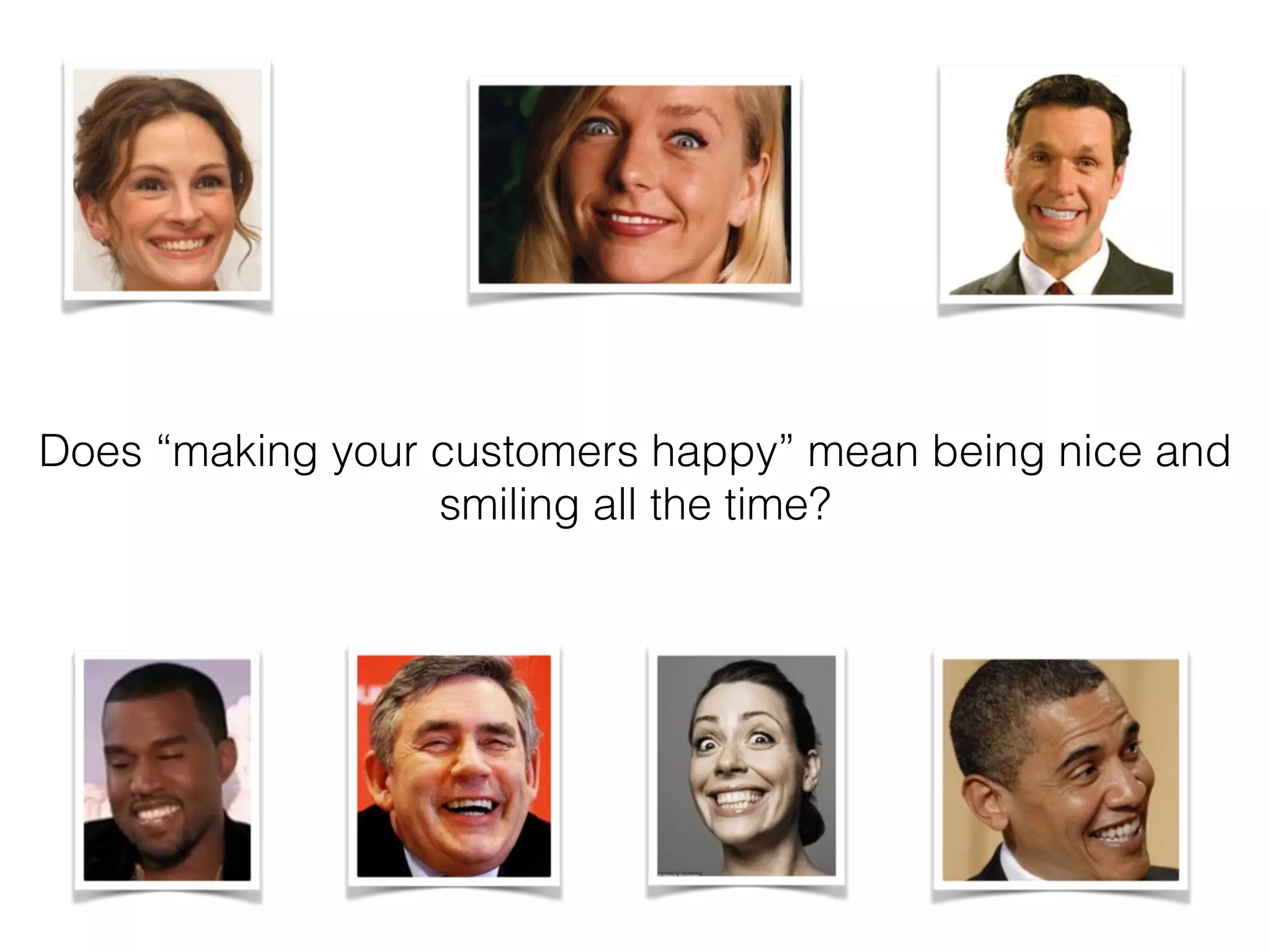
Does “making your customers happy” mean being nice and
smiling all the time?
No.
It certainly helps to be nice, but a smile, no matter how
wide, will not persuade anyone to spend real money.
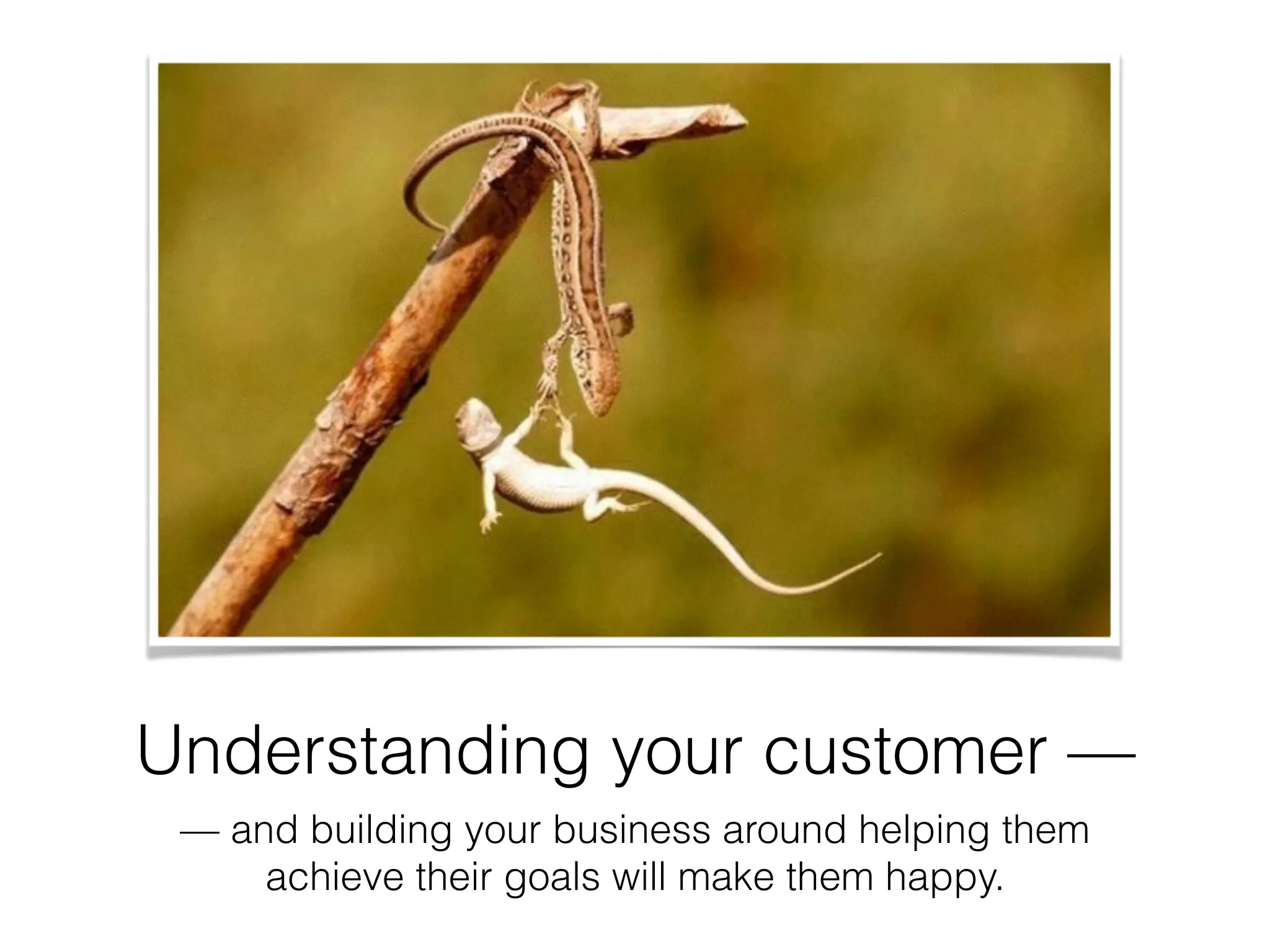
Understanding your customer —
— and building your business around helping them
achieve their goals will make them happy.
What are some ways you
can understand your
customer?
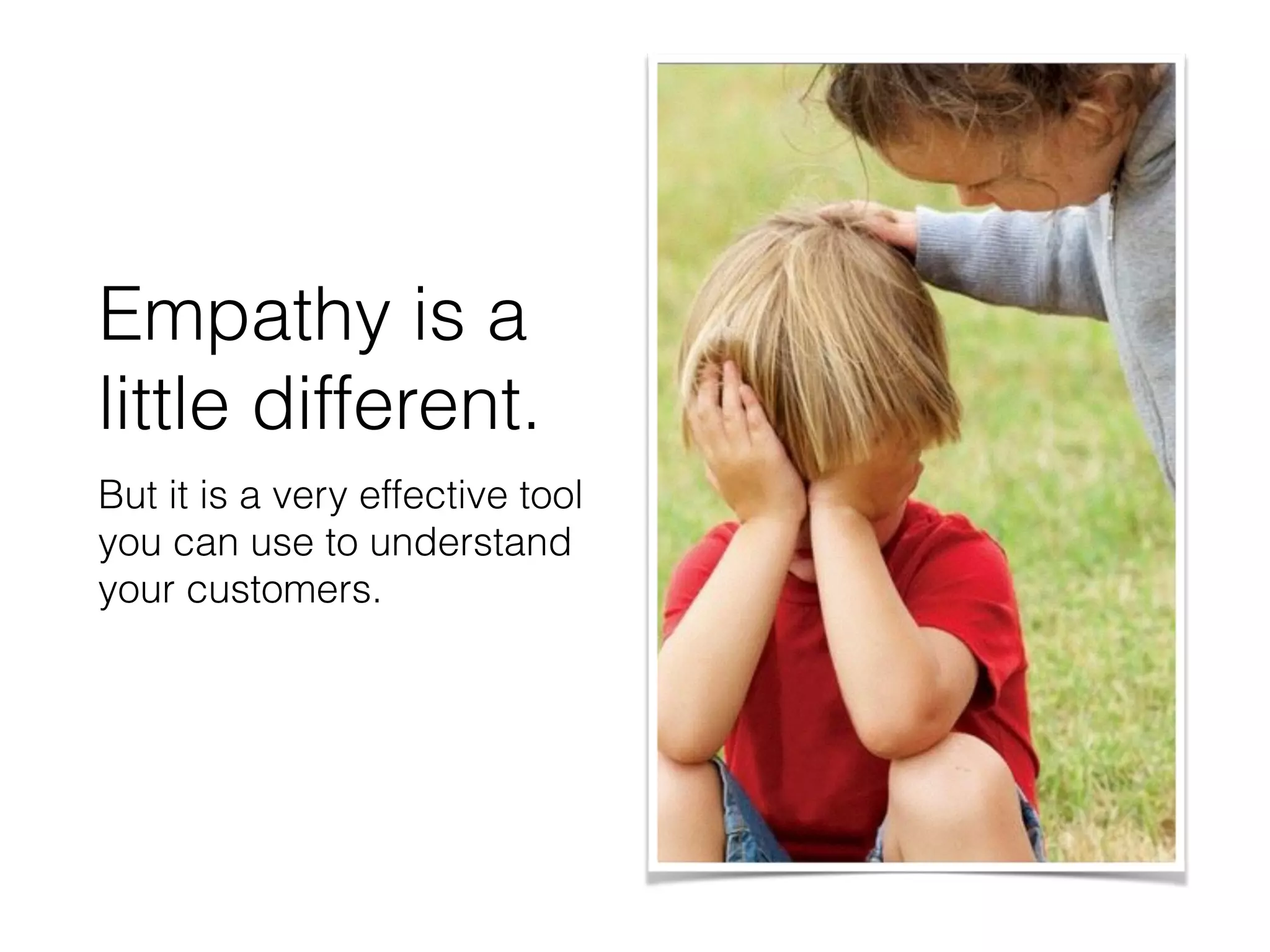
Empathy is a
little different.
But it is a very effective tool
you can use to understand
your customers.
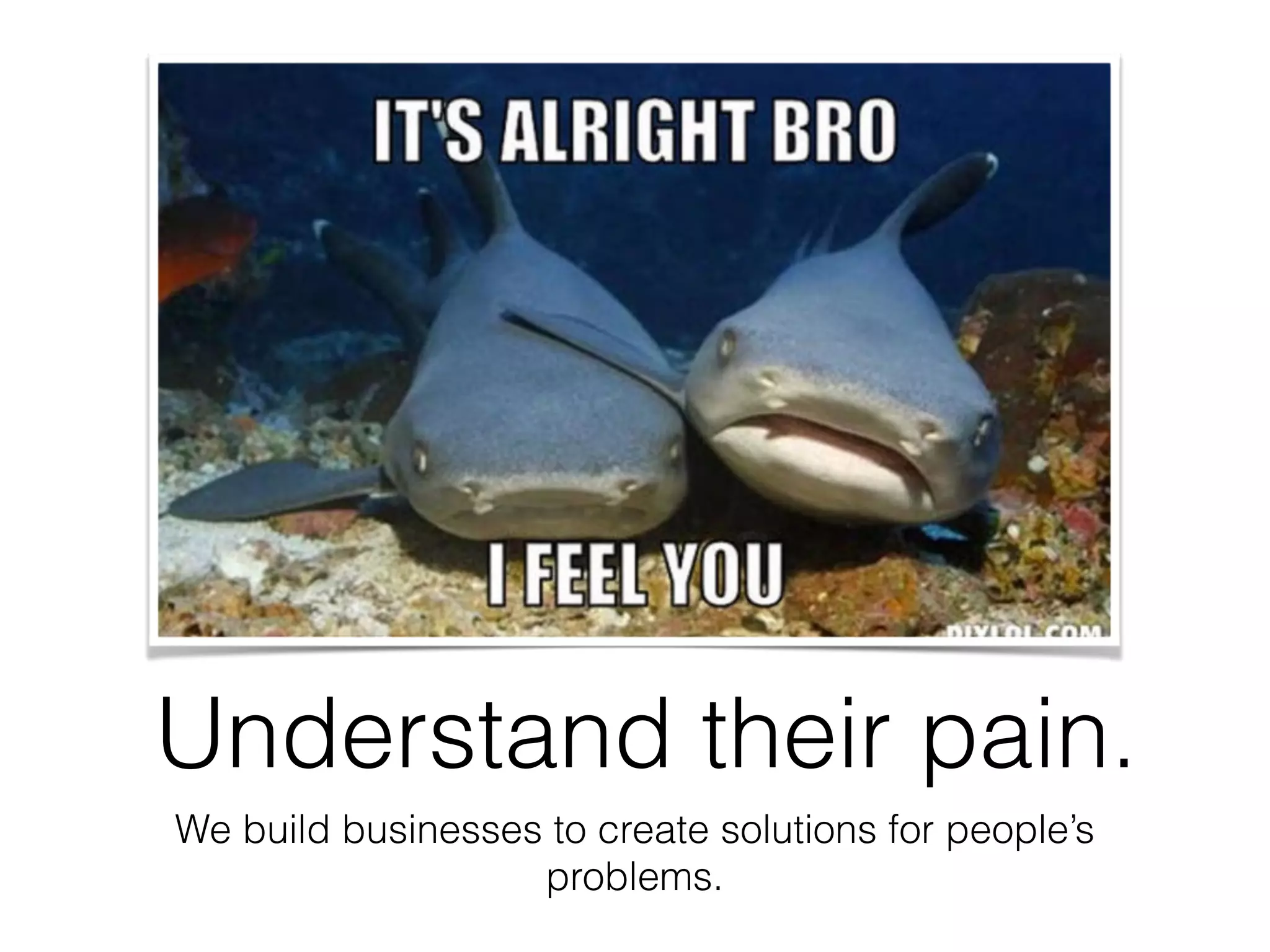
Understand their pain.
We build businesses to create solutions for people’s
problems.
How do your local
businesses solve their
customer’s problems?
Empathy exercises.
• Create a customer story for
your business or product.
• Be your own customer. If you
hate your product, your
customer probably does too.
Customer stories.
• As a ___ I want ___.
• These are the things I have to do to get it: ___.
• I have put in ___ effort and ___ money to achieve
my goal.
• I wish ___ so that it would be better for me.
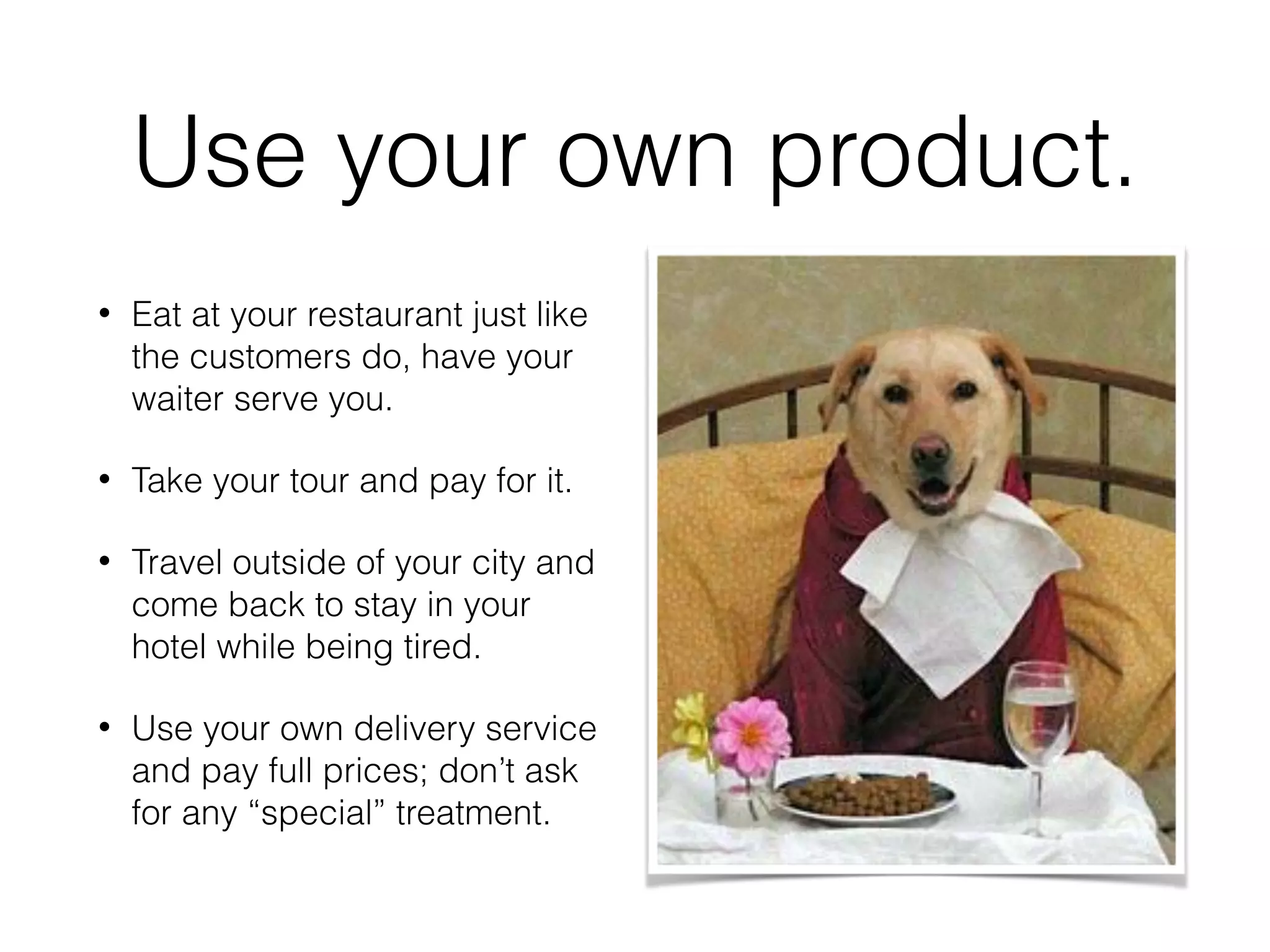
Use your own product.
• Eat at your restaurant just like
the customers do, have your
waiter serve you.
• Take your tour and pay for it.
• Travel outside of your city and
come back to stay in your
hotel while being tired.
• Use your own delivery service
and pay full prices; don’t ask
for any “special” treatment.
You might find things that your customers never mention in
reviews/feedback and you would have never known yourself
otherwise.
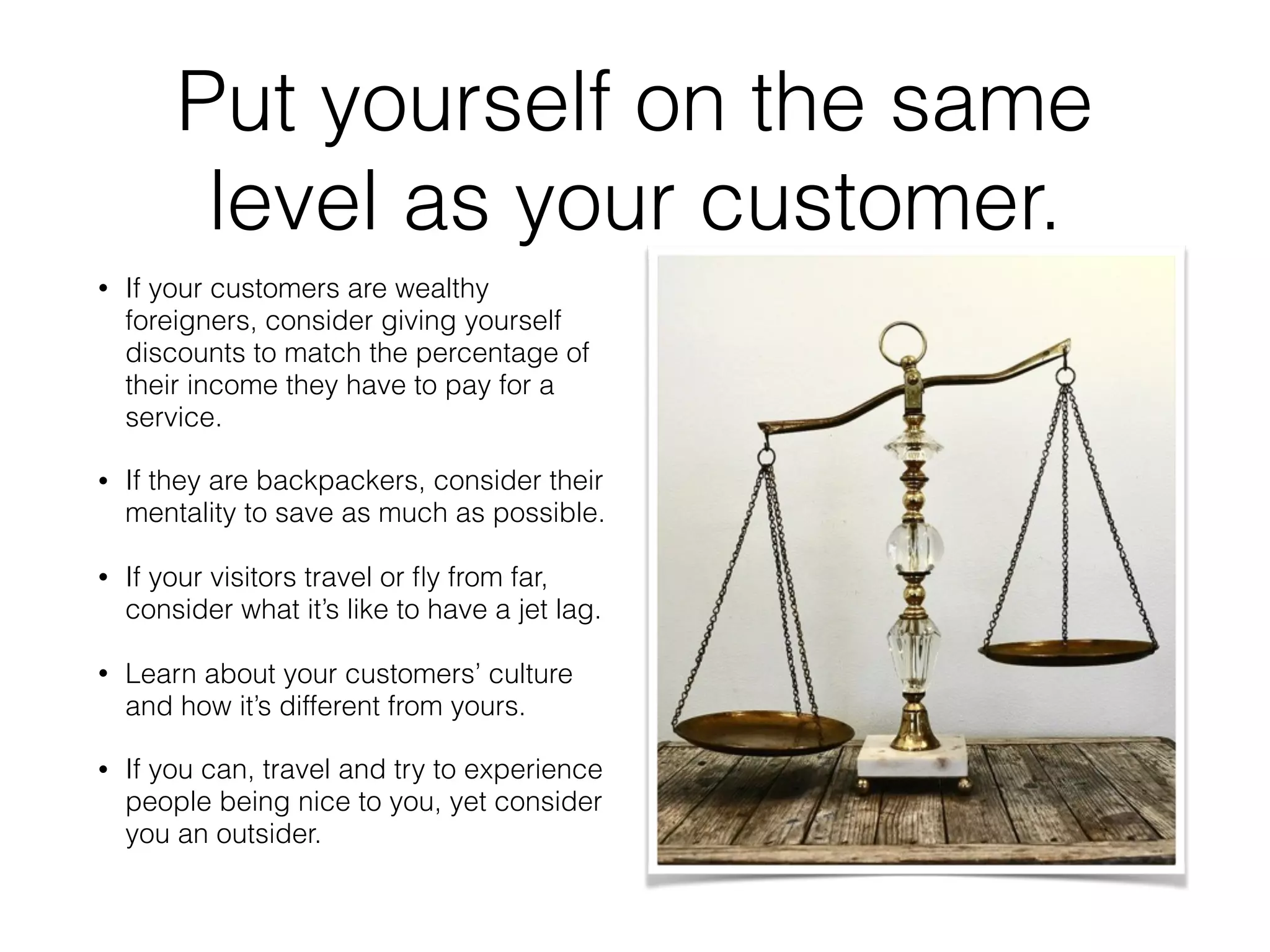
Put yourself on the same
level as your customer.
• If your customers are wealthy
foreigners, consider giving yourself
discounts to match the percentage of
their income they have to pay for a
service.
• If they are backpackers, consider their
mentality to save as much as possible.
• If your visitors travel or fly from far,
consider what it’s like to have a jet lag.
• Learn about your customers’ culture
and how it’s different from yours.
• If you can, travel and try to experience
people being nice to you, yet consider
you an outsider.
Assignment.
❶ Pick a business/product.
❷ Create a customer story.
❸ Imagine you are using your
own product. What can you do
to have more of an “outsider”
experience?

Effective Business Practices 101 (4/8): Think Like a Customer: Introduction to Empathy

  • 1.
    Empathy. See your businessfrom the point of view of your customer.
  • 2.
  • 3.
    Calculate business risks. Only makeinformed (researched) decisions.
  • 4.
    ❶ What isthe competition? ❷ What is the demand? ❸ What are the costs? ❹ What is the ROI?
  • 5.
    What tools canyou use to research your decisions?
  • 6.
    Online research tools. •You can use Google to find most of the information available on the internet. • TripAdvisor could give you a good idea about local travel business landscape. • Check out your competitors’ Facebook pages. • See what tourists might be posting on Instagram, Twitter or Pinterest - what do they enjoy? • Do you know any other places your clients and fellow business owners could have information on? Be in the know.
  • 7.
    Don’t forget “real- world”research. Pay attention to the news, talk to customers and fellow business owners. Create and benefit from community.
  • 8.
  • 10.
    Be careful withyour diversification strategies.
  • 12.
    Experiments. • Try yourideas on small scale before going big. • Learn from those test runs whether it is a good idea. • Not the same as market research, your own opinion or prediction about what would happen. Experiments are actually you conducting the business on a small scale.
  • 13.
  • 14.
  • 15.
  • 16.
  • 17.
    Things you canmeasure: • Income. • Costs. • Amount of work required.
  • 19.
    Track your ventures. •Tracking (also called analytics) is recording your measurements over time. • Analytics can help you see patterns in your business that will help you predict the future.
  • 20.
  • 21.
  • 22.
    Collect & synthesize. •Collect a good sample of feedback (at least 10 people). • Sort your feedback based on opinions and suggestions. • Think how it could apply to your business.
  • 23.
    Applying feedback. Evaluate eachcustomer complaint, praise or suggesting: • Is it feasible to make the changes? • Does it align with your business objectives? • Learn about your business from the customers’ perspective.
  • 24.
    Replying to onlinereviews. • You don’t have to. • You can correct them if they were clearly wrong. Be polite. • You can tell them you fixed the problem and offer a small gift. • If you made a mistake, own up to it. Everyone makes mistakes. • Keep it short.
  • 25.
    Today’s topic: empathy. It’sabout understanding the point of view of your customer.
  • 26.
    Why do somebusinesses fail?
  • 27.
    The aren’t makingtheir products for the customers.
  • 28.
    Whom should thebusiness benefit? • Customers are your biggest asset and the only source of income. • Your business has to focus on making their lives better.
  • 29.
    Does “making yourcustomers happy” mean being nice and smiling all the time?
  • 30.
    No. It certainly helpsto be nice, but a smile, no matter how wide, will not persuade anyone to spend real money.
  • 31.
    Understanding your customer— — and building your business around helping them achieve their goals will make them happy.
  • 32.
    What are someways you can understand your customer?
  • 34.
    Empathy is a littledifferent. But it is a very effective tool you can use to understand your customers.
  • 35.
    Understand their pain. Webuild businesses to create solutions for people’s problems.
  • 36.
    How do yourlocal businesses solve their customer’s problems?
  • 37.
    Empathy exercises. • Createa customer story for your business or product. • Be your own customer. If you hate your product, your customer probably does too.
  • 38.
    Customer stories. • Asa ___ I want ___. • These are the things I have to do to get it: ___. • I have put in ___ effort and ___ money to achieve my goal. • I wish ___ so that it would be better for me.
  • 39.
    Use your ownproduct. • Eat at your restaurant just like the customers do, have your waiter serve you. • Take your tour and pay for it. • Travel outside of your city and come back to stay in your hotel while being tired. • Use your own delivery service and pay full prices; don’t ask for any “special” treatment.
  • 40.
    You might findthings that your customers never mention in reviews/feedback and you would have never known yourself otherwise.
  • 41.
    Put yourself onthe same level as your customer. • If your customers are wealthy foreigners, consider giving yourself discounts to match the percentage of their income they have to pay for a service. • If they are backpackers, consider their mentality to save as much as possible. • If your visitors travel or fly from far, consider what it’s like to have a jet lag. • Learn about your customers’ culture and how it’s different from yours. • If you can, travel and try to experience people being nice to you, yet consider you an outsider.
  • 42.
    Assignment. ❶ Pick abusiness/product. ❷ Create a customer story. ❸ Imagine you are using your own product. What can you do to have more of an “outsider” experience?