
Payment Gateway
Agenda Terminology  Payment Gateway life cycle Types of Payment Gateways Advantages and Disadvantages Security Issues Vulnerabilities Related Vulnerabilities “ Must Do” list Payment Gateway Implementation over SSL What to ask in third payment gateways parties ? Example ….  Most famous payment gateways Questions
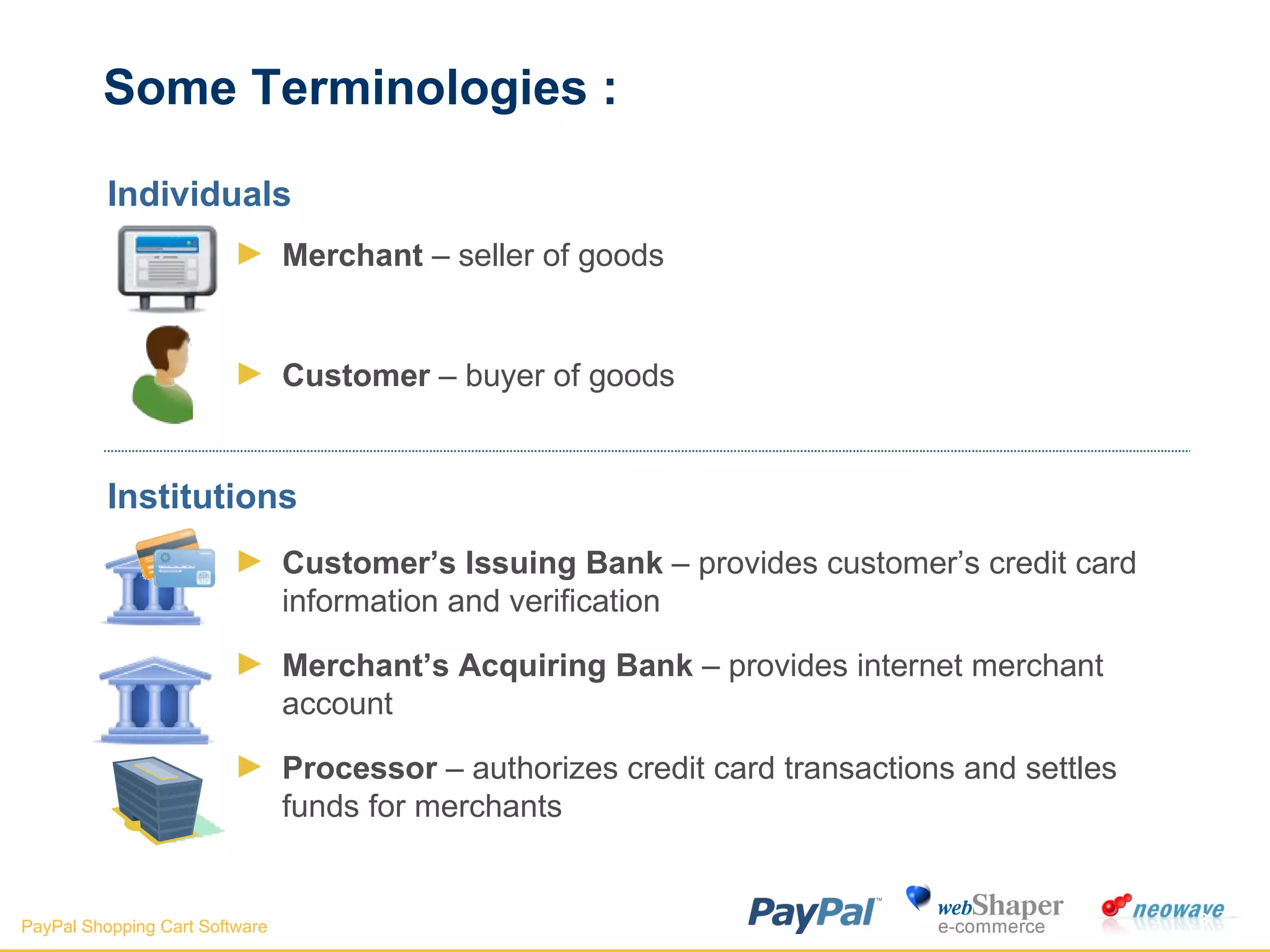
Some Terminologies : Individuals Merchant  – seller of goods Customer  – buyer of goods Institutions Customer’s Issuing Bank  – provides customer’s credit card information and verification  Merchant’s Acquiring Bank  – provides internet merchant account  Processor  – authorizes credit card transactions and settles funds for merchants
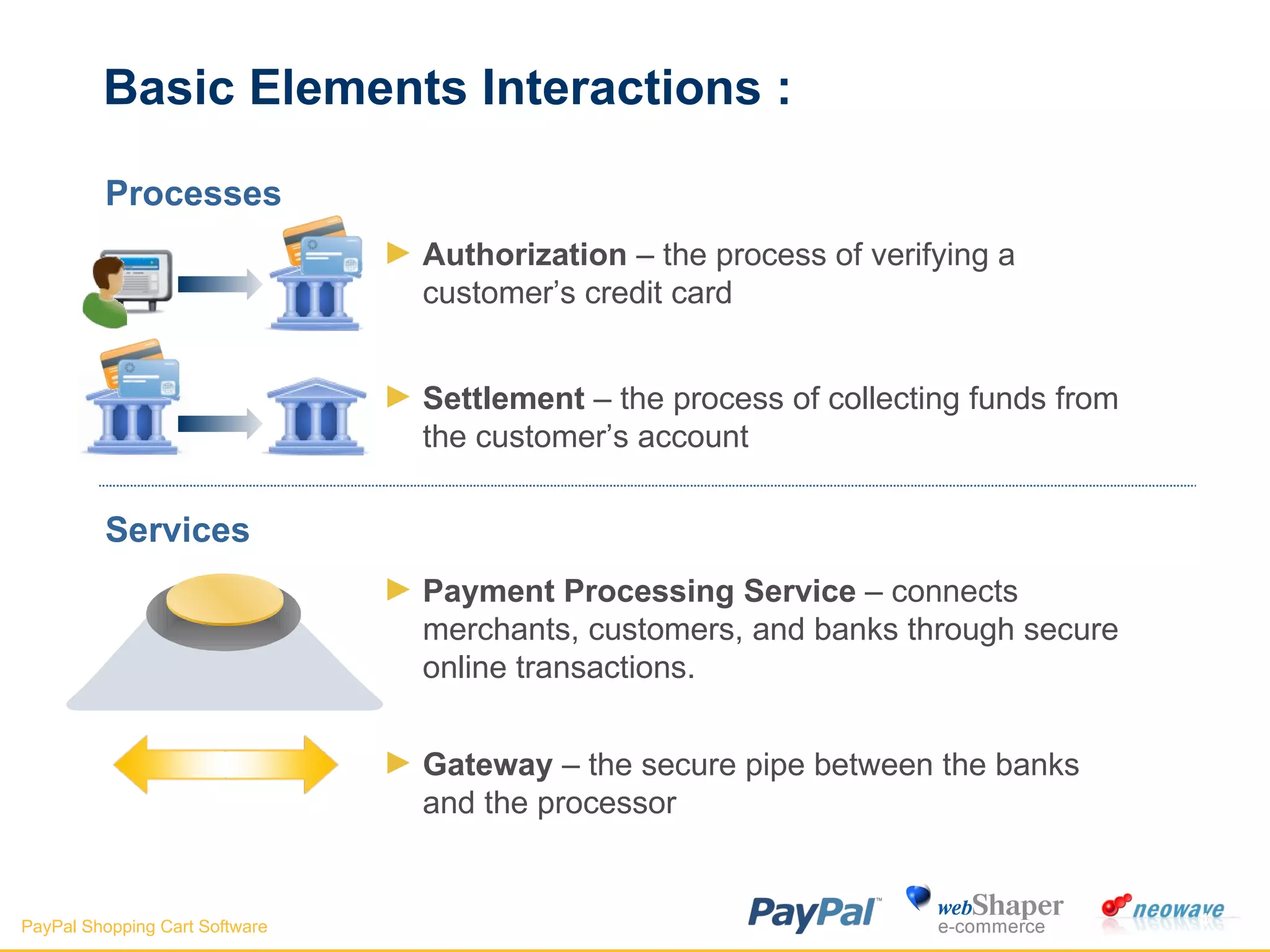
Basic Elements Interactions : Processes Authorization  – the process of verifying a customer’s credit card  Settlement  – the process of collecting funds from the customer’s account Services Payment Processing Service  – connects merchants, customers, and banks through secure online transactions.  Gateway  – the secure pipe between the banks and the processor
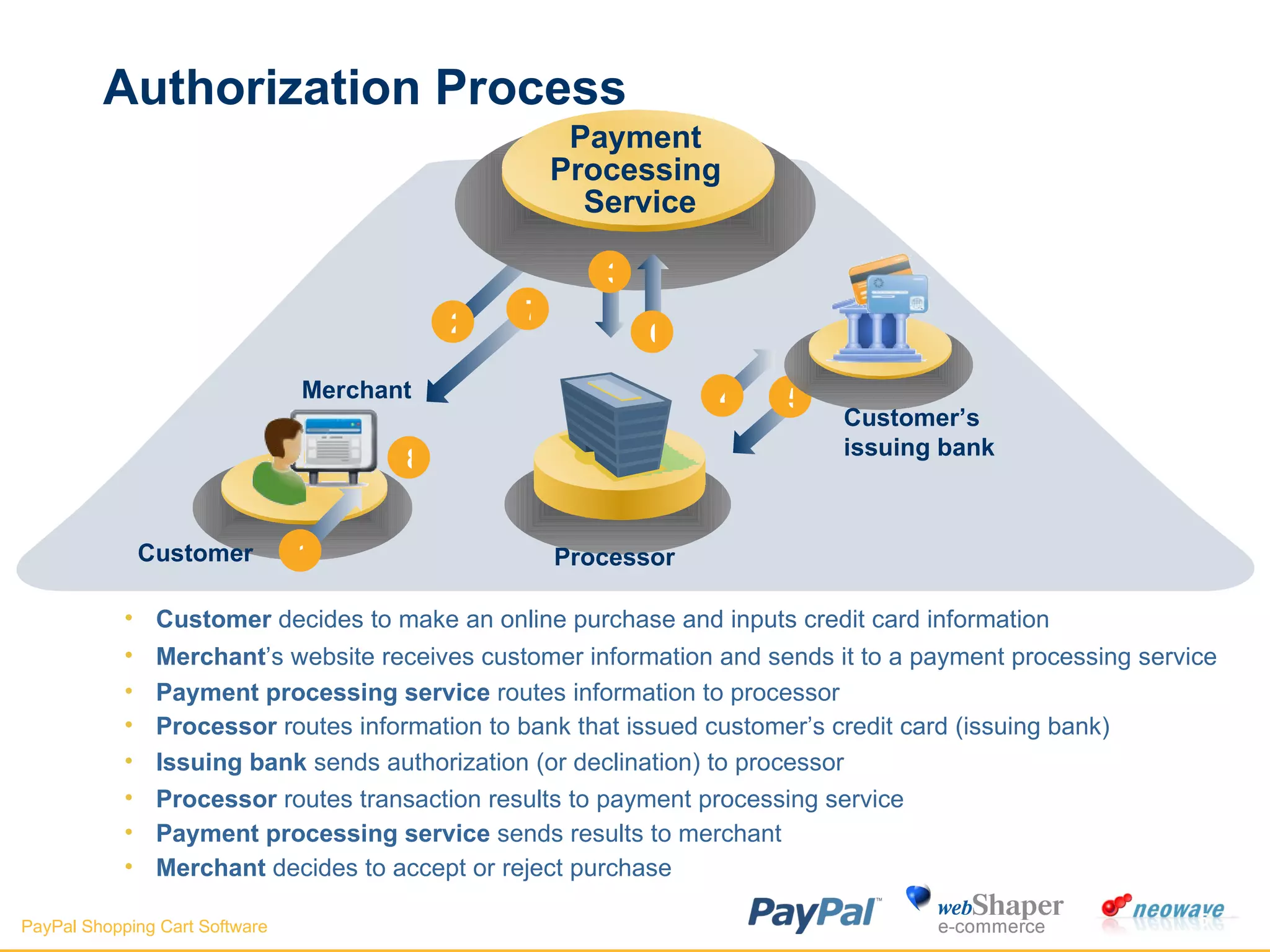
Authorization Process  Customer  decides to make an online purchase and inputs credit card information Merchant ’s website receives customer information and sends it to a payment processing service Payment processing service  routes information to processor Processor  routes information to bank that issued customer’s credit card (issuing bank) Issuing bank  sends authorization (or declination) to processor Processor  routes transaction results to payment processing service Payment processing service  sends results to merchant 2 Payment  Processing  Service 7 6 5 Customer Merchant 1 Processor 3 Customer’s issuing bank 4 Merchant  decides to accept or reject purchase 8
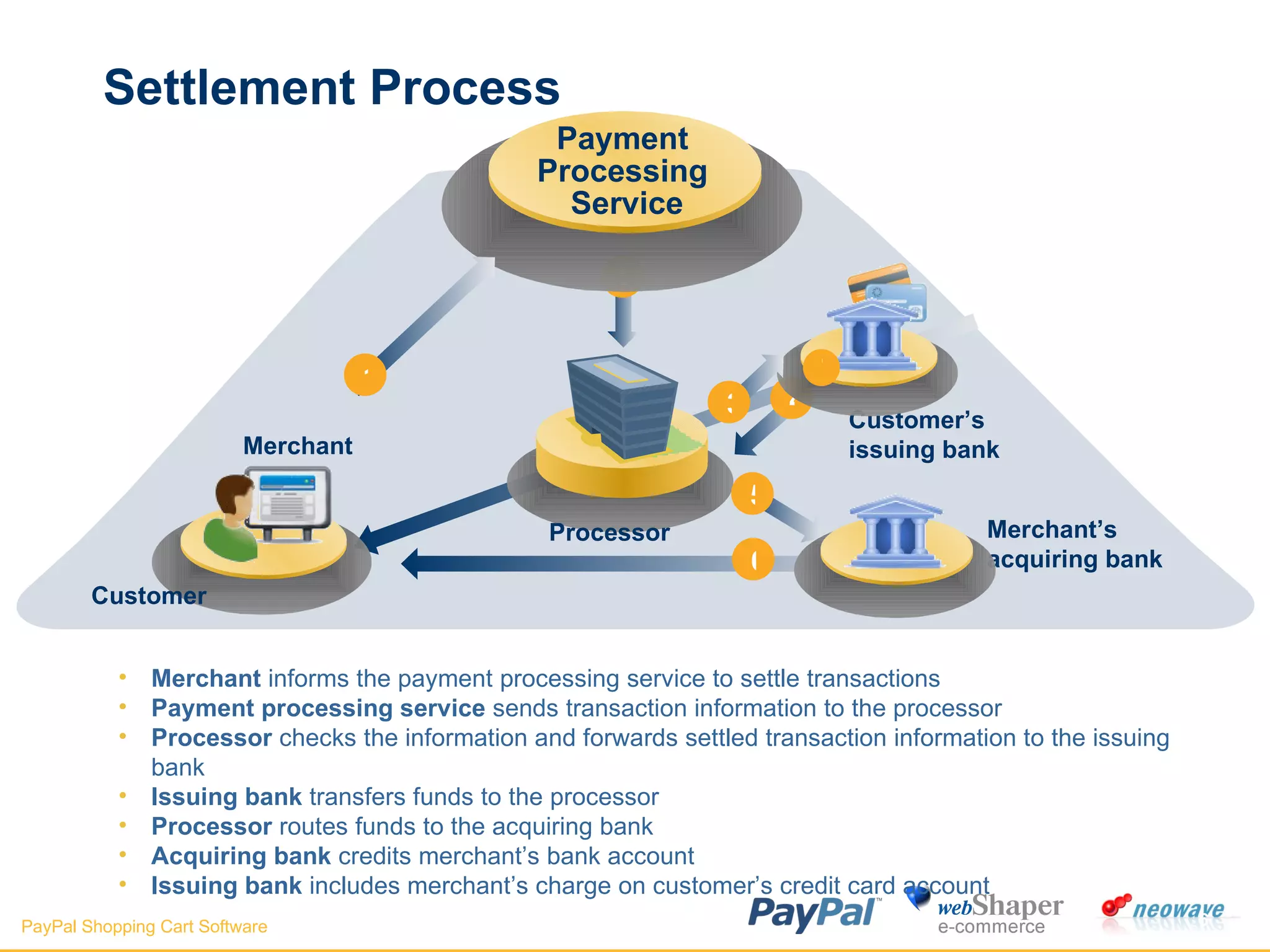
Settlement Process Merchant  informs the payment processing service to settle transactions Payment processing service  sends transaction information to the processor Processor  checks the information and forwards settled transaction information to the issuing bank Issuing bank  transfers funds to the processor Processor  routes funds to the acquiring bank Acquiring bank  credits merchant’s bank account Issuing bank  includes merchant’s charge on customer’s credit card account 7 2 Payment  Processing  Service Processor 6 4 Merchant’s acquiring bank 5 Merchant Customer 1 Customer’s issuing bank 3
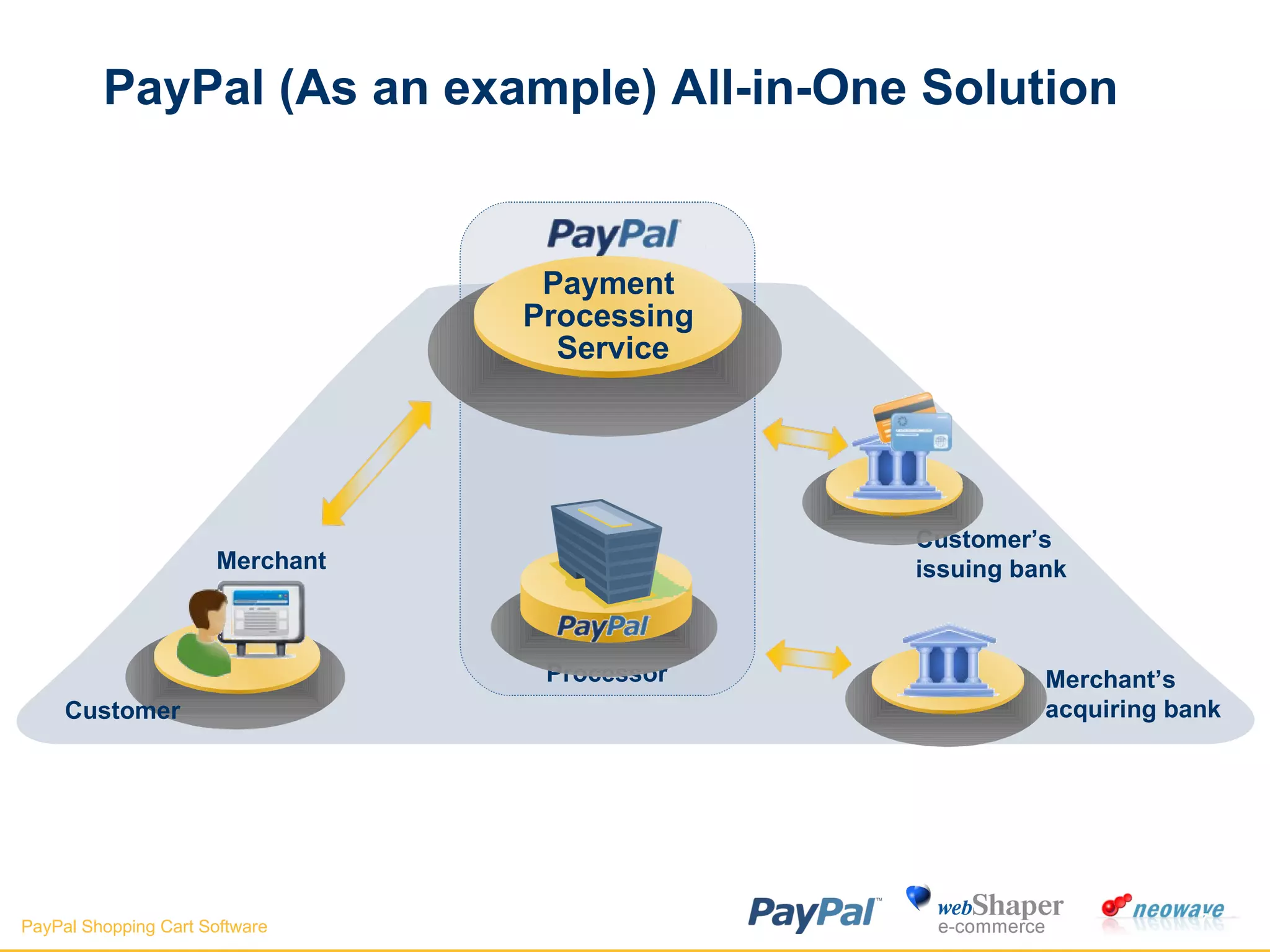
PayPal (As an example) All-in-One Solution Customer’s issuing bank Merchant’s acquiring bank Customer Merchant Processor Payment  Processing  Service
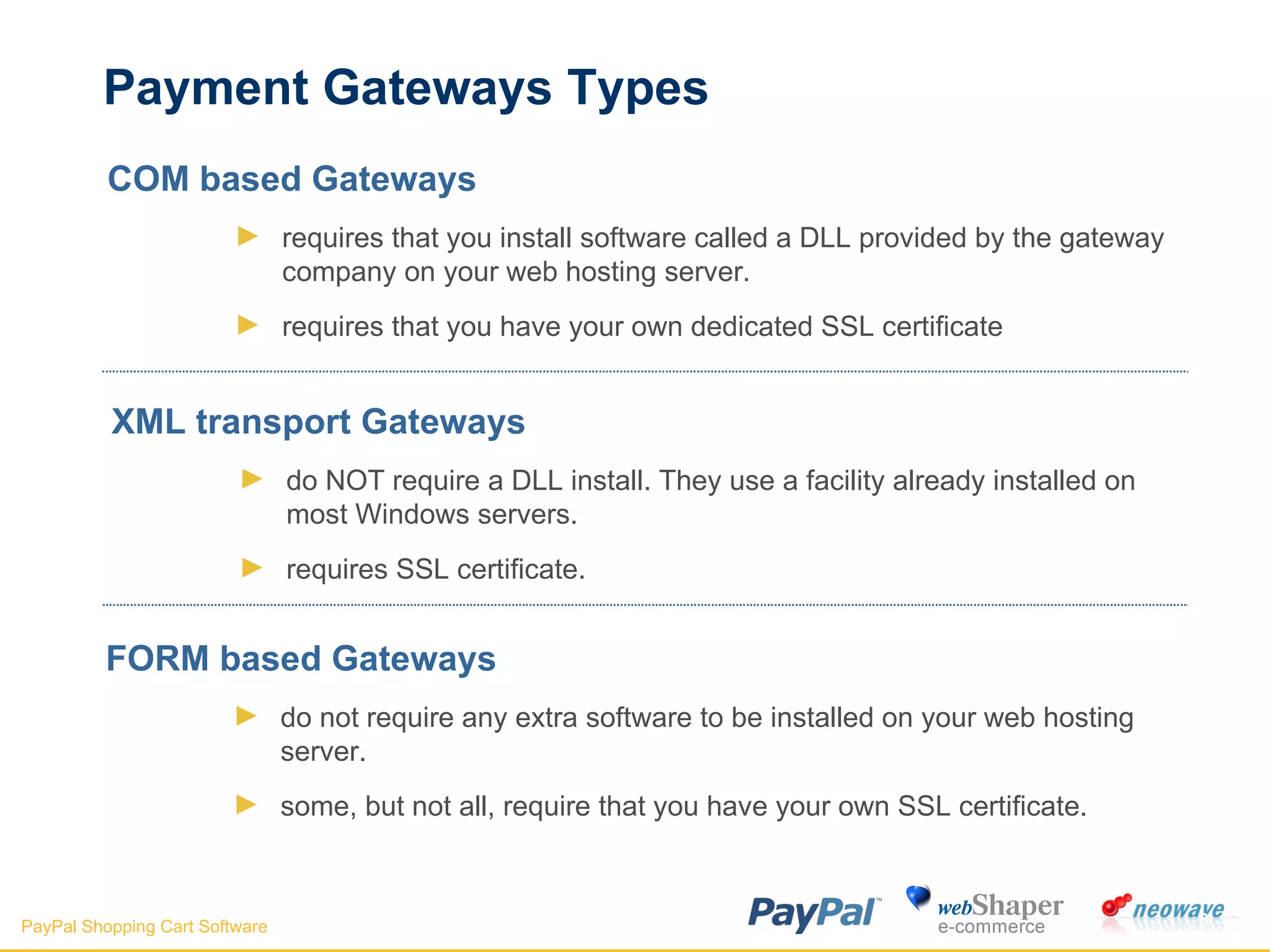
Payment Gateways Types COM based Gateways requires that you install software called a DLL provided by the gateway company on your web hosting server.  requires that you have your own dedicated SSL certificate  XML transport Gateways do NOT require a DLL install. They use a facility already installed on most Windows servers.  requires SSL certificate. FORM based Gateways do not require any extra software to be installed on your web hosting server.  some, but not all, require that you have your own SSL certificate.
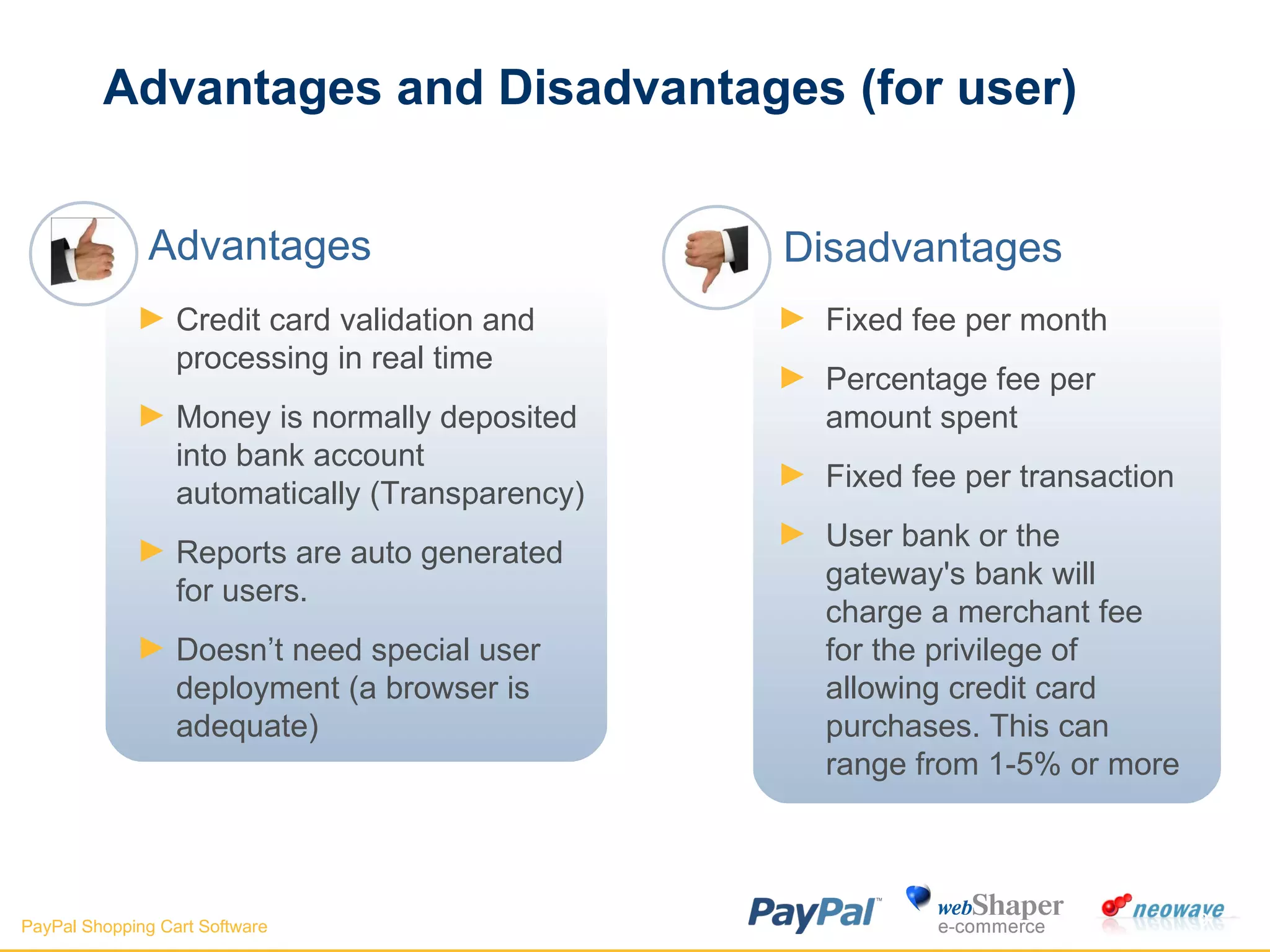
Advantages and Disadvantages (for user) Fixed fee per month  Percentage fee per amount spent  Fixed fee per transaction  User bank or the gateway's bank will charge a merchant fee for the privilege of allowing credit card purchases. This can range from 1-5% or more  Credit card validation and processing in real time  Money is normally deposited into bank account automatically (Transparency) Reports are auto generated for users. Doesn’t need special user deployment (a browser is adequate) Advantages Disadvantages
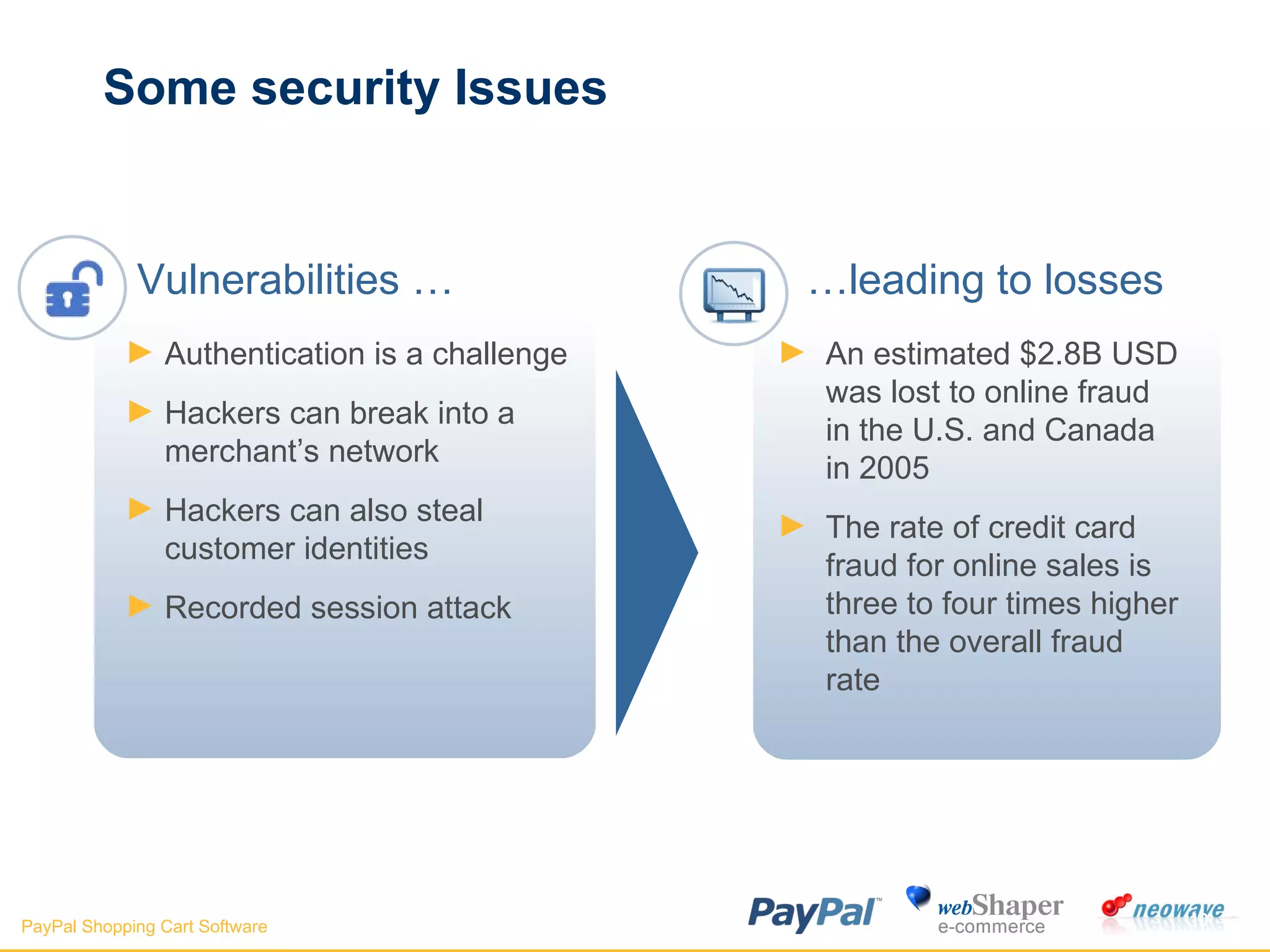
Some security Issues  An estimated $2.8B USD was lost to online fraud in the U.S. and Canada in 2005 The rate of credit card fraud for online sales is three to four times higher than the overall fraud rate Authentication is a challenge Hackers can break into a merchant’s network Hackers can also steal customer identities  Recorded session attack Vulnerabilities … … leading to losses
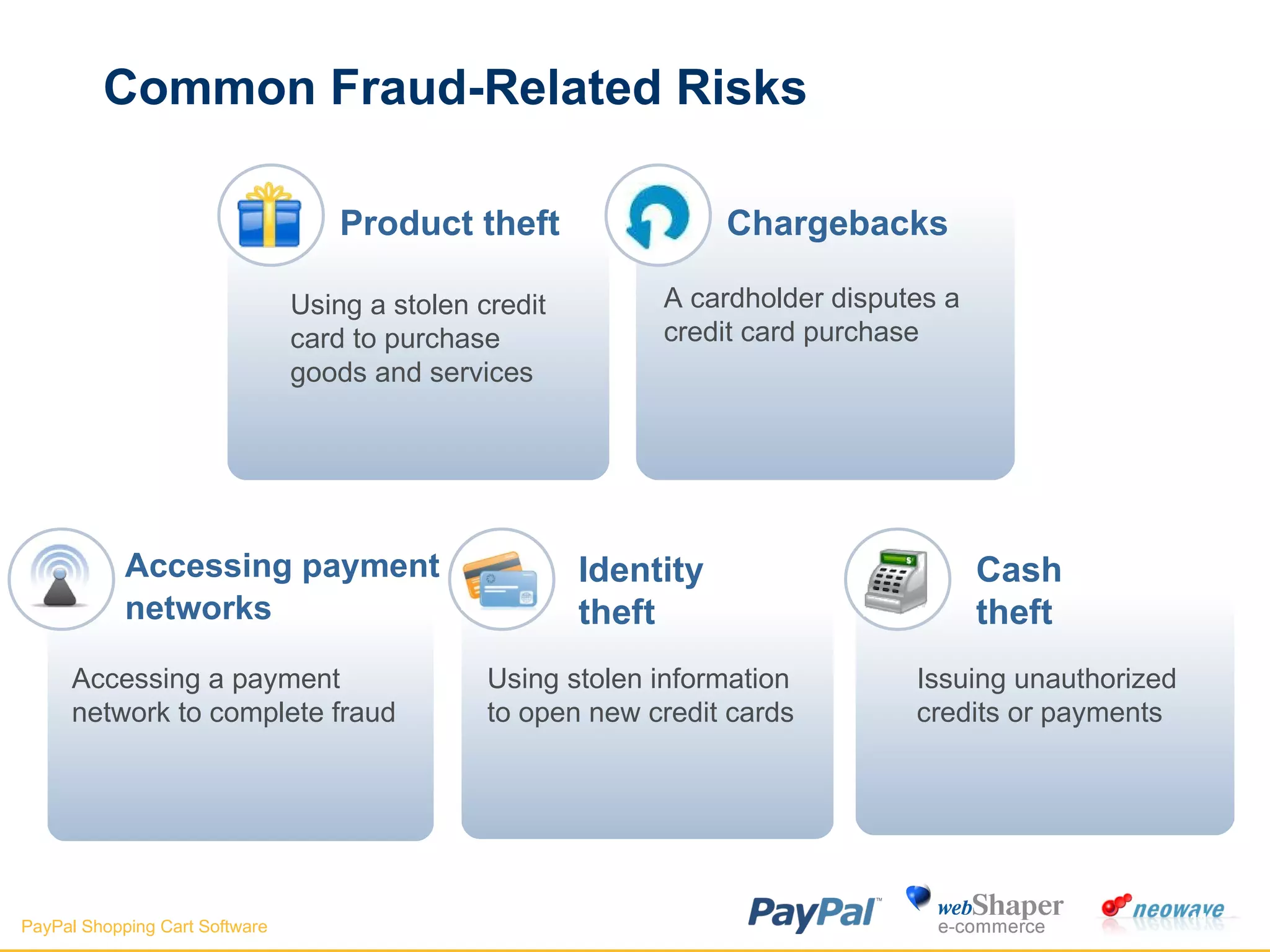
Common Fraud-Related Risks Using stolen information to open new credit cards Issuing unauthorized credits or payments  Identity theft  Cash theft  Accessing a payment network to complete fraud Accessing payment networks  Using a stolen credit card to purchase goods and services Product theft Chargebacks  A cardholder disputes a credit card purchase
How to Protect Your Business Against Fraud Transaction Level Ensure each transaction you accept and process is valid, and be careful in reviewing suspicious transactions because some may be valid. Account Level Make sure only authorized users have access to your payment gateway account, and be alert for suspicious account access patterns. Network Level Ensure your perimeter is defended against unauthorized access. 1 2 3
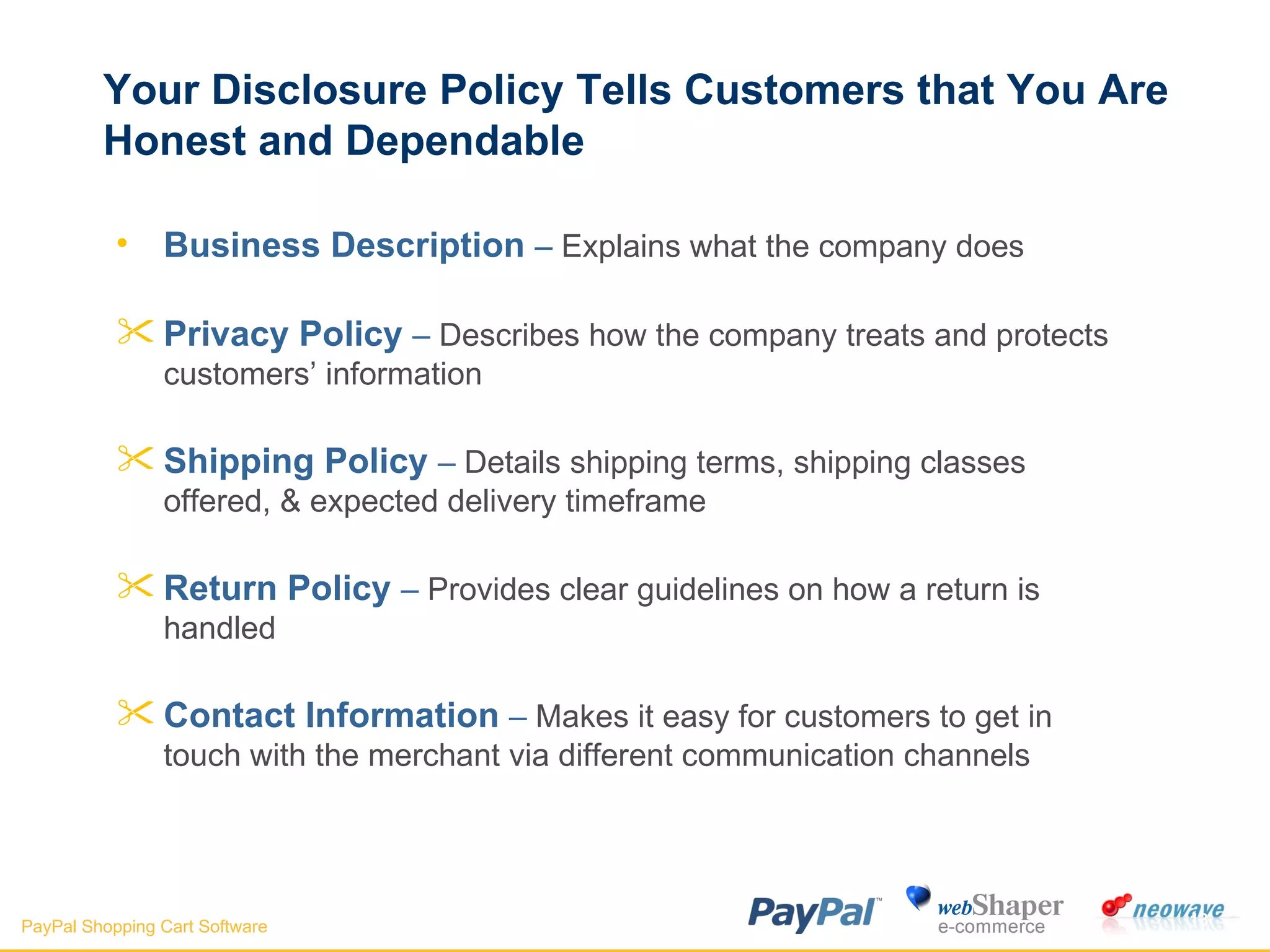
Your Disclosure Policy Tells Customers that You Are Honest and Dependable Business Description  –  Explains what the company does Shipping Policy  –  Details shipping terms, shipping classes offered, & expected delivery timeframe Privacy Policy  –  Describes how the company treats and protects customers’ information Return Policy  –  Provides clear guidelines on how a return is handled Contact Information  –  Makes it easy for customers to get in touch with the merchant via different communication channels
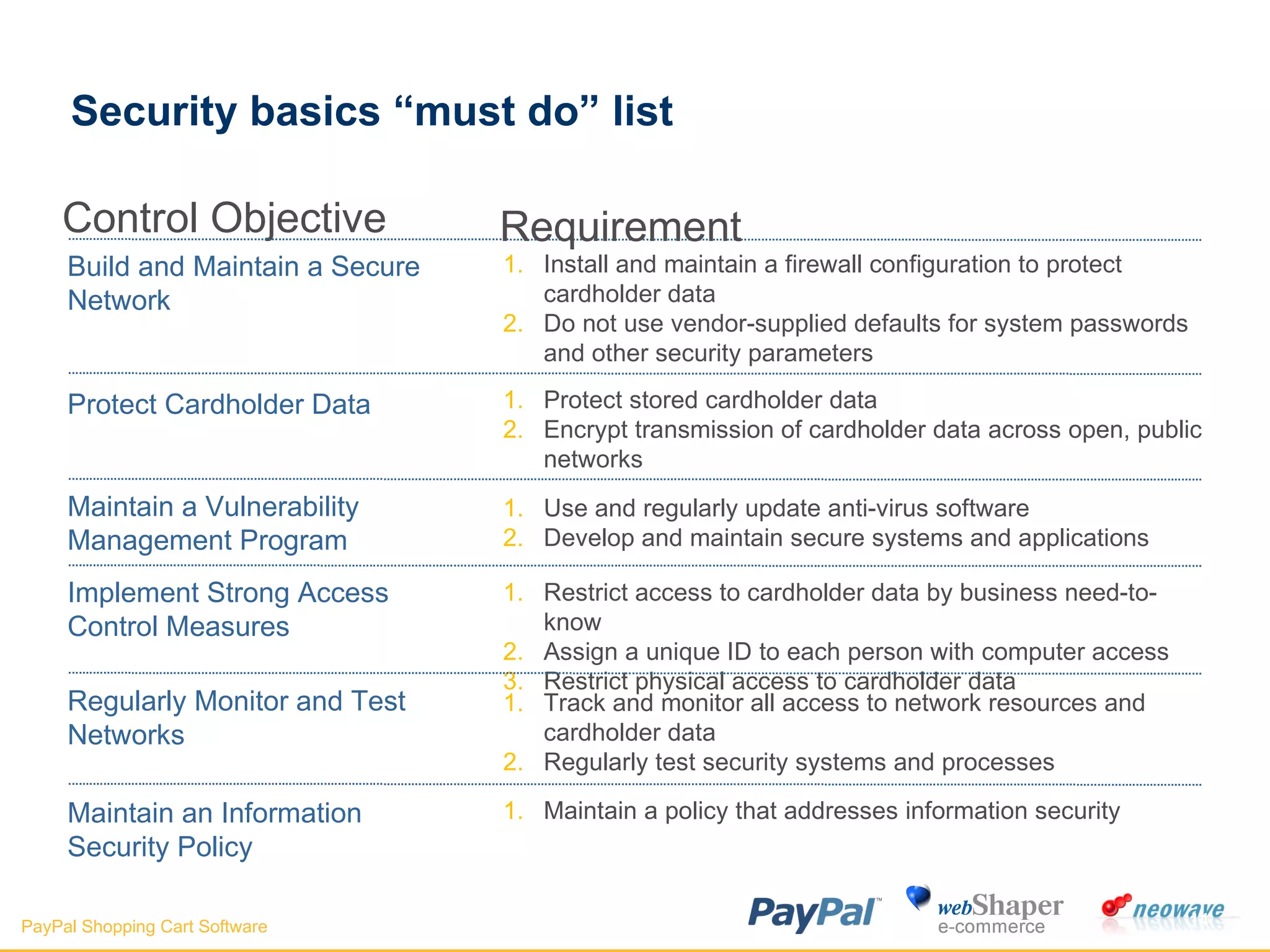
Security basics “must do” list Protect Cardholder Data  Maintain a Vulnerability Management Program  Implement Strong Access Control Measures  Regularly Monitor and Test Networks  Maintain an Information Security Policy  Protect stored cardholder data  Encrypt transmission of cardholder data across open, public networks  Use and regularly update anti-virus software  Develop and maintain secure systems and applications  Restrict access to cardholder data by business need-to-know  Assign a unique ID to each person with computer access  Restrict physical access to cardholder data  Track and monitor all access to network resources and cardholder data  Regularly test security systems and processes  Maintain a policy that addresses information security Control Objective Requirement Build and Maintain a Secure Network  Install and maintain a firewall configuration to protect cardholder data  Do not use vendor-supplied defaults for system passwords and other security parameters
Payment Gateway Implementation over SSL Refer to the attached PDF “ Payment Gateway Implementation.pdf”
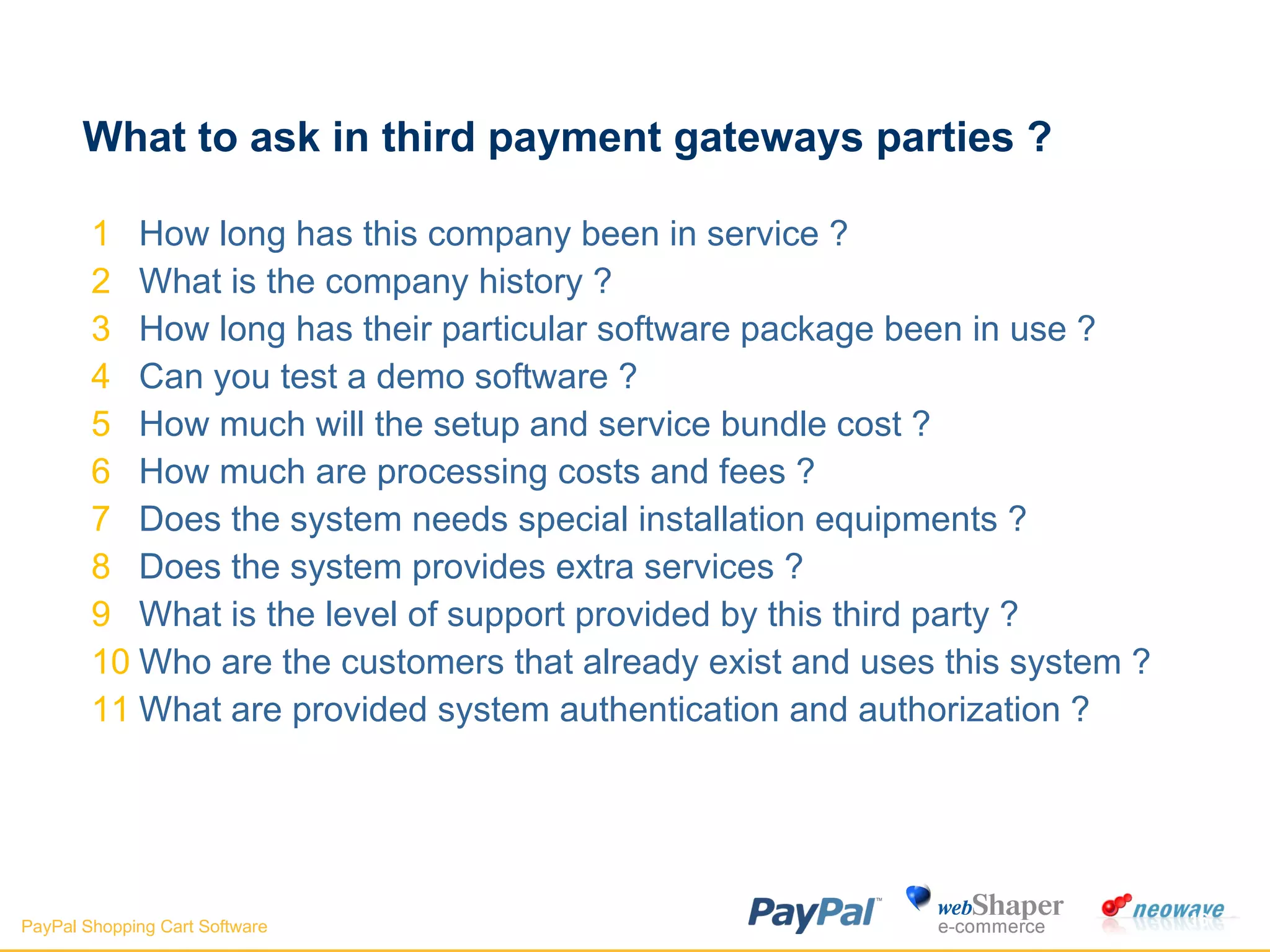
What to ask in third payment gateways parties ?  How long has this company been in service ? What is the company history ? How long has their particular software package been in use ? Can you test a demo software ? How much will the setup and service bundle cost ? How much are processing costs and fees ? Does the system needs special installation equipments ? Does the system provides extra services ? What is the level of support provided by this third party ? Who are the customers that already exist and uses this system ? What are provided system authentication and authorization ?
An example of applying to a payment gateway (WorldPay) Refer to the attached PPS “ worldpay application.pps”
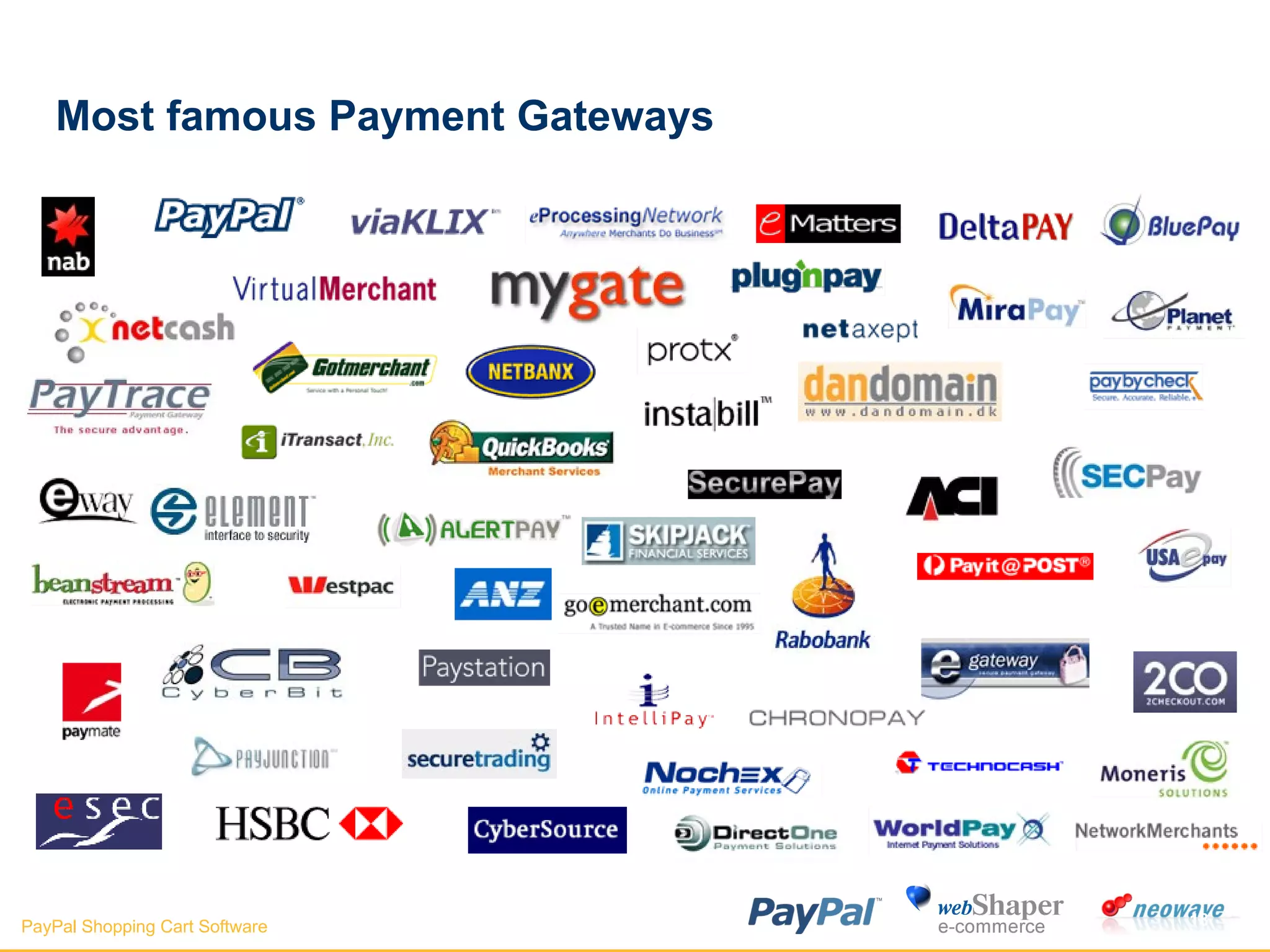
Most famous Payment Gateways    
Questions Confidential and Proprietary

Payment Gateway

  • 1.
  • 2.
    Agenda Terminology Payment Gateway life cycle Types of Payment Gateways Advantages and Disadvantages Security Issues Vulnerabilities Related Vulnerabilities “ Must Do” list Payment Gateway Implementation over SSL What to ask in third payment gateways parties ? Example …. Most famous payment gateways Questions
  • 3.
    Some Terminologies :Individuals Merchant – seller of goods Customer – buyer of goods Institutions Customer’s Issuing Bank – provides customer’s credit card information and verification Merchant’s Acquiring Bank – provides internet merchant account Processor – authorizes credit card transactions and settles funds for merchants
  • 4.
    Basic Elements Interactions: Processes Authorization – the process of verifying a customer’s credit card Settlement – the process of collecting funds from the customer’s account Services Payment Processing Service – connects merchants, customers, and banks through secure online transactions. Gateway – the secure pipe between the banks and the processor
  • 5.
    Authorization Process Customer decides to make an online purchase and inputs credit card information Merchant ’s website receives customer information and sends it to a payment processing service Payment processing service routes information to processor Processor routes information to bank that issued customer’s credit card (issuing bank) Issuing bank sends authorization (or declination) to processor Processor routes transaction results to payment processing service Payment processing service sends results to merchant 2 Payment Processing Service 7 6 5 Customer Merchant 1 Processor 3 Customer’s issuing bank 4 Merchant decides to accept or reject purchase 8
  • 6.
    Settlement Process Merchant informs the payment processing service to settle transactions Payment processing service sends transaction information to the processor Processor checks the information and forwards settled transaction information to the issuing bank Issuing bank transfers funds to the processor Processor routes funds to the acquiring bank Acquiring bank credits merchant’s bank account Issuing bank includes merchant’s charge on customer’s credit card account 7 2 Payment Processing Service Processor 6 4 Merchant’s acquiring bank 5 Merchant Customer 1 Customer’s issuing bank 3
  • 7.
    PayPal (As anexample) All-in-One Solution Customer’s issuing bank Merchant’s acquiring bank Customer Merchant Processor Payment Processing Service
  • 8.
    Payment Gateways TypesCOM based Gateways requires that you install software called a DLL provided by the gateway company on your web hosting server. requires that you have your own dedicated SSL certificate XML transport Gateways do NOT require a DLL install. They use a facility already installed on most Windows servers. requires SSL certificate. FORM based Gateways do not require any extra software to be installed on your web hosting server. some, but not all, require that you have your own SSL certificate.
  • 9.
    Advantages and Disadvantages(for user) Fixed fee per month Percentage fee per amount spent Fixed fee per transaction User bank or the gateway's bank will charge a merchant fee for the privilege of allowing credit card purchases. This can range from 1-5% or more Credit card validation and processing in real time Money is normally deposited into bank account automatically (Transparency) Reports are auto generated for users. Doesn’t need special user deployment (a browser is adequate) Advantages Disadvantages
  • 10.
    Some security Issues An estimated $2.8B USD was lost to online fraud in the U.S. and Canada in 2005 The rate of credit card fraud for online sales is three to four times higher than the overall fraud rate Authentication is a challenge Hackers can break into a merchant’s network Hackers can also steal customer identities Recorded session attack Vulnerabilities … … leading to losses
  • 11.
    Common Fraud-Related RisksUsing stolen information to open new credit cards Issuing unauthorized credits or payments Identity theft Cash theft Accessing a payment network to complete fraud Accessing payment networks Using a stolen credit card to purchase goods and services Product theft Chargebacks A cardholder disputes a credit card purchase
  • 12.
    How to ProtectYour Business Against Fraud Transaction Level Ensure each transaction you accept and process is valid, and be careful in reviewing suspicious transactions because some may be valid. Account Level Make sure only authorized users have access to your payment gateway account, and be alert for suspicious account access patterns. Network Level Ensure your perimeter is defended against unauthorized access. 1 2 3
  • 13.
    Your Disclosure PolicyTells Customers that You Are Honest and Dependable Business Description – Explains what the company does Shipping Policy – Details shipping terms, shipping classes offered, & expected delivery timeframe Privacy Policy – Describes how the company treats and protects customers’ information Return Policy – Provides clear guidelines on how a return is handled Contact Information – Makes it easy for customers to get in touch with the merchant via different communication channels
  • 14.
    Security basics “mustdo” list Protect Cardholder Data Maintain a Vulnerability Management Program Implement Strong Access Control Measures Regularly Monitor and Test Networks Maintain an Information Security Policy Protect stored cardholder data Encrypt transmission of cardholder data across open, public networks Use and regularly update anti-virus software Develop and maintain secure systems and applications Restrict access to cardholder data by business need-to-know Assign a unique ID to each person with computer access Restrict physical access to cardholder data Track and monitor all access to network resources and cardholder data Regularly test security systems and processes Maintain a policy that addresses information security Control Objective Requirement Build and Maintain a Secure Network Install and maintain a firewall configuration to protect cardholder data Do not use vendor-supplied defaults for system passwords and other security parameters
  • 15.
    Payment Gateway Implementationover SSL Refer to the attached PDF “ Payment Gateway Implementation.pdf”
  • 16.
    What to askin third payment gateways parties ? How long has this company been in service ? What is the company history ? How long has their particular software package been in use ? Can you test a demo software ? How much will the setup and service bundle cost ? How much are processing costs and fees ? Does the system needs special installation equipments ? Does the system provides extra services ? What is the level of support provided by this third party ? Who are the customers that already exist and uses this system ? What are provided system authentication and authorization ?
  • 17.
    An example ofapplying to a payment gateway (WorldPay) Refer to the attached PPS “ worldpay application.pps”
  • 18.
    Most famous PaymentGateways    
  • 19.

Editor's Notes

  • #2 First I want to thank you all for taking the time to be here. We have