Purchasing Measures to
Drive Improvement
Discussion of the Benefits of Incorporating
Lead Measures for Purchasing to Drive
Improvement
Bill Kohnen October 2013
Updated June 2014
Summary
 Purchasing has lots of data to measure and while ‘big
data” tools are useful, what really drives performance
and improvement generally is on the surface and not
deep in data.
 Cost remains on the top of the measurement list but
CSR and more direct link to revenue and innovation are
becoming more important to Purchasing
 Strategic and Tactical measures are different even if in
the same organization
Bill Kohnen October 2013
Purchasing performance in 2014 will be improved by
adding leading measures to your Scorecard
Thoughts Have Basis From
The 4 Disciplines of Execution
Bill Kohnen October 2013
1.Focus on Important Goals
2.Act on Lead Measures
3.Create Compelling Scorecards
4.Create a Cadence for
Accountability
Setting Goals
 Make the Finish Line clear
From (X) to (Y) by When
Examples:
Will obtain 30% total cost savings by replacing manual travel,
purchase and expense systems with integrated Software as a
Service (SaaS) Indirect Spend Solution by September 2014
Average Supplier performance will increase from 85 to 95 by
July 2014
Average processing time for MRO items purchase orders
reduced from 3 day to 4 hours by Dec 2014
Bill Kohnen October 2013
Know What to Do to Achieve
Goals
 Lead measures
◦ You can influence
◦ Predictive of Outcome
◦ Cadence for review is short term (weekly)
 Lag measures
◦ Show only what has happened
◦ Cadence for review is longer
Bill Kohnen October 2013
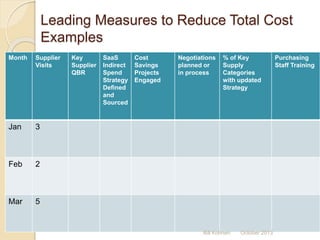
Leading Measures to Reduce Total Cost
Examples
Month Supplier
Visits
Key
Supplier
QBR
SaaS
Indirect
Spend
Strategy
Defined
and
Sourced
Cost
Savings
Projects
Engaged
Negotiations
planned or
in process
% of Key
Supply
Categories
with updated
Strategy
Purchasing
Staff Training
Jan 3
Feb 2
Mar 5
Bill Kohnen October 2013
Lagging Measures for Total Cost
Traditional
0
20
40
60
80
100
120
Jan Feb Mar
All Cost Savings
Bill Kohnen October 2013
50
60
70
80
90
100
Q1 Q2 Q3 Q4
Supplier Performance
0
20
40
60
80
100
Jan Feb March April
T&E and MRO Purchasing Savings From
SaaS Indirect Spend Solution
Leading Measures of Purchasing Tactical
Performance
Month System
Availability
Approv
al
Cycle
Time
SaaS Indirect
Spend
Implementation
Invoice
Issues
Purchasing
Processing
Time
New
Catalog or
Inventory
items
Purchasing
Staff
Training
Completed
June
Jul
Aug
Bill Kohnen October 2013
Lagging Measures for Tactical
Performance
0
50
100
150
Jan Feb Mar
% Delivery to Need
Date
Bill Kohnen October 2013
50
60
70
80
90
100
Q1 Q2 Q3 Q4
Lot Acceptance Rate
0
2
4
6
Jan Feb March
Expedite Cost
0 50 100 150 200
Q1
Q2
Q3
Q4
Staff
Cadence for Accountability
 Simply means report regularly and
consistently
 Conduct interactive reviews of
information with stakeholders
 Make adjustments and commitments
based on reviews and alignment to
most important organizational goals
Bill Kohnen October 2013
Summary
 It is up to you to define goals and measures that
apply best to your organizations needs.
 Once there is Buy In then the path to the
achieving the Important goal is clear
 Identifying and maintaining Lead Measures is
effective tool to get the resources needed to
achieve goals
◦ For example if supplier visits are clearly needed to
improve then if budget cuts prevent travel then this
shows up quickly and can be discussed immediately
relative to ultimate goal
Bill Kohnen October 2013
Summary
 On going training is included as a core
element in almost any effort to achieve
big goals
 Included throughout is reference to
further use of an integrated Software
as a Service Indirect Spend Solution
to make a big impact. This topic is
worth further investigation.
Bill Kohnen October 2013

Purchasing Measures that Drive Improvement

  • 1.
    Purchasing Measures to DriveImprovement Discussion of the Benefits of Incorporating Lead Measures for Purchasing to Drive Improvement Bill Kohnen October 2013 Updated June 2014
  • 2.
    Summary  Purchasing haslots of data to measure and while ‘big data” tools are useful, what really drives performance and improvement generally is on the surface and not deep in data.  Cost remains on the top of the measurement list but CSR and more direct link to revenue and innovation are becoming more important to Purchasing  Strategic and Tactical measures are different even if in the same organization Bill Kohnen October 2013 Purchasing performance in 2014 will be improved by adding leading measures to your Scorecard
  • 3.
    Thoughts Have BasisFrom The 4 Disciplines of Execution Bill Kohnen October 2013 1.Focus on Important Goals 2.Act on Lead Measures 3.Create Compelling Scorecards 4.Create a Cadence for Accountability
  • 4.
    Setting Goals  Makethe Finish Line clear From (X) to (Y) by When Examples: Will obtain 30% total cost savings by replacing manual travel, purchase and expense systems with integrated Software as a Service (SaaS) Indirect Spend Solution by September 2014 Average Supplier performance will increase from 85 to 95 by July 2014 Average processing time for MRO items purchase orders reduced from 3 day to 4 hours by Dec 2014 Bill Kohnen October 2013
  • 5.
    Know What toDo to Achieve Goals  Lead measures ◦ You can influence ◦ Predictive of Outcome ◦ Cadence for review is short term (weekly)  Lag measures ◦ Show only what has happened ◦ Cadence for review is longer Bill Kohnen October 2013
  • 6.
    Leading Measures toReduce Total Cost Examples Month Supplier Visits Key Supplier QBR SaaS Indirect Spend Strategy Defined and Sourced Cost Savings Projects Engaged Negotiations planned or in process % of Key Supply Categories with updated Strategy Purchasing Staff Training Jan 3 Feb 2 Mar 5 Bill Kohnen October 2013
  • 7.
    Lagging Measures forTotal Cost Traditional 0 20 40 60 80 100 120 Jan Feb Mar All Cost Savings Bill Kohnen October 2013 50 60 70 80 90 100 Q1 Q2 Q3 Q4 Supplier Performance 0 20 40 60 80 100 Jan Feb March April T&E and MRO Purchasing Savings From SaaS Indirect Spend Solution
  • 8.
    Leading Measures ofPurchasing Tactical Performance Month System Availability Approv al Cycle Time SaaS Indirect Spend Implementation Invoice Issues Purchasing Processing Time New Catalog or Inventory items Purchasing Staff Training Completed June Jul Aug Bill Kohnen October 2013
  • 9.
    Lagging Measures forTactical Performance 0 50 100 150 Jan Feb Mar % Delivery to Need Date Bill Kohnen October 2013 50 60 70 80 90 100 Q1 Q2 Q3 Q4 Lot Acceptance Rate 0 2 4 6 Jan Feb March Expedite Cost 0 50 100 150 200 Q1 Q2 Q3 Q4 Staff
  • 10.
    Cadence for Accountability Simply means report regularly and consistently  Conduct interactive reviews of information with stakeholders  Make adjustments and commitments based on reviews and alignment to most important organizational goals Bill Kohnen October 2013
  • 11.
    Summary  It isup to you to define goals and measures that apply best to your organizations needs.  Once there is Buy In then the path to the achieving the Important goal is clear  Identifying and maintaining Lead Measures is effective tool to get the resources needed to achieve goals ◦ For example if supplier visits are clearly needed to improve then if budget cuts prevent travel then this shows up quickly and can be discussed immediately relative to ultimate goal Bill Kohnen October 2013
  • 12.
    Summary  On goingtraining is included as a core element in almost any effort to achieve big goals  Included throughout is reference to further use of an integrated Software as a Service Indirect Spend Solution to make a big impact. This topic is worth further investigation. Bill Kohnen October 2013