

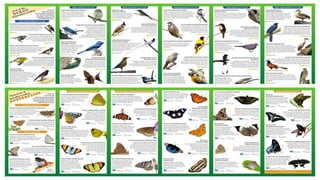
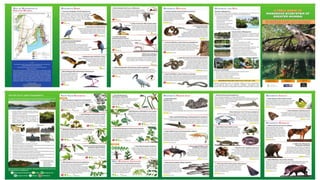
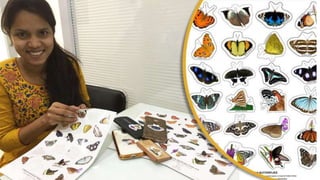
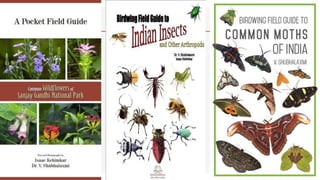

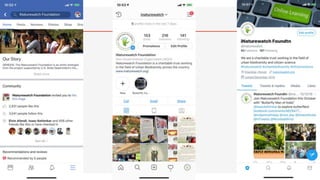


Communicating for Wildlife
Communication Skills as a Wildlife Conservation Tool
Dr. V. Shubhalaxmi
Founder & Managing Trustee
iNaturewatch Foundation
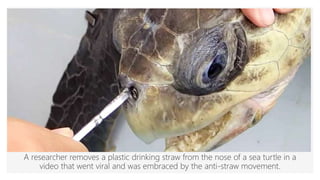
A researcher removes a plastic drinking straw from the nose of a sea turtle in a
video that went viral and was embraced by the anti-straw movement.
Do you remember a wildlife story?
Why Communicate?
Education
• To create awareness among general public.
• To convert scientific data into simple terms
• To develop pressure groups
• To help decision makers take informed
decisions
Research
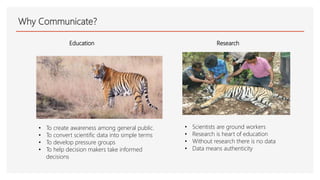
• Scientists are ground workers
• Research is heart of education
• Without research there is no data
• Data means authenticity
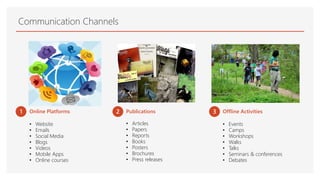
Communication Channels
1 Online Platforms
• Website
• Emails
• Social Media
• Blogs
• Videos
• Mobile Apps
• Online courses
2 Publications
• Articles
• Papers
• Reports
• Books
• Posters
• Brochures
• Press releases
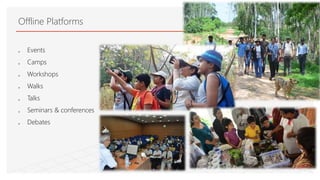
3 Offline Activities
• Events
• Camps
• Workshops
• Walks
• Talks
• Seminars & conferences
• Debates
How to Communicate?
Six important ways of communication
1
2
4
Keep it simple
Develop analogies
Use visual aids
Make it interactive
Show and tell
Be trendy and innovative
3
6
5
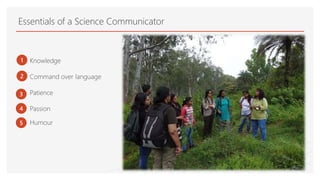
Essentials of a Science Communicator
1 Knowledge
Command over language
Patience
Passion
Humour
2
3
4
5
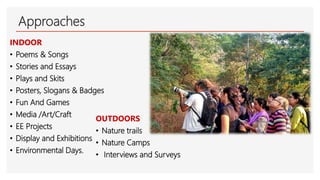
Approaches
INDOOR
• Poems & Songs
• Stories and Essays
• Plays and Skits
• Posters, Slogans & Badges
• Fun And Games
• Media /Art/Craft
• EE Projects
• Display and Exhibitions
• Environmental Days.
OUTDOORS
• Nature trails
• Nature Camps
• Interviews and Surveys
 Website
 Emails
 Social Media
 Blogs
 Videos
 Mobile Apps
 Online courses
Online Platforms
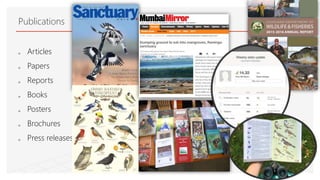
 Articles
 Papers
 Reports
 Books
 Posters
 Brochures
 Press releases
Publications
Designing of Conservation Messages
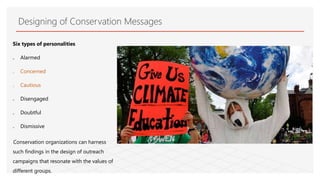
Six types of personalities
 Alarmed
 Concerned
 Cautious
 Disengaged
 Doubtful
 Dismissive
Conservation organizations can harness
such findings in the design of outreach
campaigns that resonate with the values of
different groups.
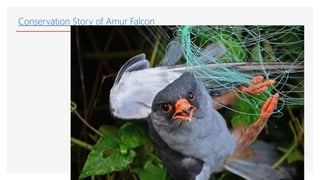
Conservation Story of Amur Falcon
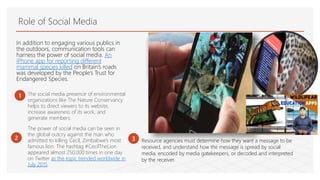
Role of Social Media
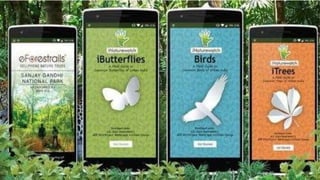
In addition to engaging various publics in
the outdoors, communication tools can
harness the power of social media. An
iPhone app for reporting different
mammal species killed on Britain’s roads
was developed by the People’s Trust for
Endangered Species.
1 The social media presence of environmental
organizations like The Nature Conservancy
helps to direct viewers to its website,
increase awareness of its work, and
generate members.
3
The power of social media can be seen in
the global outcry against the man who
admitted to killing Cecil, Zimbabwe’s most
famous lion. The hashtag #CecilTheLion
appeared almost 250,000 times in one day
on Twitter as the topic trended worldwide in
July 2015.
Resource agencies must determine how they want a message to be
received, and understand how the message is spread by social
media, encoded by media gatekeepers, or decoded and interpreted
by the receiver.
2
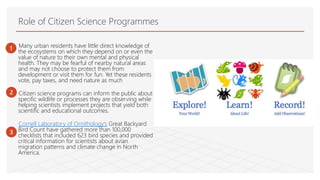
Role of Citizen Science Programmes
Many urban residents have little direct knowledge of
the ecosystems on which they depend on or even the
value of nature to their own mental and physical
health. They may be fearful of nearby natural areas
and may not choose to protect them from
development or visit them for fun. Yet these residents
vote, pay taxes, and need nature as much
Citizen science programs can inform the public about
specific wildlife or processes they are observing while
helping scientists implement projects that yield both
scientific and educational outcomes.
Cornell Laboratory of Ornithology’s Great Backyard
Bird Count have gathered more than 100,000
checklists that included 623 bird species and provided
critical information for scientists about avian
migration patterns and climate change in North
America.
1
2
3
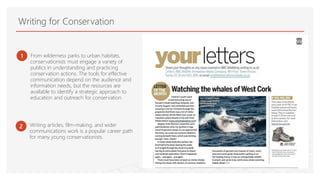
Writing for Conservation
1 From wilderness parks to urban habitats,
conservationists must engage a variety of
publics in understanding and practicing
conservation actions. The tools for effective
communication depend on the audience and
information needs, but the resources are
available to identify a strategic approach to
education and outreach for conservation.
2 Writing articles, film-making, and wider
communications work is a popular career path
for many young conservationists.
 Events
 Camps
 Workshops
 Walks
 Talks
 Seminars & conferences
 Debates
Offline Platforms
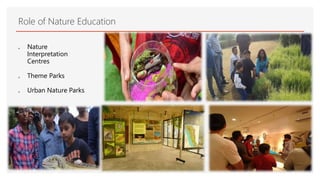
 Nature
Interpretation
Centres
 Theme Parks
 Urban Nature Parks
Role of Nature Education
Environmental educators give talks to schools and other groups about
nature and environmental issues. They lead outdoor walks and answer
questions.
They teach through "immersion" during outdoor field trips.
Environmental educators plan such events, activities, and programs to
educate the next generation about environmental issues and how they
can help.
Program planning involves developing the curricula, schedule, and
other logistics. It also involves promoting and publicizing programs.
For example, environmental educators may create Web pages,
newsletters, and fliers promoting programs and resources.
They may also need to participate in fundraising activities and
budgeting.
Some need to collect and analyze data to assess program success.
Some environmental educators supervise volunteers.
What nature educators do?
Contact
Dr. V. Shubhalaxmi
iNaturewatch Foundation
www.inaturewatch.org
info@inaturewatch.org
9987013144
Thank you

Communication for Wildlife Conservation

  • 1.
    Communicating for Wildlife CommunicationSkills as a Wildlife Conservation Tool Dr. V. Shubhalaxmi Founder & Managing Trustee iNaturewatch Foundation
  • 2.
    A researcher removesa plastic drinking straw from the nose of a sea turtle in a video that went viral and was embraced by the anti-straw movement.
  • 3.
    Do you remembera wildlife story?
  • 4.
    Why Communicate? Education • Tocreate awareness among general public. • To convert scientific data into simple terms • To develop pressure groups • To help decision makers take informed decisions Research • Scientists are ground workers • Research is heart of education • Without research there is no data • Data means authenticity
  • 5.
    Communication Channels 1 OnlinePlatforms • Website • Emails • Social Media • Blogs • Videos • Mobile Apps • Online courses 2 Publications • Articles • Papers • Reports • Books • Posters • Brochures • Press releases 3 Offline Activities • Events • Camps • Workshops • Walks • Talks • Seminars & conferences • Debates
  • 6.
    How to Communicate? Siximportant ways of communication 1 2 4 Keep it simple Develop analogies Use visual aids Make it interactive Show and tell Be trendy and innovative 3 6 5
  • 7.
    Essentials of aScience Communicator 1 Knowledge Command over language Patience Passion Humour 2 3 4 5
  • 8.
    Approaches INDOOR • Poems &Songs • Stories and Essays • Plays and Skits • Posters, Slogans & Badges • Fun And Games • Media /Art/Craft • EE Projects • Display and Exhibitions • Environmental Days. OUTDOORS • Nature trails • Nature Camps • Interviews and Surveys
  • 9.
     Website  Emails Social Media  Blogs  Videos  Mobile Apps  Online courses Online Platforms
  • 10.
     Articles  Papers Reports  Books  Posters  Brochures  Press releases Publications
  • 15.
    Designing of ConservationMessages Six types of personalities  Alarmed  Concerned  Cautious  Disengaged  Doubtful  Dismissive Conservation organizations can harness such findings in the design of outreach campaigns that resonate with the values of different groups.
  • 18.
  • 19.
    Role of SocialMedia In addition to engaging various publics in the outdoors, communication tools can harness the power of social media. An iPhone app for reporting different mammal species killed on Britain’s roads was developed by the People’s Trust for Endangered Species. 1 The social media presence of environmental organizations like The Nature Conservancy helps to direct viewers to its website, increase awareness of its work, and generate members. 3 The power of social media can be seen in the global outcry against the man who admitted to killing Cecil, Zimbabwe’s most famous lion. The hashtag #CecilTheLion appeared almost 250,000 times in one day on Twitter as the topic trended worldwide in July 2015. Resource agencies must determine how they want a message to be received, and understand how the message is spread by social media, encoded by media gatekeepers, or decoded and interpreted by the receiver. 2
  • 22.
    Role of CitizenScience Programmes Many urban residents have little direct knowledge of the ecosystems on which they depend on or even the value of nature to their own mental and physical health. They may be fearful of nearby natural areas and may not choose to protect them from development or visit them for fun. Yet these residents vote, pay taxes, and need nature as much Citizen science programs can inform the public about specific wildlife or processes they are observing while helping scientists implement projects that yield both scientific and educational outcomes. Cornell Laboratory of Ornithology’s Great Backyard Bird Count have gathered more than 100,000 checklists that included 623 bird species and provided critical information for scientists about avian migration patterns and climate change in North America. 1 2 3
  • 24.
    Writing for Conservation 1From wilderness parks to urban habitats, conservationists must engage a variety of publics in understanding and practicing conservation actions. The tools for effective communication depend on the audience and information needs, but the resources are available to identify a strategic approach to education and outreach for conservation. 2 Writing articles, film-making, and wider communications work is a popular career path for many young conservationists.
  • 25.
     Events  Camps Workshops  Walks  Talks  Seminars & conferences  Debates Offline Platforms
  • 26.
     Nature Interpretation Centres  ThemeParks  Urban Nature Parks Role of Nature Education
  • 27.
    Environmental educators givetalks to schools and other groups about nature and environmental issues. They lead outdoor walks and answer questions. They teach through "immersion" during outdoor field trips. Environmental educators plan such events, activities, and programs to educate the next generation about environmental issues and how they can help. Program planning involves developing the curricula, schedule, and other logistics. It also involves promoting and publicizing programs. For example, environmental educators may create Web pages, newsletters, and fliers promoting programs and resources. They may also need to participate in fundraising activities and budgeting. Some need to collect and analyze data to assess program success. Some environmental educators supervise volunteers. What nature educators do?
  • 48.
    Contact Dr. V. Shubhalaxmi iNaturewatchFoundation www.inaturewatch.org info@inaturewatch.org 9987013144 Thank you