

Research Hacks
23 ways to communicate and showcase your skills
@andy_tattersall
a.tattersall@sheffield.ac.uk
Academia is changing forever
MOOCs
Open Access
Impact Agenda/REF
Big Data
Altmetrics
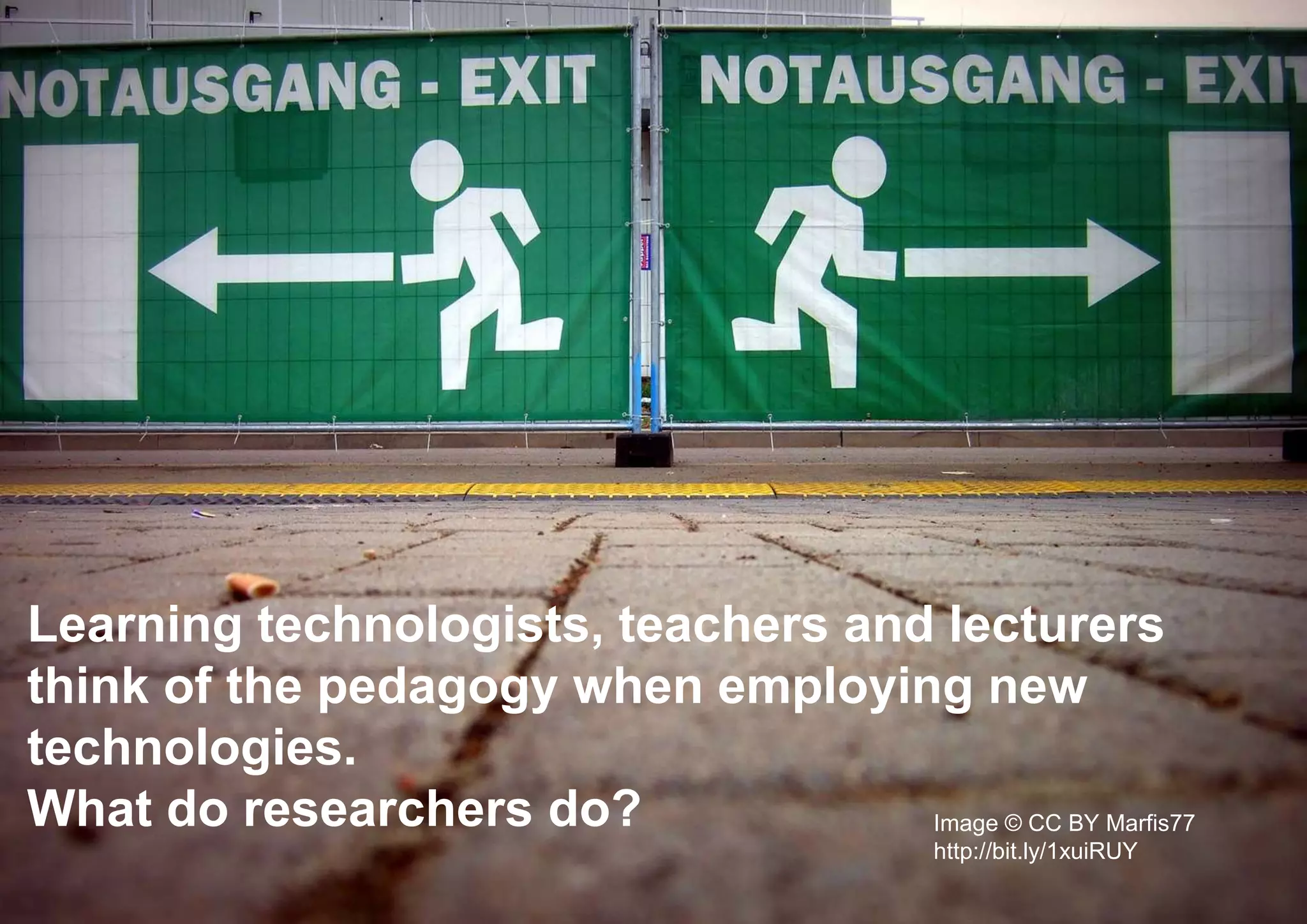
Image © CC BY Marfis77
http://bit.ly/1xuiRUY
Learning technologists, teachers and lecturers
think of the pedagogy when employing new
technologies.
What do researchers do?
What I’ll discuss
23 Ideas and tools to try out and…
Produce
Communicate
Go Mobile
Measure
Stay on Track
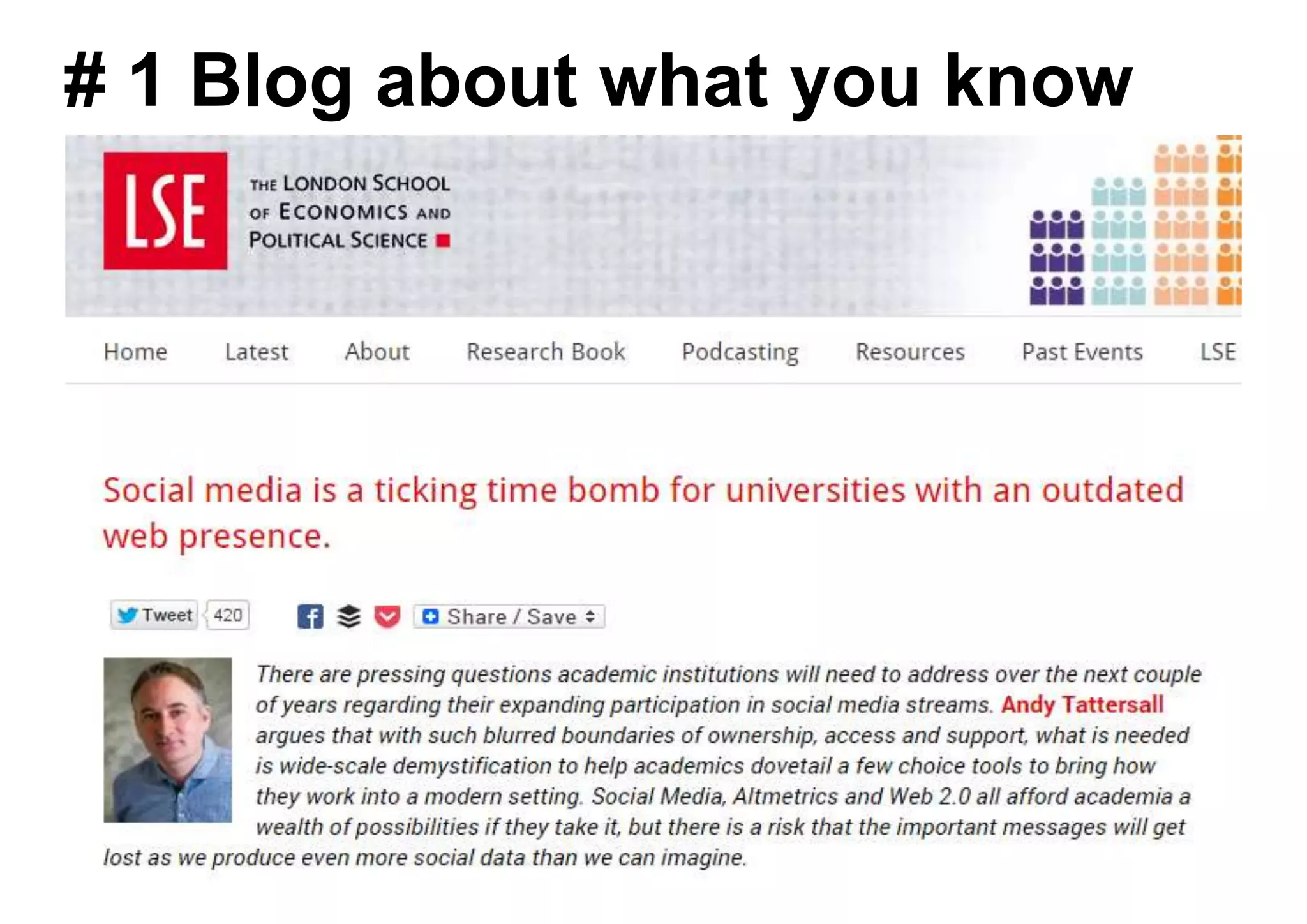
# 1 Blog about what you know
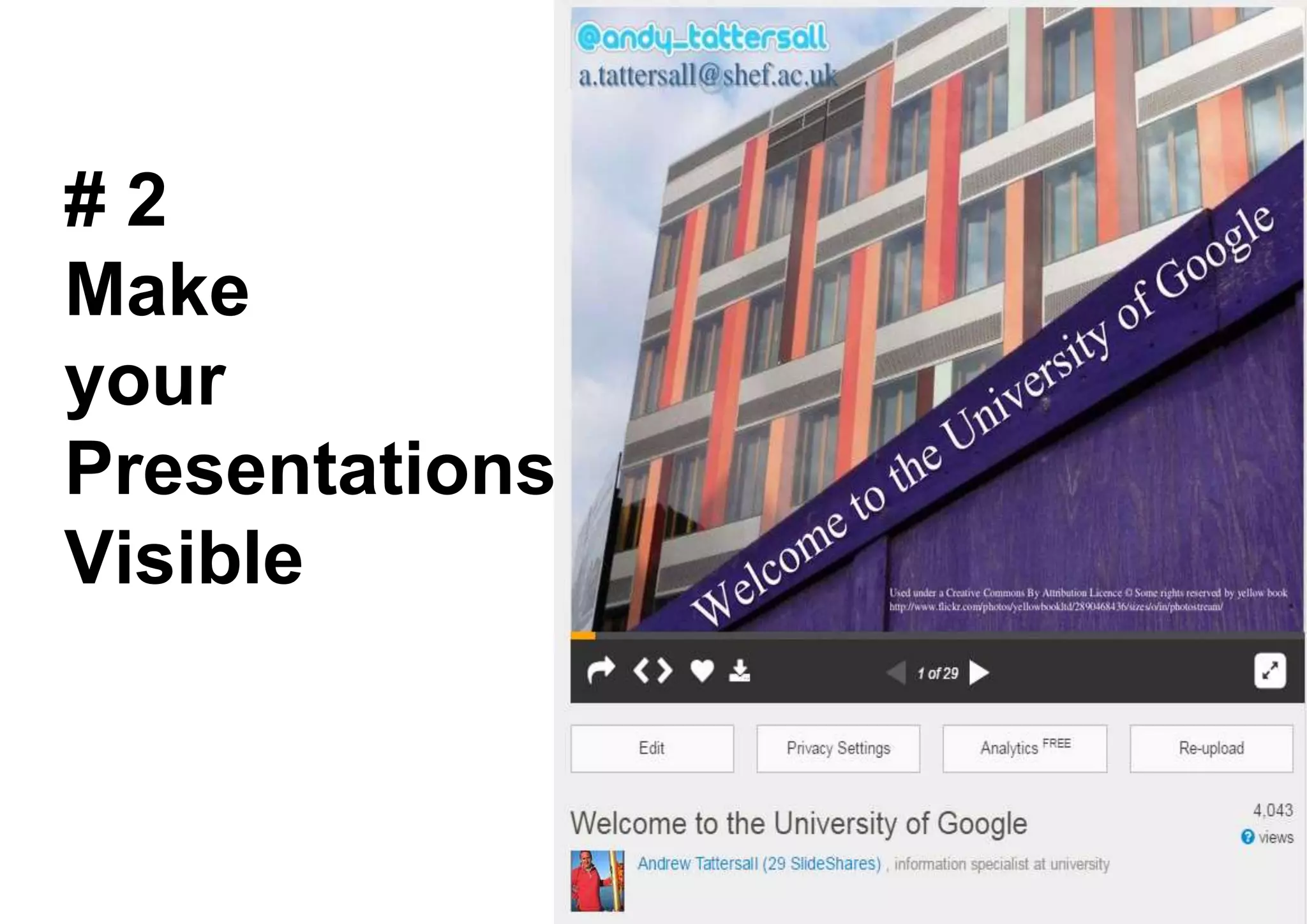
# 2
Make
your
Presentations
Visible
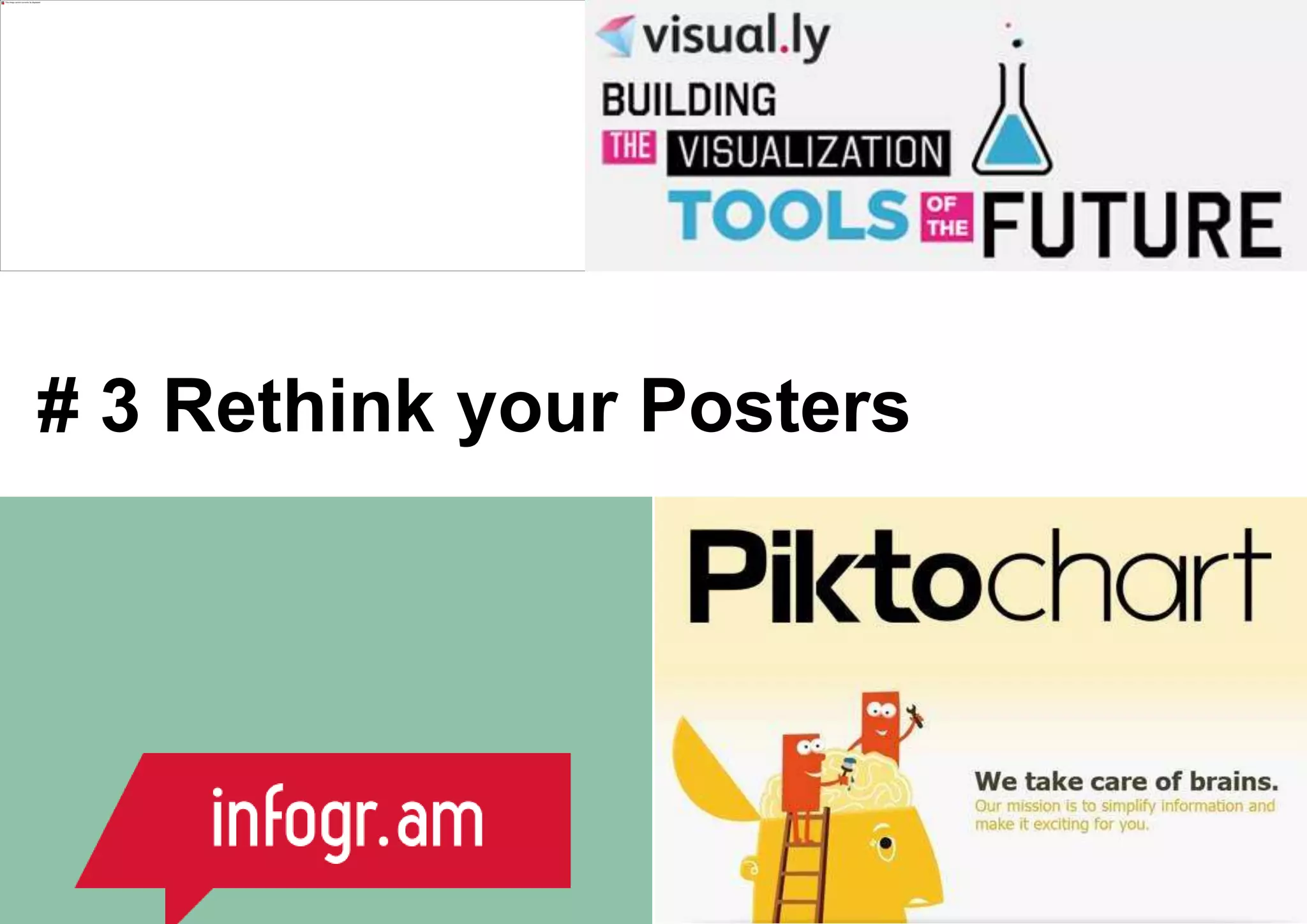
# 3 Rethink your Posters
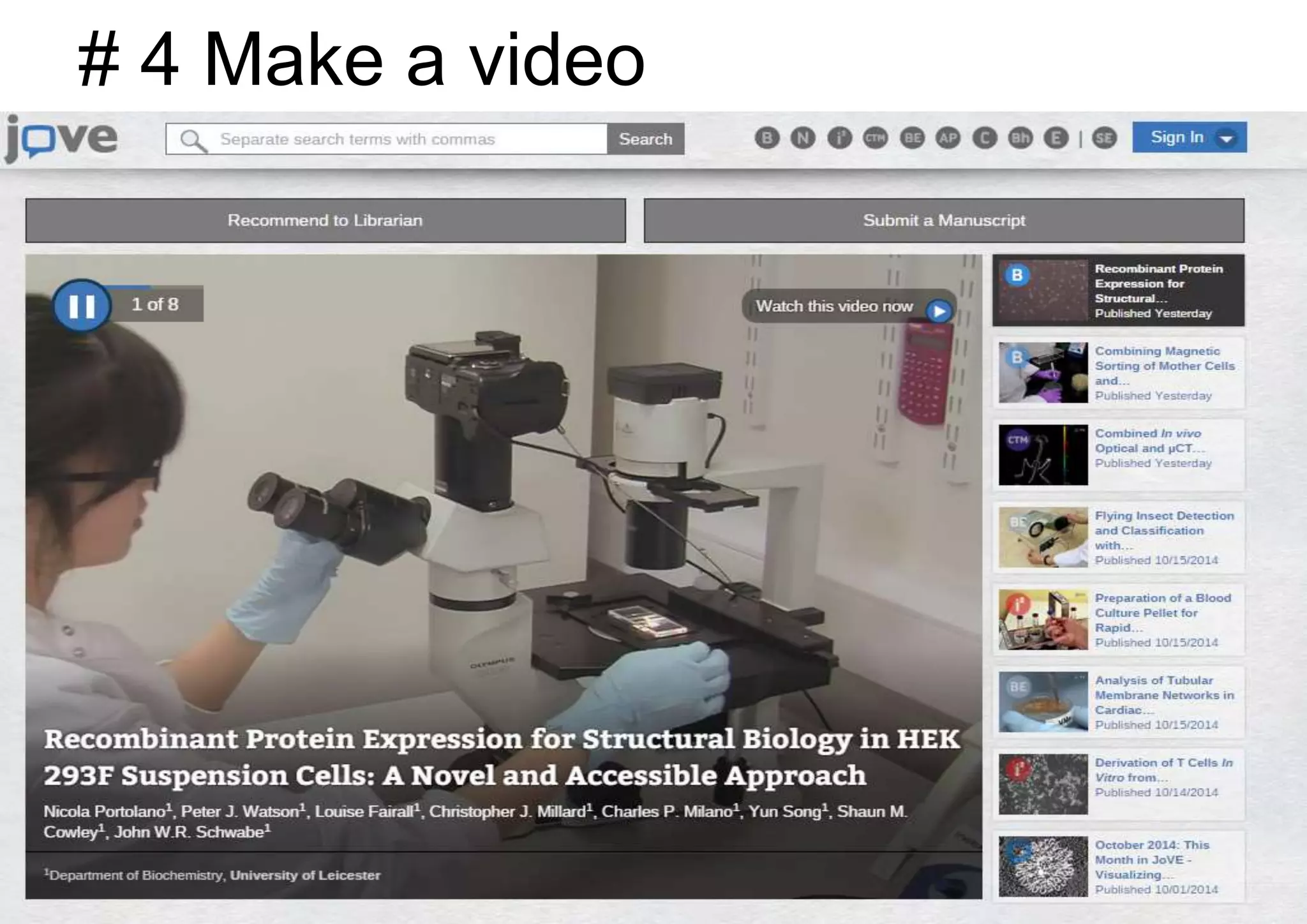
# 4 Make a video
#5 Make an animation
# 6 Write a Lay Research Summary
Image CC BY-NC-ND 2.0 http://bit.ly/19GL3MF Louveciennes
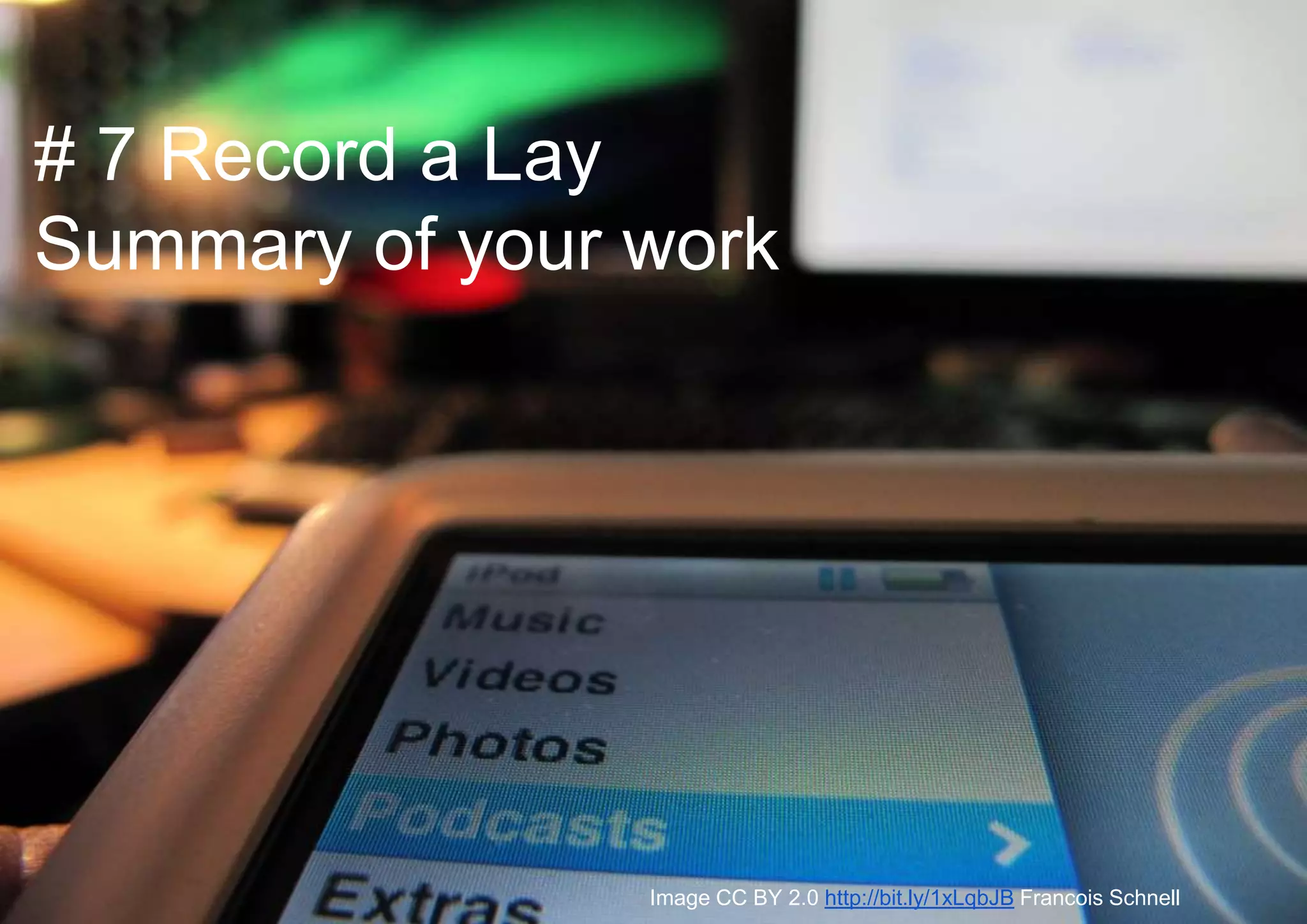
# 7 Record a Lay
Summary of your work
Image CC BY 2.0 http://bit.ly/1xLqbJB Francois Schnell
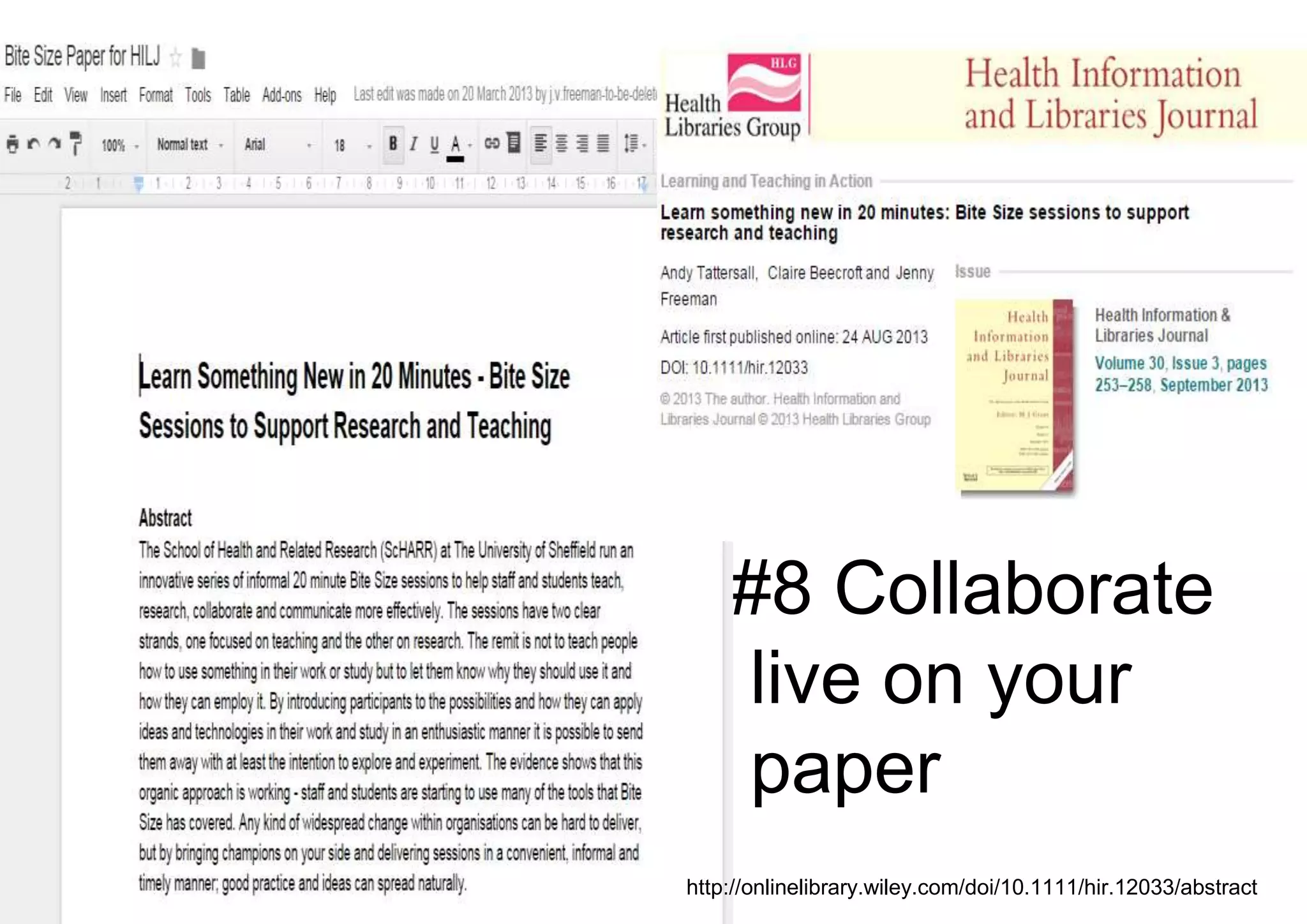
#8 Collaborate
live on your
paper
http://onlinelibrary.wiley.com/doi/10.1111/hir.12033/abstract
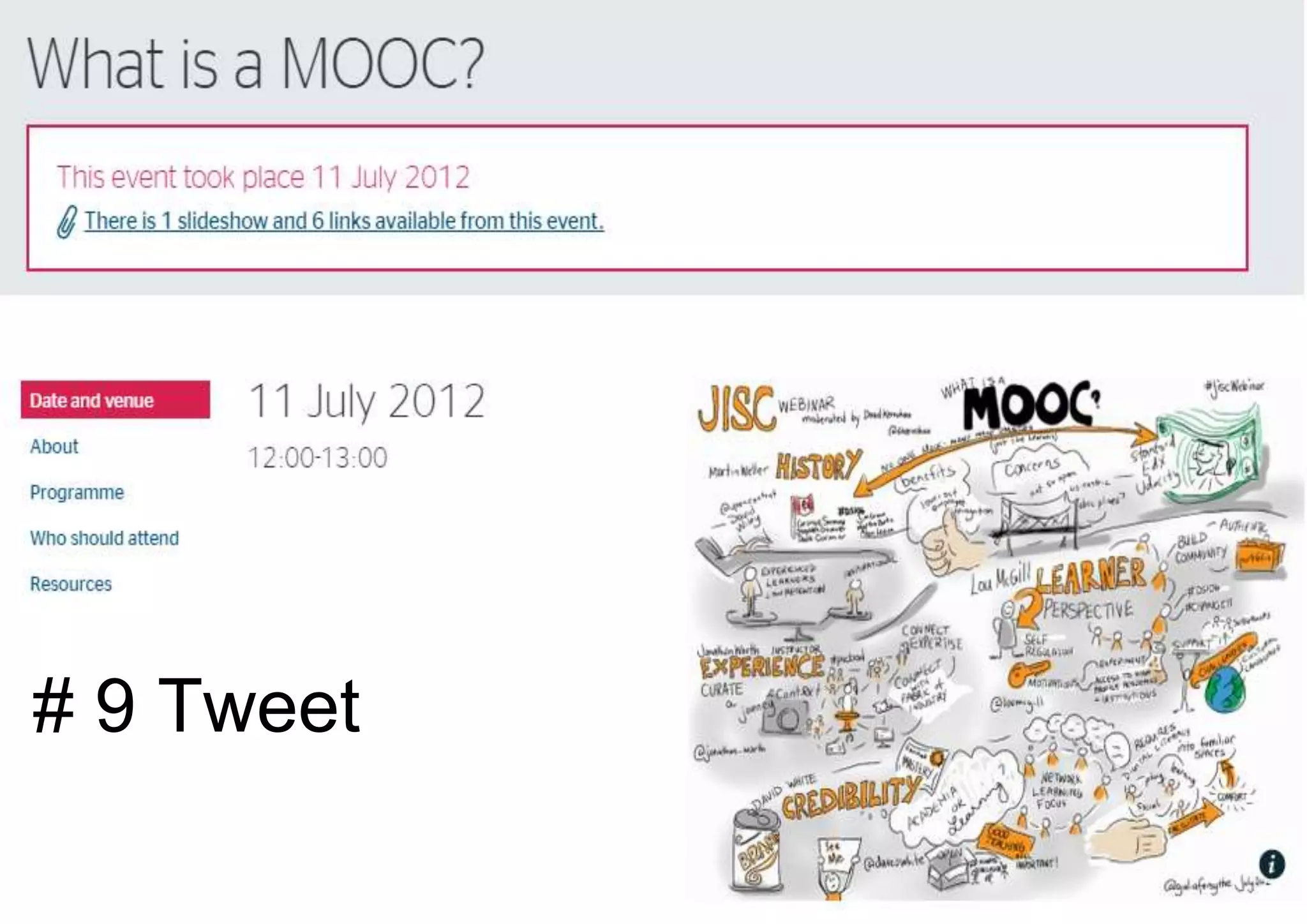
# 9 Tweet
https://twitter.com/bengoldacre/status/361939461241708544 [Last Accessed 20/3/2015]
Prescribing a Digital Technology
● You need to understand why you are taking it
● You need to understand the benefits
● You need to understand the side-effects
● You need to understand that the benefits may
take time
● You may need two courses
● You may need a different intervention
● Do not feel pressured to use it - as it won’t work
20
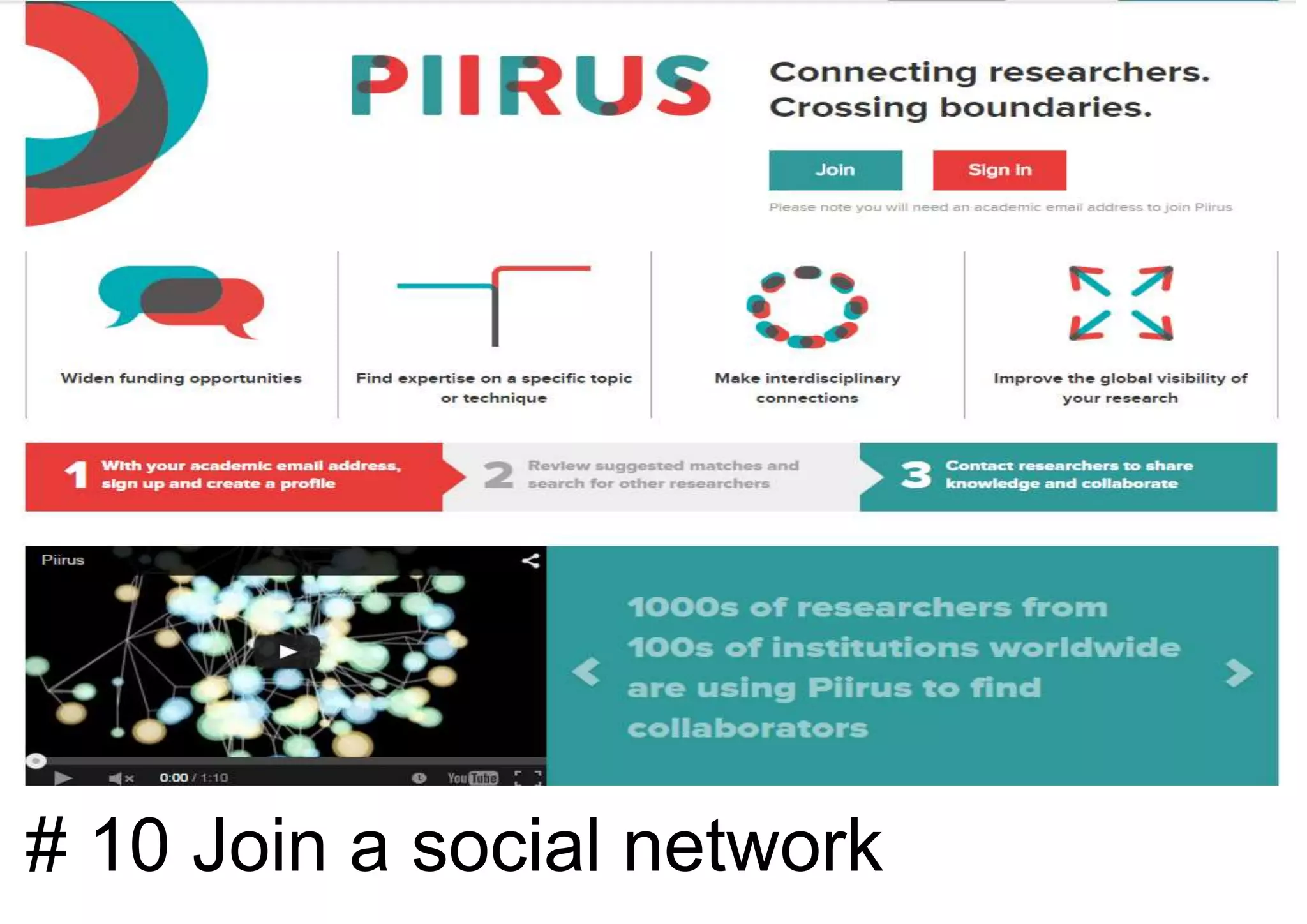
# 10 Join a social network
Social Networks are:
It’s not what you know, but who you know
+
It’s what they know as well
= Social Capital
21
* © The University of Sheffield
22
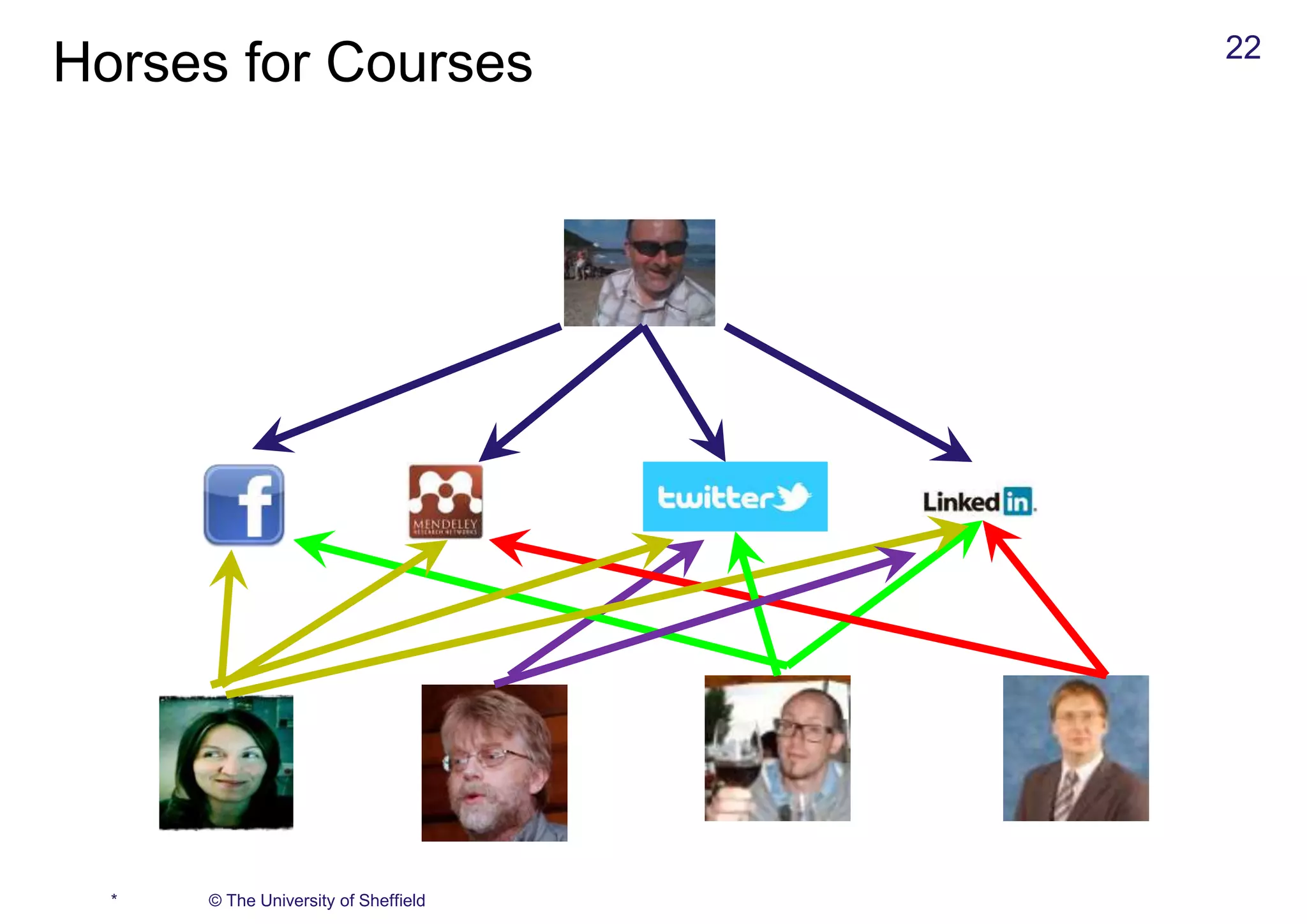
Horses for Courses
Online collaboration: Scientists and the social network
23
Van Noorden, R, (2014) Nature 512,126–129 doi:10.1038/512126a {Last Accessed 5/3/2015]
* © The University of Sheffield
24
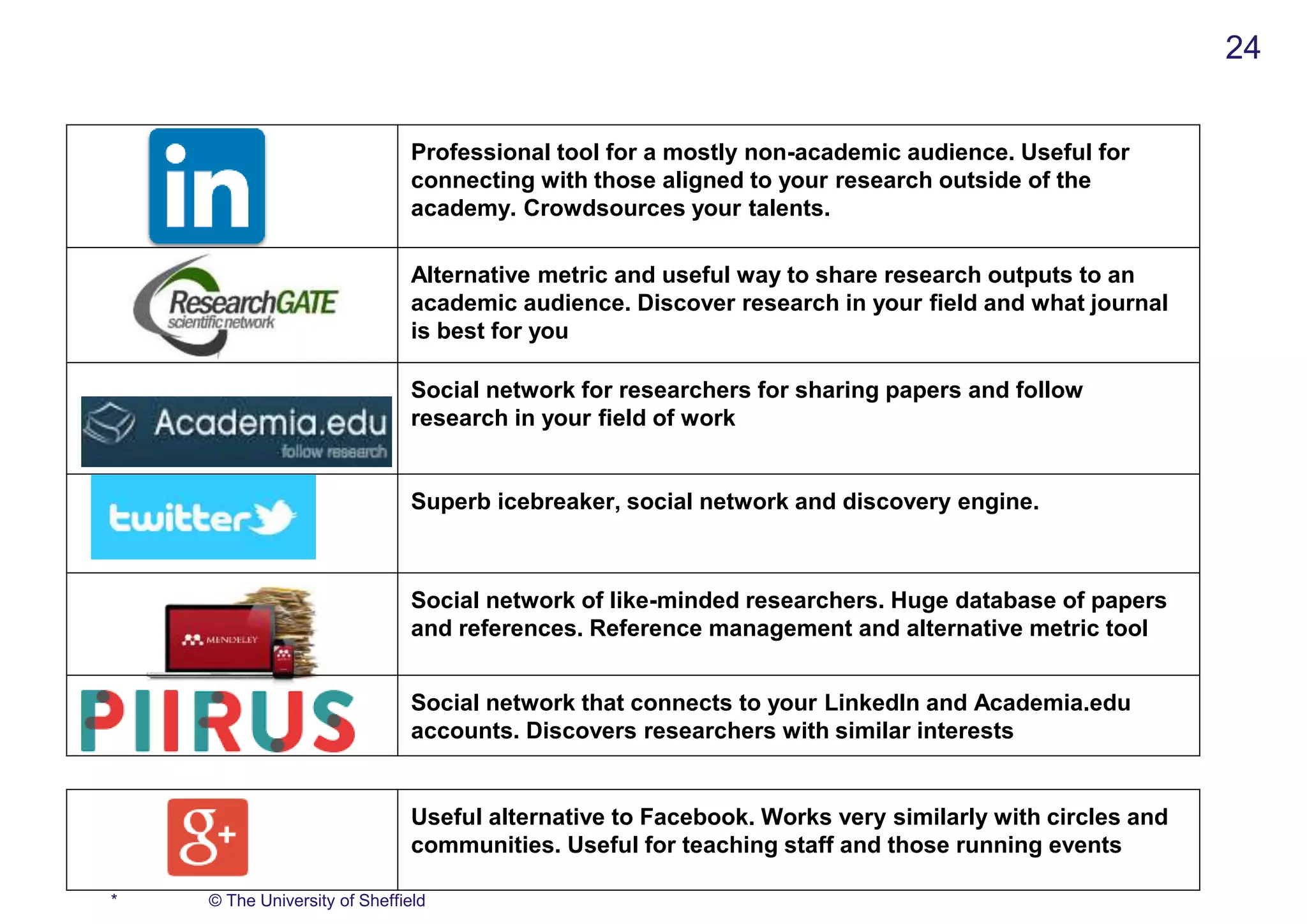
Professional tool for a mostly non-academic audience. Useful for
connecting with those aligned to your research outside of the
academy. Crowdsources your talents.
Alternative metric and useful way to share research outputs to an
academic audience. Discover research in your field and what journal
is best for you
Social network for researchers for sharing papers and follow
research in your field of work
Superb icebreaker, social network and discovery engine.
Social network of like-minded researchers. Huge database of papers
and references. Reference management and alternative metric tool
Social network that connects to your LinkedIn and Academia.edu
accounts. Discovers researchers with similar interests
Useful alternative to Facebook. Works very similarly with circles and
communities. Useful for teaching staff and those running events
Don’t be afraid…..to say no
*
25
Or at least point them to the right social network
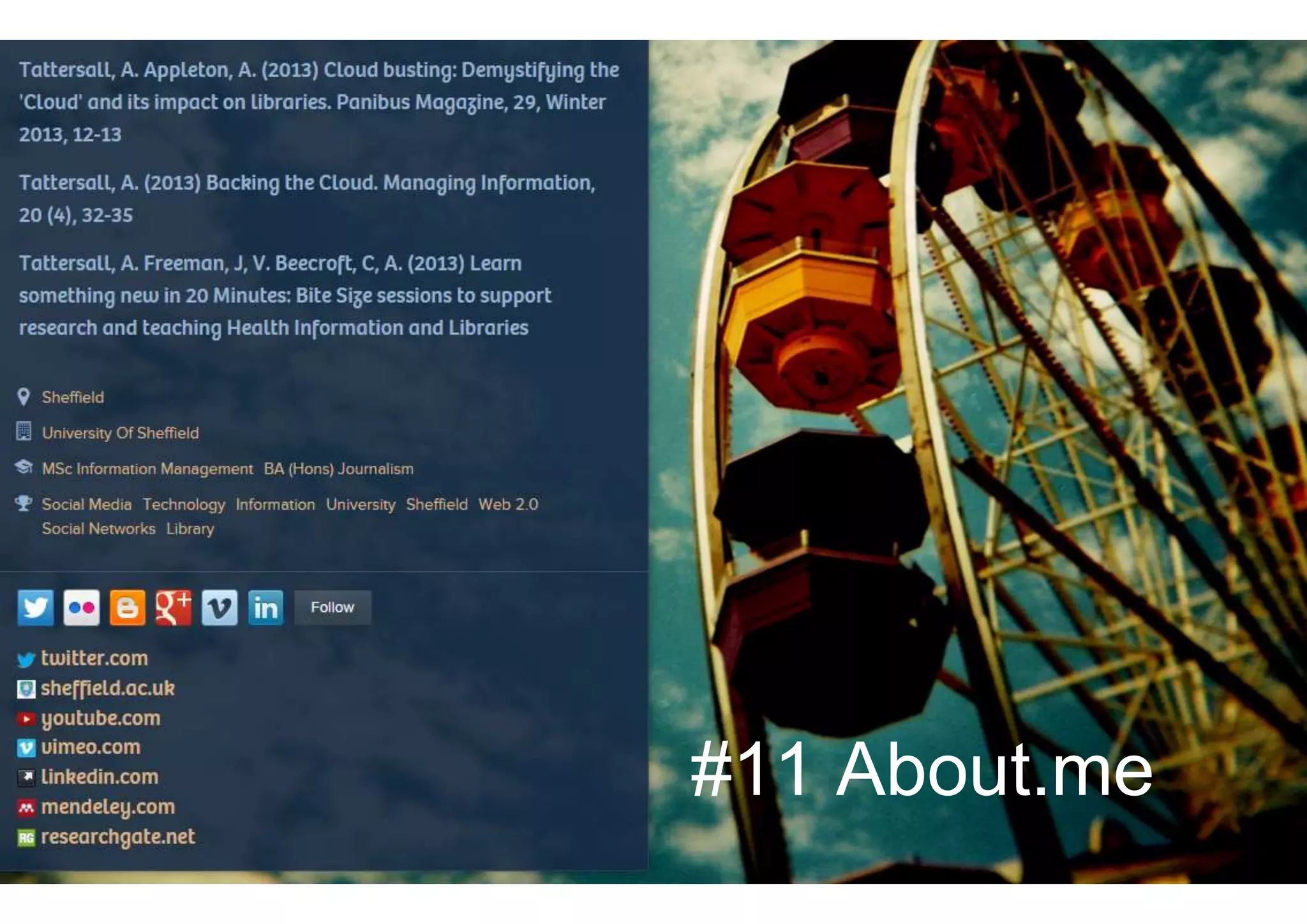
#11 About.me
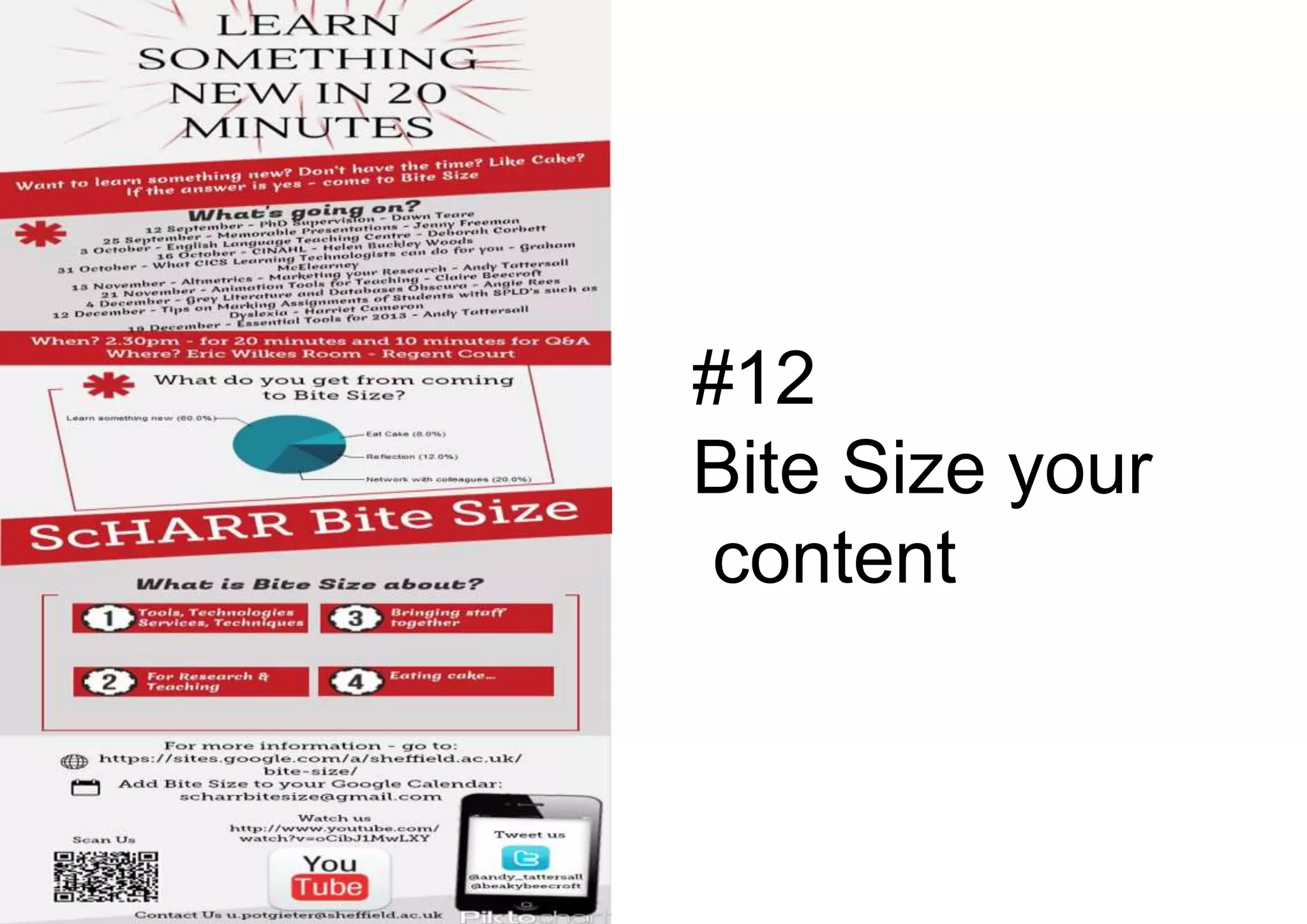
#12
Bite Size your
content
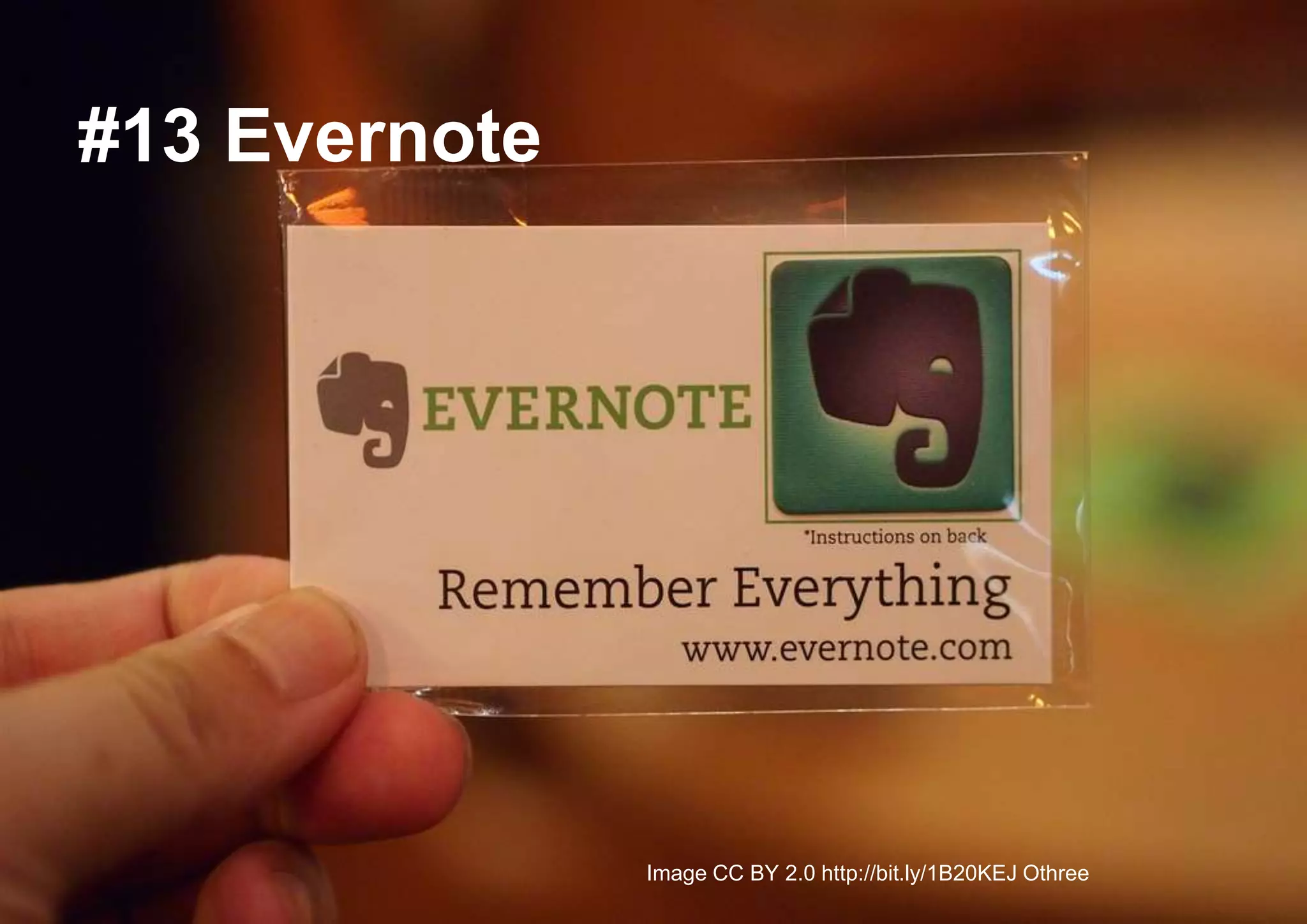
#13 Evernote
Image CC BY 2.0 http://bit.ly/1B20KEJ Othree
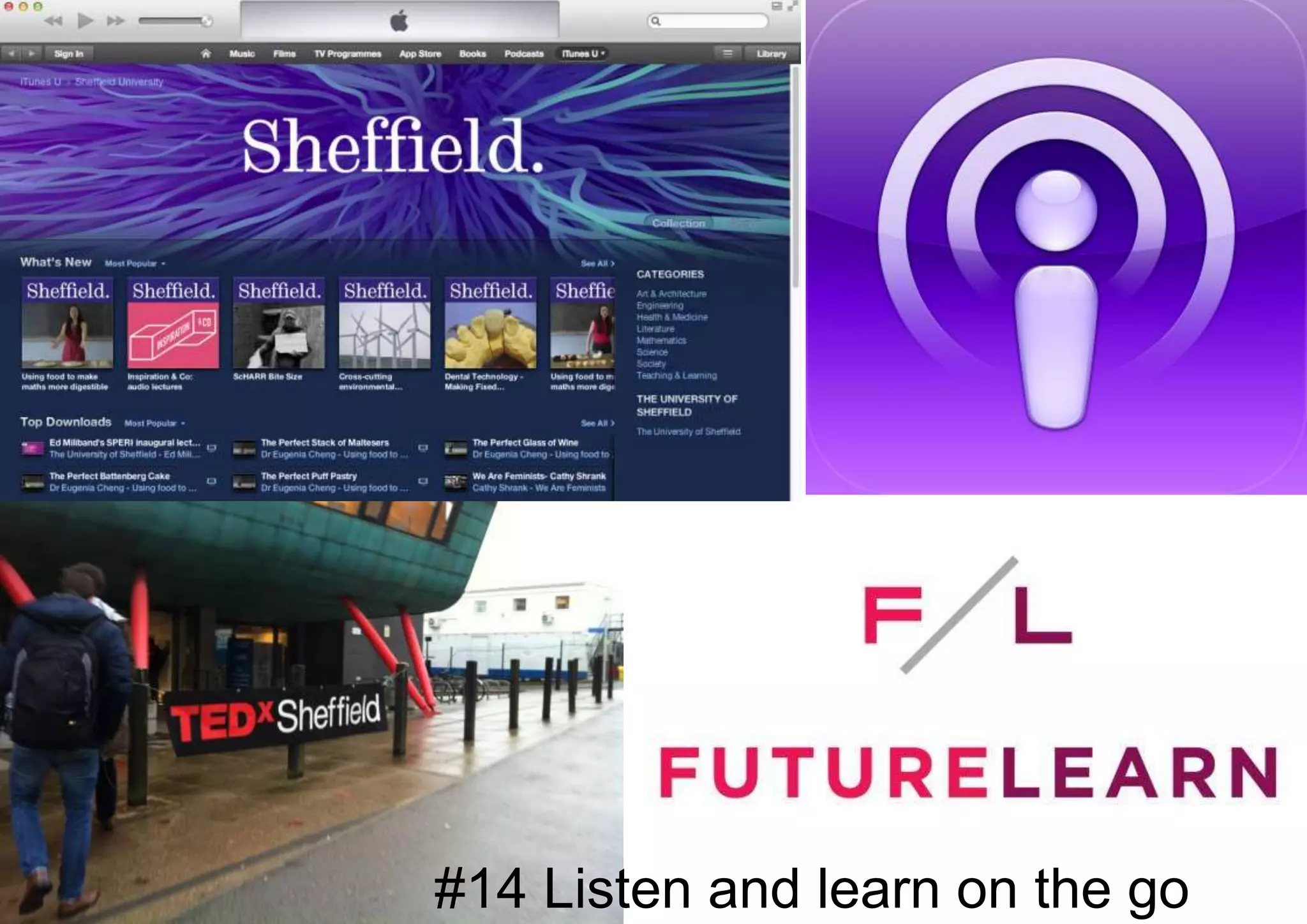
#14 Listen and learn on the go
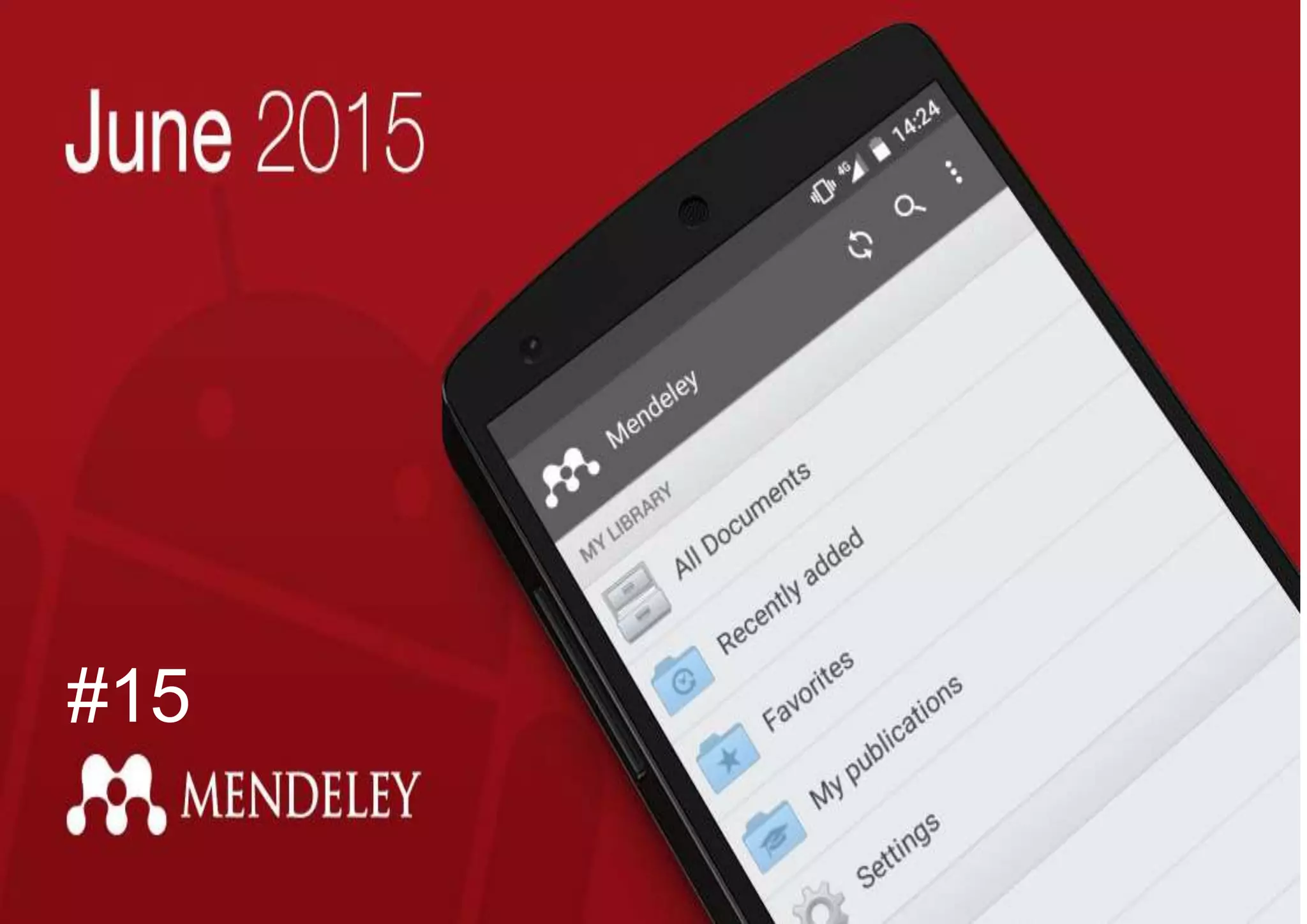
#15
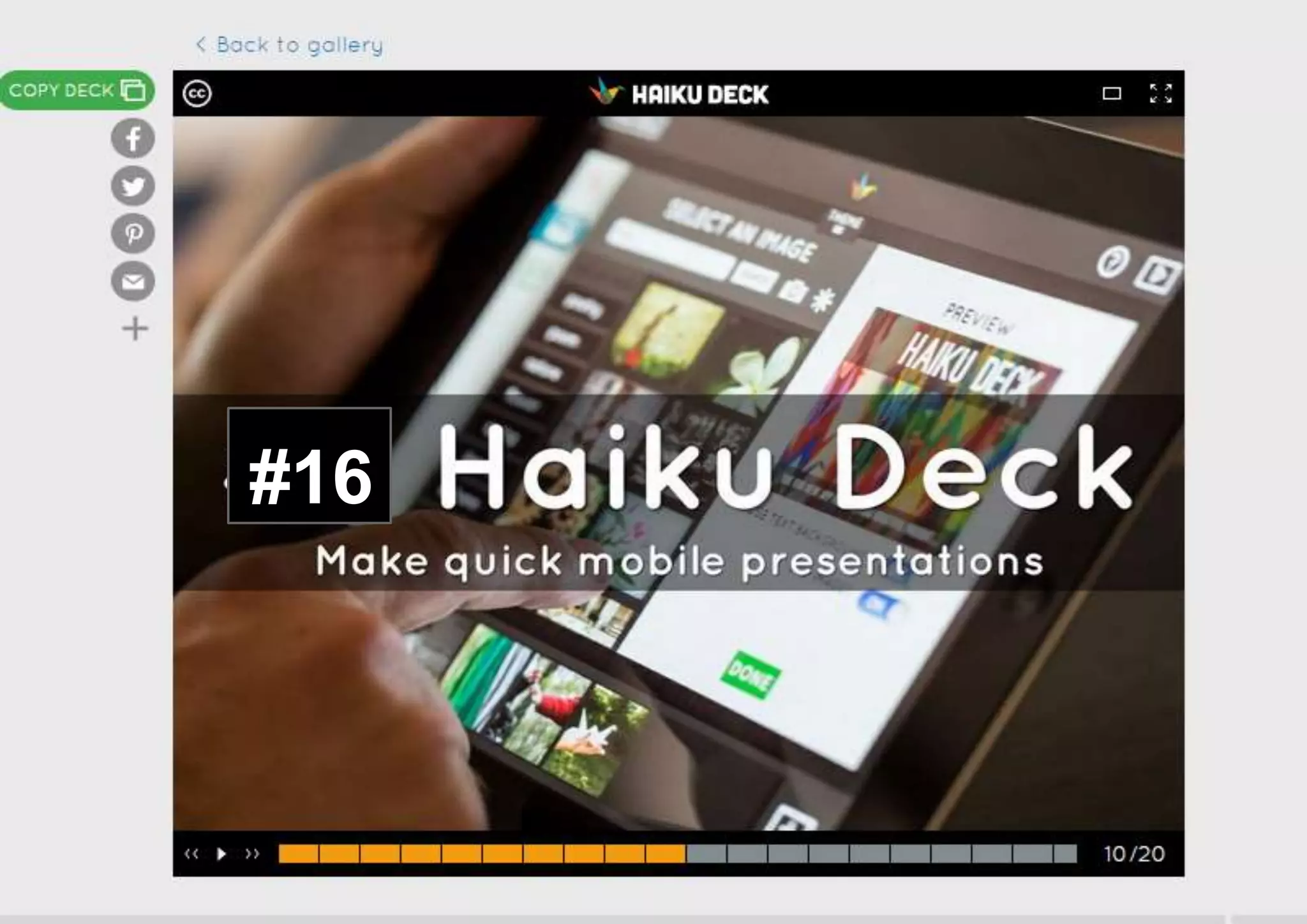
#16
#17 Almetric.com
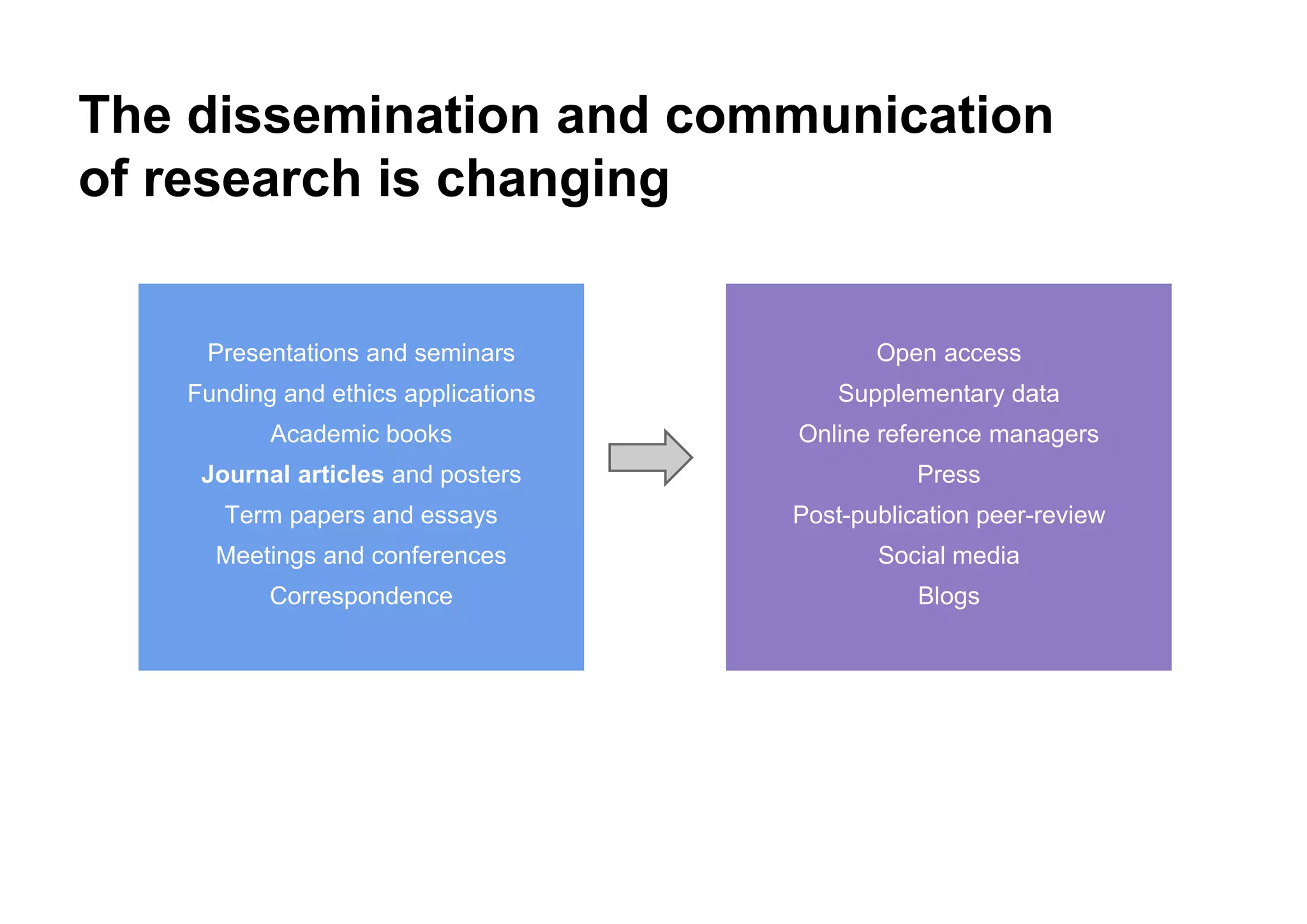
The dissemination and communication
of research is changing
Presentations and seminars
Funding and ethics applications
Academic books
Journal articles and posters
Term papers and essays
Meetings and conferences
Correspondence
Open access
Supplementary data
Online reference managers
Press
Post-publication peer-review
Social media
Blogs
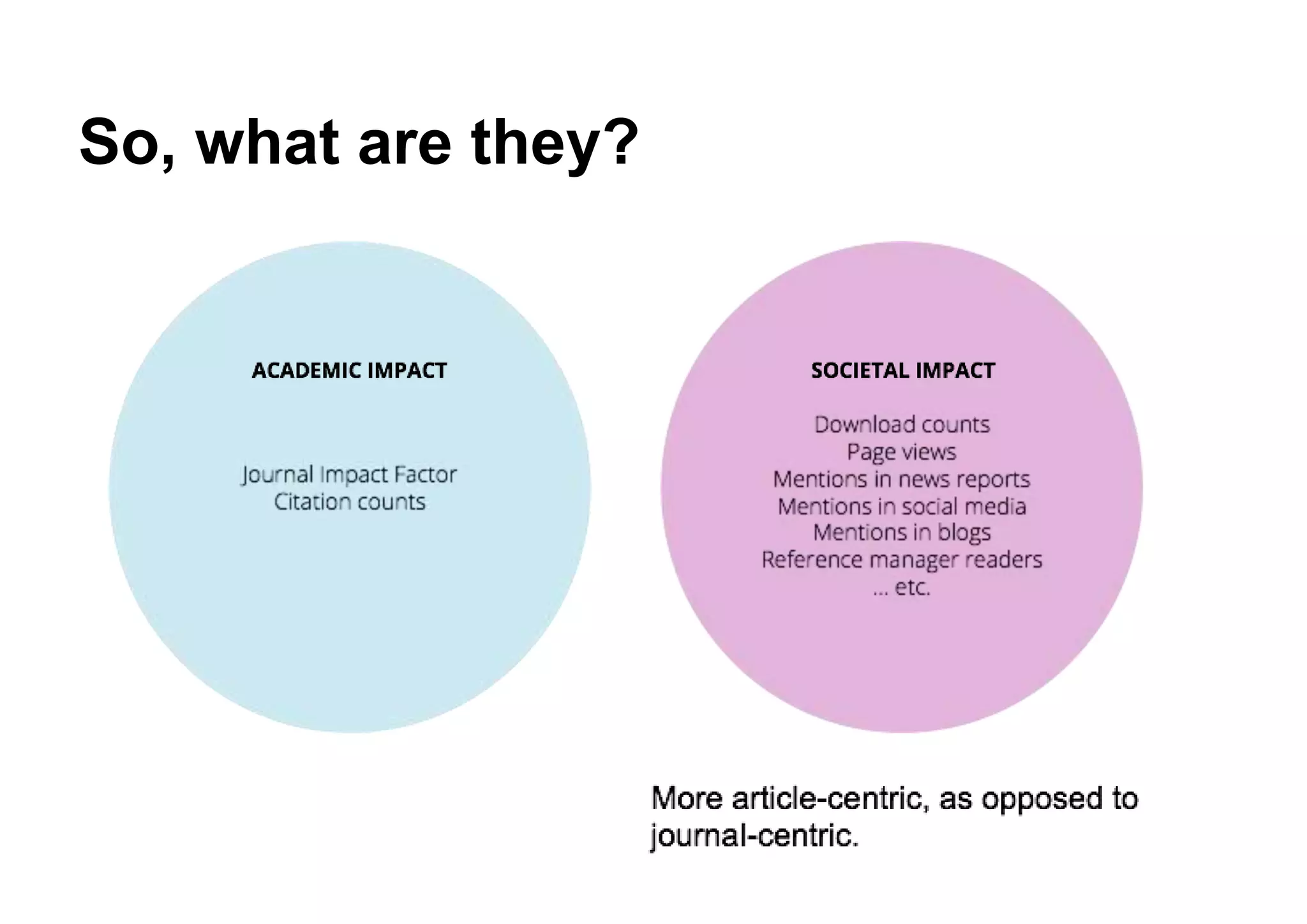
So, what are they?
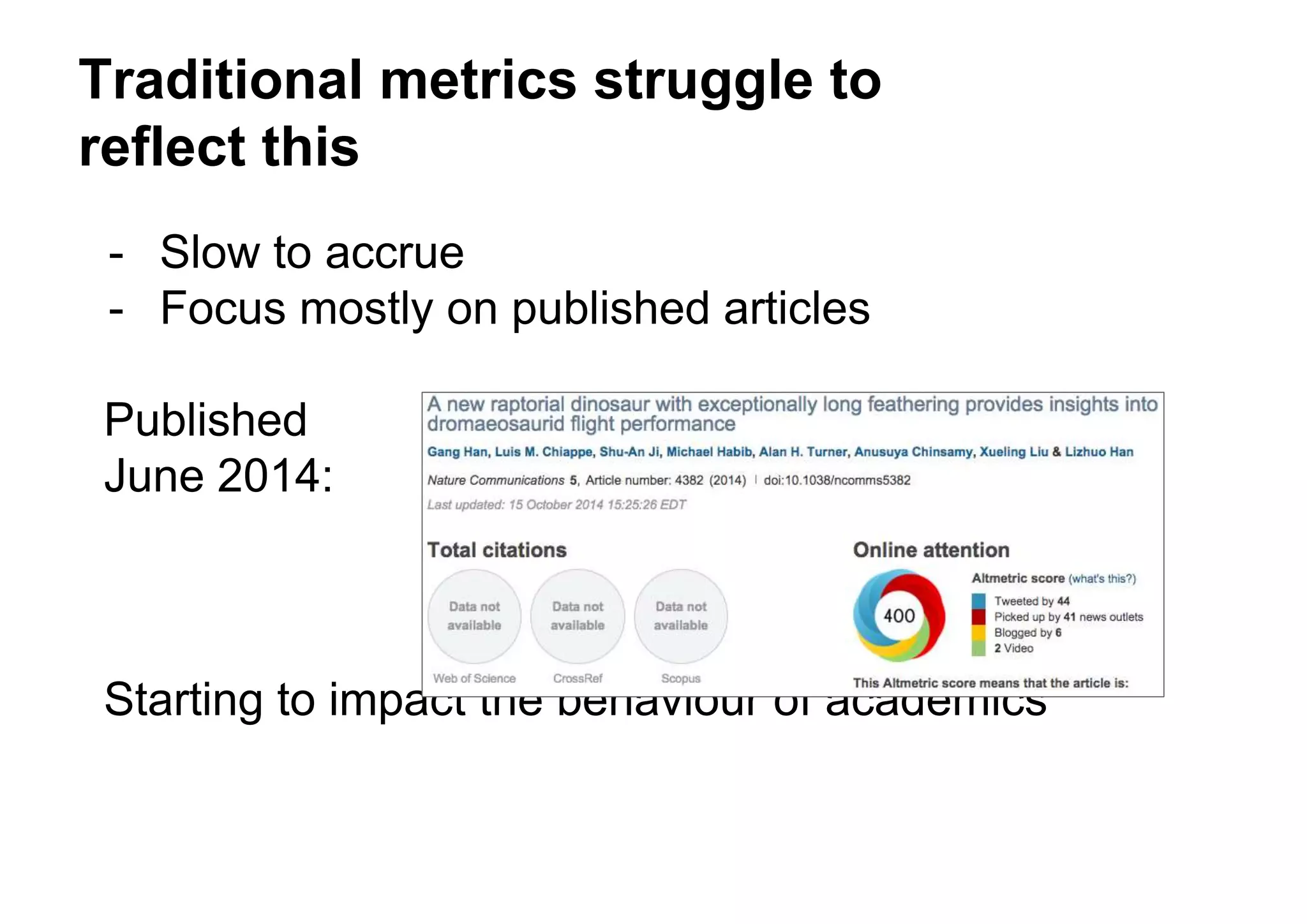
Traditional metrics struggle to
reflect this
- Slow to accrue
- Focus mostly on published articles
Published
June 2014:
Starting to impact the behaviour of academics
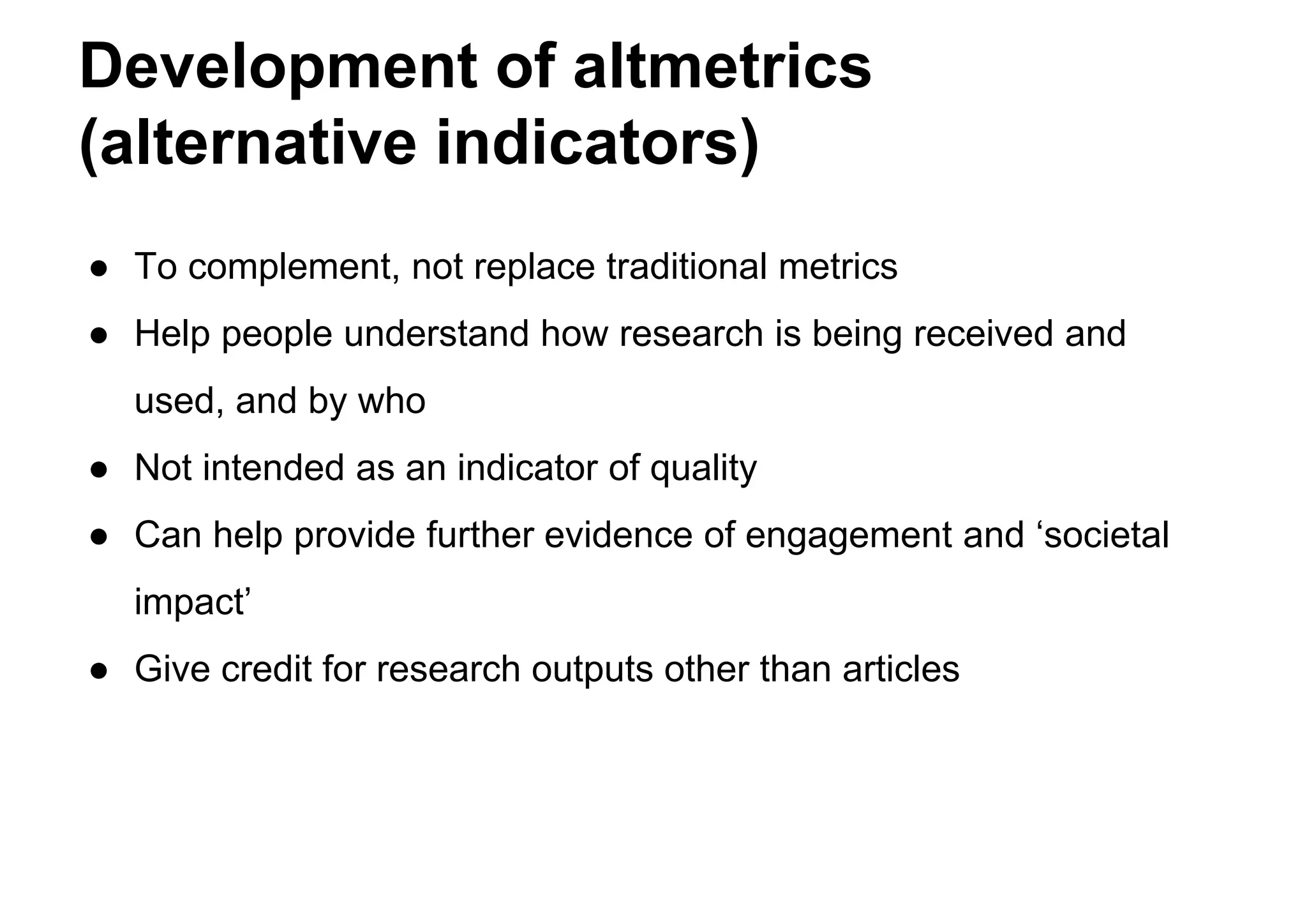
Development of altmetrics
(alternative indicators)
● To complement, not replace traditional metrics
● Help people understand how research is being received and
used, and by who
● Not intended as an indicator of quality
● Can help provide further evidence of engagement and ‘societal
impact’
● Give credit for research outputs other than articles
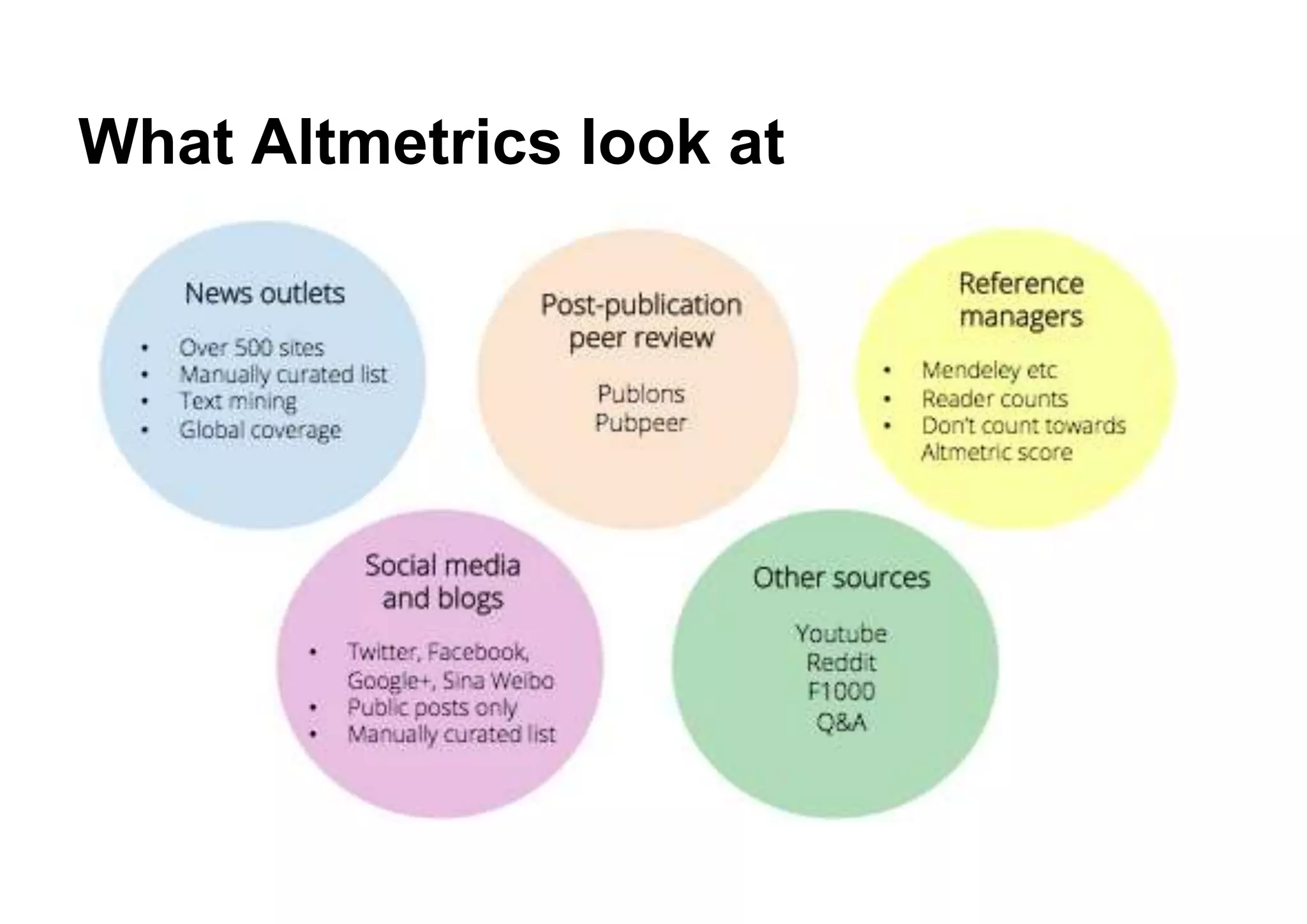
What Altmetrics look at
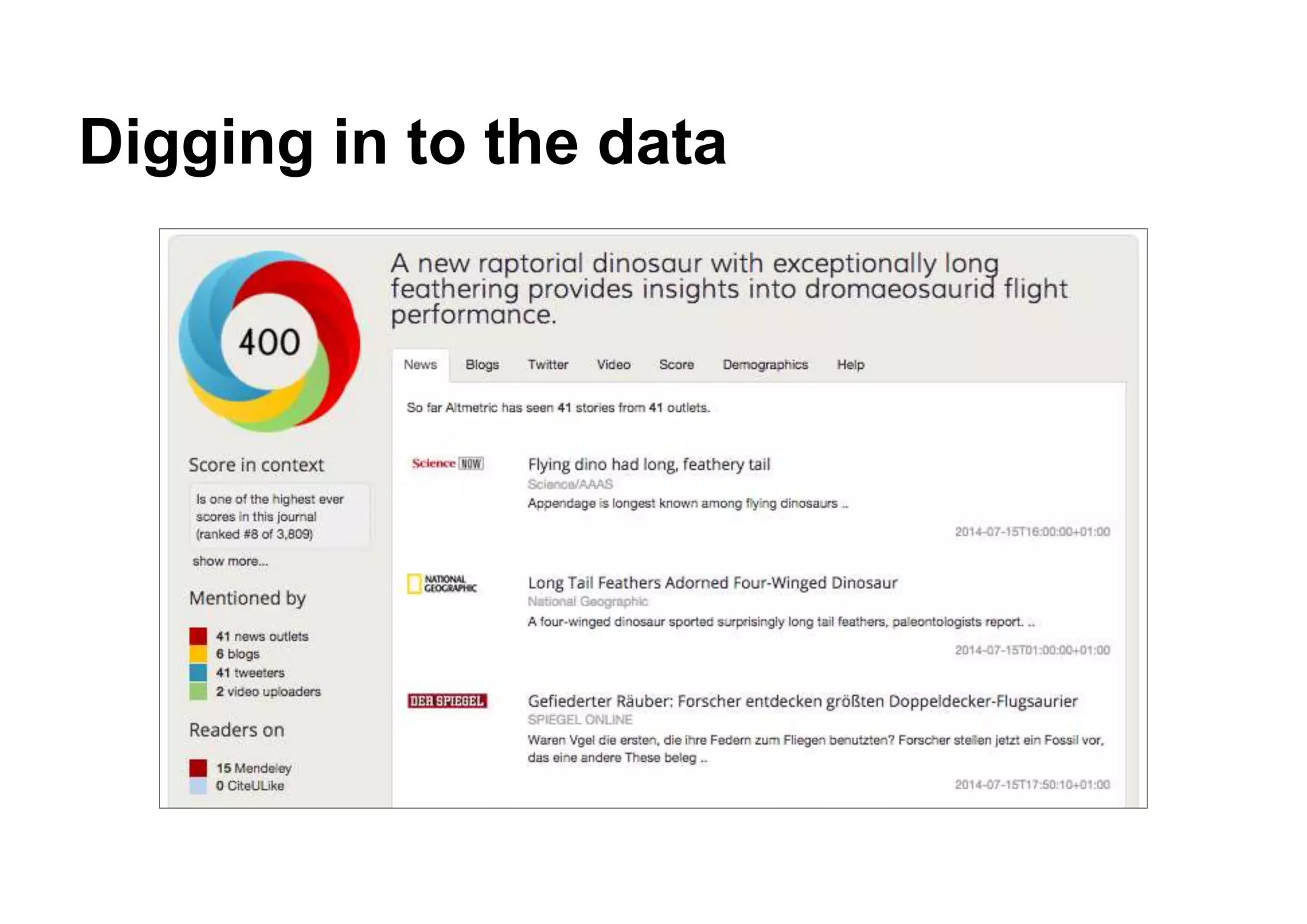
Digging in to the data
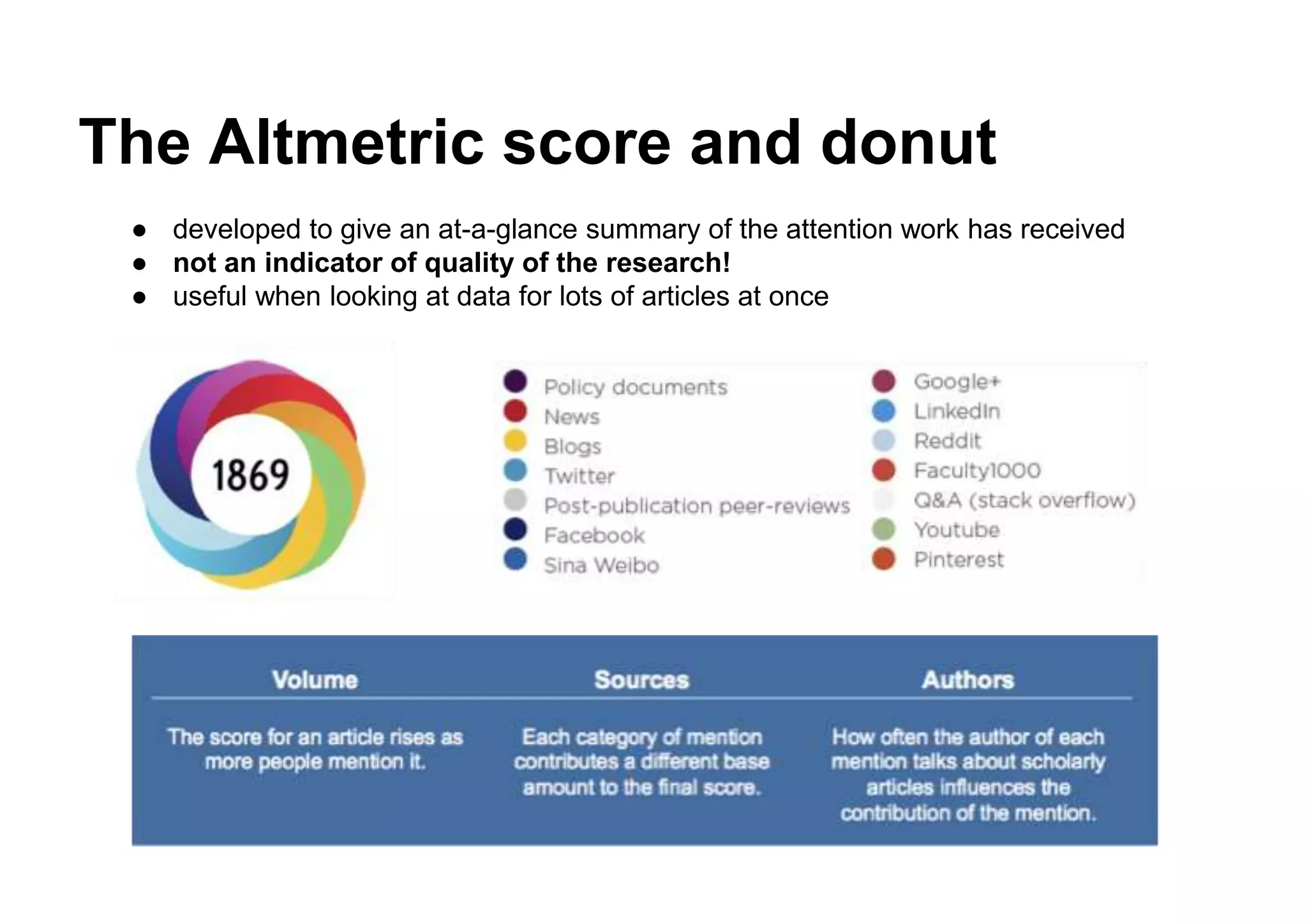
The Altmetric score and donut
● developed to give an at-a-glance summary of the attention work has received
● not an indicator of quality of the research!
● useful when looking at data for lots of articles at once
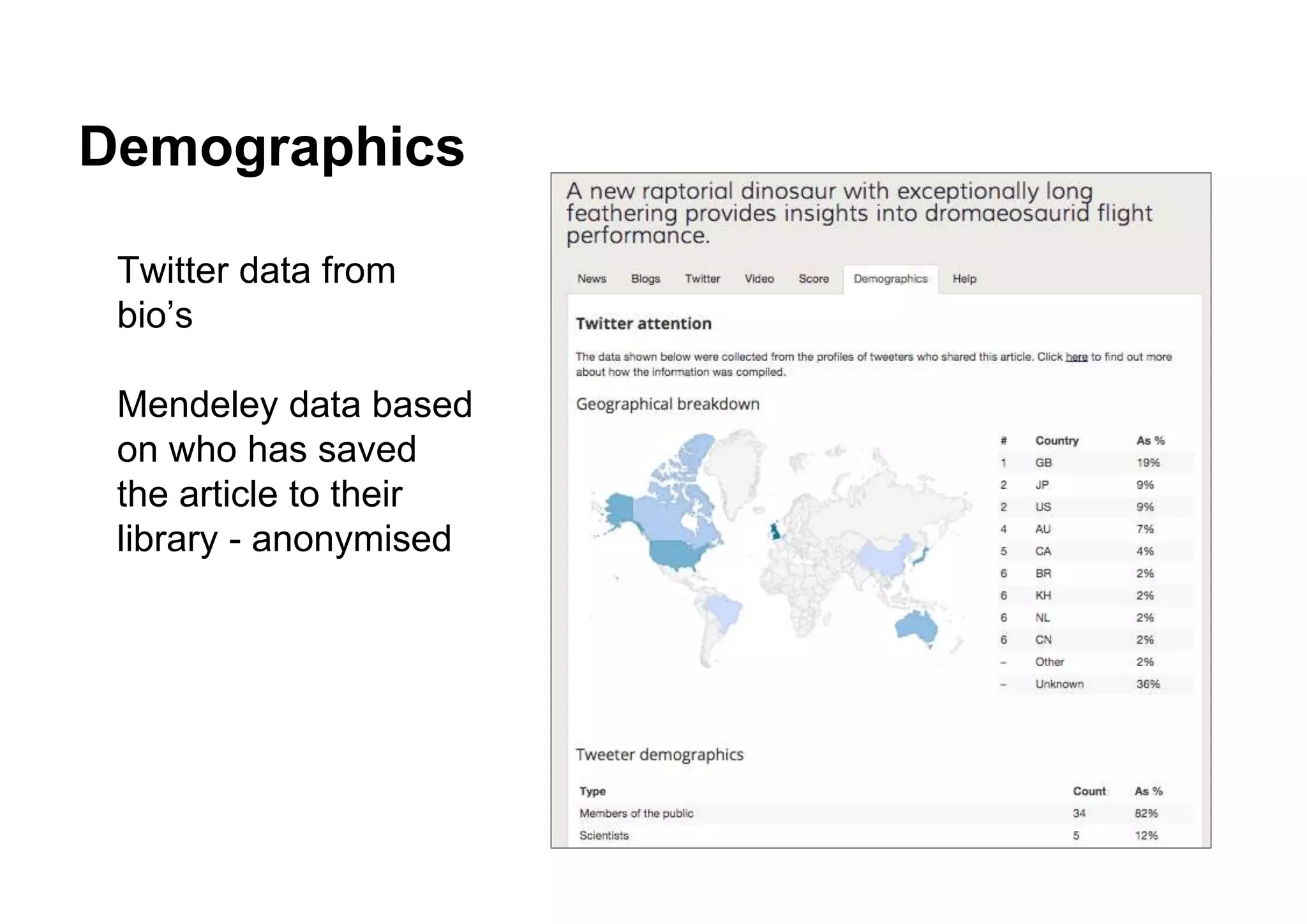
Demographics
Twitter data from
bio’s
Mendeley data based
on who has saved
the article to their
library - anonymised
Researchers
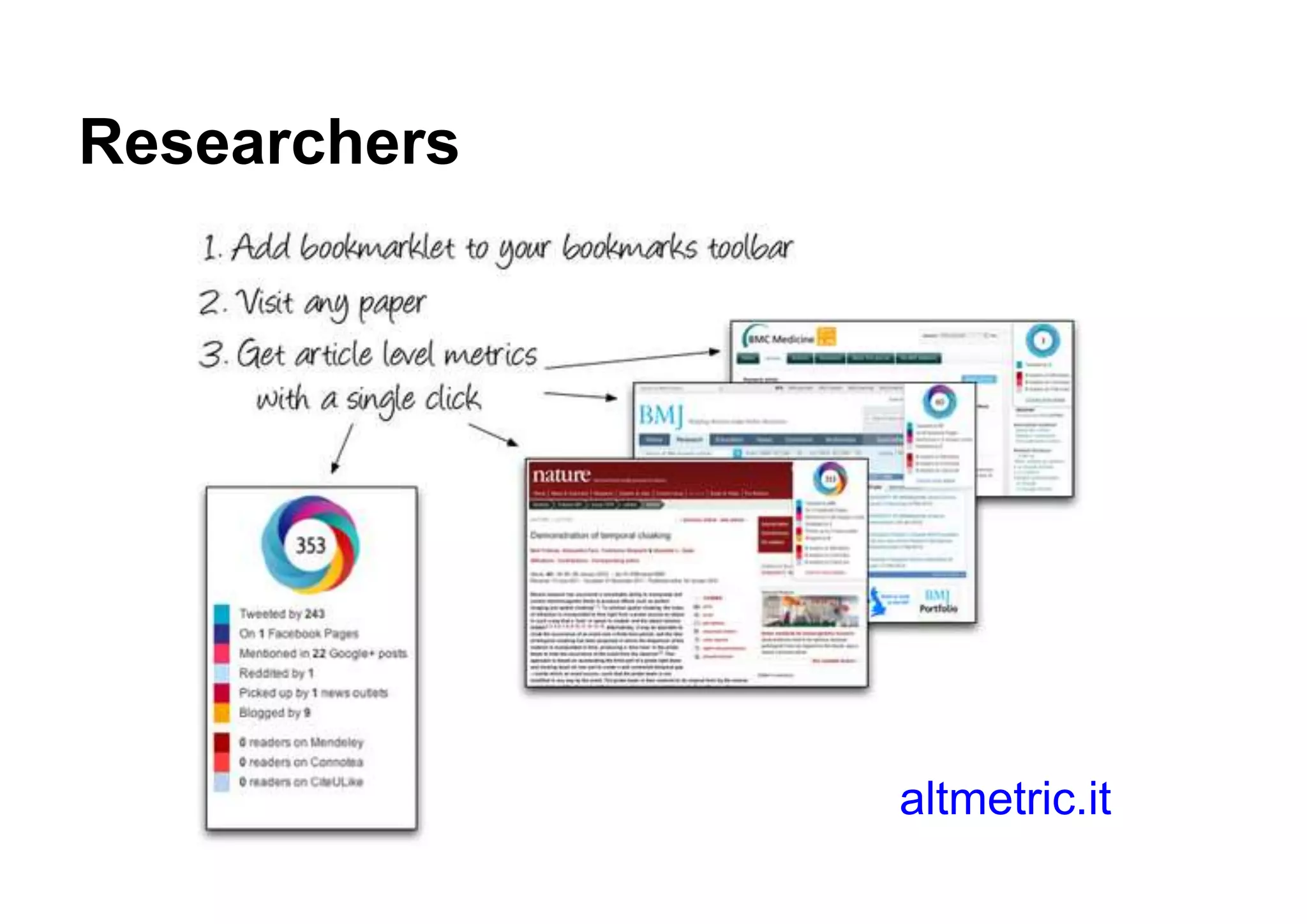
altmetric.it
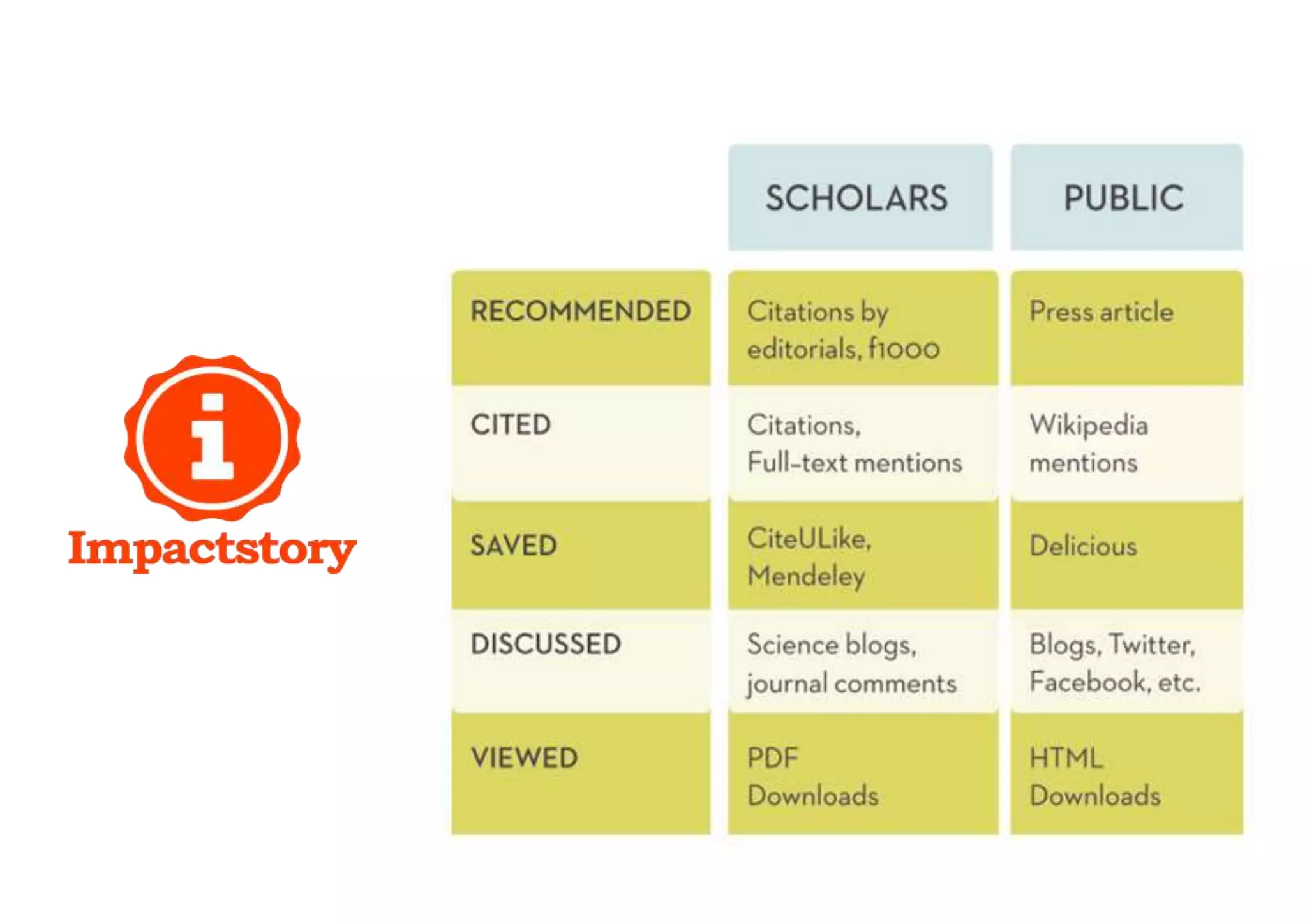
#18 Impact Story
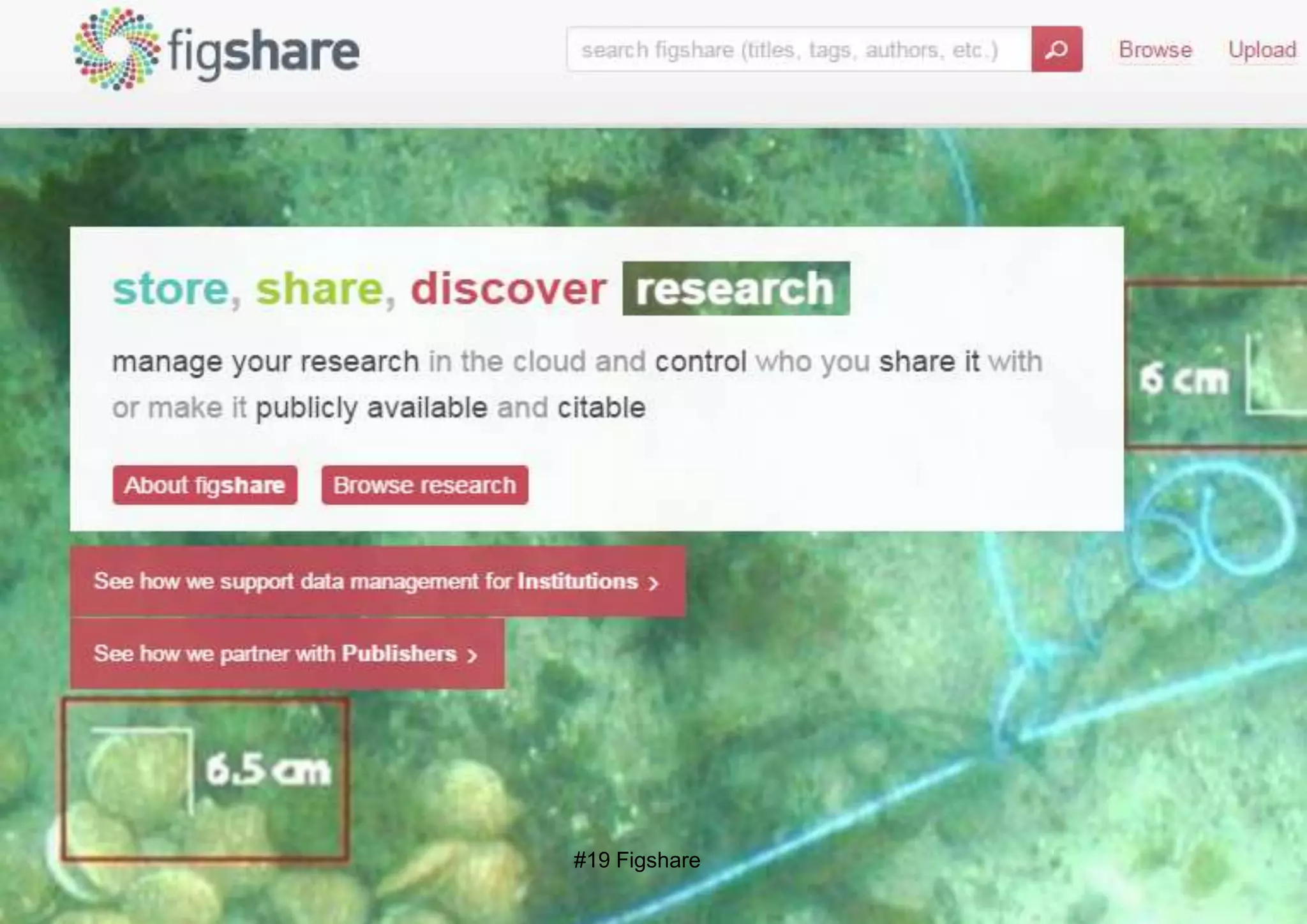
#19 Figshare
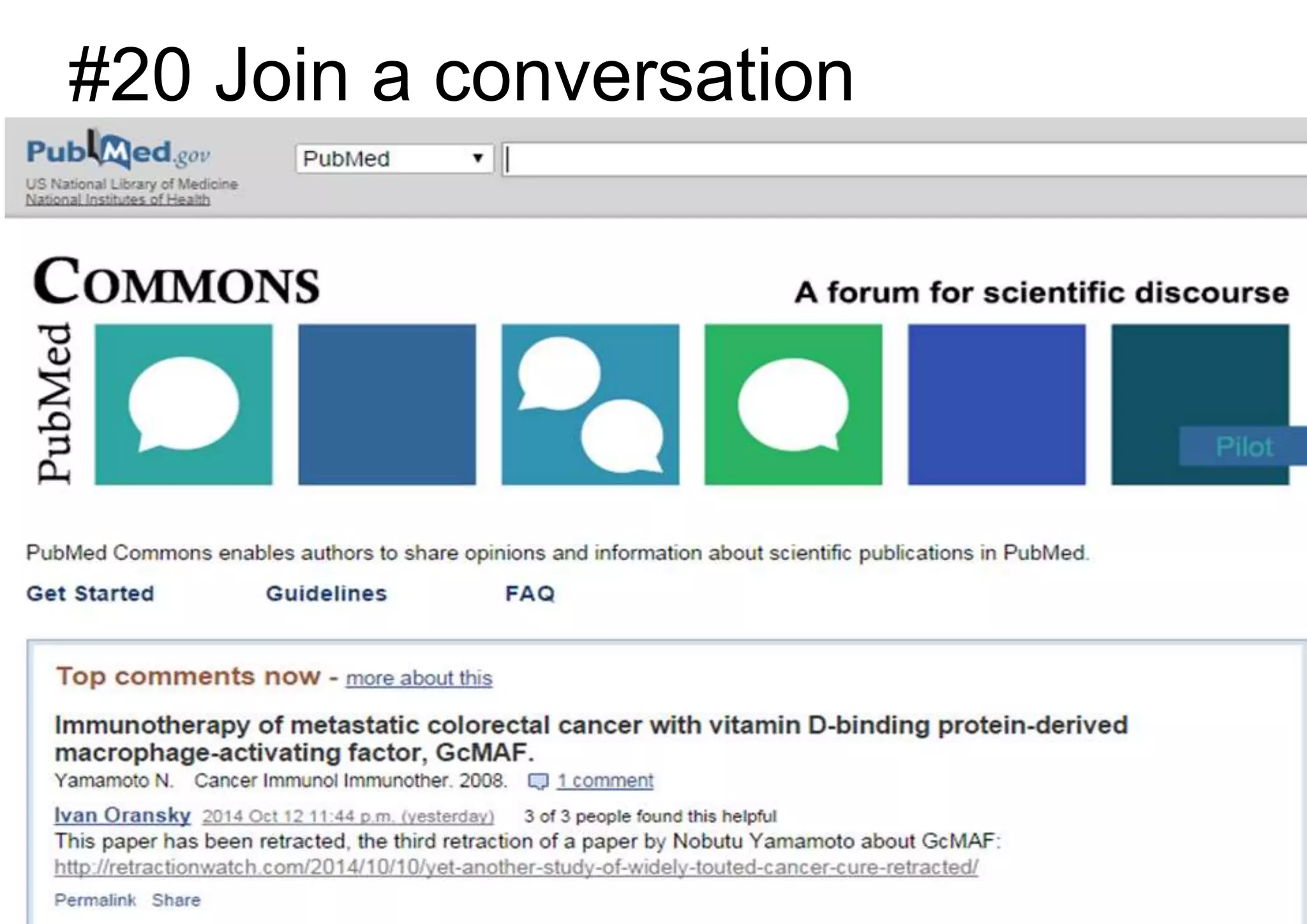
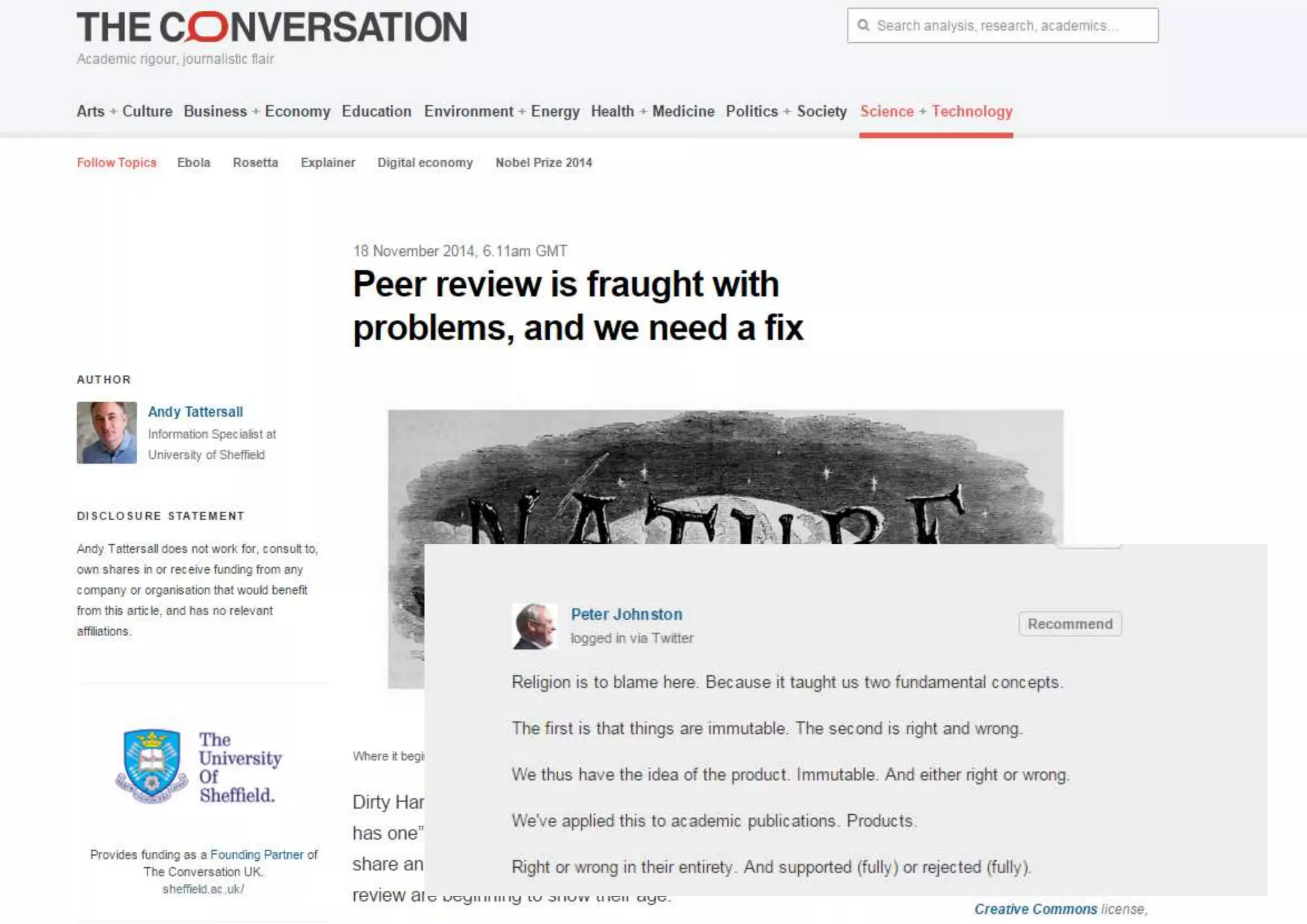
#20 Join a conversation
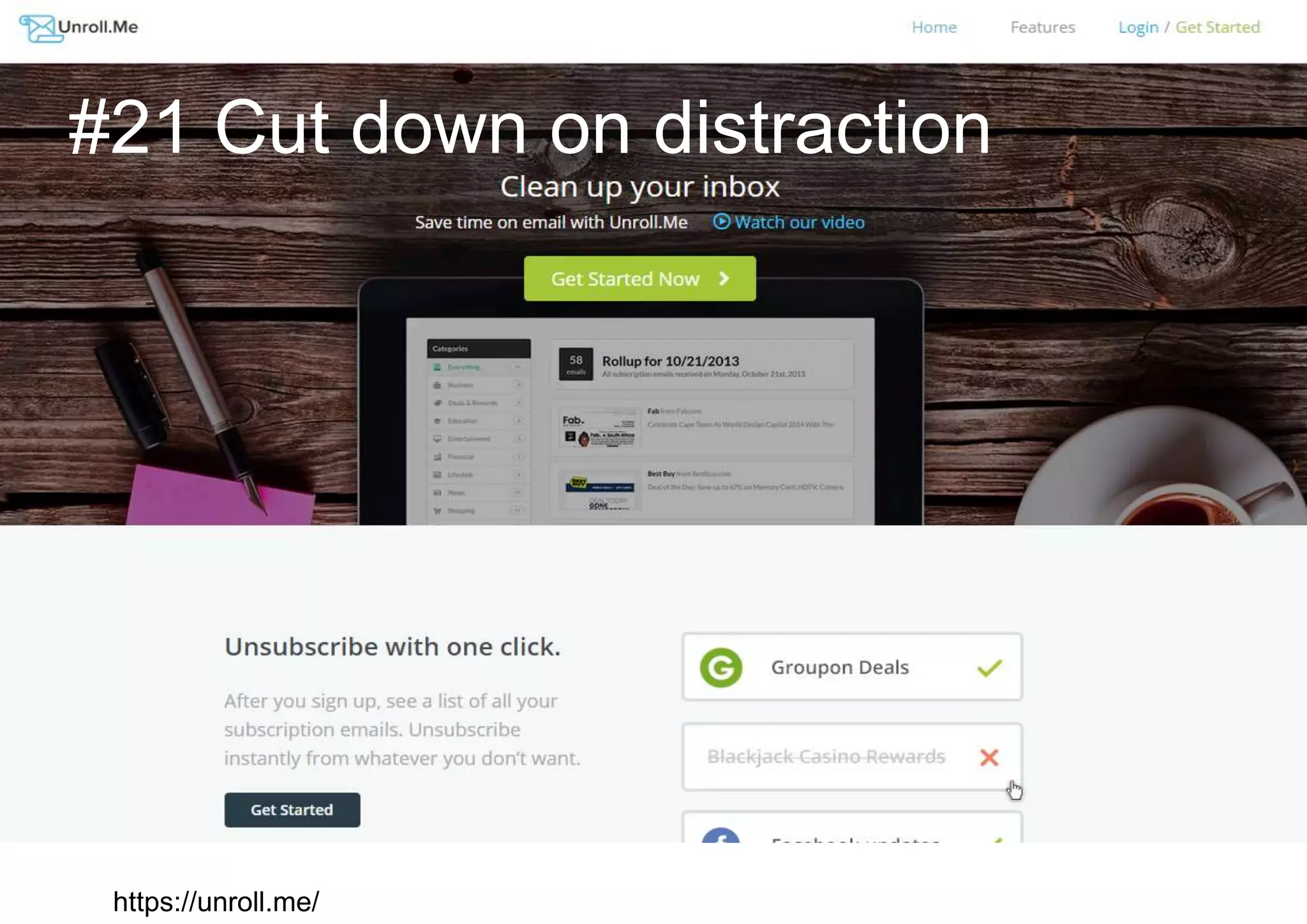
https://unroll.me/
#21 Cut down on distraction
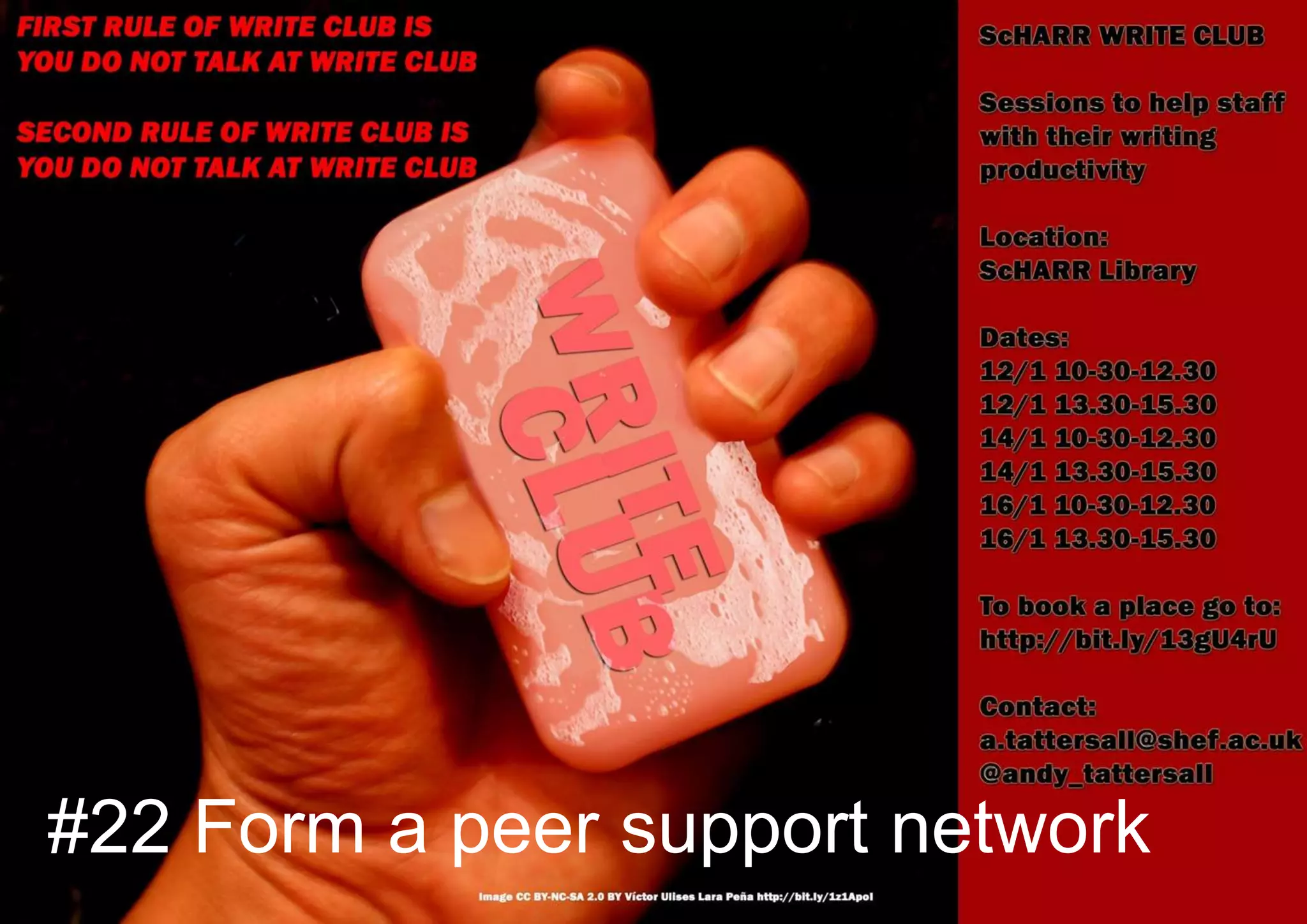
#22 Form a peer support network
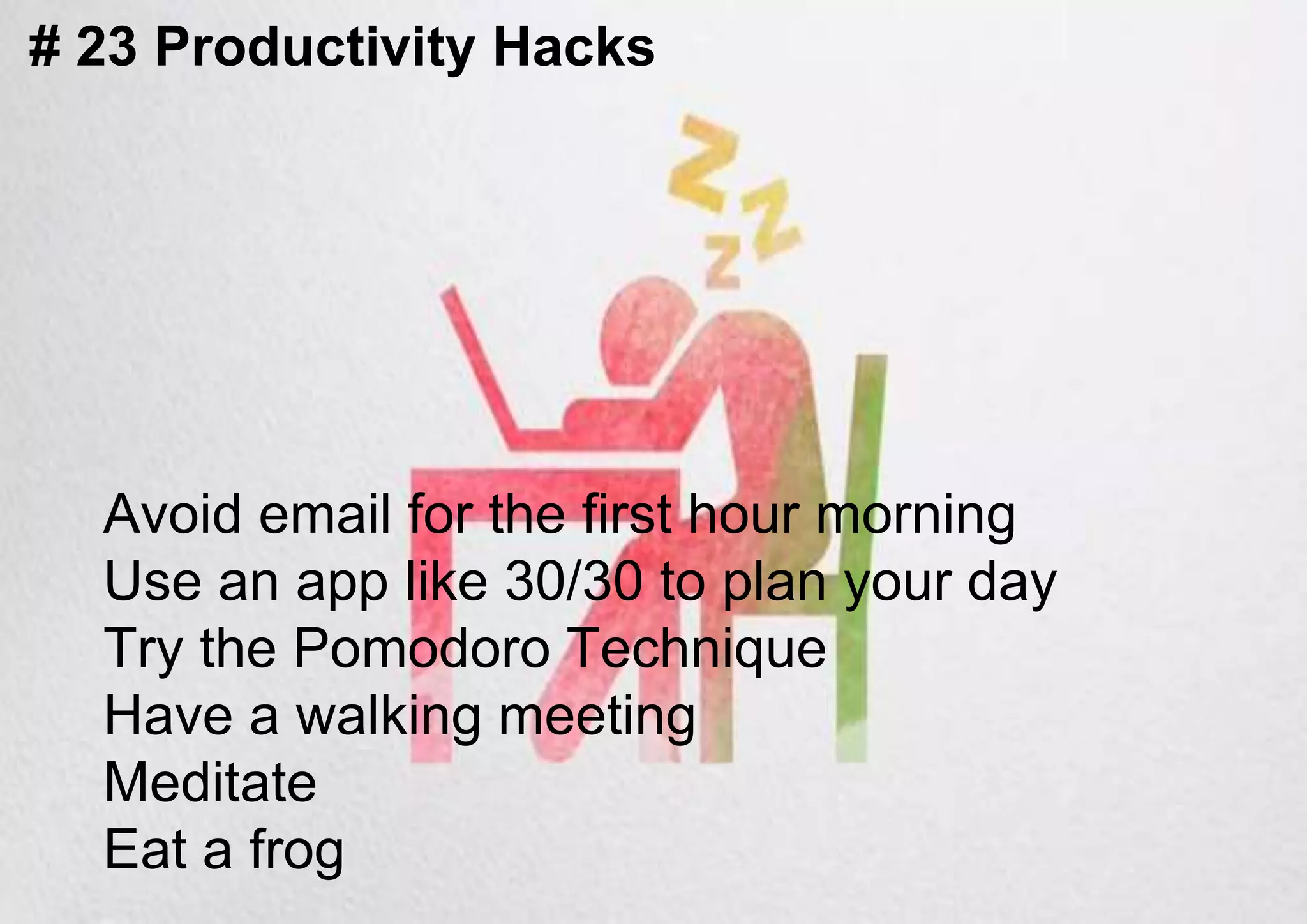
# 23 Productivity Hacks
Avoid email for the first hour morning
Use an app like 30/30 to plan your day
Try the Pomodoro Technique
Have a walking meeting
Meditate
Eat a frog
Everyone likes lists these days
● Get a DOI (Digital Object Identifier) for your
outputs
● Get an ORCiD account
● Update your Google Scholar profile
● Try Twitter (at least to see what’s going on)
● Put your presentations on to Slideshare (check
copyright first)
● You are ALL experts in something - write an
expert article for such as The Conversation
http://www.doi.org/index.html
http://orcid.org/
The definition of
insanity is doing
the same thing
over and over and
expecting a
different result
Image © CC BY thematthewknot
http://bit.ly/1oGnFVy
Thank you
@andy_tattersall

'Research hacks 23 ways to communicate and showcase yourself whilst working smarter'

  • 1.
    Research Hacks 23 waysto communicate and showcase your skills @andy_tattersall a.tattersall@sheffield.ac.uk
  • 2.
    Academia is changingforever MOOCs Open Access Impact Agenda/REF Big Data Altmetrics
  • 3.
    Image © CCBY Marfis77 http://bit.ly/1xuiRUY Learning technologists, teachers and lecturers think of the pedagogy when employing new technologies. What do researchers do?
  • 5.
    What I’ll discuss 23Ideas and tools to try out and… Produce Communicate Go Mobile Measure Stay on Track
  • 7.
    # 1 Blogabout what you know
  • 8.
  • 9.
    # 3 Rethinkyour Posters
  • 11.
    # 4 Makea video
  • 12.
    #5 Make ananimation
  • 13.
    # 6 Writea Lay Research Summary Image CC BY-NC-ND 2.0 http://bit.ly/19GL3MF Louveciennes
  • 14.
    # 7 Recorda Lay Summary of your work Image CC BY 2.0 http://bit.ly/1xLqbJB Francois Schnell
  • 15.
    #8 Collaborate live onyour paper http://onlinelibrary.wiley.com/doi/10.1111/hir.12033/abstract
  • 16.
  • 17.
  • 18.
    Prescribing a DigitalTechnology ● You need to understand why you are taking it ● You need to understand the benefits ● You need to understand the side-effects ● You need to understand that the benefits may take time ● You may need two courses ● You may need a different intervention ● Do not feel pressured to use it - as it won’t work
  • 20.
    20 # 10 Joina social network
  • 21.
    Social Networks are: It’snot what you know, but who you know + It’s what they know as well = Social Capital 21
  • 22.
    * © TheUniversity of Sheffield 22 Horses for Courses
  • 23.
    Online collaboration: Scientistsand the social network 23 Van Noorden, R, (2014) Nature 512,126–129 doi:10.1038/512126a {Last Accessed 5/3/2015]
  • 24.
    * © TheUniversity of Sheffield 24 Professional tool for a mostly non-academic audience. Useful for connecting with those aligned to your research outside of the academy. Crowdsources your talents. Alternative metric and useful way to share research outputs to an academic audience. Discover research in your field and what journal is best for you Social network for researchers for sharing papers and follow research in your field of work Superb icebreaker, social network and discovery engine. Social network of like-minded researchers. Huge database of papers and references. Reference management and alternative metric tool Social network that connects to your LinkedIn and Academia.edu accounts. Discovers researchers with similar interests Useful alternative to Facebook. Works very similarly with circles and communities. Useful for teaching staff and those running events
  • 25.
    Don’t be afraid…..tosay no * 25 Or at least point them to the right social network
  • 26.
  • 27.
  • 28.
    #13 Evernote Image CCBY 2.0 http://bit.ly/1B20KEJ Othree
  • 29.
    #14 Listen andlearn on the go
  • 30.
  • 31.
  • 32.
  • 33.
    The dissemination andcommunication of research is changing Presentations and seminars Funding and ethics applications Academic books Journal articles and posters Term papers and essays Meetings and conferences Correspondence Open access Supplementary data Online reference managers Press Post-publication peer-review Social media Blogs
  • 34.
  • 35.
    Traditional metrics struggleto reflect this - Slow to accrue - Focus mostly on published articles Published June 2014: Starting to impact the behaviour of academics
  • 36.
    Development of altmetrics (alternativeindicators) ● To complement, not replace traditional metrics ● Help people understand how research is being received and used, and by who ● Not intended as an indicator of quality ● Can help provide further evidence of engagement and ‘societal impact’ ● Give credit for research outputs other than articles
  • 37.
  • 38.
    Digging in tothe data
  • 39.
    The Altmetric scoreand donut ● developed to give an at-a-glance summary of the attention work has received ● not an indicator of quality of the research! ● useful when looking at data for lots of articles at once
  • 40.
    Demographics Twitter data from bio’s Mendeleydata based on who has saved the article to their library - anonymised
  • 41.
  • 42.
  • 44.
  • 45.
    #20 Join aconversation
  • 47.
  • 48.
    #22 Form apeer support network
  • 49.
    # 23 ProductivityHacks Avoid email for the first hour morning Use an app like 30/30 to plan your day Try the Pomodoro Technique Have a walking meeting Meditate Eat a frog
  • 50.
    Everyone likes liststhese days ● Get a DOI (Digital Object Identifier) for your outputs ● Get an ORCiD account ● Update your Google Scholar profile ● Try Twitter (at least to see what’s going on) ● Put your presentations on to Slideshare (check copyright first) ● You are ALL experts in something - write an expert article for such as The Conversation http://www.doi.org/index.html http://orcid.org/
  • 51.
    The definition of insanityis doing the same thing over and over and expecting a different result Image © CC BY thematthewknot http://bit.ly/1oGnFVy
  • 52.