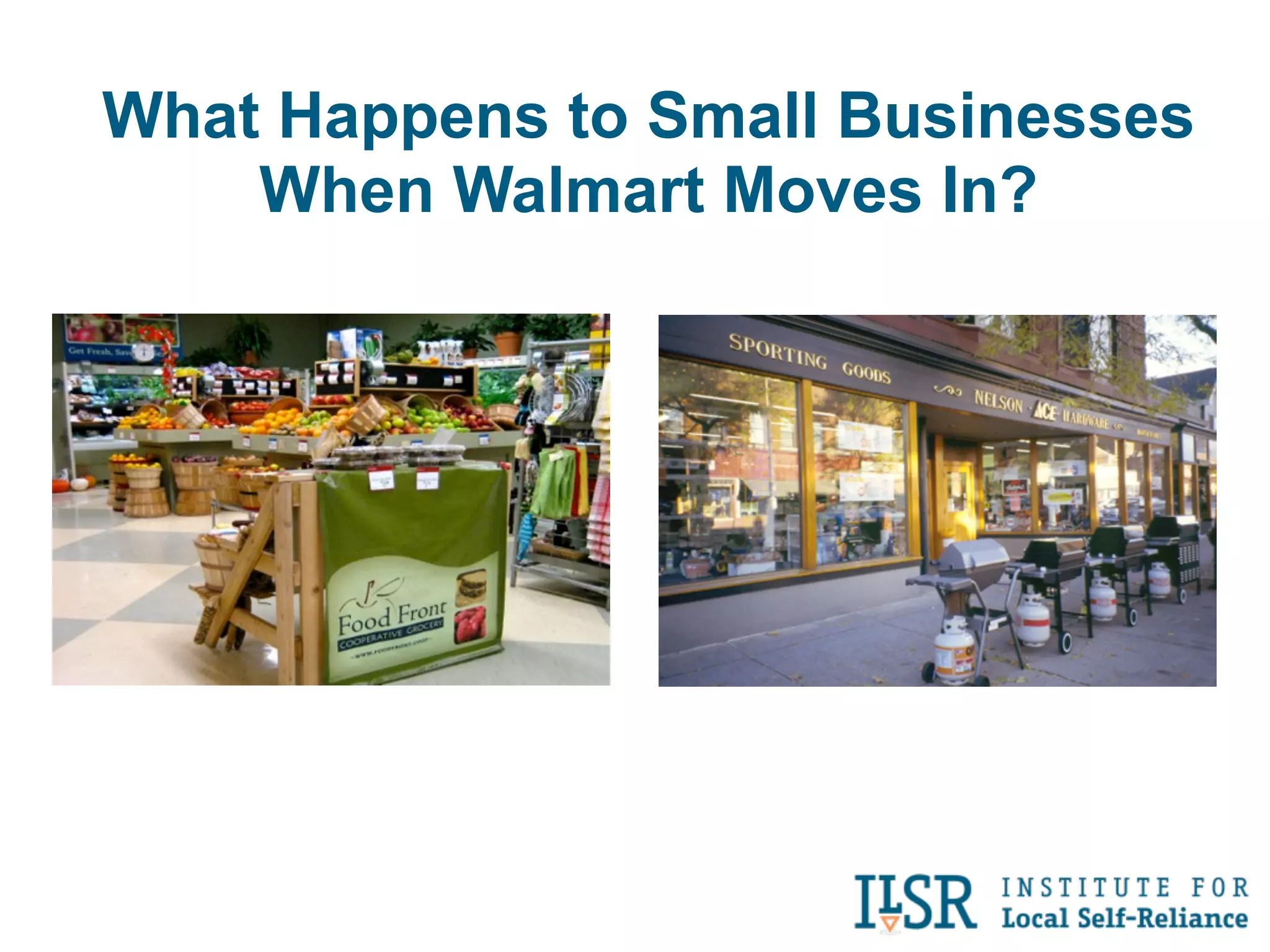
What Happens to Small Businesses
    When Walmart Moves In?
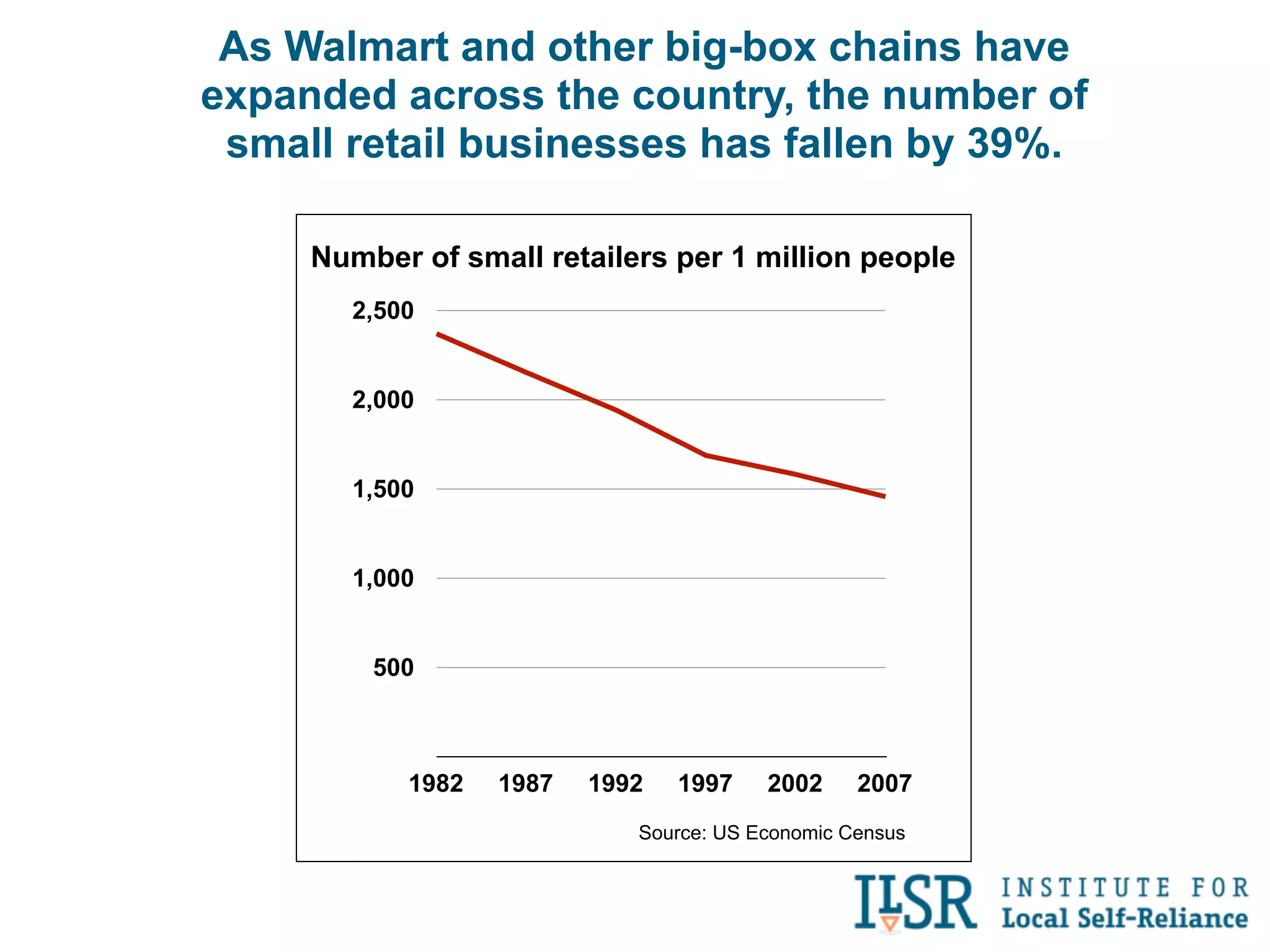
As Walmart and other big-box chains have
expanded across the country, the number of
 small retail businesses has fallen by 39%.

     Number of small retailers per 1 million people
       2,500


       2,000


       1,500


       1,000


         500


           1982   1987   1992   1997    2002     2007
                            Source: US Economic Census
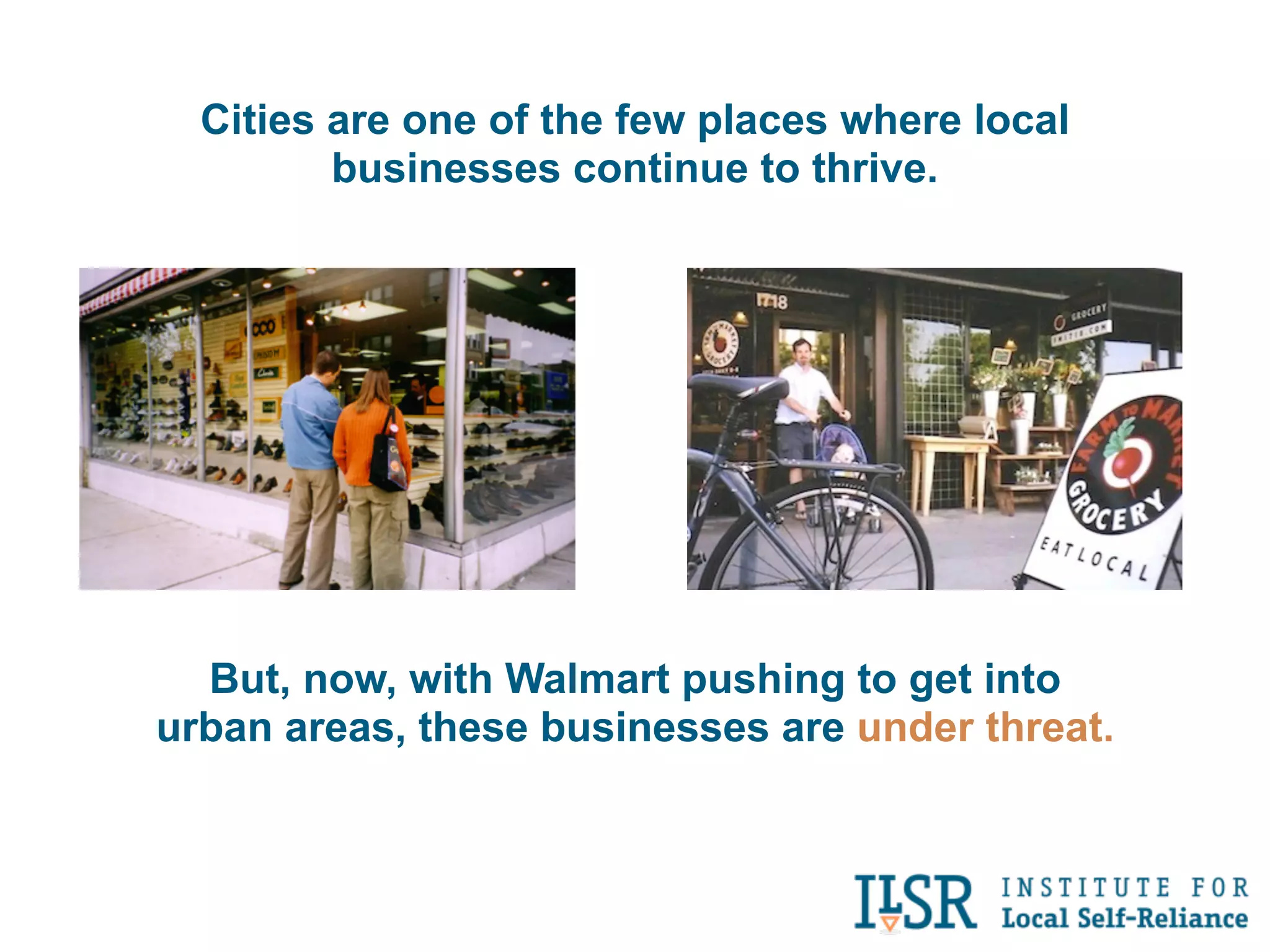
Cities are one of the few places where local
         businesses continue to thrive.


  But, now, with Walmart pushing to get into
urban areas, these businesses are under threat.
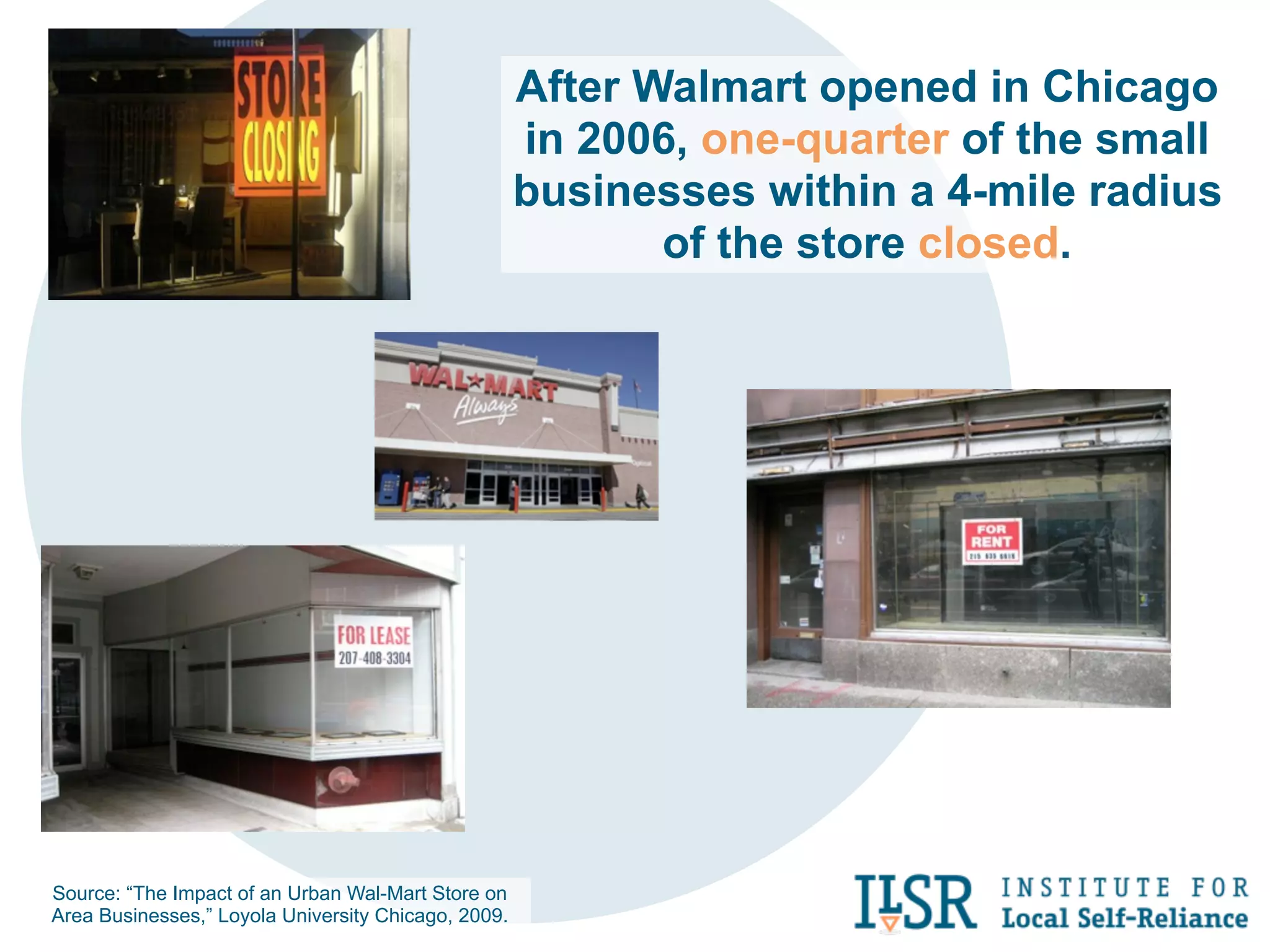
After Walmart opened in Chicago
                                                     in 2006, one-quarter of the small
                                                     businesses within a 4-mile radius
                                                            of the store closed.


Source: “The Impact of an Urban Wal-Mart Store on
Area Businesses,” Loyola University Chicago, 2009.
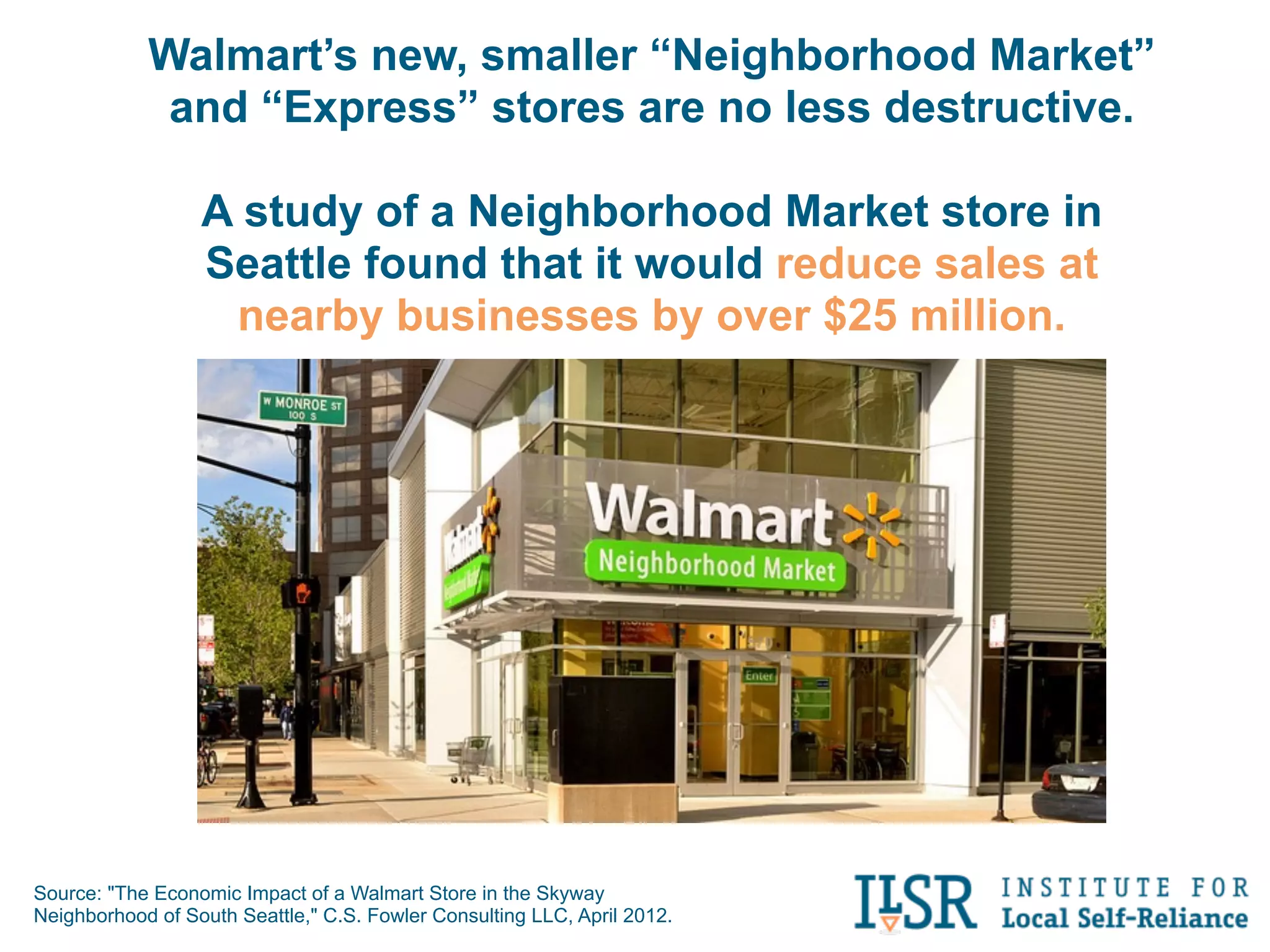
Walmart’s new, smaller “Neighborhood Market”
             and “Express” stores are no less destructive.

                  A study of a Neighborhood Market store in
                  Seattle found that it would reduce sales at
                   nearby businesses by over $25 million.


Source: "The Economic Impact of a Walmart Store in the Skyway
Neighborhood of South Seattle," C.S. Fowler Consulting LLC, April 2012.
Walmart claims: “Small businesses that
MYTH   adapt can thrive and grow side by side
       with Walmart.”
Walmart claims: “Small businesses that
   MYTH                 adapt can thrive and grow side by side
                        with Walmart.”


   A study of 1,200 big-box store openings                        FACT
   nationally found:

      • “large, negative effects” on nearby competing
            businesses, including many store closures.

      • no increase in customers or sales for non-
            competing businesses (i.e., those offering
            different products than the big-box store).

Source: "Mom-and-Pop meet Big-Box: Complements or substitutes?"
Journal of Urban Economics, 2010.
When Walmart destroys small
  businesses, the surrounding
neighborhood suffers significant
  economic and social losses.
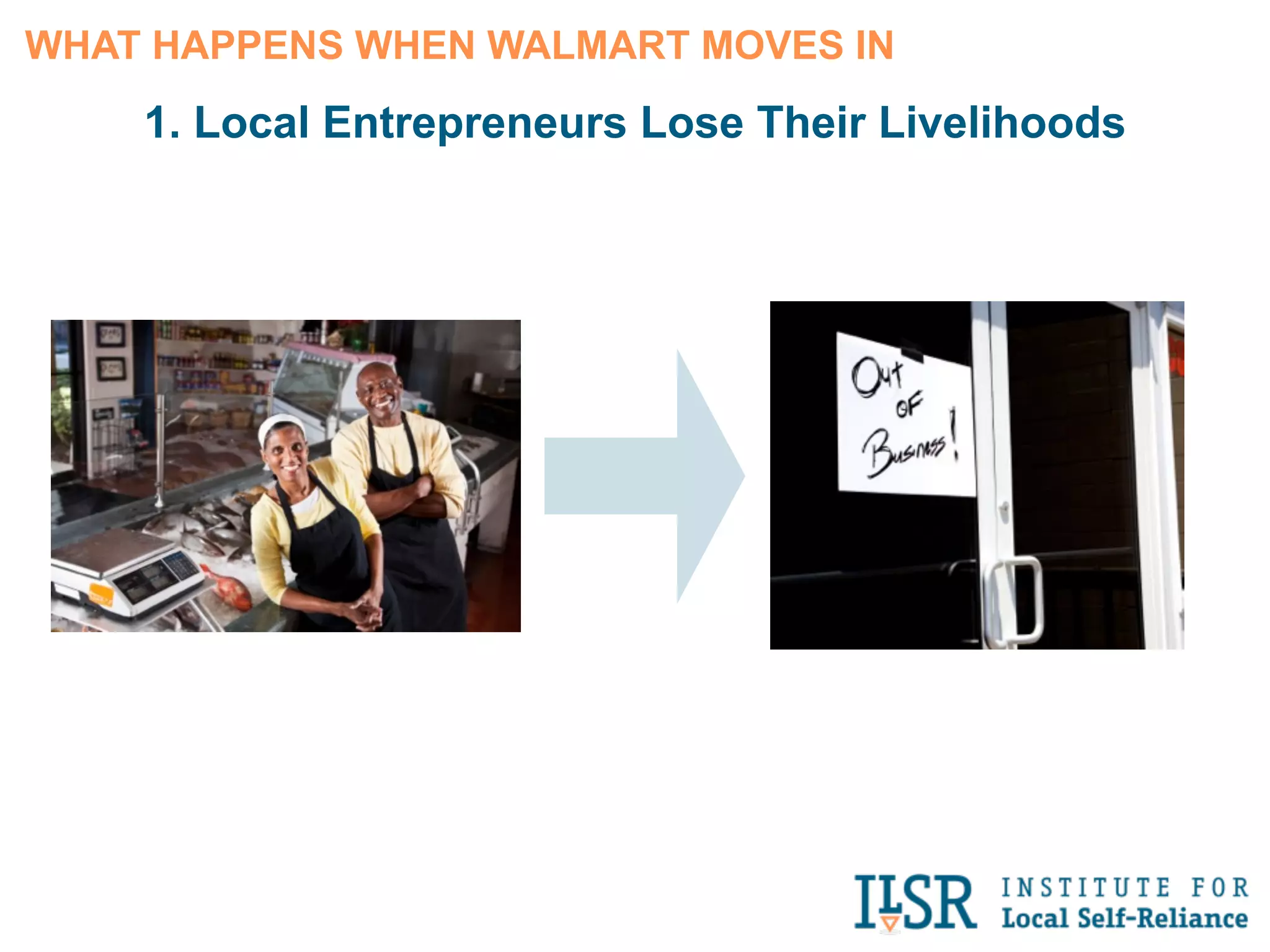
1. Dozens of Local Entrepreneurs
     Lose Their Livelihoods
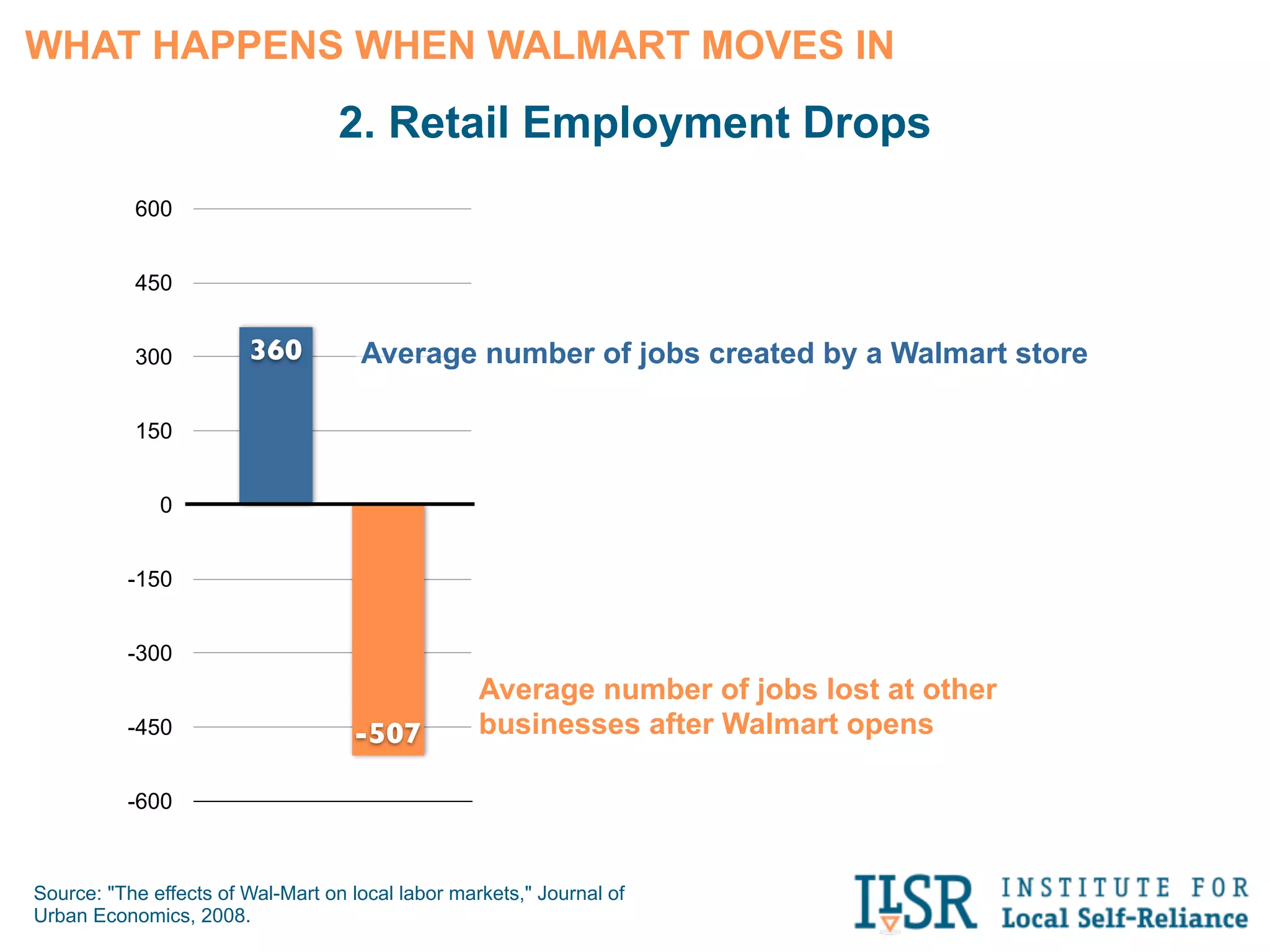
2. Retail Employment Declines
           600


           450


           300          360          Average number of jobs created by a Walmart store

           150


              0


          -150


          -300
                                                   Average number of jobs lost at other
          -450                      -507           businesses after Walmart opens

          -600


Source: "The effects of Wal-Mart on local labor markets," Journal of
Urban Economics, 2008.
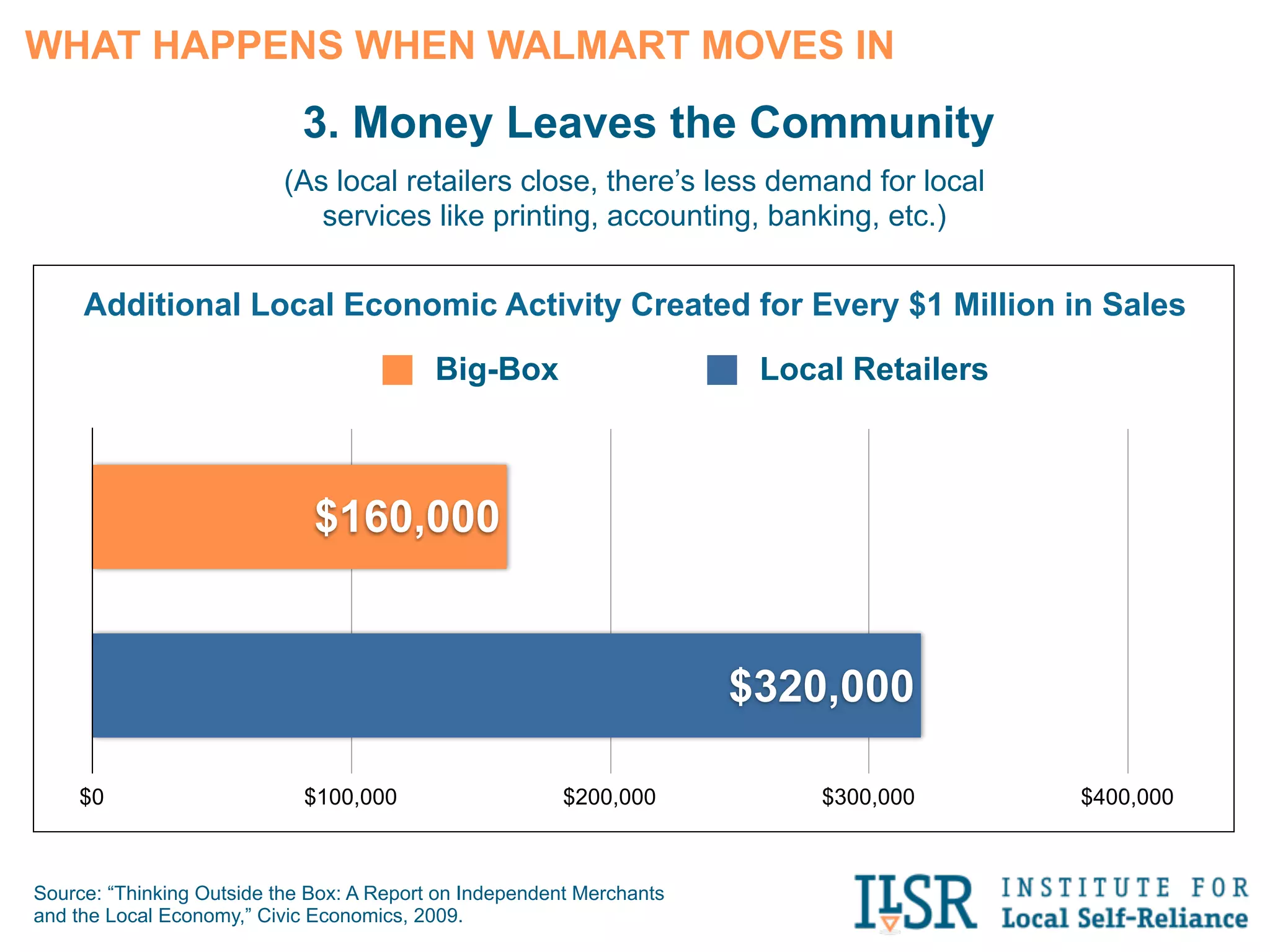
3. Money Leaves the Community
      As local retailers close, local suppliers and service providers, such as printers and
      accountants, see their revenue decline. Walmart has no need for these services.


     Additional Local Economic Activity Created for Every $1 Million in Sales

                                           Big-Box                      Local Retailers


                              $160,000


                                                                       $320,000

    $0                       $100,000                    $200,000           $300,000      $400,000


Source: “Thinking Outside the Box: A Report on Independent Merchants
and the Local Economy,” Civic Economics, 2009.
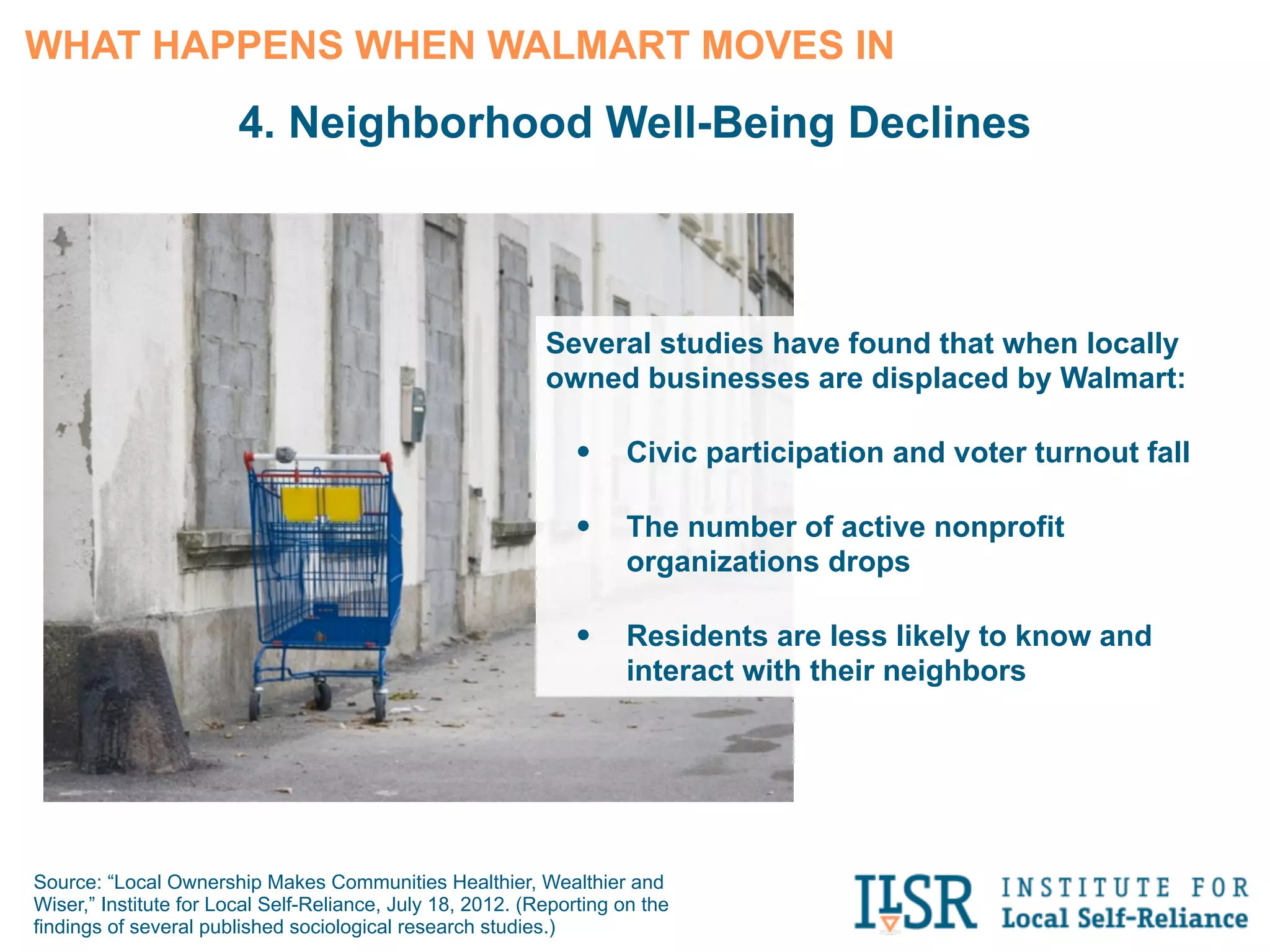
4. Neighborhood Well-Being Declines


                                                           Several studies have found that when locally
                                                           owned businesses are displaced by Walmart:

                                                               • Civic participation and voter turnout fall

                                                               • The number of active nonprofit
                                                                     organizations drops

                                                               • Residents are less likely to know and
                                                                     interact with their neighbors


Source: “Local Ownership Makes Communities Healthier, Wealthier and
Wiser,” Institute for Local Self-Reliance, July 18, 2012. (Reporting on the
findings of several published sociological research studies.)
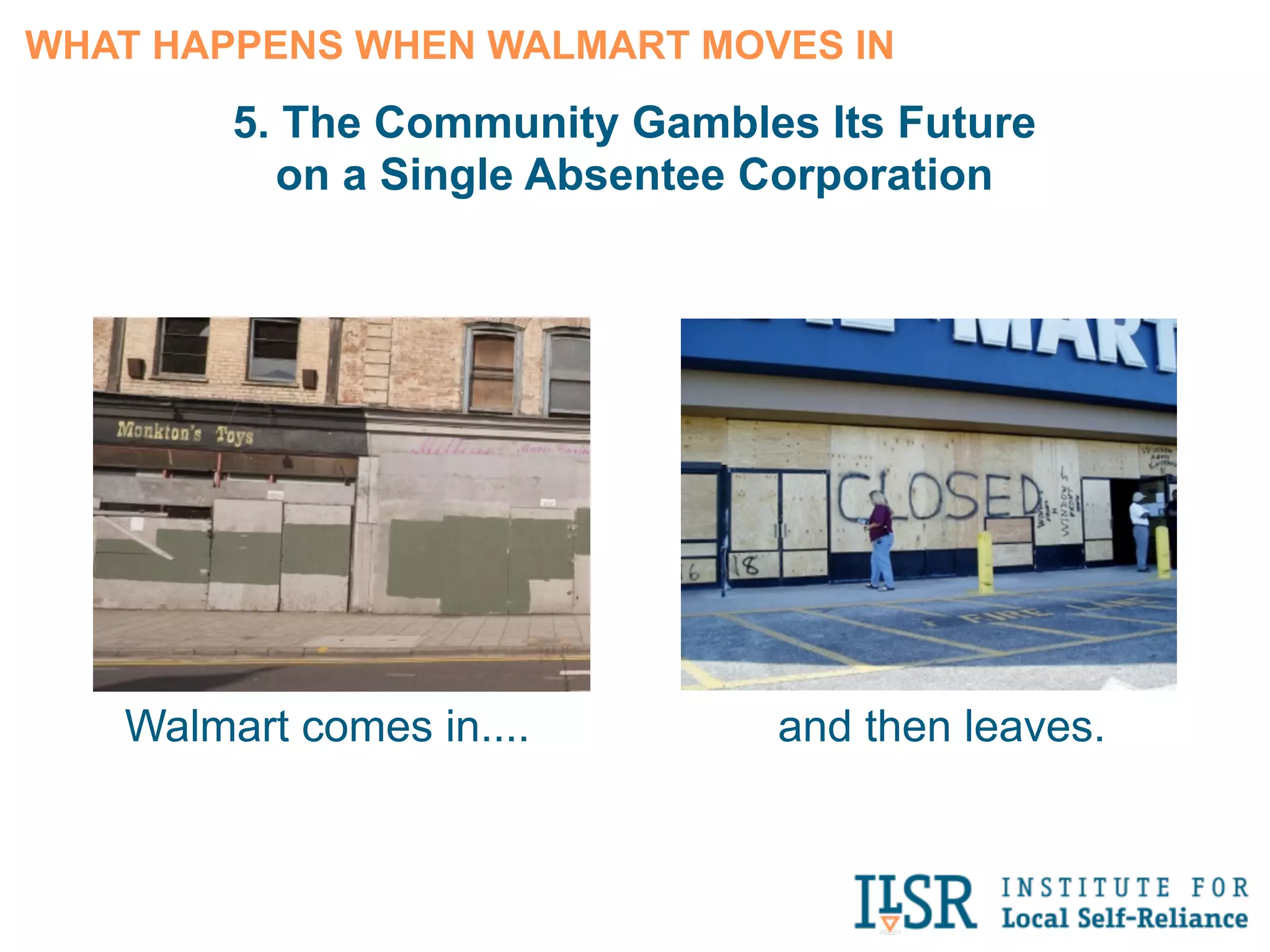
5. The Community Risks Its Future
        on a Single Absentee-Owned Store


Walmart may come in...          and then leave.
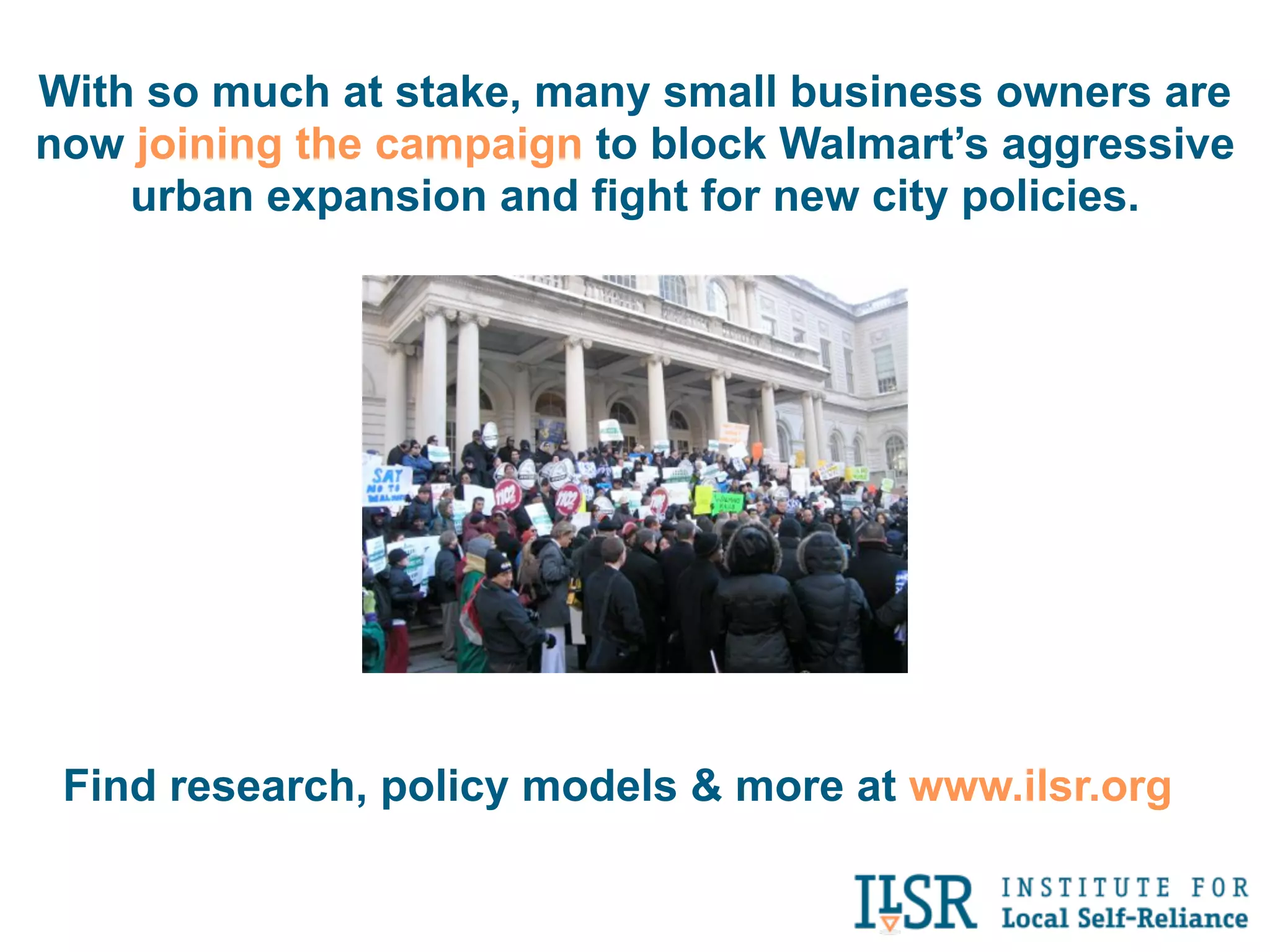
With so much at stake, many small business
  owners are now joining the campaign to
block Walmart’s aggressive urban expansion
       and fight for new city policies.
Cities have many policy options for controlling
the spread of big-box retailers and protecting
 neighborhoods from their damaging effects.

Here are a few:

  • Ban or limit “formula” businesses from most
     neighborhoods, as San Francisco has done

  • Require large retail stores to pass an economic and
     community impact review before they can open.

  • Mandate that large retailers pay a living wage and
     give back to the community.
Find studies, policy models, and much more
   under the Independent Business tab at

          www.ilsr.org

What Happens to Small Businesses When Walmart Moves In?

  • 1.
    What Happens toSmall Businesses When Walmart Moves In?
  • 2.
    As Walmart andother big-box chains have expanded across the country, the number of small retail businesses has fallen by 39%. Number of small retailers per 1 million people 2,500 2,000 1,500 1,000 500 1982 1987 1992 1997 2002 2007 Source: US Economic Census
  • 3.
    Cities are oneof the few places where local businesses continue to thrive. But, now, with Walmart pushing to get into urban areas, these businesses are under threat.
  • 4.
    After Walmart openedin Chicago in 2006, one-quarter of the small businesses within a 4-mile radius of the store closed. Source: “The Impact of an Urban Wal-Mart Store on Area Businesses,” Loyola University Chicago, 2009.
  • 5.
    Walmart’s new, smaller“Neighborhood Market” and “Express” stores are no less destructive. A study of a Neighborhood Market store in Seattle found that it would reduce sales at nearby businesses by over $25 million. Source: "The Economic Impact of a Walmart Store in the Skyway Neighborhood of South Seattle," C.S. Fowler Consulting LLC, April 2012.
  • 6.
    Walmart claims: “Smallbusinesses that MYTH adapt can thrive and grow side by side with Walmart.”
  • 7.
    Walmart claims: “Smallbusinesses that MYTH adapt can thrive and grow side by side with Walmart.” A study of 1,200 big-box store openings FACT nationally found: • “large, negative effects” on nearby competing businesses, including many store closures. • no increase in customers or sales for non- competing businesses (i.e., those offering different products than the big-box store). Source: "Mom-and-Pop meet Big-Box: Complements or substitutes?" Journal of Urban Economics, 2010.
  • 8.
    When Walmart destroyssmall businesses, the surrounding neighborhood suffers significant economic and social losses.
  • 9.
    1. Dozens ofLocal Entrepreneurs Lose Their Livelihoods
  • 10.
    2. Retail EmploymentDeclines 600 450 300 360 Average number of jobs created by a Walmart store 150 0 -150 -300 Average number of jobs lost at other -450 -507 businesses after Walmart opens -600 Source: "The effects of Wal-Mart on local labor markets," Journal of Urban Economics, 2008.
  • 11.
    3. Money Leavesthe Community As local retailers close, local suppliers and service providers, such as printers and accountants, see their revenue decline. Walmart has no need for these services. Additional Local Economic Activity Created for Every $1 Million in Sales Big-Box Local Retailers $160,000 $320,000 $0 $100,000 $200,000 $300,000 $400,000 Source: “Thinking Outside the Box: A Report on Independent Merchants and the Local Economy,” Civic Economics, 2009.
  • 12.
    4. Neighborhood Well-BeingDeclines Several studies have found that when locally owned businesses are displaced by Walmart: • Civic participation and voter turnout fall • The number of active nonprofit organizations drops • Residents are less likely to know and interact with their neighbors Source: “Local Ownership Makes Communities Healthier, Wealthier and Wiser,” Institute for Local Self-Reliance, July 18, 2012. (Reporting on the findings of several published sociological research studies.)
  • 13.
    5. The CommunityRisks Its Future on a Single Absentee-Owned Store Walmart may come in... and then leave.
  • 14.
    With so muchat stake, many small business owners are now joining the campaign to block Walmart’s aggressive urban expansion and fight for new city policies.
  • 15.
    Cities have manypolicy options for controlling the spread of big-box retailers and protecting neighborhoods from their damaging effects. Here are a few: • Ban or limit “formula” businesses from most neighborhoods, as San Francisco has done • Require large retail stores to pass an economic and community impact review before they can open. • Mandate that large retailers pay a living wage and give back to the community.
  • 16.
    Find studies, policymodels, and much more under the Independent Business tab at www.ilsr.org