Zimbabwe’s
Economic
Crisis
HYPERINFLATION
PRESENTOR
Leader: Kent Cedrick Braganza
1st
Member: Alexian Celada
2nd
Member: Jaythan Brix Gementiza
BACKGROUND
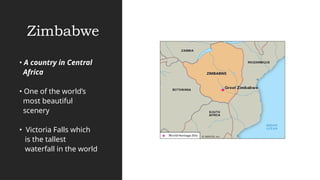
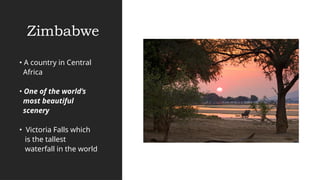
Zimbabwe
• A country in Central
Africa
• One of the world’s
most beautiful
scenery
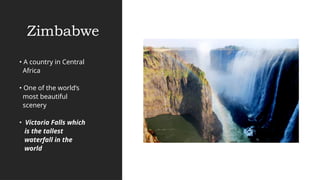
• Victoria Falls which
is the tallest
waterfall in the world
Zimbabwe
• A country in Central
Africa
• One of the world’s
most beautiful
scenery
• Victoria Falls which
is the tallest
waterfall in the world
Zimbabwe
• A country in Central
Africa
• One of the world’s
most beautiful
scenery
• Victoria Falls which
is the tallest
waterfall in the
world
DISCUSSION
Cause & Effect
Zimbabwe's Hyperinflation has
mainly been caused by poor
monetary policies and failure of
fiscal policies to control the
budget deficit.
• local currency falls
• unemployment rate of
over 80%
Impacts to the Business
Examples
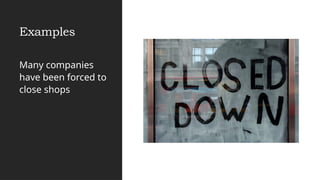
Many companies
have been forced to
close shops
schools are being
forced to charge
their fees either in
US dollars or in fuel
coupons
turned the
domestic economy
into a barter
economy
Problems
Opportunistic crime, such as pickpocketing, theft, and smashing of
car window with intent to steal, is common. Violent crime, such as
assault, carjacking, and home invasion, also occurs.
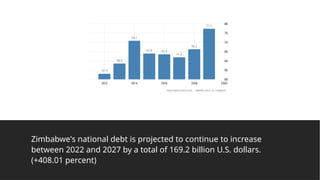
Zimbabwe's national debt is projected to continue to increase
between 2022 and 2027 by a total of 169.2 billion U.S. dollars.
(+408.01 percent)
Crisis
Crisis
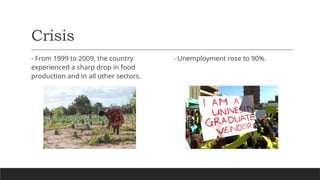
- From 1999 to 2009, the country
experienced a sharp drop in food
production and in all other sectors.
- Unemployment rose to 90%.
SWOT Analysis
Strength
Weakness
Opportunity
Threats
Strengths
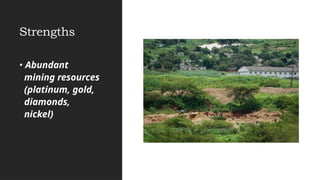
• Abundant
mining resources
(platinum, gold,
diamonds,
nickel)
Strengths
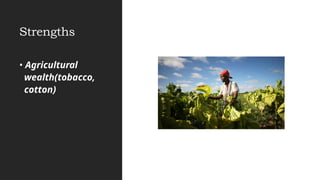
• Agricultural
wealth(tobacco,
cotton)
Weaknesses
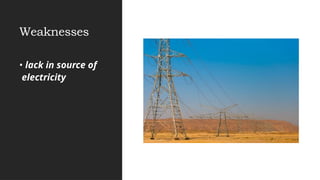
• lack in source of
electricity
Weaknesses
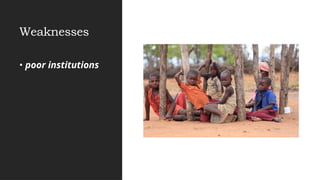
• poor institutions
Opportunity
• Source of
agricultural
needs
Threats
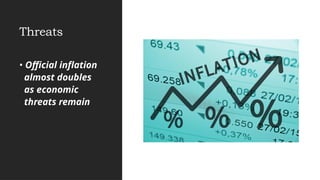
• Official inflation
almost doubles
as economic
threats remain
Decision Making
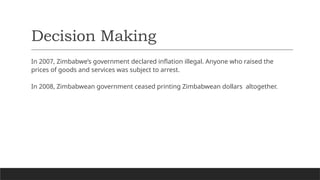
In 2007, Zimbabwe’s government declared inflation illegal. Anyone who raised the
prices of goods and services was subject to arrest.
In 2008, Zimbabwean government ceased printing Zimbabwean dollars altogether.
CONCLUSION
Alternative
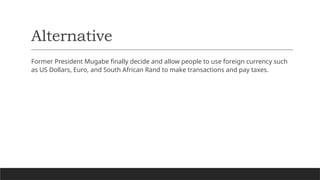
Former President Mugabe finally decide and allow people to use foreign currency such
as US Dollars, Euro, and South African Rand to make transactions and pay taxes.
Recommendation
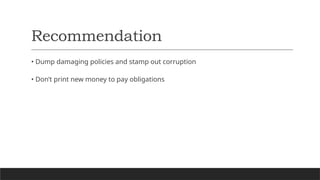
• Dump damaging policies and stamp out corruption
• Don’t print new money to pay obligations
Restructuring
• Deep political changes
• Implement government reforms
Plan
• Establishing a strong money anchor to reduce inflation and inflation expectations
• Deregulating prices and imposing a hard budget constraint on public enterprises
Final Decision
A new weekly auction of foreign currency was set up in late June 2020 by the
Reserve Bank of Zimbabwe.
THANK YOU!

Zimbabwe Economic Crisis marked by Hyperinflation.