Model-based Testing
   of Real-Time Embedded Systems
       in the Automotive Domain


                                           by

                                       M. Sc.
                              Justyna Zander-Nowicka


             Faculty IV – Electrical Engineering and Computer Science
                             Technical University Berlin
                   A dissertation submitted in partial fulfillment
                        of the requirements for the degree of

                            Doctor of Engineering Science

                                    – Eng. Sc. D. –


Supervisor: Prof. Eng. Sc. D. Ina Schieferdecker
Technical University Berlin, Faculty of Electrical Engineering and Computer Science
Supervisor: Prof. Dr. Ingolf Heiko Krüger
University of California, San Diego, Department of Computer Science and Engineering


                                Berlin, December 2008
                                         D 83
To my parents Ewa and Georg Zander.
ii


Technical University Berlin
Faculty IV – Electrical Engineering and Computer Science
Department for Design and Testing of Telecommunications Systems
Franklinstraße 28-29
10587 Berlin, Germany
http://www.iv.tu-berlin.de/

University of California, San Diego
Department of Computer Science and Engineering
UCSD CSE Building
9500 Gilman Drive, Dept. 0404
La Jolla, CA 92093-0404, U.S.A.
https://sosa.ucsd.edu/
iii


                                           Abstract
Software aspects of embedded systems are expected to have the greatest impact on industry,
market and everyday life in the near future. This motivates the investigation of this field. Fur-
thermore, the creation of consistent, reusable, and well-documented models becomes an impor-
tant stage in the development of embedded systems. Design decisions that used to be made at
the code level are increasingly made at a higher level of abstraction. The relevance of models
and the efficiency of model-based development have been demonstrated for software engineer-
ing. A comparable approach is applicable to quality-assurance activities including testing. The
concept of model-based testing is emerging in its application for embedded systems.

Nowadays, 44% of embedded system designs meet only 20% of functionality and performance
expectations [Enc03, Hel+05]. This is partially attributed to the lack of an appropriate test ap-
proach for functional validation and verification. Hence, the problem addressed by this innova-
tion relates to quality-assurance processes at model level, when neither code nor hardware ex-
ists. A systematic, structured, and abstract test specification is in the primary focus of the inno-
vation. In addition, automation of the test process is targeted as it can considerably cut the ef-
forts and cost of development.

The main contribution of this thesis applies to the software built into embedded systems. In par-
ticular, it refers to the software models from which systems are built. An approach to functional
black-box testing based on the system models by providing a test model is developed. It is con-
trasted with the currently applied test methods that form dedicated solutions, usually specialized
in a concrete testing context. The test framework proposed herewith, is realized in the MAT-
LAB®/Simulink®/Stateflow® [MathML, MathSL, MathSF] environment and is called Model-
in-the-Loop for Embedded System Test (MiLEST).

The developed signal-feature – oriented paradigm allows the abstract description of signals
and their properties. It addresses the problem of missing reference signal flows as well as the
issue of systematic test data selection. Numerous signal features are identified. Furthermore,
predefined test patterns help build hierarchical test specifications, which enables a construc-
tion of the test specification along modular divide-and-conquer principles. The processing of
both discrete and continuous signals is possible, so that the hybrid behavior of embedded sys-
tems can be addressed.
The testing with MiLEST starts in the requirements phase and goes down to the test execution
level. The essential steps in this test process are automated, such as the test data generation and
test evaluation to name the most important.

Three case studies based on adaptive cruise control are presented. These examples correspond
to component, component-in-the-loop, and integration level tests. Moreover, the quality of the
test specification process, the test model, and the resulting test cases is investigated in depth.
The resulting test quality metrics are applied during the test design and test execution phases so
as to assess whether and how the proposed method is more effective than established tech-
niques. A quality gain of at least 20% has been estimated.
iv


                                   Zusammenfassung

Die Forschung im Bereich Software-Aspekte von eingebetteten Systemen wird in naher Zu-
kunft entscheidenden Einfluss auf Industrie-, Markt- und Alltagsleben haben. Das regt die Un-
tersuchung dieses Anwendungsgebietes an. Weiterhin wird die Erstellung eines konsistenten,
wiederverwendbaren und gut dokumentierten Modells die wichtigste Aufgabe bei der Entwick-
lung von eingebetteten Systemen. Designentscheidungen, die früher auf der Kodeebene be-
schlossen wurden, werden heute zunehmend auf einer höheren Abstraktionsebene getroffen.
Außerdem, wenn die Debatte über die Relevanz von Modellen und modellbasierter Entwick-
lung für die Softwaretechnik zutreffend ist, dann besitzt sie auch Gültigkeit für Aktivitäten der
Qualitätssicherung einschließlich Testen. Hiermit wird das Konzept des modellbasierten Tes-
tens entwickelt.
Heutzutage erfüllen 44% der eingebetteten Systemdesigns 20% der Erwartungen an Funktiona-
lität und Leistung [Enc03, Hel+05]. Das liegt zum Teil daran, dass ein passender Testansatz für
funktionale Validierung und Verifikation fehlt. Folglich bezieht sich das in dieser Dissertation
besprochene Problem auf den Qualitätssicherungsprozess auf Modellebene, wenn weder Kode
noch Hardware existiert. Eine systematische, strukturierte, wiederholbare und möglichst abs-
trakte Testspezifikation ist der Hauptschwerpunkt dieser Arbeit. Ein weiteres Ziel ist eine Au-
tomatisierung des Testprozesses, da diese den Arbeitsaufwand und die Kosten der Entwicklung
beträchtlich senken kann.

Der Hauptbeitrag dieser Dissertation gilt für Software der eingebetteten Systemen und bezieht
sich die eigentliche Breite dieser Arbeit auf Modelle des Softwares, auf deren Grundlage folg-
lich die Systeme gebaut werden. Ein Ansatz für funktionale Black-Box Tests, die auf den Mo-
dellen basieren und die selbst auch ein Testmodell darstellen, wurde entwickelt. Dem stehen
derzeit verwendete Testmethoden gegenüber, die zweckbestimmte Lösungen für in der Regel
spezialisierte Testzusammenhänge darstellen. Die hier vorgeschlagene Testframework wurde in
einer MATLAB®/Simulink®/Stateflow®-Umgebung realisiert und trägt den Namen Model-in-
the-Loop for Embedded System Test (MiLEST).

Das Signalsmerkmals-orientierte Paradigma erlaubt eine abstrakte Beschreibung eines Signals
und spricht sowohl die Probleme des fehlenden Verlaufes von Referenzsignalen als auch der
systematischen Testdatenauswahl an. Zahlreiche Signalsmerkmale werden identifiziert und
klassifiziert, vordefinierte Testmuster helfen, hierarchische Testspezifikationen zu bilden. Da-
durch wird die Verarbeitung von diskreten und kontinuierlichen Signalen möglich, so dass das
hybride Verhalten des Systems adressiert wird.
Das Testen mittels MiLEST beginnt in der Anforderungsphase und geht hinunter auf das Test-
durchführungsniveau. Einige Prozessschritte sind automatisiert, wobei die Testdatengenerie-
rung und die Testauswertung zu den wichtigsten zählen.

Drei Fallstudien, die auf der Funktionalität des Tempomats basieren, werden vorgestellt. Diese
Beispiele entsprechen den Komponententests, Component-in-the-Loop-Tests und Integrations-
niveautests. Außerdem, werden die Qualität des Testspezifikationsprozesses, des Testmodells
und der resultierenden Testfälle genauer untersucht. Die Testqualitätsmetriken werden dann
während der Testkonstruktion und der Testdurchführung angewendet, um einzuschätzen, ob
und in welchem Maße sich die vorgeschlagene Methode von bekannten Techniken unterschei-
det. Qualitätsgewinn von mindestens 20% wird abgeschätzt.
v


                                                    Declaration
The work presented in this thesis is original work undertaken between September 2005 and
August 2008 at the Fraunhofer Institute for Open Communication Systems, Competence Center
– Modeling and Testing for System and Service Solutions, the Technical University of Berlin,
Faculty of Electrical Engineering and Computer Science, and the University of California, San
Diego, Department of Computer Science and Engineering. It has been financed by several
research grants and the doctoral fellowship awarded to the author by Studienstiftung des
deutschen Volkes 1. Portions of this work have been already presented elsewhere due to a num-
ber of research travel scholarships received from the IFIP, IEEE, Siemens, and Métodos y Tec-
nología. They resulted in the following publications:

      −     ZANDER-NOWICKA, J., SCHIEFERDECKER, I., MARRERO PÉREZ, A.: Automotive Valida-
            tion Functions for On-line Test Evaluation of Hybrid Real-time Systems, In Proceed-
            ings of the IEEE 41st Anniversary of the Systems Readiness Technology Conference
            (AutoTestCon 2006), Pages: 799-805, IEEE Catalog Number: 06CH37750C, ISBN: 1-
            4244-0052-X, ISSN: 1088-7725, Anaheim, CA, U.S.A. 2006.

      −     ZANDER-NOWICKA, J., SCHIEFERDECKER, I., FARKAS, T.: Derivation of Executable
            Test Models From Embedded System Models using Model Driven Architecture Arte-
            facts - Automotive Domain, In Proceedings of the Model Based Engineering of Em-
            bedded Systems II (MBEES II), Editors: Giese, H., Rumpe, B., Schätz, B., TU Braun-
            schweig Report TUBS-SSE 2006-01, Dagstuhl, Germany. 2006.

      −     ZANDER-NOWICKA, J., MARRERO PÉREZ, A., SCHIEFERDECKER, I.: From Functional
            Requirements through Test Evaluation Design to Automatic Test Data Retrieval – a
            Concept for Testing of Software Dedicated for Hybrid Embedded Systems, In Pro-
            ceedings of the IEEE 2007 World Congress in Computer Science, Computer Engineer-
            ing, & Applied Computing; The 2007 International Conference on Software Engineer-
            ing Research and Practice (SERP 2007), Editors: Arabnia, H. R., Reza, H., Volume II,
            Pages: 347-353, ISBN: 1-60132-019-1, Las Vegas, NV, U.S.A. CSREA Press, 2007.

      −     ZANDER-NOWICKA, J., MARRERO PÉREZ, A., SCHIEFERDECKER, I., DAI, Z. R.: Test De-
            sign Patterns for Embedded Systems, In Business Process Engineering. Conquest-
            Tagungsband 2007 – Proceedings of the 10th International Conference on Quality En-
            gineering in Software Technology (CONQUEST 2007), Editors: Schieferdecker, I.,
            Goericke, S., ISBN: 3898644898, Potsdam, Germany. Dpunkt.Verlag GmbH, 2007.

      −     ZANDER-NOWICKA, J.: Reactive Testing and Test Control of Hybrid Embedded Soft-
            ware, In Proceedings of the 5th Workshop on System Testing and Validation (STV
            2007), in conjunction with ICSSEA 2007, Editors: Garbajosa, J., Boegh, J., Rodriguez-
            Dapena, P., Rennoch, A., Pages: 45-62, ISBN: 978-3-8167-7475-4, Paris, France.
            Fraunhofer IRB Verlag, 2007.


1
    Studienstiftung des deutschen Volkes – http://www.studienstiftung.de [04/09/2008].
vi


     −   ZANDER-NOWICKA, J., XIONG, X., SCHIEFERDECKER, I.: Systematic Test Data Genera-
         tion for Embedded Software, In Proceedings of the IEEE 2008 World Congress in
         Computer Science, Computer Engineering, & Applied Computing; The 2008 Interna-
         tional Conference on Software Engineering Research and Practice (SERP 2008), Edi-
         tors: Arabnia, H. R., Reza, H., Volume I, Pages: 164-170, ISBN: 1-60132-086-8, Las
         Vegas, NV, U.S.A. CSREA Press, 2008.

     −   ZANDER-NOWICKA, J.: Model-Based Testing of Real-Time Embedded Systems for
         Automotive Domain, In Proceedings of the International Symposium on Quality Engi-
         neering for Embedded Systems (QEES 2008); in conjunction with 4th European Con-
         ference on Model Driven Architecture – Foundations and Applications, Pages: 55-58,
         ISBN: 978-3-8167-7623-9, Berlin. Fraunhofer IRB Verlag, 2008.

     −   ZANDER-NOWICKA, J., MOSTERMAN, J. P., SCHIEFERDECKER, I.: Quality of Test Speci-
         fication by Application of Patterns, In Proceedings of the 2nd International Workshop
         on Software Patterns and Quality (SPAQu 2008); in conjunction with 15th Conference
         on Pattern Languages of Programs (PLoP 2008), co-located with OOPSLA 2008,
         Nashville, TN, U.S.A. 2008.

     −   ZANDER-NOWICKA, J., SCHIEFERDECKER, I.: Model-based Testing. In Behavioral
         Modeling for Embedded Systems and Technologies: Applications for Design and Im-
         plementation, Editors: Gomes, L., Fernandes, J. M., to appear. IGI Global, 2009.


The authors tend to protect their invention in the market. Hence, the proposed algorithms for
software quality assurance, the corresponding test methodology, and the resulting test execution
framework, called MiLEST have been submitted to the United States Patent and Trademark
Office (USPTO) on June 20th, 2008 as a patent application.
vii


                                  Acknowledgements

                                                                                      “What shall I say?
                                               Everything that I could say would fade into insignificance
                                               compared with what my heart feels […] at this moment.”

                                                                          - Karol Wojtyła – John Paul II


First of all, I would like to offer my deepest thanks to my supervisor, Professor Dr. Ina
Schieferdecker. She has made this endeavor academically possible, shaped research, and in-
stilled in me the quality to cultivate my own potential. She was one of the first who believed in
me. Her knowledge and suggestions have proven to be invaluable and have contributed pro-
foundly to the results presented in this thesis. It has been an exceptional privilege to work with
her. I dearly appreciate her personality, her work ethics, and the positive energy that she always
emits, as well as how it affects and impacts those around her. These all are rare virtues. I would
like to express my sincerest gratitude towards her. Thank you so much, Ina!

For the invaluable opportunity to work as a visiting scholar in a dynamic environment at the
University of California in San Diego (UCSD) I would like to express my warmest appreciation
to my other supervisor, Professor Dr. Ingolf Heiko Krüger. Providing me scientific support and
professional advice, he has been a person who embodies characteristics that I can only aim to
model myself after. I offer my sincerest gratitude for making me aware of the new perspectives
that have found their way into this work, as well as enlightened my mind.

My genuine appreciation goes out to my former students and wonderful co-workers, especially
Abel Marrero Pérez and Xuezheng Xiong for their invaluable, precise, and diligent contribution
to this work.

Deep respect I express to my work colleagues at Fraunhofer Institute FOKUS in Berlin. In par-
ticular, the discussions with Dr. George Din, Alain Vouffo Feudjio, and Andreas Hoffmann are
truly appreciated. Likewise, I wish to thank all of my colleagues from the UCSD for our fruitful
research interactions and, in particular, Dr. Emilia Farcas for her wonderful charm.

I had the honor of discussing the topics related to this thesis with many skilled people, namely
our partners in industry Dr. Pieter J. Mosterman, Dr. Eckard Bringmann, Dr. Mirko Conrad,
Jens Hermann, and Guy Ndem Collins. It is my privilege to extend my thanks to them for in-
spiring me with their interest in my research and their comments that improved the quality of
this thesis. Also, my visit to The MathWorks helped orient my scientific fundamentals and
shape some interest in my future work.

The members of our doctoral TAV-Junior group are gratefully acknowledged, especially Jür-
gen Großmann, Dr. Stefan Wappler, Abel Marrero Pérez, and Stephan Weißleder as well as the
members of the doctoral working group UML-based Testing: Dr. Zhen Ru Dai, Dr. Dehla
Sokenou, Dr. Dirk Seifert, and Mario Friske for their scientific support.
viii


My sincerest appreciation goes out to my dear friends Zhen Ru Dai, George Din, Jürgen
Großmann, Abel Marrero Pérez, Axel Rennoch, and Diana Vega for helping me out on a num-
ber of occasions, perhaps without even realizing it.

Furthermore, I wish to thank my family, my relatives, and my friends from Poland I have
known for a long time. I would never have finished this work if my parents had not instilled the
value of labor and the demeanor of hard work in me. My deepest gratitude goes to my twin sis-
ter Sylwia Fil for believing that I am more than I think I really am. My warmest thanks are for
Łukasz Nowicki, whose unconditional love prevented me from losing faith in my professional
goals. I will be infinitely grateful forever!

In addition, I wish to express my acknowledgements to my personal tutor Professor Dr. Ecke-
hard Schöll and his wife Viola Schöll for exposing me to the joy at cultural events that will bear
a lasting impression. Last but not least, I wish to thank the Studienstiftung des deutschen Volkes
for a number of financial research grants enabling me much more than I expected, for teaching
me what ‘elite’ actually means, and for providing me with ideal education conditions.

The flexible and well-equipped environment at all the workplaces where I could conduct my
research contributed to the development of this work, for which I am also deeply grateful.

The involvement of all these exceptional people and everybody else who contributed to my
level of education has been instrumental in accomplishing the work in this thesis. In addition
and probably more important, you all have helped me become the person that I am. I thank you!


                                                                        Justyna Zander-Nowicka
                                                                                Berlin, Germany
Table of Contents


List of Figures                                                                      VII

List of Tables                                                                       XII

– Part I –                                                                             1

1   Introduction                                                                       2
    1.1      Background and Motivation __________________________________________ 2
             1.1.1   Current Trends for Embedded Systems __________________________ 2
             1.1.2   Relevance of Model-based Activities ____________________________ 3
             1.1.3   Quality and Testing__________________________________________ 4
             1.1.4   Automotive Domain _________________________________________ 5
    1.2      Scope, Contributions and Structure of the Thesis__________________________ 5
    1.3      Roadmap of the Thesis ______________________________________________ 8

2   Fundamentals                                                                      11
    2.1      Yet Another System under Test ______________________________________ 11
             2.1.1   Embedded System__________________________________________ 11
             2.1.2   Hybrid System ____________________________________________ 12
             2.1.3   Reactive System ___________________________________________ 12
             2.1.4   Real-Time System__________________________________________ 13
             2.1.5   Electronic Control Unit in the Automotive _______________________ 13
             2.1.6   Control Theory ____________________________________________ 14
II                                                                                  CONTENTS


     2.2      Model-based Development __________________________________________ 16
              2.2.1   Issues in Model-based Development ___________________________ 16
              2.2.2   Other Model-based Technologies ______________________________ 17
              2.2.3   MATLAB/Simulink/Stateflow as a Framework ___________________ 18
     2.3      Testing _________________________________________________________ 21
              2.3.1   Software Testing ___________________________________________ 21
              2.3.2   Test Dimensions ___________________________________________ 23
              2.3.3   Requirements on Embedded Systems Testing within Automotive _____ 28
              2.3.4   Definition and Goals of Model-based Testing ____________________ 29
              2.3.5   Patterns __________________________________________________ 30
     2.4      Summary________________________________________________________ 30

3    Selected Test Approaches                                                             32
     3.1      Categories of Model-based Testing ___________________________________ 32
              3.1.1   Test Generation ____________________________________________ 34
              3.1.2   Test Execution_____________________________________________ 37
              3.1.3   Test Evaluation ____________________________________________ 38
     3.2      Automotive Practice and Trends______________________________________ 40
     3.3      Analysis and Comparison of the Selected Test Approaches_________________ 41
              3.3.1   Analysis of the Academic Achievements ________________________ 42
              3.3.2   Comparison of the Test Approaches Applied in the Industry _________ 43
     3.4      Summary________________________________________________________ 49

– Part II –                                                                               51

4    A New Paradigm for Testing Embedded Systems                                          52
     4.1      A Concept of Signal Feature_________________________________________ 53
              4.1.1   A Signal _________________________________________________ 53
              4.1.2   A Signal Feature ___________________________________________ 55
              4.1.3   Logical Connectives in Relation to Features______________________ 56
              4.1.4   Temporal Expressions between Features ________________________ 56
     4.2      Signal Generation and Evaluation_____________________________________ 58
              4.2.1   Features Classification ______________________________________ 58
              4.2.2   Non-Triggered Features _____________________________________ 63
              4.2.3   Triggered Features _________________________________________ 70
              4.2.4   Triggered Features Identifiable with Indeterminate Delay ___________ 77
     4.3      The Resulting Test Patterns _________________________________________ 88
     4.4      Test Development Process for the Proposed Approach ____________________ 89
CONTENTS                                                                                 III


    4.5    Related Work ____________________________________________________ 95
           4.5.1   Property of a Signal_________________________________________ 95
           4.5.2   Test Patterns ______________________________________________ 95
    4.6    Summary________________________________________________________ 96

5   The Test System                                                                    97
    5.1    Hierarchical Architecture of the Test System ____________________________ 98
           5.1.1   Test Harness Level _________________________________________ 99
           5.1.2   Test Requirement Level _____________________________________ 99
           5.1.3   Test Case Level – Validation Function Level____________________ 102
           5.1.4   Feature Generation Level – Feature Detection Level ______________ 104
    5.2    Test Specification ________________________________________________ 112
    5.3    Automation of the Test Data Generation ______________________________ 116
           5.3.1   Transformation Approach ___________________________________ 116
           5.3.2   Transformation Rules ______________________________________ 117
    5.4    Systematic Test Signals Generation and Variants Management_____________ 120
           5.4.1   Generation of Signal Variants________________________________ 120
           5.4.2   Test Nomenclature ________________________________________ 123
           5.4.3   Combination Strategies _____________________________________ 124
           5.4.4   Variants Sequencing _______________________________________ 126
    5.5    Test Reactiveness and Test Control Specification _______________________ 128
           5.5.1   Test Reactiveness Impact on Test Data Adjustment _______________ 129
           5.5.2   Test Control and its Relation to the Test Reactiveness_____________ 130
           5.5.3   Test Control Patterns_______________________________________ 132
    5.6    Model Integration Level Test _______________________________________ 133
           5.6.1   Test Specification Design Applying the Interaction Models ________ 133
           5.6.2   Test Data Retrieval ________________________________________ 135
           5.6.3   Test Sequence versus Test Control ____________________________ 136
    5.7    Test Execution and Test Report _____________________________________ 136
    5.8    Related Work ___________________________________________________ 137
           5.8.1   Test Specification _________________________________________ 137
           5.8.2   Transformation Possibilities _________________________________ 137
    5.9    Summary_______________________________________________________ 138

– Part III –                                                                          140

6   Case Studies                                                                      141
    6.1    Adaptive Cruise Control ___________________________________________ 141
IV                                                                              CONTENTS


     6.2   Component Level Test for Pedal Interpretation _________________________ 144
           6.2.1   Test Configuration and Test Harness __________________________ 145
           6.2.2   Test Specification Design ___________________________________ 146
           6.2.3   Test Data and Test Cases ___________________________________ 147
           6.2.4   Test Control _____________________________________________ 149
           6.2.5   Test Execution____________________________________________ 150
     6.3   Component in the Loop Level Test for Speed Controller__________________ 156
           6.3.1   Test Configuration and Test Harness __________________________ 157
           6.3.2   Test Specification Design ___________________________________ 158
           6.3.3   Test Data and Test Reactiveness______________________________ 159
           6.3.4   Test Control and Test Reactiveness ___________________________ 161
           6.3.5   Test Execution____________________________________________ 162
     6.4   Adaptive Cruise Control at the Model Integration Level __________________ 164
           6.4.1   Test Configuration and Test Harness __________________________ 164
           6.4.2   Test Specification Applying Interaction Models _________________ 164
           6.4.3   Test Specification Design ___________________________________ 166
           6.4.4   Test Data Derivation _______________________________________ 168
           6.4.5   Test Control _____________________________________________ 171
           6.4.6   Test Execution____________________________________________ 171
     6.5   Summary_______________________________________________________ 172

7    Validation and Evaluation                                                       173
     7.1   Prototypical Realization ___________________________________________ 173
     7.2   Quality of the Test Specification Process and Test Model _________________ 177
           7.2.1   Test Quality Criteria _______________________________________ 177
           7.2.2   Test Quality Metrics _______________________________________ 178
           7.2.3   Classification of the Test Quality Metrics_______________________ 182
     7.3   The Test Quality Metrics for the Case Studies __________________________ 184
           7.3.1   Pedal Interpretation ________________________________________ 185
           7.3.2   Speed Controller __________________________________________ 185
           7.3.3   Adaptive Cruise Control ____________________________________ 186
           7.3.4   Concluding Remarks_______________________________________ 186
     7.4   Quality of the Test Strategy ________________________________________ 187
     7.5   Limitations and Scope of the Proposed Test Method _____________________ 188
     7.6   Summary_______________________________________________________ 189
CONTENTS                                                                              V


8   Summary and Outlook                                                            190
    8.1    Summary_______________________________________________________ 190
    8.2    Outlook ________________________________________________________ 193
    8.3    Closing Words __________________________________________________ 195

Glossary                                                                           197

Acronyms                                                                           200

Bibliography                                                                       206

Appendix A                                                                         225
    List of Model-based Test Tools and Approaches______________________________ 225

Appendix B                                                                         233
    Test Patterns Applicable for Building the Test System _________________________ 233

Appendix C                                                                         235
    Hierarchical Architecture of the Test System ________________________________ 236

Appendix D                                                                         237
    Questionnaire _________________________________________________________ 237

Appendix E                                                                         238
    Contents of the Implementation ___________________________________________ 238

Appendix F                                                                         241

Index                                                                              242
VI   CONTENTS
List of Figures

Figure 1.1: Dependencies between Chapters.                                                8
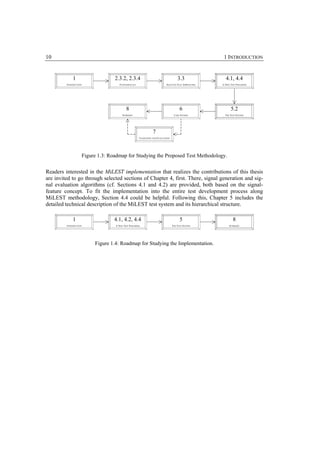
Figure 1.2: Roadmap for Gaining the General Overview of this Thesis.                      9
Figure 1.3: Roadmap for Studying the Proposed Test Methodology.                          10
Figure 1.4: Roadmap for Studying the Implementation.                                     10

Figure 2.1: Interactions of Embedded System with the Environment.                        12
Figure 2.2: A Simple Closed–Loop Controller.                                             15
Figure 2.3: The Multiple V-Model.                                                        16
Figure 2.4: The Five Test Dimensions.                                                    23

Figure 3.1: Overview of the Taxonomy for Model-based Testing.                            34
Figure 3.2: Trapezoid Selecting the Range of the Test Approaches.                        43

Figure 4.1: A Hybrid Embedded System with Discrete- and Continuous-timed Signals.        55
Figure 4.2: A Descriptive Approach to Signal Feature.                                    55
Figure 4.3: Signal-Features Generation – a few instances.                                59
Figure 4.4: Signal-Features Generation – a Generic Pattern.                              59
Figure 4.5: Signal-Features Evaluation – a Generic Pattern.                              60
Figure 4.6: Signal-Features Classification based on the Feature Identification Mechanism. 62
Figure 4.7: Feature Generation: Increase Generation and the Corresponding SL Block
           masks.                                                                        66
Figure 4.8: Feature Extraction: Increase.                                                67
Figure 4.9: Feature Extraction: Constant.                                                67
Figure 4.10: Relative Tolerance Block.                                                   68
VIII                                                                         LIST OF FIGURES


Figure 4.11: Feature Generation: Linear Functional Relation.                             68
Figure 4.12: Feature Extraction: Linear Functional Relation.                             68
Figure 4.13: Feature Extraction: Minimum to Date.                                        69
Figure 4.14: Feature Extraction: Local Maximum.                                          69
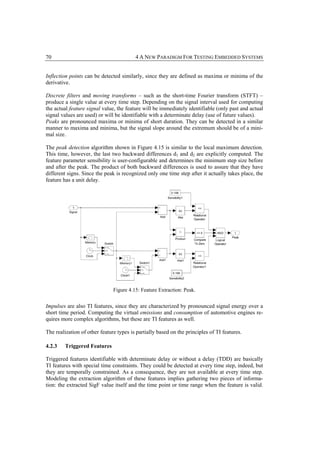
Figure 4.15: Feature Extraction: Peak.                                                   70
Figure 4.16: Feature Generation: Time Stamp of an Event.                                 73
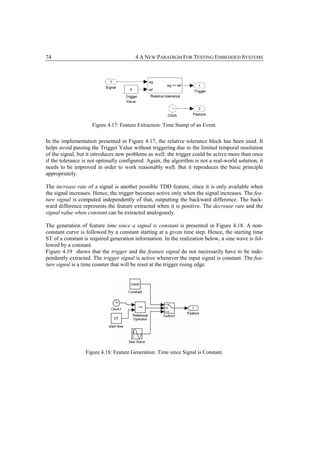
Figure 4.17: Feature Extraction: Time Stamp of an Event.                                 74
Figure 4.18: Feature Generation: Time since Signal is Constant.                          74
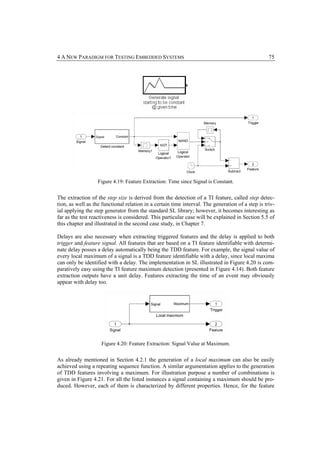
Figure 4.19: Feature Extraction: Time since Signal is Constant.                          75
Figure 4.20: Feature Extraction: Signal Value at Maximum.                                75
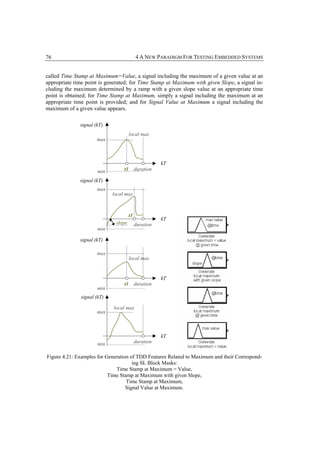
Figure 4.21: Examples for Generation of TDD Features Related to Maximum and their
            Corresponding SL Block Masks:
            Time Stamp at Maximum = Value,
            Time Stamp at Maximum with given Slope,
            Time Stamp at Maximum,
            Signal Value at Maximum.                                                     76
Figure 4.22: Feature Generation: Time between Two Events.                                79
Figure 4.23: Feature Generation: Signal Mean Value in the Interval between Two Events. 79
Figure 4.24: Reaction on a Step Function:
            a) A Step Function – u(kT).
            b) Step Response Characteristics y(kT): rise time (tr), maximum overshoot,
            settling time (ts) and steady-state error (ess).                             81
Figure 4.25: Step Response of Stable Second-Order System for Different Damping Ratios. 83
Figure 4.26: Reset Signal Extraction for Step Response Evaluation.                       83
Figure 4.27: Constancy Check for a Given Minimal Time within the Reset Signal Extraction.84
Figure 4.28: Step Detection within the Reset Signal Extraction.                          84
Figure 4.29: Feature Signals Extraction for Step Response Evaluation.                    85
Figure 4.30: Computing Response Step Size, Step Size and Expected Set Point.             86
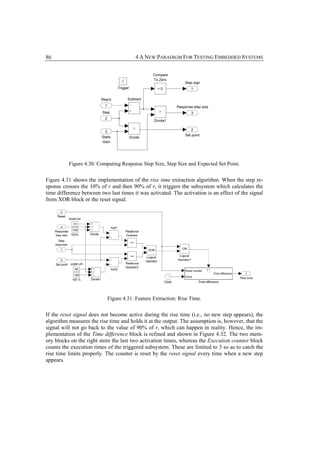
Figure 4.31: Feature Extraction: Rise Time.                                              86
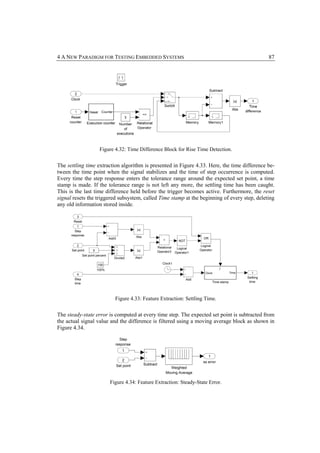
Figure 4.32: Time Difference Block for Rise Time Detection.                              87
Figure 4.33: Feature Extraction: Settling Time.                                          87
Figure 4.34: Feature Extraction: Steady-State Error.                                     87
Figure 4.35: Extraction of Trigger Signals.                                              88
LIST OF FIGURES                                                                             IX


Figure 4.36: Test Development Process.                                                    90
Figure 4.37: A Test Harness Pattern.                                                      91
Figure 4.38: A Pattern for the Test Requirement Specification.                            92
Figure 4.39: Structure of a VF – a Pattern and its GUI.                                   93
Figure 4.40: Assertion Block – a Pattern.                                                 93
Figure 4.41: Test Requirement Level within the Test Data Unit – a Pattern.                93
Figure 4.42: Structure of the Test Data Set – a Pattern.                                  94

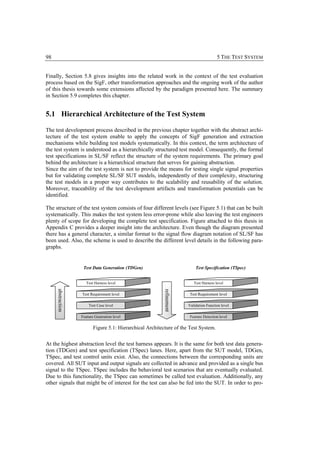
Figure 5.1: Hierarchical Architecture of the Test System.                                 98
Figure 5.2: Fundamental Structure of the Test Requirement Level – TDGen View.             100
Figure 5.3: Fundamental Structure of the Test Requirement Level – TSpec View.             100
Figure 5.4: Arbitration Mechanism.                                                        101
Figure 5.5: Fundamental Structure of the Test Case Level.                                 102
Figure 5.6: Exemplified Structure of the Test Case Level.                                 103
Figure 5.7: Fundamental Structure of the Validation Function Level.                       104
Figure 5.8: Fundamental Structure of the Feature Generation Level.                        105
Figure 5.9: Variants Management Structure.                                                105
Figure 5.10: Conversions of the identification mechanisms for TI – TDD and TDD – TID
             features.                                                                    106
Figure 5.11: Fundamental Structure of the Feature Detection Level for Preconditions.      107
Figure 5.12: Preconditions Synchronization Parameter Mask.                                107
Figure 5.13: Preconditions Synchronization – an Example.                                  109
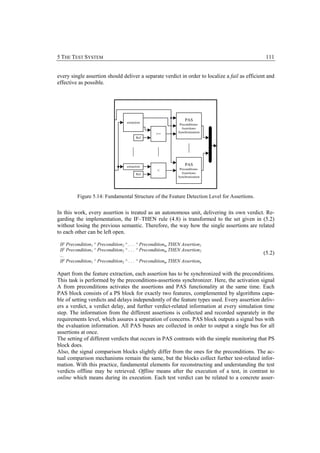
Figure 5.14: Fundamental Structure of the Feature Detection Level for Assertions.         111
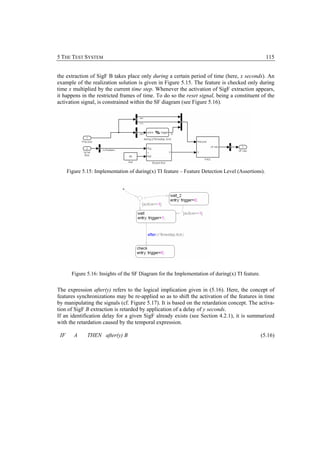
Figure 5.15: Implementation of during(x) TI feature – Feature Detection Level (Assertions).115
Figure 5.16: Insights of the SF Diagram for the Implementation of during(x) TI feature.   115
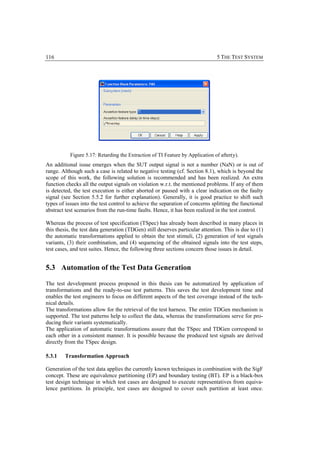
Figure 5.17: Retarding the Extraction of TI Feature by Application of after(y).           116
Figure 5.18: Test Stimuli Definition – an Abstract View.                                  119
Figure 5.19: Test Stimuli Definition – a Concrete View.                                   119
Figure 5.20: Steps of Computing the Representatives.                                      121
Figure 5.21: Steps of Computing the Representatives for Vehicle Velocity.                 123
Figure 5.22: Minimal Combination.                                                         125
Figure 5.23: One Factor at a Time Combination.                                            125
Figure 5.24: Pair-wise Combination.                                                       126
X                                                                               LIST OF FIGURES


Figure 5.25: Test Control and its Implication on the Test Data Sequencing.                128
Figure 5.26: Variant-Dependent Test Control.                                              132
Figure 5.27: Test Control Insights for Four Test Cases.                                   132
Figure 5.28: Basic hySCt.                                                                 134
Figure 5.29: HySCt including VFs Concepts.                                                135
Figure 5.30: The Metamodel Hierarchy of MiLEST.                                           138

Figure 6.1: Components of the ACC System.                                                 143
Figure 6.2: Components of the Cruise Control Subsystem.                                   143
Figure 6.3: Pedal Interpretation Insights.                                                145
Figure 6.4: The Test Harness around the Pedal Interpretation.                             145
Figure 6.5: Test Specification for Requirement 2.2.                                       146
Figure 6.6: Preconditions Set: v = const & phi_Acc increases & T_des_Drive >= 0.          147
Figure 6.7: Assertion: T_des_Drive increases.                                             147
Figure 6.8: Derived Data Generators for Testing Requirement 2.2.                          148
Figure 6.9: Test Data for one Selected Precondition Set.                                  148
Figure 6.10: Parameterized GUIs of Increase Generation.                                   149
Figure 6.11: Test Control for Ordering the Test Cases Applying Minimal Combination
             Strategy.                                                                    150
                                                      th
Figure 6.12: Execution of Test Case 4 Applying the 4 Test Data Variants Combination. 153
Figure 6.13: Resulting Test Data Constituting the Test Cases According to Minimal
             Combination Strategy.                                                        154
Figure 6.14: SUT Outputs for the Applied Test Data (1).                                   155
Figure 6.15: SUT Outputs for the Applied Test Data (2).                                   156
Figure 6.16: The Speed Controller Connected to a Vehicle Model via a Feedback Loop.       157
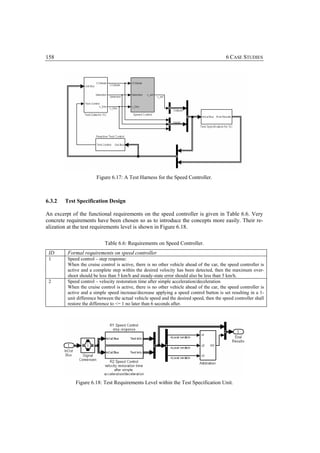
Figure 6.17: A Test Harness for the Speed Controller.                                     158
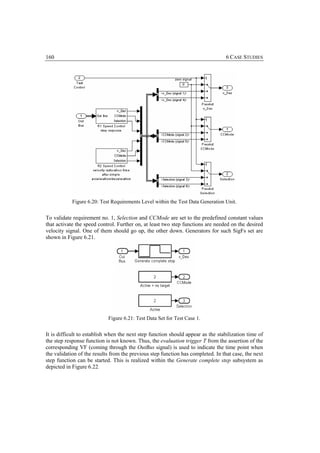
Figure 6.18: Test Requirements Level within the Test Specification Unit.                  158
Figure 6.19: VFs within the Test Specification for the Speed Controller.                  159
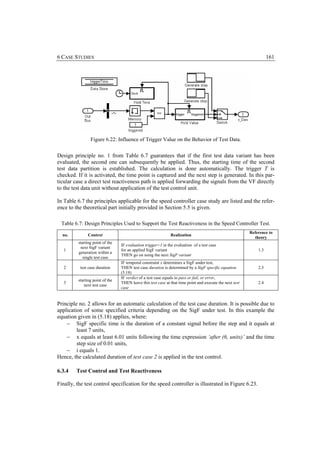
Figure 6.20: Test Requirements Level within the Test Data Generation Unit.                160
Figure 6.21: Test Data Set for Test Case 1.                                               160
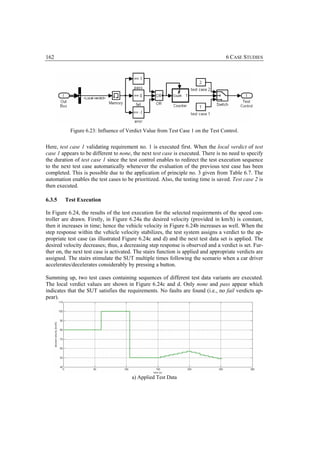
Figure 6.22: Influence of Trigger Value on the Behavior of Test Data.                     161
Figure 6.23: Influence of Verdict Value from Test Case 1 on the Test Control.             162
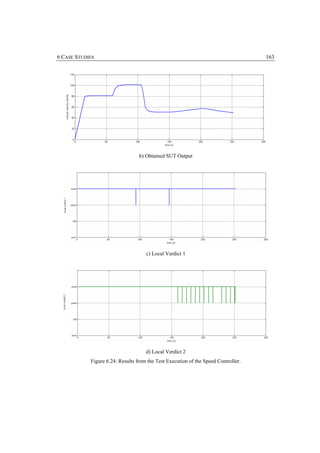
Figure 6.24: Results from the Test Execution of the Speed Controller.                     163
LIST OF FIGURES                                                                   XI


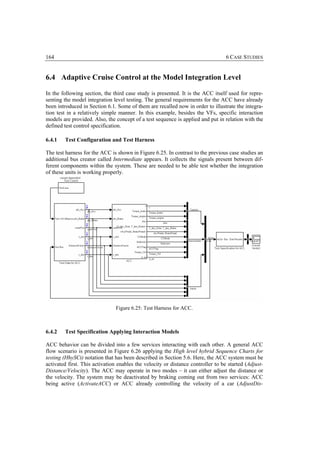
Figure 6.25: Test Harness for ACC.                                              164
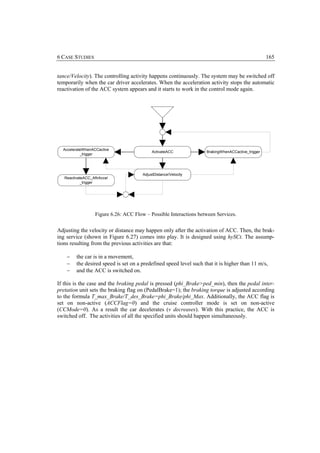
Figure 6.26: ACC Flow – Possible Interactions between Services.                 165
Figure 6.27: Service: Braking when ACC System is Active Trigger.                166
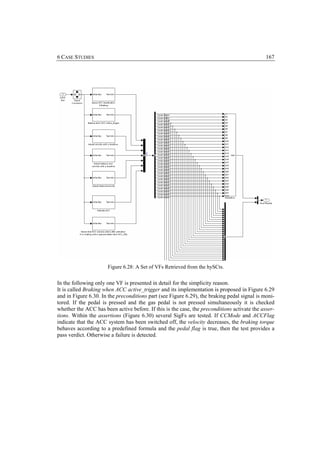
Figure 6.28: A Set of VFs Retrieved from the hySCts.                            167
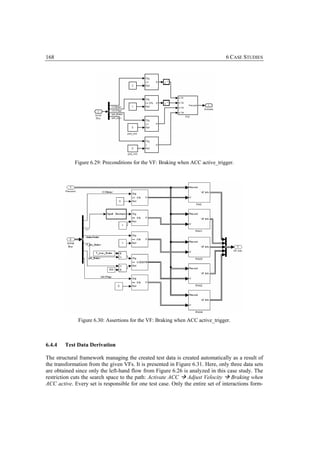
Figure 6.29: Preconditions for the VF: Braking when ACC active_trigger.         168
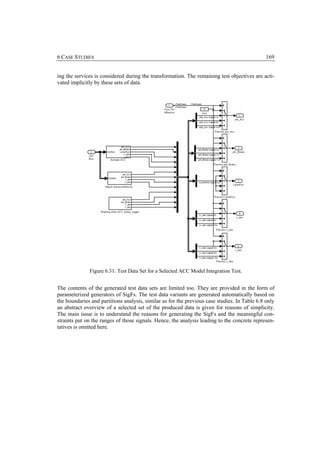
Figure 6.30: Assertions for the VF: Braking when ACC active_trigger.            168
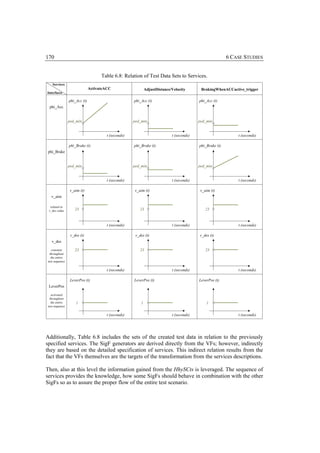
Figure 6.31: Test Data Set for a Selected ACC Model Integration Test.           169
Figure 6.32: Test Control for a Selected ACC Model Integration Test.            171
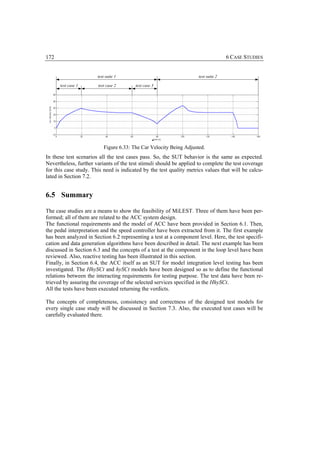
Figure 6.33: The Car Velocity Being Adjusted.                                   172

Figure 7.1: Integration of MiLEST in the MATLAB/Simulink environment.           174
Figure 7.2: Overview of the MiLEST Library.                                     174
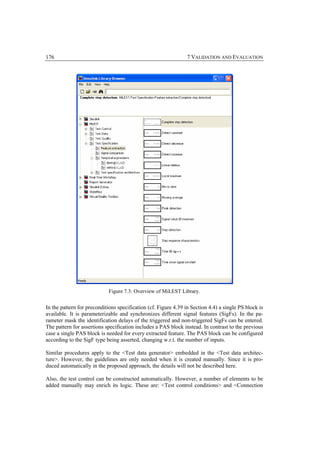
Figure 7.3: Overview of MiLEST Library.                                         176
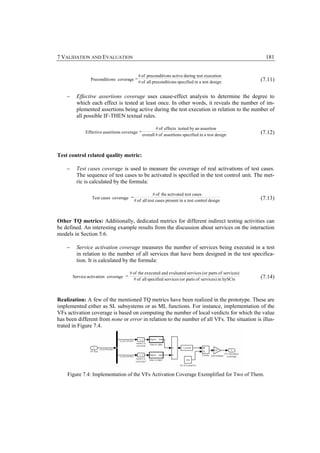
Figure 7.4: Implementation of the VFs Activation Coverage Exemplified for Two
          of Them.                                                              181

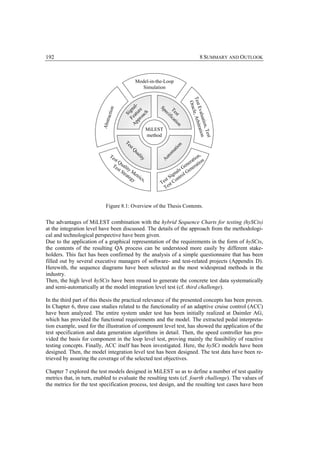
Figure 8.1: Overview of the Thesis Contents.                                    192
List of Tables

Table 3.1: Classification of the Selected Test Approaches based on the MBT Taxonomy.         44
Table 3.2: Classification of the Selected Test Approaches based on the Test Dimensions.      46
Table 3.3: Classification of the Test Approaches based on the Selected Criteria.             48
Table 3.4: Classification of MiLEST with respect to the MBT Taxonomy.                        49

Table 4.1: TI Features – Evaluation and Generation Algorithms.                               64
Table 4.2: TDD Features – Evaluation and Generation Algorithms.                              72
Table 4.3: TID Features – Evaluation and Generation Algorithms.                              78
Table 4.4: Illustration of Reasoning about Patterns.                                         95

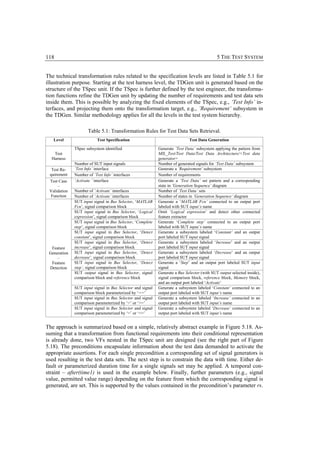
Table 5.1: Transformation Rules for Test Data Sets Retrieval.                             118
Table 5.2: Options for Increase Generation.                                               122
Table 5.3: Test Data Generation Dependencies.                                             129
Table 5.4: Test Control Principles on the Component Test Level.                           131

Table 6.1: Selected Requirements for Adaptive Cruise Control.                             142
Table 6.2: Requirements for Pedal Interpretation (excerpt).                               144
Table 6.3: SUT Inputs of Pedal Interpretation Component.                                  144
Table 6.4: SUT Outputs of Pedal Interpretation Component.                                 145
Table 6.5: SUT Inputs of Speed Controller.                                                157
Table 6.6: Requirements on Speed Controller.                                              158
Table 6.7: Design Principles Used to Support the Test Reactiveness in the Speed Controller
           Test.                                                                          161
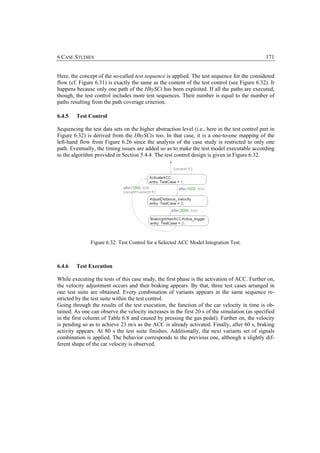
Table 6.8: Relation of Test Data Sets to Services.                                        170
LIST OF TABLES                                                                       XIII


Table 7.1: Classification of MiLEST Test Quality Metrics.                            183
Table 7.2: Variants Coverage for SigF and SUT Output Variants Coverage Exemplified
          for the Pedal Interpretation.                                              185
Table 7.3: Variants Coverage for SigF and SUT Output Variants Coverage Exemplified
          for the Speed Controller.                                                  185
Table 7.4: Variants Coverage for SigF and SUT Output Variants Coverage Exemplified
          for the ACC.                                                               186
– Part I –
 General
1 Introduction

                                                      “Science arose from poetry… when times change
                                                              the two can meet again on a higher level
                                                                                          as friends.”

                                                                       - Johann Wolfgang von Goethe


1.1 Background and Motivation

The worldwide market for advanced embedded controllers is growing strongly, driven mainly
by the increasing electronic applications in vehicles and the need for comfort and convenience.
Studies in [FS08] expect the European market to grow to € 1.14 billion in 2015 at a compound
annual growth rate (CAGR) of 10.9% from € 499 million in 2007, which substantiates the
growth of the advanced electronic control unit (ECU) market. Giving the background for com-
parison, the worldwide hardware and software market is expected to grow by 8% per annum
[Kri05], whereas the average annual growth rate of the gross domestic product (GDP) has been
5% between 2004 and 2006 [OECD08]. Global light-vehicle production is forecast to grow
from 67 million in 2007 to 80 million in 2015 [AES08].
Furthermore, software shows the highest growth rate within embedded systems. The estimated
average annual growth rates between 2004 and 2009 are 16% for embedded software [Kri05,
Hel+05, OECD05].
Within the past few years the share of software-controlled innovations in the automotive indus-
try has increased from 20% to 85% [Hel+05] and is still growing [MW04, SZ06, BKP+07].
Studies predict that software will determine more than 90% [KHJ07] of the functionality of
automotive systems in the near future. Consequently the impact of software on the customer
and, hence, on market shares and competition will be enormous. [LK08] conclude that software
is established as a key technology in the automotive domain.

1.1.1   Current Trends for Embedded Systems

This thesis is primarily focused on the research on the software aspects of embedded systems,
since this field is expected to have the greatest impact on industry, market, and everyday life in
the near future [BKP+07]. The increasing system functionality can only be realized by a reason-
able shift from hardware to software [LK08]. Software development offers more flexibility,
1 INTRODUCTION                                                                                                           3


more variants can be built and, finally, development time and cost can be reduced. At the same
time, this software often plays a critical role and a failure can result in expensive damage to
equipment, injury, or even death.
Moreover, the widening design productivity gap has to be addressed by advances in design ca-
pabilities. Automation of the process is greatly needed. This applies not only to embedded sys-
tems development and deployment, but also, consequently, to quality assurance of the entire
development process, and the resulting software – not to mention the fundamental research in
any of these areas [Hel+05].

1.1.2       Relevance of Model-based Activities

The creation of consistent, reusable, and well-documented models becomes the important stage
in the development of embedded systems [Hel+05]. Hence, the concept of model-based devel-
opment (MBD) emerges. Due to the increasing complexity of the developed systems it is neces-
sary to model correctly and to implement the chosen design in a correct manner. The future
importance of design-level methods and tools is illustrated by the current shift from implemen-
tation towards design [UL06, CD06]. A lot of decisions formerly made during the implementa-
tion phase should already be done on a higher level of abstraction. The paradigm shift is also
reflected by the increasing use of modeling tools, such as MATLAB®/Simulink®/Stateflow®
(ML/SL/SF) [MathML, MathSL, MathSF] or UML®-based tools [UML, BBH04, BGD07].

With the trend towards behavioral modeling in several embedded systems domains, the imple-
mentation of such models becomes gradually more straightforward. This implies a new stan-
dard of the engineers’ competence at the design level [Hel+05]. Subsequently, the role of the
traditional programmer becomes more restricted since the properly designed models are often
executable. Virtual prototyping, integration, or transformation into different kinds of model is
already possible. Hence, substantial parts of the implementation are generated based on models.
The generated code, if optimized 2, is compiled in the traditional way for different platforms.
Such an approach is manifested within the standardization efforts of the Object Management
Group (OMG) in the context of Model Driven Architecture (MDA) [MDA], where platform-
independent models (PIMs) can be enriched with platform-specific information. The resulting
platform specific models (PSMs) are then the basis for code generation. Also, AUTomotive
Open System Architecture (AUTOSAR) [ZS07] contains the idea of MDA, although a bit more
specific. It shows that in the near future, generation of the optimized code from models will be
possible without losing the precision of handwritten code.

MBD introduction is clearly to be observed in the automotive domain. At the end of the 1990s a
paradigm shift in the development of software-based vehicle functions was initiated. Tradi-
tional software development on the basis of textual specifications and manual coding has not
been possible any more due to the increasing complexity of software-intensive systems, espe-
cially in the context of control theory. Hence, MBD emerged with the application of executable


2
    The limited resources of the embedded systems for which the code is generated require optimization techniques to be ap-
    plied whenever possible in order to generate efficient code with respect to different dimensions (e.g., memory consump-
    tion or execution speed) [SCD+07].
4                                                                                 1 INTRODUCTION


models and automatic coding [SM01, CFG+05, LK08] in its background. Within MBD, an ex-
ecutable functional model of the ECU is created at an early stage in the development process.
The model consists usually of block diagrams and extended state machines. It can be simulated
together with a plant (e.g., a vehicle) so as to be implemented on the ECU afterwards. Due to
the availability of executable models, analytical methods can be applied early and integrated
into subsequent development steps. The models form a basis for further activities, such as code
generation, model transformations, validation, verification, or testing. The positive effects such
as early error detection and early bug fixing are obvious [CFB04, SG07].

In this thesis, the principles of system development apply to the test system as well. If the dis-
cussion about the relevance of models and model-based development is true for software and
system production, it is also valid for their quality-assurance activities, obviously, including
testing [Dai06, ISTQB06]. With this practice, the concept of model-based testing emerges.

1.1.3   Quality and Testing

An embedded system [BBK98, LV04] is a system built for dedicated control functions. Unlike
standard computer systems, embedded systems do not usually come with peripheral devices,
since hardware is minimized to the greatest possible extent. Embedded software [LV04] is the
software running on an embedded system. Embedded systems have become increasingly so-
phisticated and their software content has grown rapidly in the last few years. Applications now
consist of hundreds of thousands, or even more, lines of code. The requirements that must be
fulfilled while developing embedded software are complex in comparison to standard software.
Embedded systems are often produced in large volumes and the software is difficult to update
once the product is deployed. Embedded systems interact with real-life environment. Hybrid
aspects are often expressed via mathematical formulas. In terms of software development, in-
creased complexity of products, shortened development cycles, and higher customer expecta-
tions of quality implicate the extreme importance of software testing. Software development
activities in every phase are error prone, so the process of defect detection plays a crucial role.
The cost of finding and fixing defects grows exponentially in the development cycle. The soft-
ware testing problem is complex because of the large number of possible scenarios. The typical
testing process is a human-intensive activity and as such it is usually unproductive and often
inadequately done. Nowadays, testing is one of the weakest points of current development prac-
tices. According to the study in [Enc03] 50% of embedded systems development projects are
months behind schedule and only 44% of designs meet 20% of functionality and performance
expectations. This happens despite the fact that approximately 50% of total development effort
is spent on testing [Enc03, Hel+05]. The impact of research on test methodologies that reduce
this effort is therefore very high and strongly desirable [ART05, Hel+05].

Although, a number of valuable efforts in the context of testing already exist, there is still a lot
of space to improve the situation. This applies in particular to the automation potential of the
test methods. Also, a systematic, appropriately structured, repeatable, and consistent test speci-
fication is still an aim to be reached. Furthermore, both abstract and concrete views should be
supported so as to improve the readability, on the one hand, and assure the executability of the
resulting test, on the other. In the context of this work, further factors become crucial. The test-
ing method should address all aspects of a tested system – whether a mix of discrete and con-
tinuous signals, time-constrained functionality, or a complex configuration is considered. In
order to establish a controlled and stable testing process with respect to time, budget and soft-
ware quality, the software testing process must be modeled, measured and analyzed [LV04].
1 INTRODUCTION                                                                                    5


The existence of executable system models opens the potential for model-based testing (MBT).
Nowadays, MBT is widely used; however, with slightly different meanings. In the automotive
industry MBT is applied to describe all testing activities in the context of MBD [CFS04,
LK08]. It relates to a process of test generation based on the model of a system under test
(SUT). A number of sophisticated methods representing the automation of black-box test de-
sign [UL06] are used. Surveys on different MBT approaches are given in [BJK+05, Utt05,
UL06, UPL06, D-Mint08]. This will be discussed in Section 2.3.4 in detail.

In this thesis, additionally, requirements-based testing is considered. Furthermore, a graphical
form of a test design will increase the readability. The provided test patterns will considerably
reduce the test specifications effort and support their reusability. Then, an abstract and common
manner of describing both discrete and continuous signals will result in automated test signals
generation and their evaluation.

1.1.4   Automotive Domain

Studies show that the strongest impact of embedded systems on the market has to be expected
in the automotive industry. The share of innovative electronics and software in the total value
of an automobile is currently estimated to be at least 25%, with an expected increase to 40% in
2010 and up to 50% after 2010 [Hel+05, SZ06]. Prominent examples of such electronic systems
are safety facilities, advanced driver assistance systems (ADAS), or adaptive cruise control
(ACC). These functionalities are realized by software within ECUs. A modern car has up to 80
ECUs [BBK98, SZ06].
Furthermore, the complexity of car software dramatically increases as it implements formerly
mechanically or electronically integrated functions. Yet, the functions are distributed over sev-
eral ECUs interacting with each other.
At the same time, there is a demand to shorten time-to-market for a car by making its software
components reliable and safe. Additionally, studies in [Dess01] show that the cost of recalling a
car model with a safety-critical failure can be more than the cost of thorough test-
ing/verification. Under these circumstances the introduction of quality-assurance techniques in
the automotive domain becomes obvious and will be followed within this work.


1.2 Scope, Contributions and Structure of the Thesis

After a short motivation on the topic discussed in this thesis, the concrete problems handled
here, are outlined. Then, the structure of the thesis is provided, followed by its roadmap for
reading purposes.
In addition, before the main contributions are explained, a brief report on the scope is given.
The major results achieved in this thesis apply to the software part of embedded systems, in
general. Following the current trends of model-based development, the actual scope of this
work refers to the models of software, on which, the systems are built. To avoid repeating this
term, whenever system (or system model, system design, software) is referred to in the thesis,
the model of a software-intensive embedded system is usually meant, unless the context is ex-
plicitly indicated. This form of reasoning reflects the tendency to study the abstract level of sys-
tems within the considered domain [Pre03b, Con04b, Utt05, BFM+05, CFG+05, AKR+06,
BDG07]. This practice also reflects the trend that the embedded systems are often seen in a ho-
6                                                                                 1 INTRODUCTION


listic way, i.e., both software and its surrounding hardware trigger the expected functionality
[KHJ07].
The main research problem this thesis is concerned with, relates to assuring the quality of the
embedded system by means of testing at the earliest level of its development. Based on the
analysis of the overall software and test development process, the following questions arise:

    1. What is the role of a system model in relation to quality assurance? What is the role of
       a test model and what elements does such a test model include? What does MBT mean
       in the context of embedded systems? Is it possible to use a common language for both
       system and test specifications?
    2. How can discrete and continuous signals be handled at the same time? How should a
       test framework be designed and a test system realized? What are the reasons and con-
       sequences of the design decisions in terms of test generation and test evaluation?
    3. How can the process of test specification and test execution be automated to the high-
       est possible extent? What is / is not possible to be automated and why?
    4. How can the test quality of the test method be assured itself? Which means should be
       used and what do they mean in practice?

The resulting contributions of this thesis can be divided into four main areas:

    1. Model-based test methodology for testing the functional behavior of embedded, hybrid,
       real-time systems based on the current software development trends from practice;
    2. In the scope of this methodology, a manner to test the behavior of hybrid systems, in-
       cluding the algorithms for systematic test signal generation and signal evaluation;
    3. Synthesis of a test environment so as to automate the creation of a comprehensive test
       system, which is achieved by means of test patterns application that are organized into
       a hierarchy on different abstraction levels;
    4. Assurance of the quality of the resulting test by providing the test metrics and support-
       ing high coverage with respect to different test aspects.

These are denominated as challenges in the following and the discourses are tackled for each of
them separately, but not in isolation.

For the first challenge, now an introductory remark should already be given. The test frame-
work resulting from this thesis is called Model-in-the-Loop for Embedded System Test
(MiLEST). It is realized in the ML/SL/SF since currently about 50% [Hel+05] of functional be-
havior for embedded systems, particularly in the automotive domain, is modeled using this en-
vironment. Considering the fact that nowadays the integration of validation, verification, and
testing techniques into common design tools is targeted [Hel+05], the argumentation for choos-
ing this framework for test extensions becomes clear. This practice enables to find a common
understanding of software quality problems for both system and test engineers.

In order to clarify and solve the challenges listed above, in the upcoming paragraphs the struc-
ture of this work will be provided with a special emphasis on the given challenges and devel-
oped contributions for each of them.

This thesis is organized as follows. This chapter gives an overview and scope of the research
topics of this thesis. It introduces the problems that the work is dealing with, its objectives, con-
tributions, structure, and roadmap.
1 INTRODUCTION                                                                                  7


Next, Chapter 2 (cf. Figure 1.1) includes the backgrounds on embedded systems, control the-
ory, ML/SL/SF environment, and test engineering. Additionally, the test dimensions are ex-
tracted so as to guide the general aims of this work. The emphasis is put on functional, abstract,
executable, and reactive tests at the Model-in-the-Loop (MiL) level.

Chapter 3 introduces the related work on MBT with respect to embedded systems. For that pur-
pose an MBT taxonomy is provided. Herewith, a link to the first challenge is done. The roles of
the system model and test model are analyzed. Also, common language for both of them is ap-
plied. The discussion results in a shape of the test methodology proposed in this thesis. It is
called Model-in-the-Loop for Embedded System Test (abbreviated as MiLEST) and realized as
an ML/SL/SF library.
All of the chapters named so far constitute the first general part of the thesis.

The second part relates to the test approach developed herewith. Chapter 4 characterizes a new
means for signal description by application of signal features. By that, it relates to the second
challenge answering the question of how to handle continuous and discrete signals simultane-
ously. The algorithms for signal-feature generation and evaluation are presented. They are used
along a nested architecture for the resulting test system, which is described in Chapter 5 in de-
tail. Additionally, an overview of the proposed test development process and its automation is
provided. A discussion on test patterns is given so as to support a fast and efficient reusability
of the created test specifications. By that, the third challenge is addressed.

Chapter 5 utilizes the results of Chapter 4 and addresses the further questions of the second
challenge. Different abstraction levels of the MiLEST test system are outlined. The test harness
level including the patterns for test specification, test data generator, and test control is de-
scribed. Then, the test requirements level, test case, and validation function levels follow sub-
sequently. Based on that, algorithms for an automatic test stimuli generation are investigated.
This relates again to the third challenge. The obtained test models can be used for both validat-
ing the system models and testing its implementation.
Chapter 5 also includes the first considerations on the integration level tests. Here, benefits of
applying different views on the test specification are discussed.

Finally, the last part of this thesis reveals the practical substance of the work. In Chapter 6,
three case studies are discussed to validate each of the presented concepts in practice. The ex-
amples are related to the functionality of an adaptive cruise control utilized in a vehicle.

Afterwards, they are evaluated in Chapter 7, which deals with the test quality metrics for the
proposed test methodology, obtained test designs, and generated test cases. This piece of work
relates to the fourth challenge. The concepts of test completeness, consistency, and correctness
are handled herewith.

Chapter 8 completes this work with a summary and outlook. The MiLEST capabilities and limi-
tations are reviewed, the general trends of the quality assurance for embedded systems are re-
called and influences of the contributions of this thesis are outlined.
8                                                                                            1 INTRODUCTION


        Part I – Introduction

                           Chapter 2                                    Chapter 3

                       Fundamentals                                 Test Approaches


          Collection of Test Patterns –                                 Model-based Testing Tools –
          Appendix B                                                    Appendix A


        Part II – MiLEST
                                                 Chapter 4

                                          Signal-Feature Approach

                                                 Chapter 5

                                                   Test
                                                  System
                                Test Data                              Test
                                Generation                         Specification
                                               Transformation


                                                                        Test System Architecture –
                                                                        Appendix C


        Part III – MiLEST Application

                           Chapter 6                                    Chapter 7

                       Case Studies                             Validation and Evaluation


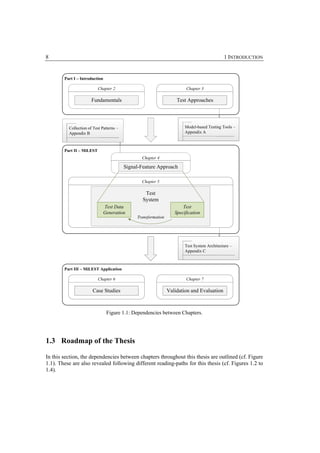
                                 Figure 1.1: Dependencies between Chapters.


1.3 Roadmap of the Thesis

In this section, the dependencies between chapters throughout this thesis are outlined (cf. Figure
1.1). These are also revealed following different reading-paths for this thesis (cf. Figures 1.2 to
1.4).
1 INTRODUCTION                                                                                                                                  9


The detailed discussion on software and test engineering in Chapter 2 serves mostly as a foun-
dation for the considered topics.
Chapter 3 includes a review of the model-based testing approaches. Readers who are familiar
with the related work on testing embedded systems are invited to skip this chapter and to con-
sider its contents as additional information.
Chapters 4 and 5 contain the central achievements of the presented work. The concept of signal
feature which is presented in Chapter 4 is used as the basis for Chapter 5. Thus, Chapter 5
should not be read without the understanding of the backgrounds outlined in Chapter 4.
Chapters 6 and 7 validate and evaluate the proposed concepts.

The three major perspectives that might be interesting for the reader yield three different read-
ing-paths through this thesis, besides the usual sequential one. Below, a brief survey of these
paths is given.

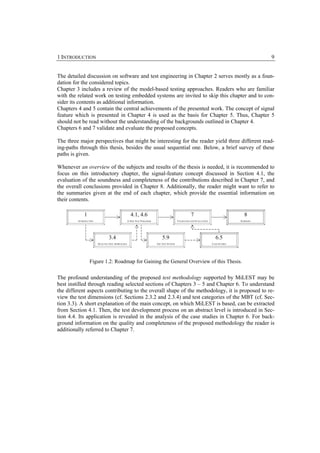
Whenever an overview of the subjects and results of the thesis is needed, it is recommended to
focus on this introductory chapter, the signal-feature concept discussed in Section 4.1, the
evaluation of the soundness and completeness of the contributions described in Chapter 7, and
the overall conclusions provided in Chapter 8. Additionally, the reader might want to refer to
the summaries given at the end of each chapter, which provide the essential information on
their contents.

             1
         Button
                                                     4.1, 4.6
                                                      Button
                                                                                                      7
                                                                                                  Button
                                                                                                                                        8
                                                                                                                                      Button
         INTRODUCTION                              A NEW TEST PARADIGM                     VALIDATION AND EVALUATION                  SUMMARY


                                 3.4
                              Button
                                                                             5.9
                                                                           Button
                                                                                                                         6.5
                                                                                                                       Button
                        SELECTED TEST APPROACHES                         THE TEST SYSTEM                               CASE STUDIES


                  Figure 1.2: Roadmap for Gaining the General Overview of this Thesis.


The profound understanding of the proposed test methodology supported by MiLEST may be
best instilled through reading selected sections of Chapters 3 – 5 and Chapter 6. To understand
the different aspects contributing to the overall shape of the methodology, it is proposed to re-
view the test dimensions (cf. Sections 2.3.2 and 2.3.4) and test categories of the MBT (cf. Sec-
tion 3.3). A short explanation of the main concept, on which MiLEST is based, can be extracted
from Section 4.1. Then, the test development process on an abstract level is introduced in Sec-
tion 4.4. Its application is revealed in the analysis of the case studies in Chapter 6. For back-
ground information on the quality and completeness of the proposed methodology the reader is
additionally referred to Chapter 7.
10                                                                                                    1 INTRODUCTION


             1
          Button
                                  2.3.2, 2.3.4
                                     Button
                                                                                    3.3
                                                                                  Button
                                                                                                       4.1, 4.4
                                                                                                        Button
         INTRODUCTION                FUNDAMENTALS                         SELECTED TEST APPROACHES   A NEW TEST PARADIGM


                                          8
                                      Button
                                                                                      6
                                                                                  Button
                                                                                                           5.2
                                                                                                         Button
                                       SUMMARY                                   CASE STUDIES          THE TEST SYSTEM


                                                               7
                                                           Button
                                                    VALIDATION AND EVALUATION


                    Figure 1.3: Roadmap for Studying the Proposed Test Methodology.


Readers interested in the MiLEST implementation that realizes the contributions of this thesis
are invited to go through selected sections of Chapter 4, first. There, signal generation and sig-
nal evaluation algorithms (cf. Sections 4.1 and 4.2) are provided, both based on the signal-
feature concept. To fit the implementation into the entire test development process along
MiLEST methodology, Section 4.4 could be helpful. Following this, Chapter 5 includes the
detailed technical description of the MiLEST test system and its hierarchical structure.

             1
          Button
                                  4.1, 4.2, 4.4
                                     Button
                                                                                      5
                                                                                  Button
                                                                                                             8
                                                                                                         Button
         INTRODUCTION             A NEW TEST PARADIGM                           THE TEST SYSTEM           SUMMARY


                         Figure 1.4: Roadmap for Studying the Implementation.
2 Fundamentals

                                                       “The important thing is not to stop questioning.”

                                                                                       - Albert Einstein


In this chapter the fundamentals of embedded systems, their development and testing are pro-
vided. Firstly, in Section 2.1, the notion of the system under consideration from different per-
spectives is given. Thus, the definitions of embedded, hybrid, reactive, and real-time systems
are explained, respectively. In addition, the backgrounds on electronic control units and control
theory are discussed. Understanding the characteristics of the system under test (SUT) enables
further considerations on its development and quality-assurance methods. Further on, in Section
2.2, the concepts of model-based development from the automotive viewpoint are introduced.
MATLAB/Simulink/Stateflow (ML/SL/SF) as an example of a model-based development
framework is introduced and related approaches are listed.
Section 2.3 gives an insight into the testing world. First, the testing aspects important for the
automotive domain are described in detail by categorizing them into different dimensions.
Then, requirements on testing within the considered domain are specified. Furthermore, a
model-based testing definition and its goals are introduced. A discussion on test patterns com-
pletes the theoretical basics.


2.1 Yet Another System under Test

As already discussed in Chapter 1, the main contribution of this work applies to models of soft-
ware-intensive embedded systems. Whenever a system (or system model, system design, soft-
ware) is referred to in this thesis, the model is usually meant.


2.1.1   Embedded System

An embedded system (ES) is any computer system or computing device that performs a dedi-
cated function or is designed for use with a specific software application [BBK98, Hel+05]. In-
stead of dealing with data files, it deals with the control of physical phenomena. It is frequently
connected to a physical environment through sensors and actuators as shown in Figure 2.1.
12                                                                           2 FUNDAMENTALS


                              Environment (i.e., External Process)


                               Sensor                    Actuator


                                        Embedded System
                                 (e.g., Electronic Control Unit)
                                      Embedded Software


               Figure 2.1: Interactions of Embedded System with the Environment.


ES [Hel+05] is a specialized computer system that is part of a larger system or machine. All
appliances that have a digital interface – watches, microwaves, cars, planes, industrial robots,
security systems – utilize ESs. Some of them include an operating system, but many are so spe-
cialized that the entire logic can be implemented as a single program. Nowadays, software inte-
grated with the ES, also called embedded software [Con04b], makes up 85% [Hel+05] of the
value of the entire ES.


2.1.2   Hybrid System

Hybrid means generally combining two different technologies or systems. A hybrid system is a
dynamic system that exhibits both continuous and discrete dynamic behavior [Hen00]. Its be-
havior can be described by both differential equations and difference equations. Hybrid systems
evolve in continuous time with discrete jumps at particular time instances [Tiw02]. For exam-
ple, an automobile engine whose continuous fuel injection is regulated by a discrete microproc-
essor is a hybrid system [Hen00].


2.1.3   Reactive System

In opposite to the transformative systems, reactive systems with a typically non-terminating
behavior interact with their environment. As a result, once started, a reactive system operates
continually [Krü00]. It accepts input from its environment, it changes its internal state at the
same time [Hel+05] and produces corresponding outputs. Reactive systems never halt, although
the output of these systems may always be empty from a certain point in time onward.
A reactive system is characterized by a control program that interacts with the environment or
another control program [MW91, HP85]. ESs are usually reactive.
2 FUNDAMENTALS                                                                                  13


2.1.4      Real-Time System

According to [LL90], a real-time system is a computing system where initiation and termina-
tion of activities must meet specified timing constraints. The correctness of a computation not
only depends on the logical correctness of the system, but also on the time at which the result is
produced. A real-time system has to obey hard, soft, and statistical [Dess01, Hel+05] real-time
properties.

Hard real-time properties are timing constraints which have to be fulfilled in any case. An ex-
ample is the autopilot of an aircraft, where violation of hard real-time constraints might lead to
a crash.

Soft real-time properties are time constraints which need to be satisfied only in the average
case, to a certain percentage, or fast enough. An example is video transmission where a delayed
frame might either be displayed or dropped, which is not perceivable as long as no consecutive
frames are affected [Dess01]. Another example is the software that maintains and updates the
flight plans for commercial airliners.

In statistical real time, deadlines may be missed, as long as they are compensated by faster per-
formance elsewhere to ensure that the average performance meets a hard real-time constraint.
To be able to fully assess the consequences of the statistical behavior, stochastic analysis is re-
quired. However, it is always possible to transform this into a deterministic analysis by investi-
gating the worst case situation [Dess01].

Typical examples of timing constraints are:
   − the value from the sensor must be read every 100 ms
   − the Worst-Case Execution Time (WCET) of process A is 160 ms
   − it is expected that when event B finishes, event A appears after 10 ms
   − it is expected that when event B appears, then during 20 ms signal A will be continu-
        ously sent
   − it is expected that within 5 ms all events stop


2.1.5      Electronic Control Unit in the Automotive

In the automotive domain, an embedded system is called an electronic control unit (ECU). It
controls one or more of the electrical subsystems in a vehicle. In a car, ECUs are connected via
bus systems such as, e.g., CAN 3, LIN 4, MOST 5, FlexRay™ 6 [Sch06] among others.


3
    CAN in Automation – www.can-cia.org [04/04/08].
4
    LIN Consortium – www.lin-subbus.de [04/04/08].
5
    MOST Cooperation – www.mostnet.org [04/04/08].
6
    FlexRay Group – www.flexray.com [04/04/08].
14                                                                                                   2 FUNDAMENTALS


An instance of embedded system in the form of an ECU controller has been depicted in Figure
2.1. The external process is a process that can be of physical, mechanical, or electrical nature
[GR06]. Sensors provide information about the current state of the external process by means
of so-called monitoring events. They are transferred to the controller as input events.
The controller must react to each received input event. Events usually originate from sensors.
Depending on the received events from sensors, corresponding states of the external process
are determined.
Actuators receive the results determined by the controller which are transferred to the external
process.

A classification of the application fields of ECUs according to [SZ06] is given below:
    − Body (e.g., for headlights, brake lights, air conditioning, power windows)
    − Comfort (e.g., for seat and steering-position adjustment, seat heating)
    − Engine and power train (e.g., for fuel injection, battery recharging)
    − Dashboard for speedometer, odometer, fuel gauge
    − Chassis, driving functions
    − Telematics and entertainment for audio/video systems
Automotive software, similarly to embedded software for an embedded system, the software is
driving an ECU within automobiles.


2.1.6       Control Theory

Considering the ECUs (in particular, closed-loop ECUs), it is inevitable to introduce the basics
of control theory. Aristotle 7 [Ack81] already started to think about the control theory [Ben79].
Following his statement “… if every instrument could accomplish its own work, obeying or an-
ticipating the will of others … chief workmen would not want servants, nor masters slaves”
[AR], his wish was to automatize the behavior of others (e.g., people, devices) using a set of
clearly defined criteria. This is also the idea behind the development of embedded systems – to
force them so that they work in a manner they are designed. If so, quality assurance for this de-
velopment gains the priority too.

Control theory is an interdisciplinary branch of engineering and mathematics that deals with the
behavior of dynamic systems. The desired output of a system is called the reference. When one
or more output variables of a system need to follow a certain reference over time, a controller
manipulates the inputs to a system to obtain the desired effect on the output of the system.
Control theory introduces a feedback. Feedback is a process whereby some proportion of the
output signal of a system is passed (fed back) to the input. This is often used to control the dy-
namic behavior of the system [SG03, MSF05]. A closed-loop controller uses feedback to con-
trol states or outputs of a dynamic system. Its name is derived from the information path in the
system: process inputs (e.g., voltage applied to an electric motor) have an effect on the process


7
    Aristotle (384 B.C. – 322 B.C.) was a Greek philosopher, a student of Plato and teacher of Alexander the Great. He wrote
    on many different subjects, including physics, metaphysics, poetry, theater, music, logic, rhetoric, politics, government,
    ethics, biology and zoology [Ack81].
2 FUNDAMENTALS                                                                                     15


outputs (e.g., velocity or torque of the motor), which is measured with sensors and processed by
the controller. The resulting control signal is used as input to the process, closing the loop.

Closed-loop controllers have the following advantages over open-loop controllers [Kil05]:
    − guaranteed performance
    − rejection of disturbance (e.g., unmeasured friction in a motor)
    − capability to stabilize unstable processes
    − reduced sensitivity to parameter variations
    − improved performance for reference tracking

A simple controller (see Figure 2.2) attempts to correct the error between a measured process
variable (i.e., output – y(t)) and a desired setpoint (i.e., reference – r(t)) by calculating and then
producing a corrective action (i.e., error – e(t)) that can adjust the process accordingly.
In particular, the output of the system y(t) is fed back to the reference value r(t), through a sen-
sor measurement. The controller C then uses the error e(t) (i.e., difference between the refer-
ence and the output) to change the inputs u to the system under control P (e.g., a car).

                                r +         e               u        y
                                                    C           P
                                        -


                            Figure 2.2: A Simple Closed–Loop Controller.


This situation is called a single-input-single-output (SISO) control system. Multi-Input-Multi-
Output (MIMO) systems, with more than one input/output, are common. In such cases, vari-
ables are represented through vectors instead of simple scalar values. For some distributed pa-
rameter systems the vectors may be infinite-dimensional (typically functions).

Common closed-loop controller architecture, widely used in industrial applications, is the pro-
portional-integral-derivative (PID) controller [Kil05]. Its name refers to the three terms operat-
ing on the error signal to produce a control signal. Its general form is:

                                                        t
                                                                          de
                               u (t ) = K P e(t ) + K I ∫ e(t )dt + K D      ,
                                                        0
                                                                          dt
where:     KP – proportional gain
           KI – integral gain
           KD – derivative gain.

Larger KP typically means faster response since the larger the error, the larger the proportional
term compensation. An excessively large proportional gain will lead to process instability and
oscillation. Larger KI implies steady-state errors are eliminated quicker. The trade-off is larger
overshoot. Larger KD decreases overshoot, but slows down transient response and may lead to
instability due to signal noise amplification in the differentiation of the error.

The desired closed-loop dynamics is obtained by adjusting the three parameters KP, KI and KD,
usually iteratively by tuning and without specific knowledge of a model under control [Kil05].
16                                                                             2 FUNDAMENTALS


2.2 Model-based Development

The development process of embedded systems usually occurs on at least three different levels.
First a model of the system is built. It simulates the required system behavior and usually repre-
sents an abstraction of the system. When the model is revealed to be correct, code is generated
from the model. This is the software level. Eventually, hardware including the software is the
product of the development. The reason for building those intermediate levels is the fact, that it
is much cheaper and faster to modify a model than to change the final product. The entire proc-
ess is called model-based development (MBD).
The multiple V-model [BN02, SZ06], based on the traditional V-Modell®, takes this phenome-
non into account. The V-Modell is a guideline for the planning and execution of development
projects, which takes into account the whole life cycle of the system. The V-Modell defines the
results that have to be prepared in a project and describes the concrete approaches that are used
to achieve these results [VM06]. In the multiple V-model, each specification level (e.g., model,
software, final product) follows a complete V-development cycle, including design, build, and
test activities as shown in Figure 2.3. The essence of the multiple V-model is that different
physical representations of the same system on different abstraction levels are developed, aim-
ing at the same final functionality. Then, the complete functionality can be tested on those dif-
ferent platforms. Since certain detailed technical properties cannot be tested very well on the
model, they must be tested on the prototype instead. Testing the various SUT representations
often requires specific techniques and a specific test environment. Therefore, a clear relation
between the multiple V-model and the different test environments exists.


                    Model              Software                Hardware


                               Figure 2.3: The Multiple V-Model.


2.2.1   Issues in Model-based Development

In this thesis the automotive specific MBD process is taken into account to illustrate the prob-
lems and prepare the background for further considerations on quality assurance (QA).
Since automotive development is an interdisciplinary business including software, electrical
and mechanical engineering aspects, it is important to create an executable functional and
graphical model. Engineers can find a common functional understanding early in the design
phase and improve communication within their teams, with customers, or between car manu-
2 FUNDAMENTALS                                                                                17


facturers and suppliers [BN02, Gri03, Leh03, Con04a, Con04b, CFG+05, LK08]. Moreover,
separation of concerns appears. The core algorithms are isolated from the technical aspects such
as fixed-point scaling (i.e., the transformation of floating-point algorithms to fixed-point com-
putations), calibration data management and the representation of signals in memory [LK08].
That way the complexity of models is still manageable.

This work encompasses the functional and implementation models (i.e., physical behavioral
models) [KHJ07, Con04a] in detail. The objective of a functional model is to demonstrate the
feasibility of new functionalities and algorithms. Functional models are executable, but concen-
trate on the core function of the system. Their testing is reduced to the area of the core func-
tionality. Currently, the tests are nearly automated. Complex functional models are split into
sub-models and tested separately. Further on, if it is planned to generate the code automatically
from such functional models, they are refined and enhanced to the so-called implementation
models [KHJ07]. In such a case, they cover all aspects of the final product, except some parts
that are usually excluded from being developed using model-based techniques, such as signal
I/O code, task scheduling, performance, bootstrap code, or operating system-related functions.
The promise of the model-based design is to simulate, analyze, and validate the models prior to
implementation. Executing analysis early in the development cycle enables the detection and
correction of design problems sooner at a lower cost.
The most important open issue emerging here is how to assure a high quality of the functional
and implementation models. Any error at the early level is distributed down to the code and
hardware realization.


2.2.2   Other Model-based Technologies

The introduction of MBD led to the development of modeling technologies. Consequently ex-
ecutable high-level models can be obtained. The selection of a modeling technology is very
dependent on the type of system being modeled and the task for which the model is being con-
structed [Mos97]. Continuous systems are best modeled by differential equations supplemented
by algebraic constraints, if necessary, whereas discrete systems demand Petri nets, finite state
automata, Timed Communicating Sequential Processes (Timed CSP) [Mos97].

Some currently available modeling techniques offer a generalized environment and allow for
interaction between the methodologies. This enables heterogeneous systems of hybrid nature to
be modeled, combined and different views analyzed based on a common notation or environ-
ment. The modern techniques provide both support for model structure analysis of a dynamic
physical system and a comprehensive, systematic approach to describing differential equations.
Moreover, due to their compositional characteristics, they enable hierarchical modeling as well
as modifying a particular subsystem to a more detailed model. These technologies can be
MATLAB/Simulink/Stateflow (ML/SL/SF), LabView [LabV] and lately also Unified Modeling
Language™ (UML®) [UML], or company-specific.
Since graphical modeling languages increase the productivity benefits of 4 to 10 times as given
in [KHJ07, Hel+05], several efforts have been undertaken in that area. SCADE Suite™
[DCB04], ASCET [DSW+03], Charon [AGH00], Dymola [Soe00], HYSDEL [TB04], Hy-
Visual [LZ05], Modelica [Mod], hySC [GKS99] are some of the examples.

Additionally, methods such as correct-by-construction (CbyC) methods exist [BFM+05]. They
enable automatic code generation ensuring that what is verified on the model level can also be
18                                                                                           2 FUNDAMENTALS


verified on the embedded code level. Applying CbyC testing is still performed, but its role is to
validate the correct-by-construction process rather than to find faults. With the growing com-
plexity of software-intense embedded systems, CbyC and formal verification methods become
less applicable. It happens because of the increasing state space of the systems. Thus, sample-
based testing based on formal correctness criteria and test hypotheses gains importance
[BFM+05].
In the next section, ML/SL/SF will be discussed in detail since the approach proposed in this
thesis is based on this framework.


2.2.3      MATLAB/Simulink/Stateflow as a Framework

ML/SL/SF 8 is one of the most advanced solutions for modeling embedded systems in the auto-
motive domain. 50% of behavioral models within the control systems are designed applying
this tool, being the de-facto standard in the area [Hel+05].

MATLAB: MATLAB (ML) product [MathML] is a technical computing environment, includ-
ing the m language, for analyzing data and developing algorithms. It integrates computation,
data analysis, visualization, and programming so as to solve mathematical problems in techni-
cal and scientific applications [MathML]. The tool can be used in a number of fields, including
signal and image processing, communications, control design, test and measurement, financial
modeling and analysis, or computational biology.

Simulink: Simulink (SL) product [MathSL] integrated with ML is a software package in the
form of a simulation engine and a customizable set of libraries. It is an interactive graphical
environment enabling simulation and model-based development of dynamic systems.
SL offers different kinds of solvers for the numerical solution of differential equations and dif-
ference equations. SL models are organized as hierarchical block diagrams. Treating an SL
model as a program, the connections between the blocks would be variables, but the value of
such a variable would be a function defined over a continuum [LN05]. SL models are designed
applying blocks available in libraries. SL libraries are collections of special-purpose functions
that can be re-used in models. With this practice the development time is reduced, function re-
usability is supported, and the maintainability is improved. Blocks copied from a library remain
linked to their originals such that changes in the originals automatically propagate to the copies
in a model. Libraries ensure that the models automatically include the most recent versions of
the previously defined blocks and give fast access to the commonly-used functions. Several
dedicated libraries for a number of technical and industrial applications exist. A convenient fea-
ture of the SL environment is the possibility of its extension by creating new libraries. Another
one is the capability of integrating functions written in C using S-Functions.

Moreover, if automatic code generation is used to generate C code from the SL/SF model
(which is possible by applying e.g., Real-Time Workshop) [Tun04], the functions can be exe-
cuted in the real vehicle. Such code is run on hardware systems in real time. They are connected


8
    In the context of this thesis the following versions of the software have been used: MATLAB® 7.5.0.342, MATLAB®
    Report Generator 3.2.1™ (R2007b), Simulink® Report Generator™ 3.2.1 (R2007b), Simulink® 7.0 and Stateflow® 7.0;
    Release R2007b.
2 FUNDAMENTALS                                                                                   19


to the real plant by special I/O. As a consequence, changes can be made directly to the function
model and tried out by generating code once again [Bod05, BDH05, SCD+07, D-Mint08].
Implementation of the function on a production ECU is also done by automatic or semi-
automatic production code generation. However, the requirements on such a code generator are
much higher than for rapid control prototyping (RCP). The generated code must be highly effi-
cient, error-free, reproducible, and well documented [SCD+07].

A SL model is defined as a tuple SL = (B, root, sub_h, P, rlt, sig, subi, subo, C):
(i) B is the set of blocks in the model. Subsystem blocks Bs, in-blocks in subsystems Bi, out-
blocks in subsystems Bo (representing inputs and outputs of subsystems), merge blocks Bm and
blocks with memory Bmem. When referring to other types of ”basic” blocks Bb is used in this
paper. Furthermore, subsystem can be divided into, normal, virtual subsystems Bvs and non-
virtual subsystems Bns, Bs = Bvs ∪ Bns. The virtual subsystems do not affect the behavioral se-
mantics of SL, whereas the non-virtual can. Subsystems Bs, in-blocks, Bi and out-blocks Bo are
referred to as virtual blocks, since they are used purely for structuring and have no effect on the
behavioral semantics;
(ii) root ∈ Bvs is the root subsystem;
(iii) sub_h: B → Bs is a function that describes the subsystem hierarchy. For every block b,
sub_h.b gives the subsystem b is in. Note that sub_h.root = root;
(iv) P is the set of ports for inputs and output of data to and from blocks. The ports Pi ⊆ P is
the set of in-ports and Po ⊆ P is the set of out-ports, P = Pi ∪ Po;
(v) rlt: P → B is a relation that maps every port to the block it belongs to;
(vi) sig: Pi → Po maps every in-port to the out-port it is connected to by a signal;
(vii) subi: Bs → Po → ρ(Pi) is a partial function that describes the mapping between the in-ports
of a subsystem and the out-ports of the non-virtual block Bi representing the in-port block in
that subsystem;
(viii) subo: Bs → Po → ρ(Pi) is a partial function that describes the mapping between the out-
ports of a subsystem and the in-ports of the non-virtual block Bo representing the out-port block
in that subsystem;
(ix) C is the set of block parameters of the model. The block parameters are a set of constants
defined in ML workspace.
Similar definitions of the SL model are given in [BM07, BMW07] including the examples.

Stateflow: Stateflow (SF) product [MathSF] extends the SL so as to support modeling of dis-
crete systems more easily and readably. SF model is sequential and deterministic. It is a hierar-
chical state machine that includes states labeled with lists of actions and transitions labeled with
guards and actions.
The semantic of SF models defined by [Tiw02] is the following. A SF chart is described by a
tuple SF = (D, E, S, T, f), where:
(i) D = DI ∪ DO ∪ DL is a finite set of typed variables that is partitioned into input variables DI,
output variables DO and local variables DL;
(ii) E = EI ∪ EO ∪ EL is a finite set of events that is partitioned into input events EI, output
events EO and local events EL;
(iii) S is a finite set of states, where each state is a tuple consisting of three kinds of actions:
entry, exit, and during; an action is either an assignment of an expression to a variable or an
event broadcast; When a state has parallel (AND) decomposition, all its substates present at the
same hierarchy level are always active. When a state has exclusive (OR) decomposition, only
one substate can be active at a time.
20                                                                                  2 FUNDAMENTALS


(iv) T is a finite set of transitions, where each transition is given as a tuple (src, dst, e, c, ca, ta)
in which src ∈ S is the source state, dst ∈ S is the destination state, e ∈ E ∪ {є} is an event, c
∈ WFF(D) is a condition given as a well-formed formula in predicate logic over the variables D
and ca, ta are set of actions (called condition actions and transition actions, respectively);
(v) f : S → ({and, or} × 2S) is a mapping from the set S to the Cartesian product of {and, or}
with the power set of S and satisfies the following properties: (a) there exists a unique root state
sroot, i.e., sroot ∉ ∪ i descendants(si), where descendants(si) is the second component of f (si), (b)
every non-root state s has exactly one ancestor state; that is, if s ∈ descendants(s1) and s ∈
descendants(s2), then s1 = s2, and (c) the function f contains no cycles; that is, the relation < on
S defined by s1 < s2 iff s1 ∈ descendants(s2) is a strict partial order. If f(s) = (and, {s1, s2}), then
the state s is an AND-state consisting of two substates s1 and s2. If f(s) = (or, {s1, s2}), then s is
an OR-state with substates s1 and s2. In the syntactic description of an SF chart, junctions are
ignored for simplicity.

SL Simulation: The SL execution engine, called a solver is a component that determines the
next time step when a simulation needs to meet the target accuracy requirements [MathSL,
LN05]. SL provides an extensive set of solvers, each adept at choosing the next time step for
specific types of applications. They fall into two basic categories fixed-step and variable-step.
Fixed-step solvers solve the model at regular time intervals from the beginning to the end of the
simulation. The size of the interval is known as the step size [MathSL] and will be called time
step size in the following. Decreasing the time step size increases the accuracy of the results
while increasing the time required for simulating the system.
Variable-step solvers vary the time step size during the simulation, reducing the time step size
to increase accuracy when a model's states are changing rapidly and increasing the time step
size to avoid taking unnecessary steps when the model's states are changing slowly. Computing
the time step size adds to the computational overhead at each step but can reduce the total num-
ber of steps and hence, simulation time.

When modeling automotive embedded software solvers with a fixed time step size are used
[Con04a]. SL provides a set of fixed-step continuous solvers. They employ numerical integra-
tion to compute the values of a model's continuous states at the current step from the values at
the previous step and the values of the state derivatives. This allows the fixed-step continuous
solvers to handle models that contain both continuous and discrete states.

In the case studies discussed in this thesis, explicit fixed-step continuous solver ode4 (i.e., ordi-
nary differential equations of 4th computational complexity) has been selected. It is based on the
integration technique defined by the fourth-order Runge-Kutta (RK4) [PFT+92] formula. This
method is reasonably simple and robust. It is a general candidate for numerical solution of dif-
ferential equations when combined with an intelligent adaptive step-size routine.

Let an initial value problem be specified as follows y ' = f (t , y ),
where the initial value y is: y (t0 ) = y0 .

Then, the iterative formula for y applying the RK4 method is given by the following equations:

                                              h                                                    (2.1)
                             y n +1 = y n +     (k1 + 2k2 + 2k3 + k4 ) ,
                                              6
2 FUNDAMENTALS                                                                                  21


                                        t n+1 = t n + h                                       (2.2)

where yn+1 is the RK4 approximation of y(tn+1) and

                                      k1 = f (tn , yn )                                       (2.3)
                                       ⎛       h        h ⎞
                               k2 = f ⎜ tn + , yn + k1 ⎟                                      (2.4)
                                       ⎝       2        2 ⎠
                                       ⎛       h       h ⎞
                               k3 = f ⎜ t n + , yn + k 2 ⎟                                    (2.5)
                                       ⎝       2       2 ⎠
                                 k 4 = f (t n + h, yn + hk 3 ).                               (2.6)

Thus, the next value (yn+1) is determined by the present value (yn) plus the product of the size of
the interval (h) and an estimated slope.

The slope is a weighted average of slopes:
    − k1 is the slope at the beginning of the interval
    − k2 is the slope at the midpoint of the interval, using slope k1 to determine the value of y
        at the point t n + h 2 using Euler's method
    −   k3 is again the slope at the midpoint, but now using the slope k2 to determine the y
        value
    −   k4 is the slope at the end of the interval, with its y value determined using k3.

In averaging the four slopes, greater weight is given to the slopes at the midpoint:

                                        k1 + 2k 2 + 2k3 + k4
                              slope =                                                         (2.7)
                                                  6

The RK4 method is a fourth-order method, meaning that the error per step is on the order of h5,
while the total accumulated error has order h4. The above formulas are valid for both scalar-
and vector-valued functions (i.e., y can be a vector and f an operator).
Further details about the ML/SL/SF framework can be found in [MathML, MathSL, MathSF].


2.3 Testing

2.3.1   Software Testing

Testing, an analytic means for assessing the quality of software [Wal01, UL06], is one of the
most important phases during the software development process with regard to quality assur-
ance. It „can never show the absence of failures“ [Dij72], but it aims at increasing the confi-
dence that a system meets its specified behavior. Testing is an activity performed for improving
the product quality by identifying defects and problems. It cannot be undertaken in isolation.
Instead, in order to be in any way successful and efficient, it must be embedded in an adequate
software development process and have interfaces to the respective sub-processes.
22                                                                                                   2 FUNDAMENTALS


The fundamental test process according to [BS98, SL05, ISTQB06] comprises (1) planning, (2)
specification, (3) execution, (4) recording (i.e., documenting the results), (5) checking for com-
pletion, and test closure activities (e.g., rating the final results).
Test planning includes the planning of resources and the laying down of a test strategy: defining
the test methods and the coverage criteria to be achieved, the test completion criteria, structur-
ing and prioritizing the tests, and selecting the tool support as well as configuration of the test
environment [SL05]. In the test specification the corresponding test cases are specified using
the test methods defined by the test plan [SL05]. Test execution means the execution of test
cases and test scenarios. Test records serve to make the test execution understandable for peo-
ple not directly involved (e.g., customer) and prove afterwards, whether and how the planned
test strategy was in actual fact executed. Finally, during the test closure step data is collected
from completed test activities to consolidate experience, testware, facts, and numbers. The test
process is evaluated and a report is provided [ISTQB06].

In addition, [Dai06] considers a process of test development. The test development process,
related to steps 2 – 4 of the fundamental test process, can be divided into six phases, which are
usually consecutive, but may be iterated: test requirements, test design, test specification, test
implementation, test execution, and test evaluation.

The test process aimed at in this work covers with the fundamental one, although only steps 2 –
4 are addressed in further considerations. Compared to [Dai06] the test development process is
modified and shortened. It is motivated by the different nature of the considered SUTs. Within
traditional software and test development, phases are clearly separated [CH98]. For automotive
systems a closer integration of the specification and implementation phases occurs. Hence, after
defining the test requirements, the test design phase encompasses the preparation of a test har-
ness. The detailed test specification 9 and test implementation are done within one step as the
applied modeling language is executable. Up to this point, the test development process sup-
ported in this thesis, is very similar to the one defined by [Leh03]. Further on, test execution
and test evaluation are performed simultaneously. The details of the proposed test methodology
and test development process will be given in Chapters 4 and 5.

In addition, apart from testing, validation, and verification as further QA activities are espe-
cially important in the domain of embedded systems due to the usually high dependability re-
quirements (e.g., safety, reliability, and security). The purpose of validation is to confirm that
the developed product meets the user needs and requirements. Verification ensures that it is
consistent, complete, and correct at the different steps of the life cycle. Testing means exercis-
ing an implementation to detect faults and can be used both for verification and for validation.

A further important aspect is the application of QA for the certification of products, especially
in safety-critical domains. New certification standards (e.g., IEC 61508 [IEC05] and ISO 26262
[ISO_SF] for the automotive or the followers of the DO-178B [RT92] in the avionics industry)
increasingly require the creation of formal models [Hel+05] and reliable QA techniques.


9
    Test specification phase is called test design in a number of sources [Gri03, ISTQB06, Din08].
2 FUNDAMENTALS                                                                                        23


2.3.2           Test Dimensions

Tests can be classified in different levels, depending on the characteristics of the SUT and the
test system. [Neu04] aims at testing the communication systems and categorizes testing in the
dimensions of test goals, test scope, and test distribution. [Dai06] replaces the test distribution
by a dimension describing the different test development phases, since she is testing both local
and distributed systems. In this thesis embedded systems are regarded as SUTs, thus, the test
dimensions are modified as shown in Figure 2.4.

In the following the analysis of the current test process for embedded systems reveals a gap that
if bridged, will contribute to the overall development cost and time reduction at most. Herewith,
the concrete aims of the test methodology proposed in this thesis, are established.


                                          Test Abstraction

              Non-
              functional
                                                                       Test Execution
                                                                         Platform
                                               Non-abstract


              Functional                                                 PiL
  Test Goal


                                                                 HiL


              Structural            Abstract                                      Test Reactiveness
                                                 SiL


                                                                       Reactive
                                    MiL
              Static
                                               Non-reactive


                              Component                Integration             System

                                                   Test Scope


                                  Figure 2.4: The Five Test Dimensions.


Test Goal: During the software development systems are tested with different purposes (i.e.,
goals). They can be categorized into static testing, also called review, and dynamic testing,
whereas the latter is distinguished between structural, functional, and non-functional testing. In
the automotive, after the review phase, the test goal is usually to check the functional behavior
of the system. Non-functional tests appear in later development stages.
24                                                                                                         2 FUNDAMENTALS


        −     Static Test: Testing is often defined as the process of finding the errors, failures, and
              faults. Errors in a program can be revealed without execution by just examining its
              source code [ISTQB06]. Similarly, other development artefacts can be reviewed (e.g.,
              requirements, models, or test specification itself). This process is called static testing.
              Dynamic testing in contrast, bases on execution.

        −     Structural Test: Structural tests cover the structure of the SUT during test execution
              (e.g., control or data flow). To achieve this, the internal structure of the system (e.g.,
              code or model) needs to be known. Therefore, structural tests are also called white-box
              or glass-box tests [Mye79, ISTQB06].

        −     Functional Test: Functional testing is concerned with assessing the functional behavior
              of an SUT against the functional requirements. In contrast to structural tests, functional
              tests do not require any knowledge about system internals. They are therefore called
              black-box tests [Bei95]. In this category functional safety tests are also included. Their
              purpose is to determine the safety of a software product. They require a systematic,
              planned, executed, and documented procedure. At present, safety tests are only a small
              part of software testing in the automotive area. By introduction of safety standards such
              as IEC 61508 [IEC05] and ISO 26262 [ISO_FS] the meaning of software safety tests
              will, however, increase considerably within the next few years.

        −    Non-functional Test: Similar to functional tests, non-functional tests are performed
             against requirements specification of the system. In contrast to pure functional testing,
             non-functional testing aims at the assessment of non-functional, such as reliability,
             load, or performance requirements. Non-functional tests are usually black-box tests.
             Nevertheless, for retrieving certain information, e.g., internal clock, internal access
             during test execution is required.
             For example, during the robustness test the system is tested with invalid input data
             which are outside the permitted ranges to check whether the system is still safe and
             works properly. As a rule, the robustness is ensured by dedicated plausibility checks in-
             tegrated into the automotive software.


The focus of this thesis is put on functional tests. However some timing 10 and safety aspects are
included as well.


10
     In traditional understanding the purpose of real-time tests is to find system paths for whose time response of individual
      tasks or the whole ECU is critical. Since the results of the timing behavior depend strongly on the target architecture, real-
      time tests are carried out mostly on target systems [Leh03, Con04a, KHJ07].

     The context of real-time testing in this thesis refers to the situation when the real-time properties are related to functional
     behavior. In that case they cannot be tested on their own, but require a test case which also involves the associated func-
     tional events for stimulating and observing the SUT [Neu04, Dai06]. Thus, real-time testing is incorporated into functional
     testing and is understood as functional testing of timing constraints rather than real-time properties in the traditional sense.
2 FUNDAMENTALS                                                                                   25


Test Abstraction: As far as the abstraction level of the test specification is considered, the
higher the abstraction, the better test understandability, readability, and reusability is observed.
However, the specified test cases must be executable at the same time. The non-abstract tests
are supported by a number of tool providers (see Chapter 3) and they do not scale for larger
industrial projects [LK08]. Hence, the abstraction level should not affect the test execution in a
negative way.

This thesis develops a conceptual framework for abstract test specification; however, simulta-
neously an executable technical framework for a selected platform is built.

Test Execution Platform: The test execution is managed by so-called test platforms. The pur-
pose of the test platform is to stimulate the test object (i.e., SUT) with inputs, and to observe
and analyze the outputs of the SUT.
The test platform is a car with a test driver. The test driver determines the inputs of the SUT by
driving scenarios and observes the reaction of the car supported by special diagnosis and meas-
urement hardware/software that records the test data during the test drive and allows the behav-
ior to be analyzed offline. An appropriate test platform has to be chosen depending on the test
object, the test purpose, and the necessary test environment.

    −   Model-in-the-Loop (MiL): The first integration level, MiL, is based on the model of the
        system itself. In this platform the SUT is a functional model or implementation model
        that is tested in an open-loop (i.e., without any plant model in the first place) or closed-
        loop test with a plant model (i.e., without any physical hardware) [KHJ07, SZ06,
        LK08]. The test purpose is basically functional testing in early development phases in
        simulation environments such as ML/SL/SF.

    −   Software-in-the-Loop (SiL): During SiL the SUT is software tested in a closed or open-
        loop. The software components under test are usually implemented in C and are either
        hand-written or generated by code generators based on implementation models. The
        test purpose in SiL is mainly functional testing [KHJ07]. If the software is built for a
        fixed-point architecture, the required scaling is already part of the software.

    −   Processor-in-the-Loop (PiL): In PiL embedded controllers are integrated into embed-
        ded devices with proprietary hardware (i.e., ECU). Testing on PiL level is similar to
        SiL tests, but the embedded software runs on a target board with the target processor or
        on a target processor emulator. Tests on PiL level are important because they can re-
        veal faults that are caused by the target compiler or by the processor architecture. It is
        the last integration level which allows debugging during tests in a cheap and manage-
        able way [LK08]. Therefore, the effort spent by PiL testing is worthwhile in almost all
        cases.

    −   Hardware-in-the-Loop (HiL): When testing the embedded system on HiL level the
        software runs on the final ECU. However the environment around the ECU is still a
        simulated one. ECU and environment interact via the digital and analog electrical con-
        nectors of the ECU. The objective of testing on HiL level is to reveal faults in the low-
        level services of the ECU and in the I/O services [SZ06]. Additionally, acceptance tests
        of components delivered by the supplier are executed on the HiL level because the
        component itself is the integrated ECU [KHJ07]. HiL testing requires real-time behav-
26                                                                              2 FUNDAMENTALS


         ior of the environment model to ensure that the communication with the ECU is the
         same as in the real application.

     −   Car: Finally, the last integration level is obviously the car itself, as already mentioned.
         The final ECU runs in the real car which can either be a sample or a car from the pro-
         duction line. However, these tests, as performed only in late development phases, are
         expensive and do not allow configuration parameters to be varied arbitrarily [LK08].
         Hardware faults are difficult to trigger and the reaction of the SUT is often difficult to
         observe because internal signals are no longer accessible [KHJ07]. For these reasons,
         the number of in-car tests decreases while model-based testing gains more attention.

This thesis encompasses mainly the system design level so as to start testing as early as possible
in the development cycle. Thus, the MiL platform is researched in detail. The other platforms
are not excluded from the methodological viewpoint. However, the portability between differ-
ent execution platforms is beyond the scope of this work.

Test Reactiveness: A concept of test reactiveness emerges when test cases are dependent on
the system behavior. That is, the execution of a test case depends on what the system under test
is doing while being tested. In this sense the system under test and the test driver run in a
‘closed loop’.
In the following, before the test reactiveness will be elaborated in detail, the definition of open-
and closed-loop system configuration will be explicitly distinguished:

     −   Open-loop System Configuration: When testing a component in a so-called open-loop
         the test object is tested directly without any environment or environmental model. This
         kind of testing is reasonable if the behavior of the test object is described based on the
         interaction directly at its interfaces (I/O ports). This configuration is applicable for SW
         modules and implementation sub-models, as well as for control systems with discrete
         I/O.

     −   Closed-loop System Configuration: For feedback control systems and for complex con-
         trol systems it is necessary to integrate the SUT with a plant model so as to perform
         closed-loop tests. In early phases where the interaction between SUT and plant model
         is implemented in software (i.e., without digital or analog I/O, buses etc.) the plant
         model does not have to ensure real-time constraints. However, when the HiL systems
         are considered and the communication between the SUT and the plant model is imple-
         mented via data buses, the plant model may include real hardware components (i.e.,
         sensors and actuators). This applies especially when the physics of a system is very
         crucial for the functionality or when it is too complex to be described in a model.

     −   Test Reactiveness: Reactive tests are tests that apply any signal or data derived from
         the SUT outputs or test system itself to influence the signals fed into the SUT. With
         this practice, the execution of reactive test cases varies depending on the SUT behav-
         ior. The test reactiveness as such gives the test system a possibility to immediately re-
         act to the incoming behavior by modifying the test according to the predefined deter-
         ministic criteria. The precondition for achieving the test reactiveness is an online moni-
         toring of the SUT, though. The advantages can be obtained in a number of test specifi-
2 FUNDAMENTALS                                                                                                                27


             cation steps (e.g., an automatic sequencing of test cases, online prioritizing of the test
             cases).
             For example, assume that the adaptive cruise control (ACC) activation should be
             tested. It is possible to start the ACC only when a certain velocity level has been
             reached. Hence, the precondition for a test case is the increase of the velocity from 0 up
             to the point when the ACC may be activated. If the test system is able to detect this
             point automatically, the ACC may be tested immediately.
             Although the existing approaches support reactive testing by means of script lan-
             guages, it is often difficult to understand the test evaluation part of such textually writ-
             ten test cases.
             A discussion about possible risks and open questions 11 around reactive tests can be
             found in [Leh03].

In this work, both open- and closed-loop system configurations as well as reactive and non-
reactive tests will be regarded. The concept of test reactiveness and the ‘closed-loop’ between
the SUT and test system will be described in Section 5.6 and instantiated in Section 6.4.

Test Scope: Finally, the test scope has to be considered. Test scopes describe the granularity of
the SUT. Due to the composition of the system, tests at different scopes may reveal different
failures [ISTQB06, D-Mint08, Wey88]. Therefore, they are usually performed in the following
order:

        −     Component: At the scope of component testing, the smallest testable component (e.g.,
              a class in an object-oriented implementation or a single ECU 12) is tested in isolation.

        −     Integration: The scope of integration test is to combine components with each other
              and test those not yet as a whole system but as a subsystem (i.e., ACC system com-
              posed of a speed controller, a distance controller, switches, and several processing
              units). It exposes defects in the interfaces and in the interactions between integrated
              components or systems [ISTQB06].

        −     System: In a system test, the complete system (i.e., a vehicle) consisting of subsystems
              is tested. A complex embedded system is usually distributed; the single subsystems are
              connected via buses using different data types and interfaces through which the system
              can be accessed for testing [Het98].

This thesis encompasses the component level test, including both single component and compo-
nent in-the-loop test, and the integration level test.


11
     The main risks are the following: The test might run in a different way than intended by the test designer. In that case, the
     scenario of interest may not be checked at all. Also, by only slight adjustments of the SUT, the execution flow of a test
     case may change considerably. A possible solution to these problems would be to introduce monitoring means watching
     the test execution.
12
     For the purpose of this thesis, the component test scope includes both component testing and component in-the-loop test-
     ing. The former applies to a single ECU (e.g., open-loop ECU) testing, the latter holds for a test of an ECU configured to-
     gether with a plant to form a loop (e.g., closed-loop ECU connected to the car model).
28                                                                                2 FUNDAMENTALS


2.3.3    Requirements on Embedded Systems Testing within Automotive

Along with the growing functionality of embedded systems in the automotive and the introduc-
tion of model-based development processes, the demands on QA have also increased [LK08].
The QA activities should be systematic, well structured, repeatable, understandable, and possi-
bly automatic. It is a challenge not only because of the time pressure, but also due to the soft-
ware distribution, its reactive, hybrid nature, and the development process to be obeyed.

Model-based development enables system engineers to test the system in a virtual environment
when they are inexpensive. In practice there are just a few testing procedures that address the
automotive domain-specific requirements of model-based testing sufficiently [LK08]. As an
example, despite the past few years’ intensive efforts of automobile manufacturers and their
suppliers to enhance the QA of their products, the problems of testing steadily increase in com-
plexity and interconnectedness are still not solved. The variety of proprietary test systems and
solutions do not allow an integrated definition, transfer, re-use, and execution of tests for auto-
mobile manufacturers, suppliers, and test equipment manufacturers [SG07]. The reason of this
state lies in the historical data. About 15 – 20 years ago there was no need for dedicated func-
tional testing methods because the functional complexity was comparatively low and limited
mainly to hardware. With the increasing popularity of MBD the engineering discipline of
automotive model-based testing has been neglected for a long time [LK08].

The main problems recognized within the existing test solutions encompass the following is-
sues. Only manual test data specification is supported, so that the process of their selection is
long and costly. If an automatic generation of test data is possible, then it is based almost only
on the criteria resulting from the internal SUT structure. As a consequence, the produced test
data are not systematic enough for functional testing. Regarding the test evaluation, entire ref-
erence signal flows are needed for the assessment, which are however not available at the early
stage of the software development. Only several test patterns exist what implicates the test en-
gineer to start every test project almost from scratch. The entire test specification process is still
almost purely manual and no interaction is supported. The issues listed herewith will be dis-
cussed in detail based on the concrete test realizations in Sections 3.3 – 3.4.

Hence, new test methodologies should emerge as soon as possible. They should suit the current
MBD process and lead to a common understanding of model-based testing concepts. They must
enable the testing of the time constraints, discrete and continuous signals as well as their rela-
tions. Also, assessment of the expected system behavior should be possible and the reusability
of the test specification elements (e.g., in the form of patterns [TYZ05] or libraries) is of high
importance.
In particular, the test system should enable the specication and preprocessing of the signals pre-
sent on the buses including their cycle times in millisecond ranges. The description of signals
should proceed on an abstract level. Thus, in this thesis the signal properties (i.e., features con-
strained with selected predicates) are considered. The timing relations between properties re-
garding a single signal or a number of signals must be captured. The local and global time con-
cepts are needed. Also, the possibility to define closed-loop tests, called reactive tests [Leh03],
is of high importance. The test system should be able to react to events, states, or signal proper-
ties in deterministic time (e.g., in real time at hardware level). Watchdog-similar solutions must
be applied to diagnose the SUT behavior on the fly. Synchronization of the applied/obtained
signals or the test system with the SUT is needed. The specification of the test cases as well as
the measurement of events, states, or signal properties need to be time dependent. The test data
2 FUNDAMENTALS                                                                                     29


and their variants should be treated externally. The test evaluation and assessment of the signals
should be adjusted to the time concepts, traced, and logged. Even the distribution or a parallel
execution of the tests is not out of consideration.

Standard test specification algorithms (e.g., loops for test flow specification, test control for test
cases ordering, sleeping or waiting of the test system, test configuration parameterization, or
arbitration mechanism) should obviously be supported. Further on, the functional test specifica-
tion should be split from the concrete SUT implementation by application of test adapters. Be-
sides, an integrated and manufacturer independent test technology is aimed at. Clear relation
between the test specification elements and the test objectives should be supported too.

The next important issue is to provide a testing technology which is understandable to a number
of stakeholders interested in the development of embedded systems. Hence, a graphical format
for the test specification and the implicated model-based testing [BJK+05, UPL06] is de-
manded. Finally, the quality of the resulting test methodology has to be measured and improved
if needed.

The advantages and limitations of the existing test approaches dealing respectively with the set
of requirements listed above will be exhaustively discussed in Chapter 3, in particular in Sec-
tion 3.3.


2.3.4    Definition and Goals of Model-based Testing

Model-based testing (MBT) relates to a process of test generation from an SUT model by appli-
cation of a number of sophisticated methods. MBT is the automation of black-box test design
[UL06]. Several authors [Utt05, KHJ07] define MBT as testing in which test cases are derived
in whole or in part from a model that describes some aspects of the SUT based on selected cri-
teria. [Dai06] denotes MBT into model-driven testing (MDT) since she proposes the approach
in the context of Model Driven Architecture (MDA). [UPL06] add that MBT inherits the com-
plexity of the domain or, more particularly, of the related domain models.
MBT allows tests to be linked directly to the SUT requirements, makes readability, understand-
ability and maintainability of tests easier. It helps to ensure a repeatable and scientific basis for
testing and it may give good coverage of all the behaviors of the SUT [Utt05]. Finally, it is a
way to reduce the efforts and cost for testing [PPW+05].

The term MBT is widely used today with slightly different meanings. Surveys on different MBT
approaches are given in [BJK+05, Utt05, UL06, UPL06, D-Mint08]. In the automotive industry
MBT is used to describe all testing activities in the context of MBD [CFS04, LK08]. [Rau02,
LBE+04, Con04a, Con04b] define MBT as a test process that encompasses a combination of
different test methods which utilize the executable model as a source of information. Thus, the
automotive viewpoint on MBT is rather process-oriented. A single testing technique is not
enough to provide an expected level of test coverage. Hence, different test methods should be
combined to complement each other relating to all the specified test dimensions (e.g., func-
tional and structural testing techniques should be combined). If sufficient test coverage has
been achieved on model level, the test cases can be reused for testing the control software gen-
erated from the model and the control unit within the framework of back-to-back tests
[WCF02]. With this practice, the functional equivalence between executable model, code and
ECUs can be verified and validated [CFS04].
30                                                                             2 FUNDAMENTALS


For the purpose of this thesis, the following understanding of MBT is used:

Model-based testing is testing in which the entire test specification is derived in whole or in
part from both the system requirements and a model that describe selected functional aspects of
the SUT. In this context, the term entire test specification covers the abstract test scenarios
substantiated with the concrete sets of test data and the expected SUT outputs. It is organized in
a set of test cases.

Further on, the resulting test specification is executed together with the SUT model so as to
provide the test results. In [Con04a, CFS04] no additional models are being created for test
purposes, but the already existent functional system models are utilized for the test. In the test
approach proposed in this thesis (see Chapters 4 – 5) the system models are exploited too. In
addition, however, a test specification model (also called test case specification, test model, or
test design in the literature [Pre03b, ZDS+05, Dai06]) is created semi-automatically. Concrete
test data variants are derived automatically from it.

Moreover, since the MBT approaches have to be integrated into the existing development proc-
esses and combined with the existing methods and tools, in this thesis ML/SL/SF has been se-
lected as both system and test modeling framework and execution platform. By that, MBD and
MBT are supported using the same environment.


2.3.5   Patterns

The concept of patterns emerges when software reusability is targeted. A pattern is a general
solution to a specific recurring design problem. It explains the insight and good practices that
have evolved to solve a problem. It provides a concise definition of common elements, context,
and essential requirements for a solution as discussed in [Ale79, VS04, Neu04, PTD05]. Pat-
terns were first used to describe constellations of structural elements in buildings and towns
[Ale79].
The purpose of software patterns is to capture software design know-how and make it reusable.
They can enhance the structure of software and simplify its maintenance. Patterns also improve
communication among software developers and empower less experienced engineers to pro-
duce high-quality results. They contribute the efficiency due to a common and understandable
vocabulary for problem solutions that they provide [Neu04].

Similarly to the manner software patterns contribute to the software development process, test
patterns enhance progress in testing. Test patterns [VS04] represent a form of reuse in test de-
velopment in which the essences of solutions and experiences gathered in testing are extracted
and documented so as to enable their application in similar contexts that might arise in the fu-
ture. Test patterns aim at capturing test design knowledge from past projects in a canonical
form, so that future projects would benefit from it.


2.4 Summary

The first aim of this chapter was to discuss the backgrounds of embedded systems and their
development. Herein, the details on their different aspects have been presented. Further on,
2 FUNDAMENTALS                                                                                   31


electronic control units and the fundamentals on control theory have been provided. They are
recalled in this thesis afterwards, especially in Chapters 4 – 6, so as to contribute to the pro-
posed QA framework and complete the case studies.
Besides this, MBD concepts applied in the automotive domain have been introduced. Basic
knowledge on the ML/SL/SF framework has been given, including the algorithm of its simula-
tion solver. These details are needed throughout this work, starting from Chapter 4, in order to
define the test specification in SL/SF language. Then, several MBD approaches have also been
reviewed.
Furthermore, testing concerns have been outlined. Herewith, testing – categorized by the di-
mensions of test scopes, test goals, test abstraction, test execution platform, test configuration,
and test reactiveness – has revealed the complexity of the considered domain. The emphasis of
this thesis is put on functional, abstract, executable, and reactive MiL level tests. The details on
their specification are given mainly in Chapters 4 – 5. The test execution is exemplified in
Chapter 6.
Finally, the concept of patterns has been provided so as to introduce an abstract way of the test
specification in the upcoming chapters.
3 Selected Test Approaches

                                                                 “Contradiction is not a sign of falsity,
                                                          nor the lack of contradiction a sign of truth.“

                                                                                         - Blaise Pascal


This chapter reviews related work on the model-based testing (MBT) of embedded, hybrid real-
time systems. Firstly, in Section 3.1, an overview of taxonomy for MBT, introduced initially by
[UPL06], is analyzed and extended for the needs of the considered domain. Further on, con-
straints on nature of the embedded system models are explicitly given. Afterwards, the particu-
lar categories of the taxonomy are discussed in detail. These relate to test generation, test exe-
cution, and test evaluation.
In Section 3.2, a short report on the current test trends recognized in the automotive domain is
outlined. Then, in Section 3.3, a trapezoid narrowing the range of MBT approaches is formed.
It is derived based on the analysis of the test dimensions given in Section 2.3.1 and the test
categories of the MBT taxonomy. Several test approaches are selected for further analysis. Fi-
nally, a comparison of the selected solutions is provided and their challenges and limitations are
pointed out.
A comprehensive list of the corresponding test tools available in the academia or industry is
presented in Appendix A. Moreover, a brief description of the test method proposed in this the-
sis is given. Finally, conclusions are taken. A summary completes the chapter.


3.1 Categories of Model-based Testing

In [UPL06, UL06] a comprehensive taxonomy for MBT identifying its three general classes:
model, test generation, and test execution is provided. Each of the classes is divided into further
categories. The model-related ones are subject, independence, characteristics, and paradigm.
Further on, the test generation is split into test selection criteria and technology, whereas the
test execution partitions into execution options.

In the following work, the taxonomy is enriched with an additional class, called test evaluation.
The test evaluation means comparing the actual system under test (SUT) outputs with the ex-
pected SUT behavior based on a test oracle. Test oracle enables a decision to be made as to
whether the actual SUT outputs are correct. It is, apart from the data, a crucial part of a test
case. The test evaluation is divided into two categories: specification and technology.
3 SELECTED TEST APPROACHES                                                                                                      33


Furthermore, in this thesis only one selected class of the system model is investigated. For clari-
fication purposes, its short description based on the options available in the taxonomy of
[UPL06, UL06] will be given. The subject is the model (e.g., Simulink/Stateflow (SL/SF)
model) that specifies the intended behavior of the SUT and its environment, often connected via
a feedback loop. Regarding the independence level this model can be generally used for both
test case 13 and code generation. Indicating the model characteristics, it provides deterministic
hybrid behavior constrained by timed events, including continuous functions and various data
types. Finally, the modeling paradigm combines a history-based, functional data flow paradigm
(e.g., SL function blocks) with a transition-based notation (e.g., SF charts).

The overview of the resulting, slightly modified and extended MBT taxonomy is illustrated in
Figure 3.1. The modification results from the focus of this thesis, which is put on embedded
systems. All the categories are split into further instances which influence each other within a
given category or between them. The notion of ‘A/B/C’ at the leaves indicates mutually exclu-
sive options, while the straight lines link further instantiations of a given dimension without
exclusion. It is a good practice since, for example, applying more than one test selection crite-
rion and by that, more generation technologies can provide a better test coverage, eventually.


13
     In the test approach proposed in this thesis (see Chapter 4), firstly, a test specification model is created semi-automatically
     and then the test data variants forming the test cases are derived automatically out of the test model.
34                                                                 3 SELECTED TEST APPROACHES


            Classes:                Categories:           Options:

                    Model            +

                                                          Structural Model Coverage
                                                          Data Coverage
                                      Test Selection      Requirements Coverage
                                         Criteria         Test Case Specifications
                                                          Random and Stochastic
                    Test                                  Fault-Based
                  Generation                              Automatic / Manual
                                                          Random Generation
                                                          Graph Search Algorithms
                                         Technology       Model-checking
                                                          Symbolic Execution
                                                          Theorem Proving
                                                          Online / Offline

                                         Execution        MiL / SiL / HiL / PiL
                 Test Execution
                                          Options         Reactive / Non-reactive


                                                          Reference Signal-Feature – based
                                                          Reference Signal-based
                                      Specification
                                                          Requirements Coverage
                                                          Test Evaluation Specifications
                    Test
                  Evaluation

                                                          Automatic / Manual
                                         Technology
                                                          Online / Offline


                 Figure 3.1: Overview of the Taxonomy for Model-based Testing.


In the next three sections the classes of the MBT taxonomy are referred to and the particular
categories and options are explained in depth. The descriptions of the most important options
following in this thesis contain examples of their realization, respectively.

3.1.1   Test Generation

The process of test generation starts from the system requirements, taking into account the test
objectives. It is defined in a given test context and leads to the creation of test cases. A number
of approaches exist depending on the test selection criteria and generation technology. They are
reviewed below.

Test selection criteria: Test selection criteria define the facilities that are used to control the
generation of tests. They help to specify the tests and do not depend on the SUT code [UL06].
In the following, the most commonly-used criteria are investigated. Referring to the discussion
given in Section 2.4.4, different test methods should be combined to complement each other so
3 SELECTED TEST APPROACHES                                                                      35


as to achieve the best test coverage. Hence, there is no best suitable criterion for generating the
test specification.

    −   Structural model coverage criteria: These exploit the structure of the model to select
        the test cases. They deal with coverage of the control-flow through the model, based on
        ideas from control-flow through code.
        In [Pre03] it is shown how test cases can be generated that satisfy the Modified Condi-
        tion/Decision Coverage (MC/DC) coverage criterion. The idea is to first generate a set
        of test case specifications that enforce certain variable valuations and then generate test
        cases for them.
        Similarly, Safety Test Builder (STB) [STB] or Reactis Tester [ReactT, SD07] generate
        test sequences covering a set of SF test objectives (e.g., transitions, states, junctions,
        actions, MC/DC coverage) and a set of SL test objectives (e.g., boolean flow, look-up
        tables, conditional subsystems coverage) (see Section 3.3 for more detail).

    −   Data coverage criteria: The idea is to split the data range into equivalence classes and
        select one representative from each class. This partitioning is usually complemented by
        the boundary value analysis [KLP+04], where the critical limits of the data ranges or
        boundaries determined by constraints are additionally selected.
        An example is the MATLAB Automated Testing Tool (MATT) [MATT] enabling
        black-box testing of SL models and code generated from it by Real-Time Workshop®.
        It generally enables the creation of custom test data for model simulations by setting
        their types for each input. Further on, accuracy, constant, minimum, and maximum
        values can be provided to generate the test data matrix.
        Another realization of this criterion is provided by Classification Tree Editor for Em-
        bedded Systems (CTE/ES) [CTE] implementing the Classification Tree Method
        (CTM) [GG93, Con04a]. The SUT inputs form the classifications in the roots of the
        tree. Then, the input ranges are divided into classes according to the equivalence parti-
        tioning method. The test cases are specified by selecting leaves of the tree in the com-
        bination table. A line in the table specifies a test case. CTE/ES provides a way of find-
        ing test cases systematically. It breaks the test scenario design process down into steps.
        Additionally, the test scenario is visualized in a graphical user interface (GUI).

    −   Requirements coverage criteria: These aim to cover all the informal SUT require-
        ments. Traceability of the SUT requirements to the system or test model/code can sup-
        port the realization of this criterion. It is targeted by almost every test approach.

    −   Test case specifications: When the test engineer defines a test case specification in
        some formal notation, these can be used to determine which tests will be generated. It
        is explicitly decided which set of test objectives should be covered. The notation used
        to express these objectives may be the same as the notation used for the model
        [UPL06]. Notations commonly used for test objectives include FSMs, UML Testing
        Profile (UTP) [UTP], regular expressions, temporal logic formulas, constraints, and
        Markov chains (for expressing intended usage patterns).
        A prominent example of applying this criterion is described in [Dai06], where the test
        case specifications are retrieved from UML® models and transformed into executable
        tests in Testing and Test Control Notation, version 3 (TTCN-3) [ETSI07] by using
36                                                                                   3 SELECTED TEST APPROACHES


             Model Driven Architecture (MDA) [MDA] methods [ZDS+05]. The work of [Pre03,
             Pre04] is also based on this criterion (see symbolic execution in the next paragraph).

       −     Random and stochastic criteria: These are mostly applicable to environment models,
             because it is the environment that determines the usage patterns of the SUT. A typical
             approach is to use a Markov chain to specify the expected SUT usage profile. Another
             example is to use a statistical usage model in addition to the behavioral model of the
             SUT [CLP08]. The statistical model acts as the selection criterion and chooses the
             paths, while the behavioral model is used to generate the oracle for those paths.
             Exemplifying, Markov Test Logic (MaTeLo) [MaTL] can generate test suites according
             to several algorithms. Each of them optimizes the test effort according to the objectives
             such as boundary values, functional coverage, and reliability level. Test cases are gen-
             erated in XML/HTML format for manual execution or in TTCN-3 for automatic exe-
             cution [DF03].
             Another instance, Java Usage Model Builder Library (JUMBL) [JUMB] can generate test
             cases either as a collection of test cases which cover the model with the minimum cost
             or by random sampling with replacement, or in order by probability, or by interleaving
             the events of other test cases. There is also an interactive test case editor for creating
             test cases by hand.

       −     Fault-based criteria: These rely on knowledge of typically occurring faults, often de-
             signed in the form of a fault model.

Test generation technology: One of the most appealing characteristics of model-based testing
is its potential for automation. The automated generation of test cases usually necessitates the
existence of kind of test case specifications [UPL06].

       −     Automatic/Manual technology: Automatic test generation refers to the situation when
             the test cases are generated automatically from the information source based on the
             given criteria. Manual test generation refers to the situation when the test cases are
             produced by hand.

       −     Random generation: Random generation of tests is done by sampling the input space
             of a system. It is easy to implement, but it takes a long time to reach a certain satisfying
             level of model coverage as [Gut99] reports.

       −     Graph search algorithms: Dedicated graph search algorithms include node or arc cov-
             erage algorithms such as the Chinese Postman algorithm 14, which covers each arc at
             least once. For transition-based models, which use explicit graphs containing nodes
             and arcs, there are many graph coverage criteria that can be used to control test genera-
             tion. The commonly used are all nodes, all transitions, all transition pairs, and all cy-
             cles. The method is exemplified by [LY94], additionally based on structural coverage
             of FSM models.


14
     Chinese Postman algorithm, http://www.uclic.ucl.ac.uk/harold/cpp/ [04/20/08].
3 SELECTED TEST APPROACHES                                                                        37


    −   Model checking: Model checking is a technology for verifying or falsifying properties
        of a system. A property typically expresses an unwanted situation. The model checker
        verifies whether this situation is reachable or not. It can yield counter examples when a
        property is not satisfied. If no counter example is found, then the property is proven
        and the situation has never been reached. Such a mechanism is implemented in
        CheckMate [ChM, SRK+00], Safety Checker Blockset (SCB) [SCB], or in Embedded-
        Validator [EmbV].
        The general idea of test case generation with model checkers is to first formulate test
        case specifications as reachability properties, for instance, “eventually, a certain state is
        reached or a certain transition fires”. A model checker then yields traces that reach the
        given state or that eventually make the transition fire. Other variants use mutations of
        models or properties to generate test suites.

    −   Symbolic execution: The idea of symbolic execution is to run an executable model not
        with single input values but with sets of input values instead [MA00]. These are repre-
        sented as constraints. With this practice, symbolic traces are generated. By instantiation
        of these traces with concrete values the test cases are derived. Symbolic execution is
        guided by test case specifications. These are given as explicit constraints and symbolic
        execution may be done randomly by respecting these constraints.
        In [Pre03b] an approach to test case generation with symbolic execution on the back-
        grounds of Constraint Logic Programming (CLP), initially transformed from the Auto-
        Focus models [AuFo], is provided. [Pre03b, Pre04] concludes that test case generation
        for both functional and structural test case specifications limits to finding states in the
        model’s state space. Then, the aim of symbolic execution of a model is then to find a
        trace representing a test case that leads to the specified state.

    −   Theorem proving: Usually theorem provers are used to check the satisfiability of for-
        mulas that directly occur in the models. One variant is similar to the use of model
        checkers where a theorem prover replaces the model checker.
        The technique applied in Simulink® Design Verifier™ (SL DV) [SLDV] uses mathe-
        matical procedures to search through the possible execution paths of the model so as to
        find test cases and counter examples.

    −   Online/Offline generation technology: With online test generation, algorithms can react
        to the actual outputs of the SUT during the test execution. This idea is used for imple-
        menting the reactive tests too.
        Offline testing means that test cases are generated before they are run. A set of test
        cases is generated once and can be executed many times. Also, the test generation and
        test execution can be performed on different machines, levels of abstractions, or in dif-
        ferent environments. Finally, if the test generation process is slower than test execu-
        tion, then there are obvious advantages to doing the test generation phase only once.

3.1.2   Test Execution

The test execution options in the context of this thesis have been already described in Section
2.4.2. Hence, in the following only reactive testing and the related work on the reactive/non-
reactive option is reviewed.
38                                                                  3 SELECTED TEST APPROACHES


Execution options: Execution options refer to the execution of a test.

     −   Reactive/Non-reactive execution: Reactive tests are tests that apply any signal or data
         derived from the SUT outputs or test system itself to influence the signals fed into the
         SUT. Then the execution of reactive test cases varies depending on the SUT behavior,
         in contrast to the non-reactive test execution, where the SUT does not influence the test
         at all.
         Reactive tests can be implemented within AutomationDesk [AutD]. Such tests react to
         changes in model variables within one simulation step. The scripts run on the proces-
         sor of the HiL system in real time, synchronously to the model.
         The Reactive Test Bench [WTB] allows for specification of single timing diagram test
         benches that react to the user's Hardware Description Language (HDL) design files.
         Markers are placed in the timing diagram so that the SUT activity is recognized.
         Markers can also be used to call user-written HDL functions and tasks within a dia-
         gram.
         [DS02] conclude that a dynamic test generator and checker are more effective in creat-
         ing reactive test sequences. They are also more efficient because errors can be detected
         as they happen. Resigning from the reactive testing methods, a simulation may run for
         a few hours only to find out during the post-process checking that an error occurred a
         few minutes after the simulation start.
         In [JJR05], in addition to checking the conformance of the implementation under test
         (IUT), the goal of the test case is to guide the parallel execution towards satisfaction of
         a test purpose. Due to that feature, the test execution can be seen as a game between
         two programs: the test case and the IUT. The test case wins if it succeeds in realizing
         one of the scenarios specified by the test purpose; the IUT wins if the execution cannot
         realize any test objective. The game may be played offline or online [JJR05].

3.1.3    Test Evaluation

The test evaluation, also called the test assessment, is the process that exploits the test oracle. It
is a mechanism for analyzing the SUT output and deciding about the test result. As already dis-
cussed before, the actual SUT results are compared with the expected ones and a verdict is as-
signed. An oracle may be the existing system, test specification, or an individual’s specialized
knowledge. The test evaluation is treated explicitly in this thesis since herewith a new concept
for the test evaluation is proposed.

Specification: Specification of the test assessment algorithms may be based on different foun-
dations that cover some criteria. It usually forms a kind of model or a set of ordered reference
signals/data assigned to specific scenarios. Considering continuous signals the division into
reference-based and reference signal-feature – based evaluation becomes particularly important:

     −   Reference signal-based specification: Test evaluation based on reference signals as-
         sesses the SUT behavior comparing the SUT outcomes with the previously specified
         references.
         An example of such an evaluation approach is realized in the MTest [MTest, Con04a]
         or SystemTest™ [STest]. The reference signals can be defined using a signal editor or
         they can be obtained as a result of a simulation. Similarly, test results of back-to-back
         tests can be analyzed with the help of MEval [MEval, WCF02].
3 SELECTED TEST APPROACHES                                                                                                      39


       −     Reference signal-feature – based specification: Test evaluation based on reference sig-
             nal feature 15 assesses the SUT behavior comparing the SUT outcomes partitioned into
             features with the previously specified reference values for those features.
             Such an approach to test evaluation is supported in the Time Partitioning Test (TPT)
             [TPT, Leh03, LKK+06]. It is based on the script language Python extended with some
             syntactic test evaluation functions. By that, the test assessment can be flexibly de-
             signed and allows for dedicated complex algorithms and filters to be applied to the re-
             corded test signals. A library containing complex evaluation functions is available.

       −     Requirements coverage criteria: Similar to the case of test data generation, they aim to
             cover all the informal SUT requirements, but this time with respect to the expected
             SUT behavior (i.e., regarding the test evaluation scenarios) specified there. Traceability
             of the SUT requirements to the test model/code can support the realization of this crite-
             rion.

       −     Test evaluation specifications: This criterion refers to the specification of the outputs
             expected from the SUT after the test case execution. Already authors of [ROT98] de-
             scribe several approaches to specification-based test selection and build them up on the
             concept of test oracle, faults and failures. When the test engineer defines test scenarios
             in some formal notation, these can be used to determine how, when and which tests
             will be evaluated.

Technology: The technology of the test assessment specification enable an automatic or man-
ual process, whereas the execution of the test evaluation occurs online or offline.

       −     Automatic/Manual technology: The option can be understood twofold, either from the
             perspective of the test evaluation definition, or its execution. Regarding the specifica-
             tion of the test evaluation, when the expected SUT outputs are defined by hand, then it
             is a manual test specification process. In contrast, when they are derived automatically
             (e.g., from the behavioral model), then the test evaluation based on the test oracle oc-
             curs automatically. Usually, the expected reference signals/data are defined manually;
             however, they may be facilitated by parameterized test patterns application.
             The activity of test assessment itself can be done manually or automatically.
             Manual specification of the test evaluation means is supported in Simulink® Verifica-
             tion and Validation™ (SL VV) [SLVV], where the predefined assertion blocks can be
             assigned to the test signals defined in the Signal Builder block in SL. With this prac-
             tice, functional requirements can be verified during model simulation. The evaluation
             itself then occurs automatically.


15
     A signal feature (called also signal property in [GW07, SG07, GSW08]) is a formal description of certain defined attribu-
     tes of a signal. In other words, it is an identifiable, descriptive property of a signal. It can be used to describe particular
     shapes of individual signals by providing means to address abstract characteristics of a signal. Giving some examples: in-
     crease, step response characteristics, step, maximum etc. are considerable signal features [ZSM06, GW07, SG07, GSW08,
     ZXS08]. A feature can be predicated by other features. Generally, predicates on signals (or on signal features), temporal
     fragmentation of the signal or temporal relation between more than one signal (or signal feature) are distinguished. This
     definition will be extended and clarified in Section 4.1.
40                                                                  3 SELECTED TEST APPROACHES


         The tests developed in SystemTest exercise MATLAB (ML) algorithms and SL mod-
         els. The tool includes predefined test elements to build and maintain standard test rou-
         tines. Test cases, including test assessment, can be specified manually at a low abstrac-
         tion level. A set of automatic evaluation means exists and the comparison of obtained
         signals with the reference ones is done automatically.

     −   Online/Offline execution of the test evaluation: The online (i.e., on the fly) test evalua-
         tion happens already during the SUT execution. Online test evaluation enables the con-
         cept of test control and test reactiveness to be extended. Offline means the opposite.
         Hence, the test evaluation happens after the SUT execution.
         Watchdogs defined in [CH98] enable online test evaluation. It is also possible when
         using TTCN-3. TPT [Leh03] means for online test assessment are limited and are used
         as watchdogs for extracting any necessary information for making test cases reactive.
         The offline evaluation is more sophisticated in TPT.

Tools realizing the selected test approaches can be classified according to the criteria listed in
the MBT taxonomy. A comprehensive list of the MBT tools from academia and industry is also
provided in Appendix A. In Section 3.3 a short description of the automotive trends is reported
and in Section 3.4 the comparison of test approaches is analyzed.


3.2 Automotive Practice and Trends

Established test tools from, e.g., dSPACE GmbH [dSP], Vector Informatik GmbH [VecI],
MBTech Group [MBG] etc. are highly specialized for the automotive domain and usually come
together with a test scripting approach which is directly integrated to the respective test device.
All these test definitions pertain to a particular test device and by that not portable to other plat-
forms and not exchangeable.

Recently, the application of model-based specifications in development enables more effective
and automated process reaching a higher level of abstraction.
Thereby, model-based testing and platform-independent approaches have been developed such
as CTE/ES [Con04a], MTest, and TPT [Leh03]. As already mentioned CTE/ES supports the
CTM with partition tests according to structural or data-oriented differences of the system to be
tested. It also enables the definition of sequences of test steps in combination with the signal
flows and their changes along the test. Because of its ease of use, graphical presentation of the
test structure, and the ability to generate all possible combination of tests, it is widely used in
the automotive domain. Integrated with the MTest, test execution, test evaluation, and test man-
agement become possible. After the execution, SUT output signals can be compared with pre-
viously obtained reference signals. MTest has, however, only limited means to express test be-
haviors which go beyond simple sequences, but are typical for control systems. The test evalua-
tion bases only on the reference signals which are often not yet available at the early develop-
ment phase yet and the process of test development is fully manual.
TPT addresses some of these problems. It uses an automaton-based approach to model the test
behavior and associates with the states pre- and post-conditions on the properties of the tested
system (including the continuous signals) and on the timing. In addition, a dedicated run-time
environment enables the execution of the tests. The test evaluation is based on a more sophisti-
cated concept of signal feature. However, the specification of the evaluation happens in Python
3 SELECTED TEST APPROACHES                                                                                                  41


language, without any graphical support. TPT is a dedicated test technology for embedded sys-
tems controlled by and acting on continuous signals, but the entire test process is manual and
difficult to learn.

Current research work aims at designing a new platform-independent test specification lan-
guage, one of the branches called TTCN-3 continuous 16 [SBG06, BKL07, SG07, GSW08]. Its
fundamental idea is to obtain a domain-specific test language, which is executable and unifies
tests of communicating, software-based systems in all of the automotive subdomains (e.g.,
telematics, power train, body electronics, etc.) integrating the test infrastructure as well as the
definition, and documentation of tests. It should keep the whole development and test process
efficient and manageable. It must address the subjects of test exchange, autonomy of infrastruc-
ture, methods and platforms, and the reuse of tests.
TTCN-3 has the potential to serve as a testing middleware. It provides concepts of local and
distributed testing. A test solution based on this language can be adapted to concrete testing
environments. However, while the testing of discrete controls is well understood and available
in TTCN-3, concepts for specification-based testing of continuous controls and for the relation
between discrete and the continuous system parts are still under ongoing research [SBG06,
SG07, GSW08].
This option becomes interesting, especially in the context of a new paradigm – AUTomotive
Open System Architecture (AUTOSAR) 17 that has been observed as an automotive develop-
ment trend for the last few years. Traditional TTCN-3 is already in use to test discrete interac-
tions within this architecture. The remaining hybrid or continuous behavior could be tested with
TTCN-3 embedded.

Another graphical test specification language being already in the development stage is UML
Testing Profile for Embedded Systems [DM_D07, D-Mint08, Liu08]. Its backgrounds root
from UTP, TPT, and Model-in-the-Loop for Embedded System Test, abbreviated as MiLEST
(the approach proposed in this thesis). These are coordinated and synchronized with the con-
cepts of TTCN-3 embedded too.

Apart from the tools commonly known in the automotive industry, further approaches exist and
are applied for testing the embedded systems. Referring to the constraints 18 on the topic of this
thesis, a further comprehensive analysis is done in the upcoming section.


3.3 Analysis and Comparison of the Selected Test Approaches

In the following, numerous test approaches are analyzed. Firstly, several, randomly selected
academic achievements on testing embedded systems are considered, in general. Then, the test


16
     The resulting profile will be called TTCN-3 embedded, http://www.temea.org/ [04/22/08].
17
     AUTOSAR is an open and standardized automotive software architecture, jointly developed by automobile manufacturers,
     suppliers and tool developers. AUTOSAR Consortium, http://www.autosar.org [04/22/08].
18
     The emphasis of this thesis is put on functional, abstract, executable and reactive MiL level tests of hybrid embedded sys-
     tems (see also Section 2.4).
42                                                                 3 SELECTED TEST APPROACHES


methods restricted by a concrete set of criteria (cf. Figure 3.2) and applied in the industry are
compared.

3.3.1   Analysis of the Academic Achievements

The approach, of which the realization is called Testing-UPPAAL [MLN03], presents a frame-
work, a set of algorithms, and a tool for the testing of real-time systems based on symbolic
techniques used in the UPPAAL model checker. The timed automata network model is ex-
tended to a test specification. This one is used to generate test primitives and to check the cor-
rectness of system responses. Then, the retrieved timed traces are applied so as to derive a test
verdict. Here, online manipulation of test data is an advantage and this concept is partially re-
used in MiLEST (cf. test reactiveness on the test data level in Section 5.5.1). After all, the state-
space explosion problem experienced by many offline test generation tools is reduced since
only a limited part of the state space needs to be stored at any point in time. The algorithms use
symbolic techniques derived from model checking to efficiently represent and operate on infi-
nite state sets. The implementation of the concept shows that the performance of the computa-
tion mechanisms is fast enough for many realistic real-time systems [MLN03]. However, the
approach does not deal with the hybrid nature of the system at all.

Similar as in MiLEST the authors of [BKB05] consider that a given test case must address a
specific goal, which is related to a specific requirement. The proposed approach computes one
test case for one specific requirement. This strategy avoids handling the whole specification at
once, which reduces the computation complexity. However, here again, the authors focus on
testing the timing constraints only, leaving the hybrid behavior testing open.

The authors of [CLP08] use two distinct, but complementary, concepts of sequence-based
specification (SBS) and statistical testing. The system model and the test model for test case
generation are distinguished, similar as in MiLEST. The system model is the black-box specifi-
cation of the software system resulting from the SBS process. The test model is the usage
model that models the environment producing stimuli for the software system as a result of a
stochastic process. The framework proposed in this approach automatically creates Markov
chain test models from specifications of the control model (i.e., SF design). The test cases with
an oracle are built and statistical results are analyzed. Here, the formerly mentioned JUMBL
methods are applied [Pro03]. Statistics are used as a means for planning the tests and isolating
errors with propagating characteristics. The main shortcoming of this work is that mainly SF
models are analyzed, leaving the considerable part of continuous behavior open (i.e., realized in
SL design). This is not sufficient for testing the entire functionality of the systems considered in
this thesis.

In contrast, the authors of [PHPS03] present an approach to generating test cases for hybrid
systems automatically. These test cases can be used both for validating models and verifying
the respective systems. This method seems to be promising, although as a source of test infor-
mation two types of system models are used: a hybrid one and its abstracted version in the form
of a discrete one. This practice may be very difficult when dealing with the continuous behavior
described purely in SL.

The authors of [PPW+05] evaluate the efficiency of different MBT techniques. They apply the
automotive network controller case study to assess different test suites in terms of error detec-
tion, model coverage, and implementation coverage. Here, the comparison between manually or
3 SELECTED TEST APPROACHES                                                                              43


automatically generated test suites both with and without models, at random or with dedicated
functional test selection criteria is aimed at. As a result, the test suites retrieved from models,
both automatically and manually, detect significantly more requirements errors than hand-
crafted test suites derived only from the requirements. The number of detected programming
errors does not depend on the use of models. Automatically generated tests find as many errors
as those defined manually. A sixfold increase in the number of model-based tests leads to an
11% increase [PPW+05] in detected errors.

Algorithmic testbench generation (ATG) technology [Ole07], though commercially available, is
an interesting approach since here the test specification is based on the rule sets. These rule sets
show that the high-level testing activities can be performed as a series of lower-level actions.
By that, an abstraction level is introduced. This hierarchical concept is also used in MiLEST
while designing the test system. ATG supports some aspects of test reactiveness, similar to
MiLEST, and includes metrics for measuring the quality of the generated testbench specifica-
tion. Finally, it reveals cost and time reduction while increasing the quality of the SUT as
claimed in [Ole07].

3.3.2    Comparison of the Test Approaches Applied in the Industry

Based on the analysis of the test dimensions given in Section 2.4.1 and the test categories of the
MBT taxonomy (see Section 3.2) a trapezoid shown in Figure 3.2 is derived. It narrows the
range of the test approaches that are compared in the further part of this section in detail.
                of the considerable test approaches.


                                                                 Dynamic tests considered.
                    Criteria narrowing the range


                                                           ML/SL/SF model as an abstract SUT.

                                                               Focus on the functional tests.

                                                       The SUT model (MiL) tested in the first place,
                                                            though SiL/HiL/PiL not excluded.

                                                        Praxis relevance in the automotive domain.


                  Figure 3.2: Trapezoid Selecting the Range of the Test Approaches.


Firstly, in this thesis only dynamic tests are considered, leaving the static reviews open. Several
researches on static testing are to be found in [AKR+06, ALS+07, SDG+07, FD07]. Further on,
only the class of models defined in Section 3.2 is investigated. ML/SL/SF is selected as the en-
vironment enabling instantiation of such models. Although structural test methods have been
briefly outlined, the focus of this thesis is put on functional testing. Finally, having the previous
constraints in mind, praxis relevant approaches are to be elaborated.
Hence, the test approaches influencing this work conceptually and technically are analyzed in
Table 3.1 and Table 3.2 in terms of the MBT taxonomy. The characteristic of the approach en-
compassed in this thesis is introduced at the end of this chapter.
44                                                                                       3 SELECTED TEST APPROACHES


          Table 3.1: Classification of the Selected Test Approaches based on the MBT Taxonomy.

                MBT                                                                                          Test
                                        Test Generation                Test Execution
           Categories,                                                                                    Evaluation
              Options
                             Test Selection                               Execution
Selected Test                                       Technology                                Specification         Technology
                               Criteria                                    Options
Tools
                           - does not            - automatic          - MiL, SiL           - requirements        - manual
EmbeddedValidator            apply 19              generation         - non-reactive         coverage              specification
[EmbV]                                           - model checking                                                - does not apply

                           - does not apply      - does not apply     - MiL, SiL, PiL,     - reference           - manual
                             since here back-                           HiL                  signals-based         specification
                             to-back regres-                          - non-reactive                             - offline
MEval [MEval]
                             sion tests are                                                                        evaluation
                             considered

                           - data coverage       - manual             - MiL, SiL, PiL,     - reference           - manual
                           - requirements          generation           HiL                  signals-based         specification
                             coverage                                 - non-reactive                             - offline
MTest with CTE/ES          - test case                                                                             evaluation
[MTest, CTE]                 specification
                           - offline
                             generation

                           - structural          - automatic          - MiL, SiL, HiL      - test evaluation     - automatic
                             model coverage        generation         - non-reactive         specifications        specification
Reactis Tester
                           - offline             - model                                                         - offline
[ReactT]
                             generation            checking 20                                                     evaluation

                           - structural          - automatic          - MiL, SiL           - test evaluation     - manual
                             model coverage        generation         - non-reactive         specifications        specification
                           - requirements        - model checking                                                - online
Reactis Validator
                             coverage                                                                              evaluation
[ReactV]
                           - offline
                             generation

                           - does not apply      - manual             - MiL                - requirements        - manual
Simulink®
                                                   generation         - non-reactive         coverage              specification
Verification and
                                                                                                                 - online
Validation™
                                                                                                                   evaluation
[SLVV]
                           - structural          - automatic          - MiL, SiL           - requirements        - manual
                             model coverage        generation         - non-reactive         coverage              specification
Simulink® Design
                           - offline             - theorem                                 - test evaluation     - online
Verifier™ [SLDV]
                             generation            proving                                   specifications        evaluation


19
     Unless otherwise noted, the expression ‘does not apply’ is used when the particular option is not explicitly named for the
     given test approach. In that case either further deep investigation is needed to assess the option or the assessment plays no
     role for further analysis.
20
     The tool employs an approach called guided simulation to generate quality input data automatically. The idea behind this
     approach is to use algorithms and heuristics so as to automatically obtain inputs covering the targets (i.e., model elements
     to be executed at least once). The author decided to classify this approach as a sophisticated variant of model checking
     technology.
3 SELECTED TEST APPROACHES                                                                                                 45


                         - data coverage      - automatic        - MiL, SiL, HiL     - reference         - manual
                         - offline              generation 21    - non-reactive        signals-based       specification
SystemTest™
                           generation                                                                    - offline
[STest]
                                                                                                           evaluation

                         - data coverage      - manual           - MiL, SiL, PiL,    - reference         - manual
                         - requirements         generation         HiL                 signal-feature      specification
                           coverage                              - reactive            – based           - online and
                         - test case                                                                       offline
TPT [TPT]                  specification                                                                   evaluation
                         - offline and
                           online      gen-
                           eration

                         - structural         - automatic        - MiL, SiL          - test evaluation   - automatic
                           model coverage       generation       - non-reactive        specifications      specification
                         - data coverage                                               [ROT98]           - does not apply
                         - requirements
T-VEC [TVec]
                           specification
                         - offline
                           generation


Considering the test approaches introduced in Table 3.1, several diversities may be observed.
EmbeddedValidator [EmbV, BBS04] uses model checking as test generation technology and
thus, is limited to discrete model sectors. The actual evaluation method offers a basic set of
constraints for extracting discrete properties, not addressing continuous signals. Only a few
temporal constraints are checked. However, the mentioned properties of the model deal with the
concept on signal features, whereas the basic verification patterns contribute to the test patterns
and their reusability within the technique proposed in this thesis.

MEval [MEval] is especially powerful for back-to-back-tests and for regression tests, since
even very complex reference signals are already available in this case. The option is excluded
from further consideration.

MTest [MTest] with its CTE/ES [CTE], as already mentioned in the previous section, gives a
good background for partitioning of test inputs into equivalence classes. The data coverage and
test case specifications criteria are reused in MiLEST to some extent. Similarly as in System-
Test, the test evaluation is based only on reference signal-based specification, which constitutes
a low abstraction level, thus it is not adopted for further development.

Reactis Tester [ReactT], T-VEC [TVec], or the method of [Pre03] present approaches for com-
puting test sequences based on structural model coverage. It is searched for tests that satisfy
MC/DC criteria. Their value is that the test suites are generated for units (functions, transitions)
but also for the entire system or on integration level. Although the methods seem to be very
promising due to their scope and automation grade, this thesis is focused on functional testing
only. Structural testing is left open as a complementary method.


21
     The test vectors may be defined using MATLAB expressions or generated randomly applying probability distributions for
     Monte Carlo simulation [DFG01].
46                                                                                   3 SELECTED TEST APPROACHES


In Reactis Validator [ReactV, SD07] only two predefined validation patterns are available.
Hence, a systematic test specification is not possible. This gap is bridged in MiLEST that pro-
vides assertion – precondition pairs. They enable the test evaluation functions to be related with
the test data generation.
For SL DV [SLDV] a similar argumentation applies, although another test generation technol-
ogy is used. An advantage of these three solutions is their possibility to cover both functional
and structural test goals, at least to some extent.
SL VV [SLVV] gives the possibility of implementing a test specification directly next to the
actual test object, but the standard evaluation functions cover only a very limited functionality
range, a test management application is missing and test data must be created fully manually. A
similar test assessment method, called ‘watchdog’ and ‘observer’, has been introduced by
[CH98, DCB04], respectively.

TPT [TPT], as discussed in the previous section, is platform-independent and can be used at
several embedded software development stages, which is not directly supported with MiLEST,
although extensions are possible. It is the only tool from the list in Table 3.1 that enables reac-
tive testing and signal-feature – based specification of the test evaluation algorithms. These
concepts are reused and extended in the solution proposed in this thesis.

The classification of the selected test approaches based on the test dimensions can be derived
from the discussion above. However, the summary is given explicitly for complementary pur-
poses. Further details can be found in Appendix A annexed to this thesis.

         Table 3.2: Classification of the Selected Test Approaches based on the Test Dimensions.
                 Test
           Dimensions                                                     Test
                                 Test               Test                                      Test               Test
                                                                        Execution
                                 Goal            Abstraction                               Reactiveness         Scope
Selected Test                                                           Platform
Tools
EmbeddedValidator         - functional          - abstract        - MiL, SiL 22          - non-reactive
MEval                     - functional          - non-abstract    - MiL, SiL, PiL, HiL   - non-reactive

MTest with CTE/ES         - functional          - semi-abstract   - MiL, SiL, PiL, HiL   - non-reactive

Reactis Tester            - structural          - non-abstract    - MiL, SiL, HiL        - non-reactive

Reactis Validator         - functional          - abstract        - MiL, SiL             - non-reactive
Simulink®                                                                                                 - component
Verification and          - functional          - abstract        - MiL                  - non-reactive   - integration
Validation™
Simulink® Design          - structural
                                                - abstract        - MiL, SiL             - non-reactive
Verifier™                 - functional
SystemTest™               - functional          - non-abstract    - MiL, SiL, HiL        - non-reactive
                                                                                         - reactive
TPT                       - functional          - abstract        - MiL, SiL, PiL, HiL

T-VEC                     - structural          - non-abstract    - MiL, SiL             - non-reactive


22
     For SiL, PiL and HiL test adapters and test drivers are usually needed.
3 SELECTED TEST APPROACHES                                                                       47


The main shortcomings and problems within the existing test solutions are the following:
    − Automatic generation of test data is based almost only on structural test criteria or
       state-based models (e.g., SF charts), thus it is not systematic enough.
    − For functional testing only manual test data specification is supported, which makes
       the test development process long and costly.
    − The test evaluation is based mainly on the comparison of the SUT outputs with the en-
       tire reference signal flows. This demands a so-called golden device to produce such
       references and makes the test evaluation not flexible enough.
    − Only a few test patterns exist. They are not structured and not categorized.
    − The entire test development process is still almost only manual.
    − Abstraction level is very low while developing the test design or selecting the test data
       variants.

Finally, none of the reviewed test approaches overcomes all the shortcomings given above at
once. Based on the recognized problems and the criteria that have been proven to be advanta-
geous in the reviewed related work, the first shape of MiLEST may be outlined. MiLEST deals
with all the listed problems. In particular, the following are in focus:
    − Systematic and automatic test data generation process is supported. Here, not only a
          considerable reduction of manual efforts is advantageous, but also a systematic selec-
          tion of test data for testing functional requirements including such system characteris-
          tics as hybrid, time-constrained behavior is achieved. By that, the method is cheaper
          and more comprehensive than the existing ones.
    − The test evaluation is done based on the concept of signal feature, overcoming the
          problem of missing reference signals. These are not demanded for the test assessment
          any more.
    − A catalog of classified and categorized test patterns is provided, which eases the appli-
          cation of the methodology and structures the knowledge on the test system being built.
    − Some of the steps within the test development process are fully automated, which
          represents an improvement in the context of the efforts put on testing.
    − A test framework enabling the specification of a hierarchical test system on different
          abstraction levels is provided. This gives the possibility to navigate through the test
          system easily and understand its contents immediately from several viewpoints.

A brief description of the MiLEST method is given below, whereas a report on its main contri-
butions in relation to the related work is given in Table 3.3 and will be discussed in Chapters 4
– 6 in depth.

The application of the same modeling language for both system and test design brings positive
effects. It ensures that the method is relatively clear and it does not force the engineers to learn
a completely new language. Thus, MiLEST is a SL add-on exploiting all the advantages of
SL/SF application. It is a test specification framework, including reusable test patterns, generic
graphical validation functions (VFs), test data generators, test control algorithms, and an arbi-
tration mechanism collected in a dedicated library. Additionally, transformation functions in the
form of ML scripts are available so as to automate the test specification process. For running
the tests, no additional tool is necessary. The test method handles continuous and discrete sig-
nals as well as timing constraints.
48                                                                       3 SELECTED TEST APPROACHES


             Table 3.3: Classification of the Test Approaches based on the Selected Criteria.
             Criteria                       Test Specification
                                                                                                 Transforma-
                                                           Test                      Test
                           Manual        Automatic                                                 tion and
Selected Test                                           Evaluation   Formal        Patterns
                          Test Case /    Test Case /                                             Automation
Methodologies,                                           Scenarios   Verifica-     Support
                          Test Data      Test Data                                                Facilities
Technologies, Tools                                     as Driving     tion
                         Specification   Generation
                                                          Force
EmbeddedValidator                                                       +             +
                                                                                 (15 patterns)
MTest with CTE/ES             +
Reactis Tester                               +                          +
Reactis Validator                            +               +                       –/+
                                                                                 (2 patterns)
Simulink®
Verification and              +                              +                        +
Validation™                                                                      (12 patterns)
Simulink® Design                                                                     –/+
Verifier™                                    +                          +        (4 patterns)
SystemTest™                   +
TPT                           +                                                       +
T-VEC                                        +                          +
Transformations
Approach [Dai06]              +                                                                      +
Watchdogs [CH98]                                             +
MiLEST                                       +               +                   + (over 50          +
                                                                                   patterns)


A starting point applying the method is to design the test specification model in MiLEST. Fur-
ther on, generic test data patterns are retrieved automatically from some marked portions of the
test specification. The test data generator concretizes the data. Its functionality has some simi-
larities to the CTM method and aims at systematic signal production. The SUT input partitions
and boundaries are used to find the meaningful representatives. Additionally, the SUT outputs
are considered too. Hence, instead of searching for a scenario that fulfills the test objective it is
assumed that this has already been achieved by defining the test specification. Further on, the
method enables to deploy a searching strategy for finding different variants of such scenarios
and a time point when they should start/stop.

Since at the early stage of new system functionalities development reference signals are not
available, another solution has to be provided. In this thesis a new method for describing the
SUT behavior is given. It is based on the assessment of particular signal features specified in
the requirements. For that purpose a novel, abstract understanding of a signal is defined. This is
the fundamental contribution of this work as both test case generation and test evaluation are
based on this concept. Numerous signal features are identified; feature extractors, comparators,
and feature generators are implemented. Due to their application, the test evaluation may be
performed online which enables an active test control, opens some perspectives for test genera-
tion algorithms and provides extensions of reactive testing, but at the same time reduces the
performance of the test system. Also, new ways for first diagnosis activities and failure man-
agement are possible.
3 SELECTED TEST APPROACHES                                                                                  49


Finally, the introduced reactive testing concept relates to the test control, but it is more power-
ful, especially in the context of hybrid systems. [Leh03] defines the test reactiveness as a reac-
tion of the test data generation algorithm on the SUT outputs during the test execution. In par-
ticular, the test case reacts to a defined SUT state, instead of on a defined time point. This defi-
nition is extended in this thesis as the test data can be additionally influenced by signals from
the test evaluation. Combining this method with the traditional test control definition, the se-
quence of test cases execution can be organized and test data generation can be influenced de-
pending on the verdict of the previous test case (as in TTCN-3); depending on the SUT outputs
(as in TPT and in TTCN-3) and on other test evaluation signals (e.g., reset, trigger, activation).

The options that MiLEST covers with respect to the MBT taxonomy are listed in Table 3.4.

             Table 3.4: Classification of MiLEST with respect to the MBT Taxonomy.
 Test          Test Generation:             Test Execution Options     Test Evaluation:
 Approach      Selection Criteria                                      Specification
               and Technology                                          and Technology


               - data coverage              - MiL                      - reference signal-feature – based
               - requirements coverage      - reactive                 - requirements coverage
               - test case specifications                              - test evaluation specifications
 MiLEST        - automatic generation                                  - automatic and manual
               - offline generation                                       (depending on the process step)
                                                                       - online evaluation


In this chapter, the first set of questions arisen in the introduction to this thesis has been consid-
ered. The role of system model in relation to the quality-assurance process has been established.
Since black-box testing is aimed at the availability of the system model and an access to its in-
terfaces became the crucial issue. It has been decided to provide a test model including all the
parts of a complete test specification. Also, a common language for both system and test speci-
fications have been used.


3.4 Summary

In this chapter related work on MBT has been introduced and its analysis has been done. At
first, MBT taxonomy has been elaborated, extended and presented on a diagram. Then, the sys-
tem model has been fixed as a concrete instantiation of one of the categories from the taxon-
omy. Further categories and options from the taxonomy have been discussed in detail. They are
related to the test generation, test execution and test evaluation.
Then, in Section 3.2, the current testing situation identified in the automotive domain has been
reported. In Section 3.3, a trapezoid has been introduced so as to narrow the range of MBT ap-
proaches investigated further on. Then, an analysis of the selected test methods followed, re-
sulting in a list of the corresponding test tools available in the academia or industry. Their com-
prehensive classification of the MBT solutions has been attached in Appendix A as a table.
Hence, it should be referred to while analyzing the contents of this chapter. For additional work
on MBT the reader is linked to the surveys given in [BJK+05, UL06].
50                                                                3 SELECTED TEST APPROACHES


Finally, based on the analysis of challenges and limitations of the existing approaches a short
characteristic of MiLEST has been elaborated, which will be followed in Chapters 4 – 6 in
depth.

The work related to the subject of this thesis will be recalled in the upcoming chapters many
times. This practice should serve as an explanation of fundamental concepts of MiLEST. In
particular, related research on test patterns will be given Chapter 4 due to its strong relation to
the approach proposed in this thesis. The same applies to the considerations on signal features.
– Part II –
4 A New Paradigm for Testing
     Embedded Systems

                          “Anybody who has been seriously engaged in scientific work of any kind realizes
                          that over the entrance to the gates of the temple of science are written the words:
                                                                                        “You must have faith.”
                                                    It is a quality which the scientist cannot dispense with.”

                                                                           - Max Karl Ernst Ludwig Planck


While adding new functionalities into the existing systems in the automotive domain, model-
based development (MBD) paradigm is often applied. At the early stage of this sort of devel-
opment, a functional system model, usually executable, serves as a means for introducing the
novelties. Neither real-world nor reference signals are available for testing yet. This implies a
need for another solution.

In this thesis, a methodology for model-based testing of the embedded, hybrid, real-time system
functionality is provided. It is based on the current software development trends from the prac-
tice. In the scope of this methodology, a new manner for the stimulation and evaluation of the
system behavior is given. It is breaking the requirements down into characteristics of specific
signal features. Based on them, the test specification and test assessment are realized. For that
purpose, a novel understanding of a signal is defined that allows for its abstract description.
This enables to have a new view on automatic test signals generation and evaluation, both of
them being the fundamental contributions of this thesis.
As an outcome, the manual efforts for test data generation are reduced and, at the same time,
their systematic selection is achieved. This makes the proposed method cheaper and more com-
prehensive than the existing approaches.
Then, because of the application of signal features, the test evaluation is overcoming the prob-
lem of missing reference signals. These are not demanded for the test assessment any more,
which shifts the current common practice towards a new testing paradigm.
Many of the steps within the test development process are fully automated, which gives a sig-
nificant improvement in the context of the efforts put on testing, especially comparing to the
other, still very manual methods.
4 A NEW PARADIGM FOR TESTING EMBEDDED SYSTEMS                                                   53


In the following chapter the conceptual contents of the method proposed in this thesis are intro-
duced. Its realization is called Model-in-the-Loop for Embedded System Test and abbreviated
as MiLEST. In Section 4.1, the basics on signal and signal feature are presented. Also, different
combinations of such features are investigated. Then, in Section 4.2, they are classified accord-
ing to the availability in time and assessment delay. Every entry of this classification is re-
viewed from the perspective of signal generation and signal evaluation. At any one time, a re-
alization proposal is given. This gives the possibility to deal with an automatic test generation
and evaluation and by that, the manual efforts spent on such activities are considerably reduced.
Section 4.3 introduces the concept of test patterns that are applicable in the proposed method
and outlines the characteristics of the selected solution. The collection of the MiLEST test pat-
terns is attached as a table in Appendix B. These ease the application of the methodology and
structure the knowledge on the test system being built. As a consequence, flexible test specifi-
cations can be obtained systematically. In Section 4.4, process of test specification and test exe-
cution is briefly described. Finally, Section 4.5 provides related work on the test paradigms ap-
plied in this thesis, whereas Section 4.6 completes the chapter with a summary.


4.1 A Concept of Signal Feature

Before the signal-feature approach and features classification will be presented, fundamental
knowledge on signal and signal processing is given. Additionally, also logical connectives and
temporal relations between features are introduced for completeness of the discussion on test
specification.

4.1.1   A Signal

A signal is any time-varying or spatial-varying quantity [KH96, NM07]. It represents a pattern
of variation of some form [EMC+99]. Signals are variables that carry information.
Mathematically, signals are represented as a function of one or more independent variables. As
a matter of example, a black and white video signal intensity is dependent on x, y coordinates
and time t, which is described as f(x,y,t).

In this thesis, exclusively signals being a function of time – f(t) will be concerned. Giving some
examples: velocity of a car over time is classified as a mechanical signal, voltage, and current
in a circuit are electrical signals and acoustic pressure over time belongs to acoustic signals
[KH96].

Signals can be categorized in various ways. The distinction regarded in this thesis is reduced to
the difference between discrete and continuous time that the functions are defined over and be-
tween their discrete and continuous values. Most signals in the real world are time-continuous,
as the scale is infinitesimally fine. Differential equations are used for representing how con-
tinuous signals are transformed within time-continuous systems, whereas difference equations
enable discrete signals to be transformed within most time-discrete systems. An analog signal is
a kind of signal that is continuously variable in time, as opposed to digital signal which is vary-
ing in a limited number of individual steps along its range [KH96]. Analog signal differs from a
digital signal in that small fluctuations in the signal are meaningful. Digital signals are value-
discrete, but are often derived from an underlying value-continuous physical process.
54                                                     4 A NEW PARADIGM FOR TESTING EMBEDDED SYSTEMS


Furthermore, in this thesis causal systems are discussed. A system is causal if the output at a
time only depends on input values up to that time, not on the future values. It is referred to as
non-anticipative, because the system output does not anticipate future values of the input
[KH96, EMC+99].

Mathematically, a system x(t) → y(t) is causal if x1(t) → y1(t), x2(t) → y2(t) and given two input
signals x1(t), x2(t) have the relation x1(t) = x2(t) for all t ≤ t0 , then y1(t) = y2(t) for all t ≤ t0.
All real-time physical systems are causal, because time only moves forward, i.e., effect occurs
after cause [EMC+99].

In Simulink (SL) even the events are described using signals with a value at every simulation
time step. The realization of time-continuous and time-discrete signals is based on the same
principle. Time-discrete signals are a subset of analog signals, although their representation
seems to be redundant from some viewpoints.

Moreover, a continuous signal in SL is actually time-sampled continuous signal represented as
an equation:

x[k] = x(kT), where:

       −     T is sample time 23
       −     k is the simulation time step.

Hence, the prototypical realization of the test technology introduced in this thesis limits its
scope to the generation, controlling, and assessment of value-continuous and time-sampled con-
tinuous signals, although the system behavior expressed by those signals can be of continuous
and discrete nature. Thus, theoretically, the separation of concerns still applies and the signals
will be considered as both time-continuous and time-discrete.

To sum up, the test system proposed hereby utilizes the basic principles of signal processing 24.
Subsequently, the two main tasks, namely test data generation and test evaluation, can be re-
named to signal generation and signal evaluation with respect to the lowest level of abstraction
as presented in Figure 4.1. The system specification is used as a decisive factor about the type
of signals that are generated and evaluated within functional tests. Additionally, the feedback
path supports the test reactiveness (cf. Section 3.4).


23
     The sample time also known as simulation time step size is called step size in ML/SL/SF [MathSL]. In this thesis it will be
     denominated to time step size.
24
     Signal processing is the analysis, interpretation and manipulation of signals.
4 A NEW PARADIGM FOR TESTING EMBEDDED SYSTEMS                                                  55


                 u(kT)                                                y(kT)
                 h(kT)               u(kT)                y(kT)       z(kT)
                                                SUT
                               kT    h(kT)                z(kT)                  kT


                                     feedback (test reactiveness)


        Figure 4.1: A Hybrid Embedded System with Discrete- and Continuous-timed Signals.


4.1.2    A Signal Feature

A signal feature (SigF), also called signal property in [GW07, SG07, GSW08], is a formal de-
scription of certain predefined attributes of a signal. In other words, it is an identifiable, de-
scriptive property of a signal. It can be used to describe particular shapes of individual signals
by providing means to address abstract characteristics of a signal. Giving some examples: step
response characteristics, step, minimum etc. are considerable SigFs.
Whereas the concept of SigF is known from the signal processing theory [KH96, Por96], its
application in the context of software testing has been revealed by [Leh03, LKK+06, ZSM06,
MP07, GW07, SG07, GSW08, ZXS08]. In this thesis, the SigF is additionally considered as a
means for test data generation and, similar to [Leh03], evaluation of the SUT outputs.

Graphical instances of SigFs are given in Figure 4.2. The signal presented on the diagram is
fragmented in time according to its descriptive properties resulting in: decrease, constant, in-
crease, local maximum, decrease, and step response, respectively. This forms the backgrounds
of the solution presented in this work.


                         Figure 4.2: A Descriptive Approach to Signal Feature.
56                                                     4 A NEW PARADIGM FOR TESTING EMBEDDED SYSTEMS


A feature can be predicated by other features, logical connectives, or timing relations.

In mathematics, a predicate is either a relation or the boolean-valued function that amounts to
the characteristic function or the indicator function of such a relation [Cop79, Men97]. A func-
tion P: X→ {true, false} is called a predicate on X or a property of X. In this sense, a SigF is a
predicate on a signal. Sometimes it is inconvenient or impossible to describe a set by listing all
of its elements. Another useful way to define a set is by specifying a property that the elements
of the set have in common. P(x) notation is used to denote a sentence or statement P concerning
the variable object x. The set defined by P(x) written {x | P(x)}, is a collection of all the objects
for which P is sensible and true. Hence, an element of {x | P(x)} is an object y for which the
statement P(y) is true.

For instance, assuming that the object is a SigF A over the signal sigA and the predicate P(SigF
A) is a maximum, the following is obtained: {SigF A(sigA) | SigF A(sigA) is a maximum} is the
set of all maximums within the signal sigA, called here setMax(sigA).

Further on, looking for a particular value of the maximum: {setMax(sigA) | setMax(sigA) is
equal to v} outputs a set of such maximums that are equal to value v.

4.1.3        Logical Connectives in Relation to Features

A logical connective 25 is a logical constant which represents a syntactic operation on well-
formed formulas. It can be seen as a function which maps the truth-values of the sentences to
which it is applied [Cop79, CC00].

The basic logical connectives applied in the prototypical realization of the test method in this
thesis are the following, also listed in [Cop79]:

         −     negation (NOT) – (¬)
         −     conjunction (AND) – (&) 26
         −     disjunction (OR) – (‫)׀׀‬
         −     material implication (IF … , THEN … ) – (→)

They are used for formalization of the test specification. The detailed description of their appli-
cation follows in Section 4.4 and in Section 5.2.

4.1.4        Temporal Expressions between Features

A temporal relation is an inter-propositional relation that communicates the simultaneity or or-
dering in time of events, states, or SigFs. In logic, the term temporal logic is used to describe


25
     A logical connective is also called a truth-functional connective, logical operator or propositional operator.
26
     For boolean arguments, the single ampersand ("&") constitutes the (unconditional) "logical AND" operator, called logical
     conjunction [Men97], while the double ampersand ("&&") is the "conditional logical AND" operator. That is to say that
     the single ampersand always evaluates both arguments whereas the double ampersand will only evaluate the second argu-
     ment if the first argument is true. – as retrieved from: http://www.jguru.com/faq/view.jsp?EID=16530 [04/24/2008].
4 A NEW PARADIGM FOR TESTING EMBEDDED SYSTEMS                                                                                    57


any system of rules and symbolism for representing and reasoning about propositions qualified
in terms of time.

In this thesis a set of temporal expressions from these available in [BBS04, GW07, GHS+07]
has been chosen for introducing the relations between features:

         −     after (d1, d2) B                    −     SigF B occurs after time specified in the range be-
                                                         tween d1 and d2, where 0 <= d1 <= d2
         −     after (A) B                         −     if SigF A occurs, SigF B occurs afterwards
         −     before (A)B                         −     if SigF A occurs, than SigF B must have occurred be-
                                                         fore
         −     during (d1, d2) B                   −     SigF B occurs continuously during time specified in
                                                         the range between d1 and d2
         −     during (A)B                         −     if SigF A occurs, SigF B occurs continuously during
                                                         activation of SigF A
         −     every nth occurrence (A)            −     SigF A occurs every nth time
         −     within (d1, d2) B                   −     SigF B occurs at least once in time specified in the
                                                         range between d1 and d2
         −     within (A)B                         −     if SigF A occurs, SigF B occurs at least once whereas
                                                         SigF A is active

The selection has been done based on the experience analysis from model checking as de-
scribed in [GW07]. The test specification may be combined from SigFs, logical operators, and
temporal expressions. Giving an example: IF A & after(d1, d2) B ‫ ׀׀‬C, THEN during(d3, d4) D –
means that if SigF A on sigA holds and after a period of time not lower than d1 and not higher
than d2 SigF B on sigB holds or SigF C on sigC holds, then SigF D on sigD should hold during
the time period starting from d3 until d4.
Additionally, the following selected temporal expressions [KM08] are covered by the corre-
sponding statements:

         −     always(A) is covered by IF true THEN A
         −     never(A) is covered by IF true THEN ¬A.
         −     eventually(A) is covered by IF true THEN A at least once 27

Similar to the logical connectives, the temporal relations are used for formalization of the test
specification. The description of their application follows in Section 4.4 and in Section 5.2.

The combinations of predicates can be defined either between features characterizing one signal
or more signals, using both logical connectives and temporal relations. For the examples below,
the following assumption is valid: A1 and A2 are SigFs characterizing a time-continuous signal
sigA. A and B are SigFs characterizing two different time-continuous signals, C represents a
SigF characterizing a discrete signal sigC.


27
     At least once means in this context at least once until the end of the predefined simulation time for a particular model.
58                                         4 A NEW PARADIGM FOR TESTING EMBEDDED SYSTEMS


        −    within(A1)B1&A2    −     if SigF A1 occurs, SigF B1 and SigF A2 occur together at least
                                      once whereas SigF A1 is active
        −    after(y ms)A&B     −     SigF A and SigF B occur together after y milliseconds
        −    during(A)B&C       −     if SigF A occurs, SigF B and SigF C occur both continuously
                                      during activation of SigF A
        −    A‫¬׀׀‬C              −     SigF A or no SigF C occurs
        −    A=v                −     a set of SigFs A (e.g., maximum) which values are equal to v.


4.2 Signal Generation and Evaluation

4.2.1       Features Classification

This thesis is driven by the practicability factor. Thus, the classification of SigF is done follow-
ing the realization algorithms, instead of any other theoretical approach.
This trend is motivated by the facts that MiLEST is based on the already existing modeling
platform and its implications contribute to the reasoning about features. Moreover, a principal
idea of this work is to show the feasibility of the proposed solution relating to the running case
studies. Thus, the implementation behind the conceptual reasoning is in the primary focus.

The fundamental task of signal processing, in the context of the approach proposed in this
work, is to include the concept of SigF. Hence, the core problems of signal generation and sig-
nal evaluation are limited to the generation of an appropriate SigF or a combination of SigFs
over a predefined signal, on the one hand; and evaluation of an extracted SigF from a signal, on
the other hand. Therefore, the activities of performing those practices are sometimes denomi-
nated as feature generation and feature extraction, respectively. Feature extraction is a mecha-
nism for reducing the information about signal evaluation. This enables the test assessment be
abstracted from the large sequences of values that signals represent. Feature extraction is also
called feature detection in this thesis.

Generation of a feature characterizing a signal translates to the generation of a specific signal,
which contains the particular properties. The concept of generating the signals relates to the
mechanisms which serve for their extraction, and thus evaluation. The features extraction per-
spective is used for their classification. In fact, SigFs could be categorized applying the genera-
tion viewpoint too, but it is of more value to use the other perspective. This kind of practice
simplifies the process of understanding the entire test specification. Moreover, it is motivated
by the fact, that the specification and evaluation part, including feature extraction, must be de-
signed by an engineer, whereas the signal generation part is done fully automatically based on
the test specification model. Thus, the starting point is to get familiar with the mechanisms of
feature extraction, in fact. An additional classification would cause only an abstract overhead
for the end-user.

Nevertheless, before SigFs will be categorized in detail, a brief overview on the scheme of fea-
ture generation will be given. Firstly, a default signal shape is defined for every SigF (cf. Figure
4.3). Then, the range of permitted values for the signal is defined. Further on, a minimal dura-
tion time of the feature is provided, in case needed. Otherwise, a default duration time is set.
Finally, feature specifics are introduced in terms of the so-called generation information. For
4 A NEW PARADIGM FOR TESTING EMBEDDED SYSTEMS                                                                                    59


example, a step generation includes a size of the step as shown in Figure 4.3, whereas an in-
crease generation includes the shape of the increase, a slope, initial and final values. Additional
parameters that need to be taken into account while feature generation relate to the evaluation
mechanism for a particular feature. They must be set following the values of the same parame-
ters that have been applied in the extraction part. A simple example is a step, for which the du-
ration of constant signal appearing before the step, must be set. Otherwise, the feature detection
mechanism could not work properly. Then, generating the step, the duration of the generated
constant signal, must be set on the minimal value specified within the extraction so as to be de-
tectable at all.

                  generated signals:
                  x(kT)
                  y(kT)
                  y(kT)
                                                           signal as a sequence of similar shapes
                                                                             (increase, decrease)
                      permitted value range


                                                                              signal of any shape


                                                  Parameter:
                                                  constant duration                shaped signal
                                                                                                      Generation information:
                                                                                                                     step size


                                                                 duration                                   kT

                     Figure 4.3: Signal-Features Generation – a few instances.


To sum up, a generic pattern for signal generation is always the same – a feature is generated
over a selected signal and the parameters are adjusted according to a predefined algorithm (cf.
Figure 4.4); however, some feature specifics must be included for an actual generation of every
single SigF. The details concerning the abstract considerations on that subject and their realiza-
tion in MiLEST are described in the next section.

                                                                                                    signal x(kT)
                                                                            Signal
                                                                         Generation                 signal y(kT)


                                               Feature              Generation Information          Parameters
                                              Generation         Feature Specific Parameters           Sweep


                    Figure 4.4: Signal-Features Generation – a Generic Pattern.


A similar approach is used for the signal evaluation (cf. Figure 4.5). Firstly, a signal is prepared
for the extraction of a SigF of interest. This is called the preprocessing phase. Then, the feature
60                                           4 A NEW PARADIGM FOR TESTING EMBEDDED SYSTEMS


is extracted to be finally compared with the reference value. A verdict is set based on the ap-
plied arbitration mechanism. The details w.r.t. extraction of the concrete SigFs are given in Sec-
tion 4.2, whereas the patterns classification leading to the test architecture and the arbitration
mechanism are elaborated in the upcoming chapter.
The time step size employed in the process of signal-features extraction is a critical factor in
establishing its success. The choice of the time step size is dependent on the different rates of
response that the system exhibits. If it is chosen too small, it may result in a lack of sensitivity
to changes: too large – it may produce incorrect inferences. Decreasing the time step may help
in differentiating between discontinuities, abrupt changes, and continuous effects. On the other
hand, if the time step is too small when applied to a variable with a relatively slowly decreasing
slope, it appears that the signal does not change for a period of time; therefore, it is reported to
be normal or to have reached steady state. In reality it is decreasing, and reporting it as normal
may result in premature elimination of true faults [Mos97].
                                     InOut                      pass (1)
                                      Bus         Signal
                                               Evaluation       fail (0)


                            Signal               Feature         Comparison
                        Preprocessing           Extraction      & Arbitration
                                                                 Ref


                     Figure 4.5: Signal-Features Evaluation – a Generic Pattern.


The concept of feature extraction and features classification were already given in the previous
work of the author [ZSM06]. Then, the types of features discussed in this thesis and the sub-
stantial parts of the evaluation implementation are directly adopted from [MP07, ZMS07a].

Extracting SigF from a signal can be generally seen as a transformation of SUT signals to so-
called feature signals (not to be confused with signal feature, also called SigF or simply feature
in the following). The concrete values of an extracted feature signal represent the considered
SigF at every time step. The feature signal is then compared with the reference data according
to a specific, SigF related algorithm.

The scope of the online evaluation is reduced to all the past time steps until the actual one.
Many features are not immediately identifiable, though. Taking an example of a maximum, it
can only be detected at least one time step after it takes place. Some features are only identifi-
able with a delay, that might be known in advance (determinate) or not (indeterminate). This
phenomenon is revealed in the naming convention for SigFs applied in this thesis.
The feature extraction realization determines the two aspects according to which the features
can be classified. In Figure 4.6, one example for every combination is drawn, including the ac-
tual signal and the feature signal (i.e., result of the feature extraction). For triggered features an
additional trigger signal exists.
4 A NEW PARADIGM FOR TESTING EMBEDDED SYSTEMS                                                       61


Vertically, the classification in Figure 4.6 addresses the SigF identification trigger. Time-
independent (also called non-triggered) features are identifiable at every time step, while trig-
gered features are only available at certain time steps. In Figure 4.6, the valid evaluation time
steps of the triggered features are colored in light green.

Horizontally, Figure 4.6 presents the identification delay, differentiating between no delay
(immediately identifiable), determinate delay, and indeterminate delay. Immediately identifi-
able features are a special case of the features identifiable with determinate delay, but their de-
lay equals zero. The signal value and the searched time step of a given signal are the immedi-
ately identifiable features in Figure 4.6, cases – a and b. In the latter, the trigger signal activates
the comparison mechanism, whereas, the feature signal represents the simulation time. If a ver-
dict for this check is being set, actually only three time steps deliver a verdict, for every trigger
rise. Every conceivable causal feature can be classified under this aspect, i.e., all causal filter
types, moving transforms, slope checks, cumulated values, etc.

When the identification of SigF occurs with a determinate delay (cf. Figure 4.6, cases c and d),
the feature signal is delayed too. It reports about features in the past that could not be identified
immediately. A prominent example is detecting a local maximum, for which a constant delay is
necessary. The size of the delay varies depending on the maximum detection algorithm used.
When the delay is constant and known, the time step when a certain feature value was observed
can be determined. However, the signal evaluation is retarded. This fact is particularly impor-
tant when considering relations between features in the upcoming sections. Other features iden-
tifiable with determinate delay are impulse detection algorithms or non-causal filters.

The features that cannot be identified immediately or with a determinate delay after the actual
observation are exemplified in Figure 4.6f. There the rise time of a step response of a control
loop is extracted. This feature is clearly triggered and the delay is indeterminate because it de-
pends on the time when the actual loop will respond. Assuming that the step time is the obser-
vation starting point, the delay is then computed as the difference between the trigger rise and
the observation time. This situation is indicated by the reset signal, in Figure 4.6f – the step
time). The actual rise time (i.e., feature signal in this context) must be extracted not later than
when the feature is triggered. In the figure, the rise time is available very early, but the test sys-
tem gets this information when the feature is triggered. Other triggered features identifiable
with indeterminate delay are, e.g., any other step response characteristic values, a system re-
sponse delay, or the pattern complete step. Generally, most features based on the detection of
two or more asynchronous events are of this type.

Finally, Figure 4.6e presents the maximal delay to date. This feature measures the delay be-
tween the actual SUT signal and a reference signal when the reference outputs a rising edge.
Then, it compares the gathered value with the highest delay to date as soon as possible. When
exactly this will happen is unknown in advance, though. Finally, the highest value is saved for
the next simulation step. This feature is defined for every time step, although value changes are
triggered. As expected, the feature signal is a stair step signal that can only increase. An im-
plementation of this kind of feature extraction is not considered in this work since only a few
features of this type could be identified so far and all of them were either describable using the
formalism for triggered features or were of low practical interest.
62                                                    4 A NEW PARADIGM FOR TESTING EMBEDDED SYSTEMS


                                                           Identifiable                 Identifiable
                        Immediately identifiable
                                                      with determinate delay     with indeterminate delay

                            signal                      signal                      reference
     Time-independent


                                                                                                            kT
                                                                                    signal
                                               kT                           kT
                            feature                     feature
                                                                                                            kT
                                                                                    feature


                                               kT                           kT                              kT
                            a) Signal value             c) Detect maximum           e) Maximal delay
                                                                                    to date

                            signal                      signal                      reset
                        x
                                                                                    signal                  kT
                                               kT                           kT
                            trigger                     trigger
     Triggered


                                                                                    trigger                 kT

                                               kT                           kT
                            feature                     feature                                             kT
                                                                                    feature


                                               kT                           kT                              kT
                            b) Time when signal = x     d) Signal value             f) Step response rise
                                                        when maximum                time


        Figure 4.6: Signal-Features Classification based on the Feature Identification Mechanism.


The classification of different feature types given in Figure 4.6 is comprehensive as far as the
output signals of a casual system are evaluated. Using the presented mechanisms, SigFs that are
observable in the past up to the current time step, can be identified and assessed.
Under these circumstances, the classification of feature types is completed. Though, the in-
stances representing those types may lead to inconsistencies, as Gödel’s theorem [Fra05] would
imply. Indeed, the different types of SigFs may often be implemented using different mecha-
nisms depending on the current needs of the test system (cf. Figure 5.10).

The realization of the test evaluation enables to run it online, i.e., during the execution of the
SUT. This implies that the feature extraction algorithm is run cyclically in SL. Hence, verdicts
are computed at every time step on the fly.

In the next three sections, the three types of SigFs are explained in detail. The scheme of de-
scription is always the same. Firstly, the definitions are given. Then, a few generic examples are
4 A NEW PARADIGM FOR TESTING EMBEDDED SYSTEMS                                                   63


provided, on the basis of which feature generation principles follow. They are listed in tables.
Furthermore, the implementation examples are described in depth. In particular, algorithms for
feature extraction are reviewed and the mechanisms for feature generation are discussed.
The separation into different feature types is motivated mainly by the fact that several features
are not available at every time step and not all features can be extracted causally. For the time
steps when the feature is not available, a none verdict is set.

4.2.2   Non-Triggered Features

Time-independent (non-triggered) features identifiable with or without a delay (TI) are avail-
able to be extracted at every time step. Thus, they can be described using a single feature sig-
nal. The generation of SigF simply produces a signal including this SigF. The SigF extraction is
an algorithm that computes the actual value of the feature signal at every time step.

Table 4.1 outlines the examples of detection and generation algorithms for features classified as
TI identifiable immediately or with a determined delay. The list is obviously not exhaustive.
Only a set of basic examples are given based on the analysis of mathematical functions or fea-
tures included in [Men97, MSF05, LKK+06, SZ06, MathSL, WG07]. They enable, however,
creation of more comprehensive features. In the further part of this section the details regarding
the realization of the features generation and evaluation, both being the contribution of this the-
sis are explained.

Both activities – feature extraction and feature generation are parameterized. Since the signals
generation occurs automatically (cf. Sections 5.3 – 5.5) additional issues on their derivation are
given explicitly. These are generation information and a set of parameters strongly related to
the extraction of features. These are of particular importance since they must be set on exactly
the same values in the feature generation as in the respective feature extraction blocks. The pa-
rameters for the feature extraction may be found in the MiLEST library, instead.
64                                                                 4 A NEW PARADIGM FOR TESTING EMBEDDED SYSTEMS


                                        Table 4.1: TI Features – Evaluation and Generation Algorithms.
                                    Evaluation View                                         Generation View
 SigF
                                                                         Time-independent (TI)

                            1-1. Signal value detection         1-1. Any curve crossing the value of interest in the permitted range of values,
 Immediately identifiable


                                 [LKK+06]                             where duration time = default
                                                                      Generation information:
                                                                      –     value of interest
                            1-2. Basic mathematical opera-      1-2. Any curve described by a basic mathematical operations, e.g., crossing
                                 tions, e.g., zero detection          zero value in the permitted range of values, where duration time = default
                                 [MathSL]                             Generation information:
                                                                      –     time of zero crossing
                                                                1-3. Any ramp increasing with a default/given slope in the permitted range of
                            1-3. Increase detection                   values, where duration time = default
                                 [MathSL, LKK+06]                     Generation information:
                                                                      –     slope
                                                                      –     initial output
                                                                      –     final output
                            1-4. Decrease detection             1-4. Any ramp decreasing with a default/given slope in the permitted range of
                                 [MathSL, LKK+06]                     values, where duration time = default
                                                                      Generation information:
                                                                      –     slope
                                                                      –     initial output
                                                                      –     final output
                            1-5. Constant detection             1-5. Any constant in the permitted range of values, where duration time =
                                 [MathSL, LKK+06]                     default
                                                                      Generation information:
                                                                      –     constant value
                            1-6. Signal continuity detection    1-6. Any continuous curve in the permitted range of values, where duration
                                 [Men97]                              time = default
                            1-7. Derivative continuity de-      1-7. Any continuous curve in the permitted range of values, where duration
                                 tection [Men97]                      time = default
                            1-8. Linearity (with respect to     1-8. Any linear function in the permitted range of values, e.g., described by the
                                 the first value) detection           equation y =ax+b, where duration time = default
                                                                      Generation information:
                                                                      –     slope
                                                                      –     y-intersept
                                                                     Parameter:
                                                                      –     linearity constant
                            1-9. Functional relation y = f(x)   1-9. Any function in the permitted range of values described by a concrete
                                  detection                           y=f(x), where duration time = default
                            1-10. Maximum to date detection     1-10. Any curve containing at least one maximum in the permitted range of
                                                                      values, where duration time is at least the time of date
                                                                      Generation information:
                                                                      –     time of date
                            1-11. Minimum to date detection     1-11. Any curve containing at least one minimum in the permitted range of
                                                                      values, where duration time is at least the time of date
                                                                      Generation information:
                                                                      –     time of date
                            1-12. Causal filters and moving     1-12. Application specific
                                  transformations [SZ06]
                            1-13. Actual/cumulated emis-        1-13. Application specific
                                  sions, consumption [SZ06]
4 A NEW PARADIGM FOR TESTING EMBEDDED SYSTEMS                                                                                                     65
  Identifiable with determined delay


                                       2-1. Detection of local maxi-    2-1. Increasing and decreasing ramps one after another forming a maximum in
                                            mum [LKK+06]                     the permitted range of values, where duration time = default
                                                                             Generation information:
                                                                             –     duration of the increase and decrease
                                                                             –     limits of the ramps in value range
                                                                             Parameter:
                                                                             –     delay value while maximum detection
                                       2-2. Detection of local mini-    2-2. Decreasing and increasing ramps one after another forming a minimum in
                                            mum [LKK+06]                     the permitted range of values, where duration time = default
                                                                             Generation information:
                                                                             –     duration of the increase and decrease
                                                                             –     limits of the ramps in value range
                                                                             Parameter:
                                                                             –     delay value while minimum detection
                                       2-3. Detection of inflection     2-3. A curve, containing a point at which the tangent crosses this curve itself
                                            point [MSF05]                    e.g., a curve y = x3 forming an inflection point at point (0,0), where dura-
                                                                             tion time = default
                                                                             Generation information:
                                                                             –     inflection point
                                                                             Parameter:
                                                                             –     delay value while inflection point detection
                                       2-4. Peak detection [MSF05]      2-4. Decreasing and increasing ramps one after another forming a peak in the
                                                                             permitted range of values, where duration time = default
                                                                             Generation information:
                                                                             –     duration of the increase and decrease
                                                                             –     limits of the ramps in value range
                                                                             Parameters:
                                                                             –     minimal peak size
                                                                             –     peak sensibility
                                                                             –     delay value while peak detection
                                       2-5. Impulse detection [MSF05]   2-5. An impulse signal with a given impulse size and impulse duration in the
                                                                             permitted range of values, where duration time = default
                                                                             Generation information:
                                                                             –     impulse size
                                                                             –     impulse duration
                                                                             Parameters:
                                                                             –     minimal impulse size
                                                                             –     delay value while impulse detection
                                       2-6. Step detection [LKK+06]     2-6. Any step in the permitted range of values, where duration time = default
                                                                             Generation information:
                                                                             –     step time
                                                                             –     initial value
                                                                             –     step size
                                                                             Parameters:
                                                                             –     minimal step size
                                                                             –     constant duration before a step
                                       2-7. Non-causal filters and      2-7. Application specific
                                            moving transformations
                                            [SZ06]


In the upcoming paragraphs, a further explanation of the selected TI features is presented and
the SL implementation of their generation and extraction is shown.
By now, only the generation of single features is provided, omitting the concepts for adjusting
their duration, their sequencing, or variants generation. These issues will be addressed in Sec-
tions 5.3 – 5.5.

Thereby, considering the signal value feature, its generation is reduced to producing any curve
which crosses the value of interest within a predefined duration time. For signal value detec-
66                                                 4 A NEW PARADIGM FOR TESTING EMBEDDED SYSTEMS


tion, the role of feature extraction block is to pass signal values to the comparison block. More
complex features can be extracted applying the mathematical functionality of the standard SL
libraries.

For generation of increase, decrease, or a constant various solutions are possible, e.g., ramps,
logarithmic, or exponential functions. The features can be detected by analyzing their deriva-
tive. This can be approximated using the actual signal value and the past one (backward differ-
ence):

                            f(kT) = sign [signal (kT) − signal ((k − 1) · T)]                (4.1)

The feature signal f(kT) is 1 if the signal increases, 0 if it is constant, and −1 if it decreases.
Similarly, the continuity of a signal can be checked by the argument of the sign function. If the
backward difference exceeds a certain value, the existence of a step is assumed and a disconti-
nuity is detected. The continuity of the derivative can be extracted in the same manner [MP07].
In the proposed approach, the realization of an increase is a simple ramp, of which two types
are possible. One for an increase limited in time and in signal value range, the other for a
change with a given slope and limited in value range. A simplified version of this feature gen-
eration algorithm is shown in Figure 4.7, including masks for the corresponding blocks in SL.
Option 3 is not covered in the prototype.

              no.    Options                  Generated signals
                     Criteria:
                                     signal (kT)

                     time        +         max

              1     signal
                                 +
                    range
                                            min
                    tangent
                    (angle)                                     t1   kT
                     Criteria:
                                     signal (kT)

                     time                  max

              2     signal
                                 +
                    range                              angle1
                                            min
                    tangent
                                 +
                    (angle)                                          kT
                     Criteria:
                                     signal (kT)

                     time        +

              3     signal
                    range                              angle1
                                            min
                    tangent
                                 +
                    (angle)                                     t1   kT

     Figure 4.7: Feature Generation: Increase Generation and the Corresponding SL Block masks.
4 A NEW PARADIGM FOR TESTING EMBEDDED SYSTEMS                                                    67


In the first option the obtained ramp covers the entire range and preserves the proper time con-
straint (t1). In the second option, the signal variants must hold for the given tan(angle) along the
entire value range, no matter how long. Finally, in the third option only one default boundary of
the signal range is considered, the tan(angle) is preserved and the predefined t1 indicates the
duration of signal generation.

For increase detection the system in Figure 4.8 checks if the actual signal value is higher than
the previous value. The clock and the switch were introduced to prevent bad outputs derived
from an unfortunate choice of the initial output of the memory block. They provide no effect
after the first time step.


                             Figure 4.8: Feature Extraction: Increase.


The analog algorithms are valid for decrease, with the appropriate adjustments. Generation of a
constant is a trivial task and must be limited only by the duration time.

A similar construction to that for the increase extraction appears in the implementation of con-
stant detection in Figure 4.9, but in this case the switch is used to force a zero in the output in
the first simulation time step. Additionally, the simple signal comparison block has been re-
placed by a subsystem implementing a signal comparison with a relative tolerance.


                             Figure 4.9: Feature Extraction: Constant.


In many cases it is necessary to allow for a small deviation when comparing signals. The reason
is to avoid simple numerical precision faults. Differences between two signals in the tenth
decimal place are often negligible and must be filtered out. Additionally, when using measured
signals for stimulating the test system, deviations must also be considered and filtered out to
some extent. This can be achieved, among other possibilities, by using the relative tolerance
block, whose structure is shown in Figure 4.10. The constant value of Relative Tolerance indi-
cates the targeted precision and is a user-defined parameter that can be set up in the feature ex-
traction block mask.
68                                       4 A NEW PARADIGM FOR TESTING EMBEDDED SYSTEMS


                              Figure 4.10: Relative Tolerance Block.


The linear dependency of two signals can be subsequently analyzed using the initial signal val-
ues (signal (0)) and storing the slope of the line crossing the actual values and the initial values
at every time step. If the slope changes at some time step, there is a deviation from the linear
behavior. Thus, the linearity is defined independently of the signal slope, with respect to the
initial values and to the previous signal values. More sophisticated algorithms determining the
linearity of two signals are obviously also possible.

A concrete functional relation between two signals can be easily realized with the mathematical
SL functionality. As a matter of example, a linear functional relation between two signals is
implemented. Its generation relies on the concept of a step (valued with c) starting at 0 time
units multiplied by the increasing time values as shown in Figure 4.11. The signals u and y are
supposed to fulfill the relation y = c·u, where c is a feature parameter. Again, the equation is not
implemented strictly, but using the relative tolerance block (cf. Figure 4.12).


                   Figure 4.11: Feature Generation: Linear Functional Relation.


                    Figure 4.12: Feature Extraction: Linear Functional Relation.


The maximum to date and minimum to date functions can be generated applying simple repeat-
ing sequences and steps or sums of them in different combinations. The crucial issue is to note
4 A NEW PARADIGM FOR TESTING EMBEDDED SYSTEMS                                                        69


their duration time and synchronize them with the entire test case generation sequence; how-
ever, this problem will be discussed in Section 5.5.
The considered functions recursively compute the maximal or minimal signal value to date as
follows:

              max to date (kT) = max [max to date ((k − 1) · T) , signal (kT)]                    (4.2)

               min to date (kT) = min [min to date ((k − 1) · T) , signal (kT)]                   (4.3)


Figure 4.13 shows the blocks implementing the minimum to date feature extraction. The last
minimal value is saved in the memory block for the next time step.


                         Figure 4.13: Feature Extraction: Minimum to Date.


The local maximum or peaks can also be easily produced using a repeating sequence function.
The objective of local maximum detection is to check if the last backward difference was nega-
tive and the last before last positive. If that is the case, the feature signal is triggered, indicating
the presence of a maximum with a time step delay, i.e., the maximum takes place one time step
before it is actually noticed. The feature signal itself does not need to be retarded; it is already
delayed.
A basic algorithm for detecting local maxima and minima starts from the value of the backward
difference in the actual and next time step. By using the next time step, the feature extraction is
delayed by one time step. If the backward difference changes its sign from positive to negative,
there is a maximum, whereas a change from negative to positive points at a minimum. The
situation is presented in Figure 4.14.


                          Figure 4.14: Feature Extraction: Local Maximum.
70                                       4 A NEW PARADIGM FOR TESTING EMBEDDED SYSTEMS


Inflection points can be detected similarly, since they are defined as maxima or minima of the
derivative.

Discrete filters and moving transforms – such as the short-time Fourier transform (STFT) –
produce a single value at every time step. Depending on the signal interval used for computing
the actual feature signal value, the feature will be immediately identifiable (only past and actual
signal values are used) or will be identifiable with a determinate delay (use of future values).
Peaks are pronounced maxima or minima of short duration. They can be detected in a similar
manner to maxima and minima, but the signal slope around the extremum should be of a mini-
mal size.

The peak detection algorithm shown in Figure 4.15 is similar to the local maximum detection.
This time, however, the last two backward differences d1 and d2 are explicitly computed. The
feature parameter sensibility is user-configurable and determines the minimum step size before
and after the peak. The product of both backward differences is used to assure that they have
different signs. Since the peak is recognized only one time step after it actually takes place, the
feature has a unit delay.


                               Figure 4.15: Feature Extraction: Peak.


Impulses are also TI features, since they are characterized by pronounced signal energy over a
short time period. Computing the virtual emissions and consumption of automotive engines re-
quires more complex algorithms, but these are TI features as well.

The realization of other feature types is partially based on the principles of TI features.

4.2.3   Triggered Features

Triggered features identifiable with determinate delay or without a delay (TDD) are basically
TI features with special time constraints. They could be detected at every time step, indeed, but
they are temporally constrained. As a consequence, they are not available at every time step.
Modeling the extraction algorithm of these features implies gathering two pieces of informa-
tion: the extracted SigF value itself and the time point or time range when the feature is valid.
4 A NEW PARADIGM FOR TESTING EMBEDDED SYSTEMS                                                  71


Thereby, the generation of TDD feature requires information about the trigger and about the
delay (if it exists).
In this context, the feature signal introduced for extraction of TI features is reused and com-
pleted by a trigger signal. The trigger signal indicates the time steps when the feature signal is
valid. It can only take the values true and false. Trigger and feature signal should not be sepa-
rated, since they do not contain enough meaning when isolated.
Normally, feature and trigger signal are computed separately, because the trigger signal repre-
sents usually the temporal constraints on the feature signal. Both are often independent. As al-
ready mentioned, this does not necessarily have to be the case, but it appears to be frequently
that way. In consequence, the feature extraction problem for TDD features can be interpreted as
the extraction of two separate TI features (cf. Section 4.2.1), resulting in feature and trigger
signal.

In the same manner as for TI features, the examples of detection and generation algorithms for
TDD features are listed in Table 4.2. Several of them are based on TI features with an addi-
tional time constraint.
Any immediately identifiable TI features over a time, e.g., signal value at time1, signal value
within [time1, time2] or any immediately identifiable TI features when a value is reached, e.g.,
time at value1, time while maximum to date, increase within [value1, value2] belong to the cate-
gory of TDD features.
72                                                                 4 A NEW PARADIGM FOR TESTING EMBEDDED SYSTEMS


                                       Table 4.2: TDD Features – Evaluation and Generation Algorithms.
                                    Evaluation View                                           Generation View
 SigF
                                                                           Triggered (TDD)

                            3-1. Detection of signal value at   3-1. Any curve crossing the value of interest in the permitted range of values,
 Immediately identifiable


                                 a certain time step                 where duration time = default, but not less than a given certain time step
                                                                     Generation information:
                                                                     –     signal value
                                                                     Parameter:
                                                                     –     duration of the feature not less than the given time step
                            3-2. Detection of time stamp of     3-2. Any curve where an event appears in the permitted range of values, where
                                 an event, i.e., time of an          duration time = default e.g., a signal flow consisting of increasing ramp,
                                 event                               peak, increasing ramp, where duration time = default
                                                                     Generation information:
                                                                     –     time stamp
                                                                     Parameter:
                                                                     –     triggering value (e.g., event)
                            3-3. Detection of increase rate     3-3. Any ramp increasing with a default/given slope in the permitted range of
                                                                     values, where duration time = default
                                                                     Generation information:
                                                                     –     slope
                                                                     –     initial output
                                                                     –     final output
                            3-4. Detection of decrease rate     3-4. Any ramp decreasing with a default/given slope in the permitted range of
                                                                     values, where duration time = default
                                                                     Generation information:
                                                                     –     slope
                                                                     –     initial output
                                                                     –     final output
                            3-5. Detection of the signal        3-5. Constant in the permitted range of values, where duration time = default
                                 value when signal is con-           Generation information:
                                 stant                               –     signal value
                            3-6. Detection of time point        3-6. Constant following a non-constant curve in the permitted range of values,
                                 since signal is constant            where duration time = default
                                                                     Generation information:
                                                                     –     starting time of constant
                            3-7. Step size detection            3-7. Any step in the permitted range of values, where duration time = default
                                 [LKK+06]                            Generation information:
                                                                     –     step time
                                                                     –     initial value
                                                                     –     sample time size
                                                                     Parameters:
                                                                     –     minimal step size
                                                                     –     constant duration before a step
                            3-8. Detection of functional        3-8. Any function in the permitted range of values described by a concrete y
                                 relation in the first t sec-        =f(x), where duration time is at least time of t seconds
                                 onds of the test                    Generation information:
                                                                     –     slope
                                                                     –     y-intersept
                                                                     Parameter:
                                                                     –     time t
4 A NEW PARADIGM FOR TESTING EMBEDDED SYSTEMS                                                                                                        73
  Identifiable with determined delay


                                       4-1. Value detection when TI            4-1. e.g., Increasing and decreasing ramps one after another forming a maxi-
                                            feature identifiable with a             mum in the permitted range of values, where duration time = default
                                            delay is active, e.g., signal           Generation information:
                                            value when there is a local             –     signal value
                                            maximum                                 Parameter:
                                                                                    –     delay value while maximum detection, i.e., here specific for the
                                                                                          maximum detection algorithm
                                       4-2. Detection of time stamp for        4-2. e.g., Increasing and decreasing ramps one after another forming a maxi-
                                            TI features identifiable with           mum in the permitted range of values, where duration time = default
                                            a delay                                 Generation information:
                                                                                    –     time stamp
                                                                                    Parameter:
                                                                                    –     delay value
                                       4-3. Extraction of signal energy        4-3. An impulse signal with a given impulse size and impulse duration in the
                                            during an impulse [MSF05]               permitted range of values, where duration time = default
                                                                                    Generation information:
                                                                                    –     Signal energy
                                                                                    Parameter:
                                                                                    –     delay value


Signal value at a certain time step is the simplest example of a TDD feature. From the extrac-
tion point of view, it is actually a TI feature with an additional trigger signal given by the ex-
plicit time constraint. The constraint can also be determined by an event that activates the trig-
ger. Any signal including an event (e.g., signal value=x1) that appears at a given time t1 satis-
fies the requirements for generation of this feature (cf. Figure 4.16).
Concerning the feature extraction in Figure 4.17 the actual time is continuously output, whereas
the trigger becomes active only when an event occurs. In this case it happens when the input
signal reaches a certain value. Both trigger and feature signal are computed separately by two
different TI features completing each other.


                                                                 signal (kT)

                                                                            max
                                                                             x1


                                                                            min

                                                                                                    t1    duration

                                                        Figure 4.16: Feature Generation: Time Stamp of an Event.
74                                      4 A NEW PARADIGM FOR TESTING EMBEDDED SYSTEMS


                     Figure 4.17: Feature Extraction: Time Stamp of an Event.


In the implementation presented in Figure 4.17, the relative tolerance block has been used. It
helps avoid passing the Trigger Value without triggering due to the limited temporal resolution
of the signal, but it introduces new problems as well: the trigger could be active more than once
if the tolerance is not optimally configured. Again, the algorithm is not a real-world solution; it
needs to be improved in order to work reasonably well. But it reproduces the basic principle
appropriately.

The increase rate of a signal is another possible TDD feature, since it is only available when
the signal increases. Hence, the trigger becomes active only when the signal increases. The fea-
ture signal is computed independently of that, outputting the backward difference. The back-
ward difference represents the feature extracted when it is positive. The decrease rate and the
signal value when constant can be extracted analogously.

The generation of feature time since a signal is constant is presented in Figure 4.18. A non-
constant curve is followed by a constant starting at a given time step. Hence, the starting time
ST of a constant is required generation information. In the realization below, a sine wave is fol-
lowed by a constant.
Figure 4.19 shows that the trigger and the feature signal do not necessarily have to be inde-
pendently extracted. The trigger signal is active whenever the input signal is constant. The fea-
ture signal is a time counter that will be reset at the trigger rising edge.


                  Figure 4.18: Feature Generation: Time since Signal is Constant.
4 A NEW PARADIGM FOR TESTING EMBEDDED SYSTEMS                                                      75


                   Figure 4.19: Feature Extraction: Time since Signal is Constant.


The extraction of the step size is derived from the detection of a TI feature, called step detec-
tion, as well as the functional relation in a certain time interval. The generation of a step is triv-
ial applying the step generator from the standard SL library; however, it becomes interesting as
far as the test reactiveness is considered. This particular case will be explained in Section 5.5 of
this chapter and illustrated in the second case study, in Chapter 7.

Delays are also necessary when extracting triggered features and the delay is applied to both
trigger and feature signal. All features that are based on a TI feature identifiable with determi-
nate delay posses a delay automatically being the TDD feature. For example, the signal value of
every local maximum of a signal is a TDD feature identifiable with a delay, since local maxima
can only be identified with a delay. The implementation in SL illustrated in Figure 4.20 is com-
paratively easy using the TI feature maximum detection (presented in Figure 4.14). Both feature
extraction outputs have a unit delay. Features extracting the time of an event may obviously
appear with delay too.


                    Figure 4.20: Feature Extraction: Signal Value at Maximum.


As already mentioned in Section 4.2.1 the generation of a local maximum can also be easily
achieved using a repeating sequence function. A similar argumentation applies to the generation
of TDD features involving a maximum. For illustration purpose a number of combinations is
given in Figure 4.21. For all the listed instances a signal containing a maximum should be pro-
duced. However, each of them is characterized by different properties. Hence, for the feature
76                                          4 A NEW PARADIGM FOR TESTING EMBEDDED SYSTEMS


called Time Stamp at Maximum=Value, a signal including the maximum of a given value at an
appropriate time point is generated; for Time Stamp at Maximum with given Slope, a signal in-
cluding the maximum determined by a ramp with a given slope value at an appropriate time
point is obtained; for Time Stamp at Maximum, simply a signal including the maximum at an
appropriate time point is provided; and for Signal Value at Maximum a signal including the
maximum of a given value appears.

              signal (kT)
                                       local max
                      max


                                                       kT
                      min         t1        duration

              signal (kT)
                      max
                             local max


                                       t1
                                                       kT
                              slope         duration
                      min

              signal (kT)

                      max
                                       local max


                                                       kT
                                  t1        duration
                      min
               signal (kT)

                             local max
                      max


                                                       kT
                      min                   duration

Figure 4.21: Examples for Generation of TDD Features Related to Maximum and their Correspond-
                                      ing SL Block Masks:
                              Time Stamp at Maximum = Value,
                           Time Stamp at Maximum with given Slope,
                                   Time Stamp at Maximum,
                                   Signal Value at Maximum.
4 A NEW PARADIGM FOR TESTING EMBEDDED SYSTEMS                                                   77


Summarizing, TDD features extraction, in comparison to TI features extraction, needs second
signal, called trigger signal which is necessary for their description. This additional signal only
takes on Boolean values, but both signals are extracted in a similar manner.

4.2.4   Triggered Features Identifiable with Indeterminate Delay

Triggered features identifiable with indeterminate delay (TID) are available only with an inde-
terminate delay. As a consequence, they are distributed over a previously unknown number of
simulation iterations. In other words, a single feature extraction algorithm can require different
amounts of time depending on the SUT behavior. Thereby, the generation of TID feature re-
quires information about the triggers needed for the extraction and the delay of the feature. This
behavior contrasts with TI and TDD features presented so far. TDD features are not always
available, but they are identifiable with a determinate delay or even without a delay. However,
this fact implies that they are computable at every time step. The algorithm runs cyclically and
extracts a feature in predefined time frames.
TID features are extracted sequentially, under the assumption that the same features do not
overlap in the signal. The extraction implementation of TID features is based on the extraction
of three signals: characteristic feature value (feature signal) – as already discussed for TI fea-
tures, time when the feature value is available (trigger signal) – as added for TDD features, and
the observation point, establishing the time range when the feature is valid (reset signal).

The feature signal represents the values of the extracted feature in time; however, its value is
considered only when the trigger signal is active. The reset signal monitors the feature extrac-
tion process and becomes active for one single time step when the feature extraction is com-
pleted. It indicates the delay of TID features and can have a value of true or false – the same as
the trigger signal.

The reset signal can be obtained in a similar manner to the trigger and feature signals. How-
ever, it is allowed to become active not later than the trigger. Hence, either both signals become
active at the same time or the reset signal is followed by the activation of the trigger signal.
Otherwise, the trigger activation is ignored.

The examples of detection and generation mechanisms for triggered features identifiable with
indeterminate delay are outlined in Table 4.3.
78                                                                            4 A NEW PARADIGM FOR TESTING EMBEDDED SYSTEMS


                                                   Table 4.3: TID Features – Evaluation and Generation Algorithms.
                                                Evaluation View                                           Generation View
 SigF
                                                                                       Triggered (TID)

                                        5-1. Detection of time between     5-1. Any non-constant curve where two concrete events appear one after an-
 Identifiable with undetermined delay


                                             two events                         other in the permitted range of values within the given time range
                                                                                Generation information:
                                                                                –     time of event1 (t1)
                                                                                –     time of event2 (t2) not exceeding the permitted duration, where t1<t2
                                        5-2. Detection of signal mean      5-2. Any non-constant curve intersected by two concrete events sequenced one
                                             value in the interval be-          after another in the permitted range of values within the given time range
                                             tween two events                   Generation information:
                                                                                –     signal mean value
                                        5-3. Detection of response delay   5-3. A stabilized constant followed by a step response characteristics with
                                             [MSF05]                            given response delay in the permitted range of values within the given
                                                                                time range
                                                                                Generation information:
                                                                                –     response delay
                                        5-4. Complete step detection       5-4. At least two steps one after another starting at a default/given value with a
                                             [MSF05, LLK+06]                    default/given step size and a default/given time between them and in the
                                                                                permitted range of values within the given time range
                                                                                Generation information:
                                                                                –     step size
                                                                                –     time between steps
                                                                                Parameters:
                                                                                –     constant duration before a step
                                                                                –     minimal step size
                                        5-5. Detection of step response    5-5. A stabilized constant followed by a step response characteristics in the
                                             characteristics [LLK+06],          permitted range of values and time
                                             e.g.,                              Generation information:
                                             –     steady-state error           –     steady-state error
                                             –     rise time                    –     rise time
                                             –     overshoot                    –     overshoot
                                             –     settling time                –     settling time
                                                                                Parameters:
                                                                                –     constant duration before a step
                                                                                –     minimal step size
                                                                                –     systems static gain
                                                                                –     rise time interval lower limit (in set point %)
                                                                                –     rise time interval upper limit (in set point %)
                                                                                –     maximum overshoot - moving average weight
                                                                                –     settling time range (in set point %)
                                                                                –     steady-state error - moving average weight
4 A NEW PARADIGM FOR TESTING EMBEDDED SYSTEMS                                                  79


                          signal (kT)

                                   max

                                        x2

                                        x1


                                              t1    t2 duration
                                    min


                   Figure 4.22: Feature Generation: Time between Two Events.


Time between two events is one of the simplest TID features. From the generation viewpoint,
almost any non-constant curve in the permitted range of values and duration time fulfills the
generation requirements as illustrated in Figure 4.22. The feature is obtained by projecting the
times of events t1 and t2 onto the generated signal. These determine the values of the signal and
are treated as events in this particular case. From the evaluation viewpoint, it is arbitrary when
the TID feature appears – thus also when the events appear – but they must follow each other in
a sequence, so as to catch the time between them.

                            signal (kT)
                                     max


                           mean value + x

                           mean value

                           mean value – x


                                             t1         t2 duration
                                     min


     Figure 4.23: Feature Generation: Signal Mean Value in the Interval between Two Events.


Signal mean value in the interval between two events is based on the previous feature. Its gen-
eration algorithm is presented in Figure 4.23. Here again, almost any non-constant curve in the
permitted range of values and duration time fulfills the generation requirements. However, the
feature is obtained by projecting the mean value between two automatically determined values
mean value+x and mean value–x onto the generated signal. By that, their occurrence times are
also automatically determined. These points are treated as events in this particular case. An-
other possible generation algorithm would be to provide the events explicitly and manually on
80                                                    4 A NEW PARADIGM FOR TESTING EMBEDDED SYSTEMS


the curve by preserving the mean value of interest. Numerous other features alike and combina-
tions of them are possible.

The response delay can be measured in a situation when an input step is applied on a stabilized
system. The time needed for a system to respond is the delay. In the evaluation system the reset
signal becomes active at the time of step occurrence – it being the decisive factor for any rela-
tions with other features.

A generation algorithm for a complete step will be described in Section 5.5 as it exploits the
concept of test reactiveness. It can be extracted by analyzing a step and the signal right before
the step, which must be constant. The situation becomes even more complex when a steady
state of a system is considered. In that case, both SUT input and output signals should be con-
stant for a minimum time, before the step eventually appears.

The detection of a complete step can be used to analyze the system step response, since it in-
cludes all preconditions necessary for the correct measurement of the step response characteris-
tics. The step response is widely used for the description of the behavior of control systems.
A common step response of a second-order linear system 28 is drawn in Figure 4.24. Here four
characteristics of the step response are marked. The upper plot shows the corresponding step
signal causing the step response below.

In the following paragraphs, the step response characteristics will be defined, before some in-
depth insight is given into the implementation of the actual feature generation and extraction.

Hence, the rise time (tr) is defined as the time the system response needs to get from 10% to
90% of the set point yss after the step. Thus, a short rise time will mean a rapid system response
to the new input situation. Shorter rise times are commonly associated with a larger maximum
overshoot, i.e., the step response shoots over the actual target. For the maximum overshoot
many different definitions are used. A widespread one defines it as a percentage of the set point
as:

                                                       M p − y ss                                            (4.4)
                                                           y ss

where Mp is the step response value at the maximum peak.

A further step response parameter is the settling time. It indicates how long it takes to leave the
transient state and thus reach the steady state. In practical terms, this is the time between the
input step and the last time point when the signal crosses into a user-defined tolerance range
around the set point. Finally, the steady-state error provides information about the final devia-
tion of the signal from the expected reference value (r) in the steady state. Before this deviation
can be measured it must be assured that the steady state has been reached. Further step response
characteristics such as the delay time or the peak time will not be considered in this work.


28
     Second-order linear systems are the simplest systems that exhibit oscillations and overshoot [Kuo03].
4 A NEW PARADIGM FOR TESTING EMBEDDED SYSTEMS                                                                              81


        a)   u (kT)


                                                                                                                   kT


                                ts
        b)   y (kT)


                                                                              yss + d
                   r                                                                                               yss
              0.9·yss                                               yss - d
                                Maximum                                                           ess = yss - r
                                overshoot
              0.1·yss


                          tr                                                                                       kT


                                   Figure 4.24: Reaction on a Step Function:
                                           a) A Step Function – u(kT).
                   b) Step Response Characteristics y(kT): rise time (tr), maximum overshoot,
                                  settling time (ts) and steady-state error (ess).


Generation of a step response is of lower practical importance than its evaluation as usually the
controller outputs are to be checked and not produced. However, a proposal for a simple gen-
eration will be introduced for reasons of completeness. It is realized as a MATLAB (ML)
script. It is based on adjusting the damping ratio and natural frequency 29 assuming that one unit
step is applied at the input.
The simplest second-order system satisfies a differential equation of this form [Kuo03,
EMC+99]:
                                d2y                 dy
                                          + 2ζω n      + ωn y = GDCωn u (t )
                                                           2         2
                                      2
                                                                                                                         (4.5)
                                 dt                 dt
where:
   −         y(t) – response of the system
   −         u(t) – input to the system
   −         ζ – damping ratio
   −         GDC – DC (direct current) gain of the system
   −         ωn – undamped natural frequency


29
     A normalized step response computed as a result of adjustment of the considered parameters can be animated by accessing
     the dedicated web page of University of Hagen: http://www.fernuni-hagen.de/LGES/playground/miscApplets/ Sprungant-
     wort.html [04/30/2008].
82                                                      4 A NEW PARADIGM FOR TESTING EMBEDDED SYSTEMS


The parameters determine different aspects of various kinds of responses. Whenever an impulse
response, step response, or response to other inputs is concerned, the following relations apply
[Kuo03, EMC+99]:

     −   ωn will determine how fast the system oscillates during any transient response
     −   ζ will determine how much the system oscillates as the response decays towards steady
         state
     −   Gdc will determine the size of steady-state response when the input settles out to a con-
         stant value.

Deriving the response ys(t) to a step of unit amplitude, the forced differential equation is:

                                  d 2 ys        dy
                                         + 2ζω n s + ωn ys = u s (t )
                                                       2
                                      2
                                                                                                 (4.6)
                                   dt           dt

where us(t) is the unit step function.

To illustrate, the solution obtained for the equation (4.6), where ζ = 1, is:


          ys (t ) =
                      1
                      ωn   2
                               [1 − e   −ω n t
                                                 − ωnte −ω n t   ]            for ζ = 1.         (4.7)


The second-order system step response is a function of both the system damping ratio ζ and the
undamped natural frequency ωn. For damping ratios less than one, the solutions are oscillatory
and overshoot the steady-state response. In the limiting case of zero damping the solution oscil-
lates continuously about the steady-state solution yss with a maximum value of ymax = 2yss and a
minimum value of ymin = 0, at a frequency equal to the undamped natural frequency ωn. As the
damping is increased, the amplitude of the overshoot in the response decreases, until at critical
damping ζ = 1, the response reaches steady-state with no overshoot. For damping ratios greater
than unity, the response exhibits no overshoot, and as the damping ratio is further increased the
response approaches the steady-state value more slowly.

Manipulating the damping ratio and natural frequency enables different graphs with various
characteristics to be obtained. The possible step responses of stable second-order systems are
plotted in Figure 4.25 in terms of non-dimensional time ωnt and normalized amplitude y(t)=yss.
4 A NEW PARADIGM FOR TESTING EMBEDDED SYSTEMS                                                83


    Figure 4.25: Step Response of Stable Second-Order System for Different Damping Ratios.


Then, the realization of an online extraction algorithm for the step response characteristics in
SL is a more complex task due to their dependency on the input signal. It has been originally
proposed by [MP07]. Starting with the extraction of the newly introduced reset signal the im-
plementation is presented in Figure 4.26. The reset signal is common to all four considered fea-
tures and it becomes active whenever a step appears under the condition that SUT input and
output have been constant for some time. The memory block in Figure 4.26 is necessary to de-
lay the result of this extraction by one unit.


               Figure 4.26: Reset Signal Extraction for Step Response Evaluation.


The diagram checking if both signals are constant for some user-specified time is shown in
Figure 4.27. The TDD feature extraction block time since signal constant has been utilized
twice; the minimum of both TDD features delivers the time since both signals were constant. If
84                                       4 A NEW PARADIGM FOR TESTING EMBEDDED SYSTEMS


the triggers are true, the time value is extracted and compared with the minimum constant time.
The latter is specified for the reset signal extraction.


     Figure 4.27: Constancy Check for a Given Minimal Time within the Reset Signal Extraction.


Figure 4.28 contains the diagram of the step detection algorithm, including a further parameter –
the minimal step size – which must also be set while generating the step and the step response.


                   Figure 4.28: Step Detection within the Reset Signal Extraction.


An additional parameter – the relative tolerance value – is hidden behind the constant detection
algorithm. It must be provided for both generation and extraction of step and step response. The
parameters can be set up in the mask GUIs of the corresponding blocks.

The feature signal extraction for the four considered SigFs is more complex. They are checked
in parallel so as to take advantage of synergies during their extraction.
4 A NEW PARADIGM FOR TESTING EMBEDDED SYSTEMS                                                   85


               Figure 4.29: Feature Signals Extraction for Step Response Evaluation.


Figure 4.29 shows the insights of feature signals extraction of the step response characteristics.
For each of them a separated block is provided. Additionally, the time of step occurrence (step
time) is computed using a triggered subsystem that is activated by the reset signal and thus
holds the step time.

The feature extraction algorithms of the rise and settling time need to know the set point yss in
advance. Instead of yss the reference value r is used, because the yss is not available in advance.
In the implementation, the reference r is designed as set point yss for simplification. The re-
sponse step size – the difference between the set points after and before the step – and the step
sign are calculated by the block called Expected set point and step parameters, the insights into
which are shown in Figure 4.30. The expected set point is computed using a parameter – the
static gain of the system.
86                                      4 A NEW PARADIGM FOR TESTING EMBEDDED SYSTEMS


          Figure 4.30: Computing Response Step Size, Step Size and Expected Set Point.


Figure 4.31 shows the implementation of the rise time extraction algorithm. When the step re-
sponse crosses the 10% of r and then 90% of r, it triggers the subsystem which calculates the
time difference between two last times it was activated. The activation is an effect of the signal
from XOR block or the reset signal.


                           Figure 4.31: Feature Extraction: Rise Time.


If the reset signal does not become active during the rise time (i.e., no new step appears), the
algorithm measures the rise time and holds it at the output. The assumption is, however, that the
signal will not go back to the value of 90% of r, which can happen in reality. Hence, the im-
plementation of the Time difference block is refined and shown in Figure 4.32. The two mem-
ory blocks on the right store the last two activation times, whereas the Execution counter block
counts the execution times of the triggered subsystem. These are limited to 3 so as to catch the
rise time limits properly. The counter is reset by the reset signal every time when a new step
appears.
4 A NEW PARADIGM FOR TESTING EMBEDDED SYSTEMS                                                 87


                  Figure 4.32: Time Difference Block for Rise Time Detection.


The settling time extraction algorithm is presented in Figure 4.33. Here, the time difference be-
tween the time point when the signal stabilizes and the time of step occurrence is computed.
Every time the step response enters the tolerance range around the expected set point, a time
stamp is made. If the tolerance range is not left any more, the settling time has been caught.
This is the last time difference held before the trigger becomes active. Furthermore, the reset
signal resets the triggered subsystem, called Time stamp at the beginning of every step, deleting
any old information stored inside.


                         Figure 4.33: Feature Extraction: Settling Time.


The steady-state error is computed at every time step. The expected set point is subtracted from
the actual signal value and the difference is filtered using a moving average block as shown in
Figure 4.34.


                       Figure 4.34: Feature Extraction: Steady-State Error.
88                                       4 A NEW PARADIGM FOR TESTING EMBEDDED SYSTEMS


The extraction of the maximum overshoot is more complicated and the implementation details
are left out of the scope in this description. They can be found in the work of [MP07].

Finally, also the trigger signal must be computed so as to let the evaluation mechanism work
properly. The trigger for the steady-state error is activated when the step response has stabi-
lized and the SUT input signal has not changed its value after the step. These constraints also
guard the termination of the extraction algorithms for the other three features. For checking
them, the algorithm presented previously in Figure 4.27 is used in combination with the TI fea-
ture detect increase for detecting the rising step. With this practice, the trigger signal becomes
active for only one time step. Additionally, the steady-state error should remain within a cer-
tain range so as to guarantee that the proper stabilization has been reached. The trigger algo-
rithm is shown in Figure 4.35.


                             Figure 4.35: Extraction of Trigger Signals.


To sum up, generation of the TID features is relatively similar for TI and TDD features since
only more parameters appear, making the implementation not exceptionally difficult. Their
evaluation, however, needs three types of signals for the proper extraction: feature, trigger and
reset. Such an approach reduces the complexity, which otherwise becomes large.


4.3 The Resulting Test Patterns

Test patterns [VS04] can effectively facilitate the automation, reusability, and maintenance of
the test specification process if used appropriately. Hence, cost, time, and resources planned for
the development of quality assured embedded systems decrease.
In this work the patterns for test harness, test data generation, test specification, SigF genera-
tors, SigF extractors, test evaluation, and test control are discussed. Their realization is provided
in MiLEST library.

[Bert07] argues that any good testing practices need to be collected by a systematic effort so as
to organize recurring effective solutions into a catalog of test patterns, similarly to what is now
a well-established scheme for design approaches. Such a test pattern extraction [VS04] is the
process of abstracting from existing problem-solution-benefit triples in the test developing
process, to obtain patterns suitable for reuse in future contexts. Although the process of going
through existing test artifacts and trying to identify patterns for later reuse might appear costly
and unrewarding at first sight, it pays off in the long term [VS04]. This argumentation espe-
cially applies to the testing of embedded software, where reusability of some common test pro-
4 A NEW PARADIGM FOR TESTING EMBEDDED SYSTEMS                                                    89


cedures is appreciated. The test patterns provide means for test system developers to focus more
on what to test and less on the notation itself. With this practice, they simplify the test devel-
opment process, increase the level of automation and facilitate the understandability of the test.

The patterns proposed in this thesis support both a manual and an automated test generation
approach as [Neu04, PTD05] discuss. In a manual development approach, a developer can re-
use patterns. An automated approach may benefit from an automatic identification of patterns
so as to provide further solutions for the revealed issue [Neu04].
The already discussed features classification reveals that the features themselves follow some
patterns. The realization of features generation and extraction constitutes the lowest abstraction
level of the test data, test evaluation, and test oracle patterns. Further on, test control patterns
are distinguished in the proposed approach. A test control is a specification for the invocation
of test cases assuming that a concrete set of test cases within a given test configuration exist.
Hence, the considered patterns can in fact be seen as parametrizable libraries. However, the
customization possibility makes them more abstract than a library is in a traditional meaning. In
[PTD05] a variant of patterns called idiom is considered. Idioms provide solutions for general
problems arising using a certain executable programming language. In that sense, whenever
ML/SL/SF is understood as a programming language, the test patterns presented in this thesis
can be considered as such idioms because they are implemented in this language; however, they
will be called test patterns here. All the mentioned test patterns present abstract solutions for
generic problems. They are instantiated in MiLEST and summarized in Appendix B and will be
explained in detail in further sections.
The test design patterns are provided in a graphical form. Thus, the textual table-form templates
suggested by [Bin99] are not used. Instead, it is assumed that a short explanation of a graphical
user interface (GUI) for each pattern block is informative enough to express its meaning, con-
text and the application sense.


4.4 Test Development Process for the Proposed Approach

The signal generation and signal evaluation in isolation, no matter how sophisticated, neither
test the system automatically nor make testing systematic or completed. These activities as such
should be embedded in a clear and well-defined test process. Moreover, an appropriate frame-
work has to deliver easy means for test specification, generation, and execution. For these rea-
sons a method specific test development process is introduced in this section and a hierarchical
architecture of the resulting test system in Chapter 5. Both are facilitated by application of test
patterns in different constellations.

The origin of any test specification is the document that specifies the SUT requirements. Usu-
ally, they are available in a textual form. System requirements are often hierarchical, starting
from high level, down to concrete technical specification. In some cases formalized versions are
provided. From such textual documents, test requirements (here also called test objectives)
should be derived. According to the general test process these can be classified as a set of the
90                                                      4 A NEW PARADIGM FOR TESTING EMBEDDED SYSTEMS


abstract 30 test scenarios. These test scenarios can be described by a conditional form which re-
lates incoming SUT stimulation to the resulting SUT behavior by IF–THEN rules (4.8).

A technically-oriented MiLEST test development process proposed in this thesis is shown in
Figure 4.36. The MBD paradigm assumes that the SUT model is already available and that the
input/output interfaces are clearly defined and accessible.
Besides the analysis of the SUT specification, a proper functional, dynamic testing also requires
a systematic selection of test stimuli, appropriate test evaluation algorithms, and obviously a
test execution or simulation environment. Thereby, if the above assumptions hold, pattern for
the generation of test harness 31 model can be applied to the SUT model as denoted by step I in
Figure 4.36. This is done automatically with a MiLEST transformation function, giving an ab-
stract frame for test specification. This phase together with the definition of IF-THEN rules is
called the test design. Further on, the test specification and test implementation phase is carried
out in step II, where the test definition in MiLEST is concretized based on the test require-
ments. The test engineer manually refines the test specification using the concept of validation
function patterns, which include the test scenarios. This issue has been already mentioned in
Chapter 3 and will be explained later in depth too. Afterwards, in step III, structures for test
stimuli and concrete test signals are generated. This step occurs automatically with application
of the transformations. The test control design can be added automatically too. In that case, step
IV would be omitted. However, if the advantages of the test reactiveness are targeted, it should
be refined manually. Finally, in the test execution and test evaluation phase in step V, the tests
(i.e., test cases) may be executed and the test results obtained in the form of verdicts. At the
same time the quality of the produced test system specification is also assessed.

                                                        SUT as a Model
                                                       automatic generation         – step I
                                              Test Harness Pattern Application
                                                       manual refinement           – step II
                                                       Test Specification
                                                       automatic generation       – step III
                                                     Test Data Generation
                                                        manual refinement         – step IV
                                                   Test Control Generation
                                                       automatic execution         – step V
                                                       Verdicts Analysis

                                         Figure 4.36: Test Development Process.


30
     An abstract test scenario means that it is valid for a certain generic description of the SUT behavior, without including the
     concrete data.
31
     In [ISTQB06] a test harness is defined as a test environment comprised of stubs and drivers needed to execute a test. In
     this thesis, the test harness pattern refers to the design level and is specified as an automatically created test frame includ-
     ing the generic hierarchical structure for the test specification. Together with the test execution engine (i.e, SL engine) it
     forms a test harness.
4 A NEW PARADIGM FOR TESTING EMBEDDED SYSTEMS                                                                             91


In Figure 4.37, a generic pattern of the test harness is presented. The test data (i.e., test signals
produced for the test cases) are generated within the test data generator shown on the left-hand
side. The test specification, on the right-hand side, is constructed by analyzing the SUT func-
tionality requirements and deriving the test objectives from them. It includes the abstract test
scenarios, test evaluation algorithms, test oracle, and an arbitration mechanism. The structural
details and functionalities of the corresponding units will be elaborated in the next chapter 32.

                                                                    InOut
                          Test Data                SUT               Bus             Test       Verdict

                          Generator                                             Specification


                                               Test
                                                                 test reactiveness
                                              Control


                                         Figure 4.37: A Test Harness Pattern.


The test specification is built by applying the test patterns available in the MiLEST library. It is
developed in such a way that it includes the design of a test evaluation as well – opposite to a
common practice in the automotive domain, where the test evaluation design is considered last.
Afterwards, based on the already constructed test model, the test data generators are retrieved.
These are embedded in a dedicated test data structure and are derived from the test design
automatically. The generation of test signals variants, their management, and their combination
within a test case is also supported, analogous to the synchronization of the obtained test stim-
uli. Finally, the SUT model stimulated with the previously created test data is executed and the
evaluation unit supplies verdicts on the fly.

The first step in the test development process is to identify the test objectives based on the SUT
requirements. For that purpose a high-level pattern within the test specification unit is applied.
The number of test requirements can be chosen in the graphical user interface (GUI) that up-
dates the design and adjusts the structural changes of the test model (e.g., it adjusts the number
of inputs in the arbitration unit). The situation is illustrated in Figure 4.38.


32
     Parts of the test process have been published in [ZSM07b], the test evaluation in [ZSM06, MP07], the test signals genera-
     tion in [ZMS07a, ZXS08], whereas the test control and reactive testing in [Zan07]. This thesis is the most up to date and
     presents the most current progress.
92                                        4 A NEW PARADIGM FOR TESTING EMBEDDED SYSTEMS


                     a)


b)
                   Figure 4.38: A Pattern for the Test Requirement Specification.
                             a) Instantiation for One Test Requirement.
                            b) Instantiation for Three Test Requirements.

Next, validation functions (VFs) [ZSM06, MP07] are introduced to define the test scenarios,
test evaluation, and test oracle in a systematic way. VFs serve to evaluate the execution status
of a test case by assessing the SUT observations and/or additional characteristics/parameters of
the SUT. A VF is created for any single requirement according to the conditional rules:


                  IF      preconditi ons set      THEN      assertions set                       (4.8)

A single informal requirement may imply multiple VFs. If this is the case, the arbitration algo-
rithm accumulates the results of the combined IF-THEN rules and delivers an aggregate ver-
dict. Predefined verdict values are pass, fail, none, and error. Retrieval of the local verdicts for
a single VF is also possible.

A preconditions set consists of at least one extractor for signal feature or temporally and logi-
cally related signal features, a comparator for every single extractor, and one unit for precondi-
tions synchronization (PS).
An assertions set is similar, it includes, however, at least one unit for preconditions and asser-
tions synchronization (PAS), instead of a PS.

VFs are able to continuously update the verdicts for a test scenario already during test execu-
tion. They are defined to be independent of the currently applied test data. Thereby, they can set
the verdict for all possible test data vectors and activate themselves (i.e., their assertions) only if
the predefined conditions are fulfilled.
An abstract pattern for a VF (shown in Figure 4.39) consists of a preconditions block that acti-
vates the assertions block, where the comparison of actual and expected signal values occurs.
The activation and by that, the actual evaluation proceeds only if the preconditions are fulfilled.
4 A NEW PARADIGM FOR TESTING EMBEDDED SYSTEMS                                                      93


                       Figure 4.39: Structure of a VF – a Pattern and its GUI.
The easiest assertion blocks checking time-independent features are built following the schema
presented in Figure 4.40.


                              Figure 4.40: Assertion Block – a Pattern.
They include a SigF extraction part, a block comparing the actual values with the expected ones
and a PAS synchronizer. Optionally, some signal deviations within a permitted tolerance range
are allowed. Further schemas of preconditions and assertions blocks for triggered features are
discussed in [MP07] in detail.

A further step in the test development process is the derivation of the corresponding structures
for test data sets and the concretization of the signal variants. The entire step related to test data
generation is completely automatic by merit of the application of transformations. Similar to the
test specification side, the test requirements level for the test data is generated. This is possible
because of the knowledge gained from the previous phase. The pattern applied in this step is
shown in Figure 4.41.


             Figure 4.41: Test Requirement Level within the Test Data Unit – a Pattern.
Moreover, concrete SigFs on predefined signals are produced afterwards. The test signals are
generated following a conditional rule in the form (see 4.9):


                 IF     preconditi ons set      THEN       generation s set                     (4.9)
94                                       4 A NEW PARADIGM FOR TESTING EMBEDDED SYSTEMS


Knowing the SigFs appearing in the preconditions of a VF, the test data can be constructed
from them. The preconditions typically depend on the SUT inputs; however, they may also be
related to the SUT outputs at some points in time. Every time a SigF extractor is present for the
assertion activation, a corresponding SigF generator may be applied for the test data creation.
Giving a very simple example: for detection of a given signal value in a precondition of a VF, a
signal crossing this value during a default time is required. Apart from the feature generation,
the SUT output signals may be checked for some constraints if necessary (cf. Figure 4.42). The
feature generation is activated by a Stateflow (SF) diagram sequencing the features in time ac-
cording to the default temporal constraints (i.e., after(time1)). A switch is needed for each SUT
input to handle the dependencies between generated signals. Initialization & Stabilization block
enables to reset the obtained signal so that there are no influences of one test case on another.


                       Figure 4.42: Structure of the Test Data Set – a Pattern.


The patterns in Figure 4.42 and the concrete feature generators are obtained as a result of the
automatic transformations. The general principle of the transformation is that if a given feature
or feature dependency extraction is detected in the source (i.e., preconditions part of a VF),
then the action to generate the target (i.e., feature generator in the test data structure) is per-
formed. A set of transformation rules has been implemented. Afterwards, the concrete test data
variants are constructed based on the generators obtained from the transformations. The as-
sumption and necessary condition for applying the variants generation method is the definition
of the signal ranges and partition points on all the stimuli signals according to the requirements
or engineer’s experience. Equivalence partitioning and boundary value analysis are used in dif-
ferent combinations to then produce concrete variants for the stimuli.

When a test involves multiple signals, the combination of different signals and their variants
have to be computed. Several combination strategies are known to construct the test cases –
minimal combination, one factor at a time, and n-wise combination [LBE+04, GOA05]. Combi-
nation strategies are the selection methods where test cases are identified by combining values
of different test data parameters according to some predefined criteria. In this thesis, the first
two strategies have been used.
A similar sequencing algorithm like for the test data applies for ordering the test cases on a
higher hierarchy level while dealing with a number of requirements. This aspect is called test
control. A traditional understanding of the control makes it responsible for the order of test
cases over time [ETSI07]. It may invoke, change, or stop the test case execution due to the in-
fluence of the verdict values coming from the test evaluation. Thus, the test cases are sequenced
according to the previously specified criteria (e.g., pass verdict). An extended definition of the
test control is considered in Section 5.5.

The test patterns used for realizing a test specification proposed in this thesis are collected in a
library and can be applied during the test design phase. In Table 4.4 two patterns are presented,
4 A NEW PARADIGM FOR TESTING EMBEDDED SYSTEMS                                                                  95


each of them corresponding to a selected testing activity. Since they will be applied in the case
studies part in Section 6.4, their meaning will be explained afterwards. The full collection of
MiLEST patterns enabling the entire test system to be built is attached to this thesis in Appen-
dix B.

                               Table 4.4: Illustration of Reasoning about Patterns.
   Test           Test Pattern          Context                         Problem                     Solution
  Activity           Name                                                                           Instance
Test             Detect SigF        Test of a control   Assessment of a control unit behavior in
evaluation                          unit                terms of a selected SigF


Test data        Generate           Evaluation of a     Generation of the proper signal to stimu-
generation       SigF               step response       late a selected feature on the SUT output
                                    function            signal


After the test specification has been completed, the resulting test design can be executed in SL.
Additionally, a report is generated including the applied test data, their variants, test cases, test
results, and the calculated quality metrics.


4.5 Related Work

4.5.1        Property of a Signal

Property of a signal, called SigF in this thesis, has been introduced in hybrid Sequence Charts
notation [GKS99] used for describing the behavior of hybrid systems. The language is based on
Message Sequence Charts [ITU96, ITU99], including some concepts of timing diagrams
[ABH+97]. Already there, the signal has been partitioned according to its characteristics and
constraints put on it. This technique will be recalled in Chapter 6 to illustrate some of the de-
veloped concepts.
[GW07] indicates that the descriptive approach to the signals reveals some advantages over the
commonly-used constructive approach, especially in the context of SUT behavior evaluation.
Here, an obvious link to the test evaluation in MiLEST exists.
Further on, the consortium developing the Testing and Test Control Notation (TTCN-3) for
embedded systems [Tem08] incorporates the paradigm of SigF into the ongoing research on the
test assessment functions.
Finally, the timing relations between signals classified in [GHS+07] contribute to the develop-
ment of temporal expressions within the test specification proposed in MiLEST.

4.5.2        Test Patterns

Referring to the test patterns, [Bin99] describes object-oriented test strategy patterns. They
handle several strategies to derive test cases for testing object-oriented software. However, this
definition cannot be adapted in this thesis as object orientation is out of its scope. [Din08]
elaborates a set of methods and patterns to design and implement efficient performance tests.
These are also only related to the test patterns presented in this thesis. In [Neu04] Real-Time
96                                       4 A NEW PARADIGM FOR TESTING EMBEDDED SYSTEMS


Communication patterns are used in the form of time relations among communication opera-
tions. They describe real-time requirements related to delay, throughput, periodic events, and
jitter. These patterns are applicable to the telecommunication systems mainly.

[Neu04] also presents a detailed survey through test patterns regarding a number of criteria.
According to his classification the proposed patterns are categorized as functional in the context
of the test goals, as test design patterns in the sense of the test development and as component
level considering the scope of testing.

[TYZ+03] argue that developers often specify embedded systems using scenarios and a typical
medium-size system has hundreds of thousands of scenarios. Each scenario requires at least one
test case, which in turn requires individual development and debugging. Verification patterns
(VP) are proposed to address this problem. The VP approach classifies system scenarios into
patterns. For each scenario pattern (SP), the test engineer can develop a template to test all the
scenarios that belong to the same pattern. This means that the engineer can reuse the test tem-
plates to verify a large number of system scenarios with minimum incremental cost and effort.
Each scenario has preconditions (causes), postconditions (effects), and optional timing con-
straints. A SP [TYZ+03] is defined as a specific temporal template or cause-and-effect relation
representing a collection of requirements with similar structures. A VP [TYZ+03] is a prede-
fined mechanism that can verify a group of behavioral requirements that describe similar sce-
narios. A GUI-based specification tool to facilitate the scenario specification is available. In this
work the focus is put on the test specification patterns, which mainly relate to the test behavior
similarly to [TYZ+03]. However, both discrete and continuous signals are handled, while
[TYZ+03] addresses only scenarios describing discrete behavior.


4.6 Summary

In this chapter the second set of the research questions given in the introduction to this thesis
has been addressed. In particular, a new way for handling the discrete and continuous signals at
the same time, based on the SigFs, has been provided. By that, a first sketch of the test frame-
work realizing this concept has been given, indicating the design decisions in terms of test gen-
eration and test evaluation.

The main technical intention of this chapter was to introduce a new way of signal description
by application of the SigFs. These have been discussed in Section 4.1. Further on, based on the
previous assumptions, Section 4.2 introduced the classified means for signal generation and
signal detection. The challenges and limitations of the realization have been discussed.
In Section 4.3, test patterns have been investigated, with a particular emphasis on the hierarchi-
cal architecture of the proposed test system. The MiLEST test patterns have been attached to
this thesis as a table in Appendix B. These will be carefully reviewed in Chapter 5 and applied
to a number of case studies in Chapter 6.
Furthermore, Section 4.4 elaborated on the proposed test specification process and its develop-
ment phases starting from requirements analysis until the test execution. Finally, the related
work on SigFs and test patterns has been described in Section 4.5.
The detailed discussion on the test development process artifacts will be continued in Chapter
5.
5 The Test System

                                        “I dream, I test my dreams against my beliefs, I dare to take risks,
                                               and I execute my vision to make those dreams come true.“

                                                                                             - Walt Disney


The upcoming chapter is related to the previous one since the considerations on the new test
paradigm introduced there, are continued here. In particular, a test framework is provided in
order to automate the creation of concrete test systems. This is possible by application of test
patterns that are organized into a hierarchy on different abstraction levels.

The fundamental approach to the signal features (SigFs), their classification, generation, and
detection mechanisms enable to synthesize the entire architecture of the test system. This is
done in Section 5.1 in order to exploit the SigF for testing purpose. Different abstraction levels
for both test specification (TSpec) and test data generation (TDGen) are provided. The full con-
solidation of the architecture levels can be additionally found in Appendix C. Their realization
is possible applying the Model-in-the-Loop for Embedded System Test (MiLEST) method pro-
posed in this thesis. In the TSpec, also the test evaluation is modeled as Section 5.2 emphasizes.
The advantages of designing the architecture as such are revealed especially at the validation
function (VF), feature generation, and feature detection levels, where the real test stimuli crea-
tion and test assessment of the SUT behavior takes place. Furthermore, the link to the TDGen is
established by application of the automatic transformations, which in consequence, supports the
automatic generation of the test signals. The details of these activities are given in Section 5.3.
The obtained test patterns are classified and categorized. In contrast to the related work, the
numerous patterns proposed herewith are very granular and represent different abstraction lev-
els while specifying the tests. This gives the possibility to navigate through the test system eas-
ily and understand its contents from several viewpoints immediately.
In Section 5.4, a description of signal variants generation is discussed, combination strategies
for test case construction are reviewed and variants sequencing at different levels is considered.
This contributes to the concept of automatic and systematic test data generation representing a
comprehensive advantage over the existing solutions.
Section 5.5 introduces the concept of reactive testing. There, also the test control is investi-
gated. The concept of online test data manipulation is introduced that contributes to test time
reduction at the end. Afterwards, Section 5.6 underlines the progress on integration level test-
ing. In Section 5.7, the execution of the resulting test model is considered. Also, the importance
of the test report is shortly mentioned.
98                                                                                       5 THE TEST SYSTEM


Finally, Section 5.8 gives insights into the related work in the context of the test evaluation
process based on the SigF, other transformation approaches and the ongoing work of the author
of this thesis towards some extensions affected by the paradigm presented here. The summary
in Section 5.9 completes this chapter.


5.1 Hierarchical Architecture of the Test System

The test development process described in the previous chapter together with the abstract archi-
tecture of the test system enable to apply the concepts of SigF generation and extraction
mechanisms while building test models systematically. In this context, the term architecture of
the test system is understood as a hierarchically structured test model. Consequently, the formal
test specifications in SL/SF reflect the structure of the system requirements. The primary goal
behind the architecture is a hierarchical structure that serves for gaining abstraction.
Since the aim of the test system is not to provide the means for testing single signal properties
but for validating complete SL/SF SUT models, independently of their complexity, structuring
the test models in a proper way contributes to the scalability and reusability of the solution.
Moreover, traceability of the test development artifacts and transformation potentials can be
identified.

The structure of the test system consists of four different levels (see Figure 5.1) that can be built
systematically. This makes the test system less error-prone while also leaving the test engineers
plenty of scope for developing the complete test specification. Figure attached to this thesis in
Appendix C provides a deeper insight into the architecture. Even though the diagram presented
there has a general character, a similar format to the signal flow diagram notation of SL/SF has
been used. Also, the scheme is used to describe the different level details in the following para-
graphs.


                    Test Data Generation (TDGen)                            Test Specification (TSpec)


                      Test Harness level                                   Test Harness level
     abstraction


                                                           refinement


                   Test Requirement level                                Test Requirement level

                       Test Case level                                  Validation Function level

                   Feature Generation level                              Feature Detection level

                          Figure 5.1: Hierarchical Architecture of the Test System.


At the highest abstraction level the test harness appears. It is the same for both test data genera-
tion (TDGen) and test specification (TSpec) lanes. Here, apart from the SUT model, TDGen,
TSpec, and test control units exist. Also, the connections between the corresponding units are
covered. All SUT input and output signals are collected in advance and provided as a single bus
signal to the TSpec. TSpec includes the behavioral test scenarios that are eventually evaluated.
Due to this functionality, the TSpec can sometimes be called test evaluation. Additionally, any
other signals that might be of interest for the test can also be fed into the SUT. In order to pro-
5 THE TEST SYSTEM                                                                                 99


vide a full TSpec and make the test evaluation independent of the current SUT input signals all
SUT interfaces should be covered. The test evaluation block outputs the overall test verdict.
One level below, the test requirement level divides the TSpec into the different SUT require-
ments to be tested. At this level, on the one hand, the test data sets are collected according to
the requirements they are assigned for. On the other hand, the test evaluation mechanisms are
separated into different blocks according to the requirements they check. Each requirement
block outputs all relevant test information of that requirement. An arbitration algorithm extracts
the overall verdict from the structured test results. Single requirement verdicts can also be ob-
tained.
The third level is a bit more complicated. Considering the TDGen scope, the test data sets form-
ing the test steps are stored and their sequencing into test cases is supported. Test steps repre-
sent a combination of features designed in the preconditions of a VF, appropriately.
Within the TSpec scope, the corresponding VFs containing preconditions-assertions pairs ap-
pear. Here, the abstract behavioral test scenarios are included, with an emphasis on properties
and their interdependencies to be asserted.
Finally, at the lowest abstraction level, SigFs are managed, generated, and extracted, respec-
tively as described in Section 4.2.

5.1.1   Test Harness Level

The test harness level consists of the SUT model usually designed in SL/SF, TDGen unit,
TSpec unit, and test control as already mentioned in Section 4.4 and shown in Figure 4.37. All
SUT inputs and outputs or any other relevant signals required by the actual VFs (e.g., interme-
diate) are collected using Bus Creator blocks and passed to the SUT as a single bus, called In-
Out Bus. A good practice is to name the signals included in the InOut Bus so as to let the test
evaluation unit to extract the correct signals for a particular VF. This activity is done automati-
cally by application of transformations described in Section 5.3.

Additionally, the input and output signals are split forming two separate abstract buses, applica-
tion of which will be explained analyzing the concrete implementation in Chapter 6.
Furthermore, at this level the test configuration is established. Apart from the default elemen-
tary units, the test components, or plant model may be comprised.

5.1.2   Test Requirement Level

The test requirement level for TDGen (see Figure 5.2) is built using a single subsystem for each
tested requirement and a Selection block being a multi-port switch for switching between dif-
ferent signals. The number of Selection blocks is equal to the number of test stimuli that are to
be passed on to the SUT. These SUT inputs flow out of every requirement to the Selection
blocks. The signals are ordered by matching their names with the corresponding Selection
blocks. The maximum number of signals generated within a requirement is equal to the number
of all SUT inputs. Thereby, the size of the Selection block is determined by this number too.
Nevertheless, not all of them must be generated within one requirement since not all of them
play a significant role for a particular test objective. In the case when an input is not included in
the requirement subsystem, a default signal is produced. These and other rules will be described
in Section 5.3 in detail.
100                                                                                   5 THE TEST SYSTEM


Additionally, at the test requirements level, the Test Control signal is forwarded to all the Selec-
tion blocks. Its primary task is to inform the Selection in which order the scenarios should (here
test cases) be generated and how they relate to each other. This issue will be explained in Sec-
tion 5.5 in depth.


                         Test
                        Control
                                      Requirement 1


                                                                          Selection
                                      Requirement 2


                                      Requirement n

                                                                          Selection


         Figure 5.2: Fundamental Structure of the Test Requirement Level – TDGen View.


The test requirement level is actually a pure abstraction level. From the TSpec point of view
(see Figure 5.3), each requirement consists of several VFs. A mask of this block enabling to set
the number of VFs has already been shown in Figure 4.39.


                                   Requirement 1


                                   Requirement 2            Arbitration


                                                      log
                                   Requirement n


         Figure 5.3: Fundamental Structure of the Test Requirement Level – TSpec View.


At this point a clear distinction between the TSpec and test evaluation is done. Starting from
here not only are test scenarios considered, but also their evaluation, in terms of assertions
check, is taken into account. By that, the TSpec becomes to be the test evaluation at the same
time. The specified test scenarios within each requirement are assessed resulting in a verdict.
The evaluation issues will be described deeper at the further levels, representing more concrete
test solutions.
5 THE TEST SYSTEM                                                                                                 101


At the test requirement level, the InOut Bus coming from the test harness level is passed to each
requirement subsystem, which in turn, lets the test system to evaluate the SUT and collect the
assessment information, including verdicts and arbitration mechanism.
The test results of all requirements are logged using the signal logging capabilities of SL. Tech-
nically, the pin after the Bus Creator block in Figure 4.38 indicates that the signal values are
logged to the MATLAB (ML) workspace during the simulation. The logged signals include all
information about the test assessment. Hence, the log file size depends on the size of the entire
test evaluation system. All abstraction levels can be identified in the logged structure.

Figure 5.4 additionally shows the implementation of an arbitration algorithm. It determines the
global overall verdict from all local verdicts of the VFs. As a matter of example, three local
verdicts are passed on. The minimum among the local verdicts constitutes the global, i.e., over-
all one.


                                        Figure 5.4: Arbitration Mechanism.


The arbitration algorithm is based on the minimum computation, because the verdicts are de-
fined in descending priority (cf. the last paragraph of Section 5.1.4). The feedback Memory
block enables the algorithm to retain the worst verdict found to date. Thus, the overall verdict
equals to pass if any local verdict has been at least once pass and no local verdict has been fail
or error during the test. An important implementation detail is that the initial output value of the
Memory block must be set on a value not less than two (in contrast to the standard value that is
zero). Otherwise one for pass or two for none can never be reached. The value of the overall
verdict once set on a lower case, will it never come back on the upper case.

Additionally, from the technical perspective, the data type conversion for the InOut Bus is sup-
ported at this level (cf. Figure 4.38). Signal Conversion block is applied for automatically cast-
ing the data types of all signals of a bus to the format required by the destination blocks.

The requirement blocks in the test requirement level, for both TDGen and TSpec views should
be named, which improves the readability and enables a straightforward tracing to the textual
requirements. This option is technically supported by several interfaces between requirements
tools and SL/SF 33.


33
     The requirements tracing [SLVV] is possible using the Requirements Management Interface for Telelogic DOORS® soft-
     ware [TelD] or selection-based linking for Microsoft® Word and Excel® documents – to name the two examples.
102                                                                              5 THE TEST SYSTEM


5.1.3   Test Case Level – Validation Function Level

The test case level is a level related entirely to the generation of test cases – on the TDGen lane.
It consists of Test Data subsystems, a Generation Sequence and Selection blocks (see Figure
5.5). The Test Data blocks correspond to the Preconditions subsystems that are to be found on
the same abstraction level, called validation function level, but on the TSpec side. One Test
Data subsystem contributes to the concept of the so-called test step. The test case is composed
of a sequence of such test steps that are ordered in Generation Sequence for one single re-
quirement. This means that the test case is constructed by the Generation Sequence block and
Test Data blocks. The maximum number of Selection blocks (i.e., concrete multi-port switches)
is determined by the number of SUT inputs.


                                                      Generation
                                  Test Data 1
                                                      Sequence


                                  Test Data 2


                                                                   Selection


                                  Test Data p


                     Figure 5.5: Fundamental Structure of the Test Case Level.


At this level, similarly as at the test requirement level, not all the SUT inputs must be con-
strained. The inputs, for which no SigFs have been explicitly defined, obtain the default values.
Such a case is shown in an exemplified implementation in Figure 5.6, which will be explained
in Section 6.2 in detail. Here, the phi_Brake signal has not been constrained.
5 THE TEST SYSTEM                                                                              103


                     Figure 5.6: Exemplified Structure of the Test Case Level.


Thus, the real number of Selection blocks is equal to the number of the SUT inputs constrained
in the preconditions. Further on, the size of a single Selection block is usually the same as the
number of Test Data subsystems. It is assumed that every Test Data set includes different types
of SigF generators for a given SUT input. The signals coming out of the Test Data sets are or-
dered by matching their names with the corresponding Selection blocks in the sequence of their
appearance.

Additionally, an Initialization/Stabilization block (cf. middle of Figure 5.6) may exist for reset-
ting the signals between different test steps so that the test behavior of the first one does not
influence the next one. Since this situation is a specific one, it will be used for explanation of
the concrete case studies in the upcoming chapters.

Finally, an Out Bus can be required (cf. left side of Figure 5.6). It enables the values of the SUT
output, among other signals, to be checked. If predefined conditions are fulfilled, a given test
step starts to be executed; otherwise another one, unconstrained is chosen. This concept con-
tributes to the test reactiveness. The Generation Sequence block serves as a unit for ordering
the test steps in time. If any dependencies of the TDGen on the SUT outputs exist, they are
handled within this element.

As already described in Section 4.4, VFs are the implementation of IF-THEN rules. The VF is
formed by preconditions-assertions block which is reflected in the validation function level.
Herewith, the independence of the applied test signals during the test execution is obtained on
the one hand. On the other hand, the test evaluation system checks the specified test scenario
constantly and simultaneously, not just at certain time steps determined by a test case. At this
point the discussion on the relation between the TSpec and test evaluation from the previous
section can be recalled. The test evaluation system represents a formal and systematic TSpec,
indeed. The same applies vice versa in this case. Moreover, the verdicts set for the different
104                                                                           5 THE TEST SYSTEM


assertions do not directly link to a test case. A verdict primarily belongs to its corresponding VF
and therewith to a requirement as well.


                                Preconditions 1

                                                    Assertions 1


                                Preconditions 2

                                                    Assertions 2


                                Preconditions p

                                                     Assertions a


                Figure 5.7: Fundamental Structure of the Validation Function Level.


In Figure 5.7, the fundamental structure of the validation function level is shown. Groups of
preconditions and assertions blocks can be recognized, all preconditions having the same input
– the signal bus containing all SUT relevant signals. The Precond signal bus is connecting pre-
conditions and assertions. A Bus Creator block collects the assertions outputs, which enables
them to be linked with the corresponding VFs.

Similarly as for the upper level, a good practice within this level is to give the different blocks
the names of the activities performed inside. With this practice, readability and quick under-
standability is supported. The elements may be traced to the requirements easily too.

5.1.4   Feature Generation Level – Feature Detection Level

The feature generation level is the implementation of the generation algorithms for the SigFs.
Since they have been already introduced in Section 4.2, the explanation of this level falls short.
Every SigF is embedded in a Feature Generator subsystem. The feature generation works ac-
cording to the generic algorithm, whereat numerous variants of the SigF are constructed. These
are produced as a result of transformations described in Section 5.3. The created signals are
passed on to the test case level and managed there further on. Additionally, a log file is pro-
duced for each signal (cf. Figure 5.8): it is applied for generation of the test report and realiza-
tion of the quality metrics described in Chapter 7.
5 THE TEST SYSTEM                                                                             105


                                    Feature
                                  Generator 1
                                                  log


                                    Feature
                                  Generator 2
                                                  log


                                    Feature
                                  Generator m
                                                  log


                Figure 5.8: Fundamental Structure of the Feature Generation Level.


The structure handling the variants management is shown in Figure 5.9. The insights of the
Feature Generator subsystem are shown to illustrate the generation of feature representatives.
In this example, two variants are produced.
The activation of variants on the test data level is synchronized with the test control. It is as-
sured due to the application of the From block (cf. Figure 5.9) retrieving the variant number
from the Goto block that is specified in the test control (cf. Figure 5.26 – in Section 5.5). Fur-
ther details on variants management will be described in Section 5.4.


                           Figure 5.9: Variants Management Structure.


The feature detection on the same abstraction level, but from the TSpec perspective, is the tech-
nical realization of signal evaluation. At this level more signal evaluation units appear and re-
late to each other by a logical AND operator. Each atomic signal evaluation unit consists of a
feature extraction block in conjunction with a signal comparison block and the value of a refer-
ence SigF (see Figure 5.11 and Figure 5.14).

Following the IF-THEN rule that propagates the SigFs in preconditions-assertions pairs, their
synchronization is required. Two cases must be distinguished since precondition blocks pro-
duce a common activation signal set for the assertions, while the assertions deliver a set of ver-
dicts and related information. Consequently, both cases should be realized separately in PS and
PAS blocks as mentioned in Section 4.4. Thus, the upcoming discussion will be split into two
106                                                                                                    5 THE TEST SYSTEM


topics: the realization of preconditions and assertions. Before, a short description of the syn-
chronization algorithm assumption will be given. The granular implementation details concern-
ing the mechanism for both elementary parts of the feature detection level can be found in
[MP07] (pages: 55 – 66 and 71 – 83, respectively).

Detection of TI features can be modeled as an identification of TDD features that are triggered
at every time step. Respectively, detection of TDD features can be described as the extraction
of TID features that have a constant delay as shown in Figure 5.10. This principle is utilized in
the implementation of the synchronization algorithm. Firstly, the detection mechanisms of all
features are transformed to the most complex form including A, T, and R signals. Then, a
common activation signal bus is generated; it is built from the feature, trigger, and reset signals
and a mode signal indicating what kind of feature description has been applied – TI, TDD, or
TID. The assertions are only activated at these time steps when all preconditions are active
[MP07].
                                                  Identification mechanism using                  Identification mechanism using
                                                  trigger signal – T                              trigger signal – T ,
  Identification mechanism using                  and                                             activate signal – A,
  activate signal – A.                            activate signal – A.                            and reset signal – R.

                                                                                                  R

                                                  T
  A                                                                                                                        kT
                                                                                                  T
                                   converted to   A                       kT       converted to
                           kT
                                                                                                  A                        kT

                                                                          kT
                                                                                                                           kT

 Figure 5.10: Conversions of the identification mechanisms for TI – TDD and TDD – TID features.


Test Specification: Feature Detection Level: Preconditions. The feature detection level for
the preconditions is structured as shown in Figure 5.11. In the schematic structure only TI fea-
tures are considered, since the extraction blocks only output a feature signal. In the implemen-
tation, however, the trigger (T), and reset signals (R) can be utilized by the PS block for syn-
chronization too.
5 THE TEST SYSTEM                                                                                                        107


                                            extraction 1
                                                             ==
                                                    Ref


                                            extraction 2
                                                             <=
                                                    Ref                        PS
                                                                           Preconditions
                                                                          Synchronization


                                            extraction m
                                                              >
                                                    Ref


           Figure 5.11: Fundamental Structure of the Feature Detection Level for Preconditions.


The comparison block 34 supports basic comparison operations, namely ==, ~=, ≤, ≥, <, and >,
but also more-flexible comparison forms that include tolerance ranges. The comparison blocks
transform the feature signal to a boolean value, outputting true for a successful check, i.e.,
when the feature under extraction exist. The resulting signal is denoted as activation signal (A),
next to T and R.
Thus, the preconditions synchronization block has as many A inputs as features are extracted,
as many T inputs as TDD and TID features are available, and as many R inputs as TID features
are checked. The number of TI, TDD, and TID features can be set in the PS block mask shown
in Figure 5.12.


                          Figure 5.12: Preconditions Synchronization Parameter Mask.


34
     Simulink® Validation and Verification™ library offers a set of comparison blocks. Although SL includes the possibility of
     disabling them after the system has been validated successfully, they could be used here as well.
108                                                                           5 THE TEST SYSTEM


When TI or TDD features are extracted, their delays have to be specified using a vector nota-
tion. They need to be provided in simulation steps, i.e., x seconds delay would be introduced in
the form of x * time step size delay.

The basic functionality that must be covered by the PS block will be illustrated using the exam-
ple presented in Figure 5.13, introduced initially by [MP07]. Therein, the extracted signals of
five different features are shown (Figure 5.13, cases a to e). The first feature represents constant
detection, the second one – step detection with a 5 units delay. The next figure shows the time
when a signal crosses a value x (i.e., extraction of the time stamp of an event). The fourth fea-
ture identifies the local maximum of value x with a unit delay. The last feature measures some
step response characteristic. Given this concrete situation, the task of the PS block is to deliver
the activation information to the assertion block (cf. Figure 5.13, case f).
5 THE TEST SYSTEM                                                          109


                            A

                                                             kT
                                    a) TI – no delay,
                                    constant detection
                            A

                                                             kT
                                    b) TI – delay = 5,
                                    step detection
                            T
                                x
                                                             kT
                            A

                                                             kT
                                    c) TDD – no delay,
                                    time stamp of an event
                            T
                                x

                                                             kT
                            A

                                                         kT
                                    d) TDD – delay = 1,
                                    time stamp when max = x
                            R

                                                             kT
                            T

                                                             kT
                            A

                                                           kT
                                    e) TID, indeterminate delay,
                                    step response
                            R

                                                             kT
                            T

                                                             kT
                            A

                                                            kT
                                    f) Resulting Precond
                                    signals for the assertions

                Figure 5.13: Preconditions Synchronization – an Example.
110                                                                           5 THE TEST SYSTEM


Introduction of a delay presents the straightforward reasoning about A signal. Hence, taking the
features in Figure 5.13, cases a and b as an example, the feature identifiable with a shorter delay
must be fictitiously delayed by the delay difference, in order to filter the delay out. This time
shift guarantees that all features are evaluated at the same time. If the A signal in Figure 5.13b
is delayed by 5 time steps, both A signals will be triggered at the same time step. In conse-
quence, the maximum delay within the preconditions determines the size of the preconditions
delay. It is calculated using the formula:

                                       ∆τi = τmax – τi                                        (5.1)

τmax = max(τi) represents the maximum delay among all the SigFs present in the preconditions.
Thus, the signals in Figure 5.13c need to be delayed by 5 time steps, whereas the signals in
Figure 5.13d needs to be additionally delayed by 4 time steps.
If a trigger signal is extracted, the preconditions become triggered automatically. Whenever the
triggered feature is not available, the preconditions are not available either, since they are all
related by the AND-operator. In that case, all TI features must be transformed to TDD features,
so that they obtain a fictitious T signal as well. Its value is the same as the value of A signal. A
TDD feature with identical T and A signal is equivalent to a TI signal.

Considering the TID features the situation is a bit more complex. In the case of having only one
precondition, whenever the R signal becomes true, the preconditions are potentially active.
Then, their real activation is confirmed only when T and A signals become active too. All three
signals, R, T, and A must be passed to the assertions, so as to inform them about both the poten-
tial and real activation.
Combinations of TID features only activate the preconditions if all their R signals become ac-
tive at the same time and the R signals then remain inactive until all T and A signals have be-
come active. Each T-A pair must become active simultaneously, but the delays of the different
T-A pairs do not have to be the same. If the T signal becomes active without the corresponding
activation of its A partner, the preconditions do not become active. A new activation of R re-
starts the synchronization process. Again, the highest delay applies for all preconditions. Com-
binations of TID features with TI or TDD features are managed by converting the latter to TID.
This is achieved by generating an R signal identical to the T signal of the TDD feature.
The R signal of TID features cannot be delayed. This limitation was introduced to reduce the
complexity of the synchronization algorithm, meaning that the extraction mechanism for the R
signal needs to be delay-free. When different feature types are combined, all three TID feature
description signals R, T, and A are delayed by the maximum [MP07].

Test Specification: Feature Detection Level: Assertions. The assertions at the feature detec-
tion level have the same structure as the preconditions, i.e., SigFs are extracted and related con-
junctively. Only when all preconditions are active, can the assertions be active.
However, if a large set of IF-THEN-rules is considered, it would be possible to find more than
one rule with exactly the same preconditions, but with different assertions. If these rules belong
to different requirements, the preconditions set will repeat in each rule. Such a case does not
have to be designed this way, but it appears to be a good practice for at least two reasons.
Firstly, the requirements may slightly change. As a result previously the same preconditions
would be altered too, which would consequently lead to their separation anyway. Secondly,
5 THE TEST SYSTEM                                                                                111


every single assertion should deliver a separate verdict in order to localize a fail as efficient and
effective as possible.


                                                                 PAS
                                   extraction
                                                              Preconditions-
                                                               Assertions-
                                                             Synchronization
                                                 >=
                                          Ref


                                   extraction
                                                                 PAS
                                                              Preconditions-
                                                  <
                                          Ref                  Assertions-
                                                             Synchronization


         Figure 5.14: Fundamental Structure of the Feature Detection Level for Assertions.


In this work, every assertion is treated as an autonomous unit, delivering its own verdict. Re-
garding the implementation, the IF–THEN rule (4.8) is transformed to the set given in (5.2)
without losing the previous semantic. Therefore, the way how the single assertions are related
to each other can be left open.

 IF Precondition1 ^ Precondition2 ^ . . . ^ Preconditionm THEN Assertion1
 IF Precondition1 ^ Precondition2 ^ . . . ^ Preconditionm THEN Assertion2
 ...                                                                                           (5.2)
 IF Precondition1 ^ Precondition2 ^ . . . ^ Preconditionm THEN Assertionn

Apart from the feature extraction, each assertion has to be synchronized with the preconditions.
This task is performed by the preconditions-assertions synchronizer. Here, the activation signal
A from preconditions activates the assertions and PAS functionality at the same time. Each
PAS block consists of a PS block for exactly two features, complemented by algorithms capa-
ble of setting verdicts and delays independently of the feature types used. Every assertion deliv-
ers a verdict, a verdict delay, and further verdict-related information at every simulation time
step. The information from the different assertions is collected and recorded separately in the
requirements level, which assures a separation of concerns. PAS block outputs a signal bus with
the evaluation information. All PAS buses are collected in order to output a single bus for all
assertions at once.
The setting of different verdicts that occurs in PAS contrasts with the simple monitoring that PS
block does.
Also, the signal comparison blocks slightly differ from the ones for the preconditions. The ac-
tual comparison mechanisms remain the same, but the blocks collect further test-related infor-
mation. With this practice, fundamental elements for reconstructing and understanding the test
verdicts offline may be retrieved. Offline means after the execution of a test, in contrast to
online which means during its execution. Each test verdict can be related to a concrete asser-
112                                                                            5 THE TEST SYSTEM


tion, and in consequence, to the corresponding requirement and to a specific time step. Also, the
test behavior can be reproduced offline using the test evaluation system.
The verdicts that can be applied are:
     − none (2) – when no other verdict can be set or when the preconditions are not active
     − pass (1) – when the SUT functional behavior is correct
     − fail (0) – when the SUT behavior does not correspond to the expected one
     − error (−1) – when the test system contains errors (e.g., the PAS input signals have an
         invalid format).

The arbitration mechanism has been described in Section 5.1.2 and illustrated in Figure 5.4.
There is a default arbitration algorithm. It is used while delivering the verdict for a single asser-
tion, a requirement evaluation, test case, or the entire test suite. Verdicts are ordered according
to the rule: none < pass < fail < error following the standard [UTP].


5.2 Test Specification

As introduced in Section 4.4 and explained in Section 5.1.3, a VF is the fundamental part con-
stituting the TSpec. Referring to the rule (4.8), the preconditions set and assertions set are pro-
positional variables that stand for any propositions in a given language. The preconditions set is
called the antecedent and the assertions set is called the consequent, while the statement as a
whole is called either the conditional rule or the consequence. Assuming that the conditional
statement is true then the truth of the antecedent (i.e., fulfilling the constraints in the precondi-
tions set) is a sufficient condition for the truth of the consequent (i.e., activation of the asser-
tions set), while the truth of the consequent is a necessary condition for the truth of the antece-
dent [Men97].

The conditional rule given in (4.8) is understood as an abstract test scenario describing a set of
preconditions that must be fulfilled so as to assess the expected behavior of the SUT (i.e., acti-
vate the assertions). Concretization of such a scenario at the VF level is also possible, but usu-
ally it is more effective to design more generic test specifications.
The main difficulty that the test engineer needs to overcome at this place is to create reasonable
IF-THEN statements from the SUT requirements so as to design flexible, high-quality tests.
Thus, some test modeling guidelines are provided in the following in order to clarify the proc-
ess of TSpec.

Generally, the rule holds that the preconditions should be determined by the constraints set on
the SUT input signals, whereas the assertions should check the SUT outputs. This is the natural
manner of understanding a test scenario, since the SUT inputs represent the test stimuli and the
SUT outputs need to be evaluated so as to assess the behavior of the SUT.
The point is, however, that sometimes complex structures appear where the inputs and outputs
cannot be separated. Hence, a few variants of a mixed version are allowed too. These are given
in the statements (5.3 – 5.6).

The situation that the SUT interfaces of both directions need to be constrained in the precondi-
tions part (cf. rules 5.3 – 5.4) happens when the tested SUT behavior can be activated only un-
der certain circumstances that occurred before and led the SUT to a particular state. This state is
then determined by the selected constraint on the SUT output.
5 THE TEST SYSTEM                                                                                                           113


     IF constrained_inputsn ^ constrained_outputsm           THEN constrained_inputsn ^ constrained_outputsm              (5.3)

IF constrained_inputsn ^ constrained_outputsm                THEN constrained_outputsm                                    (5.4)

IF constrained_inputsn                                       THEN constrained_inputsn ^ constrained_outputsm              (5.5)

IF constrained_inputsn                                       THEN constrained_outputsm                                    (5.6)


The combination of interfaces of both directions in the assertions part (cf. rules 5.3 and 5.5)
appears usually when some SUT output must be computed by application of the corresponding
stimulus (e.g., calculation of the braking torque based on the position of the brake pedal).

Combining the different options in such a way that either only constrained outputs occur in the
preconditions or only constrained inputs occur in the assertions is not allowed. The exclusive
presence of the constrained outputs in the preconditions implies that some behavior had already
happened before starting the considered scenario. By that, the scenario is dependent on some
other scenario. That is not a convenient practice for the proposed TSpec algorithms since the
test scenario should be possibly independent. Moreover, the test data cannot be generated
automatically from such preconditions applying the currently available transformations. It also
does not make sense to check the constrained inputs in the assertions since these are the SUT
stimuli, not the SUT execution results.

The impermissible variants are listed in the formulas (5.7 – 5.9). They should be reformulated
using modus tollens 35 or transposition 36 [Cop79, CC00] rules so as to adopt a valid form.

IF constrained_inputsn ^ constrained_outputsm               THEN constrained_inputsn                                      (5.7)

IF constrained_outputsn                                     THEN constrained_inputsn ^ constrained_outputsm               (5.8)

IF constrained_outputsn                                     THEN constrained_inputsm                                      (5.9)


35
      In logic, modus tollendo tollens (Latin for "the way that denies by denying") [Cop79] is the formal name for indirect proof
      or proof by contraposition (contrapositive inference), often abbreviated to MT or modus tollens. It can also be referred to
      as denying the consequent, and is a valid form of argument (unlike similarly-named but invalid arguments such as affirm-
      ing the consequent or denying the antecedent). Also known as an indirect proof or a proof by contrapositive [CC00]. Mo-
      dus tollens has the following argument form:
      If P, then Q.
      ¬Q
      Therefore, ¬P.
      Every use of modus tollens can be converted to a use of modus ponens and one use of transposition to the premise which is
      a material implication. For example:
      If P, then Q. (premise - material implication)
      If Q is false, then P is false. (derived by transposition).
36
      In the methods of deductive reasoning in classical logic, "transposition is the rule of inference that permits one to infer
      from the truth of "A implies B" the truth of "Not-B implies not-A", and conversely" [Cop79]. Its symbolic expression is:
      (P → Q) ↔ (~Q → ~P).
114                                                                                       5 THE TEST SYSTEM


In the cases when only the interfaces of the same directions are constrained in both precondi-
tions and assertions, respectively, as provided with the rules (5.10) and (5.11), the following
holds. (5.10) can be restructured to the equivalent, more reasonable version given in (5.12) in-
dicating that the test scenario should always be assessed, no matter what test stimuli have been
currently applied, whereas (5.11) does not make sense at all since it does not test any behavior
resulting from the SUT behavior.

IF constrained_outputsn                          THEN constrained_outputsm                           (5.10)

IF constrained_inputsn                           THEN constrained_inputsm                            (5.11)

IF true ^ any constraints                        THEN constrained_outputsn ^ constrained_outputsm (5.12)

Additionally, the construction of IF-THEN rules can be enriched with the logical connectives
and temporal expressions listed in Sections 4.1.3 and 4.1.4. Although not all of them have been
implemented, a few of them deserve a special attention. These are:
    − OR – for the considerations on the alternative [ETSI07]
    − during(x), after(y) as expressions of temporal dependencies between the SigFs.

The former one is implemented as an extension of the arbitration mechanism, whereas the latter
one is implemented as a workaround of the existing synchronization algorithms rather than
dedicated structures.

The alternative given in (5.13) determines alternative behavior of the SUT. Whenever A holds,
B or C or D should hold too. This statement is realized in MiLEST by an equivalent set of logi-
cal implications given in (5.14) providing that the arbitration mechanism is adjusted for this
particular case.

 IF     A      THEN         B
                            OR C                                                                     (5.13)
                            OR D


                                   }
 IF     A      THEN         B
 IF     A      THEN         C                                                                        (5.14)
                                       including the adjustment of the arbitration mechanism
 IF     A      THEN         D

Here, all the cases are executed and checked in parallel and the snapshot known from the
TTCN-3 alternative [ETSI07] does not have to be taken at all. Instead, it is enough to adjust the
arbitration mechanism so as to add the semantic of the disjunction. Following the example from
(5.13 and 5.14), if any assertion delivers a pass verdict, the entire logical implication passes as
well, whatever verdict is provided by the remaining assertions.

Then, taking the expression during(x) as an example of temporal dependencies, the SF diagram
enables to control the activation of the features in time by manipulating the signals. Considering
the scenario provided in (5.15):

 IF     A      THEN during(x) B,                                                                     (5.15)
5 THE TEST SYSTEM                                                                                   115


the extraction of SigF B takes place only during a certain period of time (here, x seconds). An
example of the realization solution is given in Figure 5.15. The feature is checked only during
time x multiplied by the current time step. Whenever the activation of SigF extraction appears,
it happens in the restricted frames of time. To do so the reset signal, being a constituent of the
activation signal, is constrained within the SF diagram (see Figure 5.16).


      Figure 5.15: Implementation of during(x) TI feature – Feature Detection Level (Assertions).


        Figure 5.16: Insights of the SF Diagram for the Implementation of during(x) TI feature.


The expression after(y) refers to the logical implication given in (5.16). Here, the concept of
features synchronizations may be re-applied so as to shift the activation of the features in time
by manipulating the signals (cf. Figure 5.17). It is based on the retardation concept. The activa-
tion of SigF B extraction is retarded by application of a delay of y seconds.
If an identification delay for a given SigF already exists (see Section 4.2.1), it is summarized
with the retardation caused by the temporal expression.

 IF      A     THEN after(y) B                                                                    (5.16)
116                                                                            5 THE TEST SYSTEM


           Figure 5.17: Retarding the Extraction of TI Feature by Application of after(y).
An additional issue emerges when the SUT output signal is not a number (NaN) or is out of
range. Although such a case is related to negative testing (cf. Section 8.1), which is beyond the
scope of this work, the following solution is recommended and has been realized. An extra
function checks all the output signals on violation w.r.t. the mentioned problems. If any of them
is detected, the test execution is either aborted or paused with a clear indication on the faulty
signal (see Section 5.5.2 for further explanation). Generally, it is good practice to shift such
types of issues into the test control to achieve the separation of concerns splitting the functional
abstract test scenarios from the run-time faults. Hence, it has been realized in the test control.

Whereas the process of test specification (TSpec) has already been described in many places in
this thesis, the test data generation (TDGen) still deserves particular attention. This is due to (1)
the automatic transformations applied to obtain the test stimuli, (2) generation of test signals
variants, (3) their combination, and (4) sequencing of the obtained signals into the test steps,
test cases, and test suites. Hence, the following three sections concern those issues in detail.


5.3 Automation of the Test Data Generation

The test development process proposed in this thesis can be automatized by application of
transformations and the ready-to-use test patterns. This saves the test development time and
enables the test engineers to focus on different aspects of the test coverage instead of the tech-
nical details.
The transformations allow for the retrieval of the test harness. The entire TDGen mechanism is
supported. The test patterns help to collect the data, whereas the transformations serve for pro-
ducing their variants systematically.
The application of automatic transformations assure that the TSpec and TDGen correspond to
each other in a consistent manner. It is possible because the produced test signals are derived
directly from the TSpec design.

5.3.1   Transformation Approach

Generation of the test data applies the currently known techniques in combination with the SigF
concept. These are equivalence partitioning (EP) and boundary testing (BT). EP is a black-box
test design technique in which test cases are designed to execute representatives from equiva-
lence partitions. In principle, test cases are designed to cover each partition at least once.
5 THE TEST SYSTEM                                                                             117


Equivalence partitioning assumes that all values within any individual partition are equivalent
for a selected test purpose [ISTQB06]. BT does not only select one value from the partition
points, but boundary values. The test data variants are established for each SigF separately,
based on a dedicated algorithm.
Basically, the problem of test stimuli generation can be divided into a set of problems classified
according to different activities:

(1) Transformation:
    − Generation of the structure for the test data based on the preconditions from validation
        functions
    − Generation of the abstract SigFs generators

(2) Preparation of test signals generation:
     − Establishing the ranges of the SUT input and output signals
     − Establishing the partition points for every signal

(3) Generation of concrete test signals:
    − Generation of signal variants based on the selected algorithms depending on the SigF
        type

(4) Combination of the obtained test signals and their sequencing:
    − Combination of signal variants according to the chosen strategy for test automation
    − Sequencing of the test signals over time in a test case or in a test suite
    − Manual refinement if needed (e.g., when there exists a functional relation between the
       test cases)

The transformation is defined as a mechanism for transforming the elements of a model con-
forming to a particular metamodel into elements of another model that conforms to another
metamodel [CS03, BSK04]. The test data generation is realized using ML scripts, the meta-
models are not directly necessary (cf. Section 5.8.2 of this chapter). The abstract objects of the
SL/SF model are already available thanks to its comprehensive API.

5.3.2   Transformation Rules

The concrete high-level implementation rules applied in the prototype are listed below:
    − Before the transformation begins, all necessary libraries must be loaded
    − The link to the MiLEST library for all blocks added to the test model should be dis-
       abled in order to manipulate their parameters within this model
    − For each SUT a test harness must be built
    − The data types of all generated signals should inherit from the types specified for them
       in the SUT model and consequently in VFs
    − The names of all generated Inport blocks at the source and signal lines connecting them
       with the SUT should match
    − The structure of the TestData must be consistent with the MIL_Test/Test Data/Test
       Data Architecture/<Test data generator> from the library
    − The simulation parameters in the resulting test model inherit the ones in the source
       model
    − After a successful transformation the new test model is saved automatically
118                                                                                          5 THE TEST SYSTEM


The technical transformation rules related to the specification levels are listed in Table 5.1 for
illustration purpose. Starting at the test harness level, the TDGen unit is generated based on the
structure of the TSpec unit. If the TSpec is further defined by the test engineer, the transforma-
tion functions refine the TDGen unit by updating the number of requirements and test data sets
inside them. This is possible by analyzing the fixed elements of the TSpec, e.g., ‘Test Info’ in-
terfaces, and projecting them onto the transformation target, e.g., ’Requirement’ subsystem in
the TDGen. Similar methodology applies for all the levels in the test system hierarchy.

                     Table 5.1: Transformation Rules for Test Data Sets Retrieval.
   Level                   Test Specification                                Test Data Generation

              TSpec subsystem identified                    Generate ’Test Data’ subsystem applying the pattern from
   Test                                                     MIL_Test/Test Data/Test Data Architecture/<Test data
  Harness                                                   generator>
              Number of SUT input signals                   Number of generated signals for ‘Test Data’ subsystem
  Test Re-    ’Test Info’ interface                         Generate a ’Requirement’ subsystem
 quirement    Number of ’Test Info’ interfaces              Number of requirements
 Test Case    ’Activate ’ interface                         Generate a ’Test Data’ set pattern and a corresponding
     –                                                      state in ’Generation Sequence’ diagram
 Validation   Number of ’Activate’ interfaces               Number of ’Test Data’ sets
 Function     Number of ’Activate’ interfaces               Number of states in ’Generation Sequence’ diagram
              SUT input signal in Bus Selector, ‘MATLAB     Generate a ‘MATLAB Fcn’ connected to an output port
              Fcn’, signal comparison block                 labeled with SUT input’s name
              SUT input signal in Bus Selector, ‘Logical    Omit ‘Logical expression’ and detect other connected
              expression’, signal comparison block          feature extractor
              SUT input signal in Bus Selector, ‘Complete   Generate ‘Complete step’ connected to an output port
              step’, signal comparison block                labeled with SUT input’s name
              SUT input signal in Bus Selector, ‘Detect     Generate a subsystem labeled ‘Constant’ and an output
              constant’, signal comparison block            port labeled SUT input signal
              SUT input signal in Bus Selector, ‘Detect     Generate a subsystem labeled ‘Increase’ and an output
  Feature     increase’, signal comparison block            port labeled SUT input signal
 Generation   SUT input signal in Bus Selector, ‘Detect     Generate a subsystem labeled ‘Decrease’ and an output
     –        decrease’, signal comparison block            port labeled SUT input signal
  Feature     SUT input signal in Bus Selector, ‘Detect     Generate a ‘Step’ and an output port labeled SUT input
 Detection    step’, signal comparison block                signal
              SUT output signal in Bus Selector, signal     Generate a Bus Selector (with SUT output selected inside),
              comparison block and reference block          signal comparison block, reference block, Memory block,
                                                            and an output port labeled ‘Activate’
              SUT input signal in Bus Selector and signal   Generate a subsystem labeled ‘Constant’ connected to an
              comparison block parameterized by ‘==’        output port labeled with SUT input’s name
              SUT input signal in Bus Selector and signal   Generate a subsystem labeled ‘Increase’ connected to an
              comparison parameterized by ‘>’ or ‘>=’       output port labeled with SUT input’s name
              SUT input signal in Bus Selector and signal   Generate a subsystem labeled ‘Decrease’ connected to an
              comparison parameterized by ‘<’ or ‘<=’       output port labeled with SUT input’s name


The approach is summarized based on a simple, relatively abstract example in Figure 5.18. As-
suming that a transformation from functional requirements into their conditional representation
is already done, two VFs nested in the TSpec unit are designed (see the right part of Figure
5.18). The preconditions encapsulate information about the test data demanded to activate the
appropriate assertions. For each single precondition a corresponding set of signal generators is
used resulting in the test data sets. The next step is to constrain the data with time. Either de-
fault or parameterized duration time for a single signals set may be applied. A temporal con-
straint – after(time1) is used in the example below. Finally, further parameters (e.g., signal
value, permitted value range) depending on the feature from which the corresponding signal is
generated, are set. This is supported by the values contained in the precondition’s parameter rs.
5 THE TEST SYSTEM                                                                                                                          119


Hence, the test signals sequences are obtained. In Figure 5.18, the preconditions correspond to
their test data sets. If the transformation is complete, the generated signals activate every single
assertion one after another following the predefined time intervals.

                                                                             SUT informal requirements
                                                                                                manual transformation

                                                                                Formal IF-THEN rules
                                                                                                       semi-automatic
                                                                                                       transformation
       Test Data Generation                                                             Test Specification


   Generate Test Data1                                                       Preconditions1
   from Preconditions1
                                                                     InOut                             Assertions1
                                                             SUT      Bus
                  after (time)
                                                                                                                                     Verdict

   Generate Test Data2                                                       Preconditions2
   from Preconditions2
                                                       automatic                                       Assertions2
                 after (time)
                                                    transformation


                                  Figure 5.18: Test Stimuli Definition – an Abstract View.


In Figure 5.19, a similar situation as in Figure 5.18 is presented, but on the lower level of ab-
straction (i.e., using concrete signals). In VF1, all the values above the dotted line over the sig-
nal u1(t) activate the flag assertion. Thus, u1(t) is generated applying a corresponding pattern
and it is available within time ∈ (0, t1). Afterwards, u1(t) remains unchanged and u2(t) in-
creases within time ∈ (t1, t2) so as to enable the flag assertion in VF2. In this example, no de-
pendencies between features exist. Thus, the process of the test stimuli generation is completed.

                                                                                                               Test Specification
                                       Test Data Generation                                                  Validation Function 1
                                                                                         IF
                                                    q2 (t)                                    u1(t)
           generatetd1 within (0, t1)
  u1 (t)
                                                                                        THEN          ASSERT                 time

                                                                                              q1(t)
       0                         t1            t2            time
                                                                               InOut
                                                                       SUT      Bus
                                                                                                                            time
                                                                                                                                       Verdict
                                                                                                             Validation Function 2
                           generatetd2 within (t1, t2)
                                                                                         IF
                                                                                              u2(t)
  u2 (t)

                                                                                                                             time
                                                                                        THEN          ASSERT
       0                         t1            t2            time
                                                                                              q2(t)

                                                                                                                            time


                                      Figure 5.19: Test Stimuli Definition – a Concrete View.
120                                                                            5 THE TEST SYSTEM


5.4 Systematic Test Signals Generation and Variants Management

5.4.1   Generation of Signal Variants

The test data are the test signals which stimulate the SUT to invoke a given behavioral scenario.
In the approach proposed here, a particular set of SigF generators produces selected signals for
particular test cases.
The concrete variants of the test signals are provided based on the generation patterns discussed
in Section 4.2. The variants generation method can be applied if the signal ranges and partition
points have been defined on all the stimuli signals according to the requirements or engineer’s
experience.

Partitioning the range of inputs into groups of equivalent test data aims at avoiding redundant
testing and improving the test efficiency and coverage. The situation is becoming even more
complex when hybrid systems are considered since their signals vary continuously in value and
time. However, in this work only values are partitioned, they relate to the signal characteristics.
It is due to the fact that the SigF generation as such is already implicitly based on the time parti-
tioning concept (cf. Figure 4.2). The duration time of a feature is taken as default unless no
temporal expressions are included.

Practitioners often define equivalent classes intuitively, relying primarily on case studies. The
success of this method depends on the tester’s experience and his subjective judgments.
Another option is to specify the equivalence [Bur03] based on the requirements. This approach
depends on the fact of whether the specification provides sufficient details from which the
equivalence classes and boundaries could be derived.
At least three different methods can be used to choose the representatives of the equivalence
class, namely random testing, mean value testing, and boundary testing.

Dedicated blocks, called signal range and partition points are provided for every SUT input and
output interfaces in order to let the test engineer set the boundaries. Three types of such
boundaries are distinguished. These result from the applied data type, the signal range, and
specific partition points.
Data type boundaries are determined by the lower and upper limit of the data type itself (see
Figure 5.20A). They are limited by its physical values. For example, the lower limit of tempera-
ture is absolute zero (i.e., 0 K or -273.15˚ C); an unsigned 8-bit value has the range from 0 to
255.
The range of the signal belongs to the data type range and it is specific for the SUT (see Figure
5.20B). For example, if water is the test object, water temperature is the input to the SUT; test
data for water may be specified to be between 0˚ C and 100˚ C.
Finally, the partition points (see Figure 5.20C) are of concern since they constitute the specific
values of critical nature belonging to the signal range.
5 THE TEST SYSTEM                                                                                   121


                                                                                       signal(kT)
                   data type                                              data type
                  lower limit                                            upper limit
                                 A) Indication of boundaries for the data type


                                                                                       signal(kT)
                   data type    min value                   max value data type
                  lower limit   of range                     of range upper limit
                                       B) Indication of signal’s range


                                                                                       signal(kT)
                   data type    min value    specific       max value data type
                  lower limit   of range      point          of range upper limit
                                   C) Indication of specific partition points

                        Figure 5.20: Steps of Computing the Representatives.


A number of algorithms are proposed for signal variants generation depending on the SigF type.
The analysis of SigF types, equivalence partitioning and boundaries are used in different com-
binations to produce the concrete test data variants.
As an example, the feature increase is considered in the following. A number of generation
options given in Table 5.2 are possible to produce the signal variants systematically. Here, three
possibilities showing two variants for each are considered. For reasons of simplicity the ramp is
selected as a shape representative of an increase. In the first option, timing constraint and sig-
nal range are the factors indicating the generation rule. Hence, two different ramps are ob-
tained, both covering the entire range and preserving the proper time constraint (t1 and t2 re-
spectively). In the second option, signal range and the tangent of the angle play a significant
role. Thus, it does not matter how long the signal is generated, the signal variants must hold
within the given tan(angle) along the entire value range. Finally, in the third option, timing con-
straint and tangent of the angle determine the generation rule. At this point only one default
boundary of the signal range is considered, the tan(angle) is preserved and the predefined t1
indicates the duration of a signal generation.
122                                                                                          5 THE TEST SYSTEM


                                   Table 5.2: Options for Increase Generation.
      no.    Options:                      variant 1                             variant 2
             Criteria:                                            signal (kT)
                             signal (kT)

             time        +         max                                    max

      1     signal
                         +
            range
                                    min                                   min
            tangent
            (angle)                                                                                     kT
                                                        t1   kT                                    t2
             Criteria:
                             signal (kT)                           signal (kT)

             time                  max                                    max

      2     signal
                         +                                                               angle
            range                              angle
                                    min                                   min
            tangent
                         +
            (angle)                                          kT                                          kT
             Criteria:
                             signal (kT)                           signal (kT)

             time        +

      3     signal
            range                               angle                                 angle
                                    min                                   min
            tangent
                         +
            (angle)                                     t1   kT                               t1         kT


Considering the increase generation in terms of a real-world signal, vehicle velocity is taken as
an example. Its value range is between <-10, 70>. Additionally, {0} is taken into account since
the car changes its driving direction from backwards to forwards at this point. The third genera-
tion option is chosen from Table 5.2. The algorithm computes 10% of the current range around
all boundaries and partition points. Thereby, variantn of a signalm belongs to the range calcu-
lated according to the formula given in (5.17) for lower or upper limits, respectively, where p is
a partition point or a boundary point.
 <pn, pn+10% · (pn+1-pn)> or <pn-10% · (pn-pn-1), pn>                                                         (5.17)

Hence, the following increases are obtained as representatives: <-10,-9>, <-1,0>, <0,7> and
<63,70>. The duration of those increases can be either derived from the VFs, or set as default
values, or changed manually. The steps of computing the representatives on the value axis are
illustrated in Figure 5.21.
5 THE TEST SYSTEM                                                                               123


                  A)
                                -10                                         70 velocity(kT)
                  B)
                                -10     0                                   70 velocity(kT)
                                  v1   v2    v3                        v4
                  C)
                               -10 -9 -1 0        7               63        70 velocity(kT)

              Figure 5.21: Steps of Computing the Representatives for Vehicle Velocity.


Firstly, the boundaries of the range are identified (step A) resulting in a set {-10, 70}. Then, all
risk-based partition points are included (step B) resulting in value {0}. They are derived from
the specification or the test engineer’s experience. The increase ranges are calculated and the
variants in those ranges are generated (step C) as given below. Finally, durations of the features
are added on the time axis.

 v1   ∈   <-10, -10+10% · (0-(-10))> ≡ <-10, -9>
 v2   ∈   <0-10% · (0-(-10)),0> ≡ <-1, 0>
 v3   ∈   <0, 0+10% · (70-0)> ≡ <0, 7>
 v4   ∈   <70-10% · (70-0),0> ≡ <63, 70>

The example discussed above is an instance of an explicit partition, when a single signal is in-
volved in the partitioning process. Additionally, implicit partitions appear when the SUT input
signals are put in a mathematical relation with each other. In such a case, both sides of the
equation (or inequality) are considered. Taking the inequality given below as an example, gen-
eration of variants for the relation of two SigFs A and B, on the left, depends on the variants for
SigF C, and vice versa.

 A–B>C

Hence, firstly the right-hand side partitions for C are produced. Then, the variants for A and B
on the left-hand side are generated in such a way that the inequality for the representatives of C
is valid. Later on, the procedure is repeated for the left-hand side SigFs, whereat the redundant
cases are deleted.

In MiLEST not only SUT input partitioning, but also SUT output partitioning [FDI+04] is ap-
plied. This enables (1) to verify the power of the equivalence partitions built for the SUT input
signals and (2) to improve the test data generator. The procedure is similar to the input parti-
tioning. This time, the ranges of SUT output signals are defined and their partition points are
identified. Alternatively, the type of SigFs constraining the output in the assertions may be
taken into account. Then, after the test execution, it is checked whether the expected results of
the test cases cover all possible equivalence partitions of the SUT output. If this is not the case,
additional test stimuli are designed so as to cover the missing values.

5.4.2     Test Nomenclature

Summarizing the approach in terms of the nomenclature given in Sections 5.1 – 5.4, the follow-
ing definitions are provided. The generated test signals create the behavior of a test case. Test
124                                                                                              5 THE TEST SYSTEM


case is a set of input values, execution preconditions, expected results, and execution postcon-
                                                    37
ditions, developed for a particular test objective so as to validate and verify compliance with a
specific requirement [ISTQB06].
A test step is derived from one set of VFs preconditions. It is related to the single scenario de-
fined in the VF within the TSpec unit. Thereby, it is a basic, non-separable part of a test case.
The test case can be defined as a sequence of test steps dedicated for testing one single re-
quirement. Obviously, if only one VF is defined for a given requirement within a TSpec, the
test step corresponds to the test case. Otherwise, a test case consists of as many test steps as
VFs exist for a single requirement. Hence, the number of test cases is the same as the number of
requirements multiplied by the maximal number of variants constructed for the feature genera-
tors within this single requirement.
W.r.t. the architecture of the test system, the test step corresponds to the so-called Test Data set,
whereas the test case is composed of a sequence of such test steps within one single require-
ment block. This means that the test case is constructed by the Generation Sequence block and
Test Data blocks. By that, the traces to the requirements are implicitly obtained.
A test suite is a set of several test cases for a component or SUT, where the postcondition of
one test is often used as the precondition for the next one [ISTQB06]. The specification of such
dependencies takes place in the test control unit in the proposed test framework.
The concept of a test suite according to the definition given in [ISTQB06] is particularly impor-
tant in the context of integration level test, where the test cases depend on each other. Other-
wise, if no relations are noted, a test suite is simply a collection of ordered test cases.

5.4.3        Combination Strategies

When a test involves multiple signals, which is usually the case, the combination of different
signal variants should be established. In the proposed framework, the combination is done at
the test case level. In particular, the generated variants of SigFs in one test step (i.e., in one Test
Data set block) are combined. Technically, this is possible by manipulating the numbers pass-
ing to the switch present at the feature generation level so as to control the application of fea-
ture generators. Several combination strategies to construct the test cases are known, e.g.,
minimal combination, one factor at a time, and n-wise combination 38 [LBE+04, GOA05]. Com-
bination strategies are used to select a subset of all iterations of different variants of test signals
based on some coverage criterion. In the following, three combination strategies are discussed.
However, the implementation attached to this thesis realizes the first two only.

Minimal combination, denoted as A++B means that each class in A and B is considered at least
once [LW00, CDP+96]. It iterates every interface and ends with the last variant. This one is held
until other input variants iteration ends. Figure 5.22 illustrates the iterations based on three in-
puts. Only two iterations are obtained because every input has two variants. Each of them ap-
pears once in a combination. The error detection coverage is not satisfactory for this method,
though.


37
     Test objective is a reason or purpose for designing and executing a test.
38
     Further combinations strategies are random combination, which does not support reliable test coverage [CDP+96, LBE+04,
     Con04a] or complete (maximum) combination, which leads to exhaustive testing.
5 THE TEST SYSTEM                                                                                                     125


                                                      Minimal combination
                                                             SUT Inputs


                                                 x1                 x2             x3


                                              X1.1    X1.2   X2.1    X2.2   X3.1        X3.2
                      iterations[n]


                                                                                                       time [units]
                                          1                                                    t0

                                          2                                                    t1


                                              Figure 5.22: Minimal Combination.


One factor at a time method uses a default normal condition as the starting point. Then, in the
next iteration only one parameter at a time is changed, under the assumption that there is no
interaction between parameters. Figure 5.23 presents the iterations based on this method.

                                              One factor at a time combination
                                                             SUT inputs


                                                     x1          x2            x3


                                              X1.1    X1.2   X2.1    X2.2   X3.1        X3.2

                                          1                                                    t0
                          iterations[n]


                                                                                                    time [units]


                                          2                                                    t1

                                          3                                                    t2

                                          4                                                    t3


                                      Figure 5.23: One Factor at a Time Combination.


For n-wise combination [CDP+96, LBE+04, GOA05] every possible combination of n classes is
selected at least once. A special case of n-wise combination is a pair-wise combination. Here,
orthogonal arrays [Man85, GOA05] may be applied. Figure 5.24 illustrates a situation when
the iterations are constructed by 2-wise combination. Three inputs with two variants match the
orthogonal arrays. Compared to the ‘one factor at a time method’, this one computes the same
amount of iterations. Nevertheless, the iterations based on the orthogonal array a stronger abil-
ity to find errors [CDP+96].
126                                                                                               5 THE TEST SYSTEM


                                                              Pair-wise combination
                                                                     SUT Inputs


                                                          x1             x2           x3


                                                       X1.1   X1.2   X2.1   X2.2   X3.1    X3.2

                                                   1                                               t0
                                   iterations[n]


                                                                                                        time [units]
                      Column
             n
                  1      2   3
                                                   2                                               t1
             1    1     1    1
             2    1     2    2
                                                   3                                               t2
             3    2     1    2
             4    2     2    1
                                                   4                                               t3


                                 Figure 5.24: Pair-wise Combination.


5.4.4     Variants Sequencing

If the test data variants are calculated and the combination strategy has been applied, the test
cases can be established. Every set of SigF generators constitutes a test purpose for a test case.
All the sets together form a test suite and are sequenced in the test control. Before the details of
the test control are discussed, the sequencing of the test signals within the test data sets will be
explained. Every single generated signal is activated for a given predefined period of time. The
SigFs within one set need to be synchronized so that the timing is the same for all of them. The
SF diagram on the test data level called ‘Sequencing of test data in time due to Preconditions’
(Std) controls the activation of a given variants combination applying a predefined duration
time.

If there is no temporal constraint within the preconditions in a VF, the following timing issues
apply for the test data sequencing:

      −   Duration time of a test case execution (TCD) is equal to the duration time of the test
          data set execution multiplied by the number of test data sets assuming that the duration
          time of the test data set is fixed, otherwise the duration time of the test data sets are
          summarized for a given test case.
      −   Duration time of a test data set generation includes the duration time of the selected
          variant generation for a given set of SigFs and the transition time to the next test data
          set (if any exists).
      −   Execution time of the entire test suite for a single combination of variants is equal to
          the sum(TCD).
      −   Execution time of the entire test suite including all the combinations of variants (i.e.,
          for the entire test design) is equal to the sum(TCD) multiplied by the maximum num-
          ber of variants in all test data sets.
5 THE TEST SYSTEM                                                                                127


    −    Maximum number of all test data variants in one test data set for the analyzed test suite
         indicates the number of loops over the test control.
    −    The maximum number of variants can be calculated from the analysis of the number of
         variants for every single test data set. The maximum found for any precondition is de-
         noted as the maximum number of variants.
    −    Sequencing of the test data variants can be controlled either by the SF diagram or by
         the iteration number applied currently in the test control loop. In the former case all the
         variants are applied one after another until all of them have been executed. In the latter
         case, they are applied in a functional sequence determined by the test suite (i.e., test
         cases sequence given in the test control). If the number of loops is higher than the
         number of variants in a particular test data set, then the last available variant is used
         over and over again.

In the case when temporal expressions appear in the preconditions of VFs, they should be in-
cluded in the calculation, extending the duration time of SigFs generation, respectively.

The activation of test data sets must be synchronized with the timing given in the test control
algorithm. Thus, taking minimal combination of variants as an example, in Std a time-related
parameter is added. It results from the way the test control is specified. It enables the starting
point of a selected test data set to be synchronized forming a test case on the test data level with
the starting point of a test case within the test control.
The first test case in the test control starts without any delay, so the parameter should be equal
to 0. The duration of this first test case specified on the test control level determines the starting
point of the next test case. Hence, the starting of the following test case appears after the former
finishes, which means after a specified period of time. The same applies to the activation of the
test data sets on the test data level. It starts after the same period of time as the test case speci-
fied on the test control level. Further on, the next following test case starts after all the previous
ones finish. Thus, the same applies to the activation of the further test data set. Since the dura-
tion of all the previous test cases on the test data level is not explicitly included within the Std,
it is calculated by summarizing the durations of all previous test cases.

An example illustrating this algorithm is given in Figure 5.25. Assuming that a test control pre-
sented on the left-hand side is given, the parameters are calculated as shown on the arrows pro-
vided in the middle of Figure 5.25.
128                                                                                            5 THE TEST SYSTEM


                                      Test Control                           Test Case Level

                                   variant =1
                                                                               Sequencing of
                                                              after(0,sec)
                                        test case 1                            test signals for
                                                                                 test case 1
                                after(40,sec)
                                                                               Sequencing of
                                                            after(40,sec)
                                        test case 2                            test signals for
                                                                                 test case 2
                                after(40,sec)
                     after                               after(40+40,sec)      Sequencing of
                 (120,sec)              test case 3                            test signals for
                                                                                 test case 3
                     variant=   after(20,sec)
                   variant +1                                                  Sequencing of
                 (Goto block)                         after(40+40+20,sec)
                                        test case 4                            test signals for
                                                                                 test case 4


             Figure 5.25: Test Control and its Implication on the Test Data Sequencing.


This algorithm applies only to the first iteration within the test control. If more iterations are
needed (i.e., if more variant sets are applied for a particular test suite execution), a more com-
plex algorithm should be used depending on the number of iterations.
The test cases are executed one after another according to the sequence specified in the test
control. After execution of one set of variants for such a sequence the next set of variants is
chosen and consequently, the sequence including new test stimuli repeats.


5.5 Test Reactiveness and Test Control Specification

Test control is a specification for the invocation of test cases within a test context. Test configu-
ration is determined by the chosen SUT, the components, the initial parameters that must be set
to let this SUT run and a concrete test harness.
The test control in a traditional meaning is a concept widely known in the protocol testing, but
also discussed for testing automotive system [Con04b]. In this thesis, it is considered as a
means to achieve reactive testing. [Leh03] defines the test reactiveness as a reaction of the
TDGen algorithm on the SUT outputs during the test execution. In particular, the stimulation
mechanism in a test case reacts on a defined SUT state, instead of on a defined time point.
In this thesis, the definition of reactive testing is extended [Zan07]. Additionally, the TDGen
algorithm can be controlled by signals from the test evaluation system. Hence, not only can the
test cases’ execution be organized over time, but also the data generation may be influenced by
the verdict of the previous test case (as in [ETSI07]); the SUT outputs (as in [Leh03]) and by
other test evaluation signals (e.g., reset, trigger, activation). Loops and conditions can be used
to specify the execution order of individual test cases [ETSI07]. Depending on how the test
control is defined, it enables the inclusion/exclusion of only those test cases, which are/are not
of our interest at a particular moment.
Moreover, the signal generation becomes more flexible and supports major SUT changes with-
out needing to be parameterized again after each SUT update.
5 THE TEST SYSTEM                                                                                 129


Similarly to [Syn05] and [Leh03], a reactive test is defined as a test that is able to react to the
SUT behavior and adapt to the newly observed situation dynamically within one simulation
step during the execution. The test system is required to run synchronously to and simultane-
ously with the SUT model so that test actions can be performed using the same concept of time.

If during a test run an identifiable behavior is observed, then the test control decides on the fur-
ther test execution, i.e., if a strategic test case fails, the current test control algorithm is acti-
vated. A test may either be aborted, provide a warning, invoke/redefine another desirable test
case, or change the sequence and range of the applied test data, etc.

5.5.1    Test Reactiveness Impact on Test Data Adjustment

The process of TDGen can be impacted by different factors. The design principles listed in
Table 5.3 refer to different reactiveness scenarios that enhance an automatic TDGen. A name of
a method indicates its application context, whereas an example is a solution proposal.
Principle no. 1.1 has been identified in [Leh03]. The TDGen depends on the SUT outputs as
discussed by [Leh03]. A set of non-reactive test cases for different SUT variations can be speci-
fied as a single reactive test suite that automatically adapts itself to the actual variation. Princi-
ple no. 1.2 enhances systematic concrete test data retrieval by parameter adjustment. Principle
no. 1.3 refers to the situation when the internal signals of the test evaluation influence the test
data.

                           Table 5.3: Test Data Generation Dependencies.
 no.    Test Data Generation – Design Principles                                     Influenced by
        Name: Use an SUT output value to compute the test data.
        Example: If an SUT output reaches certain value, then perform further
 1.1                                                                                 SUT Output
        action within the TDGen algorithm.
        This concept is realized by [Leh03].
        Name: Use verdict value for parameter sweep within the TDGen proc-
        ess.
        Example: If verdict of test case X = none, then change the value of a
 1.2    particular parameter within the test data (e.g., the signal range) to meet   Verdict
        the appropriate coverage of signal range.
        Note that the last value of the refined parameter must be stored to make
        the test repeatable.
        Name: Compute the temporal dependencies of SigF generation within
        the TDGen process.                                                           Termination of
        Example: If trigger signal T appearing in the test evaluation unit indi-     the validation
 1.3    cates that a single feature has already been assessed, then start generat-   process for a
        ing a new variant of this feature (e.g., complete step generation) at this   selected SigF
        particular time point.


A classic example of the application of principle no. 1.3 application is the generation of differ-
ent step functions for the measurement of the step response characteristics. If the signal genera-
tion algorithm knows when the SUT output has stabilized and a verdict has been established, it
neither outputs a second step too early – eliminating the possibility of an incorrect measurement
130                                                                           5 THE TEST SYSTEM


– nor too late – preventing wasting important testing time. Moreover, the signal generation be-
comes flexible and supports major SUT changes without needing to be parameterized again
after each SUT update [MP07]. For example, every single step function represents one variant
of a step.
The test engineer decides about the arrangement of test signals or test cases using predefined
constraints. For that purpose a number of predefined generic conditions that may be applied by
a tester to constrain the test control, is provided. These are:

      −   if signal =, <, <=, >=, >, ~= value
      −   if signal =, <, <=, >=, >, ~= value @ time (e.g., if signal = value @end time of a test)
      −   if signal = value @ [time1, time2] || (time1, time2) || [time1, time2) || (time1, time2]
          where: @ – at,
                   || – means logical or.

The signal can be replaced by a concrete instantiation:

      −   local verdict or overall verdict – value range ∈ {pass; fail; none; error}
      −   evaluation trigger, reset signal – value range ∈ {1,0}
      −   SUT output signal – value range ∈ {flows, features, strings, numbers, etc.}.

The resulting examples are, respectively:

      −   if evaluation trigger = 1
      −   if local verdict = none at 6th second
      −   if local verdict = pass in the interval between (3,5) seconds.


5.5.2     Test Control and its Relation to the Test Reactiveness

In Table 5.4 a number of factors influencing the test control and different scenarios including
those factors are introduced. The scenarios are denoted as test control principles. They refer to
different reactiveness paths and support an automatic execution of a test. They are elicited
based mainly on the experience gained by testing the adaptive cruise control (ACC). Principle
2.1 presents the case when the SUT output range overflow is used to decide about the further
progress of the test execution. If an SUT output involved in a test case appears to be out of an
allowed range, the execution of this test case should be stopped or paused (cf. Section 5.2). Ad-
ditionally, at least all the test cases where this particular signal is involved in the validation
process should not be executed before the SUT is fixed.

As previously mentioned, a name of a principle indicates its application context, whereas an
example is a solution proposal.
5 THE TEST SYSTEM                                                                                    131


                 Table 5.4: Test Control Principles on the Component Test Level.

 no.   Test Control – Design Principles                                                 influenced by
       Name: Check if an SUT output is outside a value range and reacts to the
       conclusion in a proper way.
       Example: If an SUT output is out of an allowed range, then stop execut-
       ing this test case and do not execute all the test cases where this particu-
 2.1   lar signal is involved in the validation.                                        SUT output
                           IF
                                SUT output <X1
                                and
                                SUT output >X2

       Name: Use verdict value to control the order of test cases.
       Example: If verdict of a test case X = fail, then execute test case Y, else
       execute test case Z.
                                           IF verdict of
                                         test case X = fail           execute
 2.2                                                                test case Y         Verdict
                                                    execute
                                  ELSE            test case Z

       Note that this principle relates to the traditional understanding of the test
       control.
       Name: Use temporal constraints from preconditions to indicate how long           Temporal con-
       a given test data set should be generated.                                       straints in the
       Example: If preconditions X demand 30 seconds, then test case X’                 validation
       should last at least 30 seconds. This should be specified in the test con-       process for a
       trol.                                                                            selected SigF
 2.3
                   IF duration of                         duration of the related
                   preconditions = 30s                    test case >= 30s

       Note that this principle relates to the way of specifying the test control
       rather than to the reaction of the test system.
       Name: Use validation signals to compute the test case starting time.             Termination of
       Example: If trigger signal T appearing in the test evaluation indicates          the validation
       that a feature has already been assessed within a considered test case,          process for a
 2.4   then start a new test case at this time point.                                   selected SigF
                                                              start executing
                    IF trigger signal T = 1
                                                              the next test case


As previously mentioned the SUT outputs (principle 2.1), verdicts (principle 2.2), and evalua-
tion signals (principle 2.4) might impact the test execution. Furthermore, temporal constraints
specified in the functional requirements may indicate the duration time of particular test cases
or duration time of a test step as explained in Table 5.4, point 2.3. The duration time of a par-
ticular test case can be calculated according to formula (5.18):

                                                   i

                    test case duration = ∑ ( x + SigF specific time)                i
                                                                                                  (5.18)
                                                  i =1
132                                                                                 5 THE TEST SYSTEM


where:
    −     SigF-specific time is the stabilization time of a SigF,
      −   x equals time specified in the temporal expression,
      −   i is the number of test data variants applied for a given test case.


Note that the SUT output signals influencing the test arrangement may be interpreted either
directly by the test control unit, or indirectly by the validation functions in terms of verdicts.
This issue is left open since the test designer decides where, when, and which option to use.
There exist cases favoring one of these approaches depending on the complexity of the SUT
and the resulting TSpec.

5.5.3     Test Control Patterns

The traditional test control patterns can be realized by the SF diagram. An example of variant-
dependent test control is shown in Figure 5.26.


                               Figure 5.26: Variant-Dependent Test Control.


The insights of the test control are illustrated in Figure 5.27. In this example, a test suite includ-
ing four test cases is provided. Every test case, apart from the very first one, is activated after a
given period of time, which is equal to the duration time of the previous test case. Furthermore,
the applied variants combination can be controlled. Here, test case 1 is activated first and when
the entire test suite has been executed, the next one follows.


                          Figure 5.27: Test Control Insights for Four Test Cases.
5 THE TEST SYSTEM                                                                              133


Additionally, in Figure 5.26, the number of currently applied variant is forwarded into Goto
block. Such a design of the test control enables to set the corresponding variants on the test data
level. There, a block called From (cf. Figure 5.9) receives the variant number from the Goto
block.

The test control patterns facilitated by the reactive testing concept are usually application spe-
cific. Thus, the realization example and an explanation will follow in Section 6.3.


5.6 Model Integration Level Test

Analyzing the integration level test the cross-cutting nature of functionality and failures occur-
rence is considered. This enables quality assurance (QA) to be approached in terms of interact-
ing services, which is a potential candidate for dealing with the integration problems
[EKM+07]. Service-orientation means, in this context, a design paradigm that specifies the crea-
tion of automation logic in the form of services. A service itself is a cross-cutting functionality
that must be provided by the system. Like other design paradigms, it provides a means of
achieving a separation of concerns [All06]. The services are sometimes also referred to as sys-
tem functions or functionalities in the automotive domain. Services identify partial behaviors of
the system in terms of interaction patterns [Krü05, EKM06, BKM07]. Based on the interactions
between services the test specifications are developed.

5.6.1   Test Specification Design Applying the Interaction Models

The analysis of the system starts at the requirements level, where features and functions of new
software within a car [KHJ07] are described. The requirements are used as a basis for interac-
tion models. These models present the behavior between different software parts. In the follow-
ing the extended Message Sequence Charts (MSCs) [ITU99, Krü00] combined with the hybrid
Sequence Charts (hySC) [GKS99], called hySC for testing (hySCt), are applied as a modeling
technique. With this practice, both discrete and continuous signals exchanged between the
components, can be expressed. Such hySC can be advantageously used in the early phases of
the development process, especially, in the requirements capture phase. The interacting compo-
nents are specified as the roles and the functional relations between them are the services.

In the upcoming paragraphs the syntax and some semantics extensions of [Krü00] (as compared
to traditional MSCs [ITU96, ITU99] combined with the semantics given by [GKS99] are ap-
plied. In particular, (1) arrows to denote events are used. Then, (2) angular box denotes condi-
tions on the component’s variables suggested by [GKS99]. A pair consisting of an arrow and an
angular box defines (3) the conditions (i.e., states defined by a set of signal feature (SigF)) be-
ing mainly a result of sending the information continuously. This enables the notation for con-
tinuous behavior to be clarified. However, the semantics remains the same as [GKS99] defined:
(4) a continuous global clock exists and an abstract time axis is available for each component.
The components occurring in the sequence charts are connected by channels along which in-
formation exchange occurs. It is possible that more than one signal (i.e., message) appears si-
multaneously (5). The dashed vertical lines are used to denote simultaneous signals appearance.
A simple example is given in Figure 5.28. Also, (6) triggers, (7) parallel signal receiving, (8) an
alternative, and (9) local timers are available. These are specified in [ITU99]. It is left open
which concrete modeling dialect should be used in the future.
134                                                                                                 5 THE TEST SYSTEM


The resulting hySCts are translated to the MiLEST syntax and semantics. Hence, the hySCts are
transformed to the VFs and interpreted in terms of their execution.

                                    Role 1                            Role 2               Role 3


                                              Role 1 informs Role 2
                                                 about its state
                                                message 1

                                    state 1

                                                                               message 2


                                                                               message 3


                                    state 2


                                     Figure 5.28: Basic hySCt.


The hySCts are the interaction models representing the services as shown in Figure 5.28. A ser-
vice is defined by the interaction of its roles. In an interaction, a role represents the participa-
tion of a system entity in an interaction pattern. Between roles, different information can be
exchanged. These are: a message, an event, a continuous signal, or a reference to another ser-
vice. Compound interaction elements consist of a number of interaction elements composed by
operators. Instances of operators are sequence, loop, alternative, parallel, and join, representing
sequential composition, repetition, choice, parallel, and join composition, respectively
[EKM06]. The state in an angular box indicates a condition and remains unchanged until a new
state appears. Please note that this interaction model abstracts from concrete notations – in the
context of this work a combination of selected modeling dialects has been used.

HySCts combined with the SigF paradigm introduced in Chapter 4 of this thesis enable the flow
of information (i.e., signals, events, messages) between different components (i.e., roles) to be
designed without specifying how this flow should be realized and how the components process
the inputs to produce valid outputs. This abstract design method is powerful enough for specify-
ing the integration level test. Further on, the resulting elements are incorporated into and exe-
cuted together with the SUT model.
5 THE TEST SYSTEM                                                                             135


                            Preconditions                     Assertions


                               Role 1                Role 2                Role 3


                                         message 1

                               state 1
                                                              message 2


                           Figure 5.29: HySCt including VFs Concepts.


In Figure 5.29, a simple example of a hySCt enriched with additional elements is given. In ref-
erence to the test specification, preconditions and assertions boxes being the constituents of a
VF are added at the top of the diagram so as to identify which information should be trans-
formed to the appropriate VF part. The dashed lines indicate the simultaneity.

Then, it is aimed to facilitate the retrieval of the running VFs from the hySCts. Hence, the boxes
called preconditions and assertions present at the hySCts diagrams are reused. They recall the
notion of the test specification. The role of each such VF, in this context, is to detect the SUT
failures. Every hySCt may result in one or more VFs depending on the complexity of the re-
quirement on which it was built and its own complexity.

5.6.2   Test Data Retrieval

At this point such a test specification can be utilized twofold: (1) as an information source for
the test data generator for further test design refinement; (2) to evaluate the SUT behavior dur-
ing the test execution (being the primary aim of a VF existence).

Since (2) has already been discussed in the previous sections of this thesis (cf. Section 4.4),
herewith more attention will be given to (1).
Applying the algorithms for test stimuli derivation as described in Sections 5.3 – 5.5 the redun-
dant test cases would be obtained. The redundancy (i.e., in the sense of duplication) is caused
by generating similar test data for different VFs because of the existence of similar precondition
sets. Additionally, it may happen that several VFs include exactly the same sets of pre-
preconditions, resulting from the hySCts, next to their original preconditions. This situation oc-
curs especially at the system integration level test when the previous test scenarios play a sig-
nificant role for the current test scenario. In that case, the test objective being checked at the
moment may only be reached when the SUT is brought to a predefined state.
Hence, as a solution to this problem, not only the VF’s preconditions, but also higher-level
hySCts (HhySCts) decide on the contents of generated test data sets. HhySCts are defined simi-
larly as high-level MSCs in [ITU99, Krü00]. They indicate sequences of, alternatives between,
and repetitions of services in two-dimensional graphs – the nodes of the graph are references to
hySCts, to be substituted by their respective interaction specifications. HhySCts can be trans-
136                                                                             5 THE TEST SYSTEM


lated into basic hySCts without loss of information. Generally, the rule applies that only those
VFs, where the entire sequence of interactions within one single service is caught, should be
considered for the test data generation. If this is the case the number of the test data sets does
not match the number of VFs. In fact, the number of test data sets is less than the number of
VFs and it matches the number of services present in the higher-level hySCt. This is an advan-
tageous situation in terms of testing as all possible behavioral sequences are still covered and
the tests are not redundant.
Additionally, the sequences of the generated sets of the test data are obtained from the higher-
level hySCts by analyzing the paths of those charts are analyzed. The algorithm for obtaining
possibly lots of the meaningful sequences results from the white-box test criterion commonly
known as path testing [ISTQB06].
Further on, when the test data sets are set and their sequencing algorithms have been defined,
the automatic test data variants generation and their combination methods may be applied with-
out any changes as described in Sections 5.4 – 5.5.

5.6.3    Test Sequence versus Test Control

In this thesis, at the component level test, the single test case consists of several test steps. The
test control allows for specification of the execution order for such test cases including their
different variants. Hence, no additional concept for a test sequence is used.

At the integration level test the situation changes. Here the test sequence is derived from the
HhySCts. It includes a set of test cases that need to be executed in the order specified by this
sequence. Then, the test control enables to manage all the resulting test sequences and their
variants. An example of such circumstances will be given in Section 6.4.


5.7 Test Execution and Test Report

The test execution does not demand any further effort other than the simulation of any SL
model. The test assessment is already included in the test design, thus the verdicts are immedi-
ately obtained. This is possible due to the existence of the test oracle and arbitration mechanism
in the TSpec unit. Additionally, the quality metrics for evaluating the test model are calculated
and the test report is generated after the test execution (see Chapter 7).

Although producing the reports is rather an implementation issue, its basic design has been pro-
vided in this work and reports have been generated for the case studies presented in Chapter 6.
The MATLAB® Report Generator™ [MRG] and Simulink® Report Generator™ [SRG] are
used for defining and generating compact, customizable documents automatically after test
execution. They include the applied test data, their variants, test cases, test control, test results,
and the calculated quality measures. The presentation form is constituted by a number of tables,
plots of signals, graphs, verdict trajectories, and their textual descriptions [Xio08]. The generic
design of a report template enables it to be adapted to the actual test model and SUT configura-
tion. Technically, both report generation and test system need to be coordinated. Many func-
tions contribute to the report contents depending on the available models.
Before generating the test reports, the test results have to be recorded in the ML workspace.
Also, the verdicts need to be ordered according to the delays they were identified with during
the test so as to provide the test results in a correct manner.
5 THE TEST SYSTEM                                                                                   137


5.8 Related Work

The model-based test approaches have already been reviewed in Chapter 3. Similarly, related
work on properties of signals has been discussed in Section 4.5. However, a few issues deserve
a special attention since they either contribute to the results achieved in this thesis or constitute
the ongoing efforts that are based on the experience gained here.

5.8.1        Test Specification

Time Partitioning Testing (TPT) [Leh03] is the primary example using the concept of SigF in
an evaluation system. Although the test assessment is mainly offline – due particularly to the
real-time constraints at the HiL level – TPT concepts are a basis for the TSpec unit described in
this thesis.
Similarly, the Classification Tree Method [GG93] illustrates how to construct test stimuli sys-
tematically. Even if the realization proposed in MTest [Con04b] enables test data to be only
created manually, the concept constitutes the fundamental principles according to which the test
data generator embedded in TDGen unit is built.
Also, the synchronization mechanism for the test evaluation system of MiLEST realized in
[MP07] is a considerable contribution to this thesis. As discussed in Chapter 3, the transforma-
tions of [Dai06] contribute to the MiLEST automation. [SCB, EmbV] help to conceive of the
TSpec. [CH98, WCF02] underline the test evaluation problems. [SLVV] gives the technologi-
cal solution for building the prototype of MiLEST.
Further on, the progress achieved in MiLEST is the foundation for the ongoing efforts towards
UML Testing Profile for Embedded Systems (UTPes) [DM_D07, Liu08].

5.8.2        Transformation Possibilities

The background knowledge for the MiLEST transformations has been gained from the experi-
ence on Model Driven Architecture (MDA) artifacts [MOF] applied in the context of testing
[ZDS+05, CBD+06, GCF06, Dai06]. This practice enabled the creation of generic transforma-
tion functions that may be applied to any model 39.

The reasoning on the MDA-related transformation for testing proposed by [DGN04, Dai04,
Dai06] may be followed for the framework provided in this thesis in an analogue way. Figure
5.30 shows a layered metamodel hierarchy applicable to MiLEST. It has been resigned from
developing the detailed metamodels for both ML/SL/SF and MiLEST since the direct ML-
based solution appears to be feasible and performs well. The continuation of this topic, e.g.,
along the application of Query/View/Transformation (QVT) techniques is, however, not ex-
cluded from the future research as indicated in [ZSF06].


39
     This is possible under the assumption that the guidelines given in Section 5.3 are followed.
138                                                                                                     5 THE TEST SYSTEM


                                                                                   <<instance of>>
      M3:
      Meta-metamodel                                           MOF Model


                        <<instance of>>               <<instance of>>                           <<instance of>>
      M2:
      Metamodel                           Transformation                      Transformation
                        SL/SF                                   MiLEST                             MiLEST
                       Metamodel              Rules
                                                            TSpec Metamodel       Rules         TDGen Metamodel


              <<instance of>>                         <<instance of>>                     <<instance of>>
      M1:
      Model                               Transformations                     Transformations
                          SL/SF                                 MiLEST                              MiLEST
                          Model                               TSpec Model                         TDGen Model


              <<instance of>>                         <<instance of>>                     <<instance of>>
      M0:
      Data                                                                                          MiLEST
                          SL/SF                                MiLEST
                                                                                                 TSpec Instance
                         Instance                            TSpec Instance
                                                                                                including TDGen


                           Figure 5.30: The Metamodel Hierarchy of MiLEST.


5.9 Summary

In this chapter, the concepts of testing in MiLEST have been introduced and explained follow-
ing its development phases. Technically, MiLEST extends and augments SL/SF for designing
and executing tests. It bridges the gap between system and test engineers by providing a means
to use the SL/SF language for both SUT and test specifications, similarly to the way [Dai06]
did for the Unified Modeling Language [UML] world. Moreover, it allows for the reuse of sys-
tem design documents for testing. By that, the test development is early integrated into the
software production.

This chapter adresses the third set of the research questions given in the introduction to this the-
sis as well. It has been illustrated that the test development process can be automated by appli-
cation of test patterns and transformations. In particular, the test data and their systematically
selected variants can be generated automatically from the formerly designed test specification.
Then, the test control patterns can be applied. The manual workload during the test design
phase cannot be fully excluded, though. The concrete VFs must be added by the test engineer,
even if many hierarchically organized patterns for the test specification ease this process con-
siderably.
Regarding the test execution, the test evaluation runs automatically on the fly, which allows for
an immediate analysis of the test results. Test reports are obtained automatically as well.
5 THE TEST SYSTEM                                                                               139


In particular, in this chapter, the classification of signal features presented in Chapter 4 has been
recalled to describe the architecture of the test system. In Section 5.1, different abstraction lev-
els of the test system have been provided. They were denominated by the main activities per-
formed at each level. The test harness level includes patterns for TSpec, TDGen, and test con-
trol. Then, the test requirements level has been followed by test case and validation function
levels. Afterwards, the feature generation and feature detection have been elaborated on. In Ap-
pendix C, an overview of all the hierarchy levels is given. Also, different options for the speci-
fication of a test have been reviewed, revealing the challenges and limitations of the test design.
The importance of the test evaluation has been emphasized. Furthermore, principles for the
automatic generation of test data have been presented. By means of the concrete generic trans-
formation rules, the derivation of test signals from the VFs has been formalized. Similarly, the
generation of signal variants has been investigated. Combination strategies for test case con-
struction have been outlined and sequencing of the generated variants at different levels has
been reported. The concepts of reactive testing and of test control have been summarized too.
Section 5.6 presents considerations on the integration level testing. An advantage of using the
ML/SL/SF framework is the possibility to execute both the system and test models. Thus, in
Section 5.7, the test execution and test reporting have been discussed.
Finally, in Section 5.8, related work on test design, transformation approaches, and ongoing
work towards UTPes [DM_D07, Liu08] have been elaborated.
– Part III –
MiLEST Application
6 Case Studies

                                            “To every action there is always opposed an equal reaction.”

                                                                                         - Isaac Newton


In this chapter, an analysis of the Adaptive Cruise Control (ACC) [Con04b] is presented. Its
requirements and some further details are provided in Section 6.1. The ACC controls the speed
of the vehicle while maintaining a safe distance from the preceding vehicle. ACC divided into
different functional units forms more case studies. By that, three examples are elicited: pedal
interpretation, speed controller, and ACC. They demonstrate the application of the concepts
presented in the previous chapters of this thesis according to the Model-in-the-Loop for Em-
bedded System Test (MiLEST) method.
The test development process is illustrated for all the case studies; however, every time another
test aspect is investigated. For the first two examples, a similar presentation scheme is followed,
although the emphasis is put on different steps of the process. Testing the pedal interpretation
component gives insights into the specification of concrete validation functions (VFs), test data
generation algorithms for them and the test control arranging the obtained test cases applying
the minimal combination strategy. In the test specification for the speed controller, the VFs are
defined as first. Then, the test reactiveness concept on the level of test data and test control is
exploited. In the third example, the details of testing at the model integration level are addition-
ally provided. Here, besides the VFs, specific interaction models are provided and the test se-
quences in relation to the test control are explicitly considered.
Regarding the structure of this chapter, in Section 6.2, the pedal interpretation as an instance of
an open-loop system is introduced. There, the main concepts of the test data generation algo-
rithms are discussed. In Section 6.3, the speed controller as a representative of a closed-loop
electronic control unit (ECU) is investigated. In this part, the attention is given to the test con-
trol and test reactiveness. Then, in Section 6.4, the model integration level test concepts are
reviewed in the context of ACC functionality. Section 6.5 finishes this chapter with a summary.


6.1 Adaptive Cruise Control

The ACC controls the speed of the vehicle while maintaining a safe distance from the preceding
vehicle. There are two controllers within the ACC: a speed controller and a distance controller.
Both operate in a loop in conjunction with the vehicle.
142                                                                                        6 CASE STUDIES


The speed controller of an ACC measures the actual vehicle speed, compares it with the desired
one and corrects any deviations by accelerating or decelerating the vehicle within a predefined
time interval. Afterwards, the vehicle velocity should be maintained constant, if the desired
speed does not vary.

If the vehicle approaches a car traveling more slowly in the same lane, the distance controller
recognizes the diminishing distance and reduces the speed through intervention in the motor
management and by braking until the predefined ‘safe’ distance has been reached. If the lane is
clear again, ACC will accelerate to the previously selected desired speed.

When the deceleration performed by ACC is not sufficient because another car suddenly cuts
out in front, ACC requests the driver through acoustic signals to additionally apply the brakes
manually as [Con08] specifies. If the speed drops below 11 m/s because of the traffic, ACC will
automatically turn off. In Table 6.1 a set of ACC requirements is given in a more condensed
manner.

                   Table 6.1: Selected Requirements for Adaptive Cruise Control.


   ID   Requirements on ACC
   1    The ACC controls the speed of the vehicle while maintaining a safe distance from the preceding
        vehicle. There are two controllers within the ACC: a speed controller and a distance controller.
   2    The speed controller measures the actual vehicle speed, compares it with the desired one, and
        corrects any deviations by accelerating or decelerating the vehicle within a predefined time inter-
        val.
   3    If the desired velocity is considerably changed, the controller should react and adapt the vehicle
        velocity. This happens within a certain time due to the inertial characteristics of the velocity,
        which is related to the vehicle dynamics.
   4    Afterwards, the vehicle velocity should be maintained constant, if the desired speed does not vary.
   5    If the vehicle approaches a car traveling more slowly in the same lane, the distance controller
        recognizes the diminishing distance and reduces the speed through intervention in the motor man-
        agement and by braking until the predefined ‘safe’ distance has been reached.
   6    If the lane is clear again, ACC accelerates to the previously selected desired speed.
   7    If the deceleration performed by ACC is not sufficient because another car suddenly cuts out in
        front, ACC requests the driver through acoustic signals to additionally apply the brakes manually.
   8    If the speed drops below 11 m/s because of traffic ACC, automatically turns off.
   9    If the braking action is undertaken, the ACC should switch off and the car should brake (velocity
        should decrease) as long as the braking pedal is pressed.
   10   If the ACC has been active before braking, it should not be reactivated when the braking action is
        stopped.
   11   If acceleration action is undertaken by a driver, the car should speed up.
   12   If the ACC has been active before the acceleration, it should be reactivated when the acceleration
        action is stopped.
   13   The ACC can be activated when the velocity is higher than 11 m/s.


A realization of the ACC provided by Daimler AG is demonstrated in Figure 6.1. Different
components are responsible for different functionalities. Here, the loop between the ACC and a
vehicle can be observed. Also, the pedal interpretation component used later in Section 6.2 is
present there.
6 CASE STUDIES                                                                                 143


                           Figure 6.1: Components of the ACC System.

In Figure 6.2, the insights of the real cruise control are shown. The two controllers and some
helping coordinators are specified. The speed controller being tested in Section 6.3 is illustrated
at the left top of the figure.


                     Figure 6.2: Components of the Cruise Control Subsystem.
144                                                                                                     6 CASE STUDIES


6.2 Component Level Test for Pedal Interpretation

This and the two following sections demonstrate the application of MiLEST concepts. Testing
the pedal interpretation component illustrates the process of VFs specification based on the se-
lected system requirements. Also, test data generation patterns and their corresponding variants
generation algorithms are given. Finally, the test control arranging the resulting test cases by
means of the minimal combination strategy is introduced.

A simplified component of the pedal interpretation of an ACC is being tested. This subsystem
can be employed as pre-processing component for various vehicle control systems. It interprets
the current, normalized positions of acceleration and brake pedal (phi_Acc, phi_Brake) by us-
ing the actual vehicle speed (v_act) as desired torques for driving and brake (T_des_Drive,
T_des_Brake). Furthermore, two flags (AccPedal, BrakePedal) are calculated, which indicate
whether the pedals are pressed or not. Some excerpts of its functional requirements are given in
Table 6.2, while the SUT interfaces are presented in Table 6.3 and in Table 6.4.

                           Table 6.2: Requirements for Pedal Interpretation (excerpt).
 ID Requirements on pedal interpretation
 1       Recognition of pedal activation
         If the accelerator or brake pedal is depressed more than a certain threshold value, this is indicated with a
         pedal-specific binary signal.
 1.1     Recognition of brake pedal activation
         If the brake pedal is depressed more than a threshold value ped_min, the BrakePedal flag should be set
         to the value 1, otherwise to 0.
 1.2     Recognition of accelerator pedal activation
         If the accelerator pedal is depressed more than a threshold value ped_min, the AccPedal flag should be
         set to the value 1, otherwise to 0.
 2       Interpretation of pedal positions
         Normalized pedal positions for the accelerator and brake pedal should be interpreted as desired torques.
         This should take both comfort and consumption aspects into account.
 2.1     Interpretation of brake pedal position
         Normalized brake pedal position should be interpreted as desired brake torque T_des_Brake [Nm]. The
         desired brake torque is determined when the actual pedal position is set to maximal brake torque
         T_max_Brake.
 2.2     Interpretation of accelerator pedal position
         Normalized accelerator pedal position should be interpreted as desired driving torque T_des_Drive
         [Nm]. The desired driving torque is scaled in the non-negative range in such a way that the higher the
         velocity is given, the lower driving torque is obtained 40.


                            Table 6.3: SUT Inputs of Pedal Interpretation Component.
                             SUT Input          Velocity      Acceleration pedal      Brake pedal
                                                 (v_act)          (phi_Acc)           (phi_Brake)
                            Value Range         <-10, 70>          <0, 100>             <0, 100>
                                Unit               m/s                %                    %


40
     A direct interpretation of pedal position as motor torque would cause the undesired jump of engine torque while changing
     the gear while maintaining the same pedal position.
6 CASE STUDIES                                                                                    145


                   Table 6.4: SUT Outputs of Pedal Interpretation Component.
           SUT Output     Acceleration pedal Brake pedal flag   Driving torque   Braking torque
                           flag (AccPedal)    (BrakePedal)      (T_des_Drive)    (T_des_Brake)
           Value range           {0, 1}          {0, 1}         <-8000, 2300>      <0, 4000>
              Unit                 -                -                Nm               Nm


6.2.1   Test Configuration and Test Harness

The test configuration for the pedal interpretation SUT is straightforward, since it is an open-
loop system. The insights into the pedal interpretation are provided in Figure 6.3.


                             Figure 6.3: Pedal Interpretation Insights.


When the SUT is elicited from the entire ACC functionality, the test harness is built automati-
cally around it (see Figure 6.4). Then, further refinements of the test specification are needed.


                   Figure 6.4: The Test Harness around the Pedal Interpretation.
146                                                                             6 CASE STUDIES


6.2.2     Test Specification Design

The design of the test specification includes all the requirements of the pedal interpretation
listed in Table 6.2. By that, four meaningful test sub-requirements (i.e., 1.1 – 1.2, 2.1 – 2.2)
emerge. These result in the validation functions (VFs). Requirement 2.2 is analyzed for illustra-
tion purposes. The following conditional rules are based on the VFs provided here:

      −   IF v   is constant AND phi_Acc increases AND      T_des_Drive is non-negative
          THEN   T_des_Drive increases.
      −   IF v   increases AND phi_Acc is constant AND      T_des_Drive is non-negative
          THEN   T_des_Drive does not increase.
      −   IF v   is constant AND phi_Acc decreases AND      T_des_Drive is non-negative
          THEN    T_des_Drive decreases.
      −   IF v   is constant AND phi_Acc decreases AND      T_des_Drive is negative
          THEN    T_des_Drive increases.
      −   IF v   is constant AND phi_Acc increases AND      T_des_Drive is negative
          THEN   T_des_Drive decreases.
      −   IF v   is constant AND phi_Acc is constant
          THEN   T_des_Drive is constant.

The VFs for the formalized IF-THEN rules are designed as shown in Figure 6.5. The actual
signal-feature (SigF) checks are done in assertions when they are activated by preconditions.


                         Figure 6.5: Test Specification for Requirement 2.2.
6 CASE STUDIES                                                                                  147


An insight into a VF is given for the first one from Figure 6.5: If the velocity is constant and an
increase in the acceleration pedal position is detected as illustrated in Figure 6.6, then the driv-
ing torque should increase as given in Figure 6.7.


        Figure 6.6: Preconditions Set: v = const & phi_Acc increases & T_des_Drive >= 0.


                           Figure 6.7: Assertion: T_des_Drive increases.


6.2.3   Test Data and Test Cases

When all the VFs are ready and the corresponding parameters have been set, test data can be
retrieved. Using the preconditions from Figure 6.5 and the patterns for test data generation dis-
cussed in Section 5.1, the design given in Figure 6.8 is automatically obtained as a result of the
transformations. Then, the test data generator (TDG) is applied to derive the representative
variants test stimuli.
148                                                                                6 CASE STUDIES


                Figure 6.8: Derived Data Generators for Testing Requirement 2.2.

The number of preconditions blocks in Figure 6.5 suits the number of VFs appearing in Figure
6.8. Sequencing of the SigF generation is performed in the Stateflow (SF) diagram. Signal
switches are used for connecting different features with each other according to their dependen-
cies as well as for completing the rest of the unconstrained SUT inputs with user-defined, de-
terministic data, when necessary (e.g., phi_Brake).
Thus, as shown in Figure 6.9 (middle part) a constant signal for velocity is generated; its value
is constrained by the velocity limits <-10, 70>. The partition point is 0. The TDG produces five
variants from this specification. These belong to the set: {-10, 5, 0, 35, 70}.


                                      Generate increase


                     Figure 6.9: Test Data for one Selected Precondition Set.
6 CASE STUDIES                                                                                 149


For the acceleration pedal position limited by the range <0, 100> an increase feature is utilized.
Furthermore, it is checked whether the driving torque is non-negative. This is the condition al-
lowing the generation of the proper stimuli in the final test execution. The entire situation is
depicted in Figure 6.9 (bottom part).

The Generate increase subsystem is shown to illustrate the variants generation. Here, two vari-
ants of the test data are produced. These are the increases in the ranges <0,10> and <90,100>.
They last 2 seconds each (here, default timing is used). The brake pedal position is arbitrarily
set since it is not constrained by the preconditions. Then, the combination strategy is applied
according to the rule: If the current number of the variant is less than the maximal variant num-
ber, the switch block chooses the current number and lets it be the test signal variant, otherwise
the variant that is last in the queue (i.e., maximum) is selected.


                     Figure 6.10: Parameterized GUIs of Increase Generation.


6.2.4   Test Control

The insights into the test control are shown in Figure 6.11. Since there are no functional rela-
tions between the test cases, they are ordered one after another using the synchronous sequenc-
ing algorithm for both SigF generation and test cases. The default duration of SigF at the fea-
ture generation level is synchronized with the duration of a corresponding test case at the test
control level. Technically, this is achieved by application of after(time1, tick) expressions.

Moreover, there is a connection of variants activation on the test data level with the test control
level. It happens along the application of the From block deriving the variant number from the
Goto block specified on the test control level as discussed in Section 5.5. Here, the context of
minimal combination strategy of variants is applied at both test data and test control level.
150                                                                                 6 CASE STUDIES


  Figure 6.11: Test Control for Ordering the Test Cases Applying Minimal Combination Strategy.


6.2.5    Test Execution

The test execution of the pedal interpretation case study is firstly discussed for a selected test
case and then for the entire test suite. The test suite is repeated five times using different variant
combinations.

In Figure 6.12, a selected combination of variants (numbered with 4) validating requirement 2.2
is shown. There, six test steps can be recognized. They are sequenced one after another so as to
assert all VFs present within this requirement.

Now, the attention is focused to only one test step described in the previous section. Then, if the
driving torque increases as expected, a pass verdict is delivered, otherwise a fail verdict ap-
pears. In Figure 6.12 a), the acceleration pedal (i.e., gas pedal) value increases in the time inter-
val between 82 and 86 seconds and the velocity, if held constant. The local verdict (see Figure
6.12 d) drops down to pass for this particular situation, with a very short break for test steps
switch (there, none verdict is monitored). This selected verdict provides the conclusion on only
one single assertion. Every assertion has its own verdict. They are all summarized into an over-
all verdict simultaneously.
6 CASE STUDIES                              151


                 a) Applied Test Data Set
152                             6 CASE STUDIES


      b) Obtained SUT Outputs
6 CASE STUDIES                                                                                   153


                                      c) Obtained SUT Outputs


                                     d) A Selected Local Verdict


      Figure 6.12: Execution of Test Case 4 Applying the 4th Test Data Variants Combination.

Observing the SUT outputs (cf. Figure 6.12 b,c)), it is difficult to assess whether the SUT be-
havior is correct. Firstly, every single signal would need to be evaluated separately. Then, the
manual process lasts longer then a corresponding automatic one and needs more effort. Also,
the human eye is evidently not able to see all the changes. This already applies to the consid-
ered example, where the increase of driving torque is not easily observed, although it exists in
reality. Further on, even if using the reference data so as to compare the SUT outputs with them
automatically, it still relates to only one particular scenario, where a set of concrete test signals
has been used. Regarding the fact that a considerable number of test data sets need to be applied
for guaranteeing the safety of an SUT, it becomes evident and obvious how scalable the SigF-
oriented evaluation process is and how many benefits it actually offers.

Figure 6.13 reflects the entire flow of signals produced for the pedal interpretation case study.
Figure 6.14 and Figure 6.15 illustrate the SUT outputs just for orientation purposes. The test
suite in the time interval between 0 and 22 seconds serves as a scheme for all the following
154                                                                             6 CASE STUDIES


suites, in which only the signals values vary, not the SigFs. All the SigFs may be traced back in
Figure 6.8; therefore, no additional explanation on the flows will be provided here.

The local verdicts for assertions of each SigF can also be traced in time and are associated with
the corresponding test steps (i.e., test cases and test suites).


 Figure 6.13: Resulting Test Data Constituting the Test Cases According to Minimal Combination
                                             Strategy.
6 CASE STUDIES                                                             155


                 Figure 6.14: SUT Outputs for the Applied Test Data (1).
156                                                                               6 CASE STUDIES


                      Figure 6.15: SUT Outputs for the Applied Test Data (2).


Let us consider the quality of the MiLEST approach. The execution of the tests using the gener-
ated test data in the pedal interpretation case study, let us recognize that several issues have not
been designed in the VFs. While testing the SUT, some fail verdicts appeared. The reason for
this was not an incorrect behavior of the SUT, but the imprecise design of the VFs with respect
to the constrained ranges of data. Thus, the test specification has been refined (i.e., three VFs
have been modified and two have been added). Then, the test data have been generated once
again. The SUT issued a pass verdict at that point. This proves two facts: the TDG supports not
only the test case production, but validates the defined test scenarios as well. By that, the test
engineer is forced to refine either the SUT or the test specification, depending on the situation.
The evaluation and validation of the proposed method will be discussed in Chapter 7 in detail.


6.3 Component in the Loop Level Test for Speed Controller

In this section, the tests of another ACC constituent are illustrated. This time, it is a component
in loop with a vehicle model. Here, the test specification in the form of VFs is defined. Then, a
particular attention is drawn to the test reactiveness so as to exemplify the concepts introduced
in Section 5.5. The test reactiveness is exploited on the level of test data and test control.
6 CASE STUDIES                                                                                        157


6.3.1     Test Configuration and Test Harness

Figure 6.16 shows the speed controller as the SUT connected to a vehicle model.


        Figure 6.16: The Speed Controller Connected to a Vehicle Model via a Feedback Loop.


The SUT interfaces important for the upcoming considerations are listed in Table 6.5. The de-
sired velocity (v_Des) at the SUT input influences the actual vehicle velocity (v_act) at the
SUT output. Selection and CCMode are internal ACC signals that indicate the state of the
whole ACC system. They will both be set to a predefined constant value to activate the speed
control during its test. In this case study, v_Des and v_act play an important role. This practice
simplifies the analysis of the proposed solution.

                            Table 6.5: SUT Inputs of Speed Controller.
          Name of SUT            Desired         Selection     Cruise controller   Vehicle velocity
             signal          velocity (v_Des)                  mode (CCMode)           (v_act)
          Values range
                                <10, 70>        {0, 1, 2, 3}      {0, 1, 2, 3}        <-10, 70>

              Unit                m/s                –                 –                 m/s


In Figure 6.17, a test harness for the speed controller test is presented. Comparing it with the
test harness for the pedal interpretation, the test control and its connections look different. The
control is linked to both test specification and test data generation units. Hence, here the evalua-
tion results influence the sequencing of test cases and by that the test stimuli activation algo-
rithm.
158                                                                                         6 CASE STUDIES


                        Figure 6.17: A Test Harness for the Speed Controller.


6.3.2   Test Specification Design

An excerpt of the functional requirements on the speed controller is given in Table 6.6. Very
concrete requirements have been chosen so as to introduce the concepts more easily. Their re-
alization at the test requirements level is shown in Figure 6.18.

                            Table 6.6: Requirements on Speed Controller.
 ID      Formal requirements on speed controller
 1       Speed control – step response:
         When the cruise control is active, there is no other vehicle ahead of the car, the speed controller is
         active and a complete step within the desired velocity has been detected, then the maximum over-
         shoot should be less than 5 km/h and steady-state error should also be less than 5 km/h.
 2       Speed control – velocity restoration time after simple acceleration/deceleration
         When the cruise control is active, there is no other vehicle ahead of the car, the speed controller is
         active and a simple speed increase/decrease applying a speed control button is set resulting in a 1-
         unit difference between the actual vehicle speed and the desired speed, then the speed controller shall
         restore the difference to <= 1 no later than 6 seconds after.


             Figure 6.18: Test Requirements Level within the Test Specification Unit.
6 CASE STUDIES                                                                                  159


Concerning the first requirement, the steady-state error is checked. It permits for a deviation of
±5 km/h. Furthermore, the maximum overshoot of the vehicle velocity step response should not
be higher than ±5 km/h.
In the second requirement, a comfortable speed increase/decrease of 1 km/h is being tested.
Here, a button is used to set the speed change.
As a result of the requirements analysis, the following scenarios are obtained:
    −   IF Complete step within v_Des detected AND CCMode=active+no_target AND Speed
        Control Selection=active
        THEN for v_act Maximum overshoot<5 AND Steady-state error<5.
    −   IF CCMode=active+no_target AND Speed Control Selection=active AND single
        v_Des step of size=|1| AND constant duration before the v_Des step=7 seconds
        THEN after(6 seconds) |v_Des-v_act|<=1.

Then, the preconditions detect different sorts of steps within the desired velocity and they check
whether the ACC is still active and no vehicle ahead appears, as presented in Figure 6.19.


              Figure 6.19: VFs within the Test Specification for the Speed Controller.


Preconditions and assertions pairs are implemented in the Test Specification part as two sepa-
rate VFs each within a requirement. In the first VF the Detect step response characteristics pat-
tern is applied to assess the test case. In the second VF a test pattern containing the temporal
constraint (after) is used. Further details of their realization are omitted referring the reader to
[MP07].

6.3.3   Test Data and Test Reactiveness

Figure 6.20 presents the abstract insights of the test data generation unit at the test requirements
level that matches the test specification from Figure 6.18. For every requirement a subsystem is
built and the appropriate signals are passed on to their switches. Depending on the test control
conditions, a pre-selected test case is activated.
160                                                                               6 CASE STUDIES


            Figure 6.20: Test Requirements Level within the Test Data Generation Unit.


To validate requirement no. 1, Selection and CCMode are set to the predefined constant values
that activate the speed control. Further on, at least two step functions are needed on the desired
velocity signal. One of them should go up, the other down. Generators for such SigFs set are
shown in Figure 6.21.


                            Figure 6.21: Test Data Set for Test Case 1.


It is difficult to establish when the next step function should appear as the stabilization time of
the step response function is not known. Thus, the evaluation trigger T from the assertion of the
corresponding VF (coming through the OutBus signal) is used to indicate the time point when
the validation of the results from the previous step function has completed. In that case, the next
step function can be started. This is realized within the Generate complete step subsystem as
depicted in Figure 6.22.
6 CASE STUDIES                                                                                                       161


                 Figure 6.22: Influence of Trigger Value on the Behavior of Test Data.


Design principle no. 1 from Table 6.7 guarantees that if the first test data variant has been
evaluated, the second one can subsequently be applied. Thus, the starting time of the second
test data partition is established. The calculation is done automatically. The trigger T is
checked. If it is activated, the time point is captured and the next step is generated. In this par-
ticular case a direct test reactiveness path is applied forwarding the signals from the VF directly
to the test data unit without application of the test control unit.

In Table 6.7 the principles applicable for the speed controller case study are listed and the refer-
ence to the theoretical part initially provided in Section 5.5 is given.

  Table 6.7: Design Principles Used to Support the Test Reactiveness in the Speed Controller Test.
                                                                                                           Reference to
  no.          Context                                         Realization
                                                                                                             theory
          starting point of the
                                  IF evaluation trigger=1 in the evaluation of a test case
           next SigF variant
   1                              for an applied SigF variant                                                  1.3
          generation within a
                                  THEN go on using the next SigF variant
             single test case
                                  IF temporal constraint x determines a SigF under test,
   2       test case duration     THEN test case duration is determined by a SigF specific equation            2.3
                                  (5.18)
                                  IF verdict of a test case equals to pass or fail, or error,
          starting point of the
   3                              THEN leave this test case at that time point and execute the next test       2.4
             next test case
                                  case


Principle no. 2 allows for an automatic calculation of the test case duration. It is possible due to
application of some specified criteria depending on the SigF under test. In this example the
equation given in (5.18) applies, where:
    − SigF specific time is the duration of a constant signal before the step and it equals at
         least 7 units,
    − x equals at least 6.01 units following the time expression ‘after (6, units)’ and the time
         step size of 0.01 units,
    − i equals 1.
Hence, the calculated duration of test case 2 is applied in the test control.

6.3.4    Test Control and Test Reactiveness

Finally, the test control specification for the speed controller is illustrated in Figure 6.23.
162                                                                                6 CASE STUDIES


           Figure 6.23: Influence of Verdict Value from Test Case 1 on the Test Control.


Here, test case 1 validating requirement no. 1 is executed first. When the local verdict of test
case 1 appears to be different to none, the next test case is executed. There is no need to specify
the duration of test case 1 since the test control enables to redirect the test execution sequence
to the next test case automatically whenever the evaluation of the previous test case has been
completed. This is possible due to the application of principle no. 3 given from Table 6.7. The
automation enables the test cases to be prioritized. Also, the testing time is saved. Test case 2 is
then executed.

6.3.5   Test Execution

In Figure 6.24, the results of the test execution for the selected requirements of the speed con-
troller are drawn. Firstly, in Figure 6.24a the desired velocity (provided in km/h) is constant,
then it increases in time; hence the vehicle velocity in Figure 6.24b increases as well. When the
step response within the vehicle velocity stabilizes, the test system assigns a verdict to the ap-
propriate test case (as illustrated Figure 6.24c and d) and the next test data set is applied. The
desired velocity decreases; thus, a decreasing step response is observed and a verdict is set. Fur-
ther on, the next test case is activated. The stairs function is applied and appropriate verdicts are
assigned. The stairs stimulate the SUT multiple times following the scenario when a car driver
accelerates/decelerates considerably by pressing a button.

Summing up, two test cases containing sequences of different test data variants are executed.
The local verdict values are shown in Figure 6.24c and d. Only none and pass appear which
indicates that the SUT satisfies the requirements. No faults are found (i.e., no fail verdicts ap-
pear).


                                        a) Applied Test Data
6 CASE STUDIES                                                                      163


                                  b) Obtained SUT Output


                                     c) Local Verdict 1


                                     d) Local Verdict 2
            Figure 6.24: Results from the Test Execution of the Speed Controller.
164                                                                               6 CASE STUDIES


6.4 Adaptive Cruise Control at the Model Integration Level

In the following section, the third case study is presented. It is the ACC itself used for repre-
senting the model integration level testing. The general requirements for the ACC have already
been introduced in Section 6.1. Some of them are recalled now in order to illustrate the integra-
tion test in a relatively simple manner. In this example, besides the VFs, specific interaction
models are provided. Also, the concept of a test sequence is applied and put in relation with the
defined test control specification.

6.4.1   Test Configuration and Test Harness

The test harness for the ACC is shown in Figure 6.25. In contrast to the previous case studies an
additional bus creator called Intermediate appears. It collects the signals present between dif-
ferent components within the system. These are needed to be able test whether the integration
of these units is working properly.


                               Figure 6.25: Test Harness for ACC.


6.4.2   Test Specification Applying Interaction Models

ACC behavior can be divided into a few services interacting with each other. A general ACC
flow scenario is presented in Figure 6.26 applying the High level hybrid Sequence Charts for
testing (HhySCt) notation that has been described in Section 5.6. Here, the ACC system must be
activated first. This activation enables the velocity or distance controller to be started (Adjust-
Distance/Velocity). The ACC may operate in two modes – it can either adjust the distance or
the velocity. The system may be deactivated by braking coming out from two services: ACC
being active (ActivateACC) or ACC already controlling the velocity of a car (AdjustDis-
6 CASE STUDIES                                                                                     165


tance/Velocity). The controlling activity happens continuously. The system may be switched off
temporarily when the car driver accelerates. When the acceleration activity stops the automatic
reactivation of the ACC system appears and it starts to work in the control mode again.


  AccelerateWhenACCactive
                                             ActivateACC            BrakingWhenACCactive_trigger
           _trigger


                                        AdjustDistance/Velocity
   ReactivateACC_AftrAccel
           _trigger


                   Figure 6.26: ACC Flow – Possible Interactions between Services.

Adjusting the velocity or distance may happen only after the activation of ACC. Then, the brak-
ing service (shown in Figure 6.27) comes into play. It is designed using hySCt. The assump-
tions resulting from the previous activities are that:

    −    the car is in a movement,
    −    the desired speed is set on a predefined speed level such that it is higher than 11 m/s,
    −    and the ACC is switched on.

If this is the case and the braking pedal is pressed (phi_Brake>ped_min), then the pedal inter-
pretation unit sets the braking flag on (PedalBrake=1); the braking torque is adjusted according
to the formula T_max_Brake/T_des_Brake=phi_Brake/phi_Max. Additionally, the ACC flag is
set on non-active (ACCFlag=0) and the cruise controller mode is set on non-active
(CCMode=0). As a result the car decelerates (v decreases). With this practice, the ACC is
switched off. The activities of all the specified units should happen simultaneously.
166                                                                                                                                    6 CASE STUDIES


          Preconditions                                                                  Assertions


                                              Pedal                         CC                        Car Speed                     CC
             phi_Brake                    Interpretation                   Control                     System                    Coordinator


        TRIGGERS

                                                                            ACC_ON
                                                                             ACC_ON
         t1, t2                                                     [CCMode>=2, ACCFlag=1]
                                  brake


         [phi_Brake >= ped_min]


                                                             set_a_flag

                                            [PedalBrake=1]


                                                                      adjust_torque
                                     [T_max_Brake/T_des_Brake =
                                                                                                             t1<=0.01s
                                         phi_Max/phi_Brake]


                                                                                                 use_driver_input

                                                                           [ACCFlag=0]


                                                                                     use_driver_input


                                                                                                                      deactivateCC

                                                                                                                                     [CCMode=0]
                                                                          slow_down

                                          t2<=0.01s

                                                                                                      [v decreases]


                                                                                                      ACC_OFF


                    Figure 6.27: Service: Braking when ACC System is Active Trigger.


6.4.3   Test Specification Design

The implementation of the test specification in MiLEST is generated from the HhySCts and
hySCts provided in the previous section. An example set of the VFs is given in Figure 6.28.
Some of them relate 1-to-1 to the hySCts, whereas the others focus on selected aspects (e.g.,
timing issues) of the services.
6 CASE STUDIES                                                                                167


                      Figure 6.28: A Set of VFs Retrieved from the hySCts.

In the following only one VF is presented in detail for the simplicity reason.
It is called Braking when ACC active_trigger and its implementation is proposed in Figure 6.29
and in Figure 6.30. In the preconditions part (see Figure 6.29), the braking pedal signal is moni-
tored. If the pedal is pressed and the gas pedal is not pressed simultaneously it is checked
whether the ACC has been active before. If this is the case, the preconditions activate the asser-
tions. Within the assertions (Figure 6.30) several SigFs are tested. If CCMode and ACCFlag
indicate that the ACC system has been switched off, the velocity decreases, the braking torque
behaves according to a predefined formula and the pedal flag is true, then the test provides a
pass verdict. Otherwise a failure is detected.
168                                                                             6 CASE STUDIES


            Figure 6.29: Preconditions for the VF: Braking when ACC active_trigger.


              Figure 6.30: Assertions for the VF: Braking when ACC active_trigger.


6.4.4   Test Data Derivation

The structural framework managing the created test data is created automatically as a result of
the transformation from the given VFs. It is presented in Figure 6.31. Here, only three data sets
are obtained since only the left-hand flow from Figure 6.26 is analyzed in this case study. The
restriction cuts the search space to the path: Activate ACC    Adjust Velocity     Braking when
ACC active. Every set is responsible for one test case. Only the entire set of interactions form-
6 CASE STUDIES                                                                                 169


ing the services is considered during the transformation. The remaining test objectives are acti-
vated implicitly by these sets of data.


              Figure 6.31: Test Data Set for a Selected ACC Model Integration Test.


The contents of the generated test data sets are limited too. They are provided in the form of
parameterized generators of SigFs. The test data variants are generated automatically based on
the boundaries and partitions analysis, similar as for the previous case studies. In Table 6.8 only
an abstract overview of a selected set of the produced data is given for reasons of simplicity.
The main issue is to understand the reasons for generating the SigFs and the meaningful con-
straints put on the ranges of those signals. Hence, the analysis leading to the concrete represen-
tatives is omitted here.
170                                                                                                        6 CASE STUDIES


                                     Table 6.8: Relation of Test Data Sets to Services.
    Services
                               ActivateACC                    AdjustDistance/Velocity       BrakingWhenACCactive_trigger
Interfaces

                 phi_Acc (t)                          phi_Acc (t)                          phi_Acc (t)
  phi_Acc


                 ped_min                              ped_min                              ped_min


                                        t (seconds)                          t (seconds)                       t (seconds)

                 phi_Brake (t)                        phi_Brake (t)                        phi_Brake (t)
 phi_Brake


                 ped_min                              ped_min                              ped_min


                                        t (seconds)                          t (seconds)                       t (seconds)

                 v_aim (t)                            v_aim (t)                            v_aim (t)
   v_aim

  related to
 v_des value         23                                   23                                  23


                                        t (seconds)                          t (seconds)                       t (seconds)

                  v_des (t)                            v_des (t)                           v_des (t)
   v_des

    constant         23                                   23                                  23
  throughout
   the entire
 test sequence

                                        t (seconds)                          t (seconds)                       t (seconds)

                  LeverPos (t)                        LeverPos (t)                         LeverPos (t)
 LeverPos

   activated
  throughout
   the entire        1                                    1                                    1
 test sequence

                                        t (seconds)                          t (seconds)                       t (seconds)


Additionally, Table 6.8 includes the sets of the created test data in relation to the previously
specified services. The SigF generators are derived directly from the VFs; however, indirectly
they are based on the detailed specification of services. This indirect relation results from the
fact that the VFs themselves are the targets of the transformation from the services descriptions.

Then, also at this level the information gained from the HhySCts is leveraged. The sequence of
services provides the knowledge, how some SigFs should behave in combination with the other
SigFs so as to assure the proper flow of the entire test scenario.
6 CASE STUDIES                                                                                   171


Here, the concept of the so-called test sequence is applied. The test sequence for the considered
flow (cf. Figure 6.31) is exactly the same as the content of the test control (see Figure 6.32). It
happens because only one path of the HhySCt has been exploited. If all the paths are executed,
though, the test control includes more test sequences. Their number is equal to the number of
paths resulting from the path coverage criterion.

6.4.5   Test Control

Sequencing the test data sets on the higher abstraction level (i.e., here in the test control part in
Figure 6.32) is derived from the HhySCts too. In that case, it is a one-to-one mapping of the
left-hand flow from Figure 6.26 since the analysis of the case study is restricted to only one
path. Eventually, the timing issues are added so as to make the test model executable according
to the algorithm provided in Section 5.4.4. The test control design is given in Figure 6.32.


               Figure 6.32: Test Control for a Selected ACC Model Integration Test.


6.4.6   Test Execution

While executing the tests of this case study, the first phase is the activation of ACC. Further on,
the velocity adjustment occurs and then braking appears. By that, three test cases arranged in
one test suite are obtained. Every combination of variants appears in the same sequence re-
stricted by the test suite within the test control.
Going through the results of the test execution, the function of the car velocity in time is ob-
tained. As one can observe the velocity increases in the first 20 s of the simulation (as specified
in the first column of Table 6.8 and caused by pressing the gas pedal). Further on, the velocity
is pending so as to achieve 23 m/s as the ACC is already activated. Finally, after 60 s, braking
activity appears. At 80 s the test suite finishes. Additionally, the next variants set of signals
combination is applied. The behavior corresponds to the previous one, although a slightly dif-
ferent shape of the car velocity is observed.
172                                                                                 6 CASE STUDIES


                       test suite 1                                  test suite 2

      test case 1      test case 2      test case 3


                          Figure 6.33: The Car Velocity Being Adjusted.
In these test scenarios all the test cases pass. So, the SUT behavior is the same as expected.
Nevertheless, further variants of the test stimuli should be applied to complete the test coverage
for this case study. This need is indicated by the test quality metrics values that will be calcu-
lated in Section 7.2.


6.5 Summary

The case studies are a means to show the feasibility of MiLEST. Three of them have been per-
formed; all of them are related to the ACC system design.
The functional requirements and the model of ACC have been provided in Section 6.1. Then,
the pedal interpretation and the speed controller have been extracted from it. The first example
has been analyzed in Section 6.2 representing a test at a component level. Here, the test specifi-
cation and data generation algorithms have been described in detail. The next example has been
discussed in Section 6.3 and the concepts of a test at the component in the loop level have been
reviewed. Also, reactive testing has been illustrated in this section.
Finally, in Section 6.4, the ACC itself as an SUT for model integration level testing has been
investigated. The HhySCt and hySCt models have been designed so as to define the functional
relations between the interacting requirements for testing purpose. The test data have been re-
trieved by assuring the coverage of the selected services specified in the HhySCt.
All the tests have been executed returning the verdicts.

The concepts of completeness, consistency and correctness of the designed test models for
every single case study will be discussed in Section 7.3. Also, the executed test cases will be
carefully evaluated there.
7 Validation and Evaluation

                                                               “One never notices what has been done;
                                                            one can only see what remains to be done.”

                                                                          - Maria Skłodowska – Curie


The following chapter investigates quality aspects of the test approach proposed in this thesis.
In particular, test metrics are defined so as to measure and, by that, assure the consistency and
correctness of the proposed test method. The tests can reveal high coverages with respect to
different test aspects only if the corresponding test metrics provide a proper level.
Besides, in this chapter, the test strategy is considered. Obviously, the prototype is provided so
as to validate the concepts developed in this thesis.

Section 7.1 outlines the details of the realization of Model-in-the-Loop for Embedded System
Test (MiLEST) attached to this thesis. The components of its implementation are additionally
listed in Appendix E. In Section 7.2, the quality of the test specification process, the test model,
and the resulting test cases are investigated in depth. Firstly, the test quality criteria are re-
viewed. Then, the test quality metrics are defined and explained. Finally, they are classified,
summarized and compared with related work.
Section 7.3 presents test quality metrics calculated for the test models of the case studies given
in Chapter 6. Further on, in Section 7.4, the applied test strategy is contrasted with other ap-
proaches, commonly known in the automotive domain. At the end, in Section 7.5, scope and
limitations of MiLEST are outlined. Finally, a short summary in Section 7.6 concludes this
chapter.


7.1 Prototypical Realization

MiLEST is a Simulink (SL) add-on built on top of the MATLAB (ML) engine. It represents an
extension towards model-based testing activities as shown in Figure 7.1.
174                                                                                  7 VALIDATION AND EVALUATION


                                                                                               CALLBACK
                                                                                                 Button
                                                                                    MATLAB     FUNCTIONS
                  OTHER LIBRARIES
                   OTHER LIBRARIES
                         Button
                                                                                     Button
                                                                                     SCRIPTS
                    OTHER LIBRARIES
                          Button
                           Button
                      PRODUCT FAMILY                               MILEST
                                                                    Button              TRANSFORMATION
                        PRODUCT FAMILY                                                       Button
                          PRODUCT FAMILY                      MODEL-BASED TESTING          FUNCTIONS


                                             SIMULINK®
                                               Button
                                  SIMULATION AND MODEL-BASED DESIGN


                                              MButton ®
                                               ATLAB
                                           TECHNICAL COMPUTATION


             Figure 7.1: Integration of MiLEST in the MATLAB/Simulink framework.


MiLEST consists of an SL library including callback functions, transformation functions, and
other ML scripts. The testing library is divided into four different parts as illustrated in Figure
7.2. Three of them cover the units present at the test harness level. These are: test specification,
test data, and test control. Additionally, the test quality part includes elements for assessing the
quality of a given instance of a test model by applying the metrics.

The callback functions are ML expressions that execute when a block diagram or a block is
acted upon in a particular way [MathSL]. These are used together with the corresponding test
patterns to set their parameters.
Additionally, transformation functions and quality metrics have been realized. Their application
is described in Appendix E. A simple example of an ML function call is the main transforma-
tion where two input parameters must be entered by the test engineer manually so as to indicate
the names of the system under test (SUT) and the resulting test model as presented in (7.1).

      TestDataGen('Pedal_Interpretation_test', 'PedalInterpretation')                                       (7.1)


                            Figure 7.2: Overview of the MiLEST Library.
7 VALIDATION AND EVALUATION                                                                    175


Different test activities are divided according to a scheme. In each case a hierarchical architec-
ture is provided and separately the elements of the corresponding units are collected. These pat-
terns correspond to the levels discussed in Section 5.1, providing different abstractions for dif-
ferent functionalities.

Taking the patterns of the test specification (TSpec) as an example, a Simulink (SL) subsystem
called <Test specification> is present in <Test specification architecture> tag. Here, the con-
struction of validation functions (VFs) is possible. Also, the signal evaluation functionality is
available, including both feature extractors under <Feature extraction> and signal comparison
blocks under <Signal comparison>. <Temporal expressions> are helpers for designing a full
TSpec as discussed in Section 4.1.4 and Section 5.2.
By default, the <Test specification> contains a single requirement pattern with both a precondi-
tions and assertions block, each of which includes one single precondition and one single asser-
tion. If further requirements need to be inserted, the callback function for the subsystem enables
it to be parameterized. Then, more requirements can be added into the design (cf. Figure 4.39 in
Section 4.4). Applying this practice down to the feature detection level guarantees that large
test system structures may be generated quickly and efficiently. In the MiLEST library the arbi-
tration algorithm, local verdicts bus and the verdict output are additionally included so as to use
the TSpec as a test evaluation mechanism.
At the feature detection level, more manipulation is needed since here the real content of the
TSpec is provided. The feature extraction and the signal comparison blocks differ, depending
on the functionality to be validated. Both <Feature extraction> and <Signal comparison> blocks
need to be replaced in the concrete test model by using the instances from the library (cf. Figure
4.40 in Section 4.4, Figure 5.2 and Figure 5.3 in Section 5.2). The implemented entries of <Fea-
ture extraction> are listed in Figure 7.3.
176                                                              7 VALIDATION AND EVALUATION


                            Figure 7.3: Overview of MiLEST Library.


In the pattern for preconditions specification (cf. Figure 4.39 in Section 4.4) a single PS block is
available. It is parameterizable and synchronizes different signal features (SigFs). In the pa-
rameter mask the identification delays of the triggered and non-triggered SigFs can be entered.
The pattern for assertions specification includes a PAS block instead. In contrast to the previous
case a single PAS block is needed for every extracted feature. The PAS block can be configured
according to the SigF type being asserted, changing w.r.t. the number of inputs.

Similar procedures apply to the <Test data generator> embedded in the <Test data architec-
ture>. However, the guidelines are only needed when it is created manually. Since it is pro-
duced automatically in the proposed approach, the details will not be described here.

Also, the test control can be constructed automatically. However, a number of elements to be
added manually may enrich its logic. These are: <Test control conditions> and <Connection
7 VALIDATION AND EVALUATION                                                                                             177


helpers>. They include algorithms that restrict the test case execution based on the verdicts, test
stimuli values or test evaluation information at a certain time point or in given time interval.

A good practice is to rename all the applied patterns according to the concrete functionality that
they contain.


7.2 Quality of the Test Specification Process and Test Model

7.2.1        Test Quality Criteria

As far as any testing approach is considered, test quality is given a lot of attention. It constitutes
a measure for the test completeness and can be assessed on different levels, according to differ-
ent criteria. In the upcoming paragraphs three main categories of the test quality resulting from
the analysis of several efforts in the related work are distinguished. All of them are based on the
functional considerations, leaving the structural 41 issues out of the scope in this thesis.

Primarily, criteria similar to that for software development are of importance. Hence, the same
as the consistency of the software engineering process are evaluated the test specification proc-
ess and the resulting tests should be assessed.
While consistency is defined as the degree of uniformity, standardization, and freedom from
contradiction among the documents or parts of a component or system [IEG90], consistency of
a test relates entirely to the test system. An example of the consistency check is evaluating
whether the test pattern applied in the test is not empty.
Correctness is the degree to which a system or component is free from faults in its specification,
design, and implementation [IEG90]. Correctness of a test is denoted in this thesis by the de-
gree to which a test is free from faults in its specification, design and applied algorithms, as
well as in returning the test verdicts. This definition is extended in comparison to test correct-
ness provided by [ZVS+07]. There it is understood as the correctness of the test specification
w.r.t. the system specification or the test purposes, i.e., a test specification is only correct when
it always returns correct test verdicts and when it has reachable end states.
Correctness of a test can be exemplified when the robustness of the test is considered, e.g., in
MiLEST a check is made to see whether the tolerance limits applied in the assertions are high
enough to let the test pass.

In this thesis, consistency and correctness of a test are mainly defined w.r.t. to the test scenarios
specified applying the MiLEST method. Both of them can be assessed by application of the
corresponding test quality (TQ) metrics.

Progress on the TQ metrics has been achieved by [VS06, VSD07], where static and dynamic
metrics are distinguished. The static metrics reveal the problems of the test specification before


41
     Metrics related to structural model coverage are already well established in the common practice. They analyze path cov-
     erage, branch coverage, state coverage, condition coverage, cyclomatic complexity, MC/DC, etc. of a system model
     [ISTQB06, IEG90, MathSL].
178                                                              7 VALIDATION AND EVALUATION


its execution, whereas the dynamic metrics relate to the situation when the test specification is
analyzed during its execution.
An example of a static consistency check is evaluating if at least one test for each requirement
appears in the test specification, whereas a dynamic check determinates whether a predefined
number of test cases has been really executed for every requirement.

Additionally, [ZVS+07] define a TQ model as an adaptation of ISO/IEC 9126 [ISO04] to the
testing domain. Its characteristics are taken into account in the upcoming analysis too.
These are:
     − test reusability and maintainability that have already been discussed in the introduction
         to test patterns in Section 4.3;
     − test effectivity that describes the capability of the specified tests to fulfill a given test
         purpose, including test coverage, test correctness, and fault-revealing capability,
         among others;
     − reliability that reveals the capability of a test specification to maintain a specific level
         of work and completion under different conditions with the characteristic of maturity,
         thus consistency;
     − usability that describes the ease to actually instantiate or execute a test specification,
         distinguishing understandability, and learnability, among others;
     − finally, efficiency, and portability. These, however, are left out of the scope in this the-
         sis.

7.2.2     Test Quality Metrics

For the purpose of this thesis several TQ metrics have been defined, based mainly on the func-
tional relevance. In the following paragraphs, they are discussed and ordered according to the
test specification phases supported by the MiLEST methodology. Obviously, the list is not
comprehensive and can be extended in many directions.
Additionally, a classification of the presented TQ metrics in terms of the criteria defined in Sec-
tion 7.2.1 is provided in Table 7.1.


Test data related quality metrics:

      −   Signal range consistency is used to measure the consistency of a signal range (speci-
          fied in the Signal Range block) with the constraints put on this range within the pre-
          conditions or assertions at the VF level. It applies for SUT inputs and outputs. The
          consistency for inputs is implicitly checked when the variants of the test signals are
          generated. In other words, the test data generator informs about the inconsistencies in
          the signal ranges. The metric is used for positive testing.

      −   Constraint correctness – assuming that the signal range is specified correctly for every
          SUT interface, it is used to measure the correctness of constraints put on those signals
          within the preconditions or assertions at the VF level. If the ranges are violated, then
          the corresponding preconditions or assertions are not correct.

      −   Variants coverage for a SigF is used to measure the equivalence partitions coverage of
          a single SigF occurring in a test design. It is assessed based on the signal boundaries,
7 VALIDATION AND EVALUATION                                                                                         179


        partition points, and SigF type and uses similar methods to those for the generation of
        test stimuli variants. The metric is used for positive testing. The maximum number of
        variants for a selected SigF is equal to the sum of all possible meaningful variants. The
        metric can be calculated before the test execution by:

                                           # of variants for a selected SigF applied in a test design
          Variants coverage for a SigF =                                                                           (7.2)
                                                 # of all possible variants for a selected SigF


The sign # means ‘number of’.

   −    Variants coverage during test execution is used to measure whether all the variants
        specified in the test design are really applied during the test execution. It returns the
        percentage of variants that have been exercised by a test. Additionally, it checks the
        correctness of the sequencing algorithm applied by the test system.

                                                       # of variants applied during test execution
           Variants coverage during test execution =                                                               (7.3)
                                                         # of variants specified in a test design


   −    Variants related preconditions coverage checks whether the preconditions have been
        active as many times as the different combinations of test signal variants stimulated the
        test. It is calculated during the test execution.

       Variants related preconditi ons coverage =
                                                                                                                   (7.4)
         # of variant combinatio ns present in a given test data set being applied during test execution
       =
                                # of activation s of a selected preconditi ons set


   −    Variants related assertions coverage is used to measure whether all the combinations
        of test signal variants specified within a given test data set (thus, generated from a cor-
        responding preconditions set) and applied during a test cause the activation of the ex-
        pected assertions set.


       Variants related assertions coverage =
                                                                                                                   (7.5)
         # of variant combinatio ns present in a given test data set being applied during test execution
       =
                                  # of activation s of a selected assertions set


   −    SUT output variants coverage is used to measure the range coverage of signals at the
        SUT output after the test execution. It is assessed based on the signal boundaries and
        partition points using similar methods like for the generation of test stimuli variants.
        The metric can be calculated by:

                               # of the resulting variants for a selected output recognized after test execution
 SUT output range coverage =                                                                                       (7.6)
                                                # of all possible variants for a selected output
180                                                                                   7 VALIDATION AND EVALUATION


       −     Minimal combination coverage is used to measure the coverage of combining the test
             stimuli variants according to the minimum criterion. 100% coverage requires that every
             variant of a SigF is applied at least once in a test step 42 (i.e., technically, it appears in
             the test data set). The metric is also called each-used or 1-wise coverage.

                                           sum of the applied variant combinatio ns satisfying 1- wise criterion
        Minimal combinatio n coverage =                                                                                   (7.7)
                                              sum of all possible combinatio ns satisfying 1- wise criterion


Test specification related quality metrics:

       −     Test requirements coverage compares the number of test requirements covered by test
             cases specified in MiLEST test to the number of test requirements contained in a corre-
             sponding requirements document. It is calculated by:

                                                     # of test requirements covered in a test design
                    Test requirements coverage =                                                                          (7.8)
                                                              overall # of test requirements


       −     VFs activation coverage is used to measure the coverage of the VFs activation during
             the test execution. This metric is related to the test requirements coverage, but one
             level lower in the MiLEST hierarchy. It is calculated as follows:

                                                       # of VFs activated during test execution
                         VFs activation coverage =                                                                        (7.9)
                                                          # of all VFs present in a test design


       −     VF specification quality is used to assess the quality of an IF-THEN rule specification.
             In particular, it evaluates whether the test data generation algorithm is able to provide a
             reasonable set of test signals from the specified preconditions. In other words, a check
             is made to see whether the signals within preconditions of VFs are transformable into
             the test stimuli. The metric, though simplified, results from the discussion given ini-
             tially by [MP07] (pg. 92) and continued in Section 5.2 on Modus Tollens [Cop79,
             CC00] rules application. If only the SUT outputs are constrained in the preconditions
             part of a VF, then no test stimuli can be produced from it. In that case, it is reasonable
             to modify (e.g., reverse) the VF contents. If the result equals 0 then the IF-THEN rule
             is not correct and must be reconstructed.

                                                   # of input signals applied in a preconditi ons set
                    VFs specificat ion quality =                                                                        (7.10)
                                                   # of all signals present in the preconditi ons set


       −     Preconditions coverage measures whether all the preconditions specified in the test de-
             sign at the VF level have really been active during the test execution.


42
     Test step is a unique, non-separable part of a test case according to the nomenclature given in Section 5.4.2. The test case
     can be defined as a sequence of test steps dedicated for testing one single requirement.
7 VALIDATION AND EVALUATION                                                                                 181


                                             # of preconditi ons active during test execution
                 Preconditi ons coverage =                                                                (7.11)
                                             # of all preconditi ons specified in a test design


    −     Effective assertions coverage uses cause-effect analysis to determine the degree to
          which each effect is tested at least once. In other words, it reveals the number of im-
          plemented assertions being active during the test execution in relation to the number of
          all possible IF-THEN textual rules.

                                                        # of effects tested by an assertion
              Effective assertions coverage =                                                             (7.12)
                                                overall # of assertions specified in a test design


Test control related quality metric:

    −     Test cases coverage is used to measure the coverage of real activations of test cases.
          The sequence of test cases to be activated is specified in the test control unit. The met-
          ric is calculated by the formula:

                                                      # of the activated test cases
                  Test cases coverage =                                                                   (7.13)
                                          # of all test cases present in a test control design


Other TQ metrics: Additionally, dedicated metrics for different indirect testing activities can
be defined. An interesting example results from the discussion about services on the interaction
models in Section 5.6.

    −     Service activation coverage measures the number of services being executed in a test
          in relation to the number of all services that have been designed in the test specifica-
          tion. It is calculated by the formula:

                                        # of the executed and evaluated services (or parts of services)
        Service activation coverage =                                                                     (7.14)
                                          # of all specified services (or parts of services) in hySCts


Realization: A few of the mentioned TQ metrics have been realized in the prototype. These are
implemented either as SL subsystems or as ML functions. For instance, implementation of the
VFs activation coverage is based on computing the number of local verdicts for which the value
has been different from none or error in relation to the number of all VFs. The situation is illus-
trated in Figure 7.4.


    Figure 7.4: Implementation of the VFs Activation Coverage Exemplified for Two of Them.
182                                                                   7 VALIDATION AND EVALUATION


Another example is a ML function called input_coverage() that lists the results of the metric
called variants coverage for a SigF for every SUT input signal.


Test modeling guidelines check: Furthermore, apart from the measurements realized with the
help of TQ metrics, consistency of the test specification may be checked statically by applica-
tion of the test modeling guidelines. The modeling guidelines may be either company specific
or defined by some institutional bodies, e.g., the Motor Industry Software Reliability Associa-
tion (MISRA™) [Mis]. The technical realizations of modeling guideline checkers for system
design are presented in [NSK03, AKR+06, ALS+07, FG07] using graph transformations or
OCL.

Some ad-hoc test modeling guidelines rules for the test specification developed in MiLEST are
given below:
    − Assertions block in a VF cannot be empty
    − Preconditions block in a VF cannot be empty
    − Test data generation unit cannot be empty
    − Hierarchical structure for TDGen and TSpec units should be preserved
    − Number of SigFs found in the preconditions of a VF should be equal or higher than the
        number of inputs in the preconditions
    − Number of SigFs found in the assertions of a VF should be the same as the number of
        the PAS blocks
    − One PS block should be present in the preconditions of a VF
    − PAS inputs are signals that pass on from the comparison blocks
    − Comparison blocks must have the reference data
    − ‘TestInfo’ bus is built by the set of signals: {Local verdict, Expected lower limit, Ex-
        pected upper limit, Actual data, Delay}
    − The names of some objects present in the test model, e.g., ‘TestInfo’ should remain
        fixed.

7.2.3   Classification of the Test Quality Metrics

Similar to separate test activities needing to be performed for both functional requirements ap-
proval (i.e., black-box test) and structural model validation (i.e., white-box test), the same ap-
plies to quality considerations. Hence, already [Con04a] claims that system model coverage
should be used in combination with the other functionality-related metrics.

A possible realization that measures structural coverage at the model level is provided by the
Model Coverage Tool in Simulink Verification and Validation [SLVV]. There, model coverage
is a metric collected during simulation delivering information about model objects that have
been executed in simulation. In addition, it highlights those objects that have not yet been
tested. The metric assesses the completeness of the test. A generic formula used for its calcula-
tion is given by [ZVS+07]:

                                        achieved coverage of system model structure
              System model coverage =                                                       (7.15)
                                        possible coverage of system model structure
7 VALIDATION AND EVALUATION                                                                               183


Furthermore, the discussion on quality is given by [Leh03, Con04a] w.r.t. their concrete test
approaches. Thus, for Time Partitioning Testing – cost/effort needed for constructing a test data
set, relative number of found errors in relation to the number of test cases needed to find them –
are named as examples. [Con04a] adds coverage of signal variants combinations – CTCmax,
CTCmin initially introduced in [Gri95] for Classification Tree Method – CTM (cf. minimal com-
bination coverage in Table 7.1). Obviously, both authors distinguish requirements coverage (cf.
test requirements coverage in Table 7.1) as an important measure too.

In Table 7.1 all the TQ metrics that have been defined in Section 7.2.2 and in this section are
classified according to the criteria provided in Section 7.2.1.


                       Table 7.1: Classification of MiLEST Test Quality Metrics.
           Classification Criteria   TQ Model               Assessability Phase   Consistency of test,
                                                                                  correctness of test
 TQ Metrics
      Test data related:
                                     - Reliability          - Static              - Consistency of test
 Signal range consistency              (maturity)

                                     - Reliability          - Static              - Correctness of test
                                       (maturity)
 Constraint correctness              - Effectivity
                                       (test correctness)

                                     - Reliability          - Static              - Consistency of test
                                       (maturity)
 Variants coverage for a SigF        - Effectivity
                                       (test coverage)

                                     - Effectivity          - Dynamic             - Correctness of test
                                       (test coverage)
 Variants coverage during test
                                     - Effectivity
 execution                             (test correctness)

                                     - Effectivity          - Dynamic             - Correctness of test
                                       (test coverage)
 Variants related preconditions
                                     - Effectivity
 coverage                              (test correctness)

                                     - Effectivity          - Dynamic             - Correctness of test
                                       (test coverage)
 Variants related assertions cov-
                                     - Effectivity
 erage                                 (test correctness)

                                     - Effectivity          - Dynamic             - Does not apply
 SUT output variants coverage          (test coverage)
                                     - Effectivity          - Dynamic             - Consistency of test
 Minimal combination coverage          (test coverage)

   Test specification related:
                                     - Effectivity          - Dynamic             - Consistency of test
 Test requirements coverage            (test coverage)

                                     - Effectivity          - Dynamic             - Consistency of test
 VFs activation coverage               (test coverage)
184                                                                            7 VALIDATION AND EVALUATION


                                     - Effectivity                 - Static              - Correctness of test
                                       (test correctness)                                - Consistency of test
                                     - Reliability
                                       (maturity)
 VF specification quality            - Usability
                                       (understandability)
                                     - Usability
                                       (learnability)

                                     - Effectivity                 - Dynamic             - Consistency of test
 Preconditions coverage                (test coverage)

                                     - Effectivity                 - Dynamic             - Consistency of test
                                       (test coverage)
 Effective assertions coverage       - Effectivity
                                       (fault revealing ability)

      Test control related:
                                     - Effectivity                 - Dynamic             - Consistency of test
 Test cases coverage                   (test coverage)

             Others:
                                     - Effectivity                 - Dynamic             - Consistency of test
 Service activation coverage           (test coverage)

                                     - Effectivity                 - Dynamic             - Does not apply
 System model coverage                 (test coverage)

 Cost/effort needed for con-         - Does not apply              - Static              - Does not apply
 structing a test data set
 Relative number of found errors     - Effectivity                 - Dynamic             - Does not apply
 in relation to the number of test     (fault revealing ability)
 cases needed to find them
                                     - Effectivity                 - Dynamic             - Consistency of test
 Coverage of signal variants
                                       (test coverage)
 combinations – CTCmax, CTCmin


7.3 The Test Quality Metrics for the Case Studies

The test quality metrics can be calculated during the test specification phase when applied on
the design or during and after the test execution. In this section, the practical relevance of the
metrics is illustrated for the selected case studies that have been provided in Chapter 6. Never-
theless, in the following only a few post-execution metrics are computed since the test-design-
based ones are covered almost 100%. This applies, in particular, to the test-specification-related
metrics since the necessary condition to conclude on further steps in the test process is a com-
plete and exhaustive definition of VFs in MiLEST models. This is not the case for the test data
generation, though, as here the TDG implementation details matter as well.
For illustration purposes variants coverage for SigF and SUT output variants coverage are cal-
culated for the MiLEST models of all the case studies in the form they were in when they were
introduced in Chapter 6. Thereby, it is shown what progress can be achieved and concluded,
and how much effort is needed for different types and test levels so as to obtain an expected
level of advance.
7 VALIDATION AND EVALUATION                                                                     185


The metrics investigating the cost or power of the method in terms of finding the errors will not
be analyzed in this thesis since the author can neither objectively assess the efforts spent on
using the proposed test method, nor possess enough statistics regarding more examples of
MiLEST application.

7.3.1   Pedal Interpretation

In the pedal interpretation case study all the metrics related to the test data, test specification,
and test control have reached their maximal values (cf. Table 7.2); therefore, they will not be
discussed in detail here. Further on, the metric called service activation coverage is not calcula-
ble for this example since only the component level test is regarded here.

  Table 7.2: Variants Coverage for SigF and SUT Output Variants Coverage Exemplified for the
                                      Pedal Interpretation.
            Direction   Name               Domain             Partition      Achieved
                                                              Point          Coverage
            Input       v_act              [-10, 70]          {0}                100 %
            Signal      phi_Acc            [0, 100]           {5}                100 %
                        phi_Brake          [0, 100]           {5}                100 %

            Output      Acc Pedal          [0,1]               –                 100 %
            Signal      Brake Pedal        [0,1]               –                 100 %
                        T_des Drive        [-8000, 2300]      {0}                100 %
                        T_des Brake        [0, 4000]          {0}                100 %


7.3.2   Speed Controller

In contrast to the previous model, the test of speed controller covers fewer issues. For instance,
variants coverage for SigF and SUT output variants coverage reveal lower levels as given in
Table 7.3. The reason is that the test data variants have not been generated yet. Instead, the case
study has provided the way for how to automate the mechanism, which is sequencing the test
steps or test cases. The values of the metrics indicate that further efforts are needed so as to
complete the test design in terms of data selection.


  Table 7.3: Variants Coverage for SigF and SUT Output Variants Coverage Exemplified for the
                                        Speed Controller.
            Direction   Name               Domain             Partition      Achieved
                                                              Point          Coverage
            Input       v_des              [11, 70]           –                    33 %
            Signal      CCMode             []                 {0,1,2,3}            25 %
                        Selection          []                 {1,2,3}              33 %

            Output      v_act              [-10, 70]          {0}                 40 %
            Signal
186                                                              7 VALIDATION AND EVALUATION


7.3.3    Adaptive Cruise Control

Similar considerations to those for the previous case study apply to adaptive cruise control
(ACC). The values obtained for variants coverage for SigF and SUT output variants coverage
(see Table 7.4) indicate that there is still plenty to do in terms of test data generation. Here, the
reason for such results is that only one path of the High level hybrid Sequence Chart for testing
(HhySCt) has been traversed during the test data generation (cf. Section 5.6).

   Table 7.4: Variants Coverage for SigF and SUT Output Variants Coverage Exemplified for the
                                              ACC.
            Direction   Name               Domain              Partition     Achieved
                                                               Point         Coverage
            Input       v_aim              [-10, 70]           {0}                 20 %
            Signal      phi_Acc            [0, 100]            {5}               100 %
                        phi_Brake          [0, 100]            {5}                 80 %
                        LeverPos           []                  {0,1,2,34}          11 %
                        DistanceFactor     [0,1]                –                  33 %
                        v_des              [11,70]              –                  33 %

            Output      v_act              [-10,70]            {0}                 67 %
            Signal      Torque_brake       [0,4000]             –                 100 %
                        Torque_engine      [-8000, 2300]       {0}                 60 %


The metrics applicable for ACC relate additionally to further aspects. For example, the service
activation coverage achieves coverage of 14% since only one path of the corresponding
HhySCt diagram is included in the test execution.

7.3.4    Concluding Remarks

An important remark is that the values of metrics calculated throughout the case studies have
been differentiated on purpose. In other words, the test design of the speed controller and ACC
are presented as incomplete so as to explain the extracted ideas behind different elements of
MiLEST more clearly, show the weight of the introduced concepts in comparison and reveal
the need for application of the test quality metrics.
In reality, the test designs are much more complete. However, it would make no sense to prove
that all of them yield maximal values of metrics.
Furthermore, the only quantitative results that the author of this thesis is able to relate to are
included in the work of [Con04a], where similar case studies have been applied. The obtained
values of the metrics in the context of the test data selection reveal that the automatically gener-
ated test cases produce very similar test coverages w.r.t. different aspects as a manual specifica-
tion using classification trees executed in MTest.
The component level test in MiLEST may be fully automated, whereas the integration level test
needs manual refinement. Nevertheless, it is still better than simply a manual test stimuli selec-
tion.
Concerning the test evaluation considerable progress has been achieved in this thesis since it
works automatically regardless of which input is being applied. In other words, if the test
evaluation has been specified once, it runs independently of the SUT stimulation, in contrast to
the MTest approach.
7 VALIDATION AND EVALUATION                                                                                             187


7.4 Quality of the Test Strategy

In the upcoming paragraphs the criteria defining an efficient and effective test strategy given by
[Leh03, Con04a] 43 are analyzed and modified in such a way that the test dimensions (defined in
Section 2.3) and test categories (provided in Section 3.1) constituting the aims of this thesis,
remain the primary focus.

The criteria defined by [Leh03] are:
    1. automation of the test execution
    2. consistency throughout different execution platforms
    3. systematic test data variants selection
    4. readability
    5. reactive test support
    6. real-time and continuous behavior support

Whereas [Con04a] indicates the following as the most important:
   1. possibility to describe different signal categories (related to (6) of [Leh03])
   2. test abstraction and type of description means (related to (4) of [Leh03])
   3. expressiveness (related to (6) of [Leh03])
   4. coverage criteria support (related to (3) of [Leh03])
   5. embedding in the existent methodology (related to (2) of [Leh03])
   6. tool support (related to (1) of [Leh03])
   7. wide-spreading in the domain

Based on the above, the criteria for MiLEST aiming for high-quality test strategy and method-
ology are listed:
    1. automation of the test specification process and test execution (cf. Section 4.4, Sections
        5.2 – 5.4), similar to (1) of [Leh03]
    2. systematic selection of test signals and their variants (cf. Section 5.3), similar to (3) of
        [Leh03]
    3. readability, understandability, ease of use (cf. test patterns in Chapters 4 – 5), similar to
        (4) of [Leh03]
    4. reactive test support (cf. Section 5.4), similar to (5) of [Leh03]
    5. real-time, discrete and continuous behavior support (cf. Chapter 4), similar to (6) of
        [Leh03]
    6. abstraction, test patterns support (cf. Chapters 4 – 5)
    7. high quality, correctness, and consistency of the resulting test model (cf. this chapter),
        similarly as (4) of [Con04a]
    8. support of signal-feature – oriented data generation and their evaluation (cf. Section 4.1
        – 4.2), related to (1,3) of [Con04a])

The embedding of the test approach within the model-based development paradigm (as (5) of
[Con04a]) and tool support (as (6) of [Con04a]) are obvious criteria that any new technical pro-
posal must fulfill.


43
     The two approaches have been selected since they have already been in use at Daimler AG for the last few years [KHJ07].
188                                                              7 VALIDATION AND EVALUATION


An undeniable fact is that the automotive industry aims at transferring innovative model-based
testing technologies from research into industrial practice. However, eventually any company is
interested in reducing cost for testing by reaching higher test coverage simultaneously, which
subsequently enables more errors to be detected whatever test techniques are used [DM_D07,
D-Mint08]. Therefore, a very crucial industry-driven research question is the quality of the test
cases and test design. This can be measured by means of different quality metrics as discussed
in Section 7.2.


7.5 Limitations and Scope of the Proposed Test Method

The main limitations of the MiLEST method and its realization result from the context of the
applied test strategy and are outlined below.

      −   Support of different test execution platforms for the proposed method has not been suf-
          ficiently explored yet. Consequently, the consistency throughout the platforms cannot
          be considered. System engineers use the models developed on MiL level for HiL, SiL,
          and PiL platforms, though. Interesting research questions arise asking to what extent
          the concrete test cases should be reused on different levels.
      −   Real-time properties on the run-time execution level in the connection with hardware
          devices in the sense of scheduler, RTOS, priorities, and threads have not been investi-
          gated. Also, the test system itself has not been designed to be real time (cf. Section
          3.3).
      −   Distribution of the method within the automotive domain is not yet possible since
          MiLEST is not a ready-to-use product, but rather an extendable prototypical realiza-
          tion. If customized further, it might be applied on a large scale in the future. These and
          other issues are currently under discussion with the industrial partners [D-Mint08].
          Moreover, the tendency to handle continuous signals based on their features and predi-
          cates is a promising one as discussed by [ZSM06, MP07, GW07, SG07, Xio08] (cf.
          Section 4.5).
      −   In addition, the complexity of the method and the learning curve influenced by the
          learning ability of the test engineer cannot be assessed in a straightforward manner.
          Nevertheless, the analysis of a simple questionnaire that has been filled out by execu-
          tive managers of software- and test-related projects and is attached in Appendix D,
          gives an overview of the acceptance rate for different test modeling techniques. It re-
          veals that the CTM and sequence-diagrams-based testing are still the most widespread
          test methods in the industry.

While soundness of the proposed methodology is analyzed by application of the test metrics, its
completeness deserves some considerations. It is applicable to causal systems of either continu-
ous or discrete nature, or the combination of both of them, alternatively described by time con-
straints. The methodology and test development process could be reused also for other types of
SUTs. However, the implementation restricts MiLEST to these specified in the ML/SL/SF en-
vironment.

From the perspective of the technical domain, MiLEST suits any area where hybrid embedded
software is developed. Hence, besides the automotive one, it can be deployed in avionics, aero-
space, rail, or earth information systems, after some adjustments.
7 VALIDATION AND EVALUATION                                                                    189


Further discussion on the restrictions and challenges of MiLEST methodology will be given in
Section 8.1. Despite the listed limitations, it is believed that the novel test paradigm described
in Chapter 4 and the advantages resulting from the implications of the applied strategy dis-
cussed in Chapters 3, 5, 6 represent enough decisive factors to pay attention to the MiLEST.


7.6 Summary

The quality of the test method proposed throughout this thesis has been the main subject of this
chapter. Prototype must have been supported since it is a reliable proof of concept for valida-
tion of any newly developed approach. Further on, the test models designed in MiLEST have
been explored so as to define a number of test quality metrics. By that, the fourth research ques-
tion introduced in the first chapter of this thesis has been adressed. The quality of the resulting
tests and the test method itself can be assessed by application of those metrics.

In Section 7.1, the prototypical realization has been discussed. The ML scripts, callback func-
tions, transformation functions, and the MiLEST library have been attached to this thesis and
listed in Appendix E. Section 7.2 has served as a backbone for this chapter since here, the qual-
ity metrics of the test specification process, test design, and the resulting test cases have been
investigated. They have been classified according to the predefined criteria and contributed as
input for Section 7.3. There, they have been calculated for the case studies that had been intro-
duced in Chapter 6. Afterwards, in Section 7.4, the commonly known test strategies have been
reviewed and compared with the strategy proposed in this thesis. Based on the results, the chal-
lenges, scope and limitations of MiLEST have been indicated in Section 7.5.
This discussion will be continued and summarized in the next chapter in order to illustrate the
remaining research potential and its new directions in relation to the achievements gained
throughout this work.
8 Summary and Outlook

                                            “Perfection is achieved, not when there is nothing more to add,
                                                               but when there is nothing left to take away.“

                                                                                - Antoine de Saint-Exupéry


This is the last chapter of this thesis. It is divided into three sections, the first of which contains
a general summary, including a discussion on the problems and challenges that have been in-
troduced in Section 1.2. Then, the outlook part emphasizes two aspects – future work, advan-
tages and limitations of the test method proposed herewith, as well as general trends of the
quality assurance (QA) for embedded systems (ES). Afterwards, in the last section, indirect
influences of the contributions presented here are outlined.


8.1 Summary

The first part of this thesis has dealt with general information on its topics. Hence, Chapter 1
has introduced the motivation, scope and contributions of this work. Also, the structure has
been provided there and a roadmap has been discussed.

Then, in Chapter 2, the backgrounds on ESs and their development have been described. Here-
with, the fundamentals on the control theory and electronic control units have been provided.
Besides, model-based development concepts applied in the automotive domain have been in-
troduced. Also, basic knowledge on the MATLAB/Simulink/Stateflow (ML/SL/SF) framework
and testing concerns has been given. The testing has been categorized by the dimensions of test
scopes, test goals, test abstraction, test execution platform, test configuration, and test reactive-
ness for the needs of this thesis. Functional, abstract, executable, and reactive MiL level tests
have been put in the center of attention.

In Chapter 3, analysis of the related work on model-based testing (MBT) has been provided.
MBT taxonomy has been elaborated, extended, and presented on a diagram, where the test gen-
eration, test execution, and test evaluation were in focus. Then, the current testing situation in
the automotive domain has been reported. A comprehensive classification of the MBT solutions
has been attached in Appendix A. Finally, based on the analysis of challenges and limitations of
8 SUMMARY AND OUTLOOK                                                                            191


the existing approaches (cf. first challenge given in Section 1.2), characteristics of the method
proposed in this thesis have been briefly elaborated on.

Next, the intention of the second part of this thesis has been to introduce the Model-in-the-Loop
foe Embedded System Test (MiLEST) method. In Chapter 4, a new way of signal description
by application of a signal feature has been investigated. The features have been classified, and
their generation and detection have been realized (cf. second challenge). Furthermore, a test
specification process, its development phases and artifacts have been discussed. Also, test pat-
terns have been described and attached to this thesis in Appendix B.

Chapter 5 has been based on the previous chapter. Here, the methodological and technical de-
tails of MiLEST (cf. second challenge) have been explained. MiLEST extends and augments
ML/SL/SF for designing and executing the test. It bridges the gap between system and test en-
gineers by providing a means to use SL/SF language for both SUT and test specification (cf.
first challenge).
Then, the classification of signal features has been recalled so as to describe the architecture of
the test system. Thus, different abstraction levels of the test system have been provided (cf.
second challenge). They were denominated relating to the main activities performed at each
level. The test harness level included the patterns for test specification, test data generation, and
test control. Then, the test requirements level appeared. It has been followed by the test case
and validation function levels. Afterwards, the feature generation and feature detection have
been elaborated. In Appendix C a consolidation of the hierarchical architecture has been at-
tached.
Furthermore, in Chapter 5, different options for the test specification have been reviewed. The
importance of the test evaluation has been emphasized. The automatic generation of the test
data has been presented. By means of concrete generic transformation rules, the derivation of
test signals from the validation functions (VFs) has been formalized. Similarly, the generation
of signal variants has been investigated. Combination strategies for test case construction have
been outlined and sequencing of the generated variants at different levels has been reported.
The concept of reactive testing and the test control have been summarized too. All these con-
tributed to the definition of a test development process and automation of some of its phases
(cf. third challenge).

Figure 8.1 summarizes the conceptual contents of Chapters 4 – 5, positioning MiLEST and its
main value disposers.
192                                                                                        8 SUMMARY AND OUTLOOK


                                                  Model-in-the-Loop
                                                     Simulation


                                                                                 Test le, Arbi
                                                                                   Orac
                                              at l-


                                                                                     Eval
                                    on


                                            Fe igna


                                                               Sp
                                            ro re


                                                                    Te i c a
                              racti


                                                                     ec
                                                 h
                                          pp u
                                               S


                                              ac


                                                                      st tio
                                                                        if


                                                                                          uatio ation
                         Abst


                                               A


                                                                             n


                                                                                               n, Te
                                                                                               tr
                                                           MiLEST
                                                           method


                                                                                                     st
                                           Te


                                                                          n
                                                                          io
                                              s
                                              tQ


                                                                        at
                                                                      om
                                                                                         ,
                                                  ua


                                Te
                                                                                     io n
                                                                    ut
                                                     lit


                                     st
                                        Q                       A                 rat tion
                                                        y


                                    Te uali                                     ne a
                                        s t ty                               G e er
                                           S tr M                        a ls Gen
                                               ate etri               ign rol
                                                  gy cs,          st S ont
                                                                Te st C
                                                                  Te


                            Figure 8.1: Overview of the Thesis Contents.


The advantages of MiLEST combination with the hybrid Sequence Charts for testing (hySCts)
at the integration level have been discussed. The details of the approach from the methodologi-
cal and technological perspective have been given.
Due to the application of a graphical representation of the requirements in the form of hySCts,
the contents of the resulting QA process can be understood more easily by different stake-
holders. This fact has been confirmed by the analysis of a simple questionnaire that has been
filled out by several executive managers of software- and test-related projects (Appendix D).
Herewith, the sequence diagrams have been selected as the most widespread methods in the
industry.
Then, the high level hySCts have been reused to generate the concrete test data systematically
and semi-automatically at the model integration level test (cf. third challenge).

In the third part of this thesis the practical relevance of the presented concepts has been proven.
In Chapter 6, three case studies related to the functionality of an adaptive cruise control (ACC)
have been analyzed. The entire system under test has been initially realized at Daimler AG,
which has provided the functional requirements and the model. The extracted pedal interpreta-
tion example, used for the illustration of component level test, has showed the application of the
test specification and data generation algorithms in detail. Then, the speed controller has pro-
vided the basis for component in the loop level test, proving mainly the feasibility of reactive
testing concepts. Finally, ACC itself has been investigated. Here, the hySCt models have been
designed. Then, the model integration level test has been designed. The test data have been re-
trieved by assuring the coverage of the selected test objectives.

Chapter 7 explored the test models designed in MiLEST so as to define a number of test quality
metrics that, in turn, enabled to evaluate the resulting tests (cf. fourth challenge). The values of
the metrics for the test specification process, test design, and the resulting test cases have been
8 SUMMARY AND OUTLOOK                                                                           193


calculated based on the case studies from the previous chapter. In addition, the prototypical re-
alization has been discussed and summarized in Appendix E. Afterwards, the commonly known
test strategies have been reviewed and compared with the strategy proposed in this thesis. Also,
the challenges and limitations of MiLEST have been indicated.
This chapter serves as a close to this thesis and as such is self-explanatory. Thus, summing up,
MiLEST constitutes a comprehensive QA framework (cf. Figure 8.1) enabling a full test speci-
fication for ES based on the ready-to-use test patterns.

The MiLEST signal-feature approach provides the essential benefit of describing signal flows,
their relation to other signal flows, and/or to discrete events on an abstract, logical level. This
prevents not only the user from error on too-technical specifics, but also enables test specifica-
tion in early development stages. The absence of concrete reference signals is compensated by a
logical description of the signal flow characteristics.

In addition, MiLEST automates the systematic test data selection and generation, providing a
better test coverage (e.g., in terms of requirements coverage or test purpose coverage) than
manually created test cases.

Furthermore, the automated test evaluation reveals considerable progress, in contrast to the low
level of abstraction and the manual assessment means used in existing approaches. The tester
can immediately retrieve the test results and is assured about the correct interpretation of the
SUT reactions along the tests.
The signal evaluation used in the automated test evaluation can even run independently of the
SUT stimulation. The signal evaluation is not based on the direct comparison of SUT signals
and previously generated concrete reference signals. Instead, it offers an abstract way for re-
quirements on signal characteristics. The signal evaluation is particularly robust and can be
used in contexts other than testing, e.g., for online monitoring.

Furthermore, the test specification enables the SUT requirements to be traced. The manner how
it is defined gives the possibility to trace root faults by associating local test verdicts to them,
which is a central element in fault management of embedded systems.

Finally, the MiLEST test quality metrics reveal the strengths of the approach by providing high
test coverage in different dimensions and good analysis capabilities. The MiLEST projects
demonstrated a quality gain of at least 20%.


8.2 Outlook

Due to the application of MiLEST the test engineer needs considerably less effort in the context
of test generation and test execution, concentrating on the test logic and the corresponding test
coverage. By that, the cost of the entire process of software development is definitely cut.
However, there is still plenty of work concerning MiLEST future achievements.

Starting with the conditional rules utilized within the test specification and the discussion pro-
vided in Section 5.2 on the problem of ordering the SUT inputs and outputs constraints, an
automatic transformation of the incorrect functions (e.g., IF constrained output THEN con-
strained input) into the reverse, based on the transposition rule [CC00] could be easily realized.
194                                                                     8 SUMMARY AND OUTLOOK


Then, the issue of handling the SUT outputs existing in the preconditions of a VF (e.g., IF con-
strained input AND constrained output THEN constrained output) has been only partially
solved. A check is made to see whether the test data generator has been able to produce the
meaningful signals from such a specification. If this is not the case, a manual refinement is
needed in the Initialization/Stabilization block at the test case level. An automatic way of relat-
ing the functional test cases and test sequences to each other can be a struggle to find, though.

The test stimuli generation algorithms can still be refined as not all the signal features are in-
cluded in the realization of the engine. Also, they could be enriched with different extensions
applying, in particular, a constraint solver and implicit partitions as discussed in Section 5.4.1.
There is further work regarding the negative testing as well. Here, the test data generation algo-
rithm can be extended so as to produce the invalid input values or exceptions. However, the test
engineer’s responsibility would be to define what kind of system behavior is expected in such a
case.
An interesting possibility pointed out by [MP07] would be to take advantage of the reactiveness
path for optimizing the generated test data iteratively. In that case, the algorithm could search
for the SUT inputs leading to a fail automatically (cf. evolutionary algorithms [WW06]).

Moreover, since software testing alone cannot prove that a system does not contain any defects
or that it does have a certain property (i.e., that the signal fulfills a certain signal feature), the
proposed VFs could be a basis for developing a verification mechanism based on formal meth-
ods in a strict functional context [LY94, ABH+97, BBS04, DCB04]. Thus, the perspective of
mathematically proving the correctness of a system design remains open for further research
within the proposed QA framework.

Besides the test quality metrics analyzed in Chapter 7, other criteria may also be used to assess
the proposed test method, the following being only some of them:
    − the efficiency of faults detection – aimed to be as high as many VFs are designed under
        the assumption that the corresponding test data are generated and applied properly
    − the percentage of test cases / test design / test elements reusability
    − time and effort required for the test engineer to specify the test design, which is rela-
        tively low only for persons knowing the technologies behind the concepts
    − the percentage of the effective improvement of the test stimuli variants generation in
        contrast to the manual construction.

Regarding the realization of MiLEST prototype, several GUIs (e.g., for transformation func-
tions, for quality metrics application, for variants generation options, or for the test execution)
would definitely help the user to apply the method faster and more intuitively.

Furthermore, the support of different test execution platforms for the proposed method has not
been sufficiently explored yet. Interesting research questions concern the extent to which the
concrete test cases could be reused on various execution levels. Consequently, real-time proper-
ties on the run-time execution level [NLL03] in the sense of scheduler, RTOS, priorities, or
threads have not been considered.

Then, the Testing and Test Control Notation (TTCN-3) is worth mentioning since the advan-
tages of this standard technology have already been recognized by the automotive industry.
8 SUMMARY AND OUTLOOK                                                                                                    195


AUTOSAR and MOST [ZS07] decided to use TTCN-3 for the definition of functional tests.
Currently, TTCN-3 for ESs is under development [Tem08, GSW08].
Investigation in the context of transformations from UML Testing Profile for Embedded Sys-
tems [Liu08] into executable MiLEST test models and further on, into TTCN-3 for ESs would
be an interesting approach enabling the test specification to be exchanged without losing the
detailed information since all three approaches are based on a similar concept of signal feature.
This would give the advantage of having a comprehensive test strategy applicable for all the
development platforms.

Moreover, an interesting option would be to investigate the potential of MiLEST for testing the
AUTOSAR elements having in mind that an analysis of Simulink itself is already included in
the AUTOSAR standard.


8.3 Closing Words

There is still plenty of research potential resulting from this thesis, in general. The authors of
[Hel+05] consider the multidisciplinary character of the embedded domain as a challenge that
should not be neglected. Indeed, it is necessary in software development for ES to consider sev-
eral aspects together. Hardware/software field alike, technological progress and economic suc-
cess profit highly from human abilities of cooperation and the social environment.
The argumentation applies to the QA disciplines too. There should be a link or at least a con-
ceptual common understanding forwarded from MiLEST to other test types, e.g., structural test,
performance test, or robustness test so as to position all the QA activities in the development
process.
Generally, the concept of working together with any other parties holds at every level of inter-
actions, starting from software development, through assuring the quality and safety of the re-
sulting product, to the real effects while running this product (e.g., fuel consumption, carbon
dioxide (CO2) emissions 44). Europe has already shown interest towards environmentally
friendly hybrid cars. The market for hybrid ECUs used for engine management is expected to
witness a steady growth across the forecast period with units and revenues expected to reach
0.7 million and € 26.1 million by 2015, respectively [FS08]. Hence, similarly as the trends of
sustainable development 45 indicate, this thesis has aimed at accomplishing local actions that
think globally in parallel.

Moreover, the effects of any progress achieved in the research on fuel cells and hybrid cars
should be included in analyzing the role of software and new paradigms of its QA to shape our
common future.
ESs ease environmental research and enable many new investigations on the measurement and
tracking of diverse data, like weather and climate data. Sensors are used to identify early indica-
tors of earthquakes, volcanic eruptions, or floods. Wireless sensor networks are used to observe


44
     According to the recent trends in new car purchases in European Union, the average car sold over the period 1995-2004
     experienced a surge in power of 28% while CO2 emissions decreased by 12% [EU06].
45
     Sustainable development is the development that meets the needs of the present without compromising the ability of future
     generations to meet their own needs [Bru87].
196                                                                  8 SUMMARY AND OUTLOOK


animals and to track changes of ecosystems in order to better understand these changes and ex-
amine the effects of nature conservation activities [Hel+05]. Hence, the QA techniques for such
constellations are important issues that will be dealt with in the near future.

The main wish of the author is that at least some parts of this thesis will be reused and the sub-
ject will be explored further on, e.g., based on one of the points from the outlook or in another
domain. The author has already made some effort to enable such progress.
Glossary

Arbitration algorithm – The role of the arbitration mechanism is to extract the overall ver-
dict, being a single common verdict for the entire test from the structured test results. Single
requirement-related verdicts or local verdicts for every validation function can also be ob-
tained. There is a default arbitration algorithm ordering the verdicts according to the rule: none
< pass < fail < error.

Assertions set – An assertions set consists of at least one extractor for signal feature or tempo-
rally and logically related signal features, a comparator for every single extractor, and at least
one unit for preconditions and assertions synchronization.

Hierarchical architecture of the test system – A leveled structure for designing the test sys-
tem that includes the means for specification of test cases and their evaluation. It comprises
several abstraction levels (test harness level, test requirement level, test case – validation func-
tion level, feature generation – feature detection level) that can be built systematically.

Model-based testing – Model-based testing is testing in which the entire test specification is
derived in whole or in part from both the system requirements and a model that describe se-
lected functional aspects of the SUT. In this context, the term entire test specification covers
the abstract test scenarios substantiated with the concrete sets of test data and the expected
SUT outputs. It is organized in a set of test cases.

Model-in-the-Loop for Embedded System Test (MiLEST) toolbox – A toolbox (i.e., library
in the form of set of test patterns and functions) defined in MATLAB/Simulink/Stateflow en-
vironment that enables a hierarchically organized test system to be designed and the resulting
test cases to be executed.

Preconditions set – A preconditions set consists of at least one extractor for signal feature or
temporally and logically related signal features, a comparator for every single extractor, and
one unit for preconditions synchronization.

Signal feature – A signal feature (also called signal property in the literature) is a formal de-
scription of certain defined attributes of a signal. It is an identifiable, descriptive property of a
signal. It can be used to describe particular shapes of individual signals by providing means to
address abstract characteristics of a signal. A signal feature can be predicated by other signal
features, temporal expressions, or logical connectives.
198                                                                                    GLOSSARY


Signal-feature evaluation – A signal-feature evaluation is an assessment of a signal based on
its features. It consists of a preprocessing phase, extraction phase, where a signal feature of
interest is detected to be compared with the reference value. Finally a verdict is set.
It is also called signal evaluation.

Signal-feature generation – A signal-feature generation is an algorithm, where feature is
generated over a selected signal and the parameters are swept according to a predefined algo-
rithm. The actual generation of every single signal feature must include its specific character-
istics.
It is also called signal generation.

System model – A model of an SUT in the form of a block executable in MAT-
LAB/Simulink/Stateflow environment, whereat the SUT represents a software-intensive em-
bedded system.

Test case – A test case is a set of input values, execution preconditions, expected results, and
execution postconditions, developed for a particular test objective so as to validate and verify
compliance with a specific requirement. The test case can be defined as a sequence of test
steps dedicated for testing one single requirement.

Test configuration – A test configuration is determined by the chosen SUT, additional com-
ponents (e.g., car model), the initial parameters that must be set to let this SUT run and a con-
crete test harness.

Test control – A test control is a specification for the invocation of test cases assuming that a
concrete set of test cases within a given test configuration exist.

Test design – A graphical and executable design modeled applying MiLEST notation. It com-
prises the entire test specification including the concrete test cases.
It is also called a test model.

Test dimensions – Tests can be classified in different levels, depending on the characteristics
of the SUT and the test system. The test dimensions aimed at in this thesis are test goals, test
scope, test abstraction, test reactiveness, and test execution platform.

Test evaluation – Test evaluation is a mechanism for an automatic analysis of the SUT out-
puts so as to decide about the test result. The actual SUT results are compared with the ex-
pected ones and a verdict is assigned. It is located in the test specification unit in MiLEST test
model. It includes the arbitration mechanism and is performed online, during the test execu-
tion.

Test harness – The test harness pattern refers to the design level and is defined as an auto-
matically created test frame including the generic hierarchical structure for the test specifica-
tion. Together with the test execution engine (i.e., Simulink engine) it forms a test harness.

Test oracle – A test oracle is a source to determine the expected SUT results so as to decide
about the test result. It is located in the test specification unit in the MiLEST test model.
GLOSSARY                                                                                        199


Test pattern – Test patterns represent a form of reuse in the test development in which the
essences of solutions and experiences gathered in testing are extracted and documented so as
to enable their application in similar contexts that might arise in the future.
In this work the patterns for test harness, test specification, test data generation, signal-feature
generators, signal-feature extractors, test evaluation, and test control are discussed.

Test process – The fundamental test process comprises planning, specification, execution,
recording (i.e., documenting the results), checking for completion, and test closure activities
(e.g., rating the final results).

Test quality – Test quality constitutes a measure for the test completeness and can be assessed
on different levels, according to different criteria, applying metrics defined upon them.

Test quality metric – A metric is the measure applied on the test specification so as to esti-
mate its test quality according to some predefined criteria.

Test specification – Test specification (TSpec) comprises abstract test scenarios describing the
expected behavior of the SUT when a set of conditions are given. It consists of several test
requirements which are boiled down to validation functions. It serves as an input for test data
generation unit.
It is also called test specification design or test specification model.

Test step – A test step is derived from one set of preconditions from a validation function. It is
related to the single scenario defined in the validation function within the test specification
unit. Thereby, it is a unit-like, non-separable part of a test case.

Test suite – A test suite is a set of several test cases for a component or SUT, where the post-
condition of one test is often used as the precondition for the next one. The specification of
such dependencies takes place in the test control unit in the proposed test framework. It is par-
ticularly important in the context of integration level test, where the test cases depend on each
other.

Validation function – A validation function defines the test scenarios and test evaluation
based on the test oracle in a systematic manner. It serves to evaluate the execution status of a
test case by assessing the SUT observations and/or additional characteristics/parameters of the
SUT. It is created following the requirements by application of an IF – THEN conditional rule.

Verdict – A verdict is the result of an assessment of the SUT correctness. Predefined verdict
values are pass, fail, none, and error. Verdict may be computed for a single validation function
(i.e., assertions set), requirement, test case, or entire test.
Acronyms

A

A         – Activation signal in PS
ABS       – Antilock Braking System
ACC       – Adaptive Cruise Control
ACM       – Association for Computing Machinery
ADAS      – Advanced Driver Assistance Systems
API       – Application Programming Interface
ATG       – Automatic Test Generator
AUTOSAR   – Automotive Open System Architecture


C
CAN       – Controller Area Network
CAGR      – Compound Annual Growth Rate
CbyC      – Correct by Construction
CLP       – Constraint Logic Programming
CSREA     – Computer Science, Research, Education, and Application
CTM       – Classification Tree Method


D
DAG       – Daimler AG
DC        – Direct Current
DESS      – Software Development Process for Real-Time Embedded Software Systems
D-MINT    – Deployment of Model-based Technologies to Industrial Testing
ACRONYMS                                                               201


E
ECU        – Electronic Control Unit
ES         – Embedded System(s)
ETSI       – European Telecommunication Standardization Institute


F
FMEA       – Failure Mode and Effects Analysis
FOKUS      – Fraunhofer Institute for Open Communication Systems
FSM        – Finite State Machine
FTA        – Fault Tree Analysis


G
GDP        – Gross Domestic Product
GUI        – Graphical User Interface


H
HDL        – Hardware Description Language
HhySCt     – High level hybrid Sequence Chart for testing
HiL        – Hardware-in-the-Loop
HW         – Hardware
hySC       – hybrid Sequence Chart
hySCt      – hybrid Sequence Chart for testing


I
IEC        – International Electrotechnical Commision
IEEE       – Institute of Electrical and Electronics Engineers, Inc.
IFIP       – International Federation for Information Processing
INCOSE     – International Council on Systems Engineering
ISBN       – International Standard Book Number
ISO        – International Organization for Standardization
ISTQB      – International Software Testing Qualifications Board
ITEA       – Information Technology for European Advancement
202                                                                     ACRONYMS


ITU-T    – International Telecommunication Union – Telecommunication Standardiza-
           tion Sector


J
JUMBL    – Java Usage Model Builder Library


L
LIN      – Local Interconnect Network


M
MAAB     – The MathWorks Automotive Advisory Board
MaTeLo   – Markov Test Logic
MATT     – MATLAB Automated Testing Tool
MBD      – Model-based Development
MBT      – Model-based Testing
MC/DC    – Modified Condition/Decision Coverage
MDA      – Model Driven Architecture
MDT      – Model Driven Testing
MiL      – Model-in-the-Loop
MiLEST   – Model-in-the-Loop for Embedded System Test
MIMO     – Multi-Input-Multi-Output
MISRA™   – Motor Industry Software Reliability Association
ML       – MATLAB®
MOF      – Meta-Object Facility
MOST     – Media Oriented Systems Transport
MSC      – Message Sequence Charts


O
OCL      – Object Constraint Language
OMG      – Object Management Group
ACRONYMS                                                           203


P
PAS        – Preconditions-Assertions-Synchronization
PCM        – Powertrain Control Module
PID        – Proportional-Integral-Derivative controller
PiL        – Processor-in-the-Loop
PIM        – Platform-Independent Management
PIT        – Platform-Independent Testing
pp         – Partition point
PS         – Preconditions Synchronization
PSM        – Platform-Specific Management
PST        – Platform-Specific Testing


Q
QA         – Quality Assurance
QVT        – Query/View/Transformation


R
R          – Reset signal
R&D        – Research and Development
RCP        – Rapid Control Prototyping
RK4        – Fourth-Order Runge-Kutta Integration Technique


S
SCADE      – Safety-Critical Application Development Environment
SCB        – Safety Checker Blockset
SD         – Sequence Diagram
SE         – Software Engineering
SF         – Stateflow®
SigF       – Signal Feature
SiL        – Software-in-the-Loop
SISO       – Single-Input-Single-Output
SL         – Simulink®
204                                                                          ACRONYMS


SP       – Scenario Pattern
STB      – Safety Test Builder
STFT     – Short-Time Fourier Transform
SUT      – System under Test
SW       – Software


T
T        – Trigger signal
TA       – Timed Automata
TAV      – Testing, Analysis and Verification of Software
TBX      – Toolbox
TCU      – Transmission Control Unit
TDD      – Triggered features identifiable with determinate delay or without a delay
TDGen    – Test Data Generation in MiLEST
TI       – Time-independent features identifiable with or without a delay
TID      – Triggered features identifiable with indeterminate delay
TM       – Trademark
TMW      – The MathWorks™, Inc.
TPT      – Time Partitioning Testing
TSpec    – Test Specification in MiLEST
TTCN-3   – Testing and Test Control Notation, version 3
T-VEC    – Test VECtor


U
U2TP     – UML 2.0 Testing Profile
UCSD     – University of California, San Diego
UML®     – Unified Modeling Language™
USPTO    – United States Patent and Trademark Office
UTP      – UML Testing Profile
UTPes    – UML Testing Profile for Embedded Systems
ACRONYMS                                                                205


V
VF         – Validation Function
VHDL       – Very High-Speed Integrated Hardware Description Language
VP         – Verification Pattern


W
WCET       – Worst-Case Execution Time


Others:
cf.        – confer
e.g.       – Latin: exempli gratia (for example)
i.e.       – Latin: id est (that is)
w. r. t.   – with respect to/ with regard to
Bibliography

[ABH+97]   Amon, T., Borriello, G., Hu, T., Liu, J.: Symbolic timing verification of timing
           diagrams using Presburger formulas. In Proceedings of the 34th Annual Conference
           on Design Automation, Pages: 226 – 231, ISBN: 0-89791-920-3. ACM New York,
           NY, U.S.A., 1997.

[ACK81]    Ackrill, J. L.: Aristotle the philosopher. ISBN-10: 0192891189. Oxford, 1981.

[AES08]    Automotive Entertainment Systems – 2008 Edition, Research Report # SC1003,
           Semicast Research Group, Pages: 202, 2007.
           http://www.electronics.ca/reports/automotive/entertainment_systems2.html
           [07/11/08].

[AGH00]    Alur, R., Grosu, R., Hur, Y., Kumar, V., Lee, I.: Modular Specification of Hybrid
           Systems in CHARON. In Proceedings of the 3rd International Workshop on Hybrid
           Systems: Computation and Control. Pittsburgh, 2000.

[AKR+06]   Amelunxen, C., Königs, A., Rötschke, T., Schürr, A.: MOFLON: A Standard-
           Compliant Metamodeling Framework with Graph Transformations. In Model
           Driven Architecture – Foundations and Applications, Volume 4066/2006, Pages:
           361 – 375, ISBN: 978-3-540-35909-8, LNCS. Springer-Verlag Berlin/Heidelberg,
           2006.

[ALE79]    Alexander, Ch.: The Timeless Way of Building, Oxford University Press, 1979.

[ALL06]    Allen, P.: Service Orientation, winning strategies and best practices. ISBN: 13-
           978-0-521-84336-2. Cambridge University Press, 2006.

[ALS+07]   Amelunxen, C., Legros, E., Schürr, A., Stürmer, I.: Checking and Enforcement of
           Modeling Guidelines with Graph Transformations. In Proceedings of the 3rd Inter-
           national Symposium on Applications of Graph Transformations with Industrial
           Relevance, Editors: Schürr, A., Nagl, M., Zündorf, A. 2007.

[AR]       Aristotle, The Politics, Book IV. http://www.constitution.org/ari/polit_01.htm
           [04/14/08].
BIBLIOGRAPHY                                                                               207


[ART05]    The ARTIST Roadmap for Research and Development. Embedded Systems Design.
           LNCS, Volume 3436, Editors: Bouyssounouse, B., Sifakis, J., XV, ISBN: 978-3-
           540-25107-1. 2005.

[AUFO]     Munich University of Technology, Department of Computer Science, AutoFocus,
           research tool for system Modelling, http://autofocus.in.tum.de/ [04/20/2008].

[AUTD]     dSPACE GmbH, AutomationDesk, commercial tool for testing,
           http://www.dspace.de/goto?releases [04/20/2008].

[BBH04]    Berkenkoetter, K., Bisanz, S., Hannemann, U., Peleska, J.: HybridUML Profile for
           UML 2.0, University of Bremen. 2004.

[BBK98]    Broy, M., von der Beeck, M., Krüger, I.: Softbed: Problemanalyse für ein Groß-
           verbundprojekt ”Systemtechnik Automobil – Software für eingebettete Systeme”.
           Ausarbeitung für das BMBF. 1998 (in German).

[BBN04]    Blackburn, M., Busser, R., Nauman, A.: Why Model-Based Test Automation is
           Different and What You Should Know to Get Started. In Proceedings of the Inter-
           national Conference on Practical Software Quality. 2004.

[BBS04]    Bienmüller, T., Brockmeyer, U., Sandmann, G.: Automatic Validation of Simu-
           link/Stateflow Models, Formal Verification of Safety-Critical Requirements, Stutt-
           gart. 2004.

[BDG07]    Baker, P., Dai, Z. R., Grabowski, J., Haugen, Ø., Schieferdecker, I., Williams, C.:
           Model-Driven Testing: Using the UML Testing Profile. ISBN-10: 3540725628,
           ISBN-13: 978-3540725626. Springer-Verlag, 2007.

[BDH05]    Brockmeyer, U., Damm, W., Hungar, H., Josko, B.: Modellbasierte Entwicklung
           eingebetteter Systeme. In Proceedings of the Model-Based Development of Em-
           bedded Systems, WS-Nr. 05022, Technischer Bericht, TUBS-SSE-2005-01. 2005
           (in German).

[BEI95]    Beizer, B.: Black-Box Testing: Techniques for Functional Testing of Software and
           Systems. ISBN-10: 0471120944. John Wiley & Sons, Inc, 1995.

[BEN79]    Bennet, S.: A History of Control Engineering, 1800-1930. ISBN: 0906048079.
           Institution of Electrical Engineers, Stevenage, UK. 1979.

[BERT07]   Bertolino, A.: Software Testing Research: Achievements, Challenges. In Proceed-
           ings of the International Conference on Software Engineering 2007, Future of
           Software Engineering, Pages: 85 – 103, ISBN: 0-7695-2829-5. 2007.

[BFM+05]   Baleani, M., Ferrari, A., Mangeruca, L., Sangiovanni-Vincentelli, A. L., Freund,
           U., Schlenker, E., Wolff, H.-J.: Correct-by-Construction Transformations across
           Design Environments for Model-Based Embedded Software Development. In Pro-
           ceedings of the Conference on Design, Automation and Test in Europe, Volume 2,
           Pages: 1044 – 1049, ISBN: 1530-1591. IEEE Computer Society Washington, DC,
           2005.
208                                                                           BIBLIOGRAPHY


[BIN99]    Binder, R.: Testing Object-Oriented Systems: Models, Patterns, and Tools. ISBN-
           10: 0201809389. Addison-Wesley, 1999.

[BJK+05]   Model-Based Testing of Reactive Systems, Editors: Broy, M., Jonsson, B., Katoen,
           J.-P., Leucker, M., Pretschner, A., no. 3472. In LNCS, Springer-Verlag, 2005.

[BKB05]    Bodeveix, J.-P., Koné, O., Bouaziz, R.: Test method for embedded real-time sys-
           tems. In Proceedings of the European Workshop on Dependable Software Intensive
           Embedded Systems, ERCIM, Pages: 1 – 10. Porto, 2005.

[BKL07]    Bräuer, J., Kleinwechter, H., Leicher, A.: µTTCN – an approach to continuous
           signals in TTCN-3. In Proceedings of Software Engineering (Workshops), Editors:
           Bleek, W.-G., Schwentner, H., Züllighoven, H., Series LNI, Volume 106, Pages:
           55 – 64, ISBN: 978-3-88579-200-0. GI, 2007.

[BKM07]    Broy, M., Krüger, I. H., Meisinger, M.: A formal model of services. In ACM Trans.
           Softw. Eng. Methodol. Volume 16, Issue 1, Article 5. 2007.

[BKP+07]   Broy, M., Krüger, I. H., Pretschner, A., Salzmann, C.: Engineering Automotive
           Software. In Proceedings of the IEEE, Volume 95, Number 2, Pages: 356 – 373.
           2007.

[BM07]     Bostroem, P., Morel, L.: Formal Definition of a Mode-Automata Like Architecture
           in Simulink/Stateflow, Turku Centre for Computer Science, Technical Report, No
           830, ISBN: 978-952-12-1922-1. Finland, 2007.
           http://www.tucs.fi/publications/attachment.php?fname=TR830.pdf [07/10/08].

[BMW07]    Bostroem, P., Morel, L., Waldén, M.: Stepwise Development of Simulink Models
           Using the Refinement Calculus Framework, In Theoretical Aspects of Computing –
           ICTAC 2007, Volume 4711/2007, Pages: 79 – 93, ISSN: 0302-9743 1611-3349,
           ISBN: 978-3-540-75290-5. LNCS, Springer Berlin / Heidelberg 2007.

[BN02]     Brökman, B., Notenboom, E.: Testing Embedded Software. ISBN: 978-0-3211-
           5986-1. Addison-Wesley International, 2002.

[BOD05]    Bodemann, C. D.: Function-oriented Model-Based Design Development for Real-
           Time Simulators with MATLAB & Simulink. In Proceedings of the Model-Based
           Design Conference, Munich. 2005.

[BRU87]    Brundtland Report, Our Common Future. Published by the World Commission on
           Environment and Development as Annex to General Assembly document
           A/42/427, Development and International Co-operation: Environment, 1987.
           http://www.un-documents.net/a42-427.htm [05/23/08]. ISBN-13: 978-0192820808,
           Oxford: Oxford University Press, 1987.

[BS98]     BS 7925-2:1998, Software testing. Software component testing, British Standards
           Institution, ISBN: 0580295567. 1998.
BIBLIOGRAPHY                                                                              209


[BSK04]    Born, M., Schieferdecker, I., Kath, O. and Hirai, C.: Combining System Develop-
           ment and System Test in a Model-centric Approach. In Proceedings of the RISE
           2004, Luxembourg. 2004.

[BUR03]    Burnstein, I.: Practical Software Testing, 1st edition. ISBN-10: 0387951318, ISBN-
           13: 978-0387951317. Springer-Verlag, 2003.

[CBD+06]   Chaparadza, R., Busch, M., Dai, Z. R., Hoffman, A., Lacmene, L., Ngwangwen,
           T., Ndem, G. C., Serbanescu, D., Schieferdecker, I., Zander-Nowicka, J.: Trans-
           formations: UML2 System Models “to” U2TP models, U2TP models “to” TTCN-3
           models and, TTCN-3 Code Generation and Execution. In Proceedings of the
           ECMDA workshop on Integration of Model Driven Development and Model
           Driven Testing, Bilbao, Spain. 2006.

[CC00]     Copi, I. M., Cohen, C.: Introduction to logic, 11th ed. Upper Saddle River, NJ:
           Prentice-Hall, 2000.

[CC90]     Chikofsky, E.J., Cross, J.H.: Reverse engineering and design recovery: a taxon-
           omy, Software. In IEEE Software, Volume 7, Issue 1, Pages: 13 – 17, ISSN: 0740-
           7459. 1990.

[CD06]     Conrad, M., Dorr, H.: Model-Based Development of In-Vehicle Software, Design,
           Automation and Test in Europe. In Proceedings of the DATE ‘06, Volume 1, 6-10,
           Pages: 1 – 2. 2006.

[CDP+96]   Cohen, D. M., Dalal, S. R., Parelius, J., Patton, G. C.: The Combinatorial Design
           Approach to Automatic Test Generation. In IEEE Software, Volume 13, Issue 5,
           Pages: 83 – 88, ISSN: 0740-7459, IEEE Computer Society Press Los Alamitos,
           CA, 1996.

[CFB04]    Conrad, M., Fey, I., Buhr, K.: Integration of Requirements into Model-Based De-
           velopment. In Proceddings of the IEEE Joint Int. Requirements Engineering Conf.
           2004: Workshop W-7 on Automotive Requirements Engineering (AuRE’04), Pages:
           23 – 32, Nagoya, Japan. IEEE, 2004.

[CFG+05]   Conrad, M., Fey, I., Grochtmann, M., Klein, T.: Modellbasierte Entwicklung ein-
           gebetteter Fahrzeugsoftware bei DaimlerChrysler. In Informatik – Forschung und
           Entwicklung, Volume 20, Numbers 1-2, ISSN: 0178-3564, 0949-2925. Springer-
           Verlag Berlin/Heidelberg, 2005 (in German).

[CFS04]    Conrad, M., Fey, I., Sadeghipour, S.: Systematic Model-based Testing of Embed-
           ded Control Software – The MB3T Approach. In Proceedings of the ICSE 2004
           Workshop on Software Engineering for Automotive Systems, Edinburgh, United
           Kingdom. 2004.

[CH98]     Conrad, M., Hötzer, D.: Selective Integration of Formal Methods in the Develop-
           ment of Electronic Control Units. In Proceedings of the ICFEM 1998, 144-
           Electronic Edition. 1998.
210                                                                            BIBLIOGRAPHY


[CHM]      Carnegie Mellon University, Department of Electrical and Computer Engineering,
           Hybrid System Verification Toolbox for MATLAB – CheckMate, research tool for
           system verification, http://www.ece.cmu.edu/~webk/checkmate/ [05/21/2008].

[CLP08]    Carter, J. M., Lin, L., Poore, J. H.: Automated Functional Testing of Simulink Con-
           trol Models. In Proceedings of the 1st Workshop on Model-based Testing in Prac-
           tice – MoTip 2008. Editors: Bauer, T., Eichler, H., Rennoch, A., ISBN: 978-3-
           8167-7624-6, Berlin, Germany. Fraunhofer IRB Verlag, 2008.

[CON04a]   Conrad, M.: Modell-basierter Test eingebetteter Software im Automobil: Auswahl
           und Beschreibung von Testszenarien. PhD thesis. Deutscher Universitätsverlag,
           Wiesbaden (D), 2004 (in German).

[CON04b]   Conrad, M.: A Systematic Approach to Testing Automotive Control Software, De-
           troit U.S.A., SAE Technical Paper Series, 2004-21-0039. 2004.

[CON08]    Continental Automotive, Adaptive Cruise Control – Chassis Electronics Combined
           with Safety Aspects, ©Continental Teves AG & Co. oHG 2008, http://www.conti-
           online.com/generator/www/de/en/cas/cas/themes/products/electronic_brake_and_s
           afety_systems/driver_assistance_systems/acc_today_en.html [05/18/08].

[COP79]    Copi, I. M.: Symbolic Logic (5th edition), Macmillan Coll Div, ISBN-10:
           0023249803, ISBN-13: 9780023249808, April 1979.

[CS03]     Caplat, G., Sourrouille, J. L. S.: Considerations about Model Mapping. In Proceed-
           ings of the 4th Workshop in Software Model Engineering – in conjunction with the
           Sixth International Conference on the Unified Modelling Language, San Francisco,
           U.S.A. 2003. http://www.metamodel.com/wisme-2003/18.pdf [05/09/08].

[CTE]      Razorcat Development GmbH, Classification Tree Editor for Embedded Systems –
           CTE/ES, commercial tool for testing, http://www.razorcatdevelopment.de/
           [04/20/08].

[DAG]      Daimler AG, http://www.daimler.com/ [04/22/08].

[DAI04]    Dai, Z. R.: Model-Driven Testing with UML 2.0. In Proceedings of the 2nd Euro-
           pean Workshop on Model Driven Architecture (EWMDA), Canterbury, England.
           2004.

[DAI06]    Dai, Z. R.: An Approach to Model-Driven Testing with UML 2.0, U2TP and TTCN-
           3. PhD thesis, Technical University Berlin, ISBN: 978-3-8167-7237-8. Fraunhofer
           IRB Verlag, 2006.

[DCB04]    Dajani-Brown, S., Cofer, D., Bouali, A.: Formal Verification of an Avionics Sen-
           sor Voter Using SCADE. In Formal Techniques, Modelling and Analysis of Timed
           and Fault-Tolerant Systems. Volume 3253/2004, LNCS, Pages: 5 – 20, ISBN: 978-
           3-540-23167-7, ISSN: 0302-9743 1611-3349. Springer-Verlag Berlin/Heidelberg,
           2004.
BIBLIOGRAPHY                                                                               211


[DESS01]     DESS – Software Development Process for Real-Time Embedded Software Sys-
             tems, The DESS Methodology. Deliverable D.1, Version 01 – Public, Editors: van
             Baelen, S., Gorinsek, J., Wills, A. 2001.

[DF03]       Dulz, W., Fenhua, Z.: MaTeLo – Statistical Usage Testing by Annotated Sequence
             Diagrams, Markov Chains and TTCN-3. In Proceedings of the 3rd International
             Conference on Quality Software, Page: 336, ISBN: 0-7695-2015-4. IEEE Com-
             puter Society Washington, DC, U.S.A., 2003.

[DFG01]      Sequential Monte Carlo methods in practice. Editors: Doucet, A., de Freitas N.,
             Gordon, N., ISBN: 0-387-95146-6. Springer-Verlag, New York, 2001.

[DGN04]      Dai Z. R., Grabowski J., Neukirchen H., Pals H. From Design to Test – Applied to
             a Roaming Algorithm for Bluetooth Devices. Next Generation Testing for Next
             Generation Networks. In Proceedings of the TestCom 2004, St Anne’s College,
             Oxford, UK. Springer-Verlag, 2004.

[DIJ72]      Dijkstra, E. W.: Notes on Structured Programming. In Structured Programming,
             Volume 8 of A.P.I.C. Studies in Data Processing, Part 1, Editor: Hoare C. A. R.,
             Pages: 1 – 82. Academic Press, London/New York, 1972.

[DIN08]      Din, G.: A Performance Test Design Method and its Implementation Patterns for
             Multi-Services Systems. PhD thesis, Technical University Berlin. 2008.

[DM_D07]     D-Mint Consortium. Deployment of model-based technologies to industrial testing,
             Milestone 1, Deliverable 2.1 – Test Modeling, Test Generation and Test Execution
             with Model-based Testing. 2007.

[D-Mint08]   D-Mint Project – Deployment of model-based technologies to industrial testing.
             2008. http://d-mint.org/ [05/09/08].

[DP80]       Dormand Jr., Prince P.: A family of embedded Runge-Kutta formulae. In Journal
             of Computational and Applied Mathematics, Pages: 19 – 26. 1980.

[DS02]       Dempster, D., Stuart, M.: Verification methodology manual, Techniques for Verify-
             ing HDL Designs, ISBN: 0-9538-4822-1. Teamwork International, June 2002.

[DSP]        dSPACE GmbH, http://www.dspace.de/ww/en/gmb/home.cfm [04/22/08].

[DSW+03]     Damm, W., Schulte, C., Wittke, H., Segelken, M., Higgen, U., Eckrich, M.: Forma-
             le Verifikation von ASCET Modellen im Rahmen der Entwicklung der Aktivlen-
             kung. Pages: 340 – 344. GI Jahrestagung (1) 2003 (in German).

[EKM+07]     Ermagan, V., Krüger, I., Menarini, M., Mizutani, J.-I., Oguchi, K., May, W.D.:
             Towards Model-Based Failure-Management for Automotive Software. In Proceed-
             ings of the ICSE 4th International Workshop on Software Engineering for Automo-
             tive Systems (SEAS’07), p. 8, Minneapolis, MN, U.S.A. IEEE Computer Society,
             2007.
212                                                                            BIBLIOGRAPHY


[EKM06]    Ermagan, V., Krüger, I., Menarini, M.: Model-Based Failure Management for Dis-
           tributed Reactive Systems. In Proceedings of the 13th Monterey Workshop, Compo-
           sition of Embedded Systems, Scientific and Industrial Issues, Editors: Kordon, F,
           Sokolsky, O., LNCS, Paris, France. Springer-Verlag, 2006.

[EMBV]     OSC – Embedded Systems AG, EmbeddedValidator, commercial verification tool,
           http://www.osc-es.de [04/20/08].

[EMC+99]   Ehring, H., Mahr, B., Cornelius, F., Große-Rhode, M., Zeitz, P.: Mathematisch-
           strukturelle Grundlagen der Informatik. Springer-Verlag, Barcelona, Berlin, Hei-
           delberg, Hongkong, London, Mailand, New York, Paris, Singapur, Tokio, 1999 (in
           German).

[ENC03]    Encontre, V.: Testing embedded systems: Do you have the GuTs for it?. IBM,
           2003. http://www-128.ibm.com/developerworks/rational/library/459.html
           [04/18/2008].

[ERK04]    Erkkinen, T.: Production Code Generation for Safety-Critical Systems. SAE 2004
           World Congress & Exhibition. In SP-1822 – Planned by Diesel Engine Committee/
           Powerplant Activity Governing Board. 2004.

[ETSI07]   ETSI European Standard (ES) 201 873-1 V3.2.1 (2007-02): The Testing and Test
           Control Notation version 3; Part 1: TTCN-3 Core Language. European Telecom-
           munications Standards Institute, Sophia-Antipolis, France. 2007.

[EU06]     European Commission Report on the Public Consultation, Review of the EU strat-
           egy to reduce CO2 emissions and improve fuel efficiency from cars. 2006.
           http://ec.europa.eu/environment/air/transport/co2/pdf/public_consultation_report.p
           df [05/25/2008].

[FDI+04]   Fokking, W. J., Deussen, P. H., Ioustinova, N., Seubers, J., van de Pol J.: Towards
           model-based test generation and validation for TTCN-3, Milestone 1, Deliverable
           1.2.1, Tests and Testing Methodologies with Advanced Languages (TT-Medal).
           2004.
           http://www.tt-medal.org/results/download/work1/D.1.2.1.v1.0.FINAL.Towards
           ModelBasedTestGenerationAndValidationForTTCN-3_PUB.pdf [05/12/08].

[FG07]     Farkas, T., Grund, D.: Rule Checking within the Model-Based Development of
           Safety-Critical Systems and Embedded Automotive Software. In Proceedings of
           the 8th International Symposium on Autonomous Decentralized Systems (IS-
           ADS’07), Pages: 287 – 294. 2007.

[FRA05]    Franzen T.: Gödel's Theorem: An Incomplete Guide to Its Use and Abuse. Pages:
           172, ISBN-10: 1568812388, ISBN-13: 978-1568812380. A K Peters, Ltd., 2005.

[FS08]     Frost and Sullivan, Strategic Analysis of the European Automotive Advanced Elec-
           tronic Controller Markets, M1C6-18. March 2008.
BIBLIOGRAPHY                                                                                  213


[GCF06]    Großmann, J., Conrad, M., Fey, I., Krupp, A., Lamberg, K., Wewetzer, C.: TestML
           – A Test Exchange Language for Model-based Testing of Embedded Software. In
           Proceedings of Automotive Workshop San Diego (ASWWSD2006). 2006.

[GG93]     Grochtmann, M., Grimm, K.: Classification Trees for Partition Testing. In Software
           Testing, Verification & Reliability, Volume 3, Number 2, Pages: 63 – 82. Wiley,
           1993.

[GHS+07]   Gehrke, M., Hirsch, M., Schäfer, W., Niggemann, O., Stichling, D., Nickel, U.:
           Typisierung und Verifikation zeitlicher Anforderungen automotiver Software Sys-
           teme. In Proceedings of Model Based Engineering of Embedded Systems III, Edi-
           tors: Conrad, M., Giese, H., Rumpe, B., Schätz, B.: TU Braunschweig Report
           TUBS-SSE 2007-01, 2007 (in German).

[GKS99]    Grosu, R., Krüger, I., Stauner, T.: Hybrid Sequence Charts. Technical Report
           TUM-I9914, Technische Universität München, 1999.

[GMS07]    Gadkari, A. A., Mohalik, S., Shashidhar, K. C., Yeolekar, A., Suresh, J., Ramesh,
           S.: Automatic Generation of Test-Cases Using Model Checking for SL/SF Models.
           In Proceedings of MoDeVVa’07 in conjunction with MoDELS2007. Nashville, Te-
           nesee. 2007. http://www.modeva.org/2007/modevva07.pdf [05/09/08].

[GOA05]    Grindal, M., Offutt, J., Andler, S. F.: Combination testing strategies: a survey. In
           Software Testing, Verification and Reliability. Volume 15, Issue 3, Pages: 167 –
           199. John Wiley & Sons, Ltd., 2005.

[GR06]     Guerrouat, A., Richter, H.: A component-based specification approach for embed-
           ded systems using FDTs. In Proceedings of Specification and Verification of Com-
           ponent-Based Systems Workshop (SAVCBS 2005), ACM SIGSOFT Software Engi-
           neering Notes, Volume 31, Issue 2 (March 2006), Article No. 14, 2006, ISSN:
           0163-5948, ACM New York, NY, U.S.A. 2006.

[GRI03]    Grimm, K.: Software technology in an automotive company: major challenges. In
           Proceedings of the 25th International Conference on Software Engineering, ISSN:
           0270-5257, 0-7695-1877-X, Portland, Oregon, U.S.A., IEEE Computer Soci-
           ety Washington, DC, 2003.

[GRI95]    Grimm, K.: Systematisches Testen von Software. Eine neue Methode und eine ef-
           fektive Teststrategie. PhD thesis, Technical University Berlin, GMD-Bericht, 251,
           ISBN: 3-486-23547-8. GMD Forschungszentrum Informationstechnik, 1995 (in
           German).

[GSW08]    Großmann, J., Schieferdecker, I., Wiesbrock, H. W.: Modeling Property Based
           Stream Templates with TTCN-3. In Proceedings of the IFIP 20th Intern. Conf. on
           Testing Communicating Systems (TestCom 2008), Tokyo, Japan. 2008.

[GUT99]    Gutjahr, W. J.: Partition testing vs. random testing: the influence of uncertainty. In
           IEEE Transactions on Software Engineering, Volume 25, Issue 5, Pages: 661 –
           674, ISSN: 0098-5589. IEEE Press Piscataway, NJ, 1999.
214                                                                            BIBLIOGRAPHY


[GW07]      Gips C., Wiesbrock H.-W. Notation und Verfahren zur automatischen Überprüfung
            von temporalen Signalabhängigkeiten und -merkmalen für modellbasiert entwi-
            ckelte Software. In Proceedings of Model Based Engineering of Embedded Systems
            III, Editors: Conrad, M., Giese, H., Rumpe, B., Schätz, B.: TU Braunschweig Re-
            port TUBS-SSE 2007-01, 2007 (in German).

[HEL+05]    Helmerich, A., Koch, N. and Mandel, L., Braun, P., Dornbusch, P., Gruler, A.,
            Keil, P., Leisibach, R., Romberg, J., Schätz, B., Wild, T. Wimmel, G.: Study of
            Worldwide Trends and R&D Programmes in Embedded Systems in View of Maxi-
            mising the Impact of a Technology Platform in the Area, Final Report for the Euro-
            pean Commission, Brussels Belgium, 2005.

[HEN00]     Henzinger, T. A.: The theory of hybrid automata. Proceedings of the 11th Annual
            Symposium on Logic in Computer Science (LICS), IEEE Computer Society Press,
            1996, Pages: 278 – 292. An extended version appeared in Verification of Digital
            and Hybrid Systems, Editors: Inan, M. K., Kurshan, R. P., NATO ASI Series F:
            Computer and Systems Sciences, Volume 170, Pages: 265 – 292. Springer-Verlag,
            2000.

[HET98]     Hetzel, W. C.: The Complete Guide to Software Testing. Second edition, ISBN: 0-
            89435-242-3. QED Information Services, Inc, 1988.

[HP85]      Harel, D., Pnueli, A.: On the Development of Reactive Systems. In K. R. Apt, Lo-
            gics and Models of Concurrent Systems, NATO, ASI Series, Band 13, S. 447-498.
            New York, ISBN: 0-387-15181-8. Springer-Verlag, 1985.

[IEC05]     Functional safety and IEC 61508, 2005.
            http://www.iec.ch/zone/fsafety/fsafety_entry.htm [05/09/08].

[IEG90]     IEEE Standard Glossary of Software Engineering Terminology. IEEE Std. 610.12-
            1990. E-ISBN: 0-7381-0391-8. 1990. http://www.scribd.com/doc/2893755/IEEE-
            610121990-IEEE-Standard-Glossary-of-Software-Engineering-Terminology
            [05/14/08].

[ISO_FS]    ISO/NP PAS 26262, Road vehicles - Functional safety, http://www.iso.org/iso/
            iso_catalogue/catalogue_tc/catalogue_detail.htm?csnumber=43464 [05/09/08].

[ISO04]     ISO/IEC Standard No. 9126: Software engineering – Product quality; Parts 1–4.
            Geneva, Switzerland, 2001-2004.

[ISTQB06]   International Software Testing Qualification Board. Standard glossary of terms
            used in Software Testing. Version 1.2, Produced by the ‘Glossary Working Party’,
            Editor: van Veenendaal E. 2006.

[ITU96]     ITU-TS. Recommendation Z.120: Message Sequence Chart (MSC). Geneva, 1996.

[ITU99]     ITU-TS. Recommendation Z.120 (11/99): MSC 2000. Geneva, 1999.
BIBLIOGRAPHY                                                                               215


[JJR05]    Jeannet, B., Jéron, Rusu, V., Zinovieva, E.: Symbolic Test Selection Based on Ap-
           proximate Analysis. In Proceedings of TACAS 2005. Editors: Halbwachs, N., Zuck,
           L., LNCS 3440, Pages: 349 – 364, Berlin, Heidelberg. Springer-Verlag, 2005.

[JUMB]     Software Quality Research Laboratory, Java Usage Model Builder Library –
           JUMBL, research model-based testing prototype,
           http://www.cs.utk.edu/sqrl/esp/jumbl.html [04/20/08].

[KH96]     Kamen, E. W., Heck, B. S.: Fundamentals of Signals and Systems Using MATLAB.
           ISBN-10: 0023619422, ISBN-13: 978-0023619427. Prentice Hall, 1996.

[KHJ07]    Kamga, J., Herrmann, J., Joshi, P.: Deliverable: D-MINT automotive case study -
           Daimler, Deliverable 1.1, Deployment of model-based technologies to industrial
           testing, ITEA2 Project, 2007.

[KIL05]    Kilian, K.: Modern Control Technology. Thompson Delmar Learning. ISBN: 1-
           4018-5806-6. 2005.

[KLP+04]   Kosmatov, N., Legeard, B., Peureux, F., Utting, M.: Boundary coverage criteria for
           test generation from formal models. In Proceedings of the 15th International Sym-
           posium on Software Reliability Engineering. ISSN: 1071-9458, ISBN: 0-7695-
           2215-7, Pages: 139 – 150. IEEE Computer Society Washington, DC, 2004.

[KM08]     Kröger, F., Merz, S.: Temporal Logic and State Systems Series: Texts in Theoreti-
           cal Computer Science. 436 pages, ISBN: 978-3-540-67401-6. An EATCS Series,
           2008.

[KRI05]    Krishnan, R.: Future of Embedded Systems Technology, Research Report #G229R,
           Market Study, Page: 354. BCCresearch, June 2005.

[KRÜ00]    Krüger, I. H.: Distributed System Design with Message Sequence Charts. PhD the-
           sis, Technische Universität München, 2000.

[KRÜ05]    Krüger, I. H.: Service-oriented software and systems engineering - a vision for the
           automotive domain. In Proceedings Formal Methods and Models for Co-Design.
           (MEMOCODE '05). The third ACM and IEEE International Conference, Page:
           150. 2005.

[KUO03]    Kuo, B. C.: Automatic Control Systems, ISBN-10: 0471381489, ISBN-13: 978-
           0471381488. Wiley & Sons, 2003.

[LABV]     LabView, National Instruments, http://www.ni.com/labview/ [04/15/08].

[LBE+04]   Lamberg, K., Beine, M., Eschmann, M., Otterbach, R., Conrad, M., Fey, I.: Model-
           based testing of embedded automotive software using MTest. In Proceedings of
           SAE World Congress, Detroit, US, 2004.
216                                                                            BIBLIOGRAPHY


[LEH03]    Lehmann, E. (then Bringmann, E.): Time Partition Testing, Systematischer Test des
           kontinuierlichen Verhaltens von eingebetteten Systemen, PhD thesis, Technical
           University Berlin, 2003 (in German).

[LIU08]    Liu, T.: Development of UML Test Profile for Embedded Systems, Diploma Thesis,
           Technical University Berlin, to be submitted in October 2008.

[LK08]     Lehmann, E., Krämer, A.: Model-based Testing of Automotive Systems. In Pro-
           ceedings of IEEE ICST 08, Lillehammer, Norway. 2008.

[LKK+06]   Lehmann, E., Krämer, A., Lang, T., Weiss, S., Klaproth, Ch., Ruhe, J., Ziech, Ch.:
           Time Partition Testing Manual, Version 2.4, 2006.

[LL90]     Le Lann, G.: Critical issues for the development of distributed real-time computing
           systems, G.; Distributed Computing Systems. In the Proceedings of the Second
           IEEE Workshop on Future Trends of, Pages: 96 – 105, ISBN: 0-8186-2088-9,
           Cairo. 1990.

[LN05]     Lee, E. A., Neuendorffer, S.: Concurrent models of computation for embedded
           software. In IEE Proceedings – Computers and Digital Technologies, Volume 152,
           Issue 2, Pages: 239 – 250, ISSN: 1350-2387. 2005.

[LV04]     Lazić, Lj., Velašević, D.: Applying simulation and design of experiments to the
           embedded software testing process. In Software Testing, Verification & Reliability,
           Volume 14, Issue 4, Pages: 257 – 282, ISSN: 0960-0833. John Wiley and Sons
           Ltd. Chichester, UK, UK, 2004.

[LW00]     Lehmann, E., Wegener, J.: Test Case Design by Means of the CTE XL. In Pro-
           ceedings of the 8th European International Conference on Software Testing,
           Analysis & Review (EuroSTAR 2000), Kopenhagen, Denmark. 2000.

[LY94]     Lee, T., Yannakakis, M.: Testing Finite-State Machines: State Identification and
           Verification. In IEEE Transactions on Computers, Volume 43, Issue 3, Pages: 306
           – 320, ISSN: 0018-9340. IEEE Computer Society Washington, DC, 1994.

[LZ05]     Lee, E. A., Zheng, H.: Operational Semantics of Hybrid Systems. In Proceedings
           of Hybrid Systems: Computation and Control: 8th International Workshop, HSCC,
           LNCS 3414, Zurich, Switzerland. 2005.

[MA00]     Marre, B., Arnould, A.: Test sequences generation from LUSTRE descriptions:
           GATEL. In Proceedings of ASE of the 15th IEEE International Conference on
           Automated Software Engineering, Pages: 229 – 237, ISBN: 0-7695-0710-7, Greno-
           ble, France. IEEE Computer Society Washington, DC, 2000.

[MAN85]    Mandl, R.: Orthogonal Latin Squares: An application of experiment design to
           compiler testing. In Communications of the ACM, Volume 28, Issue 10, Pages:
           1054 – 1058, ISSN: 0001-0782. ACM New York, NY, U.S.A., 1985.

[MATHML]   The MathWorks™, Inc., MATLAB®, http://www.mathworks.com/products/matlab/
           http://www.mathworks.com/access/helpdesk/help/techdoc/matlab.html [05/09/08].
BIBLIOGRAPHY                                                                               217


[MATHSF]   The MathWorks™, Inc., Stateflow®,
           http://www.mathworks.com/products/stateflow/ [05/09/08],
           http://www.mathworks.com/access/helpdesk/help/toolbox/stateflow/ [05/09/08].

[MATHSL]   The MathWorks™, Inc., Simulink®,
           http://www.mathworks.com/products/simulink/ [05/09/08],
           http://www.mathworks.com/access/helpdesk/help/toolbox/simulink/ [05/09/08].

[MATL]     All4Tec, Markov Test Logic – MaTeLo, commercial model-based testing tool,
           http://www.all4tec.net/ [04/20/08].

[MATT]     The University of Montana, MATLAB Automated Testing Tool – MATT, research
           model-based testing prototype, http://www.cs.umt.edu/RTSL/matt/ [04/20/08].

[MBG]      MBTech Group, http://www.mbtech-
           group.com/cz/electronics_solutions/test_engineering/provetechta_overview.html
           [04/22/08].

[MDA]      OMG: MDA Guide V1.0.1, June, 2003. http://www.omg.org/docs/omg/03-06-
           01.pdf [05/09/08].

[MEN97]    Mendelson, E.: Introduction to Mathematical Logic, 4th Edition, ISBN-10:
           412808307, ISBN-13: 978-0412808302. Chapman & Hall/CRC, 1997.

[MEVAL]    IT Power Consultants, MEval, commercial tool for testing,
           http://www.itpower.de/meval.html [04/20/2008].

[MIS]      The Motor Industry Software Reliability Association (MISRA),
           http://www.misra.org.uk/ [05/26/2008].

[MLN03]    Mikucionis, M., Larsen, K. G, Nielsen, B.: Online On-the-Fly Testing of Real-time
           Systems, ISSN 0909-0878. BRICS Report Series, RS-03-49, Denmark, 2003.

[MOD]      Modelica Association, http://www.modelica.org/ [04/15/08].

[MOF]      OMG: Meta-Object Facility (MOF), version 1.4,
           http://www.omg.org/technology/documents/formal/mof.htm [05/09/08].

[MOS97]    Mosterman, P. J.: Hybrid dynamic systems: a hybrid bond graph modeling para-
           digm and its application in diagnosis, PhD thesis, Faculty of the Graduate School
           of Vanderbilt University, Electrical Engineering. 1997.

[MP07]     Marrero Pérez, A.: Simulink Test Design for Hybrid Embedded Systems, Diploma
           Thesis, Technical University Berlin, January 2007.

[MRG]      The MathWorks™, Inc., MATLAB® Report Generator™,
           http://www.mathworks.com/products/ML_reportgenerator/ [05/11/08].
218                                                                           BIBLIOGRAPHY


[MSF05]    Mann, H., Schiffelgen, H., Froriep, R.: Einführung in die Regelungstechnik, Ana-
           loge und digitale Regelung, Fuzzy-Regler, Regel-Realisierung, Software. ISBN-10:
           3-446-40303-5. Hanser Fachbuchverlag, 2005 (in German).

[MTEST]    dSPACE GmbH, MTest, commercial MBT tool,
           http://www.dspaceinc.com/ww/en/inc/home/products/sw/expsoft/mtest.cfm
           [04/20/2008].

[MW04]     Maxton, G. P., Wormald, J.: Time for a Model Change: Re-engineering the Global
           Automotive Industry, ISBN: 978-0521837156. Cambridge University Press, 2004.

[MW91]     Marzullo, K., Wood, M.: Making real-time reactive systems reliable. In ACM SI-
           GOPS Operating Systems Review, Volume 25, Issue 1 (January 1991), Pages: 45 –
           48, ISSN: 0163-5980, New York, U.S.A. ACM Press New York, 1991.

[MYE79]    Myers, G. J.: The Art of Software Testing. ISBN-10: 0471043281. John Wiley &
           Sons, 1979.

[NEU04]    Neukirchen, H. W.: Languages, Tools and Patterns for the Specification of Dis-
           tributed Real-Time Tests, PhD thesis, Georg-August-Universiät zu Göttingen,
           2004. http://webdoc.sub.gwdg.de/diss/2004/ neukirchen/index.html [05/09/08].

[NK04]     Neema, S., Karsai, G.: Embedded Control Systems Language for Distributed Proc-
           essing (ECSL-DP), Technical report, ISIS-04-505, Vanderbilt University, 2003-
           2004.

[NLL03]    Nicol, D. M., Liu, J., Liljenstam, M., Guanhua, Y.: Simulation of large scale net-
           works using SSF. In Proceedings of the 35th conference on Winter simulation: driv-
           ing innovation, Volume 1, Pages: 650 – 657, Vol.1, New Orleans, Louisiana.
           ACM, 2003.

[NM07]     Nickovic, D., Maler, O.: AMT: A Property-based Monitoring Tool for Analog Sys-
           tems. In Proceedings of the Formal Modelling and Analysis of Timed Systems
           (FORMATS), Volume 4763/2007, ISSN: 0302-9743, 1611-3349, ISBN: 978-3-
           540-75453-4, Pages: 304 – 319. Springer-Verlag Berlin/Heidelberg, 2007.

[NSK03]    Neema, S., Sztipanovits, J., Karsai, G.: Constraint-Based Design-Space Explora-
           tion and Model, Synthesis. In Proceedings of EMSOFT 2003, Pages: 290 – 305,
           LNCS 2855, 2003.

[OECD05]   OECD Science, Technology and Industry: Scoreboard 2005. Volume 2005, Issue
           30, Complete Edition – ISBN: 9264010556, Industry, Services & Trade, Pages: 1 –
           214. 2005.

[OECD08]   OECD Factbook 2008: Economic, Environmental and Social Statistics, ISBN: 92-
           64-04054-4, © OECD 2008.

[OLE07]    Olen, M.: The New Wave in Functional Verification: Algorithmic Testbench Tech-
           nology, white paper, Mentor Graphics Corporation. 2007.
           http://www.edadesignline.com/showArticle.jhtml?articleID=197800043 [08/08/08].
BIBLIOGRAPHY                                                                                 219


[PFT+92]   Press, W. H., Flannery, B. P., Teukolsky, S. A., Vetterling, W. T.: "Runge-Kutta
           Method" and "Adaptive Step Size Control for Runge-Kutta." §16.1 and 16.2 in
           Numerical Recipes in FORTRAN: The Art of Scientific Computing, 2nd ed.,
           Pages: 704 – 716, Cambridge, England: Cambridge University Press, 1992.

[PHPS03]   Philipps, J., Hahn, G., Pretschner, A., Stauner, T.: Prototype-based tests for hybrid
           reactive systems. In Proceedings of the 14th IEEE International Workshop on
           Rapid Systems Prototyping, Pages: 78 – 84, ISSN: 1074-6005, ISBN: 0-7695-
           1943-1. IEEE Computer Society, Washington, DC, U.S.A., 2003.

[POR96]    Porat, B.: A Course in Digital Signal Processing, 632 pages, ISBN-10:
           0471149616, ISBN-13: 978-0471149613. Wiley, 1996.

[PPW+05]   Pretschner, A., Prenninger, W., Wagner, S., Kühnel, C., Baumgartner, M.,
           Sostawa, B., Zölch, R., Stauner, T.: One evaluation of model-based testing and its
           automation. In Proceedings of the 27th International Conference on Software Engi-
           neering, St. Louis, MO, U.S.A., Pages: 392 – 401, ISBN: 1-59593-963-2. ACM
           New York, NY, USA, 2005.

[PRE03]    Pretschner, A.: Compositional generation of MC/DC integration test suites. In Pro-
           ceedings TACoS'03, Pages: 1 – 11. Electronic Notes in Theoretical Computer Sci-
           ence 6, 2003. http://citeseer.ist.psu.edu/633586.html [05/09/08].

[PRE03b]   Pretschner, A.: Zum modellbasierten funktionalen Test reaktiver Systeme. PhD the-
           sis. Technical University Munich, 2003 (in German).

[PRE04]    Pretschner, A., Slotosch, O., Aiglstorfer, E., Kriebel, S.: Model Based Testing for
           Real – The Inhouse Card Case Study. In International Journal on Software Tools
           for Technology Transfer. Volume 5, Pages: 140 – 157. Springer-Verlag, 2004.

[PRO03]    Prowell, S. J.: JUMBL: A Tool for Model-Based Statistical Testing. In Proceed-
           ings of the 36th Annual Hawaii International Conference on System Sciences
           (HICSS'03), Volume 9, ISBN: 0-7695-1874-5. IEEE Computer Society Washing-
           ton, DC, 2003.

[PTD05]    ETSI Draft Technical Report DTR/MTS-00091, v.1.2.1. Methods for Testing and
           Specification (MTS); Patterns in Test Development (PTD), European Telecommu-
           nications Standards Institute, Sophia-Antipolis, France. 2005.

[RAU02]    Rau, A.: Model-Based Development of Embedded Automotive Control Systems,
           PhD thesis, University of Tübingen, 2002.

[REACTT]   Reactive Systems, Inc., Reactis Tester, commercial model-based testing tool,
           http://www.reactive-systems.com/tester.msp [04/20/08].

[REACTV]   Reactive Systems, Inc., Reactis Validator, commercial validation and verification
           tool, http://www.reactive-systems.com/reactis/doc/user/user009.html,
           http://www.reactive-systems.com/validator.msp [07/03/08].
220                                                                            BIBLIOGRAPHY


[ROT98]    Richardson, D, O'Malley, O., Tittle, C.: Approaches to specification-based testing.
           In Proceedings of ACM SIGSOFT Software Engineering Notes, Volume 14, Issue
           8, Pages: 86 – 96, ISSN: 0163-5948. ACM New York, NY, 1998.

[RT92]     RTCA/DO-178B, Software Considerations in Airborne Systems and Equipment
           Certification. Washington, D.C., Radio Technical Commission for Aeronautics
           (RTCA, Inc.), 1992. http://www.rtca.org/ [05/09/08].

[SBG06]    Schieferdecker, I., Bringmann, E., Grossmann, J.: Continuous TTCN-3: Testing of
           Embedded Control Systems. In Proceedings of the 2006 International Workshop
           on Software Engineering for Automotive Systems, International Conference on
           Software Engineering, ISBN: 1-59593-402-2, Shanghai, China. ACM New York
           Press, 2006.

[SCB]      TNI-Software, Safety Checker Blockset, commercial model-based testing tool,
           http://www.tni-software.com/en/produits/safetychecker blockset/index.php
           [04/20/08].

[SCD+07]   Stürmer, I., Conrad, M., Dörr, H., Pepper P.; Systematic Testing of Model-Based
           Code Generators. In IEEE Transactions on Software Engineering. Volume 33, Is-
           sue 9, Pages: 622 – 634, ISSN: 0098-5589. IEEE Press Piscataway, NJ, 2007.

[SCH06]    Schmid, M.: Automotive Bus Systems. In Atmel Applications Journal. Automotive
           Applications, Volume 6. ATMEL® Applications Journal Winter, 2006.

[SD07]     Sims S., DuVarney D. C.: Experience Report: the Reactis Validation Tool. In Pro-
           ceedings of the ICFP '07 Conference, Volume 42, Issue 9, Pages: 137 – 140, ISSN:
           0362-1340. ACM New York, NY, U.S.A., 2007.

[SDG+07]   Stürmer, I., Dörr, H., Giese, H., Kelter, U., Schürr, A., Zündorf, A.: Das MATE
           Projekt - visuelle Spezifikation von MATLAB-Analysen und Transformationen. In
           Proceedings of the Dagstuhl-Workshop: Model-Based Development of Embedded
           Systems (MBEES), Pages: 73 – 82, Editors: Conrad, M., Giese, H., Rumpe, B.,
           Schätz, B., Informatik-Bericht, Number 2007-1, Schloss Dagstuhl, Germany.
           Technische Universität Braunschweig, 2007 (in German).

[SG03]     Spencer, R. R., Ghausi, M. S.: Introduction to electronic circuit design. ISBN:
           0201361833 9780201361834. Upper Saddle River, N.J.: Prentice Hall/Pearson
           Education, Inc., 2003.

[SG07]     Schieferdecker, I., Großmann, J.: Testing Embedded Control Systems with TTCN-
           3. In Proceedings Software Technologies for Embedded and Ubiquitous Systems
           SEUS 2007, Pages: 125 – 136, LNCS 4761, ISSN: 0302-9743, 1611-3349, ISBN:
           978-3-540-75663-7 Santorini Island, Greece. Springer-Verlag Berlin/Heidelberg,
           2007.

[SL05]     Spillner, A., Linz, T.: Basiswissen Softwaretest, Aus- und Weiterbildung zum Certi-
           fied Tester Foundation Level nach ASQF- und ISTQB-Standard. ISBN: 3-89864-
           358-1. dpunkt.Verlag GmbH Heidelberg, 2005 (in German).
BIBLIOGRAPHY                                                                                 221


[SLDV]     The MathWorks™, Inc., Simulink® Design Verifier™, commercial model-based
           testing tool, http://www.mathworks.com/products/sldesignverifier [04/20/2008].

[SLVV]     The MathWorks™, Inc., Simulink® Verification and Validation™, commercial
           model-based verification and validation tool,
           http://www.mathworks.com/products/simverification/ [04/20/2008].

[SM01]     Sax, E., Müller-Glaser, K.-D.; A Seamless, Model-based Design Flow for Embed-
           ded Systems in Automotive Applications. In Proceedings of the 1st International
           Symposium on Automotive Control, Shanghai, China, 2001.

[SOE00]    Soejima S.: Examples of usage and spread of Dymola within Toyota. In Proceed-
           ings of Modelica Workshop 2000, Pages: 55 – 60, Lund, Sweden. 2000.

[SRG]      The MathWorks™, Inc., Simulink® Report Generator™,
           http://www.mathworks.com/products/SL_reportgenerator/ [05/11/08].

[SRK+00]   Silva, B. I., Richeson K., Krogh B., Chutinan A.: Modeling and verifying hybrid
           dynamic systems using CheckMate. In Proceedings of the 4th International Confer-
           ence on Automation of Mixed Processes (ADPM 2000), Pages: 237 – 242. 2000.

[STB]      TNI-Software, Safety Test Builder, commercial model-based testing tool,
           http://www.tni-software.com/en/produits/safetytestbuilder/index.php [04/20/08].

[STEST]    The MathWorks™, Inc., SystemTest™, commercial tool for testing,
           http://www.mathworks.com/products/systemtest/ [04/20/2008].

[SYN05]    SynaptiCAD News: SynaptiCAD and Actel Press Release, January 2005,
           http://www.syncad.com/pr_wl_rtb_actel_2005.htm?%20SynaptiCADSes-
           sionID=ab62c5f8b4595890f2 [05/08/08].

[SZ06]     Schäuffele, J., Zurawka, T.: Automotive Software Engineering, ISBN: 3528110406.
           Vieweg, 2006.

[TB04]     Torrisi, F. D., Bemporad, A.: HYSDEL – a tool for generating computational hy-
           brid models for analysis and synthesis problems. In IEEE Transactions on Control
           Systems Technology, Volume: 12, Issue: 2, Pages: 235 – 249, ISSN: 1558-0865.
           IEEE, 2004.

[TELD]     Telelogic® AB, Telelogic DOORS®,
           http://www.telelogic.com/products/doors/index.cfm [07/03/08].

[TEM08]    TEMEA Project – Testspezifikationstechnologie und -methodik für eingebettete
           Echtzeitsysteme im Automobil, http://www.temea.org/ [05/11/08] (in German).

[TIW02]    Tiwari, A.: Formal semantics and analysis methods for Simulink Stateflow models.
           SRI International. Technical report, 2002. http://www.csl.sri.com/~tiwari/
           stateflow.html [05/09/08].
222                                                                            BIBLIOGRAPHY


[TPT]      PikeTec, Time Partitioning Testing – TPT, commercial model-based testing tool,
           http://www.piketec.com/products/tpt.php [04/20/2008].

[TUN04]    Tung, J.: From Specification and Design to Implementation and Test: A Platform
           for Embedded System Development, The MathWorks Automotive Workshop,
           2004.

[TVEC]     T-VEC Technologies, Inc., Test VECtor Tester for Simulink – T-VEC, commercial
           model-based testing tool, http://www.t-vec.com/solutions/simulink.php [07/03/08].

[TYZ+03]   Tsai, W. T., Yu, L., Zhu, F., Paul, R.: Rapid Verification of Embedded Systems
           Using Patterns. In Proceedings of the 27th Annual International Computer Software
           and Applications Conference (COMPSAC 2003), Pages: 466 – 471, ISBN: 0-7695-
           2020-0, 2003.

[TYZ05]    Tsai, W.-T., Yu, L., Zhu, F., Paul, R.: Rapid embedded system testing using verifi-
           cation patterns. In IEEE Software, Volume 22, Issue 4, Pages: 68 – 75, ISSN:
           0740-7459, Los Alamitos, CA, USA. IEEE Computer Society Press, 2005.

[UL06]     Utting M., Legeard B. Practical Model-Based Testing: A Tools Approach. ISBN-
           13: 9780123725011. Elsevier Science & Technology Books, 2006.

[UML]      OMG: UML 2.0 Superstructure Final Adopted Specification,
           http://www.omg.org/cgi-bin/doc?ptc/2003-08-02 [05/09/08].

[UPL06]    Utting M., Pretschner A., Legeard B. A taxonomy of model-based testing, ISSN:
           1170-487X, 2006.

[UTP]      OMG: UML 2.0 Testing Profile. Version 1.0 formal/05-07-07. Object Management
           Group, 2005.

[UTT05]    Utting M. Model-Based Testing. In Proceedings of the Workshop on Verified Soft-
           ware: Theory, Tools, and Experiments VSTTE 2005. 2005.

[VECI]     Vector Informatik GmbH, http://www.vector-worldwide.com/ [04/22/08].

[VM06]     V-Modell® XT, version 1.2.1, 2006, ftp://ftp.tu-
           clausthal.de/pub/institute/informatik/v-modell-xt/Releases/1.2.1/Documentation/V-
           Modell-XT-Complete.pdf [07/05/08].

[VS04]     Vouffo-Feudjio, A., Schieferdecker, I.: Test Patterns with TTCN-3. In Proceedings
           Formal Approaches to Software Testing, 4th International Workshop (FATES
           2004), Pages: 170 – 179, ISSN: 0302-9743, ISBN: 978-3-540-25109-5, Volume
           3395 LNCS, Linz, Austria. Springer-Verlag, 2005.

[VS06]     Vega D.-E., Schieferdecker I., Din G.. Towards Quality of TTCN-3 Tests. In Pro-
           ceedings of SAM’06: Fifth Workshop on System Analysis and Modeling, May 31–
           June 2, University of Kaiserslautern, Germany, 2006.
BIBLIOGRAPHY                                                                             223


[VSD07]    Vega, D., Schieferdecker, I., Din, G.: Test Data Variance as a Test Quality Meas-
           ure: Exemplified for TTCN-3. In Proceedings Testing of Software and Communi-
           cating Systems 2007, Volume 4581, Pages: 351 – 364, ISBN: 978-3-540-73065-1,
           ISSN: 0302-9743, 1611-3349. Springer-Verlag Berlin/Heidelberg, 2007.

[WAL01]    Wallmüller E. Software- Qualitätsmanagement in der Praxis. ISBN-10:
           3446213678. Hanser Verlag, 2001 (in German).

[WCF02]    Wiesbrock, H.-W., Conrad M., Fey, I.: Pohlheim, Ein neues automatisiertes Aus-
           werteverfahren für Regressions und Back-to-Back-Tests eingebetteter Regelsyste-
           me, In Softwaretechnik-Trends, Volume 22, Issue 3, Pages: 22 – 27. 2002 (in Ger-
           man).

[WEY88]    Weyuker, E.: The Evaluation of Program-based Software Test Data Adequacy Cri-
           teria. In Communications of the ACM, Volume 31, Issue 6, Pages: 668 – 675,
           ISSN: 0001-0782. ACM New York, 1988.

[WG07]     Wiesbrock, H.-W. Gips, C.: Konzeption eines Tools zur automatischen Testauswer-
           tung von Hard- und Softwaretests. Unpublished. 2007 (in German).

[WTB]      SynaptiCAD, Waveformer Lite 9.9 Test-Bench with Reactive Test Bench, commer-
           cial tool for testing, http://www.actel.com/documents/reactive_tb_tutorial.pdf
           [04/20/08].

[WW06]     Wappler, S., Wegener, J.: Evolutionary unit testing of object-oriented software
           using strongly-typed genetic programming. In Proceedings of the 8th Annual Con-
           ference on Genetic and Evolutionary Computation, Pages: 1925 – 1932, ISBN: 1-
           59593-186-4 Seattle. Washington, U.S.A. ACM, 2006.

[XIO08]    Xiong, X.: Systematic Test Data Generation for Embedded Systems, Diploma The-
           sis, Technical University Berlin, February 2008.

[ZAN07]    Zander-Nowicka, J.: Reactive Testing and Test Control of Hybrid Embedded Soft-
           ware. In Proceedings of the 5th Workshop on System Testing and Validation (STV
           2007), in conjunction with ICSSEA 2007, Editors: Garbajosa, J., Boegh, J., Rodri-
           guez-Dapena, P., Rennoch, A., Pages: 45 – 62, ISBN: 978-3-8167-7475-4, Paris,
           France. Fraunhofer IRB Verlag, 2007.

[ZDS+05]   Zander, J., Dai, Z. R., Schieferdecker, I., Din, G.: From U2TP Models to Executa-
           ble Tests with TTCN-3 - An Approach to Model Driven Testing. In Proceedings of
           the IFIP 17th Intern. Conf. on Testing Communicating Systems (TestCom 2005),
           ISBN: 3-540-26054-4, Montreal, Canada. Springer-Verlag, 2005.

[ZMS07a]   Zander-Nowicka, J., Marrero Pérez, A., Schieferdecker, I.: From Functional Re-
           quirements through Test Evaluation Design to Automatic Test Data Retrieval – a
           Concept for Testing of Software Dedicated for Hybrid Embedded Systems. In Pro-
           ceedings of the IEEE 2007 World Congress in Computer Science, Computer Engi-
           neering, & Applied Computing; SERP 2007, Editors: Arabnia, H. R., Reza, H.,
           Volume II, Pages: 347 – 353, ISBN: 1-60132-019-1, Las Vegas, NV, U.S.A.
           CSREA Press, 2007.
224                                                                           BIBLIOGRAPHY


[ZMS07b]   Zander-Nowicka, J., Marrero Pérez, A., Schieferdecker, I., Dai, Z. R.: Test Design
           Patterns for Embedded Systems. In Business Process Engineering. Conquest-
           Tagungsband 2007 – Proceedings of the 10th International Conference on Quality
           Engineering in Software Technology, Editors: Schieferdecker, I., Goericke, S.,
           ISBN: 3898644898, Potsdam, Germany. dpunkt.Verlag GmbH, 2007.

[ZS07]     Zimmermann, W., Schmidgall, R.: Bussysteme in der Fahrzeugtechnik Protokolle
           und Standards, ATZ-MTZ Fachbuch, ISBN: 9783834802354. Vieweg
           Friedr.+Sohn Verlag, 2007 (in German).

[ZSF06]    Zander-Nowicka, J., Schieferdecker, I., Farkas, T.: Derivation of Executable Test
           Models From Embedded System Models using Model Driven Architecture Arte-
           facts - Automotive Domain. In Proceedings of the Model Based Engineering of
           Embedded Systems II (MBEES II), Editors: Giese, H., Rumpe, B., Schätz, B., TU
           Braunschweig Report TUBS-SSE 2006-01, Dagstuhl, Germany. 2006.

[ZSM06]    Zander-Nowicka, J., Schieferdecker, I., Marrero Pérez, A.: Automotive Validation
           Functions for On-line Test Evaluation of Hybrid Real-time Systems. In Proceed-
           ings of the IEEE 41st Anniversary of the Systems Readiness Technology Conference
           (AutoTestCon 2006), IEEE Catalog Number: 06CH37750C, ISBN: 1-4244-0052-
           X, ISSN: 1088-7725, Anaheim, CA, U.S.A. IEEE, 2006.

[ZVS+07]   Zeiss, B., Vega, D., Schieferdecker, I., Neukirchen, H., Grabowski, J.: Applying
           the ISO 9126 quality model to test specifications – exemplified for TTCN-3 test
           specifications. In Proceedings Software Engineering 2007, Editors: Bleek, W.-G.,
           Raasch, J., Züllighoven, H., Pages: 231 – 244, ISBN: 978-3-88579-199-7. GI-LNI,
           2007.

[ZXS08]    Zander-Nowicka, J., Xiong, X., Schieferdecker, I.: Systematic Test Data Genera-
           tion for Embedded Software. In Proceedings of the IEEE 2008 World Congress in
           Computer Science, Computer Engineering, & Applied Computing; The 2008 Inter-
           national Conference on Software Engineering Research and Practice (SERP
           2008), Editors: Arabnia H. R., Reza H., Volume I, Pages: 164 – 170, ISBN: 1-
           60132-086-8, Las Vegas, NV, U.S.A. CSREA Press, 2008.
Appendix A

List of Model-based Test Tools and Approaches

List of selected model-based test (MBT) approaches in the context of embedded systems rele-
vant for the development of this thesis.


             Table A: Classification of Selected Test Approaches Based on the MBT Taxonomy.
     Test          Test                   Test              Test                 Description


                                                                                                                                 Link
     Approach,     Generation             Execution         Evaluation
     Tool          Selection              Options           Specification
                   Criteria                                 and
                   and Technology                           Technology

     CTE/ES        - data coverage        - does not        - does not apply     Classification Tree Editor for Embedded


                                                                                                                                  www.razorcatdevelopment.de
                   - requirements           apply 46          here as the test   Systems (CTE/ES) implements the Clas-
                     coverage             - non-reactive      evaluation is      sification Tree Method (CTM) [Con04a].
                   - test case                                not supported      The SUT inputs form the classifications
                     specification                            at all             in the roots of the tree. Then, the input
                   - manual                                                      ranges are divided into classes according
                     generation                                                  to the equivalence partitioning method.
                   - offline                                                     The test cases are specified by selecting
                     generation                                                  leaves of the tree in the combination
                                                                                 table. A line in the table specifies a test
                                                                                 case. CTE/ES provides a way of finding
                                                                                 test cases systematically. It breaks the test
                                                                                 scenario design process down into steps.
                                                                                 Additionally, the test scenario is visual-
                                                                                 ized in a GUI.


46
     Unless otherwise noted, the expression ‘does not apply’ is used when the test approach does not explicitly name the par-
     ticular option or when the option does not matter in the context of a particular approach. In that case further deep investi-
     gation is needed to assess the option.
226                                                                                                            APPENDIX A


     Embed-        - does not apply      - MiL, SiL        - requirements     EmbeddedValidator [BBS04] is the


                                                                                                                             www.osc-es.de
     ded Vali-     - automatic           - non-reactive      coverage         model verification tool used for verifying
     dator           generation                            - manual           temporal and causal safety-critical re-
                   - model checking                          specification    quirements of models designed in SL/SF
                   - offline                               - does not apply   and TargetLink. The method offers a set
                     generation                                               of test behavior patterns like “an output is
                                                                              set only after certain input values are
                                                                              observed” based on model checking. It is
                                                                              limited mainly to discrete model sectors.
                                                                              The actual test evaluation method offers a
                                                                              basic set of constraints for extracting
                                                                              discrete signal properties.

     JUMBL         - random and          - MiL, SiL 47     - requirements     The Java Usage Model Builder Library


                                                                                                                             www.cs.utk.edu/sqrl/esp/jumbl.html
                     stochastic          - non-reactive      coverage         (JUMBL) can generate test cases as a
                     criteria                              - automatic        collection of test cases which cover the
                   - automatic                               specification    model with the minimum cost, by random
                     generation                            - offline          sampling with replacement, by probabil-
                   - offline                                 evaluation       ity, or by interleaving the events of other
                     generation                                               test cases. The usage models are finite-
                                                                              state, time homogeneous Markov chains,
                                                                              characterized as deterministic finite
                                                                              automata with probabilistic transitions
                                                                              [Pro03]. There is also an interactive test
                                                                              case editor for creating test cases by hand.
                                                                              In [CLP08] the approach is used for test-
                                                                              ing SL/SF control models.

     MaTeLo        - random and          - MiL, SiL        - requirements     Markov Test Logic (MaTeLo) tool can


                                                                                                                             www.all4tec.net
                     stochastic          - non-reactive      coverage         generate test suites according to several
                     criteria                              - automatic        algorithms. Each of them optimizes the
                   - automatic                               specification    test effort according to the objectives such
                     generation                            - offline          as boundary values, functional coverage,
                   - offline                                 evaluation       and reliability level. Test cases are gener-
                     generation                                               ated in XML/HTML format for manual
                                                                              execution or in TTCN-3 [ETSI07] for
                                                                              automatic execution [DF03].

     MATT          - data coverage       - MiL, SiL        - reference        MATLAB Automated Testing Tool
                                                                                                                             www.cs.umt.edu/RTSL/matt


                   - automatic           - non-reactive      signals-based    (MATT) uses information that it obtains
                     generation                            - manual           from ML/SL model in order to create a
                   - offline                                 specification    set of input test data. With a series of
                     generation                            - offline          point and click selections the data can be
                                                             evaluation       set for each input port and parameters can
                                                                              be adjusted for accuracy, constant, mini-
                                                                              mum and maximum values. Once each
                                                                              input port has been set up, the test data
                                                                              matrix can be generated. The test matrix
                                                                              output is then returned to ML for simula-
                                                                              tion, code generation, comparison.


47
     For SiL, PiL and HiL test adapters and test drivers are needed.
APPENDIX A                                                                                                                    227


     MEval         - does not apply       - MiL, SiL,      - reference         MEval offers an automatic comparison of


                                                                                                                              www.itpower.de/meval.html
                     since here back-       PiL, HiL         signals-based     test signals with their reference signals in
                     to-back regres-      - non-reactive   - manual            ML/SL, provided that the reference sig-
                     sion tests are                          specification     nals are given. The tool applies innova-
                     considered.                           - offline           tive two-stage algorithms [WCF02]. Its
                                                             evaluation        strength is the successive use of the pre-
                                                                               processor and comparison component for
                                                                               signal evaluation.

     MiLEST        - data coverage        - MiL,           - reference         Model-in-the-Loop for Embedded System


                                                                                                                              www.fokus.fraunhofer.de/en/motion/ueber_motion/index.html
                   - requirements           extendable       signal-           Test (MiLEST) is desirable for functional
                     coverage               to SiL, PiL,     feature – based   black-box testing of embedded hybrid
                   - test case specifi-     HiL            - requirements      software. A new method for the system
                     cations              - reactive         coverage          stimulation and evaluation is supported,
                   - automatic                             - test evaluation   which breaks down requirements into
                     generation                              specifications    characteristics of specific signal features.
                   - offline                               - automatic and     A novel understanding of a signal is
                     generation                              manual speci-     defined that enables its description in an
                                                             fication 48       abstract way based on its properties (e.g.,
                                                           - online            decrease, constant, maximum).
                                                             evaluation        Technically, MiLEST is a Simulink add-
                                                                               on built on top of the ML engine that
                                                                               represents an extension towards model-
                                                                               based testing activities. MiLEST consists
                                                                               of a library including callback functions,
                                                                               transformation functions, and other
                                                                               scripts.
                                                                               Reusable test patterns, generic validation
                                                                               functions and patterns for test data gen-
                                                                               erators are provided. Transformations
                                                                               contribute to the automation of the test
                                                                               development process. Test data variants
                                                                               are created systematically and automati-
                                                                               cally. Reactive testing is also supported.

     MTest         - data coverage        - MiL, SiL,      - reference         MTest [MTest] combines the classical


                                                                                                                              www.dspaceinc.com/ww/en/inc/home/products/sw/expsoft/mtest.cfm
                   - requirements           PiL, HiL         signals-based     module test with model-based develop-
                     coverage             - non-reactive   - manual            ment. The central element of the tool is
                   - test case                               specification     the CTM and CTE/ES. It is integrated
                     specification                         - offline           with SL and TargetLink. Once the test
                   - manual                                  evaluation        cases are designed in CTE/ES, MTest
                     generation                                                introduces such tasks as test development,
                   - offline                                                   test execution, test evaluation and test
                     generation                                                management. It enables SUT output sig-
                                                                               nals to be compared with previously
                                                                               obtained reference signals using a reproc-
                                                                               essing component and the difference
                                                                               matrix method. The reference signals can
                                                                               be defined using a signal editor or they
                                                                               can be obtained as a result of a simula-
                                                                               tion. MTest provides a means to auto-
                                                                               matically test automotive software within
                                                                               the whole development process. It is
                                                                               based on AutomationDesk’s technology
                                                                               for test project management.


48
     It depends on the process step when the evaluation design is developed (cf. Section 4.4 and Section 5.2 – 5.6).
228                                                                                                        APPENDIX A


 PROVE-      - does not apply        - MiL, SiL,      - does not apply    PROVEtech:Test Automation (PROV-


                                                                                                                         www.mbtech-group.com/en
 tech        - manual                  HiL            - manual            Etech:TA) realizes the test approach,
               generation            - non-reactive     specification     which is not actually based on any model.
             - offline                                - offline           However, it is a relevant tool in the con-
               generation                               evaluation        text of automotive testing.
                                                                          It is an operational software, developed
                                                                          by the MBtech Group, for the control and
                                                                          automation of test systems, initially on
                                                                          HiL level. It constitutes a basis for exe-
                                                                          cuting automated tests on a real-time
                                                                          platform by means of its integrated devel-
                                                                          opment environment and program librar-
                                                                          ies for test execution on real-time com-
                                                                          puters.

 Reactis     - structural model      - MiL, SiL,      - test evaluation   Reactis Tester automatically generates


                                                                                                                         www.reactive-systems.com/tester.msp
 Tester        coverage                HiL              specifications    test suites from SL/SF models. The idea
             - automatic             - non-reactive   - automatic         behind this approach is to use guided
               generation                               specification     simulation algorithms and heuristics so as
             - model                                  - offline           to automatically obtain inputs covering
             checking (Author                           evaluation        the targets (i.e., model elements to be
             decided to classify                                          executed at least once). Two of the targets
             this approach as a                                           involve SL, three are specific to SF and
             sophisticated variant                                        the remaining include criteria within both
             of model checking
             technology.)
                                                                          the SL and the SF portions of a model.
             - offline                                                    Each test case in a test suite consists of a
               generation                                                 sequence of inputs fed into the model as
                                                                          well as the responses to those inputs
                                                                          generated by the model. The obtained
                                                                          tests may be used for validating the model
                                                                          itself or for comparison of source-code
                                                                          implementation with model behavior
                                                                          results.

 Reactis     - structural model      - MiL, SiL       - test evaluation   Reactis Validator provides a test frame-


                                                                                                                         www.reactive-systems.com/validator.msp
 Validator     coverage              - non-reactive     specifications    work for validation of the system design.
             - requirements                           - manual            It enables to express the so-called asser-
               coverage                                 specification     tions and user-defined targets graphically.
             - automatic                              - online            The former check an SUT for potential
               generation                               evaluation        errors. The latter monitor system behavior
             - model                                                      in order to detect the presence of certain
               checking                                                   desirable test cases [SD07]. If a failure
             - offline                                                    occurs, a test execution sequence is deliv-
               generation                                                 ered and it leads to the place where it
                                                                          happens. Then, this test is executed in
                                                                          Reactis Simulator.
APPENDIX A                                                                                                           229


 Safety      - does not apply     - MiL, SiL       - requirements     Safety-Checker Blockset (SCB) enables


                                                                                                                     www.tni-software.com/en/produits/safetytestbuilder/index.php
 Checker     - automatic          - non-reactive     coverage         to formally verify properties of the SL/SF
 Blockset      generation                          - manual           models, with the emphasis on SF. A
             - model checking                        specification    property is a combination of model's
             - offline                             - online           variables connected to a proof operator.
               generation                            evaluation       The verification mechanism is based on
                                                                      the model checking.
                                                                      Model checking analyzes a system re-
                                                                      garding arbitrary input scenarios and can
                                                                      thus be viewed as a test performed against
                                                                      a formally specified requirement. SCB
                                                                      blocks typically express an unwanted
                                                                      situation (e.g., never together). Counter
                                                                      examples are provided in case of a failure.


 Safety      - structural model   - MiL, SiL       - does not apply   Safety Test Builder (STB) is a solution


                                                                                                                     www.tni-software.com/en/produits/safetytestbuilder
 Test          coverage           - non-reactive   - automatic        dedicated to automating the production of
 Builder     - requirements                          specification    test cases for embedded software, pro-
               coverage                            - offline          vided the software has been modeled
             - automatic                             evaluation       using SL/SF.
               generation                                             It generates test sequences covering a set
             - offline                                                of SL and SF test objectives based on the
               generation                                             structural analysis. The approach creates
                                                                      lists of objectives automatically by model
                                                                      exploration, supporting basic coverage
                                                                      metrics. The test harness is created auto-
                                                                      matically. STB is dedicated to software
                                                                      testing at the function and subsystem
                                                                      level.

 SCADE       - automatic          - MiL, SiL       - requirements     SCADE Design Verifier (DV) is a model-


                                                                                                                     www.esterel-technologies.com/products/scade-suite/design-verifier
 Design        generation         - non-reactive     coverage         based proof engine allowing formal veri-
 Verifier    - model checking                      - manual           fication of safety-critical properties using
             - offline                               specification    model checking techniques. It enables
               generation                          - online           proving of a design safety with respect to
                                                     evaluation       its requirement. In case of property verifi-
                                                                      cation failure, a counter example is pro-
                                                                      vided. Safety properties are expressed
                                                                      using the SCADE language. A node im-
                                                                      plementing a property is called an ob-
                                                                      server. It receives the input variables
                                                                      involved in the property and produces an
                                                                      output that should be always true. DV is
                                                                      able to verify properties mixing boolean
                                                                      control logic, data-value transformations
                                                                      and temporal behavior. The core algo-
                                                                      rithms are based on Stalmarck’s SAT-
                                                                      solving algorithm for dealing with boo-
                                                                      lean formulas, surrounded by induction
                                                                      schemes to deal with temporal behavior
                                                                      and state space search. These algorithms
                                                                      are coupled with constraint solving and
                                                                      decision procedures that handle the data
                                                                      path [DCB04].
230                                                                                                     APPENDIX A


 Simulink®   - does not apply     - MiL            - requirements      Simulink Validation and Verification (SL


                                                                                                                      www.mathworks.com/products/simverification/
 Valida-     - manual             - non-reactive     coverage          VV) is a tool for validating SL models.
 tion and      generation                          - manual            Tests are produced manually as a set of
                                                     specification     signals and can then be subjected to
 Verifica-
                                                   - online            automated coverage analysis on the level
 tion™                                               evaluation        of the model. The assertion blocks are set
                                                                       up to notify the user if a failure arises. A
                                                                       selection list of available assertions can
                                                                       be displayed in the SL Signal Builder, in
                                                                       order to activate or deactivate certain
                                                                       assertions depending on the input signals
                                                                       to be generated. SL VV enables traceabil-
                                                                       ity from requirements to SL/SF models
                                                                       and model coverage analysis. For SF
                                                                       charts, the classic state coverage and
                                                                       transition coverage are provided. SL
                                                                       blocks rely on dedicated criteria such as
                                                                       lookup table coverage, which records the
                                                                       frequency of table lookups in a block.
                                                                       Other structural coverage analysis is
                                                                       provided, i.e., for data coverage boundary
                                                                       values, signal range analysis and for
                                                                       complex boolean decisions (decision
                                                                       coverage, condition coverage, modified
                                                                       condition/decision coverage). Test cases
                                                                       are run on the model itself. To run tests
                                                                       on the SUT, the tests must be recorded
                                                                       first and then adapted to the SUT inter-
                                                                       face.

 Simulink®   - structural model   - MiL, SiL       - requirements      Simulink Design Verifier generates tests


                                                                                                                      www.mathworks.com/products/sldesignverifier
 Design        coverage           - non-reactive     coverage          for SL models that satisfy model coverage
 Verifier™   - automatic                           - test evaluation   and user-defined objectives. After com-
               generation                            specifications    pleting the generation it produces a test
             - theorem proving                     - manual            harness model that contains test cases.
             - offline                               specification     The tool also proves model properties and
               generation                          - online            generates examples of their violations. It
                                                     evaluation        uses mathematical procedures to search
                                                                       through the possible execution paths of
                                                                       the model so as to find test cases and
                                                                       counter examples. The main blocks for
                                                                       specifying the objectives are proof as-
                                                                       sumption, proof objective, test condition,
                                                                       test objective and verification subsystem.
                                                                       A similar approach is realized in a re-
                                                                       search prototype, called automatic test-
                                                                       case generation (ATG) [GMS07].
APPENDIX A                                                                                                                  231


 System       - data coverage       - MiL, SiL,      - reference          SystemTest is a tool for testing ML


                                                                                                                            www.mathworks.com/products/systemtest
 Test™        - automatic and         HiL              signals-based      scripts and SL models. Test cases can be
                manual              - non-reactive   - manual             specified at a low abstraction level and
                generation                             specification      are executed manually. The test vectors
              - offline                              - offline            may be defined manually using ML ex-
                generation                             evaluation         pressions or generated randomly applying
                                                                          probability distributions for Monte Carlo
                                                                          simulation [DFG01]. Besides a small set
                                                                          of automatic evaluation means based on
                                                                          the reference signals, the actual test as-
                                                                          sessment is performed manually using
                                                                          graphical signal representations and ta-
                                                                          bles.
                                                                          SystemTest supports test case reusability.
                                                                          Parameter sweep for system optimization
                                                                          is also possible.

 Testing of   - data coverage       - does not       - test evaluation    The approach enables both generation of


                                                                                                                            tumb1.biblio.tu-muenchen.de/publ/ diss/in/2003/pretschner.pdf
 Auto-        - test case             apply            specifications     functional, but also structural (based on
 Focus          specifications      - non-reactive   - automatic          MC/DC criterion) test specification
              - automatic                              specifications     [Pre03, Pre03b], followed by concrete test
 Models
                generation                           - does not apply     cases derivation. It is based on AutoFocus
 [Pre03b]     - symbolic                                                  system models. The generation of test is
                execution                                                 supported by the symbolic execution on
              - offline                                                   the grounds of CLP (initially transformed
                generation                                                from the AutoFocus models). [Pre04]
                                                                          concludes that test case generation for
                                                                          both functional and structural test case
                                                                          specifications boils down to finding states
                                                                          in the model’s state space. The aim of a
                                                                          symbolic execution of a model is then to
                                                                          find a trace – a test case – that leads to the
                                                                          specified state. Specification of test case
                                                                          in the form of interaction patterns means
                                                                          providing the concrete signals. For uni-
                                                                          versal properties such as invariants, the
                                                                          deduction of test case specifications is
                                                                          possible by syntactically transforming
                                                                          temporal logic formulas [Pre03b].

 TPT          - data coverage       - MiL, SiL,      - reference          The objectives of Time Partitioning Test-
                                                                                                                            www.piketec.com/products/tpt.php

              - requirements          PiL, HiL         signal-feature –   ing (TPT) are to support a test modeling
                coverage            - reactive         based              technique that allows the systematic se-
              - test case                            - manual             lection of test cases, to facilitate a precise,
                specification                          specification      formal, portable, but simple representa-
              - manual                               - online and         tion of test cases for model-based auto-
                generation                             offline            motive developments, and thereby, to
              - offline and                            evaluation         provide an infrastructure for automated
                online generation                                         test execution and automated test assess-
                                                                          ments even for real-time environments
                                                                          [LK08].
                                                                          TPT supports the selection of test data on
                                                                          the semantic basis of so-called testlets and
                                                                          several syntactic techniques. Testlets
                                                                          facilitate an exact description of test data
                                                                          and guarantee the automation of test
                                                                          execution and test evaluation.
                                                                          Test evaluation is based on the concept of
                                                                          the property of a signal. A library contain-
                                                                          ing several evaluation functions is avail-
                                                                          able. External tools can be easily inte-
                                                                          grated into the evaluation process too.
232                                                                                                   APPENDIX A


 T-VEC        - structural model   - MiL, SiL       - test case        Test VECtor (T-VEC) Tester automates


                                                                                                                   www.t-vec.com/solutions/simulink.php
 Tester for     coverage           - non-reactive     specifications   some steps of the test development proc-
 Simulink     - data coverage                         [ROT98]          ess by analyzing the structure of the SL
              - requirements                        - automatic        model. Test cases for validating the
                specification                         specification    model and testing implementations of the
              - automatic                           - does not apply   model are determined. The test selection
                generation                                             process produces the set of test vectors
              - offline                                                effective in revealing both decision and
                generation                                             computational errors in logical, integer
                                                                       and floating-point domains [BBN04]. T-
                                                                       VEC determines test inputs, expected
                                                                       outputs and a mapping of each test to the
                                                                       associated requirement, directly from SL
                                                                       specifications.
                                                                       T-VEC analyzes also the transformed
                                                                       specification to determine whether all
                                                                       specification elements have a correspond-
                                                                       ing test vector.
Appendix B

Test Patterns Applicable for Building the Test System


                                Table B: Test Patterns Implemented in MiLEST.
  Test Activity
             Test                                                                             Solution
                     Test Pattern
          System                         Context                 Problem                     Instances
                        Name
     Abstraction
            Level

                                               Test Harness Preparation

                                                                                                                InOut
                                                                                       Test Data      SUT                        Test
Test Harness                          Functional        Generation of a test frame
                                                                                                                 Bus                        Verdict

                                                                                       Generator                            Specification
                     Test harness
Level                                 test              around the SUT.                             Test
                                                                                                             test reactiveness
                                                                                                   Control


                                                   Test Data Generation


                     Collection of    Instantiation     Generation of a frame for
Test Requirement
                     the test re-     of a test re-     collecting the test require-
Level
                     quirements       quirement         ments

                                      Specification
                                                        Generation of a block
                     Collection of    and sequenc-
Test Case Level                                         sequencing the test stimuli
                     the test cases   ing of stimuli
                                                        along the test cases
                                      for a test case

                                      Generation of
Feature Generation   Generate         concrete          Generation of the SigF to
Level                SigF             signals along     stimulate the SUT
                                      the test cases


                                        Test Specification and Test Evaluation

                                      Technical
                     Collection of                      Tracing a set of test re-
Test Requirement                      instantiation
                     the test re-                       quirements in the form of
Level                                 of a test re-
                     quirements                         their abstract instantiation
                                      quirement
234                                                                                      APPENDIX B


                                       Delivering        Extraction of an overall
Test Requirement
                     Arbitration       the test re-      verdict from the collection
Level
                                       sults             of local verdicts
                                                         Decomposition of an ab-
                     A validation      Specification
Validation Func-                                         stract test scenario into a
                     function          of an abstract
tion Level                                               set of preconditions and
                     block             test scenario
                                                         assertions
                                       Specification     Decomposition of the
Validation Func-     Collection of
                                       of the pre-       preconditions into a set of
tion Level           preconditions
                                       conditions        SigFs to be extracted

                                       Specification     Decomposition of the
Validation Func-     Collection of
                                       of the asser-     assertions into a set of
tion Level           assertions
                                       tions             SigFs to be extracted


                                       Evaluation of     Assessment of a control
Feature Detection    Detect SigF
                                       a mathemati-      unit behavior in terms of a
Level                characteristics
                                       cal function      selected SigF


                                                        Test Control

                                                         Specification of such a test
                     Test control      Specification     control where the sequenc-
Test Harness
                     depending on      of the test       ing of test cases depends
Level
                     verdict value     control           on the selected verdict
                                                         values
                                                         Specification of such a test
                                       Specification
Test Harness         Independent                         control where no depend-
                                       of the test
Level                test control                        encies between test cases
                                       control
                                                         exist
                                                         Specification of such a test
                                                         control where the sequenc-
                     Variants          Specification
Test Harness                                             ing of test cases depends
                     dependent         of the test
Level                                                    on the number or value of
                     test control      control
                                                         test data variants applied in
                                                         a selected test case(s)
                                       Specification     Specification of default
                     Test control      of the test       conditions enabling to
Test Control Level
                     condition         control condi-    constrain the definition of a
                                       tions             test control

                                                 Test Quality Assessment

                                                         Evaluation of the test
                                       Assessment
                                                         specification effectivity
Test Harness         VFs activa-       of the quality
                                                         and efficiency by checking
Level                tion coverage     of the test
                                                         the activation coverage of
                                       specification
                                                         validation functions
                                       Assessment
                                                         Evaluation of the SUT
Test Harness                           of the quality
                     Signal range                        input/output signal range
Level                                  of the test
                                                         coverage
                                       specification
Appendix C
Hierarchical Architecture of the Test System

    Test
   Control              Requirement 1                                                                                                                                         Requirement 1


                                                                                                                         InOut
                                                                                  Test Data                     SUT       Bus               Test      Verdict
                                                           Selection                                                                                                          Requirement 2                    Arbitration
                        Requirement 2                                             Generator                                           Specification

                                                                                               Test
                                                                                              Control           Test             Test
                                                                                                                              Reactiveness                                                           log
                                                                                                               Control
                                                                                                                                                                              Requirement n
                        Requirement n
                                                                                                      a) Test Harness level
                                                           Selection
                                                                                                                                                                                       b) Test Requirement level
                                                      b) Test Requirement level


                                                                                                extraction 1                                                    Preconditions 1
                                    Generation                                                                    ==
              Test Data 1           Sequence                                                            Ref
                                                                                                                                                                                          Assertions 1

                                                                                                extraction 2
                                                                                                                  <=
                                                                                                        Ref                      PS
                                                                                                                           Preconditions                        Preconditions 2
                                                                                                                          Synchronization
              Test Data 2
                                                                                                                                                                                          Assertions 2


                                                                                                extraction m
                                               Selection                                                          >
                                                                                                        Ref                                                     Preconditions p
              Test Data p
                                                                                                                                                                                          Assertions a
                                                                                        d) Feature Detection level
                                                                                        (Preconditions)
                                        c) Test Case level                                                                                               c) Validation Function level


 Feature
Generator 1
                      log                                                                                                                                                                                    PAS
                                                                                                                                                                        extraction 1
                                                                                                                                                                                                          Preconditions-
                                                                                                                                                                                                           Assertions-
                                                                                                                                                                                                         Synchronization
                                                                                                                                                                                          >=
 Feature                                                                                                                                                                        Ref
Generator 2
                      log


                                                                                                                                                                        extraction e
                                                                                                                                                                                                             PAS
  Feature                                                                                                                                                                                  <              Preconditions-
                                                                                                                                                                                Ref                        Assertions-
Generator m                                                                                                                                                                                              Synchronization
                      log
                                                                                                                                e) Feature Detection level
                                                 d) Feature Generation level                                                                 (Assertions)
Appendix D

Questionnaire

Imagine that you have been a system and test engineer in an international software engineering
company for the last five years. Now, you got promoted and you are becoming a leader of the
test engineers’ group in an automotive company. The task assigned to your team is to test the
functionality of the electronic control units in a car and you are responsible for the success of
the project.
Additionally, assume that the Simulink®/Stateflow® (SL/SF) modeling language is applied for
building the system under test.


1. Which of the following black-box test approaches do you
   know?
    State charts for testing, e.g., Time Partitioning Testing
    Classification Tree Method (CTM) - based testing,
     e.g., CTM for Embedded Systems
    SL/SF add-in for testing, e.g., SL Design Verifier, MiLEST
    Sequence diagrams for testing,
     e.g., using UML® Testing Profile for Embedded Systems

2. Which modeling technique would you prefer to apply?
    State charts for testing
    CTM - based testing
    SL/SF add-in for testing
    Sequence diagrams for testing
    Your own method. Which?
    More of them. Why?

3. How much time would you expect to need for getting
   familiar with the method?
     a few days
     a few weeks
     a few months
Appendix E

Contents of the Implementation

Test system library:
Path:/MiLEST library

MiLEST.mdl . . . . . . . . . . . . . . . . . . . .        MiLEST library

Functions for test specification:

Path:/Transformation

PAS callback.m . . . . . . . . . . . . . . . . . .        PAS callback function.
PAS init.m . . . . . . . . . . . . . . . . . . . . . .    PAS initialization function.
PS init.m . . . . . . . . . . . . . . . . . . . . . . .   PS initialization function.
PSTDD callback.m . . . . . . . . . . . . . . .            PS TDD callback function.
PSTI callback.m . . . . . . . . . . . . . . . .           PS TI callback function.
PSTID callback.m. . . . . . . . . . . . . . . .           PS TID callback function.
slblocks.m . . . . . . . . . . . . . . . . . . . . . .    Definition of the Simulink library block representation.
DelDelay.m . . . . . . . . . . . . . . . . . . . . . .    Elimination of verdict delays.

Transformation functions for test data derivation:
Path:/Transformation

GenConstVar_Single_D_1.m . . . . . . .                    Partitioning of Generate Decrease produced for extraction of De-
                                                          crease.
GenDecrVar_Single.m. . . . . . . . . . . . .              Partitioning of Generate Decrease produced for extraction of sig-
                                                          nal<=x.
GenDecrVar_Single_D.m. . . . . . . . . . .                Partitioning of Generate Constant produced for extraction of Constant.
GenIncrVar_Single.m. . . . . . . . . . . . .              Partitioning of Generate Increase produced for extraction of sig-
                                                          nal>=x.
GenIncrVar_Single_D.m. . . . . . . . . . .                Partitioning of Generate Increase produced for extraction of Increase.
GenVarSequence_1.m. . . . . . . . . . . . . .             Synchronization of the variants using Stateflow diagram.
TestcontrolGen.m. . . . . . . . . . . . . . . .           Synchronization of the test cases execution in the TDG using one fac-
                                                          tor at a time combination strategy.
TestcontrolGen_v.m. . . . . . . . . . . . . .             Synchronization of the test cases execution in the TDG using minimal
                                                          combination strategy.
Testdata_Preconditions_G.m . . . . .                      Transformation at the Test Case Level – TDGen View.
TestdataFeature_G.m. . . . . . . . . . . . .              Transformation at the Feature Generation Level – TDGen View.
TestdataGen.m . . . . . . . . . . . . . . . . . . .       Transformation at the Test Harness Level – TDGen View.
TestdataReqG.m . . . . . . . . . . . . . . . . . .        Transformation at the Test Requirement Level – TDGen View.
APPENDIX E                                                                                                                         239


 Other functions:
 Path:/Transformation

 TransformationStep4.m. . . . . . . . . . .                    Transformation of pure SUT model to test harness.
 system_name2.m . . . . . . . . . . . . . . . . . .            Callback function for the mask parameter: number of requirements of
                                                               the <system name> system.
 shut_mask.m . . . . . . . . . . . . . . . . . . . . .         Shutting the mask off in the <Test data generator> system.
 Test_D_Gen.m . . . . . . . . . . . . . . . . . . . .          Callback function for the mask parameter: number of requirements of
                                                               the <Test data generator> system.
 Test_D_Gen_S.m . . . . . . . . . . . . . . . . . .            Callback function for the mask parameter: number of signals of the
                                                               <Test data generator> system.
 VFs_callback.m . . . . . . . . . . . . . . . . . .            Callback function for the mask parameter of the <Requirement name>
                                                               system – TSpec View.
 GenLogdata_1.m . . . . . . . . . . . . . . . . . .            Setting the parameter of 'DataLogging’ on ‘on’ in all preconditions.
                                                               This function assists the calculation of input coverage.
 GenLogdata_tc.m . . . . . . . . . . . . . . . . .             Setting the parameter of 'DataLogging’ on ‘on’ in all requirements.
                                                               This function assists the calculation of input coverage.
 get_partition.m . . . . . . . . . . . . . . . . .             Calculating the partition coverage.
 input_coverage_1.m. . . . . . . . . . . . . .                 Listing of partition coverage for all SUT input signals.
 output_coverage_1.m. . . . . . . . . . . . .                  Listing of partition coverage for all SUT output signals.
 ReqName_callback.m. . . . . . . . . . . . . .                 Callback function for the mask parameter of the <Requirement name>
                                                               system.
 fix_pos.m. . . . . . . . . . . . . . . . . . . . . . . .      Graphical adjustment of the position between two blocks in two dimen-
                                                               sions.
 Mask_Shut_off.m . . . . . . . . . . . . . . . . .             Shutting the mask off in the <Test data generator> system, after trans-
                                                               formation.

 Examples:
 Path:/Adaptive Cruise Control

 pedal.mat . . . . . . . . . . . . . . . . . . . . . . . .     Pedal characteristic.
 drossel.mat . . . . . . . . . . . . . . . . . . . . .         Throttle characteristic.
 fzgbib.mdl . . . . . . . . . . . . . . . . . . . . . .        Vehicle model library.
 tempomat_para.m. . . . . . . . . . . . . . . . .              Speed Control test parameters.
 ACC.mdl . . . . . . . . . . . . . . . . . . . . . . . . . .   Adaptive Cruise Control model.
 ACC_FM.mdl . . . . . . . . . . . . . . . . . . . . . . .      Adaptive Cruise Control model including the failure management.
 ACC_Test.mdl. . . . . . . . . . . . . . . . . . . . .         Adaptive Cruise Control model including the entire test system.

 Path:/Speed Controller

 Speed_Controller_Test.mdl. . . . . . .                        Speed Control model including the test specification part.

 Path:/Pedal Interpretation

 Pedal_Interpretation_TC.mdl. . . . .                          Pedal Interpretation model including the test specification part.
 Pedal_Interpretation_Test.mdl. . .                            Pedal Interpretation after the transformation including the entire test
                                                               system.
 TestReporter.pdf. . . . . . . . . . . . . . . . .             Test report document.
 TestReporter.rpt. . . . . . . . . . . . . . . . .             Test report generator.
240                                                                                                      APPENDIX E


Application of I/O Parameters for the Transformations Functions:
 .m File ID                 I/O Parameters                   Example
 fix_pos                    I: blocka, blockb, x, y          fix_pos('Pedal_Interpretation_Test/Bus Selector',
                                                             'Pedal_Interpretation_Test/Memory',120,80);
 GenConstVar_Single_D_1     I: is_increase, tar, Input-      variants_nr = Gen-
                            Name, ODT, duration_tick         ConstVar_Single_D_1(['Pedal_Interpretation_Test/ Gen-
                            O: variants_nr (i.e., number     erate constant ' num2str(1)], 'Pedal_Interpretation_Test',
                            of variants)                     'phi_Acc', 'OutDataTypeMode', '200');
 GenDecrVar_Single_D        I:is_increase, tar, InputName,   variants_nr = GenDecrVar_Single_D
                            duration_tick                    ('Pedal_Interpretation_Test/Generate constant ',
                            O: variants_nr                   'Pedal_Interpretation_Test' , 'phi_Acc', '200');
 GenDecrVar_Single          I: is_decrease, tar, Input-      variants_nr = GenDecrVar_Single
                            Name, ref, duration_tick         ('Pedal_Interpretation_Test/Generate constant ',
                            O: variants_nr                   'Pedal_Interpretation_Test' , 'phi_Acc', '5', '200');
 GenIncrVar_Single          I:is_increase, tar, InputName,   variants_nr = GenIncrVar_Single
                            ref, duration_tick               ('Pedal_Interpretation_Test/Generate constant ',
                            O: variants_nr                   'Pedal_Interpretation_Test' , 'phi_Acc', '5', '200');
 GenIncrVar_Single_D        I:is_increase, tar, InputName,   variants_nr = GenIncrVar_Single_D
                            duration_tick                    ('Pedal_Interpretation_Test/Generate constant ',
                            O: variants_nr                   'Pedal_Interpretation_Test' , 'phi_Acc', '200');
 GenLogdata                 I: targetModel                   GenLogdata('Pedal_Interpretation_Test')
 GenLogdata_tc              I: targetModel                   GenLogdata_tc('Pedal_Interpretation_Test')
 GenVarSequence_1           I: path, ReqNr                   GenVarSequence_1 ('Pedal_Interpretation_Test/variants
                                                             sequence', 4)
 get_partition              I: lower, upper, partition-      [p partition] = get_partition(-10, 70, [0], [-10 70]);
                            Point, actualSignalRange
                            O: par (i.e., actual number of
                            partitions), partition (i.e.,
                            expected number of parti-
                            tions)
 input_coverage_1           I: targetModel                   input_coverage_1('Pedal_Interpretation_Test')
 output_coverage_1          I: targetModel                   output_coverage_1('Pedal_Interpretation_Test')
 ReqName_callback           I: blockName                     ReqName_callback(gcb)
 TestcontrolGen_v           I: targetModel, time             TestcontrolGen_v('Pedal_Interpretation_Test', 200);
 TestcontrolGen             I: targetModel                   TestcontrolGen_v('Pedal_Interpretation_Test', 400);
 Testdata_Preconditions_G   I: sys, RequirementName,         [t1 p_nr vr_max_1] = Test-
                            tar, duration_tick               data_Preconditions_G('Pedal_Interpretation_Test/ Valida-
                            O: TCD (i.e., test case dura-    tion Functions', 'SRPI01.1',
                            tion), p_nr (i.e., number of     'Pedal_Interpretation_Test_TC', '200');
                            preconditions), vr_max (i.e.,
                            maximum number of variants
                            in the requirement)
 TestdataFeature_G          I: VFsName, TestDataName,        vr_max_1 = TestdataFea-
                            tar, duration_tick               ture_G('Pedal_Interpretation_Test/Validation Func-
                            O: vr_max                        tions/SRPI01.1/v=const',
                                                             'Pedal_Interpretation_Test_TC/TestData1/SRPI01.1/v=co
                                                             nst','Pedal_Interpretation_Test_TC', '200');
 TestdataGen                I: source, SUT, duration_tick    [time vr_max] = Test-
                            O: time, vr_max                  dataGen('Pedal_Interpretation_Test', 'PedalInterpreta-
                                                             tion','200')
 TestdataReqG               I: sys, block, tar,              [time vr_max_1] = TestdataReqG('
                            duration_tick                    Pedal_Interpretation_Test/Validation Functions','Test
                            O: time_exe, vr_max              Info', 'Pedal_Interpretation_Test_TC', '200');
Appendix F

CURRICULUM VITAE – JUSTYNA ZANDER-NOWICKA


PERSONAL DATA:

BIRTHDAY/-PLACE:   February 28th, 1980, Elbląg (Poland)


EDUCATION:

SINCE 2004         Junior and Senior Researcher at the Fraunhofer Institute FOKUS, Berlin
                   (Germany)

OCT. –NOV. 2008    Visiting Researcher at The MathWorks™, Inc., Natick, MA (U.S.A.)

SEPT.–OCT. 2007    Visiting Scholar at the University of California in San Diego (U.S.A.),
                   Computer Science and Engineering Department

2004–2005          Studienkolleg zu Berlin, Interdisciplinary European Studies (Germany)

JULY–SEPT. 2003    Student Researcher at the Fraunhofer Institute FIRST, Berlin (Germany)

2003–2005          Technical University Berlin (Germany), Faculty IV – Electrical Engi-
                   neering and Computer Science, Department for Design and Testing of
                   Telecommunications Systems; MASTER OF SCIENCE

2001–2004          University of Applied Sciences in Elbląg (Poland), Institute of Applied
                   Computer Science, Databases and Software Engineering;
                   BACHELOR OF SCIENCE

1999–2003          Gdańsk University of Technology (Poland), Chemistry Faculty, Depart-
                   ment of Environmental Protection and Management, Chemical Systems
                   of Environmental Protection; BACHELOR OF SCIENCE
Index

                                            classification
                                               of model-based testing 32
A                                              of signal features 62
abstraction level 7, 25, 97, 98, 197           of test approaches 47
   feature detection 106                    classification tree method 35
   feature generation 104, 160              closed-loop system 26
   test case 102, 147, 160, 169             code generation 18
   test harness 99, 157                     combination strategy 124
   test requirement 99, 158                    minimal combination 124
   validation function 102, 146, 159, 167      n-wise combination 125
actuator 11                                    one factor at a time 125
adaptive cruise control 141                    pair-wise combination 125
alternative 114                             component in-the-loop testing 156
analysis                                    consistency
   boundary value 35                           of a test 177
arbitration 92, 99, 101, 112, 114, 197      continuous system 17
ASCET 17                                    control theory 14
assertions set 92                           correctness
AutoFocus 37                                   of a test 177
automotive 28, 40                           coverage
AUTOSAR 41, 195                                of data 35
                                               of error detection 124
                                               of model 35, 182
B                                              of requirements 35, 39
back-to-back test 45                           of test 178
basic signal feature                        CTE/ES 35, 40
   constant 66
   continuity of the derivative 66          D
   decrease 66
   increase 66                              Daimler AG 41
   inflection point 70                      data coverage 35
   linear functional relation 68            data type boundary 120
   local maximum 70                         development
   local minimum 70                            service-oriented 133
   maximum to date 68                       development process
   minimum to date 68                          model-based 16
   signal value 65                          Dymola 17
boundary testing 120                        dynamic testing 23, 90


C                                           E
causal system 54                            electronic control unit (ECU) 13
Charon 17                                   embedded software 12
                                            embedded system 12
INDEX                                                                                              243


EmbeddedValidator 37, 45                            MEval 45
equivalence class 35                                MiL 25
error                                               MiLEST limitations 188
   detection coverage 124                           minimal combination 124
execution platform                                  model
   HIL 25                                             functional 17
   MIL 25                                             implementation 17
   PIL 25                                             of a system 5, 30
   SIL 25                                           model checking 37
                                                    model coverage 35, 182
                                                    Model Coverage Tool 182
F                                                   Model Driven Architecture 36, 137
feature signal 60                                   model-based 3, 16
feedback 14                                           development 3, 16
Finite State Machine (FSM) 19                         testing (MBT) 29
fourth order Runge-Kutta formula 20                 model-driven testing (MDT) 29
functional model 17                                 Modelica 17
functional testing 24                               Model-in-the-Loop for Embedded System Test
                                                      (MiLEST) 7, 41, 88, 114, 191
                                                    modus tollens rule 113
G                                                   monitoring 14, 26
generation rule 121                                 MTest 137
global clock 133                                    multiple V-model 16


H                                                   N
High level hySCt (HhySCt) 164                       non-functional testing 24
HiL 25                                              n-wise combination 125
hybrid Sequence Charts 133
hybrid Sequence Charts for testing (hySCt) 164      O
                                                    one factor at a time 125
I                                                   open-loop system 26
IEC 61508 22
IF – THEN rule                                      P
   for test data generation 93
   for test specification 92, 105, 112, 114, 146,   pair-wise combination 125
      180, 199                                      paradigm
implementation model 17                                of modeling 33
increase generation 122                                of testing based on signal feature 89
integration level testing 27, 124, 133, 164         paradigm shift 3
ISO 26262 22                                        partition point 120
                                                    partitioning
                                                       of SUT input 123
L                                                      of SUT output 123
library                                             pedal interpretation 144
   in Simulink 18                                   PiL 25
logical connective 56                               preconditions set 92, 197
                                                    process
                                                       correct-by-construction 18
M                                                      external 14
                                                       in MiLEST 90
MATLAB 18
                                                       of test 22
MATLAB Automated Testing Tool 35
                                                    proportional-integral-derivative (PID) controller
MATLAB/Simulink/Stateflow 3, 11, 17, 18
                                                       15
mean value testing 120
Message Sequence Charts (MSC) 133
244                                                                                              INDEX


Q                                                    Simulink 18
                                                     Simulink Design Verifier 37, 46
quality assurance 133                                Simulink library 18, 117
Query/View/Transformation (QVT) 137                  Simulink simulation 20
                                                     Simulink Verification and Validation 39, 182
                                                     software-intensive system 11
R                                                    solver 20
random testing 120                                      fixed-step 20
rapid control prototyping 19                            ode4 20
Reactis Tester 35                                       variable-step 20
Reactis Validator 46                                 speed controller 156
reactiveness of a test 26, 129                       Stateflow 19
redundancy 135                                       static testing 23
reference signal 38                                  step response 80
representative 121                                   structural testing 24
requirements coverage 35, 39                         symbolic execution 37
reset signal 61                                      synchronization 106
role 134                                                of preconditions 92, 106, 197
rules                                                   of preconditions and assertions 92, 106
   of generation 121                                    of test stimuli 91
   of transformations 118                            system
Runge-Kutta formula 20                                  causal 54
                                                        continuous 17
                                                        embedded 11
S                                                       hybrid 12
Safety Test Builder 35                                  reactive 12
sample time 54                                          real-time 13
SCADE 17                                                software-intensive 11
sensor 11                                               under test 11
separation of concerns 17, 54, 116                   system configuration
sequencing of variants 126                              closed-loop 26
service 133                                             open-loop 26
S-function 18                                        system design 5, 30
short time Fourier transform 70                      system model 5, 30, 198
signal 53                                            systematic testing 28, 48, 88, 90, 92, 98, 120, 137
   continuous 53                                     SystemTest 38, 45
   discrete 53
   evaluation 54, 59                                 T
   feature 60
   generation 54, 59                                 taxonomy
   processing 54                                        of model-based testing 32
   reset 61                                          temporal expression 57
   trigger 60                                        test approach 43
signal range 120                                     test assessment 38, 92, 198
signal feature 55, 197                               test case 124, 198
   classification 62                                 test data selection criteria
   conversion 106                                       boundary values 120
   identifiable with delay 63, 70                       equivalence classes 120
   identifiable without delay 63, 70                    mean values 120
   non-triggered 63                                     random 120
   triggered 70                                      test dimensions 23
   triggered identifiable with indeterminate delay   test evaluation 38, 92, 198
       77                                            test execution 37, 136
SiL 25                                               test generation 34
simulation in Simulink 20                            test harness 99, 198
simulation time step size 54                         test implementation 22
                                                     test modeling guidelines 182
INDEX                                                                                         245


test oracle 38                                      LabView 17
test pattern 94                                     MATLAB Automated Testing Tool 35
   test control 91, 132                             MEval 45
   test data generation 91, 102                     Model Coverage Tool 182
   test harness 91, 99                              MTest 40
   test specification 91, 102                       Reactis Tester 35
   validation function 102                          Reactis Validator 46
test quality metric 178                             Reactive Test Bench 38
   test control related 181                         Report Generator 136
   test data related 178                            Safety Checker Blockset 37
   test specification related 180                   Safety Test Builder 35
test quality model 178                              SCADE 17
test reactiveness 26, 129                           Simulink Design Verifier 37, 46
test selection criteria 34                          Simulink Verification and Validation 39, 182
test specification 22, 112                          SystemTest 38, 45
   assertions set 92                                Testing-UPPAAL 42
   preconditions set 92, 197                        TestVECtor 45
   validation function 92, 146, 147, 159, 168       TPT 40
test step 124                                    traceability 29, 35, 98, 104
test strategy 187                                transformation
test suite 124                                      of IF-THEN rule 193
testing                                          transformation rules 118
   back-to-back 45                               transposition rule 113
   boundary 120                                  trigger signal 60
   dynamic 23, 90                                TTCN-3
   functional 24                                    continuous 41
   mean value 120                                   core language 36, 41, 194
   model-based 29                                   embedded 41, 95
   model-driven 29
   non-functional 24
   of component 27
                                                 U
   of component in-the-loop 27, 156              UML Testing Profile 35
   of software 21                                  for Embedded Systems 41, 137
   of system 27                                  Unified Modeling Language (UML) 17
   on integration level 27, 124, 133, 164
   random 120
   reactive 26                                   V
   static 23                                     validation 22
   structural 24                                 validation function 92, 146, 147, 159, 168
   systematic 28, 48, 88, 90, 92, 98, 120, 137   variants sequencing 126
TestVECtor 45                                    verdict 112
theorem proving 37                               verification 22
Time Partitioning Testing (TPT) 137              V-Modell 16
tools
   ASCET 17
   ATG 43                                        W
   AutoFocus 37
                                                 watchdog 28, 40, 46
   CTE/ES 35, 40
   EmbeddedValidator 37, 45

Zander diss

  • 1.
    Model-based Testing of Real-Time Embedded Systems in the Automotive Domain by M. Sc. Justyna Zander-Nowicka Faculty IV – Electrical Engineering and Computer Science Technical University Berlin A dissertation submitted in partial fulfillment of the requirements for the degree of Doctor of Engineering Science – Eng. Sc. D. – Supervisor: Prof. Eng. Sc. D. Ina Schieferdecker Technical University Berlin, Faculty of Electrical Engineering and Computer Science Supervisor: Prof. Dr. Ingolf Heiko Krüger University of California, San Diego, Department of Computer Science and Engineering Berlin, December 2008 D 83
  • 3.
    To my parentsEwa and Georg Zander.
  • 4.
    ii Technical University Berlin FacultyIV – Electrical Engineering and Computer Science Department for Design and Testing of Telecommunications Systems Franklinstraße 28-29 10587 Berlin, Germany http://www.iv.tu-berlin.de/ University of California, San Diego Department of Computer Science and Engineering UCSD CSE Building 9500 Gilman Drive, Dept. 0404 La Jolla, CA 92093-0404, U.S.A. https://sosa.ucsd.edu/
  • 5.
    iii Abstract Software aspects of embedded systems are expected to have the greatest impact on industry, market and everyday life in the near future. This motivates the investigation of this field. Fur- thermore, the creation of consistent, reusable, and well-documented models becomes an impor- tant stage in the development of embedded systems. Design decisions that used to be made at the code level are increasingly made at a higher level of abstraction. The relevance of models and the efficiency of model-based development have been demonstrated for software engineer- ing. A comparable approach is applicable to quality-assurance activities including testing. The concept of model-based testing is emerging in its application for embedded systems. Nowadays, 44% of embedded system designs meet only 20% of functionality and performance expectations [Enc03, Hel+05]. This is partially attributed to the lack of an appropriate test ap- proach for functional validation and verification. Hence, the problem addressed by this innova- tion relates to quality-assurance processes at model level, when neither code nor hardware ex- ists. A systematic, structured, and abstract test specification is in the primary focus of the inno- vation. In addition, automation of the test process is targeted as it can considerably cut the ef- forts and cost of development. The main contribution of this thesis applies to the software built into embedded systems. In par- ticular, it refers to the software models from which systems are built. An approach to functional black-box testing based on the system models by providing a test model is developed. It is con- trasted with the currently applied test methods that form dedicated solutions, usually specialized in a concrete testing context. The test framework proposed herewith, is realized in the MAT- LAB®/Simulink®/Stateflow® [MathML, MathSL, MathSF] environment and is called Model- in-the-Loop for Embedded System Test (MiLEST). The developed signal-feature – oriented paradigm allows the abstract description of signals and their properties. It addresses the problem of missing reference signal flows as well as the issue of systematic test data selection. Numerous signal features are identified. Furthermore, predefined test patterns help build hierarchical test specifications, which enables a construc- tion of the test specification along modular divide-and-conquer principles. The processing of both discrete and continuous signals is possible, so that the hybrid behavior of embedded sys- tems can be addressed. The testing with MiLEST starts in the requirements phase and goes down to the test execution level. The essential steps in this test process are automated, such as the test data generation and test evaluation to name the most important. Three case studies based on adaptive cruise control are presented. These examples correspond to component, component-in-the-loop, and integration level tests. Moreover, the quality of the test specification process, the test model, and the resulting test cases is investigated in depth. The resulting test quality metrics are applied during the test design and test execution phases so as to assess whether and how the proposed method is more effective than established tech- niques. A quality gain of at least 20% has been estimated.
  • 6.
    iv Zusammenfassung Die Forschung im Bereich Software-Aspekte von eingebetteten Systemen wird in naher Zu- kunft entscheidenden Einfluss auf Industrie-, Markt- und Alltagsleben haben. Das regt die Un- tersuchung dieses Anwendungsgebietes an. Weiterhin wird die Erstellung eines konsistenten, wiederverwendbaren und gut dokumentierten Modells die wichtigste Aufgabe bei der Entwick- lung von eingebetteten Systemen. Designentscheidungen, die früher auf der Kodeebene be- schlossen wurden, werden heute zunehmend auf einer höheren Abstraktionsebene getroffen. Außerdem, wenn die Debatte über die Relevanz von Modellen und modellbasierter Entwick- lung für die Softwaretechnik zutreffend ist, dann besitzt sie auch Gültigkeit für Aktivitäten der Qualitätssicherung einschließlich Testen. Hiermit wird das Konzept des modellbasierten Tes- tens entwickelt. Heutzutage erfüllen 44% der eingebetteten Systemdesigns 20% der Erwartungen an Funktiona- lität und Leistung [Enc03, Hel+05]. Das liegt zum Teil daran, dass ein passender Testansatz für funktionale Validierung und Verifikation fehlt. Folglich bezieht sich das in dieser Dissertation besprochene Problem auf den Qualitätssicherungsprozess auf Modellebene, wenn weder Kode noch Hardware existiert. Eine systematische, strukturierte, wiederholbare und möglichst abs- trakte Testspezifikation ist der Hauptschwerpunkt dieser Arbeit. Ein weiteres Ziel ist eine Au- tomatisierung des Testprozesses, da diese den Arbeitsaufwand und die Kosten der Entwicklung beträchtlich senken kann. Der Hauptbeitrag dieser Dissertation gilt für Software der eingebetteten Systemen und bezieht sich die eigentliche Breite dieser Arbeit auf Modelle des Softwares, auf deren Grundlage folg- lich die Systeme gebaut werden. Ein Ansatz für funktionale Black-Box Tests, die auf den Mo- dellen basieren und die selbst auch ein Testmodell darstellen, wurde entwickelt. Dem stehen derzeit verwendete Testmethoden gegenüber, die zweckbestimmte Lösungen für in der Regel spezialisierte Testzusammenhänge darstellen. Die hier vorgeschlagene Testframework wurde in einer MATLAB®/Simulink®/Stateflow®-Umgebung realisiert und trägt den Namen Model-in- the-Loop for Embedded System Test (MiLEST). Das Signalsmerkmals-orientierte Paradigma erlaubt eine abstrakte Beschreibung eines Signals und spricht sowohl die Probleme des fehlenden Verlaufes von Referenzsignalen als auch der systematischen Testdatenauswahl an. Zahlreiche Signalsmerkmale werden identifiziert und klassifiziert, vordefinierte Testmuster helfen, hierarchische Testspezifikationen zu bilden. Da- durch wird die Verarbeitung von diskreten und kontinuierlichen Signalen möglich, so dass das hybride Verhalten des Systems adressiert wird. Das Testen mittels MiLEST beginnt in der Anforderungsphase und geht hinunter auf das Test- durchführungsniveau. Einige Prozessschritte sind automatisiert, wobei die Testdatengenerie- rung und die Testauswertung zu den wichtigsten zählen. Drei Fallstudien, die auf der Funktionalität des Tempomats basieren, werden vorgestellt. Diese Beispiele entsprechen den Komponententests, Component-in-the-Loop-Tests und Integrations- niveautests. Außerdem, werden die Qualität des Testspezifikationsprozesses, des Testmodells und der resultierenden Testfälle genauer untersucht. Die Testqualitätsmetriken werden dann während der Testkonstruktion und der Testdurchführung angewendet, um einzuschätzen, ob und in welchem Maße sich die vorgeschlagene Methode von bekannten Techniken unterschei- det. Qualitätsgewinn von mindestens 20% wird abgeschätzt.
  • 7.
    v Declaration The work presented in this thesis is original work undertaken between September 2005 and August 2008 at the Fraunhofer Institute for Open Communication Systems, Competence Center – Modeling and Testing for System and Service Solutions, the Technical University of Berlin, Faculty of Electrical Engineering and Computer Science, and the University of California, San Diego, Department of Computer Science and Engineering. It has been financed by several research grants and the doctoral fellowship awarded to the author by Studienstiftung des deutschen Volkes 1. Portions of this work have been already presented elsewhere due to a num- ber of research travel scholarships received from the IFIP, IEEE, Siemens, and Métodos y Tec- nología. They resulted in the following publications: − ZANDER-NOWICKA, J., SCHIEFERDECKER, I., MARRERO PÉREZ, A.: Automotive Valida- tion Functions for On-line Test Evaluation of Hybrid Real-time Systems, In Proceed- ings of the IEEE 41st Anniversary of the Systems Readiness Technology Conference (AutoTestCon 2006), Pages: 799-805, IEEE Catalog Number: 06CH37750C, ISBN: 1- 4244-0052-X, ISSN: 1088-7725, Anaheim, CA, U.S.A. 2006. − ZANDER-NOWICKA, J., SCHIEFERDECKER, I., FARKAS, T.: Derivation of Executable Test Models From Embedded System Models using Model Driven Architecture Arte- facts - Automotive Domain, In Proceedings of the Model Based Engineering of Em- bedded Systems II (MBEES II), Editors: Giese, H., Rumpe, B., Schätz, B., TU Braun- schweig Report TUBS-SSE 2006-01, Dagstuhl, Germany. 2006. − ZANDER-NOWICKA, J., MARRERO PÉREZ, A., SCHIEFERDECKER, I.: From Functional Requirements through Test Evaluation Design to Automatic Test Data Retrieval – a Concept for Testing of Software Dedicated for Hybrid Embedded Systems, In Pro- ceedings of the IEEE 2007 World Congress in Computer Science, Computer Engineer- ing, & Applied Computing; The 2007 International Conference on Software Engineer- ing Research and Practice (SERP 2007), Editors: Arabnia, H. R., Reza, H., Volume II, Pages: 347-353, ISBN: 1-60132-019-1, Las Vegas, NV, U.S.A. CSREA Press, 2007. − ZANDER-NOWICKA, J., MARRERO PÉREZ, A., SCHIEFERDECKER, I., DAI, Z. R.: Test De- sign Patterns for Embedded Systems, In Business Process Engineering. Conquest- Tagungsband 2007 – Proceedings of the 10th International Conference on Quality En- gineering in Software Technology (CONQUEST 2007), Editors: Schieferdecker, I., Goericke, S., ISBN: 3898644898, Potsdam, Germany. Dpunkt.Verlag GmbH, 2007. − ZANDER-NOWICKA, J.: Reactive Testing and Test Control of Hybrid Embedded Soft- ware, In Proceedings of the 5th Workshop on System Testing and Validation (STV 2007), in conjunction with ICSSEA 2007, Editors: Garbajosa, J., Boegh, J., Rodriguez- Dapena, P., Rennoch, A., Pages: 45-62, ISBN: 978-3-8167-7475-4, Paris, France. Fraunhofer IRB Verlag, 2007. 1 Studienstiftung des deutschen Volkes – http://www.studienstiftung.de [04/09/2008].
  • 8.
    vi − ZANDER-NOWICKA, J., XIONG, X., SCHIEFERDECKER, I.: Systematic Test Data Genera- tion for Embedded Software, In Proceedings of the IEEE 2008 World Congress in Computer Science, Computer Engineering, & Applied Computing; The 2008 Interna- tional Conference on Software Engineering Research and Practice (SERP 2008), Edi- tors: Arabnia, H. R., Reza, H., Volume I, Pages: 164-170, ISBN: 1-60132-086-8, Las Vegas, NV, U.S.A. CSREA Press, 2008. − ZANDER-NOWICKA, J.: Model-Based Testing of Real-Time Embedded Systems for Automotive Domain, In Proceedings of the International Symposium on Quality Engi- neering for Embedded Systems (QEES 2008); in conjunction with 4th European Con- ference on Model Driven Architecture – Foundations and Applications, Pages: 55-58, ISBN: 978-3-8167-7623-9, Berlin. Fraunhofer IRB Verlag, 2008. − ZANDER-NOWICKA, J., MOSTERMAN, J. P., SCHIEFERDECKER, I.: Quality of Test Speci- fication by Application of Patterns, In Proceedings of the 2nd International Workshop on Software Patterns and Quality (SPAQu 2008); in conjunction with 15th Conference on Pattern Languages of Programs (PLoP 2008), co-located with OOPSLA 2008, Nashville, TN, U.S.A. 2008. − ZANDER-NOWICKA, J., SCHIEFERDECKER, I.: Model-based Testing. In Behavioral Modeling for Embedded Systems and Technologies: Applications for Design and Im- plementation, Editors: Gomes, L., Fernandes, J. M., to appear. IGI Global, 2009. The authors tend to protect their invention in the market. Hence, the proposed algorithms for software quality assurance, the corresponding test methodology, and the resulting test execution framework, called MiLEST have been submitted to the United States Patent and Trademark Office (USPTO) on June 20th, 2008 as a patent application.
  • 9.
    vii Acknowledgements “What shall I say? Everything that I could say would fade into insignificance compared with what my heart feels […] at this moment.” - Karol Wojtyła – John Paul II First of all, I would like to offer my deepest thanks to my supervisor, Professor Dr. Ina Schieferdecker. She has made this endeavor academically possible, shaped research, and in- stilled in me the quality to cultivate my own potential. She was one of the first who believed in me. Her knowledge and suggestions have proven to be invaluable and have contributed pro- foundly to the results presented in this thesis. It has been an exceptional privilege to work with her. I dearly appreciate her personality, her work ethics, and the positive energy that she always emits, as well as how it affects and impacts those around her. These all are rare virtues. I would like to express my sincerest gratitude towards her. Thank you so much, Ina! For the invaluable opportunity to work as a visiting scholar in a dynamic environment at the University of California in San Diego (UCSD) I would like to express my warmest appreciation to my other supervisor, Professor Dr. Ingolf Heiko Krüger. Providing me scientific support and professional advice, he has been a person who embodies characteristics that I can only aim to model myself after. I offer my sincerest gratitude for making me aware of the new perspectives that have found their way into this work, as well as enlightened my mind. My genuine appreciation goes out to my former students and wonderful co-workers, especially Abel Marrero Pérez and Xuezheng Xiong for their invaluable, precise, and diligent contribution to this work. Deep respect I express to my work colleagues at Fraunhofer Institute FOKUS in Berlin. In par- ticular, the discussions with Dr. George Din, Alain Vouffo Feudjio, and Andreas Hoffmann are truly appreciated. Likewise, I wish to thank all of my colleagues from the UCSD for our fruitful research interactions and, in particular, Dr. Emilia Farcas for her wonderful charm. I had the honor of discussing the topics related to this thesis with many skilled people, namely our partners in industry Dr. Pieter J. Mosterman, Dr. Eckard Bringmann, Dr. Mirko Conrad, Jens Hermann, and Guy Ndem Collins. It is my privilege to extend my thanks to them for in- spiring me with their interest in my research and their comments that improved the quality of this thesis. Also, my visit to The MathWorks helped orient my scientific fundamentals and shape some interest in my future work. The members of our doctoral TAV-Junior group are gratefully acknowledged, especially Jür- gen Großmann, Dr. Stefan Wappler, Abel Marrero Pérez, and Stephan Weißleder as well as the members of the doctoral working group UML-based Testing: Dr. Zhen Ru Dai, Dr. Dehla Sokenou, Dr. Dirk Seifert, and Mario Friske for their scientific support.
  • 10.
    viii My sincerest appreciationgoes out to my dear friends Zhen Ru Dai, George Din, Jürgen Großmann, Abel Marrero Pérez, Axel Rennoch, and Diana Vega for helping me out on a num- ber of occasions, perhaps without even realizing it. Furthermore, I wish to thank my family, my relatives, and my friends from Poland I have known for a long time. I would never have finished this work if my parents had not instilled the value of labor and the demeanor of hard work in me. My deepest gratitude goes to my twin sis- ter Sylwia Fil for believing that I am more than I think I really am. My warmest thanks are for Łukasz Nowicki, whose unconditional love prevented me from losing faith in my professional goals. I will be infinitely grateful forever! In addition, I wish to express my acknowledgements to my personal tutor Professor Dr. Ecke- hard Schöll and his wife Viola Schöll for exposing me to the joy at cultural events that will bear a lasting impression. Last but not least, I wish to thank the Studienstiftung des deutschen Volkes for a number of financial research grants enabling me much more than I expected, for teaching me what ‘elite’ actually means, and for providing me with ideal education conditions. The flexible and well-equipped environment at all the workplaces where I could conduct my research contributed to the development of this work, for which I am also deeply grateful. The involvement of all these exceptional people and everybody else who contributed to my level of education has been instrumental in accomplishing the work in this thesis. In addition and probably more important, you all have helped me become the person that I am. I thank you! Justyna Zander-Nowicka Berlin, Germany
  • 11.
    Table of Contents Listof Figures VII List of Tables XII – Part I – 1 1 Introduction 2 1.1 Background and Motivation __________________________________________ 2 1.1.1 Current Trends for Embedded Systems __________________________ 2 1.1.2 Relevance of Model-based Activities ____________________________ 3 1.1.3 Quality and Testing__________________________________________ 4 1.1.4 Automotive Domain _________________________________________ 5 1.2 Scope, Contributions and Structure of the Thesis__________________________ 5 1.3 Roadmap of the Thesis ______________________________________________ 8 2 Fundamentals 11 2.1 Yet Another System under Test ______________________________________ 11 2.1.1 Embedded System__________________________________________ 11 2.1.2 Hybrid System ____________________________________________ 12 2.1.3 Reactive System ___________________________________________ 12 2.1.4 Real-Time System__________________________________________ 13 2.1.5 Electronic Control Unit in the Automotive _______________________ 13 2.1.6 Control Theory ____________________________________________ 14
  • 12.
    II CONTENTS 2.2 Model-based Development __________________________________________ 16 2.2.1 Issues in Model-based Development ___________________________ 16 2.2.2 Other Model-based Technologies ______________________________ 17 2.2.3 MATLAB/Simulink/Stateflow as a Framework ___________________ 18 2.3 Testing _________________________________________________________ 21 2.3.1 Software Testing ___________________________________________ 21 2.3.2 Test Dimensions ___________________________________________ 23 2.3.3 Requirements on Embedded Systems Testing within Automotive _____ 28 2.3.4 Definition and Goals of Model-based Testing ____________________ 29 2.3.5 Patterns __________________________________________________ 30 2.4 Summary________________________________________________________ 30 3 Selected Test Approaches 32 3.1 Categories of Model-based Testing ___________________________________ 32 3.1.1 Test Generation ____________________________________________ 34 3.1.2 Test Execution_____________________________________________ 37 3.1.3 Test Evaluation ____________________________________________ 38 3.2 Automotive Practice and Trends______________________________________ 40 3.3 Analysis and Comparison of the Selected Test Approaches_________________ 41 3.3.1 Analysis of the Academic Achievements ________________________ 42 3.3.2 Comparison of the Test Approaches Applied in the Industry _________ 43 3.4 Summary________________________________________________________ 49 – Part II – 51 4 A New Paradigm for Testing Embedded Systems 52 4.1 A Concept of Signal Feature_________________________________________ 53 4.1.1 A Signal _________________________________________________ 53 4.1.2 A Signal Feature ___________________________________________ 55 4.1.3 Logical Connectives in Relation to Features______________________ 56 4.1.4 Temporal Expressions between Features ________________________ 56 4.2 Signal Generation and Evaluation_____________________________________ 58 4.2.1 Features Classification ______________________________________ 58 4.2.2 Non-Triggered Features _____________________________________ 63 4.2.3 Triggered Features _________________________________________ 70 4.2.4 Triggered Features Identifiable with Indeterminate Delay ___________ 77 4.3 The Resulting Test Patterns _________________________________________ 88 4.4 Test Development Process for the Proposed Approach ____________________ 89
  • 13.
    CONTENTS III 4.5 Related Work ____________________________________________________ 95 4.5.1 Property of a Signal_________________________________________ 95 4.5.2 Test Patterns ______________________________________________ 95 4.6 Summary________________________________________________________ 96 5 The Test System 97 5.1 Hierarchical Architecture of the Test System ____________________________ 98 5.1.1 Test Harness Level _________________________________________ 99 5.1.2 Test Requirement Level _____________________________________ 99 5.1.3 Test Case Level – Validation Function Level____________________ 102 5.1.4 Feature Generation Level – Feature Detection Level ______________ 104 5.2 Test Specification ________________________________________________ 112 5.3 Automation of the Test Data Generation ______________________________ 116 5.3.1 Transformation Approach ___________________________________ 116 5.3.2 Transformation Rules ______________________________________ 117 5.4 Systematic Test Signals Generation and Variants Management_____________ 120 5.4.1 Generation of Signal Variants________________________________ 120 5.4.2 Test Nomenclature ________________________________________ 123 5.4.3 Combination Strategies _____________________________________ 124 5.4.4 Variants Sequencing _______________________________________ 126 5.5 Test Reactiveness and Test Control Specification _______________________ 128 5.5.1 Test Reactiveness Impact on Test Data Adjustment _______________ 129 5.5.2 Test Control and its Relation to the Test Reactiveness_____________ 130 5.5.3 Test Control Patterns_______________________________________ 132 5.6 Model Integration Level Test _______________________________________ 133 5.6.1 Test Specification Design Applying the Interaction Models ________ 133 5.6.2 Test Data Retrieval ________________________________________ 135 5.6.3 Test Sequence versus Test Control ____________________________ 136 5.7 Test Execution and Test Report _____________________________________ 136 5.8 Related Work ___________________________________________________ 137 5.8.1 Test Specification _________________________________________ 137 5.8.2 Transformation Possibilities _________________________________ 137 5.9 Summary_______________________________________________________ 138 – Part III – 140 6 Case Studies 141 6.1 Adaptive Cruise Control ___________________________________________ 141
  • 14.
    IV CONTENTS 6.2 Component Level Test for Pedal Interpretation _________________________ 144 6.2.1 Test Configuration and Test Harness __________________________ 145 6.2.2 Test Specification Design ___________________________________ 146 6.2.3 Test Data and Test Cases ___________________________________ 147 6.2.4 Test Control _____________________________________________ 149 6.2.5 Test Execution____________________________________________ 150 6.3 Component in the Loop Level Test for Speed Controller__________________ 156 6.3.1 Test Configuration and Test Harness __________________________ 157 6.3.2 Test Specification Design ___________________________________ 158 6.3.3 Test Data and Test Reactiveness______________________________ 159 6.3.4 Test Control and Test Reactiveness ___________________________ 161 6.3.5 Test Execution____________________________________________ 162 6.4 Adaptive Cruise Control at the Model Integration Level __________________ 164 6.4.1 Test Configuration and Test Harness __________________________ 164 6.4.2 Test Specification Applying Interaction Models _________________ 164 6.4.3 Test Specification Design ___________________________________ 166 6.4.4 Test Data Derivation _______________________________________ 168 6.4.5 Test Control _____________________________________________ 171 6.4.6 Test Execution____________________________________________ 171 6.5 Summary_______________________________________________________ 172 7 Validation and Evaluation 173 7.1 Prototypical Realization ___________________________________________ 173 7.2 Quality of the Test Specification Process and Test Model _________________ 177 7.2.1 Test Quality Criteria _______________________________________ 177 7.2.2 Test Quality Metrics _______________________________________ 178 7.2.3 Classification of the Test Quality Metrics_______________________ 182 7.3 The Test Quality Metrics for the Case Studies __________________________ 184 7.3.1 Pedal Interpretation ________________________________________ 185 7.3.2 Speed Controller __________________________________________ 185 7.3.3 Adaptive Cruise Control ____________________________________ 186 7.3.4 Concluding Remarks_______________________________________ 186 7.4 Quality of the Test Strategy ________________________________________ 187 7.5 Limitations and Scope of the Proposed Test Method _____________________ 188 7.6 Summary_______________________________________________________ 189
  • 15.
    CONTENTS V 8 Summary and Outlook 190 8.1 Summary_______________________________________________________ 190 8.2 Outlook ________________________________________________________ 193 8.3 Closing Words __________________________________________________ 195 Glossary 197 Acronyms 200 Bibliography 206 Appendix A 225 List of Model-based Test Tools and Approaches______________________________ 225 Appendix B 233 Test Patterns Applicable for Building the Test System _________________________ 233 Appendix C 235 Hierarchical Architecture of the Test System ________________________________ 236 Appendix D 237 Questionnaire _________________________________________________________ 237 Appendix E 238 Contents of the Implementation ___________________________________________ 238 Appendix F 241 Index 242
  • 16.
    VI CONTENTS
  • 17.
    List of Figures Figure1.1: Dependencies between Chapters. 8 Figure 1.2: Roadmap for Gaining the General Overview of this Thesis. 9 Figure 1.3: Roadmap for Studying the Proposed Test Methodology. 10 Figure 1.4: Roadmap for Studying the Implementation. 10 Figure 2.1: Interactions of Embedded System with the Environment. 12 Figure 2.2: A Simple Closed–Loop Controller. 15 Figure 2.3: The Multiple V-Model. 16 Figure 2.4: The Five Test Dimensions. 23 Figure 3.1: Overview of the Taxonomy for Model-based Testing. 34 Figure 3.2: Trapezoid Selecting the Range of the Test Approaches. 43 Figure 4.1: A Hybrid Embedded System with Discrete- and Continuous-timed Signals. 55 Figure 4.2: A Descriptive Approach to Signal Feature. 55 Figure 4.3: Signal-Features Generation – a few instances. 59 Figure 4.4: Signal-Features Generation – a Generic Pattern. 59 Figure 4.5: Signal-Features Evaluation – a Generic Pattern. 60 Figure 4.6: Signal-Features Classification based on the Feature Identification Mechanism. 62 Figure 4.7: Feature Generation: Increase Generation and the Corresponding SL Block masks. 66 Figure 4.8: Feature Extraction: Increase. 67 Figure 4.9: Feature Extraction: Constant. 67 Figure 4.10: Relative Tolerance Block. 68
  • 18.
    VIII LIST OF FIGURES Figure 4.11: Feature Generation: Linear Functional Relation. 68 Figure 4.12: Feature Extraction: Linear Functional Relation. 68 Figure 4.13: Feature Extraction: Minimum to Date. 69 Figure 4.14: Feature Extraction: Local Maximum. 69 Figure 4.15: Feature Extraction: Peak. 70 Figure 4.16: Feature Generation: Time Stamp of an Event. 73 Figure 4.17: Feature Extraction: Time Stamp of an Event. 74 Figure 4.18: Feature Generation: Time since Signal is Constant. 74 Figure 4.19: Feature Extraction: Time since Signal is Constant. 75 Figure 4.20: Feature Extraction: Signal Value at Maximum. 75 Figure 4.21: Examples for Generation of TDD Features Related to Maximum and their Corresponding SL Block Masks: Time Stamp at Maximum = Value, Time Stamp at Maximum with given Slope, Time Stamp at Maximum, Signal Value at Maximum. 76 Figure 4.22: Feature Generation: Time between Two Events. 79 Figure 4.23: Feature Generation: Signal Mean Value in the Interval between Two Events. 79 Figure 4.24: Reaction on a Step Function: a) A Step Function – u(kT). b) Step Response Characteristics y(kT): rise time (tr), maximum overshoot, settling time (ts) and steady-state error (ess). 81 Figure 4.25: Step Response of Stable Second-Order System for Different Damping Ratios. 83 Figure 4.26: Reset Signal Extraction for Step Response Evaluation. 83 Figure 4.27: Constancy Check for a Given Minimal Time within the Reset Signal Extraction.84 Figure 4.28: Step Detection within the Reset Signal Extraction. 84 Figure 4.29: Feature Signals Extraction for Step Response Evaluation. 85 Figure 4.30: Computing Response Step Size, Step Size and Expected Set Point. 86 Figure 4.31: Feature Extraction: Rise Time. 86 Figure 4.32: Time Difference Block for Rise Time Detection. 87 Figure 4.33: Feature Extraction: Settling Time. 87 Figure 4.34: Feature Extraction: Steady-State Error. 87 Figure 4.35: Extraction of Trigger Signals. 88
  • 19.
    LIST OF FIGURES IX Figure 4.36: Test Development Process. 90 Figure 4.37: A Test Harness Pattern. 91 Figure 4.38: A Pattern for the Test Requirement Specification. 92 Figure 4.39: Structure of a VF – a Pattern and its GUI. 93 Figure 4.40: Assertion Block – a Pattern. 93 Figure 4.41: Test Requirement Level within the Test Data Unit – a Pattern. 93 Figure 4.42: Structure of the Test Data Set – a Pattern. 94 Figure 5.1: Hierarchical Architecture of the Test System. 98 Figure 5.2: Fundamental Structure of the Test Requirement Level – TDGen View. 100 Figure 5.3: Fundamental Structure of the Test Requirement Level – TSpec View. 100 Figure 5.4: Arbitration Mechanism. 101 Figure 5.5: Fundamental Structure of the Test Case Level. 102 Figure 5.6: Exemplified Structure of the Test Case Level. 103 Figure 5.7: Fundamental Structure of the Validation Function Level. 104 Figure 5.8: Fundamental Structure of the Feature Generation Level. 105 Figure 5.9: Variants Management Structure. 105 Figure 5.10: Conversions of the identification mechanisms for TI – TDD and TDD – TID features. 106 Figure 5.11: Fundamental Structure of the Feature Detection Level for Preconditions. 107 Figure 5.12: Preconditions Synchronization Parameter Mask. 107 Figure 5.13: Preconditions Synchronization – an Example. 109 Figure 5.14: Fundamental Structure of the Feature Detection Level for Assertions. 111 Figure 5.15: Implementation of during(x) TI feature – Feature Detection Level (Assertions).115 Figure 5.16: Insights of the SF Diagram for the Implementation of during(x) TI feature. 115 Figure 5.17: Retarding the Extraction of TI Feature by Application of after(y). 116 Figure 5.18: Test Stimuli Definition – an Abstract View. 119 Figure 5.19: Test Stimuli Definition – a Concrete View. 119 Figure 5.20: Steps of Computing the Representatives. 121 Figure 5.21: Steps of Computing the Representatives for Vehicle Velocity. 123 Figure 5.22: Minimal Combination. 125 Figure 5.23: One Factor at a Time Combination. 125 Figure 5.24: Pair-wise Combination. 126
  • 20.
    X LIST OF FIGURES Figure 5.25: Test Control and its Implication on the Test Data Sequencing. 128 Figure 5.26: Variant-Dependent Test Control. 132 Figure 5.27: Test Control Insights for Four Test Cases. 132 Figure 5.28: Basic hySCt. 134 Figure 5.29: HySCt including VFs Concepts. 135 Figure 5.30: The Metamodel Hierarchy of MiLEST. 138 Figure 6.1: Components of the ACC System. 143 Figure 6.2: Components of the Cruise Control Subsystem. 143 Figure 6.3: Pedal Interpretation Insights. 145 Figure 6.4: The Test Harness around the Pedal Interpretation. 145 Figure 6.5: Test Specification for Requirement 2.2. 146 Figure 6.6: Preconditions Set: v = const & phi_Acc increases & T_des_Drive >= 0. 147 Figure 6.7: Assertion: T_des_Drive increases. 147 Figure 6.8: Derived Data Generators for Testing Requirement 2.2. 148 Figure 6.9: Test Data for one Selected Precondition Set. 148 Figure 6.10: Parameterized GUIs of Increase Generation. 149 Figure 6.11: Test Control for Ordering the Test Cases Applying Minimal Combination Strategy. 150 th Figure 6.12: Execution of Test Case 4 Applying the 4 Test Data Variants Combination. 153 Figure 6.13: Resulting Test Data Constituting the Test Cases According to Minimal Combination Strategy. 154 Figure 6.14: SUT Outputs for the Applied Test Data (1). 155 Figure 6.15: SUT Outputs for the Applied Test Data (2). 156 Figure 6.16: The Speed Controller Connected to a Vehicle Model via a Feedback Loop. 157 Figure 6.17: A Test Harness for the Speed Controller. 158 Figure 6.18: Test Requirements Level within the Test Specification Unit. 158 Figure 6.19: VFs within the Test Specification for the Speed Controller. 159 Figure 6.20: Test Requirements Level within the Test Data Generation Unit. 160 Figure 6.21: Test Data Set for Test Case 1. 160 Figure 6.22: Influence of Trigger Value on the Behavior of Test Data. 161 Figure 6.23: Influence of Verdict Value from Test Case 1 on the Test Control. 162 Figure 6.24: Results from the Test Execution of the Speed Controller. 163
  • 21.
    LIST OF FIGURES XI Figure 6.25: Test Harness for ACC. 164 Figure 6.26: ACC Flow – Possible Interactions between Services. 165 Figure 6.27: Service: Braking when ACC System is Active Trigger. 166 Figure 6.28: A Set of VFs Retrieved from the hySCts. 167 Figure 6.29: Preconditions for the VF: Braking when ACC active_trigger. 168 Figure 6.30: Assertions for the VF: Braking when ACC active_trigger. 168 Figure 6.31: Test Data Set for a Selected ACC Model Integration Test. 169 Figure 6.32: Test Control for a Selected ACC Model Integration Test. 171 Figure 6.33: The Car Velocity Being Adjusted. 172 Figure 7.1: Integration of MiLEST in the MATLAB/Simulink environment. 174 Figure 7.2: Overview of the MiLEST Library. 174 Figure 7.3: Overview of MiLEST Library. 176 Figure 7.4: Implementation of the VFs Activation Coverage Exemplified for Two of Them. 181 Figure 8.1: Overview of the Thesis Contents. 192
  • 22.
    List of Tables Table3.1: Classification of the Selected Test Approaches based on the MBT Taxonomy. 44 Table 3.2: Classification of the Selected Test Approaches based on the Test Dimensions. 46 Table 3.3: Classification of the Test Approaches based on the Selected Criteria. 48 Table 3.4: Classification of MiLEST with respect to the MBT Taxonomy. 49 Table 4.1: TI Features – Evaluation and Generation Algorithms. 64 Table 4.2: TDD Features – Evaluation and Generation Algorithms. 72 Table 4.3: TID Features – Evaluation and Generation Algorithms. 78 Table 4.4: Illustration of Reasoning about Patterns. 95 Table 5.1: Transformation Rules for Test Data Sets Retrieval. 118 Table 5.2: Options for Increase Generation. 122 Table 5.3: Test Data Generation Dependencies. 129 Table 5.4: Test Control Principles on the Component Test Level. 131 Table 6.1: Selected Requirements for Adaptive Cruise Control. 142 Table 6.2: Requirements for Pedal Interpretation (excerpt). 144 Table 6.3: SUT Inputs of Pedal Interpretation Component. 144 Table 6.4: SUT Outputs of Pedal Interpretation Component. 145 Table 6.5: SUT Inputs of Speed Controller. 157 Table 6.6: Requirements on Speed Controller. 158 Table 6.7: Design Principles Used to Support the Test Reactiveness in the Speed Controller Test. 161 Table 6.8: Relation of Test Data Sets to Services. 170
  • 23.
    LIST OF TABLES XIII Table 7.1: Classification of MiLEST Test Quality Metrics. 183 Table 7.2: Variants Coverage for SigF and SUT Output Variants Coverage Exemplified for the Pedal Interpretation. 185 Table 7.3: Variants Coverage for SigF and SUT Output Variants Coverage Exemplified for the Speed Controller. 185 Table 7.4: Variants Coverage for SigF and SUT Output Variants Coverage Exemplified for the ACC. 186
  • 25.
    – Part I– General
  • 26.
    1 Introduction “Science arose from poetry… when times change the two can meet again on a higher level as friends.” - Johann Wolfgang von Goethe 1.1 Background and Motivation The worldwide market for advanced embedded controllers is growing strongly, driven mainly by the increasing electronic applications in vehicles and the need for comfort and convenience. Studies in [FS08] expect the European market to grow to € 1.14 billion in 2015 at a compound annual growth rate (CAGR) of 10.9% from € 499 million in 2007, which substantiates the growth of the advanced electronic control unit (ECU) market. Giving the background for com- parison, the worldwide hardware and software market is expected to grow by 8% per annum [Kri05], whereas the average annual growth rate of the gross domestic product (GDP) has been 5% between 2004 and 2006 [OECD08]. Global light-vehicle production is forecast to grow from 67 million in 2007 to 80 million in 2015 [AES08]. Furthermore, software shows the highest growth rate within embedded systems. The estimated average annual growth rates between 2004 and 2009 are 16% for embedded software [Kri05, Hel+05, OECD05]. Within the past few years the share of software-controlled innovations in the automotive indus- try has increased from 20% to 85% [Hel+05] and is still growing [MW04, SZ06, BKP+07]. Studies predict that software will determine more than 90% [KHJ07] of the functionality of automotive systems in the near future. Consequently the impact of software on the customer and, hence, on market shares and competition will be enormous. [LK08] conclude that software is established as a key technology in the automotive domain. 1.1.1 Current Trends for Embedded Systems This thesis is primarily focused on the research on the software aspects of embedded systems, since this field is expected to have the greatest impact on industry, market, and everyday life in the near future [BKP+07]. The increasing system functionality can only be realized by a reason- able shift from hardware to software [LK08]. Software development offers more flexibility,
  • 27.
    1 INTRODUCTION 3 more variants can be built and, finally, development time and cost can be reduced. At the same time, this software often plays a critical role and a failure can result in expensive damage to equipment, injury, or even death. Moreover, the widening design productivity gap has to be addressed by advances in design ca- pabilities. Automation of the process is greatly needed. This applies not only to embedded sys- tems development and deployment, but also, consequently, to quality assurance of the entire development process, and the resulting software – not to mention the fundamental research in any of these areas [Hel+05]. 1.1.2 Relevance of Model-based Activities The creation of consistent, reusable, and well-documented models becomes the important stage in the development of embedded systems [Hel+05]. Hence, the concept of model-based devel- opment (MBD) emerges. Due to the increasing complexity of the developed systems it is neces- sary to model correctly and to implement the chosen design in a correct manner. The future importance of design-level methods and tools is illustrated by the current shift from implemen- tation towards design [UL06, CD06]. A lot of decisions formerly made during the implementa- tion phase should already be done on a higher level of abstraction. The paradigm shift is also reflected by the increasing use of modeling tools, such as MATLAB®/Simulink®/Stateflow® (ML/SL/SF) [MathML, MathSL, MathSF] or UML®-based tools [UML, BBH04, BGD07]. With the trend towards behavioral modeling in several embedded systems domains, the imple- mentation of such models becomes gradually more straightforward. This implies a new stan- dard of the engineers’ competence at the design level [Hel+05]. Subsequently, the role of the traditional programmer becomes more restricted since the properly designed models are often executable. Virtual prototyping, integration, or transformation into different kinds of model is already possible. Hence, substantial parts of the implementation are generated based on models. The generated code, if optimized 2, is compiled in the traditional way for different platforms. Such an approach is manifested within the standardization efforts of the Object Management Group (OMG) in the context of Model Driven Architecture (MDA) [MDA], where platform- independent models (PIMs) can be enriched with platform-specific information. The resulting platform specific models (PSMs) are then the basis for code generation. Also, AUTomotive Open System Architecture (AUTOSAR) [ZS07] contains the idea of MDA, although a bit more specific. It shows that in the near future, generation of the optimized code from models will be possible without losing the precision of handwritten code. MBD introduction is clearly to be observed in the automotive domain. At the end of the 1990s a paradigm shift in the development of software-based vehicle functions was initiated. Tradi- tional software development on the basis of textual specifications and manual coding has not been possible any more due to the increasing complexity of software-intensive systems, espe- cially in the context of control theory. Hence, MBD emerged with the application of executable 2 The limited resources of the embedded systems for which the code is generated require optimization techniques to be ap- plied whenever possible in order to generate efficient code with respect to different dimensions (e.g., memory consump- tion or execution speed) [SCD+07].
  • 28.
    4 1 INTRODUCTION models and automatic coding [SM01, CFG+05, LK08] in its background. Within MBD, an ex- ecutable functional model of the ECU is created at an early stage in the development process. The model consists usually of block diagrams and extended state machines. It can be simulated together with a plant (e.g., a vehicle) so as to be implemented on the ECU afterwards. Due to the availability of executable models, analytical methods can be applied early and integrated into subsequent development steps. The models form a basis for further activities, such as code generation, model transformations, validation, verification, or testing. The positive effects such as early error detection and early bug fixing are obvious [CFB04, SG07]. In this thesis, the principles of system development apply to the test system as well. If the dis- cussion about the relevance of models and model-based development is true for software and system production, it is also valid for their quality-assurance activities, obviously, including testing [Dai06, ISTQB06]. With this practice, the concept of model-based testing emerges. 1.1.3 Quality and Testing An embedded system [BBK98, LV04] is a system built for dedicated control functions. Unlike standard computer systems, embedded systems do not usually come with peripheral devices, since hardware is minimized to the greatest possible extent. Embedded software [LV04] is the software running on an embedded system. Embedded systems have become increasingly so- phisticated and their software content has grown rapidly in the last few years. Applications now consist of hundreds of thousands, or even more, lines of code. The requirements that must be fulfilled while developing embedded software are complex in comparison to standard software. Embedded systems are often produced in large volumes and the software is difficult to update once the product is deployed. Embedded systems interact with real-life environment. Hybrid aspects are often expressed via mathematical formulas. In terms of software development, in- creased complexity of products, shortened development cycles, and higher customer expecta- tions of quality implicate the extreme importance of software testing. Software development activities in every phase are error prone, so the process of defect detection plays a crucial role. The cost of finding and fixing defects grows exponentially in the development cycle. The soft- ware testing problem is complex because of the large number of possible scenarios. The typical testing process is a human-intensive activity and as such it is usually unproductive and often inadequately done. Nowadays, testing is one of the weakest points of current development prac- tices. According to the study in [Enc03] 50% of embedded systems development projects are months behind schedule and only 44% of designs meet 20% of functionality and performance expectations. This happens despite the fact that approximately 50% of total development effort is spent on testing [Enc03, Hel+05]. The impact of research on test methodologies that reduce this effort is therefore very high and strongly desirable [ART05, Hel+05]. Although, a number of valuable efforts in the context of testing already exist, there is still a lot of space to improve the situation. This applies in particular to the automation potential of the test methods. Also, a systematic, appropriately structured, repeatable, and consistent test speci- fication is still an aim to be reached. Furthermore, both abstract and concrete views should be supported so as to improve the readability, on the one hand, and assure the executability of the resulting test, on the other. In the context of this work, further factors become crucial. The test- ing method should address all aspects of a tested system – whether a mix of discrete and con- tinuous signals, time-constrained functionality, or a complex configuration is considered. In order to establish a controlled and stable testing process with respect to time, budget and soft- ware quality, the software testing process must be modeled, measured and analyzed [LV04].
  • 29.
    1 INTRODUCTION 5 The existence of executable system models opens the potential for model-based testing (MBT). Nowadays, MBT is widely used; however, with slightly different meanings. In the automotive industry MBT is applied to describe all testing activities in the context of MBD [CFS04, LK08]. It relates to a process of test generation based on the model of a system under test (SUT). A number of sophisticated methods representing the automation of black-box test de- sign [UL06] are used. Surveys on different MBT approaches are given in [BJK+05, Utt05, UL06, UPL06, D-Mint08]. This will be discussed in Section 2.3.4 in detail. In this thesis, additionally, requirements-based testing is considered. Furthermore, a graphical form of a test design will increase the readability. The provided test patterns will considerably reduce the test specifications effort and support their reusability. Then, an abstract and common manner of describing both discrete and continuous signals will result in automated test signals generation and their evaluation. 1.1.4 Automotive Domain Studies show that the strongest impact of embedded systems on the market has to be expected in the automotive industry. The share of innovative electronics and software in the total value of an automobile is currently estimated to be at least 25%, with an expected increase to 40% in 2010 and up to 50% after 2010 [Hel+05, SZ06]. Prominent examples of such electronic systems are safety facilities, advanced driver assistance systems (ADAS), or adaptive cruise control (ACC). These functionalities are realized by software within ECUs. A modern car has up to 80 ECUs [BBK98, SZ06]. Furthermore, the complexity of car software dramatically increases as it implements formerly mechanically or electronically integrated functions. Yet, the functions are distributed over sev- eral ECUs interacting with each other. At the same time, there is a demand to shorten time-to-market for a car by making its software components reliable and safe. Additionally, studies in [Dess01] show that the cost of recalling a car model with a safety-critical failure can be more than the cost of thorough test- ing/verification. Under these circumstances the introduction of quality-assurance techniques in the automotive domain becomes obvious and will be followed within this work. 1.2 Scope, Contributions and Structure of the Thesis After a short motivation on the topic discussed in this thesis, the concrete problems handled here, are outlined. Then, the structure of the thesis is provided, followed by its roadmap for reading purposes. In addition, before the main contributions are explained, a brief report on the scope is given. The major results achieved in this thesis apply to the software part of embedded systems, in general. Following the current trends of model-based development, the actual scope of this work refers to the models of software, on which, the systems are built. To avoid repeating this term, whenever system (or system model, system design, software) is referred to in the thesis, the model of a software-intensive embedded system is usually meant, unless the context is ex- plicitly indicated. This form of reasoning reflects the tendency to study the abstract level of sys- tems within the considered domain [Pre03b, Con04b, Utt05, BFM+05, CFG+05, AKR+06, BDG07]. This practice also reflects the trend that the embedded systems are often seen in a ho-
  • 30.
    6 1 INTRODUCTION listic way, i.e., both software and its surrounding hardware trigger the expected functionality [KHJ07]. The main research problem this thesis is concerned with, relates to assuring the quality of the embedded system by means of testing at the earliest level of its development. Based on the analysis of the overall software and test development process, the following questions arise: 1. What is the role of a system model in relation to quality assurance? What is the role of a test model and what elements does such a test model include? What does MBT mean in the context of embedded systems? Is it possible to use a common language for both system and test specifications? 2. How can discrete and continuous signals be handled at the same time? How should a test framework be designed and a test system realized? What are the reasons and con- sequences of the design decisions in terms of test generation and test evaluation? 3. How can the process of test specification and test execution be automated to the high- est possible extent? What is / is not possible to be automated and why? 4. How can the test quality of the test method be assured itself? Which means should be used and what do they mean in practice? The resulting contributions of this thesis can be divided into four main areas: 1. Model-based test methodology for testing the functional behavior of embedded, hybrid, real-time systems based on the current software development trends from practice; 2. In the scope of this methodology, a manner to test the behavior of hybrid systems, in- cluding the algorithms for systematic test signal generation and signal evaluation; 3. Synthesis of a test environment so as to automate the creation of a comprehensive test system, which is achieved by means of test patterns application that are organized into a hierarchy on different abstraction levels; 4. Assurance of the quality of the resulting test by providing the test metrics and support- ing high coverage with respect to different test aspects. These are denominated as challenges in the following and the discourses are tackled for each of them separately, but not in isolation. For the first challenge, now an introductory remark should already be given. The test frame- work resulting from this thesis is called Model-in-the-Loop for Embedded System Test (MiLEST). It is realized in the ML/SL/SF since currently about 50% [Hel+05] of functional be- havior for embedded systems, particularly in the automotive domain, is modeled using this en- vironment. Considering the fact that nowadays the integration of validation, verification, and testing techniques into common design tools is targeted [Hel+05], the argumentation for choos- ing this framework for test extensions becomes clear. This practice enables to find a common understanding of software quality problems for both system and test engineers. In order to clarify and solve the challenges listed above, in the upcoming paragraphs the struc- ture of this work will be provided with a special emphasis on the given challenges and devel- oped contributions for each of them. This thesis is organized as follows. This chapter gives an overview and scope of the research topics of this thesis. It introduces the problems that the work is dealing with, its objectives, con- tributions, structure, and roadmap.
  • 31.
    1 INTRODUCTION 7 Next, Chapter 2 (cf. Figure 1.1) includes the backgrounds on embedded systems, control the- ory, ML/SL/SF environment, and test engineering. Additionally, the test dimensions are ex- tracted so as to guide the general aims of this work. The emphasis is put on functional, abstract, executable, and reactive tests at the Model-in-the-Loop (MiL) level. Chapter 3 introduces the related work on MBT with respect to embedded systems. For that pur- pose an MBT taxonomy is provided. Herewith, a link to the first challenge is done. The roles of the system model and test model are analyzed. Also, common language for both of them is ap- plied. The discussion results in a shape of the test methodology proposed in this thesis. It is called Model-in-the-Loop for Embedded System Test (abbreviated as MiLEST) and realized as an ML/SL/SF library. All of the chapters named so far constitute the first general part of the thesis. The second part relates to the test approach developed herewith. Chapter 4 characterizes a new means for signal description by application of signal features. By that, it relates to the second challenge answering the question of how to handle continuous and discrete signals simultane- ously. The algorithms for signal-feature generation and evaluation are presented. They are used along a nested architecture for the resulting test system, which is described in Chapter 5 in de- tail. Additionally, an overview of the proposed test development process and its automation is provided. A discussion on test patterns is given so as to support a fast and efficient reusability of the created test specifications. By that, the third challenge is addressed. Chapter 5 utilizes the results of Chapter 4 and addresses the further questions of the second challenge. Different abstraction levels of the MiLEST test system are outlined. The test harness level including the patterns for test specification, test data generator, and test control is de- scribed. Then, the test requirements level, test case, and validation function levels follow sub- sequently. Based on that, algorithms for an automatic test stimuli generation are investigated. This relates again to the third challenge. The obtained test models can be used for both validat- ing the system models and testing its implementation. Chapter 5 also includes the first considerations on the integration level tests. Here, benefits of applying different views on the test specification are discussed. Finally, the last part of this thesis reveals the practical substance of the work. In Chapter 6, three case studies are discussed to validate each of the presented concepts in practice. The ex- amples are related to the functionality of an adaptive cruise control utilized in a vehicle. Afterwards, they are evaluated in Chapter 7, which deals with the test quality metrics for the proposed test methodology, obtained test designs, and generated test cases. This piece of work relates to the fourth challenge. The concepts of test completeness, consistency, and correctness are handled herewith. Chapter 8 completes this work with a summary and outlook. The MiLEST capabilities and limi- tations are reviewed, the general trends of the quality assurance for embedded systems are re- called and influences of the contributions of this thesis are outlined.
  • 32.
    8 1 INTRODUCTION Part I – Introduction Chapter 2 Chapter 3 Fundamentals Test Approaches Collection of Test Patterns – Model-based Testing Tools – Appendix B Appendix A Part II – MiLEST Chapter 4 Signal-Feature Approach Chapter 5 Test System Test Data Test Generation Specification Transformation Test System Architecture – Appendix C Part III – MiLEST Application Chapter 6 Chapter 7 Case Studies Validation and Evaluation Figure 1.1: Dependencies between Chapters. 1.3 Roadmap of the Thesis In this section, the dependencies between chapters throughout this thesis are outlined (cf. Figure 1.1). These are also revealed following different reading-paths for this thesis (cf. Figures 1.2 to 1.4).
  • 33.
    1 INTRODUCTION 9 The detailed discussion on software and test engineering in Chapter 2 serves mostly as a foun- dation for the considered topics. Chapter 3 includes a review of the model-based testing approaches. Readers who are familiar with the related work on testing embedded systems are invited to skip this chapter and to con- sider its contents as additional information. Chapters 4 and 5 contain the central achievements of the presented work. The concept of signal feature which is presented in Chapter 4 is used as the basis for Chapter 5. Thus, Chapter 5 should not be read without the understanding of the backgrounds outlined in Chapter 4. Chapters 6 and 7 validate and evaluate the proposed concepts. The three major perspectives that might be interesting for the reader yield three different read- ing-paths through this thesis, besides the usual sequential one. Below, a brief survey of these paths is given. Whenever an overview of the subjects and results of the thesis is needed, it is recommended to focus on this introductory chapter, the signal-feature concept discussed in Section 4.1, the evaluation of the soundness and completeness of the contributions described in Chapter 7, and the overall conclusions provided in Chapter 8. Additionally, the reader might want to refer to the summaries given at the end of each chapter, which provide the essential information on their contents. 1 Button 4.1, 4.6 Button 7 Button 8 Button INTRODUCTION A NEW TEST PARADIGM VALIDATION AND EVALUATION SUMMARY 3.4 Button 5.9 Button 6.5 Button SELECTED TEST APPROACHES THE TEST SYSTEM CASE STUDIES Figure 1.2: Roadmap for Gaining the General Overview of this Thesis. The profound understanding of the proposed test methodology supported by MiLEST may be best instilled through reading selected sections of Chapters 3 – 5 and Chapter 6. To understand the different aspects contributing to the overall shape of the methodology, it is proposed to re- view the test dimensions (cf. Sections 2.3.2 and 2.3.4) and test categories of the MBT (cf. Sec- tion 3.3). A short explanation of the main concept, on which MiLEST is based, can be extracted from Section 4.1. Then, the test development process on an abstract level is introduced in Sec- tion 4.4. Its application is revealed in the analysis of the case studies in Chapter 6. For back- ground information on the quality and completeness of the proposed methodology the reader is additionally referred to Chapter 7.
  • 34.
    10 1 INTRODUCTION 1 Button 2.3.2, 2.3.4 Button 3.3 Button 4.1, 4.4 Button INTRODUCTION FUNDAMENTALS SELECTED TEST APPROACHES A NEW TEST PARADIGM 8 Button 6 Button 5.2 Button SUMMARY CASE STUDIES THE TEST SYSTEM 7 Button VALIDATION AND EVALUATION Figure 1.3: Roadmap for Studying the Proposed Test Methodology. Readers interested in the MiLEST implementation that realizes the contributions of this thesis are invited to go through selected sections of Chapter 4, first. There, signal generation and sig- nal evaluation algorithms (cf. Sections 4.1 and 4.2) are provided, both based on the signal- feature concept. To fit the implementation into the entire test development process along MiLEST methodology, Section 4.4 could be helpful. Following this, Chapter 5 includes the detailed technical description of the MiLEST test system and its hierarchical structure. 1 Button 4.1, 4.2, 4.4 Button 5 Button 8 Button INTRODUCTION A NEW TEST PARADIGM THE TEST SYSTEM SUMMARY Figure 1.4: Roadmap for Studying the Implementation.
  • 35.
    2 Fundamentals “The important thing is not to stop questioning.” - Albert Einstein In this chapter the fundamentals of embedded systems, their development and testing are pro- vided. Firstly, in Section 2.1, the notion of the system under consideration from different per- spectives is given. Thus, the definitions of embedded, hybrid, reactive, and real-time systems are explained, respectively. In addition, the backgrounds on electronic control units and control theory are discussed. Understanding the characteristics of the system under test (SUT) enables further considerations on its development and quality-assurance methods. Further on, in Section 2.2, the concepts of model-based development from the automotive viewpoint are introduced. MATLAB/Simulink/Stateflow (ML/SL/SF) as an example of a model-based development framework is introduced and related approaches are listed. Section 2.3 gives an insight into the testing world. First, the testing aspects important for the automotive domain are described in detail by categorizing them into different dimensions. Then, requirements on testing within the considered domain are specified. Furthermore, a model-based testing definition and its goals are introduced. A discussion on test patterns com- pletes the theoretical basics. 2.1 Yet Another System under Test As already discussed in Chapter 1, the main contribution of this work applies to models of soft- ware-intensive embedded systems. Whenever a system (or system model, system design, soft- ware) is referred to in this thesis, the model is usually meant. 2.1.1 Embedded System An embedded system (ES) is any computer system or computing device that performs a dedi- cated function or is designed for use with a specific software application [BBK98, Hel+05]. In- stead of dealing with data files, it deals with the control of physical phenomena. It is frequently connected to a physical environment through sensors and actuators as shown in Figure 2.1.
  • 36.
    12 2 FUNDAMENTALS Environment (i.e., External Process) Sensor Actuator Embedded System (e.g., Electronic Control Unit) Embedded Software Figure 2.1: Interactions of Embedded System with the Environment. ES [Hel+05] is a specialized computer system that is part of a larger system or machine. All appliances that have a digital interface – watches, microwaves, cars, planes, industrial robots, security systems – utilize ESs. Some of them include an operating system, but many are so spe- cialized that the entire logic can be implemented as a single program. Nowadays, software inte- grated with the ES, also called embedded software [Con04b], makes up 85% [Hel+05] of the value of the entire ES. 2.1.2 Hybrid System Hybrid means generally combining two different technologies or systems. A hybrid system is a dynamic system that exhibits both continuous and discrete dynamic behavior [Hen00]. Its be- havior can be described by both differential equations and difference equations. Hybrid systems evolve in continuous time with discrete jumps at particular time instances [Tiw02]. For exam- ple, an automobile engine whose continuous fuel injection is regulated by a discrete microproc- essor is a hybrid system [Hen00]. 2.1.3 Reactive System In opposite to the transformative systems, reactive systems with a typically non-terminating behavior interact with their environment. As a result, once started, a reactive system operates continually [Krü00]. It accepts input from its environment, it changes its internal state at the same time [Hel+05] and produces corresponding outputs. Reactive systems never halt, although the output of these systems may always be empty from a certain point in time onward. A reactive system is characterized by a control program that interacts with the environment or another control program [MW91, HP85]. ESs are usually reactive.
  • 37.
    2 FUNDAMENTALS 13 2.1.4 Real-Time System According to [LL90], a real-time system is a computing system where initiation and termina- tion of activities must meet specified timing constraints. The correctness of a computation not only depends on the logical correctness of the system, but also on the time at which the result is produced. A real-time system has to obey hard, soft, and statistical [Dess01, Hel+05] real-time properties. Hard real-time properties are timing constraints which have to be fulfilled in any case. An ex- ample is the autopilot of an aircraft, where violation of hard real-time constraints might lead to a crash. Soft real-time properties are time constraints which need to be satisfied only in the average case, to a certain percentage, or fast enough. An example is video transmission where a delayed frame might either be displayed or dropped, which is not perceivable as long as no consecutive frames are affected [Dess01]. Another example is the software that maintains and updates the flight plans for commercial airliners. In statistical real time, deadlines may be missed, as long as they are compensated by faster per- formance elsewhere to ensure that the average performance meets a hard real-time constraint. To be able to fully assess the consequences of the statistical behavior, stochastic analysis is re- quired. However, it is always possible to transform this into a deterministic analysis by investi- gating the worst case situation [Dess01]. Typical examples of timing constraints are: − the value from the sensor must be read every 100 ms − the Worst-Case Execution Time (WCET) of process A is 160 ms − it is expected that when event B finishes, event A appears after 10 ms − it is expected that when event B appears, then during 20 ms signal A will be continu- ously sent − it is expected that within 5 ms all events stop 2.1.5 Electronic Control Unit in the Automotive In the automotive domain, an embedded system is called an electronic control unit (ECU). It controls one or more of the electrical subsystems in a vehicle. In a car, ECUs are connected via bus systems such as, e.g., CAN 3, LIN 4, MOST 5, FlexRay™ 6 [Sch06] among others. 3 CAN in Automation – www.can-cia.org [04/04/08]. 4 LIN Consortium – www.lin-subbus.de [04/04/08]. 5 MOST Cooperation – www.mostnet.org [04/04/08]. 6 FlexRay Group – www.flexray.com [04/04/08].
  • 38.
    14 2 FUNDAMENTALS An instance of embedded system in the form of an ECU controller has been depicted in Figure 2.1. The external process is a process that can be of physical, mechanical, or electrical nature [GR06]. Sensors provide information about the current state of the external process by means of so-called monitoring events. They are transferred to the controller as input events. The controller must react to each received input event. Events usually originate from sensors. Depending on the received events from sensors, corresponding states of the external process are determined. Actuators receive the results determined by the controller which are transferred to the external process. A classification of the application fields of ECUs according to [SZ06] is given below: − Body (e.g., for headlights, brake lights, air conditioning, power windows) − Comfort (e.g., for seat and steering-position adjustment, seat heating) − Engine and power train (e.g., for fuel injection, battery recharging) − Dashboard for speedometer, odometer, fuel gauge − Chassis, driving functions − Telematics and entertainment for audio/video systems Automotive software, similarly to embedded software for an embedded system, the software is driving an ECU within automobiles. 2.1.6 Control Theory Considering the ECUs (in particular, closed-loop ECUs), it is inevitable to introduce the basics of control theory. Aristotle 7 [Ack81] already started to think about the control theory [Ben79]. Following his statement “… if every instrument could accomplish its own work, obeying or an- ticipating the will of others … chief workmen would not want servants, nor masters slaves” [AR], his wish was to automatize the behavior of others (e.g., people, devices) using a set of clearly defined criteria. This is also the idea behind the development of embedded systems – to force them so that they work in a manner they are designed. If so, quality assurance for this de- velopment gains the priority too. Control theory is an interdisciplinary branch of engineering and mathematics that deals with the behavior of dynamic systems. The desired output of a system is called the reference. When one or more output variables of a system need to follow a certain reference over time, a controller manipulates the inputs to a system to obtain the desired effect on the output of the system. Control theory introduces a feedback. Feedback is a process whereby some proportion of the output signal of a system is passed (fed back) to the input. This is often used to control the dy- namic behavior of the system [SG03, MSF05]. A closed-loop controller uses feedback to con- trol states or outputs of a dynamic system. Its name is derived from the information path in the system: process inputs (e.g., voltage applied to an electric motor) have an effect on the process 7 Aristotle (384 B.C. – 322 B.C.) was a Greek philosopher, a student of Plato and teacher of Alexander the Great. He wrote on many different subjects, including physics, metaphysics, poetry, theater, music, logic, rhetoric, politics, government, ethics, biology and zoology [Ack81].
  • 39.
    2 FUNDAMENTALS 15 outputs (e.g., velocity or torque of the motor), which is measured with sensors and processed by the controller. The resulting control signal is used as input to the process, closing the loop. Closed-loop controllers have the following advantages over open-loop controllers [Kil05]: − guaranteed performance − rejection of disturbance (e.g., unmeasured friction in a motor) − capability to stabilize unstable processes − reduced sensitivity to parameter variations − improved performance for reference tracking A simple controller (see Figure 2.2) attempts to correct the error between a measured process variable (i.e., output – y(t)) and a desired setpoint (i.e., reference – r(t)) by calculating and then producing a corrective action (i.e., error – e(t)) that can adjust the process accordingly. In particular, the output of the system y(t) is fed back to the reference value r(t), through a sen- sor measurement. The controller C then uses the error e(t) (i.e., difference between the refer- ence and the output) to change the inputs u to the system under control P (e.g., a car). r + e u y C P - Figure 2.2: A Simple Closed–Loop Controller. This situation is called a single-input-single-output (SISO) control system. Multi-Input-Multi- Output (MIMO) systems, with more than one input/output, are common. In such cases, vari- ables are represented through vectors instead of simple scalar values. For some distributed pa- rameter systems the vectors may be infinite-dimensional (typically functions). Common closed-loop controller architecture, widely used in industrial applications, is the pro- portional-integral-derivative (PID) controller [Kil05]. Its name refers to the three terms operat- ing on the error signal to produce a control signal. Its general form is: t de u (t ) = K P e(t ) + K I ∫ e(t )dt + K D , 0 dt where: KP – proportional gain KI – integral gain KD – derivative gain. Larger KP typically means faster response since the larger the error, the larger the proportional term compensation. An excessively large proportional gain will lead to process instability and oscillation. Larger KI implies steady-state errors are eliminated quicker. The trade-off is larger overshoot. Larger KD decreases overshoot, but slows down transient response and may lead to instability due to signal noise amplification in the differentiation of the error. The desired closed-loop dynamics is obtained by adjusting the three parameters KP, KI and KD, usually iteratively by tuning and without specific knowledge of a model under control [Kil05].
  • 40.
    16 2 FUNDAMENTALS 2.2 Model-based Development The development process of embedded systems usually occurs on at least three different levels. First a model of the system is built. It simulates the required system behavior and usually repre- sents an abstraction of the system. When the model is revealed to be correct, code is generated from the model. This is the software level. Eventually, hardware including the software is the product of the development. The reason for building those intermediate levels is the fact, that it is much cheaper and faster to modify a model than to change the final product. The entire proc- ess is called model-based development (MBD). The multiple V-model [BN02, SZ06], based on the traditional V-Modell®, takes this phenome- non into account. The V-Modell is a guideline for the planning and execution of development projects, which takes into account the whole life cycle of the system. The V-Modell defines the results that have to be prepared in a project and describes the concrete approaches that are used to achieve these results [VM06]. In the multiple V-model, each specification level (e.g., model, software, final product) follows a complete V-development cycle, including design, build, and test activities as shown in Figure 2.3. The essence of the multiple V-model is that different physical representations of the same system on different abstraction levels are developed, aim- ing at the same final functionality. Then, the complete functionality can be tested on those dif- ferent platforms. Since certain detailed technical properties cannot be tested very well on the model, they must be tested on the prototype instead. Testing the various SUT representations often requires specific techniques and a specific test environment. Therefore, a clear relation between the multiple V-model and the different test environments exists. Model Software Hardware Figure 2.3: The Multiple V-Model. 2.2.1 Issues in Model-based Development In this thesis the automotive specific MBD process is taken into account to illustrate the prob- lems and prepare the background for further considerations on quality assurance (QA). Since automotive development is an interdisciplinary business including software, electrical and mechanical engineering aspects, it is important to create an executable functional and graphical model. Engineers can find a common functional understanding early in the design phase and improve communication within their teams, with customers, or between car manu-
  • 41.
    2 FUNDAMENTALS 17 facturers and suppliers [BN02, Gri03, Leh03, Con04a, Con04b, CFG+05, LK08]. Moreover, separation of concerns appears. The core algorithms are isolated from the technical aspects such as fixed-point scaling (i.e., the transformation of floating-point algorithms to fixed-point com- putations), calibration data management and the representation of signals in memory [LK08]. That way the complexity of models is still manageable. This work encompasses the functional and implementation models (i.e., physical behavioral models) [KHJ07, Con04a] in detail. The objective of a functional model is to demonstrate the feasibility of new functionalities and algorithms. Functional models are executable, but concen- trate on the core function of the system. Their testing is reduced to the area of the core func- tionality. Currently, the tests are nearly automated. Complex functional models are split into sub-models and tested separately. Further on, if it is planned to generate the code automatically from such functional models, they are refined and enhanced to the so-called implementation models [KHJ07]. In such a case, they cover all aspects of the final product, except some parts that are usually excluded from being developed using model-based techniques, such as signal I/O code, task scheduling, performance, bootstrap code, or operating system-related functions. The promise of the model-based design is to simulate, analyze, and validate the models prior to implementation. Executing analysis early in the development cycle enables the detection and correction of design problems sooner at a lower cost. The most important open issue emerging here is how to assure a high quality of the functional and implementation models. Any error at the early level is distributed down to the code and hardware realization. 2.2.2 Other Model-based Technologies The introduction of MBD led to the development of modeling technologies. Consequently ex- ecutable high-level models can be obtained. The selection of a modeling technology is very dependent on the type of system being modeled and the task for which the model is being con- structed [Mos97]. Continuous systems are best modeled by differential equations supplemented by algebraic constraints, if necessary, whereas discrete systems demand Petri nets, finite state automata, Timed Communicating Sequential Processes (Timed CSP) [Mos97]. Some currently available modeling techniques offer a generalized environment and allow for interaction between the methodologies. This enables heterogeneous systems of hybrid nature to be modeled, combined and different views analyzed based on a common notation or environ- ment. The modern techniques provide both support for model structure analysis of a dynamic physical system and a comprehensive, systematic approach to describing differential equations. Moreover, due to their compositional characteristics, they enable hierarchical modeling as well as modifying a particular subsystem to a more detailed model. These technologies can be MATLAB/Simulink/Stateflow (ML/SL/SF), LabView [LabV] and lately also Unified Modeling Language™ (UML®) [UML], or company-specific. Since graphical modeling languages increase the productivity benefits of 4 to 10 times as given in [KHJ07, Hel+05], several efforts have been undertaken in that area. SCADE Suite™ [DCB04], ASCET [DSW+03], Charon [AGH00], Dymola [Soe00], HYSDEL [TB04], Hy- Visual [LZ05], Modelica [Mod], hySC [GKS99] are some of the examples. Additionally, methods such as correct-by-construction (CbyC) methods exist [BFM+05]. They enable automatic code generation ensuring that what is verified on the model level can also be
  • 42.
    18 2 FUNDAMENTALS verified on the embedded code level. Applying CbyC testing is still performed, but its role is to validate the correct-by-construction process rather than to find faults. With the growing com- plexity of software-intense embedded systems, CbyC and formal verification methods become less applicable. It happens because of the increasing state space of the systems. Thus, sample- based testing based on formal correctness criteria and test hypotheses gains importance [BFM+05]. In the next section, ML/SL/SF will be discussed in detail since the approach proposed in this thesis is based on this framework. 2.2.3 MATLAB/Simulink/Stateflow as a Framework ML/SL/SF 8 is one of the most advanced solutions for modeling embedded systems in the auto- motive domain. 50% of behavioral models within the control systems are designed applying this tool, being the de-facto standard in the area [Hel+05]. MATLAB: MATLAB (ML) product [MathML] is a technical computing environment, includ- ing the m language, for analyzing data and developing algorithms. It integrates computation, data analysis, visualization, and programming so as to solve mathematical problems in techni- cal and scientific applications [MathML]. The tool can be used in a number of fields, including signal and image processing, communications, control design, test and measurement, financial modeling and analysis, or computational biology. Simulink: Simulink (SL) product [MathSL] integrated with ML is a software package in the form of a simulation engine and a customizable set of libraries. It is an interactive graphical environment enabling simulation and model-based development of dynamic systems. SL offers different kinds of solvers for the numerical solution of differential equations and dif- ference equations. SL models are organized as hierarchical block diagrams. Treating an SL model as a program, the connections between the blocks would be variables, but the value of such a variable would be a function defined over a continuum [LN05]. SL models are designed applying blocks available in libraries. SL libraries are collections of special-purpose functions that can be re-used in models. With this practice the development time is reduced, function re- usability is supported, and the maintainability is improved. Blocks copied from a library remain linked to their originals such that changes in the originals automatically propagate to the copies in a model. Libraries ensure that the models automatically include the most recent versions of the previously defined blocks and give fast access to the commonly-used functions. Several dedicated libraries for a number of technical and industrial applications exist. A convenient fea- ture of the SL environment is the possibility of its extension by creating new libraries. Another one is the capability of integrating functions written in C using S-Functions. Moreover, if automatic code generation is used to generate C code from the SL/SF model (which is possible by applying e.g., Real-Time Workshop) [Tun04], the functions can be exe- cuted in the real vehicle. Such code is run on hardware systems in real time. They are connected 8 In the context of this thesis the following versions of the software have been used: MATLAB® 7.5.0.342, MATLAB® Report Generator 3.2.1™ (R2007b), Simulink® Report Generator™ 3.2.1 (R2007b), Simulink® 7.0 and Stateflow® 7.0; Release R2007b.
  • 43.
    2 FUNDAMENTALS 19 to the real plant by special I/O. As a consequence, changes can be made directly to the function model and tried out by generating code once again [Bod05, BDH05, SCD+07, D-Mint08]. Implementation of the function on a production ECU is also done by automatic or semi- automatic production code generation. However, the requirements on such a code generator are much higher than for rapid control prototyping (RCP). The generated code must be highly effi- cient, error-free, reproducible, and well documented [SCD+07]. A SL model is defined as a tuple SL = (B, root, sub_h, P, rlt, sig, subi, subo, C): (i) B is the set of blocks in the model. Subsystem blocks Bs, in-blocks in subsystems Bi, out- blocks in subsystems Bo (representing inputs and outputs of subsystems), merge blocks Bm and blocks with memory Bmem. When referring to other types of ”basic” blocks Bb is used in this paper. Furthermore, subsystem can be divided into, normal, virtual subsystems Bvs and non- virtual subsystems Bns, Bs = Bvs ∪ Bns. The virtual subsystems do not affect the behavioral se- mantics of SL, whereas the non-virtual can. Subsystems Bs, in-blocks, Bi and out-blocks Bo are referred to as virtual blocks, since they are used purely for structuring and have no effect on the behavioral semantics; (ii) root ∈ Bvs is the root subsystem; (iii) sub_h: B → Bs is a function that describes the subsystem hierarchy. For every block b, sub_h.b gives the subsystem b is in. Note that sub_h.root = root; (iv) P is the set of ports for inputs and output of data to and from blocks. The ports Pi ⊆ P is the set of in-ports and Po ⊆ P is the set of out-ports, P = Pi ∪ Po; (v) rlt: P → B is a relation that maps every port to the block it belongs to; (vi) sig: Pi → Po maps every in-port to the out-port it is connected to by a signal; (vii) subi: Bs → Po → ρ(Pi) is a partial function that describes the mapping between the in-ports of a subsystem and the out-ports of the non-virtual block Bi representing the in-port block in that subsystem; (viii) subo: Bs → Po → ρ(Pi) is a partial function that describes the mapping between the out- ports of a subsystem and the in-ports of the non-virtual block Bo representing the out-port block in that subsystem; (ix) C is the set of block parameters of the model. The block parameters are a set of constants defined in ML workspace. Similar definitions of the SL model are given in [BM07, BMW07] including the examples. Stateflow: Stateflow (SF) product [MathSF] extends the SL so as to support modeling of dis- crete systems more easily and readably. SF model is sequential and deterministic. It is a hierar- chical state machine that includes states labeled with lists of actions and transitions labeled with guards and actions. The semantic of SF models defined by [Tiw02] is the following. A SF chart is described by a tuple SF = (D, E, S, T, f), where: (i) D = DI ∪ DO ∪ DL is a finite set of typed variables that is partitioned into input variables DI, output variables DO and local variables DL; (ii) E = EI ∪ EO ∪ EL is a finite set of events that is partitioned into input events EI, output events EO and local events EL; (iii) S is a finite set of states, where each state is a tuple consisting of three kinds of actions: entry, exit, and during; an action is either an assignment of an expression to a variable or an event broadcast; When a state has parallel (AND) decomposition, all its substates present at the same hierarchy level are always active. When a state has exclusive (OR) decomposition, only one substate can be active at a time.
  • 44.
    20 2 FUNDAMENTALS (iv) T is a finite set of transitions, where each transition is given as a tuple (src, dst, e, c, ca, ta) in which src ∈ S is the source state, dst ∈ S is the destination state, e ∈ E ∪ {є} is an event, c ∈ WFF(D) is a condition given as a well-formed formula in predicate logic over the variables D and ca, ta are set of actions (called condition actions and transition actions, respectively); (v) f : S → ({and, or} × 2S) is a mapping from the set S to the Cartesian product of {and, or} with the power set of S and satisfies the following properties: (a) there exists a unique root state sroot, i.e., sroot ∉ ∪ i descendants(si), where descendants(si) is the second component of f (si), (b) every non-root state s has exactly one ancestor state; that is, if s ∈ descendants(s1) and s ∈ descendants(s2), then s1 = s2, and (c) the function f contains no cycles; that is, the relation < on S defined by s1 < s2 iff s1 ∈ descendants(s2) is a strict partial order. If f(s) = (and, {s1, s2}), then the state s is an AND-state consisting of two substates s1 and s2. If f(s) = (or, {s1, s2}), then s is an OR-state with substates s1 and s2. In the syntactic description of an SF chart, junctions are ignored for simplicity. SL Simulation: The SL execution engine, called a solver is a component that determines the next time step when a simulation needs to meet the target accuracy requirements [MathSL, LN05]. SL provides an extensive set of solvers, each adept at choosing the next time step for specific types of applications. They fall into two basic categories fixed-step and variable-step. Fixed-step solvers solve the model at regular time intervals from the beginning to the end of the simulation. The size of the interval is known as the step size [MathSL] and will be called time step size in the following. Decreasing the time step size increases the accuracy of the results while increasing the time required for simulating the system. Variable-step solvers vary the time step size during the simulation, reducing the time step size to increase accuracy when a model's states are changing rapidly and increasing the time step size to avoid taking unnecessary steps when the model's states are changing slowly. Computing the time step size adds to the computational overhead at each step but can reduce the total num- ber of steps and hence, simulation time. When modeling automotive embedded software solvers with a fixed time step size are used [Con04a]. SL provides a set of fixed-step continuous solvers. They employ numerical integra- tion to compute the values of a model's continuous states at the current step from the values at the previous step and the values of the state derivatives. This allows the fixed-step continuous solvers to handle models that contain both continuous and discrete states. In the case studies discussed in this thesis, explicit fixed-step continuous solver ode4 (i.e., ordi- nary differential equations of 4th computational complexity) has been selected. It is based on the integration technique defined by the fourth-order Runge-Kutta (RK4) [PFT+92] formula. This method is reasonably simple and robust. It is a general candidate for numerical solution of dif- ferential equations when combined with an intelligent adaptive step-size routine. Let an initial value problem be specified as follows y ' = f (t , y ), where the initial value y is: y (t0 ) = y0 . Then, the iterative formula for y applying the RK4 method is given by the following equations: h (2.1) y n +1 = y n + (k1 + 2k2 + 2k3 + k4 ) , 6
  • 45.
    2 FUNDAMENTALS 21 t n+1 = t n + h (2.2) where yn+1 is the RK4 approximation of y(tn+1) and k1 = f (tn , yn ) (2.3) ⎛ h h ⎞ k2 = f ⎜ tn + , yn + k1 ⎟ (2.4) ⎝ 2 2 ⎠ ⎛ h h ⎞ k3 = f ⎜ t n + , yn + k 2 ⎟ (2.5) ⎝ 2 2 ⎠ k 4 = f (t n + h, yn + hk 3 ). (2.6) Thus, the next value (yn+1) is determined by the present value (yn) plus the product of the size of the interval (h) and an estimated slope. The slope is a weighted average of slopes: − k1 is the slope at the beginning of the interval − k2 is the slope at the midpoint of the interval, using slope k1 to determine the value of y at the point t n + h 2 using Euler's method − k3 is again the slope at the midpoint, but now using the slope k2 to determine the y value − k4 is the slope at the end of the interval, with its y value determined using k3. In averaging the four slopes, greater weight is given to the slopes at the midpoint: k1 + 2k 2 + 2k3 + k4 slope = (2.7) 6 The RK4 method is a fourth-order method, meaning that the error per step is on the order of h5, while the total accumulated error has order h4. The above formulas are valid for both scalar- and vector-valued functions (i.e., y can be a vector and f an operator). Further details about the ML/SL/SF framework can be found in [MathML, MathSL, MathSF]. 2.3 Testing 2.3.1 Software Testing Testing, an analytic means for assessing the quality of software [Wal01, UL06], is one of the most important phases during the software development process with regard to quality assur- ance. It „can never show the absence of failures“ [Dij72], but it aims at increasing the confi- dence that a system meets its specified behavior. Testing is an activity performed for improving the product quality by identifying defects and problems. It cannot be undertaken in isolation. Instead, in order to be in any way successful and efficient, it must be embedded in an adequate software development process and have interfaces to the respective sub-processes.
  • 46.
    22 2 FUNDAMENTALS The fundamental test process according to [BS98, SL05, ISTQB06] comprises (1) planning, (2) specification, (3) execution, (4) recording (i.e., documenting the results), (5) checking for com- pletion, and test closure activities (e.g., rating the final results). Test planning includes the planning of resources and the laying down of a test strategy: defining the test methods and the coverage criteria to be achieved, the test completion criteria, structur- ing and prioritizing the tests, and selecting the tool support as well as configuration of the test environment [SL05]. In the test specification the corresponding test cases are specified using the test methods defined by the test plan [SL05]. Test execution means the execution of test cases and test scenarios. Test records serve to make the test execution understandable for peo- ple not directly involved (e.g., customer) and prove afterwards, whether and how the planned test strategy was in actual fact executed. Finally, during the test closure step data is collected from completed test activities to consolidate experience, testware, facts, and numbers. The test process is evaluated and a report is provided [ISTQB06]. In addition, [Dai06] considers a process of test development. The test development process, related to steps 2 – 4 of the fundamental test process, can be divided into six phases, which are usually consecutive, but may be iterated: test requirements, test design, test specification, test implementation, test execution, and test evaluation. The test process aimed at in this work covers with the fundamental one, although only steps 2 – 4 are addressed in further considerations. Compared to [Dai06] the test development process is modified and shortened. It is motivated by the different nature of the considered SUTs. Within traditional software and test development, phases are clearly separated [CH98]. For automotive systems a closer integration of the specification and implementation phases occurs. Hence, after defining the test requirements, the test design phase encompasses the preparation of a test har- ness. The detailed test specification 9 and test implementation are done within one step as the applied modeling language is executable. Up to this point, the test development process sup- ported in this thesis, is very similar to the one defined by [Leh03]. Further on, test execution and test evaluation are performed simultaneously. The details of the proposed test methodology and test development process will be given in Chapters 4 and 5. In addition, apart from testing, validation, and verification as further QA activities are espe- cially important in the domain of embedded systems due to the usually high dependability re- quirements (e.g., safety, reliability, and security). The purpose of validation is to confirm that the developed product meets the user needs and requirements. Verification ensures that it is consistent, complete, and correct at the different steps of the life cycle. Testing means exercis- ing an implementation to detect faults and can be used both for verification and for validation. A further important aspect is the application of QA for the certification of products, especially in safety-critical domains. New certification standards (e.g., IEC 61508 [IEC05] and ISO 26262 [ISO_SF] for the automotive or the followers of the DO-178B [RT92] in the avionics industry) increasingly require the creation of formal models [Hel+05] and reliable QA techniques. 9 Test specification phase is called test design in a number of sources [Gri03, ISTQB06, Din08].
  • 47.
    2 FUNDAMENTALS 23 2.3.2 Test Dimensions Tests can be classified in different levels, depending on the characteristics of the SUT and the test system. [Neu04] aims at testing the communication systems and categorizes testing in the dimensions of test goals, test scope, and test distribution. [Dai06] replaces the test distribution by a dimension describing the different test development phases, since she is testing both local and distributed systems. In this thesis embedded systems are regarded as SUTs, thus, the test dimensions are modified as shown in Figure 2.4. In the following the analysis of the current test process for embedded systems reveals a gap that if bridged, will contribute to the overall development cost and time reduction at most. Herewith, the concrete aims of the test methodology proposed in this thesis, are established. Test Abstraction Non- functional Test Execution Platform Non-abstract Functional PiL Test Goal HiL Structural Abstract Test Reactiveness SiL Reactive MiL Static Non-reactive Component Integration System Test Scope Figure 2.4: The Five Test Dimensions. Test Goal: During the software development systems are tested with different purposes (i.e., goals). They can be categorized into static testing, also called review, and dynamic testing, whereas the latter is distinguished between structural, functional, and non-functional testing. In the automotive, after the review phase, the test goal is usually to check the functional behavior of the system. Non-functional tests appear in later development stages.
  • 48.
    24 2 FUNDAMENTALS − Static Test: Testing is often defined as the process of finding the errors, failures, and faults. Errors in a program can be revealed without execution by just examining its source code [ISTQB06]. Similarly, other development artefacts can be reviewed (e.g., requirements, models, or test specification itself). This process is called static testing. Dynamic testing in contrast, bases on execution. − Structural Test: Structural tests cover the structure of the SUT during test execution (e.g., control or data flow). To achieve this, the internal structure of the system (e.g., code or model) needs to be known. Therefore, structural tests are also called white-box or glass-box tests [Mye79, ISTQB06]. − Functional Test: Functional testing is concerned with assessing the functional behavior of an SUT against the functional requirements. In contrast to structural tests, functional tests do not require any knowledge about system internals. They are therefore called black-box tests [Bei95]. In this category functional safety tests are also included. Their purpose is to determine the safety of a software product. They require a systematic, planned, executed, and documented procedure. At present, safety tests are only a small part of software testing in the automotive area. By introduction of safety standards such as IEC 61508 [IEC05] and ISO 26262 [ISO_FS] the meaning of software safety tests will, however, increase considerably within the next few years. − Non-functional Test: Similar to functional tests, non-functional tests are performed against requirements specification of the system. In contrast to pure functional testing, non-functional testing aims at the assessment of non-functional, such as reliability, load, or performance requirements. Non-functional tests are usually black-box tests. Nevertheless, for retrieving certain information, e.g., internal clock, internal access during test execution is required. For example, during the robustness test the system is tested with invalid input data which are outside the permitted ranges to check whether the system is still safe and works properly. As a rule, the robustness is ensured by dedicated plausibility checks in- tegrated into the automotive software. The focus of this thesis is put on functional tests. However some timing 10 and safety aspects are included as well. 10 In traditional understanding the purpose of real-time tests is to find system paths for whose time response of individual tasks or the whole ECU is critical. Since the results of the timing behavior depend strongly on the target architecture, real- time tests are carried out mostly on target systems [Leh03, Con04a, KHJ07]. The context of real-time testing in this thesis refers to the situation when the real-time properties are related to functional behavior. In that case they cannot be tested on their own, but require a test case which also involves the associated func- tional events for stimulating and observing the SUT [Neu04, Dai06]. Thus, real-time testing is incorporated into functional testing and is understood as functional testing of timing constraints rather than real-time properties in the traditional sense.
  • 49.
    2 FUNDAMENTALS 25 Test Abstraction: As far as the abstraction level of the test specification is considered, the higher the abstraction, the better test understandability, readability, and reusability is observed. However, the specified test cases must be executable at the same time. The non-abstract tests are supported by a number of tool providers (see Chapter 3) and they do not scale for larger industrial projects [LK08]. Hence, the abstraction level should not affect the test execution in a negative way. This thesis develops a conceptual framework for abstract test specification; however, simulta- neously an executable technical framework for a selected platform is built. Test Execution Platform: The test execution is managed by so-called test platforms. The pur- pose of the test platform is to stimulate the test object (i.e., SUT) with inputs, and to observe and analyze the outputs of the SUT. The test platform is a car with a test driver. The test driver determines the inputs of the SUT by driving scenarios and observes the reaction of the car supported by special diagnosis and meas- urement hardware/software that records the test data during the test drive and allows the behav- ior to be analyzed offline. An appropriate test platform has to be chosen depending on the test object, the test purpose, and the necessary test environment. − Model-in-the-Loop (MiL): The first integration level, MiL, is based on the model of the system itself. In this platform the SUT is a functional model or implementation model that is tested in an open-loop (i.e., without any plant model in the first place) or closed- loop test with a plant model (i.e., without any physical hardware) [KHJ07, SZ06, LK08]. The test purpose is basically functional testing in early development phases in simulation environments such as ML/SL/SF. − Software-in-the-Loop (SiL): During SiL the SUT is software tested in a closed or open- loop. The software components under test are usually implemented in C and are either hand-written or generated by code generators based on implementation models. The test purpose in SiL is mainly functional testing [KHJ07]. If the software is built for a fixed-point architecture, the required scaling is already part of the software. − Processor-in-the-Loop (PiL): In PiL embedded controllers are integrated into embed- ded devices with proprietary hardware (i.e., ECU). Testing on PiL level is similar to SiL tests, but the embedded software runs on a target board with the target processor or on a target processor emulator. Tests on PiL level are important because they can re- veal faults that are caused by the target compiler or by the processor architecture. It is the last integration level which allows debugging during tests in a cheap and manage- able way [LK08]. Therefore, the effort spent by PiL testing is worthwhile in almost all cases. − Hardware-in-the-Loop (HiL): When testing the embedded system on HiL level the software runs on the final ECU. However the environment around the ECU is still a simulated one. ECU and environment interact via the digital and analog electrical con- nectors of the ECU. The objective of testing on HiL level is to reveal faults in the low- level services of the ECU and in the I/O services [SZ06]. Additionally, acceptance tests of components delivered by the supplier are executed on the HiL level because the component itself is the integrated ECU [KHJ07]. HiL testing requires real-time behav-
  • 50.
    26 2 FUNDAMENTALS ior of the environment model to ensure that the communication with the ECU is the same as in the real application. − Car: Finally, the last integration level is obviously the car itself, as already mentioned. The final ECU runs in the real car which can either be a sample or a car from the pro- duction line. However, these tests, as performed only in late development phases, are expensive and do not allow configuration parameters to be varied arbitrarily [LK08]. Hardware faults are difficult to trigger and the reaction of the SUT is often difficult to observe because internal signals are no longer accessible [KHJ07]. For these reasons, the number of in-car tests decreases while model-based testing gains more attention. This thesis encompasses mainly the system design level so as to start testing as early as possible in the development cycle. Thus, the MiL platform is researched in detail. The other platforms are not excluded from the methodological viewpoint. However, the portability between differ- ent execution platforms is beyond the scope of this work. Test Reactiveness: A concept of test reactiveness emerges when test cases are dependent on the system behavior. That is, the execution of a test case depends on what the system under test is doing while being tested. In this sense the system under test and the test driver run in a ‘closed loop’. In the following, before the test reactiveness will be elaborated in detail, the definition of open- and closed-loop system configuration will be explicitly distinguished: − Open-loop System Configuration: When testing a component in a so-called open-loop the test object is tested directly without any environment or environmental model. This kind of testing is reasonable if the behavior of the test object is described based on the interaction directly at its interfaces (I/O ports). This configuration is applicable for SW modules and implementation sub-models, as well as for control systems with discrete I/O. − Closed-loop System Configuration: For feedback control systems and for complex con- trol systems it is necessary to integrate the SUT with a plant model so as to perform closed-loop tests. In early phases where the interaction between SUT and plant model is implemented in software (i.e., without digital or analog I/O, buses etc.) the plant model does not have to ensure real-time constraints. However, when the HiL systems are considered and the communication between the SUT and the plant model is imple- mented via data buses, the plant model may include real hardware components (i.e., sensors and actuators). This applies especially when the physics of a system is very crucial for the functionality or when it is too complex to be described in a model. − Test Reactiveness: Reactive tests are tests that apply any signal or data derived from the SUT outputs or test system itself to influence the signals fed into the SUT. With this practice, the execution of reactive test cases varies depending on the SUT behav- ior. The test reactiveness as such gives the test system a possibility to immediately re- act to the incoming behavior by modifying the test according to the predefined deter- ministic criteria. The precondition for achieving the test reactiveness is an online moni- toring of the SUT, though. The advantages can be obtained in a number of test specifi-
  • 51.
    2 FUNDAMENTALS 27 cation steps (e.g., an automatic sequencing of test cases, online prioritizing of the test cases). For example, assume that the adaptive cruise control (ACC) activation should be tested. It is possible to start the ACC only when a certain velocity level has been reached. Hence, the precondition for a test case is the increase of the velocity from 0 up to the point when the ACC may be activated. If the test system is able to detect this point automatically, the ACC may be tested immediately. Although the existing approaches support reactive testing by means of script lan- guages, it is often difficult to understand the test evaluation part of such textually writ- ten test cases. A discussion about possible risks and open questions 11 around reactive tests can be found in [Leh03]. In this work, both open- and closed-loop system configurations as well as reactive and non- reactive tests will be regarded. The concept of test reactiveness and the ‘closed-loop’ between the SUT and test system will be described in Section 5.6 and instantiated in Section 6.4. Test Scope: Finally, the test scope has to be considered. Test scopes describe the granularity of the SUT. Due to the composition of the system, tests at different scopes may reveal different failures [ISTQB06, D-Mint08, Wey88]. Therefore, they are usually performed in the following order: − Component: At the scope of component testing, the smallest testable component (e.g., a class in an object-oriented implementation or a single ECU 12) is tested in isolation. − Integration: The scope of integration test is to combine components with each other and test those not yet as a whole system but as a subsystem (i.e., ACC system com- posed of a speed controller, a distance controller, switches, and several processing units). It exposes defects in the interfaces and in the interactions between integrated components or systems [ISTQB06]. − System: In a system test, the complete system (i.e., a vehicle) consisting of subsystems is tested. A complex embedded system is usually distributed; the single subsystems are connected via buses using different data types and interfaces through which the system can be accessed for testing [Het98]. This thesis encompasses the component level test, including both single component and compo- nent in-the-loop test, and the integration level test. 11 The main risks are the following: The test might run in a different way than intended by the test designer. In that case, the scenario of interest may not be checked at all. Also, by only slight adjustments of the SUT, the execution flow of a test case may change considerably. A possible solution to these problems would be to introduce monitoring means watching the test execution. 12 For the purpose of this thesis, the component test scope includes both component testing and component in-the-loop test- ing. The former applies to a single ECU (e.g., open-loop ECU) testing, the latter holds for a test of an ECU configured to- gether with a plant to form a loop (e.g., closed-loop ECU connected to the car model).
  • 52.
    28 2 FUNDAMENTALS 2.3.3 Requirements on Embedded Systems Testing within Automotive Along with the growing functionality of embedded systems in the automotive and the introduc- tion of model-based development processes, the demands on QA have also increased [LK08]. The QA activities should be systematic, well structured, repeatable, understandable, and possi- bly automatic. It is a challenge not only because of the time pressure, but also due to the soft- ware distribution, its reactive, hybrid nature, and the development process to be obeyed. Model-based development enables system engineers to test the system in a virtual environment when they are inexpensive. In practice there are just a few testing procedures that address the automotive domain-specific requirements of model-based testing sufficiently [LK08]. As an example, despite the past few years’ intensive efforts of automobile manufacturers and their suppliers to enhance the QA of their products, the problems of testing steadily increase in com- plexity and interconnectedness are still not solved. The variety of proprietary test systems and solutions do not allow an integrated definition, transfer, re-use, and execution of tests for auto- mobile manufacturers, suppliers, and test equipment manufacturers [SG07]. The reason of this state lies in the historical data. About 15 – 20 years ago there was no need for dedicated func- tional testing methods because the functional complexity was comparatively low and limited mainly to hardware. With the increasing popularity of MBD the engineering discipline of automotive model-based testing has been neglected for a long time [LK08]. The main problems recognized within the existing test solutions encompass the following is- sues. Only manual test data specification is supported, so that the process of their selection is long and costly. If an automatic generation of test data is possible, then it is based almost only on the criteria resulting from the internal SUT structure. As a consequence, the produced test data are not systematic enough for functional testing. Regarding the test evaluation, entire ref- erence signal flows are needed for the assessment, which are however not available at the early stage of the software development. Only several test patterns exist what implicates the test en- gineer to start every test project almost from scratch. The entire test specification process is still almost purely manual and no interaction is supported. The issues listed herewith will be dis- cussed in detail based on the concrete test realizations in Sections 3.3 – 3.4. Hence, new test methodologies should emerge as soon as possible. They should suit the current MBD process and lead to a common understanding of model-based testing concepts. They must enable the testing of the time constraints, discrete and continuous signals as well as their rela- tions. Also, assessment of the expected system behavior should be possible and the reusability of the test specification elements (e.g., in the form of patterns [TYZ05] or libraries) is of high importance. In particular, the test system should enable the specication and preprocessing of the signals pre- sent on the buses including their cycle times in millisecond ranges. The description of signals should proceed on an abstract level. Thus, in this thesis the signal properties (i.e., features con- strained with selected predicates) are considered. The timing relations between properties re- garding a single signal or a number of signals must be captured. The local and global time con- cepts are needed. Also, the possibility to define closed-loop tests, called reactive tests [Leh03], is of high importance. The test system should be able to react to events, states, or signal proper- ties in deterministic time (e.g., in real time at hardware level). Watchdog-similar solutions must be applied to diagnose the SUT behavior on the fly. Synchronization of the applied/obtained signals or the test system with the SUT is needed. The specification of the test cases as well as the measurement of events, states, or signal properties need to be time dependent. The test data
  • 53.
    2 FUNDAMENTALS 29 and their variants should be treated externally. The test evaluation and assessment of the signals should be adjusted to the time concepts, traced, and logged. Even the distribution or a parallel execution of the tests is not out of consideration. Standard test specification algorithms (e.g., loops for test flow specification, test control for test cases ordering, sleeping or waiting of the test system, test configuration parameterization, or arbitration mechanism) should obviously be supported. Further on, the functional test specifica- tion should be split from the concrete SUT implementation by application of test adapters. Be- sides, an integrated and manufacturer independent test technology is aimed at. Clear relation between the test specification elements and the test objectives should be supported too. The next important issue is to provide a testing technology which is understandable to a number of stakeholders interested in the development of embedded systems. Hence, a graphical format for the test specification and the implicated model-based testing [BJK+05, UPL06] is de- manded. Finally, the quality of the resulting test methodology has to be measured and improved if needed. The advantages and limitations of the existing test approaches dealing respectively with the set of requirements listed above will be exhaustively discussed in Chapter 3, in particular in Sec- tion 3.3. 2.3.4 Definition and Goals of Model-based Testing Model-based testing (MBT) relates to a process of test generation from an SUT model by appli- cation of a number of sophisticated methods. MBT is the automation of black-box test design [UL06]. Several authors [Utt05, KHJ07] define MBT as testing in which test cases are derived in whole or in part from a model that describes some aspects of the SUT based on selected cri- teria. [Dai06] denotes MBT into model-driven testing (MDT) since she proposes the approach in the context of Model Driven Architecture (MDA). [UPL06] add that MBT inherits the com- plexity of the domain or, more particularly, of the related domain models. MBT allows tests to be linked directly to the SUT requirements, makes readability, understand- ability and maintainability of tests easier. It helps to ensure a repeatable and scientific basis for testing and it may give good coverage of all the behaviors of the SUT [Utt05]. Finally, it is a way to reduce the efforts and cost for testing [PPW+05]. The term MBT is widely used today with slightly different meanings. Surveys on different MBT approaches are given in [BJK+05, Utt05, UL06, UPL06, D-Mint08]. In the automotive industry MBT is used to describe all testing activities in the context of MBD [CFS04, LK08]. [Rau02, LBE+04, Con04a, Con04b] define MBT as a test process that encompasses a combination of different test methods which utilize the executable model as a source of information. Thus, the automotive viewpoint on MBT is rather process-oriented. A single testing technique is not enough to provide an expected level of test coverage. Hence, different test methods should be combined to complement each other relating to all the specified test dimensions (e.g., func- tional and structural testing techniques should be combined). If sufficient test coverage has been achieved on model level, the test cases can be reused for testing the control software gen- erated from the model and the control unit within the framework of back-to-back tests [WCF02]. With this practice, the functional equivalence between executable model, code and ECUs can be verified and validated [CFS04].
  • 54.
    30 2 FUNDAMENTALS For the purpose of this thesis, the following understanding of MBT is used: Model-based testing is testing in which the entire test specification is derived in whole or in part from both the system requirements and a model that describe selected functional aspects of the SUT. In this context, the term entire test specification covers the abstract test scenarios substantiated with the concrete sets of test data and the expected SUT outputs. It is organized in a set of test cases. Further on, the resulting test specification is executed together with the SUT model so as to provide the test results. In [Con04a, CFS04] no additional models are being created for test purposes, but the already existent functional system models are utilized for the test. In the test approach proposed in this thesis (see Chapters 4 – 5) the system models are exploited too. In addition, however, a test specification model (also called test case specification, test model, or test design in the literature [Pre03b, ZDS+05, Dai06]) is created semi-automatically. Concrete test data variants are derived automatically from it. Moreover, since the MBT approaches have to be integrated into the existing development proc- esses and combined with the existing methods and tools, in this thesis ML/SL/SF has been se- lected as both system and test modeling framework and execution platform. By that, MBD and MBT are supported using the same environment. 2.3.5 Patterns The concept of patterns emerges when software reusability is targeted. A pattern is a general solution to a specific recurring design problem. It explains the insight and good practices that have evolved to solve a problem. It provides a concise definition of common elements, context, and essential requirements for a solution as discussed in [Ale79, VS04, Neu04, PTD05]. Pat- terns were first used to describe constellations of structural elements in buildings and towns [Ale79]. The purpose of software patterns is to capture software design know-how and make it reusable. They can enhance the structure of software and simplify its maintenance. Patterns also improve communication among software developers and empower less experienced engineers to pro- duce high-quality results. They contribute the efficiency due to a common and understandable vocabulary for problem solutions that they provide [Neu04]. Similarly to the manner software patterns contribute to the software development process, test patterns enhance progress in testing. Test patterns [VS04] represent a form of reuse in test de- velopment in which the essences of solutions and experiences gathered in testing are extracted and documented so as to enable their application in similar contexts that might arise in the fu- ture. Test patterns aim at capturing test design knowledge from past projects in a canonical form, so that future projects would benefit from it. 2.4 Summary The first aim of this chapter was to discuss the backgrounds of embedded systems and their development. Herein, the details on their different aspects have been presented. Further on,
  • 55.
    2 FUNDAMENTALS 31 electronic control units and the fundamentals on control theory have been provided. They are recalled in this thesis afterwards, especially in Chapters 4 – 6, so as to contribute to the pro- posed QA framework and complete the case studies. Besides this, MBD concepts applied in the automotive domain have been introduced. Basic knowledge on the ML/SL/SF framework has been given, including the algorithm of its simula- tion solver. These details are needed throughout this work, starting from Chapter 4, in order to define the test specification in SL/SF language. Then, several MBD approaches have also been reviewed. Furthermore, testing concerns have been outlined. Herewith, testing – categorized by the di- mensions of test scopes, test goals, test abstraction, test execution platform, test configuration, and test reactiveness – has revealed the complexity of the considered domain. The emphasis of this thesis is put on functional, abstract, executable, and reactive MiL level tests. The details on their specification are given mainly in Chapters 4 – 5. The test execution is exemplified in Chapter 6. Finally, the concept of patterns has been provided so as to introduce an abstract way of the test specification in the upcoming chapters.
  • 56.
    3 Selected TestApproaches “Contradiction is not a sign of falsity, nor the lack of contradiction a sign of truth.“ - Blaise Pascal This chapter reviews related work on the model-based testing (MBT) of embedded, hybrid real- time systems. Firstly, in Section 3.1, an overview of taxonomy for MBT, introduced initially by [UPL06], is analyzed and extended for the needs of the considered domain. Further on, con- straints on nature of the embedded system models are explicitly given. Afterwards, the particu- lar categories of the taxonomy are discussed in detail. These relate to test generation, test exe- cution, and test evaluation. In Section 3.2, a short report on the current test trends recognized in the automotive domain is outlined. Then, in Section 3.3, a trapezoid narrowing the range of MBT approaches is formed. It is derived based on the analysis of the test dimensions given in Section 2.3.1 and the test categories of the MBT taxonomy. Several test approaches are selected for further analysis. Fi- nally, a comparison of the selected solutions is provided and their challenges and limitations are pointed out. A comprehensive list of the corresponding test tools available in the academia or industry is presented in Appendix A. Moreover, a brief description of the test method proposed in this the- sis is given. Finally, conclusions are taken. A summary completes the chapter. 3.1 Categories of Model-based Testing In [UPL06, UL06] a comprehensive taxonomy for MBT identifying its three general classes: model, test generation, and test execution is provided. Each of the classes is divided into further categories. The model-related ones are subject, independence, characteristics, and paradigm. Further on, the test generation is split into test selection criteria and technology, whereas the test execution partitions into execution options. In the following work, the taxonomy is enriched with an additional class, called test evaluation. The test evaluation means comparing the actual system under test (SUT) outputs with the ex- pected SUT behavior based on a test oracle. Test oracle enables a decision to be made as to whether the actual SUT outputs are correct. It is, apart from the data, a crucial part of a test case. The test evaluation is divided into two categories: specification and technology.
  • 57.
    3 SELECTED TESTAPPROACHES 33 Furthermore, in this thesis only one selected class of the system model is investigated. For clari- fication purposes, its short description based on the options available in the taxonomy of [UPL06, UL06] will be given. The subject is the model (e.g., Simulink/Stateflow (SL/SF) model) that specifies the intended behavior of the SUT and its environment, often connected via a feedback loop. Regarding the independence level this model can be generally used for both test case 13 and code generation. Indicating the model characteristics, it provides deterministic hybrid behavior constrained by timed events, including continuous functions and various data types. Finally, the modeling paradigm combines a history-based, functional data flow paradigm (e.g., SL function blocks) with a transition-based notation (e.g., SF charts). The overview of the resulting, slightly modified and extended MBT taxonomy is illustrated in Figure 3.1. The modification results from the focus of this thesis, which is put on embedded systems. All the categories are split into further instances which influence each other within a given category or between them. The notion of ‘A/B/C’ at the leaves indicates mutually exclu- sive options, while the straight lines link further instantiations of a given dimension without exclusion. It is a good practice since, for example, applying more than one test selection crite- rion and by that, more generation technologies can provide a better test coverage, eventually. 13 In the test approach proposed in this thesis (see Chapter 4), firstly, a test specification model is created semi-automatically and then the test data variants forming the test cases are derived automatically out of the test model.
  • 58.
    34 3 SELECTED TEST APPROACHES Classes: Categories: Options: Model + Structural Model Coverage Data Coverage Test Selection Requirements Coverage Criteria Test Case Specifications Random and Stochastic Test Fault-Based Generation Automatic / Manual Random Generation Graph Search Algorithms Technology Model-checking Symbolic Execution Theorem Proving Online / Offline Execution MiL / SiL / HiL / PiL Test Execution Options Reactive / Non-reactive Reference Signal-Feature – based Reference Signal-based Specification Requirements Coverage Test Evaluation Specifications Test Evaluation Automatic / Manual Technology Online / Offline Figure 3.1: Overview of the Taxonomy for Model-based Testing. In the next three sections the classes of the MBT taxonomy are referred to and the particular categories and options are explained in depth. The descriptions of the most important options following in this thesis contain examples of their realization, respectively. 3.1.1 Test Generation The process of test generation starts from the system requirements, taking into account the test objectives. It is defined in a given test context and leads to the creation of test cases. A number of approaches exist depending on the test selection criteria and generation technology. They are reviewed below. Test selection criteria: Test selection criteria define the facilities that are used to control the generation of tests. They help to specify the tests and do not depend on the SUT code [UL06]. In the following, the most commonly-used criteria are investigated. Referring to the discussion given in Section 2.4.4, different test methods should be combined to complement each other so
  • 59.
    3 SELECTED TESTAPPROACHES 35 as to achieve the best test coverage. Hence, there is no best suitable criterion for generating the test specification. − Structural model coverage criteria: These exploit the structure of the model to select the test cases. They deal with coverage of the control-flow through the model, based on ideas from control-flow through code. In [Pre03] it is shown how test cases can be generated that satisfy the Modified Condi- tion/Decision Coverage (MC/DC) coverage criterion. The idea is to first generate a set of test case specifications that enforce certain variable valuations and then generate test cases for them. Similarly, Safety Test Builder (STB) [STB] or Reactis Tester [ReactT, SD07] generate test sequences covering a set of SF test objectives (e.g., transitions, states, junctions, actions, MC/DC coverage) and a set of SL test objectives (e.g., boolean flow, look-up tables, conditional subsystems coverage) (see Section 3.3 for more detail). − Data coverage criteria: The idea is to split the data range into equivalence classes and select one representative from each class. This partitioning is usually complemented by the boundary value analysis [KLP+04], where the critical limits of the data ranges or boundaries determined by constraints are additionally selected. An example is the MATLAB Automated Testing Tool (MATT) [MATT] enabling black-box testing of SL models and code generated from it by Real-Time Workshop®. It generally enables the creation of custom test data for model simulations by setting their types for each input. Further on, accuracy, constant, minimum, and maximum values can be provided to generate the test data matrix. Another realization of this criterion is provided by Classification Tree Editor for Em- bedded Systems (CTE/ES) [CTE] implementing the Classification Tree Method (CTM) [GG93, Con04a]. The SUT inputs form the classifications in the roots of the tree. Then, the input ranges are divided into classes according to the equivalence parti- tioning method. The test cases are specified by selecting leaves of the tree in the com- bination table. A line in the table specifies a test case. CTE/ES provides a way of find- ing test cases systematically. It breaks the test scenario design process down into steps. Additionally, the test scenario is visualized in a graphical user interface (GUI). − Requirements coverage criteria: These aim to cover all the informal SUT require- ments. Traceability of the SUT requirements to the system or test model/code can sup- port the realization of this criterion. It is targeted by almost every test approach. − Test case specifications: When the test engineer defines a test case specification in some formal notation, these can be used to determine which tests will be generated. It is explicitly decided which set of test objectives should be covered. The notation used to express these objectives may be the same as the notation used for the model [UPL06]. Notations commonly used for test objectives include FSMs, UML Testing Profile (UTP) [UTP], regular expressions, temporal logic formulas, constraints, and Markov chains (for expressing intended usage patterns). A prominent example of applying this criterion is described in [Dai06], where the test case specifications are retrieved from UML® models and transformed into executable tests in Testing and Test Control Notation, version 3 (TTCN-3) [ETSI07] by using
  • 60.
    36 3 SELECTED TEST APPROACHES Model Driven Architecture (MDA) [MDA] methods [ZDS+05]. The work of [Pre03, Pre04] is also based on this criterion (see symbolic execution in the next paragraph). − Random and stochastic criteria: These are mostly applicable to environment models, because it is the environment that determines the usage patterns of the SUT. A typical approach is to use a Markov chain to specify the expected SUT usage profile. Another example is to use a statistical usage model in addition to the behavioral model of the SUT [CLP08]. The statistical model acts as the selection criterion and chooses the paths, while the behavioral model is used to generate the oracle for those paths. Exemplifying, Markov Test Logic (MaTeLo) [MaTL] can generate test suites according to several algorithms. Each of them optimizes the test effort according to the objectives such as boundary values, functional coverage, and reliability level. Test cases are gen- erated in XML/HTML format for manual execution or in TTCN-3 for automatic exe- cution [DF03]. Another instance, Java Usage Model Builder Library (JUMBL) [JUMB] can generate test cases either as a collection of test cases which cover the model with the minimum cost or by random sampling with replacement, or in order by probability, or by interleaving the events of other test cases. There is also an interactive test case editor for creating test cases by hand. − Fault-based criteria: These rely on knowledge of typically occurring faults, often de- signed in the form of a fault model. Test generation technology: One of the most appealing characteristics of model-based testing is its potential for automation. The automated generation of test cases usually necessitates the existence of kind of test case specifications [UPL06]. − Automatic/Manual technology: Automatic test generation refers to the situation when the test cases are generated automatically from the information source based on the given criteria. Manual test generation refers to the situation when the test cases are produced by hand. − Random generation: Random generation of tests is done by sampling the input space of a system. It is easy to implement, but it takes a long time to reach a certain satisfying level of model coverage as [Gut99] reports. − Graph search algorithms: Dedicated graph search algorithms include node or arc cov- erage algorithms such as the Chinese Postman algorithm 14, which covers each arc at least once. For transition-based models, which use explicit graphs containing nodes and arcs, there are many graph coverage criteria that can be used to control test genera- tion. The commonly used are all nodes, all transitions, all transition pairs, and all cy- cles. The method is exemplified by [LY94], additionally based on structural coverage of FSM models. 14 Chinese Postman algorithm, http://www.uclic.ucl.ac.uk/harold/cpp/ [04/20/08].
  • 61.
    3 SELECTED TESTAPPROACHES 37 − Model checking: Model checking is a technology for verifying or falsifying properties of a system. A property typically expresses an unwanted situation. The model checker verifies whether this situation is reachable or not. It can yield counter examples when a property is not satisfied. If no counter example is found, then the property is proven and the situation has never been reached. Such a mechanism is implemented in CheckMate [ChM, SRK+00], Safety Checker Blockset (SCB) [SCB], or in Embedded- Validator [EmbV]. The general idea of test case generation with model checkers is to first formulate test case specifications as reachability properties, for instance, “eventually, a certain state is reached or a certain transition fires”. A model checker then yields traces that reach the given state or that eventually make the transition fire. Other variants use mutations of models or properties to generate test suites. − Symbolic execution: The idea of symbolic execution is to run an executable model not with single input values but with sets of input values instead [MA00]. These are repre- sented as constraints. With this practice, symbolic traces are generated. By instantiation of these traces with concrete values the test cases are derived. Symbolic execution is guided by test case specifications. These are given as explicit constraints and symbolic execution may be done randomly by respecting these constraints. In [Pre03b] an approach to test case generation with symbolic execution on the back- grounds of Constraint Logic Programming (CLP), initially transformed from the Auto- Focus models [AuFo], is provided. [Pre03b, Pre04] concludes that test case generation for both functional and structural test case specifications limits to finding states in the model’s state space. Then, the aim of symbolic execution of a model is then to find a trace representing a test case that leads to the specified state. − Theorem proving: Usually theorem provers are used to check the satisfiability of for- mulas that directly occur in the models. One variant is similar to the use of model checkers where a theorem prover replaces the model checker. The technique applied in Simulink® Design Verifier™ (SL DV) [SLDV] uses mathe- matical procedures to search through the possible execution paths of the model so as to find test cases and counter examples. − Online/Offline generation technology: With online test generation, algorithms can react to the actual outputs of the SUT during the test execution. This idea is used for imple- menting the reactive tests too. Offline testing means that test cases are generated before they are run. A set of test cases is generated once and can be executed many times. Also, the test generation and test execution can be performed on different machines, levels of abstractions, or in dif- ferent environments. Finally, if the test generation process is slower than test execu- tion, then there are obvious advantages to doing the test generation phase only once. 3.1.2 Test Execution The test execution options in the context of this thesis have been already described in Section 2.4.2. Hence, in the following only reactive testing and the related work on the reactive/non- reactive option is reviewed.
  • 62.
    38 3 SELECTED TEST APPROACHES Execution options: Execution options refer to the execution of a test. − Reactive/Non-reactive execution: Reactive tests are tests that apply any signal or data derived from the SUT outputs or test system itself to influence the signals fed into the SUT. Then the execution of reactive test cases varies depending on the SUT behavior, in contrast to the non-reactive test execution, where the SUT does not influence the test at all. Reactive tests can be implemented within AutomationDesk [AutD]. Such tests react to changes in model variables within one simulation step. The scripts run on the proces- sor of the HiL system in real time, synchronously to the model. The Reactive Test Bench [WTB] allows for specification of single timing diagram test benches that react to the user's Hardware Description Language (HDL) design files. Markers are placed in the timing diagram so that the SUT activity is recognized. Markers can also be used to call user-written HDL functions and tasks within a dia- gram. [DS02] conclude that a dynamic test generator and checker are more effective in creat- ing reactive test sequences. They are also more efficient because errors can be detected as they happen. Resigning from the reactive testing methods, a simulation may run for a few hours only to find out during the post-process checking that an error occurred a few minutes after the simulation start. In [JJR05], in addition to checking the conformance of the implementation under test (IUT), the goal of the test case is to guide the parallel execution towards satisfaction of a test purpose. Due to that feature, the test execution can be seen as a game between two programs: the test case and the IUT. The test case wins if it succeeds in realizing one of the scenarios specified by the test purpose; the IUT wins if the execution cannot realize any test objective. The game may be played offline or online [JJR05]. 3.1.3 Test Evaluation The test evaluation, also called the test assessment, is the process that exploits the test oracle. It is a mechanism for analyzing the SUT output and deciding about the test result. As already dis- cussed before, the actual SUT results are compared with the expected ones and a verdict is as- signed. An oracle may be the existing system, test specification, or an individual’s specialized knowledge. The test evaluation is treated explicitly in this thesis since herewith a new concept for the test evaluation is proposed. Specification: Specification of the test assessment algorithms may be based on different foun- dations that cover some criteria. It usually forms a kind of model or a set of ordered reference signals/data assigned to specific scenarios. Considering continuous signals the division into reference-based and reference signal-feature – based evaluation becomes particularly important: − Reference signal-based specification: Test evaluation based on reference signals as- sesses the SUT behavior comparing the SUT outcomes with the previously specified references. An example of such an evaluation approach is realized in the MTest [MTest, Con04a] or SystemTest™ [STest]. The reference signals can be defined using a signal editor or they can be obtained as a result of a simulation. Similarly, test results of back-to-back tests can be analyzed with the help of MEval [MEval, WCF02].
  • 63.
    3 SELECTED TESTAPPROACHES 39 − Reference signal-feature – based specification: Test evaluation based on reference sig- nal feature 15 assesses the SUT behavior comparing the SUT outcomes partitioned into features with the previously specified reference values for those features. Such an approach to test evaluation is supported in the Time Partitioning Test (TPT) [TPT, Leh03, LKK+06]. It is based on the script language Python extended with some syntactic test evaluation functions. By that, the test assessment can be flexibly de- signed and allows for dedicated complex algorithms and filters to be applied to the re- corded test signals. A library containing complex evaluation functions is available. − Requirements coverage criteria: Similar to the case of test data generation, they aim to cover all the informal SUT requirements, but this time with respect to the expected SUT behavior (i.e., regarding the test evaluation scenarios) specified there. Traceability of the SUT requirements to the test model/code can support the realization of this crite- rion. − Test evaluation specifications: This criterion refers to the specification of the outputs expected from the SUT after the test case execution. Already authors of [ROT98] de- scribe several approaches to specification-based test selection and build them up on the concept of test oracle, faults and failures. When the test engineer defines test scenarios in some formal notation, these can be used to determine how, when and which tests will be evaluated. Technology: The technology of the test assessment specification enable an automatic or man- ual process, whereas the execution of the test evaluation occurs online or offline. − Automatic/Manual technology: The option can be understood twofold, either from the perspective of the test evaluation definition, or its execution. Regarding the specifica- tion of the test evaluation, when the expected SUT outputs are defined by hand, then it is a manual test specification process. In contrast, when they are derived automatically (e.g., from the behavioral model), then the test evaluation based on the test oracle oc- curs automatically. Usually, the expected reference signals/data are defined manually; however, they may be facilitated by parameterized test patterns application. The activity of test assessment itself can be done manually or automatically. Manual specification of the test evaluation means is supported in Simulink® Verifica- tion and Validation™ (SL VV) [SLVV], where the predefined assertion blocks can be assigned to the test signals defined in the Signal Builder block in SL. With this prac- tice, functional requirements can be verified during model simulation. The evaluation itself then occurs automatically. 15 A signal feature (called also signal property in [GW07, SG07, GSW08]) is a formal description of certain defined attribu- tes of a signal. In other words, it is an identifiable, descriptive property of a signal. It can be used to describe particular shapes of individual signals by providing means to address abstract characteristics of a signal. Giving some examples: in- crease, step response characteristics, step, maximum etc. are considerable signal features [ZSM06, GW07, SG07, GSW08, ZXS08]. A feature can be predicated by other features. Generally, predicates on signals (or on signal features), temporal fragmentation of the signal or temporal relation between more than one signal (or signal feature) are distinguished. This definition will be extended and clarified in Section 4.1.
  • 64.
    40 3 SELECTED TEST APPROACHES The tests developed in SystemTest exercise MATLAB (ML) algorithms and SL mod- els. The tool includes predefined test elements to build and maintain standard test rou- tines. Test cases, including test assessment, can be specified manually at a low abstrac- tion level. A set of automatic evaluation means exists and the comparison of obtained signals with the reference ones is done automatically. − Online/Offline execution of the test evaluation: The online (i.e., on the fly) test evalua- tion happens already during the SUT execution. Online test evaluation enables the con- cept of test control and test reactiveness to be extended. Offline means the opposite. Hence, the test evaluation happens after the SUT execution. Watchdogs defined in [CH98] enable online test evaluation. It is also possible when using TTCN-3. TPT [Leh03] means for online test assessment are limited and are used as watchdogs for extracting any necessary information for making test cases reactive. The offline evaluation is more sophisticated in TPT. Tools realizing the selected test approaches can be classified according to the criteria listed in the MBT taxonomy. A comprehensive list of the MBT tools from academia and industry is also provided in Appendix A. In Section 3.3 a short description of the automotive trends is reported and in Section 3.4 the comparison of test approaches is analyzed. 3.2 Automotive Practice and Trends Established test tools from, e.g., dSPACE GmbH [dSP], Vector Informatik GmbH [VecI], MBTech Group [MBG] etc. are highly specialized for the automotive domain and usually come together with a test scripting approach which is directly integrated to the respective test device. All these test definitions pertain to a particular test device and by that not portable to other plat- forms and not exchangeable. Recently, the application of model-based specifications in development enables more effective and automated process reaching a higher level of abstraction. Thereby, model-based testing and platform-independent approaches have been developed such as CTE/ES [Con04a], MTest, and TPT [Leh03]. As already mentioned CTE/ES supports the CTM with partition tests according to structural or data-oriented differences of the system to be tested. It also enables the definition of sequences of test steps in combination with the signal flows and their changes along the test. Because of its ease of use, graphical presentation of the test structure, and the ability to generate all possible combination of tests, it is widely used in the automotive domain. Integrated with the MTest, test execution, test evaluation, and test man- agement become possible. After the execution, SUT output signals can be compared with pre- viously obtained reference signals. MTest has, however, only limited means to express test be- haviors which go beyond simple sequences, but are typical for control systems. The test evalua- tion bases only on the reference signals which are often not yet available at the early develop- ment phase yet and the process of test development is fully manual. TPT addresses some of these problems. It uses an automaton-based approach to model the test behavior and associates with the states pre- and post-conditions on the properties of the tested system (including the continuous signals) and on the timing. In addition, a dedicated run-time environment enables the execution of the tests. The test evaluation is based on a more sophisti- cated concept of signal feature. However, the specification of the evaluation happens in Python
  • 65.
    3 SELECTED TESTAPPROACHES 41 language, without any graphical support. TPT is a dedicated test technology for embedded sys- tems controlled by and acting on continuous signals, but the entire test process is manual and difficult to learn. Current research work aims at designing a new platform-independent test specification lan- guage, one of the branches called TTCN-3 continuous 16 [SBG06, BKL07, SG07, GSW08]. Its fundamental idea is to obtain a domain-specific test language, which is executable and unifies tests of communicating, software-based systems in all of the automotive subdomains (e.g., telematics, power train, body electronics, etc.) integrating the test infrastructure as well as the definition, and documentation of tests. It should keep the whole development and test process efficient and manageable. It must address the subjects of test exchange, autonomy of infrastruc- ture, methods and platforms, and the reuse of tests. TTCN-3 has the potential to serve as a testing middleware. It provides concepts of local and distributed testing. A test solution based on this language can be adapted to concrete testing environments. However, while the testing of discrete controls is well understood and available in TTCN-3, concepts for specification-based testing of continuous controls and for the relation between discrete and the continuous system parts are still under ongoing research [SBG06, SG07, GSW08]. This option becomes interesting, especially in the context of a new paradigm – AUTomotive Open System Architecture (AUTOSAR) 17 that has been observed as an automotive develop- ment trend for the last few years. Traditional TTCN-3 is already in use to test discrete interac- tions within this architecture. The remaining hybrid or continuous behavior could be tested with TTCN-3 embedded. Another graphical test specification language being already in the development stage is UML Testing Profile for Embedded Systems [DM_D07, D-Mint08, Liu08]. Its backgrounds root from UTP, TPT, and Model-in-the-Loop for Embedded System Test, abbreviated as MiLEST (the approach proposed in this thesis). These are coordinated and synchronized with the con- cepts of TTCN-3 embedded too. Apart from the tools commonly known in the automotive industry, further approaches exist and are applied for testing the embedded systems. Referring to the constraints 18 on the topic of this thesis, a further comprehensive analysis is done in the upcoming section. 3.3 Analysis and Comparison of the Selected Test Approaches In the following, numerous test approaches are analyzed. Firstly, several, randomly selected academic achievements on testing embedded systems are considered, in general. Then, the test 16 The resulting profile will be called TTCN-3 embedded, http://www.temea.org/ [04/22/08]. 17 AUTOSAR is an open and standardized automotive software architecture, jointly developed by automobile manufacturers, suppliers and tool developers. AUTOSAR Consortium, http://www.autosar.org [04/22/08]. 18 The emphasis of this thesis is put on functional, abstract, executable and reactive MiL level tests of hybrid embedded sys- tems (see also Section 2.4).
  • 66.
    42 3 SELECTED TEST APPROACHES methods restricted by a concrete set of criteria (cf. Figure 3.2) and applied in the industry are compared. 3.3.1 Analysis of the Academic Achievements The approach, of which the realization is called Testing-UPPAAL [MLN03], presents a frame- work, a set of algorithms, and a tool for the testing of real-time systems based on symbolic techniques used in the UPPAAL model checker. The timed automata network model is ex- tended to a test specification. This one is used to generate test primitives and to check the cor- rectness of system responses. Then, the retrieved timed traces are applied so as to derive a test verdict. Here, online manipulation of test data is an advantage and this concept is partially re- used in MiLEST (cf. test reactiveness on the test data level in Section 5.5.1). After all, the state- space explosion problem experienced by many offline test generation tools is reduced since only a limited part of the state space needs to be stored at any point in time. The algorithms use symbolic techniques derived from model checking to efficiently represent and operate on infi- nite state sets. The implementation of the concept shows that the performance of the computa- tion mechanisms is fast enough for many realistic real-time systems [MLN03]. However, the approach does not deal with the hybrid nature of the system at all. Similar as in MiLEST the authors of [BKB05] consider that a given test case must address a specific goal, which is related to a specific requirement. The proposed approach computes one test case for one specific requirement. This strategy avoids handling the whole specification at once, which reduces the computation complexity. However, here again, the authors focus on testing the timing constraints only, leaving the hybrid behavior testing open. The authors of [CLP08] use two distinct, but complementary, concepts of sequence-based specification (SBS) and statistical testing. The system model and the test model for test case generation are distinguished, similar as in MiLEST. The system model is the black-box specifi- cation of the software system resulting from the SBS process. The test model is the usage model that models the environment producing stimuli for the software system as a result of a stochastic process. The framework proposed in this approach automatically creates Markov chain test models from specifications of the control model (i.e., SF design). The test cases with an oracle are built and statistical results are analyzed. Here, the formerly mentioned JUMBL methods are applied [Pro03]. Statistics are used as a means for planning the tests and isolating errors with propagating characteristics. The main shortcoming of this work is that mainly SF models are analyzed, leaving the considerable part of continuous behavior open (i.e., realized in SL design). This is not sufficient for testing the entire functionality of the systems considered in this thesis. In contrast, the authors of [PHPS03] present an approach to generating test cases for hybrid systems automatically. These test cases can be used both for validating models and verifying the respective systems. This method seems to be promising, although as a source of test infor- mation two types of system models are used: a hybrid one and its abstracted version in the form of a discrete one. This practice may be very difficult when dealing with the continuous behavior described purely in SL. The authors of [PPW+05] evaluate the efficiency of different MBT techniques. They apply the automotive network controller case study to assess different test suites in terms of error detec- tion, model coverage, and implementation coverage. Here, the comparison between manually or
  • 67.
    3 SELECTED TESTAPPROACHES 43 automatically generated test suites both with and without models, at random or with dedicated functional test selection criteria is aimed at. As a result, the test suites retrieved from models, both automatically and manually, detect significantly more requirements errors than hand- crafted test suites derived only from the requirements. The number of detected programming errors does not depend on the use of models. Automatically generated tests find as many errors as those defined manually. A sixfold increase in the number of model-based tests leads to an 11% increase [PPW+05] in detected errors. Algorithmic testbench generation (ATG) technology [Ole07], though commercially available, is an interesting approach since here the test specification is based on the rule sets. These rule sets show that the high-level testing activities can be performed as a series of lower-level actions. By that, an abstraction level is introduced. This hierarchical concept is also used in MiLEST while designing the test system. ATG supports some aspects of test reactiveness, similar to MiLEST, and includes metrics for measuring the quality of the generated testbench specifica- tion. Finally, it reveals cost and time reduction while increasing the quality of the SUT as claimed in [Ole07]. 3.3.2 Comparison of the Test Approaches Applied in the Industry Based on the analysis of the test dimensions given in Section 2.4.1 and the test categories of the MBT taxonomy (see Section 3.2) a trapezoid shown in Figure 3.2 is derived. It narrows the range of the test approaches that are compared in the further part of this section in detail. of the considerable test approaches. Dynamic tests considered. Criteria narrowing the range ML/SL/SF model as an abstract SUT. Focus on the functional tests. The SUT model (MiL) tested in the first place, though SiL/HiL/PiL not excluded. Praxis relevance in the automotive domain. Figure 3.2: Trapezoid Selecting the Range of the Test Approaches. Firstly, in this thesis only dynamic tests are considered, leaving the static reviews open. Several researches on static testing are to be found in [AKR+06, ALS+07, SDG+07, FD07]. Further on, only the class of models defined in Section 3.2 is investigated. ML/SL/SF is selected as the en- vironment enabling instantiation of such models. Although structural test methods have been briefly outlined, the focus of this thesis is put on functional testing. Finally, having the previous constraints in mind, praxis relevant approaches are to be elaborated. Hence, the test approaches influencing this work conceptually and technically are analyzed in Table 3.1 and Table 3.2 in terms of the MBT taxonomy. The characteristic of the approach en- compassed in this thesis is introduced at the end of this chapter.
  • 68.
    44 3 SELECTED TEST APPROACHES Table 3.1: Classification of the Selected Test Approaches based on the MBT Taxonomy. MBT Test Test Generation Test Execution Categories, Evaluation Options Test Selection Execution Selected Test Technology Specification Technology Criteria Options Tools - does not - automatic - MiL, SiL - requirements - manual EmbeddedValidator apply 19 generation - non-reactive coverage specification [EmbV] - model checking - does not apply - does not apply - does not apply - MiL, SiL, PiL, - reference - manual since here back- HiL signals-based specification to-back regres- - non-reactive - offline MEval [MEval] sion tests are evaluation considered - data coverage - manual - MiL, SiL, PiL, - reference - manual - requirements generation HiL signals-based specification coverage - non-reactive - offline MTest with CTE/ES - test case evaluation [MTest, CTE] specification - offline generation - structural - automatic - MiL, SiL, HiL - test evaluation - automatic model coverage generation - non-reactive specifications specification Reactis Tester - offline - model - offline [ReactT] generation checking 20 evaluation - structural - automatic - MiL, SiL - test evaluation - manual model coverage generation - non-reactive specifications specification - requirements - model checking - online Reactis Validator coverage evaluation [ReactV] - offline generation - does not apply - manual - MiL - requirements - manual Simulink® generation - non-reactive coverage specification Verification and - online Validation™ evaluation [SLVV] - structural - automatic - MiL, SiL - requirements - manual model coverage generation - non-reactive coverage specification Simulink® Design - offline - theorem - test evaluation - online Verifier™ [SLDV] generation proving specifications evaluation 19 Unless otherwise noted, the expression ‘does not apply’ is used when the particular option is not explicitly named for the given test approach. In that case either further deep investigation is needed to assess the option or the assessment plays no role for further analysis. 20 The tool employs an approach called guided simulation to generate quality input data automatically. The idea behind this approach is to use algorithms and heuristics so as to automatically obtain inputs covering the targets (i.e., model elements to be executed at least once). The author decided to classify this approach as a sophisticated variant of model checking technology.
  • 69.
    3 SELECTED TESTAPPROACHES 45 - data coverage - automatic - MiL, SiL, HiL - reference - manual - offline generation 21 - non-reactive signals-based specification SystemTest™ generation - offline [STest] evaluation - data coverage - manual - MiL, SiL, PiL, - reference - manual - requirements generation HiL signal-feature specification coverage - reactive – based - online and - test case offline TPT [TPT] specification evaluation - offline and online gen- eration - structural - automatic - MiL, SiL - test evaluation - automatic model coverage generation - non-reactive specifications specification - data coverage [ROT98] - does not apply - requirements T-VEC [TVec] specification - offline generation Considering the test approaches introduced in Table 3.1, several diversities may be observed. EmbeddedValidator [EmbV, BBS04] uses model checking as test generation technology and thus, is limited to discrete model sectors. The actual evaluation method offers a basic set of constraints for extracting discrete properties, not addressing continuous signals. Only a few temporal constraints are checked. However, the mentioned properties of the model deal with the concept on signal features, whereas the basic verification patterns contribute to the test patterns and their reusability within the technique proposed in this thesis. MEval [MEval] is especially powerful for back-to-back-tests and for regression tests, since even very complex reference signals are already available in this case. The option is excluded from further consideration. MTest [MTest] with its CTE/ES [CTE], as already mentioned in the previous section, gives a good background for partitioning of test inputs into equivalence classes. The data coverage and test case specifications criteria are reused in MiLEST to some extent. Similarly as in System- Test, the test evaluation is based only on reference signal-based specification, which constitutes a low abstraction level, thus it is not adopted for further development. Reactis Tester [ReactT], T-VEC [TVec], or the method of [Pre03] present approaches for com- puting test sequences based on structural model coverage. It is searched for tests that satisfy MC/DC criteria. Their value is that the test suites are generated for units (functions, transitions) but also for the entire system or on integration level. Although the methods seem to be very promising due to their scope and automation grade, this thesis is focused on functional testing only. Structural testing is left open as a complementary method. 21 The test vectors may be defined using MATLAB expressions or generated randomly applying probability distributions for Monte Carlo simulation [DFG01].
  • 70.
    46 3 SELECTED TEST APPROACHES In Reactis Validator [ReactV, SD07] only two predefined validation patterns are available. Hence, a systematic test specification is not possible. This gap is bridged in MiLEST that pro- vides assertion – precondition pairs. They enable the test evaluation functions to be related with the test data generation. For SL DV [SLDV] a similar argumentation applies, although another test generation technol- ogy is used. An advantage of these three solutions is their possibility to cover both functional and structural test goals, at least to some extent. SL VV [SLVV] gives the possibility of implementing a test specification directly next to the actual test object, but the standard evaluation functions cover only a very limited functionality range, a test management application is missing and test data must be created fully manually. A similar test assessment method, called ‘watchdog’ and ‘observer’, has been introduced by [CH98, DCB04], respectively. TPT [TPT], as discussed in the previous section, is platform-independent and can be used at several embedded software development stages, which is not directly supported with MiLEST, although extensions are possible. It is the only tool from the list in Table 3.1 that enables reac- tive testing and signal-feature – based specification of the test evaluation algorithms. These concepts are reused and extended in the solution proposed in this thesis. The classification of the selected test approaches based on the test dimensions can be derived from the discussion above. However, the summary is given explicitly for complementary pur- poses. Further details can be found in Appendix A annexed to this thesis. Table 3.2: Classification of the Selected Test Approaches based on the Test Dimensions. Test Dimensions Test Test Test Test Test Execution Goal Abstraction Reactiveness Scope Selected Test Platform Tools EmbeddedValidator - functional - abstract - MiL, SiL 22 - non-reactive MEval - functional - non-abstract - MiL, SiL, PiL, HiL - non-reactive MTest with CTE/ES - functional - semi-abstract - MiL, SiL, PiL, HiL - non-reactive Reactis Tester - structural - non-abstract - MiL, SiL, HiL - non-reactive Reactis Validator - functional - abstract - MiL, SiL - non-reactive Simulink® - component Verification and - functional - abstract - MiL - non-reactive - integration Validation™ Simulink® Design - structural - abstract - MiL, SiL - non-reactive Verifier™ - functional SystemTest™ - functional - non-abstract - MiL, SiL, HiL - non-reactive - reactive TPT - functional - abstract - MiL, SiL, PiL, HiL T-VEC - structural - non-abstract - MiL, SiL - non-reactive 22 For SiL, PiL and HiL test adapters and test drivers are usually needed.
  • 71.
    3 SELECTED TESTAPPROACHES 47 The main shortcomings and problems within the existing test solutions are the following: − Automatic generation of test data is based almost only on structural test criteria or state-based models (e.g., SF charts), thus it is not systematic enough. − For functional testing only manual test data specification is supported, which makes the test development process long and costly. − The test evaluation is based mainly on the comparison of the SUT outputs with the en- tire reference signal flows. This demands a so-called golden device to produce such references and makes the test evaluation not flexible enough. − Only a few test patterns exist. They are not structured and not categorized. − The entire test development process is still almost only manual. − Abstraction level is very low while developing the test design or selecting the test data variants. Finally, none of the reviewed test approaches overcomes all the shortcomings given above at once. Based on the recognized problems and the criteria that have been proven to be advanta- geous in the reviewed related work, the first shape of MiLEST may be outlined. MiLEST deals with all the listed problems. In particular, the following are in focus: − Systematic and automatic test data generation process is supported. Here, not only a considerable reduction of manual efforts is advantageous, but also a systematic selec- tion of test data for testing functional requirements including such system characteris- tics as hybrid, time-constrained behavior is achieved. By that, the method is cheaper and more comprehensive than the existing ones. − The test evaluation is done based on the concept of signal feature, overcoming the problem of missing reference signals. These are not demanded for the test assessment any more. − A catalog of classified and categorized test patterns is provided, which eases the appli- cation of the methodology and structures the knowledge on the test system being built. − Some of the steps within the test development process are fully automated, which represents an improvement in the context of the efforts put on testing. − A test framework enabling the specification of a hierarchical test system on different abstraction levels is provided. This gives the possibility to navigate through the test system easily and understand its contents immediately from several viewpoints. A brief description of the MiLEST method is given below, whereas a report on its main contri- butions in relation to the related work is given in Table 3.3 and will be discussed in Chapters 4 – 6 in depth. The application of the same modeling language for both system and test design brings positive effects. It ensures that the method is relatively clear and it does not force the engineers to learn a completely new language. Thus, MiLEST is a SL add-on exploiting all the advantages of SL/SF application. It is a test specification framework, including reusable test patterns, generic graphical validation functions (VFs), test data generators, test control algorithms, and an arbi- tration mechanism collected in a dedicated library. Additionally, transformation functions in the form of ML scripts are available so as to automate the test specification process. For running the tests, no additional tool is necessary. The test method handles continuous and discrete sig- nals as well as timing constraints.
  • 72.
    48 3 SELECTED TEST APPROACHES Table 3.3: Classification of the Test Approaches based on the Selected Criteria. Criteria Test Specification Transforma- Test Test Manual Automatic tion and Selected Test Evaluation Formal Patterns Test Case / Test Case / Automation Methodologies, Scenarios Verifica- Support Test Data Test Data Facilities Technologies, Tools as Driving tion Specification Generation Force EmbeddedValidator + + (15 patterns) MTest with CTE/ES + Reactis Tester + + Reactis Validator + + –/+ (2 patterns) Simulink® Verification and + + + Validation™ (12 patterns) Simulink® Design –/+ Verifier™ + + (4 patterns) SystemTest™ + TPT + + T-VEC + + Transformations Approach [Dai06] + + Watchdogs [CH98] + MiLEST + + + (over 50 + patterns) A starting point applying the method is to design the test specification model in MiLEST. Fur- ther on, generic test data patterns are retrieved automatically from some marked portions of the test specification. The test data generator concretizes the data. Its functionality has some simi- larities to the CTM method and aims at systematic signal production. The SUT input partitions and boundaries are used to find the meaningful representatives. Additionally, the SUT outputs are considered too. Hence, instead of searching for a scenario that fulfills the test objective it is assumed that this has already been achieved by defining the test specification. Further on, the method enables to deploy a searching strategy for finding different variants of such scenarios and a time point when they should start/stop. Since at the early stage of new system functionalities development reference signals are not available, another solution has to be provided. In this thesis a new method for describing the SUT behavior is given. It is based on the assessment of particular signal features specified in the requirements. For that purpose a novel, abstract understanding of a signal is defined. This is the fundamental contribution of this work as both test case generation and test evaluation are based on this concept. Numerous signal features are identified; feature extractors, comparators, and feature generators are implemented. Due to their application, the test evaluation may be performed online which enables an active test control, opens some perspectives for test genera- tion algorithms and provides extensions of reactive testing, but at the same time reduces the performance of the test system. Also, new ways for first diagnosis activities and failure man- agement are possible.
  • 73.
    3 SELECTED TESTAPPROACHES 49 Finally, the introduced reactive testing concept relates to the test control, but it is more power- ful, especially in the context of hybrid systems. [Leh03] defines the test reactiveness as a reac- tion of the test data generation algorithm on the SUT outputs during the test execution. In par- ticular, the test case reacts to a defined SUT state, instead of on a defined time point. This defi- nition is extended in this thesis as the test data can be additionally influenced by signals from the test evaluation. Combining this method with the traditional test control definition, the se- quence of test cases execution can be organized and test data generation can be influenced de- pending on the verdict of the previous test case (as in TTCN-3); depending on the SUT outputs (as in TPT and in TTCN-3) and on other test evaluation signals (e.g., reset, trigger, activation). The options that MiLEST covers with respect to the MBT taxonomy are listed in Table 3.4. Table 3.4: Classification of MiLEST with respect to the MBT Taxonomy. Test Test Generation: Test Execution Options Test Evaluation: Approach Selection Criteria Specification and Technology and Technology - data coverage - MiL - reference signal-feature – based - requirements coverage - reactive - requirements coverage - test case specifications - test evaluation specifications MiLEST - automatic generation - automatic and manual - offline generation (depending on the process step) - online evaluation In this chapter, the first set of questions arisen in the introduction to this thesis has been consid- ered. The role of system model in relation to the quality-assurance process has been established. Since black-box testing is aimed at the availability of the system model and an access to its in- terfaces became the crucial issue. It has been decided to provide a test model including all the parts of a complete test specification. Also, a common language for both system and test speci- fications have been used. 3.4 Summary In this chapter related work on MBT has been introduced and its analysis has been done. At first, MBT taxonomy has been elaborated, extended and presented on a diagram. Then, the sys- tem model has been fixed as a concrete instantiation of one of the categories from the taxon- omy. Further categories and options from the taxonomy have been discussed in detail. They are related to the test generation, test execution and test evaluation. Then, in Section 3.2, the current testing situation identified in the automotive domain has been reported. In Section 3.3, a trapezoid has been introduced so as to narrow the range of MBT ap- proaches investigated further on. Then, an analysis of the selected test methods followed, re- sulting in a list of the corresponding test tools available in the academia or industry. Their com- prehensive classification of the MBT solutions has been attached in Appendix A as a table. Hence, it should be referred to while analyzing the contents of this chapter. For additional work on MBT the reader is linked to the surveys given in [BJK+05, UL06].
  • 74.
    50 3 SELECTED TEST APPROACHES Finally, based on the analysis of challenges and limitations of the existing approaches a short characteristic of MiLEST has been elaborated, which will be followed in Chapters 4 – 6 in depth. The work related to the subject of this thesis will be recalled in the upcoming chapters many times. This practice should serve as an explanation of fundamental concepts of MiLEST. In particular, related research on test patterns will be given Chapter 4 due to its strong relation to the approach proposed in this thesis. The same applies to the considerations on signal features.
  • 75.
  • 76.
    4 A NewParadigm for Testing Embedded Systems “Anybody who has been seriously engaged in scientific work of any kind realizes that over the entrance to the gates of the temple of science are written the words: “You must have faith.” It is a quality which the scientist cannot dispense with.” - Max Karl Ernst Ludwig Planck While adding new functionalities into the existing systems in the automotive domain, model- based development (MBD) paradigm is often applied. At the early stage of this sort of devel- opment, a functional system model, usually executable, serves as a means for introducing the novelties. Neither real-world nor reference signals are available for testing yet. This implies a need for another solution. In this thesis, a methodology for model-based testing of the embedded, hybrid, real-time system functionality is provided. It is based on the current software development trends from the prac- tice. In the scope of this methodology, a new manner for the stimulation and evaluation of the system behavior is given. It is breaking the requirements down into characteristics of specific signal features. Based on them, the test specification and test assessment are realized. For that purpose, a novel understanding of a signal is defined that allows for its abstract description. This enables to have a new view on automatic test signals generation and evaluation, both of them being the fundamental contributions of this thesis. As an outcome, the manual efforts for test data generation are reduced and, at the same time, their systematic selection is achieved. This makes the proposed method cheaper and more com- prehensive than the existing approaches. Then, because of the application of signal features, the test evaluation is overcoming the prob- lem of missing reference signals. These are not demanded for the test assessment any more, which shifts the current common practice towards a new testing paradigm. Many of the steps within the test development process are fully automated, which gives a sig- nificant improvement in the context of the efforts put on testing, especially comparing to the other, still very manual methods.
  • 77.
    4 A NEWPARADIGM FOR TESTING EMBEDDED SYSTEMS 53 In the following chapter the conceptual contents of the method proposed in this thesis are intro- duced. Its realization is called Model-in-the-Loop for Embedded System Test and abbreviated as MiLEST. In Section 4.1, the basics on signal and signal feature are presented. Also, different combinations of such features are investigated. Then, in Section 4.2, they are classified accord- ing to the availability in time and assessment delay. Every entry of this classification is re- viewed from the perspective of signal generation and signal evaluation. At any one time, a re- alization proposal is given. This gives the possibility to deal with an automatic test generation and evaluation and by that, the manual efforts spent on such activities are considerably reduced. Section 4.3 introduces the concept of test patterns that are applicable in the proposed method and outlines the characteristics of the selected solution. The collection of the MiLEST test pat- terns is attached as a table in Appendix B. These ease the application of the methodology and structure the knowledge on the test system being built. As a consequence, flexible test specifi- cations can be obtained systematically. In Section 4.4, process of test specification and test exe- cution is briefly described. Finally, Section 4.5 provides related work on the test paradigms ap- plied in this thesis, whereas Section 4.6 completes the chapter with a summary. 4.1 A Concept of Signal Feature Before the signal-feature approach and features classification will be presented, fundamental knowledge on signal and signal processing is given. Additionally, also logical connectives and temporal relations between features are introduced for completeness of the discussion on test specification. 4.1.1 A Signal A signal is any time-varying or spatial-varying quantity [KH96, NM07]. It represents a pattern of variation of some form [EMC+99]. Signals are variables that carry information. Mathematically, signals are represented as a function of one or more independent variables. As a matter of example, a black and white video signal intensity is dependent on x, y coordinates and time t, which is described as f(x,y,t). In this thesis, exclusively signals being a function of time – f(t) will be concerned. Giving some examples: velocity of a car over time is classified as a mechanical signal, voltage, and current in a circuit are electrical signals and acoustic pressure over time belongs to acoustic signals [KH96]. Signals can be categorized in various ways. The distinction regarded in this thesis is reduced to the difference between discrete and continuous time that the functions are defined over and be- tween their discrete and continuous values. Most signals in the real world are time-continuous, as the scale is infinitesimally fine. Differential equations are used for representing how con- tinuous signals are transformed within time-continuous systems, whereas difference equations enable discrete signals to be transformed within most time-discrete systems. An analog signal is a kind of signal that is continuously variable in time, as opposed to digital signal which is vary- ing in a limited number of individual steps along its range [KH96]. Analog signal differs from a digital signal in that small fluctuations in the signal are meaningful. Digital signals are value- discrete, but are often derived from an underlying value-continuous physical process.
  • 78.
    54 4 A NEW PARADIGM FOR TESTING EMBEDDED SYSTEMS Furthermore, in this thesis causal systems are discussed. A system is causal if the output at a time only depends on input values up to that time, not on the future values. It is referred to as non-anticipative, because the system output does not anticipate future values of the input [KH96, EMC+99]. Mathematically, a system x(t) → y(t) is causal if x1(t) → y1(t), x2(t) → y2(t) and given two input signals x1(t), x2(t) have the relation x1(t) = x2(t) for all t ≤ t0 , then y1(t) = y2(t) for all t ≤ t0. All real-time physical systems are causal, because time only moves forward, i.e., effect occurs after cause [EMC+99]. In Simulink (SL) even the events are described using signals with a value at every simulation time step. The realization of time-continuous and time-discrete signals is based on the same principle. Time-discrete signals are a subset of analog signals, although their representation seems to be redundant from some viewpoints. Moreover, a continuous signal in SL is actually time-sampled continuous signal represented as an equation: x[k] = x(kT), where: − T is sample time 23 − k is the simulation time step. Hence, the prototypical realization of the test technology introduced in this thesis limits its scope to the generation, controlling, and assessment of value-continuous and time-sampled con- tinuous signals, although the system behavior expressed by those signals can be of continuous and discrete nature. Thus, theoretically, the separation of concerns still applies and the signals will be considered as both time-continuous and time-discrete. To sum up, the test system proposed hereby utilizes the basic principles of signal processing 24. Subsequently, the two main tasks, namely test data generation and test evaluation, can be re- named to signal generation and signal evaluation with respect to the lowest level of abstraction as presented in Figure 4.1. The system specification is used as a decisive factor about the type of signals that are generated and evaluated within functional tests. Additionally, the feedback path supports the test reactiveness (cf. Section 3.4). 23 The sample time also known as simulation time step size is called step size in ML/SL/SF [MathSL]. In this thesis it will be denominated to time step size. 24 Signal processing is the analysis, interpretation and manipulation of signals.
  • 79.
    4 A NEWPARADIGM FOR TESTING EMBEDDED SYSTEMS 55 u(kT) y(kT) h(kT) u(kT) y(kT) z(kT) SUT kT h(kT) z(kT) kT feedback (test reactiveness) Figure 4.1: A Hybrid Embedded System with Discrete- and Continuous-timed Signals. 4.1.2 A Signal Feature A signal feature (SigF), also called signal property in [GW07, SG07, GSW08], is a formal de- scription of certain predefined attributes of a signal. In other words, it is an identifiable, de- scriptive property of a signal. It can be used to describe particular shapes of individual signals by providing means to address abstract characteristics of a signal. Giving some examples: step response characteristics, step, minimum etc. are considerable SigFs. Whereas the concept of SigF is known from the signal processing theory [KH96, Por96], its application in the context of software testing has been revealed by [Leh03, LKK+06, ZSM06, MP07, GW07, SG07, GSW08, ZXS08]. In this thesis, the SigF is additionally considered as a means for test data generation and, similar to [Leh03], evaluation of the SUT outputs. Graphical instances of SigFs are given in Figure 4.2. The signal presented on the diagram is fragmented in time according to its descriptive properties resulting in: decrease, constant, in- crease, local maximum, decrease, and step response, respectively. This forms the backgrounds of the solution presented in this work. Figure 4.2: A Descriptive Approach to Signal Feature.
  • 80.
    56 4 A NEW PARADIGM FOR TESTING EMBEDDED SYSTEMS A feature can be predicated by other features, logical connectives, or timing relations. In mathematics, a predicate is either a relation or the boolean-valued function that amounts to the characteristic function or the indicator function of such a relation [Cop79, Men97]. A func- tion P: X→ {true, false} is called a predicate on X or a property of X. In this sense, a SigF is a predicate on a signal. Sometimes it is inconvenient or impossible to describe a set by listing all of its elements. Another useful way to define a set is by specifying a property that the elements of the set have in common. P(x) notation is used to denote a sentence or statement P concerning the variable object x. The set defined by P(x) written {x | P(x)}, is a collection of all the objects for which P is sensible and true. Hence, an element of {x | P(x)} is an object y for which the statement P(y) is true. For instance, assuming that the object is a SigF A over the signal sigA and the predicate P(SigF A) is a maximum, the following is obtained: {SigF A(sigA) | SigF A(sigA) is a maximum} is the set of all maximums within the signal sigA, called here setMax(sigA). Further on, looking for a particular value of the maximum: {setMax(sigA) | setMax(sigA) is equal to v} outputs a set of such maximums that are equal to value v. 4.1.3 Logical Connectives in Relation to Features A logical connective 25 is a logical constant which represents a syntactic operation on well- formed formulas. It can be seen as a function which maps the truth-values of the sentences to which it is applied [Cop79, CC00]. The basic logical connectives applied in the prototypical realization of the test method in this thesis are the following, also listed in [Cop79]: − negation (NOT) – (¬) − conjunction (AND) – (&) 26 − disjunction (OR) – (‫)׀׀‬ − material implication (IF … , THEN … ) – (→) They are used for formalization of the test specification. The detailed description of their appli- cation follows in Section 4.4 and in Section 5.2. 4.1.4 Temporal Expressions between Features A temporal relation is an inter-propositional relation that communicates the simultaneity or or- dering in time of events, states, or SigFs. In logic, the term temporal logic is used to describe 25 A logical connective is also called a truth-functional connective, logical operator or propositional operator. 26 For boolean arguments, the single ampersand ("&") constitutes the (unconditional) "logical AND" operator, called logical conjunction [Men97], while the double ampersand ("&&") is the "conditional logical AND" operator. That is to say that the single ampersand always evaluates both arguments whereas the double ampersand will only evaluate the second argu- ment if the first argument is true. – as retrieved from: http://www.jguru.com/faq/view.jsp?EID=16530 [04/24/2008].
  • 81.
    4 A NEWPARADIGM FOR TESTING EMBEDDED SYSTEMS 57 any system of rules and symbolism for representing and reasoning about propositions qualified in terms of time. In this thesis a set of temporal expressions from these available in [BBS04, GW07, GHS+07] has been chosen for introducing the relations between features: − after (d1, d2) B − SigF B occurs after time specified in the range be- tween d1 and d2, where 0 <= d1 <= d2 − after (A) B − if SigF A occurs, SigF B occurs afterwards − before (A)B − if SigF A occurs, than SigF B must have occurred be- fore − during (d1, d2) B − SigF B occurs continuously during time specified in the range between d1 and d2 − during (A)B − if SigF A occurs, SigF B occurs continuously during activation of SigF A − every nth occurrence (A) − SigF A occurs every nth time − within (d1, d2) B − SigF B occurs at least once in time specified in the range between d1 and d2 − within (A)B − if SigF A occurs, SigF B occurs at least once whereas SigF A is active The selection has been done based on the experience analysis from model checking as de- scribed in [GW07]. The test specification may be combined from SigFs, logical operators, and temporal expressions. Giving an example: IF A & after(d1, d2) B ‫ ׀׀‬C, THEN during(d3, d4) D – means that if SigF A on sigA holds and after a period of time not lower than d1 and not higher than d2 SigF B on sigB holds or SigF C on sigC holds, then SigF D on sigD should hold during the time period starting from d3 until d4. Additionally, the following selected temporal expressions [KM08] are covered by the corre- sponding statements: − always(A) is covered by IF true THEN A − never(A) is covered by IF true THEN ¬A. − eventually(A) is covered by IF true THEN A at least once 27 Similar to the logical connectives, the temporal relations are used for formalization of the test specification. The description of their application follows in Section 4.4 and in Section 5.2. The combinations of predicates can be defined either between features characterizing one signal or more signals, using both logical connectives and temporal relations. For the examples below, the following assumption is valid: A1 and A2 are SigFs characterizing a time-continuous signal sigA. A and B are SigFs characterizing two different time-continuous signals, C represents a SigF characterizing a discrete signal sigC. 27 At least once means in this context at least once until the end of the predefined simulation time for a particular model.
  • 82.
    58 4 A NEW PARADIGM FOR TESTING EMBEDDED SYSTEMS − within(A1)B1&A2 − if SigF A1 occurs, SigF B1 and SigF A2 occur together at least once whereas SigF A1 is active − after(y ms)A&B − SigF A and SigF B occur together after y milliseconds − during(A)B&C − if SigF A occurs, SigF B and SigF C occur both continuously during activation of SigF A − A‫¬׀׀‬C − SigF A or no SigF C occurs − A=v − a set of SigFs A (e.g., maximum) which values are equal to v. 4.2 Signal Generation and Evaluation 4.2.1 Features Classification This thesis is driven by the practicability factor. Thus, the classification of SigF is done follow- ing the realization algorithms, instead of any other theoretical approach. This trend is motivated by the facts that MiLEST is based on the already existing modeling platform and its implications contribute to the reasoning about features. Moreover, a principal idea of this work is to show the feasibility of the proposed solution relating to the running case studies. Thus, the implementation behind the conceptual reasoning is in the primary focus. The fundamental task of signal processing, in the context of the approach proposed in this work, is to include the concept of SigF. Hence, the core problems of signal generation and sig- nal evaluation are limited to the generation of an appropriate SigF or a combination of SigFs over a predefined signal, on the one hand; and evaluation of an extracted SigF from a signal, on the other hand. Therefore, the activities of performing those practices are sometimes denomi- nated as feature generation and feature extraction, respectively. Feature extraction is a mecha- nism for reducing the information about signal evaluation. This enables the test assessment be abstracted from the large sequences of values that signals represent. Feature extraction is also called feature detection in this thesis. Generation of a feature characterizing a signal translates to the generation of a specific signal, which contains the particular properties. The concept of generating the signals relates to the mechanisms which serve for their extraction, and thus evaluation. The features extraction per- spective is used for their classification. In fact, SigFs could be categorized applying the genera- tion viewpoint too, but it is of more value to use the other perspective. This kind of practice simplifies the process of understanding the entire test specification. Moreover, it is motivated by the fact, that the specification and evaluation part, including feature extraction, must be de- signed by an engineer, whereas the signal generation part is done fully automatically based on the test specification model. Thus, the starting point is to get familiar with the mechanisms of feature extraction, in fact. An additional classification would cause only an abstract overhead for the end-user. Nevertheless, before SigFs will be categorized in detail, a brief overview on the scheme of fea- ture generation will be given. Firstly, a default signal shape is defined for every SigF (cf. Figure 4.3). Then, the range of permitted values for the signal is defined. Further on, a minimal dura- tion time of the feature is provided, in case needed. Otherwise, a default duration time is set. Finally, feature specifics are introduced in terms of the so-called generation information. For
  • 83.
    4 A NEWPARADIGM FOR TESTING EMBEDDED SYSTEMS 59 example, a step generation includes a size of the step as shown in Figure 4.3, whereas an in- crease generation includes the shape of the increase, a slope, initial and final values. Additional parameters that need to be taken into account while feature generation relate to the evaluation mechanism for a particular feature. They must be set following the values of the same parame- ters that have been applied in the extraction part. A simple example is a step, for which the du- ration of constant signal appearing before the step, must be set. Otherwise, the feature detection mechanism could not work properly. Then, generating the step, the duration of the generated constant signal, must be set on the minimal value specified within the extraction so as to be de- tectable at all. generated signals: x(kT) y(kT) y(kT) signal as a sequence of similar shapes (increase, decrease) permitted value range signal of any shape Parameter: constant duration shaped signal Generation information: step size duration kT Figure 4.3: Signal-Features Generation – a few instances. To sum up, a generic pattern for signal generation is always the same – a feature is generated over a selected signal and the parameters are adjusted according to a predefined algorithm (cf. Figure 4.4); however, some feature specifics must be included for an actual generation of every single SigF. The details concerning the abstract considerations on that subject and their realiza- tion in MiLEST are described in the next section. signal x(kT) Signal Generation signal y(kT) Feature Generation Information Parameters Generation Feature Specific Parameters Sweep Figure 4.4: Signal-Features Generation – a Generic Pattern. A similar approach is used for the signal evaluation (cf. Figure 4.5). Firstly, a signal is prepared for the extraction of a SigF of interest. This is called the preprocessing phase. Then, the feature
  • 84.
    60 4 A NEW PARADIGM FOR TESTING EMBEDDED SYSTEMS is extracted to be finally compared with the reference value. A verdict is set based on the ap- plied arbitration mechanism. The details w.r.t. extraction of the concrete SigFs are given in Sec- tion 4.2, whereas the patterns classification leading to the test architecture and the arbitration mechanism are elaborated in the upcoming chapter. The time step size employed in the process of signal-features extraction is a critical factor in establishing its success. The choice of the time step size is dependent on the different rates of response that the system exhibits. If it is chosen too small, it may result in a lack of sensitivity to changes: too large – it may produce incorrect inferences. Decreasing the time step may help in differentiating between discontinuities, abrupt changes, and continuous effects. On the other hand, if the time step is too small when applied to a variable with a relatively slowly decreasing slope, it appears that the signal does not change for a period of time; therefore, it is reported to be normal or to have reached steady state. In reality it is decreasing, and reporting it as normal may result in premature elimination of true faults [Mos97]. InOut pass (1) Bus Signal Evaluation fail (0) Signal Feature Comparison Preprocessing Extraction & Arbitration Ref Figure 4.5: Signal-Features Evaluation – a Generic Pattern. The concept of feature extraction and features classification were already given in the previous work of the author [ZSM06]. Then, the types of features discussed in this thesis and the sub- stantial parts of the evaluation implementation are directly adopted from [MP07, ZMS07a]. Extracting SigF from a signal can be generally seen as a transformation of SUT signals to so- called feature signals (not to be confused with signal feature, also called SigF or simply feature in the following). The concrete values of an extracted feature signal represent the considered SigF at every time step. The feature signal is then compared with the reference data according to a specific, SigF related algorithm. The scope of the online evaluation is reduced to all the past time steps until the actual one. Many features are not immediately identifiable, though. Taking an example of a maximum, it can only be detected at least one time step after it takes place. Some features are only identifi- able with a delay, that might be known in advance (determinate) or not (indeterminate). This phenomenon is revealed in the naming convention for SigFs applied in this thesis. The feature extraction realization determines the two aspects according to which the features can be classified. In Figure 4.6, one example for every combination is drawn, including the ac- tual signal and the feature signal (i.e., result of the feature extraction). For triggered features an additional trigger signal exists.
  • 85.
    4 A NEWPARADIGM FOR TESTING EMBEDDED SYSTEMS 61 Vertically, the classification in Figure 4.6 addresses the SigF identification trigger. Time- independent (also called non-triggered) features are identifiable at every time step, while trig- gered features are only available at certain time steps. In Figure 4.6, the valid evaluation time steps of the triggered features are colored in light green. Horizontally, Figure 4.6 presents the identification delay, differentiating between no delay (immediately identifiable), determinate delay, and indeterminate delay. Immediately identifi- able features are a special case of the features identifiable with determinate delay, but their de- lay equals zero. The signal value and the searched time step of a given signal are the immedi- ately identifiable features in Figure 4.6, cases – a and b. In the latter, the trigger signal activates the comparison mechanism, whereas, the feature signal represents the simulation time. If a ver- dict for this check is being set, actually only three time steps deliver a verdict, for every trigger rise. Every conceivable causal feature can be classified under this aspect, i.e., all causal filter types, moving transforms, slope checks, cumulated values, etc. When the identification of SigF occurs with a determinate delay (cf. Figure 4.6, cases c and d), the feature signal is delayed too. It reports about features in the past that could not be identified immediately. A prominent example is detecting a local maximum, for which a constant delay is necessary. The size of the delay varies depending on the maximum detection algorithm used. When the delay is constant and known, the time step when a certain feature value was observed can be determined. However, the signal evaluation is retarded. This fact is particularly impor- tant when considering relations between features in the upcoming sections. Other features iden- tifiable with determinate delay are impulse detection algorithms or non-causal filters. The features that cannot be identified immediately or with a determinate delay after the actual observation are exemplified in Figure 4.6f. There the rise time of a step response of a control loop is extracted. This feature is clearly triggered and the delay is indeterminate because it de- pends on the time when the actual loop will respond. Assuming that the step time is the obser- vation starting point, the delay is then computed as the difference between the trigger rise and the observation time. This situation is indicated by the reset signal, in Figure 4.6f – the step time). The actual rise time (i.e., feature signal in this context) must be extracted not later than when the feature is triggered. In the figure, the rise time is available very early, but the test sys- tem gets this information when the feature is triggered. Other triggered features identifiable with indeterminate delay are, e.g., any other step response characteristic values, a system re- sponse delay, or the pattern complete step. Generally, most features based on the detection of two or more asynchronous events are of this type. Finally, Figure 4.6e presents the maximal delay to date. This feature measures the delay be- tween the actual SUT signal and a reference signal when the reference outputs a rising edge. Then, it compares the gathered value with the highest delay to date as soon as possible. When exactly this will happen is unknown in advance, though. Finally, the highest value is saved for the next simulation step. This feature is defined for every time step, although value changes are triggered. As expected, the feature signal is a stair step signal that can only increase. An im- plementation of this kind of feature extraction is not considered in this work since only a few features of this type could be identified so far and all of them were either describable using the formalism for triggered features or were of low practical interest.
  • 86.
    62 4 A NEW PARADIGM FOR TESTING EMBEDDED SYSTEMS Identifiable Identifiable Immediately identifiable with determinate delay with indeterminate delay signal signal reference Time-independent kT signal kT kT feature feature kT feature kT kT kT a) Signal value c) Detect maximum e) Maximal delay to date signal signal reset x signal kT kT kT trigger trigger Triggered trigger kT kT kT feature feature kT feature kT kT kT b) Time when signal = x d) Signal value f) Step response rise when maximum time Figure 4.6: Signal-Features Classification based on the Feature Identification Mechanism. The classification of different feature types given in Figure 4.6 is comprehensive as far as the output signals of a casual system are evaluated. Using the presented mechanisms, SigFs that are observable in the past up to the current time step, can be identified and assessed. Under these circumstances, the classification of feature types is completed. Though, the in- stances representing those types may lead to inconsistencies, as Gödel’s theorem [Fra05] would imply. Indeed, the different types of SigFs may often be implemented using different mecha- nisms depending on the current needs of the test system (cf. Figure 5.10). The realization of the test evaluation enables to run it online, i.e., during the execution of the SUT. This implies that the feature extraction algorithm is run cyclically in SL. Hence, verdicts are computed at every time step on the fly. In the next three sections, the three types of SigFs are explained in detail. The scheme of de- scription is always the same. Firstly, the definitions are given. Then, a few generic examples are
  • 87.
    4 A NEWPARADIGM FOR TESTING EMBEDDED SYSTEMS 63 provided, on the basis of which feature generation principles follow. They are listed in tables. Furthermore, the implementation examples are described in depth. In particular, algorithms for feature extraction are reviewed and the mechanisms for feature generation are discussed. The separation into different feature types is motivated mainly by the fact that several features are not available at every time step and not all features can be extracted causally. For the time steps when the feature is not available, a none verdict is set. 4.2.2 Non-Triggered Features Time-independent (non-triggered) features identifiable with or without a delay (TI) are avail- able to be extracted at every time step. Thus, they can be described using a single feature sig- nal. The generation of SigF simply produces a signal including this SigF. The SigF extraction is an algorithm that computes the actual value of the feature signal at every time step. Table 4.1 outlines the examples of detection and generation algorithms for features classified as TI identifiable immediately or with a determined delay. The list is obviously not exhaustive. Only a set of basic examples are given based on the analysis of mathematical functions or fea- tures included in [Men97, MSF05, LKK+06, SZ06, MathSL, WG07]. They enable, however, creation of more comprehensive features. In the further part of this section the details regarding the realization of the features generation and evaluation, both being the contribution of this the- sis are explained. Both activities – feature extraction and feature generation are parameterized. Since the signals generation occurs automatically (cf. Sections 5.3 – 5.5) additional issues on their derivation are given explicitly. These are generation information and a set of parameters strongly related to the extraction of features. These are of particular importance since they must be set on exactly the same values in the feature generation as in the respective feature extraction blocks. The pa- rameters for the feature extraction may be found in the MiLEST library, instead.
  • 88.
    64 4 A NEW PARADIGM FOR TESTING EMBEDDED SYSTEMS Table 4.1: TI Features – Evaluation and Generation Algorithms. Evaluation View Generation View SigF Time-independent (TI) 1-1. Signal value detection 1-1. Any curve crossing the value of interest in the permitted range of values, Immediately identifiable [LKK+06] where duration time = default Generation information: – value of interest 1-2. Basic mathematical opera- 1-2. Any curve described by a basic mathematical operations, e.g., crossing tions, e.g., zero detection zero value in the permitted range of values, where duration time = default [MathSL] Generation information: – time of zero crossing 1-3. Any ramp increasing with a default/given slope in the permitted range of 1-3. Increase detection values, where duration time = default [MathSL, LKK+06] Generation information: – slope – initial output – final output 1-4. Decrease detection 1-4. Any ramp decreasing with a default/given slope in the permitted range of [MathSL, LKK+06] values, where duration time = default Generation information: – slope – initial output – final output 1-5. Constant detection 1-5. Any constant in the permitted range of values, where duration time = [MathSL, LKK+06] default Generation information: – constant value 1-6. Signal continuity detection 1-6. Any continuous curve in the permitted range of values, where duration [Men97] time = default 1-7. Derivative continuity de- 1-7. Any continuous curve in the permitted range of values, where duration tection [Men97] time = default 1-8. Linearity (with respect to 1-8. Any linear function in the permitted range of values, e.g., described by the the first value) detection equation y =ax+b, where duration time = default Generation information: – slope – y-intersept Parameter: – linearity constant 1-9. Functional relation y = f(x) 1-9. Any function in the permitted range of values described by a concrete detection y=f(x), where duration time = default 1-10. Maximum to date detection 1-10. Any curve containing at least one maximum in the permitted range of values, where duration time is at least the time of date Generation information: – time of date 1-11. Minimum to date detection 1-11. Any curve containing at least one minimum in the permitted range of values, where duration time is at least the time of date Generation information: – time of date 1-12. Causal filters and moving 1-12. Application specific transformations [SZ06] 1-13. Actual/cumulated emis- 1-13. Application specific sions, consumption [SZ06]
  • 89.
    4 A NEWPARADIGM FOR TESTING EMBEDDED SYSTEMS 65 Identifiable with determined delay 2-1. Detection of local maxi- 2-1. Increasing and decreasing ramps one after another forming a maximum in mum [LKK+06] the permitted range of values, where duration time = default Generation information: – duration of the increase and decrease – limits of the ramps in value range Parameter: – delay value while maximum detection 2-2. Detection of local mini- 2-2. Decreasing and increasing ramps one after another forming a minimum in mum [LKK+06] the permitted range of values, where duration time = default Generation information: – duration of the increase and decrease – limits of the ramps in value range Parameter: – delay value while minimum detection 2-3. Detection of inflection 2-3. A curve, containing a point at which the tangent crosses this curve itself point [MSF05] e.g., a curve y = x3 forming an inflection point at point (0,0), where dura- tion time = default Generation information: – inflection point Parameter: – delay value while inflection point detection 2-4. Peak detection [MSF05] 2-4. Decreasing and increasing ramps one after another forming a peak in the permitted range of values, where duration time = default Generation information: – duration of the increase and decrease – limits of the ramps in value range Parameters: – minimal peak size – peak sensibility – delay value while peak detection 2-5. Impulse detection [MSF05] 2-5. An impulse signal with a given impulse size and impulse duration in the permitted range of values, where duration time = default Generation information: – impulse size – impulse duration Parameters: – minimal impulse size – delay value while impulse detection 2-6. Step detection [LKK+06] 2-6. Any step in the permitted range of values, where duration time = default Generation information: – step time – initial value – step size Parameters: – minimal step size – constant duration before a step 2-7. Non-causal filters and 2-7. Application specific moving transformations [SZ06] In the upcoming paragraphs, a further explanation of the selected TI features is presented and the SL implementation of their generation and extraction is shown. By now, only the generation of single features is provided, omitting the concepts for adjusting their duration, their sequencing, or variants generation. These issues will be addressed in Sec- tions 5.3 – 5.5. Thereby, considering the signal value feature, its generation is reduced to producing any curve which crosses the value of interest within a predefined duration time. For signal value detec-
  • 90.
    66 4 A NEW PARADIGM FOR TESTING EMBEDDED SYSTEMS tion, the role of feature extraction block is to pass signal values to the comparison block. More complex features can be extracted applying the mathematical functionality of the standard SL libraries. For generation of increase, decrease, or a constant various solutions are possible, e.g., ramps, logarithmic, or exponential functions. The features can be detected by analyzing their deriva- tive. This can be approximated using the actual signal value and the past one (backward differ- ence): f(kT) = sign [signal (kT) − signal ((k − 1) · T)] (4.1) The feature signal f(kT) is 1 if the signal increases, 0 if it is constant, and −1 if it decreases. Similarly, the continuity of a signal can be checked by the argument of the sign function. If the backward difference exceeds a certain value, the existence of a step is assumed and a disconti- nuity is detected. The continuity of the derivative can be extracted in the same manner [MP07]. In the proposed approach, the realization of an increase is a simple ramp, of which two types are possible. One for an increase limited in time and in signal value range, the other for a change with a given slope and limited in value range. A simplified version of this feature gen- eration algorithm is shown in Figure 4.7, including masks for the corresponding blocks in SL. Option 3 is not covered in the prototype. no. Options Generated signals Criteria: signal (kT) time + max 1 signal + range min tangent (angle) t1 kT Criteria: signal (kT) time max 2 signal + range angle1 min tangent + (angle) kT Criteria: signal (kT) time + 3 signal range angle1 min tangent + (angle) t1 kT Figure 4.7: Feature Generation: Increase Generation and the Corresponding SL Block masks.
  • 91.
    4 A NEWPARADIGM FOR TESTING EMBEDDED SYSTEMS 67 In the first option the obtained ramp covers the entire range and preserves the proper time con- straint (t1). In the second option, the signal variants must hold for the given tan(angle) along the entire value range, no matter how long. Finally, in the third option only one default boundary of the signal range is considered, the tan(angle) is preserved and the predefined t1 indicates the duration of signal generation. For increase detection the system in Figure 4.8 checks if the actual signal value is higher than the previous value. The clock and the switch were introduced to prevent bad outputs derived from an unfortunate choice of the initial output of the memory block. They provide no effect after the first time step. Figure 4.8: Feature Extraction: Increase. The analog algorithms are valid for decrease, with the appropriate adjustments. Generation of a constant is a trivial task and must be limited only by the duration time. A similar construction to that for the increase extraction appears in the implementation of con- stant detection in Figure 4.9, but in this case the switch is used to force a zero in the output in the first simulation time step. Additionally, the simple signal comparison block has been re- placed by a subsystem implementing a signal comparison with a relative tolerance. Figure 4.9: Feature Extraction: Constant. In many cases it is necessary to allow for a small deviation when comparing signals. The reason is to avoid simple numerical precision faults. Differences between two signals in the tenth decimal place are often negligible and must be filtered out. Additionally, when using measured signals for stimulating the test system, deviations must also be considered and filtered out to some extent. This can be achieved, among other possibilities, by using the relative tolerance block, whose structure is shown in Figure 4.10. The constant value of Relative Tolerance indi- cates the targeted precision and is a user-defined parameter that can be set up in the feature ex- traction block mask.
  • 92.
    68 4 A NEW PARADIGM FOR TESTING EMBEDDED SYSTEMS Figure 4.10: Relative Tolerance Block. The linear dependency of two signals can be subsequently analyzed using the initial signal val- ues (signal (0)) and storing the slope of the line crossing the actual values and the initial values at every time step. If the slope changes at some time step, there is a deviation from the linear behavior. Thus, the linearity is defined independently of the signal slope, with respect to the initial values and to the previous signal values. More sophisticated algorithms determining the linearity of two signals are obviously also possible. A concrete functional relation between two signals can be easily realized with the mathematical SL functionality. As a matter of example, a linear functional relation between two signals is implemented. Its generation relies on the concept of a step (valued with c) starting at 0 time units multiplied by the increasing time values as shown in Figure 4.11. The signals u and y are supposed to fulfill the relation y = c·u, where c is a feature parameter. Again, the equation is not implemented strictly, but using the relative tolerance block (cf. Figure 4.12). Figure 4.11: Feature Generation: Linear Functional Relation. Figure 4.12: Feature Extraction: Linear Functional Relation. The maximum to date and minimum to date functions can be generated applying simple repeat- ing sequences and steps or sums of them in different combinations. The crucial issue is to note
  • 93.
    4 A NEWPARADIGM FOR TESTING EMBEDDED SYSTEMS 69 their duration time and synchronize them with the entire test case generation sequence; how- ever, this problem will be discussed in Section 5.5. The considered functions recursively compute the maximal or minimal signal value to date as follows: max to date (kT) = max [max to date ((k − 1) · T) , signal (kT)] (4.2) min to date (kT) = min [min to date ((k − 1) · T) , signal (kT)] (4.3) Figure 4.13 shows the blocks implementing the minimum to date feature extraction. The last minimal value is saved in the memory block for the next time step. Figure 4.13: Feature Extraction: Minimum to Date. The local maximum or peaks can also be easily produced using a repeating sequence function. The objective of local maximum detection is to check if the last backward difference was nega- tive and the last before last positive. If that is the case, the feature signal is triggered, indicating the presence of a maximum with a time step delay, i.e., the maximum takes place one time step before it is actually noticed. The feature signal itself does not need to be retarded; it is already delayed. A basic algorithm for detecting local maxima and minima starts from the value of the backward difference in the actual and next time step. By using the next time step, the feature extraction is delayed by one time step. If the backward difference changes its sign from positive to negative, there is a maximum, whereas a change from negative to positive points at a minimum. The situation is presented in Figure 4.14. Figure 4.14: Feature Extraction: Local Maximum.
  • 94.
    70 4 A NEW PARADIGM FOR TESTING EMBEDDED SYSTEMS Inflection points can be detected similarly, since they are defined as maxima or minima of the derivative. Discrete filters and moving transforms – such as the short-time Fourier transform (STFT) – produce a single value at every time step. Depending on the signal interval used for computing the actual feature signal value, the feature will be immediately identifiable (only past and actual signal values are used) or will be identifiable with a determinate delay (use of future values). Peaks are pronounced maxima or minima of short duration. They can be detected in a similar manner to maxima and minima, but the signal slope around the extremum should be of a mini- mal size. The peak detection algorithm shown in Figure 4.15 is similar to the local maximum detection. This time, however, the last two backward differences d1 and d2 are explicitly computed. The feature parameter sensibility is user-configurable and determines the minimum step size before and after the peak. The product of both backward differences is used to assure that they have different signs. Since the peak is recognized only one time step after it actually takes place, the feature has a unit delay. Figure 4.15: Feature Extraction: Peak. Impulses are also TI features, since they are characterized by pronounced signal energy over a short time period. Computing the virtual emissions and consumption of automotive engines re- quires more complex algorithms, but these are TI features as well. The realization of other feature types is partially based on the principles of TI features. 4.2.3 Triggered Features Triggered features identifiable with determinate delay or without a delay (TDD) are basically TI features with special time constraints. They could be detected at every time step, indeed, but they are temporally constrained. As a consequence, they are not available at every time step. Modeling the extraction algorithm of these features implies gathering two pieces of informa- tion: the extracted SigF value itself and the time point or time range when the feature is valid.
  • 95.
    4 A NEWPARADIGM FOR TESTING EMBEDDED SYSTEMS 71 Thereby, the generation of TDD feature requires information about the trigger and about the delay (if it exists). In this context, the feature signal introduced for extraction of TI features is reused and com- pleted by a trigger signal. The trigger signal indicates the time steps when the feature signal is valid. It can only take the values true and false. Trigger and feature signal should not be sepa- rated, since they do not contain enough meaning when isolated. Normally, feature and trigger signal are computed separately, because the trigger signal repre- sents usually the temporal constraints on the feature signal. Both are often independent. As al- ready mentioned, this does not necessarily have to be the case, but it appears to be frequently that way. In consequence, the feature extraction problem for TDD features can be interpreted as the extraction of two separate TI features (cf. Section 4.2.1), resulting in feature and trigger signal. In the same manner as for TI features, the examples of detection and generation algorithms for TDD features are listed in Table 4.2. Several of them are based on TI features with an addi- tional time constraint. Any immediately identifiable TI features over a time, e.g., signal value at time1, signal value within [time1, time2] or any immediately identifiable TI features when a value is reached, e.g., time at value1, time while maximum to date, increase within [value1, value2] belong to the cate- gory of TDD features.
  • 96.
    72 4 A NEW PARADIGM FOR TESTING EMBEDDED SYSTEMS Table 4.2: TDD Features – Evaluation and Generation Algorithms. Evaluation View Generation View SigF Triggered (TDD) 3-1. Detection of signal value at 3-1. Any curve crossing the value of interest in the permitted range of values, Immediately identifiable a certain time step where duration time = default, but not less than a given certain time step Generation information: – signal value Parameter: – duration of the feature not less than the given time step 3-2. Detection of time stamp of 3-2. Any curve where an event appears in the permitted range of values, where an event, i.e., time of an duration time = default e.g., a signal flow consisting of increasing ramp, event peak, increasing ramp, where duration time = default Generation information: – time stamp Parameter: – triggering value (e.g., event) 3-3. Detection of increase rate 3-3. Any ramp increasing with a default/given slope in the permitted range of values, where duration time = default Generation information: – slope – initial output – final output 3-4. Detection of decrease rate 3-4. Any ramp decreasing with a default/given slope in the permitted range of values, where duration time = default Generation information: – slope – initial output – final output 3-5. Detection of the signal 3-5. Constant in the permitted range of values, where duration time = default value when signal is con- Generation information: stant – signal value 3-6. Detection of time point 3-6. Constant following a non-constant curve in the permitted range of values, since signal is constant where duration time = default Generation information: – starting time of constant 3-7. Step size detection 3-7. Any step in the permitted range of values, where duration time = default [LKK+06] Generation information: – step time – initial value – sample time size Parameters: – minimal step size – constant duration before a step 3-8. Detection of functional 3-8. Any function in the permitted range of values described by a concrete y relation in the first t sec- =f(x), where duration time is at least time of t seconds onds of the test Generation information: – slope – y-intersept Parameter: – time t
  • 97.
    4 A NEWPARADIGM FOR TESTING EMBEDDED SYSTEMS 73 Identifiable with determined delay 4-1. Value detection when TI 4-1. e.g., Increasing and decreasing ramps one after another forming a maxi- feature identifiable with a mum in the permitted range of values, where duration time = default delay is active, e.g., signal Generation information: value when there is a local – signal value maximum Parameter: – delay value while maximum detection, i.e., here specific for the maximum detection algorithm 4-2. Detection of time stamp for 4-2. e.g., Increasing and decreasing ramps one after another forming a maxi- TI features identifiable with mum in the permitted range of values, where duration time = default a delay Generation information: – time stamp Parameter: – delay value 4-3. Extraction of signal energy 4-3. An impulse signal with a given impulse size and impulse duration in the during an impulse [MSF05] permitted range of values, where duration time = default Generation information: – Signal energy Parameter: – delay value Signal value at a certain time step is the simplest example of a TDD feature. From the extrac- tion point of view, it is actually a TI feature with an additional trigger signal given by the ex- plicit time constraint. The constraint can also be determined by an event that activates the trig- ger. Any signal including an event (e.g., signal value=x1) that appears at a given time t1 satis- fies the requirements for generation of this feature (cf. Figure 4.16). Concerning the feature extraction in Figure 4.17 the actual time is continuously output, whereas the trigger becomes active only when an event occurs. In this case it happens when the input signal reaches a certain value. Both trigger and feature signal are computed separately by two different TI features completing each other. signal (kT) max x1 min t1 duration Figure 4.16: Feature Generation: Time Stamp of an Event.
  • 98.
    74 4 A NEW PARADIGM FOR TESTING EMBEDDED SYSTEMS Figure 4.17: Feature Extraction: Time Stamp of an Event. In the implementation presented in Figure 4.17, the relative tolerance block has been used. It helps avoid passing the Trigger Value without triggering due to the limited temporal resolution of the signal, but it introduces new problems as well: the trigger could be active more than once if the tolerance is not optimally configured. Again, the algorithm is not a real-world solution; it needs to be improved in order to work reasonably well. But it reproduces the basic principle appropriately. The increase rate of a signal is another possible TDD feature, since it is only available when the signal increases. Hence, the trigger becomes active only when the signal increases. The fea- ture signal is computed independently of that, outputting the backward difference. The back- ward difference represents the feature extracted when it is positive. The decrease rate and the signal value when constant can be extracted analogously. The generation of feature time since a signal is constant is presented in Figure 4.18. A non- constant curve is followed by a constant starting at a given time step. Hence, the starting time ST of a constant is required generation information. In the realization below, a sine wave is fol- lowed by a constant. Figure 4.19 shows that the trigger and the feature signal do not necessarily have to be inde- pendently extracted. The trigger signal is active whenever the input signal is constant. The fea- ture signal is a time counter that will be reset at the trigger rising edge. Figure 4.18: Feature Generation: Time since Signal is Constant.
  • 99.
    4 A NEWPARADIGM FOR TESTING EMBEDDED SYSTEMS 75 Figure 4.19: Feature Extraction: Time since Signal is Constant. The extraction of the step size is derived from the detection of a TI feature, called step detec- tion, as well as the functional relation in a certain time interval. The generation of a step is triv- ial applying the step generator from the standard SL library; however, it becomes interesting as far as the test reactiveness is considered. This particular case will be explained in Section 5.5 of this chapter and illustrated in the second case study, in Chapter 7. Delays are also necessary when extracting triggered features and the delay is applied to both trigger and feature signal. All features that are based on a TI feature identifiable with determi- nate delay posses a delay automatically being the TDD feature. For example, the signal value of every local maximum of a signal is a TDD feature identifiable with a delay, since local maxima can only be identified with a delay. The implementation in SL illustrated in Figure 4.20 is com- paratively easy using the TI feature maximum detection (presented in Figure 4.14). Both feature extraction outputs have a unit delay. Features extracting the time of an event may obviously appear with delay too. Figure 4.20: Feature Extraction: Signal Value at Maximum. As already mentioned in Section 4.2.1 the generation of a local maximum can also be easily achieved using a repeating sequence function. A similar argumentation applies to the generation of TDD features involving a maximum. For illustration purpose a number of combinations is given in Figure 4.21. For all the listed instances a signal containing a maximum should be pro- duced. However, each of them is characterized by different properties. Hence, for the feature
  • 100.
    76 4 A NEW PARADIGM FOR TESTING EMBEDDED SYSTEMS called Time Stamp at Maximum=Value, a signal including the maximum of a given value at an appropriate time point is generated; for Time Stamp at Maximum with given Slope, a signal in- cluding the maximum determined by a ramp with a given slope value at an appropriate time point is obtained; for Time Stamp at Maximum, simply a signal including the maximum at an appropriate time point is provided; and for Signal Value at Maximum a signal including the maximum of a given value appears. signal (kT) local max max kT min t1 duration signal (kT) max local max t1 kT slope duration min signal (kT) max local max kT t1 duration min signal (kT) local max max kT min duration Figure 4.21: Examples for Generation of TDD Features Related to Maximum and their Correspond- ing SL Block Masks: Time Stamp at Maximum = Value, Time Stamp at Maximum with given Slope, Time Stamp at Maximum, Signal Value at Maximum.
  • 101.
    4 A NEWPARADIGM FOR TESTING EMBEDDED SYSTEMS 77 Summarizing, TDD features extraction, in comparison to TI features extraction, needs second signal, called trigger signal which is necessary for their description. This additional signal only takes on Boolean values, but both signals are extracted in a similar manner. 4.2.4 Triggered Features Identifiable with Indeterminate Delay Triggered features identifiable with indeterminate delay (TID) are available only with an inde- terminate delay. As a consequence, they are distributed over a previously unknown number of simulation iterations. In other words, a single feature extraction algorithm can require different amounts of time depending on the SUT behavior. Thereby, the generation of TID feature re- quires information about the triggers needed for the extraction and the delay of the feature. This behavior contrasts with TI and TDD features presented so far. TDD features are not always available, but they are identifiable with a determinate delay or even without a delay. However, this fact implies that they are computable at every time step. The algorithm runs cyclically and extracts a feature in predefined time frames. TID features are extracted sequentially, under the assumption that the same features do not overlap in the signal. The extraction implementation of TID features is based on the extraction of three signals: characteristic feature value (feature signal) – as already discussed for TI fea- tures, time when the feature value is available (trigger signal) – as added for TDD features, and the observation point, establishing the time range when the feature is valid (reset signal). The feature signal represents the values of the extracted feature in time; however, its value is considered only when the trigger signal is active. The reset signal monitors the feature extrac- tion process and becomes active for one single time step when the feature extraction is com- pleted. It indicates the delay of TID features and can have a value of true or false – the same as the trigger signal. The reset signal can be obtained in a similar manner to the trigger and feature signals. How- ever, it is allowed to become active not later than the trigger. Hence, either both signals become active at the same time or the reset signal is followed by the activation of the trigger signal. Otherwise, the trigger activation is ignored. The examples of detection and generation mechanisms for triggered features identifiable with indeterminate delay are outlined in Table 4.3.
  • 102.
    78 4 A NEW PARADIGM FOR TESTING EMBEDDED SYSTEMS Table 4.3: TID Features – Evaluation and Generation Algorithms. Evaluation View Generation View SigF Triggered (TID) 5-1. Detection of time between 5-1. Any non-constant curve where two concrete events appear one after an- Identifiable with undetermined delay two events other in the permitted range of values within the given time range Generation information: – time of event1 (t1) – time of event2 (t2) not exceeding the permitted duration, where t1<t2 5-2. Detection of signal mean 5-2. Any non-constant curve intersected by two concrete events sequenced one value in the interval be- after another in the permitted range of values within the given time range tween two events Generation information: – signal mean value 5-3. Detection of response delay 5-3. A stabilized constant followed by a step response characteristics with [MSF05] given response delay in the permitted range of values within the given time range Generation information: – response delay 5-4. Complete step detection 5-4. At least two steps one after another starting at a default/given value with a [MSF05, LLK+06] default/given step size and a default/given time between them and in the permitted range of values within the given time range Generation information: – step size – time between steps Parameters: – constant duration before a step – minimal step size 5-5. Detection of step response 5-5. A stabilized constant followed by a step response characteristics in the characteristics [LLK+06], permitted range of values and time e.g., Generation information: – steady-state error – steady-state error – rise time – rise time – overshoot – overshoot – settling time – settling time Parameters: – constant duration before a step – minimal step size – systems static gain – rise time interval lower limit (in set point %) – rise time interval upper limit (in set point %) – maximum overshoot - moving average weight – settling time range (in set point %) – steady-state error - moving average weight
  • 103.
    4 A NEWPARADIGM FOR TESTING EMBEDDED SYSTEMS 79 signal (kT) max x2 x1 t1 t2 duration min Figure 4.22: Feature Generation: Time between Two Events. Time between two events is one of the simplest TID features. From the generation viewpoint, almost any non-constant curve in the permitted range of values and duration time fulfills the generation requirements as illustrated in Figure 4.22. The feature is obtained by projecting the times of events t1 and t2 onto the generated signal. These determine the values of the signal and are treated as events in this particular case. From the evaluation viewpoint, it is arbitrary when the TID feature appears – thus also when the events appear – but they must follow each other in a sequence, so as to catch the time between them. signal (kT) max mean value + x mean value mean value – x t1 t2 duration min Figure 4.23: Feature Generation: Signal Mean Value in the Interval between Two Events. Signal mean value in the interval between two events is based on the previous feature. Its gen- eration algorithm is presented in Figure 4.23. Here again, almost any non-constant curve in the permitted range of values and duration time fulfills the generation requirements. However, the feature is obtained by projecting the mean value between two automatically determined values mean value+x and mean value–x onto the generated signal. By that, their occurrence times are also automatically determined. These points are treated as events in this particular case. An- other possible generation algorithm would be to provide the events explicitly and manually on
  • 104.
    80 4 A NEW PARADIGM FOR TESTING EMBEDDED SYSTEMS the curve by preserving the mean value of interest. Numerous other features alike and combina- tions of them are possible. The response delay can be measured in a situation when an input step is applied on a stabilized system. The time needed for a system to respond is the delay. In the evaluation system the reset signal becomes active at the time of step occurrence – it being the decisive factor for any rela- tions with other features. A generation algorithm for a complete step will be described in Section 5.5 as it exploits the concept of test reactiveness. It can be extracted by analyzing a step and the signal right before the step, which must be constant. The situation becomes even more complex when a steady state of a system is considered. In that case, both SUT input and output signals should be con- stant for a minimum time, before the step eventually appears. The detection of a complete step can be used to analyze the system step response, since it in- cludes all preconditions necessary for the correct measurement of the step response characteris- tics. The step response is widely used for the description of the behavior of control systems. A common step response of a second-order linear system 28 is drawn in Figure 4.24. Here four characteristics of the step response are marked. The upper plot shows the corresponding step signal causing the step response below. In the following paragraphs, the step response characteristics will be defined, before some in- depth insight is given into the implementation of the actual feature generation and extraction. Hence, the rise time (tr) is defined as the time the system response needs to get from 10% to 90% of the set point yss after the step. Thus, a short rise time will mean a rapid system response to the new input situation. Shorter rise times are commonly associated with a larger maximum overshoot, i.e., the step response shoots over the actual target. For the maximum overshoot many different definitions are used. A widespread one defines it as a percentage of the set point as: M p − y ss (4.4) y ss where Mp is the step response value at the maximum peak. A further step response parameter is the settling time. It indicates how long it takes to leave the transient state and thus reach the steady state. In practical terms, this is the time between the input step and the last time point when the signal crosses into a user-defined tolerance range around the set point. Finally, the steady-state error provides information about the final devia- tion of the signal from the expected reference value (r) in the steady state. Before this deviation can be measured it must be assured that the steady state has been reached. Further step response characteristics such as the delay time or the peak time will not be considered in this work. 28 Second-order linear systems are the simplest systems that exhibit oscillations and overshoot [Kuo03].
  • 105.
    4 A NEWPARADIGM FOR TESTING EMBEDDED SYSTEMS 81 a) u (kT) kT ts b) y (kT) yss + d r yss 0.9·yss yss - d Maximum ess = yss - r overshoot 0.1·yss tr kT Figure 4.24: Reaction on a Step Function: a) A Step Function – u(kT). b) Step Response Characteristics y(kT): rise time (tr), maximum overshoot, settling time (ts) and steady-state error (ess). Generation of a step response is of lower practical importance than its evaluation as usually the controller outputs are to be checked and not produced. However, a proposal for a simple gen- eration will be introduced for reasons of completeness. It is realized as a MATLAB (ML) script. It is based on adjusting the damping ratio and natural frequency 29 assuming that one unit step is applied at the input. The simplest second-order system satisfies a differential equation of this form [Kuo03, EMC+99]: d2y dy + 2ζω n + ωn y = GDCωn u (t ) 2 2 2 (4.5) dt dt where: − y(t) – response of the system − u(t) – input to the system − ζ – damping ratio − GDC – DC (direct current) gain of the system − ωn – undamped natural frequency 29 A normalized step response computed as a result of adjustment of the considered parameters can be animated by accessing the dedicated web page of University of Hagen: http://www.fernuni-hagen.de/LGES/playground/miscApplets/ Sprungant- wort.html [04/30/2008].
  • 106.
    82 4 A NEW PARADIGM FOR TESTING EMBEDDED SYSTEMS The parameters determine different aspects of various kinds of responses. Whenever an impulse response, step response, or response to other inputs is concerned, the following relations apply [Kuo03, EMC+99]: − ωn will determine how fast the system oscillates during any transient response − ζ will determine how much the system oscillates as the response decays towards steady state − Gdc will determine the size of steady-state response when the input settles out to a con- stant value. Deriving the response ys(t) to a step of unit amplitude, the forced differential equation is: d 2 ys dy + 2ζω n s + ωn ys = u s (t ) 2 2 (4.6) dt dt where us(t) is the unit step function. To illustrate, the solution obtained for the equation (4.6), where ζ = 1, is: ys (t ) = 1 ωn 2 [1 − e −ω n t − ωnte −ω n t ] for ζ = 1. (4.7) The second-order system step response is a function of both the system damping ratio ζ and the undamped natural frequency ωn. For damping ratios less than one, the solutions are oscillatory and overshoot the steady-state response. In the limiting case of zero damping the solution oscil- lates continuously about the steady-state solution yss with a maximum value of ymax = 2yss and a minimum value of ymin = 0, at a frequency equal to the undamped natural frequency ωn. As the damping is increased, the amplitude of the overshoot in the response decreases, until at critical damping ζ = 1, the response reaches steady-state with no overshoot. For damping ratios greater than unity, the response exhibits no overshoot, and as the damping ratio is further increased the response approaches the steady-state value more slowly. Manipulating the damping ratio and natural frequency enables different graphs with various characteristics to be obtained. The possible step responses of stable second-order systems are plotted in Figure 4.25 in terms of non-dimensional time ωnt and normalized amplitude y(t)=yss.
  • 107.
    4 A NEWPARADIGM FOR TESTING EMBEDDED SYSTEMS 83 Figure 4.25: Step Response of Stable Second-Order System for Different Damping Ratios. Then, the realization of an online extraction algorithm for the step response characteristics in SL is a more complex task due to their dependency on the input signal. It has been originally proposed by [MP07]. Starting with the extraction of the newly introduced reset signal the im- plementation is presented in Figure 4.26. The reset signal is common to all four considered fea- tures and it becomes active whenever a step appears under the condition that SUT input and output have been constant for some time. The memory block in Figure 4.26 is necessary to de- lay the result of this extraction by one unit. Figure 4.26: Reset Signal Extraction for Step Response Evaluation. The diagram checking if both signals are constant for some user-specified time is shown in Figure 4.27. The TDD feature extraction block time since signal constant has been utilized twice; the minimum of both TDD features delivers the time since both signals were constant. If
  • 108.
    84 4 A NEW PARADIGM FOR TESTING EMBEDDED SYSTEMS the triggers are true, the time value is extracted and compared with the minimum constant time. The latter is specified for the reset signal extraction. Figure 4.27: Constancy Check for a Given Minimal Time within the Reset Signal Extraction. Figure 4.28 contains the diagram of the step detection algorithm, including a further parameter – the minimal step size – which must also be set while generating the step and the step response. Figure 4.28: Step Detection within the Reset Signal Extraction. An additional parameter – the relative tolerance value – is hidden behind the constant detection algorithm. It must be provided for both generation and extraction of step and step response. The parameters can be set up in the mask GUIs of the corresponding blocks. The feature signal extraction for the four considered SigFs is more complex. They are checked in parallel so as to take advantage of synergies during their extraction.
  • 109.
    4 A NEWPARADIGM FOR TESTING EMBEDDED SYSTEMS 85 Figure 4.29: Feature Signals Extraction for Step Response Evaluation. Figure 4.29 shows the insights of feature signals extraction of the step response characteristics. For each of them a separated block is provided. Additionally, the time of step occurrence (step time) is computed using a triggered subsystem that is activated by the reset signal and thus holds the step time. The feature extraction algorithms of the rise and settling time need to know the set point yss in advance. Instead of yss the reference value r is used, because the yss is not available in advance. In the implementation, the reference r is designed as set point yss for simplification. The re- sponse step size – the difference between the set points after and before the step – and the step sign are calculated by the block called Expected set point and step parameters, the insights into which are shown in Figure 4.30. The expected set point is computed using a parameter – the static gain of the system.
  • 110.
    86 4 A NEW PARADIGM FOR TESTING EMBEDDED SYSTEMS Figure 4.30: Computing Response Step Size, Step Size and Expected Set Point. Figure 4.31 shows the implementation of the rise time extraction algorithm. When the step re- sponse crosses the 10% of r and then 90% of r, it triggers the subsystem which calculates the time difference between two last times it was activated. The activation is an effect of the signal from XOR block or the reset signal. Figure 4.31: Feature Extraction: Rise Time. If the reset signal does not become active during the rise time (i.e., no new step appears), the algorithm measures the rise time and holds it at the output. The assumption is, however, that the signal will not go back to the value of 90% of r, which can happen in reality. Hence, the im- plementation of the Time difference block is refined and shown in Figure 4.32. The two mem- ory blocks on the right store the last two activation times, whereas the Execution counter block counts the execution times of the triggered subsystem. These are limited to 3 so as to catch the rise time limits properly. The counter is reset by the reset signal every time when a new step appears.
  • 111.
    4 A NEWPARADIGM FOR TESTING EMBEDDED SYSTEMS 87 Figure 4.32: Time Difference Block for Rise Time Detection. The settling time extraction algorithm is presented in Figure 4.33. Here, the time difference be- tween the time point when the signal stabilizes and the time of step occurrence is computed. Every time the step response enters the tolerance range around the expected set point, a time stamp is made. If the tolerance range is not left any more, the settling time has been caught. This is the last time difference held before the trigger becomes active. Furthermore, the reset signal resets the triggered subsystem, called Time stamp at the beginning of every step, deleting any old information stored inside. Figure 4.33: Feature Extraction: Settling Time. The steady-state error is computed at every time step. The expected set point is subtracted from the actual signal value and the difference is filtered using a moving average block as shown in Figure 4.34. Figure 4.34: Feature Extraction: Steady-State Error.
  • 112.
    88 4 A NEW PARADIGM FOR TESTING EMBEDDED SYSTEMS The extraction of the maximum overshoot is more complicated and the implementation details are left out of the scope in this description. They can be found in the work of [MP07]. Finally, also the trigger signal must be computed so as to let the evaluation mechanism work properly. The trigger for the steady-state error is activated when the step response has stabi- lized and the SUT input signal has not changed its value after the step. These constraints also guard the termination of the extraction algorithms for the other three features. For checking them, the algorithm presented previously in Figure 4.27 is used in combination with the TI fea- ture detect increase for detecting the rising step. With this practice, the trigger signal becomes active for only one time step. Additionally, the steady-state error should remain within a cer- tain range so as to guarantee that the proper stabilization has been reached. The trigger algo- rithm is shown in Figure 4.35. Figure 4.35: Extraction of Trigger Signals. To sum up, generation of the TID features is relatively similar for TI and TDD features since only more parameters appear, making the implementation not exceptionally difficult. Their evaluation, however, needs three types of signals for the proper extraction: feature, trigger and reset. Such an approach reduces the complexity, which otherwise becomes large. 4.3 The Resulting Test Patterns Test patterns [VS04] can effectively facilitate the automation, reusability, and maintenance of the test specification process if used appropriately. Hence, cost, time, and resources planned for the development of quality assured embedded systems decrease. In this work the patterns for test harness, test data generation, test specification, SigF genera- tors, SigF extractors, test evaluation, and test control are discussed. Their realization is provided in MiLEST library. [Bert07] argues that any good testing practices need to be collected by a systematic effort so as to organize recurring effective solutions into a catalog of test patterns, similarly to what is now a well-established scheme for design approaches. Such a test pattern extraction [VS04] is the process of abstracting from existing problem-solution-benefit triples in the test developing process, to obtain patterns suitable for reuse in future contexts. Although the process of going through existing test artifacts and trying to identify patterns for later reuse might appear costly and unrewarding at first sight, it pays off in the long term [VS04]. This argumentation espe- cially applies to the testing of embedded software, where reusability of some common test pro-
  • 113.
    4 A NEWPARADIGM FOR TESTING EMBEDDED SYSTEMS 89 cedures is appreciated. The test patterns provide means for test system developers to focus more on what to test and less on the notation itself. With this practice, they simplify the test devel- opment process, increase the level of automation and facilitate the understandability of the test. The patterns proposed in this thesis support both a manual and an automated test generation approach as [Neu04, PTD05] discuss. In a manual development approach, a developer can re- use patterns. An automated approach may benefit from an automatic identification of patterns so as to provide further solutions for the revealed issue [Neu04]. The already discussed features classification reveals that the features themselves follow some patterns. The realization of features generation and extraction constitutes the lowest abstraction level of the test data, test evaluation, and test oracle patterns. Further on, test control patterns are distinguished in the proposed approach. A test control is a specification for the invocation of test cases assuming that a concrete set of test cases within a given test configuration exist. Hence, the considered patterns can in fact be seen as parametrizable libraries. However, the customization possibility makes them more abstract than a library is in a traditional meaning. In [PTD05] a variant of patterns called idiom is considered. Idioms provide solutions for general problems arising using a certain executable programming language. In that sense, whenever ML/SL/SF is understood as a programming language, the test patterns presented in this thesis can be considered as such idioms because they are implemented in this language; however, they will be called test patterns here. All the mentioned test patterns present abstract solutions for generic problems. They are instantiated in MiLEST and summarized in Appendix B and will be explained in detail in further sections. The test design patterns are provided in a graphical form. Thus, the textual table-form templates suggested by [Bin99] are not used. Instead, it is assumed that a short explanation of a graphical user interface (GUI) for each pattern block is informative enough to express its meaning, con- text and the application sense. 4.4 Test Development Process for the Proposed Approach The signal generation and signal evaluation in isolation, no matter how sophisticated, neither test the system automatically nor make testing systematic or completed. These activities as such should be embedded in a clear and well-defined test process. Moreover, an appropriate frame- work has to deliver easy means for test specification, generation, and execution. For these rea- sons a method specific test development process is introduced in this section and a hierarchical architecture of the resulting test system in Chapter 5. Both are facilitated by application of test patterns in different constellations. The origin of any test specification is the document that specifies the SUT requirements. Usu- ally, they are available in a textual form. System requirements are often hierarchical, starting from high level, down to concrete technical specification. In some cases formalized versions are provided. From such textual documents, test requirements (here also called test objectives) should be derived. According to the general test process these can be classified as a set of the
  • 114.
    90 4 A NEW PARADIGM FOR TESTING EMBEDDED SYSTEMS abstract 30 test scenarios. These test scenarios can be described by a conditional form which re- lates incoming SUT stimulation to the resulting SUT behavior by IF–THEN rules (4.8). A technically-oriented MiLEST test development process proposed in this thesis is shown in Figure 4.36. The MBD paradigm assumes that the SUT model is already available and that the input/output interfaces are clearly defined and accessible. Besides the analysis of the SUT specification, a proper functional, dynamic testing also requires a systematic selection of test stimuli, appropriate test evaluation algorithms, and obviously a test execution or simulation environment. Thereby, if the above assumptions hold, pattern for the generation of test harness 31 model can be applied to the SUT model as denoted by step I in Figure 4.36. This is done automatically with a MiLEST transformation function, giving an ab- stract frame for test specification. This phase together with the definition of IF-THEN rules is called the test design. Further on, the test specification and test implementation phase is carried out in step II, where the test definition in MiLEST is concretized based on the test require- ments. The test engineer manually refines the test specification using the concept of validation function patterns, which include the test scenarios. This issue has been already mentioned in Chapter 3 and will be explained later in depth too. Afterwards, in step III, structures for test stimuli and concrete test signals are generated. This step occurs automatically with application of the transformations. The test control design can be added automatically too. In that case, step IV would be omitted. However, if the advantages of the test reactiveness are targeted, it should be refined manually. Finally, in the test execution and test evaluation phase in step V, the tests (i.e., test cases) may be executed and the test results obtained in the form of verdicts. At the same time the quality of the produced test system specification is also assessed. SUT as a Model automatic generation – step I Test Harness Pattern Application manual refinement – step II Test Specification automatic generation – step III Test Data Generation manual refinement – step IV Test Control Generation automatic execution – step V Verdicts Analysis Figure 4.36: Test Development Process. 30 An abstract test scenario means that it is valid for a certain generic description of the SUT behavior, without including the concrete data. 31 In [ISTQB06] a test harness is defined as a test environment comprised of stubs and drivers needed to execute a test. In this thesis, the test harness pattern refers to the design level and is specified as an automatically created test frame includ- ing the generic hierarchical structure for the test specification. Together with the test execution engine (i.e, SL engine) it forms a test harness.
  • 115.
    4 A NEWPARADIGM FOR TESTING EMBEDDED SYSTEMS 91 In Figure 4.37, a generic pattern of the test harness is presented. The test data (i.e., test signals produced for the test cases) are generated within the test data generator shown on the left-hand side. The test specification, on the right-hand side, is constructed by analyzing the SUT func- tionality requirements and deriving the test objectives from them. It includes the abstract test scenarios, test evaluation algorithms, test oracle, and an arbitration mechanism. The structural details and functionalities of the corresponding units will be elaborated in the next chapter 32. InOut Test Data SUT Bus Test Verdict Generator Specification Test test reactiveness Control Figure 4.37: A Test Harness Pattern. The test specification is built by applying the test patterns available in the MiLEST library. It is developed in such a way that it includes the design of a test evaluation as well – opposite to a common practice in the automotive domain, where the test evaluation design is considered last. Afterwards, based on the already constructed test model, the test data generators are retrieved. These are embedded in a dedicated test data structure and are derived from the test design automatically. The generation of test signals variants, their management, and their combination within a test case is also supported, analogous to the synchronization of the obtained test stim- uli. Finally, the SUT model stimulated with the previously created test data is executed and the evaluation unit supplies verdicts on the fly. The first step in the test development process is to identify the test objectives based on the SUT requirements. For that purpose a high-level pattern within the test specification unit is applied. The number of test requirements can be chosen in the graphical user interface (GUI) that up- dates the design and adjusts the structural changes of the test model (e.g., it adjusts the number of inputs in the arbitration unit). The situation is illustrated in Figure 4.38. 32 Parts of the test process have been published in [ZSM07b], the test evaluation in [ZSM06, MP07], the test signals genera- tion in [ZMS07a, ZXS08], whereas the test control and reactive testing in [Zan07]. This thesis is the most up to date and presents the most current progress.
  • 116.
    92 4 A NEW PARADIGM FOR TESTING EMBEDDED SYSTEMS a) b) Figure 4.38: A Pattern for the Test Requirement Specification. a) Instantiation for One Test Requirement. b) Instantiation for Three Test Requirements. Next, validation functions (VFs) [ZSM06, MP07] are introduced to define the test scenarios, test evaluation, and test oracle in a systematic way. VFs serve to evaluate the execution status of a test case by assessing the SUT observations and/or additional characteristics/parameters of the SUT. A VF is created for any single requirement according to the conditional rules: IF preconditi ons set THEN assertions set (4.8) A single informal requirement may imply multiple VFs. If this is the case, the arbitration algo- rithm accumulates the results of the combined IF-THEN rules and delivers an aggregate ver- dict. Predefined verdict values are pass, fail, none, and error. Retrieval of the local verdicts for a single VF is also possible. A preconditions set consists of at least one extractor for signal feature or temporally and logi- cally related signal features, a comparator for every single extractor, and one unit for precondi- tions synchronization (PS). An assertions set is similar, it includes, however, at least one unit for preconditions and asser- tions synchronization (PAS), instead of a PS. VFs are able to continuously update the verdicts for a test scenario already during test execu- tion. They are defined to be independent of the currently applied test data. Thereby, they can set the verdict for all possible test data vectors and activate themselves (i.e., their assertions) only if the predefined conditions are fulfilled. An abstract pattern for a VF (shown in Figure 4.39) consists of a preconditions block that acti- vates the assertions block, where the comparison of actual and expected signal values occurs. The activation and by that, the actual evaluation proceeds only if the preconditions are fulfilled.
  • 117.
    4 A NEWPARADIGM FOR TESTING EMBEDDED SYSTEMS 93 Figure 4.39: Structure of a VF – a Pattern and its GUI. The easiest assertion blocks checking time-independent features are built following the schema presented in Figure 4.40. Figure 4.40: Assertion Block – a Pattern. They include a SigF extraction part, a block comparing the actual values with the expected ones and a PAS synchronizer. Optionally, some signal deviations within a permitted tolerance range are allowed. Further schemas of preconditions and assertions blocks for triggered features are discussed in [MP07] in detail. A further step in the test development process is the derivation of the corresponding structures for test data sets and the concretization of the signal variants. The entire step related to test data generation is completely automatic by merit of the application of transformations. Similar to the test specification side, the test requirements level for the test data is generated. This is possible because of the knowledge gained from the previous phase. The pattern applied in this step is shown in Figure 4.41. Figure 4.41: Test Requirement Level within the Test Data Unit – a Pattern. Moreover, concrete SigFs on predefined signals are produced afterwards. The test signals are generated following a conditional rule in the form (see 4.9): IF preconditi ons set THEN generation s set (4.9)
  • 118.
    94 4 A NEW PARADIGM FOR TESTING EMBEDDED SYSTEMS Knowing the SigFs appearing in the preconditions of a VF, the test data can be constructed from them. The preconditions typically depend on the SUT inputs; however, they may also be related to the SUT outputs at some points in time. Every time a SigF extractor is present for the assertion activation, a corresponding SigF generator may be applied for the test data creation. Giving a very simple example: for detection of a given signal value in a precondition of a VF, a signal crossing this value during a default time is required. Apart from the feature generation, the SUT output signals may be checked for some constraints if necessary (cf. Figure 4.42). The feature generation is activated by a Stateflow (SF) diagram sequencing the features in time ac- cording to the default temporal constraints (i.e., after(time1)). A switch is needed for each SUT input to handle the dependencies between generated signals. Initialization & Stabilization block enables to reset the obtained signal so that there are no influences of one test case on another. Figure 4.42: Structure of the Test Data Set – a Pattern. The patterns in Figure 4.42 and the concrete feature generators are obtained as a result of the automatic transformations. The general principle of the transformation is that if a given feature or feature dependency extraction is detected in the source (i.e., preconditions part of a VF), then the action to generate the target (i.e., feature generator in the test data structure) is per- formed. A set of transformation rules has been implemented. Afterwards, the concrete test data variants are constructed based on the generators obtained from the transformations. The as- sumption and necessary condition for applying the variants generation method is the definition of the signal ranges and partition points on all the stimuli signals according to the requirements or engineer’s experience. Equivalence partitioning and boundary value analysis are used in dif- ferent combinations to then produce concrete variants for the stimuli. When a test involves multiple signals, the combination of different signals and their variants have to be computed. Several combination strategies are known to construct the test cases – minimal combination, one factor at a time, and n-wise combination [LBE+04, GOA05]. Combi- nation strategies are the selection methods where test cases are identified by combining values of different test data parameters according to some predefined criteria. In this thesis, the first two strategies have been used. A similar sequencing algorithm like for the test data applies for ordering the test cases on a higher hierarchy level while dealing with a number of requirements. This aspect is called test control. A traditional understanding of the control makes it responsible for the order of test cases over time [ETSI07]. It may invoke, change, or stop the test case execution due to the in- fluence of the verdict values coming from the test evaluation. Thus, the test cases are sequenced according to the previously specified criteria (e.g., pass verdict). An extended definition of the test control is considered in Section 5.5. The test patterns used for realizing a test specification proposed in this thesis are collected in a library and can be applied during the test design phase. In Table 4.4 two patterns are presented,
  • 119.
    4 A NEWPARADIGM FOR TESTING EMBEDDED SYSTEMS 95 each of them corresponding to a selected testing activity. Since they will be applied in the case studies part in Section 6.4, their meaning will be explained afterwards. The full collection of MiLEST patterns enabling the entire test system to be built is attached to this thesis in Appen- dix B. Table 4.4: Illustration of Reasoning about Patterns. Test Test Pattern Context Problem Solution Activity Name Instance Test Detect SigF Test of a control Assessment of a control unit behavior in evaluation unit terms of a selected SigF Test data Generate Evaluation of a Generation of the proper signal to stimu- generation SigF step response late a selected feature on the SUT output function signal After the test specification has been completed, the resulting test design can be executed in SL. Additionally, a report is generated including the applied test data, their variants, test cases, test results, and the calculated quality metrics. 4.5 Related Work 4.5.1 Property of a Signal Property of a signal, called SigF in this thesis, has been introduced in hybrid Sequence Charts notation [GKS99] used for describing the behavior of hybrid systems. The language is based on Message Sequence Charts [ITU96, ITU99], including some concepts of timing diagrams [ABH+97]. Already there, the signal has been partitioned according to its characteristics and constraints put on it. This technique will be recalled in Chapter 6 to illustrate some of the de- veloped concepts. [GW07] indicates that the descriptive approach to the signals reveals some advantages over the commonly-used constructive approach, especially in the context of SUT behavior evaluation. Here, an obvious link to the test evaluation in MiLEST exists. Further on, the consortium developing the Testing and Test Control Notation (TTCN-3) for embedded systems [Tem08] incorporates the paradigm of SigF into the ongoing research on the test assessment functions. Finally, the timing relations between signals classified in [GHS+07] contribute to the develop- ment of temporal expressions within the test specification proposed in MiLEST. 4.5.2 Test Patterns Referring to the test patterns, [Bin99] describes object-oriented test strategy patterns. They handle several strategies to derive test cases for testing object-oriented software. However, this definition cannot be adapted in this thesis as object orientation is out of its scope. [Din08] elaborates a set of methods and patterns to design and implement efficient performance tests. These are also only related to the test patterns presented in this thesis. In [Neu04] Real-Time
  • 120.
    96 4 A NEW PARADIGM FOR TESTING EMBEDDED SYSTEMS Communication patterns are used in the form of time relations among communication opera- tions. They describe real-time requirements related to delay, throughput, periodic events, and jitter. These patterns are applicable to the telecommunication systems mainly. [Neu04] also presents a detailed survey through test patterns regarding a number of criteria. According to his classification the proposed patterns are categorized as functional in the context of the test goals, as test design patterns in the sense of the test development and as component level considering the scope of testing. [TYZ+03] argue that developers often specify embedded systems using scenarios and a typical medium-size system has hundreds of thousands of scenarios. Each scenario requires at least one test case, which in turn requires individual development and debugging. Verification patterns (VP) are proposed to address this problem. The VP approach classifies system scenarios into patterns. For each scenario pattern (SP), the test engineer can develop a template to test all the scenarios that belong to the same pattern. This means that the engineer can reuse the test tem- plates to verify a large number of system scenarios with minimum incremental cost and effort. Each scenario has preconditions (causes), postconditions (effects), and optional timing con- straints. A SP [TYZ+03] is defined as a specific temporal template or cause-and-effect relation representing a collection of requirements with similar structures. A VP [TYZ+03] is a prede- fined mechanism that can verify a group of behavioral requirements that describe similar sce- narios. A GUI-based specification tool to facilitate the scenario specification is available. In this work the focus is put on the test specification patterns, which mainly relate to the test behavior similarly to [TYZ+03]. However, both discrete and continuous signals are handled, while [TYZ+03] addresses only scenarios describing discrete behavior. 4.6 Summary In this chapter the second set of the research questions given in the introduction to this thesis has been addressed. In particular, a new way for handling the discrete and continuous signals at the same time, based on the SigFs, has been provided. By that, a first sketch of the test frame- work realizing this concept has been given, indicating the design decisions in terms of test gen- eration and test evaluation. The main technical intention of this chapter was to introduce a new way of signal description by application of the SigFs. These have been discussed in Section 4.1. Further on, based on the previous assumptions, Section 4.2 introduced the classified means for signal generation and signal detection. The challenges and limitations of the realization have been discussed. In Section 4.3, test patterns have been investigated, with a particular emphasis on the hierarchi- cal architecture of the proposed test system. The MiLEST test patterns have been attached to this thesis as a table in Appendix B. These will be carefully reviewed in Chapter 5 and applied to a number of case studies in Chapter 6. Furthermore, Section 4.4 elaborated on the proposed test specification process and its develop- ment phases starting from requirements analysis until the test execution. Finally, the related work on SigFs and test patterns has been described in Section 4.5. The detailed discussion on the test development process artifacts will be continued in Chapter 5.
  • 121.
    5 The TestSystem “I dream, I test my dreams against my beliefs, I dare to take risks, and I execute my vision to make those dreams come true.“ - Walt Disney The upcoming chapter is related to the previous one since the considerations on the new test paradigm introduced there, are continued here. In particular, a test framework is provided in order to automate the creation of concrete test systems. This is possible by application of test patterns that are organized into a hierarchy on different abstraction levels. The fundamental approach to the signal features (SigFs), their classification, generation, and detection mechanisms enable to synthesize the entire architecture of the test system. This is done in Section 5.1 in order to exploit the SigF for testing purpose. Different abstraction levels for both test specification (TSpec) and test data generation (TDGen) are provided. The full con- solidation of the architecture levels can be additionally found in Appendix C. Their realization is possible applying the Model-in-the-Loop for Embedded System Test (MiLEST) method pro- posed in this thesis. In the TSpec, also the test evaluation is modeled as Section 5.2 emphasizes. The advantages of designing the architecture as such are revealed especially at the validation function (VF), feature generation, and feature detection levels, where the real test stimuli crea- tion and test assessment of the SUT behavior takes place. Furthermore, the link to the TDGen is established by application of the automatic transformations, which in consequence, supports the automatic generation of the test signals. The details of these activities are given in Section 5.3. The obtained test patterns are classified and categorized. In contrast to the related work, the numerous patterns proposed herewith are very granular and represent different abstraction lev- els while specifying the tests. This gives the possibility to navigate through the test system eas- ily and understand its contents from several viewpoints immediately. In Section 5.4, a description of signal variants generation is discussed, combination strategies for test case construction are reviewed and variants sequencing at different levels is considered. This contributes to the concept of automatic and systematic test data generation representing a comprehensive advantage over the existing solutions. Section 5.5 introduces the concept of reactive testing. There, also the test control is investi- gated. The concept of online test data manipulation is introduced that contributes to test time reduction at the end. Afterwards, Section 5.6 underlines the progress on integration level test- ing. In Section 5.7, the execution of the resulting test model is considered. Also, the importance of the test report is shortly mentioned.
  • 122.
    98 5 THE TEST SYSTEM Finally, Section 5.8 gives insights into the related work in the context of the test evaluation process based on the SigF, other transformation approaches and the ongoing work of the author of this thesis towards some extensions affected by the paradigm presented here. The summary in Section 5.9 completes this chapter. 5.1 Hierarchical Architecture of the Test System The test development process described in the previous chapter together with the abstract archi- tecture of the test system enable to apply the concepts of SigF generation and extraction mechanisms while building test models systematically. In this context, the term architecture of the test system is understood as a hierarchically structured test model. Consequently, the formal test specifications in SL/SF reflect the structure of the system requirements. The primary goal behind the architecture is a hierarchical structure that serves for gaining abstraction. Since the aim of the test system is not to provide the means for testing single signal properties but for validating complete SL/SF SUT models, independently of their complexity, structuring the test models in a proper way contributes to the scalability and reusability of the solution. Moreover, traceability of the test development artifacts and transformation potentials can be identified. The structure of the test system consists of four different levels (see Figure 5.1) that can be built systematically. This makes the test system less error-prone while also leaving the test engineers plenty of scope for developing the complete test specification. Figure attached to this thesis in Appendix C provides a deeper insight into the architecture. Even though the diagram presented there has a general character, a similar format to the signal flow diagram notation of SL/SF has been used. Also, the scheme is used to describe the different level details in the following para- graphs. Test Data Generation (TDGen) Test Specification (TSpec) Test Harness level Test Harness level abstraction refinement Test Requirement level Test Requirement level Test Case level Validation Function level Feature Generation level Feature Detection level Figure 5.1: Hierarchical Architecture of the Test System. At the highest abstraction level the test harness appears. It is the same for both test data genera- tion (TDGen) and test specification (TSpec) lanes. Here, apart from the SUT model, TDGen, TSpec, and test control units exist. Also, the connections between the corresponding units are covered. All SUT input and output signals are collected in advance and provided as a single bus signal to the TSpec. TSpec includes the behavioral test scenarios that are eventually evaluated. Due to this functionality, the TSpec can sometimes be called test evaluation. Additionally, any other signals that might be of interest for the test can also be fed into the SUT. In order to pro-
  • 123.
    5 THE TESTSYSTEM 99 vide a full TSpec and make the test evaluation independent of the current SUT input signals all SUT interfaces should be covered. The test evaluation block outputs the overall test verdict. One level below, the test requirement level divides the TSpec into the different SUT require- ments to be tested. At this level, on the one hand, the test data sets are collected according to the requirements they are assigned for. On the other hand, the test evaluation mechanisms are separated into different blocks according to the requirements they check. Each requirement block outputs all relevant test information of that requirement. An arbitration algorithm extracts the overall verdict from the structured test results. Single requirement verdicts can also be ob- tained. The third level is a bit more complicated. Considering the TDGen scope, the test data sets form- ing the test steps are stored and their sequencing into test cases is supported. Test steps repre- sent a combination of features designed in the preconditions of a VF, appropriately. Within the TSpec scope, the corresponding VFs containing preconditions-assertions pairs ap- pear. Here, the abstract behavioral test scenarios are included, with an emphasis on properties and their interdependencies to be asserted. Finally, at the lowest abstraction level, SigFs are managed, generated, and extracted, respec- tively as described in Section 4.2. 5.1.1 Test Harness Level The test harness level consists of the SUT model usually designed in SL/SF, TDGen unit, TSpec unit, and test control as already mentioned in Section 4.4 and shown in Figure 4.37. All SUT inputs and outputs or any other relevant signals required by the actual VFs (e.g., interme- diate) are collected using Bus Creator blocks and passed to the SUT as a single bus, called In- Out Bus. A good practice is to name the signals included in the InOut Bus so as to let the test evaluation unit to extract the correct signals for a particular VF. This activity is done automati- cally by application of transformations described in Section 5.3. Additionally, the input and output signals are split forming two separate abstract buses, applica- tion of which will be explained analyzing the concrete implementation in Chapter 6. Furthermore, at this level the test configuration is established. Apart from the default elemen- tary units, the test components, or plant model may be comprised. 5.1.2 Test Requirement Level The test requirement level for TDGen (see Figure 5.2) is built using a single subsystem for each tested requirement and a Selection block being a multi-port switch for switching between dif- ferent signals. The number of Selection blocks is equal to the number of test stimuli that are to be passed on to the SUT. These SUT inputs flow out of every requirement to the Selection blocks. The signals are ordered by matching their names with the corresponding Selection blocks. The maximum number of signals generated within a requirement is equal to the number of all SUT inputs. Thereby, the size of the Selection block is determined by this number too. Nevertheless, not all of them must be generated within one requirement since not all of them play a significant role for a particular test objective. In the case when an input is not included in the requirement subsystem, a default signal is produced. These and other rules will be described in Section 5.3 in detail.
  • 124.
    100 5 THE TEST SYSTEM Additionally, at the test requirements level, the Test Control signal is forwarded to all the Selec- tion blocks. Its primary task is to inform the Selection in which order the scenarios should (here test cases) be generated and how they relate to each other. This issue will be explained in Sec- tion 5.5 in depth. Test Control Requirement 1 Selection Requirement 2 Requirement n Selection Figure 5.2: Fundamental Structure of the Test Requirement Level – TDGen View. The test requirement level is actually a pure abstraction level. From the TSpec point of view (see Figure 5.3), each requirement consists of several VFs. A mask of this block enabling to set the number of VFs has already been shown in Figure 4.39. Requirement 1 Requirement 2 Arbitration log Requirement n Figure 5.3: Fundamental Structure of the Test Requirement Level – TSpec View. At this point a clear distinction between the TSpec and test evaluation is done. Starting from here not only are test scenarios considered, but also their evaluation, in terms of assertions check, is taken into account. By that, the TSpec becomes to be the test evaluation at the same time. The specified test scenarios within each requirement are assessed resulting in a verdict. The evaluation issues will be described deeper at the further levels, representing more concrete test solutions.
  • 125.
    5 THE TESTSYSTEM 101 At the test requirement level, the InOut Bus coming from the test harness level is passed to each requirement subsystem, which in turn, lets the test system to evaluate the SUT and collect the assessment information, including verdicts and arbitration mechanism. The test results of all requirements are logged using the signal logging capabilities of SL. Tech- nically, the pin after the Bus Creator block in Figure 4.38 indicates that the signal values are logged to the MATLAB (ML) workspace during the simulation. The logged signals include all information about the test assessment. Hence, the log file size depends on the size of the entire test evaluation system. All abstraction levels can be identified in the logged structure. Figure 5.4 additionally shows the implementation of an arbitration algorithm. It determines the global overall verdict from all local verdicts of the VFs. As a matter of example, three local verdicts are passed on. The minimum among the local verdicts constitutes the global, i.e., over- all one. Figure 5.4: Arbitration Mechanism. The arbitration algorithm is based on the minimum computation, because the verdicts are de- fined in descending priority (cf. the last paragraph of Section 5.1.4). The feedback Memory block enables the algorithm to retain the worst verdict found to date. Thus, the overall verdict equals to pass if any local verdict has been at least once pass and no local verdict has been fail or error during the test. An important implementation detail is that the initial output value of the Memory block must be set on a value not less than two (in contrast to the standard value that is zero). Otherwise one for pass or two for none can never be reached. The value of the overall verdict once set on a lower case, will it never come back on the upper case. Additionally, from the technical perspective, the data type conversion for the InOut Bus is sup- ported at this level (cf. Figure 4.38). Signal Conversion block is applied for automatically cast- ing the data types of all signals of a bus to the format required by the destination blocks. The requirement blocks in the test requirement level, for both TDGen and TSpec views should be named, which improves the readability and enables a straightforward tracing to the textual requirements. This option is technically supported by several interfaces between requirements tools and SL/SF 33. 33 The requirements tracing [SLVV] is possible using the Requirements Management Interface for Telelogic DOORS® soft- ware [TelD] or selection-based linking for Microsoft® Word and Excel® documents – to name the two examples.
  • 126.
    102 5 THE TEST SYSTEM 5.1.3 Test Case Level – Validation Function Level The test case level is a level related entirely to the generation of test cases – on the TDGen lane. It consists of Test Data subsystems, a Generation Sequence and Selection blocks (see Figure 5.5). The Test Data blocks correspond to the Preconditions subsystems that are to be found on the same abstraction level, called validation function level, but on the TSpec side. One Test Data subsystem contributes to the concept of the so-called test step. The test case is composed of a sequence of such test steps that are ordered in Generation Sequence for one single re- quirement. This means that the test case is constructed by the Generation Sequence block and Test Data blocks. The maximum number of Selection blocks (i.e., concrete multi-port switches) is determined by the number of SUT inputs. Generation Test Data 1 Sequence Test Data 2 Selection Test Data p Figure 5.5: Fundamental Structure of the Test Case Level. At this level, similarly as at the test requirement level, not all the SUT inputs must be con- strained. The inputs, for which no SigFs have been explicitly defined, obtain the default values. Such a case is shown in an exemplified implementation in Figure 5.6, which will be explained in Section 6.2 in detail. Here, the phi_Brake signal has not been constrained.
  • 127.
    5 THE TESTSYSTEM 103 Figure 5.6: Exemplified Structure of the Test Case Level. Thus, the real number of Selection blocks is equal to the number of the SUT inputs constrained in the preconditions. Further on, the size of a single Selection block is usually the same as the number of Test Data subsystems. It is assumed that every Test Data set includes different types of SigF generators for a given SUT input. The signals coming out of the Test Data sets are or- dered by matching their names with the corresponding Selection blocks in the sequence of their appearance. Additionally, an Initialization/Stabilization block (cf. middle of Figure 5.6) may exist for reset- ting the signals between different test steps so that the test behavior of the first one does not influence the next one. Since this situation is a specific one, it will be used for explanation of the concrete case studies in the upcoming chapters. Finally, an Out Bus can be required (cf. left side of Figure 5.6). It enables the values of the SUT output, among other signals, to be checked. If predefined conditions are fulfilled, a given test step starts to be executed; otherwise another one, unconstrained is chosen. This concept con- tributes to the test reactiveness. The Generation Sequence block serves as a unit for ordering the test steps in time. If any dependencies of the TDGen on the SUT outputs exist, they are handled within this element. As already described in Section 4.4, VFs are the implementation of IF-THEN rules. The VF is formed by preconditions-assertions block which is reflected in the validation function level. Herewith, the independence of the applied test signals during the test execution is obtained on the one hand. On the other hand, the test evaluation system checks the specified test scenario constantly and simultaneously, not just at certain time steps determined by a test case. At this point the discussion on the relation between the TSpec and test evaluation from the previous section can be recalled. The test evaluation system represents a formal and systematic TSpec, indeed. The same applies vice versa in this case. Moreover, the verdicts set for the different
  • 128.
    104 5 THE TEST SYSTEM assertions do not directly link to a test case. A verdict primarily belongs to its corresponding VF and therewith to a requirement as well. Preconditions 1 Assertions 1 Preconditions 2 Assertions 2 Preconditions p Assertions a Figure 5.7: Fundamental Structure of the Validation Function Level. In Figure 5.7, the fundamental structure of the validation function level is shown. Groups of preconditions and assertions blocks can be recognized, all preconditions having the same input – the signal bus containing all SUT relevant signals. The Precond signal bus is connecting pre- conditions and assertions. A Bus Creator block collects the assertions outputs, which enables them to be linked with the corresponding VFs. Similarly as for the upper level, a good practice within this level is to give the different blocks the names of the activities performed inside. With this practice, readability and quick under- standability is supported. The elements may be traced to the requirements easily too. 5.1.4 Feature Generation Level – Feature Detection Level The feature generation level is the implementation of the generation algorithms for the SigFs. Since they have been already introduced in Section 4.2, the explanation of this level falls short. Every SigF is embedded in a Feature Generator subsystem. The feature generation works ac- cording to the generic algorithm, whereat numerous variants of the SigF are constructed. These are produced as a result of transformations described in Section 5.3. The created signals are passed on to the test case level and managed there further on. Additionally, a log file is pro- duced for each signal (cf. Figure 5.8): it is applied for generation of the test report and realiza- tion of the quality metrics described in Chapter 7.
  • 129.
    5 THE TESTSYSTEM 105 Feature Generator 1 log Feature Generator 2 log Feature Generator m log Figure 5.8: Fundamental Structure of the Feature Generation Level. The structure handling the variants management is shown in Figure 5.9. The insights of the Feature Generator subsystem are shown to illustrate the generation of feature representatives. In this example, two variants are produced. The activation of variants on the test data level is synchronized with the test control. It is as- sured due to the application of the From block (cf. Figure 5.9) retrieving the variant number from the Goto block that is specified in the test control (cf. Figure 5.26 – in Section 5.5). Fur- ther details on variants management will be described in Section 5.4. Figure 5.9: Variants Management Structure. The feature detection on the same abstraction level, but from the TSpec perspective, is the tech- nical realization of signal evaluation. At this level more signal evaluation units appear and re- late to each other by a logical AND operator. Each atomic signal evaluation unit consists of a feature extraction block in conjunction with a signal comparison block and the value of a refer- ence SigF (see Figure 5.11 and Figure 5.14). Following the IF-THEN rule that propagates the SigFs in preconditions-assertions pairs, their synchronization is required. Two cases must be distinguished since precondition blocks pro- duce a common activation signal set for the assertions, while the assertions deliver a set of ver- dicts and related information. Consequently, both cases should be realized separately in PS and PAS blocks as mentioned in Section 4.4. Thus, the upcoming discussion will be split into two
  • 130.
    106 5 THE TEST SYSTEM topics: the realization of preconditions and assertions. Before, a short description of the syn- chronization algorithm assumption will be given. The granular implementation details concern- ing the mechanism for both elementary parts of the feature detection level can be found in [MP07] (pages: 55 – 66 and 71 – 83, respectively). Detection of TI features can be modeled as an identification of TDD features that are triggered at every time step. Respectively, detection of TDD features can be described as the extraction of TID features that have a constant delay as shown in Figure 5.10. This principle is utilized in the implementation of the synchronization algorithm. Firstly, the detection mechanisms of all features are transformed to the most complex form including A, T, and R signals. Then, a common activation signal bus is generated; it is built from the feature, trigger, and reset signals and a mode signal indicating what kind of feature description has been applied – TI, TDD, or TID. The assertions are only activated at these time steps when all preconditions are active [MP07]. Identification mechanism using Identification mechanism using trigger signal – T trigger signal – T , Identification mechanism using and activate signal – A, activate signal – A. activate signal – A. and reset signal – R. R T A kT T converted to A kT converted to kT A kT kT kT Figure 5.10: Conversions of the identification mechanisms for TI – TDD and TDD – TID features. Test Specification: Feature Detection Level: Preconditions. The feature detection level for the preconditions is structured as shown in Figure 5.11. In the schematic structure only TI fea- tures are considered, since the extraction blocks only output a feature signal. In the implemen- tation, however, the trigger (T), and reset signals (R) can be utilized by the PS block for syn- chronization too.
  • 131.
    5 THE TESTSYSTEM 107 extraction 1 == Ref extraction 2 <= Ref PS Preconditions Synchronization extraction m > Ref Figure 5.11: Fundamental Structure of the Feature Detection Level for Preconditions. The comparison block 34 supports basic comparison operations, namely ==, ~=, ≤, ≥, <, and >, but also more-flexible comparison forms that include tolerance ranges. The comparison blocks transform the feature signal to a boolean value, outputting true for a successful check, i.e., when the feature under extraction exist. The resulting signal is denoted as activation signal (A), next to T and R. Thus, the preconditions synchronization block has as many A inputs as features are extracted, as many T inputs as TDD and TID features are available, and as many R inputs as TID features are checked. The number of TI, TDD, and TID features can be set in the PS block mask shown in Figure 5.12. Figure 5.12: Preconditions Synchronization Parameter Mask. 34 Simulink® Validation and Verification™ library offers a set of comparison blocks. Although SL includes the possibility of disabling them after the system has been validated successfully, they could be used here as well.
  • 132.
    108 5 THE TEST SYSTEM When TI or TDD features are extracted, their delays have to be specified using a vector nota- tion. They need to be provided in simulation steps, i.e., x seconds delay would be introduced in the form of x * time step size delay. The basic functionality that must be covered by the PS block will be illustrated using the exam- ple presented in Figure 5.13, introduced initially by [MP07]. Therein, the extracted signals of five different features are shown (Figure 5.13, cases a to e). The first feature represents constant detection, the second one – step detection with a 5 units delay. The next figure shows the time when a signal crosses a value x (i.e., extraction of the time stamp of an event). The fourth fea- ture identifies the local maximum of value x with a unit delay. The last feature measures some step response characteristic. Given this concrete situation, the task of the PS block is to deliver the activation information to the assertion block (cf. Figure 5.13, case f).
  • 133.
    5 THE TESTSYSTEM 109 A kT a) TI – no delay, constant detection A kT b) TI – delay = 5, step detection T x kT A kT c) TDD – no delay, time stamp of an event T x kT A kT d) TDD – delay = 1, time stamp when max = x R kT T kT A kT e) TID, indeterminate delay, step response R kT T kT A kT f) Resulting Precond signals for the assertions Figure 5.13: Preconditions Synchronization – an Example.
  • 134.
    110 5 THE TEST SYSTEM Introduction of a delay presents the straightforward reasoning about A signal. Hence, taking the features in Figure 5.13, cases a and b as an example, the feature identifiable with a shorter delay must be fictitiously delayed by the delay difference, in order to filter the delay out. This time shift guarantees that all features are evaluated at the same time. If the A signal in Figure 5.13b is delayed by 5 time steps, both A signals will be triggered at the same time step. In conse- quence, the maximum delay within the preconditions determines the size of the preconditions delay. It is calculated using the formula: ∆τi = τmax – τi (5.1) τmax = max(τi) represents the maximum delay among all the SigFs present in the preconditions. Thus, the signals in Figure 5.13c need to be delayed by 5 time steps, whereas the signals in Figure 5.13d needs to be additionally delayed by 4 time steps. If a trigger signal is extracted, the preconditions become triggered automatically. Whenever the triggered feature is not available, the preconditions are not available either, since they are all related by the AND-operator. In that case, all TI features must be transformed to TDD features, so that they obtain a fictitious T signal as well. Its value is the same as the value of A signal. A TDD feature with identical T and A signal is equivalent to a TI signal. Considering the TID features the situation is a bit more complex. In the case of having only one precondition, whenever the R signal becomes true, the preconditions are potentially active. Then, their real activation is confirmed only when T and A signals become active too. All three signals, R, T, and A must be passed to the assertions, so as to inform them about both the poten- tial and real activation. Combinations of TID features only activate the preconditions if all their R signals become ac- tive at the same time and the R signals then remain inactive until all T and A signals have be- come active. Each T-A pair must become active simultaneously, but the delays of the different T-A pairs do not have to be the same. If the T signal becomes active without the corresponding activation of its A partner, the preconditions do not become active. A new activation of R re- starts the synchronization process. Again, the highest delay applies for all preconditions. Com- binations of TID features with TI or TDD features are managed by converting the latter to TID. This is achieved by generating an R signal identical to the T signal of the TDD feature. The R signal of TID features cannot be delayed. This limitation was introduced to reduce the complexity of the synchronization algorithm, meaning that the extraction mechanism for the R signal needs to be delay-free. When different feature types are combined, all three TID feature description signals R, T, and A are delayed by the maximum [MP07]. Test Specification: Feature Detection Level: Assertions. The assertions at the feature detec- tion level have the same structure as the preconditions, i.e., SigFs are extracted and related con- junctively. Only when all preconditions are active, can the assertions be active. However, if a large set of IF-THEN-rules is considered, it would be possible to find more than one rule with exactly the same preconditions, but with different assertions. If these rules belong to different requirements, the preconditions set will repeat in each rule. Such a case does not have to be designed this way, but it appears to be a good practice for at least two reasons. Firstly, the requirements may slightly change. As a result previously the same preconditions would be altered too, which would consequently lead to their separation anyway. Secondly,
  • 135.
    5 THE TESTSYSTEM 111 every single assertion should deliver a separate verdict in order to localize a fail as efficient and effective as possible. PAS extraction Preconditions- Assertions- Synchronization >= Ref extraction PAS Preconditions- < Ref Assertions- Synchronization Figure 5.14: Fundamental Structure of the Feature Detection Level for Assertions. In this work, every assertion is treated as an autonomous unit, delivering its own verdict. Re- garding the implementation, the IF–THEN rule (4.8) is transformed to the set given in (5.2) without losing the previous semantic. Therefore, the way how the single assertions are related to each other can be left open. IF Precondition1 ^ Precondition2 ^ . . . ^ Preconditionm THEN Assertion1 IF Precondition1 ^ Precondition2 ^ . . . ^ Preconditionm THEN Assertion2 ... (5.2) IF Precondition1 ^ Precondition2 ^ . . . ^ Preconditionm THEN Assertionn Apart from the feature extraction, each assertion has to be synchronized with the preconditions. This task is performed by the preconditions-assertions synchronizer. Here, the activation signal A from preconditions activates the assertions and PAS functionality at the same time. Each PAS block consists of a PS block for exactly two features, complemented by algorithms capa- ble of setting verdicts and delays independently of the feature types used. Every assertion deliv- ers a verdict, a verdict delay, and further verdict-related information at every simulation time step. The information from the different assertions is collected and recorded separately in the requirements level, which assures a separation of concerns. PAS block outputs a signal bus with the evaluation information. All PAS buses are collected in order to output a single bus for all assertions at once. The setting of different verdicts that occurs in PAS contrasts with the simple monitoring that PS block does. Also, the signal comparison blocks slightly differ from the ones for the preconditions. The ac- tual comparison mechanisms remain the same, but the blocks collect further test-related infor- mation. With this practice, fundamental elements for reconstructing and understanding the test verdicts offline may be retrieved. Offline means after the execution of a test, in contrast to online which means during its execution. Each test verdict can be related to a concrete asser-
  • 136.
    112 5 THE TEST SYSTEM tion, and in consequence, to the corresponding requirement and to a specific time step. Also, the test behavior can be reproduced offline using the test evaluation system. The verdicts that can be applied are: − none (2) – when no other verdict can be set or when the preconditions are not active − pass (1) – when the SUT functional behavior is correct − fail (0) – when the SUT behavior does not correspond to the expected one − error (−1) – when the test system contains errors (e.g., the PAS input signals have an invalid format). The arbitration mechanism has been described in Section 5.1.2 and illustrated in Figure 5.4. There is a default arbitration algorithm. It is used while delivering the verdict for a single asser- tion, a requirement evaluation, test case, or the entire test suite. Verdicts are ordered according to the rule: none < pass < fail < error following the standard [UTP]. 5.2 Test Specification As introduced in Section 4.4 and explained in Section 5.1.3, a VF is the fundamental part con- stituting the TSpec. Referring to the rule (4.8), the preconditions set and assertions set are pro- positional variables that stand for any propositions in a given language. The preconditions set is called the antecedent and the assertions set is called the consequent, while the statement as a whole is called either the conditional rule or the consequence. Assuming that the conditional statement is true then the truth of the antecedent (i.e., fulfilling the constraints in the precondi- tions set) is a sufficient condition for the truth of the consequent (i.e., activation of the asser- tions set), while the truth of the consequent is a necessary condition for the truth of the antece- dent [Men97]. The conditional rule given in (4.8) is understood as an abstract test scenario describing a set of preconditions that must be fulfilled so as to assess the expected behavior of the SUT (i.e., acti- vate the assertions). Concretization of such a scenario at the VF level is also possible, but usu- ally it is more effective to design more generic test specifications. The main difficulty that the test engineer needs to overcome at this place is to create reasonable IF-THEN statements from the SUT requirements so as to design flexible, high-quality tests. Thus, some test modeling guidelines are provided in the following in order to clarify the proc- ess of TSpec. Generally, the rule holds that the preconditions should be determined by the constraints set on the SUT input signals, whereas the assertions should check the SUT outputs. This is the natural manner of understanding a test scenario, since the SUT inputs represent the test stimuli and the SUT outputs need to be evaluated so as to assess the behavior of the SUT. The point is, however, that sometimes complex structures appear where the inputs and outputs cannot be separated. Hence, a few variants of a mixed version are allowed too. These are given in the statements (5.3 – 5.6). The situation that the SUT interfaces of both directions need to be constrained in the precondi- tions part (cf. rules 5.3 – 5.4) happens when the tested SUT behavior can be activated only un- der certain circumstances that occurred before and led the SUT to a particular state. This state is then determined by the selected constraint on the SUT output.
  • 137.
    5 THE TESTSYSTEM 113 IF constrained_inputsn ^ constrained_outputsm THEN constrained_inputsn ^ constrained_outputsm (5.3) IF constrained_inputsn ^ constrained_outputsm THEN constrained_outputsm (5.4) IF constrained_inputsn THEN constrained_inputsn ^ constrained_outputsm (5.5) IF constrained_inputsn THEN constrained_outputsm (5.6) The combination of interfaces of both directions in the assertions part (cf. rules 5.3 and 5.5) appears usually when some SUT output must be computed by application of the corresponding stimulus (e.g., calculation of the braking torque based on the position of the brake pedal). Combining the different options in such a way that either only constrained outputs occur in the preconditions or only constrained inputs occur in the assertions is not allowed. The exclusive presence of the constrained outputs in the preconditions implies that some behavior had already happened before starting the considered scenario. By that, the scenario is dependent on some other scenario. That is not a convenient practice for the proposed TSpec algorithms since the test scenario should be possibly independent. Moreover, the test data cannot be generated automatically from such preconditions applying the currently available transformations. It also does not make sense to check the constrained inputs in the assertions since these are the SUT stimuli, not the SUT execution results. The impermissible variants are listed in the formulas (5.7 – 5.9). They should be reformulated using modus tollens 35 or transposition 36 [Cop79, CC00] rules so as to adopt a valid form. IF constrained_inputsn ^ constrained_outputsm THEN constrained_inputsn (5.7) IF constrained_outputsn THEN constrained_inputsn ^ constrained_outputsm (5.8) IF constrained_outputsn THEN constrained_inputsm (5.9) 35 In logic, modus tollendo tollens (Latin for "the way that denies by denying") [Cop79] is the formal name for indirect proof or proof by contraposition (contrapositive inference), often abbreviated to MT or modus tollens. It can also be referred to as denying the consequent, and is a valid form of argument (unlike similarly-named but invalid arguments such as affirm- ing the consequent or denying the antecedent). Also known as an indirect proof or a proof by contrapositive [CC00]. Mo- dus tollens has the following argument form: If P, then Q. ¬Q Therefore, ¬P. Every use of modus tollens can be converted to a use of modus ponens and one use of transposition to the premise which is a material implication. For example: If P, then Q. (premise - material implication) If Q is false, then P is false. (derived by transposition). 36 In the methods of deductive reasoning in classical logic, "transposition is the rule of inference that permits one to infer from the truth of "A implies B" the truth of "Not-B implies not-A", and conversely" [Cop79]. Its symbolic expression is: (P → Q) ↔ (~Q → ~P).
  • 138.
    114 5 THE TEST SYSTEM In the cases when only the interfaces of the same directions are constrained in both precondi- tions and assertions, respectively, as provided with the rules (5.10) and (5.11), the following holds. (5.10) can be restructured to the equivalent, more reasonable version given in (5.12) in- dicating that the test scenario should always be assessed, no matter what test stimuli have been currently applied, whereas (5.11) does not make sense at all since it does not test any behavior resulting from the SUT behavior. IF constrained_outputsn THEN constrained_outputsm (5.10) IF constrained_inputsn THEN constrained_inputsm (5.11) IF true ^ any constraints THEN constrained_outputsn ^ constrained_outputsm (5.12) Additionally, the construction of IF-THEN rules can be enriched with the logical connectives and temporal expressions listed in Sections 4.1.3 and 4.1.4. Although not all of them have been implemented, a few of them deserve a special attention. These are: − OR – for the considerations on the alternative [ETSI07] − during(x), after(y) as expressions of temporal dependencies between the SigFs. The former one is implemented as an extension of the arbitration mechanism, whereas the latter one is implemented as a workaround of the existing synchronization algorithms rather than dedicated structures. The alternative given in (5.13) determines alternative behavior of the SUT. Whenever A holds, B or C or D should hold too. This statement is realized in MiLEST by an equivalent set of logi- cal implications given in (5.14) providing that the arbitration mechanism is adjusted for this particular case. IF A THEN B OR C (5.13) OR D } IF A THEN B IF A THEN C (5.14) including the adjustment of the arbitration mechanism IF A THEN D Here, all the cases are executed and checked in parallel and the snapshot known from the TTCN-3 alternative [ETSI07] does not have to be taken at all. Instead, it is enough to adjust the arbitration mechanism so as to add the semantic of the disjunction. Following the example from (5.13 and 5.14), if any assertion delivers a pass verdict, the entire logical implication passes as well, whatever verdict is provided by the remaining assertions. Then, taking the expression during(x) as an example of temporal dependencies, the SF diagram enables to control the activation of the features in time by manipulating the signals. Considering the scenario provided in (5.15): IF A THEN during(x) B, (5.15)
  • 139.
    5 THE TESTSYSTEM 115 the extraction of SigF B takes place only during a certain period of time (here, x seconds). An example of the realization solution is given in Figure 5.15. The feature is checked only during time x multiplied by the current time step. Whenever the activation of SigF extraction appears, it happens in the restricted frames of time. To do so the reset signal, being a constituent of the activation signal, is constrained within the SF diagram (see Figure 5.16). Figure 5.15: Implementation of during(x) TI feature – Feature Detection Level (Assertions). Figure 5.16: Insights of the SF Diagram for the Implementation of during(x) TI feature. The expression after(y) refers to the logical implication given in (5.16). Here, the concept of features synchronizations may be re-applied so as to shift the activation of the features in time by manipulating the signals (cf. Figure 5.17). It is based on the retardation concept. The activa- tion of SigF B extraction is retarded by application of a delay of y seconds. If an identification delay for a given SigF already exists (see Section 4.2.1), it is summarized with the retardation caused by the temporal expression. IF A THEN after(y) B (5.16)
  • 140.
    116 5 THE TEST SYSTEM Figure 5.17: Retarding the Extraction of TI Feature by Application of after(y). An additional issue emerges when the SUT output signal is not a number (NaN) or is out of range. Although such a case is related to negative testing (cf. Section 8.1), which is beyond the scope of this work, the following solution is recommended and has been realized. An extra function checks all the output signals on violation w.r.t. the mentioned problems. If any of them is detected, the test execution is either aborted or paused with a clear indication on the faulty signal (see Section 5.5.2 for further explanation). Generally, it is good practice to shift such types of issues into the test control to achieve the separation of concerns splitting the functional abstract test scenarios from the run-time faults. Hence, it has been realized in the test control. Whereas the process of test specification (TSpec) has already been described in many places in this thesis, the test data generation (TDGen) still deserves particular attention. This is due to (1) the automatic transformations applied to obtain the test stimuli, (2) generation of test signals variants, (3) their combination, and (4) sequencing of the obtained signals into the test steps, test cases, and test suites. Hence, the following three sections concern those issues in detail. 5.3 Automation of the Test Data Generation The test development process proposed in this thesis can be automatized by application of transformations and the ready-to-use test patterns. This saves the test development time and enables the test engineers to focus on different aspects of the test coverage instead of the tech- nical details. The transformations allow for the retrieval of the test harness. The entire TDGen mechanism is supported. The test patterns help to collect the data, whereas the transformations serve for pro- ducing their variants systematically. The application of automatic transformations assure that the TSpec and TDGen correspond to each other in a consistent manner. It is possible because the produced test signals are derived directly from the TSpec design. 5.3.1 Transformation Approach Generation of the test data applies the currently known techniques in combination with the SigF concept. These are equivalence partitioning (EP) and boundary testing (BT). EP is a black-box test design technique in which test cases are designed to execute representatives from equiva- lence partitions. In principle, test cases are designed to cover each partition at least once.
  • 141.
    5 THE TESTSYSTEM 117 Equivalence partitioning assumes that all values within any individual partition are equivalent for a selected test purpose [ISTQB06]. BT does not only select one value from the partition points, but boundary values. The test data variants are established for each SigF separately, based on a dedicated algorithm. Basically, the problem of test stimuli generation can be divided into a set of problems classified according to different activities: (1) Transformation: − Generation of the structure for the test data based on the preconditions from validation functions − Generation of the abstract SigFs generators (2) Preparation of test signals generation: − Establishing the ranges of the SUT input and output signals − Establishing the partition points for every signal (3) Generation of concrete test signals: − Generation of signal variants based on the selected algorithms depending on the SigF type (4) Combination of the obtained test signals and their sequencing: − Combination of signal variants according to the chosen strategy for test automation − Sequencing of the test signals over time in a test case or in a test suite − Manual refinement if needed (e.g., when there exists a functional relation between the test cases) The transformation is defined as a mechanism for transforming the elements of a model con- forming to a particular metamodel into elements of another model that conforms to another metamodel [CS03, BSK04]. The test data generation is realized using ML scripts, the meta- models are not directly necessary (cf. Section 5.8.2 of this chapter). The abstract objects of the SL/SF model are already available thanks to its comprehensive API. 5.3.2 Transformation Rules The concrete high-level implementation rules applied in the prototype are listed below: − Before the transformation begins, all necessary libraries must be loaded − The link to the MiLEST library for all blocks added to the test model should be dis- abled in order to manipulate their parameters within this model − For each SUT a test harness must be built − The data types of all generated signals should inherit from the types specified for them in the SUT model and consequently in VFs − The names of all generated Inport blocks at the source and signal lines connecting them with the SUT should match − The structure of the TestData must be consistent with the MIL_Test/Test Data/Test Data Architecture/<Test data generator> from the library − The simulation parameters in the resulting test model inherit the ones in the source model − After a successful transformation the new test model is saved automatically
  • 142.
    118 5 THE TEST SYSTEM The technical transformation rules related to the specification levels are listed in Table 5.1 for illustration purpose. Starting at the test harness level, the TDGen unit is generated based on the structure of the TSpec unit. If the TSpec is further defined by the test engineer, the transforma- tion functions refine the TDGen unit by updating the number of requirements and test data sets inside them. This is possible by analyzing the fixed elements of the TSpec, e.g., ‘Test Info’ in- terfaces, and projecting them onto the transformation target, e.g., ’Requirement’ subsystem in the TDGen. Similar methodology applies for all the levels in the test system hierarchy. Table 5.1: Transformation Rules for Test Data Sets Retrieval. Level Test Specification Test Data Generation TSpec subsystem identified Generate ’Test Data’ subsystem applying the pattern from Test MIL_Test/Test Data/Test Data Architecture/<Test data Harness generator> Number of SUT input signals Number of generated signals for ‘Test Data’ subsystem Test Re- ’Test Info’ interface Generate a ’Requirement’ subsystem quirement Number of ’Test Info’ interfaces Number of requirements Test Case ’Activate ’ interface Generate a ’Test Data’ set pattern and a corresponding – state in ’Generation Sequence’ diagram Validation Number of ’Activate’ interfaces Number of ’Test Data’ sets Function Number of ’Activate’ interfaces Number of states in ’Generation Sequence’ diagram SUT input signal in Bus Selector, ‘MATLAB Generate a ‘MATLAB Fcn’ connected to an output port Fcn’, signal comparison block labeled with SUT input’s name SUT input signal in Bus Selector, ‘Logical Omit ‘Logical expression’ and detect other connected expression’, signal comparison block feature extractor SUT input signal in Bus Selector, ‘Complete Generate ‘Complete step’ connected to an output port step’, signal comparison block labeled with SUT input’s name SUT input signal in Bus Selector, ‘Detect Generate a subsystem labeled ‘Constant’ and an output constant’, signal comparison block port labeled SUT input signal SUT input signal in Bus Selector, ‘Detect Generate a subsystem labeled ‘Increase’ and an output Feature increase’, signal comparison block port labeled SUT input signal Generation SUT input signal in Bus Selector, ‘Detect Generate a subsystem labeled ‘Decrease’ and an output – decrease’, signal comparison block port labeled SUT input signal Feature SUT input signal in Bus Selector, ‘Detect Generate a ‘Step’ and an output port labeled SUT input Detection step’, signal comparison block signal SUT output signal in Bus Selector, signal Generate a Bus Selector (with SUT output selected inside), comparison block and reference block signal comparison block, reference block, Memory block, and an output port labeled ‘Activate’ SUT input signal in Bus Selector and signal Generate a subsystem labeled ‘Constant’ connected to an comparison block parameterized by ‘==’ output port labeled with SUT input’s name SUT input signal in Bus Selector and signal Generate a subsystem labeled ‘Increase’ connected to an comparison parameterized by ‘>’ or ‘>=’ output port labeled with SUT input’s name SUT input signal in Bus Selector and signal Generate a subsystem labeled ‘Decrease’ connected to an comparison parameterized by ‘<’ or ‘<=’ output port labeled with SUT input’s name The approach is summarized based on a simple, relatively abstract example in Figure 5.18. As- suming that a transformation from functional requirements into their conditional representation is already done, two VFs nested in the TSpec unit are designed (see the right part of Figure 5.18). The preconditions encapsulate information about the test data demanded to activate the appropriate assertions. For each single precondition a corresponding set of signal generators is used resulting in the test data sets. The next step is to constrain the data with time. Either de- fault or parameterized duration time for a single signals set may be applied. A temporal con- straint – after(time1) is used in the example below. Finally, further parameters (e.g., signal value, permitted value range) depending on the feature from which the corresponding signal is generated, are set. This is supported by the values contained in the precondition’s parameter rs.
  • 143.
    5 THE TESTSYSTEM 119 Hence, the test signals sequences are obtained. In Figure 5.18, the preconditions correspond to their test data sets. If the transformation is complete, the generated signals activate every single assertion one after another following the predefined time intervals. SUT informal requirements manual transformation Formal IF-THEN rules semi-automatic transformation Test Data Generation Test Specification Generate Test Data1 Preconditions1 from Preconditions1 InOut Assertions1 SUT Bus after (time) Verdict Generate Test Data2 Preconditions2 from Preconditions2 automatic Assertions2 after (time) transformation Figure 5.18: Test Stimuli Definition – an Abstract View. In Figure 5.19, a similar situation as in Figure 5.18 is presented, but on the lower level of ab- straction (i.e., using concrete signals). In VF1, all the values above the dotted line over the sig- nal u1(t) activate the flag assertion. Thus, u1(t) is generated applying a corresponding pattern and it is available within time ∈ (0, t1). Afterwards, u1(t) remains unchanged and u2(t) in- creases within time ∈ (t1, t2) so as to enable the flag assertion in VF2. In this example, no de- pendencies between features exist. Thus, the process of the test stimuli generation is completed. Test Specification Test Data Generation Validation Function 1 IF q2 (t) u1(t) generatetd1 within (0, t1) u1 (t) THEN ASSERT time q1(t) 0 t1 t2 time InOut SUT Bus time Verdict Validation Function 2 generatetd2 within (t1, t2) IF u2(t) u2 (t) time THEN ASSERT 0 t1 t2 time q2(t) time Figure 5.19: Test Stimuli Definition – a Concrete View.
  • 144.
    120 5 THE TEST SYSTEM 5.4 Systematic Test Signals Generation and Variants Management 5.4.1 Generation of Signal Variants The test data are the test signals which stimulate the SUT to invoke a given behavioral scenario. In the approach proposed here, a particular set of SigF generators produces selected signals for particular test cases. The concrete variants of the test signals are provided based on the generation patterns discussed in Section 4.2. The variants generation method can be applied if the signal ranges and partition points have been defined on all the stimuli signals according to the requirements or engineer’s experience. Partitioning the range of inputs into groups of equivalent test data aims at avoiding redundant testing and improving the test efficiency and coverage. The situation is becoming even more complex when hybrid systems are considered since their signals vary continuously in value and time. However, in this work only values are partitioned, they relate to the signal characteristics. It is due to the fact that the SigF generation as such is already implicitly based on the time parti- tioning concept (cf. Figure 4.2). The duration time of a feature is taken as default unless no temporal expressions are included. Practitioners often define equivalent classes intuitively, relying primarily on case studies. The success of this method depends on the tester’s experience and his subjective judgments. Another option is to specify the equivalence [Bur03] based on the requirements. This approach depends on the fact of whether the specification provides sufficient details from which the equivalence classes and boundaries could be derived. At least three different methods can be used to choose the representatives of the equivalence class, namely random testing, mean value testing, and boundary testing. Dedicated blocks, called signal range and partition points are provided for every SUT input and output interfaces in order to let the test engineer set the boundaries. Three types of such boundaries are distinguished. These result from the applied data type, the signal range, and specific partition points. Data type boundaries are determined by the lower and upper limit of the data type itself (see Figure 5.20A). They are limited by its physical values. For example, the lower limit of tempera- ture is absolute zero (i.e., 0 K or -273.15˚ C); an unsigned 8-bit value has the range from 0 to 255. The range of the signal belongs to the data type range and it is specific for the SUT (see Figure 5.20B). For example, if water is the test object, water temperature is the input to the SUT; test data for water may be specified to be between 0˚ C and 100˚ C. Finally, the partition points (see Figure 5.20C) are of concern since they constitute the specific values of critical nature belonging to the signal range.
  • 145.
    5 THE TESTSYSTEM 121 signal(kT) data type data type lower limit upper limit A) Indication of boundaries for the data type signal(kT) data type min value max value data type lower limit of range of range upper limit B) Indication of signal’s range signal(kT) data type min value specific max value data type lower limit of range point of range upper limit C) Indication of specific partition points Figure 5.20: Steps of Computing the Representatives. A number of algorithms are proposed for signal variants generation depending on the SigF type. The analysis of SigF types, equivalence partitioning and boundaries are used in different com- binations to produce the concrete test data variants. As an example, the feature increase is considered in the following. A number of generation options given in Table 5.2 are possible to produce the signal variants systematically. Here, three possibilities showing two variants for each are considered. For reasons of simplicity the ramp is selected as a shape representative of an increase. In the first option, timing constraint and sig- nal range are the factors indicating the generation rule. Hence, two different ramps are ob- tained, both covering the entire range and preserving the proper time constraint (t1 and t2 re- spectively). In the second option, signal range and the tangent of the angle play a significant role. Thus, it does not matter how long the signal is generated, the signal variants must hold within the given tan(angle) along the entire value range. Finally, in the third option, timing con- straint and tangent of the angle determine the generation rule. At this point only one default boundary of the signal range is considered, the tan(angle) is preserved and the predefined t1 indicates the duration of a signal generation.
  • 146.
    122 5 THE TEST SYSTEM Table 5.2: Options for Increase Generation. no. Options: variant 1 variant 2 Criteria: signal (kT) signal (kT) time + max max 1 signal + range min min tangent (angle) kT t1 kT t2 Criteria: signal (kT) signal (kT) time max max 2 signal + angle range angle min min tangent + (angle) kT kT Criteria: signal (kT) signal (kT) time + 3 signal range angle angle min min tangent + (angle) t1 kT t1 kT Considering the increase generation in terms of a real-world signal, vehicle velocity is taken as an example. Its value range is between <-10, 70>. Additionally, {0} is taken into account since the car changes its driving direction from backwards to forwards at this point. The third genera- tion option is chosen from Table 5.2. The algorithm computes 10% of the current range around all boundaries and partition points. Thereby, variantn of a signalm belongs to the range calcu- lated according to the formula given in (5.17) for lower or upper limits, respectively, where p is a partition point or a boundary point. <pn, pn+10% · (pn+1-pn)> or <pn-10% · (pn-pn-1), pn> (5.17) Hence, the following increases are obtained as representatives: <-10,-9>, <-1,0>, <0,7> and <63,70>. The duration of those increases can be either derived from the VFs, or set as default values, or changed manually. The steps of computing the representatives on the value axis are illustrated in Figure 5.21.
  • 147.
    5 THE TESTSYSTEM 123 A) -10 70 velocity(kT) B) -10 0 70 velocity(kT) v1 v2 v3 v4 C) -10 -9 -1 0 7 63 70 velocity(kT) Figure 5.21: Steps of Computing the Representatives for Vehicle Velocity. Firstly, the boundaries of the range are identified (step A) resulting in a set {-10, 70}. Then, all risk-based partition points are included (step B) resulting in value {0}. They are derived from the specification or the test engineer’s experience. The increase ranges are calculated and the variants in those ranges are generated (step C) as given below. Finally, durations of the features are added on the time axis. v1 ∈ <-10, -10+10% · (0-(-10))> ≡ <-10, -9> v2 ∈ <0-10% · (0-(-10)),0> ≡ <-1, 0> v3 ∈ <0, 0+10% · (70-0)> ≡ <0, 7> v4 ∈ <70-10% · (70-0),0> ≡ <63, 70> The example discussed above is an instance of an explicit partition, when a single signal is in- volved in the partitioning process. Additionally, implicit partitions appear when the SUT input signals are put in a mathematical relation with each other. In such a case, both sides of the equation (or inequality) are considered. Taking the inequality given below as an example, gen- eration of variants for the relation of two SigFs A and B, on the left, depends on the variants for SigF C, and vice versa. A–B>C Hence, firstly the right-hand side partitions for C are produced. Then, the variants for A and B on the left-hand side are generated in such a way that the inequality for the representatives of C is valid. Later on, the procedure is repeated for the left-hand side SigFs, whereat the redundant cases are deleted. In MiLEST not only SUT input partitioning, but also SUT output partitioning [FDI+04] is ap- plied. This enables (1) to verify the power of the equivalence partitions built for the SUT input signals and (2) to improve the test data generator. The procedure is similar to the input parti- tioning. This time, the ranges of SUT output signals are defined and their partition points are identified. Alternatively, the type of SigFs constraining the output in the assertions may be taken into account. Then, after the test execution, it is checked whether the expected results of the test cases cover all possible equivalence partitions of the SUT output. If this is not the case, additional test stimuli are designed so as to cover the missing values. 5.4.2 Test Nomenclature Summarizing the approach in terms of the nomenclature given in Sections 5.1 – 5.4, the follow- ing definitions are provided. The generated test signals create the behavior of a test case. Test
  • 148.
    124 5 THE TEST SYSTEM case is a set of input values, execution preconditions, expected results, and execution postcon- 37 ditions, developed for a particular test objective so as to validate and verify compliance with a specific requirement [ISTQB06]. A test step is derived from one set of VFs preconditions. It is related to the single scenario de- fined in the VF within the TSpec unit. Thereby, it is a basic, non-separable part of a test case. The test case can be defined as a sequence of test steps dedicated for testing one single re- quirement. Obviously, if only one VF is defined for a given requirement within a TSpec, the test step corresponds to the test case. Otherwise, a test case consists of as many test steps as VFs exist for a single requirement. Hence, the number of test cases is the same as the number of requirements multiplied by the maximal number of variants constructed for the feature genera- tors within this single requirement. W.r.t. the architecture of the test system, the test step corresponds to the so-called Test Data set, whereas the test case is composed of a sequence of such test steps within one single require- ment block. This means that the test case is constructed by the Generation Sequence block and Test Data blocks. By that, the traces to the requirements are implicitly obtained. A test suite is a set of several test cases for a component or SUT, where the postcondition of one test is often used as the precondition for the next one [ISTQB06]. The specification of such dependencies takes place in the test control unit in the proposed test framework. The concept of a test suite according to the definition given in [ISTQB06] is particularly impor- tant in the context of integration level test, where the test cases depend on each other. Other- wise, if no relations are noted, a test suite is simply a collection of ordered test cases. 5.4.3 Combination Strategies When a test involves multiple signals, which is usually the case, the combination of different signal variants should be established. In the proposed framework, the combination is done at the test case level. In particular, the generated variants of SigFs in one test step (i.e., in one Test Data set block) are combined. Technically, this is possible by manipulating the numbers pass- ing to the switch present at the feature generation level so as to control the application of fea- ture generators. Several combination strategies to construct the test cases are known, e.g., minimal combination, one factor at a time, and n-wise combination 38 [LBE+04, GOA05]. Com- bination strategies are used to select a subset of all iterations of different variants of test signals based on some coverage criterion. In the following, three combination strategies are discussed. However, the implementation attached to this thesis realizes the first two only. Minimal combination, denoted as A++B means that each class in A and B is considered at least once [LW00, CDP+96]. It iterates every interface and ends with the last variant. This one is held until other input variants iteration ends. Figure 5.22 illustrates the iterations based on three in- puts. Only two iterations are obtained because every input has two variants. Each of them ap- pears once in a combination. The error detection coverage is not satisfactory for this method, though. 37 Test objective is a reason or purpose for designing and executing a test. 38 Further combinations strategies are random combination, which does not support reliable test coverage [CDP+96, LBE+04, Con04a] or complete (maximum) combination, which leads to exhaustive testing.
  • 149.
    5 THE TESTSYSTEM 125 Minimal combination SUT Inputs x1 x2 x3 X1.1 X1.2 X2.1 X2.2 X3.1 X3.2 iterations[n] time [units] 1 t0 2 t1 Figure 5.22: Minimal Combination. One factor at a time method uses a default normal condition as the starting point. Then, in the next iteration only one parameter at a time is changed, under the assumption that there is no interaction between parameters. Figure 5.23 presents the iterations based on this method. One factor at a time combination SUT inputs x1 x2 x3 X1.1 X1.2 X2.1 X2.2 X3.1 X3.2 1 t0 iterations[n] time [units] 2 t1 3 t2 4 t3 Figure 5.23: One Factor at a Time Combination. For n-wise combination [CDP+96, LBE+04, GOA05] every possible combination of n classes is selected at least once. A special case of n-wise combination is a pair-wise combination. Here, orthogonal arrays [Man85, GOA05] may be applied. Figure 5.24 illustrates a situation when the iterations are constructed by 2-wise combination. Three inputs with two variants match the orthogonal arrays. Compared to the ‘one factor at a time method’, this one computes the same amount of iterations. Nevertheless, the iterations based on the orthogonal array a stronger abil- ity to find errors [CDP+96].
  • 150.
    126 5 THE TEST SYSTEM Pair-wise combination SUT Inputs x1 x2 x3 X1.1 X1.2 X2.1 X2.2 X3.1 X3.2 1 t0 iterations[n] time [units] Column n 1 2 3 2 t1 1 1 1 1 2 1 2 2 3 t2 3 2 1 2 4 2 2 1 4 t3 Figure 5.24: Pair-wise Combination. 5.4.4 Variants Sequencing If the test data variants are calculated and the combination strategy has been applied, the test cases can be established. Every set of SigF generators constitutes a test purpose for a test case. All the sets together form a test suite and are sequenced in the test control. Before the details of the test control are discussed, the sequencing of the test signals within the test data sets will be explained. Every single generated signal is activated for a given predefined period of time. The SigFs within one set need to be synchronized so that the timing is the same for all of them. The SF diagram on the test data level called ‘Sequencing of test data in time due to Preconditions’ (Std) controls the activation of a given variants combination applying a predefined duration time. If there is no temporal constraint within the preconditions in a VF, the following timing issues apply for the test data sequencing: − Duration time of a test case execution (TCD) is equal to the duration time of the test data set execution multiplied by the number of test data sets assuming that the duration time of the test data set is fixed, otherwise the duration time of the test data sets are summarized for a given test case. − Duration time of a test data set generation includes the duration time of the selected variant generation for a given set of SigFs and the transition time to the next test data set (if any exists). − Execution time of the entire test suite for a single combination of variants is equal to the sum(TCD). − Execution time of the entire test suite including all the combinations of variants (i.e., for the entire test design) is equal to the sum(TCD) multiplied by the maximum num- ber of variants in all test data sets.
  • 151.
    5 THE TESTSYSTEM 127 − Maximum number of all test data variants in one test data set for the analyzed test suite indicates the number of loops over the test control. − The maximum number of variants can be calculated from the analysis of the number of variants for every single test data set. The maximum found for any precondition is de- noted as the maximum number of variants. − Sequencing of the test data variants can be controlled either by the SF diagram or by the iteration number applied currently in the test control loop. In the former case all the variants are applied one after another until all of them have been executed. In the latter case, they are applied in a functional sequence determined by the test suite (i.e., test cases sequence given in the test control). If the number of loops is higher than the number of variants in a particular test data set, then the last available variant is used over and over again. In the case when temporal expressions appear in the preconditions of VFs, they should be in- cluded in the calculation, extending the duration time of SigFs generation, respectively. The activation of test data sets must be synchronized with the timing given in the test control algorithm. Thus, taking minimal combination of variants as an example, in Std a time-related parameter is added. It results from the way the test control is specified. It enables the starting point of a selected test data set to be synchronized forming a test case on the test data level with the starting point of a test case within the test control. The first test case in the test control starts without any delay, so the parameter should be equal to 0. The duration of this first test case specified on the test control level determines the starting point of the next test case. Hence, the starting of the following test case appears after the former finishes, which means after a specified period of time. The same applies to the activation of the test data sets on the test data level. It starts after the same period of time as the test case speci- fied on the test control level. Further on, the next following test case starts after all the previous ones finish. Thus, the same applies to the activation of the further test data set. Since the dura- tion of all the previous test cases on the test data level is not explicitly included within the Std, it is calculated by summarizing the durations of all previous test cases. An example illustrating this algorithm is given in Figure 5.25. Assuming that a test control pre- sented on the left-hand side is given, the parameters are calculated as shown on the arrows pro- vided in the middle of Figure 5.25.
  • 152.
    128 5 THE TEST SYSTEM Test Control Test Case Level variant =1 Sequencing of after(0,sec) test case 1 test signals for test case 1 after(40,sec) Sequencing of after(40,sec) test case 2 test signals for test case 2 after(40,sec) after after(40+40,sec) Sequencing of (120,sec) test case 3 test signals for test case 3 variant= after(20,sec) variant +1 Sequencing of (Goto block) after(40+40+20,sec) test case 4 test signals for test case 4 Figure 5.25: Test Control and its Implication on the Test Data Sequencing. This algorithm applies only to the first iteration within the test control. If more iterations are needed (i.e., if more variant sets are applied for a particular test suite execution), a more com- plex algorithm should be used depending on the number of iterations. The test cases are executed one after another according to the sequence specified in the test control. After execution of one set of variants for such a sequence the next set of variants is chosen and consequently, the sequence including new test stimuli repeats. 5.5 Test Reactiveness and Test Control Specification Test control is a specification for the invocation of test cases within a test context. Test configu- ration is determined by the chosen SUT, the components, the initial parameters that must be set to let this SUT run and a concrete test harness. The test control in a traditional meaning is a concept widely known in the protocol testing, but also discussed for testing automotive system [Con04b]. In this thesis, it is considered as a means to achieve reactive testing. [Leh03] defines the test reactiveness as a reaction of the TDGen algorithm on the SUT outputs during the test execution. In particular, the stimulation mechanism in a test case reacts on a defined SUT state, instead of on a defined time point. In this thesis, the definition of reactive testing is extended [Zan07]. Additionally, the TDGen algorithm can be controlled by signals from the test evaluation system. Hence, not only can the test cases’ execution be organized over time, but also the data generation may be influenced by the verdict of the previous test case (as in [ETSI07]); the SUT outputs (as in [Leh03]) and by other test evaluation signals (e.g., reset, trigger, activation). Loops and conditions can be used to specify the execution order of individual test cases [ETSI07]. Depending on how the test control is defined, it enables the inclusion/exclusion of only those test cases, which are/are not of our interest at a particular moment. Moreover, the signal generation becomes more flexible and supports major SUT changes with- out needing to be parameterized again after each SUT update.
  • 153.
    5 THE TESTSYSTEM 129 Similarly to [Syn05] and [Leh03], a reactive test is defined as a test that is able to react to the SUT behavior and adapt to the newly observed situation dynamically within one simulation step during the execution. The test system is required to run synchronously to and simultane- ously with the SUT model so that test actions can be performed using the same concept of time. If during a test run an identifiable behavior is observed, then the test control decides on the fur- ther test execution, i.e., if a strategic test case fails, the current test control algorithm is acti- vated. A test may either be aborted, provide a warning, invoke/redefine another desirable test case, or change the sequence and range of the applied test data, etc. 5.5.1 Test Reactiveness Impact on Test Data Adjustment The process of TDGen can be impacted by different factors. The design principles listed in Table 5.3 refer to different reactiveness scenarios that enhance an automatic TDGen. A name of a method indicates its application context, whereas an example is a solution proposal. Principle no. 1.1 has been identified in [Leh03]. The TDGen depends on the SUT outputs as discussed by [Leh03]. A set of non-reactive test cases for different SUT variations can be speci- fied as a single reactive test suite that automatically adapts itself to the actual variation. Princi- ple no. 1.2 enhances systematic concrete test data retrieval by parameter adjustment. Principle no. 1.3 refers to the situation when the internal signals of the test evaluation influence the test data. Table 5.3: Test Data Generation Dependencies. no. Test Data Generation – Design Principles Influenced by Name: Use an SUT output value to compute the test data. Example: If an SUT output reaches certain value, then perform further 1.1 SUT Output action within the TDGen algorithm. This concept is realized by [Leh03]. Name: Use verdict value for parameter sweep within the TDGen proc- ess. Example: If verdict of test case X = none, then change the value of a 1.2 particular parameter within the test data (e.g., the signal range) to meet Verdict the appropriate coverage of signal range. Note that the last value of the refined parameter must be stored to make the test repeatable. Name: Compute the temporal dependencies of SigF generation within the TDGen process. Termination of Example: If trigger signal T appearing in the test evaluation unit indi- the validation 1.3 cates that a single feature has already been assessed, then start generat- process for a ing a new variant of this feature (e.g., complete step generation) at this selected SigF particular time point. A classic example of the application of principle no. 1.3 application is the generation of differ- ent step functions for the measurement of the step response characteristics. If the signal genera- tion algorithm knows when the SUT output has stabilized and a verdict has been established, it neither outputs a second step too early – eliminating the possibility of an incorrect measurement
  • 154.
    130 5 THE TEST SYSTEM – nor too late – preventing wasting important testing time. Moreover, the signal generation be- comes flexible and supports major SUT changes without needing to be parameterized again after each SUT update [MP07]. For example, every single step function represents one variant of a step. The test engineer decides about the arrangement of test signals or test cases using predefined constraints. For that purpose a number of predefined generic conditions that may be applied by a tester to constrain the test control, is provided. These are: − if signal =, <, <=, >=, >, ~= value − if signal =, <, <=, >=, >, ~= value @ time (e.g., if signal = value @end time of a test) − if signal = value @ [time1, time2] || (time1, time2) || [time1, time2) || (time1, time2] where: @ – at, || – means logical or. The signal can be replaced by a concrete instantiation: − local verdict or overall verdict – value range ∈ {pass; fail; none; error} − evaluation trigger, reset signal – value range ∈ {1,0} − SUT output signal – value range ∈ {flows, features, strings, numbers, etc.}. The resulting examples are, respectively: − if evaluation trigger = 1 − if local verdict = none at 6th second − if local verdict = pass in the interval between (3,5) seconds. 5.5.2 Test Control and its Relation to the Test Reactiveness In Table 5.4 a number of factors influencing the test control and different scenarios including those factors are introduced. The scenarios are denoted as test control principles. They refer to different reactiveness paths and support an automatic execution of a test. They are elicited based mainly on the experience gained by testing the adaptive cruise control (ACC). Principle 2.1 presents the case when the SUT output range overflow is used to decide about the further progress of the test execution. If an SUT output involved in a test case appears to be out of an allowed range, the execution of this test case should be stopped or paused (cf. Section 5.2). Ad- ditionally, at least all the test cases where this particular signal is involved in the validation process should not be executed before the SUT is fixed. As previously mentioned, a name of a principle indicates its application context, whereas an example is a solution proposal.
  • 155.
    5 THE TESTSYSTEM 131 Table 5.4: Test Control Principles on the Component Test Level. no. Test Control – Design Principles influenced by Name: Check if an SUT output is outside a value range and reacts to the conclusion in a proper way. Example: If an SUT output is out of an allowed range, then stop execut- ing this test case and do not execute all the test cases where this particu- 2.1 lar signal is involved in the validation. SUT output IF SUT output <X1 and SUT output >X2 Name: Use verdict value to control the order of test cases. Example: If verdict of a test case X = fail, then execute test case Y, else execute test case Z. IF verdict of test case X = fail execute 2.2 test case Y Verdict execute ELSE test case Z Note that this principle relates to the traditional understanding of the test control. Name: Use temporal constraints from preconditions to indicate how long Temporal con- a given test data set should be generated. straints in the Example: If preconditions X demand 30 seconds, then test case X’ validation should last at least 30 seconds. This should be specified in the test con- process for a trol. selected SigF 2.3 IF duration of duration of the related preconditions = 30s test case >= 30s Note that this principle relates to the way of specifying the test control rather than to the reaction of the test system. Name: Use validation signals to compute the test case starting time. Termination of Example: If trigger signal T appearing in the test evaluation indicates the validation that a feature has already been assessed within a considered test case, process for a 2.4 then start a new test case at this time point. selected SigF start executing IF trigger signal T = 1 the next test case As previously mentioned the SUT outputs (principle 2.1), verdicts (principle 2.2), and evalua- tion signals (principle 2.4) might impact the test execution. Furthermore, temporal constraints specified in the functional requirements may indicate the duration time of particular test cases or duration time of a test step as explained in Table 5.4, point 2.3. The duration time of a par- ticular test case can be calculated according to formula (5.18): i test case duration = ∑ ( x + SigF specific time) i (5.18) i =1
  • 156.
    132 5 THE TEST SYSTEM where: − SigF-specific time is the stabilization time of a SigF, − x equals time specified in the temporal expression, − i is the number of test data variants applied for a given test case. Note that the SUT output signals influencing the test arrangement may be interpreted either directly by the test control unit, or indirectly by the validation functions in terms of verdicts. This issue is left open since the test designer decides where, when, and which option to use. There exist cases favoring one of these approaches depending on the complexity of the SUT and the resulting TSpec. 5.5.3 Test Control Patterns The traditional test control patterns can be realized by the SF diagram. An example of variant- dependent test control is shown in Figure 5.26. Figure 5.26: Variant-Dependent Test Control. The insights of the test control are illustrated in Figure 5.27. In this example, a test suite includ- ing four test cases is provided. Every test case, apart from the very first one, is activated after a given period of time, which is equal to the duration time of the previous test case. Furthermore, the applied variants combination can be controlled. Here, test case 1 is activated first and when the entire test suite has been executed, the next one follows. Figure 5.27: Test Control Insights for Four Test Cases.
  • 157.
    5 THE TESTSYSTEM 133 Additionally, in Figure 5.26, the number of currently applied variant is forwarded into Goto block. Such a design of the test control enables to set the corresponding variants on the test data level. There, a block called From (cf. Figure 5.9) receives the variant number from the Goto block. The test control patterns facilitated by the reactive testing concept are usually application spe- cific. Thus, the realization example and an explanation will follow in Section 6.3. 5.6 Model Integration Level Test Analyzing the integration level test the cross-cutting nature of functionality and failures occur- rence is considered. This enables quality assurance (QA) to be approached in terms of interact- ing services, which is a potential candidate for dealing with the integration problems [EKM+07]. Service-orientation means, in this context, a design paradigm that specifies the crea- tion of automation logic in the form of services. A service itself is a cross-cutting functionality that must be provided by the system. Like other design paradigms, it provides a means of achieving a separation of concerns [All06]. The services are sometimes also referred to as sys- tem functions or functionalities in the automotive domain. Services identify partial behaviors of the system in terms of interaction patterns [Krü05, EKM06, BKM07]. Based on the interactions between services the test specifications are developed. 5.6.1 Test Specification Design Applying the Interaction Models The analysis of the system starts at the requirements level, where features and functions of new software within a car [KHJ07] are described. The requirements are used as a basis for interac- tion models. These models present the behavior between different software parts. In the follow- ing the extended Message Sequence Charts (MSCs) [ITU99, Krü00] combined with the hybrid Sequence Charts (hySC) [GKS99], called hySC for testing (hySCt), are applied as a modeling technique. With this practice, both discrete and continuous signals exchanged between the components, can be expressed. Such hySC can be advantageously used in the early phases of the development process, especially, in the requirements capture phase. The interacting compo- nents are specified as the roles and the functional relations between them are the services. In the upcoming paragraphs the syntax and some semantics extensions of [Krü00] (as compared to traditional MSCs [ITU96, ITU99] combined with the semantics given by [GKS99] are ap- plied. In particular, (1) arrows to denote events are used. Then, (2) angular box denotes condi- tions on the component’s variables suggested by [GKS99]. A pair consisting of an arrow and an angular box defines (3) the conditions (i.e., states defined by a set of signal feature (SigF)) be- ing mainly a result of sending the information continuously. This enables the notation for con- tinuous behavior to be clarified. However, the semantics remains the same as [GKS99] defined: (4) a continuous global clock exists and an abstract time axis is available for each component. The components occurring in the sequence charts are connected by channels along which in- formation exchange occurs. It is possible that more than one signal (i.e., message) appears si- multaneously (5). The dashed vertical lines are used to denote simultaneous signals appearance. A simple example is given in Figure 5.28. Also, (6) triggers, (7) parallel signal receiving, (8) an alternative, and (9) local timers are available. These are specified in [ITU99]. It is left open which concrete modeling dialect should be used in the future.
  • 158.
    134 5 THE TEST SYSTEM The resulting hySCts are translated to the MiLEST syntax and semantics. Hence, the hySCts are transformed to the VFs and interpreted in terms of their execution. Role 1 Role 2 Role 3 Role 1 informs Role 2 about its state message 1 state 1 message 2 message 3 state 2 Figure 5.28: Basic hySCt. The hySCts are the interaction models representing the services as shown in Figure 5.28. A ser- vice is defined by the interaction of its roles. In an interaction, a role represents the participa- tion of a system entity in an interaction pattern. Between roles, different information can be exchanged. These are: a message, an event, a continuous signal, or a reference to another ser- vice. Compound interaction elements consist of a number of interaction elements composed by operators. Instances of operators are sequence, loop, alternative, parallel, and join, representing sequential composition, repetition, choice, parallel, and join composition, respectively [EKM06]. The state in an angular box indicates a condition and remains unchanged until a new state appears. Please note that this interaction model abstracts from concrete notations – in the context of this work a combination of selected modeling dialects has been used. HySCts combined with the SigF paradigm introduced in Chapter 4 of this thesis enable the flow of information (i.e., signals, events, messages) between different components (i.e., roles) to be designed without specifying how this flow should be realized and how the components process the inputs to produce valid outputs. This abstract design method is powerful enough for specify- ing the integration level test. Further on, the resulting elements are incorporated into and exe- cuted together with the SUT model.
  • 159.
    5 THE TESTSYSTEM 135 Preconditions Assertions Role 1 Role 2 Role 3 message 1 state 1 message 2 Figure 5.29: HySCt including VFs Concepts. In Figure 5.29, a simple example of a hySCt enriched with additional elements is given. In ref- erence to the test specification, preconditions and assertions boxes being the constituents of a VF are added at the top of the diagram so as to identify which information should be trans- formed to the appropriate VF part. The dashed lines indicate the simultaneity. Then, it is aimed to facilitate the retrieval of the running VFs from the hySCts. Hence, the boxes called preconditions and assertions present at the hySCts diagrams are reused. They recall the notion of the test specification. The role of each such VF, in this context, is to detect the SUT failures. Every hySCt may result in one or more VFs depending on the complexity of the re- quirement on which it was built and its own complexity. 5.6.2 Test Data Retrieval At this point such a test specification can be utilized twofold: (1) as an information source for the test data generator for further test design refinement; (2) to evaluate the SUT behavior dur- ing the test execution (being the primary aim of a VF existence). Since (2) has already been discussed in the previous sections of this thesis (cf. Section 4.4), herewith more attention will be given to (1). Applying the algorithms for test stimuli derivation as described in Sections 5.3 – 5.5 the redun- dant test cases would be obtained. The redundancy (i.e., in the sense of duplication) is caused by generating similar test data for different VFs because of the existence of similar precondition sets. Additionally, it may happen that several VFs include exactly the same sets of pre- preconditions, resulting from the hySCts, next to their original preconditions. This situation oc- curs especially at the system integration level test when the previous test scenarios play a sig- nificant role for the current test scenario. In that case, the test objective being checked at the moment may only be reached when the SUT is brought to a predefined state. Hence, as a solution to this problem, not only the VF’s preconditions, but also higher-level hySCts (HhySCts) decide on the contents of generated test data sets. HhySCts are defined simi- larly as high-level MSCs in [ITU99, Krü00]. They indicate sequences of, alternatives between, and repetitions of services in two-dimensional graphs – the nodes of the graph are references to hySCts, to be substituted by their respective interaction specifications. HhySCts can be trans-
  • 160.
    136 5 THE TEST SYSTEM lated into basic hySCts without loss of information. Generally, the rule applies that only those VFs, where the entire sequence of interactions within one single service is caught, should be considered for the test data generation. If this is the case the number of the test data sets does not match the number of VFs. In fact, the number of test data sets is less than the number of VFs and it matches the number of services present in the higher-level hySCt. This is an advan- tageous situation in terms of testing as all possible behavioral sequences are still covered and the tests are not redundant. Additionally, the sequences of the generated sets of the test data are obtained from the higher- level hySCts by analyzing the paths of those charts are analyzed. The algorithm for obtaining possibly lots of the meaningful sequences results from the white-box test criterion commonly known as path testing [ISTQB06]. Further on, when the test data sets are set and their sequencing algorithms have been defined, the automatic test data variants generation and their combination methods may be applied with- out any changes as described in Sections 5.4 – 5.5. 5.6.3 Test Sequence versus Test Control In this thesis, at the component level test, the single test case consists of several test steps. The test control allows for specification of the execution order for such test cases including their different variants. Hence, no additional concept for a test sequence is used. At the integration level test the situation changes. Here the test sequence is derived from the HhySCts. It includes a set of test cases that need to be executed in the order specified by this sequence. Then, the test control enables to manage all the resulting test sequences and their variants. An example of such circumstances will be given in Section 6.4. 5.7 Test Execution and Test Report The test execution does not demand any further effort other than the simulation of any SL model. The test assessment is already included in the test design, thus the verdicts are immedi- ately obtained. This is possible due to the existence of the test oracle and arbitration mechanism in the TSpec unit. Additionally, the quality metrics for evaluating the test model are calculated and the test report is generated after the test execution (see Chapter 7). Although producing the reports is rather an implementation issue, its basic design has been pro- vided in this work and reports have been generated for the case studies presented in Chapter 6. The MATLAB® Report Generator™ [MRG] and Simulink® Report Generator™ [SRG] are used for defining and generating compact, customizable documents automatically after test execution. They include the applied test data, their variants, test cases, test control, test results, and the calculated quality measures. The presentation form is constituted by a number of tables, plots of signals, graphs, verdict trajectories, and their textual descriptions [Xio08]. The generic design of a report template enables it to be adapted to the actual test model and SUT configura- tion. Technically, both report generation and test system need to be coordinated. Many func- tions contribute to the report contents depending on the available models. Before generating the test reports, the test results have to be recorded in the ML workspace. Also, the verdicts need to be ordered according to the delays they were identified with during the test so as to provide the test results in a correct manner.
  • 161.
    5 THE TESTSYSTEM 137 5.8 Related Work The model-based test approaches have already been reviewed in Chapter 3. Similarly, related work on properties of signals has been discussed in Section 4.5. However, a few issues deserve a special attention since they either contribute to the results achieved in this thesis or constitute the ongoing efforts that are based on the experience gained here. 5.8.1 Test Specification Time Partitioning Testing (TPT) [Leh03] is the primary example using the concept of SigF in an evaluation system. Although the test assessment is mainly offline – due particularly to the real-time constraints at the HiL level – TPT concepts are a basis for the TSpec unit described in this thesis. Similarly, the Classification Tree Method [GG93] illustrates how to construct test stimuli sys- tematically. Even if the realization proposed in MTest [Con04b] enables test data to be only created manually, the concept constitutes the fundamental principles according to which the test data generator embedded in TDGen unit is built. Also, the synchronization mechanism for the test evaluation system of MiLEST realized in [MP07] is a considerable contribution to this thesis. As discussed in Chapter 3, the transforma- tions of [Dai06] contribute to the MiLEST automation. [SCB, EmbV] help to conceive of the TSpec. [CH98, WCF02] underline the test evaluation problems. [SLVV] gives the technologi- cal solution for building the prototype of MiLEST. Further on, the progress achieved in MiLEST is the foundation for the ongoing efforts towards UML Testing Profile for Embedded Systems (UTPes) [DM_D07, Liu08]. 5.8.2 Transformation Possibilities The background knowledge for the MiLEST transformations has been gained from the experi- ence on Model Driven Architecture (MDA) artifacts [MOF] applied in the context of testing [ZDS+05, CBD+06, GCF06, Dai06]. This practice enabled the creation of generic transforma- tion functions that may be applied to any model 39. The reasoning on the MDA-related transformation for testing proposed by [DGN04, Dai04, Dai06] may be followed for the framework provided in this thesis in an analogue way. Figure 5.30 shows a layered metamodel hierarchy applicable to MiLEST. It has been resigned from developing the detailed metamodels for both ML/SL/SF and MiLEST since the direct ML- based solution appears to be feasible and performs well. The continuation of this topic, e.g., along the application of Query/View/Transformation (QVT) techniques is, however, not ex- cluded from the future research as indicated in [ZSF06]. 39 This is possible under the assumption that the guidelines given in Section 5.3 are followed.
  • 162.
    138 5 THE TEST SYSTEM <<instance of>> M3: Meta-metamodel MOF Model <<instance of>> <<instance of>> <<instance of>> M2: Metamodel Transformation Transformation SL/SF MiLEST MiLEST Metamodel Rules TSpec Metamodel Rules TDGen Metamodel <<instance of>> <<instance of>> <<instance of>> M1: Model Transformations Transformations SL/SF MiLEST MiLEST Model TSpec Model TDGen Model <<instance of>> <<instance of>> <<instance of>> M0: Data MiLEST SL/SF MiLEST TSpec Instance Instance TSpec Instance including TDGen Figure 5.30: The Metamodel Hierarchy of MiLEST. 5.9 Summary In this chapter, the concepts of testing in MiLEST have been introduced and explained follow- ing its development phases. Technically, MiLEST extends and augments SL/SF for designing and executing tests. It bridges the gap between system and test engineers by providing a means to use the SL/SF language for both SUT and test specifications, similarly to the way [Dai06] did for the Unified Modeling Language [UML] world. Moreover, it allows for the reuse of sys- tem design documents for testing. By that, the test development is early integrated into the software production. This chapter adresses the third set of the research questions given in the introduction to this the- sis as well. It has been illustrated that the test development process can be automated by appli- cation of test patterns and transformations. In particular, the test data and their systematically selected variants can be generated automatically from the formerly designed test specification. Then, the test control patterns can be applied. The manual workload during the test design phase cannot be fully excluded, though. The concrete VFs must be added by the test engineer, even if many hierarchically organized patterns for the test specification ease this process con- siderably. Regarding the test execution, the test evaluation runs automatically on the fly, which allows for an immediate analysis of the test results. Test reports are obtained automatically as well.
  • 163.
    5 THE TESTSYSTEM 139 In particular, in this chapter, the classification of signal features presented in Chapter 4 has been recalled to describe the architecture of the test system. In Section 5.1, different abstraction lev- els of the test system have been provided. They were denominated by the main activities per- formed at each level. The test harness level includes patterns for TSpec, TDGen, and test con- trol. Then, the test requirements level has been followed by test case and validation function levels. Afterwards, the feature generation and feature detection have been elaborated on. In Ap- pendix C, an overview of all the hierarchy levels is given. Also, different options for the speci- fication of a test have been reviewed, revealing the challenges and limitations of the test design. The importance of the test evaluation has been emphasized. Furthermore, principles for the automatic generation of test data have been presented. By means of the concrete generic trans- formation rules, the derivation of test signals from the VFs has been formalized. Similarly, the generation of signal variants has been investigated. Combination strategies for test case con- struction have been outlined and sequencing of the generated variants at different levels has been reported. The concepts of reactive testing and of test control have been summarized too. Section 5.6 presents considerations on the integration level testing. An advantage of using the ML/SL/SF framework is the possibility to execute both the system and test models. Thus, in Section 5.7, the test execution and test reporting have been discussed. Finally, in Section 5.8, related work on test design, transformation approaches, and ongoing work towards UTPes [DM_D07, Liu08] have been elaborated.
  • 164.
    – Part III– MiLEST Application
  • 165.
    6 Case Studies “To every action there is always opposed an equal reaction.” - Isaac Newton In this chapter, an analysis of the Adaptive Cruise Control (ACC) [Con04b] is presented. Its requirements and some further details are provided in Section 6.1. The ACC controls the speed of the vehicle while maintaining a safe distance from the preceding vehicle. ACC divided into different functional units forms more case studies. By that, three examples are elicited: pedal interpretation, speed controller, and ACC. They demonstrate the application of the concepts presented in the previous chapters of this thesis according to the Model-in-the-Loop for Em- bedded System Test (MiLEST) method. The test development process is illustrated for all the case studies; however, every time another test aspect is investigated. For the first two examples, a similar presentation scheme is followed, although the emphasis is put on different steps of the process. Testing the pedal interpretation component gives insights into the specification of concrete validation functions (VFs), test data generation algorithms for them and the test control arranging the obtained test cases applying the minimal combination strategy. In the test specification for the speed controller, the VFs are defined as first. Then, the test reactiveness concept on the level of test data and test control is exploited. In the third example, the details of testing at the model integration level are addition- ally provided. Here, besides the VFs, specific interaction models are provided and the test se- quences in relation to the test control are explicitly considered. Regarding the structure of this chapter, in Section 6.2, the pedal interpretation as an instance of an open-loop system is introduced. There, the main concepts of the test data generation algo- rithms are discussed. In Section 6.3, the speed controller as a representative of a closed-loop electronic control unit (ECU) is investigated. In this part, the attention is given to the test con- trol and test reactiveness. Then, in Section 6.4, the model integration level test concepts are reviewed in the context of ACC functionality. Section 6.5 finishes this chapter with a summary. 6.1 Adaptive Cruise Control The ACC controls the speed of the vehicle while maintaining a safe distance from the preceding vehicle. There are two controllers within the ACC: a speed controller and a distance controller. Both operate in a loop in conjunction with the vehicle.
  • 166.
    142 6 CASE STUDIES The speed controller of an ACC measures the actual vehicle speed, compares it with the desired one and corrects any deviations by accelerating or decelerating the vehicle within a predefined time interval. Afterwards, the vehicle velocity should be maintained constant, if the desired speed does not vary. If the vehicle approaches a car traveling more slowly in the same lane, the distance controller recognizes the diminishing distance and reduces the speed through intervention in the motor management and by braking until the predefined ‘safe’ distance has been reached. If the lane is clear again, ACC will accelerate to the previously selected desired speed. When the deceleration performed by ACC is not sufficient because another car suddenly cuts out in front, ACC requests the driver through acoustic signals to additionally apply the brakes manually as [Con08] specifies. If the speed drops below 11 m/s because of the traffic, ACC will automatically turn off. In Table 6.1 a set of ACC requirements is given in a more condensed manner. Table 6.1: Selected Requirements for Adaptive Cruise Control. ID Requirements on ACC 1 The ACC controls the speed of the vehicle while maintaining a safe distance from the preceding vehicle. There are two controllers within the ACC: a speed controller and a distance controller. 2 The speed controller measures the actual vehicle speed, compares it with the desired one, and corrects any deviations by accelerating or decelerating the vehicle within a predefined time inter- val. 3 If the desired velocity is considerably changed, the controller should react and adapt the vehicle velocity. This happens within a certain time due to the inertial characteristics of the velocity, which is related to the vehicle dynamics. 4 Afterwards, the vehicle velocity should be maintained constant, if the desired speed does not vary. 5 If the vehicle approaches a car traveling more slowly in the same lane, the distance controller recognizes the diminishing distance and reduces the speed through intervention in the motor man- agement and by braking until the predefined ‘safe’ distance has been reached. 6 If the lane is clear again, ACC accelerates to the previously selected desired speed. 7 If the deceleration performed by ACC is not sufficient because another car suddenly cuts out in front, ACC requests the driver through acoustic signals to additionally apply the brakes manually. 8 If the speed drops below 11 m/s because of traffic ACC, automatically turns off. 9 If the braking action is undertaken, the ACC should switch off and the car should brake (velocity should decrease) as long as the braking pedal is pressed. 10 If the ACC has been active before braking, it should not be reactivated when the braking action is stopped. 11 If acceleration action is undertaken by a driver, the car should speed up. 12 If the ACC has been active before the acceleration, it should be reactivated when the acceleration action is stopped. 13 The ACC can be activated when the velocity is higher than 11 m/s. A realization of the ACC provided by Daimler AG is demonstrated in Figure 6.1. Different components are responsible for different functionalities. Here, the loop between the ACC and a vehicle can be observed. Also, the pedal interpretation component used later in Section 6.2 is present there.
  • 167.
    6 CASE STUDIES 143 Figure 6.1: Components of the ACC System. In Figure 6.2, the insights of the real cruise control are shown. The two controllers and some helping coordinators are specified. The speed controller being tested in Section 6.3 is illustrated at the left top of the figure. Figure 6.2: Components of the Cruise Control Subsystem.
  • 168.
    144 6 CASE STUDIES 6.2 Component Level Test for Pedal Interpretation This and the two following sections demonstrate the application of MiLEST concepts. Testing the pedal interpretation component illustrates the process of VFs specification based on the se- lected system requirements. Also, test data generation patterns and their corresponding variants generation algorithms are given. Finally, the test control arranging the resulting test cases by means of the minimal combination strategy is introduced. A simplified component of the pedal interpretation of an ACC is being tested. This subsystem can be employed as pre-processing component for various vehicle control systems. It interprets the current, normalized positions of acceleration and brake pedal (phi_Acc, phi_Brake) by us- ing the actual vehicle speed (v_act) as desired torques for driving and brake (T_des_Drive, T_des_Brake). Furthermore, two flags (AccPedal, BrakePedal) are calculated, which indicate whether the pedals are pressed or not. Some excerpts of its functional requirements are given in Table 6.2, while the SUT interfaces are presented in Table 6.3 and in Table 6.4. Table 6.2: Requirements for Pedal Interpretation (excerpt). ID Requirements on pedal interpretation 1 Recognition of pedal activation If the accelerator or brake pedal is depressed more than a certain threshold value, this is indicated with a pedal-specific binary signal. 1.1 Recognition of brake pedal activation If the brake pedal is depressed more than a threshold value ped_min, the BrakePedal flag should be set to the value 1, otherwise to 0. 1.2 Recognition of accelerator pedal activation If the accelerator pedal is depressed more than a threshold value ped_min, the AccPedal flag should be set to the value 1, otherwise to 0. 2 Interpretation of pedal positions Normalized pedal positions for the accelerator and brake pedal should be interpreted as desired torques. This should take both comfort and consumption aspects into account. 2.1 Interpretation of brake pedal position Normalized brake pedal position should be interpreted as desired brake torque T_des_Brake [Nm]. The desired brake torque is determined when the actual pedal position is set to maximal brake torque T_max_Brake. 2.2 Interpretation of accelerator pedal position Normalized accelerator pedal position should be interpreted as desired driving torque T_des_Drive [Nm]. The desired driving torque is scaled in the non-negative range in such a way that the higher the velocity is given, the lower driving torque is obtained 40. Table 6.3: SUT Inputs of Pedal Interpretation Component. SUT Input Velocity Acceleration pedal Brake pedal (v_act) (phi_Acc) (phi_Brake) Value Range <-10, 70> <0, 100> <0, 100> Unit m/s % % 40 A direct interpretation of pedal position as motor torque would cause the undesired jump of engine torque while changing the gear while maintaining the same pedal position.
  • 169.
    6 CASE STUDIES 145 Table 6.4: SUT Outputs of Pedal Interpretation Component. SUT Output Acceleration pedal Brake pedal flag Driving torque Braking torque flag (AccPedal) (BrakePedal) (T_des_Drive) (T_des_Brake) Value range {0, 1} {0, 1} <-8000, 2300> <0, 4000> Unit - - Nm Nm 6.2.1 Test Configuration and Test Harness The test configuration for the pedal interpretation SUT is straightforward, since it is an open- loop system. The insights into the pedal interpretation are provided in Figure 6.3. Figure 6.3: Pedal Interpretation Insights. When the SUT is elicited from the entire ACC functionality, the test harness is built automati- cally around it (see Figure 6.4). Then, further refinements of the test specification are needed. Figure 6.4: The Test Harness around the Pedal Interpretation.
  • 170.
    146 6 CASE STUDIES 6.2.2 Test Specification Design The design of the test specification includes all the requirements of the pedal interpretation listed in Table 6.2. By that, four meaningful test sub-requirements (i.e., 1.1 – 1.2, 2.1 – 2.2) emerge. These result in the validation functions (VFs). Requirement 2.2 is analyzed for illustra- tion purposes. The following conditional rules are based on the VFs provided here: − IF v is constant AND phi_Acc increases AND T_des_Drive is non-negative THEN T_des_Drive increases. − IF v increases AND phi_Acc is constant AND T_des_Drive is non-negative THEN T_des_Drive does not increase. − IF v is constant AND phi_Acc decreases AND T_des_Drive is non-negative THEN T_des_Drive decreases. − IF v is constant AND phi_Acc decreases AND T_des_Drive is negative THEN T_des_Drive increases. − IF v is constant AND phi_Acc increases AND T_des_Drive is negative THEN T_des_Drive decreases. − IF v is constant AND phi_Acc is constant THEN T_des_Drive is constant. The VFs for the formalized IF-THEN rules are designed as shown in Figure 6.5. The actual signal-feature (SigF) checks are done in assertions when they are activated by preconditions. Figure 6.5: Test Specification for Requirement 2.2.
  • 171.
    6 CASE STUDIES 147 An insight into a VF is given for the first one from Figure 6.5: If the velocity is constant and an increase in the acceleration pedal position is detected as illustrated in Figure 6.6, then the driv- ing torque should increase as given in Figure 6.7. Figure 6.6: Preconditions Set: v = const & phi_Acc increases & T_des_Drive >= 0. Figure 6.7: Assertion: T_des_Drive increases. 6.2.3 Test Data and Test Cases When all the VFs are ready and the corresponding parameters have been set, test data can be retrieved. Using the preconditions from Figure 6.5 and the patterns for test data generation dis- cussed in Section 5.1, the design given in Figure 6.8 is automatically obtained as a result of the transformations. Then, the test data generator (TDG) is applied to derive the representative variants test stimuli.
  • 172.
    148 6 CASE STUDIES Figure 6.8: Derived Data Generators for Testing Requirement 2.2. The number of preconditions blocks in Figure 6.5 suits the number of VFs appearing in Figure 6.8. Sequencing of the SigF generation is performed in the Stateflow (SF) diagram. Signal switches are used for connecting different features with each other according to their dependen- cies as well as for completing the rest of the unconstrained SUT inputs with user-defined, de- terministic data, when necessary (e.g., phi_Brake). Thus, as shown in Figure 6.9 (middle part) a constant signal for velocity is generated; its value is constrained by the velocity limits <-10, 70>. The partition point is 0. The TDG produces five variants from this specification. These belong to the set: {-10, 5, 0, 35, 70}. Generate increase Figure 6.9: Test Data for one Selected Precondition Set.
  • 173.
    6 CASE STUDIES 149 For the acceleration pedal position limited by the range <0, 100> an increase feature is utilized. Furthermore, it is checked whether the driving torque is non-negative. This is the condition al- lowing the generation of the proper stimuli in the final test execution. The entire situation is depicted in Figure 6.9 (bottom part). The Generate increase subsystem is shown to illustrate the variants generation. Here, two vari- ants of the test data are produced. These are the increases in the ranges <0,10> and <90,100>. They last 2 seconds each (here, default timing is used). The brake pedal position is arbitrarily set since it is not constrained by the preconditions. Then, the combination strategy is applied according to the rule: If the current number of the variant is less than the maximal variant num- ber, the switch block chooses the current number and lets it be the test signal variant, otherwise the variant that is last in the queue (i.e., maximum) is selected. Figure 6.10: Parameterized GUIs of Increase Generation. 6.2.4 Test Control The insights into the test control are shown in Figure 6.11. Since there are no functional rela- tions between the test cases, they are ordered one after another using the synchronous sequenc- ing algorithm for both SigF generation and test cases. The default duration of SigF at the fea- ture generation level is synchronized with the duration of a corresponding test case at the test control level. Technically, this is achieved by application of after(time1, tick) expressions. Moreover, there is a connection of variants activation on the test data level with the test control level. It happens along the application of the From block deriving the variant number from the Goto block specified on the test control level as discussed in Section 5.5. Here, the context of minimal combination strategy of variants is applied at both test data and test control level.
  • 174.
    150 6 CASE STUDIES Figure 6.11: Test Control for Ordering the Test Cases Applying Minimal Combination Strategy. 6.2.5 Test Execution The test execution of the pedal interpretation case study is firstly discussed for a selected test case and then for the entire test suite. The test suite is repeated five times using different variant combinations. In Figure 6.12, a selected combination of variants (numbered with 4) validating requirement 2.2 is shown. There, six test steps can be recognized. They are sequenced one after another so as to assert all VFs present within this requirement. Now, the attention is focused to only one test step described in the previous section. Then, if the driving torque increases as expected, a pass verdict is delivered, otherwise a fail verdict ap- pears. In Figure 6.12 a), the acceleration pedal (i.e., gas pedal) value increases in the time inter- val between 82 and 86 seconds and the velocity, if held constant. The local verdict (see Figure 6.12 d) drops down to pass for this particular situation, with a very short break for test steps switch (there, none verdict is monitored). This selected verdict provides the conclusion on only one single assertion. Every assertion has its own verdict. They are all summarized into an over- all verdict simultaneously.
  • 175.
    6 CASE STUDIES 151 a) Applied Test Data Set
  • 176.
    152 6 CASE STUDIES b) Obtained SUT Outputs
  • 177.
    6 CASE STUDIES 153 c) Obtained SUT Outputs d) A Selected Local Verdict Figure 6.12: Execution of Test Case 4 Applying the 4th Test Data Variants Combination. Observing the SUT outputs (cf. Figure 6.12 b,c)), it is difficult to assess whether the SUT be- havior is correct. Firstly, every single signal would need to be evaluated separately. Then, the manual process lasts longer then a corresponding automatic one and needs more effort. Also, the human eye is evidently not able to see all the changes. This already applies to the consid- ered example, where the increase of driving torque is not easily observed, although it exists in reality. Further on, even if using the reference data so as to compare the SUT outputs with them automatically, it still relates to only one particular scenario, where a set of concrete test signals has been used. Regarding the fact that a considerable number of test data sets need to be applied for guaranteeing the safety of an SUT, it becomes evident and obvious how scalable the SigF- oriented evaluation process is and how many benefits it actually offers. Figure 6.13 reflects the entire flow of signals produced for the pedal interpretation case study. Figure 6.14 and Figure 6.15 illustrate the SUT outputs just for orientation purposes. The test suite in the time interval between 0 and 22 seconds serves as a scheme for all the following
  • 178.
    154 6 CASE STUDIES suites, in which only the signals values vary, not the SigFs. All the SigFs may be traced back in Figure 6.8; therefore, no additional explanation on the flows will be provided here. The local verdicts for assertions of each SigF can also be traced in time and are associated with the corresponding test steps (i.e., test cases and test suites). Figure 6.13: Resulting Test Data Constituting the Test Cases According to Minimal Combination Strategy.
  • 179.
    6 CASE STUDIES 155 Figure 6.14: SUT Outputs for the Applied Test Data (1).
  • 180.
    156 6 CASE STUDIES Figure 6.15: SUT Outputs for the Applied Test Data (2). Let us consider the quality of the MiLEST approach. The execution of the tests using the gener- ated test data in the pedal interpretation case study, let us recognize that several issues have not been designed in the VFs. While testing the SUT, some fail verdicts appeared. The reason for this was not an incorrect behavior of the SUT, but the imprecise design of the VFs with respect to the constrained ranges of data. Thus, the test specification has been refined (i.e., three VFs have been modified and two have been added). Then, the test data have been generated once again. The SUT issued a pass verdict at that point. This proves two facts: the TDG supports not only the test case production, but validates the defined test scenarios as well. By that, the test engineer is forced to refine either the SUT or the test specification, depending on the situation. The evaluation and validation of the proposed method will be discussed in Chapter 7 in detail. 6.3 Component in the Loop Level Test for Speed Controller In this section, the tests of another ACC constituent are illustrated. This time, it is a component in loop with a vehicle model. Here, the test specification in the form of VFs is defined. Then, a particular attention is drawn to the test reactiveness so as to exemplify the concepts introduced in Section 5.5. The test reactiveness is exploited on the level of test data and test control.
  • 181.
    6 CASE STUDIES 157 6.3.1 Test Configuration and Test Harness Figure 6.16 shows the speed controller as the SUT connected to a vehicle model. Figure 6.16: The Speed Controller Connected to a Vehicle Model via a Feedback Loop. The SUT interfaces important for the upcoming considerations are listed in Table 6.5. The de- sired velocity (v_Des) at the SUT input influences the actual vehicle velocity (v_act) at the SUT output. Selection and CCMode are internal ACC signals that indicate the state of the whole ACC system. They will both be set to a predefined constant value to activate the speed control during its test. In this case study, v_Des and v_act play an important role. This practice simplifies the analysis of the proposed solution. Table 6.5: SUT Inputs of Speed Controller. Name of SUT Desired Selection Cruise controller Vehicle velocity signal velocity (v_Des) mode (CCMode) (v_act) Values range <10, 70> {0, 1, 2, 3} {0, 1, 2, 3} <-10, 70> Unit m/s – – m/s In Figure 6.17, a test harness for the speed controller test is presented. Comparing it with the test harness for the pedal interpretation, the test control and its connections look different. The control is linked to both test specification and test data generation units. Hence, here the evalua- tion results influence the sequencing of test cases and by that the test stimuli activation algo- rithm.
  • 182.
    158 6 CASE STUDIES Figure 6.17: A Test Harness for the Speed Controller. 6.3.2 Test Specification Design An excerpt of the functional requirements on the speed controller is given in Table 6.6. Very concrete requirements have been chosen so as to introduce the concepts more easily. Their re- alization at the test requirements level is shown in Figure 6.18. Table 6.6: Requirements on Speed Controller. ID Formal requirements on speed controller 1 Speed control – step response: When the cruise control is active, there is no other vehicle ahead of the car, the speed controller is active and a complete step within the desired velocity has been detected, then the maximum over- shoot should be less than 5 km/h and steady-state error should also be less than 5 km/h. 2 Speed control – velocity restoration time after simple acceleration/deceleration When the cruise control is active, there is no other vehicle ahead of the car, the speed controller is active and a simple speed increase/decrease applying a speed control button is set resulting in a 1- unit difference between the actual vehicle speed and the desired speed, then the speed controller shall restore the difference to <= 1 no later than 6 seconds after. Figure 6.18: Test Requirements Level within the Test Specification Unit.
  • 183.
    6 CASE STUDIES 159 Concerning the first requirement, the steady-state error is checked. It permits for a deviation of ±5 km/h. Furthermore, the maximum overshoot of the vehicle velocity step response should not be higher than ±5 km/h. In the second requirement, a comfortable speed increase/decrease of 1 km/h is being tested. Here, a button is used to set the speed change. As a result of the requirements analysis, the following scenarios are obtained: − IF Complete step within v_Des detected AND CCMode=active+no_target AND Speed Control Selection=active THEN for v_act Maximum overshoot<5 AND Steady-state error<5. − IF CCMode=active+no_target AND Speed Control Selection=active AND single v_Des step of size=|1| AND constant duration before the v_Des step=7 seconds THEN after(6 seconds) |v_Des-v_act|<=1. Then, the preconditions detect different sorts of steps within the desired velocity and they check whether the ACC is still active and no vehicle ahead appears, as presented in Figure 6.19. Figure 6.19: VFs within the Test Specification for the Speed Controller. Preconditions and assertions pairs are implemented in the Test Specification part as two sepa- rate VFs each within a requirement. In the first VF the Detect step response characteristics pat- tern is applied to assess the test case. In the second VF a test pattern containing the temporal constraint (after) is used. Further details of their realization are omitted referring the reader to [MP07]. 6.3.3 Test Data and Test Reactiveness Figure 6.20 presents the abstract insights of the test data generation unit at the test requirements level that matches the test specification from Figure 6.18. For every requirement a subsystem is built and the appropriate signals are passed on to their switches. Depending on the test control conditions, a pre-selected test case is activated.
  • 184.
    160 6 CASE STUDIES Figure 6.20: Test Requirements Level within the Test Data Generation Unit. To validate requirement no. 1, Selection and CCMode are set to the predefined constant values that activate the speed control. Further on, at least two step functions are needed on the desired velocity signal. One of them should go up, the other down. Generators for such SigFs set are shown in Figure 6.21. Figure 6.21: Test Data Set for Test Case 1. It is difficult to establish when the next step function should appear as the stabilization time of the step response function is not known. Thus, the evaluation trigger T from the assertion of the corresponding VF (coming through the OutBus signal) is used to indicate the time point when the validation of the results from the previous step function has completed. In that case, the next step function can be started. This is realized within the Generate complete step subsystem as depicted in Figure 6.22.
  • 185.
    6 CASE STUDIES 161 Figure 6.22: Influence of Trigger Value on the Behavior of Test Data. Design principle no. 1 from Table 6.7 guarantees that if the first test data variant has been evaluated, the second one can subsequently be applied. Thus, the starting time of the second test data partition is established. The calculation is done automatically. The trigger T is checked. If it is activated, the time point is captured and the next step is generated. In this par- ticular case a direct test reactiveness path is applied forwarding the signals from the VF directly to the test data unit without application of the test control unit. In Table 6.7 the principles applicable for the speed controller case study are listed and the refer- ence to the theoretical part initially provided in Section 5.5 is given. Table 6.7: Design Principles Used to Support the Test Reactiveness in the Speed Controller Test. Reference to no. Context Realization theory starting point of the IF evaluation trigger=1 in the evaluation of a test case next SigF variant 1 for an applied SigF variant 1.3 generation within a THEN go on using the next SigF variant single test case IF temporal constraint x determines a SigF under test, 2 test case duration THEN test case duration is determined by a SigF specific equation 2.3 (5.18) IF verdict of a test case equals to pass or fail, or error, starting point of the 3 THEN leave this test case at that time point and execute the next test 2.4 next test case case Principle no. 2 allows for an automatic calculation of the test case duration. It is possible due to application of some specified criteria depending on the SigF under test. In this example the equation given in (5.18) applies, where: − SigF specific time is the duration of a constant signal before the step and it equals at least 7 units, − x equals at least 6.01 units following the time expression ‘after (6, units)’ and the time step size of 0.01 units, − i equals 1. Hence, the calculated duration of test case 2 is applied in the test control. 6.3.4 Test Control and Test Reactiveness Finally, the test control specification for the speed controller is illustrated in Figure 6.23.
  • 186.
    162 6 CASE STUDIES Figure 6.23: Influence of Verdict Value from Test Case 1 on the Test Control. Here, test case 1 validating requirement no. 1 is executed first. When the local verdict of test case 1 appears to be different to none, the next test case is executed. There is no need to specify the duration of test case 1 since the test control enables to redirect the test execution sequence to the next test case automatically whenever the evaluation of the previous test case has been completed. This is possible due to the application of principle no. 3 given from Table 6.7. The automation enables the test cases to be prioritized. Also, the testing time is saved. Test case 2 is then executed. 6.3.5 Test Execution In Figure 6.24, the results of the test execution for the selected requirements of the speed con- troller are drawn. Firstly, in Figure 6.24a the desired velocity (provided in km/h) is constant, then it increases in time; hence the vehicle velocity in Figure 6.24b increases as well. When the step response within the vehicle velocity stabilizes, the test system assigns a verdict to the ap- propriate test case (as illustrated Figure 6.24c and d) and the next test data set is applied. The desired velocity decreases; thus, a decreasing step response is observed and a verdict is set. Fur- ther on, the next test case is activated. The stairs function is applied and appropriate verdicts are assigned. The stairs stimulate the SUT multiple times following the scenario when a car driver accelerates/decelerates considerably by pressing a button. Summing up, two test cases containing sequences of different test data variants are executed. The local verdict values are shown in Figure 6.24c and d. Only none and pass appear which indicates that the SUT satisfies the requirements. No faults are found (i.e., no fail verdicts ap- pear). a) Applied Test Data
  • 187.
    6 CASE STUDIES 163 b) Obtained SUT Output c) Local Verdict 1 d) Local Verdict 2 Figure 6.24: Results from the Test Execution of the Speed Controller.
  • 188.
    164 6 CASE STUDIES 6.4 Adaptive Cruise Control at the Model Integration Level In the following section, the third case study is presented. It is the ACC itself used for repre- senting the model integration level testing. The general requirements for the ACC have already been introduced in Section 6.1. Some of them are recalled now in order to illustrate the integra- tion test in a relatively simple manner. In this example, besides the VFs, specific interaction models are provided. Also, the concept of a test sequence is applied and put in relation with the defined test control specification. 6.4.1 Test Configuration and Test Harness The test harness for the ACC is shown in Figure 6.25. In contrast to the previous case studies an additional bus creator called Intermediate appears. It collects the signals present between dif- ferent components within the system. These are needed to be able test whether the integration of these units is working properly. Figure 6.25: Test Harness for ACC. 6.4.2 Test Specification Applying Interaction Models ACC behavior can be divided into a few services interacting with each other. A general ACC flow scenario is presented in Figure 6.26 applying the High level hybrid Sequence Charts for testing (HhySCt) notation that has been described in Section 5.6. Here, the ACC system must be activated first. This activation enables the velocity or distance controller to be started (Adjust- Distance/Velocity). The ACC may operate in two modes – it can either adjust the distance or the velocity. The system may be deactivated by braking coming out from two services: ACC being active (ActivateACC) or ACC already controlling the velocity of a car (AdjustDis-
  • 189.
    6 CASE STUDIES 165 tance/Velocity). The controlling activity happens continuously. The system may be switched off temporarily when the car driver accelerates. When the acceleration activity stops the automatic reactivation of the ACC system appears and it starts to work in the control mode again. AccelerateWhenACCactive ActivateACC BrakingWhenACCactive_trigger _trigger AdjustDistance/Velocity ReactivateACC_AftrAccel _trigger Figure 6.26: ACC Flow – Possible Interactions between Services. Adjusting the velocity or distance may happen only after the activation of ACC. Then, the brak- ing service (shown in Figure 6.27) comes into play. It is designed using hySCt. The assump- tions resulting from the previous activities are that: − the car is in a movement, − the desired speed is set on a predefined speed level such that it is higher than 11 m/s, − and the ACC is switched on. If this is the case and the braking pedal is pressed (phi_Brake>ped_min), then the pedal inter- pretation unit sets the braking flag on (PedalBrake=1); the braking torque is adjusted according to the formula T_max_Brake/T_des_Brake=phi_Brake/phi_Max. Additionally, the ACC flag is set on non-active (ACCFlag=0) and the cruise controller mode is set on non-active (CCMode=0). As a result the car decelerates (v decreases). With this practice, the ACC is switched off. The activities of all the specified units should happen simultaneously.
  • 190.
    166 6 CASE STUDIES Preconditions Assertions Pedal CC Car Speed CC phi_Brake Interpretation Control System Coordinator TRIGGERS ACC_ON ACC_ON t1, t2 [CCMode>=2, ACCFlag=1] brake [phi_Brake >= ped_min] set_a_flag [PedalBrake=1] adjust_torque [T_max_Brake/T_des_Brake = t1<=0.01s phi_Max/phi_Brake] use_driver_input [ACCFlag=0] use_driver_input deactivateCC [CCMode=0] slow_down t2<=0.01s [v decreases] ACC_OFF Figure 6.27: Service: Braking when ACC System is Active Trigger. 6.4.3 Test Specification Design The implementation of the test specification in MiLEST is generated from the HhySCts and hySCts provided in the previous section. An example set of the VFs is given in Figure 6.28. Some of them relate 1-to-1 to the hySCts, whereas the others focus on selected aspects (e.g., timing issues) of the services.
  • 191.
    6 CASE STUDIES 167 Figure 6.28: A Set of VFs Retrieved from the hySCts. In the following only one VF is presented in detail for the simplicity reason. It is called Braking when ACC active_trigger and its implementation is proposed in Figure 6.29 and in Figure 6.30. In the preconditions part (see Figure 6.29), the braking pedal signal is moni- tored. If the pedal is pressed and the gas pedal is not pressed simultaneously it is checked whether the ACC has been active before. If this is the case, the preconditions activate the asser- tions. Within the assertions (Figure 6.30) several SigFs are tested. If CCMode and ACCFlag indicate that the ACC system has been switched off, the velocity decreases, the braking torque behaves according to a predefined formula and the pedal flag is true, then the test provides a pass verdict. Otherwise a failure is detected.
  • 192.
    168 6 CASE STUDIES Figure 6.29: Preconditions for the VF: Braking when ACC active_trigger. Figure 6.30: Assertions for the VF: Braking when ACC active_trigger. 6.4.4 Test Data Derivation The structural framework managing the created test data is created automatically as a result of the transformation from the given VFs. It is presented in Figure 6.31. Here, only three data sets are obtained since only the left-hand flow from Figure 6.26 is analyzed in this case study. The restriction cuts the search space to the path: Activate ACC Adjust Velocity Braking when ACC active. Every set is responsible for one test case. Only the entire set of interactions form-
  • 193.
    6 CASE STUDIES 169 ing the services is considered during the transformation. The remaining test objectives are acti- vated implicitly by these sets of data. Figure 6.31: Test Data Set for a Selected ACC Model Integration Test. The contents of the generated test data sets are limited too. They are provided in the form of parameterized generators of SigFs. The test data variants are generated automatically based on the boundaries and partitions analysis, similar as for the previous case studies. In Table 6.8 only an abstract overview of a selected set of the produced data is given for reasons of simplicity. The main issue is to understand the reasons for generating the SigFs and the meaningful con- straints put on the ranges of those signals. Hence, the analysis leading to the concrete represen- tatives is omitted here.
  • 194.
    170 6 CASE STUDIES Table 6.8: Relation of Test Data Sets to Services. Services ActivateACC AdjustDistance/Velocity BrakingWhenACCactive_trigger Interfaces phi_Acc (t) phi_Acc (t) phi_Acc (t) phi_Acc ped_min ped_min ped_min t (seconds) t (seconds) t (seconds) phi_Brake (t) phi_Brake (t) phi_Brake (t) phi_Brake ped_min ped_min ped_min t (seconds) t (seconds) t (seconds) v_aim (t) v_aim (t) v_aim (t) v_aim related to v_des value 23 23 23 t (seconds) t (seconds) t (seconds) v_des (t) v_des (t) v_des (t) v_des constant 23 23 23 throughout the entire test sequence t (seconds) t (seconds) t (seconds) LeverPos (t) LeverPos (t) LeverPos (t) LeverPos activated throughout the entire 1 1 1 test sequence t (seconds) t (seconds) t (seconds) Additionally, Table 6.8 includes the sets of the created test data in relation to the previously specified services. The SigF generators are derived directly from the VFs; however, indirectly they are based on the detailed specification of services. This indirect relation results from the fact that the VFs themselves are the targets of the transformation from the services descriptions. Then, also at this level the information gained from the HhySCts is leveraged. The sequence of services provides the knowledge, how some SigFs should behave in combination with the other SigFs so as to assure the proper flow of the entire test scenario.
  • 195.
    6 CASE STUDIES 171 Here, the concept of the so-called test sequence is applied. The test sequence for the considered flow (cf. Figure 6.31) is exactly the same as the content of the test control (see Figure 6.32). It happens because only one path of the HhySCt has been exploited. If all the paths are executed, though, the test control includes more test sequences. Their number is equal to the number of paths resulting from the path coverage criterion. 6.4.5 Test Control Sequencing the test data sets on the higher abstraction level (i.e., here in the test control part in Figure 6.32) is derived from the HhySCts too. In that case, it is a one-to-one mapping of the left-hand flow from Figure 6.26 since the analysis of the case study is restricted to only one path. Eventually, the timing issues are added so as to make the test model executable according to the algorithm provided in Section 5.4.4. The test control design is given in Figure 6.32. Figure 6.32: Test Control for a Selected ACC Model Integration Test. 6.4.6 Test Execution While executing the tests of this case study, the first phase is the activation of ACC. Further on, the velocity adjustment occurs and then braking appears. By that, three test cases arranged in one test suite are obtained. Every combination of variants appears in the same sequence re- stricted by the test suite within the test control. Going through the results of the test execution, the function of the car velocity in time is ob- tained. As one can observe the velocity increases in the first 20 s of the simulation (as specified in the first column of Table 6.8 and caused by pressing the gas pedal). Further on, the velocity is pending so as to achieve 23 m/s as the ACC is already activated. Finally, after 60 s, braking activity appears. At 80 s the test suite finishes. Additionally, the next variants set of signals combination is applied. The behavior corresponds to the previous one, although a slightly dif- ferent shape of the car velocity is observed.
  • 196.
    172 6 CASE STUDIES test suite 1 test suite 2 test case 1 test case 2 test case 3 Figure 6.33: The Car Velocity Being Adjusted. In these test scenarios all the test cases pass. So, the SUT behavior is the same as expected. Nevertheless, further variants of the test stimuli should be applied to complete the test coverage for this case study. This need is indicated by the test quality metrics values that will be calcu- lated in Section 7.2. 6.5 Summary The case studies are a means to show the feasibility of MiLEST. Three of them have been per- formed; all of them are related to the ACC system design. The functional requirements and the model of ACC have been provided in Section 6.1. Then, the pedal interpretation and the speed controller have been extracted from it. The first example has been analyzed in Section 6.2 representing a test at a component level. Here, the test specifi- cation and data generation algorithms have been described in detail. The next example has been discussed in Section 6.3 and the concepts of a test at the component in the loop level have been reviewed. Also, reactive testing has been illustrated in this section. Finally, in Section 6.4, the ACC itself as an SUT for model integration level testing has been investigated. The HhySCt and hySCt models have been designed so as to define the functional relations between the interacting requirements for testing purpose. The test data have been re- trieved by assuring the coverage of the selected services specified in the HhySCt. All the tests have been executed returning the verdicts. The concepts of completeness, consistency and correctness of the designed test models for every single case study will be discussed in Section 7.3. Also, the executed test cases will be carefully evaluated there.
  • 197.
    7 Validation andEvaluation “One never notices what has been done; one can only see what remains to be done.” - Maria Skłodowska – Curie The following chapter investigates quality aspects of the test approach proposed in this thesis. In particular, test metrics are defined so as to measure and, by that, assure the consistency and correctness of the proposed test method. The tests can reveal high coverages with respect to different test aspects only if the corresponding test metrics provide a proper level. Besides, in this chapter, the test strategy is considered. Obviously, the prototype is provided so as to validate the concepts developed in this thesis. Section 7.1 outlines the details of the realization of Model-in-the-Loop for Embedded System Test (MiLEST) attached to this thesis. The components of its implementation are additionally listed in Appendix E. In Section 7.2, the quality of the test specification process, the test model, and the resulting test cases are investigated in depth. Firstly, the test quality criteria are re- viewed. Then, the test quality metrics are defined and explained. Finally, they are classified, summarized and compared with related work. Section 7.3 presents test quality metrics calculated for the test models of the case studies given in Chapter 6. Further on, in Section 7.4, the applied test strategy is contrasted with other ap- proaches, commonly known in the automotive domain. At the end, in Section 7.5, scope and limitations of MiLEST are outlined. Finally, a short summary in Section 7.6 concludes this chapter. 7.1 Prototypical Realization MiLEST is a Simulink (SL) add-on built on top of the MATLAB (ML) engine. It represents an extension towards model-based testing activities as shown in Figure 7.1.
  • 198.
    174 7 VALIDATION AND EVALUATION CALLBACK Button MATLAB FUNCTIONS OTHER LIBRARIES OTHER LIBRARIES Button Button SCRIPTS OTHER LIBRARIES Button Button PRODUCT FAMILY MILEST Button TRANSFORMATION PRODUCT FAMILY Button PRODUCT FAMILY MODEL-BASED TESTING FUNCTIONS SIMULINK® Button SIMULATION AND MODEL-BASED DESIGN MButton ® ATLAB TECHNICAL COMPUTATION Figure 7.1: Integration of MiLEST in the MATLAB/Simulink framework. MiLEST consists of an SL library including callback functions, transformation functions, and other ML scripts. The testing library is divided into four different parts as illustrated in Figure 7.2. Three of them cover the units present at the test harness level. These are: test specification, test data, and test control. Additionally, the test quality part includes elements for assessing the quality of a given instance of a test model by applying the metrics. The callback functions are ML expressions that execute when a block diagram or a block is acted upon in a particular way [MathSL]. These are used together with the corresponding test patterns to set their parameters. Additionally, transformation functions and quality metrics have been realized. Their application is described in Appendix E. A simple example of an ML function call is the main transforma- tion where two input parameters must be entered by the test engineer manually so as to indicate the names of the system under test (SUT) and the resulting test model as presented in (7.1). TestDataGen('Pedal_Interpretation_test', 'PedalInterpretation') (7.1) Figure 7.2: Overview of the MiLEST Library.
  • 199.
    7 VALIDATION ANDEVALUATION 175 Different test activities are divided according to a scheme. In each case a hierarchical architec- ture is provided and separately the elements of the corresponding units are collected. These pat- terns correspond to the levels discussed in Section 5.1, providing different abstractions for dif- ferent functionalities. Taking the patterns of the test specification (TSpec) as an example, a Simulink (SL) subsystem called <Test specification> is present in <Test specification architecture> tag. Here, the con- struction of validation functions (VFs) is possible. Also, the signal evaluation functionality is available, including both feature extractors under <Feature extraction> and signal comparison blocks under <Signal comparison>. <Temporal expressions> are helpers for designing a full TSpec as discussed in Section 4.1.4 and Section 5.2. By default, the <Test specification> contains a single requirement pattern with both a precondi- tions and assertions block, each of which includes one single precondition and one single asser- tion. If further requirements need to be inserted, the callback function for the subsystem enables it to be parameterized. Then, more requirements can be added into the design (cf. Figure 4.39 in Section 4.4). Applying this practice down to the feature detection level guarantees that large test system structures may be generated quickly and efficiently. In the MiLEST library the arbi- tration algorithm, local verdicts bus and the verdict output are additionally included so as to use the TSpec as a test evaluation mechanism. At the feature detection level, more manipulation is needed since here the real content of the TSpec is provided. The feature extraction and the signal comparison blocks differ, depending on the functionality to be validated. Both <Feature extraction> and <Signal comparison> blocks need to be replaced in the concrete test model by using the instances from the library (cf. Figure 4.40 in Section 4.4, Figure 5.2 and Figure 5.3 in Section 5.2). The implemented entries of <Fea- ture extraction> are listed in Figure 7.3.
  • 200.
    176 7 VALIDATION AND EVALUATION Figure 7.3: Overview of MiLEST Library. In the pattern for preconditions specification (cf. Figure 4.39 in Section 4.4) a single PS block is available. It is parameterizable and synchronizes different signal features (SigFs). In the pa- rameter mask the identification delays of the triggered and non-triggered SigFs can be entered. The pattern for assertions specification includes a PAS block instead. In contrast to the previous case a single PAS block is needed for every extracted feature. The PAS block can be configured according to the SigF type being asserted, changing w.r.t. the number of inputs. Similar procedures apply to the <Test data generator> embedded in the <Test data architec- ture>. However, the guidelines are only needed when it is created manually. Since it is pro- duced automatically in the proposed approach, the details will not be described here. Also, the test control can be constructed automatically. However, a number of elements to be added manually may enrich its logic. These are: <Test control conditions> and <Connection
  • 201.
    7 VALIDATION ANDEVALUATION 177 helpers>. They include algorithms that restrict the test case execution based on the verdicts, test stimuli values or test evaluation information at a certain time point or in given time interval. A good practice is to rename all the applied patterns according to the concrete functionality that they contain. 7.2 Quality of the Test Specification Process and Test Model 7.2.1 Test Quality Criteria As far as any testing approach is considered, test quality is given a lot of attention. It constitutes a measure for the test completeness and can be assessed on different levels, according to differ- ent criteria. In the upcoming paragraphs three main categories of the test quality resulting from the analysis of several efforts in the related work are distinguished. All of them are based on the functional considerations, leaving the structural 41 issues out of the scope in this thesis. Primarily, criteria similar to that for software development are of importance. Hence, the same as the consistency of the software engineering process are evaluated the test specification proc- ess and the resulting tests should be assessed. While consistency is defined as the degree of uniformity, standardization, and freedom from contradiction among the documents or parts of a component or system [IEG90], consistency of a test relates entirely to the test system. An example of the consistency check is evaluating whether the test pattern applied in the test is not empty. Correctness is the degree to which a system or component is free from faults in its specification, design, and implementation [IEG90]. Correctness of a test is denoted in this thesis by the de- gree to which a test is free from faults in its specification, design and applied algorithms, as well as in returning the test verdicts. This definition is extended in comparison to test correct- ness provided by [ZVS+07]. There it is understood as the correctness of the test specification w.r.t. the system specification or the test purposes, i.e., a test specification is only correct when it always returns correct test verdicts and when it has reachable end states. Correctness of a test can be exemplified when the robustness of the test is considered, e.g., in MiLEST a check is made to see whether the tolerance limits applied in the assertions are high enough to let the test pass. In this thesis, consistency and correctness of a test are mainly defined w.r.t. to the test scenarios specified applying the MiLEST method. Both of them can be assessed by application of the corresponding test quality (TQ) metrics. Progress on the TQ metrics has been achieved by [VS06, VSD07], where static and dynamic metrics are distinguished. The static metrics reveal the problems of the test specification before 41 Metrics related to structural model coverage are already well established in the common practice. They analyze path cov- erage, branch coverage, state coverage, condition coverage, cyclomatic complexity, MC/DC, etc. of a system model [ISTQB06, IEG90, MathSL].
  • 202.
    178 7 VALIDATION AND EVALUATION its execution, whereas the dynamic metrics relate to the situation when the test specification is analyzed during its execution. An example of a static consistency check is evaluating if at least one test for each requirement appears in the test specification, whereas a dynamic check determinates whether a predefined number of test cases has been really executed for every requirement. Additionally, [ZVS+07] define a TQ model as an adaptation of ISO/IEC 9126 [ISO04] to the testing domain. Its characteristics are taken into account in the upcoming analysis too. These are: − test reusability and maintainability that have already been discussed in the introduction to test patterns in Section 4.3; − test effectivity that describes the capability of the specified tests to fulfill a given test purpose, including test coverage, test correctness, and fault-revealing capability, among others; − reliability that reveals the capability of a test specification to maintain a specific level of work and completion under different conditions with the characteristic of maturity, thus consistency; − usability that describes the ease to actually instantiate or execute a test specification, distinguishing understandability, and learnability, among others; − finally, efficiency, and portability. These, however, are left out of the scope in this the- sis. 7.2.2 Test Quality Metrics For the purpose of this thesis several TQ metrics have been defined, based mainly on the func- tional relevance. In the following paragraphs, they are discussed and ordered according to the test specification phases supported by the MiLEST methodology. Obviously, the list is not comprehensive and can be extended in many directions. Additionally, a classification of the presented TQ metrics in terms of the criteria defined in Sec- tion 7.2.1 is provided in Table 7.1. Test data related quality metrics: − Signal range consistency is used to measure the consistency of a signal range (speci- fied in the Signal Range block) with the constraints put on this range within the pre- conditions or assertions at the VF level. It applies for SUT inputs and outputs. The consistency for inputs is implicitly checked when the variants of the test signals are generated. In other words, the test data generator informs about the inconsistencies in the signal ranges. The metric is used for positive testing. − Constraint correctness – assuming that the signal range is specified correctly for every SUT interface, it is used to measure the correctness of constraints put on those signals within the preconditions or assertions at the VF level. If the ranges are violated, then the corresponding preconditions or assertions are not correct. − Variants coverage for a SigF is used to measure the equivalence partitions coverage of a single SigF occurring in a test design. It is assessed based on the signal boundaries,
  • 203.
    7 VALIDATION ANDEVALUATION 179 partition points, and SigF type and uses similar methods to those for the generation of test stimuli variants. The metric is used for positive testing. The maximum number of variants for a selected SigF is equal to the sum of all possible meaningful variants. The metric can be calculated before the test execution by: # of variants for a selected SigF applied in a test design Variants coverage for a SigF = (7.2) # of all possible variants for a selected SigF The sign # means ‘number of’. − Variants coverage during test execution is used to measure whether all the variants specified in the test design are really applied during the test execution. It returns the percentage of variants that have been exercised by a test. Additionally, it checks the correctness of the sequencing algorithm applied by the test system. # of variants applied during test execution Variants coverage during test execution = (7.3) # of variants specified in a test design − Variants related preconditions coverage checks whether the preconditions have been active as many times as the different combinations of test signal variants stimulated the test. It is calculated during the test execution. Variants related preconditi ons coverage = (7.4) # of variant combinatio ns present in a given test data set being applied during test execution = # of activation s of a selected preconditi ons set − Variants related assertions coverage is used to measure whether all the combinations of test signal variants specified within a given test data set (thus, generated from a cor- responding preconditions set) and applied during a test cause the activation of the ex- pected assertions set. Variants related assertions coverage = (7.5) # of variant combinatio ns present in a given test data set being applied during test execution = # of activation s of a selected assertions set − SUT output variants coverage is used to measure the range coverage of signals at the SUT output after the test execution. It is assessed based on the signal boundaries and partition points using similar methods like for the generation of test stimuli variants. The metric can be calculated by: # of the resulting variants for a selected output recognized after test execution SUT output range coverage = (7.6) # of all possible variants for a selected output
  • 204.
    180 7 VALIDATION AND EVALUATION − Minimal combination coverage is used to measure the coverage of combining the test stimuli variants according to the minimum criterion. 100% coverage requires that every variant of a SigF is applied at least once in a test step 42 (i.e., technically, it appears in the test data set). The metric is also called each-used or 1-wise coverage. sum of the applied variant combinatio ns satisfying 1- wise criterion Minimal combinatio n coverage = (7.7) sum of all possible combinatio ns satisfying 1- wise criterion Test specification related quality metrics: − Test requirements coverage compares the number of test requirements covered by test cases specified in MiLEST test to the number of test requirements contained in a corre- sponding requirements document. It is calculated by: # of test requirements covered in a test design Test requirements coverage = (7.8) overall # of test requirements − VFs activation coverage is used to measure the coverage of the VFs activation during the test execution. This metric is related to the test requirements coverage, but one level lower in the MiLEST hierarchy. It is calculated as follows: # of VFs activated during test execution VFs activation coverage = (7.9) # of all VFs present in a test design − VF specification quality is used to assess the quality of an IF-THEN rule specification. In particular, it evaluates whether the test data generation algorithm is able to provide a reasonable set of test signals from the specified preconditions. In other words, a check is made to see whether the signals within preconditions of VFs are transformable into the test stimuli. The metric, though simplified, results from the discussion given ini- tially by [MP07] (pg. 92) and continued in Section 5.2 on Modus Tollens [Cop79, CC00] rules application. If only the SUT outputs are constrained in the preconditions part of a VF, then no test stimuli can be produced from it. In that case, it is reasonable to modify (e.g., reverse) the VF contents. If the result equals 0 then the IF-THEN rule is not correct and must be reconstructed. # of input signals applied in a preconditi ons set VFs specificat ion quality = (7.10) # of all signals present in the preconditi ons set − Preconditions coverage measures whether all the preconditions specified in the test de- sign at the VF level have really been active during the test execution. 42 Test step is a unique, non-separable part of a test case according to the nomenclature given in Section 5.4.2. The test case can be defined as a sequence of test steps dedicated for testing one single requirement.
  • 205.
    7 VALIDATION ANDEVALUATION 181 # of preconditi ons active during test execution Preconditi ons coverage = (7.11) # of all preconditi ons specified in a test design − Effective assertions coverage uses cause-effect analysis to determine the degree to which each effect is tested at least once. In other words, it reveals the number of im- plemented assertions being active during the test execution in relation to the number of all possible IF-THEN textual rules. # of effects tested by an assertion Effective assertions coverage = (7.12) overall # of assertions specified in a test design Test control related quality metric: − Test cases coverage is used to measure the coverage of real activations of test cases. The sequence of test cases to be activated is specified in the test control unit. The met- ric is calculated by the formula: # of the activated test cases Test cases coverage = (7.13) # of all test cases present in a test control design Other TQ metrics: Additionally, dedicated metrics for different indirect testing activities can be defined. An interesting example results from the discussion about services on the interaction models in Section 5.6. − Service activation coverage measures the number of services being executed in a test in relation to the number of all services that have been designed in the test specifica- tion. It is calculated by the formula: # of the executed and evaluated services (or parts of services) Service activation coverage = (7.14) # of all specified services (or parts of services) in hySCts Realization: A few of the mentioned TQ metrics have been realized in the prototype. These are implemented either as SL subsystems or as ML functions. For instance, implementation of the VFs activation coverage is based on computing the number of local verdicts for which the value has been different from none or error in relation to the number of all VFs. The situation is illus- trated in Figure 7.4. Figure 7.4: Implementation of the VFs Activation Coverage Exemplified for Two of Them.
  • 206.
    182 7 VALIDATION AND EVALUATION Another example is a ML function called input_coverage() that lists the results of the metric called variants coverage for a SigF for every SUT input signal. Test modeling guidelines check: Furthermore, apart from the measurements realized with the help of TQ metrics, consistency of the test specification may be checked statically by applica- tion of the test modeling guidelines. The modeling guidelines may be either company specific or defined by some institutional bodies, e.g., the Motor Industry Software Reliability Associa- tion (MISRA™) [Mis]. The technical realizations of modeling guideline checkers for system design are presented in [NSK03, AKR+06, ALS+07, FG07] using graph transformations or OCL. Some ad-hoc test modeling guidelines rules for the test specification developed in MiLEST are given below: − Assertions block in a VF cannot be empty − Preconditions block in a VF cannot be empty − Test data generation unit cannot be empty − Hierarchical structure for TDGen and TSpec units should be preserved − Number of SigFs found in the preconditions of a VF should be equal or higher than the number of inputs in the preconditions − Number of SigFs found in the assertions of a VF should be the same as the number of the PAS blocks − One PS block should be present in the preconditions of a VF − PAS inputs are signals that pass on from the comparison blocks − Comparison blocks must have the reference data − ‘TestInfo’ bus is built by the set of signals: {Local verdict, Expected lower limit, Ex- pected upper limit, Actual data, Delay} − The names of some objects present in the test model, e.g., ‘TestInfo’ should remain fixed. 7.2.3 Classification of the Test Quality Metrics Similar to separate test activities needing to be performed for both functional requirements ap- proval (i.e., black-box test) and structural model validation (i.e., white-box test), the same ap- plies to quality considerations. Hence, already [Con04a] claims that system model coverage should be used in combination with the other functionality-related metrics. A possible realization that measures structural coverage at the model level is provided by the Model Coverage Tool in Simulink Verification and Validation [SLVV]. There, model coverage is a metric collected during simulation delivering information about model objects that have been executed in simulation. In addition, it highlights those objects that have not yet been tested. The metric assesses the completeness of the test. A generic formula used for its calcula- tion is given by [ZVS+07]: achieved coverage of system model structure System model coverage = (7.15) possible coverage of system model structure
  • 207.
    7 VALIDATION ANDEVALUATION 183 Furthermore, the discussion on quality is given by [Leh03, Con04a] w.r.t. their concrete test approaches. Thus, for Time Partitioning Testing – cost/effort needed for constructing a test data set, relative number of found errors in relation to the number of test cases needed to find them – are named as examples. [Con04a] adds coverage of signal variants combinations – CTCmax, CTCmin initially introduced in [Gri95] for Classification Tree Method – CTM (cf. minimal com- bination coverage in Table 7.1). Obviously, both authors distinguish requirements coverage (cf. test requirements coverage in Table 7.1) as an important measure too. In Table 7.1 all the TQ metrics that have been defined in Section 7.2.2 and in this section are classified according to the criteria provided in Section 7.2.1. Table 7.1: Classification of MiLEST Test Quality Metrics. Classification Criteria TQ Model Assessability Phase Consistency of test, correctness of test TQ Metrics Test data related: - Reliability - Static - Consistency of test Signal range consistency (maturity) - Reliability - Static - Correctness of test (maturity) Constraint correctness - Effectivity (test correctness) - Reliability - Static - Consistency of test (maturity) Variants coverage for a SigF - Effectivity (test coverage) - Effectivity - Dynamic - Correctness of test (test coverage) Variants coverage during test - Effectivity execution (test correctness) - Effectivity - Dynamic - Correctness of test (test coverage) Variants related preconditions - Effectivity coverage (test correctness) - Effectivity - Dynamic - Correctness of test (test coverage) Variants related assertions cov- - Effectivity erage (test correctness) - Effectivity - Dynamic - Does not apply SUT output variants coverage (test coverage) - Effectivity - Dynamic - Consistency of test Minimal combination coverage (test coverage) Test specification related: - Effectivity - Dynamic - Consistency of test Test requirements coverage (test coverage) - Effectivity - Dynamic - Consistency of test VFs activation coverage (test coverage)
  • 208.
    184 7 VALIDATION AND EVALUATION - Effectivity - Static - Correctness of test (test correctness) - Consistency of test - Reliability (maturity) VF specification quality - Usability (understandability) - Usability (learnability) - Effectivity - Dynamic - Consistency of test Preconditions coverage (test coverage) - Effectivity - Dynamic - Consistency of test (test coverage) Effective assertions coverage - Effectivity (fault revealing ability) Test control related: - Effectivity - Dynamic - Consistency of test Test cases coverage (test coverage) Others: - Effectivity - Dynamic - Consistency of test Service activation coverage (test coverage) - Effectivity - Dynamic - Does not apply System model coverage (test coverage) Cost/effort needed for con- - Does not apply - Static - Does not apply structing a test data set Relative number of found errors - Effectivity - Dynamic - Does not apply in relation to the number of test (fault revealing ability) cases needed to find them - Effectivity - Dynamic - Consistency of test Coverage of signal variants (test coverage) combinations – CTCmax, CTCmin 7.3 The Test Quality Metrics for the Case Studies The test quality metrics can be calculated during the test specification phase when applied on the design or during and after the test execution. In this section, the practical relevance of the metrics is illustrated for the selected case studies that have been provided in Chapter 6. Never- theless, in the following only a few post-execution metrics are computed since the test-design- based ones are covered almost 100%. This applies, in particular, to the test-specification-related metrics since the necessary condition to conclude on further steps in the test process is a com- plete and exhaustive definition of VFs in MiLEST models. This is not the case for the test data generation, though, as here the TDG implementation details matter as well. For illustration purposes variants coverage for SigF and SUT output variants coverage are cal- culated for the MiLEST models of all the case studies in the form they were in when they were introduced in Chapter 6. Thereby, it is shown what progress can be achieved and concluded, and how much effort is needed for different types and test levels so as to obtain an expected level of advance.
  • 209.
    7 VALIDATION ANDEVALUATION 185 The metrics investigating the cost or power of the method in terms of finding the errors will not be analyzed in this thesis since the author can neither objectively assess the efforts spent on using the proposed test method, nor possess enough statistics regarding more examples of MiLEST application. 7.3.1 Pedal Interpretation In the pedal interpretation case study all the metrics related to the test data, test specification, and test control have reached their maximal values (cf. Table 7.2); therefore, they will not be discussed in detail here. Further on, the metric called service activation coverage is not calcula- ble for this example since only the component level test is regarded here. Table 7.2: Variants Coverage for SigF and SUT Output Variants Coverage Exemplified for the Pedal Interpretation. Direction Name Domain Partition Achieved Point Coverage Input v_act [-10, 70] {0} 100 % Signal phi_Acc [0, 100] {5} 100 % phi_Brake [0, 100] {5} 100 % Output Acc Pedal [0,1] – 100 % Signal Brake Pedal [0,1] – 100 % T_des Drive [-8000, 2300] {0} 100 % T_des Brake [0, 4000] {0} 100 % 7.3.2 Speed Controller In contrast to the previous model, the test of speed controller covers fewer issues. For instance, variants coverage for SigF and SUT output variants coverage reveal lower levels as given in Table 7.3. The reason is that the test data variants have not been generated yet. Instead, the case study has provided the way for how to automate the mechanism, which is sequencing the test steps or test cases. The values of the metrics indicate that further efforts are needed so as to complete the test design in terms of data selection. Table 7.3: Variants Coverage for SigF and SUT Output Variants Coverage Exemplified for the Speed Controller. Direction Name Domain Partition Achieved Point Coverage Input v_des [11, 70] – 33 % Signal CCMode [] {0,1,2,3} 25 % Selection [] {1,2,3} 33 % Output v_act [-10, 70] {0} 40 % Signal
  • 210.
    186 7 VALIDATION AND EVALUATION 7.3.3 Adaptive Cruise Control Similar considerations to those for the previous case study apply to adaptive cruise control (ACC). The values obtained for variants coverage for SigF and SUT output variants coverage (see Table 7.4) indicate that there is still plenty to do in terms of test data generation. Here, the reason for such results is that only one path of the High level hybrid Sequence Chart for testing (HhySCt) has been traversed during the test data generation (cf. Section 5.6). Table 7.4: Variants Coverage for SigF and SUT Output Variants Coverage Exemplified for the ACC. Direction Name Domain Partition Achieved Point Coverage Input v_aim [-10, 70] {0} 20 % Signal phi_Acc [0, 100] {5} 100 % phi_Brake [0, 100] {5} 80 % LeverPos [] {0,1,2,34} 11 % DistanceFactor [0,1] – 33 % v_des [11,70] – 33 % Output v_act [-10,70] {0} 67 % Signal Torque_brake [0,4000] – 100 % Torque_engine [-8000, 2300] {0} 60 % The metrics applicable for ACC relate additionally to further aspects. For example, the service activation coverage achieves coverage of 14% since only one path of the corresponding HhySCt diagram is included in the test execution. 7.3.4 Concluding Remarks An important remark is that the values of metrics calculated throughout the case studies have been differentiated on purpose. In other words, the test design of the speed controller and ACC are presented as incomplete so as to explain the extracted ideas behind different elements of MiLEST more clearly, show the weight of the introduced concepts in comparison and reveal the need for application of the test quality metrics. In reality, the test designs are much more complete. However, it would make no sense to prove that all of them yield maximal values of metrics. Furthermore, the only quantitative results that the author of this thesis is able to relate to are included in the work of [Con04a], where similar case studies have been applied. The obtained values of the metrics in the context of the test data selection reveal that the automatically gener- ated test cases produce very similar test coverages w.r.t. different aspects as a manual specifica- tion using classification trees executed in MTest. The component level test in MiLEST may be fully automated, whereas the integration level test needs manual refinement. Nevertheless, it is still better than simply a manual test stimuli selec- tion. Concerning the test evaluation considerable progress has been achieved in this thesis since it works automatically regardless of which input is being applied. In other words, if the test evaluation has been specified once, it runs independently of the SUT stimulation, in contrast to the MTest approach.
  • 211.
    7 VALIDATION ANDEVALUATION 187 7.4 Quality of the Test Strategy In the upcoming paragraphs the criteria defining an efficient and effective test strategy given by [Leh03, Con04a] 43 are analyzed and modified in such a way that the test dimensions (defined in Section 2.3) and test categories (provided in Section 3.1) constituting the aims of this thesis, remain the primary focus. The criteria defined by [Leh03] are: 1. automation of the test execution 2. consistency throughout different execution platforms 3. systematic test data variants selection 4. readability 5. reactive test support 6. real-time and continuous behavior support Whereas [Con04a] indicates the following as the most important: 1. possibility to describe different signal categories (related to (6) of [Leh03]) 2. test abstraction and type of description means (related to (4) of [Leh03]) 3. expressiveness (related to (6) of [Leh03]) 4. coverage criteria support (related to (3) of [Leh03]) 5. embedding in the existent methodology (related to (2) of [Leh03]) 6. tool support (related to (1) of [Leh03]) 7. wide-spreading in the domain Based on the above, the criteria for MiLEST aiming for high-quality test strategy and method- ology are listed: 1. automation of the test specification process and test execution (cf. Section 4.4, Sections 5.2 – 5.4), similar to (1) of [Leh03] 2. systematic selection of test signals and their variants (cf. Section 5.3), similar to (3) of [Leh03] 3. readability, understandability, ease of use (cf. test patterns in Chapters 4 – 5), similar to (4) of [Leh03] 4. reactive test support (cf. Section 5.4), similar to (5) of [Leh03] 5. real-time, discrete and continuous behavior support (cf. Chapter 4), similar to (6) of [Leh03] 6. abstraction, test patterns support (cf. Chapters 4 – 5) 7. high quality, correctness, and consistency of the resulting test model (cf. this chapter), similarly as (4) of [Con04a] 8. support of signal-feature – oriented data generation and their evaluation (cf. Section 4.1 – 4.2), related to (1,3) of [Con04a]) The embedding of the test approach within the model-based development paradigm (as (5) of [Con04a]) and tool support (as (6) of [Con04a]) are obvious criteria that any new technical pro- posal must fulfill. 43 The two approaches have been selected since they have already been in use at Daimler AG for the last few years [KHJ07].
  • 212.
    188 7 VALIDATION AND EVALUATION An undeniable fact is that the automotive industry aims at transferring innovative model-based testing technologies from research into industrial practice. However, eventually any company is interested in reducing cost for testing by reaching higher test coverage simultaneously, which subsequently enables more errors to be detected whatever test techniques are used [DM_D07, D-Mint08]. Therefore, a very crucial industry-driven research question is the quality of the test cases and test design. This can be measured by means of different quality metrics as discussed in Section 7.2. 7.5 Limitations and Scope of the Proposed Test Method The main limitations of the MiLEST method and its realization result from the context of the applied test strategy and are outlined below. − Support of different test execution platforms for the proposed method has not been suf- ficiently explored yet. Consequently, the consistency throughout the platforms cannot be considered. System engineers use the models developed on MiL level for HiL, SiL, and PiL platforms, though. Interesting research questions arise asking to what extent the concrete test cases should be reused on different levels. − Real-time properties on the run-time execution level in the connection with hardware devices in the sense of scheduler, RTOS, priorities, and threads have not been investi- gated. Also, the test system itself has not been designed to be real time (cf. Section 3.3). − Distribution of the method within the automotive domain is not yet possible since MiLEST is not a ready-to-use product, but rather an extendable prototypical realiza- tion. If customized further, it might be applied on a large scale in the future. These and other issues are currently under discussion with the industrial partners [D-Mint08]. Moreover, the tendency to handle continuous signals based on their features and predi- cates is a promising one as discussed by [ZSM06, MP07, GW07, SG07, Xio08] (cf. Section 4.5). − In addition, the complexity of the method and the learning curve influenced by the learning ability of the test engineer cannot be assessed in a straightforward manner. Nevertheless, the analysis of a simple questionnaire that has been filled out by execu- tive managers of software- and test-related projects and is attached in Appendix D, gives an overview of the acceptance rate for different test modeling techniques. It re- veals that the CTM and sequence-diagrams-based testing are still the most widespread test methods in the industry. While soundness of the proposed methodology is analyzed by application of the test metrics, its completeness deserves some considerations. It is applicable to causal systems of either continu- ous or discrete nature, or the combination of both of them, alternatively described by time con- straints. The methodology and test development process could be reused also for other types of SUTs. However, the implementation restricts MiLEST to these specified in the ML/SL/SF en- vironment. From the perspective of the technical domain, MiLEST suits any area where hybrid embedded software is developed. Hence, besides the automotive one, it can be deployed in avionics, aero- space, rail, or earth information systems, after some adjustments.
  • 213.
    7 VALIDATION ANDEVALUATION 189 Further discussion on the restrictions and challenges of MiLEST methodology will be given in Section 8.1. Despite the listed limitations, it is believed that the novel test paradigm described in Chapter 4 and the advantages resulting from the implications of the applied strategy dis- cussed in Chapters 3, 5, 6 represent enough decisive factors to pay attention to the MiLEST. 7.6 Summary The quality of the test method proposed throughout this thesis has been the main subject of this chapter. Prototype must have been supported since it is a reliable proof of concept for valida- tion of any newly developed approach. Further on, the test models designed in MiLEST have been explored so as to define a number of test quality metrics. By that, the fourth research ques- tion introduced in the first chapter of this thesis has been adressed. The quality of the resulting tests and the test method itself can be assessed by application of those metrics. In Section 7.1, the prototypical realization has been discussed. The ML scripts, callback func- tions, transformation functions, and the MiLEST library have been attached to this thesis and listed in Appendix E. Section 7.2 has served as a backbone for this chapter since here, the qual- ity metrics of the test specification process, test design, and the resulting test cases have been investigated. They have been classified according to the predefined criteria and contributed as input for Section 7.3. There, they have been calculated for the case studies that had been intro- duced in Chapter 6. Afterwards, in Section 7.4, the commonly known test strategies have been reviewed and compared with the strategy proposed in this thesis. Based on the results, the chal- lenges, scope and limitations of MiLEST have been indicated in Section 7.5. This discussion will be continued and summarized in the next chapter in order to illustrate the remaining research potential and its new directions in relation to the achievements gained throughout this work.
  • 214.
    8 Summary andOutlook “Perfection is achieved, not when there is nothing more to add, but when there is nothing left to take away.“ - Antoine de Saint-Exupéry This is the last chapter of this thesis. It is divided into three sections, the first of which contains a general summary, including a discussion on the problems and challenges that have been in- troduced in Section 1.2. Then, the outlook part emphasizes two aspects – future work, advan- tages and limitations of the test method proposed herewith, as well as general trends of the quality assurance (QA) for embedded systems (ES). Afterwards, in the last section, indirect influences of the contributions presented here are outlined. 8.1 Summary The first part of this thesis has dealt with general information on its topics. Hence, Chapter 1 has introduced the motivation, scope and contributions of this work. Also, the structure has been provided there and a roadmap has been discussed. Then, in Chapter 2, the backgrounds on ESs and their development have been described. Here- with, the fundamentals on the control theory and electronic control units have been provided. Besides, model-based development concepts applied in the automotive domain have been in- troduced. Also, basic knowledge on the MATLAB/Simulink/Stateflow (ML/SL/SF) framework and testing concerns has been given. The testing has been categorized by the dimensions of test scopes, test goals, test abstraction, test execution platform, test configuration, and test reactive- ness for the needs of this thesis. Functional, abstract, executable, and reactive MiL level tests have been put in the center of attention. In Chapter 3, analysis of the related work on model-based testing (MBT) has been provided. MBT taxonomy has been elaborated, extended, and presented on a diagram, where the test gen- eration, test execution, and test evaluation were in focus. Then, the current testing situation in the automotive domain has been reported. A comprehensive classification of the MBT solutions has been attached in Appendix A. Finally, based on the analysis of challenges and limitations of
  • 215.
    8 SUMMARY ANDOUTLOOK 191 the existing approaches (cf. first challenge given in Section 1.2), characteristics of the method proposed in this thesis have been briefly elaborated on. Next, the intention of the second part of this thesis has been to introduce the Model-in-the-Loop foe Embedded System Test (MiLEST) method. In Chapter 4, a new way of signal description by application of a signal feature has been investigated. The features have been classified, and their generation and detection have been realized (cf. second challenge). Furthermore, a test specification process, its development phases and artifacts have been discussed. Also, test pat- terns have been described and attached to this thesis in Appendix B. Chapter 5 has been based on the previous chapter. Here, the methodological and technical de- tails of MiLEST (cf. second challenge) have been explained. MiLEST extends and augments ML/SL/SF for designing and executing the test. It bridges the gap between system and test en- gineers by providing a means to use SL/SF language for both SUT and test specification (cf. first challenge). Then, the classification of signal features has been recalled so as to describe the architecture of the test system. Thus, different abstraction levels of the test system have been provided (cf. second challenge). They were denominated relating to the main activities performed at each level. The test harness level included the patterns for test specification, test data generation, and test control. Then, the test requirements level appeared. It has been followed by the test case and validation function levels. Afterwards, the feature generation and feature detection have been elaborated. In Appendix C a consolidation of the hierarchical architecture has been at- tached. Furthermore, in Chapter 5, different options for the test specification have been reviewed. The importance of the test evaluation has been emphasized. The automatic generation of the test data has been presented. By means of concrete generic transformation rules, the derivation of test signals from the validation functions (VFs) has been formalized. Similarly, the generation of signal variants has been investigated. Combination strategies for test case construction have been outlined and sequencing of the generated variants at different levels has been reported. The concept of reactive testing and the test control have been summarized too. All these con- tributed to the definition of a test development process and automation of some of its phases (cf. third challenge). Figure 8.1 summarizes the conceptual contents of Chapters 4 – 5, positioning MiLEST and its main value disposers.
  • 216.
    192 8 SUMMARY AND OUTLOOK Model-in-the-Loop Simulation Test le, Arbi Orac at l- Eval on Fe igna Sp ro re Te i c a racti ec h pp u S ac st tio if uatio ation Abst A n n, Te tr MiLEST method st Te n io s tQ at om , ua Te io n ut lit st Q A rat tion y Te uali ne a s t ty G e er S tr M a ls Gen ate etri ign rol gy cs, st S ont Te st C Te Figure 8.1: Overview of the Thesis Contents. The advantages of MiLEST combination with the hybrid Sequence Charts for testing (hySCts) at the integration level have been discussed. The details of the approach from the methodologi- cal and technological perspective have been given. Due to the application of a graphical representation of the requirements in the form of hySCts, the contents of the resulting QA process can be understood more easily by different stake- holders. This fact has been confirmed by the analysis of a simple questionnaire that has been filled out by several executive managers of software- and test-related projects (Appendix D). Herewith, the sequence diagrams have been selected as the most widespread methods in the industry. Then, the high level hySCts have been reused to generate the concrete test data systematically and semi-automatically at the model integration level test (cf. third challenge). In the third part of this thesis the practical relevance of the presented concepts has been proven. In Chapter 6, three case studies related to the functionality of an adaptive cruise control (ACC) have been analyzed. The entire system under test has been initially realized at Daimler AG, which has provided the functional requirements and the model. The extracted pedal interpreta- tion example, used for the illustration of component level test, has showed the application of the test specification and data generation algorithms in detail. Then, the speed controller has pro- vided the basis for component in the loop level test, proving mainly the feasibility of reactive testing concepts. Finally, ACC itself has been investigated. Here, the hySCt models have been designed. Then, the model integration level test has been designed. The test data have been re- trieved by assuring the coverage of the selected test objectives. Chapter 7 explored the test models designed in MiLEST so as to define a number of test quality metrics that, in turn, enabled to evaluate the resulting tests (cf. fourth challenge). The values of the metrics for the test specification process, test design, and the resulting test cases have been
  • 217.
    8 SUMMARY ANDOUTLOOK 193 calculated based on the case studies from the previous chapter. In addition, the prototypical re- alization has been discussed and summarized in Appendix E. Afterwards, the commonly known test strategies have been reviewed and compared with the strategy proposed in this thesis. Also, the challenges and limitations of MiLEST have been indicated. This chapter serves as a close to this thesis and as such is self-explanatory. Thus, summing up, MiLEST constitutes a comprehensive QA framework (cf. Figure 8.1) enabling a full test speci- fication for ES based on the ready-to-use test patterns. The MiLEST signal-feature approach provides the essential benefit of describing signal flows, their relation to other signal flows, and/or to discrete events on an abstract, logical level. This prevents not only the user from error on too-technical specifics, but also enables test specifica- tion in early development stages. The absence of concrete reference signals is compensated by a logical description of the signal flow characteristics. In addition, MiLEST automates the systematic test data selection and generation, providing a better test coverage (e.g., in terms of requirements coverage or test purpose coverage) than manually created test cases. Furthermore, the automated test evaluation reveals considerable progress, in contrast to the low level of abstraction and the manual assessment means used in existing approaches. The tester can immediately retrieve the test results and is assured about the correct interpretation of the SUT reactions along the tests. The signal evaluation used in the automated test evaluation can even run independently of the SUT stimulation. The signal evaluation is not based on the direct comparison of SUT signals and previously generated concrete reference signals. Instead, it offers an abstract way for re- quirements on signal characteristics. The signal evaluation is particularly robust and can be used in contexts other than testing, e.g., for online monitoring. Furthermore, the test specification enables the SUT requirements to be traced. The manner how it is defined gives the possibility to trace root faults by associating local test verdicts to them, which is a central element in fault management of embedded systems. Finally, the MiLEST test quality metrics reveal the strengths of the approach by providing high test coverage in different dimensions and good analysis capabilities. The MiLEST projects demonstrated a quality gain of at least 20%. 8.2 Outlook Due to the application of MiLEST the test engineer needs considerably less effort in the context of test generation and test execution, concentrating on the test logic and the corresponding test coverage. By that, the cost of the entire process of software development is definitely cut. However, there is still plenty of work concerning MiLEST future achievements. Starting with the conditional rules utilized within the test specification and the discussion pro- vided in Section 5.2 on the problem of ordering the SUT inputs and outputs constraints, an automatic transformation of the incorrect functions (e.g., IF constrained output THEN con- strained input) into the reverse, based on the transposition rule [CC00] could be easily realized.
  • 218.
    194 8 SUMMARY AND OUTLOOK Then, the issue of handling the SUT outputs existing in the preconditions of a VF (e.g., IF con- strained input AND constrained output THEN constrained output) has been only partially solved. A check is made to see whether the test data generator has been able to produce the meaningful signals from such a specification. If this is not the case, a manual refinement is needed in the Initialization/Stabilization block at the test case level. An automatic way of relat- ing the functional test cases and test sequences to each other can be a struggle to find, though. The test stimuli generation algorithms can still be refined as not all the signal features are in- cluded in the realization of the engine. Also, they could be enriched with different extensions applying, in particular, a constraint solver and implicit partitions as discussed in Section 5.4.1. There is further work regarding the negative testing as well. Here, the test data generation algo- rithm can be extended so as to produce the invalid input values or exceptions. However, the test engineer’s responsibility would be to define what kind of system behavior is expected in such a case. An interesting possibility pointed out by [MP07] would be to take advantage of the reactiveness path for optimizing the generated test data iteratively. In that case, the algorithm could search for the SUT inputs leading to a fail automatically (cf. evolutionary algorithms [WW06]). Moreover, since software testing alone cannot prove that a system does not contain any defects or that it does have a certain property (i.e., that the signal fulfills a certain signal feature), the proposed VFs could be a basis for developing a verification mechanism based on formal meth- ods in a strict functional context [LY94, ABH+97, BBS04, DCB04]. Thus, the perspective of mathematically proving the correctness of a system design remains open for further research within the proposed QA framework. Besides the test quality metrics analyzed in Chapter 7, other criteria may also be used to assess the proposed test method, the following being only some of them: − the efficiency of faults detection – aimed to be as high as many VFs are designed under the assumption that the corresponding test data are generated and applied properly − the percentage of test cases / test design / test elements reusability − time and effort required for the test engineer to specify the test design, which is rela- tively low only for persons knowing the technologies behind the concepts − the percentage of the effective improvement of the test stimuli variants generation in contrast to the manual construction. Regarding the realization of MiLEST prototype, several GUIs (e.g., for transformation func- tions, for quality metrics application, for variants generation options, or for the test execution) would definitely help the user to apply the method faster and more intuitively. Furthermore, the support of different test execution platforms for the proposed method has not been sufficiently explored yet. Interesting research questions concern the extent to which the concrete test cases could be reused on various execution levels. Consequently, real-time proper- ties on the run-time execution level [NLL03] in the sense of scheduler, RTOS, priorities, or threads have not been considered. Then, the Testing and Test Control Notation (TTCN-3) is worth mentioning since the advan- tages of this standard technology have already been recognized by the automotive industry.
  • 219.
    8 SUMMARY ANDOUTLOOK 195 AUTOSAR and MOST [ZS07] decided to use TTCN-3 for the definition of functional tests. Currently, TTCN-3 for ESs is under development [Tem08, GSW08]. Investigation in the context of transformations from UML Testing Profile for Embedded Sys- tems [Liu08] into executable MiLEST test models and further on, into TTCN-3 for ESs would be an interesting approach enabling the test specification to be exchanged without losing the detailed information since all three approaches are based on a similar concept of signal feature. This would give the advantage of having a comprehensive test strategy applicable for all the development platforms. Moreover, an interesting option would be to investigate the potential of MiLEST for testing the AUTOSAR elements having in mind that an analysis of Simulink itself is already included in the AUTOSAR standard. 8.3 Closing Words There is still plenty of research potential resulting from this thesis, in general. The authors of [Hel+05] consider the multidisciplinary character of the embedded domain as a challenge that should not be neglected. Indeed, it is necessary in software development for ES to consider sev- eral aspects together. Hardware/software field alike, technological progress and economic suc- cess profit highly from human abilities of cooperation and the social environment. The argumentation applies to the QA disciplines too. There should be a link or at least a con- ceptual common understanding forwarded from MiLEST to other test types, e.g., structural test, performance test, or robustness test so as to position all the QA activities in the development process. Generally, the concept of working together with any other parties holds at every level of inter- actions, starting from software development, through assuring the quality and safety of the re- sulting product, to the real effects while running this product (e.g., fuel consumption, carbon dioxide (CO2) emissions 44). Europe has already shown interest towards environmentally friendly hybrid cars. The market for hybrid ECUs used for engine management is expected to witness a steady growth across the forecast period with units and revenues expected to reach 0.7 million and € 26.1 million by 2015, respectively [FS08]. Hence, similarly as the trends of sustainable development 45 indicate, this thesis has aimed at accomplishing local actions that think globally in parallel. Moreover, the effects of any progress achieved in the research on fuel cells and hybrid cars should be included in analyzing the role of software and new paradigms of its QA to shape our common future. ESs ease environmental research and enable many new investigations on the measurement and tracking of diverse data, like weather and climate data. Sensors are used to identify early indica- tors of earthquakes, volcanic eruptions, or floods. Wireless sensor networks are used to observe 44 According to the recent trends in new car purchases in European Union, the average car sold over the period 1995-2004 experienced a surge in power of 28% while CO2 emissions decreased by 12% [EU06]. 45 Sustainable development is the development that meets the needs of the present without compromising the ability of future generations to meet their own needs [Bru87].
  • 220.
    196 8 SUMMARY AND OUTLOOK animals and to track changes of ecosystems in order to better understand these changes and ex- amine the effects of nature conservation activities [Hel+05]. Hence, the QA techniques for such constellations are important issues that will be dealt with in the near future. The main wish of the author is that at least some parts of this thesis will be reused and the sub- ject will be explored further on, e.g., based on one of the points from the outlook or in another domain. The author has already made some effort to enable such progress.
  • 221.
    Glossary Arbitration algorithm –The role of the arbitration mechanism is to extract the overall ver- dict, being a single common verdict for the entire test from the structured test results. Single requirement-related verdicts or local verdicts for every validation function can also be ob- tained. There is a default arbitration algorithm ordering the verdicts according to the rule: none < pass < fail < error. Assertions set – An assertions set consists of at least one extractor for signal feature or tempo- rally and logically related signal features, a comparator for every single extractor, and at least one unit for preconditions and assertions synchronization. Hierarchical architecture of the test system – A leveled structure for designing the test sys- tem that includes the means for specification of test cases and their evaluation. It comprises several abstraction levels (test harness level, test requirement level, test case – validation func- tion level, feature generation – feature detection level) that can be built systematically. Model-based testing – Model-based testing is testing in which the entire test specification is derived in whole or in part from both the system requirements and a model that describe se- lected functional aspects of the SUT. In this context, the term entire test specification covers the abstract test scenarios substantiated with the concrete sets of test data and the expected SUT outputs. It is organized in a set of test cases. Model-in-the-Loop for Embedded System Test (MiLEST) toolbox – A toolbox (i.e., library in the form of set of test patterns and functions) defined in MATLAB/Simulink/Stateflow en- vironment that enables a hierarchically organized test system to be designed and the resulting test cases to be executed. Preconditions set – A preconditions set consists of at least one extractor for signal feature or temporally and logically related signal features, a comparator for every single extractor, and one unit for preconditions synchronization. Signal feature – A signal feature (also called signal property in the literature) is a formal de- scription of certain defined attributes of a signal. It is an identifiable, descriptive property of a signal. It can be used to describe particular shapes of individual signals by providing means to address abstract characteristics of a signal. A signal feature can be predicated by other signal features, temporal expressions, or logical connectives.
  • 222.
    198 GLOSSARY Signal-feature evaluation – A signal-feature evaluation is an assessment of a signal based on its features. It consists of a preprocessing phase, extraction phase, where a signal feature of interest is detected to be compared with the reference value. Finally a verdict is set. It is also called signal evaluation. Signal-feature generation – A signal-feature generation is an algorithm, where feature is generated over a selected signal and the parameters are swept according to a predefined algo- rithm. The actual generation of every single signal feature must include its specific character- istics. It is also called signal generation. System model – A model of an SUT in the form of a block executable in MAT- LAB/Simulink/Stateflow environment, whereat the SUT represents a software-intensive em- bedded system. Test case – A test case is a set of input values, execution preconditions, expected results, and execution postconditions, developed for a particular test objective so as to validate and verify compliance with a specific requirement. The test case can be defined as a sequence of test steps dedicated for testing one single requirement. Test configuration – A test configuration is determined by the chosen SUT, additional com- ponents (e.g., car model), the initial parameters that must be set to let this SUT run and a con- crete test harness. Test control – A test control is a specification for the invocation of test cases assuming that a concrete set of test cases within a given test configuration exist. Test design – A graphical and executable design modeled applying MiLEST notation. It com- prises the entire test specification including the concrete test cases. It is also called a test model. Test dimensions – Tests can be classified in different levels, depending on the characteristics of the SUT and the test system. The test dimensions aimed at in this thesis are test goals, test scope, test abstraction, test reactiveness, and test execution platform. Test evaluation – Test evaluation is a mechanism for an automatic analysis of the SUT out- puts so as to decide about the test result. The actual SUT results are compared with the ex- pected ones and a verdict is assigned. It is located in the test specification unit in MiLEST test model. It includes the arbitration mechanism and is performed online, during the test execu- tion. Test harness – The test harness pattern refers to the design level and is defined as an auto- matically created test frame including the generic hierarchical structure for the test specifica- tion. Together with the test execution engine (i.e., Simulink engine) it forms a test harness. Test oracle – A test oracle is a source to determine the expected SUT results so as to decide about the test result. It is located in the test specification unit in the MiLEST test model.
  • 223.
    GLOSSARY 199 Test pattern – Test patterns represent a form of reuse in the test development in which the essences of solutions and experiences gathered in testing are extracted and documented so as to enable their application in similar contexts that might arise in the future. In this work the patterns for test harness, test specification, test data generation, signal-feature generators, signal-feature extractors, test evaluation, and test control are discussed. Test process – The fundamental test process comprises planning, specification, execution, recording (i.e., documenting the results), checking for completion, and test closure activities (e.g., rating the final results). Test quality – Test quality constitutes a measure for the test completeness and can be assessed on different levels, according to different criteria, applying metrics defined upon them. Test quality metric – A metric is the measure applied on the test specification so as to esti- mate its test quality according to some predefined criteria. Test specification – Test specification (TSpec) comprises abstract test scenarios describing the expected behavior of the SUT when a set of conditions are given. It consists of several test requirements which are boiled down to validation functions. It serves as an input for test data generation unit. It is also called test specification design or test specification model. Test step – A test step is derived from one set of preconditions from a validation function. It is related to the single scenario defined in the validation function within the test specification unit. Thereby, it is a unit-like, non-separable part of a test case. Test suite – A test suite is a set of several test cases for a component or SUT, where the post- condition of one test is often used as the precondition for the next one. The specification of such dependencies takes place in the test control unit in the proposed test framework. It is par- ticularly important in the context of integration level test, where the test cases depend on each other. Validation function – A validation function defines the test scenarios and test evaluation based on the test oracle in a systematic manner. It serves to evaluate the execution status of a test case by assessing the SUT observations and/or additional characteristics/parameters of the SUT. It is created following the requirements by application of an IF – THEN conditional rule. Verdict – A verdict is the result of an assessment of the SUT correctness. Predefined verdict values are pass, fail, none, and error. Verdict may be computed for a single validation function (i.e., assertions set), requirement, test case, or entire test.
  • 224.
    Acronyms A A – Activation signal in PS ABS – Antilock Braking System ACC – Adaptive Cruise Control ACM – Association for Computing Machinery ADAS – Advanced Driver Assistance Systems API – Application Programming Interface ATG – Automatic Test Generator AUTOSAR – Automotive Open System Architecture C CAN – Controller Area Network CAGR – Compound Annual Growth Rate CbyC – Correct by Construction CLP – Constraint Logic Programming CSREA – Computer Science, Research, Education, and Application CTM – Classification Tree Method D DAG – Daimler AG DC – Direct Current DESS – Software Development Process for Real-Time Embedded Software Systems D-MINT – Deployment of Model-based Technologies to Industrial Testing
  • 225.
    ACRONYMS 201 E ECU – Electronic Control Unit ES – Embedded System(s) ETSI – European Telecommunication Standardization Institute F FMEA – Failure Mode and Effects Analysis FOKUS – Fraunhofer Institute for Open Communication Systems FSM – Finite State Machine FTA – Fault Tree Analysis G GDP – Gross Domestic Product GUI – Graphical User Interface H HDL – Hardware Description Language HhySCt – High level hybrid Sequence Chart for testing HiL – Hardware-in-the-Loop HW – Hardware hySC – hybrid Sequence Chart hySCt – hybrid Sequence Chart for testing I IEC – International Electrotechnical Commision IEEE – Institute of Electrical and Electronics Engineers, Inc. IFIP – International Federation for Information Processing INCOSE – International Council on Systems Engineering ISBN – International Standard Book Number ISO – International Organization for Standardization ISTQB – International Software Testing Qualifications Board ITEA – Information Technology for European Advancement
  • 226.
    202 ACRONYMS ITU-T – International Telecommunication Union – Telecommunication Standardiza- tion Sector J JUMBL – Java Usage Model Builder Library L LIN – Local Interconnect Network M MAAB – The MathWorks Automotive Advisory Board MaTeLo – Markov Test Logic MATT – MATLAB Automated Testing Tool MBD – Model-based Development MBT – Model-based Testing MC/DC – Modified Condition/Decision Coverage MDA – Model Driven Architecture MDT – Model Driven Testing MiL – Model-in-the-Loop MiLEST – Model-in-the-Loop for Embedded System Test MIMO – Multi-Input-Multi-Output MISRA™ – Motor Industry Software Reliability Association ML – MATLAB® MOF – Meta-Object Facility MOST – Media Oriented Systems Transport MSC – Message Sequence Charts O OCL – Object Constraint Language OMG – Object Management Group
  • 227.
    ACRONYMS 203 P PAS – Preconditions-Assertions-Synchronization PCM – Powertrain Control Module PID – Proportional-Integral-Derivative controller PiL – Processor-in-the-Loop PIM – Platform-Independent Management PIT – Platform-Independent Testing pp – Partition point PS – Preconditions Synchronization PSM – Platform-Specific Management PST – Platform-Specific Testing Q QA – Quality Assurance QVT – Query/View/Transformation R R – Reset signal R&D – Research and Development RCP – Rapid Control Prototyping RK4 – Fourth-Order Runge-Kutta Integration Technique S SCADE – Safety-Critical Application Development Environment SCB – Safety Checker Blockset SD – Sequence Diagram SE – Software Engineering SF – Stateflow® SigF – Signal Feature SiL – Software-in-the-Loop SISO – Single-Input-Single-Output SL – Simulink®
  • 228.
    204 ACRONYMS SP – Scenario Pattern STB – Safety Test Builder STFT – Short-Time Fourier Transform SUT – System under Test SW – Software T T – Trigger signal TA – Timed Automata TAV – Testing, Analysis and Verification of Software TBX – Toolbox TCU – Transmission Control Unit TDD – Triggered features identifiable with determinate delay or without a delay TDGen – Test Data Generation in MiLEST TI – Time-independent features identifiable with or without a delay TID – Triggered features identifiable with indeterminate delay TM – Trademark TMW – The MathWorks™, Inc. TPT – Time Partitioning Testing TSpec – Test Specification in MiLEST TTCN-3 – Testing and Test Control Notation, version 3 T-VEC – Test VECtor U U2TP – UML 2.0 Testing Profile UCSD – University of California, San Diego UML® – Unified Modeling Language™ USPTO – United States Patent and Trademark Office UTP – UML Testing Profile UTPes – UML Testing Profile for Embedded Systems
  • 229.
    ACRONYMS 205 V VF – Validation Function VHDL – Very High-Speed Integrated Hardware Description Language VP – Verification Pattern W WCET – Worst-Case Execution Time Others: cf. – confer e.g. – Latin: exempli gratia (for example) i.e. – Latin: id est (that is) w. r. t. – with respect to/ with regard to
  • 230.
    Bibliography [ABH+97] Amon, T., Borriello, G., Hu, T., Liu, J.: Symbolic timing verification of timing diagrams using Presburger formulas. In Proceedings of the 34th Annual Conference on Design Automation, Pages: 226 – 231, ISBN: 0-89791-920-3. ACM New York, NY, U.S.A., 1997. [ACK81] Ackrill, J. L.: Aristotle the philosopher. ISBN-10: 0192891189. Oxford, 1981. [AES08] Automotive Entertainment Systems – 2008 Edition, Research Report # SC1003, Semicast Research Group, Pages: 202, 2007. http://www.electronics.ca/reports/automotive/entertainment_systems2.html [07/11/08]. [AGH00] Alur, R., Grosu, R., Hur, Y., Kumar, V., Lee, I.: Modular Specification of Hybrid Systems in CHARON. In Proceedings of the 3rd International Workshop on Hybrid Systems: Computation and Control. Pittsburgh, 2000. [AKR+06] Amelunxen, C., Königs, A., Rötschke, T., Schürr, A.: MOFLON: A Standard- Compliant Metamodeling Framework with Graph Transformations. In Model Driven Architecture – Foundations and Applications, Volume 4066/2006, Pages: 361 – 375, ISBN: 978-3-540-35909-8, LNCS. Springer-Verlag Berlin/Heidelberg, 2006. [ALE79] Alexander, Ch.: The Timeless Way of Building, Oxford University Press, 1979. [ALL06] Allen, P.: Service Orientation, winning strategies and best practices. ISBN: 13- 978-0-521-84336-2. Cambridge University Press, 2006. [ALS+07] Amelunxen, C., Legros, E., Schürr, A., Stürmer, I.: Checking and Enforcement of Modeling Guidelines with Graph Transformations. In Proceedings of the 3rd Inter- national Symposium on Applications of Graph Transformations with Industrial Relevance, Editors: Schürr, A., Nagl, M., Zündorf, A. 2007. [AR] Aristotle, The Politics, Book IV. http://www.constitution.org/ari/polit_01.htm [04/14/08].
  • 231.
    BIBLIOGRAPHY 207 [ART05] The ARTIST Roadmap for Research and Development. Embedded Systems Design. LNCS, Volume 3436, Editors: Bouyssounouse, B., Sifakis, J., XV, ISBN: 978-3- 540-25107-1. 2005. [AUFO] Munich University of Technology, Department of Computer Science, AutoFocus, research tool for system Modelling, http://autofocus.in.tum.de/ [04/20/2008]. [AUTD] dSPACE GmbH, AutomationDesk, commercial tool for testing, http://www.dspace.de/goto?releases [04/20/2008]. [BBH04] Berkenkoetter, K., Bisanz, S., Hannemann, U., Peleska, J.: HybridUML Profile for UML 2.0, University of Bremen. 2004. [BBK98] Broy, M., von der Beeck, M., Krüger, I.: Softbed: Problemanalyse für ein Groß- verbundprojekt ”Systemtechnik Automobil – Software für eingebettete Systeme”. Ausarbeitung für das BMBF. 1998 (in German). [BBN04] Blackburn, M., Busser, R., Nauman, A.: Why Model-Based Test Automation is Different and What You Should Know to Get Started. In Proceedings of the Inter- national Conference on Practical Software Quality. 2004. [BBS04] Bienmüller, T., Brockmeyer, U., Sandmann, G.: Automatic Validation of Simu- link/Stateflow Models, Formal Verification of Safety-Critical Requirements, Stutt- gart. 2004. [BDG07] Baker, P., Dai, Z. R., Grabowski, J., Haugen, Ø., Schieferdecker, I., Williams, C.: Model-Driven Testing: Using the UML Testing Profile. ISBN-10: 3540725628, ISBN-13: 978-3540725626. Springer-Verlag, 2007. [BDH05] Brockmeyer, U., Damm, W., Hungar, H., Josko, B.: Modellbasierte Entwicklung eingebetteter Systeme. In Proceedings of the Model-Based Development of Em- bedded Systems, WS-Nr. 05022, Technischer Bericht, TUBS-SSE-2005-01. 2005 (in German). [BEI95] Beizer, B.: Black-Box Testing: Techniques for Functional Testing of Software and Systems. ISBN-10: 0471120944. John Wiley & Sons, Inc, 1995. [BEN79] Bennet, S.: A History of Control Engineering, 1800-1930. ISBN: 0906048079. Institution of Electrical Engineers, Stevenage, UK. 1979. [BERT07] Bertolino, A.: Software Testing Research: Achievements, Challenges. In Proceed- ings of the International Conference on Software Engineering 2007, Future of Software Engineering, Pages: 85 – 103, ISBN: 0-7695-2829-5. 2007. [BFM+05] Baleani, M., Ferrari, A., Mangeruca, L., Sangiovanni-Vincentelli, A. L., Freund, U., Schlenker, E., Wolff, H.-J.: Correct-by-Construction Transformations across Design Environments for Model-Based Embedded Software Development. In Pro- ceedings of the Conference on Design, Automation and Test in Europe, Volume 2, Pages: 1044 – 1049, ISBN: 1530-1591. IEEE Computer Society Washington, DC, 2005.
  • 232.
    208 BIBLIOGRAPHY [BIN99] Binder, R.: Testing Object-Oriented Systems: Models, Patterns, and Tools. ISBN- 10: 0201809389. Addison-Wesley, 1999. [BJK+05] Model-Based Testing of Reactive Systems, Editors: Broy, M., Jonsson, B., Katoen, J.-P., Leucker, M., Pretschner, A., no. 3472. In LNCS, Springer-Verlag, 2005. [BKB05] Bodeveix, J.-P., Koné, O., Bouaziz, R.: Test method for embedded real-time sys- tems. In Proceedings of the European Workshop on Dependable Software Intensive Embedded Systems, ERCIM, Pages: 1 – 10. Porto, 2005. [BKL07] Bräuer, J., Kleinwechter, H., Leicher, A.: µTTCN – an approach to continuous signals in TTCN-3. In Proceedings of Software Engineering (Workshops), Editors: Bleek, W.-G., Schwentner, H., Züllighoven, H., Series LNI, Volume 106, Pages: 55 – 64, ISBN: 978-3-88579-200-0. GI, 2007. [BKM07] Broy, M., Krüger, I. H., Meisinger, M.: A formal model of services. In ACM Trans. Softw. Eng. Methodol. Volume 16, Issue 1, Article 5. 2007. [BKP+07] Broy, M., Krüger, I. H., Pretschner, A., Salzmann, C.: Engineering Automotive Software. In Proceedings of the IEEE, Volume 95, Number 2, Pages: 356 – 373. 2007. [BM07] Bostroem, P., Morel, L.: Formal Definition of a Mode-Automata Like Architecture in Simulink/Stateflow, Turku Centre for Computer Science, Technical Report, No 830, ISBN: 978-952-12-1922-1. Finland, 2007. http://www.tucs.fi/publications/attachment.php?fname=TR830.pdf [07/10/08]. [BMW07] Bostroem, P., Morel, L., Waldén, M.: Stepwise Development of Simulink Models Using the Refinement Calculus Framework, In Theoretical Aspects of Computing – ICTAC 2007, Volume 4711/2007, Pages: 79 – 93, ISSN: 0302-9743 1611-3349, ISBN: 978-3-540-75290-5. LNCS, Springer Berlin / Heidelberg 2007. [BN02] Brökman, B., Notenboom, E.: Testing Embedded Software. ISBN: 978-0-3211- 5986-1. Addison-Wesley International, 2002. [BOD05] Bodemann, C. D.: Function-oriented Model-Based Design Development for Real- Time Simulators with MATLAB & Simulink. In Proceedings of the Model-Based Design Conference, Munich. 2005. [BRU87] Brundtland Report, Our Common Future. Published by the World Commission on Environment and Development as Annex to General Assembly document A/42/427, Development and International Co-operation: Environment, 1987. http://www.un-documents.net/a42-427.htm [05/23/08]. ISBN-13: 978-0192820808, Oxford: Oxford University Press, 1987. [BS98] BS 7925-2:1998, Software testing. Software component testing, British Standards Institution, ISBN: 0580295567. 1998.
  • 233.
    BIBLIOGRAPHY 209 [BSK04] Born, M., Schieferdecker, I., Kath, O. and Hirai, C.: Combining System Develop- ment and System Test in a Model-centric Approach. In Proceedings of the RISE 2004, Luxembourg. 2004. [BUR03] Burnstein, I.: Practical Software Testing, 1st edition. ISBN-10: 0387951318, ISBN- 13: 978-0387951317. Springer-Verlag, 2003. [CBD+06] Chaparadza, R., Busch, M., Dai, Z. R., Hoffman, A., Lacmene, L., Ngwangwen, T., Ndem, G. C., Serbanescu, D., Schieferdecker, I., Zander-Nowicka, J.: Trans- formations: UML2 System Models “to” U2TP models, U2TP models “to” TTCN-3 models and, TTCN-3 Code Generation and Execution. In Proceedings of the ECMDA workshop on Integration of Model Driven Development and Model Driven Testing, Bilbao, Spain. 2006. [CC00] Copi, I. M., Cohen, C.: Introduction to logic, 11th ed. Upper Saddle River, NJ: Prentice-Hall, 2000. [CC90] Chikofsky, E.J., Cross, J.H.: Reverse engineering and design recovery: a taxon- omy, Software. In IEEE Software, Volume 7, Issue 1, Pages: 13 – 17, ISSN: 0740- 7459. 1990. [CD06] Conrad, M., Dorr, H.: Model-Based Development of In-Vehicle Software, Design, Automation and Test in Europe. In Proceedings of the DATE ‘06, Volume 1, 6-10, Pages: 1 – 2. 2006. [CDP+96] Cohen, D. M., Dalal, S. R., Parelius, J., Patton, G. C.: The Combinatorial Design Approach to Automatic Test Generation. In IEEE Software, Volume 13, Issue 5, Pages: 83 – 88, ISSN: 0740-7459, IEEE Computer Society Press Los Alamitos, CA, 1996. [CFB04] Conrad, M., Fey, I., Buhr, K.: Integration of Requirements into Model-Based De- velopment. In Proceddings of the IEEE Joint Int. Requirements Engineering Conf. 2004: Workshop W-7 on Automotive Requirements Engineering (AuRE’04), Pages: 23 – 32, Nagoya, Japan. IEEE, 2004. [CFG+05] Conrad, M., Fey, I., Grochtmann, M., Klein, T.: Modellbasierte Entwicklung ein- gebetteter Fahrzeugsoftware bei DaimlerChrysler. In Informatik – Forschung und Entwicklung, Volume 20, Numbers 1-2, ISSN: 0178-3564, 0949-2925. Springer- Verlag Berlin/Heidelberg, 2005 (in German). [CFS04] Conrad, M., Fey, I., Sadeghipour, S.: Systematic Model-based Testing of Embed- ded Control Software – The MB3T Approach. In Proceedings of the ICSE 2004 Workshop on Software Engineering for Automotive Systems, Edinburgh, United Kingdom. 2004. [CH98] Conrad, M., Hötzer, D.: Selective Integration of Formal Methods in the Develop- ment of Electronic Control Units. In Proceedings of the ICFEM 1998, 144- Electronic Edition. 1998.
  • 234.
    210 BIBLIOGRAPHY [CHM] Carnegie Mellon University, Department of Electrical and Computer Engineering, Hybrid System Verification Toolbox for MATLAB – CheckMate, research tool for system verification, http://www.ece.cmu.edu/~webk/checkmate/ [05/21/2008]. [CLP08] Carter, J. M., Lin, L., Poore, J. H.: Automated Functional Testing of Simulink Con- trol Models. In Proceedings of the 1st Workshop on Model-based Testing in Prac- tice – MoTip 2008. Editors: Bauer, T., Eichler, H., Rennoch, A., ISBN: 978-3- 8167-7624-6, Berlin, Germany. Fraunhofer IRB Verlag, 2008. [CON04a] Conrad, M.: Modell-basierter Test eingebetteter Software im Automobil: Auswahl und Beschreibung von Testszenarien. PhD thesis. Deutscher Universitätsverlag, Wiesbaden (D), 2004 (in German). [CON04b] Conrad, M.: A Systematic Approach to Testing Automotive Control Software, De- troit U.S.A., SAE Technical Paper Series, 2004-21-0039. 2004. [CON08] Continental Automotive, Adaptive Cruise Control – Chassis Electronics Combined with Safety Aspects, ©Continental Teves AG & Co. oHG 2008, http://www.conti- online.com/generator/www/de/en/cas/cas/themes/products/electronic_brake_and_s afety_systems/driver_assistance_systems/acc_today_en.html [05/18/08]. [COP79] Copi, I. M.: Symbolic Logic (5th edition), Macmillan Coll Div, ISBN-10: 0023249803, ISBN-13: 9780023249808, April 1979. [CS03] Caplat, G., Sourrouille, J. L. S.: Considerations about Model Mapping. In Proceed- ings of the 4th Workshop in Software Model Engineering – in conjunction with the Sixth International Conference on the Unified Modelling Language, San Francisco, U.S.A. 2003. http://www.metamodel.com/wisme-2003/18.pdf [05/09/08]. [CTE] Razorcat Development GmbH, Classification Tree Editor for Embedded Systems – CTE/ES, commercial tool for testing, http://www.razorcatdevelopment.de/ [04/20/08]. [DAG] Daimler AG, http://www.daimler.com/ [04/22/08]. [DAI04] Dai, Z. R.: Model-Driven Testing with UML 2.0. In Proceedings of the 2nd Euro- pean Workshop on Model Driven Architecture (EWMDA), Canterbury, England. 2004. [DAI06] Dai, Z. R.: An Approach to Model-Driven Testing with UML 2.0, U2TP and TTCN- 3. PhD thesis, Technical University Berlin, ISBN: 978-3-8167-7237-8. Fraunhofer IRB Verlag, 2006. [DCB04] Dajani-Brown, S., Cofer, D., Bouali, A.: Formal Verification of an Avionics Sen- sor Voter Using SCADE. In Formal Techniques, Modelling and Analysis of Timed and Fault-Tolerant Systems. Volume 3253/2004, LNCS, Pages: 5 – 20, ISBN: 978- 3-540-23167-7, ISSN: 0302-9743 1611-3349. Springer-Verlag Berlin/Heidelberg, 2004.
  • 235.
    BIBLIOGRAPHY 211 [DESS01] DESS – Software Development Process for Real-Time Embedded Software Sys- tems, The DESS Methodology. Deliverable D.1, Version 01 – Public, Editors: van Baelen, S., Gorinsek, J., Wills, A. 2001. [DF03] Dulz, W., Fenhua, Z.: MaTeLo – Statistical Usage Testing by Annotated Sequence Diagrams, Markov Chains and TTCN-3. In Proceedings of the 3rd International Conference on Quality Software, Page: 336, ISBN: 0-7695-2015-4. IEEE Com- puter Society Washington, DC, U.S.A., 2003. [DFG01] Sequential Monte Carlo methods in practice. Editors: Doucet, A., de Freitas N., Gordon, N., ISBN: 0-387-95146-6. Springer-Verlag, New York, 2001. [DGN04] Dai Z. R., Grabowski J., Neukirchen H., Pals H. From Design to Test – Applied to a Roaming Algorithm for Bluetooth Devices. Next Generation Testing for Next Generation Networks. In Proceedings of the TestCom 2004, St Anne’s College, Oxford, UK. Springer-Verlag, 2004. [DIJ72] Dijkstra, E. W.: Notes on Structured Programming. In Structured Programming, Volume 8 of A.P.I.C. Studies in Data Processing, Part 1, Editor: Hoare C. A. R., Pages: 1 – 82. Academic Press, London/New York, 1972. [DIN08] Din, G.: A Performance Test Design Method and its Implementation Patterns for Multi-Services Systems. PhD thesis, Technical University Berlin. 2008. [DM_D07] D-Mint Consortium. Deployment of model-based technologies to industrial testing, Milestone 1, Deliverable 2.1 – Test Modeling, Test Generation and Test Execution with Model-based Testing. 2007. [D-Mint08] D-Mint Project – Deployment of model-based technologies to industrial testing. 2008. http://d-mint.org/ [05/09/08]. [DP80] Dormand Jr., Prince P.: A family of embedded Runge-Kutta formulae. In Journal of Computational and Applied Mathematics, Pages: 19 – 26. 1980. [DS02] Dempster, D., Stuart, M.: Verification methodology manual, Techniques for Verify- ing HDL Designs, ISBN: 0-9538-4822-1. Teamwork International, June 2002. [DSP] dSPACE GmbH, http://www.dspace.de/ww/en/gmb/home.cfm [04/22/08]. [DSW+03] Damm, W., Schulte, C., Wittke, H., Segelken, M., Higgen, U., Eckrich, M.: Forma- le Verifikation von ASCET Modellen im Rahmen der Entwicklung der Aktivlen- kung. Pages: 340 – 344. GI Jahrestagung (1) 2003 (in German). [EKM+07] Ermagan, V., Krüger, I., Menarini, M., Mizutani, J.-I., Oguchi, K., May, W.D.: Towards Model-Based Failure-Management for Automotive Software. In Proceed- ings of the ICSE 4th International Workshop on Software Engineering for Automo- tive Systems (SEAS’07), p. 8, Minneapolis, MN, U.S.A. IEEE Computer Society, 2007.
  • 236.
    212 BIBLIOGRAPHY [EKM06] Ermagan, V., Krüger, I., Menarini, M.: Model-Based Failure Management for Dis- tributed Reactive Systems. In Proceedings of the 13th Monterey Workshop, Compo- sition of Embedded Systems, Scientific and Industrial Issues, Editors: Kordon, F, Sokolsky, O., LNCS, Paris, France. Springer-Verlag, 2006. [EMBV] OSC – Embedded Systems AG, EmbeddedValidator, commercial verification tool, http://www.osc-es.de [04/20/08]. [EMC+99] Ehring, H., Mahr, B., Cornelius, F., Große-Rhode, M., Zeitz, P.: Mathematisch- strukturelle Grundlagen der Informatik. Springer-Verlag, Barcelona, Berlin, Hei- delberg, Hongkong, London, Mailand, New York, Paris, Singapur, Tokio, 1999 (in German). [ENC03] Encontre, V.: Testing embedded systems: Do you have the GuTs for it?. IBM, 2003. http://www-128.ibm.com/developerworks/rational/library/459.html [04/18/2008]. [ERK04] Erkkinen, T.: Production Code Generation for Safety-Critical Systems. SAE 2004 World Congress & Exhibition. In SP-1822 – Planned by Diesel Engine Committee/ Powerplant Activity Governing Board. 2004. [ETSI07] ETSI European Standard (ES) 201 873-1 V3.2.1 (2007-02): The Testing and Test Control Notation version 3; Part 1: TTCN-3 Core Language. European Telecom- munications Standards Institute, Sophia-Antipolis, France. 2007. [EU06] European Commission Report on the Public Consultation, Review of the EU strat- egy to reduce CO2 emissions and improve fuel efficiency from cars. 2006. http://ec.europa.eu/environment/air/transport/co2/pdf/public_consultation_report.p df [05/25/2008]. [FDI+04] Fokking, W. J., Deussen, P. H., Ioustinova, N., Seubers, J., van de Pol J.: Towards model-based test generation and validation for TTCN-3, Milestone 1, Deliverable 1.2.1, Tests and Testing Methodologies with Advanced Languages (TT-Medal). 2004. http://www.tt-medal.org/results/download/work1/D.1.2.1.v1.0.FINAL.Towards ModelBasedTestGenerationAndValidationForTTCN-3_PUB.pdf [05/12/08]. [FG07] Farkas, T., Grund, D.: Rule Checking within the Model-Based Development of Safety-Critical Systems and Embedded Automotive Software. In Proceedings of the 8th International Symposium on Autonomous Decentralized Systems (IS- ADS’07), Pages: 287 – 294. 2007. [FRA05] Franzen T.: Gödel's Theorem: An Incomplete Guide to Its Use and Abuse. Pages: 172, ISBN-10: 1568812388, ISBN-13: 978-1568812380. A K Peters, Ltd., 2005. [FS08] Frost and Sullivan, Strategic Analysis of the European Automotive Advanced Elec- tronic Controller Markets, M1C6-18. March 2008.
  • 237.
    BIBLIOGRAPHY 213 [GCF06] Großmann, J., Conrad, M., Fey, I., Krupp, A., Lamberg, K., Wewetzer, C.: TestML – A Test Exchange Language for Model-based Testing of Embedded Software. In Proceedings of Automotive Workshop San Diego (ASWWSD2006). 2006. [GG93] Grochtmann, M., Grimm, K.: Classification Trees for Partition Testing. In Software Testing, Verification & Reliability, Volume 3, Number 2, Pages: 63 – 82. Wiley, 1993. [GHS+07] Gehrke, M., Hirsch, M., Schäfer, W., Niggemann, O., Stichling, D., Nickel, U.: Typisierung und Verifikation zeitlicher Anforderungen automotiver Software Sys- teme. In Proceedings of Model Based Engineering of Embedded Systems III, Edi- tors: Conrad, M., Giese, H., Rumpe, B., Schätz, B.: TU Braunschweig Report TUBS-SSE 2007-01, 2007 (in German). [GKS99] Grosu, R., Krüger, I., Stauner, T.: Hybrid Sequence Charts. Technical Report TUM-I9914, Technische Universität München, 1999. [GMS07] Gadkari, A. A., Mohalik, S., Shashidhar, K. C., Yeolekar, A., Suresh, J., Ramesh, S.: Automatic Generation of Test-Cases Using Model Checking for SL/SF Models. In Proceedings of MoDeVVa’07 in conjunction with MoDELS2007. Nashville, Te- nesee. 2007. http://www.modeva.org/2007/modevva07.pdf [05/09/08]. [GOA05] Grindal, M., Offutt, J., Andler, S. F.: Combination testing strategies: a survey. In Software Testing, Verification and Reliability. Volume 15, Issue 3, Pages: 167 – 199. John Wiley & Sons, Ltd., 2005. [GR06] Guerrouat, A., Richter, H.: A component-based specification approach for embed- ded systems using FDTs. In Proceedings of Specification and Verification of Com- ponent-Based Systems Workshop (SAVCBS 2005), ACM SIGSOFT Software Engi- neering Notes, Volume 31, Issue 2 (March 2006), Article No. 14, 2006, ISSN: 0163-5948, ACM New York, NY, U.S.A. 2006. [GRI03] Grimm, K.: Software technology in an automotive company: major challenges. In Proceedings of the 25th International Conference on Software Engineering, ISSN: 0270-5257, 0-7695-1877-X, Portland, Oregon, U.S.A., IEEE Computer Soci- ety Washington, DC, 2003. [GRI95] Grimm, K.: Systematisches Testen von Software. Eine neue Methode und eine ef- fektive Teststrategie. PhD thesis, Technical University Berlin, GMD-Bericht, 251, ISBN: 3-486-23547-8. GMD Forschungszentrum Informationstechnik, 1995 (in German). [GSW08] Großmann, J., Schieferdecker, I., Wiesbrock, H. W.: Modeling Property Based Stream Templates with TTCN-3. In Proceedings of the IFIP 20th Intern. Conf. on Testing Communicating Systems (TestCom 2008), Tokyo, Japan. 2008. [GUT99] Gutjahr, W. J.: Partition testing vs. random testing: the influence of uncertainty. In IEEE Transactions on Software Engineering, Volume 25, Issue 5, Pages: 661 – 674, ISSN: 0098-5589. IEEE Press Piscataway, NJ, 1999.
  • 238.
    214 BIBLIOGRAPHY [GW07] Gips C., Wiesbrock H.-W. Notation und Verfahren zur automatischen Überprüfung von temporalen Signalabhängigkeiten und -merkmalen für modellbasiert entwi- ckelte Software. In Proceedings of Model Based Engineering of Embedded Systems III, Editors: Conrad, M., Giese, H., Rumpe, B., Schätz, B.: TU Braunschweig Re- port TUBS-SSE 2007-01, 2007 (in German). [HEL+05] Helmerich, A., Koch, N. and Mandel, L., Braun, P., Dornbusch, P., Gruler, A., Keil, P., Leisibach, R., Romberg, J., Schätz, B., Wild, T. Wimmel, G.: Study of Worldwide Trends and R&D Programmes in Embedded Systems in View of Maxi- mising the Impact of a Technology Platform in the Area, Final Report for the Euro- pean Commission, Brussels Belgium, 2005. [HEN00] Henzinger, T. A.: The theory of hybrid automata. Proceedings of the 11th Annual Symposium on Logic in Computer Science (LICS), IEEE Computer Society Press, 1996, Pages: 278 – 292. An extended version appeared in Verification of Digital and Hybrid Systems, Editors: Inan, M. K., Kurshan, R. P., NATO ASI Series F: Computer and Systems Sciences, Volume 170, Pages: 265 – 292. Springer-Verlag, 2000. [HET98] Hetzel, W. C.: The Complete Guide to Software Testing. Second edition, ISBN: 0- 89435-242-3. QED Information Services, Inc, 1988. [HP85] Harel, D., Pnueli, A.: On the Development of Reactive Systems. In K. R. Apt, Lo- gics and Models of Concurrent Systems, NATO, ASI Series, Band 13, S. 447-498. New York, ISBN: 0-387-15181-8. Springer-Verlag, 1985. [IEC05] Functional safety and IEC 61508, 2005. http://www.iec.ch/zone/fsafety/fsafety_entry.htm [05/09/08]. [IEG90] IEEE Standard Glossary of Software Engineering Terminology. IEEE Std. 610.12- 1990. E-ISBN: 0-7381-0391-8. 1990. http://www.scribd.com/doc/2893755/IEEE- 610121990-IEEE-Standard-Glossary-of-Software-Engineering-Terminology [05/14/08]. [ISO_FS] ISO/NP PAS 26262, Road vehicles - Functional safety, http://www.iso.org/iso/ iso_catalogue/catalogue_tc/catalogue_detail.htm?csnumber=43464 [05/09/08]. [ISO04] ISO/IEC Standard No. 9126: Software engineering – Product quality; Parts 1–4. Geneva, Switzerland, 2001-2004. [ISTQB06] International Software Testing Qualification Board. Standard glossary of terms used in Software Testing. Version 1.2, Produced by the ‘Glossary Working Party’, Editor: van Veenendaal E. 2006. [ITU96] ITU-TS. Recommendation Z.120: Message Sequence Chart (MSC). Geneva, 1996. [ITU99] ITU-TS. Recommendation Z.120 (11/99): MSC 2000. Geneva, 1999.
  • 239.
    BIBLIOGRAPHY 215 [JJR05] Jeannet, B., Jéron, Rusu, V., Zinovieva, E.: Symbolic Test Selection Based on Ap- proximate Analysis. In Proceedings of TACAS 2005. Editors: Halbwachs, N., Zuck, L., LNCS 3440, Pages: 349 – 364, Berlin, Heidelberg. Springer-Verlag, 2005. [JUMB] Software Quality Research Laboratory, Java Usage Model Builder Library – JUMBL, research model-based testing prototype, http://www.cs.utk.edu/sqrl/esp/jumbl.html [04/20/08]. [KH96] Kamen, E. W., Heck, B. S.: Fundamentals of Signals and Systems Using MATLAB. ISBN-10: 0023619422, ISBN-13: 978-0023619427. Prentice Hall, 1996. [KHJ07] Kamga, J., Herrmann, J., Joshi, P.: Deliverable: D-MINT automotive case study - Daimler, Deliverable 1.1, Deployment of model-based technologies to industrial testing, ITEA2 Project, 2007. [KIL05] Kilian, K.: Modern Control Technology. Thompson Delmar Learning. ISBN: 1- 4018-5806-6. 2005. [KLP+04] Kosmatov, N., Legeard, B., Peureux, F., Utting, M.: Boundary coverage criteria for test generation from formal models. In Proceedings of the 15th International Sym- posium on Software Reliability Engineering. ISSN: 1071-9458, ISBN: 0-7695- 2215-7, Pages: 139 – 150. IEEE Computer Society Washington, DC, 2004. [KM08] Kröger, F., Merz, S.: Temporal Logic and State Systems Series: Texts in Theoreti- cal Computer Science. 436 pages, ISBN: 978-3-540-67401-6. An EATCS Series, 2008. [KRI05] Krishnan, R.: Future of Embedded Systems Technology, Research Report #G229R, Market Study, Page: 354. BCCresearch, June 2005. [KRÜ00] Krüger, I. H.: Distributed System Design with Message Sequence Charts. PhD the- sis, Technische Universität München, 2000. [KRÜ05] Krüger, I. H.: Service-oriented software and systems engineering - a vision for the automotive domain. In Proceedings Formal Methods and Models for Co-Design. (MEMOCODE '05). The third ACM and IEEE International Conference, Page: 150. 2005. [KUO03] Kuo, B. C.: Automatic Control Systems, ISBN-10: 0471381489, ISBN-13: 978- 0471381488. Wiley & Sons, 2003. [LABV] LabView, National Instruments, http://www.ni.com/labview/ [04/15/08]. [LBE+04] Lamberg, K., Beine, M., Eschmann, M., Otterbach, R., Conrad, M., Fey, I.: Model- based testing of embedded automotive software using MTest. In Proceedings of SAE World Congress, Detroit, US, 2004.
  • 240.
    216 BIBLIOGRAPHY [LEH03] Lehmann, E. (then Bringmann, E.): Time Partition Testing, Systematischer Test des kontinuierlichen Verhaltens von eingebetteten Systemen, PhD thesis, Technical University Berlin, 2003 (in German). [LIU08] Liu, T.: Development of UML Test Profile for Embedded Systems, Diploma Thesis, Technical University Berlin, to be submitted in October 2008. [LK08] Lehmann, E., Krämer, A.: Model-based Testing of Automotive Systems. In Pro- ceedings of IEEE ICST 08, Lillehammer, Norway. 2008. [LKK+06] Lehmann, E., Krämer, A., Lang, T., Weiss, S., Klaproth, Ch., Ruhe, J., Ziech, Ch.: Time Partition Testing Manual, Version 2.4, 2006. [LL90] Le Lann, G.: Critical issues for the development of distributed real-time computing systems, G.; Distributed Computing Systems. In the Proceedings of the Second IEEE Workshop on Future Trends of, Pages: 96 – 105, ISBN: 0-8186-2088-9, Cairo. 1990. [LN05] Lee, E. A., Neuendorffer, S.: Concurrent models of computation for embedded software. In IEE Proceedings – Computers and Digital Technologies, Volume 152, Issue 2, Pages: 239 – 250, ISSN: 1350-2387. 2005. [LV04] Lazić, Lj., Velašević, D.: Applying simulation and design of experiments to the embedded software testing process. In Software Testing, Verification & Reliability, Volume 14, Issue 4, Pages: 257 – 282, ISSN: 0960-0833. John Wiley and Sons Ltd. Chichester, UK, UK, 2004. [LW00] Lehmann, E., Wegener, J.: Test Case Design by Means of the CTE XL. In Pro- ceedings of the 8th European International Conference on Software Testing, Analysis & Review (EuroSTAR 2000), Kopenhagen, Denmark. 2000. [LY94] Lee, T., Yannakakis, M.: Testing Finite-State Machines: State Identification and Verification. In IEEE Transactions on Computers, Volume 43, Issue 3, Pages: 306 – 320, ISSN: 0018-9340. IEEE Computer Society Washington, DC, 1994. [LZ05] Lee, E. A., Zheng, H.: Operational Semantics of Hybrid Systems. In Proceedings of Hybrid Systems: Computation and Control: 8th International Workshop, HSCC, LNCS 3414, Zurich, Switzerland. 2005. [MA00] Marre, B., Arnould, A.: Test sequences generation from LUSTRE descriptions: GATEL. In Proceedings of ASE of the 15th IEEE International Conference on Automated Software Engineering, Pages: 229 – 237, ISBN: 0-7695-0710-7, Greno- ble, France. IEEE Computer Society Washington, DC, 2000. [MAN85] Mandl, R.: Orthogonal Latin Squares: An application of experiment design to compiler testing. In Communications of the ACM, Volume 28, Issue 10, Pages: 1054 – 1058, ISSN: 0001-0782. ACM New York, NY, U.S.A., 1985. [MATHML] The MathWorks™, Inc., MATLAB®, http://www.mathworks.com/products/matlab/ http://www.mathworks.com/access/helpdesk/help/techdoc/matlab.html [05/09/08].
  • 241.
    BIBLIOGRAPHY 217 [MATHSF] The MathWorks™, Inc., Stateflow®, http://www.mathworks.com/products/stateflow/ [05/09/08], http://www.mathworks.com/access/helpdesk/help/toolbox/stateflow/ [05/09/08]. [MATHSL] The MathWorks™, Inc., Simulink®, http://www.mathworks.com/products/simulink/ [05/09/08], http://www.mathworks.com/access/helpdesk/help/toolbox/simulink/ [05/09/08]. [MATL] All4Tec, Markov Test Logic – MaTeLo, commercial model-based testing tool, http://www.all4tec.net/ [04/20/08]. [MATT] The University of Montana, MATLAB Automated Testing Tool – MATT, research model-based testing prototype, http://www.cs.umt.edu/RTSL/matt/ [04/20/08]. [MBG] MBTech Group, http://www.mbtech- group.com/cz/electronics_solutions/test_engineering/provetechta_overview.html [04/22/08]. [MDA] OMG: MDA Guide V1.0.1, June, 2003. http://www.omg.org/docs/omg/03-06- 01.pdf [05/09/08]. [MEN97] Mendelson, E.: Introduction to Mathematical Logic, 4th Edition, ISBN-10: 412808307, ISBN-13: 978-0412808302. Chapman & Hall/CRC, 1997. [MEVAL] IT Power Consultants, MEval, commercial tool for testing, http://www.itpower.de/meval.html [04/20/2008]. [MIS] The Motor Industry Software Reliability Association (MISRA), http://www.misra.org.uk/ [05/26/2008]. [MLN03] Mikucionis, M., Larsen, K. G, Nielsen, B.: Online On-the-Fly Testing of Real-time Systems, ISSN 0909-0878. BRICS Report Series, RS-03-49, Denmark, 2003. [MOD] Modelica Association, http://www.modelica.org/ [04/15/08]. [MOF] OMG: Meta-Object Facility (MOF), version 1.4, http://www.omg.org/technology/documents/formal/mof.htm [05/09/08]. [MOS97] Mosterman, P. J.: Hybrid dynamic systems: a hybrid bond graph modeling para- digm and its application in diagnosis, PhD thesis, Faculty of the Graduate School of Vanderbilt University, Electrical Engineering. 1997. [MP07] Marrero Pérez, A.: Simulink Test Design for Hybrid Embedded Systems, Diploma Thesis, Technical University Berlin, January 2007. [MRG] The MathWorks™, Inc., MATLAB® Report Generator™, http://www.mathworks.com/products/ML_reportgenerator/ [05/11/08].
  • 242.
    218 BIBLIOGRAPHY [MSF05] Mann, H., Schiffelgen, H., Froriep, R.: Einführung in die Regelungstechnik, Ana- loge und digitale Regelung, Fuzzy-Regler, Regel-Realisierung, Software. ISBN-10: 3-446-40303-5. Hanser Fachbuchverlag, 2005 (in German). [MTEST] dSPACE GmbH, MTest, commercial MBT tool, http://www.dspaceinc.com/ww/en/inc/home/products/sw/expsoft/mtest.cfm [04/20/2008]. [MW04] Maxton, G. P., Wormald, J.: Time for a Model Change: Re-engineering the Global Automotive Industry, ISBN: 978-0521837156. Cambridge University Press, 2004. [MW91] Marzullo, K., Wood, M.: Making real-time reactive systems reliable. In ACM SI- GOPS Operating Systems Review, Volume 25, Issue 1 (January 1991), Pages: 45 – 48, ISSN: 0163-5980, New York, U.S.A. ACM Press New York, 1991. [MYE79] Myers, G. J.: The Art of Software Testing. ISBN-10: 0471043281. John Wiley & Sons, 1979. [NEU04] Neukirchen, H. W.: Languages, Tools and Patterns for the Specification of Dis- tributed Real-Time Tests, PhD thesis, Georg-August-Universiät zu Göttingen, 2004. http://webdoc.sub.gwdg.de/diss/2004/ neukirchen/index.html [05/09/08]. [NK04] Neema, S., Karsai, G.: Embedded Control Systems Language for Distributed Proc- essing (ECSL-DP), Technical report, ISIS-04-505, Vanderbilt University, 2003- 2004. [NLL03] Nicol, D. M., Liu, J., Liljenstam, M., Guanhua, Y.: Simulation of large scale net- works using SSF. In Proceedings of the 35th conference on Winter simulation: driv- ing innovation, Volume 1, Pages: 650 – 657, Vol.1, New Orleans, Louisiana. ACM, 2003. [NM07] Nickovic, D., Maler, O.: AMT: A Property-based Monitoring Tool for Analog Sys- tems. In Proceedings of the Formal Modelling and Analysis of Timed Systems (FORMATS), Volume 4763/2007, ISSN: 0302-9743, 1611-3349, ISBN: 978-3- 540-75453-4, Pages: 304 – 319. Springer-Verlag Berlin/Heidelberg, 2007. [NSK03] Neema, S., Sztipanovits, J., Karsai, G.: Constraint-Based Design-Space Explora- tion and Model, Synthesis. In Proceedings of EMSOFT 2003, Pages: 290 – 305, LNCS 2855, 2003. [OECD05] OECD Science, Technology and Industry: Scoreboard 2005. Volume 2005, Issue 30, Complete Edition – ISBN: 9264010556, Industry, Services & Trade, Pages: 1 – 214. 2005. [OECD08] OECD Factbook 2008: Economic, Environmental and Social Statistics, ISBN: 92- 64-04054-4, © OECD 2008. [OLE07] Olen, M.: The New Wave in Functional Verification: Algorithmic Testbench Tech- nology, white paper, Mentor Graphics Corporation. 2007. http://www.edadesignline.com/showArticle.jhtml?articleID=197800043 [08/08/08].
  • 243.
    BIBLIOGRAPHY 219 [PFT+92] Press, W. H., Flannery, B. P., Teukolsky, S. A., Vetterling, W. T.: "Runge-Kutta Method" and "Adaptive Step Size Control for Runge-Kutta." §16.1 and 16.2 in Numerical Recipes in FORTRAN: The Art of Scientific Computing, 2nd ed., Pages: 704 – 716, Cambridge, England: Cambridge University Press, 1992. [PHPS03] Philipps, J., Hahn, G., Pretschner, A., Stauner, T.: Prototype-based tests for hybrid reactive systems. In Proceedings of the 14th IEEE International Workshop on Rapid Systems Prototyping, Pages: 78 – 84, ISSN: 1074-6005, ISBN: 0-7695- 1943-1. IEEE Computer Society, Washington, DC, U.S.A., 2003. [POR96] Porat, B.: A Course in Digital Signal Processing, 632 pages, ISBN-10: 0471149616, ISBN-13: 978-0471149613. Wiley, 1996. [PPW+05] Pretschner, A., Prenninger, W., Wagner, S., Kühnel, C., Baumgartner, M., Sostawa, B., Zölch, R., Stauner, T.: One evaluation of model-based testing and its automation. In Proceedings of the 27th International Conference on Software Engi- neering, St. Louis, MO, U.S.A., Pages: 392 – 401, ISBN: 1-59593-963-2. ACM New York, NY, USA, 2005. [PRE03] Pretschner, A.: Compositional generation of MC/DC integration test suites. In Pro- ceedings TACoS'03, Pages: 1 – 11. Electronic Notes in Theoretical Computer Sci- ence 6, 2003. http://citeseer.ist.psu.edu/633586.html [05/09/08]. [PRE03b] Pretschner, A.: Zum modellbasierten funktionalen Test reaktiver Systeme. PhD the- sis. Technical University Munich, 2003 (in German). [PRE04] Pretschner, A., Slotosch, O., Aiglstorfer, E., Kriebel, S.: Model Based Testing for Real – The Inhouse Card Case Study. In International Journal on Software Tools for Technology Transfer. Volume 5, Pages: 140 – 157. Springer-Verlag, 2004. [PRO03] Prowell, S. J.: JUMBL: A Tool for Model-Based Statistical Testing. In Proceed- ings of the 36th Annual Hawaii International Conference on System Sciences (HICSS'03), Volume 9, ISBN: 0-7695-1874-5. IEEE Computer Society Washing- ton, DC, 2003. [PTD05] ETSI Draft Technical Report DTR/MTS-00091, v.1.2.1. Methods for Testing and Specification (MTS); Patterns in Test Development (PTD), European Telecommu- nications Standards Institute, Sophia-Antipolis, France. 2005. [RAU02] Rau, A.: Model-Based Development of Embedded Automotive Control Systems, PhD thesis, University of Tübingen, 2002. [REACTT] Reactive Systems, Inc., Reactis Tester, commercial model-based testing tool, http://www.reactive-systems.com/tester.msp [04/20/08]. [REACTV] Reactive Systems, Inc., Reactis Validator, commercial validation and verification tool, http://www.reactive-systems.com/reactis/doc/user/user009.html, http://www.reactive-systems.com/validator.msp [07/03/08].
  • 244.
    220 BIBLIOGRAPHY [ROT98] Richardson, D, O'Malley, O., Tittle, C.: Approaches to specification-based testing. In Proceedings of ACM SIGSOFT Software Engineering Notes, Volume 14, Issue 8, Pages: 86 – 96, ISSN: 0163-5948. ACM New York, NY, 1998. [RT92] RTCA/DO-178B, Software Considerations in Airborne Systems and Equipment Certification. Washington, D.C., Radio Technical Commission for Aeronautics (RTCA, Inc.), 1992. http://www.rtca.org/ [05/09/08]. [SBG06] Schieferdecker, I., Bringmann, E., Grossmann, J.: Continuous TTCN-3: Testing of Embedded Control Systems. In Proceedings of the 2006 International Workshop on Software Engineering for Automotive Systems, International Conference on Software Engineering, ISBN: 1-59593-402-2, Shanghai, China. ACM New York Press, 2006. [SCB] TNI-Software, Safety Checker Blockset, commercial model-based testing tool, http://www.tni-software.com/en/produits/safetychecker blockset/index.php [04/20/08]. [SCD+07] Stürmer, I., Conrad, M., Dörr, H., Pepper P.; Systematic Testing of Model-Based Code Generators. In IEEE Transactions on Software Engineering. Volume 33, Is- sue 9, Pages: 622 – 634, ISSN: 0098-5589. IEEE Press Piscataway, NJ, 2007. [SCH06] Schmid, M.: Automotive Bus Systems. In Atmel Applications Journal. Automotive Applications, Volume 6. ATMEL® Applications Journal Winter, 2006. [SD07] Sims S., DuVarney D. C.: Experience Report: the Reactis Validation Tool. In Pro- ceedings of the ICFP '07 Conference, Volume 42, Issue 9, Pages: 137 – 140, ISSN: 0362-1340. ACM New York, NY, U.S.A., 2007. [SDG+07] Stürmer, I., Dörr, H., Giese, H., Kelter, U., Schürr, A., Zündorf, A.: Das MATE Projekt - visuelle Spezifikation von MATLAB-Analysen und Transformationen. In Proceedings of the Dagstuhl-Workshop: Model-Based Development of Embedded Systems (MBEES), Pages: 73 – 82, Editors: Conrad, M., Giese, H., Rumpe, B., Schätz, B., Informatik-Bericht, Number 2007-1, Schloss Dagstuhl, Germany. Technische Universität Braunschweig, 2007 (in German). [SG03] Spencer, R. R., Ghausi, M. S.: Introduction to electronic circuit design. ISBN: 0201361833 9780201361834. Upper Saddle River, N.J.: Prentice Hall/Pearson Education, Inc., 2003. [SG07] Schieferdecker, I., Großmann, J.: Testing Embedded Control Systems with TTCN- 3. In Proceedings Software Technologies for Embedded and Ubiquitous Systems SEUS 2007, Pages: 125 – 136, LNCS 4761, ISSN: 0302-9743, 1611-3349, ISBN: 978-3-540-75663-7 Santorini Island, Greece. Springer-Verlag Berlin/Heidelberg, 2007. [SL05] Spillner, A., Linz, T.: Basiswissen Softwaretest, Aus- und Weiterbildung zum Certi- fied Tester Foundation Level nach ASQF- und ISTQB-Standard. ISBN: 3-89864- 358-1. dpunkt.Verlag GmbH Heidelberg, 2005 (in German).
  • 245.
    BIBLIOGRAPHY 221 [SLDV] The MathWorks™, Inc., Simulink® Design Verifier™, commercial model-based testing tool, http://www.mathworks.com/products/sldesignverifier [04/20/2008]. [SLVV] The MathWorks™, Inc., Simulink® Verification and Validation™, commercial model-based verification and validation tool, http://www.mathworks.com/products/simverification/ [04/20/2008]. [SM01] Sax, E., Müller-Glaser, K.-D.; A Seamless, Model-based Design Flow for Embed- ded Systems in Automotive Applications. In Proceedings of the 1st International Symposium on Automotive Control, Shanghai, China, 2001. [SOE00] Soejima S.: Examples of usage and spread of Dymola within Toyota. In Proceed- ings of Modelica Workshop 2000, Pages: 55 – 60, Lund, Sweden. 2000. [SRG] The MathWorks™, Inc., Simulink® Report Generator™, http://www.mathworks.com/products/SL_reportgenerator/ [05/11/08]. [SRK+00] Silva, B. I., Richeson K., Krogh B., Chutinan A.: Modeling and verifying hybrid dynamic systems using CheckMate. In Proceedings of the 4th International Confer- ence on Automation of Mixed Processes (ADPM 2000), Pages: 237 – 242. 2000. [STB] TNI-Software, Safety Test Builder, commercial model-based testing tool, http://www.tni-software.com/en/produits/safetytestbuilder/index.php [04/20/08]. [STEST] The MathWorks™, Inc., SystemTest™, commercial tool for testing, http://www.mathworks.com/products/systemtest/ [04/20/2008]. [SYN05] SynaptiCAD News: SynaptiCAD and Actel Press Release, January 2005, http://www.syncad.com/pr_wl_rtb_actel_2005.htm?%20SynaptiCADSes- sionID=ab62c5f8b4595890f2 [05/08/08]. [SZ06] Schäuffele, J., Zurawka, T.: Automotive Software Engineering, ISBN: 3528110406. Vieweg, 2006. [TB04] Torrisi, F. D., Bemporad, A.: HYSDEL – a tool for generating computational hy- brid models for analysis and synthesis problems. In IEEE Transactions on Control Systems Technology, Volume: 12, Issue: 2, Pages: 235 – 249, ISSN: 1558-0865. IEEE, 2004. [TELD] Telelogic® AB, Telelogic DOORS®, http://www.telelogic.com/products/doors/index.cfm [07/03/08]. [TEM08] TEMEA Project – Testspezifikationstechnologie und -methodik für eingebettete Echtzeitsysteme im Automobil, http://www.temea.org/ [05/11/08] (in German). [TIW02] Tiwari, A.: Formal semantics and analysis methods for Simulink Stateflow models. SRI International. Technical report, 2002. http://www.csl.sri.com/~tiwari/ stateflow.html [05/09/08].
  • 246.
    222 BIBLIOGRAPHY [TPT] PikeTec, Time Partitioning Testing – TPT, commercial model-based testing tool, http://www.piketec.com/products/tpt.php [04/20/2008]. [TUN04] Tung, J.: From Specification and Design to Implementation and Test: A Platform for Embedded System Development, The MathWorks Automotive Workshop, 2004. [TVEC] T-VEC Technologies, Inc., Test VECtor Tester for Simulink – T-VEC, commercial model-based testing tool, http://www.t-vec.com/solutions/simulink.php [07/03/08]. [TYZ+03] Tsai, W. T., Yu, L., Zhu, F., Paul, R.: Rapid Verification of Embedded Systems Using Patterns. In Proceedings of the 27th Annual International Computer Software and Applications Conference (COMPSAC 2003), Pages: 466 – 471, ISBN: 0-7695- 2020-0, 2003. [TYZ05] Tsai, W.-T., Yu, L., Zhu, F., Paul, R.: Rapid embedded system testing using verifi- cation patterns. In IEEE Software, Volume 22, Issue 4, Pages: 68 – 75, ISSN: 0740-7459, Los Alamitos, CA, USA. IEEE Computer Society Press, 2005. [UL06] Utting M., Legeard B. Practical Model-Based Testing: A Tools Approach. ISBN- 13: 9780123725011. Elsevier Science & Technology Books, 2006. [UML] OMG: UML 2.0 Superstructure Final Adopted Specification, http://www.omg.org/cgi-bin/doc?ptc/2003-08-02 [05/09/08]. [UPL06] Utting M., Pretschner A., Legeard B. A taxonomy of model-based testing, ISSN: 1170-487X, 2006. [UTP] OMG: UML 2.0 Testing Profile. Version 1.0 formal/05-07-07. Object Management Group, 2005. [UTT05] Utting M. Model-Based Testing. In Proceedings of the Workshop on Verified Soft- ware: Theory, Tools, and Experiments VSTTE 2005. 2005. [VECI] Vector Informatik GmbH, http://www.vector-worldwide.com/ [04/22/08]. [VM06] V-Modell® XT, version 1.2.1, 2006, ftp://ftp.tu- clausthal.de/pub/institute/informatik/v-modell-xt/Releases/1.2.1/Documentation/V- Modell-XT-Complete.pdf [07/05/08]. [VS04] Vouffo-Feudjio, A., Schieferdecker, I.: Test Patterns with TTCN-3. In Proceedings Formal Approaches to Software Testing, 4th International Workshop (FATES 2004), Pages: 170 – 179, ISSN: 0302-9743, ISBN: 978-3-540-25109-5, Volume 3395 LNCS, Linz, Austria. Springer-Verlag, 2005. [VS06] Vega D.-E., Schieferdecker I., Din G.. Towards Quality of TTCN-3 Tests. In Pro- ceedings of SAM’06: Fifth Workshop on System Analysis and Modeling, May 31– June 2, University of Kaiserslautern, Germany, 2006.
  • 247.
    BIBLIOGRAPHY 223 [VSD07] Vega, D., Schieferdecker, I., Din, G.: Test Data Variance as a Test Quality Meas- ure: Exemplified for TTCN-3. In Proceedings Testing of Software and Communi- cating Systems 2007, Volume 4581, Pages: 351 – 364, ISBN: 978-3-540-73065-1, ISSN: 0302-9743, 1611-3349. Springer-Verlag Berlin/Heidelberg, 2007. [WAL01] Wallmüller E. Software- Qualitätsmanagement in der Praxis. ISBN-10: 3446213678. Hanser Verlag, 2001 (in German). [WCF02] Wiesbrock, H.-W., Conrad M., Fey, I.: Pohlheim, Ein neues automatisiertes Aus- werteverfahren für Regressions und Back-to-Back-Tests eingebetteter Regelsyste- me, In Softwaretechnik-Trends, Volume 22, Issue 3, Pages: 22 – 27. 2002 (in Ger- man). [WEY88] Weyuker, E.: The Evaluation of Program-based Software Test Data Adequacy Cri- teria. In Communications of the ACM, Volume 31, Issue 6, Pages: 668 – 675, ISSN: 0001-0782. ACM New York, 1988. [WG07] Wiesbrock, H.-W. Gips, C.: Konzeption eines Tools zur automatischen Testauswer- tung von Hard- und Softwaretests. Unpublished. 2007 (in German). [WTB] SynaptiCAD, Waveformer Lite 9.9 Test-Bench with Reactive Test Bench, commer- cial tool for testing, http://www.actel.com/documents/reactive_tb_tutorial.pdf [04/20/08]. [WW06] Wappler, S., Wegener, J.: Evolutionary unit testing of object-oriented software using strongly-typed genetic programming. In Proceedings of the 8th Annual Con- ference on Genetic and Evolutionary Computation, Pages: 1925 – 1932, ISBN: 1- 59593-186-4 Seattle. Washington, U.S.A. ACM, 2006. [XIO08] Xiong, X.: Systematic Test Data Generation for Embedded Systems, Diploma The- sis, Technical University Berlin, February 2008. [ZAN07] Zander-Nowicka, J.: Reactive Testing and Test Control of Hybrid Embedded Soft- ware. In Proceedings of the 5th Workshop on System Testing and Validation (STV 2007), in conjunction with ICSSEA 2007, Editors: Garbajosa, J., Boegh, J., Rodri- guez-Dapena, P., Rennoch, A., Pages: 45 – 62, ISBN: 978-3-8167-7475-4, Paris, France. Fraunhofer IRB Verlag, 2007. [ZDS+05] Zander, J., Dai, Z. R., Schieferdecker, I., Din, G.: From U2TP Models to Executa- ble Tests with TTCN-3 - An Approach to Model Driven Testing. In Proceedings of the IFIP 17th Intern. Conf. on Testing Communicating Systems (TestCom 2005), ISBN: 3-540-26054-4, Montreal, Canada. Springer-Verlag, 2005. [ZMS07a] Zander-Nowicka, J., Marrero Pérez, A., Schieferdecker, I.: From Functional Re- quirements through Test Evaluation Design to Automatic Test Data Retrieval – a Concept for Testing of Software Dedicated for Hybrid Embedded Systems. In Pro- ceedings of the IEEE 2007 World Congress in Computer Science, Computer Engi- neering, & Applied Computing; SERP 2007, Editors: Arabnia, H. R., Reza, H., Volume II, Pages: 347 – 353, ISBN: 1-60132-019-1, Las Vegas, NV, U.S.A. CSREA Press, 2007.
  • 248.
    224 BIBLIOGRAPHY [ZMS07b] Zander-Nowicka, J., Marrero Pérez, A., Schieferdecker, I., Dai, Z. R.: Test Design Patterns for Embedded Systems. In Business Process Engineering. Conquest- Tagungsband 2007 – Proceedings of the 10th International Conference on Quality Engineering in Software Technology, Editors: Schieferdecker, I., Goericke, S., ISBN: 3898644898, Potsdam, Germany. dpunkt.Verlag GmbH, 2007. [ZS07] Zimmermann, W., Schmidgall, R.: Bussysteme in der Fahrzeugtechnik Protokolle und Standards, ATZ-MTZ Fachbuch, ISBN: 9783834802354. Vieweg Friedr.+Sohn Verlag, 2007 (in German). [ZSF06] Zander-Nowicka, J., Schieferdecker, I., Farkas, T.: Derivation of Executable Test Models From Embedded System Models using Model Driven Architecture Arte- facts - Automotive Domain. In Proceedings of the Model Based Engineering of Embedded Systems II (MBEES II), Editors: Giese, H., Rumpe, B., Schätz, B., TU Braunschweig Report TUBS-SSE 2006-01, Dagstuhl, Germany. 2006. [ZSM06] Zander-Nowicka, J., Schieferdecker, I., Marrero Pérez, A.: Automotive Validation Functions for On-line Test Evaluation of Hybrid Real-time Systems. In Proceed- ings of the IEEE 41st Anniversary of the Systems Readiness Technology Conference (AutoTestCon 2006), IEEE Catalog Number: 06CH37750C, ISBN: 1-4244-0052- X, ISSN: 1088-7725, Anaheim, CA, U.S.A. IEEE, 2006. [ZVS+07] Zeiss, B., Vega, D., Schieferdecker, I., Neukirchen, H., Grabowski, J.: Applying the ISO 9126 quality model to test specifications – exemplified for TTCN-3 test specifications. In Proceedings Software Engineering 2007, Editors: Bleek, W.-G., Raasch, J., Züllighoven, H., Pages: 231 – 244, ISBN: 978-3-88579-199-7. GI-LNI, 2007. [ZXS08] Zander-Nowicka, J., Xiong, X., Schieferdecker, I.: Systematic Test Data Genera- tion for Embedded Software. In Proceedings of the IEEE 2008 World Congress in Computer Science, Computer Engineering, & Applied Computing; The 2008 Inter- national Conference on Software Engineering Research and Practice (SERP 2008), Editors: Arabnia H. R., Reza H., Volume I, Pages: 164 – 170, ISBN: 1- 60132-086-8, Las Vegas, NV, U.S.A. CSREA Press, 2008.
  • 249.
    Appendix A List ofModel-based Test Tools and Approaches List of selected model-based test (MBT) approaches in the context of embedded systems rele- vant for the development of this thesis. Table A: Classification of Selected Test Approaches Based on the MBT Taxonomy. Test Test Test Test Description Link Approach, Generation Execution Evaluation Tool Selection Options Specification Criteria and and Technology Technology CTE/ES - data coverage - does not - does not apply Classification Tree Editor for Embedded www.razorcatdevelopment.de - requirements apply 46 here as the test Systems (CTE/ES) implements the Clas- coverage - non-reactive evaluation is sification Tree Method (CTM) [Con04a]. - test case not supported The SUT inputs form the classifications specification at all in the roots of the tree. Then, the input - manual ranges are divided into classes according generation to the equivalence partitioning method. - offline The test cases are specified by selecting generation leaves of the tree in the combination table. A line in the table specifies a test case. CTE/ES provides a way of finding test cases systematically. It breaks the test scenario design process down into steps. Additionally, the test scenario is visual- ized in a GUI. 46 Unless otherwise noted, the expression ‘does not apply’ is used when the test approach does not explicitly name the par- ticular option or when the option does not matter in the context of a particular approach. In that case further deep investi- gation is needed to assess the option.
  • 250.
    226 APPENDIX A Embed- - does not apply - MiL, SiL - requirements EmbeddedValidator [BBS04] is the www.osc-es.de ded Vali- - automatic - non-reactive coverage model verification tool used for verifying dator generation - manual temporal and causal safety-critical re- - model checking specification quirements of models designed in SL/SF - offline - does not apply and TargetLink. The method offers a set generation of test behavior patterns like “an output is set only after certain input values are observed” based on model checking. It is limited mainly to discrete model sectors. The actual test evaluation method offers a basic set of constraints for extracting discrete signal properties. JUMBL - random and - MiL, SiL 47 - requirements The Java Usage Model Builder Library www.cs.utk.edu/sqrl/esp/jumbl.html stochastic - non-reactive coverage (JUMBL) can generate test cases as a criteria - automatic collection of test cases which cover the - automatic specification model with the minimum cost, by random generation - offline sampling with replacement, by probabil- - offline evaluation ity, or by interleaving the events of other generation test cases. The usage models are finite- state, time homogeneous Markov chains, characterized as deterministic finite automata with probabilistic transitions [Pro03]. There is also an interactive test case editor for creating test cases by hand. In [CLP08] the approach is used for test- ing SL/SF control models. MaTeLo - random and - MiL, SiL - requirements Markov Test Logic (MaTeLo) tool can www.all4tec.net stochastic - non-reactive coverage generate test suites according to several criteria - automatic algorithms. Each of them optimizes the - automatic specification test effort according to the objectives such generation - offline as boundary values, functional coverage, - offline evaluation and reliability level. Test cases are gener- generation ated in XML/HTML format for manual execution or in TTCN-3 [ETSI07] for automatic execution [DF03]. MATT - data coverage - MiL, SiL - reference MATLAB Automated Testing Tool www.cs.umt.edu/RTSL/matt - automatic - non-reactive signals-based (MATT) uses information that it obtains generation - manual from ML/SL model in order to create a - offline specification set of input test data. With a series of generation - offline point and click selections the data can be evaluation set for each input port and parameters can be adjusted for accuracy, constant, mini- mum and maximum values. Once each input port has been set up, the test data matrix can be generated. The test matrix output is then returned to ML for simula- tion, code generation, comparison. 47 For SiL, PiL and HiL test adapters and test drivers are needed.
  • 251.
    APPENDIX A 227 MEval - does not apply - MiL, SiL, - reference MEval offers an automatic comparison of www.itpower.de/meval.html since here back- PiL, HiL signals-based test signals with their reference signals in to-back regres- - non-reactive - manual ML/SL, provided that the reference sig- sion tests are specification nals are given. The tool applies innova- considered. - offline tive two-stage algorithms [WCF02]. Its evaluation strength is the successive use of the pre- processor and comparison component for signal evaluation. MiLEST - data coverage - MiL, - reference Model-in-the-Loop for Embedded System www.fokus.fraunhofer.de/en/motion/ueber_motion/index.html - requirements extendable signal- Test (MiLEST) is desirable for functional coverage to SiL, PiL, feature – based black-box testing of embedded hybrid - test case specifi- HiL - requirements software. A new method for the system cations - reactive coverage stimulation and evaluation is supported, - automatic - test evaluation which breaks down requirements into generation specifications characteristics of specific signal features. - offline - automatic and A novel understanding of a signal is generation manual speci- defined that enables its description in an fication 48 abstract way based on its properties (e.g., - online decrease, constant, maximum). evaluation Technically, MiLEST is a Simulink add- on built on top of the ML engine that represents an extension towards model- based testing activities. MiLEST consists of a library including callback functions, transformation functions, and other scripts. Reusable test patterns, generic validation functions and patterns for test data gen- erators are provided. Transformations contribute to the automation of the test development process. Test data variants are created systematically and automati- cally. Reactive testing is also supported. MTest - data coverage - MiL, SiL, - reference MTest [MTest] combines the classical www.dspaceinc.com/ww/en/inc/home/products/sw/expsoft/mtest.cfm - requirements PiL, HiL signals-based module test with model-based develop- coverage - non-reactive - manual ment. The central element of the tool is - test case specification the CTM and CTE/ES. It is integrated specification - offline with SL and TargetLink. Once the test - manual evaluation cases are designed in CTE/ES, MTest generation introduces such tasks as test development, - offline test execution, test evaluation and test generation management. It enables SUT output sig- nals to be compared with previously obtained reference signals using a reproc- essing component and the difference matrix method. The reference signals can be defined using a signal editor or they can be obtained as a result of a simula- tion. MTest provides a means to auto- matically test automotive software within the whole development process. It is based on AutomationDesk’s technology for test project management. 48 It depends on the process step when the evaluation design is developed (cf. Section 4.4 and Section 5.2 – 5.6).
  • 252.
    228 APPENDIX A PROVE- - does not apply - MiL, SiL, - does not apply PROVEtech:Test Automation (PROV- www.mbtech-group.com/en tech - manual HiL - manual Etech:TA) realizes the test approach, generation - non-reactive specification which is not actually based on any model. - offline - offline However, it is a relevant tool in the con- generation evaluation text of automotive testing. It is an operational software, developed by the MBtech Group, for the control and automation of test systems, initially on HiL level. It constitutes a basis for exe- cuting automated tests on a real-time platform by means of its integrated devel- opment environment and program librar- ies for test execution on real-time com- puters. Reactis - structural model - MiL, SiL, - test evaluation Reactis Tester automatically generates www.reactive-systems.com/tester.msp Tester coverage HiL specifications test suites from SL/SF models. The idea - automatic - non-reactive - automatic behind this approach is to use guided generation specification simulation algorithms and heuristics so as - model - offline to automatically obtain inputs covering checking (Author evaluation the targets (i.e., model elements to be decided to classify executed at least once). Two of the targets this approach as a involve SL, three are specific to SF and sophisticated variant the remaining include criteria within both of model checking technology.) the SL and the SF portions of a model. - offline Each test case in a test suite consists of a generation sequence of inputs fed into the model as well as the responses to those inputs generated by the model. The obtained tests may be used for validating the model itself or for comparison of source-code implementation with model behavior results. Reactis - structural model - MiL, SiL - test evaluation Reactis Validator provides a test frame- www.reactive-systems.com/validator.msp Validator coverage - non-reactive specifications work for validation of the system design. - requirements - manual It enables to express the so-called asser- coverage specification tions and user-defined targets graphically. - automatic - online The former check an SUT for potential generation evaluation errors. The latter monitor system behavior - model in order to detect the presence of certain checking desirable test cases [SD07]. If a failure - offline occurs, a test execution sequence is deliv- generation ered and it leads to the place where it happens. Then, this test is executed in Reactis Simulator.
  • 253.
    APPENDIX A 229 Safety - does not apply - MiL, SiL - requirements Safety-Checker Blockset (SCB) enables www.tni-software.com/en/produits/safetytestbuilder/index.php Checker - automatic - non-reactive coverage to formally verify properties of the SL/SF Blockset generation - manual models, with the emphasis on SF. A - model checking specification property is a combination of model's - offline - online variables connected to a proof operator. generation evaluation The verification mechanism is based on the model checking. Model checking analyzes a system re- garding arbitrary input scenarios and can thus be viewed as a test performed against a formally specified requirement. SCB blocks typically express an unwanted situation (e.g., never together). Counter examples are provided in case of a failure. Safety - structural model - MiL, SiL - does not apply Safety Test Builder (STB) is a solution www.tni-software.com/en/produits/safetytestbuilder Test coverage - non-reactive - automatic dedicated to automating the production of Builder - requirements specification test cases for embedded software, pro- coverage - offline vided the software has been modeled - automatic evaluation using SL/SF. generation It generates test sequences covering a set - offline of SL and SF test objectives based on the generation structural analysis. The approach creates lists of objectives automatically by model exploration, supporting basic coverage metrics. The test harness is created auto- matically. STB is dedicated to software testing at the function and subsystem level. SCADE - automatic - MiL, SiL - requirements SCADE Design Verifier (DV) is a model- www.esterel-technologies.com/products/scade-suite/design-verifier Design generation - non-reactive coverage based proof engine allowing formal veri- Verifier - model checking - manual fication of safety-critical properties using - offline specification model checking techniques. It enables generation - online proving of a design safety with respect to evaluation its requirement. In case of property verifi- cation failure, a counter example is pro- vided. Safety properties are expressed using the SCADE language. A node im- plementing a property is called an ob- server. It receives the input variables involved in the property and produces an output that should be always true. DV is able to verify properties mixing boolean control logic, data-value transformations and temporal behavior. The core algo- rithms are based on Stalmarck’s SAT- solving algorithm for dealing with boo- lean formulas, surrounded by induction schemes to deal with temporal behavior and state space search. These algorithms are coupled with constraint solving and decision procedures that handle the data path [DCB04].
  • 254.
    230 APPENDIX A Simulink® - does not apply - MiL - requirements Simulink Validation and Verification (SL www.mathworks.com/products/simverification/ Valida- - manual - non-reactive coverage VV) is a tool for validating SL models. tion and generation - manual Tests are produced manually as a set of specification signals and can then be subjected to Verifica- - online automated coverage analysis on the level tion™ evaluation of the model. The assertion blocks are set up to notify the user if a failure arises. A selection list of available assertions can be displayed in the SL Signal Builder, in order to activate or deactivate certain assertions depending on the input signals to be generated. SL VV enables traceabil- ity from requirements to SL/SF models and model coverage analysis. For SF charts, the classic state coverage and transition coverage are provided. SL blocks rely on dedicated criteria such as lookup table coverage, which records the frequency of table lookups in a block. Other structural coverage analysis is provided, i.e., for data coverage boundary values, signal range analysis and for complex boolean decisions (decision coverage, condition coverage, modified condition/decision coverage). Test cases are run on the model itself. To run tests on the SUT, the tests must be recorded first and then adapted to the SUT inter- face. Simulink® - structural model - MiL, SiL - requirements Simulink Design Verifier generates tests www.mathworks.com/products/sldesignverifier Design coverage - non-reactive coverage for SL models that satisfy model coverage Verifier™ - automatic - test evaluation and user-defined objectives. After com- generation specifications pleting the generation it produces a test - theorem proving - manual harness model that contains test cases. - offline specification The tool also proves model properties and generation - online generates examples of their violations. It evaluation uses mathematical procedures to search through the possible execution paths of the model so as to find test cases and counter examples. The main blocks for specifying the objectives are proof as- sumption, proof objective, test condition, test objective and verification subsystem. A similar approach is realized in a re- search prototype, called automatic test- case generation (ATG) [GMS07].
  • 255.
    APPENDIX A 231 System - data coverage - MiL, SiL, - reference SystemTest is a tool for testing ML www.mathworks.com/products/systemtest Test™ - automatic and HiL signals-based scripts and SL models. Test cases can be manual - non-reactive - manual specified at a low abstraction level and generation specification are executed manually. The test vectors - offline - offline may be defined manually using ML ex- generation evaluation pressions or generated randomly applying probability distributions for Monte Carlo simulation [DFG01]. Besides a small set of automatic evaluation means based on the reference signals, the actual test as- sessment is performed manually using graphical signal representations and ta- bles. SystemTest supports test case reusability. Parameter sweep for system optimization is also possible. Testing of - data coverage - does not - test evaluation The approach enables both generation of tumb1.biblio.tu-muenchen.de/publ/ diss/in/2003/pretschner.pdf Auto- - test case apply specifications functional, but also structural (based on Focus specifications - non-reactive - automatic MC/DC criterion) test specification - automatic specifications [Pre03, Pre03b], followed by concrete test Models generation - does not apply cases derivation. It is based on AutoFocus [Pre03b] - symbolic system models. The generation of test is execution supported by the symbolic execution on - offline the grounds of CLP (initially transformed generation from the AutoFocus models). [Pre04] concludes that test case generation for both functional and structural test case specifications boils down to finding states in the model’s state space. The aim of a symbolic execution of a model is then to find a trace – a test case – that leads to the specified state. Specification of test case in the form of interaction patterns means providing the concrete signals. For uni- versal properties such as invariants, the deduction of test case specifications is possible by syntactically transforming temporal logic formulas [Pre03b]. TPT - data coverage - MiL, SiL, - reference The objectives of Time Partitioning Test- www.piketec.com/products/tpt.php - requirements PiL, HiL signal-feature – ing (TPT) are to support a test modeling coverage - reactive based technique that allows the systematic se- - test case - manual lection of test cases, to facilitate a precise, specification specification formal, portable, but simple representa- - manual - online and tion of test cases for model-based auto- generation offline motive developments, and thereby, to - offline and evaluation provide an infrastructure for automated online generation test execution and automated test assess- ments even for real-time environments [LK08]. TPT supports the selection of test data on the semantic basis of so-called testlets and several syntactic techniques. Testlets facilitate an exact description of test data and guarantee the automation of test execution and test evaluation. Test evaluation is based on the concept of the property of a signal. A library contain- ing several evaluation functions is avail- able. External tools can be easily inte- grated into the evaluation process too.
  • 256.
    232 APPENDIX A T-VEC - structural model - MiL, SiL - test case Test VECtor (T-VEC) Tester automates www.t-vec.com/solutions/simulink.php Tester for coverage - non-reactive specifications some steps of the test development proc- Simulink - data coverage [ROT98] ess by analyzing the structure of the SL - requirements - automatic model. Test cases for validating the specification specification model and testing implementations of the - automatic - does not apply model are determined. The test selection generation process produces the set of test vectors - offline effective in revealing both decision and generation computational errors in logical, integer and floating-point domains [BBN04]. T- VEC determines test inputs, expected outputs and a mapping of each test to the associated requirement, directly from SL specifications. T-VEC analyzes also the transformed specification to determine whether all specification elements have a correspond- ing test vector.
  • 257.
    Appendix B Test PatternsApplicable for Building the Test System Table B: Test Patterns Implemented in MiLEST. Test Activity Test Solution Test Pattern System Context Problem Instances Name Abstraction Level Test Harness Preparation InOut Test Data SUT Test Test Harness Functional Generation of a test frame Bus Verdict Generator Specification Test harness Level test around the SUT. Test test reactiveness Control Test Data Generation Collection of Instantiation Generation of a frame for Test Requirement the test re- of a test re- collecting the test require- Level quirements quirement ments Specification Generation of a block Collection of and sequenc- Test Case Level sequencing the test stimuli the test cases ing of stimuli along the test cases for a test case Generation of Feature Generation Generate concrete Generation of the SigF to Level SigF signals along stimulate the SUT the test cases Test Specification and Test Evaluation Technical Collection of Tracing a set of test re- Test Requirement instantiation the test re- quirements in the form of Level of a test re- quirements their abstract instantiation quirement
  • 258.
    234 APPENDIX B Delivering Extraction of an overall Test Requirement Arbitration the test re- verdict from the collection Level sults of local verdicts Decomposition of an ab- A validation Specification Validation Func- stract test scenario into a function of an abstract tion Level set of preconditions and block test scenario assertions Specification Decomposition of the Validation Func- Collection of of the pre- preconditions into a set of tion Level preconditions conditions SigFs to be extracted Specification Decomposition of the Validation Func- Collection of of the asser- assertions into a set of tion Level assertions tions SigFs to be extracted Evaluation of Assessment of a control Feature Detection Detect SigF a mathemati- unit behavior in terms of a Level characteristics cal function selected SigF Test Control Specification of such a test Test control Specification control where the sequenc- Test Harness depending on of the test ing of test cases depends Level verdict value control on the selected verdict values Specification of such a test Specification Test Harness Independent control where no depend- of the test Level test control encies between test cases control exist Specification of such a test control where the sequenc- Variants Specification Test Harness ing of test cases depends dependent of the test Level on the number or value of test control control test data variants applied in a selected test case(s) Specification Specification of default Test control of the test conditions enabling to Test Control Level condition control condi- constrain the definition of a tions test control Test Quality Assessment Evaluation of the test Assessment specification effectivity Test Harness VFs activa- of the quality and efficiency by checking Level tion coverage of the test the activation coverage of specification validation functions Assessment Evaluation of the SUT Test Harness of the quality Signal range input/output signal range Level of the test coverage specification
  • 259.
  • 260.
    Hierarchical Architecture ofthe Test System Test Control Requirement 1 Requirement 1 InOut Test Data SUT Bus Test Verdict Selection Requirement 2 Arbitration Requirement 2 Generator Specification Test Control Test Test Reactiveness log Control Requirement n Requirement n a) Test Harness level Selection b) Test Requirement level b) Test Requirement level extraction 1 Preconditions 1 Generation == Test Data 1 Sequence Ref Assertions 1 extraction 2 <= Ref PS Preconditions Preconditions 2 Synchronization Test Data 2 Assertions 2 extraction m Selection > Ref Preconditions p Test Data p Assertions a d) Feature Detection level (Preconditions) c) Test Case level c) Validation Function level Feature Generator 1 log PAS extraction 1 Preconditions- Assertions- Synchronization >= Feature Ref Generator 2 log extraction e PAS Feature < Preconditions- Ref Assertions- Generator m Synchronization log e) Feature Detection level d) Feature Generation level (Assertions)
  • 261.
    Appendix D Questionnaire Imagine thatyou have been a system and test engineer in an international software engineering company for the last five years. Now, you got promoted and you are becoming a leader of the test engineers’ group in an automotive company. The task assigned to your team is to test the functionality of the electronic control units in a car and you are responsible for the success of the project. Additionally, assume that the Simulink®/Stateflow® (SL/SF) modeling language is applied for building the system under test. 1. Which of the following black-box test approaches do you know? State charts for testing, e.g., Time Partitioning Testing Classification Tree Method (CTM) - based testing, e.g., CTM for Embedded Systems SL/SF add-in for testing, e.g., SL Design Verifier, MiLEST Sequence diagrams for testing, e.g., using UML® Testing Profile for Embedded Systems 2. Which modeling technique would you prefer to apply? State charts for testing CTM - based testing SL/SF add-in for testing Sequence diagrams for testing Your own method. Which? More of them. Why? 3. How much time would you expect to need for getting familiar with the method? a few days a few weeks a few months
  • 262.
    Appendix E Contents ofthe Implementation Test system library: Path:/MiLEST library MiLEST.mdl . . . . . . . . . . . . . . . . . . . . MiLEST library Functions for test specification: Path:/Transformation PAS callback.m . . . . . . . . . . . . . . . . . . PAS callback function. PAS init.m . . . . . . . . . . . . . . . . . . . . . . PAS initialization function. PS init.m . . . . . . . . . . . . . . . . . . . . . . . PS initialization function. PSTDD callback.m . . . . . . . . . . . . . . . PS TDD callback function. PSTI callback.m . . . . . . . . . . . . . . . . PS TI callback function. PSTID callback.m. . . . . . . . . . . . . . . . PS TID callback function. slblocks.m . . . . . . . . . . . . . . . . . . . . . . Definition of the Simulink library block representation. DelDelay.m . . . . . . . . . . . . . . . . . . . . . . Elimination of verdict delays. Transformation functions for test data derivation: Path:/Transformation GenConstVar_Single_D_1.m . . . . . . . Partitioning of Generate Decrease produced for extraction of De- crease. GenDecrVar_Single.m. . . . . . . . . . . . . Partitioning of Generate Decrease produced for extraction of sig- nal<=x. GenDecrVar_Single_D.m. . . . . . . . . . . Partitioning of Generate Constant produced for extraction of Constant. GenIncrVar_Single.m. . . . . . . . . . . . . Partitioning of Generate Increase produced for extraction of sig- nal>=x. GenIncrVar_Single_D.m. . . . . . . . . . . Partitioning of Generate Increase produced for extraction of Increase. GenVarSequence_1.m. . . . . . . . . . . . . . Synchronization of the variants using Stateflow diagram. TestcontrolGen.m. . . . . . . . . . . . . . . . Synchronization of the test cases execution in the TDG using one fac- tor at a time combination strategy. TestcontrolGen_v.m. . . . . . . . . . . . . . Synchronization of the test cases execution in the TDG using minimal combination strategy. Testdata_Preconditions_G.m . . . . . Transformation at the Test Case Level – TDGen View. TestdataFeature_G.m. . . . . . . . . . . . . Transformation at the Feature Generation Level – TDGen View. TestdataGen.m . . . . . . . . . . . . . . . . . . . Transformation at the Test Harness Level – TDGen View. TestdataReqG.m . . . . . . . . . . . . . . . . . . Transformation at the Test Requirement Level – TDGen View.
  • 263.
    APPENDIX E 239 Other functions: Path:/Transformation TransformationStep4.m. . . . . . . . . . . Transformation of pure SUT model to test harness. system_name2.m . . . . . . . . . . . . . . . . . . Callback function for the mask parameter: number of requirements of the <system name> system. shut_mask.m . . . . . . . . . . . . . . . . . . . . . Shutting the mask off in the <Test data generator> system. Test_D_Gen.m . . . . . . . . . . . . . . . . . . . . Callback function for the mask parameter: number of requirements of the <Test data generator> system. Test_D_Gen_S.m . . . . . . . . . . . . . . . . . . Callback function for the mask parameter: number of signals of the <Test data generator> system. VFs_callback.m . . . . . . . . . . . . . . . . . . Callback function for the mask parameter of the <Requirement name> system – TSpec View. GenLogdata_1.m . . . . . . . . . . . . . . . . . . Setting the parameter of 'DataLogging’ on ‘on’ in all preconditions. This function assists the calculation of input coverage. GenLogdata_tc.m . . . . . . . . . . . . . . . . . Setting the parameter of 'DataLogging’ on ‘on’ in all requirements. This function assists the calculation of input coverage. get_partition.m . . . . . . . . . . . . . . . . . Calculating the partition coverage. input_coverage_1.m. . . . . . . . . . . . . . Listing of partition coverage for all SUT input signals. output_coverage_1.m. . . . . . . . . . . . . Listing of partition coverage for all SUT output signals. ReqName_callback.m. . . . . . . . . . . . . . Callback function for the mask parameter of the <Requirement name> system. fix_pos.m. . . . . . . . . . . . . . . . . . . . . . . . Graphical adjustment of the position between two blocks in two dimen- sions. Mask_Shut_off.m . . . . . . . . . . . . . . . . . Shutting the mask off in the <Test data generator> system, after trans- formation. Examples: Path:/Adaptive Cruise Control pedal.mat . . . . . . . . . . . . . . . . . . . . . . . . Pedal characteristic. drossel.mat . . . . . . . . . . . . . . . . . . . . . Throttle characteristic. fzgbib.mdl . . . . . . . . . . . . . . . . . . . . . . Vehicle model library. tempomat_para.m. . . . . . . . . . . . . . . . . Speed Control test parameters. ACC.mdl . . . . . . . . . . . . . . . . . . . . . . . . . . Adaptive Cruise Control model. ACC_FM.mdl . . . . . . . . . . . . . . . . . . . . . . . Adaptive Cruise Control model including the failure management. ACC_Test.mdl. . . . . . . . . . . . . . . . . . . . . Adaptive Cruise Control model including the entire test system. Path:/Speed Controller Speed_Controller_Test.mdl. . . . . . . Speed Control model including the test specification part. Path:/Pedal Interpretation Pedal_Interpretation_TC.mdl. . . . . Pedal Interpretation model including the test specification part. Pedal_Interpretation_Test.mdl. . . Pedal Interpretation after the transformation including the entire test system. TestReporter.pdf. . . . . . . . . . . . . . . . . Test report document. TestReporter.rpt. . . . . . . . . . . . . . . . . Test report generator.
  • 264.
    240 APPENDIX E Application of I/O Parameters for the Transformations Functions: .m File ID I/O Parameters Example fix_pos I: blocka, blockb, x, y fix_pos('Pedal_Interpretation_Test/Bus Selector', 'Pedal_Interpretation_Test/Memory',120,80); GenConstVar_Single_D_1 I: is_increase, tar, Input- variants_nr = Gen- Name, ODT, duration_tick ConstVar_Single_D_1(['Pedal_Interpretation_Test/ Gen- O: variants_nr (i.e., number erate constant ' num2str(1)], 'Pedal_Interpretation_Test', of variants) 'phi_Acc', 'OutDataTypeMode', '200'); GenDecrVar_Single_D I:is_increase, tar, InputName, variants_nr = GenDecrVar_Single_D duration_tick ('Pedal_Interpretation_Test/Generate constant ', O: variants_nr 'Pedal_Interpretation_Test' , 'phi_Acc', '200'); GenDecrVar_Single I: is_decrease, tar, Input- variants_nr = GenDecrVar_Single Name, ref, duration_tick ('Pedal_Interpretation_Test/Generate constant ', O: variants_nr 'Pedal_Interpretation_Test' , 'phi_Acc', '5', '200'); GenIncrVar_Single I:is_increase, tar, InputName, variants_nr = GenIncrVar_Single ref, duration_tick ('Pedal_Interpretation_Test/Generate constant ', O: variants_nr 'Pedal_Interpretation_Test' , 'phi_Acc', '5', '200'); GenIncrVar_Single_D I:is_increase, tar, InputName, variants_nr = GenIncrVar_Single_D duration_tick ('Pedal_Interpretation_Test/Generate constant ', O: variants_nr 'Pedal_Interpretation_Test' , 'phi_Acc', '200'); GenLogdata I: targetModel GenLogdata('Pedal_Interpretation_Test') GenLogdata_tc I: targetModel GenLogdata_tc('Pedal_Interpretation_Test') GenVarSequence_1 I: path, ReqNr GenVarSequence_1 ('Pedal_Interpretation_Test/variants sequence', 4) get_partition I: lower, upper, partition- [p partition] = get_partition(-10, 70, [0], [-10 70]); Point, actualSignalRange O: par (i.e., actual number of partitions), partition (i.e., expected number of parti- tions) input_coverage_1 I: targetModel input_coverage_1('Pedal_Interpretation_Test') output_coverage_1 I: targetModel output_coverage_1('Pedal_Interpretation_Test') ReqName_callback I: blockName ReqName_callback(gcb) TestcontrolGen_v I: targetModel, time TestcontrolGen_v('Pedal_Interpretation_Test', 200); TestcontrolGen I: targetModel TestcontrolGen_v('Pedal_Interpretation_Test', 400); Testdata_Preconditions_G I: sys, RequirementName, [t1 p_nr vr_max_1] = Test- tar, duration_tick data_Preconditions_G('Pedal_Interpretation_Test/ Valida- O: TCD (i.e., test case dura- tion Functions', 'SRPI01.1', tion), p_nr (i.e., number of 'Pedal_Interpretation_Test_TC', '200'); preconditions), vr_max (i.e., maximum number of variants in the requirement) TestdataFeature_G I: VFsName, TestDataName, vr_max_1 = TestdataFea- tar, duration_tick ture_G('Pedal_Interpretation_Test/Validation Func- O: vr_max tions/SRPI01.1/v=const', 'Pedal_Interpretation_Test_TC/TestData1/SRPI01.1/v=co nst','Pedal_Interpretation_Test_TC', '200'); TestdataGen I: source, SUT, duration_tick [time vr_max] = Test- O: time, vr_max dataGen('Pedal_Interpretation_Test', 'PedalInterpreta- tion','200') TestdataReqG I: sys, block, tar, [time vr_max_1] = TestdataReqG(' duration_tick Pedal_Interpretation_Test/Validation Functions','Test O: time_exe, vr_max Info', 'Pedal_Interpretation_Test_TC', '200');
  • 265.
    Appendix F CURRICULUM VITAE– JUSTYNA ZANDER-NOWICKA PERSONAL DATA: BIRTHDAY/-PLACE: February 28th, 1980, Elbląg (Poland) EDUCATION: SINCE 2004 Junior and Senior Researcher at the Fraunhofer Institute FOKUS, Berlin (Germany) OCT. –NOV. 2008 Visiting Researcher at The MathWorks™, Inc., Natick, MA (U.S.A.) SEPT.–OCT. 2007 Visiting Scholar at the University of California in San Diego (U.S.A.), Computer Science and Engineering Department 2004–2005 Studienkolleg zu Berlin, Interdisciplinary European Studies (Germany) JULY–SEPT. 2003 Student Researcher at the Fraunhofer Institute FIRST, Berlin (Germany) 2003–2005 Technical University Berlin (Germany), Faculty IV – Electrical Engi- neering and Computer Science, Department for Design and Testing of Telecommunications Systems; MASTER OF SCIENCE 2001–2004 University of Applied Sciences in Elbląg (Poland), Institute of Applied Computer Science, Databases and Software Engineering; BACHELOR OF SCIENCE 1999–2003 Gdańsk University of Technology (Poland), Chemistry Faculty, Depart- ment of Environmental Protection and Management, Chemical Systems of Environmental Protection; BACHELOR OF SCIENCE
  • 266.
    Index classification of model-based testing 32 A of signal features 62 abstraction level 7, 25, 97, 98, 197 of test approaches 47 feature detection 106 classification tree method 35 feature generation 104, 160 closed-loop system 26 test case 102, 147, 160, 169 code generation 18 test harness 99, 157 combination strategy 124 test requirement 99, 158 minimal combination 124 validation function 102, 146, 159, 167 n-wise combination 125 actuator 11 one factor at a time 125 adaptive cruise control 141 pair-wise combination 125 alternative 114 component in-the-loop testing 156 analysis consistency boundary value 35 of a test 177 arbitration 92, 99, 101, 112, 114, 197 continuous system 17 ASCET 17 control theory 14 assertions set 92 correctness AutoFocus 37 of a test 177 automotive 28, 40 coverage AUTOSAR 41, 195 of data 35 of error detection 124 of model 35, 182 B of requirements 35, 39 back-to-back test 45 of test 178 basic signal feature CTE/ES 35, 40 constant 66 continuity of the derivative 66 D decrease 66 increase 66 Daimler AG 41 inflection point 70 data coverage 35 linear functional relation 68 data type boundary 120 local maximum 70 development local minimum 70 service-oriented 133 maximum to date 68 development process minimum to date 68 model-based 16 signal value 65 Dymola 17 boundary testing 120 dynamic testing 23, 90 C E causal system 54 electronic control unit (ECU) 13 Charon 17 embedded software 12 embedded system 12
  • 267.
    INDEX 243 EmbeddedValidator 37, 45 MEval 45 equivalence class 35 MiL 25 error MiLEST limitations 188 detection coverage 124 minimal combination 124 execution platform model HIL 25 functional 17 MIL 25 implementation 17 PIL 25 of a system 5, 30 SIL 25 model checking 37 model coverage 35, 182 Model Coverage Tool 182 F Model Driven Architecture 36, 137 feature signal 60 model-based 3, 16 feedback 14 development 3, 16 Finite State Machine (FSM) 19 testing (MBT) 29 fourth order Runge-Kutta formula 20 model-driven testing (MDT) 29 functional model 17 Modelica 17 functional testing 24 Model-in-the-Loop for Embedded System Test (MiLEST) 7, 41, 88, 114, 191 modus tollens rule 113 G monitoring 14, 26 generation rule 121 MTest 137 global clock 133 multiple V-model 16 H N High level hySCt (HhySCt) 164 non-functional testing 24 HiL 25 n-wise combination 125 hybrid Sequence Charts 133 hybrid Sequence Charts for testing (hySCt) 164 O one factor at a time 125 I open-loop system 26 IEC 61508 22 IF – THEN rule P for test data generation 93 for test specification 92, 105, 112, 114, 146, pair-wise combination 125 180, 199 paradigm implementation model 17 of modeling 33 increase generation 122 of testing based on signal feature 89 integration level testing 27, 124, 133, 164 paradigm shift 3 ISO 26262 22 partition point 120 partitioning of SUT input 123 L of SUT output 123 library pedal interpretation 144 in Simulink 18 PiL 25 logical connective 56 preconditions set 92, 197 process correct-by-construction 18 M external 14 in MiLEST 90 MATLAB 18 of test 22 MATLAB Automated Testing Tool 35 proportional-integral-derivative (PID) controller MATLAB/Simulink/Stateflow 3, 11, 17, 18 15 mean value testing 120 Message Sequence Charts (MSC) 133
  • 268.
    244 INDEX Q Simulink 18 Simulink Design Verifier 37, 46 quality assurance 133 Simulink library 18, 117 Query/View/Transformation (QVT) 137 Simulink simulation 20 Simulink Verification and Validation 39, 182 software-intensive system 11 R solver 20 random testing 120 fixed-step 20 rapid control prototyping 19 ode4 20 Reactis Tester 35 variable-step 20 Reactis Validator 46 speed controller 156 reactiveness of a test 26, 129 Stateflow 19 redundancy 135 static testing 23 reference signal 38 step response 80 representative 121 structural testing 24 requirements coverage 35, 39 symbolic execution 37 reset signal 61 synchronization 106 role 134 of preconditions 92, 106, 197 rules of preconditions and assertions 92, 106 of generation 121 of test stimuli 91 of transformations 118 system Runge-Kutta formula 20 causal 54 continuous 17 embedded 11 S hybrid 12 Safety Test Builder 35 reactive 12 sample time 54 real-time 13 SCADE 17 software-intensive 11 sensor 11 under test 11 separation of concerns 17, 54, 116 system configuration sequencing of variants 126 closed-loop 26 service 133 open-loop 26 S-function 18 system design 5, 30 short time Fourier transform 70 system model 5, 30, 198 signal 53 systematic testing 28, 48, 88, 90, 92, 98, 120, 137 continuous 53 SystemTest 38, 45 discrete 53 evaluation 54, 59 T feature 60 generation 54, 59 taxonomy processing 54 of model-based testing 32 reset 61 temporal expression 57 trigger 60 test approach 43 signal range 120 test assessment 38, 92, 198 signal feature 55, 197 test case 124, 198 classification 62 test data selection criteria conversion 106 boundary values 120 identifiable with delay 63, 70 equivalence classes 120 identifiable without delay 63, 70 mean values 120 non-triggered 63 random 120 triggered 70 test dimensions 23 triggered identifiable with indeterminate delay test evaluation 38, 92, 198 77 test execution 37, 136 SiL 25 test generation 34 simulation in Simulink 20 test harness 99, 198 simulation time step size 54 test implementation 22 test modeling guidelines 182
  • 269.
    INDEX 245 test oracle 38 LabView 17 test pattern 94 MATLAB Automated Testing Tool 35 test control 91, 132 MEval 45 test data generation 91, 102 Model Coverage Tool 182 test harness 91, 99 MTest 40 test specification 91, 102 Reactis Tester 35 validation function 102 Reactis Validator 46 test quality metric 178 Reactive Test Bench 38 test control related 181 Report Generator 136 test data related 178 Safety Checker Blockset 37 test specification related 180 Safety Test Builder 35 test quality model 178 SCADE 17 test reactiveness 26, 129 Simulink Design Verifier 37, 46 test selection criteria 34 Simulink Verification and Validation 39, 182 test specification 22, 112 SystemTest 38, 45 assertions set 92 Testing-UPPAAL 42 preconditions set 92, 197 TestVECtor 45 validation function 92, 146, 147, 159, 168 TPT 40 test step 124 traceability 29, 35, 98, 104 test strategy 187 transformation test suite 124 of IF-THEN rule 193 testing transformation rules 118 back-to-back 45 transposition rule 113 boundary 120 trigger signal 60 dynamic 23, 90 TTCN-3 functional 24 continuous 41 mean value 120 core language 36, 41, 194 model-based 29 embedded 41, 95 model-driven 29 non-functional 24 of component 27 U of component in-the-loop 27, 156 UML Testing Profile 35 of software 21 for Embedded Systems 41, 137 of system 27 Unified Modeling Language (UML) 17 on integration level 27, 124, 133, 164 random 120 reactive 26 V static 23 validation 22 structural 24 validation function 92, 146, 147, 159, 168 systematic 28, 48, 88, 90, 92, 98, 120, 137 variants sequencing 126 TestVECtor 45 verdict 112 theorem proving 37 verification 22 Time Partitioning Testing (TPT) 137 V-Modell 16 tools ASCET 17 ATG 43 W AutoFocus 37 watchdog 28, 40, 46 CTE/ES 35, 40 EmbeddedValidator 37, 45