ZAKAT


    THE THIRD PILLAR OF
    ISLAM

    BY KARI SAVOIE
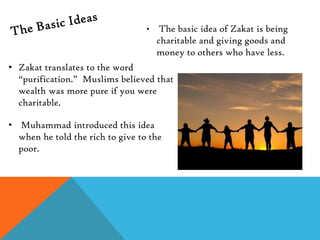
•    The basic idea of Zakat is being
                                      charitable and giving goods and
                                      money to others who have less.
• Zakat translates to the word
  “purification.” Muslims believed that
  wealth was more pure if you were
  charitable.

• Muhammad introduced this idea
  when he told the rich to give to the
  poor.
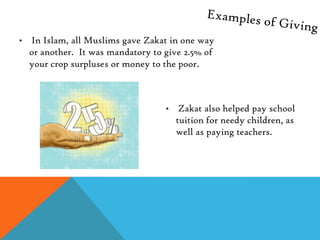
•   In Islam, all Muslims gave Zakat in one way
    or another. It was mandatory to give 2.5% of
    your crop surpluses or money to the poor.


                                    •    Zakat also helped pay school
                                        tuition for needy children, as
                                        well as paying teachers.
Zakat in Medieval Times

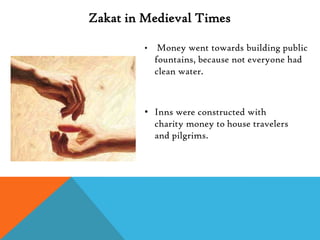
         •    Money went towards building public
             fountains, because not everyone had
             clean water.


         • Inns were constructed with
           charity money to house travelers
           and pilgrims.
Video on The Five Pillars
• Zakat is similar to the
                                    mandatory donations of the
                                    Jews and Christians, which
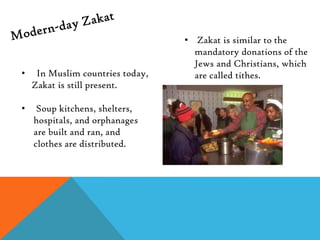
•    In Muslim countries today,     are called tithes.
    Zakat is still present.

•    Soup kitchens, shelters,
    hospitals, and orphanages
    are built and ran, and
    clothes are distributed.
THE END

Zakat powerpoint-FINAL!

  • 1.
    ZAKAT THE THIRD PILLAR OF ISLAM BY KARI SAVOIE
  • 2.
    The basic idea of Zakat is being charitable and giving goods and money to others who have less. • Zakat translates to the word “purification.” Muslims believed that wealth was more pure if you were charitable. • Muhammad introduced this idea when he told the rich to give to the poor.
  • 3.
    In Islam, all Muslims gave Zakat in one way or another. It was mandatory to give 2.5% of your crop surpluses or money to the poor. • Zakat also helped pay school tuition for needy children, as well as paying teachers.
  • 4.
    Zakat in MedievalTimes • Money went towards building public fountains, because not everyone had clean water. • Inns were constructed with charity money to house travelers and pilgrims.
  • 5.
    Video on TheFive Pillars
  • 6.
    • Zakat issimilar to the mandatory donations of the Jews and Christians, which • In Muslim countries today, are called tithes. Zakat is still present. • Soup kitchens, shelters, hospitals, and orphanages are built and ran, and clothes are distributed.
  • 7.