YOUR DIGITAL
FOOTPRINT
Danielle De Martin
WHAT IS IT?
2
NOTE
Our online browsing habits are a
big part of our digital footprint,
which is created without our
knowledge or consent.
A digital footprint is a person’s history of digital activities,
actions, and communications that leave a data trace on the
Internet.
SO WHAT?
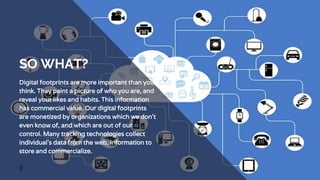
Digital footprints are more important than you
think. They paint a picture of who you are, and
reveal your likes and habits. This information
has commercial value. Our digital footprints
are monetized by organizations which we don’t
even know of, and which are out of our
control. Many tracking technologies collect
individual’s data from the web, information to
store and commercialize.
3
1. Your Reputation
Even if you feel you have nothing to hide, your web history can still
change your reputation. Your information can be misinterpreted, even
causing people to change their views on you. For example, if you search
something up for a friend, or maybe out of curiosity, it can be
interpreted that the thing you searched was a personal experience.
4
PERSONAL
EFFECTS
2. Your Freedom of Privacy
5
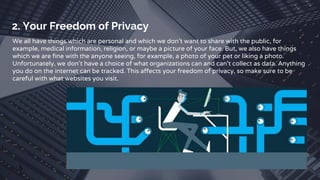
We all have things which are personal and which we don’t want to share with the public, for
example, medical information, religion, or maybe a picture of your face. But, we also have things
which we are fine with the anyone seeing, for example, a photo of your pet or liking a photo.
Unfortunately, we don’t have a choice of what organizations can and can’t collect as data. Anything
you do on the internet can be tracked. This affects your freedom of privacy, so make sure to be
careful with what websites you visit.
3. Your Future
Though your web activity and information can seem
harmless, it can affect you in the future. For example, when
applying for college, all aspects of the applicant are taken
into consideration. This includes the applicant’s online
profile. A good idea would be to privatize social networking
accounts, incase any unprofessional information is
displayed. Your online profile can affect the likeliness of
getting into a college. It can also affect your chances of
getting a job. According to The Career Builder, 63% of
hiring managers decided not to hire an applicant due to
questionable information found on social network.
6
It’s Not All That Bad...
Though a digital footprint may seem like a bad thing, there is
a positive side. For example, usernames and passwords can
be saved for quick access. It’s also a quick and easy way to
share information, or make an announcement. Overall, your
digital footprint can be a positive experience if you are wise
while using the internet.
7
http://lhslance.org/2015/news/digital-
footprints-will-posts-affect-future/
http://www.vivint.com/neighborhood/tech-
neighbor/pros-and-cons-of-your-digital-
footprint/
Citations
http://www.internetsoci
ety.org/your-digital-
footprint-matters
8

Your Digital Footprint

  • 1.
  • 2.
    WHAT IS IT? 2 NOTE Ouronline browsing habits are a big part of our digital footprint, which is created without our knowledge or consent. A digital footprint is a person’s history of digital activities, actions, and communications that leave a data trace on the Internet.
  • 3.
    SO WHAT? Digital footprintsare more important than you think. They paint a picture of who you are, and reveal your likes and habits. This information has commercial value. Our digital footprints are monetized by organizations which we don’t even know of, and which are out of our control. Many tracking technologies collect individual’s data from the web, information to store and commercialize. 3
  • 4.
    1. Your Reputation Evenif you feel you have nothing to hide, your web history can still change your reputation. Your information can be misinterpreted, even causing people to change their views on you. For example, if you search something up for a friend, or maybe out of curiosity, it can be interpreted that the thing you searched was a personal experience. 4 PERSONAL EFFECTS
  • 5.
    2. Your Freedomof Privacy 5 We all have things which are personal and which we don’t want to share with the public, for example, medical information, religion, or maybe a picture of your face. But, we also have things which we are fine with the anyone seeing, for example, a photo of your pet or liking a photo. Unfortunately, we don’t have a choice of what organizations can and can’t collect as data. Anything you do on the internet can be tracked. This affects your freedom of privacy, so make sure to be careful with what websites you visit.
  • 6.
    3. Your Future Thoughyour web activity and information can seem harmless, it can affect you in the future. For example, when applying for college, all aspects of the applicant are taken into consideration. This includes the applicant’s online profile. A good idea would be to privatize social networking accounts, incase any unprofessional information is displayed. Your online profile can affect the likeliness of getting into a college. It can also affect your chances of getting a job. According to The Career Builder, 63% of hiring managers decided not to hire an applicant due to questionable information found on social network. 6
  • 7.
    It’s Not AllThat Bad... Though a digital footprint may seem like a bad thing, there is a positive side. For example, usernames and passwords can be saved for quick access. It’s also a quick and easy way to share information, or make an announcement. Overall, your digital footprint can be a positive experience if you are wise while using the internet. 7
  • 8.