Your App is Ugly.
Andrew Miller
Jeremy Osborn
Mike Bifulco
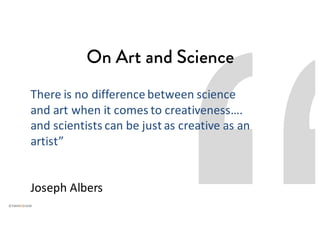
There	is	no	difference	between	science	
and	art	when	it	comes	to	creativeness….	
and	scientists	can	be	just	as	creative	as	an	
artist”
Joseph	Albers
On Art and Science
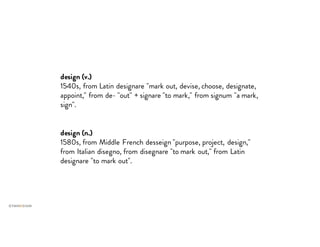
design (v.)
1540s, from Latin designare "mark out, devise, choose, designate,
appoint," from de- "out" + signare "to mark," from signum "a mark,
sign".
design (n.)
1580s, from Middle French desseign "purpose, project, design,"
from Italian disegno, from disegnare "to mark out," from Latin
designare "to mark out".
What is a good design?
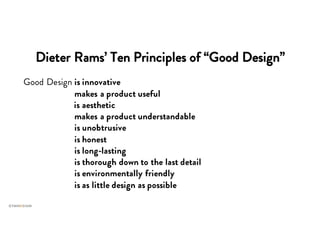
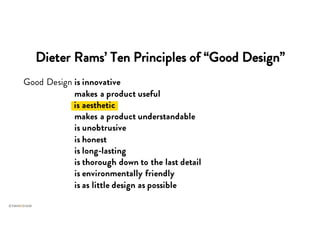
Dieter Rams’ Ten Principles of “Good Design”
Good Design is innovative
Good Design makes a product useful
is aesthetic
Good Design makes a product understandable
Good Design is unobtrusive
Good Design is honest
Good Design is long-lasting
Good Design is thorough down to the last detail
Good Design is environmentally friendly
Good Design is as little design as possible
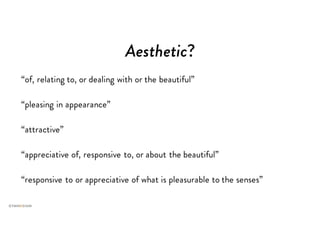
Aesthetic?
“of, relating to, or dealing with or the beautiful”
“pleasing in appearance”
“attractive”
“appreciative of, responsive to, or about the beautiful”
“responsive to or appreciative of what is pleasurable to the senses”
Wait, that seems very subjective…
“of, relating to, or dealing with or the beautiful”
“pleasing in appearance”
“attractive”
“appreciative of, responsive to, or about the beautiful”
“responsive to or appreciative of what is pleasurable to the senses”
How is Aesthetic more than just personal taste?
Can we evaluate a design in a way that is not just
subjective?
How do we know when something has aesthetic
value?
…and why bother?
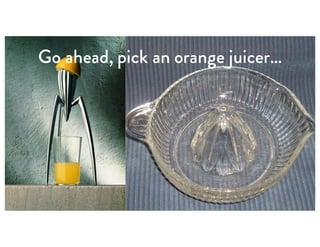
Aesthetic-Usability Effect
The Aesthetic-Usability Effect is a condition
whereby users perceive more aesthetically
pleasing designs to be easier to use than less
aesthetically pleasing designs.”
Go ahead, pick an orange juicer…
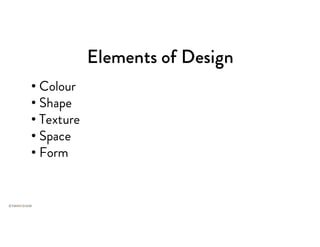
Elements of Design
• Colour
• Shape
• Texture
• Space
• Form
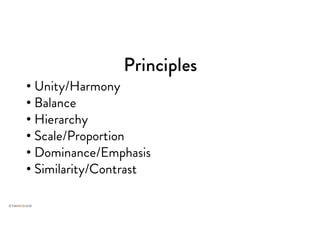
Principles
• Unity/Harmony
• Balance
• Hierarchy
• Scale/Proportion
• Dominance/Emphasis
• Similarity/Contrast
“The best designers sometimes disregard the
principles of design. When they do so, however,
there is usually some compensating merit attained
at the cost of the violation. Unless you are certain
of doing as well, it is best to abide by the
principles.”
– William Lidwell
“The best designers sometimes disregard the
principles of design. When they do so, however,
there is usually some compensating merit attained
at the cost of the violation. Unless you are certain
of doing as well, it is best to abide by the
principles.”
– William Lidwell
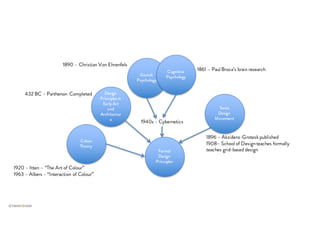
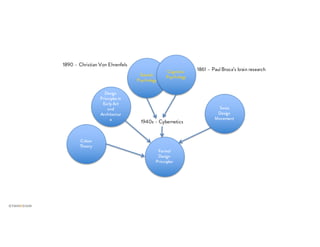
Gestalt
Psychology
Cognitive
Psychology
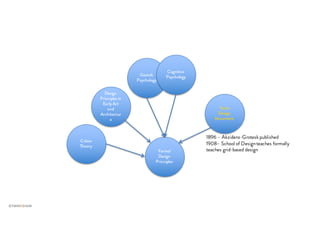
Design
Principles in
Early Art
and
Architectur
e
Formal
Design
Principles
Swiss
Design
Movement
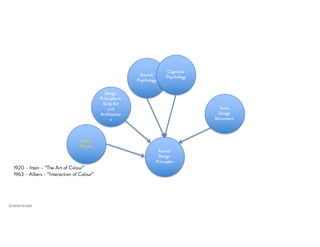
Colour
Theory
1861 – Paul Broca’s brain research
1890 – Christian Von Ehrenfels
1940s – Cybernetics
1920 – Itten – “The Art of Colour”
1963 – Albers – “Interaction of Colour”
1896 – Akzidenz-Grotesk published
1908– School of Designteaches formally
teaches grid-based design
432 BC – Parthenon Completed
…Parthenon? Are You Serious?
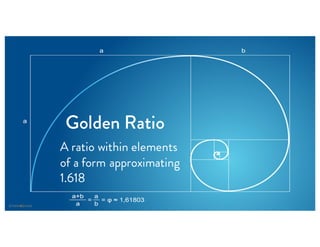
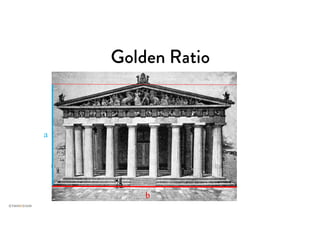
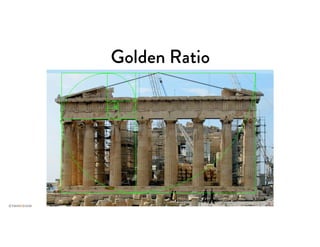
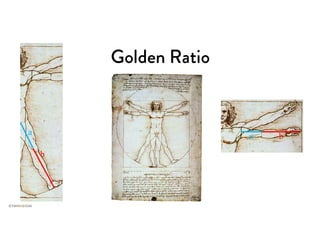
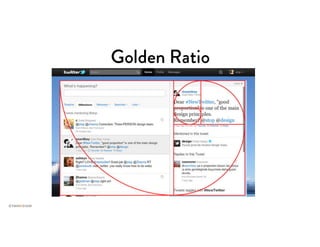
Golden Ratio
A ratio within elements
of a form approximating
1.618
Golden Ratio
a
b
Golden Ratio
Golden Ratio
b
a ba
Golden Ratio
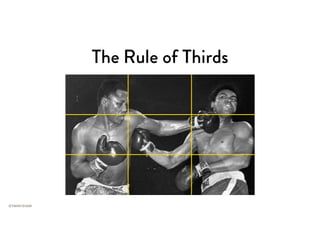
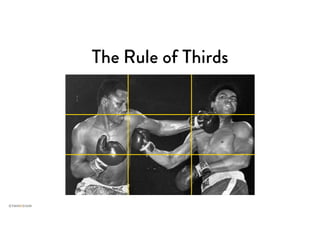
The Rule of Thirds
The Rule of Thirds
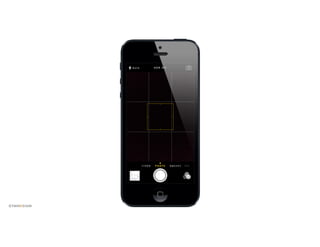
But seriously…
The Rule of Thirds
Gestalt
Psychology
Cognitive
Psychology
Design
Principles in
Early Art
and
Architectur
e
Formal
Design
Principles
Swiss
Design
Movement
Colour
Theory
1861 – Paul Broca’s brain research
1890 – Christian Von Ehrenfels
1940s – Cybernetics
Let’s Talk About Your Brain
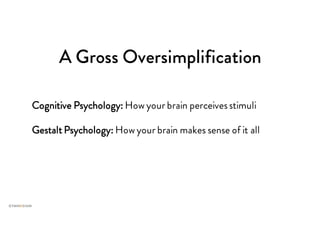
A Gross Oversimplification
Cognitive Psychology: How your brain perceivesstimuli
Gestalt Psychology: How your brain makes sense of it all
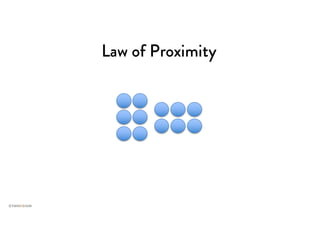
Law of Proximity
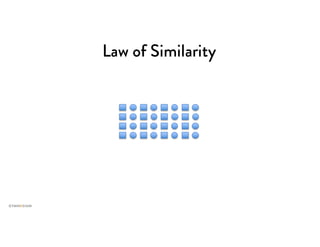
Law of Similarity
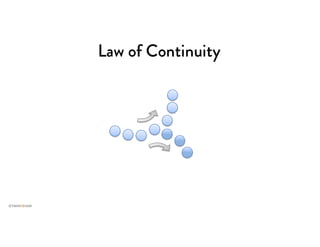
Law of Continuity
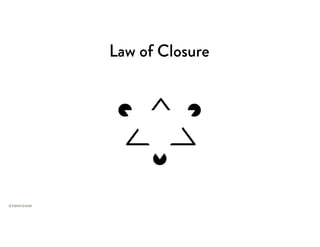
Law of Closure
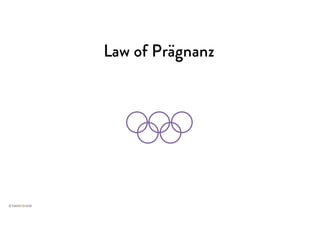
Law of Prägnanz
Gestalt
Psychology
Cognitive
Psychology
Design
Principles in
Early Art
and
Architectur
e
Formal
Design
Principles
Swiss
Design
Movement
Colour
Theory
1896 – Akzidenz-Grotesk published
1908– School of Designteaches formally
teaches grid-based design
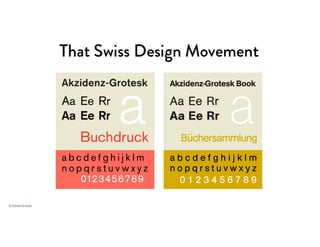
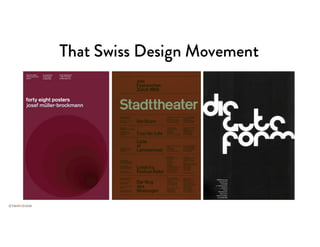
That Swiss Design Movement
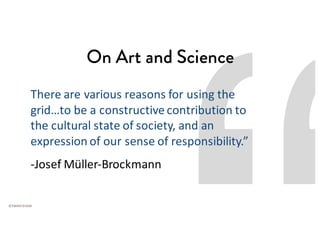
-Josef	Müller-Brockmann
On Art and Science
That Swiss Design Movement
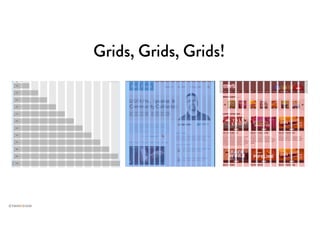
Grids, Grids, Grids!
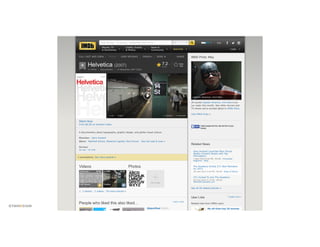
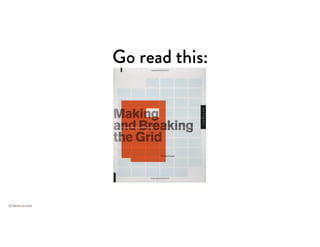
Go read this:
Gestalt
Psychology
Cognitive
Psychology
Design
Principles in
Early Art
and
Architectur
e
Formal
Design
Principles
Swiss
Design
Movement
Colour
Theory
1920 – Itten – “The Art of Colour”
1963 – Albers – “Interaction of Colour”
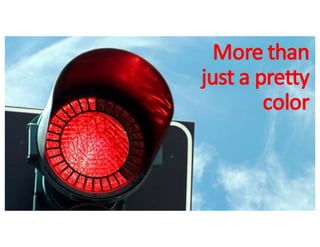
More	than	
just	a	pretty	
color
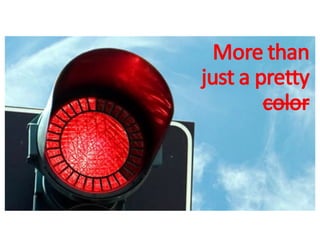
More	than	
just	a	pretty	
color
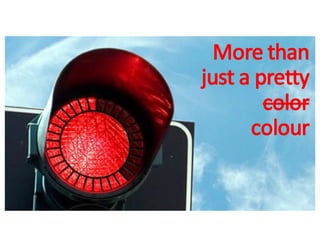
More	than	
just	a	pretty	
color
colour
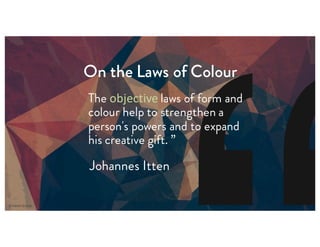
On the Laws of Colour
The objective laws of form and
colour help to strengthen a
person's powers and to expand
his creative gift. ”
Johannes Itten
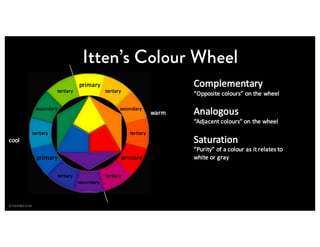
primary
primary primary
secondary secondary
secondary
tertiary tertiary
tertiary tertiary
tertiary tertiary
warm
cool
Complementary
“Opposite	colours”	on	the	wheel
Analogous
“Adjacent	colours”	on	the	wheel
Saturation
“Purity”	of	a	colour as	it	relates	to	
white	or	gray
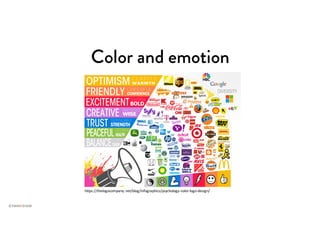
Color and emotion
https://thelogocompany.net/blog/infographics/psychology-color-logo-design/
Colour can:
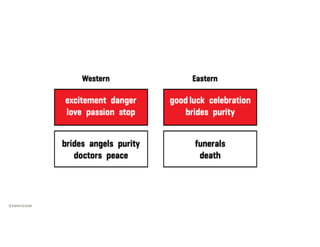
• Carry cultural meaning
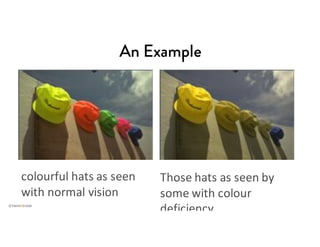
• Impact accessibility
• Convey brand, emotion
• Emphasize interface elements
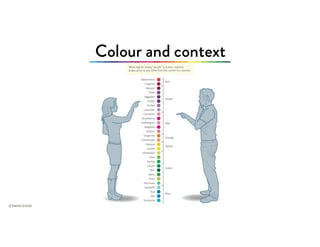
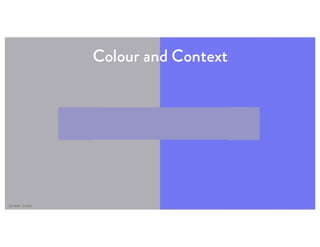
Colour and Context
An Example
Colour and context
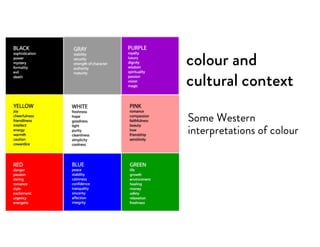
colour and
cultural context
Some Western
interpretations of colour
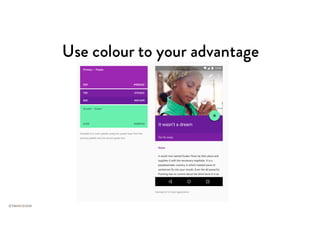
Use colour to your advantage
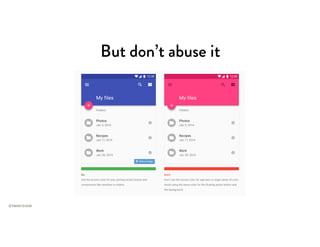
But don’t abuse it
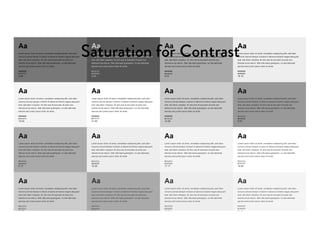
Saturation for Contrast
Putting it all together
Simple design in practice
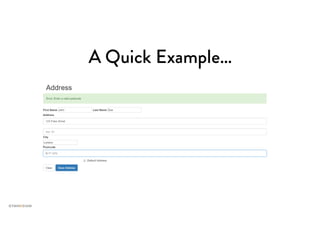
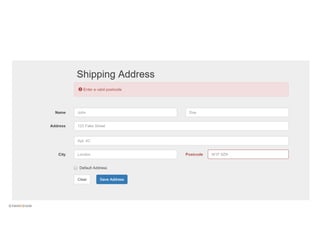
A Quick Example…
Simple Rules for Better Design
1. Be Consistent
Everything - Font sizes, colours, spacing, alignment should be
universal for agiven interface.
Users will waste time trying to figure out why something is
minutely different.
2. Create a context hierarchy
3. Facilitate Unitization
Use Gestalt principles to imply and clarify groups
Use familiar objects and fonts
Avoid ambiguity (be consistent!)
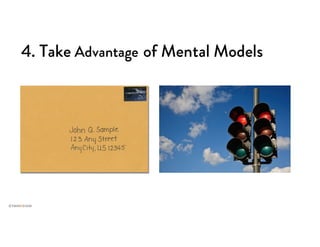
4. Take Advantage of Mental Models
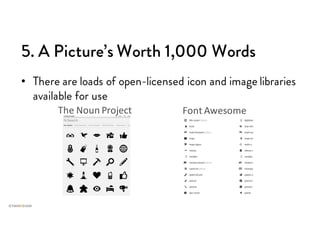
5. A Picture’s Worth 1,000 Words
• There are loads of open-licensed icon and image libraries
available for use
6. Be mindful of colour choices
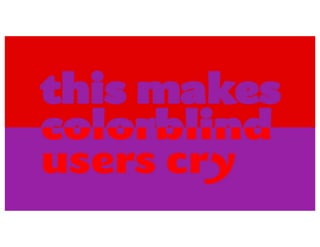
• The colourblind will thank you
• Cultural Differences
• Try not to use 100% black or white
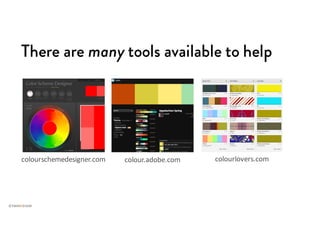
There are many tools available to help
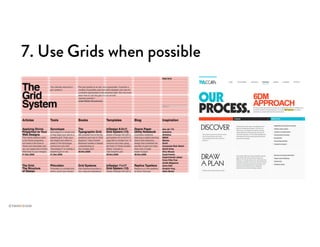
7. Use Grids when possible
References
• Cognition and Priming:
http://www.yale.edu/acmelab/articles/bargh_chen_burrows_1996.pdf
• Apparent Usability vs. Inherent Usability:
http://dl.acm.org/citation.cfm?id=223680
References
• Material Design, Google:
http://www.google.com/design/spec/material-
design/introduction.html
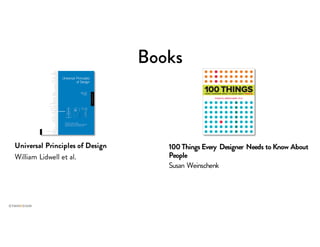
Books
Universal Principles of Design
William Lidwell et al.
100 Things Every Designer Needs to Know About
People
Susan Weinschenk
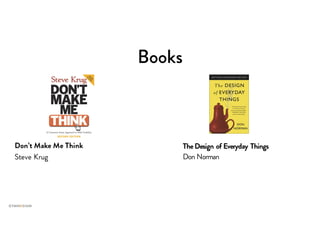
Books
Don’t Make Me Think
Steve Krug
TheDesign of Everyday Things
Don Norman
Dieter Rams’ Ten Principles of “Good Design”
Good Design is innovative
Good Design makes a product useful
Good Design is aesthetic
Good Design makes a product understandable
Good Design is unobtrusive
Good Design is honest
Good Design is long-lasting
Good Design is thorough down to the last detail
Good Design is environmentally friendly
Good Design is as little design as possible
In a nutshell…
Free online courses
About the courses…
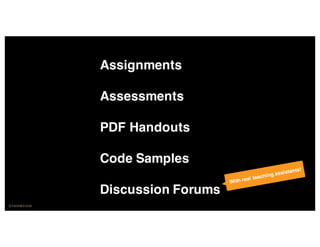
Assignments
Assessments
PDF Handouts
Code Samples
Discussion Forums
Your App is Ugly