 Frank – Introduction, maintenance and
  repair, assessment plan
 Carolyn – Synopsis, medical, academic
  integration
 Eric – Significance, resources
 Tyler – Budget
 Sam – Design requirements, general design,
  tools, galley, wardroom, education outreach
  & diversity
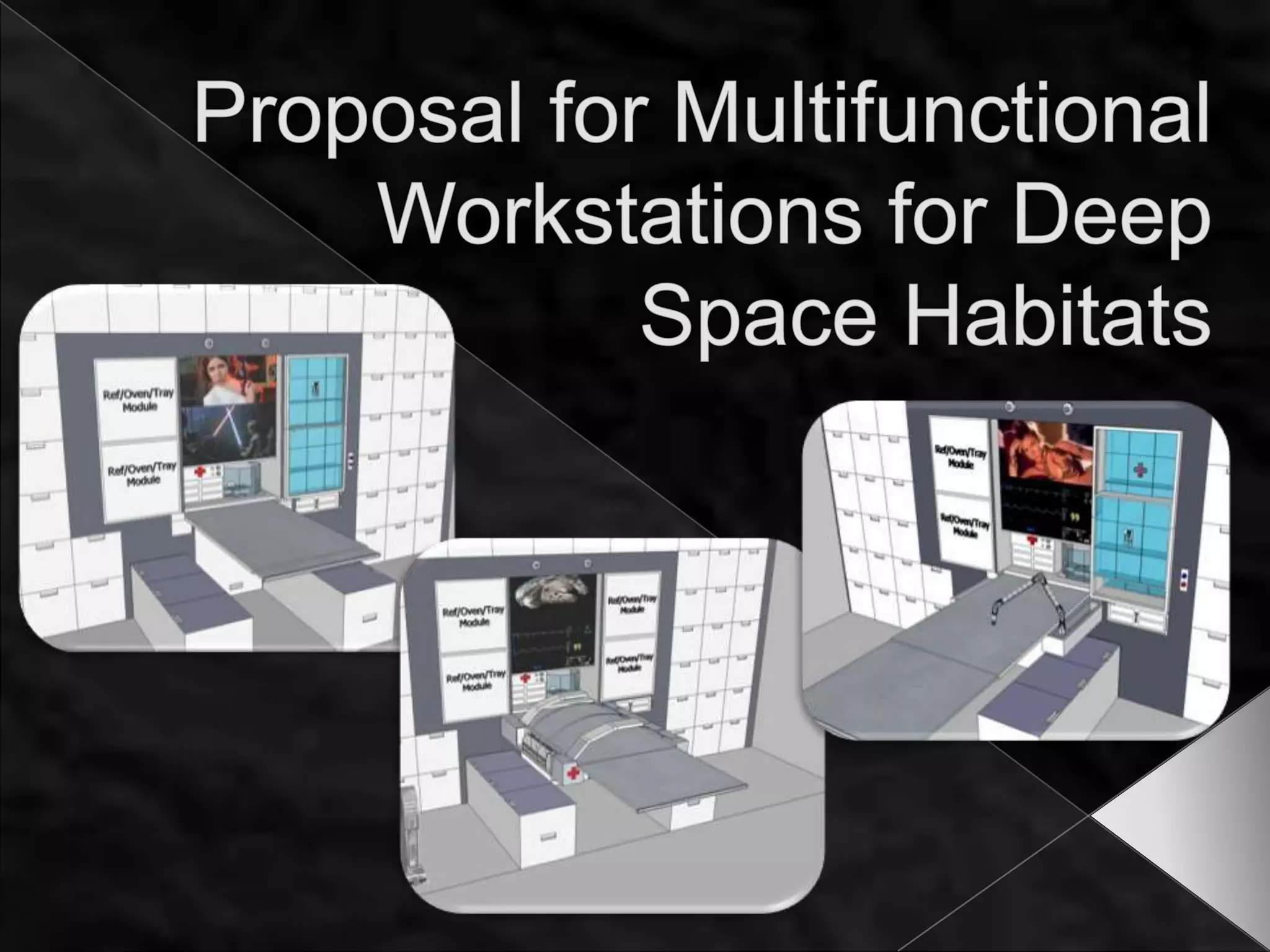
   Create A multifunctional workstation that can be transformed to any

    of the following functions within a 5 minute time limit:
     Galley

     Wardroom

     Medical Operations

     Maintenance and Repair

   Design an ERAU centered program to prepare, design, and test

    prototype(s) for submission to NASA
   Give ERAU students experience

   Orient students to the process of submitting proposals

   Create a unique school program to meet the X-Hab Challenges

   Interface with local businesses and schools for support and

    education

   Put our designs in space to support exploration.
   4 Crewmembers for 14-30 days
   All functions are equally important
   Convert within a 5 minute limit
   Convert functions using 1 Crewmember
   Prototypes must be:
       Flame retardant
       Lightweight
       Durable
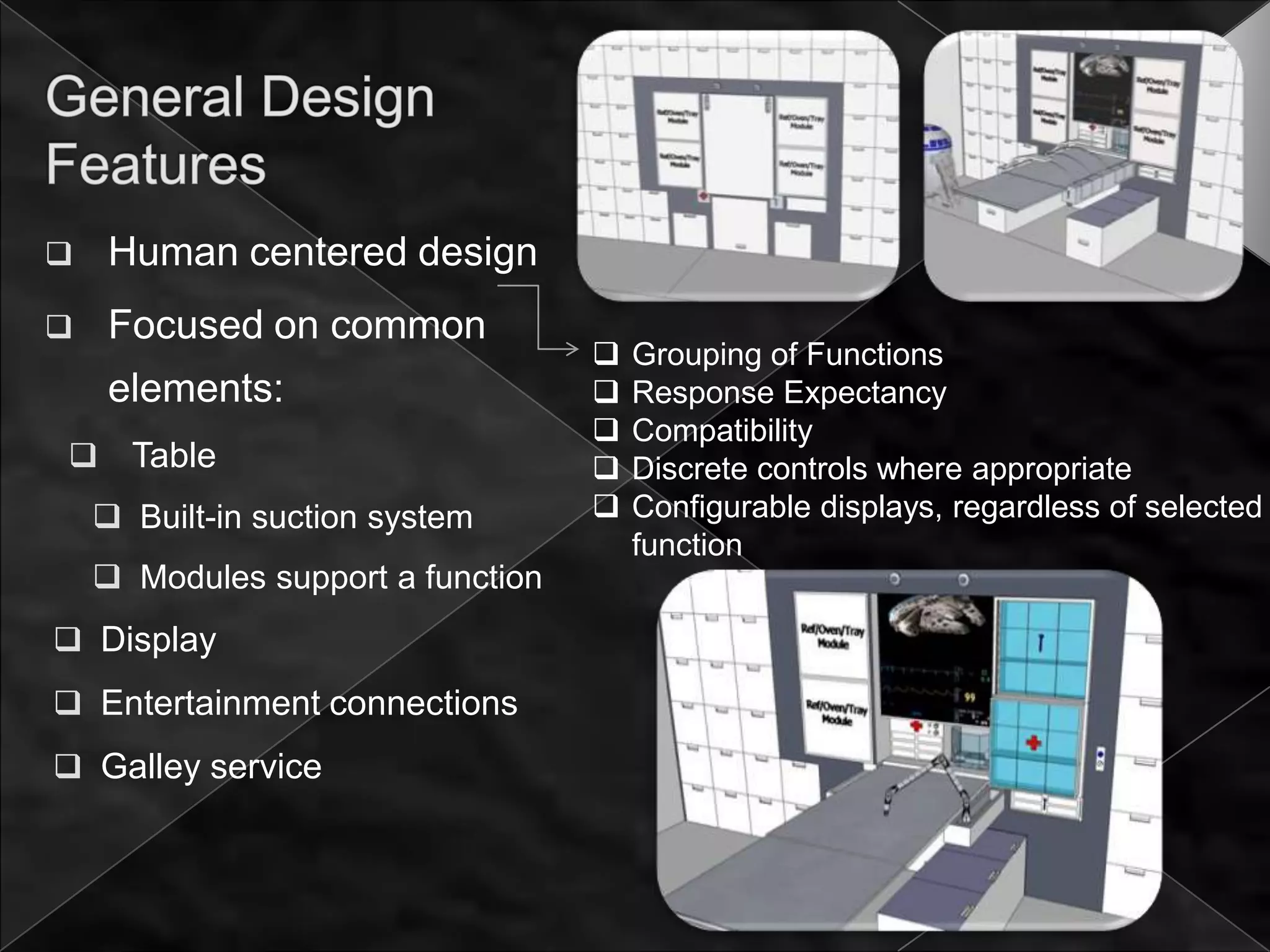
    Human centered design
    Focused on common
                                      Grouping of Functions
     elements:                        Response Expectancy
                                      Compatibility
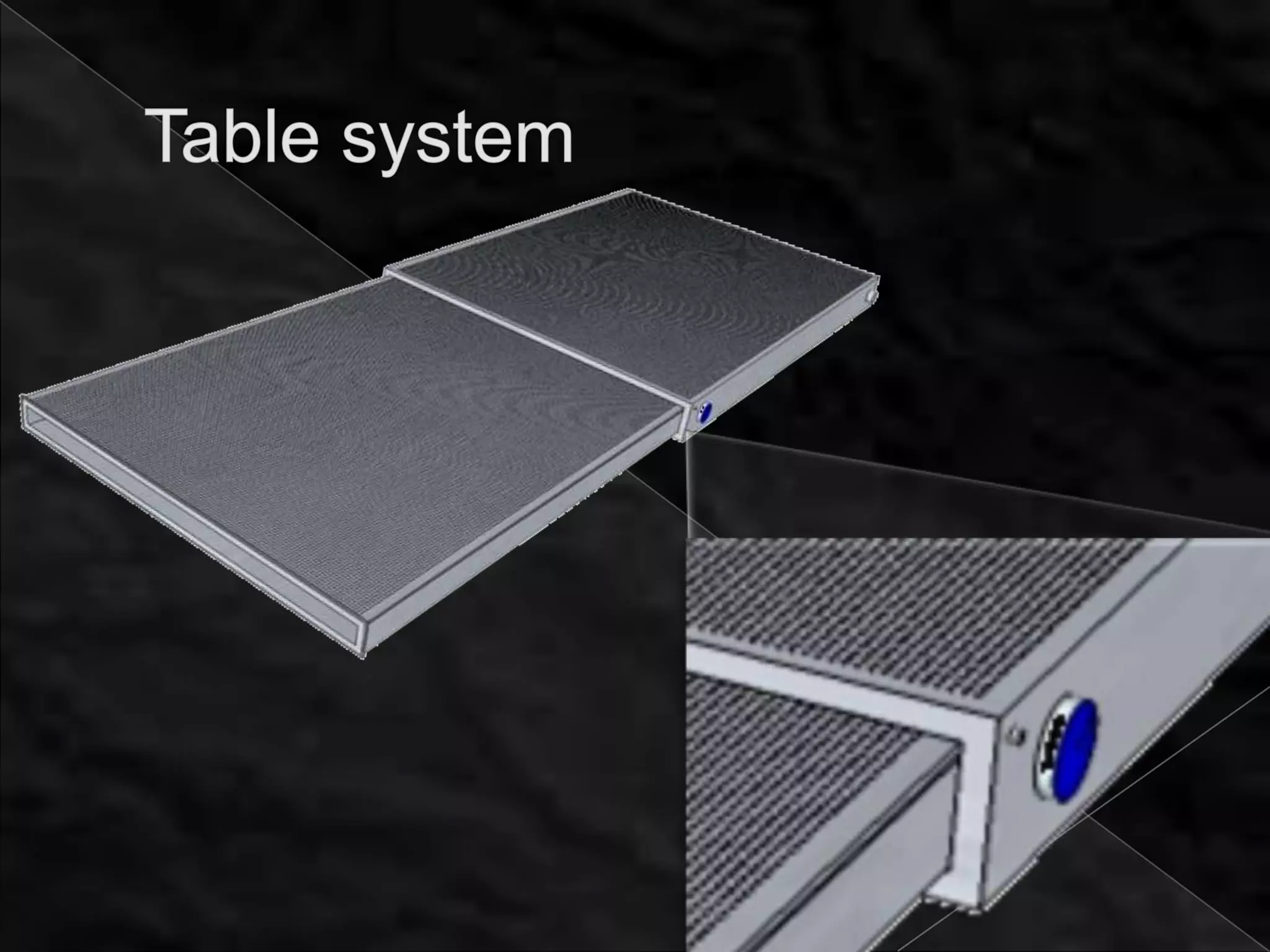
     Table                           Discrete controls where appropriate
     Built-in suction system         Configurable displays, regardless of selected
                                       function
     Modules support a function
 Display
 Entertainment connections
 Galley service
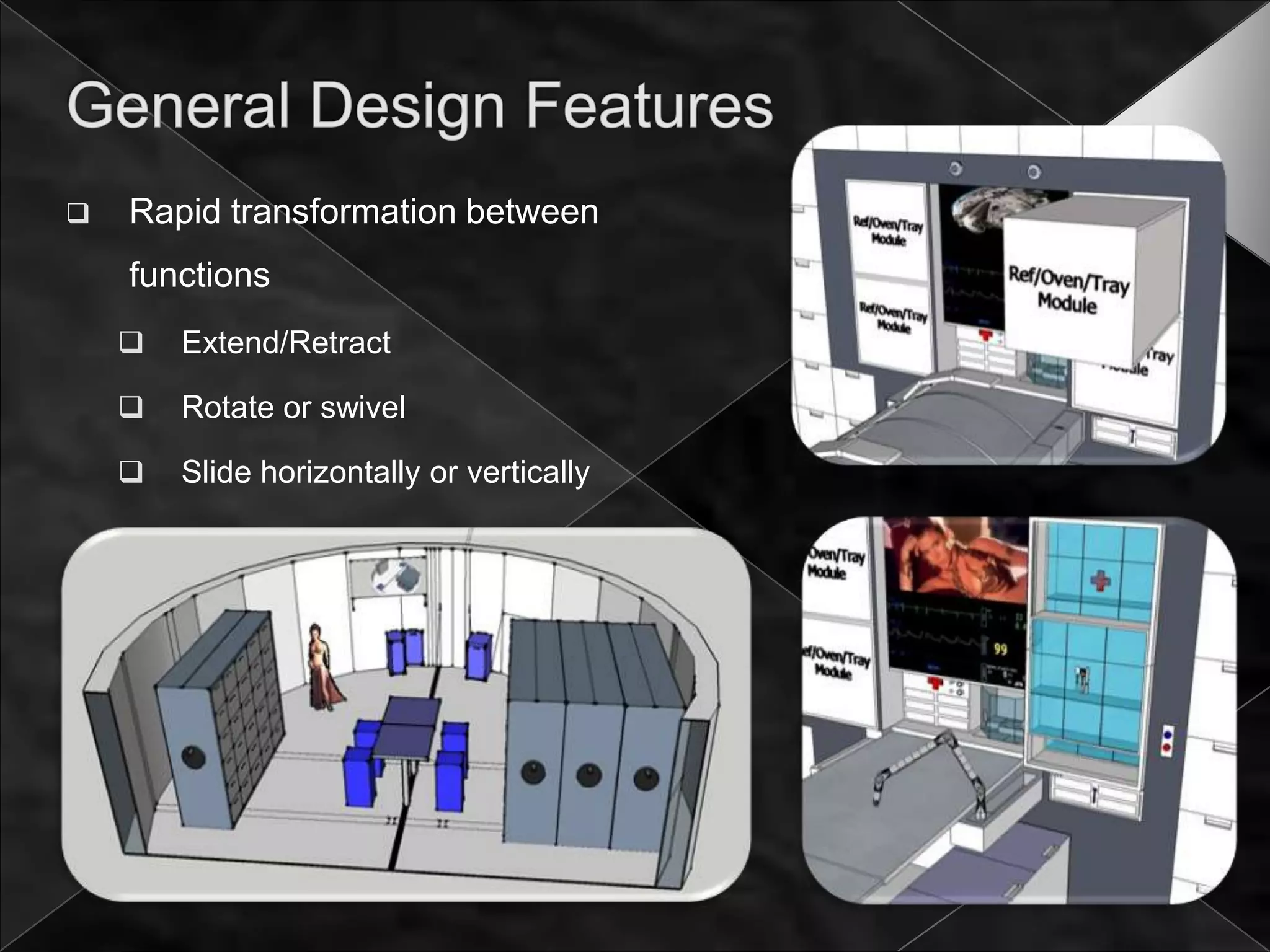
   Rapid transformation between
    functions
       Extend/Retract

       Rotate or swivel

       Slide horizontally or vertically
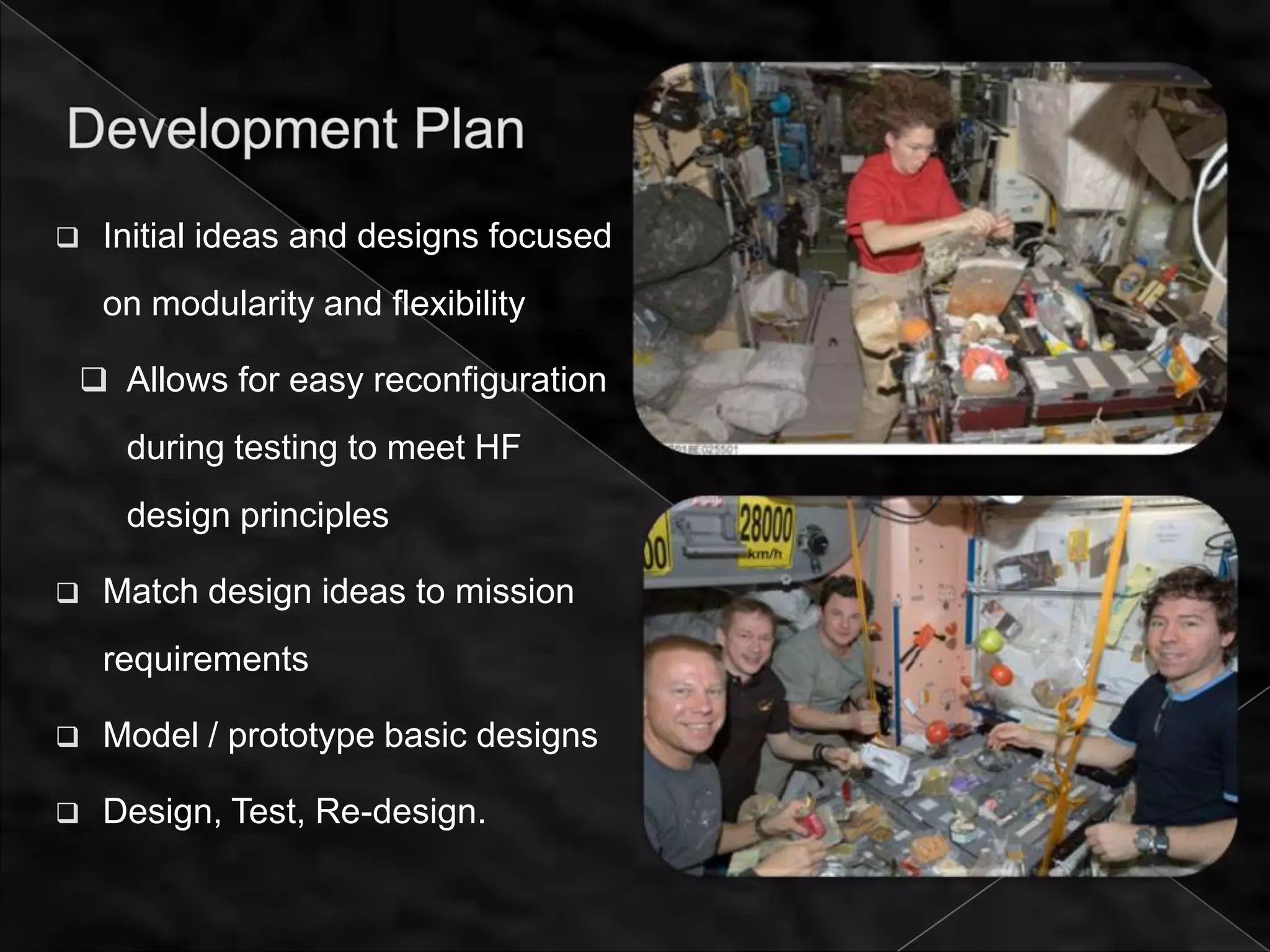
   Initial ideas and designs focused
    on modularity and flexibility

 Allows for easy reconfiguration

     during testing to meet HF
     design principles

   Match design ideas to mission
    requirements

   Model / prototype basic designs

   Design, Test, Re-design.
   CATIA
     Technical Engineering software

   Google SketchUp
     Quick, easy 3D modeling
     Large library of components
     Free

   Space Movement Simulators
     May allow design testing with a simulated human in a microgravity
      environment
   Initially, large components will have multiple possible locations

   Tabletop suction provides stability and cleanliness of environment
      Additional suction always accessible

   Water system always accessible

   7 day storage of food within compartment

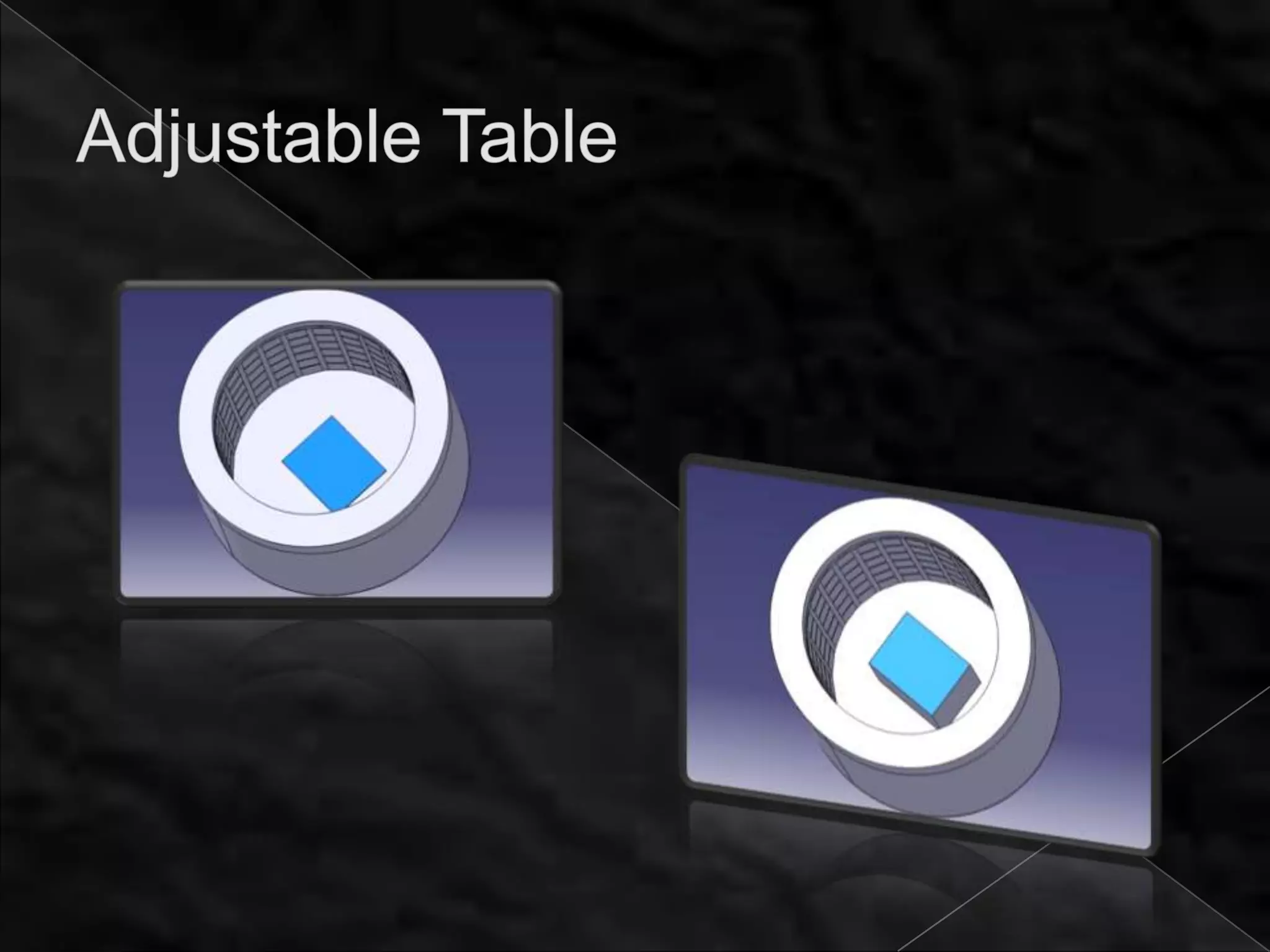
   Multiple table designs will allow for testing flexibility

   Oven, refrigerator, water, and vacuum module(s) extend on tracks
    for easy maintenance access
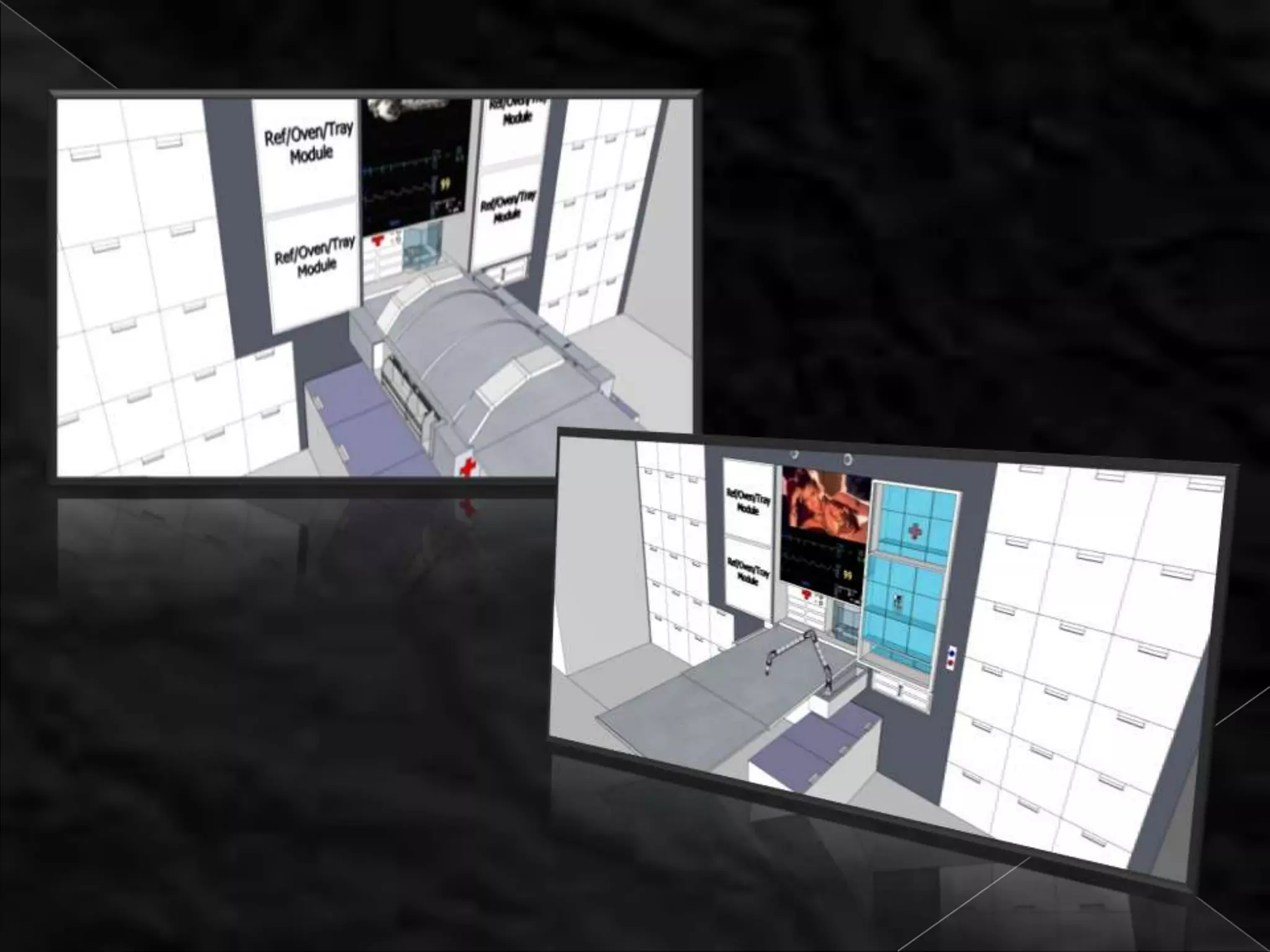
   Medical supplies and equipment contained in a retractable drawer or easily
    accessible module

   Table suction, magnetic strips, and restraints built-in

   Additional light, suction, and tool holders easily fold out from drawer or
    extend from medical system module

   Diagnostic equipment easily accessible
     Primary and secondary displays allow for diagnostic data & alternate video/diagram
       display

     Medical teleconference / Remote surgery

     One-Touch emergency button positions medical equipment
   Table for other functions will be used as a maintenance
    work area
   Standard space tool-kit will be equipped in crew station
   Tools will be located in accessible areas close to table
    for easy to reach use amongst crewmembers
   Individual storage units for entertainment/ media
   Equipment and interfaces providing flexibility and
    multiple functions
        i.e. video teleconferencing, medical consultations, and other
        entertainment or emergency functions
   Entertainment system (display/ audio) will include a
    network file access
        i.e. music, video, documents, and pictures
   Vehicle status will be displayed while entertainment
    system is inactive
    Add an xHab inspired course to the ERAU curriculum
      ABET accredited

   Multi-Discipline team
      ERAU program open to students and faculty from all departments
    Fall 2014
      Learn about tools used for design and evaluation
      Learn research techniques and how to write proposals
      CATIA, Google Sketch Up, ARENA
    Spring 2014
      Learn how to build the selected design
      Give students a grasp on construction techniques
      Evaluation of model using experiments and surveying
   Local area resources      NASA Kennedy Space Center
     K-12                     Resources
   Internet                    Media Relations

     Social media              Public Affairs
                                Other Departments


    Group composition
    Recruitment
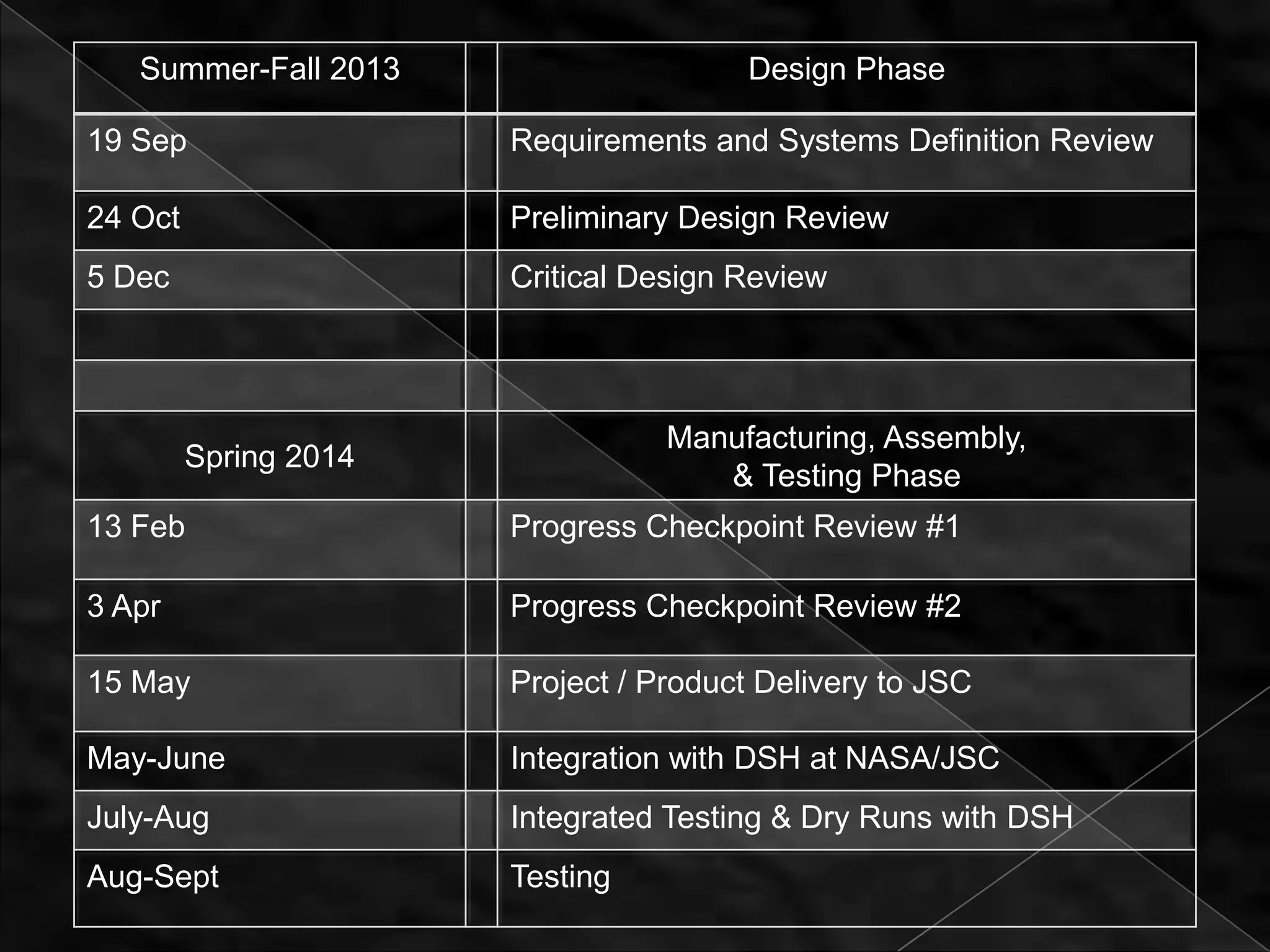
Summer-Fall 2013                     Design Phase

19 Sep                 Requirements and Systems Definition Review

24 Oct                 Preliminary Design Review
5 Dec                  Critical Design Review


                                  Manufacturing, Assembly,
         Spring 2014
                                     & Testing Phase
13 Feb                 Progress Checkpoint Review #1

3 Apr                  Progress Checkpoint Review #2

15 May                 Project / Product Delivery to JSC

May-June               Integration with DSH at NASA/JSC
July-Aug               Integrated Testing & Dry Runs with DSH
Aug-Sept               Testing
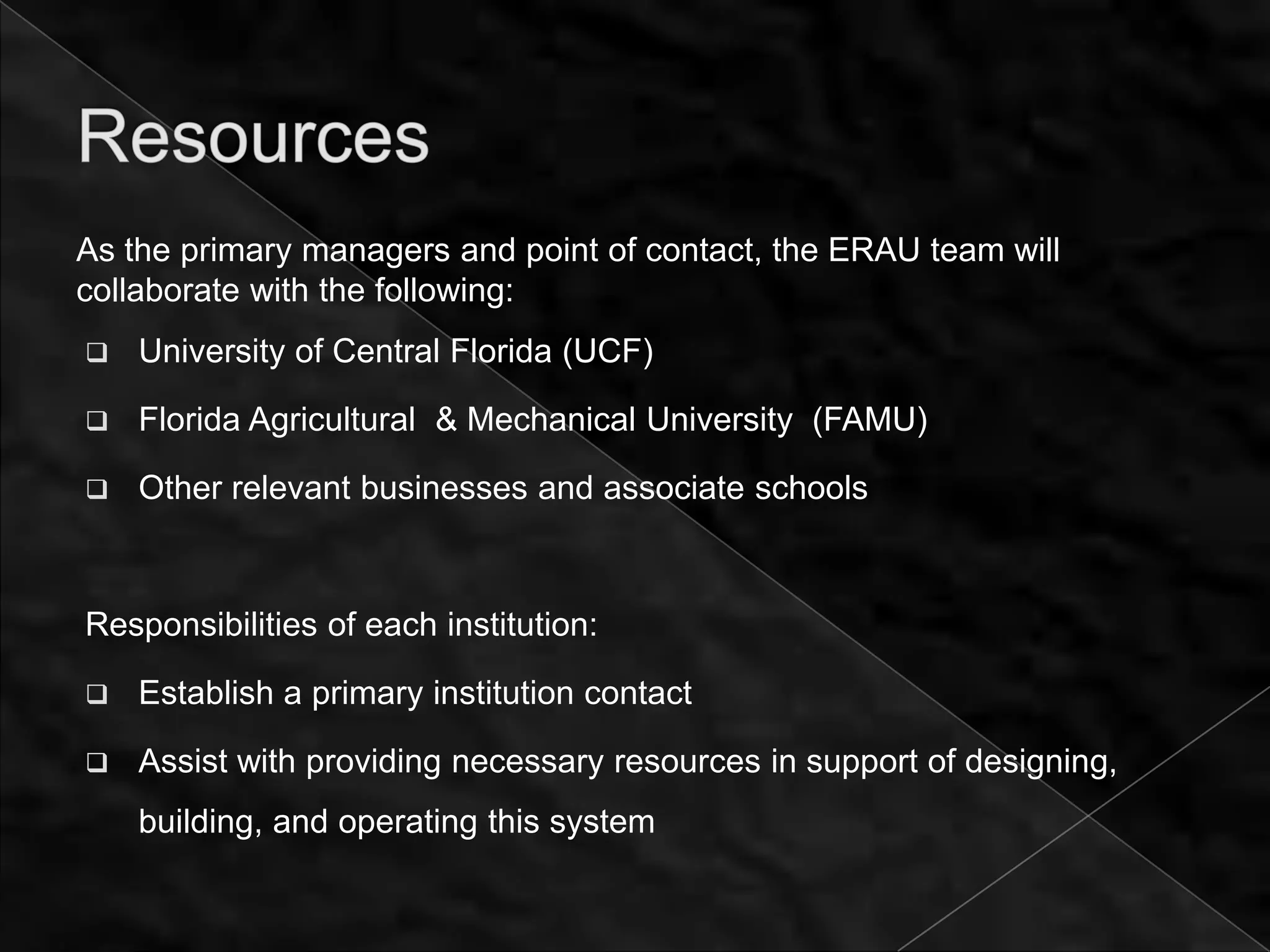
As the primary managers and point of contact, the ERAU team will
collaborate with the following:
   University of Central Florida (UCF)

   Florida Agricultural & Mechanical University (FAMU)

   Other relevant businesses and associate schools


Responsibilities of each institution:

   Establish a primary institution contact

   Assist with providing necessary resources in support of designing,
    building, and operating this system
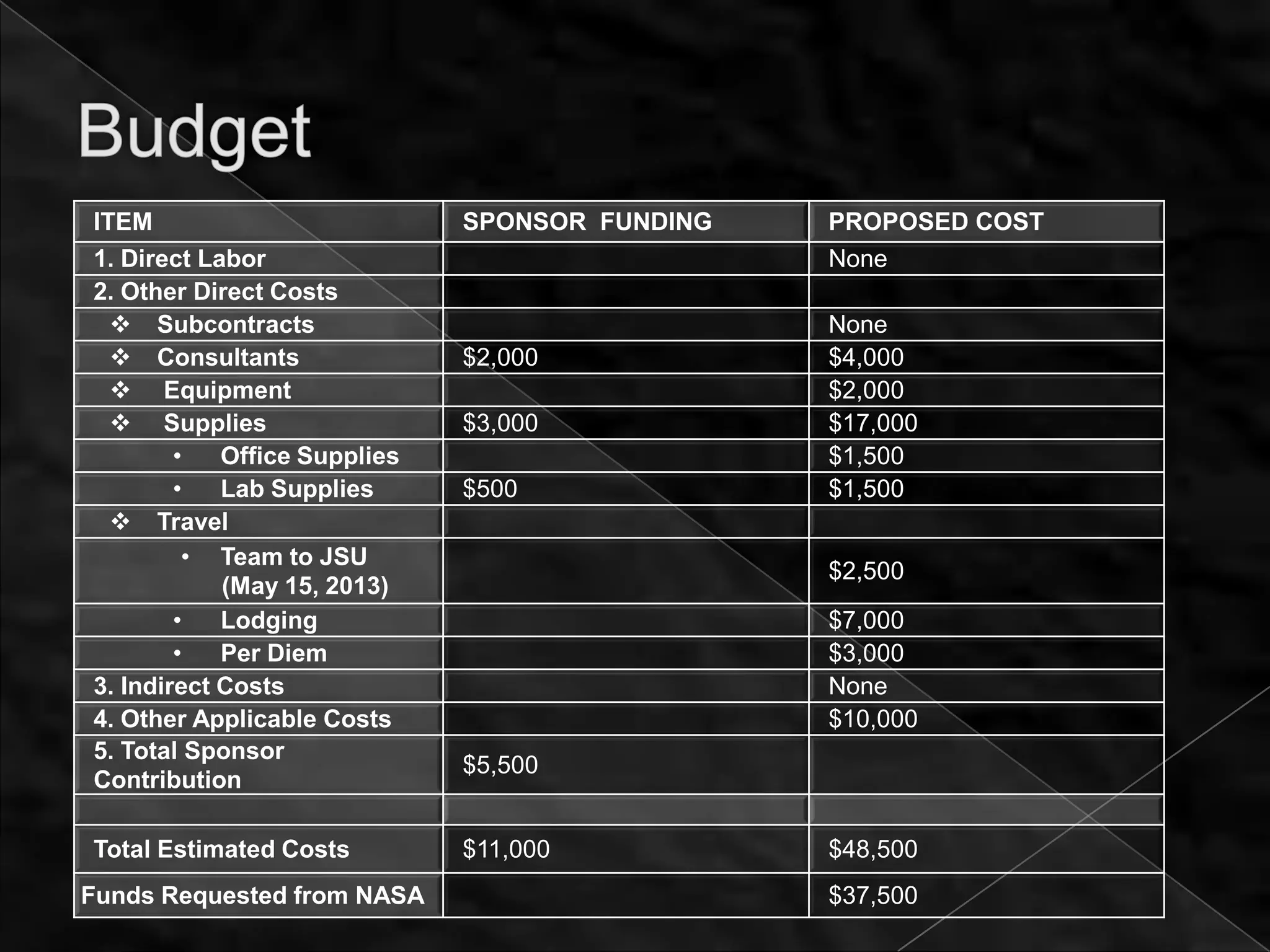
ITEM                          SPONSOR FUNDING   PROPOSED COST
1. Direct Labor                                 None
2. Other Direct Costs
   Subcontracts                                None
   Consultants               $2,000            $4,000
   Equipment                                   $2,000
   Supplies                  $3,000            $17,000
        •   Office Supplies                     $1,500
        •   Lab Supplies      $500              $1,500
   Travel
         • Team to JSU
                                                $2,500
            (May 15, 2013)
        •   Lodging                             $7,000
        •   Per Diem                            $3,000
3. Indirect Costs                               None
4. Other Applicable Costs                       $10,000
5. Total Sponsor
                              $5,500
Contribution

Total Estimated Costs         $11,000           $48,500
Funds Requested from NASA                       $37,500
During this project we learned how to :
   Develop ideas into prototypes
   Create and develop concepts that benefit the customer
    and crewmembers
   Understand concepts that will be used in deep space
    habitats
   Design flexibility into a system
   Implement Human Factors design principles
X-Hab 2013 Academic Innovation Challenge

Sam Micheletti         Frank Conenna          Eric Watkins
Human Factors          Human Factors          Human Factors
MICHELES@my.erau.edu   conennaf@my.erau.edu   WATKINSE@my.erau.edu

Carolyn Newton         Tyler Reece
Human Factors          Human Factors
newtonc4@my.erau.edu   REECET1@my.erau.edu

Xhab_HF

  • 2.
     Frank –Introduction, maintenance and repair, assessment plan  Carolyn – Synopsis, medical, academic integration  Eric – Significance, resources  Tyler – Budget  Sam – Design requirements, general design, tools, galley, wardroom, education outreach & diversity
  • 3.
    Create A multifunctional workstation that can be transformed to any of the following functions within a 5 minute time limit:  Galley  Wardroom  Medical Operations  Maintenance and Repair  Design an ERAU centered program to prepare, design, and test prototype(s) for submission to NASA
  • 4.
    Give ERAU students experience  Orient students to the process of submitting proposals  Create a unique school program to meet the X-Hab Challenges  Interface with local businesses and schools for support and education  Put our designs in space to support exploration.
  • 6.
    4 Crewmembers for 14-30 days  All functions are equally important  Convert within a 5 minute limit  Convert functions using 1 Crewmember  Prototypes must be:  Flame retardant  Lightweight  Durable
  • 7.
    Human centered design  Focused on common  Grouping of Functions elements:  Response Expectancy  Compatibility  Table  Discrete controls where appropriate  Built-in suction system  Configurable displays, regardless of selected function  Modules support a function  Display  Entertainment connections  Galley service
  • 8.
    Rapid transformation between functions  Extend/Retract  Rotate or swivel  Slide horizontally or vertically
  • 9.
    Initial ideas and designs focused on modularity and flexibility  Allows for easy reconfiguration during testing to meet HF design principles  Match design ideas to mission requirements  Model / prototype basic designs  Design, Test, Re-design.
  • 10.
    CATIA  Technical Engineering software  Google SketchUp  Quick, easy 3D modeling  Large library of components  Free  Space Movement Simulators  May allow design testing with a simulated human in a microgravity environment
  • 12.
    Initially, large components will have multiple possible locations  Tabletop suction provides stability and cleanliness of environment  Additional suction always accessible  Water system always accessible  7 day storage of food within compartment  Multiple table designs will allow for testing flexibility  Oven, refrigerator, water, and vacuum module(s) extend on tracks for easy maintenance access
  • 15.
    Medical supplies and equipment contained in a retractable drawer or easily accessible module  Table suction, magnetic strips, and restraints built-in  Additional light, suction, and tool holders easily fold out from drawer or extend from medical system module  Diagnostic equipment easily accessible  Primary and secondary displays allow for diagnostic data & alternate video/diagram display  Medical teleconference / Remote surgery  One-Touch emergency button positions medical equipment
  • 17.
    Table for other functions will be used as a maintenance work area  Standard space tool-kit will be equipped in crew station  Tools will be located in accessible areas close to table for easy to reach use amongst crewmembers
  • 18.
    Individual storage units for entertainment/ media  Equipment and interfaces providing flexibility and multiple functions  i.e. video teleconferencing, medical consultations, and other entertainment or emergency functions  Entertainment system (display/ audio) will include a network file access  i.e. music, video, documents, and pictures  Vehicle status will be displayed while entertainment system is inactive
  • 19.
    Add an xHab inspired course to the ERAU curriculum  ABET accredited  Multi-Discipline team  ERAU program open to students and faculty from all departments  Fall 2014  Learn about tools used for design and evaluation  Learn research techniques and how to write proposals  CATIA, Google Sketch Up, ARENA  Spring 2014  Learn how to build the selected design  Give students a grasp on construction techniques  Evaluation of model using experiments and surveying
  • 21.
    Local area resources  NASA Kennedy Space Center  K-12 Resources  Internet  Media Relations  Social media  Public Affairs  Other Departments  Group composition  Recruitment
  • 23.
    Summer-Fall 2013 Design Phase 19 Sep Requirements and Systems Definition Review 24 Oct Preliminary Design Review 5 Dec Critical Design Review Manufacturing, Assembly, Spring 2014 & Testing Phase 13 Feb Progress Checkpoint Review #1 3 Apr Progress Checkpoint Review #2 15 May Project / Product Delivery to JSC May-June Integration with DSH at NASA/JSC July-Aug Integrated Testing & Dry Runs with DSH Aug-Sept Testing
  • 24.
    As the primarymanagers and point of contact, the ERAU team will collaborate with the following:  University of Central Florida (UCF)  Florida Agricultural & Mechanical University (FAMU)  Other relevant businesses and associate schools Responsibilities of each institution:  Establish a primary institution contact  Assist with providing necessary resources in support of designing, building, and operating this system
  • 25.
    ITEM SPONSOR FUNDING PROPOSED COST 1. Direct Labor None 2. Other Direct Costs  Subcontracts None  Consultants $2,000 $4,000  Equipment $2,000  Supplies $3,000 $17,000 • Office Supplies $1,500 • Lab Supplies $500 $1,500  Travel • Team to JSU $2,500 (May 15, 2013) • Lodging $7,000 • Per Diem $3,000 3. Indirect Costs None 4. Other Applicable Costs $10,000 5. Total Sponsor $5,500 Contribution Total Estimated Costs $11,000 $48,500 Funds Requested from NASA $37,500
  • 26.
    During this projectwe learned how to :  Develop ideas into prototypes  Create and develop concepts that benefit the customer and crewmembers  Understand concepts that will be used in deep space habitats  Design flexibility into a system  Implement Human Factors design principles
  • 27.
    X-Hab 2013 AcademicInnovation Challenge Sam Micheletti Frank Conenna Eric Watkins Human Factors Human Factors Human Factors MICHELES@my.erau.edu conennaf@my.erau.edu WATKINSE@my.erau.edu Carolyn Newton Tyler Reece Human Factors Human Factors newtonc4@my.erau.edu REECET1@my.erau.edu

Editor's Notes