Autobiographies
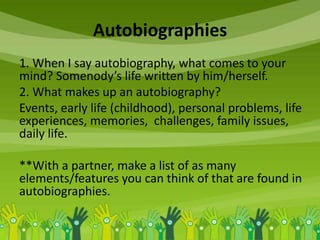
1. When I say autobiography, what comes to your
mind? Somenody’s life written by him/herself.
2. What makes up an autobiography?
Events, early life (childhood), personal problems, life
experiences, memories, challenges, family issues,
daily life.
**With a partner, make a list of as many
elements/features you can think of that are found in
autobiographies.
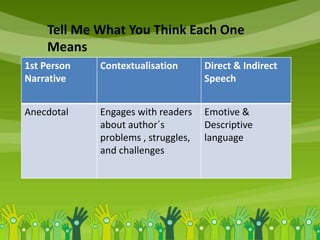
1st Person
Narrative
Contextualisation Direct & Indirect
Speech
Anecdotal Engages with readers
about author´s
problems , struggles,
and challenges
Emotive &
Descriptive
language
Tell Me What You Think Each One
Means
Separate into Groups of 3-4
• Read the reviews of Nelson Mandela´s
autobiography
• Although you may not know much about
Nelson Mandela, what is your opinion of him
after reading these reviews?
Group Activity Continued
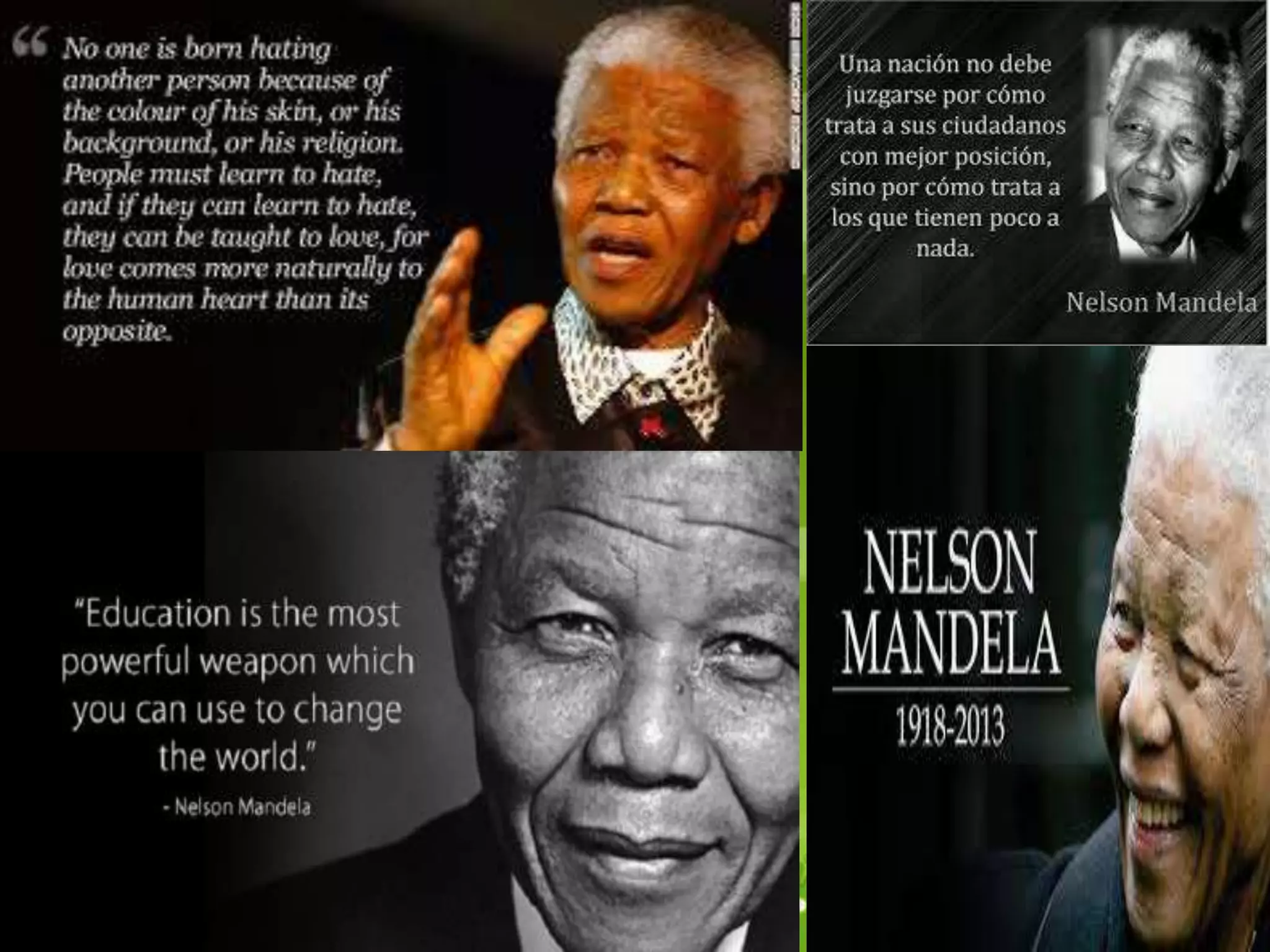
• NELSON MANDELA
• Circle any language features you find
(descriptive language, simile, metaphor,
alliteration, etc)
Group Activity Continued
• What problems did Mandela face?
• What did you think of the text (tragic, funny,
inspiring, etc)? Why?
• What was his dream?
• What obstacles did he face?
• Are you Nelson Mandela? Are you similar to
him in any way?
Each group share observations with the class
• ANNE FRANK
• Underline important words and phrases.
1. What problems did Anne Frank face?
2. What was her dream?
3. How did she overcome these problems?
4. How are you similar to Anne Frank in any
way?
RECORDING ACTIVITY
• Review your table from the first activity this
week (five challenges)
• Share your stories with five other people (get
up and walk around)
• Which stories did you find most interesting?
Why?
Writing Assignment:
• WRITE A DIARY ENTRY (or autobiographical
extract) (250-300 words)
• Use language techniques you’ve learned from the
extracts you read (Mandela & AnneFrank)
You can talk about your:
Hero, dreams, obstacles/challenges to overcome,
goals, conflicts/resolutions, break through barriers to
experience new possibilities in life, etc…
Share Time
• Share your work out loud.
• Participation points for constructive responses
and comments on each other´s work.
• What is your opinion about the story?
• What was the problem/challenge?

Writing autobiographies - Mandela's diary

  • 2.
    Autobiographies 1. When Isay autobiography, what comes to your mind? Somenody’s life written by him/herself. 2. What makes up an autobiography? Events, early life (childhood), personal problems, life experiences, memories, challenges, family issues, daily life. **With a partner, make a list of as many elements/features you can think of that are found in autobiographies.
  • 3.
    1st Person Narrative Contextualisation Direct& Indirect Speech Anecdotal Engages with readers about author´s problems , struggles, and challenges Emotive & Descriptive language Tell Me What You Think Each One Means
  • 4.
    Separate into Groupsof 3-4 • Read the reviews of Nelson Mandela´s autobiography • Although you may not know much about Nelson Mandela, what is your opinion of him after reading these reviews?
  • 5.
    Group Activity Continued •NELSON MANDELA • Circle any language features you find (descriptive language, simile, metaphor, alliteration, etc)
  • 6.
    Group Activity Continued •What problems did Mandela face? • What did you think of the text (tragic, funny, inspiring, etc)? Why? • What was his dream? • What obstacles did he face? • Are you Nelson Mandela? Are you similar to him in any way? Each group share observations with the class
  • 7.
    • ANNE FRANK •Underline important words and phrases. 1. What problems did Anne Frank face? 2. What was her dream? 3. How did she overcome these problems? 4. How are you similar to Anne Frank in any way?
  • 8.
    RECORDING ACTIVITY • Reviewyour table from the first activity this week (five challenges) • Share your stories with five other people (get up and walk around) • Which stories did you find most interesting? Why?
  • 9.
    Writing Assignment: • WRITEA DIARY ENTRY (or autobiographical extract) (250-300 words) • Use language techniques you’ve learned from the extracts you read (Mandela & AnneFrank) You can talk about your: Hero, dreams, obstacles/challenges to overcome, goals, conflicts/resolutions, break through barriers to experience new possibilities in life, etc…
  • 10.
    Share Time • Shareyour work out loud. • Participation points for constructive responses and comments on each other´s work. • What is your opinion about the story? • What was the problem/challenge?