World
Radiography
Day
Introduction
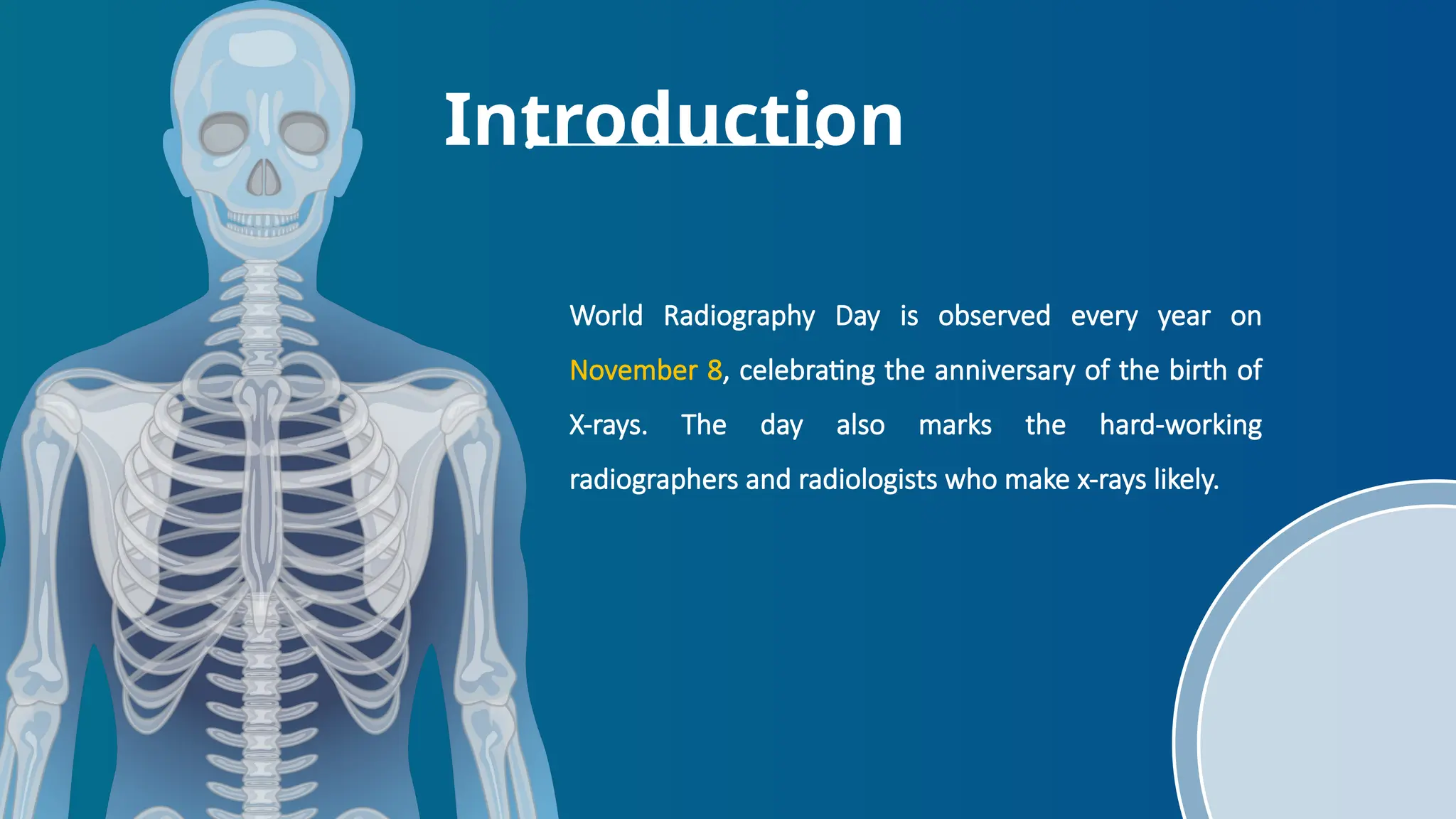
World Radiography Day is observed every year on
November 8, celebrating the anniversary of the birth of
X-rays. The day also marks the hard-working
radiographers and radiologists who make x-rays likely.
History
History
X-rays were found accidentally by Professor Wilhelm Conrad
Rontgen of the Wuerzburg University, Germany, in 1895.
Rontgen was operating with a cathode-ray tube in his laboratory
when he saw a fluorescent light of crystals on a table about his
tube having a bulb with harmful and approving electrodes.
When the air in the tube was evacuated and a high voltage was
applied, the tube began having a fluorescent glow.
Timeline
X–rays Are
Discovered
1895
The First Surgical
Use
1896
Archaeological
Applications
1999
Numerous
Medical Imaging
2010
Facts
Discovery of
the D.N.A.
structure
Diagnosis of
cancerous
diseases
Rontgen did
not patent
them
“X” in x-ray
stands for
First x-ray death
Wilhelm Conrad Röntgen
Facts
Help spread information and
spread awareness on the
numerous advantages of
medical imaging. Also, take this
day to thank the many
radiographers and radiologists
now toiling hard to improve
our lives.
Importance
Of
RADIOLOGY
Raise
Awareness
IMPORTANCE OF
RADIOLOGY
Get a medical
check-up
Visit your doctor to get a
full-body check-up done — even if
you feel fine. Prevention is always
better than cure.
Observe
1. How do you precise radiation from
your body?
There is no known cure for radiation.
Barriers can, however, prevent exposure,
and some medications may remove some
radiation from the body.
2. Does radiation stay in the body
forever?
The radiation stays in the body for a few
minutes to a few days.
3. Are X-rays dangerous?
Honor the pioneers
Pay your respects to the many radiographers and radiologists
who handled x-rays and related equipment without any safety
gear, as the adverse effects were unknown back then. Their
sacrifice allowed humanity to learn more and improve x-ray
practices.
Cheers to radiography which
makes it easier for the
doctors to discover many
health issues
Radiatio
n
Protectio
n
• A slight increase in the case that a
person exposed to x-rays will
develop cancer later in life.
• Tissue effects, such as cataracts,
skin reddening, and hair loss, occur
at pretty high levels of radiation
exposure and are rare for many
types of imaging exams.
Risks
How to get safe
yourself from
Radiation
Protection
ALARA Principle
On the occasion of World
Radiography Day, let us
make the most of this day by
celebrating the hard work of
radiographers and
radiologists.
Happy World
Radiography
Day to

World Radiography Day November 8 2024.pptx

  • 1.
  • 2.
    Introduction World Radiography Dayis observed every year on November 8, celebrating the anniversary of the birth of X-rays. The day also marks the hard-working radiographers and radiologists who make x-rays likely.
  • 3.
  • 4.
    History X-rays were foundaccidentally by Professor Wilhelm Conrad Rontgen of the Wuerzburg University, Germany, in 1895. Rontgen was operating with a cathode-ray tube in his laboratory when he saw a fluorescent light of crystals on a table about his tube having a bulb with harmful and approving electrodes. When the air in the tube was evacuated and a high voltage was applied, the tube began having a fluorescent glow.
  • 5.
    Timeline X–rays Are Discovered 1895 The FirstSurgical Use 1896 Archaeological Applications 1999 Numerous Medical Imaging 2010
  • 6.
  • 7.
    Discovery of the D.N.A. structure Diagnosisof cancerous diseases Rontgen did not patent them “X” in x-ray stands for First x-ray death Wilhelm Conrad Röntgen Facts
  • 8.
    Help spread informationand spread awareness on the numerous advantages of medical imaging. Also, take this day to thank the many radiographers and radiologists now toiling hard to improve our lives. Importance Of RADIOLOGY Raise Awareness IMPORTANCE OF RADIOLOGY
  • 9.
    Get a medical check-up Visityour doctor to get a full-body check-up done — even if you feel fine. Prevention is always better than cure. Observe
  • 10.
    1. How doyou precise radiation from your body? There is no known cure for radiation. Barriers can, however, prevent exposure, and some medications may remove some radiation from the body. 2. Does radiation stay in the body forever? The radiation stays in the body for a few minutes to a few days. 3. Are X-rays dangerous?
  • 11.
    Honor the pioneers Payyour respects to the many radiographers and radiologists who handled x-rays and related equipment without any safety gear, as the adverse effects were unknown back then. Their sacrifice allowed humanity to learn more and improve x-ray practices.
  • 12.
    Cheers to radiographywhich makes it easier for the doctors to discover many health issues
  • 13.
  • 14.
    • A slightincrease in the case that a person exposed to x-rays will develop cancer later in life. • Tissue effects, such as cataracts, skin reddening, and hair loss, occur at pretty high levels of radiation exposure and are rare for many types of imaging exams. Risks
  • 16.
    How to getsafe yourself from Radiation Protection
  • 17.
  • 20.
    On the occasionof World Radiography Day, let us make the most of this day by celebrating the hard work of radiographers and radiologists. Happy World Radiography Day to