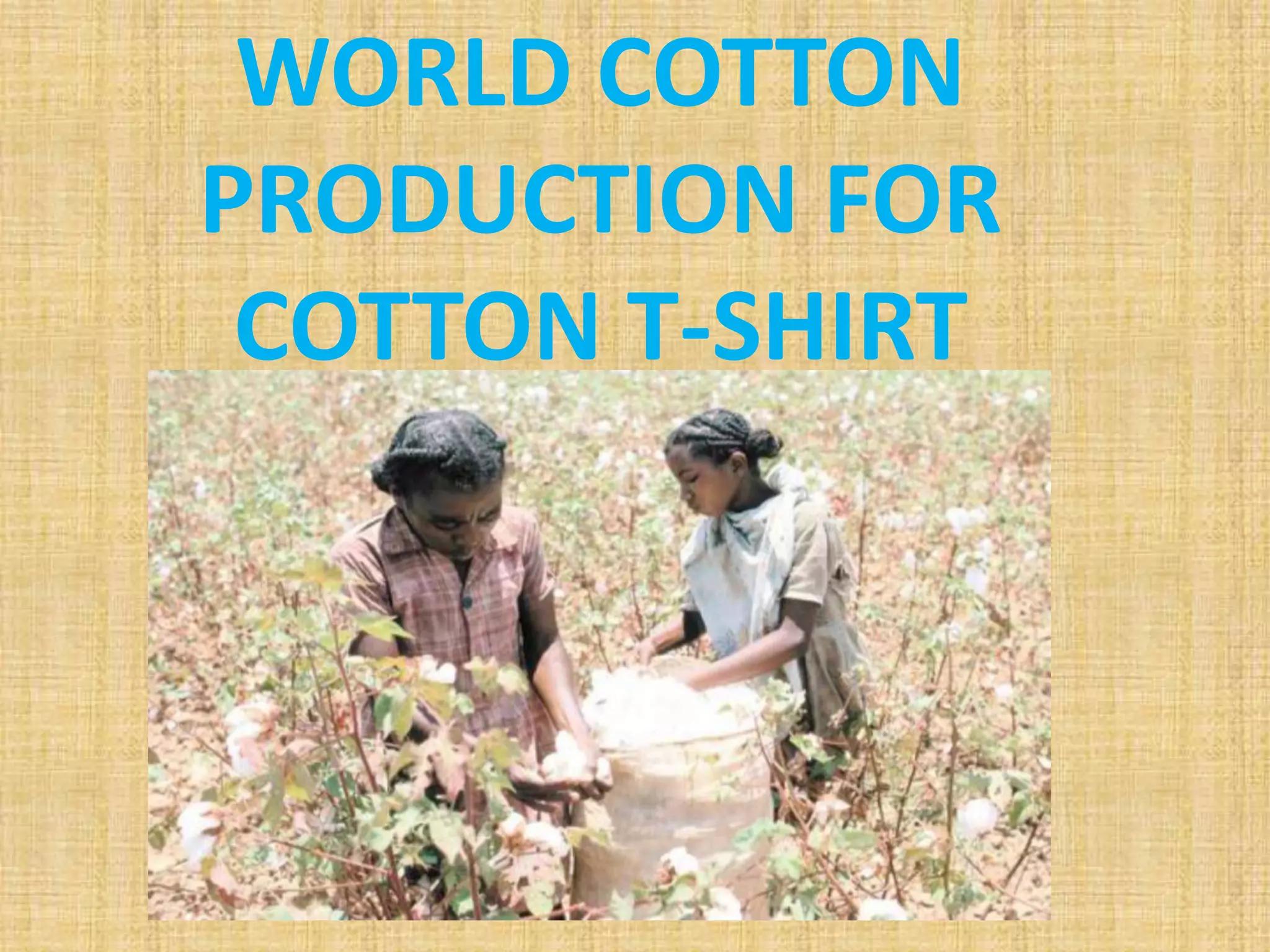
WORLD COTTON
PRODUCTION FOR
COTTON T-SHIRT
cultivation
Cultivated in over 80 countries worldwide The
world’s largest producer is China where farmers
harvest 4.6 million tones of fiber annually.
While the Indian cotton harvest totals is
2.3million, India has the largest area under cotton
cultivation, over 8.3 million hectares located
mainly in the country’s North and West.
The most productive cotton producer in the
world is Australia which harvests an average
1,689 kilos of fibre per hectare.
Risk Of Environment
• These pesticides are washed out of soils, and pollute
rivers and groundwater. Furthermore, the chemicals
eliminate not only pests but also their natural enemies.
• cotton requires large amounts of water for irrigation.
This causes Soil Salinization
• The diversion of entire rivers into huge irrigation
channels in Central Asia has led to the step by step of
the Aral Lake one of the largest inland waters in the
world. It is estimated that 60% of irrigation water in
Central and Southern Asia is lost before reaching cotton
fields because of poor infrastructure
Risk Of Environment
• Cotton production also contributes to climate
change. Industrial fertilizers are produced using
considerable quantities of energy sources (1.5% of the
world’s annual energy consumption), releasing large
amounts of carbon dioxide.
• using the large amount of nitrates to agricultural land
leads to their being transformed into nitrous oxide
(“laughing gas”), a greenhouse gas that is 300 times
more destructive than CO 2 in terms of global warming.
Risk Of Chemical
Pesticide Toxicity Classification The World Health
Organization classifies pesticides according to
acute toxicity, LD50 denotes the amount of a
chemical required to kill 50% of an exposed
population of laboratory rats. There are two
measures for each product,
1) Oral LD50 (the product is administered orally)
2) Dermal LD50 (the product is administered through the skin).
Oral LD50 Dermal LD50 mg per kg body weight required to
kill 50% of rat population
99% of the world’s cotton farmers live
and work in the developing
World where low levels of safety
awareness
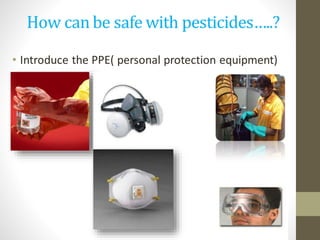
• LACK OF ACCESS TO PROTECTIVE
APPARATUS
• ILLITERACY
• POOR LABELLING OF CHEMICALS
• POOR KNOLDGE OF SAFEGUARDS
WHY…?
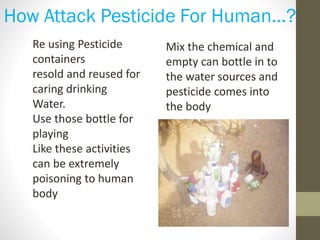
Re using Pesticide
containers
resold and reused for
caring drinking
Water.
Use those bottle for
playing
Like these activities
can be extremely
poisoning to human
body
Mix the chemical and
empty can bottle in to
the water sources and
pesticide comes into
the body
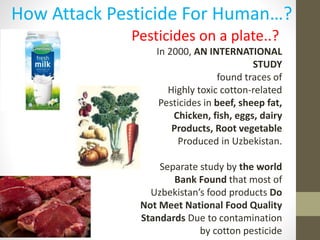
Pesticides on a plate..?
In 2000, AN INTERNATIONAL
STUDY
found traces of
Highly toxic cotton-related
Pesticides in beef, sheep fat,
Chicken, fish, eggs, dairy
Products, Root vegetable
Produced in Uzbekistan.
Separate study by the world
Bank Found that most of
Uzbekistan’s food products Do
Not Meet National Food Quality
Standards Due to contamination
by cotton pesticide
How Attack Pesticide For Human…?
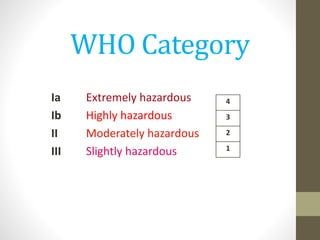
WHO Category
Ia Extremely hazardous
Ib Highly hazardous
II Moderately hazardous
III Slightly hazardous
4
3
2
1
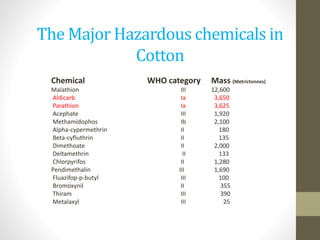
The Major Hazardous chemicals in
Cotton
Chemical WHO category Mass (Metrictonnes)
Malathion III 12,600
Aldicarb Ia 3,650
Parathion Ia 3,625
Acephate III 1,920
Methamidophos Ib 2,100
Alpha-cypermethrin II 180
Beta-cyfluthrin II 135
Dimethoate II 2,000
Deltamethrin II 133
Chlorpyrifos II 1,280
Pendimethalin III 1,690
Fluazifop-p-butyl III 100
Bromoxynil II 355
Thiram III 390
Metalaxyl III 25
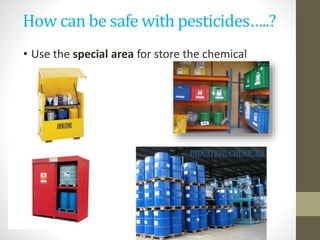
How can be safe with pesticides…..?
• Use the special area for store the chemical
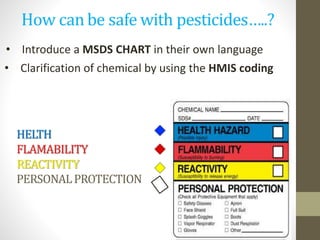
HELTH
FLAMABILITY
REACTIVITY
PERSONALPROTECTION
• Clarification of chemical by using the HMIS coding
• Introduce a MSDS CHART in their own language
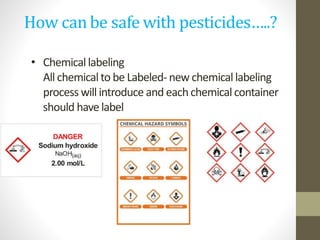
• Chemicallabeling
All chemicalto be Labeled-new chemicallabeling
process willintroduce and eachchemicalcontainer
should have label
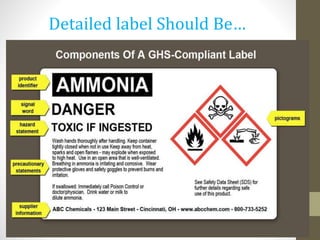
Detailed label Should Be…
THANK YOU

World cotton production

  • 1.
  • 2.
    cultivation Cultivated in over80 countries worldwide The world’s largest producer is China where farmers harvest 4.6 million tones of fiber annually. While the Indian cotton harvest totals is 2.3million, India has the largest area under cotton cultivation, over 8.3 million hectares located mainly in the country’s North and West. The most productive cotton producer in the world is Australia which harvests an average 1,689 kilos of fibre per hectare.
  • 3.
    Risk Of Environment •These pesticides are washed out of soils, and pollute rivers and groundwater. Furthermore, the chemicals eliminate not only pests but also their natural enemies. • cotton requires large amounts of water for irrigation. This causes Soil Salinization • The diversion of entire rivers into huge irrigation channels in Central Asia has led to the step by step of the Aral Lake one of the largest inland waters in the world. It is estimated that 60% of irrigation water in Central and Southern Asia is lost before reaching cotton fields because of poor infrastructure
  • 4.
    Risk Of Environment •Cotton production also contributes to climate change. Industrial fertilizers are produced using considerable quantities of energy sources (1.5% of the world’s annual energy consumption), releasing large amounts of carbon dioxide. • using the large amount of nitrates to agricultural land leads to their being transformed into nitrous oxide (“laughing gas”), a greenhouse gas that is 300 times more destructive than CO 2 in terms of global warming.
  • 5.
    Risk Of Chemical PesticideToxicity Classification The World Health Organization classifies pesticides according to acute toxicity, LD50 denotes the amount of a chemical required to kill 50% of an exposed population of laboratory rats. There are two measures for each product, 1) Oral LD50 (the product is administered orally) 2) Dermal LD50 (the product is administered through the skin). Oral LD50 Dermal LD50 mg per kg body weight required to kill 50% of rat population
  • 6.
    99% of theworld’s cotton farmers live and work in the developing World where low levels of safety awareness • LACK OF ACCESS TO PROTECTIVE APPARATUS • ILLITERACY • POOR LABELLING OF CHEMICALS • POOR KNOLDGE OF SAFEGUARDS WHY…?
  • 7.
    Re using Pesticide containers resoldand reused for caring drinking Water. Use those bottle for playing Like these activities can be extremely poisoning to human body Mix the chemical and empty can bottle in to the water sources and pesticide comes into the body
  • 8.
    Pesticides on aplate..? In 2000, AN INTERNATIONAL STUDY found traces of Highly toxic cotton-related Pesticides in beef, sheep fat, Chicken, fish, eggs, dairy Products, Root vegetable Produced in Uzbekistan. Separate study by the world Bank Found that most of Uzbekistan’s food products Do Not Meet National Food Quality Standards Due to contamination by cotton pesticide How Attack Pesticide For Human…?
  • 9.
    WHO Category Ia Extremelyhazardous Ib Highly hazardous II Moderately hazardous III Slightly hazardous 4 3 2 1
  • 10.
    The Major Hazardouschemicals in Cotton Chemical WHO category Mass (Metrictonnes) Malathion III 12,600 Aldicarb Ia 3,650 Parathion Ia 3,625 Acephate III 1,920 Methamidophos Ib 2,100 Alpha-cypermethrin II 180 Beta-cyfluthrin II 135 Dimethoate II 2,000 Deltamethrin II 133 Chlorpyrifos II 1,280 Pendimethalin III 1,690 Fluazifop-p-butyl III 100 Bromoxynil II 355 Thiram III 390 Metalaxyl III 25
  • 11.
    How can besafe with pesticides…..? • Use the special area for store the chemical
  • 12.
    HELTH FLAMABILITY REACTIVITY PERSONALPROTECTION • Clarification ofchemical by using the HMIS coding • Introduce a MSDS CHART in their own language
  • 13.
    • Chemicallabeling All chemicaltobe Labeled-new chemicallabeling process willintroduce and eachchemicalcontainer should have label
  • 14.
  • 16.