Presented by
Presented by
M.Nageswara Rao
M.Nageswara Rao
Sr.SO(A)/S.C.Rly
Sr.SO(A)/S.C.Rly
1
2
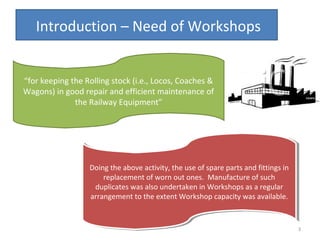
Introduction – Need of Workshops
“for keeping the Rolling stock (i.e., Locos, Coaches &
Wagons) in good repair and efficient maintenance of
the Railway Equipment”

Doing the above activity, the use of spare parts and fittings in
replacement of worn out ones. Manufacture of such
duplicates was also undertaken in Workshops as aaregular
duplicates was also undertaken in Workshops as regular
arrangement to the extent Workshop capacity was available.

3
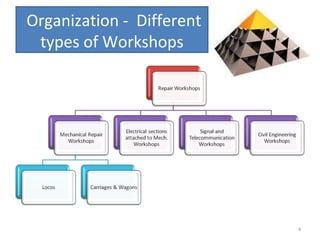
Organization - Different
types of Workshops

4
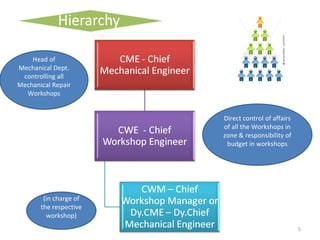
Head of
Mechanical Dept.
controlling all
Mechanical Repair
Workshops
Direct control of affairs
of all the Workshops in
zone & responsibility of
budget in workshops

(in charge of
the respective
workshop)
5
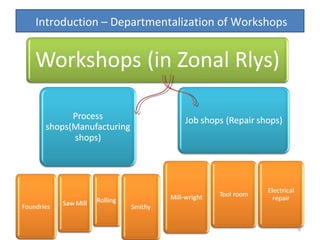
Introduction – Departmentalization of Workshops

6
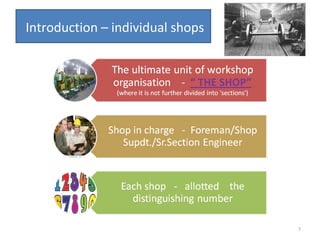
Introduction – individual shops

7
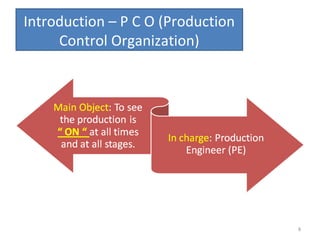
Introduction – P C O (Production
Control Organization)

8
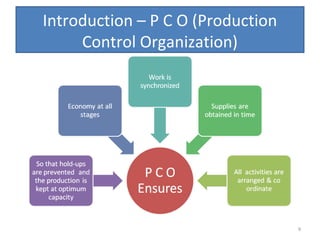
Introduction – P C O (Production
Control Organization)

9
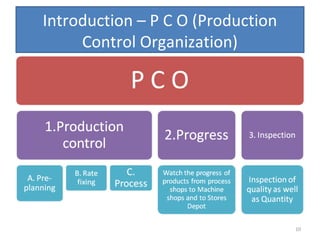
Introduction – P C O (Production
Control Organization)

10
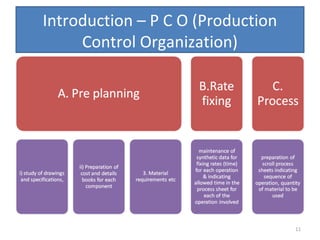
Introduction – P C O (Production
Control Organization)

11
12
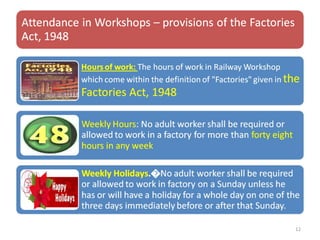
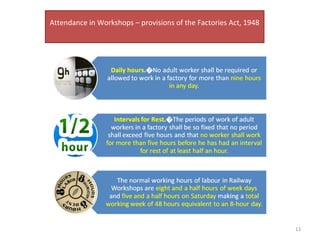
Attendance in Workshops – provisions of the Factories Act, 1948

13
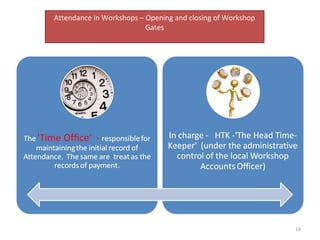
Attendance in Workshops – Opening and closing of Workshop
Gates

14
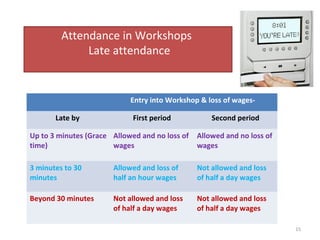
Attendance in Workshops
Late attendance

Entry into Workshop & loss of wagesLate by

First period

Second period

Up to 3 minutes (Grace Allowed and no loss of
time)
wages

Allowed and no loss of
wages

3 minutes to 30
minutes

Allowed and loss of
half an hour wages

Not allowed and loss
of half a day wages

Beyond 30 minutes

Not allowed and loss
of half a day wages

Not allowed and loss
of half a day wages
15
16
17
18
19
20
21
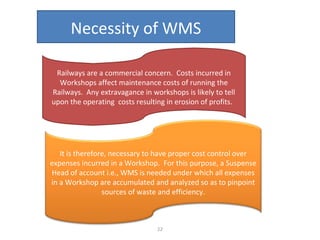
Necessity of WMS
Railways are a commercial concern. Costs incurred in
Workshops affect maintenance costs of running the
Railways. Any extravagance in workshops is likely to tell
upon the operating costs resulting in erosion of profits.

It is therefore, necessary to have proper cost control over
expenses incurred in a Workshop. For this purpose, a Suspense
Head of account i.e., WMS is needed under which all expenses
in a Workshop are accumulated and analyzed so as to pinpoint
sources of waste and efficiency.

22
23
24
25
26
27
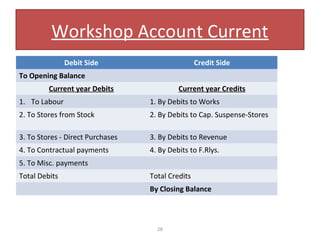
Workshop Account Current
Debit Side

Credit Side

To Opening Balance
Current year Debits

Current year Credits

1. To Labour

1. By Debits to Works

2. To Stores from Stock

2. By Debits to Cap. Suspense-Stores

3. To Stores - Direct Purchases

3. By Debits to Revenue

4. To Contractual payments

4. By Debits to F.Rlys.

5. To Misc. payments
Total Debits

Total Credits
By Closing Balance

28
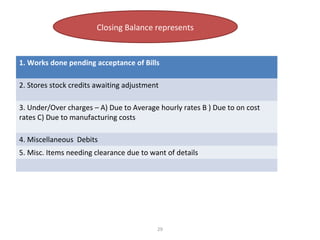
Closing Balance represents

1. Works done pending acceptance of Bills
2. Stores stock credits awaiting adjustment
3. Under/Over charges – A) Due to Average hourly rates B ) Due to on cost
rates C) Due to manufacturing costs
4. Miscellaneous Debits
5. Misc. Items needing clearance due to want of details

29
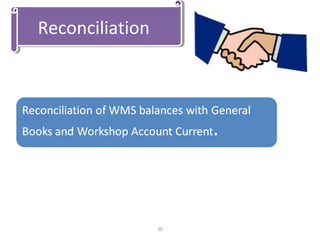
Reconciliation
Reconciliation

30
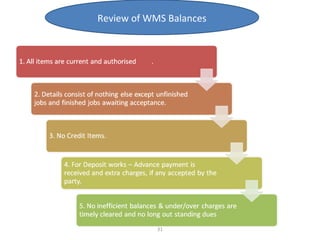
Review of WMS Balances

31
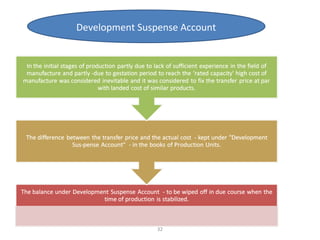
Development Suspense Account

32
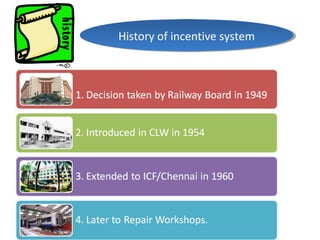
History of incentive system
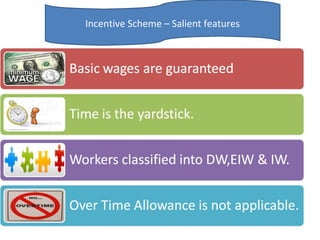
Incentive Scheme – Salient features
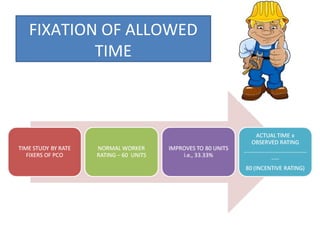
FIXATION OF ALLOWED
TIME
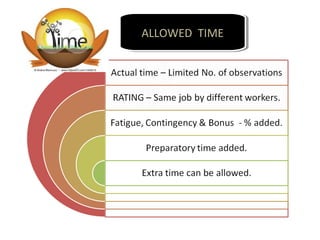
ALLOWED TIME
ALLOWED TIME
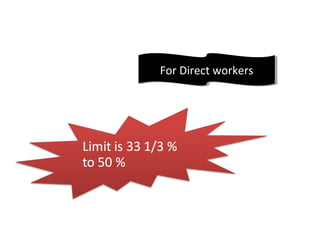
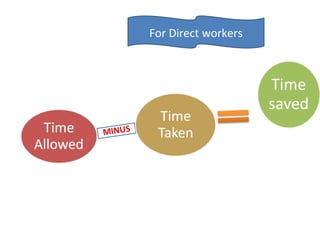
For Direct workers
For Direct workers
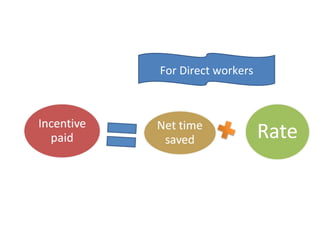
For Direct workers
For Direct workers
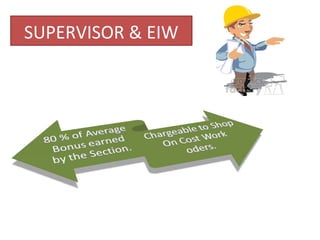
SUPERVISOR & EIW
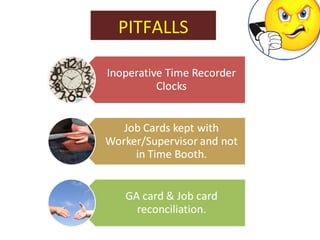
PITFALLS
PITFALLS
43
44
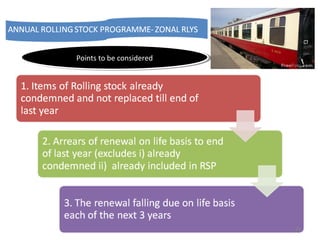
Points to be considered

45
46

Workshop accounts (indian railways)