WORKING CAPITAL
EVERY BUSINESS NEEDS FUNDS FOR TWO PURPOSES
LONG TERM
SHORT TERM
LONG TERM
 THESE FUNDS ARE REQUIRED FOR CREATION OF PRODUCTION FACILITIES
SUCH AS PLANT AND MACHINERY, LAND, BUILDING AND FURNITURE ETC.
 INVESTMENT IN THESE ASSETS REPRESENTS THAT PART OF FIRM’S CAPITAL,
WHICH IS PERMANENTLY BLOCKED ON A PERMANENT OR FIXED BASIS AND
IS CALLED FIXED CAPITAL
 THE FORM OF THESE ASSETS DOES NOT CHANGE, IN THE NORMAL COURSE.
WORKING CAPITAL
Short term funds
• Funds, needed for purchase of raw materials, payment of wages and other
day-today expenses etc.
• These funds are known as working capital.
• Funds invested in these assets keep revolving, fast. These assets are
converted into cash and, again, cash is converted into current assets.
WORKING CAPITAL
MEANING
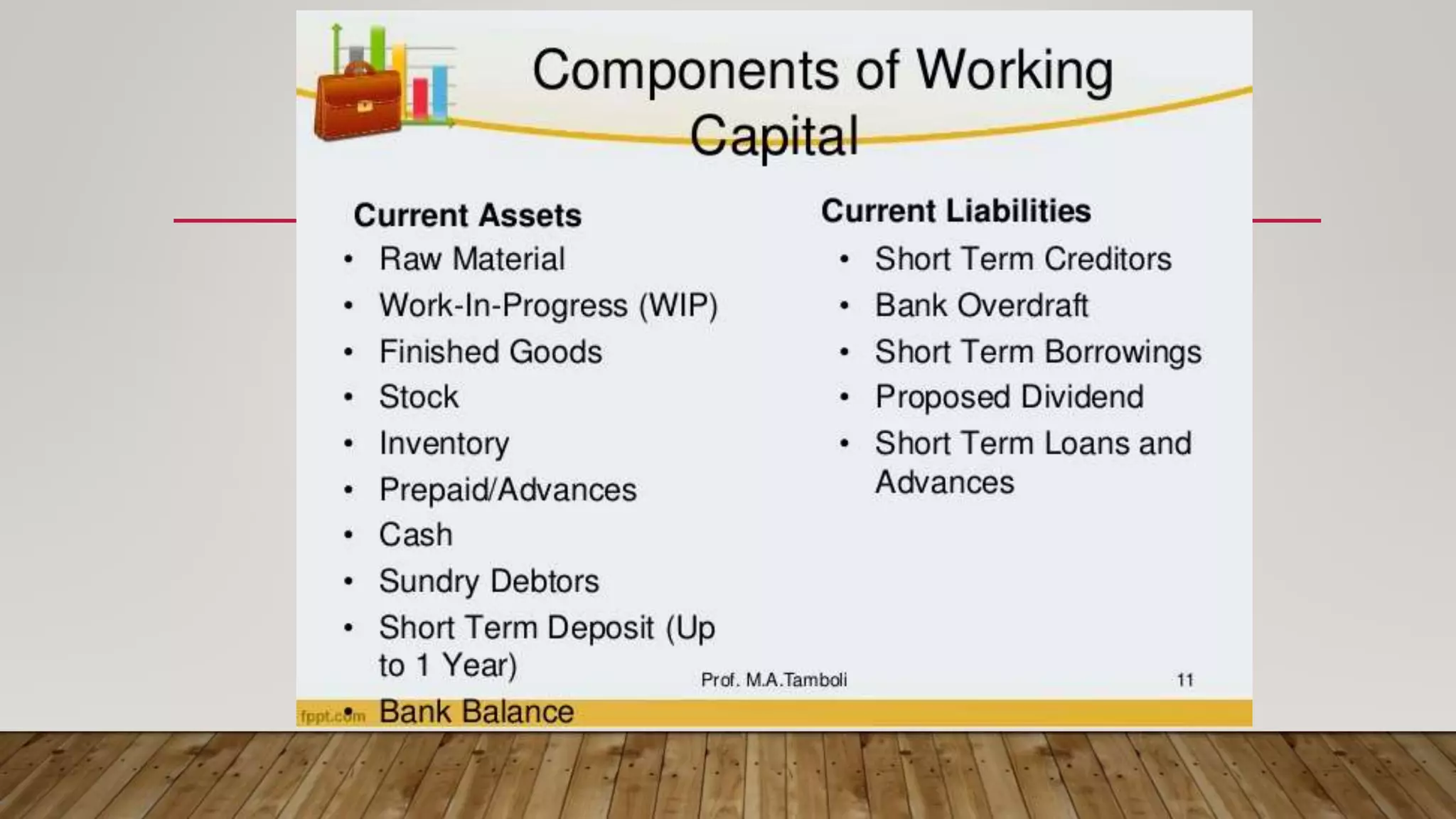
• working capital refers to that part of the firm’s capital, which is required for
financing short-term or current assets such as cash, debtors, inventories and
marketable securities etc.
The term ‘working capital’ refers to
• Those current assets, which are convertible into cash, within a period of one
accounting year and
• Those funds needed for meeting day-to-day operations
CLASSIFICATION OF WORKING CAPITAL
On the basis Time
Permanent or fixed
working capital
Temporary or
variable working
capital
SPECIAL
SEASONAL
On the basis of Concept
Gross working capital
Net working capital
• Gross working capital: Gross working capital refers to the firm’s investment in total
current assets of the enterprise.
• Net working capital: Net working capital is the difference between current assets
and current liabilities.
GWC = CA
NWC = CA - CL
PERMANENT OR FIXED WORKING CAPITAL:
• Permanent or fixed working capital: Permanent or fixed working capital is that portion of working
capital, which is necessarily required to carry on the business operations.
• It is the capital; the business concern must maintain certain amount of capital at minimum level at all
times.
• This amount is permanent in the business, as fixed assets are. For example, a certain amount of inventory
or receivables is permanent in the business, irrespective of the volume of sales. This level would remain
constant during the peak as well as non-peak season. In other words, this level does not fluctuate, with
the change in volume of business.
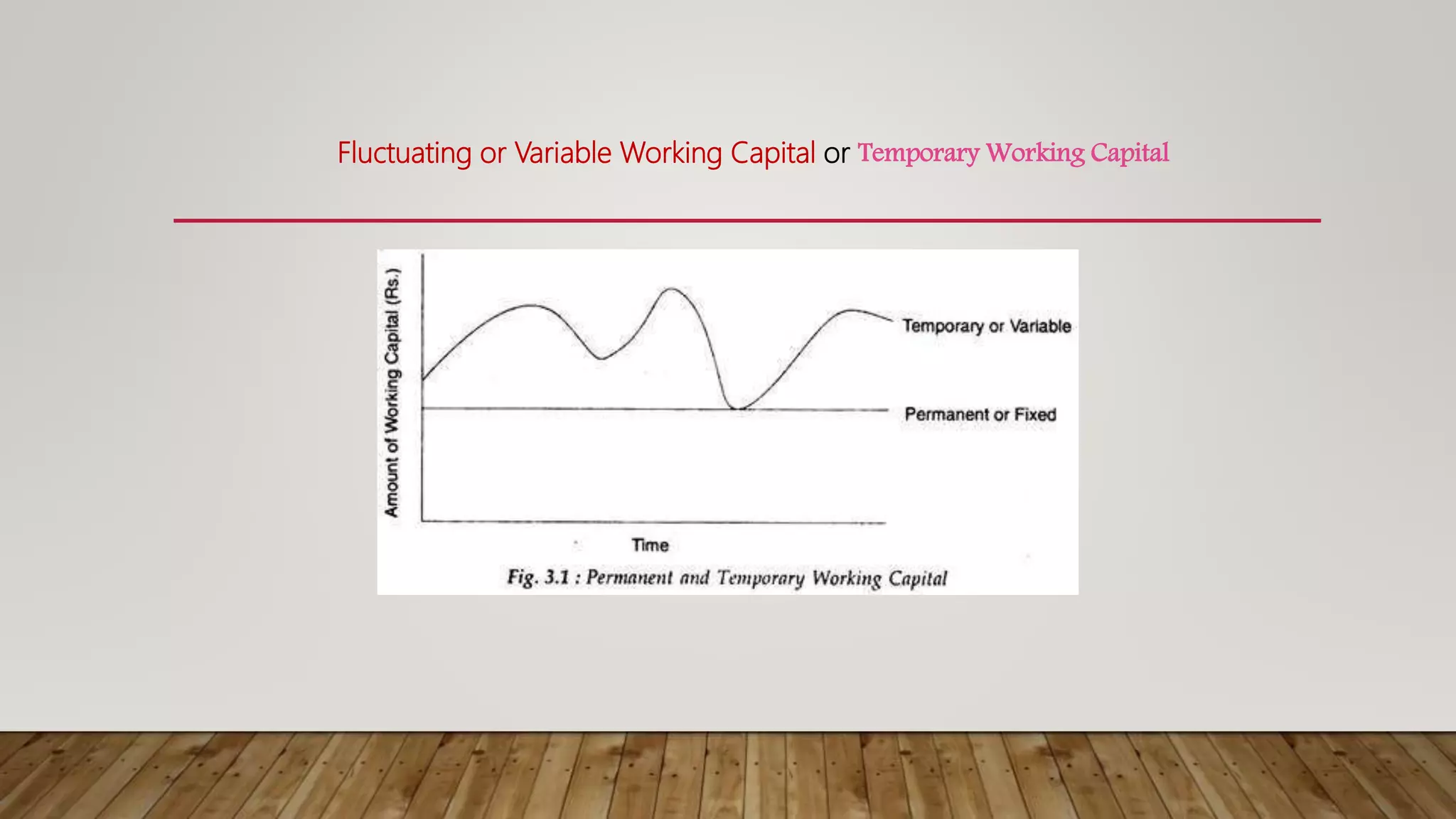
Fluctuating or Variable Working Capital or Temporary Working Capital
• It is also known as variable working capital. It is the amount of capital which is
which is required to meet the Seasonal demands and some special purposes. It can
purposes. It can be further classified into
• Seasonal Working Capital and Special Working Capital.
• The capital required to meet the seasonal needs of the business concern is called
called as Seasonal Working Capital.
• The capital required to meet the special exigencies such as launching of extensive
extensive marketing campaigns for conducting research, etc.
Fluctuating or Variable Working Capital or Temporary Working Capital
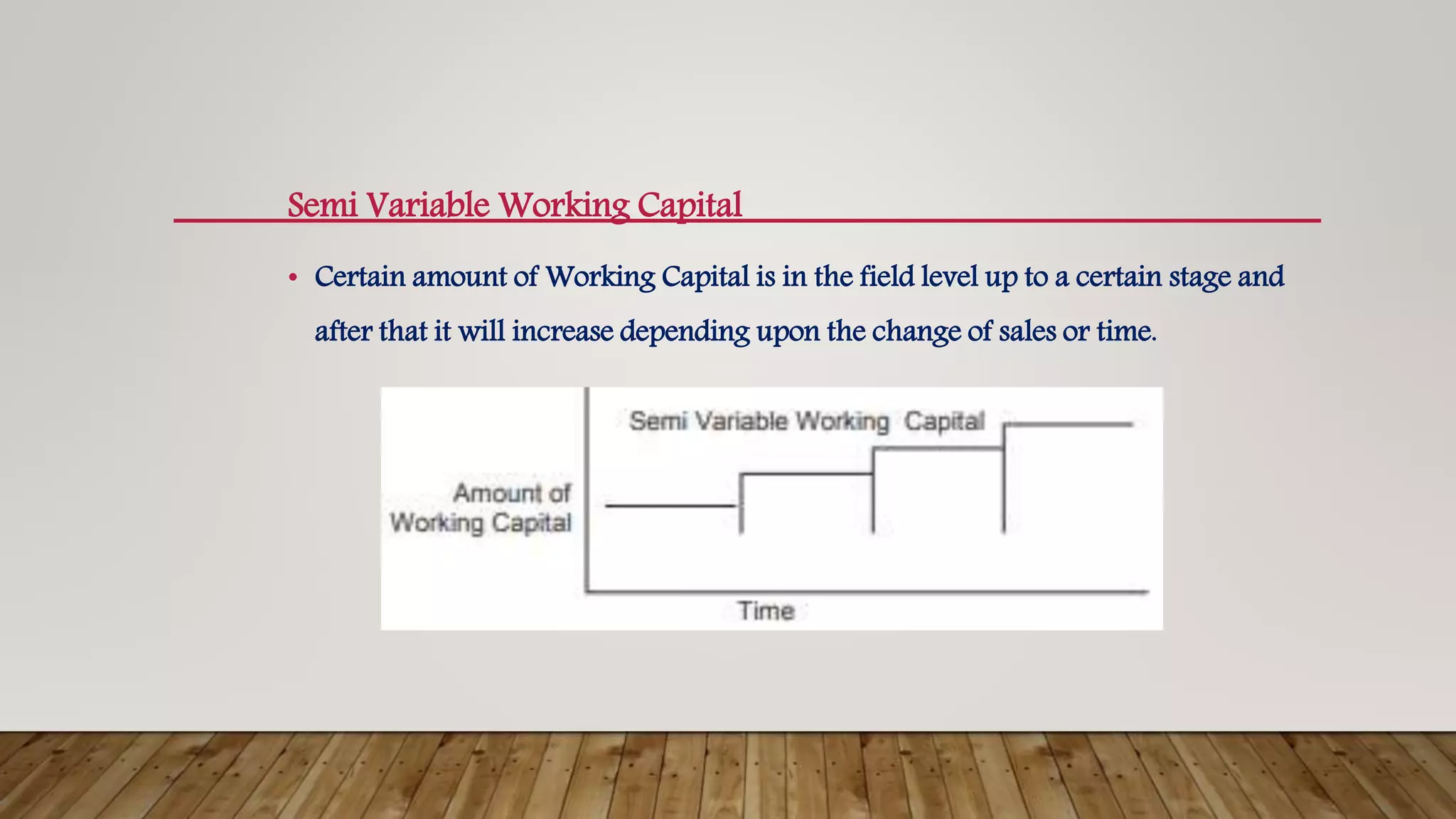
Semi Variable Working Capital
• Certain amount of Working Capital is in the field level up to a certain stage and
after that it will increase depending upon the change of sales or time.
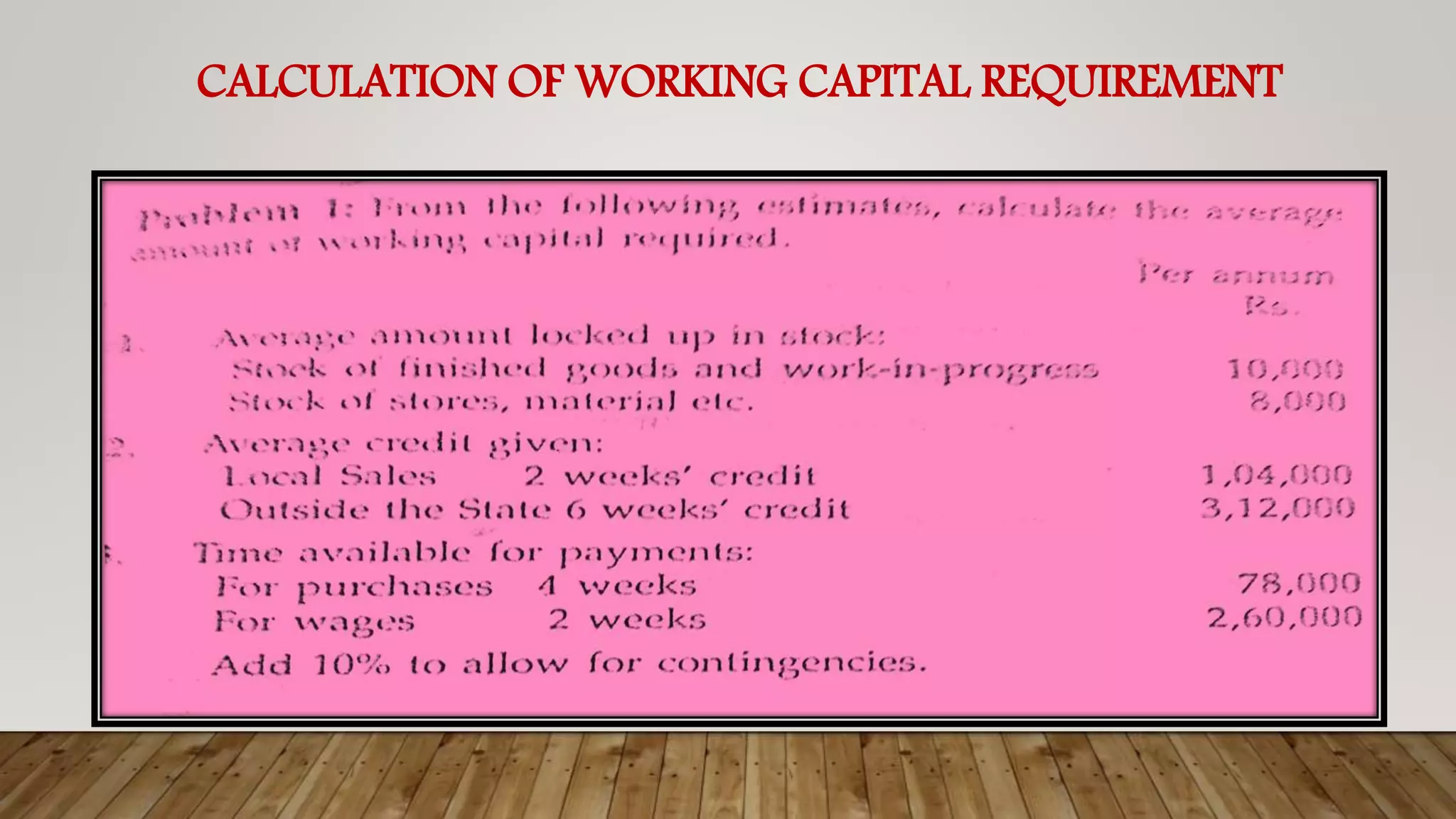
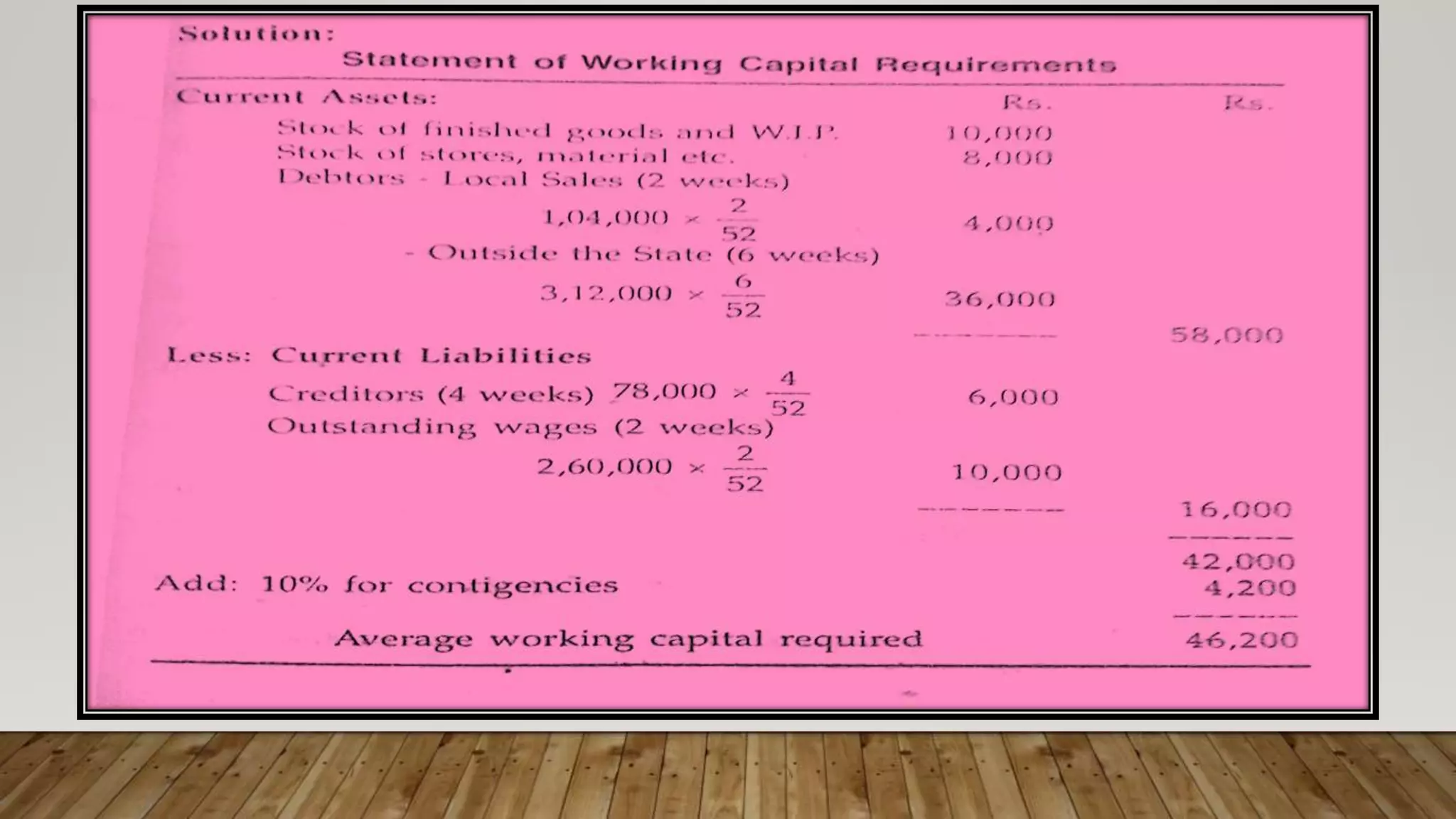
CALCULATION OF WORKING CAPITAL REQUIREMENT
WORKING CAPITAL.pptx

WORKING CAPITAL.pptx

  • 1.
    WORKING CAPITAL EVERY BUSINESSNEEDS FUNDS FOR TWO PURPOSES LONG TERM SHORT TERM LONG TERM  THESE FUNDS ARE REQUIRED FOR CREATION OF PRODUCTION FACILITIES SUCH AS PLANT AND MACHINERY, LAND, BUILDING AND FURNITURE ETC.  INVESTMENT IN THESE ASSETS REPRESENTS THAT PART OF FIRM’S CAPITAL, WHICH IS PERMANENTLY BLOCKED ON A PERMANENT OR FIXED BASIS AND IS CALLED FIXED CAPITAL  THE FORM OF THESE ASSETS DOES NOT CHANGE, IN THE NORMAL COURSE.
  • 2.
    WORKING CAPITAL Short termfunds • Funds, needed for purchase of raw materials, payment of wages and other day-today expenses etc. • These funds are known as working capital. • Funds invested in these assets keep revolving, fast. These assets are converted into cash and, again, cash is converted into current assets.
  • 3.
    WORKING CAPITAL MEANING • workingcapital refers to that part of the firm’s capital, which is required for financing short-term or current assets such as cash, debtors, inventories and marketable securities etc. The term ‘working capital’ refers to • Those current assets, which are convertible into cash, within a period of one accounting year and • Those funds needed for meeting day-to-day operations
  • 5.
    CLASSIFICATION OF WORKINGCAPITAL CLASSIFICATION OF WORKING CAPITAL On the basis Time Permanent or fixed working capital Temporary or variable working capital SPECIAL SEASONAL On the basis of Concept Gross working capital Net working capital
  • 6.
    • Gross workingcapital: Gross working capital refers to the firm’s investment in total current assets of the enterprise. • Net working capital: Net working capital is the difference between current assets and current liabilities. GWC = CA NWC = CA - CL
  • 7.
    PERMANENT OR FIXEDWORKING CAPITAL: • Permanent or fixed working capital: Permanent or fixed working capital is that portion of working capital, which is necessarily required to carry on the business operations. • It is the capital; the business concern must maintain certain amount of capital at minimum level at all times. • This amount is permanent in the business, as fixed assets are. For example, a certain amount of inventory or receivables is permanent in the business, irrespective of the volume of sales. This level would remain constant during the peak as well as non-peak season. In other words, this level does not fluctuate, with the change in volume of business.
  • 8.
    Fluctuating or VariableWorking Capital or Temporary Working Capital • It is also known as variable working capital. It is the amount of capital which is which is required to meet the Seasonal demands and some special purposes. It can purposes. It can be further classified into • Seasonal Working Capital and Special Working Capital. • The capital required to meet the seasonal needs of the business concern is called called as Seasonal Working Capital. • The capital required to meet the special exigencies such as launching of extensive extensive marketing campaigns for conducting research, etc.
  • 9.
    Fluctuating or VariableWorking Capital or Temporary Working Capital
  • 10.
    Semi Variable WorkingCapital • Certain amount of Working Capital is in the field level up to a certain stage and after that it will increase depending upon the change of sales or time.
  • 11.
    CALCULATION OF WORKINGCAPITAL REQUIREMENT