Grades: Aeries Software SIS*
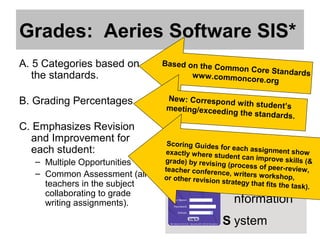
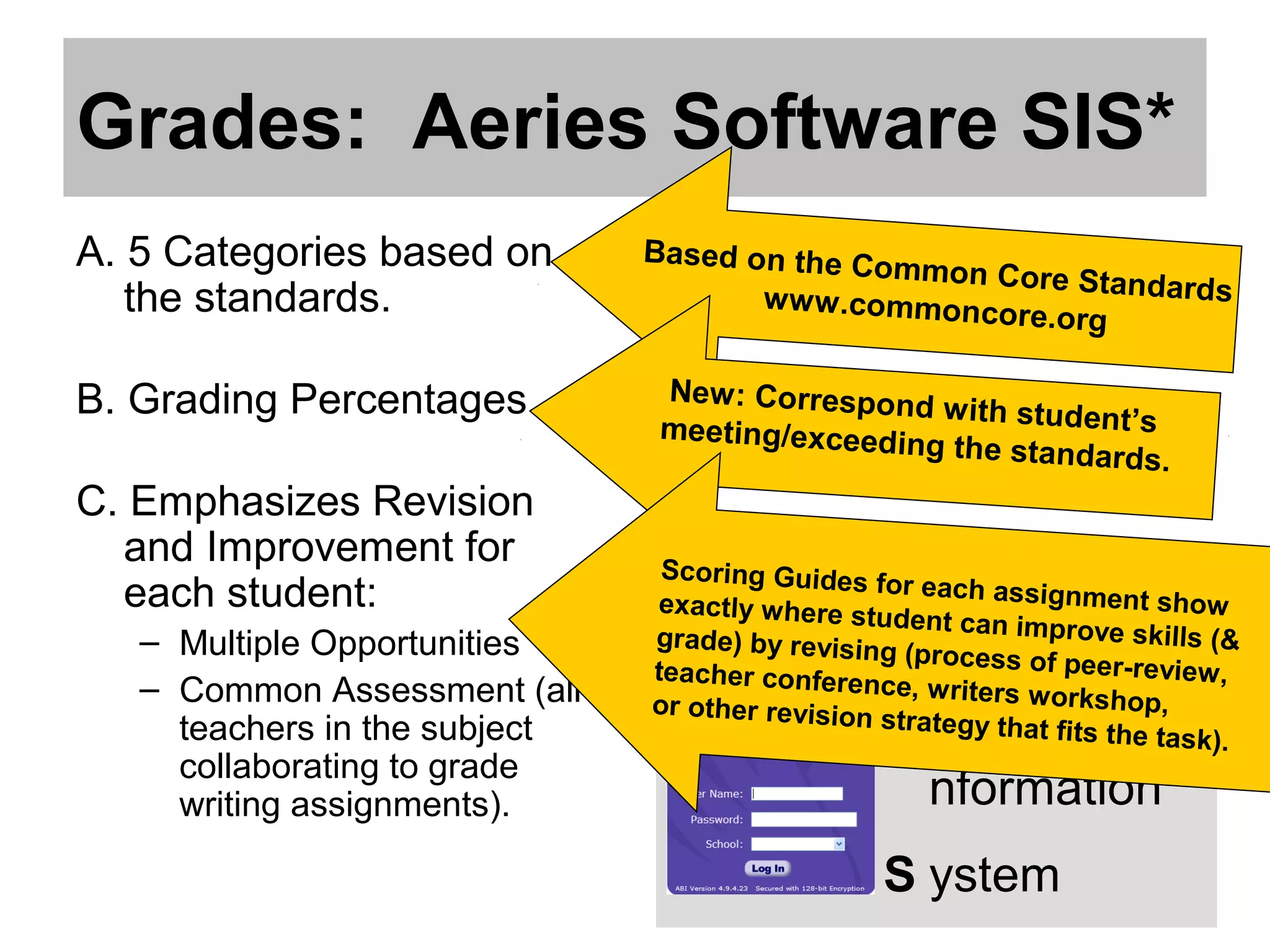
A. 5 Categories based on       Based on the Co
                                               mmon Core Sta
                                                            ndards
   the standards.                     ww w .commonc
                                                    ore.org

B. Grading Percentages         New : Correspon
                                               d w ith student’s
                               meeting/exceedin
                                                g the standards.
C. Emphasizes Revision
  and Improvement for           Scoring Guides fo
  each student:                exactly where stu
                                                   r each assignme
                                                  dent can improv
                                                                     nt show
   – Multiple Opportunities    grade) by revisin                    e skills (&
                                                 g (process of pe
                               teacher conferen                    er-review,
   – Common Assessment (all                      ce, w riters works
     teachers in the subject
                               or other revision  S tudent
                                                 strategy that fits
                                                                    hop,
                                                                    the task).
     collaborating to grade
     writing assignments).                    I      nformation
                                                  S ystem
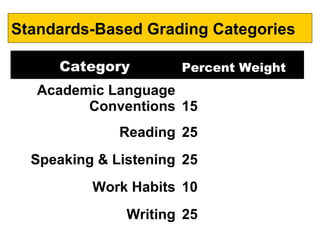
Standards-Based Grading Categories

     Category         Percent Weight
   Academic Language
         Conventions 15
              Reading 25
  Speaking & Listening 25
          Work Habits 10
               Writing 25
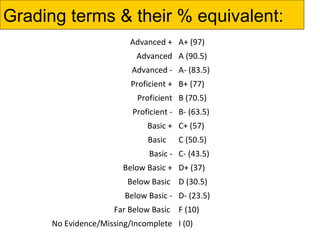
Grading terms & their % equivalent:
                         Advanced + A+ (97)
                           Advanced A (90.5)
                          Advanced - A- (83.5)
                          Proficient + B+ (77)
                           Proficient B (70.5)
                          Proficient - B- (63.5)
                              Basic + C+ (57)
                              Basic    C (50.5)
                              Basic - C- (43.5)
                        Below Basic + D+ (37)
                         Below Basic D (30.5)
                        Below Basic - D- (23.5)
                     Far Below Basic F (10)
      No Evidence/Missing/Incomplete I (0)
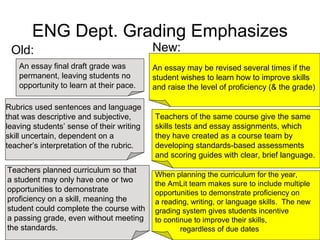
ENG Dept. Grading Emphasizes
 Old:                                      New:
   An essay final draft grade was          An essay may be revised several times if the
   permanent, leaving students no          student wishes to learn how to improve skills
   opportunity to learn at their pace.     and raise the level of proficiency (& the grade)

Rubrics used sentences and language
that was descriptive and subjective,       Teachers of the same course give the same
leaving students’ sense of their writing   skills tests and essay assignments, which
skill uncertain, dependent on a            they have created as a course team by
teacher’s interpretation of the rubric.    developing standards-based assessments
                                           and scoring guides with clear, brief language.
Teachers planned curriculum so that
                                           When planning the curriculum for the year,
a student may only have one or two         the AmLit team makes sure to include multiple
opportunities to demonstrate               opportunities to demonstrate proficiency on
proficiency on a skill, meaning the        a reading, writing, or language skills. The new
student could complete the course with     grading system gives students incentive
a passing grade, even without meeting      to continue to improve their skills,
the standards.                                     regardless of due dates
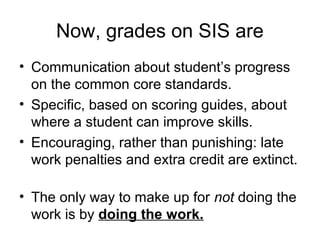
Now, grades on SIS are
• Communication about student’s progress
  on the common core standards.
• Specific, based on scoring guides, about
  where a student can improve skills.
• Encouraging, rather than punishing: late
  work penalties and extra credit are extinct.

• The only way to make up for not doing the
  work is by doing the work.

Wordyslides withnotes amlit_btsngradeslides

  • 1.
    Grades: Aeries SoftwareSIS* A. 5 Categories based on Based on the Co mmon Core Sta ndards the standards. ww w .commonc ore.org B. Grading Percentages New : Correspon d w ith student’s meeting/exceedin g the standards. C. Emphasizes Revision and Improvement for Scoring Guides fo each student: exactly where stu r each assignme dent can improv nt show – Multiple Opportunities grade) by revisin e skills (& g (process of pe teacher conferen er-review, – Common Assessment (all ce, w riters works teachers in the subject or other revision S tudent strategy that fits hop, the task). collaborating to grade writing assignments). I nformation S ystem
  • 2.
    Standards-Based Grading Categories Category Percent Weight Academic Language Conventions 15 Reading 25 Speaking & Listening 25 Work Habits 10 Writing 25
  • 3.
    Grading terms &their % equivalent: Advanced + A+ (97) Advanced A (90.5) Advanced - A- (83.5) Proficient + B+ (77) Proficient B (70.5) Proficient - B- (63.5) Basic + C+ (57) Basic C (50.5) Basic - C- (43.5) Below Basic + D+ (37) Below Basic D (30.5) Below Basic - D- (23.5) Far Below Basic F (10) No Evidence/Missing/Incomplete I (0)
  • 4.
    ENG Dept. GradingEmphasizes Old: New: An essay final draft grade was An essay may be revised several times if the permanent, leaving students no student wishes to learn how to improve skills opportunity to learn at their pace. and raise the level of proficiency (& the grade) Rubrics used sentences and language that was descriptive and subjective, Teachers of the same course give the same leaving students’ sense of their writing skills tests and essay assignments, which skill uncertain, dependent on a they have created as a course team by teacher’s interpretation of the rubric. developing standards-based assessments and scoring guides with clear, brief language. Teachers planned curriculum so that When planning the curriculum for the year, a student may only have one or two the AmLit team makes sure to include multiple opportunities to demonstrate opportunities to demonstrate proficiency on proficiency on a skill, meaning the a reading, writing, or language skills. The new student could complete the course with grading system gives students incentive a passing grade, even without meeting to continue to improve their skills, the standards. regardless of due dates
  • 5.
    Now, grades onSIS are • Communication about student’s progress on the common core standards. • Specific, based on scoring guides, about where a student can improve skills. • Encouraging, rather than punishing: late work penalties and extra credit are extinct. • The only way to make up for not doing the work is by doing the work.

Editor's Notes

  • #2 There are 5 Categories based on the standards. They are Based on the Common Core Standards www.commoncore.org We use a percent scale the helps parents and students see whether or not the students have meet or exceeded the standards taught through an assignment ( New: Correspond with student’s meeting/exceeding the standards) Emphasizes Revision and Improvement for each student: Multiple Opportunities Common Assessment (all teachers in the subject collaborating to grade writing assignments). Scoring Guides for each assignment show exactly where student can improve skills (& grade) by revising (process of peer-review, teacher conference, writers workshop, or other revision strategy that fits the task).
  • #5 Old 1. An essay final draft grade was permanent, leaving students no opportunity to learn at their pace. New 2. An essay may be revised several times if the student wishes to learn how to improve skills and raise the level of proficiency (& the grade) Old 3. Rubrics used sentences and language that was descriptive and subjective, leaving students’ sense of their writing skill uncertain, dependent on a teacher’s interpretation of the rubric. New 4. Teachers of the same course give the same skills tests and essay assignments, which they have created as a course team by developing standards-based assessments and scoring guides with clear, brief language Old 5. Teachers planned curriculum so that a student may only have one or two opportunities to demonstrate proficiency on a skill, meaning the student could complete the course with a passing grade, even without meeting the standards. New 6. When planning the curriculum for the year, the AmLit team makes sure to include multiple opportunities to demonstrate proficiency on a reading, writing, or language skills. The new grading system gives students incentive to continue to improve their skills, regardless of due dates
  • #6 Communication about student’s progress on the common core standards. Specific, based on scoring guides, about where a student can improve skills. Encouraging, rather than punishing: late work penalties and extra credit are extinct. The only way to make up for not doing the work is by doing the work. Communication about student’s progress on the common core standards. Specific, based on scoring guides, about where a student can improve skills. Encouraging, rather than punishing: late work penalties and extra credit are extinct. The only way to make up for not doing the work is by doing the work.