

D.I.S.S.E.C.T.


A READING STRATEGY THAT WORKS
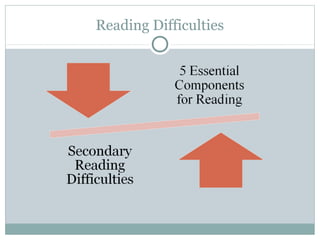
Reading Difficulties
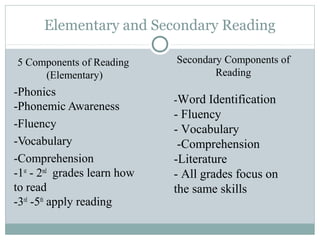
Elementary and Secondary Reading

5 Components of Reading       Secondary Components of
     (Elementary)                     Reading
-Phonics
                              -Word Identification
-Phonemic Awareness
                              - Fluency
-Fluency                      - Vocabulary
-Vocabulary                    -Comprehension
-Comprehension                -Literature
-1st - 2nd grades learn how   - All grades focus on
to read                       the same skills
-3rd -5th apply reading
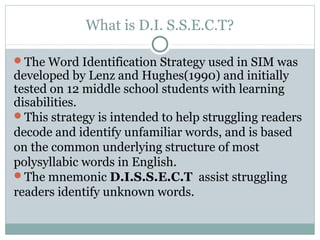
What is D.I. S.S.E.C.T?

The Word Identification Strategy used in SIM was
developed by Lenz and Hughes(1990) and initially
tested on 12 middle school students with learning
disabilities.
This strategy is intended to help struggling readers
decode and identify unfamiliar words, and is based
on the common underlying structure of most
polysyllabic words in English.
The mnemonic D.I.S.S.E.C.T assist struggling
readers identify unknown words.
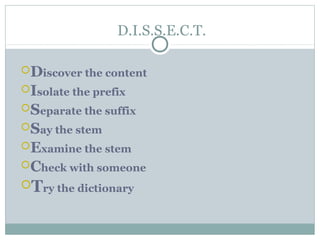
D.I.S.S.E.C.T.

Discover the content
Isolate the prefix
Separate the suffix
Say the stem
Examine the stem
Check with someone
Try the dictionary
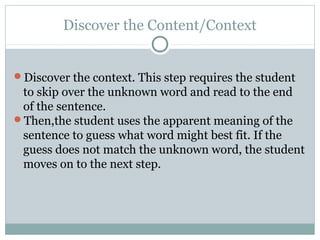
Discover the Content/Context


Discover the context. This step requires the student
 to skip over the unknown word and read to the end
 of the sentence.
Then,the student uses the apparent meaning of the
 sentence to guess what word might best fit. If the
 guess does not match the unknown word, the student
 moves on to the next step.
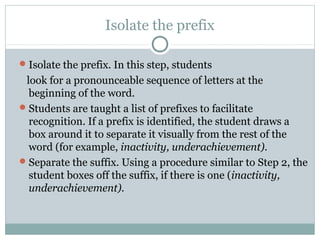
Isolate the prefix

 Isolate the prefix. In this step, students
 look for a pronounceable sequence of letters at the
  beginning of the word.
 Students are taught a list of prefixes to facilitate
  recognition. If a prefix is identified, the student draws a
  box around it to separate it visually from the rest of the
  word (for example, inactivity, underachievement).
 Separate the suffix. Using a procedure similar to Step 2, the
  student boxes off the suffix, if there is one (inactivity,
  underachievement).
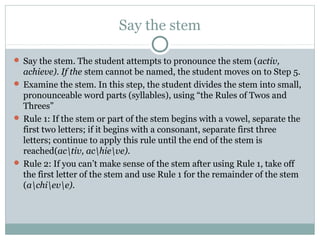
Say the stem

 Say the stem. The student attempts to pronounce the stem (activ,
  achieve). If the stem cannot be named, the student moves on to Step 5.
 Examine the stem. In this step, the student divides the stem into small,
  pronounceable word parts (syllables), using “the Rules of Twos and
  Threes”
 Rule 1: If the stem or part of the stem begins with a vowel, separate the
  first two letters; if it begins with a consonant, separate first three
  letters; continue to apply this rule until the end of the stem is
  reached(activ, achieve).
 Rule 2: If you can’t make sense of the stem after using Rule 1, take off
  the first letter of the stem and use Rule 1 for the remainder of the stem
  (achieve).
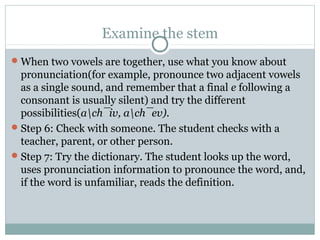
Examine the stem
 When two vowels are together, use what you know about
  pronunciation(for example, pronounce two adjacent vowels
  as a single sound, and remember that a final e following a
  consonant is usually silent) and try the different
  possibilities(ach¯iv, ach¯ev).
 Step 6: Check with someone. The student checks with a
  teacher, parent, or other person.
 Step 7: Try the dictionary. The student looks up the word,
  uses pronunciation information to pronounce the word, and,
  if the word is unfamiliar, reads the definition.
Resources

 DISSECT
  http://people.uwec.edu/ROBERSEA/edmt380/design_print.pdf
     This PDF document offers an outline of DISSECT which is a word
     identification strategy that is an effective tool to reduce common oral reading
     errors made by adolescent readers with learning problems.
 DISSECT Reading Strategy: The DISSECT Decoding Strategy for
  Multisyllabic Words
  http://www3.mpls.k12.mn.us/stserv/alc/curriculummap.pdf
     DISSECT word identification strategy is research based for students with
     reading disabilities to become proficient readers by learning to decode
     multisyllabic words.
 Word Analysis Strategies
  http://www.sedl.org/cgi-bin/mysql/buildingreading.cgi?
     showrecord=21&l=description
     DISSECT is mnemonic device to help students decode unknown words
     during reading of content area texts.
References:


Deshler, D. D., & Schumaker, J. B. (1988). An instructional
  model for teaching students how to learn. In J. L. Graden, J.
  E. Zins, and M. J. Curtis (Eds.), Alternative educational
  delivery systems: Enhancing instructional options for all
  students (pp. 391-411). Washington, DC: National
  Association of School Psychologists.
Lenz, B. K., & Hughes, C. A. (1990). A word identification
  strategy for adolescents with learning disabilities. Journal of
  Learning Disabilities, 23(3), 149-158, 163.

Word identification strategy dissect

  • 1.
  • 2.
  • 3.
    Elementary and SecondaryReading 5 Components of Reading Secondary Components of (Elementary) Reading -Phonics -Word Identification -Phonemic Awareness - Fluency -Fluency - Vocabulary -Vocabulary -Comprehension -Comprehension -Literature -1st - 2nd grades learn how - All grades focus on to read the same skills -3rd -5th apply reading
  • 4.
    What is D.I.S.S.E.C.T? The Word Identification Strategy used in SIM was developed by Lenz and Hughes(1990) and initially tested on 12 middle school students with learning disabilities. This strategy is intended to help struggling readers decode and identify unfamiliar words, and is based on the common underlying structure of most polysyllabic words in English. The mnemonic D.I.S.S.E.C.T assist struggling readers identify unknown words.
  • 5.
    D.I.S.S.E.C.T. Discover the content Isolatethe prefix Separate the suffix Say the stem Examine the stem Check with someone Try the dictionary
  • 6.
    Discover the Content/Context Discoverthe context. This step requires the student to skip over the unknown word and read to the end of the sentence. Then,the student uses the apparent meaning of the sentence to guess what word might best fit. If the guess does not match the unknown word, the student moves on to the next step.
  • 7.
    Isolate the prefix Isolate the prefix. In this step, students look for a pronounceable sequence of letters at the beginning of the word.  Students are taught a list of prefixes to facilitate recognition. If a prefix is identified, the student draws a box around it to separate it visually from the rest of the word (for example, inactivity, underachievement).  Separate the suffix. Using a procedure similar to Step 2, the student boxes off the suffix, if there is one (inactivity, underachievement).
  • 8.
    Say the stem Say the stem. The student attempts to pronounce the stem (activ, achieve). If the stem cannot be named, the student moves on to Step 5.  Examine the stem. In this step, the student divides the stem into small, pronounceable word parts (syllables), using “the Rules of Twos and Threes”  Rule 1: If the stem or part of the stem begins with a vowel, separate the first two letters; if it begins with a consonant, separate first three letters; continue to apply this rule until the end of the stem is reached(activ, achieve).  Rule 2: If you can’t make sense of the stem after using Rule 1, take off the first letter of the stem and use Rule 1 for the remainder of the stem (achieve).
  • 9.
    Examine the stem When two vowels are together, use what you know about pronunciation(for example, pronounce two adjacent vowels as a single sound, and remember that a final e following a consonant is usually silent) and try the different possibilities(ach¯iv, ach¯ev).  Step 6: Check with someone. The student checks with a teacher, parent, or other person.  Step 7: Try the dictionary. The student looks up the word, uses pronunciation information to pronounce the word, and, if the word is unfamiliar, reads the definition.
  • 10.
    Resources  DISSECT http://people.uwec.edu/ROBERSEA/edmt380/design_print.pdf This PDF document offers an outline of DISSECT which is a word identification strategy that is an effective tool to reduce common oral reading errors made by adolescent readers with learning problems.  DISSECT Reading Strategy: The DISSECT Decoding Strategy for Multisyllabic Words http://www3.mpls.k12.mn.us/stserv/alc/curriculummap.pdf DISSECT word identification strategy is research based for students with reading disabilities to become proficient readers by learning to decode multisyllabic words.  Word Analysis Strategies http://www.sedl.org/cgi-bin/mysql/buildingreading.cgi? showrecord=21&l=description DISSECT is mnemonic device to help students decode unknown words during reading of content area texts.
  • 11.
    References: Deshler, D. D.,& Schumaker, J. B. (1988). An instructional model for teaching students how to learn. In J. L. Graden, J. E. Zins, and M. J. Curtis (Eds.), Alternative educational delivery systems: Enhancing instructional options for all students (pp. 391-411). Washington, DC: National Association of School Psychologists. Lenz, B. K., & Hughes, C. A. (1990). A word identification strategy for adolescents with learning disabilities. Journal of Learning Disabilities, 23(3), 149-158, 163.