Women’s health &
Non-communicable Diseases (NCDs)
    Specific challenges and solutions


                            Stephanie Hansen
                                July 2012
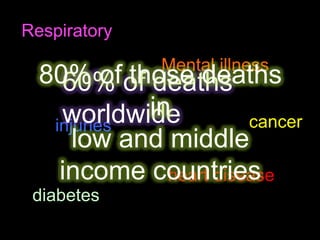
Respiratory
               Mental illness
  80% of of deaths
    60%     those deaths
    worldwide in          cancer
   injuries
      low and middle
    income countries
                heart disease
 diabetes
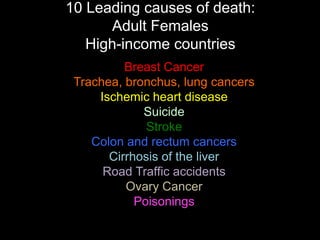
10 Leading causes of death:
       Adult Females
   High-income countries
          Breast Cancer
 Trachea, bronchus, lung cancers
     Ischemic heart disease
             Suicide
              Stroke
    Colon and rectum cancers
       Cirrhosis of the liver
      Road Traffic accidents
          Ovary Cancer
            Poisonings
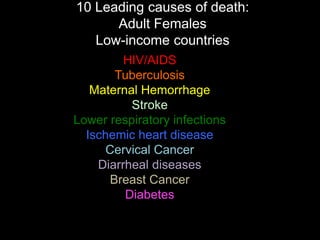
10 Leading causes of death:
      Adult Females
   Low-income countries
         HIV/AIDS
        Tuberculosis
   Maternal Hemorrhage
          Stroke
Lower respiratory infections
  Ischemic heart disease
      Cervical Cancer
    Diarrheal diseases
       Breast Cancer
         Diabetes
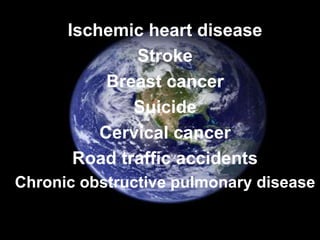
Ischemic heart disease
              Stroke
           Breast cancer
              Suicide
          Cervical cancer
       Road traffic accidents
Chronic obstructive pulmonary disease
Why are women susceptible?
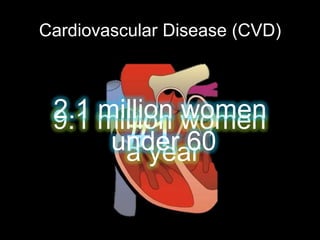
Cardiovascular Disease (CVD)


 2.1 million women
 9.1 million women
          #1
      under 60
       a year
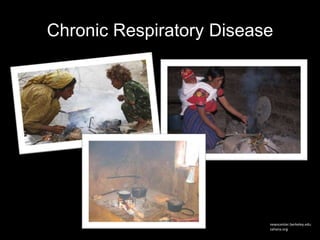
Chronic Respiratory Disease


                          newscenter.berkeley.edu
                          zahana.org
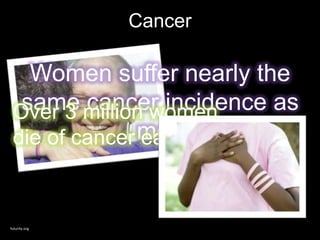
Cancer

   Women suffer nearly the
  same million women
 Over 3  cancer incidence as
 die of cancer men year
               each


futurity.org
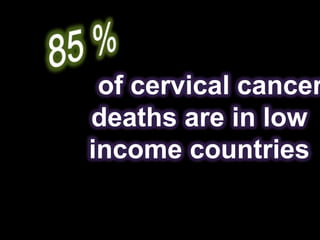
of cervical cancer
deaths are in low
income countries
2nd   class citizens of Death:
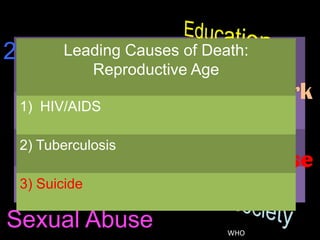
        Leading Causes of Death:
         Leading Causes
               Adolescence
             Reproductive Age

 1) HIV/AIDS
                       Burden of work
      Diarrheal diseases
 1)

 2) Suicide
 2) Tuberculosis
                   Physical Abuse
 3) Lower respiratory infections
 3) Suicide

Sexual Abuse                       WHO
Cardiovascular Disease
                         Prevention

                    80% Preventable


                         Type 2 Diabetes
dipity.com sempliok.deviantart.com weightlossplansforteenagegirls.com
nowpublic.com
mid-day.com
20% in 2025


      Tony Cenicola/The New York Times euro-cig.com garth-storyofmylife.blogspot.com   seniorwomen.com
Women are…


    of illiterate adults
Of the world’s poor
Women are…


       Caregivers
        Patients
       Students
            Entrepreneurs
blogs.longwood.edu banderasnews.com tampabay.com
popline.org cpc.unc.edu soupforthesoulsummit.org
References
Global Alliance for Clean Cookstoves. (2012). Cookstoves and non-communicable
            diseases information sheet. Retrieve at: http://www.cleancookstoves.org/resources/
            fact-sheets/.


NCD Alliance. (2012). Non-communicable diseases: A priority for women’s health and
          development. Retrieved at: http://ncdalliance.org/node/3442.

Unwin, N. and Albeerti, K. (2006). Chronic non-communicable diseases. Annals of
           Tropical Medicine and Parasitology. Vol 100:5&6 455-464.

World Health Organization (WHO). (2009). Women and Health: Todays evidence
          tomorrow’s agenda. WHO Press Geneva, Switzerland.

World Health Organization (WHO). (2011). Global status report on noncommunicable
          diseases 2010. WHO Press Geneva, Switzerland

Women and ncds

  • 1.
    Women’s health & Non-communicableDiseases (NCDs) Specific challenges and solutions Stephanie Hansen July 2012
  • 2.
    Respiratory Mental illness 80% of of deaths 60% those deaths worldwide in cancer injuries low and middle income countries heart disease diabetes
  • 3.
    10 Leading causesof death: Adult Females High-income countries Breast Cancer Trachea, bronchus, lung cancers Ischemic heart disease Suicide Stroke Colon and rectum cancers Cirrhosis of the liver Road Traffic accidents Ovary Cancer Poisonings
  • 4.
    10 Leading causesof death: Adult Females Low-income countries HIV/AIDS Tuberculosis Maternal Hemorrhage Stroke Lower respiratory infections Ischemic heart disease Cervical Cancer Diarrheal diseases Breast Cancer Diabetes
  • 5.
    Ischemic heart disease Stroke Breast cancer Suicide Cervical cancer Road traffic accidents Chronic obstructive pulmonary disease
  • 6.
    Why are womensusceptible?
  • 7.
    Cardiovascular Disease (CVD) 2.1 million women 9.1 million women #1 under 60 a year
  • 8.
    Chronic Respiratory Disease newscenter.berkeley.edu zahana.org
  • 9.
    Cancer Women suffer nearly the same million women Over 3 cancer incidence as die of cancer men year each futurity.org
  • 10.
    of cervical cancer deathsare in low income countries
  • 11.
    2nd class citizens of Death: Leading Causes of Death: Leading Causes Adolescence Reproductive Age 1) HIV/AIDS Burden of work Diarrheal diseases 1) 2) Suicide 2) Tuberculosis Physical Abuse 3) Lower respiratory infections 3) Suicide Sexual Abuse WHO
  • 12.
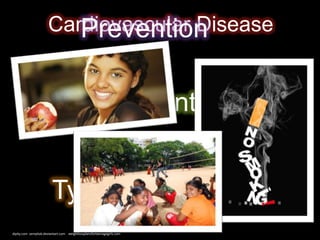
    Cardiovascular Disease Prevention 80% Preventable Type 2 Diabetes dipity.com sempliok.deviantart.com weightlossplansforteenagegirls.com
  • 13.
  • 14.
    20% in 2025 Tony Cenicola/The New York Times euro-cig.com garth-storyofmylife.blogspot.com seniorwomen.com
  • 15.
    Women are… of illiterate adults Of the world’s poor
  • 16.
    Women are… Caregivers Patients Students Entrepreneurs blogs.longwood.edu banderasnews.com tampabay.com
  • 17.
  • 18.
    References Global Alliance forClean Cookstoves. (2012). Cookstoves and non-communicable diseases information sheet. Retrieve at: http://www.cleancookstoves.org/resources/ fact-sheets/. NCD Alliance. (2012). Non-communicable diseases: A priority for women’s health and development. Retrieved at: http://ncdalliance.org/node/3442. Unwin, N. and Albeerti, K. (2006). Chronic non-communicable diseases. Annals of Tropical Medicine and Parasitology. Vol 100:5&6 455-464. World Health Organization (WHO). (2009). Women and Health: Todays evidence tomorrow’s agenda. WHO Press Geneva, Switzerland. World Health Organization (WHO). (2011). Global status report on noncommunicable diseases 2010. WHO Press Geneva, Switzerland

Editor's Notes

  • #3 Non-Communicable diseases, also commonly referred to as chronic diseases, are diseases and conditions, which are not infectious. While NCDs have long been thoughtofas only a problem for high-income countries, current data and research shows that these disease are a major source of sickness and death in low and middle-income countries. WHO reports that in 2008 over 60% of deaths worldwide were from NCDs in which 80% of those deaths were in low and middle-income countries (WHO, 2011). These
  • #4 There are many myths and misconceptions about NCDs one is that men are more likely to suffer from one fo these diseases than women but in high in come countries all the leading causes of death are NCDs
  • #6 7 og the 10 leading causes fo death for all females in thw world are NCDS The good news is that many of these diseases are controllable and preventable.
  • #7 Women face unique problems in combating and preventing NCDs. Unfortunately women all over are still as second class citizens and this puts them at a high risk for NCDs
  • #8 CVD is the world’s number one killer and the number one killer of women worldwide. CVD causes 9.1 million deaths among women annually.␣In 2008, CVD killed 1.2 million women aged between 20 and 59 years, the most productive years of life, and caused ill-health and suffering to many millions more.␣Developing countries are more affected. Of the women who will die from coronary heart disease, 80 per cent of the deaths will occur in low and middle income countries.
  • #9 Women are vulnerable to COPD because of the exposures they face in their home.  Among non-smoking women indoor household air pollutions (mostly from cookstoves) is the leading cause of NCDs in women . Unbelievably, household air pollution is the greatest risk factors for NCDs in non-smoking women newscenter.berkeley.eduzahana.org
  • #10 Breast Cancer is the most common cancer among women access to affordable and early treatment is essentially to saving lives. Even though it is the most preventable type of cancer, lung cancer is the second leading cause of cancer death for women
  • #11 There are clear disparitites between high and low income countries. For example most cervical cancer deaths are in low income countries. These are healtcare systems where screening and prevention methods are not available
  • #12 mental health is a worldwide problem especially for young females. For girls and young women suicide is in the top 10 causes of death for High, middle and low income countriesThere are many contributing factors to these high rates and all of them are unique challenges females face
  • #13 WHO estimates that 80% of all cardiovascular disease and type-2 diabetes and 40% of all cases of cancer could be preventedhealthy diet, physical activity (and, through these first two, the avoidance of obesity), and the avoidance of tobacco smoking and alcoholThere are certain obstacles to these activities for women here are some of the challenges and how we can begin to solve themdipity.com sempliok.deviantart.com weightlossplansforteenagegirls.com
  • #14 Physical ActivitySome of the reasons many girls and women in the world do not engage in physical activity is because it is not socially acceptable for them to be outdoors playing.  For others there is no safe space.PA programs need  to consider the specific challenges girls and women face in being physically activenowpublic.commid-day.com
  • #15 WHO estimates that the proportion of female smokers will rise from 12% in 2010 to 20% by 2025.The most effective way to prevent NCDs is not smoking tobacco.  While the smoking rate for men is starting to slowing decline the smoking rate for women is growing.Tobacco companies are specifically targeting women as a new market. They liken cigarettes to popular perfume, portray cigarettes as feminist power. Enforcing tobacco advertising restrictions Tony Cenicola/The New York Timeseuro-cig.comgarth-storyofmylife.blogspot.comseniorwomen.com
  • #17 One way to help prevent NCD mobidity and mortality is for women to be equally members of society. This will give women the opportunity for education, income and input into the health care services they need.blogs.longwood.edubanderasnews.comtampabay.com
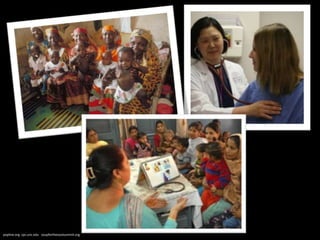
  • #18 By incorporating NCD prevention and treatment into existing reproductive and maternal health programs women can begin to receive the immediate care they deserve from the providers that understand their needs the most.popline.orgcpc.unc.edu soupforthesoulsummit.org