Wireless Mesh
Networks: An
Overview
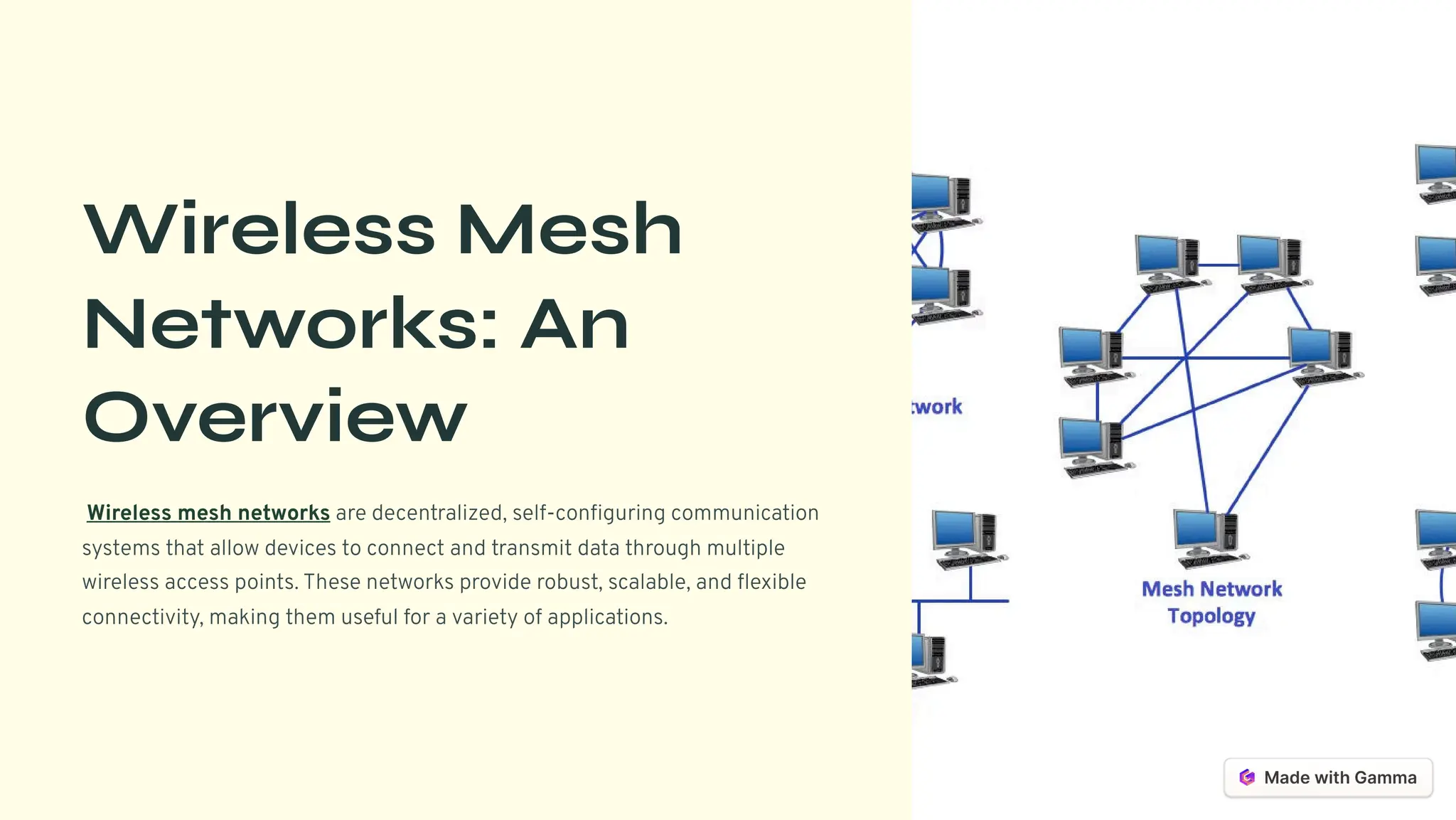
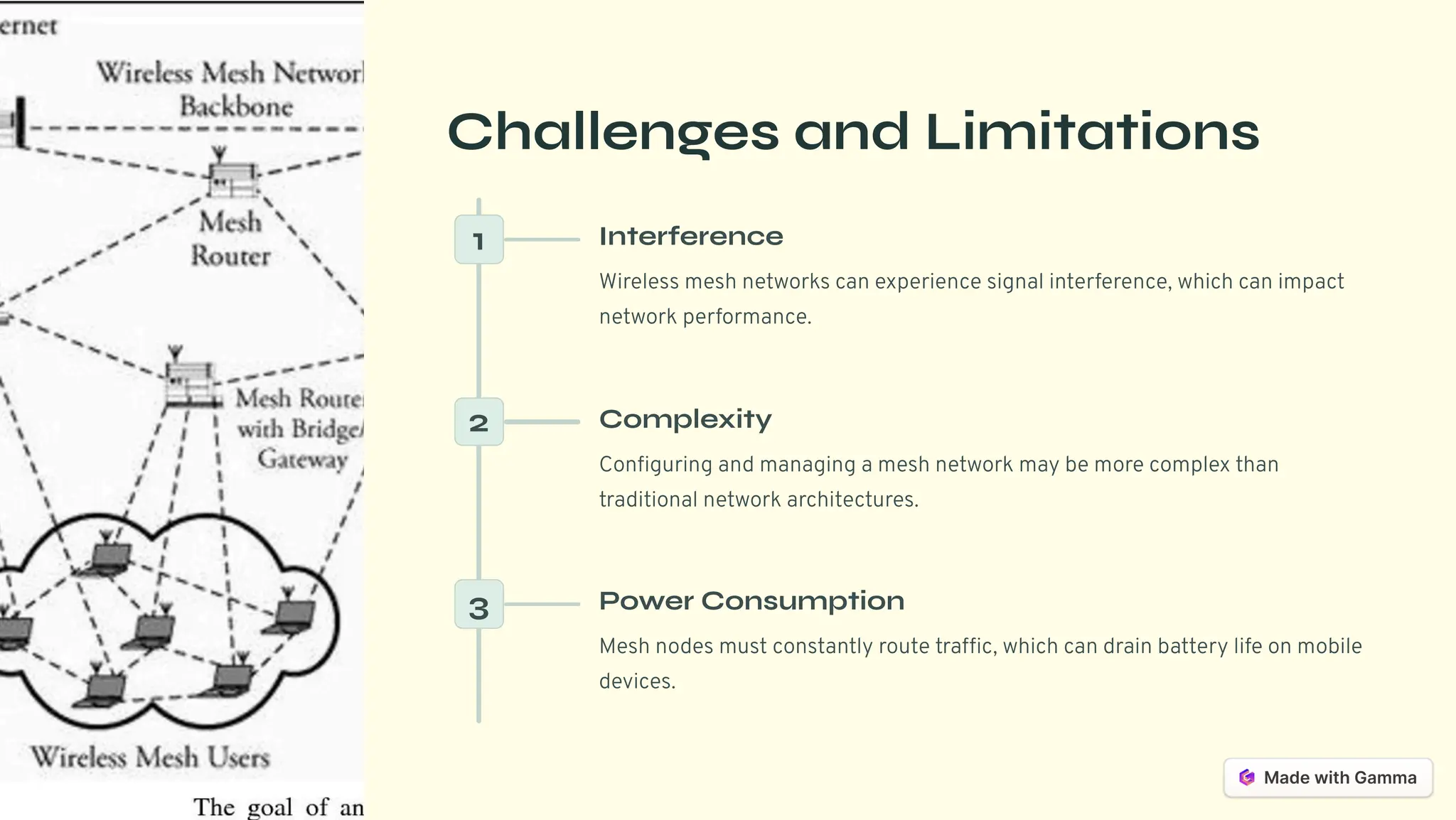
Wireless mesh networks are decentralized, self-configuring communication
systems that allow devices to connect and transmit data through multiple
wireless access points. These networks provide robust, scalable, and flexible
connectivity, making them useful for a variety of applications.
Key Components of a Mesh
Network
Mesh Nodes
Each device or node in the
network acts as both a client
and a router, forwarding traffic
to other nodes.
Routing Protocols
Specialized protocols, such as
AODV and OLSR, dynamically
determine the best paths for
data transmission.
Wireless Links
Nodes communicate with each
other via wireless connections,
often using Wi-Fi or other
unlicensed radio frequencies.
Advantages of Wireless Mesh
Networks
1 Broad Coverage
Mesh networks can extend internet access to
areas with limited or no wired infrastructure.
2 Resilience
If one node fails, the network can
automatically reroute traffic through
alternative paths.
3 Cost-Effectiveness
Mesh networks often require fewer access
points and can utilize existing wireless
devices.
4 Scalability
New nodes can be easily added to expand
the network's reach and capacity.
Applications and Use Cases
Disaster Response
Mesh networks can restore communication
when traditional infrastructure is damaged or
unavailable.
Smart Cities
Mesh networks can support IoT devices and
enable smart city applications, such as traffic
monitoring and public safety.
Rural Connectivity
Mesh networks can bring internet access to
remote areas without the need for costly wired
infrastructure.
Enterprise Networks
Mesh technology can improve indoor coverage
and enable flexible, decentralized business
networks.
Challenges and Limitations
1 Interference
Wireless mesh networks can experience signal interference, which can impact
network performance.
2 Complexity
Configuring and managing a mesh network may be more complex than
traditional network architectures.
3 Power Consumption
Mesh nodes must constantly route traffic, which can drain battery life on mobile
devices.
Security Considerations
Encryption
Implementing strong
encryption protocols to
secure data
transmission is crucial.
Authentication
Robust user and device
authentication
measures help prevent
unauthorized access.
Intrusion
Detection
Monitoring the network
for suspicious activity
and anomalies is
important for security.
Firewalls
Implementing firewalls
at the mesh nodes can
help control and filter
traffic.
Future Trends and Innovations
1
5G Integration
Combining mesh networks with
5G technology can enable
ultra-fast, low-latency wireless
connectivity.
2
Edge Computing
Leveraging the distributed
nature of mesh networks to
support edge computing
applications.
3
Artificial
Intelligence
AI-powered algorithms can
optimize routing, resource
allocation, and network
management in mesh
networks.

Wireless-Mesh-Networks-An-introduction-overview

  • 1.
    Wireless Mesh Networks: An Overview Wirelessmesh networks are decentralized, self-configuring communication systems that allow devices to connect and transmit data through multiple wireless access points. These networks provide robust, scalable, and flexible connectivity, making them useful for a variety of applications.
  • 2.
    Key Components ofa Mesh Network Mesh Nodes Each device or node in the network acts as both a client and a router, forwarding traffic to other nodes. Routing Protocols Specialized protocols, such as AODV and OLSR, dynamically determine the best paths for data transmission. Wireless Links Nodes communicate with each other via wireless connections, often using Wi-Fi or other unlicensed radio frequencies.
  • 3.
    Advantages of WirelessMesh Networks 1 Broad Coverage Mesh networks can extend internet access to areas with limited or no wired infrastructure. 2 Resilience If one node fails, the network can automatically reroute traffic through alternative paths. 3 Cost-Effectiveness Mesh networks often require fewer access points and can utilize existing wireless devices. 4 Scalability New nodes can be easily added to expand the network's reach and capacity.
  • 4.
    Applications and UseCases Disaster Response Mesh networks can restore communication when traditional infrastructure is damaged or unavailable. Smart Cities Mesh networks can support IoT devices and enable smart city applications, such as traffic monitoring and public safety. Rural Connectivity Mesh networks can bring internet access to remote areas without the need for costly wired infrastructure. Enterprise Networks Mesh technology can improve indoor coverage and enable flexible, decentralized business networks.
  • 5.
    Challenges and Limitations 1Interference Wireless mesh networks can experience signal interference, which can impact network performance. 2 Complexity Configuring and managing a mesh network may be more complex than traditional network architectures. 3 Power Consumption Mesh nodes must constantly route traffic, which can drain battery life on mobile devices.
  • 6.
    Security Considerations Encryption Implementing strong encryptionprotocols to secure data transmission is crucial. Authentication Robust user and device authentication measures help prevent unauthorized access. Intrusion Detection Monitoring the network for suspicious activity and anomalies is important for security. Firewalls Implementing firewalls at the mesh nodes can help control and filter traffic.
  • 7.
    Future Trends andInnovations 1 5G Integration Combining mesh networks with 5G technology can enable ultra-fast, low-latency wireless connectivity. 2 Edge Computing Leveraging the distributed nature of mesh networks to support edge computing applications. 3 Artificial Intelligence AI-powered algorithms can optimize routing, resource allocation, and network management in mesh networks.