Wiczer & Sheldon, LLC
500 Skokie Blvd. #325
Northbrook, IL 60062
(847) 849-4850
www.wiczersheldon.com
Estate Planning Basics
presented by
Brian S. Feldman, Attorney at Law
Bernard Wiczer, Attorney at Law
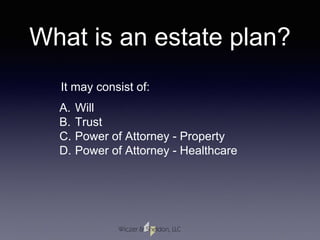
What is an estate plan?
It may consist of:
A. Will
B. Trust
C. Power of Attorney - Property
D. Power of Attorney - Healthcare
Why is it important to have an
estate plan?
To have a say in what happens to yourself,
your loved ones, and your assets when you pass away
or no longer have the ability, either physically or mentally,
to express your wishes and/or manage your own assets.
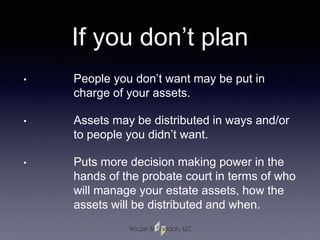
If you don’t plan
• People you don’t want may be put in
charge of your assets.
• Assets may be distributed in ways and/or
to people you didn’t want.
• Puts more decision making power in the
hands of the probate court in terms of who
will manage your estate assets, how the
assets will be distributed and when.
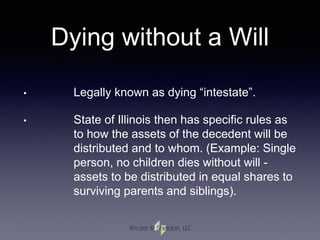
Dying without a Will
• Legally known as dying “intestate”.
• State of Illinois then has specific rules as
to how the assets of the decedent will be
distributed and to whom. (Example: Single
person, no children dies without will -
assets to be distributed in equal shares to
surviving parents and siblings).
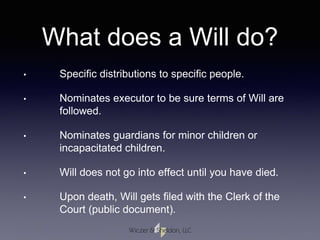
What does a Will do?
• Specific distributions to specific people.
• Nominates executor to be sure terms of Will are
followed.
• Nominates guardians for minor children or
incapacitated children.
• Will does not go into effect until you have died.
• Upon death, Will gets filed with the Clerk of the
Court (public document).
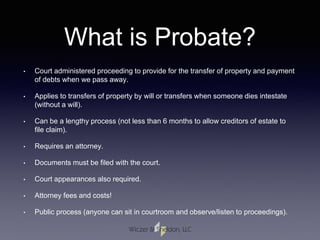
What is Probate?
• Court administered proceeding to provide for the transfer of property and payment
of debts when we pass away.
• Applies to transfers of property by will or transfers when someone dies intestate
(without a will).
• Can be a lengthy process (not less than 6 months to allow creditors of estate to
file claim).
• Requires an attorney.
• Documents must be filed with the court.
• Court appearances also required.
• Attorney fees and costs!
• Public process (anyone can sit in courtroom and observe/listen to proceedings).
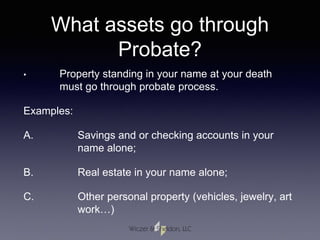
What assets go through
Probate?
• Property standing in your name at your death
must go through probate process.
Examples:
A. Savings and or checking accounts in your
name alone;
B. Real estate in your name alone;
C. Other personal property (vehicles, jewelry, art
work…)
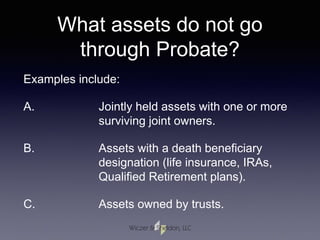
What assets do not go
through Probate?
Examples include:
A. Jointly held assets with one or more
surviving joint owners.
B. Assets with a death beneficiary
designation (life insurance, IRAs,
Qualified Retirement plans).
C. Assets owned by trusts.
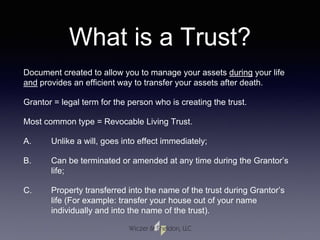
What is a Trust?
Document created to allow you to manage your assets during your life
and provides an efficient way to transfer your assets after death.
Grantor = legal term for the person who is creating the trust.
Most common type = Revocable Living Trust.
A. Unlike a will, goes into effect immediately;
B. Can be terminated or amended at any time during the Grantor’s
life;
C. Property transferred into the name of the trust during Grantor’s
life (For example: transfer your house out of your name
individually and into the name of the trust).
What is a Trustee?
• A Trustee is the individual named in the Trust to carry out the
terms of the Trust.
Usually, the Grantor is the Trustee during his/her life or until Grantor
can no longer act as Trustee for medical reasons.
• The Trust names a Successor Trustee to take over when Grantor
is no longer able to act or passes away (family member, friend).
• Trustee has those powers expressly conferred by the trust.
• Trustee also has implied powers such as to sell, invest and /or
lease trust assets in capacity as trustee under the trust.
• Very important decision!!!
What is a Trust Beneficiary?
• The person(s) for whose benefit the trust
assets may be used or who will ultimately
receive trust assets (surviving spouse,
children, grandchildren, great
grandchildren or even friends or charities).
• Beneficiaries must be defined in the trust.
Benefits of Trust
Some benefits include:
• Avoid probate process (assets in name of trust);
• Trusts are private documents;
• May also name guardian for minor children or a disabled individual;
• Gives you power to select who will manage your assets when you
can’t;
• Goes into effect immediately, unlike a will.
• Possible estate tax savings upon your death.
• Extremely flexible.
Pour-over Will
• Prepared at the same time as your Trust.
• If there are any assets that have not been
transferred to the Trust during your
lifetime, the Pour-Over Will provides that
those assets are to be transferred to the
Trust for disposition in accordance with
the terms of the Trust.
Other important documents
A. Power of Attorney-Healthcare
• Appoint who will make health-care decisions on your behalf when you can’t (Agent).
• Give any specific instructions (what life saving measures do you want taken?
Feeding tube? Breathing tube?)
• Goes into effect when you become incapacitated.
• This is your opportunity to make your wishes known!
B. Power of Attorney-Property
• Appoint who will manage your financial affairs when you can’t (Agent).
• Give any specific instructions to your agent.
• Generally, allows agent to access bank accounts, buy/sell assets and do anything
else you would be able to do (this can be limited).
Thank you!
Questions?

Wiczer & Sheldon: Estate Planning Basics

  • 1.
    Wiczer & Sheldon,LLC 500 Skokie Blvd. #325 Northbrook, IL 60062 (847) 849-4850 www.wiczersheldon.com Estate Planning Basics presented by Brian S. Feldman, Attorney at Law Bernard Wiczer, Attorney at Law
  • 2.
    What is anestate plan? It may consist of: A. Will B. Trust C. Power of Attorney - Property D. Power of Attorney - Healthcare
  • 3.
    Why is itimportant to have an estate plan? To have a say in what happens to yourself, your loved ones, and your assets when you pass away or no longer have the ability, either physically or mentally, to express your wishes and/or manage your own assets.
  • 4.
    If you don’tplan • People you don’t want may be put in charge of your assets. • Assets may be distributed in ways and/or to people you didn’t want. • Puts more decision making power in the hands of the probate court in terms of who will manage your estate assets, how the assets will be distributed and when.
  • 5.
    Dying without aWill • Legally known as dying “intestate”. • State of Illinois then has specific rules as to how the assets of the decedent will be distributed and to whom. (Example: Single person, no children dies without will - assets to be distributed in equal shares to surviving parents and siblings).
  • 6.
    What does aWill do? • Specific distributions to specific people. • Nominates executor to be sure terms of Will are followed. • Nominates guardians for minor children or incapacitated children. • Will does not go into effect until you have died. • Upon death, Will gets filed with the Clerk of the Court (public document).
  • 7.
    What is Probate? •Court administered proceeding to provide for the transfer of property and payment of debts when we pass away. • Applies to transfers of property by will or transfers when someone dies intestate (without a will). • Can be a lengthy process (not less than 6 months to allow creditors of estate to file claim). • Requires an attorney. • Documents must be filed with the court. • Court appearances also required. • Attorney fees and costs! • Public process (anyone can sit in courtroom and observe/listen to proceedings).
  • 8.
    What assets gothrough Probate? • Property standing in your name at your death must go through probate process. Examples: A. Savings and or checking accounts in your name alone; B. Real estate in your name alone; C. Other personal property (vehicles, jewelry, art work…)
  • 9.
    What assets donot go through Probate? Examples include: A. Jointly held assets with one or more surviving joint owners. B. Assets with a death beneficiary designation (life insurance, IRAs, Qualified Retirement plans). C. Assets owned by trusts.
  • 10.
    What is aTrust? Document created to allow you to manage your assets during your life and provides an efficient way to transfer your assets after death. Grantor = legal term for the person who is creating the trust. Most common type = Revocable Living Trust. A. Unlike a will, goes into effect immediately; B. Can be terminated or amended at any time during the Grantor’s life; C. Property transferred into the name of the trust during Grantor’s life (For example: transfer your house out of your name individually and into the name of the trust).
  • 11.
    What is aTrustee? • A Trustee is the individual named in the Trust to carry out the terms of the Trust. Usually, the Grantor is the Trustee during his/her life or until Grantor can no longer act as Trustee for medical reasons. • The Trust names a Successor Trustee to take over when Grantor is no longer able to act or passes away (family member, friend). • Trustee has those powers expressly conferred by the trust. • Trustee also has implied powers such as to sell, invest and /or lease trust assets in capacity as trustee under the trust. • Very important decision!!!
  • 12.
    What is aTrust Beneficiary? • The person(s) for whose benefit the trust assets may be used or who will ultimately receive trust assets (surviving spouse, children, grandchildren, great grandchildren or even friends or charities). • Beneficiaries must be defined in the trust.
  • 13.
    Benefits of Trust Somebenefits include: • Avoid probate process (assets in name of trust); • Trusts are private documents; • May also name guardian for minor children or a disabled individual; • Gives you power to select who will manage your assets when you can’t; • Goes into effect immediately, unlike a will. • Possible estate tax savings upon your death. • Extremely flexible.
  • 14.
    Pour-over Will • Preparedat the same time as your Trust. • If there are any assets that have not been transferred to the Trust during your lifetime, the Pour-Over Will provides that those assets are to be transferred to the Trust for disposition in accordance with the terms of the Trust.
  • 15.
    Other important documents A.Power of Attorney-Healthcare • Appoint who will make health-care decisions on your behalf when you can’t (Agent). • Give any specific instructions (what life saving measures do you want taken? Feeding tube? Breathing tube?) • Goes into effect when you become incapacitated. • This is your opportunity to make your wishes known! B. Power of Attorney-Property • Appoint who will manage your financial affairs when you can’t (Agent). • Give any specific instructions to your agent. • Generally, allows agent to access bank accounts, buy/sell assets and do anything else you would be able to do (this can be limited).
  • 16.