Why Insider Threat is a
C-Level Priority
by Dr. Eric Cole
© 2016 Secure Anchor Consulting.
All rights reserved.
Are You Focused on the Correct Area?
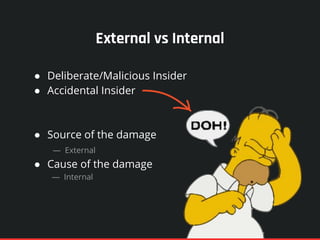
External vs Internal
● Deliberate/Malicious Insider
● Accidental Insider
● Source of the damage
— External
● Cause of the damage
— Internal
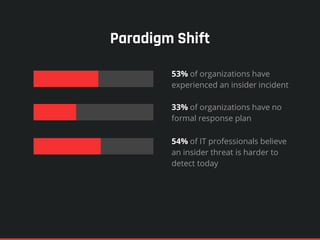
Paradigm Shift
53% of organizations have
experienced an insider incident
33% of organizations have no
formal response plan
54% of IT professionals believe
an insider threat is harder to
detect today
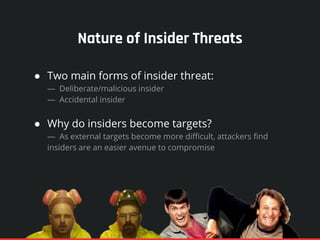
Nature of Insider Threats
● Two main forms of insider threat:
— Deliberate/malicious insider
— Accidental insider
● Why do insiders become targets?
— As external targets become more difficult, attackers find
insiders are an easier avenue to compromise
If You Have Employees/Contractors,
You Have an Insider Threat Problem
Bottom Line
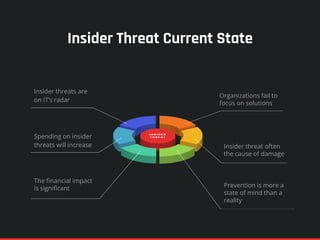
Insider Threat Current State
Insider threats are
on IT’s radar
Spending on insider
threats will increase
The financial impact
is significant
Organizations fail to
focus on solutions
Insider threat often
the cause of damage
Prevention is more a
state of mind than a
reality
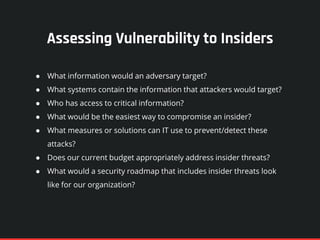
Assessing Vulnerability to Insiders
● What information would an adversary target?
● What systems contain the information that attackers would target?
● Who has access to critical information?
● What would be the easiest way to compromise an insider?
● What measures or solutions can IT use to prevent/detect these
attacks?
● Does our current budget appropriately address insider threats?
● What would a security roadmap that includes insider threats look
like for our organization?
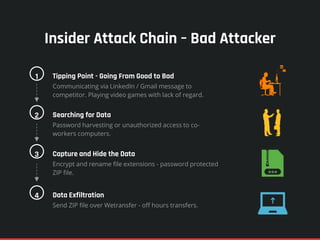
Insider Attack Chain – Bad Attacker
Tipping Point - Going From Good to Bad
Communicating via LinkedIn / Gmail message to
competitor. Playing video games with lack of regard.
1
Searching for Data
Password harvesting or unauthorized access to co-
workers computers.
2
Capture and Hide the Data
Encrypt and rename file extensions - password protected
ZIP file.
3
Data Exfiltration
Send ZIP file over Wetransfer - off hours transfers.
4
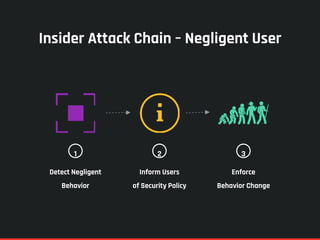
Insider Attack Chain – Negligent User
Detect Negligent
Behavior
1
Inform Users
of Security Policy
2
Enforce
Behavior Change
3
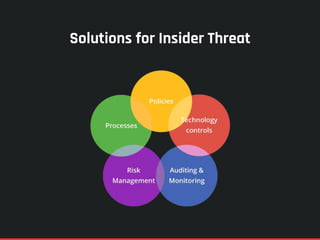
Solutions for Insider Threat
How well is your
organization doing with
insider threats?
● Policy
● Procedures
● Awareness
● Training
● Technology
● Administrative
● Executive Support
We calculating your “insider threat
GPA”, you can see what the biggest
exposure you have to insider threats
is likely to be.
Write your organization’s report card and focus on the
lowest scoring areas.
Preventing Insider Threat
● Deliberate Insider – Difficult
— More focus on authorization and access
● Accidental Insider - Possible
— Differentiate between required functionality and optional
functionality
— Typical avenues of attack
● Exe attachments
● Macros embedded in Office documents
● Active scripting
● HTML embedded content
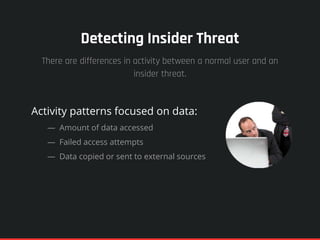
Detecting Insider Threat
Activity patterns focused on data:
— Amount of data accessed
— Failed access attempts
— Data copied or sent to external sources
There are differences in activity between a normal user and an
insider threat.
Detecting Accidental Insider
● Accidental insider is being targeted by external
entity
● Almost all external attackers setup C2
● Focus on outbound traffic
— Number of connections
— Length of the connections
— Amount of data
— Percent that is encrypted
— Destination IP address
Focus on Command & Control Channel
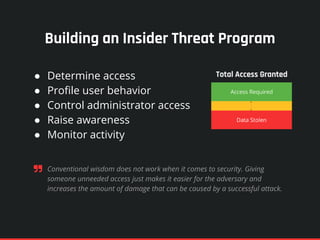
Building an Insider Threat Program
● Determine access
● Profile user behavior
● Control administrator access
● Raise awareness
● Monitor activity
Conventional wisdom does not work when it comes to security. Giving
someone unneeded access just makes it easier for the adversary and
increases the amount of damage that can be caused by a successful attack.
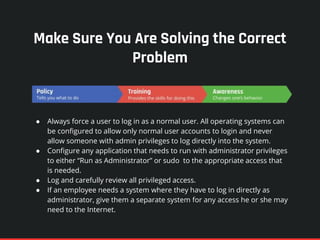
Make Sure You Are Solving the Correct
Problem
● Always force a user to log in as a normal user. All operating systems can
be configured to allow only normal user accounts to login and never
allow someone with admin privileges to log directly into the system.
● Configure any application that needs to run with administrator privileges
to either “Run as Administrator” or sudo to the appropriate access that
is needed.
● Log and carefully review all privileged access.
● If an employee needs a system where they have to log in directly as
administrator, give them a separate system for any access he or she may
need to the Internet.
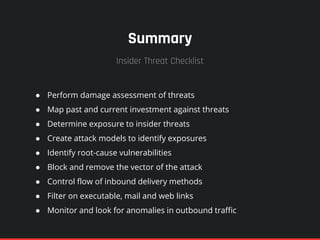
Summary
● Perform damage assessment of threats
● Map past and current investment against threats
● Determine exposure to insider threats
● Create attack models to identify exposures
● Identify root-cause vulnerabilities
● Block and remove the vector of the attack
● Control flow of inbound delivery methods
● Filter on executable, mail and web links
● Monitor and look for anomalies in outbound traffic
Insider Threat Checklist
Thank You for Your Time!
DR. Eric Cole
Twitter: drericcole
ecole@secureanchor.com
eric@sans.org
www.securityhaven.com

Why Insider Threat is a C-Level Priority

  • 1.
    Why Insider Threatis a C-Level Priority by Dr. Eric Cole © 2016 Secure Anchor Consulting. All rights reserved.
  • 2.
    Are You Focusedon the Correct Area?
  • 3.
    External vs Internal ●Deliberate/Malicious Insider ● Accidental Insider ● Source of the damage — External ● Cause of the damage — Internal
  • 4.
    Paradigm Shift 53% oforganizations have experienced an insider incident 33% of organizations have no formal response plan 54% of IT professionals believe an insider threat is harder to detect today
  • 5.
    Nature of InsiderThreats ● Two main forms of insider threat: — Deliberate/malicious insider — Accidental insider ● Why do insiders become targets? — As external targets become more difficult, attackers find insiders are an easier avenue to compromise
  • 6.
    If You HaveEmployees/Contractors, You Have an Insider Threat Problem Bottom Line
  • 7.
    Insider Threat CurrentState Insider threats are on IT’s radar Spending on insider threats will increase The financial impact is significant Organizations fail to focus on solutions Insider threat often the cause of damage Prevention is more a state of mind than a reality
  • 8.
    Assessing Vulnerability toInsiders ● What information would an adversary target? ● What systems contain the information that attackers would target? ● Who has access to critical information? ● What would be the easiest way to compromise an insider? ● What measures or solutions can IT use to prevent/detect these attacks? ● Does our current budget appropriately address insider threats? ● What would a security roadmap that includes insider threats look like for our organization?
  • 9.
    Insider Attack Chain– Bad Attacker Tipping Point - Going From Good to Bad Communicating via LinkedIn / Gmail message to competitor. Playing video games with lack of regard. 1 Searching for Data Password harvesting or unauthorized access to co- workers computers. 2 Capture and Hide the Data Encrypt and rename file extensions - password protected ZIP file. 3 Data Exfiltration Send ZIP file over Wetransfer - off hours transfers. 4
  • 10.
    Insider Attack Chain– Negligent User Detect Negligent Behavior 1 Inform Users of Security Policy 2 Enforce Behavior Change 3
  • 11.
  • 12.
    How well isyour organization doing with insider threats? ● Policy ● Procedures ● Awareness ● Training ● Technology ● Administrative ● Executive Support We calculating your “insider threat GPA”, you can see what the biggest exposure you have to insider threats is likely to be. Write your organization’s report card and focus on the lowest scoring areas.
  • 13.
    Preventing Insider Threat ●Deliberate Insider – Difficult — More focus on authorization and access ● Accidental Insider - Possible — Differentiate between required functionality and optional functionality — Typical avenues of attack ● Exe attachments ● Macros embedded in Office documents ● Active scripting ● HTML embedded content
  • 14.
    Detecting Insider Threat Activitypatterns focused on data: — Amount of data accessed — Failed access attempts — Data copied or sent to external sources There are differences in activity between a normal user and an insider threat.
  • 15.
    Detecting Accidental Insider ●Accidental insider is being targeted by external entity ● Almost all external attackers setup C2 ● Focus on outbound traffic — Number of connections — Length of the connections — Amount of data — Percent that is encrypted — Destination IP address Focus on Command & Control Channel
  • 16.
    Building an InsiderThreat Program ● Determine access ● Profile user behavior ● Control administrator access ● Raise awareness ● Monitor activity Conventional wisdom does not work when it comes to security. Giving someone unneeded access just makes it easier for the adversary and increases the amount of damage that can be caused by a successful attack.
  • 17.
    Make Sure YouAre Solving the Correct Problem ● Always force a user to log in as a normal user. All operating systems can be configured to allow only normal user accounts to login and never allow someone with admin privileges to log directly into the system. ● Configure any application that needs to run with administrator privileges to either “Run as Administrator” or sudo to the appropriate access that is needed. ● Log and carefully review all privileged access. ● If an employee needs a system where they have to log in directly as administrator, give them a separate system for any access he or she may need to the Internet.
  • 18.
    Summary ● Perform damageassessment of threats ● Map past and current investment against threats ● Determine exposure to insider threats ● Create attack models to identify exposures ● Identify root-cause vulnerabilities ● Block and remove the vector of the attack ● Control flow of inbound delivery methods ● Filter on executable, mail and web links ● Monitor and look for anomalies in outbound traffic Insider Threat Checklist
  • 19.
    Thank You forYour Time! DR. Eric Cole Twitter: drericcole ecole@secureanchor.com eric@sans.org www.securityhaven.com