
Why do circular economy? What’s the business
case – the benefits and opportunities for the built
environment?
Dr Mike Pitts
Head of Urban Living & Built Environment
07920 210844
mike.pitts@innovateuk.gov.uk
@pittso
#CEThinking
Gumdrop
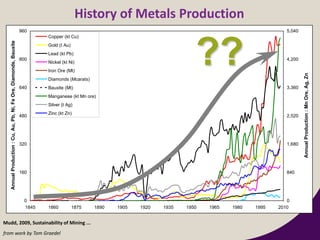
History of Metals Production
0
160
320
480
640
800
960
1845 1860 1875 1890 1905 1920 1935 1950 1965 1980 1995 2010
AnnualProduction:Cu,Au,Pb,Ni,FeOre,Diamonds,Bauxite
0
840
1,680
2,520
3,360
4,200
5,040
AnnualProduction:MnOre,Ag,Zn
Copper (kt Cu)
Gold (t Au)
Lead (kt Pb)
Nickel (kt Ni)
Iron Ore (Mt)
Diamonds (Mcarats)
Bauxite (Mt)
Manganese (kt Mn ore)
Silver (t Ag)
Zinc (kt Zn)
??
Mudd, 2009, Sustainability of Mining ...
from work by Tom Graedel
0
5
10
15
20
25
30
1840 1860 1880 1900 1920 1940 1960 1980 2000
OreGrades(Cu,Au,Pb,Zn,Ni,Diamonds)
0
600
1,200
1,800
2,400
3,000
3,600
OreGrade(Ag)
Copper (%Cu)
Gold (g/t Au)
Lead (%Pb)
Zinc (%Zn)
Nickel (%Ni)
Diamonds (carats/t)
Uranium (kg/t U3O8)
Silver (g/t Ag)
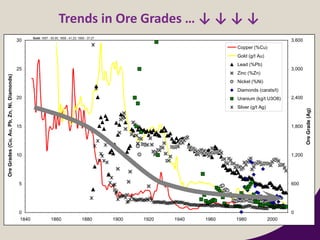
Gold: 1857 - 50.05; 1858 - 41.23; 1859 - 37.27
Trends in Ore Grades … ↓ ↓ ↓ ↓
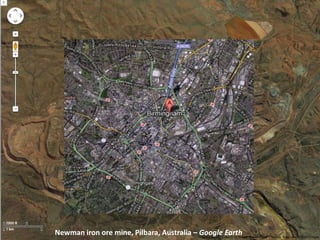
Newman iron ore mine, Pilbara, Australia – Google Earth
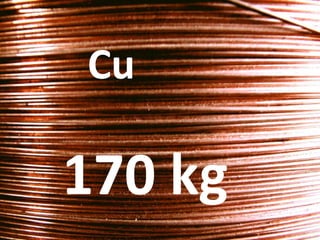
170 kg
Cu
Source: Grilli and Yang; Pfaffenzeller; World Bank; International Monetary Fund; Organisation for Economic Co-operation and Development statistics; UN Food
and Agriculture Organization; UN Comtrade; Ellen MacArthur Foundation circular economy team – image from their ‘Towards A Circular Economy ‘report
Extraction is predicted to account for 40% of
the world’s energy use by 2050 [Green Alliance (2011)
Reinventing the Wheel: A circular economy for resource security]
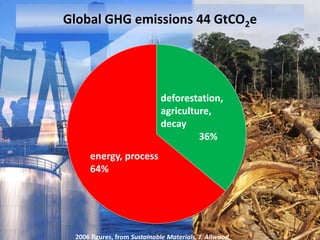
Global GHG emissions 44 GtCO2e
energy, process
64%
deforestation,
agriculture,
decay
36%
2006 figures, from Sustainable Materials, J. Allwood
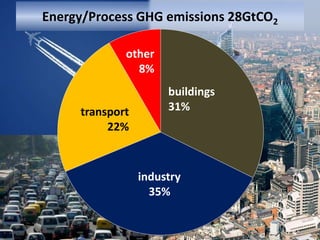
Energy/Process GHG emissions 28GtCO2
buildings
31%
industry
35%
other
8%
transport
22%
Industrial GHG emissions 10GtCO2
steel
25%
3%
other
44%
cement
19%
4%
plastics
4%
aluminium
paper
Demand for steel is set to rise by
80% between 2010 and 2030 [BBC]
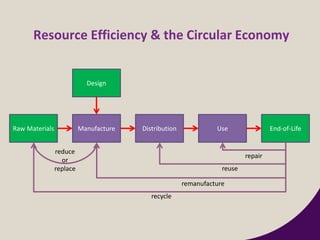
Raw Materials Manufacture
Design
Distribution Use End-of-Life
repair
reuse
remanufacture
recycle
reduce
or
replace
Resource Efficiency & the Circular Economy
What’s Important?
• Delivering customer benefits in new ways
(shift to services)
• Getting stuff back (and separating it out)
• Supply chain collaboration (new value
networks) and the aligned business models
to make it work!
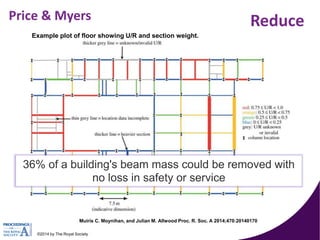
Example plot of floor showing U/R and section weight.
Muiris C. Moynihan, and Julian M. Allwood Proc. R. Soc. A 2014;470:20140170
©2014 by The Royal Society
36% of a building's beam mass could be removed with
no loss in safety or service
ReducePrice & Myers
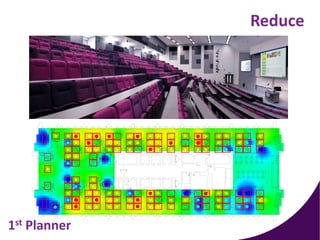
Reduce
1st Planner
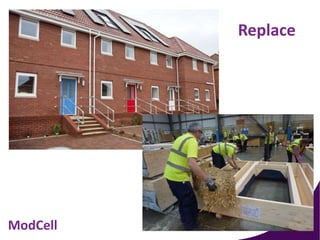
Replace
ModCell
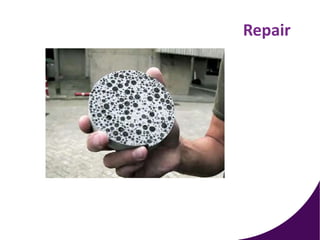
Repair
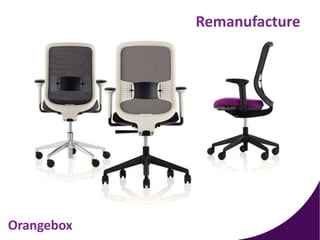
Orangebox
Remanufacture
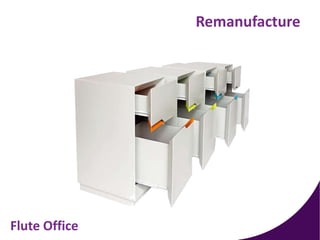
Flute Office
Remanufacture
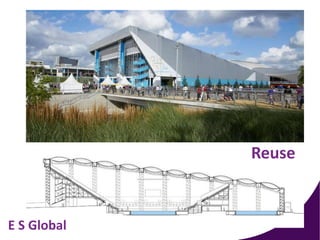
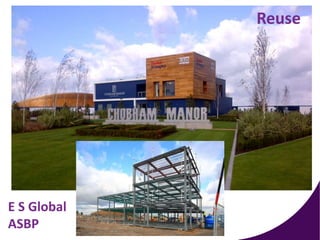
E S Global
Reuse
E S Global
ASBP
Reuse
“… and then,” continued Mr Silly, “Miss Bolt gave me a spade. A spade!
Why in the world would I want to buy a spade when all I wanted was a
hole!”
“Hee hee … that’s … ha ha … ridiculous!” laughed Mr Nonsense.
“what’s for pudding?”
That evening Mr Silly invited his friend Mr Nonsense for supper and told
him all about his day in Sensibleland.
Mr Nonsense laughed so hard he fell off his chair!
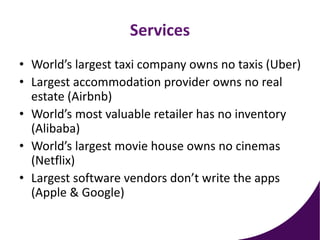
Services
• World’s largest taxi company owns no taxis (Uber)
• Largest accommodation provider owns no real
estate (Airbnb)
• World’s most valuable retailer has no inventory
(Alibaba)
• World’s largest movie house owns no cinemas
(Netflix)
• Largest software vendors don’t write the apps
(Apple & Google)
Amey
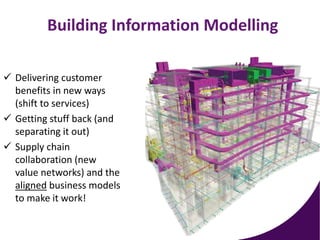
Building Information Modelling
 Delivering customer
benefits in new ways
(shift to services)
 Getting stuff back (and
separating it out)
 Supply chain
collaboration (new
value networks) and the
aligned business models
to make it work!
www.innovateuk.org
@innovate_uk
@pittso
#CEThinking

Why do Circular Economy? #CEThinking

  • 1.
    Why do circulareconomy? What’s the business case – the benefits and opportunities for the built environment? Dr Mike Pitts Head of Urban Living & Built Environment 07920 210844 mike.pitts@innovateuk.gov.uk @pittso #CEThinking
  • 2.
  • 3.
    History of MetalsProduction 0 160 320 480 640 800 960 1845 1860 1875 1890 1905 1920 1935 1950 1965 1980 1995 2010 AnnualProduction:Cu,Au,Pb,Ni,FeOre,Diamonds,Bauxite 0 840 1,680 2,520 3,360 4,200 5,040 AnnualProduction:MnOre,Ag,Zn Copper (kt Cu) Gold (t Au) Lead (kt Pb) Nickel (kt Ni) Iron Ore (Mt) Diamonds (Mcarats) Bauxite (Mt) Manganese (kt Mn ore) Silver (t Ag) Zinc (kt Zn) ?? Mudd, 2009, Sustainability of Mining ... from work by Tom Graedel
  • 4.
    0 5 10 15 20 25 30 1840 1860 18801900 1920 1940 1960 1980 2000 OreGrades(Cu,Au,Pb,Zn,Ni,Diamonds) 0 600 1,200 1,800 2,400 3,000 3,600 OreGrade(Ag) Copper (%Cu) Gold (g/t Au) Lead (%Pb) Zinc (%Zn) Nickel (%Ni) Diamonds (carats/t) Uranium (kg/t U3O8) Silver (g/t Ag) Gold: 1857 - 50.05; 1858 - 41.23; 1859 - 37.27 Trends in Ore Grades … ↓ ↓ ↓ ↓
  • 5.
    Newman iron oremine, Pilbara, Australia – Google Earth
  • 6.
  • 7.
    Source: Grilli andYang; Pfaffenzeller; World Bank; International Monetary Fund; Organisation for Economic Co-operation and Development statistics; UN Food and Agriculture Organization; UN Comtrade; Ellen MacArthur Foundation circular economy team – image from their ‘Towards A Circular Economy ‘report Extraction is predicted to account for 40% of the world’s energy use by 2050 [Green Alliance (2011) Reinventing the Wheel: A circular economy for resource security]
  • 9.
    Global GHG emissions44 GtCO2e energy, process 64% deforestation, agriculture, decay 36% 2006 figures, from Sustainable Materials, J. Allwood
  • 10.
    Energy/Process GHG emissions28GtCO2 buildings 31% industry 35% other 8% transport 22%
  • 11.
    Industrial GHG emissions10GtCO2 steel 25% 3% other 44% cement 19% 4% plastics 4% aluminium paper Demand for steel is set to rise by 80% between 2010 and 2030 [BBC]
  • 12.
    Raw Materials Manufacture Design DistributionUse End-of-Life repair reuse remanufacture recycle reduce or replace Resource Efficiency & the Circular Economy
  • 13.
    What’s Important? • Deliveringcustomer benefits in new ways (shift to services) • Getting stuff back (and separating it out) • Supply chain collaboration (new value networks) and the aligned business models to make it work!
  • 14.
    Example plot offloor showing U/R and section weight. Muiris C. Moynihan, and Julian M. Allwood Proc. R. Soc. A 2014;470:20140170 ©2014 by The Royal Society 36% of a building's beam mass could be removed with no loss in safety or service ReducePrice & Myers
  • 15.
  • 16.
  • 17.
  • 18.
  • 19.
  • 20.
  • 21.
  • 22.
    “… and then,”continued Mr Silly, “Miss Bolt gave me a spade. A spade! Why in the world would I want to buy a spade when all I wanted was a hole!” “Hee hee … that’s … ha ha … ridiculous!” laughed Mr Nonsense. “what’s for pudding?” That evening Mr Silly invited his friend Mr Nonsense for supper and told him all about his day in Sensibleland. Mr Nonsense laughed so hard he fell off his chair!
  • 23.
    Services • World’s largesttaxi company owns no taxis (Uber) • Largest accommodation provider owns no real estate (Airbnb) • World’s most valuable retailer has no inventory (Alibaba) • World’s largest movie house owns no cinemas (Netflix) • Largest software vendors don’t write the apps (Apple & Google)
  • 24.
  • 25.
    Building Information Modelling Delivering customer benefits in new ways (shift to services)  Getting stuff back (and separating it out)  Supply chain collaboration (new value networks) and the aligned business models to make it work!
  • 27.