Download to read offline


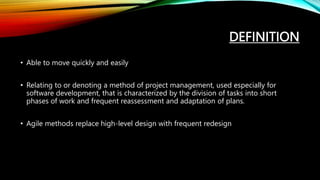
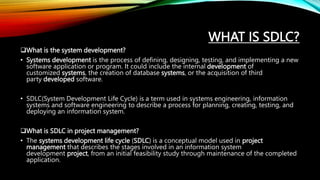
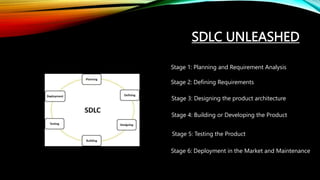
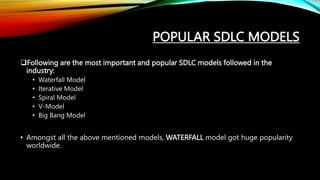
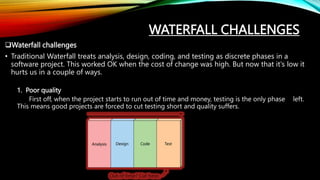
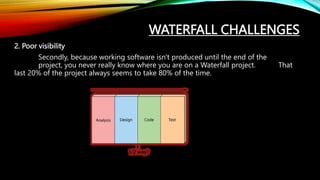
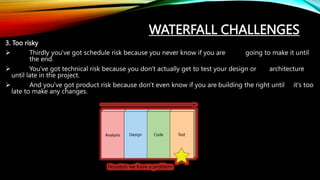
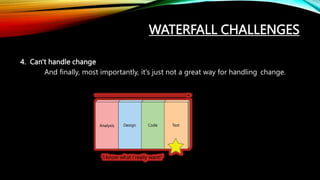
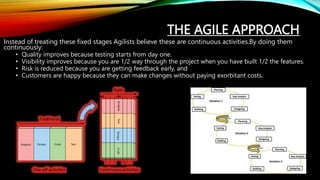
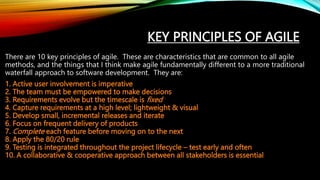
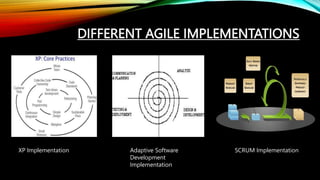



This document discusses agile project management and how it addresses some of the challenges of traditional waterfall project management approaches. It defines agile as being able to move quickly and easily adapt plans. The waterfall model treats software development as discrete sequential phases, but this can lead to poor quality, visibility into project status, high risks, and inability to handle changes easily. Agile approaches development as continuous and integrated activities to improve quality through early and frequent testing, provide better visibility into progress, reduce risks through early feedback, and make changes less costly. Key principles of agile include active user involvement, empowered teams, evolving requirements within a fixed timescale, capturing requirements at a high level, developing in small iterative releases, frequent delivery, completing each


![Getting Started with Apache Spark: Big Data Made Simple [Free Meetup]](https://cdn.slidesharecdn.com/ss_thumbnails/apachesparkgettingstarted-260203175547-8361bcc3-thumbnail.jpg?width=640&height=640&fit=bounds)


