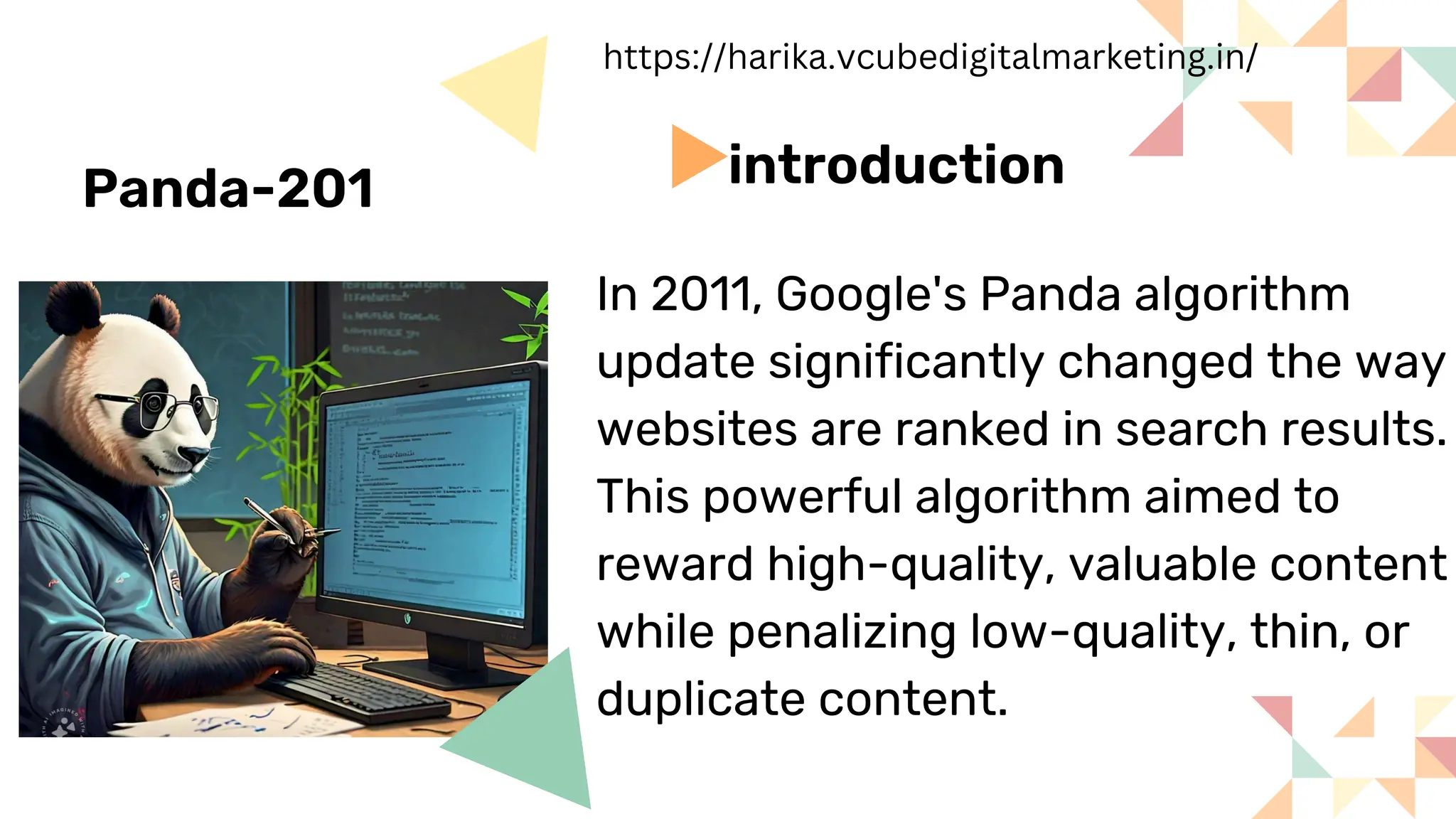
In 2011, Google's Panda algorithm
update significantly changed the way
websites are ranked in search results.
This powerful algorithm aimed to
reward high-quality, valuable content
while penalizing low-quality, thin, or
duplicate content.
introduction
Panda-201
https://harika.vcubedigitalmarketing.in/
Regularly check Google
Analytics and Search Console
for any dips in traffic or
rankings.
2.Implement Improvements
Adapting to Panda
Updates
Make necessary changes to
strengthen your content, user
experience, and technical
website factors to stay ahead of
Panda updates.
1.Monitor Performance
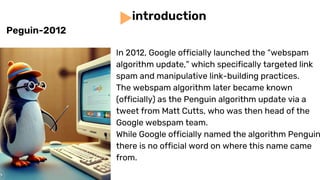
In 2012, Google officially launched the “webspam
algorithm update,” which specifically targeted link
spam and manipulative link-building practices.
The webspam algorithm later became known
(officially) as the Penguin algorithm update via a
tweet from Matt Cutts, who was then head of the
Google webspam team.
While Google officially named the algorithm Penguin
there is no official word on where this name came
from.
introduction
Peguin-2012
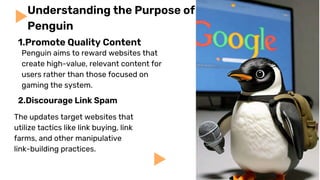
Penguin aims to reward websites that
create high-value, relevant content for
users rather than those focused on
gaming the system.
2.Discourage Link Spam
Understanding the Purpose of
Penguin
The updates target websites that
utilize tactics like link buying, link
farms, and other manipulative
link-building practices.
1.Promote Quality Content
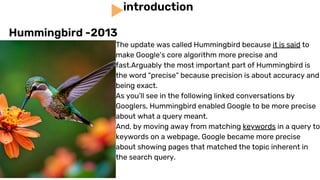
The update was called Hummingbird because it is said to
make Google’s core algorithm more precise and
fast.Arguably the most important part of Hummingbird is
the word “precise” because precision is about accuracy and
being exact.
As you’ll see in the following linked conversations by
Googlers, Hummingbird enabled Google to be more precise
about what a query meant.
And, by moving away from matching keywords in a query to
keywords on a webpage, Google became more precise
about showing pages that matched the topic inherent in
the search query.
introduction
Hummingbird -2013
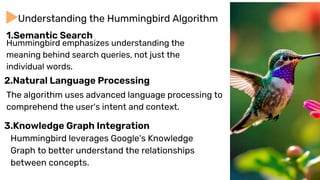
Hummingbird emphasizes understanding the
meaning behind search queries, not just the
individual words.
Understanding the Hummingbird Algorithm
1.Semantic Search
The algorithm uses advanced language processing to
comprehend the user's intent and context.
2.Natural Language Processing
3.Knowledge Graph Integration
Hummingbird leverages Google's Knowledge
Graph to better understand the relationships
between concepts.
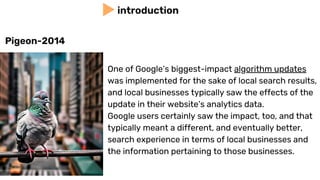
One of Google’s biggest-impact algorithm updates
was implemented for the sake of local search results,
and local businesses typically saw the effects of the
update in their website’s analytics data.
Google users certainly saw the impact, too, and that
typically meant a different, and eventually better,
search experience in terms of local businesses and
the information pertaining to those businesses.
introduction
Pigeon-2014
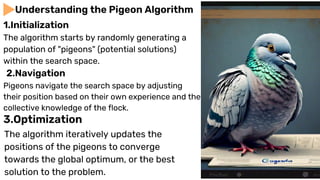
The algorithm starts by randomly generating a
population of "pigeons" (potential solutions)
within the search space.
Understanding the Pigeon Algorithm
1.Initialization
Pigeons navigate the search space by adjusting
their position based on their own experience and the
collective knowledge of the flock.
2.Navigation
3.Optimization
The algorithm iteratively updates the
positions of the pigeons to converge
towards the global optimum, or the best
solution to the problem.
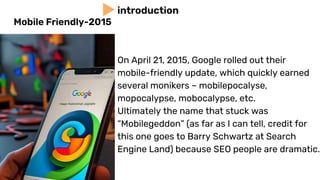
On April 21, 2015, Google rolled out their
mobile-friendly update, which quickly earned
several monikers – mobilepocalyse,
mopocalypse, mobocalypse, etc.
Ultimately the name that stuck was
“Mobilegeddon” (as far as I can tell, credit for
this one goes to Barry Schwartz at Search
Engine Land) because SEO people are dramatic.
introduction
Mobile Friendly-2015
Conduct a thorough audit of your website's
current mobile responsiveness.
Implement Mobile-Friendly Update
1.Assess
PDevelop a comprehensive strategy to address
identified mobile-friendly issues
2.Plan
3.Implement
Execute the necessary changes, such as
layout adjustments and content
optimization.
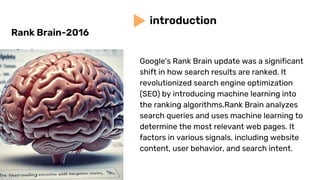
Google's Rank Brain update was a significant
shift in how search results are ranked. It
revolutionized search engine optimization
(SEO) by introducing machine learning into
the ranking algorithms.Rank Brain analyzes
search queries and uses machine learning to
determine the most relevant web pages. It
factors in various signals, including website
content, user behavior, and search intent.
introduction
Rank Brain-2016
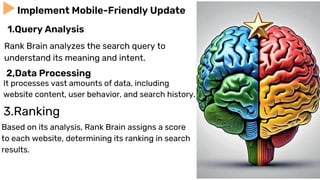
Rank Brain analyzes the search query to
understand its meaning and intent.
Implement Mobile-Friendly Update
1.Query Analysis
It processes vast amounts of data, including
website content, user behavior, and search history.
2,Data Processing
3.Ranking
Based on its analysis, Rank Brain assigns a score
to each website, determining its ranking in search
results.
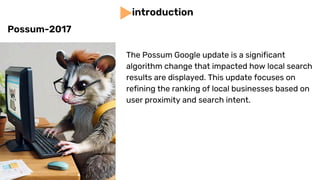
The Possum Google update is a significant
algorithm change that impacted how local search
results are displayed. This update focuses on
refining the ranking of local businesses based on
user proximity and search intent.
introduction
Possum-2017
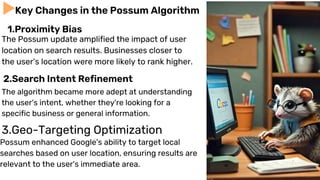
The Possum update amplified the impact of user
location on search results. Businesses closer to
the user's location were more likely to rank higher.
Key Changes in the Possum Algorithm
1.Proximity Bias
The algorithm became more adept at understanding
the user's intent, whether they're looking for a
specific business or general information.
2.Search Intent Refinement
3.Geo-Targeting Optimization
Possum enhanced Google's ability to target local
searches based on user location, ensuring results are
relevant to the user's immediate area.
Thank You
End of Pages
google updates
https://harika.vcubedigitalmarketing.in/

White Modern Minimalist Creative Startup Presentation (7).pdf

  • 1.
    In 2011, Google'sPanda algorithm update significantly changed the way websites are ranked in search results. This powerful algorithm aimed to reward high-quality, valuable content while penalizing low-quality, thin, or duplicate content. introduction Panda-201 https://harika.vcubedigitalmarketing.in/
  • 2.
    Regularly check Google Analyticsand Search Console for any dips in traffic or rankings. 2.Implement Improvements Adapting to Panda Updates Make necessary changes to strengthen your content, user experience, and technical website factors to stay ahead of Panda updates. 1.Monitor Performance
  • 3.
    In 2012, Googleofficially launched the “webspam algorithm update,” which specifically targeted link spam and manipulative link-building practices. The webspam algorithm later became known (officially) as the Penguin algorithm update via a tweet from Matt Cutts, who was then head of the Google webspam team. While Google officially named the algorithm Penguin there is no official word on where this name came from. introduction Peguin-2012
  • 4.
    Penguin aims toreward websites that create high-value, relevant content for users rather than those focused on gaming the system. 2.Discourage Link Spam Understanding the Purpose of Penguin The updates target websites that utilize tactics like link buying, link farms, and other manipulative link-building practices. 1.Promote Quality Content
  • 5.
    The update wascalled Hummingbird because it is said to make Google’s core algorithm more precise and fast.Arguably the most important part of Hummingbird is the word “precise” because precision is about accuracy and being exact. As you’ll see in the following linked conversations by Googlers, Hummingbird enabled Google to be more precise about what a query meant. And, by moving away from matching keywords in a query to keywords on a webpage, Google became more precise about showing pages that matched the topic inherent in the search query. introduction Hummingbird -2013
  • 6.
    Hummingbird emphasizes understandingthe meaning behind search queries, not just the individual words. Understanding the Hummingbird Algorithm 1.Semantic Search The algorithm uses advanced language processing to comprehend the user's intent and context. 2.Natural Language Processing 3.Knowledge Graph Integration Hummingbird leverages Google's Knowledge Graph to better understand the relationships between concepts.
  • 7.
    One of Google’sbiggest-impact algorithm updates was implemented for the sake of local search results, and local businesses typically saw the effects of the update in their website’s analytics data. Google users certainly saw the impact, too, and that typically meant a different, and eventually better, search experience in terms of local businesses and the information pertaining to those businesses. introduction Pigeon-2014
  • 8.
    The algorithm startsby randomly generating a population of "pigeons" (potential solutions) within the search space. Understanding the Pigeon Algorithm 1.Initialization Pigeons navigate the search space by adjusting their position based on their own experience and the collective knowledge of the flock. 2.Navigation 3.Optimization The algorithm iteratively updates the positions of the pigeons to converge towards the global optimum, or the best solution to the problem.
  • 9.
    On April 21,2015, Google rolled out their mobile-friendly update, which quickly earned several monikers – mobilepocalyse, mopocalypse, mobocalypse, etc. Ultimately the name that stuck was “Mobilegeddon” (as far as I can tell, credit for this one goes to Barry Schwartz at Search Engine Land) because SEO people are dramatic. introduction Mobile Friendly-2015
  • 10.
    Conduct a thoroughaudit of your website's current mobile responsiveness. Implement Mobile-Friendly Update 1.Assess PDevelop a comprehensive strategy to address identified mobile-friendly issues 2.Plan 3.Implement Execute the necessary changes, such as layout adjustments and content optimization.
  • 11.
    Google's Rank Brainupdate was a significant shift in how search results are ranked. It revolutionized search engine optimization (SEO) by introducing machine learning into the ranking algorithms.Rank Brain analyzes search queries and uses machine learning to determine the most relevant web pages. It factors in various signals, including website content, user behavior, and search intent. introduction Rank Brain-2016
  • 12.
    Rank Brain analyzesthe search query to understand its meaning and intent. Implement Mobile-Friendly Update 1.Query Analysis It processes vast amounts of data, including website content, user behavior, and search history. 2,Data Processing 3.Ranking Based on its analysis, Rank Brain assigns a score to each website, determining its ranking in search results.
  • 13.
    The Possum Googleupdate is a significant algorithm change that impacted how local search results are displayed. This update focuses on refining the ranking of local businesses based on user proximity and search intent. introduction Possum-2017
  • 14.
    The Possum updateamplified the impact of user location on search results. Businesses closer to the user's location were more likely to rank higher. Key Changes in the Possum Algorithm 1.Proximity Bias The algorithm became more adept at understanding the user's intent, whether they're looking for a specific business or general information. 2.Search Intent Refinement 3.Geo-Targeting Optimization Possum enhanced Google's ability to target local searches based on user location, ensuring results are relevant to the user's immediate area.
  • 15.
    Thank You End ofPages google updates https://harika.vcubedigitalmarketing.in/