WHAT’S NEXT
FOR OPEN ACCESS?
Answers from Industry Expert Mark Ware, Ware Consulting
To map out the road ahead, Mark Ware, Director and
Owner of Mark Ware Consulting, shares insights from
his recent research on the open access (OA) market.
Scholarly
publishing
has been on
the fast road
to change.
While we’ve all seen the signposts for OA for some time
now, the road ahead will include curves that affect
publishers, researchers, and the market as a whole.
We will soon see gold OA models
that are more efficient, like:
•	 Offsetting and bundling
•	 Membership models
•	 Pre-payment options
•	 Institutional accounts
•	 Payment management systems
Publishers report a
sharpening focus
on services for
researchers/authors
and on data services,
as open research
creates a whole
new environment.
However, issues arise
when you combine
that growth with
the pressure on
library budgets.
Publishers say the growth in article volume
– 3 or 4% annually – is manageable.
Other forces driving the future of OA include:
•	 Social pressures
•	 Technology pressures
•	 Political pressures
These all intersect to change research behavior:
•	 Shifting attitudes toward information sharing
•	 Greater tolerance for informal materials
Researchers are shaping the debate about OA.
•	 5 to 6 million researchers
have joined ResearchGate
•	 16 million-plus researchers
have joined academia.edu
The scholarly publishing sector is
likely to see continued consolidation.
Economies of scale are steering publishers
toward sharing tools, social networking and
collaboration platforms. The greatest opportunity
is for a small number of leading players.
However, publishers overall say the
system is in evolution, not revolution.
The journal retains its relevance and importance
in the research community. Indeed, if anything,
it’s more important than ever.
With lower barriers to entry, OA is driving
increased competition between publishers, and
it is increasingly the norm among new journals.
Standardized metadata around Gold OA
processes could help institutions get
a better understanding of spending.
The Green OA landscape remains fragmented, with
difficult discoverability and unpredictable quality.
Publishers, institutions, and funders could develop
a model that better serves researchers without
compromising the subscription model.
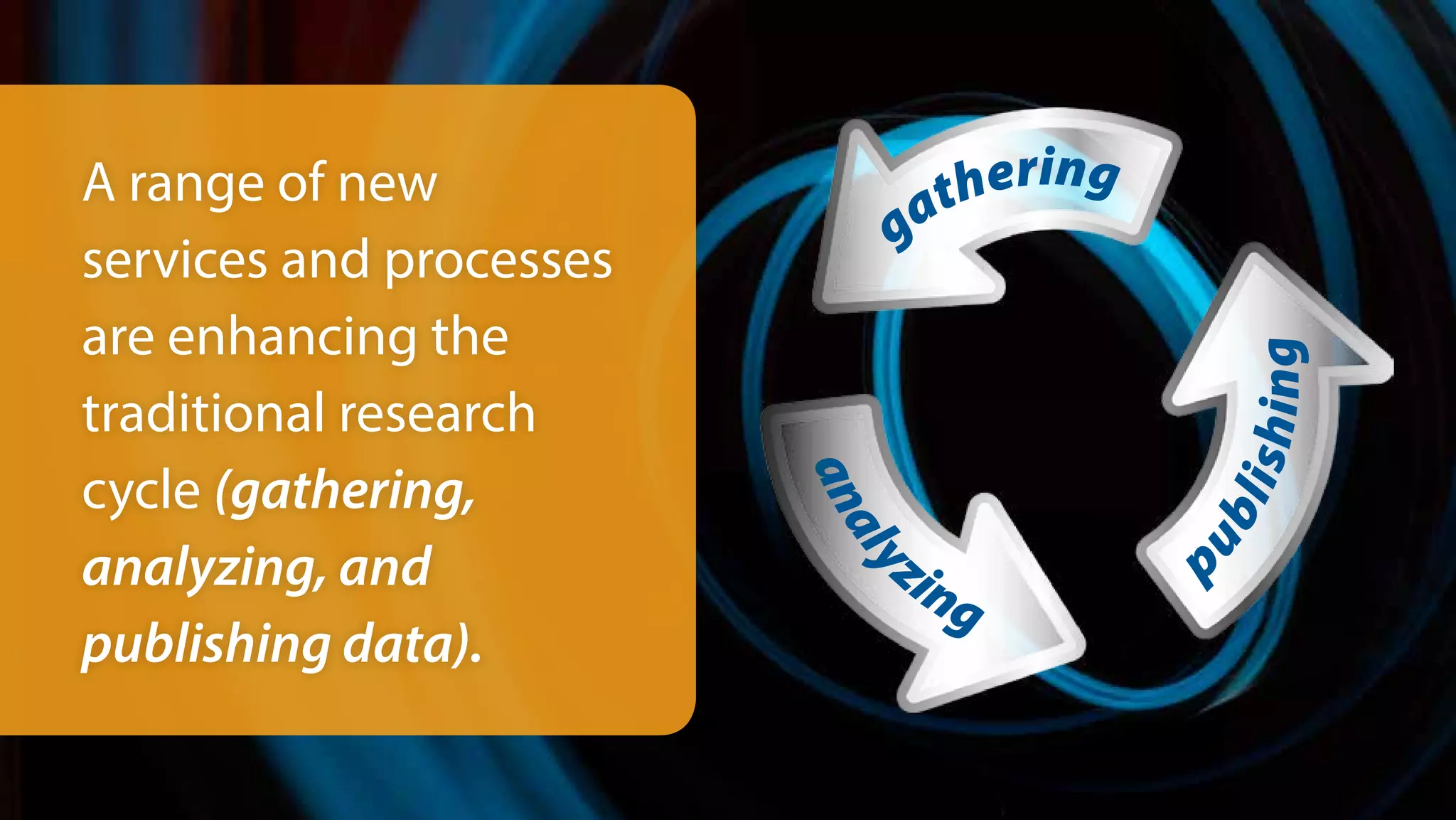
A range of new
services and processes
are enhancing the
traditional research
cycle (gathering,
analyzing, and
publishing data).
gathering
analy
zing
p
ublishing
OA will share the road with subscriptions,
more or less indefinitely.
Standards will be critical to:
•	 Achieve a viable OA marketplace
•	 Drive efficiency improvements
for publishers and institutions
•	 Create the opportunity
for wholly new services
To learn more about the OA road ahead, download
“10 Predictions for 2016.”
copyright.com

What's Next for Open Access--Part 2

  • 1.
    WHAT’S NEXT FOR OPENACCESS? Answers from Industry Expert Mark Ware, Ware Consulting
  • 2.
    To map outthe road ahead, Mark Ware, Director and Owner of Mark Ware Consulting, shares insights from his recent research on the open access (OA) market.
  • 3.
  • 4.
    While we’ve allseen the signposts for OA for some time now, the road ahead will include curves that affect publishers, researchers, and the market as a whole.
  • 5.
    We will soonsee gold OA models that are more efficient, like: • Offsetting and bundling • Membership models • Pre-payment options • Institutional accounts • Payment management systems
  • 6.
    Publishers report a sharpeningfocus on services for researchers/authors and on data services, as open research creates a whole new environment.
  • 7.
    However, issues arise whenyou combine that growth with the pressure on library budgets. Publishers say the growth in article volume – 3 or 4% annually – is manageable.
  • 8.
    Other forces drivingthe future of OA include: • Social pressures • Technology pressures • Political pressures
  • 9.
    These all intersectto change research behavior: • Shifting attitudes toward information sharing • Greater tolerance for informal materials
  • 10.
    Researchers are shapingthe debate about OA. • 5 to 6 million researchers have joined ResearchGate • 16 million-plus researchers have joined academia.edu
  • 11.
    The scholarly publishingsector is likely to see continued consolidation. Economies of scale are steering publishers toward sharing tools, social networking and collaboration platforms. The greatest opportunity is for a small number of leading players.
  • 12.
    However, publishers overallsay the system is in evolution, not revolution.
  • 13.
    The journal retainsits relevance and importance in the research community. Indeed, if anything, it’s more important than ever.
  • 14.
    With lower barriersto entry, OA is driving increased competition between publishers, and it is increasingly the norm among new journals.
  • 15.
    Standardized metadata aroundGold OA processes could help institutions get a better understanding of spending.
  • 16.
    The Green OAlandscape remains fragmented, with difficult discoverability and unpredictable quality. Publishers, institutions, and funders could develop a model that better serves researchers without compromising the subscription model.
  • 17.
    A range ofnew services and processes are enhancing the traditional research cycle (gathering, analyzing, and publishing data). gathering analy zing p ublishing
  • 18.
    OA will sharethe road with subscriptions, more or less indefinitely.
  • 19.
    Standards will becritical to: • Achieve a viable OA marketplace • Drive efficiency improvements for publishers and institutions • Create the opportunity for wholly new services
  • 20.
    To learn moreabout the OA road ahead, download “10 Predictions for 2016.” copyright.com