1
.
Introduction
to the Field of
Organizational Behaviour
2
Nortel Networks and OB
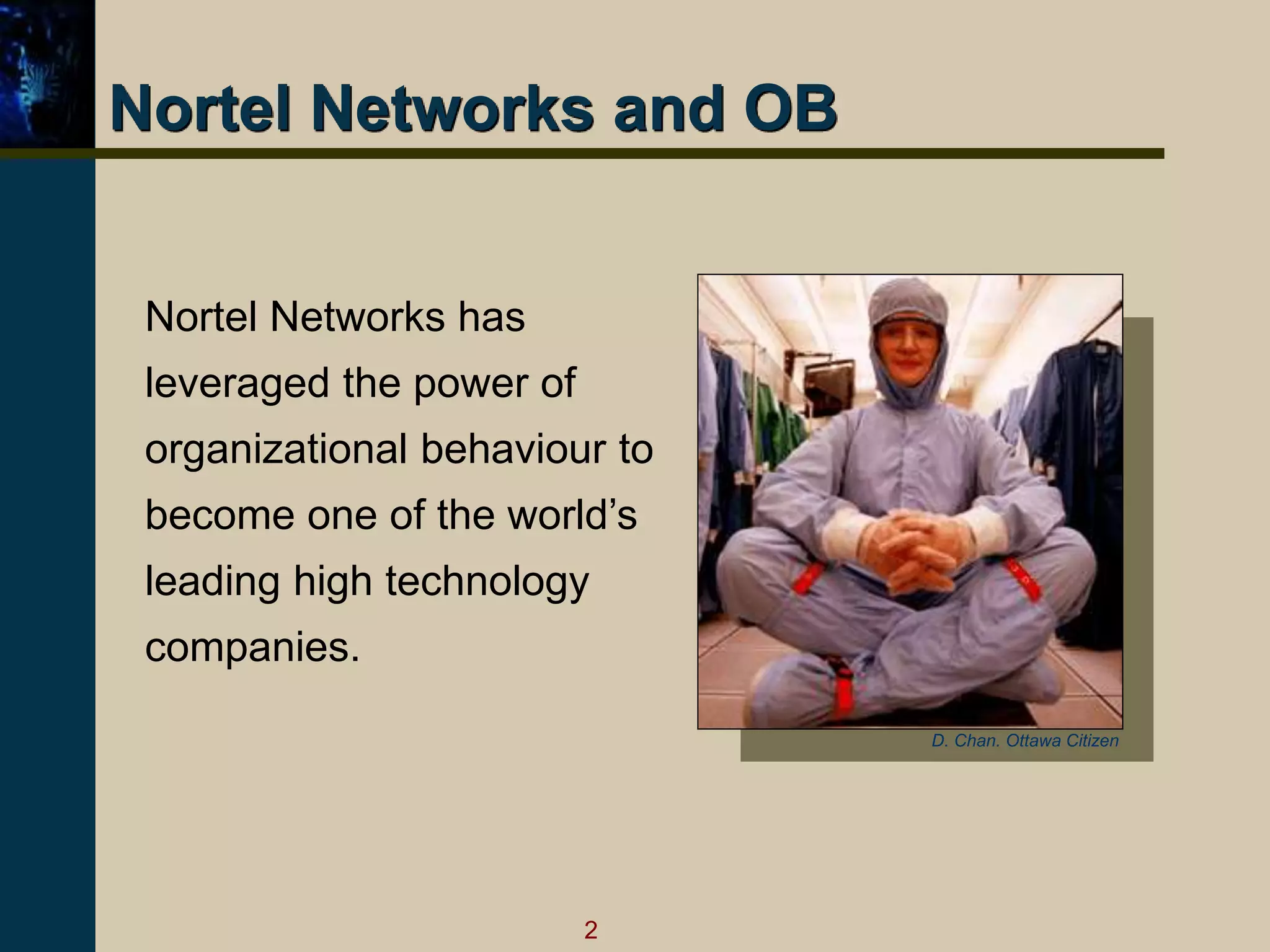
Nortel Networks has
leveraged the power of
organizational behaviour to
become one of the world’s
leading high technology
companies.
D. Chan. Ottawa Citizen
3
What are Organizations?
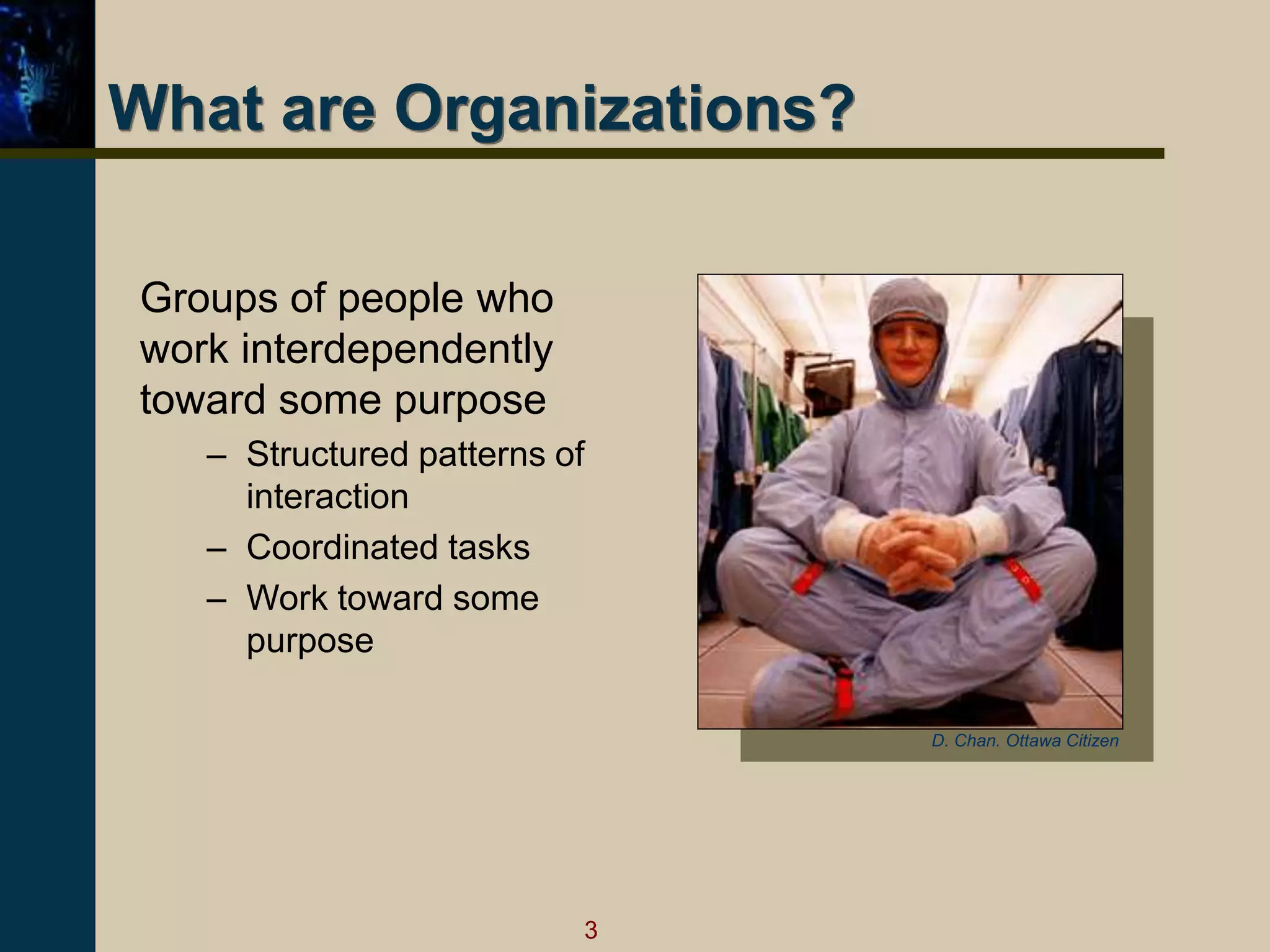
Groups of people who
work interdependently
toward some purpose
– Structured patterns of
interaction
– Coordinated tasks
– Work toward some
purpose
D. Chan. Ottawa Citizen
4
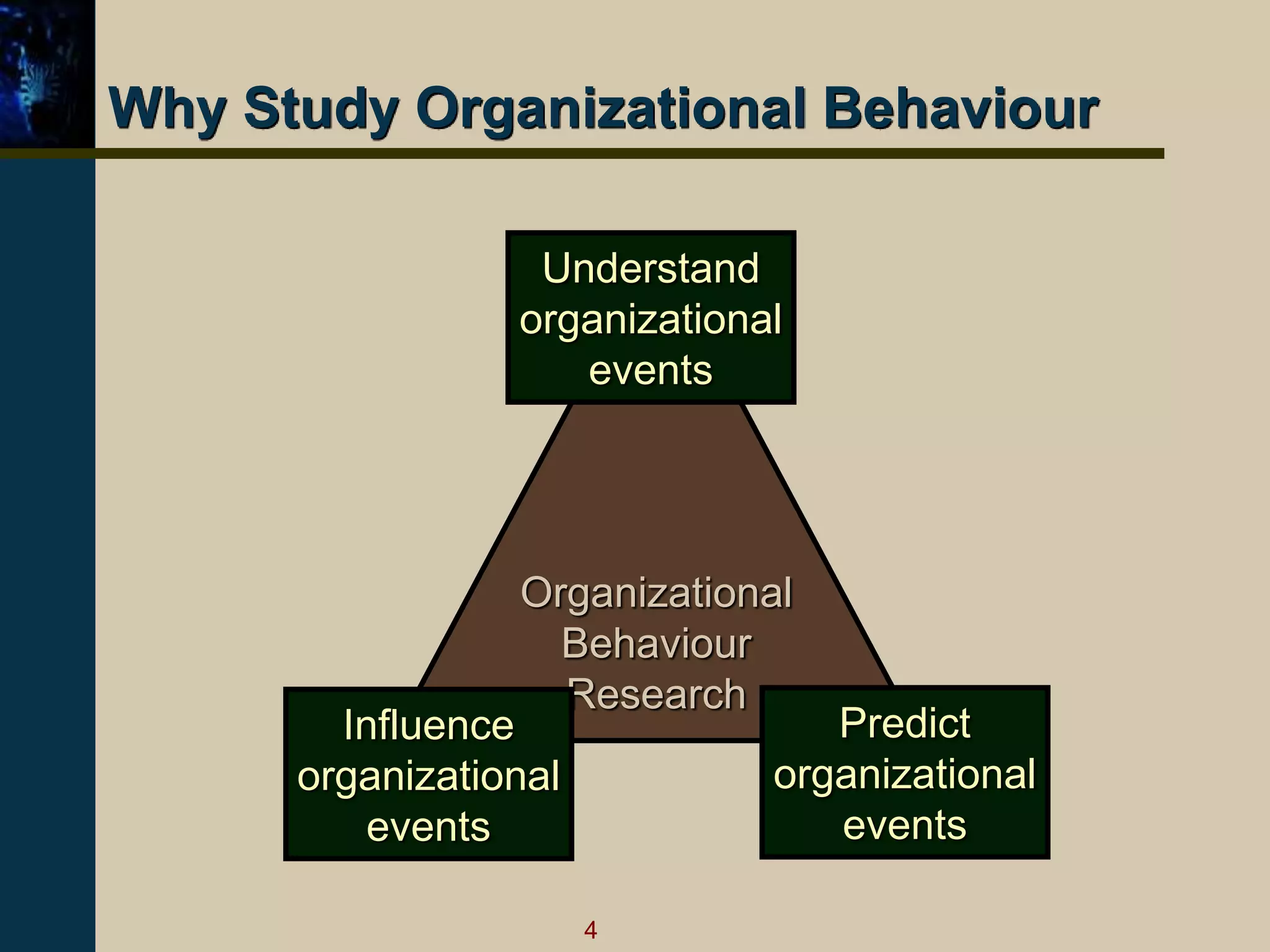
Organizational
Behaviour
Research
Understand
organizational
events
Predict
organizational
events
Influence
organizational
events
Why Study Organizational Behaviour
5
Trends: Globalization
• New organizational structures
• Different forms of communication
• Increases competition, change,
mergers, downsizing, stress
• Need to be more sensitive to cultural
differences
6
Trends: Workforce Diversity
• Primary and secondary diversity
• More women in workforce and
professions
• Different needs of Generation-X and
baby-boomers
• Diversity has advantages, but firms
need to adjust
7
Trends: Employment Relationship
• Employability
• Contingent work
• Telecommuting
• Virtual teams
8
Trends: Information Technology
• Affects how employees interact
– Virtual teams
– Telecommuting
• Affects how organizations are configured
– Network structures
• Affects how firms relate to customers
– Communication issues
9
Trends: Lots of Teams
• Potentially more effective than
employees working alone
• Concern is when to assign tasks to
teams rather than to individuals
10
Trends: Business Ethics
• The study of moral principles or values
that determine whether actions are right
or wrong and outcomes are good or bad
• What is unethical is not always obvious
11
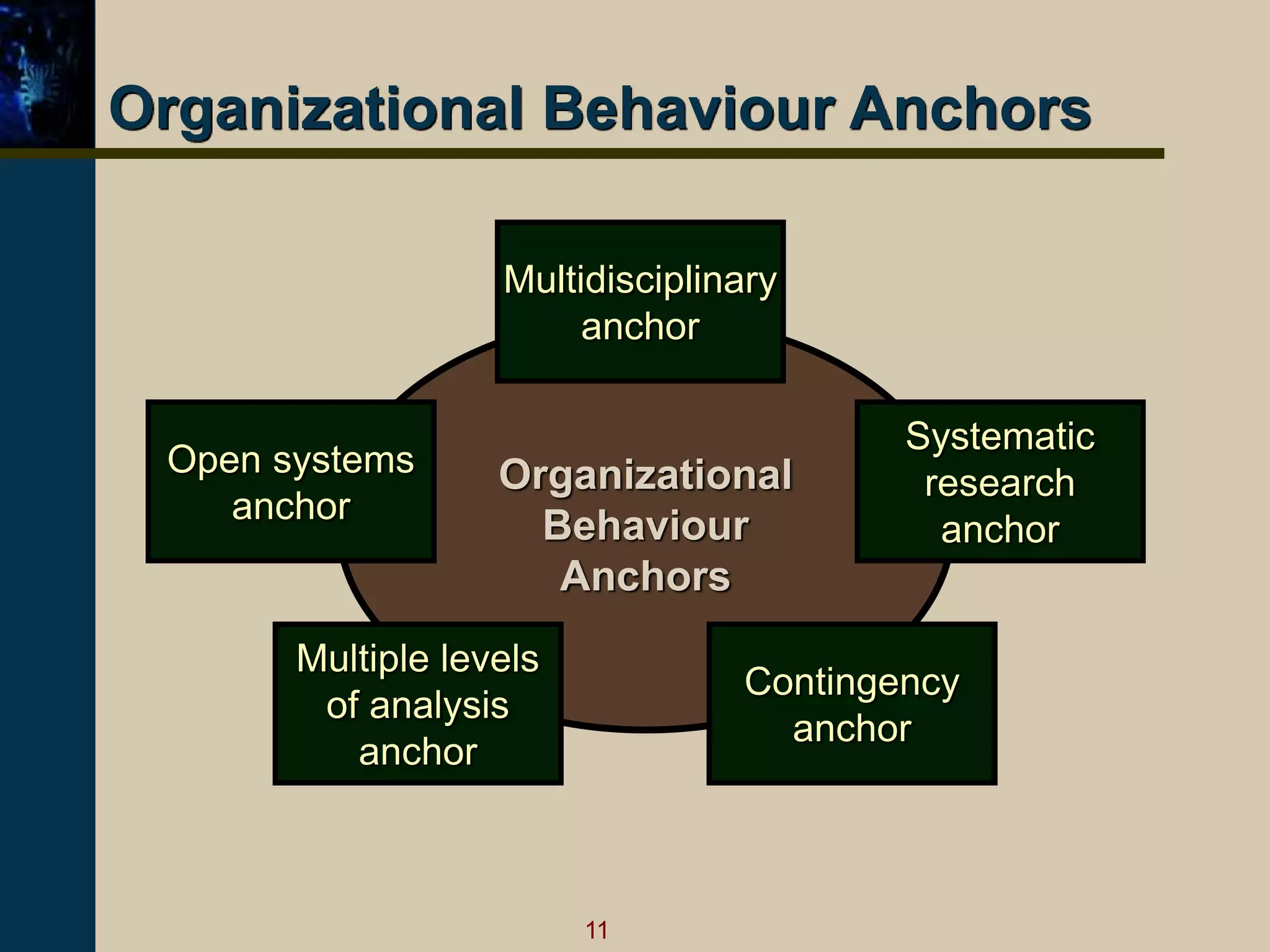
Organizational
Behaviour
Anchors
Multidisciplinary
anchor
Systematic
research
anchor
Contingency
anchor
Open systems
anchor
Multiple levels
of analysis
anchor
Organizational Behaviour Anchors
12
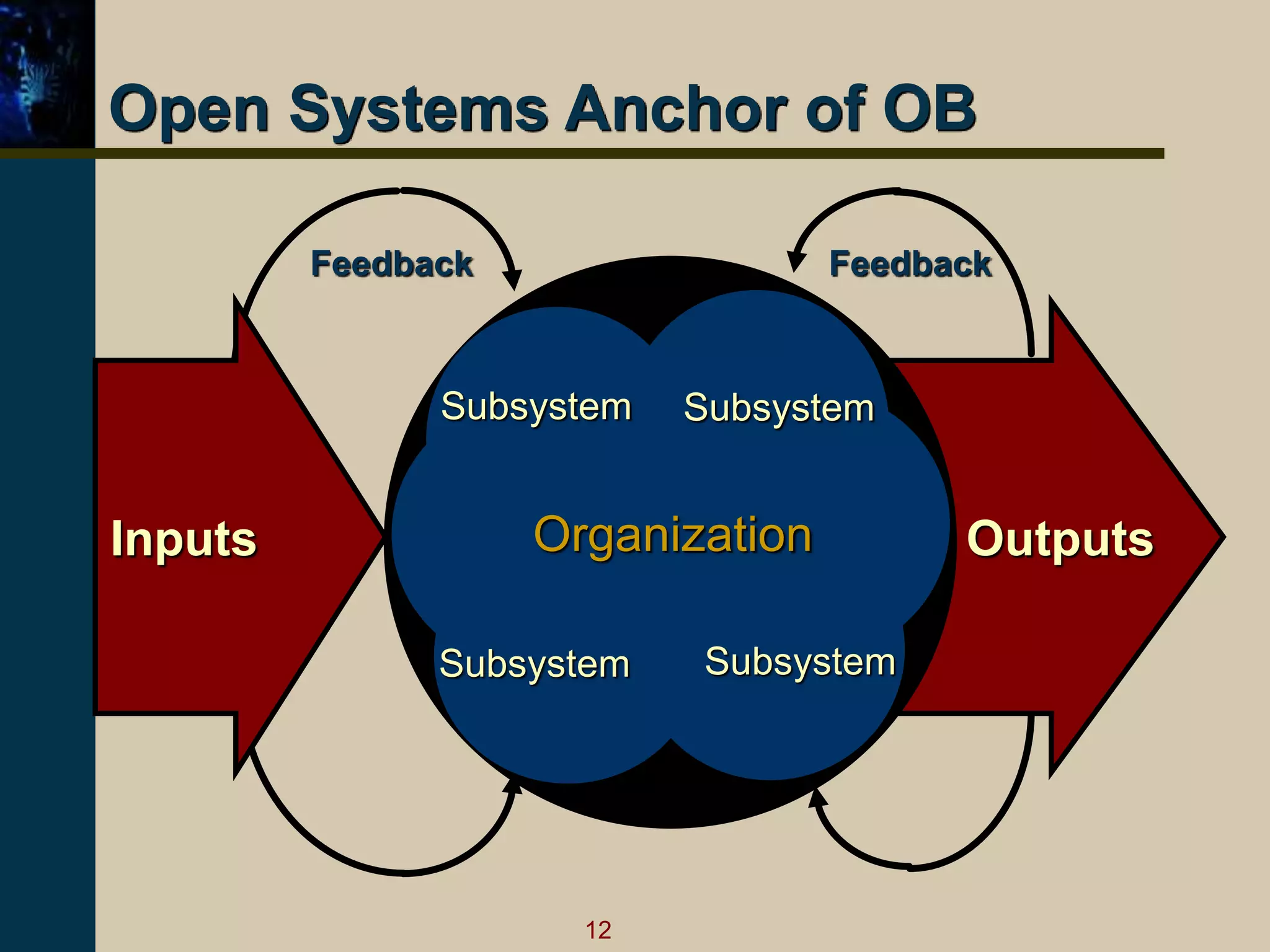
Feedback Feedback
Outputs
Inputs
Subsystem
Subsystem
Subsystem Subsystem
Organization
Open Systems Anchor of OB
13
Knowledge Management Defined
Any structured activity that
improves an organization’s
capacity to acquire, share,
and use knowledge for its
survival and success
14
Intellectual Capital
• Human capital
– Knowledge that employees possess
and generate
• Structural capital
– Knowledge captured in systems and
structures
• Relationship capital
– Value derived from satisfied customers,
reliable suppliers, and others
15
Knowledge Management Processes
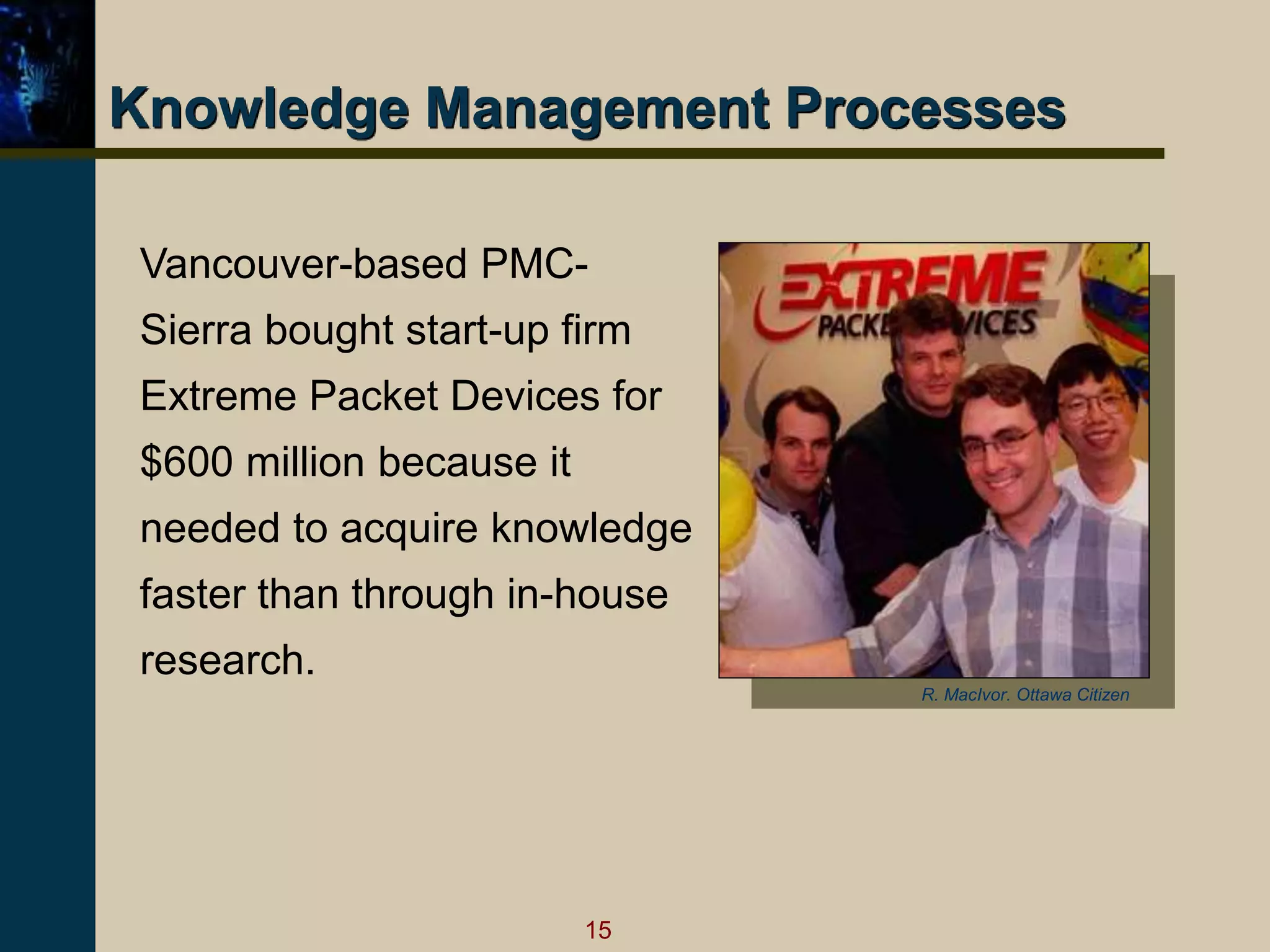
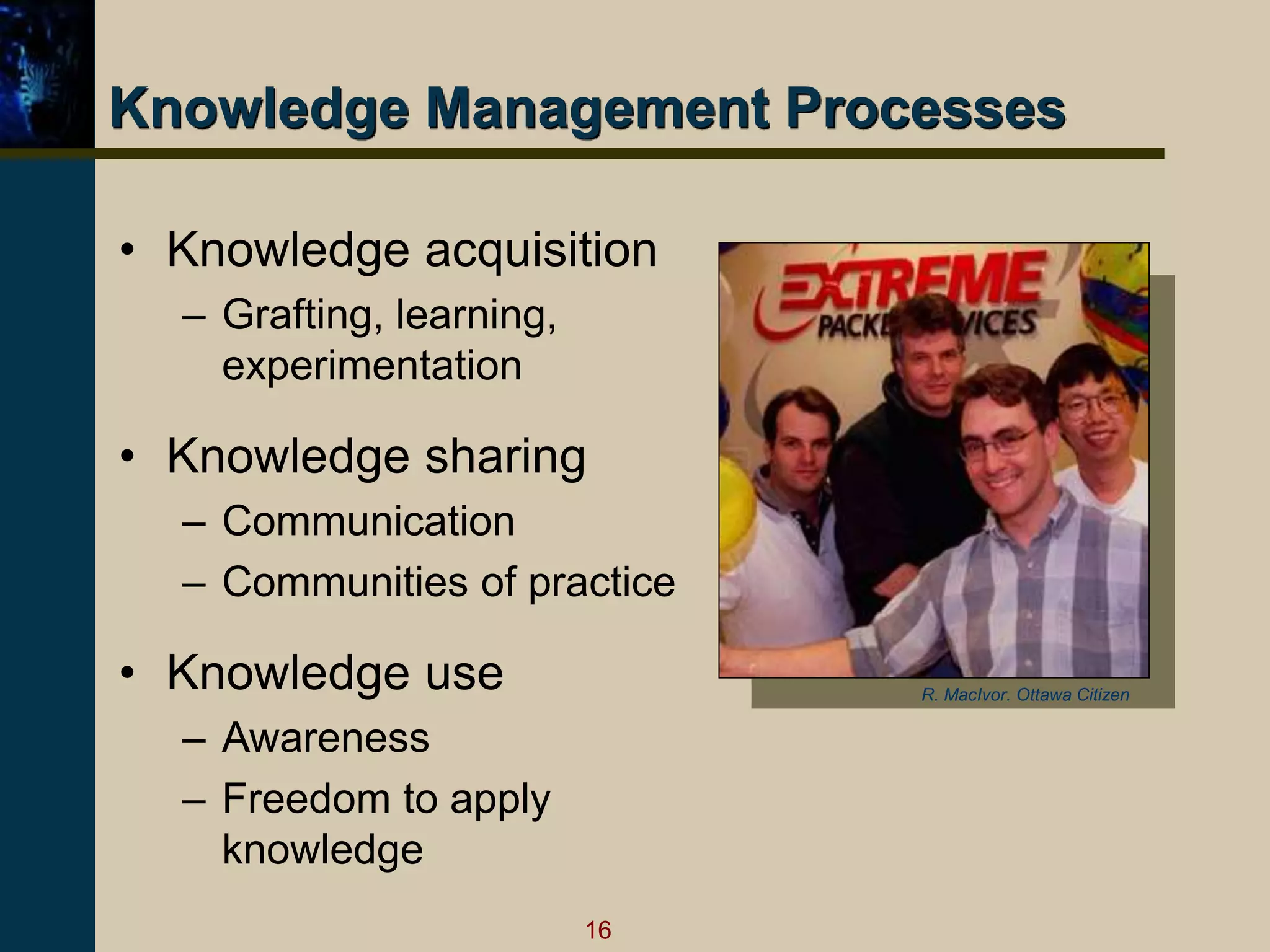
Vancouver-based PMC-
Sierra bought start-up firm
Extreme Packet Devices for
$600 million because it
needed to acquire knowledge
faster than through in-house
research.
R. MacIvor. Ottawa Citizen
16
Knowledge Management Processes
• Knowledge acquisition
– Grafting, learning,
experimentation
• Knowledge sharing
– Communication
– Communities of practice
• Knowledge use
– Awareness
– Freedom to apply
knowledge
R. MacIvor. Ottawa Citizen
17
Organizational Memory
• The storage and preservation of
intellectual capital
• Retain intellectual capital by:
– Keeping knowledgable employees
– Transferring knowledge to others
– Transferring human capital to structural
capital

What_is_organizational_behaviour.ppt