What is the Basic use of python
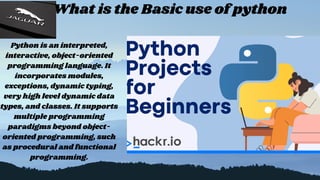
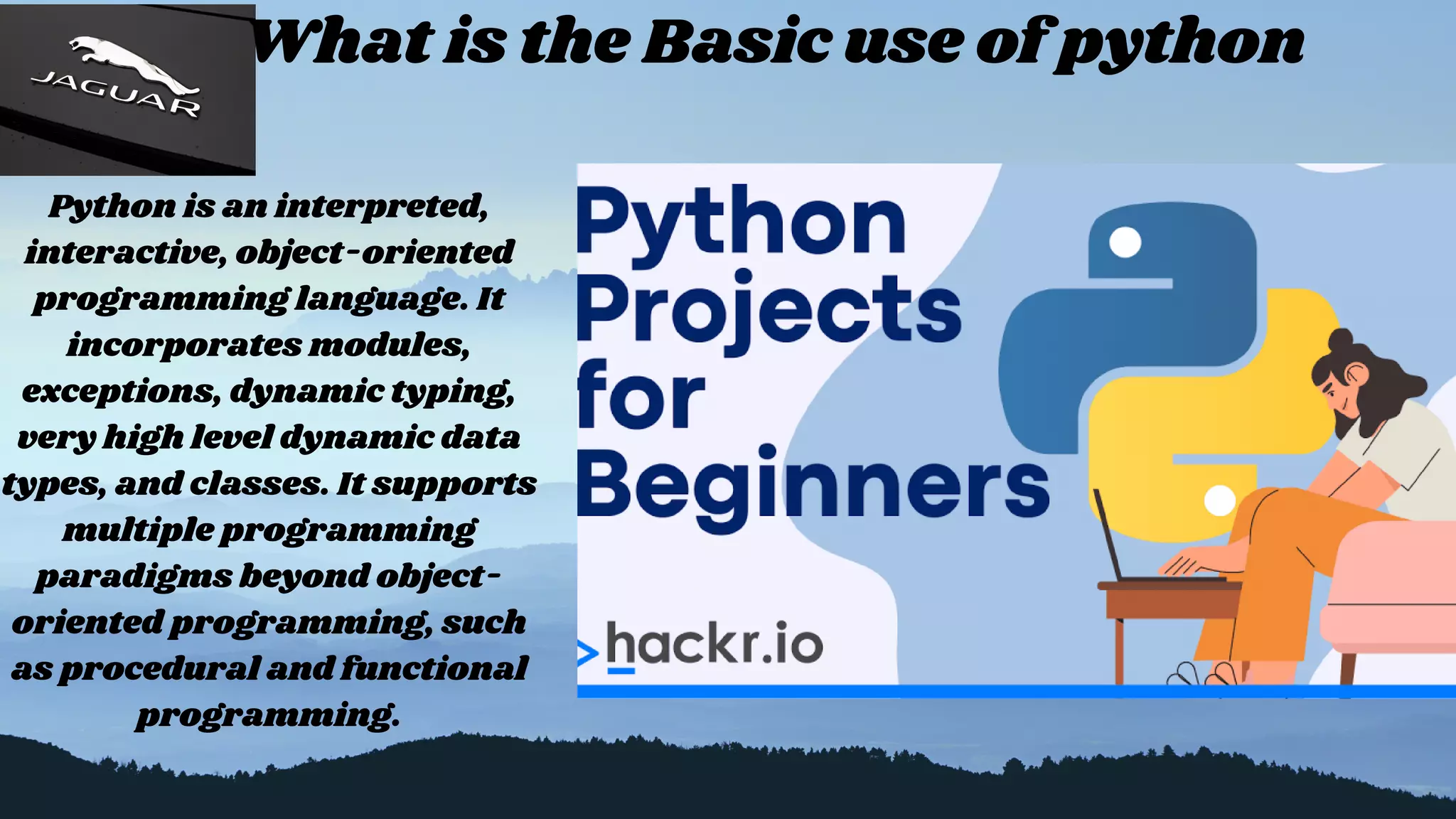
Python is an interpreted,
interactive, object-oriented
programming language. It
incorporates modules,
exceptions, dynamic typing,
very high level dynamic data
types, and classes. It supports
multiple programming
paradigms beyond object-
oriented programming, such
as procedural and functional
programming.
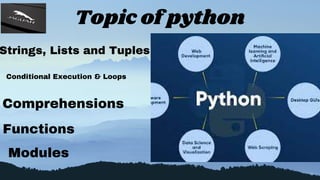
Topic of python
Strings, Lists and Tuples
Conditional Execution & Loops
Comprehensions
Functions
Modules
Strings, Lists, and Tuples
Lists, strings, and tuples are ordered sequences of objects. Unlike
strings that contain only characters, lists, and tuples can contain any
type of object. Lists and tuples are like arrays. Tuples like strings are
immutables.
Conditional Execution & Loops
Conditional statements with
the proper comparison and
boolean operators allow the
creation of alternate execution
paths in the code. Loops allow
repeated execution of the
same set of statements on all
the objects within a sequence.
Using an index based for loop
is best suited for making
changes to items within a list.
Comprehension
s
Comprehension is an active
and complex process that:
includes the act of
simultaneously extracting
and constructing meaning
from text. enables readers
to derive meaning from a
text when they engage in
intentional, problem-solving
and thinking processe
Functions
Information functions are
used to gain insight into the
values of a particular field.
They are typically used to
derive flag fields. For
example, you can use the
@BLANK function to create a
flag field indicating records
whose values are blank for
the selected field.
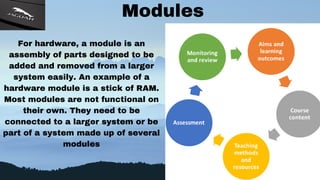
Modules
For hardware, a module is an
assembly of parts designed to be
added and removed from a larger
system easily. An example of a
hardware module is a stick of RAM.
Most modules are not functional on
their own. They need to be
connected to a larger system or be
part of a system made up of several
modules
7814550928
nitishbanga06@gmail
.com
banga---enabha
Contact Us
Thanks FOR
WATCHING
OUR PPT

What is the Basic use of python (7).pdf

  • 1.
    What is theBasic use of python Python is an interpreted, interactive, object-oriented programming language. It incorporates modules, exceptions, dynamic typing, very high level dynamic data types, and classes. It supports multiple programming paradigms beyond object- oriented programming, such as procedural and functional programming.
  • 2.
    Topic of python Strings,Lists and Tuples Conditional Execution & Loops Comprehensions Functions Modules
  • 3.
    Strings, Lists, andTuples Lists, strings, and tuples are ordered sequences of objects. Unlike strings that contain only characters, lists, and tuples can contain any type of object. Lists and tuples are like arrays. Tuples like strings are immutables.
  • 4.
    Conditional Execution &Loops Conditional statements with the proper comparison and boolean operators allow the creation of alternate execution paths in the code. Loops allow repeated execution of the same set of statements on all the objects within a sequence. Using an index based for loop is best suited for making changes to items within a list.
  • 5.
    Comprehension s Comprehension is anactive and complex process that: includes the act of simultaneously extracting and constructing meaning from text. enables readers to derive meaning from a text when they engage in intentional, problem-solving and thinking processe
  • 6.
    Functions Information functions are usedto gain insight into the values of a particular field. They are typically used to derive flag fields. For example, you can use the @BLANK function to create a flag field indicating records whose values are blank for the selected field.
  • 7.
    Modules For hardware, amodule is an assembly of parts designed to be added and removed from a larger system easily. An example of a hardware module is a stick of RAM. Most modules are not functional on their own. They need to be connected to a larger system or be part of a system made up of several modules
  • 8.
  • 9.