What is Student Information
System? Purpose & Features | Proctur
____________________________________________________________________________
What is the Educational Student Information System
Their uses purpose and Feature?
An educational institution's student information system (SIS) is designed to effectively
manage and arrange student-related data. It functions as a thorough database that
collects, maintains, and tracks numerous pieces of information about students
throughout their academic careers. The following are some of the main goals of a
student information system:
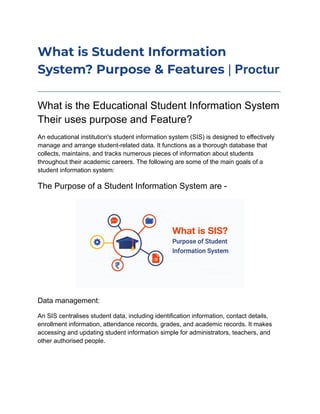
The Purpose of a Student Information System are -
Data management:
An SIS centralises student data, including identification information, contact details,
enrollment information, attendance records, grades, and academic records. It makes
accessing and updating student information simple for administrators, teachers, and
other authorised people.
Enrollment and Admissions:
By offering online registration forms, maintaining application files, and monitoring the
status of applications, SIS streamlines the enrollment and admissions procedure. It
improves the effectiveness of the enrollment process by streamlining the enrolling
process and reducing paperwork.
Attendance Tracking:
Student information systems assist schools in monitoring and controlling student
attendance. It provides for the computerised recording of attendance by teachers, the
generation of reports, the identification of absenteeism patterns, and effective parent
contact with their child's attendance.
Academic Performance Monitoring:
With the use of SIS, teachers may keep track of and examine students' grades,
assignments, and tests. It gives teachers a central location to enter grades, compute
averages, produce progress reports, and communicate academic updates to students
and parents.
Collaboration and communication:
Tools for successful communication between educators, administrators, students, and
parents are frequently included in student information systems. In order to ensure
efficient cooperation and engagement, features like messaging, email integration, and
discussion forums provide quick and secure communication.
Administrative Tasks:
SIS automates a number of administrative duties, including providing statistical reports,
managing transcripts, and generating report cards and class schedules. It speeds up
and streamlines administrative procedures while lowering the likelihood of mistakes.
Data Analysis and Reporting:
Information systems for students offer powerful reporting and data analysis capabilities.
They produce insights into indicators like student performance, enrollment trends, and
attendance trends. Administrators can use these reports to inform data-driven decisions
that will enhance the quality of educational software for all students.
Security and Privacy:
SIS implements proper access controls, encryption mechanisms, and data backup
procedures to guarantee the security and privacy of student data. It complies with
ethical and legal standards for data protection, guaranteeing the confidentiality of
sensitive data.
A student information system's overarching goals are to improve communication and
collaboration, expedite administrative processes, better data management, and give
educational institutions useful information for making smart decisions.
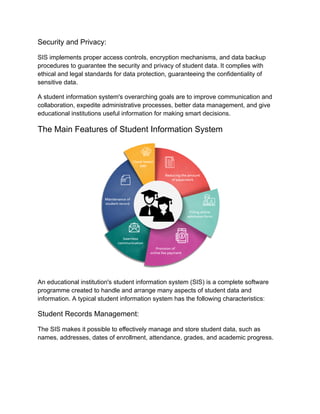
The Main Features of Student Information System
An educational institution's student information system (SIS) is a complete software
programme created to handle and arrange many aspects of student data and
information. A typical student information system has the following characteristics:
Student Records Management:
The SIS makes it possible to effectively manage and store student data, such as
names, addresses, dates of enrollment, attendance, grades, and academic progress.
Enrollment and Admissions:
The system streamlines the enrollment and admissions procedures for students,
enabling administrators to gather and manage applications, monitor enrollment
progress, and produce enrollment reports.
Course Registration:
Students can utilise the system to sign up for classes, view available ones, look for
prerequisites, and control their schedules. The solution offers real-time updates on
course availability and helps avoid scheduling conflicts.
Tracking of Attendance:
The SIS makes it possible to keep track of student attendance, allowing teachers to
electronically take attendance and produce statistics on attendance trends.
Grading and Transcripts:
Teachers have access to the system to enter grades, compute cumulative GPAs (Grade
Point Averages), and provide transcripts for their students. Students and parents can
access and view grades and transcripts online thanks to the SIS.
Communication and Collaboration:
The system offers resources for parents, teachers, administrators, and students to
communicate and work together. It might come with tools like chat, forums, and shared
document storage.
Reporting and analytics:
The SIS produces a number of reports and analytics to give information about trends in
enrollment, attendance, and other pertinent data as well as information about how well
students are performing in class. Administrators and educators can make wise
judgements with the aid of this information.
Financial Management:
Some SISs have tools for managing finances, including fee collecting, tracking
payments, and producing financial reports. This makes it possible to manage student
tuition and financial transactions effectively.
Parent and Guardian Portal:
A portal for parents and guardians to access their children's information, such as
grades, attendance, assignments, and communications with teachers, is frequently
included in the SIS. It encourages parent-teacher cooperation and parental involvement
in the education of their children.
Integration and customization:
SISs can integrate with other systems used by the educational institution, including
administrative, library, and learning management systems (LMS). Many SISs also
include customization possibilities to match the unique requirements and work
processes of an institution.
These are some of the standard components that student information systems often
have. However, it's important to remember that various SIS providers may offer
additional functionalities or variations in features based on the specific needs and
requirements of educational institutions.
Related Blogs -
1. Best Practices for Choosing an ERP Software for schools
2. Role of AI in Education Industry and their Future
3. How an Educational ERP System Can Streamline School Operations
4. Benefits of Automation Through School ERP Software
5. Effect of Institution ERP Software on Faculty’s Productivity
6. The Necessity of Digital Transformation for Schools
7. Fundamentals of ERP Software for School Management
8. Top 5 Components of School Management ERP Software
______________________________________________________________________

What is Student Information System_ Purpose & Features _ Proctur.pdf

  • 1.
    What is StudentInformation System? Purpose & Features | Proctur ____________________________________________________________________________ What is the Educational Student Information System Their uses purpose and Feature? An educational institution's student information system (SIS) is designed to effectively manage and arrange student-related data. It functions as a thorough database that collects, maintains, and tracks numerous pieces of information about students throughout their academic careers. The following are some of the main goals of a student information system: The Purpose of a Student Information System are - Data management: An SIS centralises student data, including identification information, contact details, enrollment information, attendance records, grades, and academic records. It makes accessing and updating student information simple for administrators, teachers, and other authorised people.
  • 2.
    Enrollment and Admissions: Byoffering online registration forms, maintaining application files, and monitoring the status of applications, SIS streamlines the enrollment and admissions procedure. It improves the effectiveness of the enrollment process by streamlining the enrolling process and reducing paperwork. Attendance Tracking: Student information systems assist schools in monitoring and controlling student attendance. It provides for the computerised recording of attendance by teachers, the generation of reports, the identification of absenteeism patterns, and effective parent contact with their child's attendance. Academic Performance Monitoring: With the use of SIS, teachers may keep track of and examine students' grades, assignments, and tests. It gives teachers a central location to enter grades, compute averages, produce progress reports, and communicate academic updates to students and parents. Collaboration and communication: Tools for successful communication between educators, administrators, students, and parents are frequently included in student information systems. In order to ensure efficient cooperation and engagement, features like messaging, email integration, and discussion forums provide quick and secure communication. Administrative Tasks: SIS automates a number of administrative duties, including providing statistical reports, managing transcripts, and generating report cards and class schedules. It speeds up and streamlines administrative procedures while lowering the likelihood of mistakes. Data Analysis and Reporting: Information systems for students offer powerful reporting and data analysis capabilities. They produce insights into indicators like student performance, enrollment trends, and attendance trends. Administrators can use these reports to inform data-driven decisions that will enhance the quality of educational software for all students.
  • 3.
    Security and Privacy: SISimplements proper access controls, encryption mechanisms, and data backup procedures to guarantee the security and privacy of student data. It complies with ethical and legal standards for data protection, guaranteeing the confidentiality of sensitive data. A student information system's overarching goals are to improve communication and collaboration, expedite administrative processes, better data management, and give educational institutions useful information for making smart decisions. The Main Features of Student Information System An educational institution's student information system (SIS) is a complete software programme created to handle and arrange many aspects of student data and information. A typical student information system has the following characteristics: Student Records Management: The SIS makes it possible to effectively manage and store student data, such as names, addresses, dates of enrollment, attendance, grades, and academic progress.
  • 4.
    Enrollment and Admissions: Thesystem streamlines the enrollment and admissions procedures for students, enabling administrators to gather and manage applications, monitor enrollment progress, and produce enrollment reports. Course Registration: Students can utilise the system to sign up for classes, view available ones, look for prerequisites, and control their schedules. The solution offers real-time updates on course availability and helps avoid scheduling conflicts. Tracking of Attendance: The SIS makes it possible to keep track of student attendance, allowing teachers to electronically take attendance and produce statistics on attendance trends. Grading and Transcripts: Teachers have access to the system to enter grades, compute cumulative GPAs (Grade Point Averages), and provide transcripts for their students. Students and parents can access and view grades and transcripts online thanks to the SIS. Communication and Collaboration: The system offers resources for parents, teachers, administrators, and students to communicate and work together. It might come with tools like chat, forums, and shared document storage. Reporting and analytics: The SIS produces a number of reports and analytics to give information about trends in enrollment, attendance, and other pertinent data as well as information about how well students are performing in class. Administrators and educators can make wise judgements with the aid of this information. Financial Management: Some SISs have tools for managing finances, including fee collecting, tracking payments, and producing financial reports. This makes it possible to manage student tuition and financial transactions effectively.
  • 5.
    Parent and GuardianPortal: A portal for parents and guardians to access their children's information, such as grades, attendance, assignments, and communications with teachers, is frequently included in the SIS. It encourages parent-teacher cooperation and parental involvement in the education of their children. Integration and customization: SISs can integrate with other systems used by the educational institution, including administrative, library, and learning management systems (LMS). Many SISs also include customization possibilities to match the unique requirements and work processes of an institution. These are some of the standard components that student information systems often have. However, it's important to remember that various SIS providers may offer additional functionalities or variations in features based on the specific needs and requirements of educational institutions. Related Blogs - 1. Best Practices for Choosing an ERP Software for schools 2. Role of AI in Education Industry and their Future 3. How an Educational ERP System Can Streamline School Operations 4. Benefits of Automation Through School ERP Software 5. Effect of Institution ERP Software on Faculty’s Productivity 6. The Necessity of Digital Transformation for Schools 7. Fundamentals of ERP Software for School Management 8. Top 5 Components of School Management ERP Software ______________________________________________________________________