Workshop on Science Writing
October 2021 to January 2022
Session 2
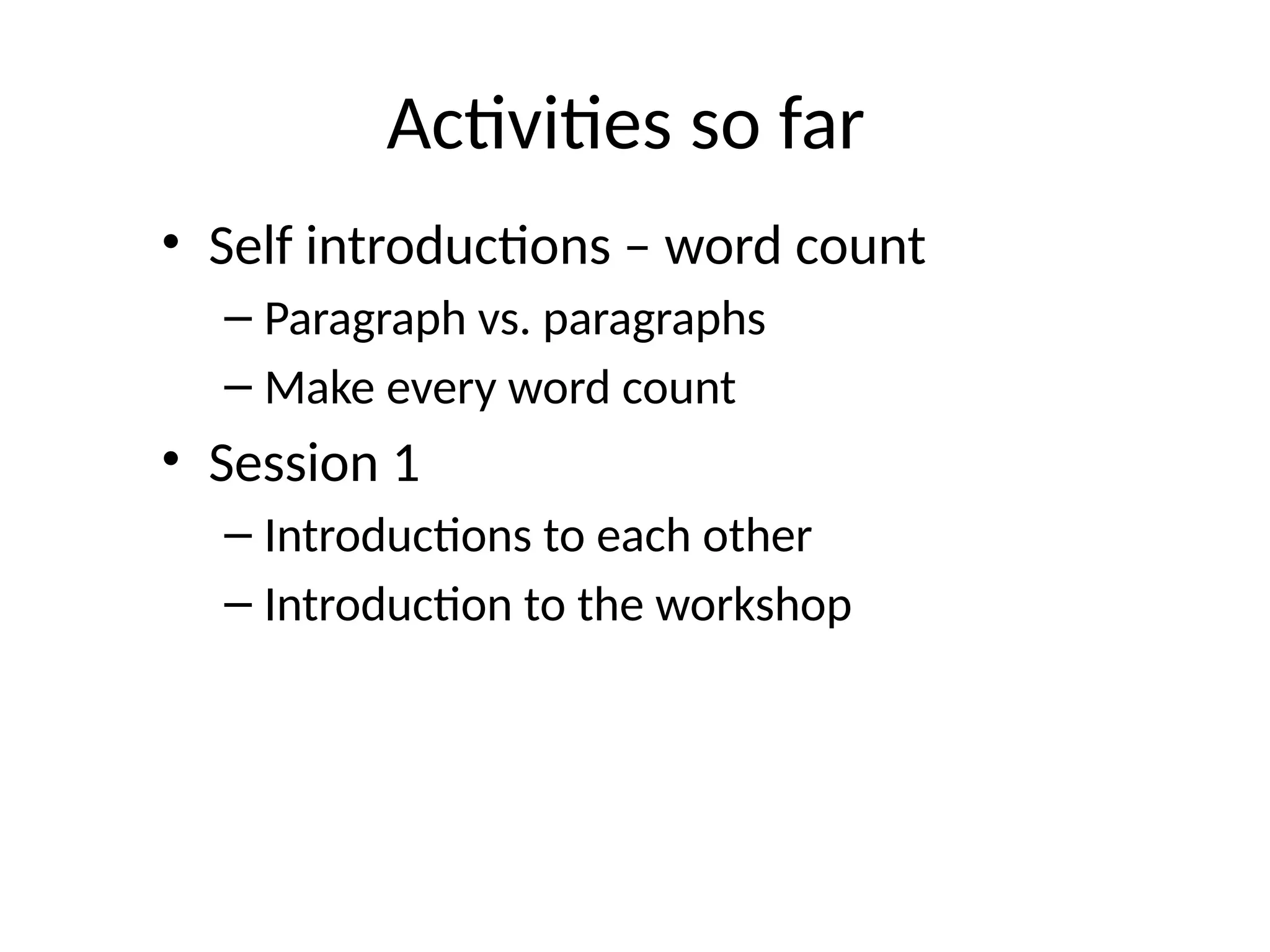
Activities so far
• Self introductions – word count
– Paragraph vs. paragraphs
– Make every word count
• Session 1
– Introductions to each other
– Introduction to the workshop
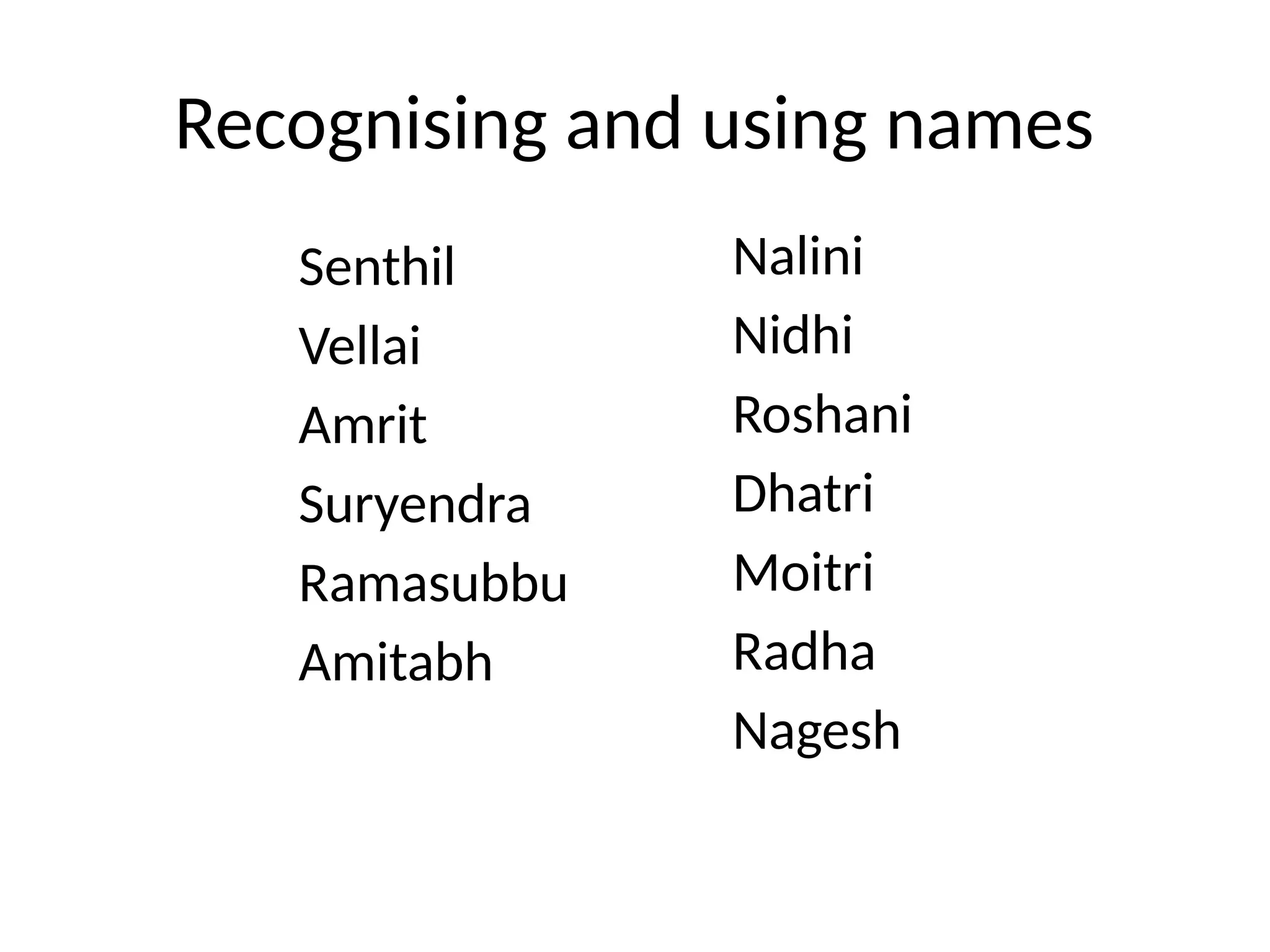
Recognising and using names
Senthil
Vellai
Amrit
Suryendra
Ramasubbu
Amitabh
Nalini
Nidhi
Roshani
Dhatri
Moitri
Radha
Nagesh
What is science?
Session 2
Science Writing
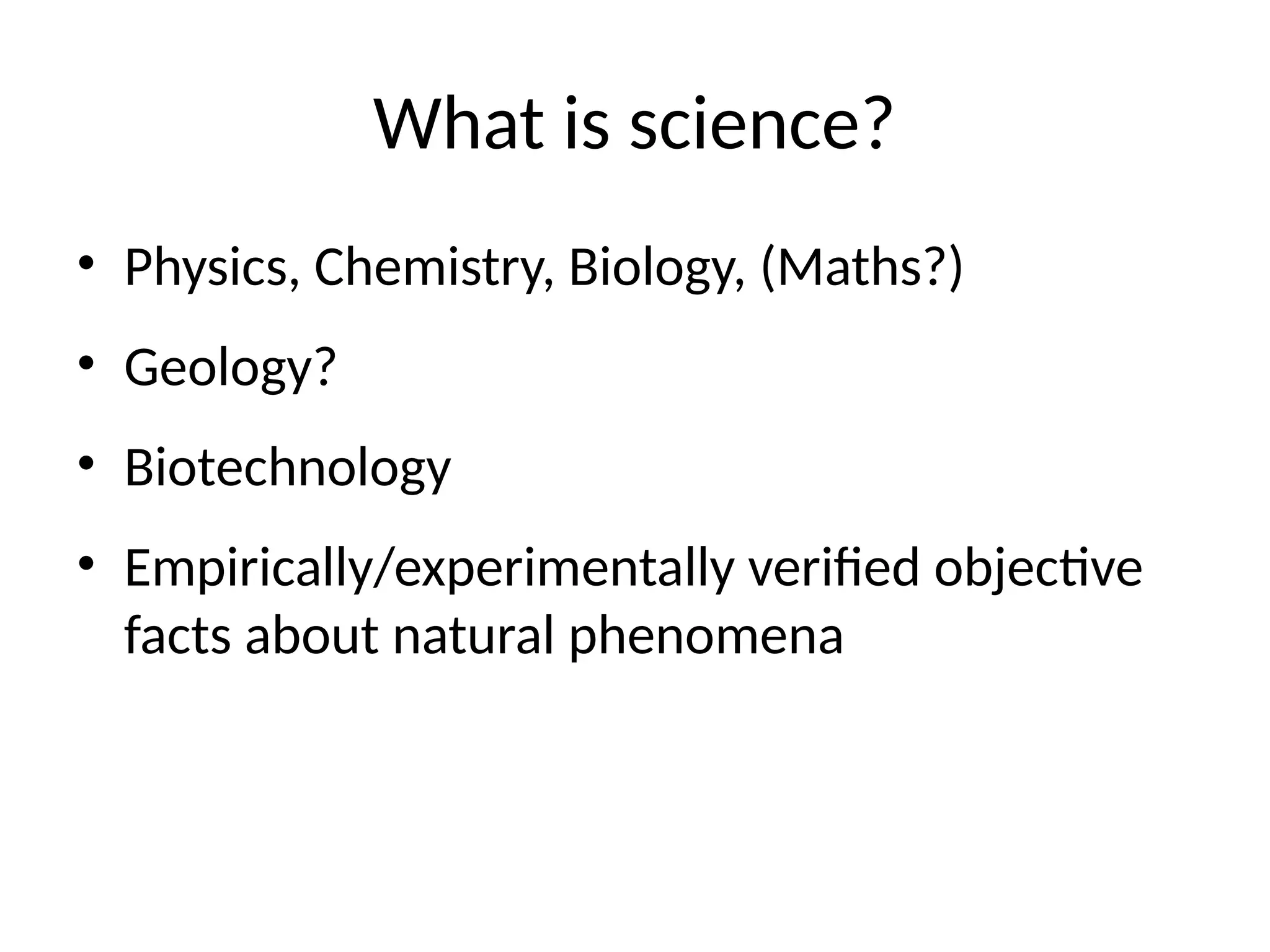
What is science?
• Physics, Chemistry, Biology, (Maths?)
• Geology?
• Biotechnology
• Empirically/experimentally verified objective
facts about natural phenomena
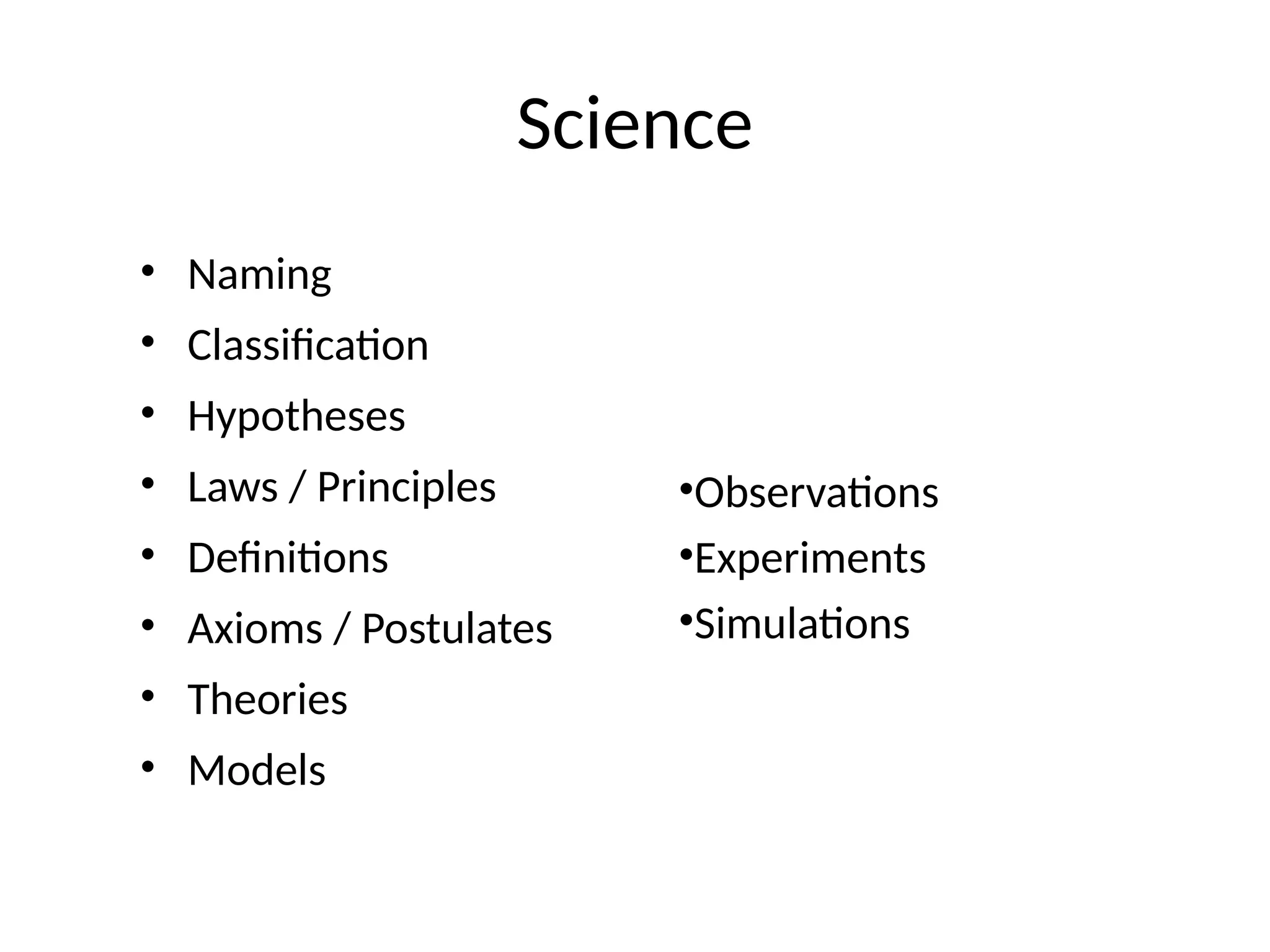
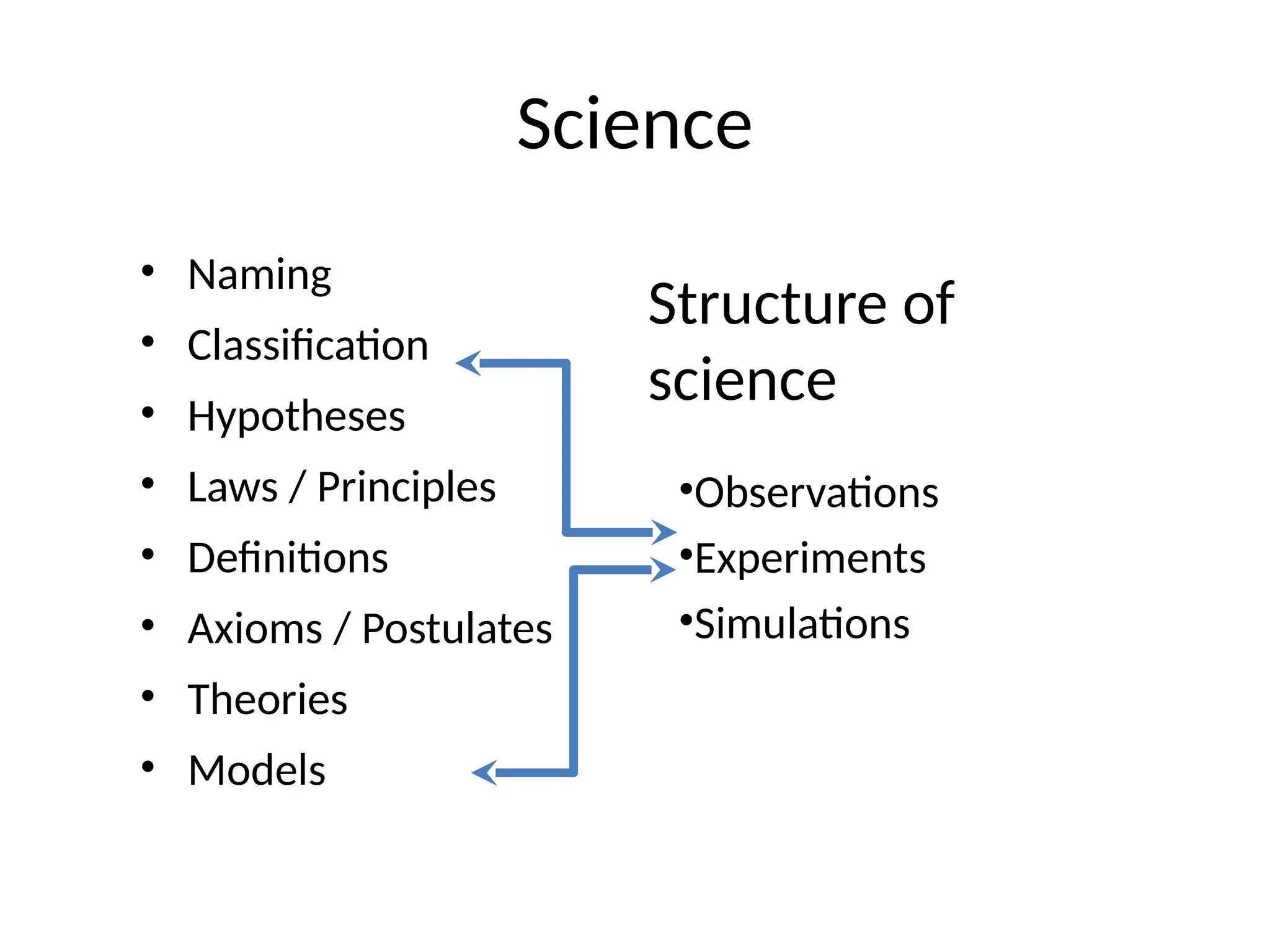
Science
• Naming
• Classification
• Hypotheses
• Laws / Principles
• Definitions
• Axioms / Postulates
• Theories
• Models
•Observations
•Experiments
•Simulations
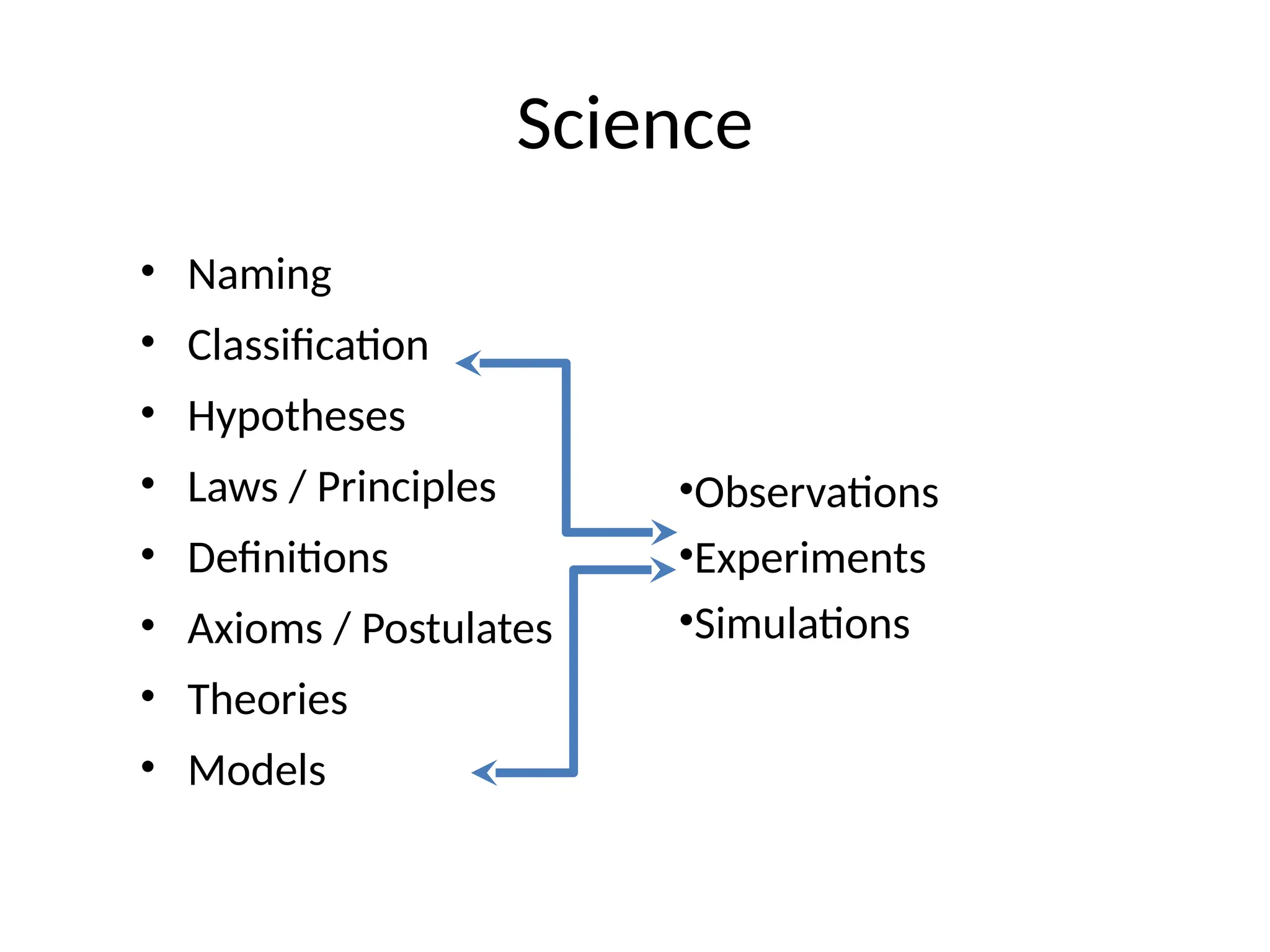
Science
• Naming
• Classification
• Hypotheses
• Laws / Principles
• Definitions
• Axioms / Postulates
• Theories
• Models
•Observations
•Experiments
•Simulations
Science
• Naming
• Classification
• Hypotheses
• Laws / Principles
• Definitions
• Axioms / Postulates
• Theories
• Models
•Observations
•Experiments
•Simulations
Structure of
science
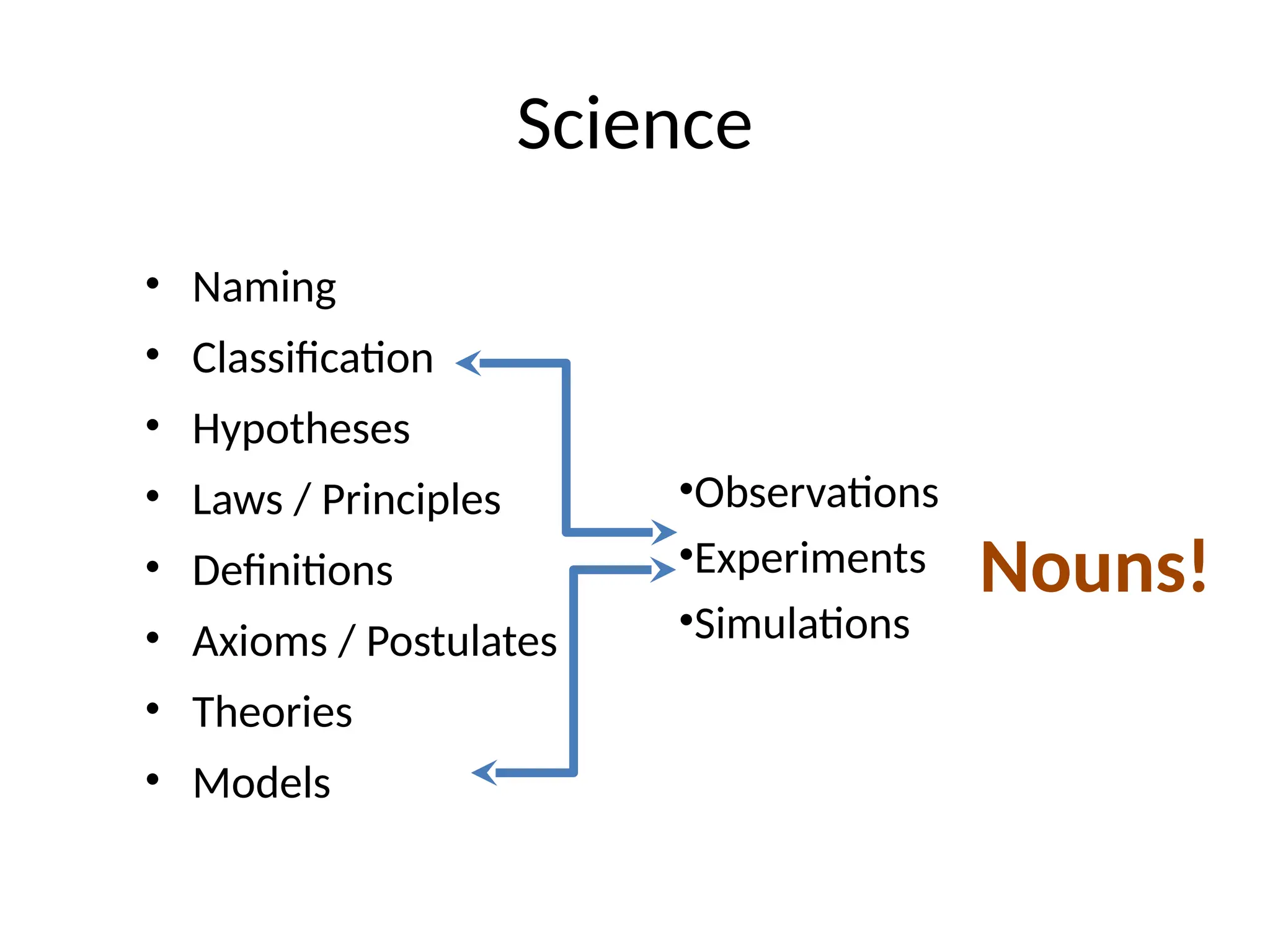
Science
• Naming
• Classification
• Hypotheses
• Laws / Principles
• Definitions
• Axioms / Postulates
• Theories
• Models
•Observations
•Experiments
•Simulations
Nouns!
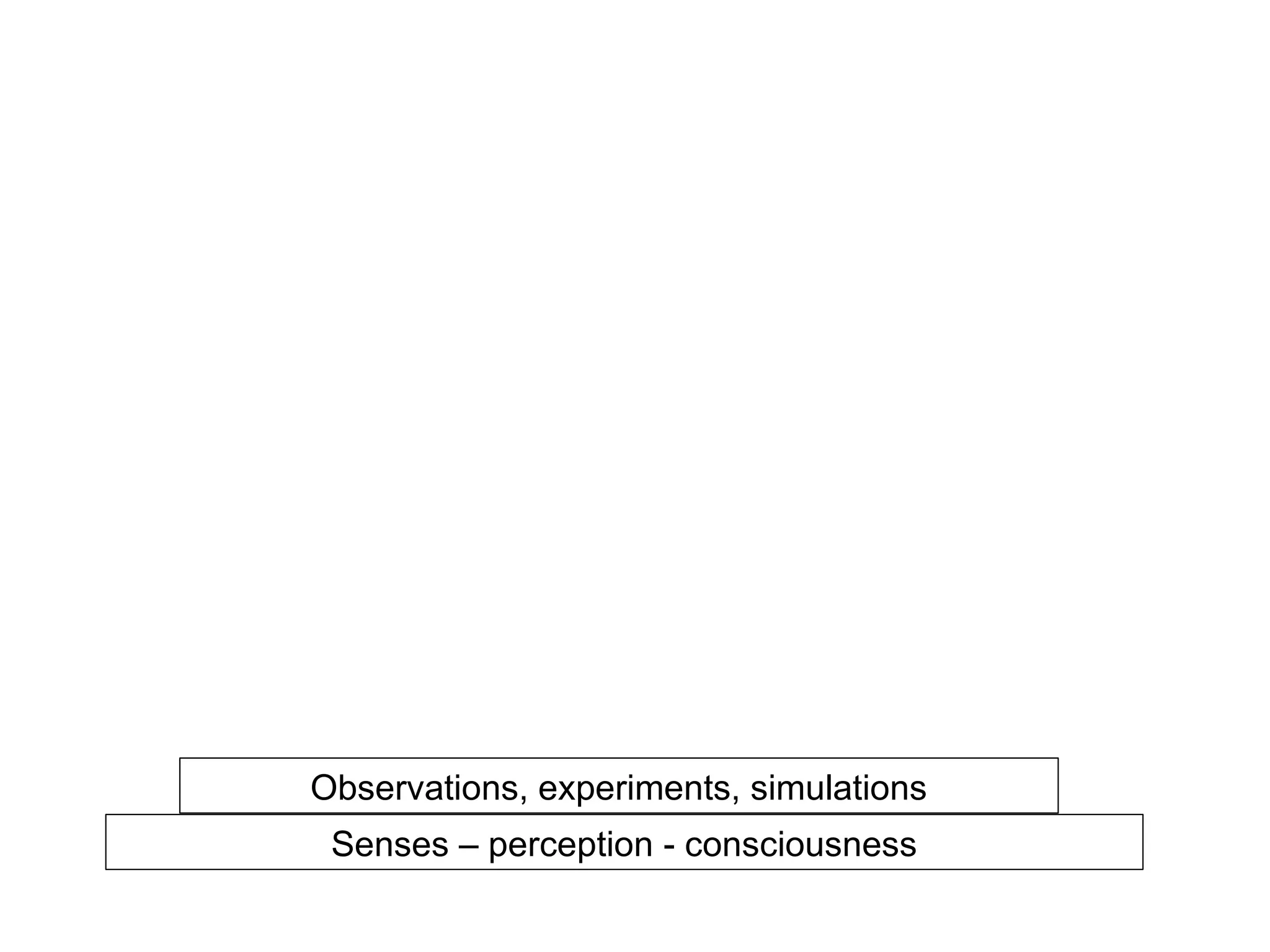
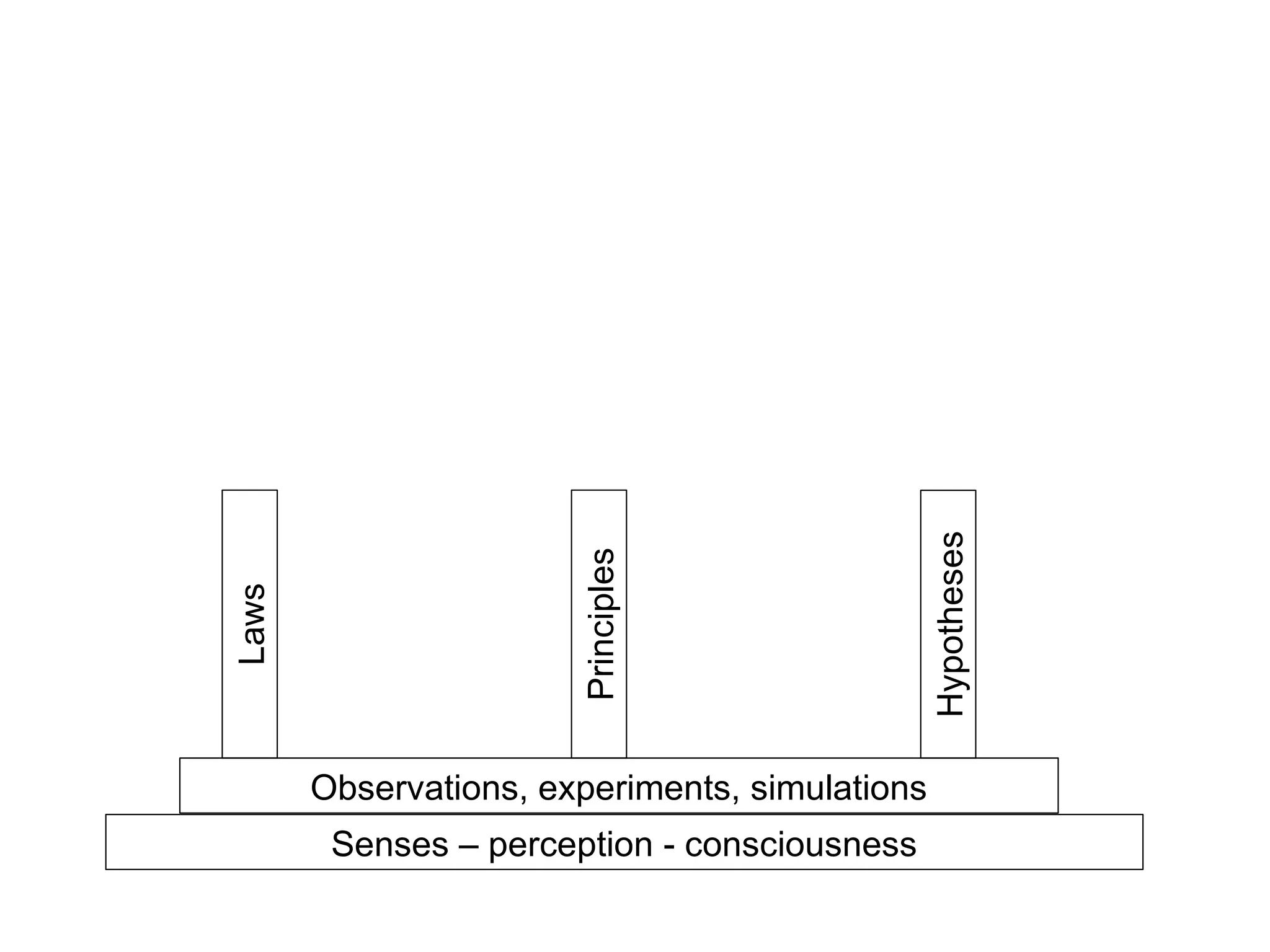
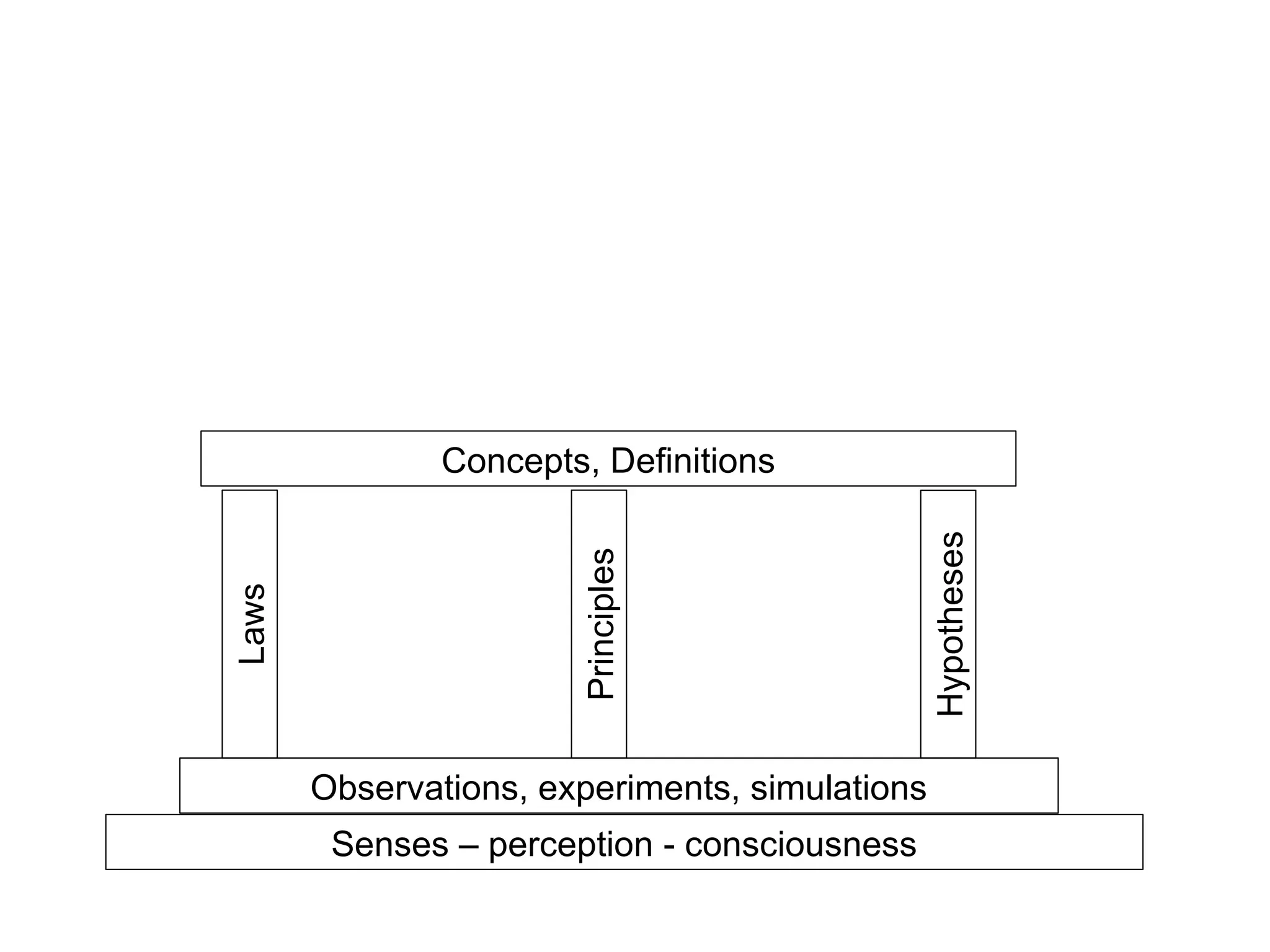
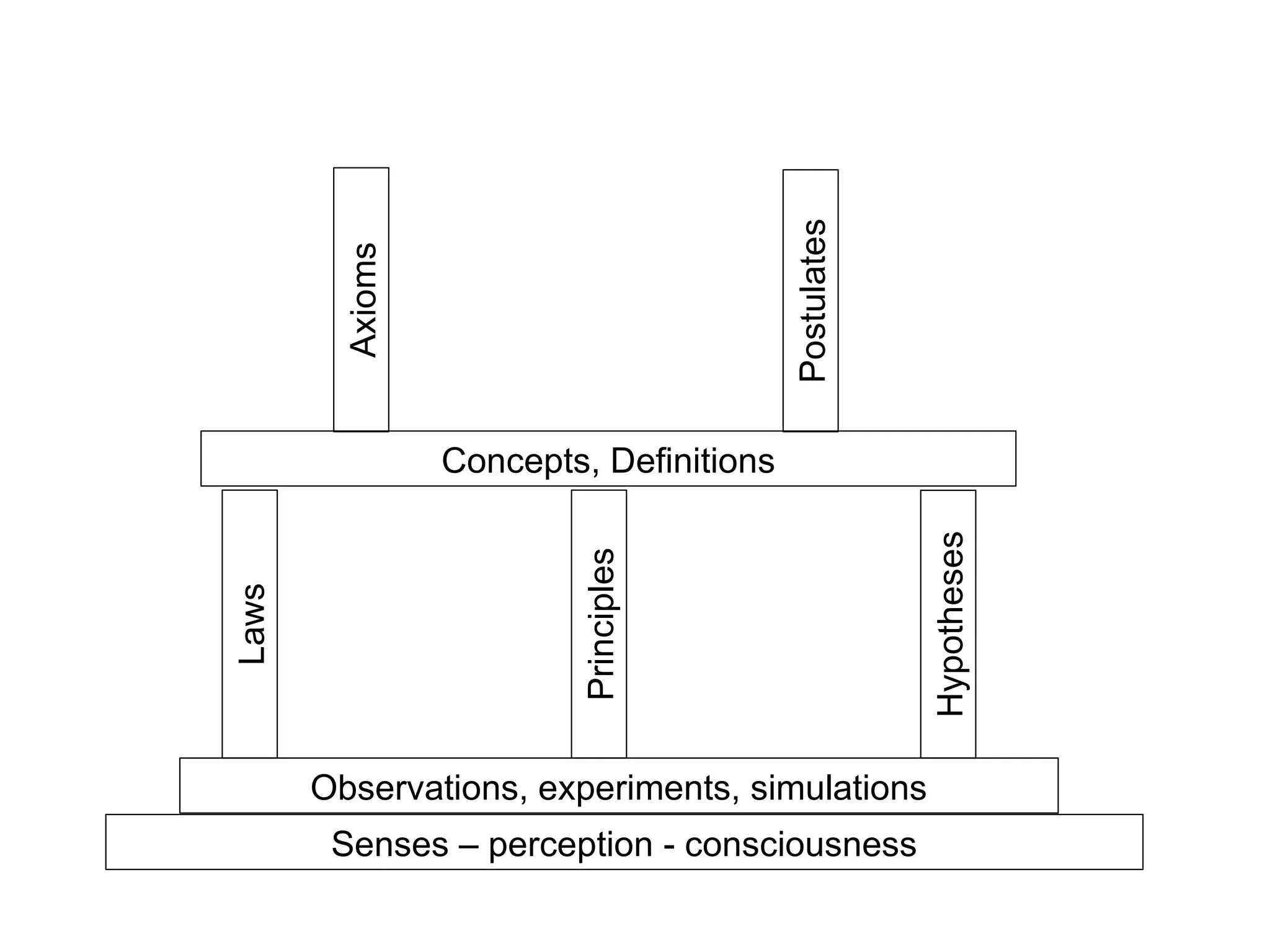
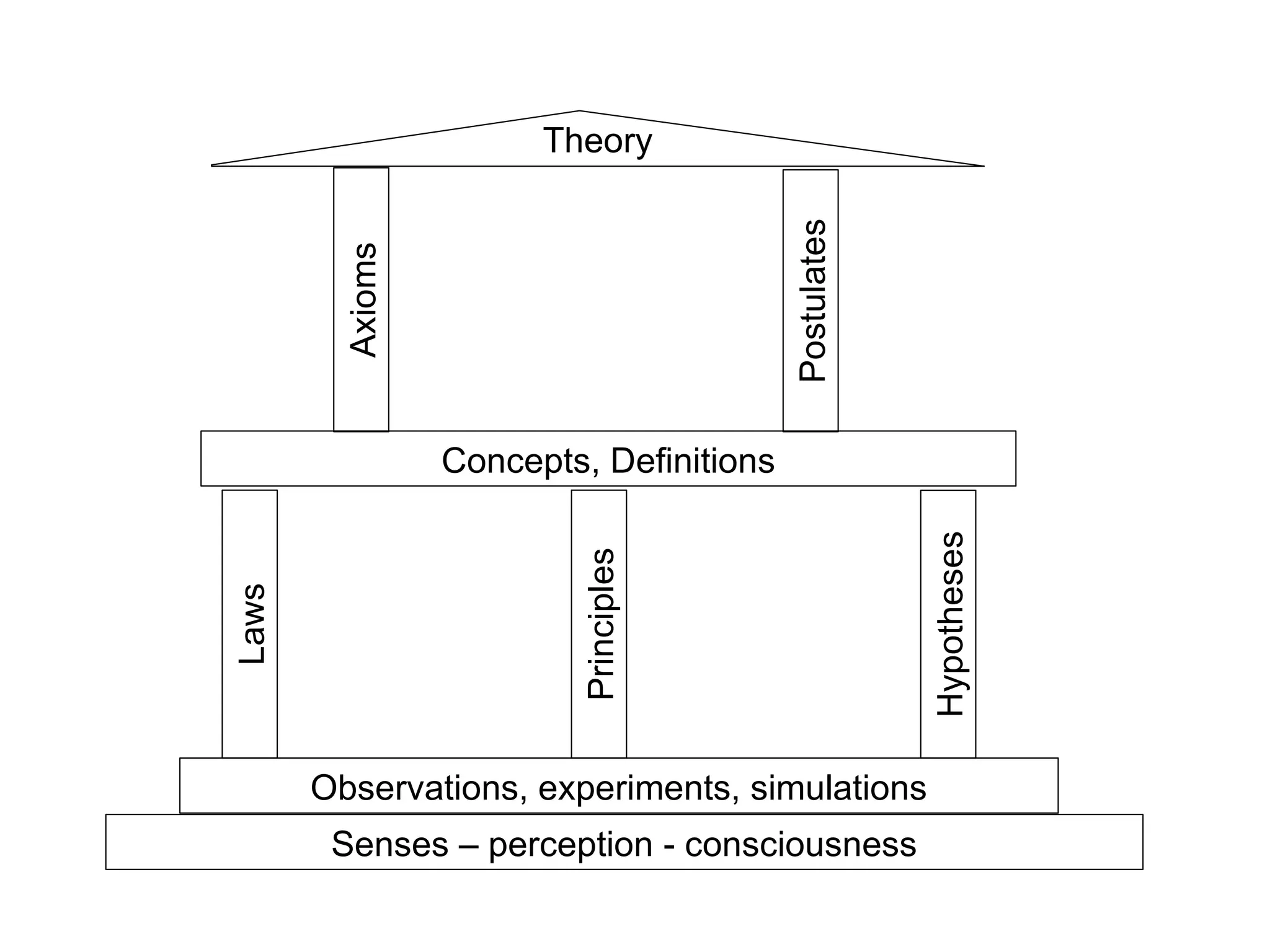
Senses – perception - consciousness
Observations, experiments, simulations
Senses – perception - consciousness
Observations, experiments, simulations
Laws
Principles
Hypotheses
Senses – perception - consciousness
Observations, experiments, simulations
Laws
Principles
Hypotheses
Concepts, Definitions
Senses – perception - consciousness
Observations, experiments, simulations
Laws
Principles
Hypotheses
Concepts, Definitions
Axioms
Postulates
Senses – perception - consciousness
Observations, experiments, simulations
Laws
Principles
Hypotheses
Concepts, Definitions
Axioms
Postulates
Theory
Science as a verb
Science is what scientists do.
How do scientists discover?
How do researchers construct knowledge?
K P Madhu
Philosophy
• Metaphysics
• Epistemology
• Logic
• Ethics
• Aesthetics
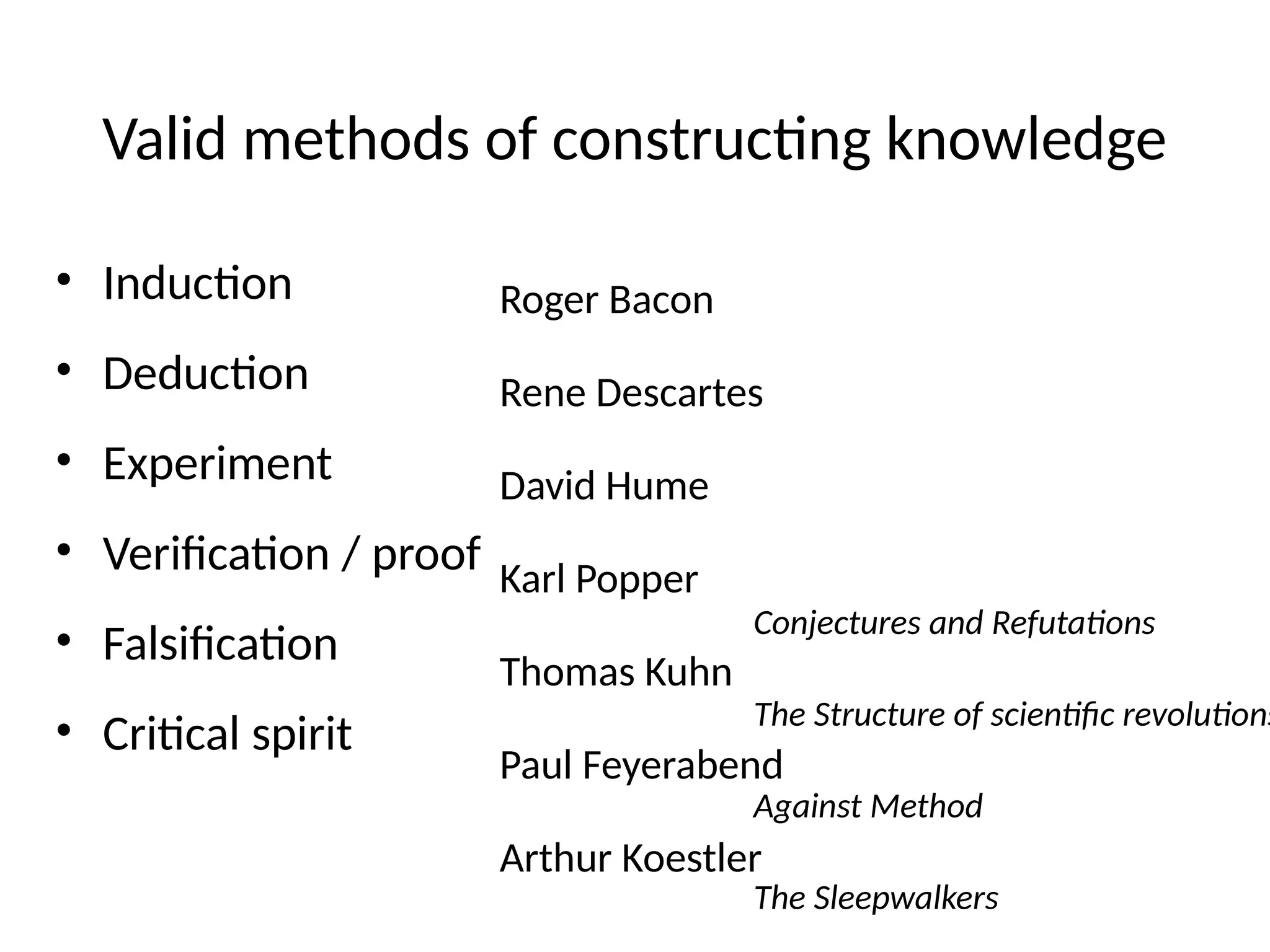
Valid methods of constructing knowledge
• Induction
• Deduction
• Experiment
• Verification / proof
• Falsification
• Critical spirit
Roger Bacon
Rene Descartes
David Hume
Karl Popper
Thomas Kuhn
Paul Feyerabend
Arthur Koestler
Conjectures and Refutations
The Structure of scientific revolutions
Against Method
The Sleepwalkers
Implications
• Design of experiments
• To corroborate a hypothesis or to refute it
• Predicting
– The results logically predicted
– A new previously unobserved phenomenon
• Explanatory power, predictive power
• Occam’s razor – simplicity – beauty
• Science does not prove, but provides evidence
and logic
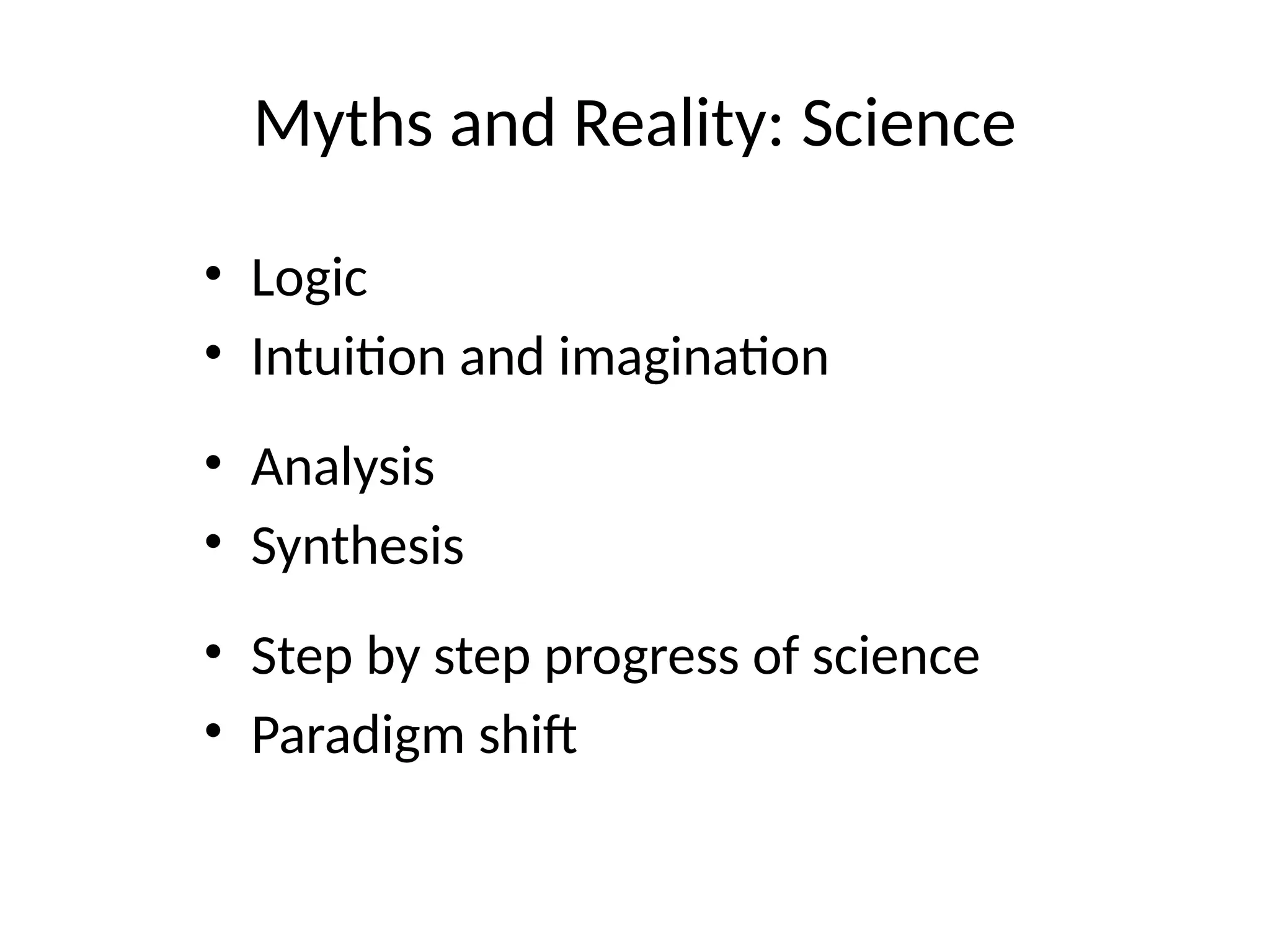
Myths and Reality: Science
• Logic
• Intuition and imagination
• Analysis
• Synthesis
• Step by step progress of science
• Paradigm shift
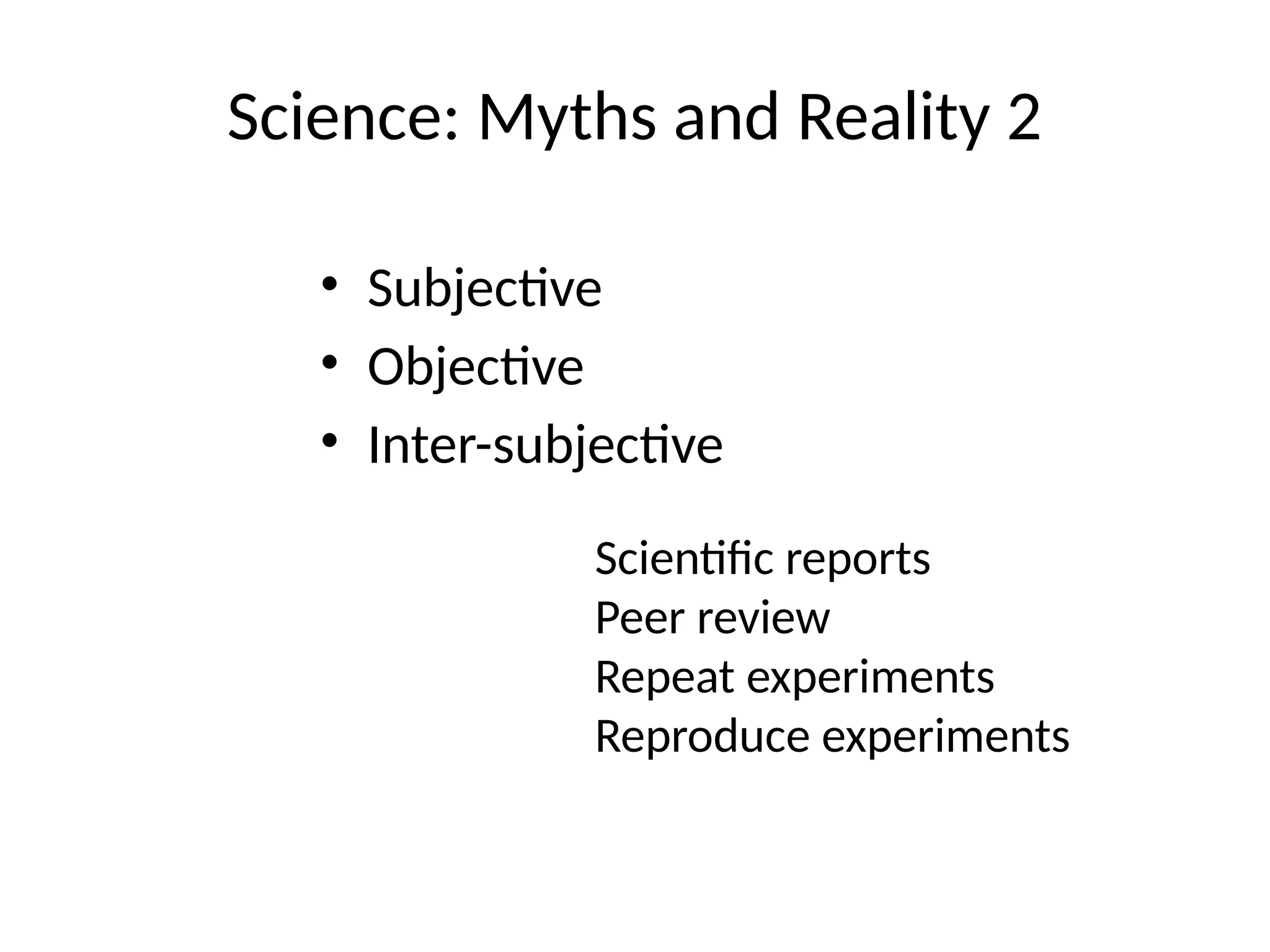
• Subjective
• Objective
• Inter-subjective
Science: Myths and Reality 2
Scientific reports
Peer review
Repeat experiments
Reproduce experiments
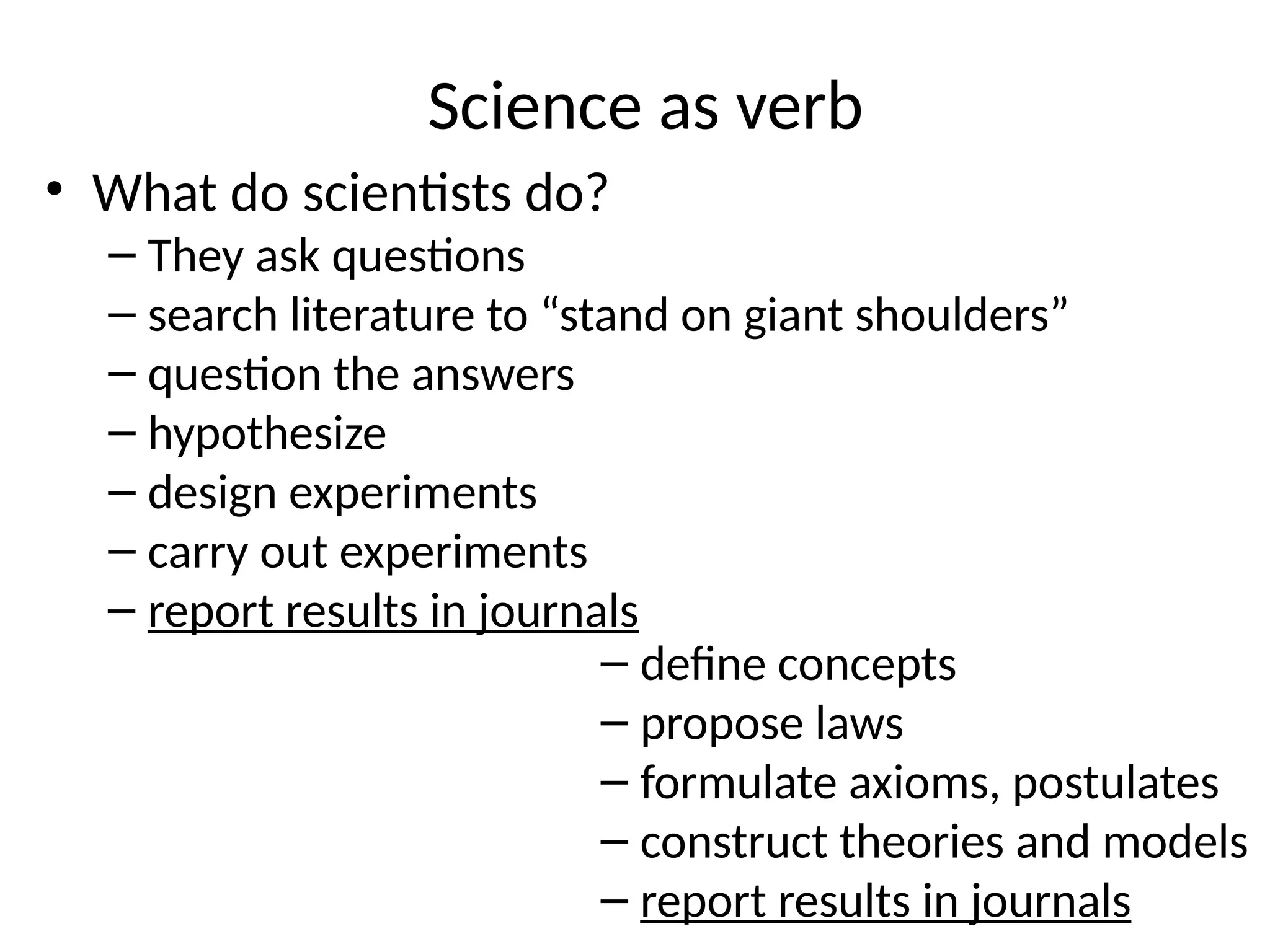
Science as verb
• What do scientists do?
– They ask questions
– search literature to “stand on giant shoulders”
– question the answers
– hypothesize
– design experiments
– carry out experiments
– report results in journals
– define concepts
– propose laws
– formulate axioms, postulates
– construct theories and models
– report results in journals
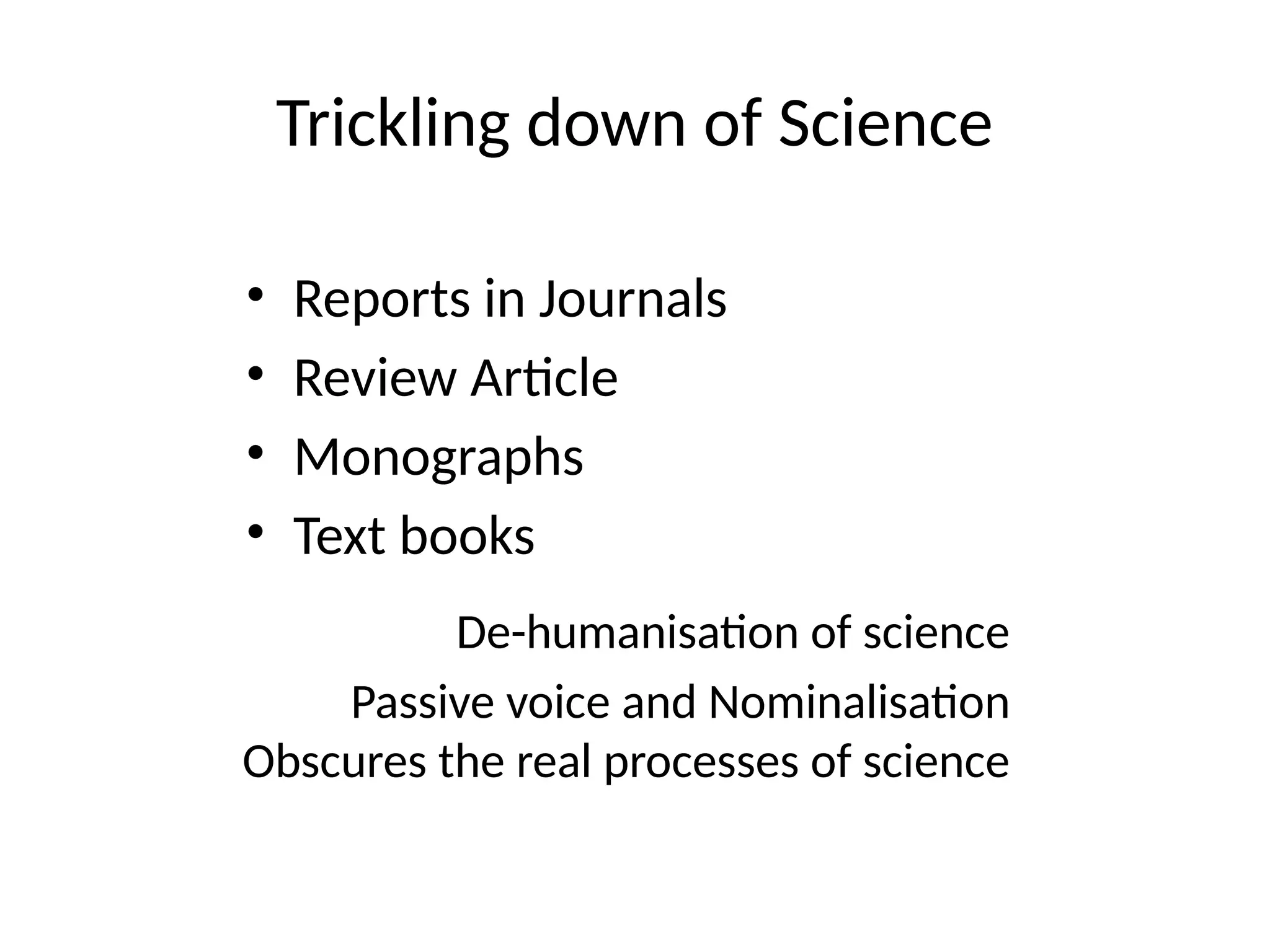
Trickling down of Science
• Reports in Journals
• Review Article
• Monographs
• Text books
De-humanisation of science
Passive voice and Nominalisation
Obscures the real processes of science
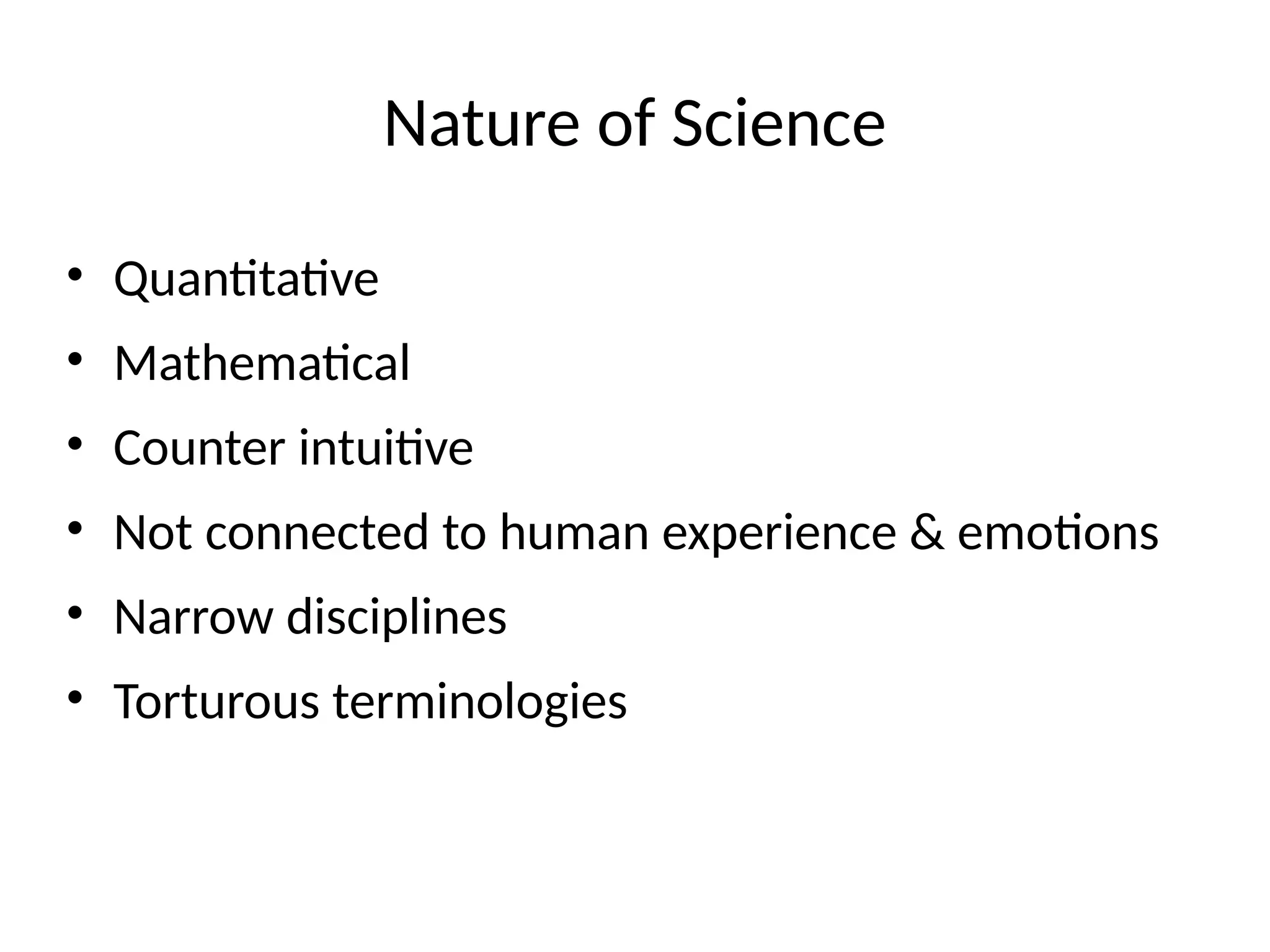
Nature of Science
• Quantitative
• Mathematical
• Counter intuitive
• Not connected to human experience & emotions
• Narrow disciplines
• Torturous terminologies
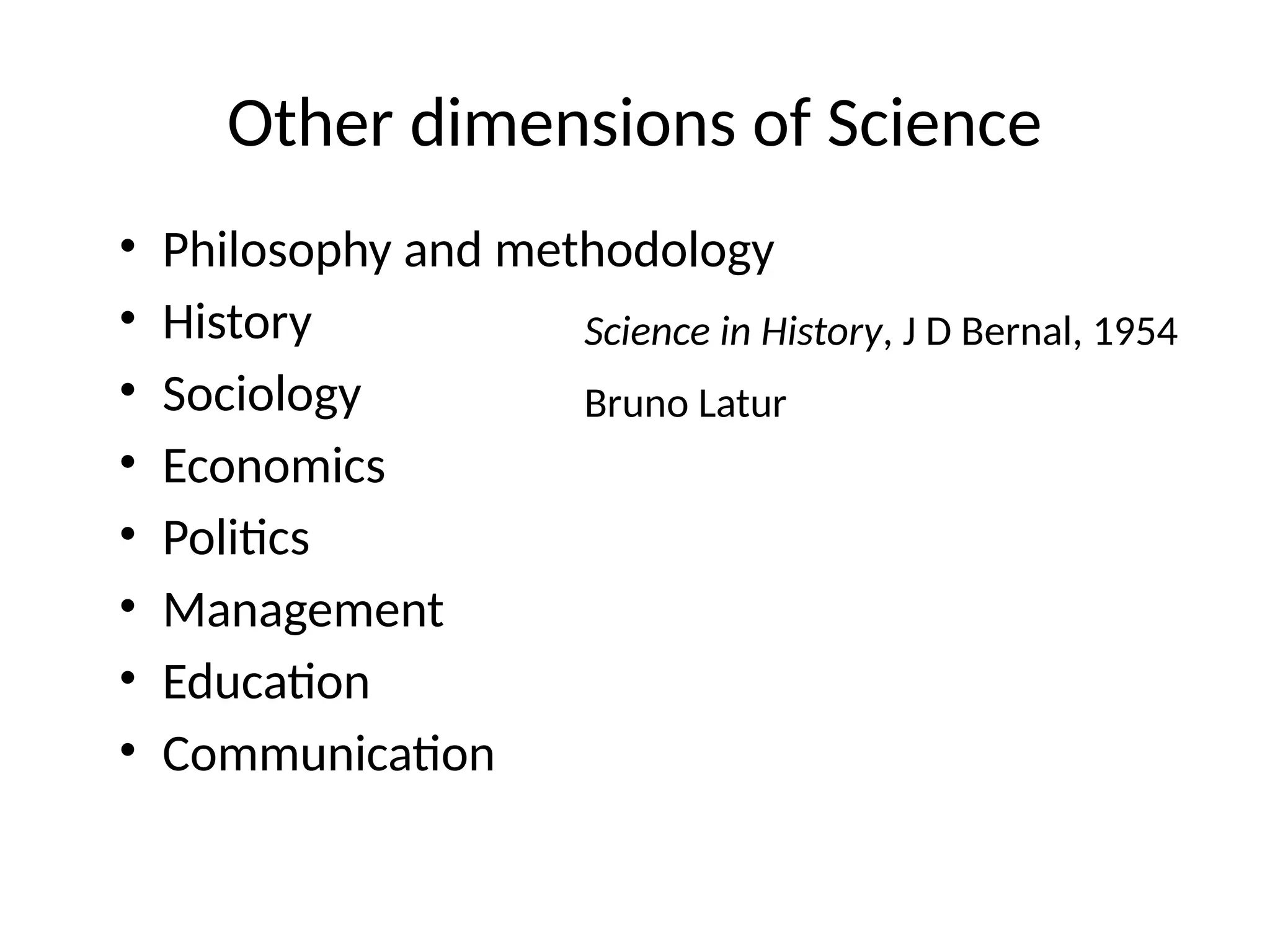
Other dimensions of Science
• Philosophy and methodology
• History
• Sociology
• Economics
• Politics
• Management
• Education
• Communication
Science in History, J D Bernal, 1954
Bruno Latur
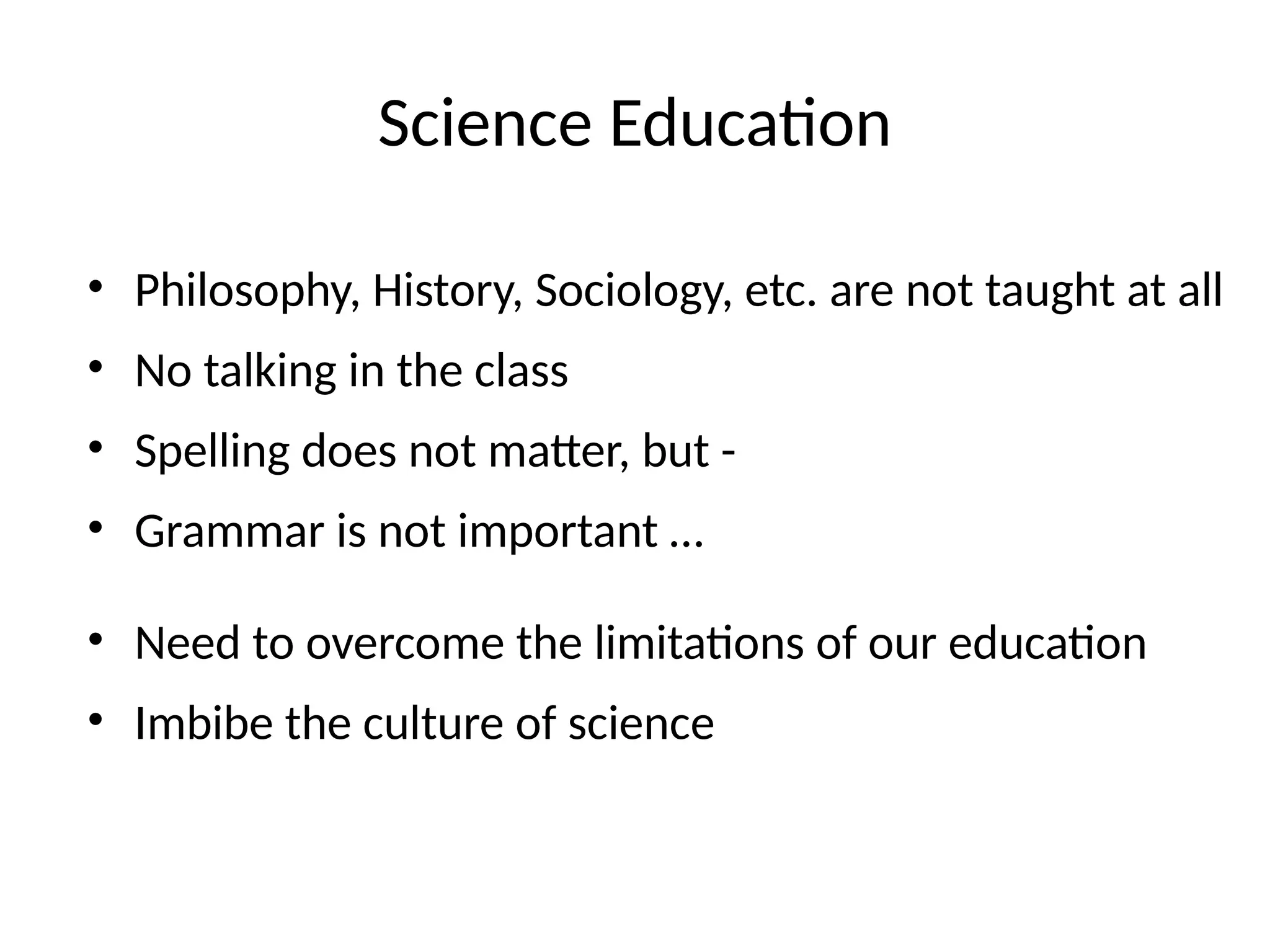
Science Education
• Philosophy, History, Sociology, etc. are not taught at all
• No talking in the class
• Spelling does not matter, but -
• Grammar is not important …
• Need to overcome the limitations of our education
• Imbibe the culture of science
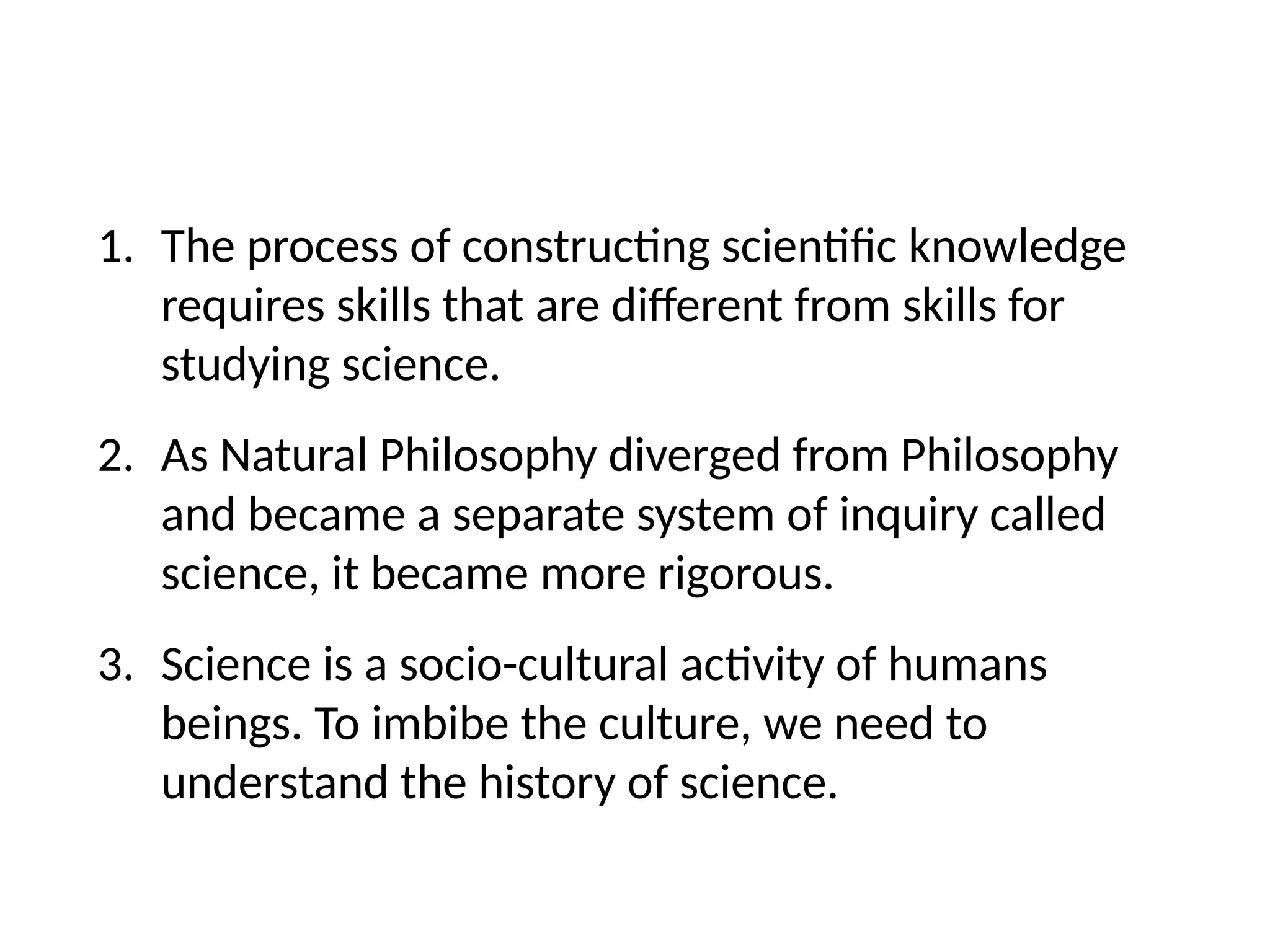
1. The process of constructing scientific knowledge
requires skills that are different from skills for
studying science.
2. As Natural Philosophy diverged from Philosophy
and became a separate system of inquiry called
science, it became more rigorous.
3. Science is a socio-cultural activity of humans
beings. To imbibe the culture, we need to
understand the history of science.
Distinguish between -
Science and Technology
Science, non-science and nonsense
How to proceed?
• Ask a question, state your doubt, pose a
problem or a puzzle
• Literature search
• Review and formulate hypotheses
• Design experiments to refute the hypotheses
Activity for this week
• Reading speed
– Determine baseline,
– Practice,
– Test after 12 weeks
• Email discussion on some concepts in
Constitutional duties

What is science? What is its importance?

  • 1.
    Workshop on ScienceWriting October 2021 to January 2022 Session 2
  • 2.
    Activities so far •Self introductions – word count – Paragraph vs. paragraphs – Make every word count • Session 1 – Introductions to each other – Introduction to the workshop
  • 3.
    Recognising and usingnames Senthil Vellai Amrit Suryendra Ramasubbu Amitabh Nalini Nidhi Roshani Dhatri Moitri Radha Nagesh
  • 4.
  • 5.
  • 6.
    What is science? •Physics, Chemistry, Biology, (Maths?) • Geology? • Biotechnology • Empirically/experimentally verified objective facts about natural phenomena
  • 7.
    Science • Naming • Classification •Hypotheses • Laws / Principles • Definitions • Axioms / Postulates • Theories • Models •Observations •Experiments •Simulations
  • 8.
    Science • Naming • Classification •Hypotheses • Laws / Principles • Definitions • Axioms / Postulates • Theories • Models •Observations •Experiments •Simulations
  • 9.
    Science • Naming • Classification •Hypotheses • Laws / Principles • Definitions • Axioms / Postulates • Theories • Models •Observations •Experiments •Simulations Structure of science
  • 10.
    Science • Naming • Classification •Hypotheses • Laws / Principles • Definitions • Axioms / Postulates • Theories • Models •Observations •Experiments •Simulations Nouns!
  • 11.
    Senses – perception- consciousness
  • 12.
    Senses – perception- consciousness Observations, experiments, simulations
  • 13.
    Senses – perception- consciousness Observations, experiments, simulations Laws Principles Hypotheses
  • 14.
    Senses – perception- consciousness Observations, experiments, simulations Laws Principles Hypotheses Concepts, Definitions
  • 15.
    Senses – perception- consciousness Observations, experiments, simulations Laws Principles Hypotheses Concepts, Definitions Axioms Postulates
  • 16.
    Senses – perception- consciousness Observations, experiments, simulations Laws Principles Hypotheses Concepts, Definitions Axioms Postulates Theory
  • 17.
    Science as averb Science is what scientists do. How do scientists discover? How do researchers construct knowledge? K P Madhu
  • 18.
    Philosophy • Metaphysics • Epistemology •Logic • Ethics • Aesthetics
  • 19.
    Valid methods ofconstructing knowledge • Induction • Deduction • Experiment • Verification / proof • Falsification • Critical spirit Roger Bacon Rene Descartes David Hume Karl Popper Thomas Kuhn Paul Feyerabend Arthur Koestler Conjectures and Refutations The Structure of scientific revolutions Against Method The Sleepwalkers
  • 20.
    Implications • Design ofexperiments • To corroborate a hypothesis or to refute it • Predicting – The results logically predicted – A new previously unobserved phenomenon • Explanatory power, predictive power • Occam’s razor – simplicity – beauty • Science does not prove, but provides evidence and logic
  • 21.
    Myths and Reality:Science • Logic • Intuition and imagination • Analysis • Synthesis • Step by step progress of science • Paradigm shift
  • 22.
    • Subjective • Objective •Inter-subjective Science: Myths and Reality 2 Scientific reports Peer review Repeat experiments Reproduce experiments
  • 23.
    Science as verb •What do scientists do? – They ask questions – search literature to “stand on giant shoulders” – question the answers – hypothesize – design experiments – carry out experiments – report results in journals – define concepts – propose laws – formulate axioms, postulates – construct theories and models – report results in journals
  • 24.
    Trickling down ofScience • Reports in Journals • Review Article • Monographs • Text books De-humanisation of science Passive voice and Nominalisation Obscures the real processes of science
  • 25.
    Nature of Science •Quantitative • Mathematical • Counter intuitive • Not connected to human experience & emotions • Narrow disciplines • Torturous terminologies
  • 26.
    Other dimensions ofScience • Philosophy and methodology • History • Sociology • Economics • Politics • Management • Education • Communication Science in History, J D Bernal, 1954 Bruno Latur
  • 27.
    Science Education • Philosophy,History, Sociology, etc. are not taught at all • No talking in the class • Spelling does not matter, but - • Grammar is not important … • Need to overcome the limitations of our education • Imbibe the culture of science
  • 28.
    1. The processof constructing scientific knowledge requires skills that are different from skills for studying science. 2. As Natural Philosophy diverged from Philosophy and became a separate system of inquiry called science, it became more rigorous. 3. Science is a socio-cultural activity of humans beings. To imbibe the culture, we need to understand the history of science.
  • 29.
    Distinguish between - Scienceand Technology Science, non-science and nonsense
  • 30.
    How to proceed? •Ask a question, state your doubt, pose a problem or a puzzle • Literature search • Review and formulate hypotheses • Design experiments to refute the hypotheses
  • 31.
    Activity for thisweek • Reading speed – Determine baseline, – Practice, – Test after 12 weeks • Email discussion on some concepts in Constitutional duties