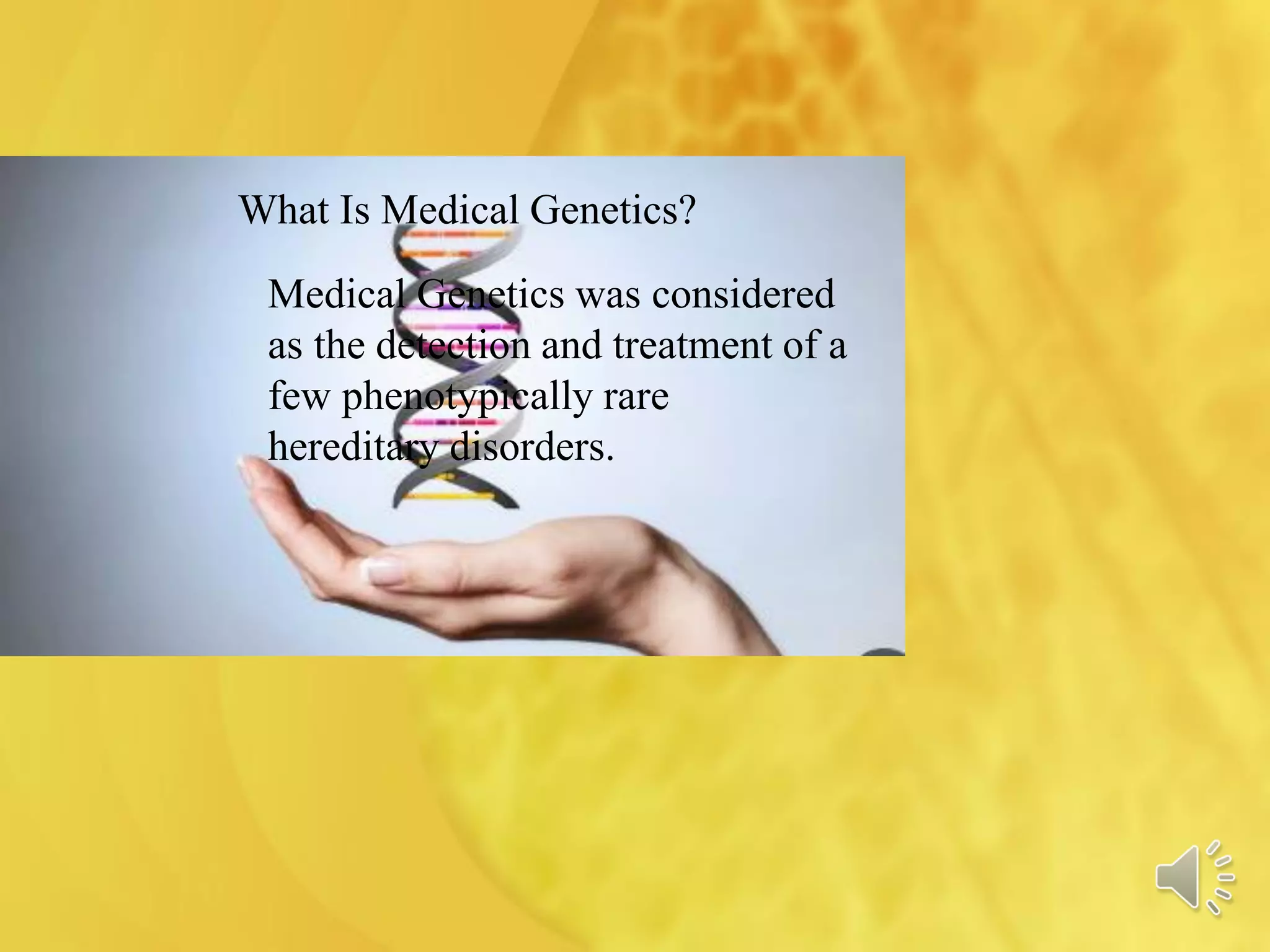
What Is Medical Genetics?
Medical Genetics was considered
as the detection and treatment of a
few phenotypically rare
hereditary disorders.
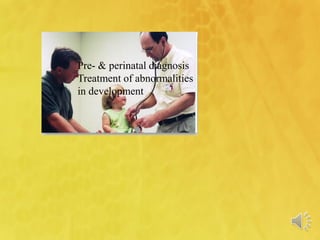
Pre- & perinatal diagnosis
Treatment of abnormalities
in development
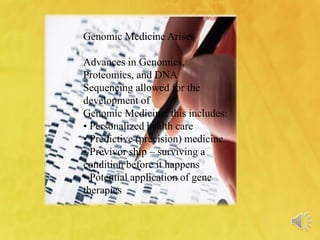
Genomic Medicine Arises
Advances in Genomics,
Proteomics, and DNA
Sequencing allowed for the
development of
Genomic Medicine; this includes:
• Personalized health care
• Predictive (precision) medicine
• Previvor ship – surviving a
condition before it happens
• Potential application of gene
therapies
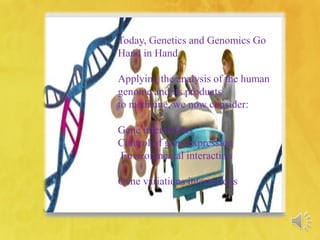
Today, Genetics and Genomics Go
Hand in Hand
Applying the analysis of the human
genome and its products
to medicine, we now consider:
Gene interactions
Control of gene expression
Environmental interaction
Gene variations interactions
Categories of Genetic Diseases
Chromosome
disorders
Multifactorial
disorders
Single-gene
disorders
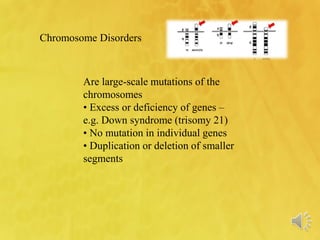
Chromosome Disorders
Are large-scale mutations of the
chromosomes
• Excess or deficiency of genes –
e.g. Down syndrome (trisomy 21)
• No mutation in individual genes
• Duplication or deletion of smaller
segments
Single-gene Disorders
Localized small-scale mutations
• Mutation of individual genes (e.g.
sickle
cell anemia, cystic fibrosis)
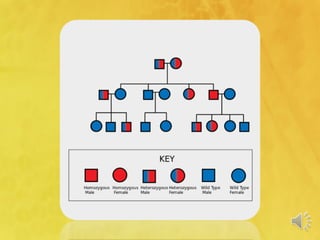
• Follow classic inheritance
patterns
(autosomal recessive/dominant, X-
linked)
Multifactorial Disorders
Hard to pin down
• Majority of diseases have a
genetic
component
• Does not fit inheritance patterns
expected
in single gene mutations
The ever expanding database of
human genetic variation and our
understanding of genomics will
inevitably lead to extensive
discovery
and development in public health
and the availability of tools in the
practice of medicine
what is medical genetics.pdf

what is medical genetics.pdf

  • 1.
    What Is MedicalGenetics? Medical Genetics was considered as the detection and treatment of a few phenotypically rare hereditary disorders.
  • 2.
    Pre- & perinataldiagnosis Treatment of abnormalities in development
  • 3.
    Genomic Medicine Arises Advancesin Genomics, Proteomics, and DNA Sequencing allowed for the development of Genomic Medicine; this includes: • Personalized health care • Predictive (precision) medicine • Previvor ship – surviving a condition before it happens • Potential application of gene therapies
  • 4.
    Today, Genetics andGenomics Go Hand in Hand Applying the analysis of the human genome and its products to medicine, we now consider: Gene interactions Control of gene expression Environmental interaction Gene variations interactions
  • 5.
    Categories of GeneticDiseases Chromosome disorders Multifactorial disorders Single-gene disorders
  • 6.
    Chromosome Disorders Are large-scalemutations of the chromosomes • Excess or deficiency of genes – e.g. Down syndrome (trisomy 21) • No mutation in individual genes • Duplication or deletion of smaller segments
  • 7.
    Single-gene Disorders Localized small-scalemutations • Mutation of individual genes (e.g. sickle cell anemia, cystic fibrosis) • Follow classic inheritance patterns (autosomal recessive/dominant, X- linked)
  • 8.
    Multifactorial Disorders Hard topin down • Majority of diseases have a genetic component • Does not fit inheritance patterns expected in single gene mutations
  • 9.
    The ever expandingdatabase of human genetic variation and our understanding of genomics will inevitably lead to extensive discovery and development in public health and the availability of tools in the practice of medicine