Downloaded 18 times
![[Statement of The Tripartite Argument]
• X has stated the necessary and sufficient conditions for
knowledge as follows:
• a. S knows that P iff P is true, S believes that P, and S is
justified in believing that P.
• b. S knows that P iff S accepts P, S has adequate
evidence for P, and P is true.
• c. S knows that P iff P is true, S is sure that P is true, and
S has the right to be sure that P is true.](https://image.slidesharecdn.com/whatisknowledge2016revision-getterandjtbaccountbeinginsufficient-160507112704/75/What-is-knowledge-2016-revision-getter-and-jtb-account-being-insufficient-3-2048.jpg)
![[Gettier’s Argument]
• I shall argue that (a) is false in that the conditions stated
therein do not constitute a sufficient condition for the
truth of the proposition that S knows that P. The same
argument will show that (b) and (c) fail if 'has adequate
evidence for' or 'has the right to be sure that' is
substituted for 'is justified in believing that' throughout.](https://image.slidesharecdn.com/whatisknowledge2016revision-getterandjtbaccountbeinginsufficient-160507112704/75/What-is-knowledge-2016-revision-getter-and-jtb-account-being-insufficient-4-2048.jpg)
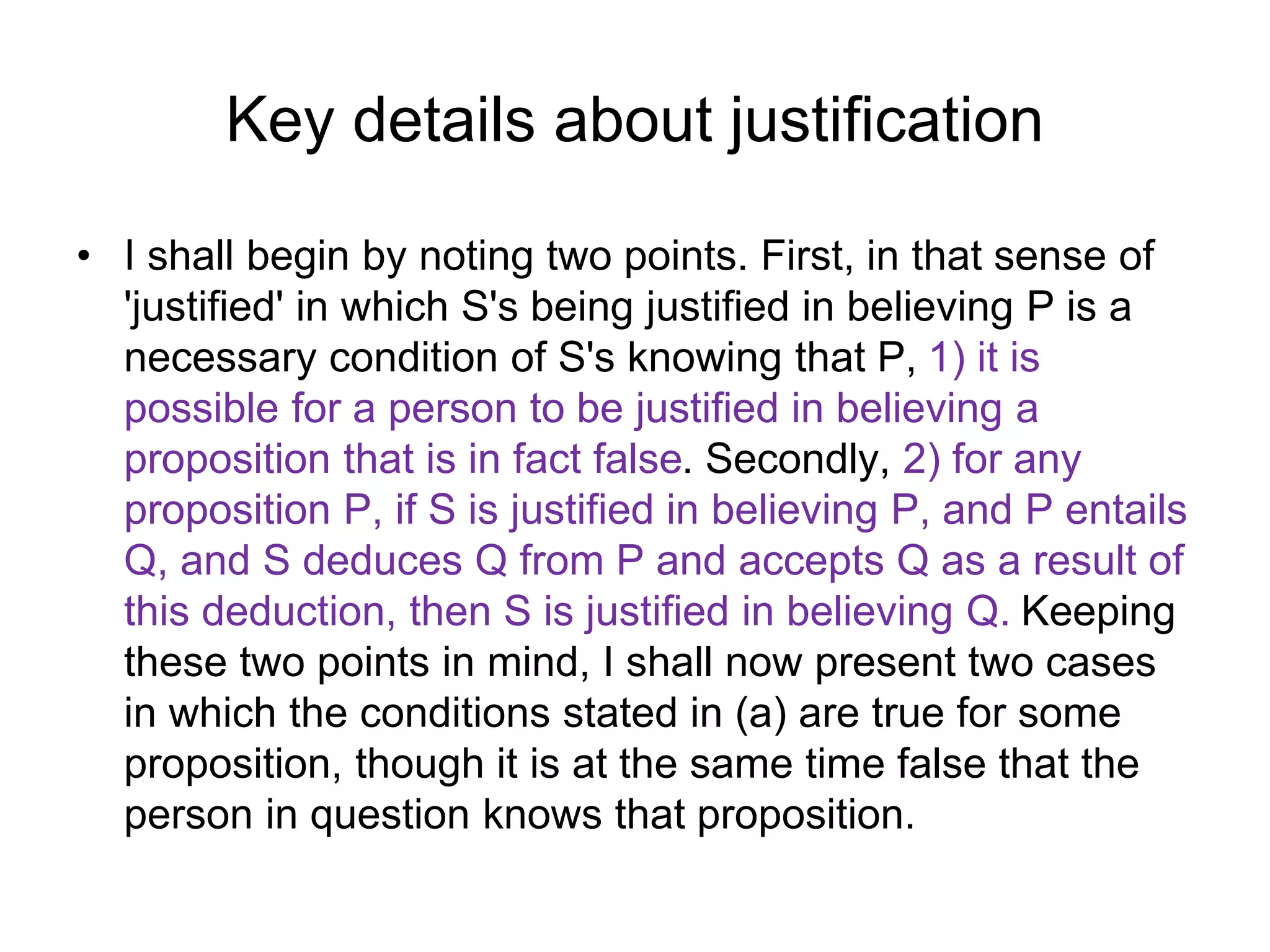
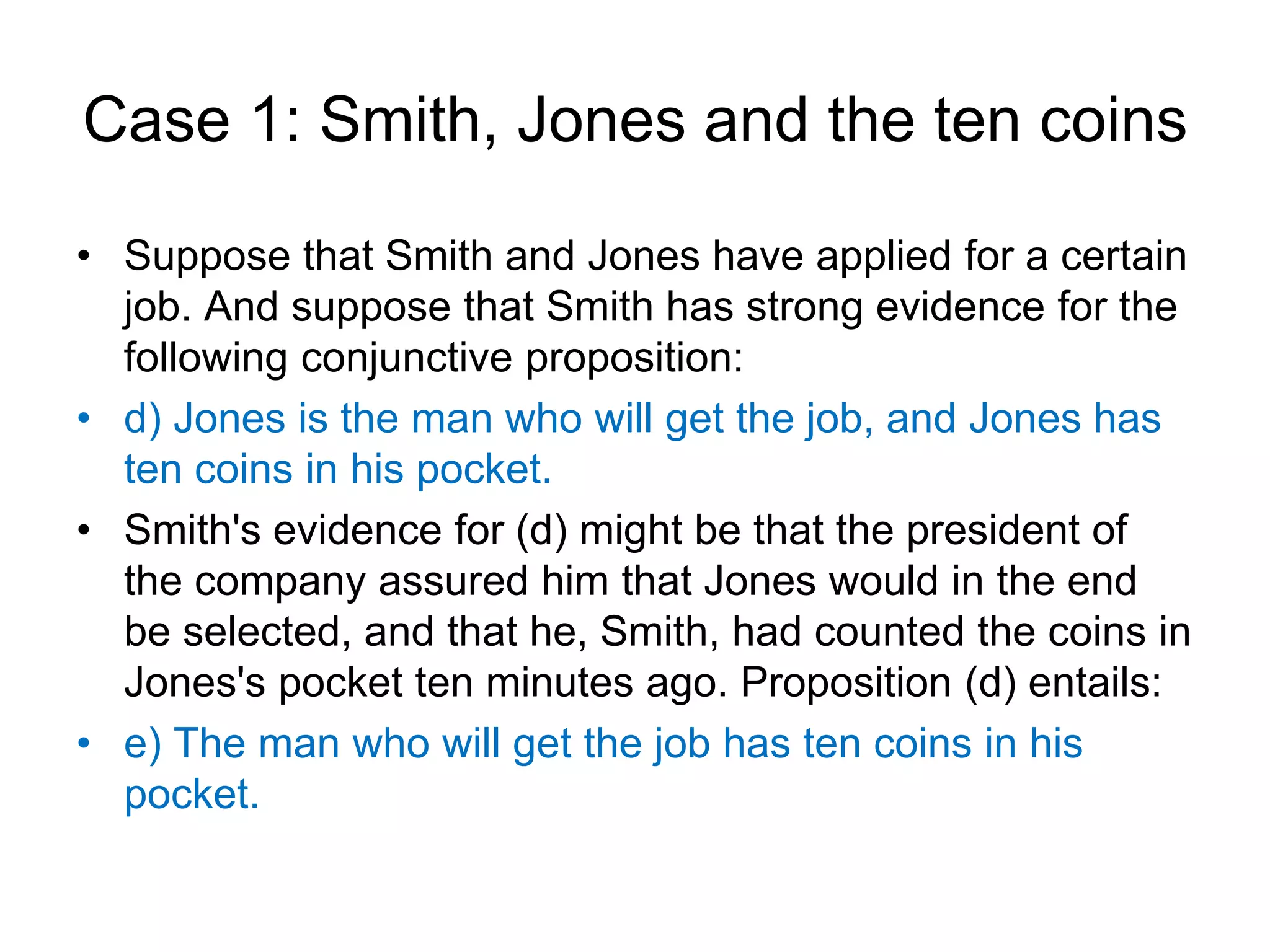
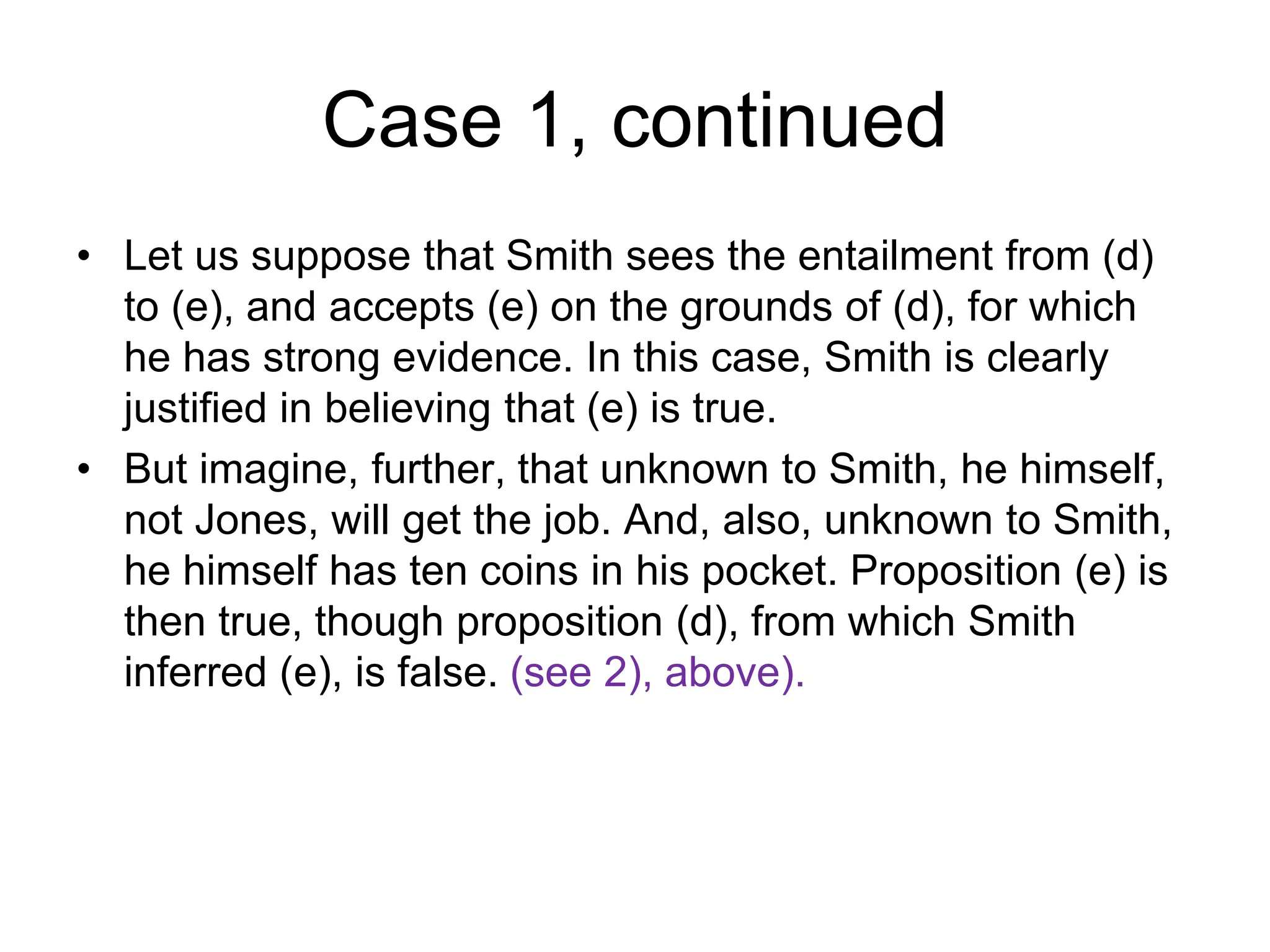
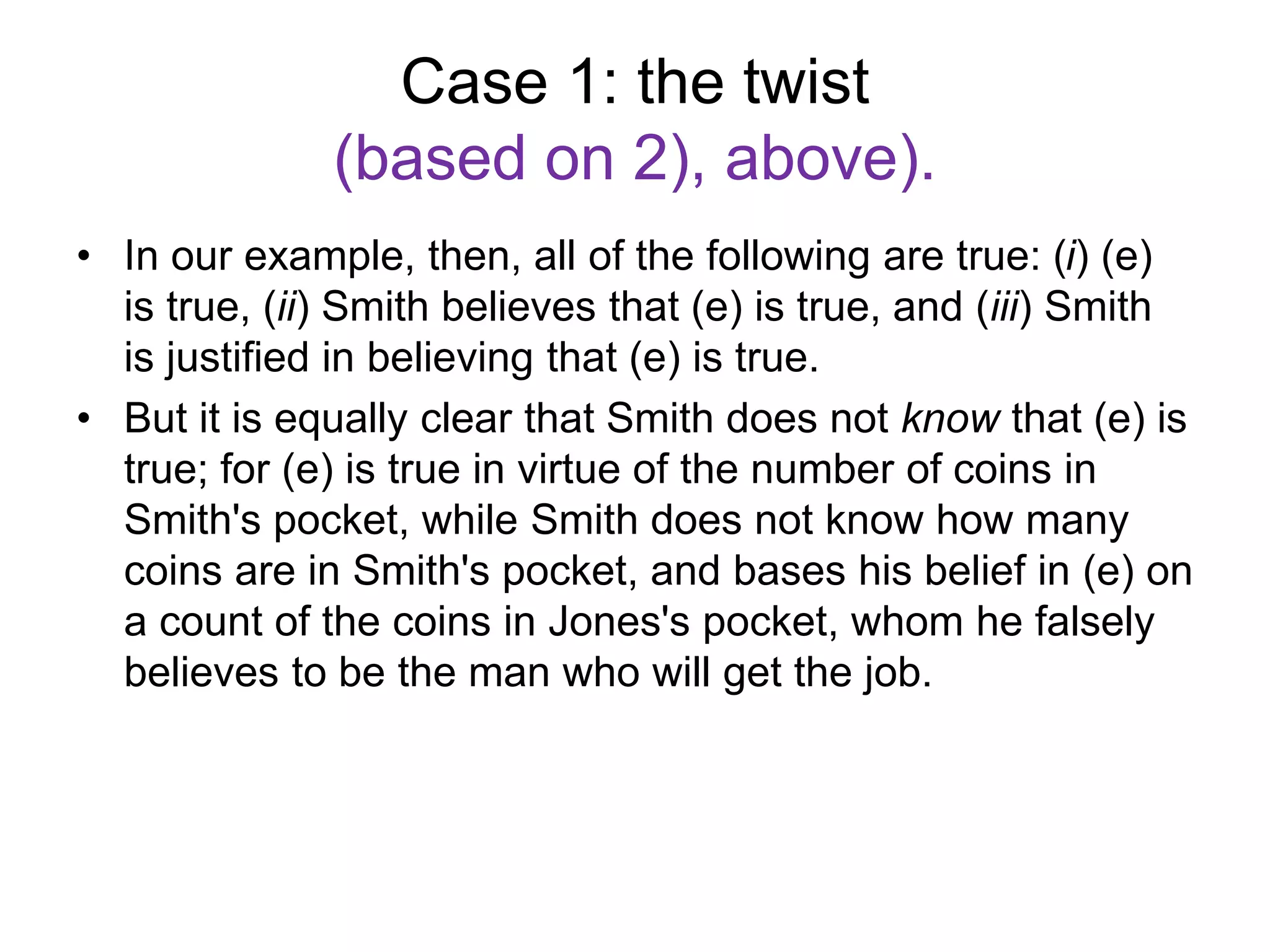
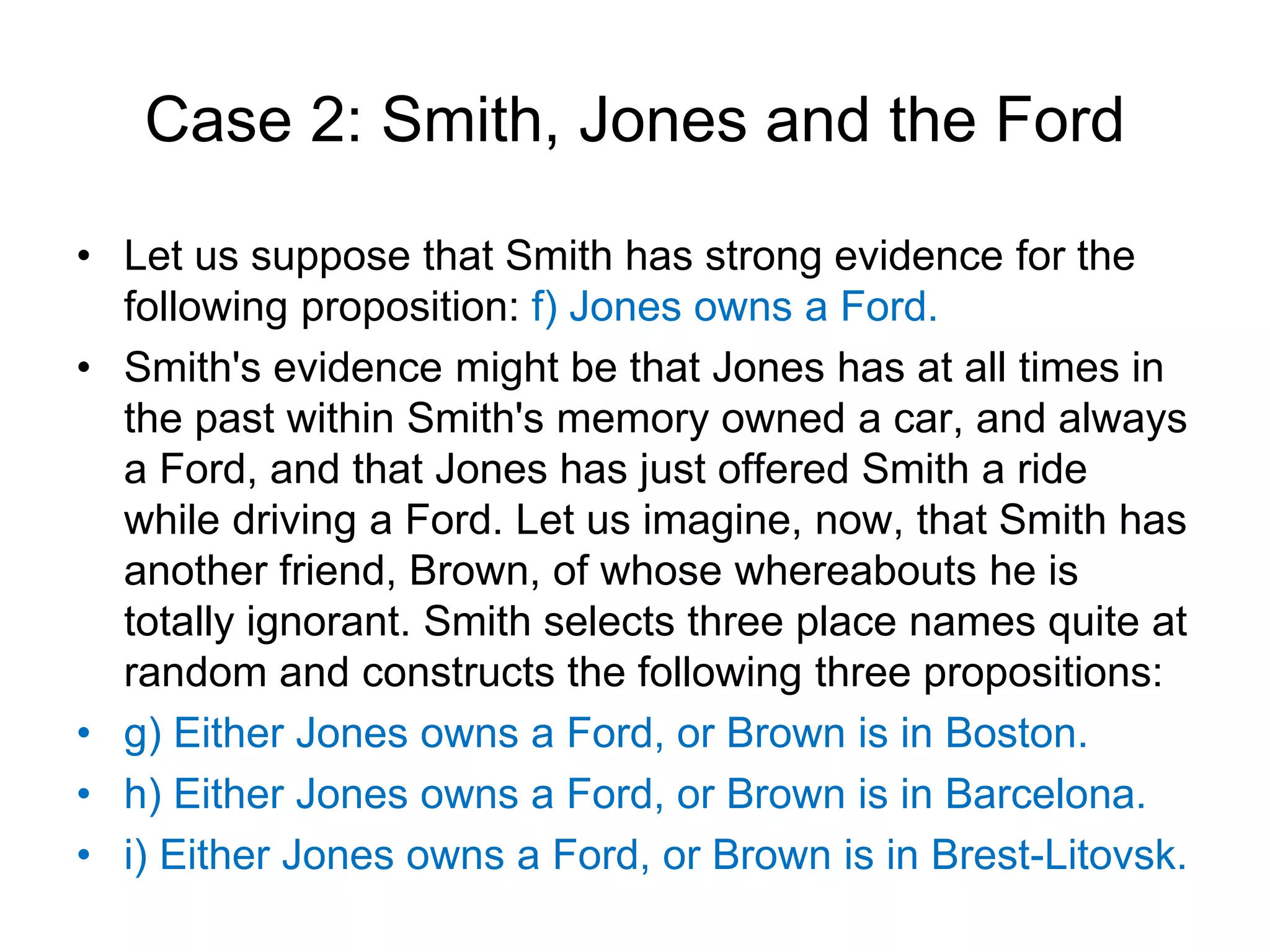
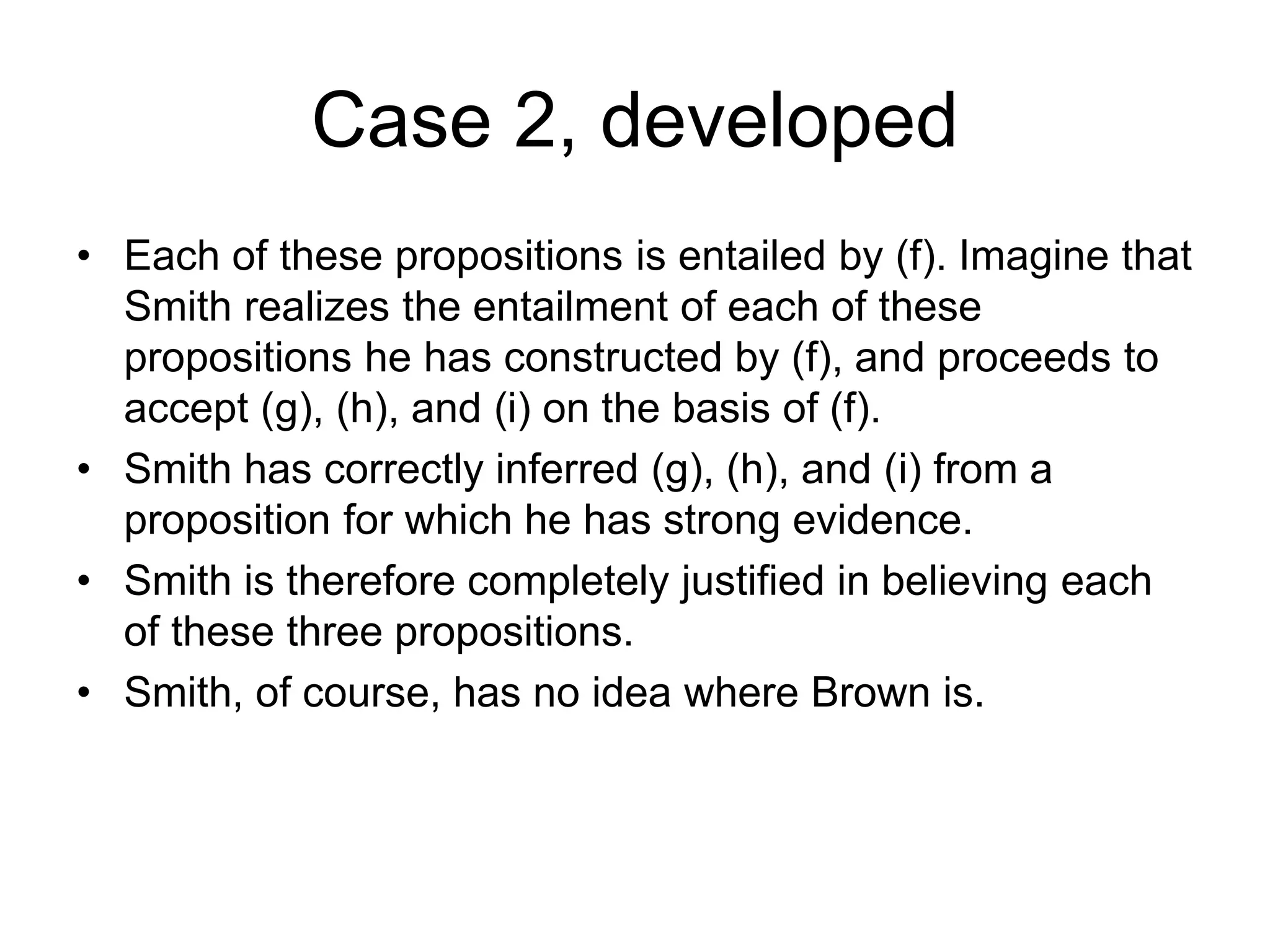
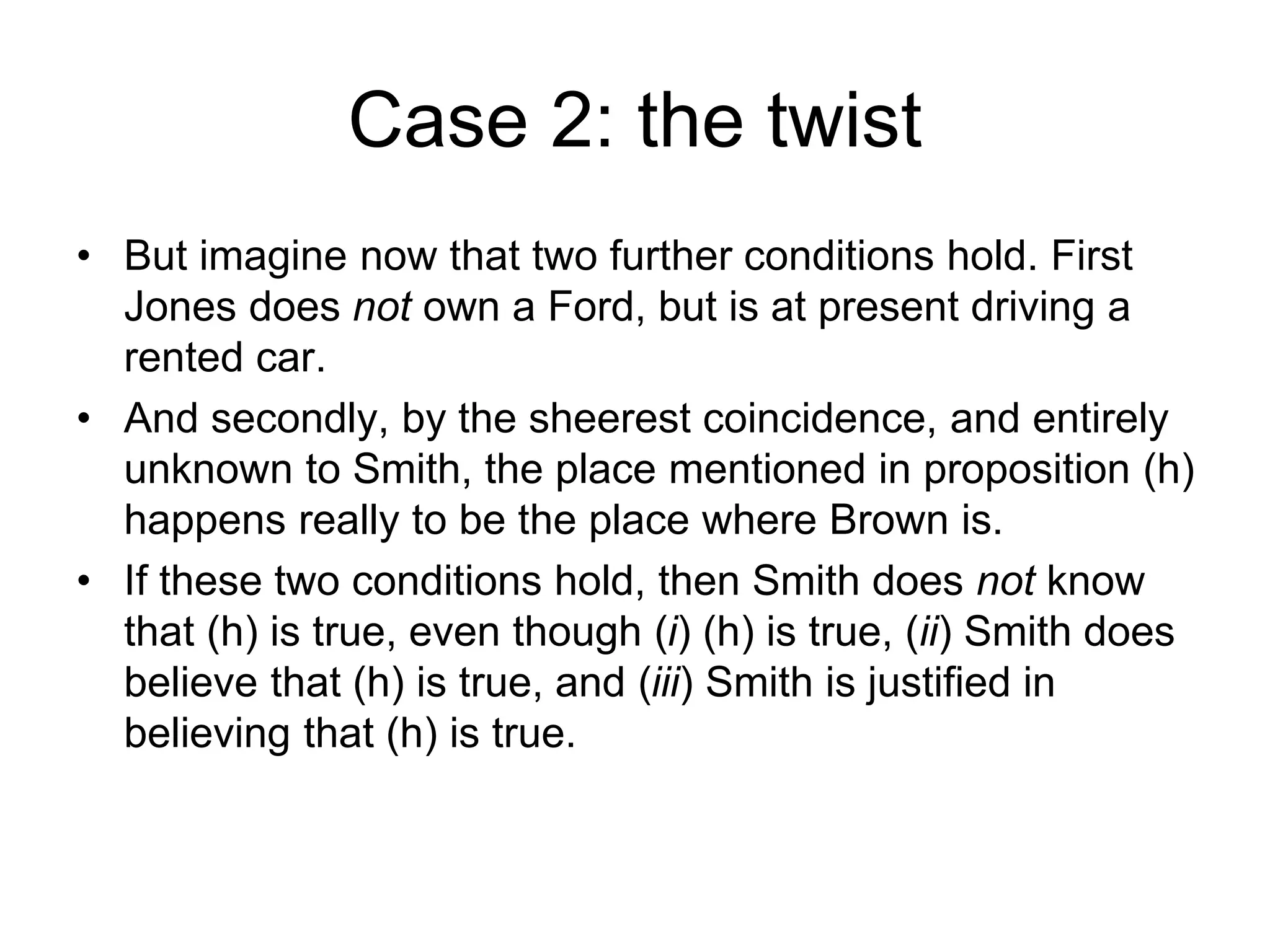
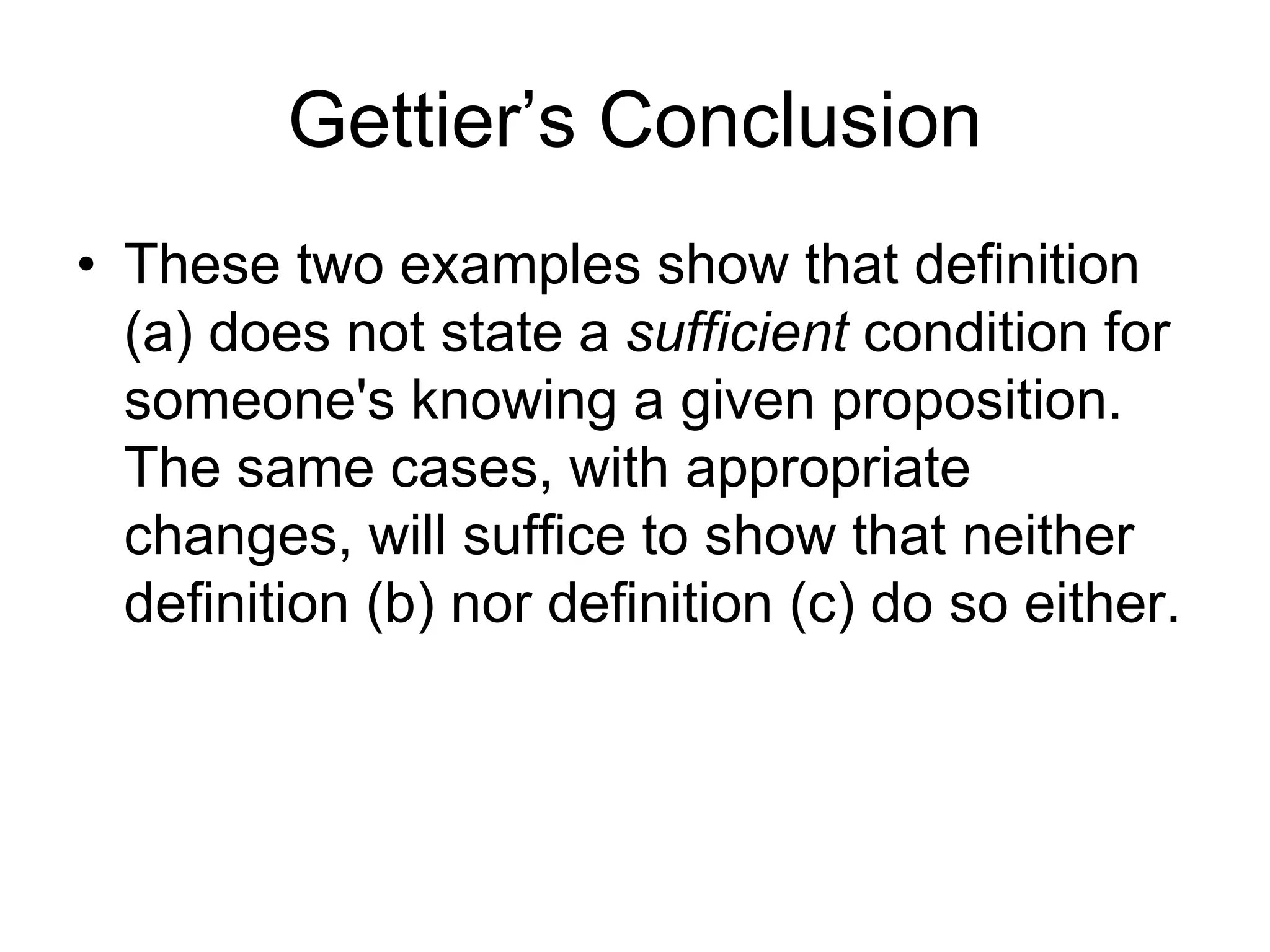
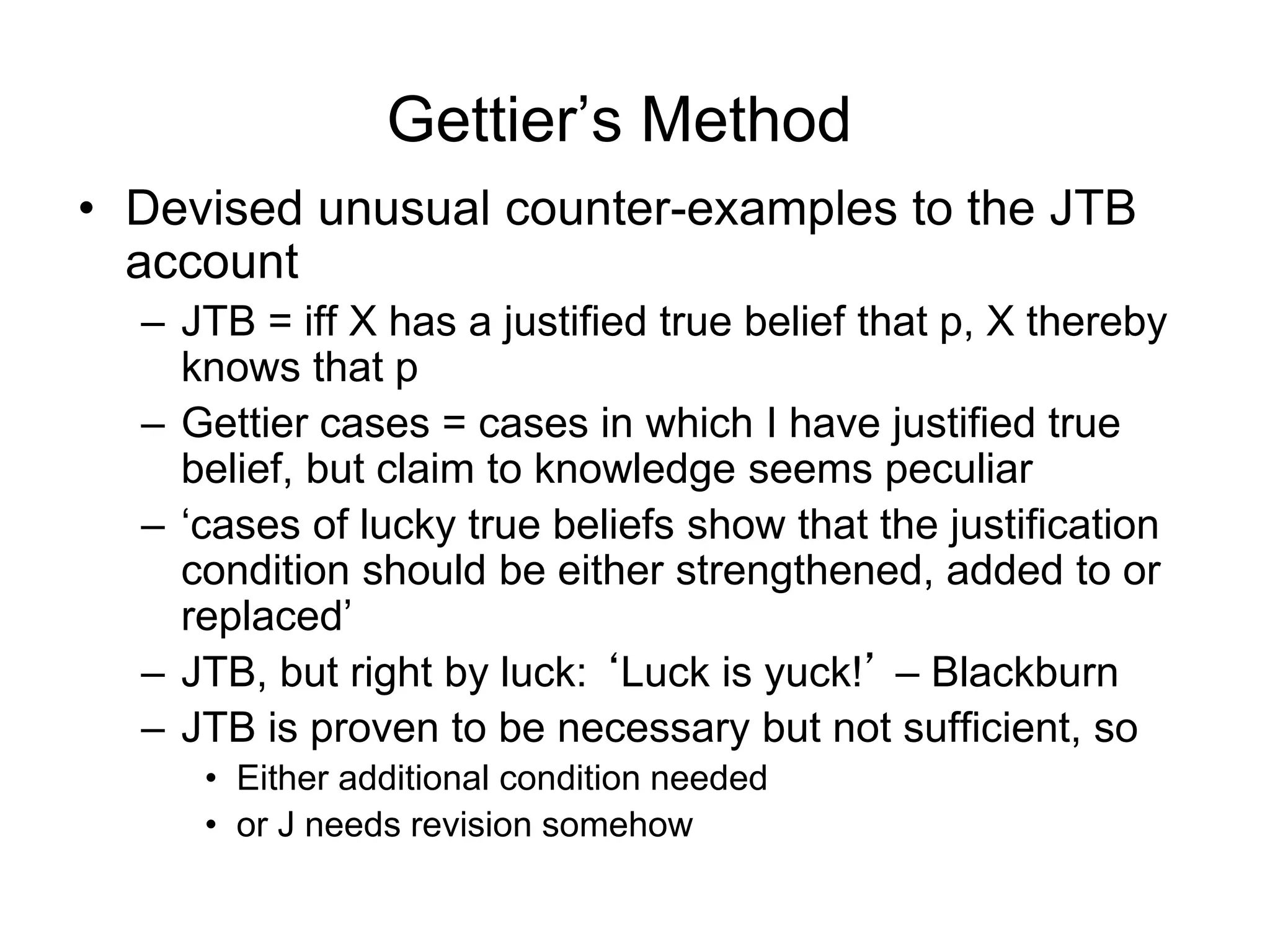

Gettier argued that justified true belief is not sufficient for knowledge by presenting two unusual counter-examples. In the first case, Smith truly believes that the job candidate has coins, which is true, but Smith's belief is based on faulty reasoning. In the second case, Smith believes a proposition is true and it coincidentally is true, though Smith's justification is incorrect. These cases show that one can have a justified true belief without knowledge. Gettier concluded additional conditions beyond justified true belief are needed for knowledge.


