Some ideas . . .
Jonathan Hazell
26 March 2013
When might a tree be a problem?
• “Trees are hazardous when the failure of one or more of their parts
results in property damage and/or personal injury. All trees have the
potential to fail, but only a relatively few actually do so.”
• “Tree hazard assessment involves three components:
• a tree with the potential to fail
• an environment that may contribute to that failure
• a person or object that would be injured or damaged (i.e. the target)
• “Unless a target is present a tree can not be hazardous.”
© Matheny and Clark, Evaluation of hazard trees in urban areas, 1994
When might something be done?
• “The most critical questions to answer when making decisions on
whether to inspect trees and whether remedial actions is required are:
• Can a problem be foreseen? If so:
• What is its likelihood of occurring
• What is the likely consequence of its occurrence?
• Is it reasonable to protect against it?”
© Lonsdale, Hazards from trees: a general guide, 2000
“reasonably practicable” (1)
• reasonably practicable, as defined by Judge Asquith in Edwards v
National Coal Board (1949):
• Reasonably practicable is a narrower term than physically possible, and seems
to me to imply that computation must be made by the owner in which the
quantum of risk is placed on one scale and the sacrifice involved in the
measures necessary for averting the risk (whether in time, money or trouble)
is placed in the other, and that, if it be shown that there is a gross
disproportion between them – the risk being insignificant in relation to the
sacrifice - the defendants discharge the onus on them.
• In other words, if the overall cost of the measures required to
minimise the risk of injury grossly outweigh the benefit arising from
the reduced risk, then no action is necessary
“reasonably practicable” (2)
• the Court of Appeal in Leakey v National Trust (date) defined the
scope of the duty as
• “a duty to do that which is reasonable in all the circumstances, and no more
than what, if anything, is reasonable to prevent or minimise the known risk of
damage or injury to one’s neighbour or his property”
• In his discussion of Leakey Mynors advises
• “You are thus only under a duty to protect those who are “reasonably” likely
to be affected by any omission on your part, and only if you can “reasonably”
foresee that they are likely to be injured as a result; and even then you are
only required to take reasonable care to avoid such omissions. And Megaw
L.J. in Leakey only envisaged a duty to do that which is reasonable in all
circumstances.”
© Mynors, The Law of Trees, Forests and Hedgerows, 2002
Hazard
the potential to cause
harm, be that injury to
persons or damage to
property
HSE. 2000: Successful health and safety management, HSG 65
Risk
the likelihood that an
undesired event will occur
due to the realisation of a
hazard
HSE. 2000: Successful health and safety management, HSG 65
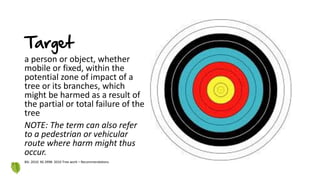
Target
a person or object, whether
mobile or fixed, within the
potential zone of impact of a
tree or its branches, which
might be harmed as a result of
the partial or total failure of the
tree
NOTE: The term can also refer
to a pedestrian or vehicular
route where harm might thus
occur.
BSI. 2010: BS 3998: 2010 Tree work – Recommendations
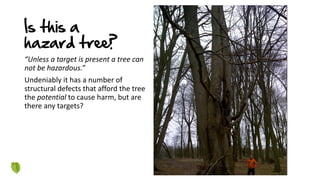
Is this a
hazard tree?
“Unless a target is present a tree can
not be hazardous.”
Undeniably it has a number of
structural defects that afford the tree
the potential to cause harm, but are
there any targets?
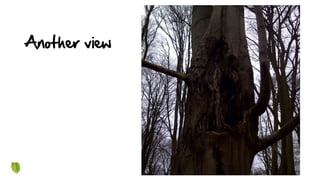
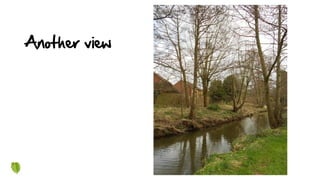
Another view
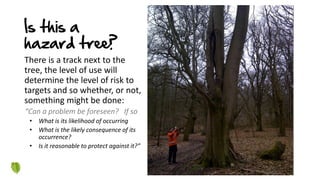
Is this a
hazard tree?
There is a track next to the
tree, the level of use will
determine the level of risk to
targets and so whether, or not,
something might be done:
“Can a problem be foreseen? If so
• What is its likelihood of occurring
• What is the likely consequence of its
occurrence?
• Is it reasonable to protect against it?”
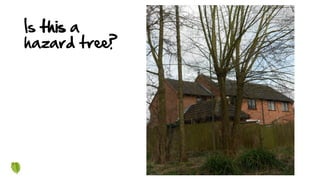
Is this a
hazard tree?
Another view
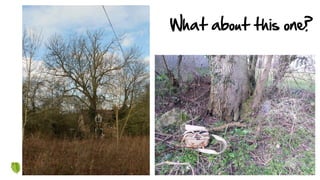
What about this one?
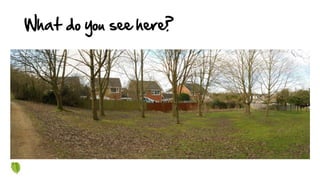
What do you see here?
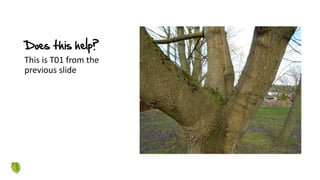
Does this help?
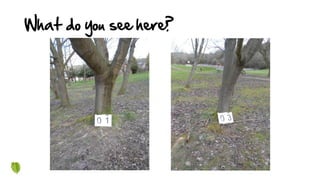
This is T01 from the
previous slide
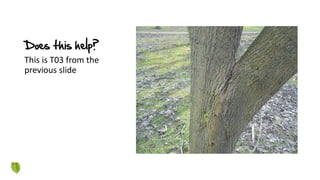
Does this help?
This is T03 from the
previous slide
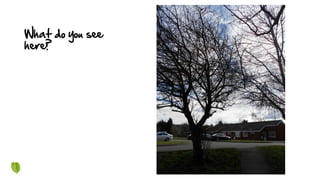
What do you see
here?
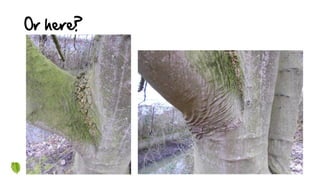
Or here?

What is a hazard tree

  • 1.
    Some ideas .. . Jonathan Hazell 26 March 2013
  • 2.
    When might atree be a problem? • “Trees are hazardous when the failure of one or more of their parts results in property damage and/or personal injury. All trees have the potential to fail, but only a relatively few actually do so.” • “Tree hazard assessment involves three components: • a tree with the potential to fail • an environment that may contribute to that failure • a person or object that would be injured or damaged (i.e. the target) • “Unless a target is present a tree can not be hazardous.” © Matheny and Clark, Evaluation of hazard trees in urban areas, 1994
  • 3.
    When might somethingbe done? • “The most critical questions to answer when making decisions on whether to inspect trees and whether remedial actions is required are: • Can a problem be foreseen? If so: • What is its likelihood of occurring • What is the likely consequence of its occurrence? • Is it reasonable to protect against it?” © Lonsdale, Hazards from trees: a general guide, 2000
  • 4.
    “reasonably practicable” (1) •reasonably practicable, as defined by Judge Asquith in Edwards v National Coal Board (1949): • Reasonably practicable is a narrower term than physically possible, and seems to me to imply that computation must be made by the owner in which the quantum of risk is placed on one scale and the sacrifice involved in the measures necessary for averting the risk (whether in time, money or trouble) is placed in the other, and that, if it be shown that there is a gross disproportion between them – the risk being insignificant in relation to the sacrifice - the defendants discharge the onus on them. • In other words, if the overall cost of the measures required to minimise the risk of injury grossly outweigh the benefit arising from the reduced risk, then no action is necessary
  • 5.
    “reasonably practicable” (2) •the Court of Appeal in Leakey v National Trust (date) defined the scope of the duty as • “a duty to do that which is reasonable in all the circumstances, and no more than what, if anything, is reasonable to prevent or minimise the known risk of damage or injury to one’s neighbour or his property” • In his discussion of Leakey Mynors advises • “You are thus only under a duty to protect those who are “reasonably” likely to be affected by any omission on your part, and only if you can “reasonably” foresee that they are likely to be injured as a result; and even then you are only required to take reasonable care to avoid such omissions. And Megaw L.J. in Leakey only envisaged a duty to do that which is reasonable in all circumstances.” © Mynors, The Law of Trees, Forests and Hedgerows, 2002
  • 6.
    Hazard the potential tocause harm, be that injury to persons or damage to property HSE. 2000: Successful health and safety management, HSG 65
  • 7.
    Risk the likelihood thatan undesired event will occur due to the realisation of a hazard HSE. 2000: Successful health and safety management, HSG 65
  • 8.
    Target a person orobject, whether mobile or fixed, within the potential zone of impact of a tree or its branches, which might be harmed as a result of the partial or total failure of the tree NOTE: The term can also refer to a pedestrian or vehicular route where harm might thus occur. BSI. 2010: BS 3998: 2010 Tree work – Recommendations
  • 9.
    Is this a hazardtree? “Unless a target is present a tree can not be hazardous.” Undeniably it has a number of structural defects that afford the tree the potential to cause harm, but are there any targets?
  • 10.
  • 11.
    Is this a hazardtree? There is a track next to the tree, the level of use will determine the level of risk to targets and so whether, or not, something might be done: “Can a problem be foreseen? If so • What is its likelihood of occurring • What is the likely consequence of its occurrence? • Is it reasonable to protect against it?”
  • 12.
  • 13.
  • 14.
  • 15.
    What do yousee here?
  • 16.
    What do yousee here?
  • 17.
    Does this help? Thisis T01 from the previous slide
  • 18.
    Does this help? Thisis T03 from the previous slide
  • 19.
    What do yousee here?
  • 20.