Download to read offline
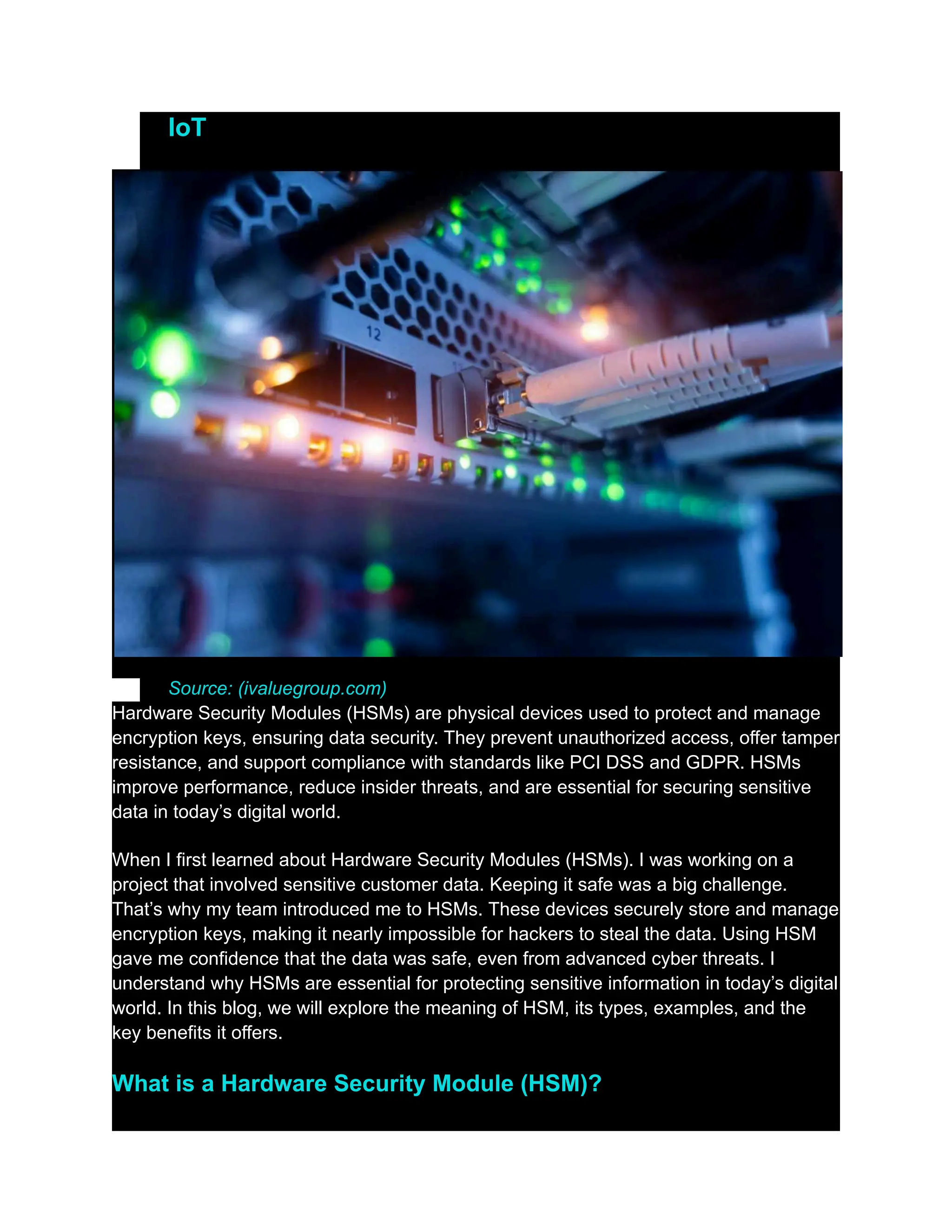
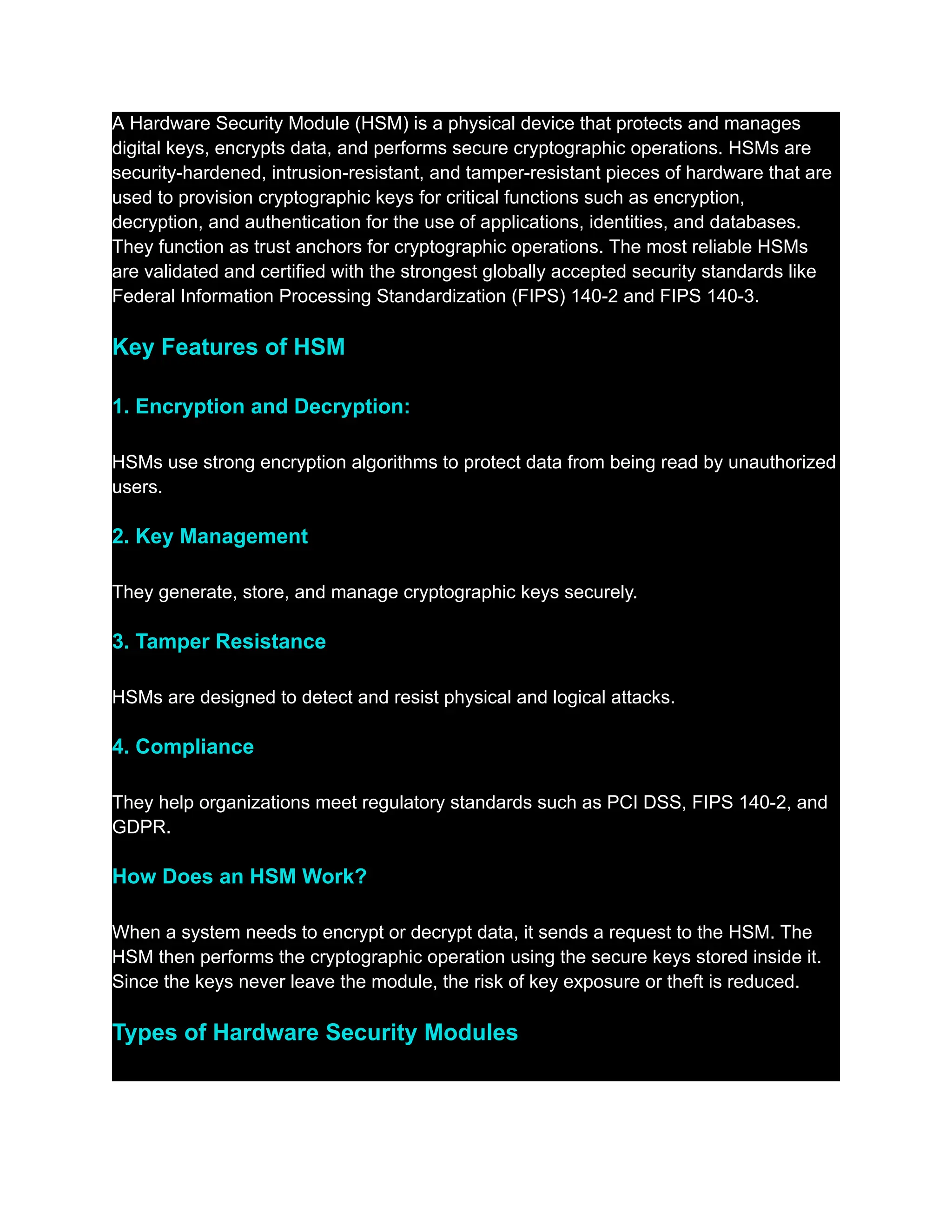

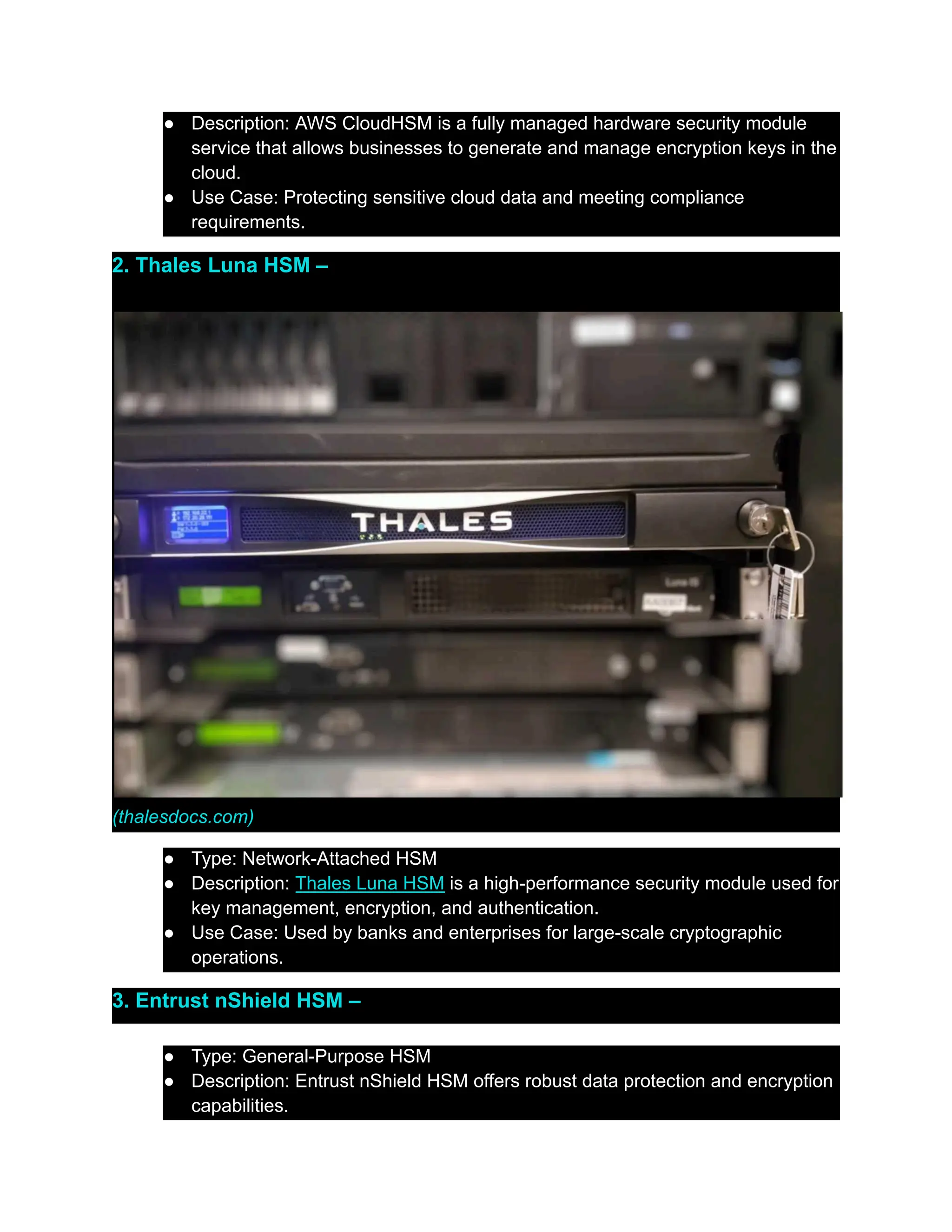
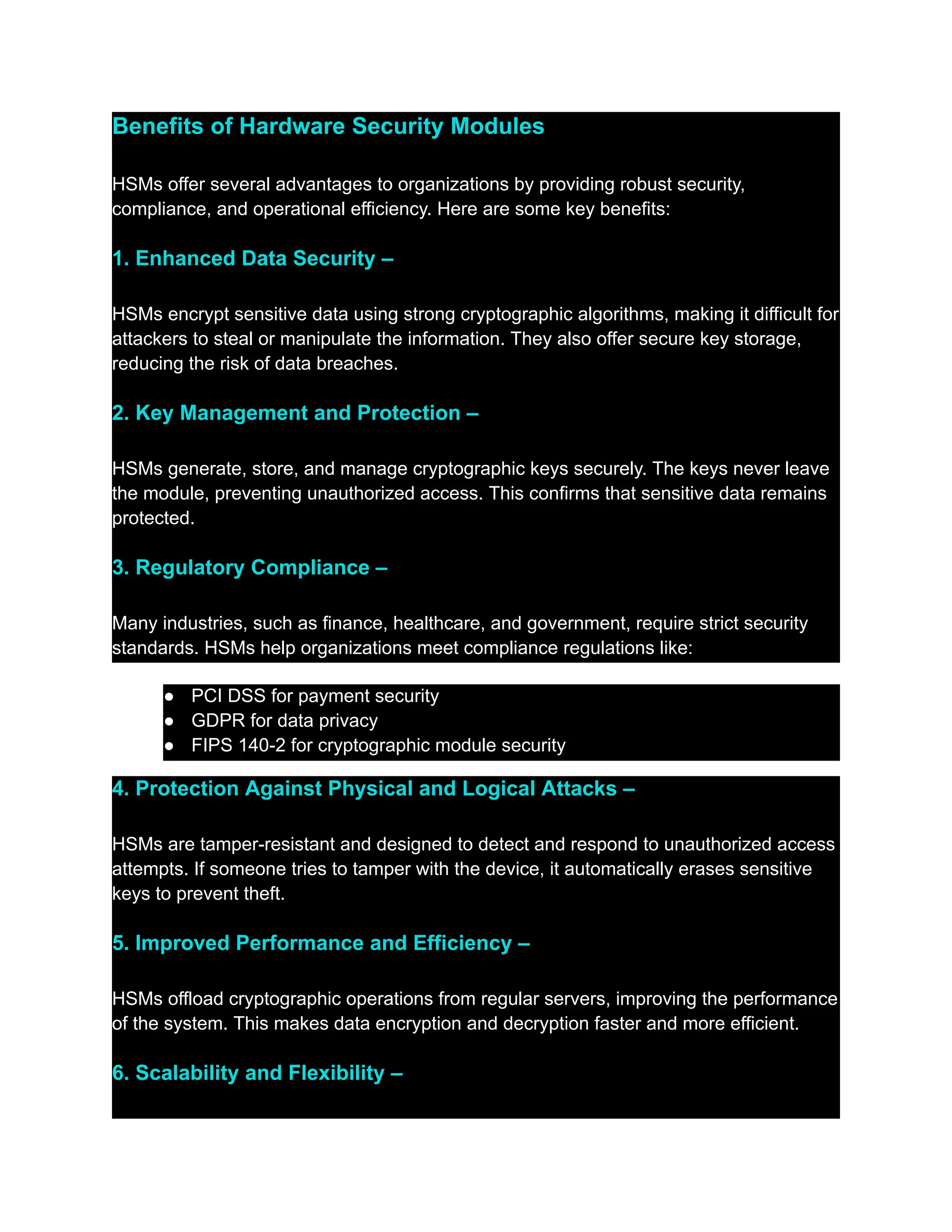

IoT What is a Hardware Security Module (HSM)? What is a Hardware Security Module (HSM)? | CyberPro Magazine Source: (ivaluegroup.com) Hardware Security Modules (HSMs) are physical devices used to protect and manage encryption keys, ensuring data security. They prevent unauthorized access, offer tamper resistance, and support compliance with standards like PCI DSS and GDPR. HSMs improve performance, reduce insider threats, and are essential for securing sensitive data in today’s digital world. When I first learned about Hardware Security Modules (HSMs). I was working on a project that involved sensitive customer data. Keeping it safe was a big challenge. That’s why my team introduced me to HSMs. These devices securely store and manage encryption keys, making it nearly impossible for hackers to steal the data. Using HSM gave me confidence that the data was safe, even from advanced cyber threats. I understand why HSMs are essential for protecting sensitive information in today’s digital world. In this blog, we will explore the meaning of HSM, its types, examples, and the key benefits it offers. What is a Hardware Security Module (HSM)? A Hardware Security Module (HSM) is a physical device that protects and manages digital keys, encrypts data, and performs secure cryptographic operations. HSMs are security-hardened, intrusion-resistant, and tamper-resistant pieces of hardware that are used to provision cryptographic keys for critical functions such as encryption, decryption, and authentication for the use of applications, identities, and databases. They function as trust anchors for cryptographic operations. The most reliable HSMs are validated and certified with the strongest globally accepted security standards like Federal Information Processing Standardization (FIPS) 140-2 and FIPS 140-3. Key Features of HSM 1. Encryption and Decryption: HSMs use strong encryption algorithms to protect data from being read by unauthorized users. 2. Key Management They generate, store, and manage cryptographic keys securely. 3. Tamper Resistance HSMs are designed to detect and resist physical and logical attacks. 4. Compliance They help organizations meet regulatory standards such as PCI DSS, FIPS 140-2, and GDPR. How Does an HSM Work? When a system needs to encrypt or decrypt data, it sends a request to the HSM. The HSM then performs the cryptographic operation using the secure keys stored inside it. Since the keys never leave the module, the risk of key exposure or theft is reduced. Types of Hardware Security Modules What is a Hardware Security Module (HSM)? | CyberPro Magazine HSMs come in different forms, each designed for specific security needs. Here are the common types of HSMs: 1. General-Purpose HSM What is a Hardware Security Module (HSM)? | CyberPro Magazine (utimaco.com) These HSMs are used for standard cryptographic operations, such as data encryption, key management, and digital signatures. They are widely used by financial institutions, g


![[ppt]](https://cdn.slidesharecdn.com/ss_thumbnails/ppt2678-thumbnail.jpg?width=640&height=640&fit=bounds)


![[ppt]](https://cdn.slidesharecdn.com/ss_thumbnails/ppt2627-thumbnail.jpg?width=640&height=640&fit=bounds)


![[CB19] Hardware Wallet Security](https://cdn.slidesharecdn.com/ss_thumbnails/codeblue19securityofhwwalletsfinal-191211070647-thumbnail.jpg?width=640&height=640&fit=bounds)


