“What Great Teachers Do 
Differently” 
“Seven Simple Secrets: What the 
Best Teachers Know and Do” 
Todd Whitaker (2004) 
Annette Breaux and Todd 
Whitaker (2006)
“One of the best-kept 
secrets of the very best 
teachers is that they 
have very few 
discipline problems.” 
Seven Secrets pg. 98
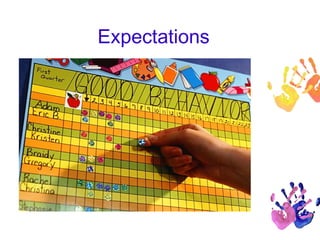
Expectations
What do we find in the 
classrooms of the most 
effective teachers? 
Summary: 
Procedures are 
taught and practiced 
and then practiced 
some more.
“Remember, 
if you can prevent 
the fire, 
you’ll never 
use the fire 
extinguisher!” Seven Secrets pg. 38
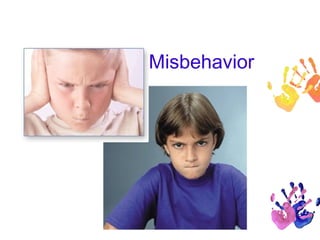
Misbehavior
WWhhaatt ccaann 
tteeaacchheerrss ddoo wwhheenn 
aa ssttuuddeenntt 
mmiissbbeehhaavveess?? 
List all of the 
options
Great Teachers Don’t
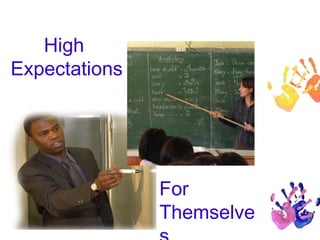
High 
Expectations 
For 
Themselve 
s
One hallmark of 
effective teachers is 
that they create a 
positive atmosphere 
in their classrooms 
and schools.
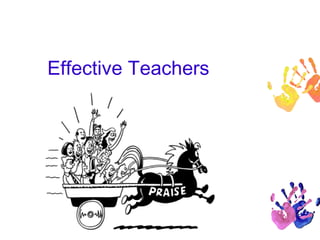
Effective Teachers
Praise 
• Authentic 
• Specific 
• Immediate 
• Clean 
• Private 
Ben Bissell (1992)
How could you use information like 
this in your school? 
Think to yourself and then we’ll share ideas

What great teachers do differently

Editor's Notes

  • #3 They do have discipline challenges As long as there are students there will always be discipline challenges Never allow those challenges to become problems
  • #4 Establish very clear expectations Follow them consistently / Consistently reinforced Don’t focus on “What am I going to do if students misbehave?” / Focus on the future Expect good behavior Have procedures – a consistent way that they expect something to be done In Contrast Rules Often focus on undesirable behaviors Made for the few
  • #5 Very few rules and lots of procedures - both stated in positive terms Procedures are rehearsed over and over When a student “forgets” they are gently reminded When more than one student is forgetting the procedure there is re-teaching and practice Actions communicate that the teacher assumes they have simply forgotten and need a little more practice and it is handled quickly and effectively For repeat “forgetters” they used short private conversations (0bserved in teachers of all ages) Student told that the teacher would be happy to provide as much practice as necessary to help the student become proficient Consequences used as last resort and rare Everyone knows what to do and how to do it. Four prompts: Tell them what they were doing, ask them what is the expectation, have them show you the behavior, ask if they need more practice
  • #7 Goal: to keep it from happening again Motivated to prevent Don’t want students angry as a solution Is concerned with how student behaves in future
  • #8 Share list: Which of these approaches always work? Does every teacher have the same options? What is the difference between good classroom managers and poor classroom managers?
  • #9 Don’t YellArgueUse sarcasm Treat students with respect Students we are tempted to yell at have been yelled at so much, why would we think this would be effective with them? As professional adults, we never win an argument with a student … We would like to win but the student has to win Great teachers know it is never appropriate in the classroom… Found in the thesaurus for sarcasm - mockery scorn disdain cynicism Read from page 28 Twenty-four students on the side of the teacher
  • #10 The best and the worst teachers have high expectations for students Great teachers have high expectations for themselves The variable is not what teachers expect of students The variable – what really matters- is what teachers expect of themselves The main variable in the classroom is the teacher – the only behavior in the classroom that the teacher can control is their own
  • #11 Treat everyone with respect – Even the best teachers may not like all their students – but they act as if they do. If you act like you don’t like them, then it doesn’t matter how much you like them If you act like you like them, then whether you like them at all becomes irrelevant
  • #12 Treat students with positive regard Understand the power of praise Looks for opportunities to find students doing things right
  • #13 Authentic means praising for something that is genuine, recognizing them for something that is true if recognition is authentic it never grows weary Effective praise is specific – behavior we acknowledge is often becomes the behavior that is continued You can identify those areas that do have merit and acknowledge them Immediate means recognizing positive efforts and contributions in a timely manner – providing authentic and specific feedback when good things happen or soon afterward is important element to making reinforcement effective Clean – means several things Not related to something else – good homework doesn’t relate to rude remark made later Cannot include the word “but” – remember only the part after the but need to separate statements and not join with but Private – vast majority given in private, sometimes not “cool” in front of other students - when in doubt always do in private