Universal Design for Learning Action Planfor Academic Advising Practice at J. Sergeant Reynolds Community CollegeAbbie WernerEDSP 856
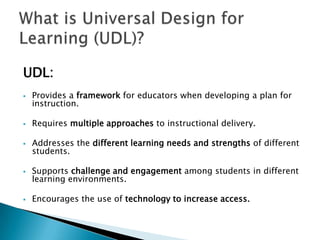
UDL:Provides a framework for educators when developing a plan for instruction.
Requires multiple approaches to instructional delivery.
Addresses the different learning needs and strengths of different students.
Supports challenge and engagement among students in different learning environments.
Encourages the use of technology to increase access.What is Universal Design for Learning (UDL)?
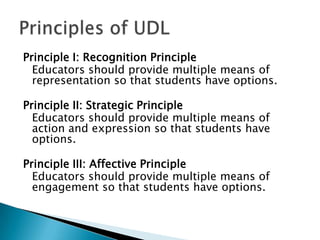
Principle I: Recognition Principle	Educators should provide multiple means of representation so that students have options.Principle II: Strategic Principle	Educators should provide multiple means of action and expression so that students have options.Principle III: Affective PrincipleEducators should provide multiple means of engagement so that students have options. Principles of UDL
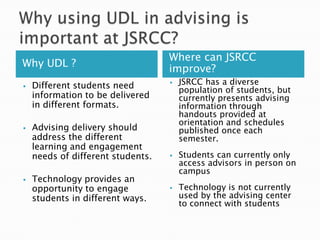
Why using UDL in advising is important at JSRCC?Why UDL ?Where can JSRCC improve?JSRCC has a diverse population of students, but currently presents advising information through handouts provided at orientation and schedules published once each semester.
Students can currently only access advisors in person on campus
Technology is not currently used by the advising center to connect with students
Different students need information to be delivered in different formats.
Advising delivery should address the different learning and engagement needs of different students.
Technology provides an opportunity to engage students in different ways.The goal of this plan is to increase student engagement and student access to advising information, resources, and learning tools by digitizing advising information and publishing this information using two different web publishing formats, multiple methods of presentation and web-based virtual communication tools. Goal of UDL Action Planfor Academic Advising at JSRCC
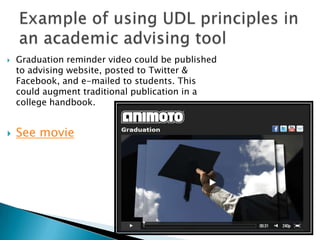
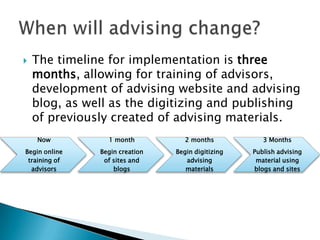
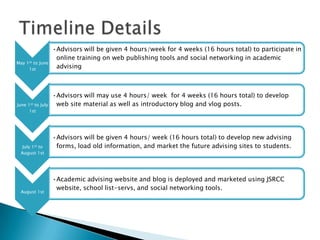
After training, advisors will begin to publish updated academic advising information on an academic advising website.  This site will link to an additional site with blog posts and vlogs (see my Glogster presentation on vlogs in advising) created by JSRCC advisors.  	The purpose of these sites will be to provide a place for JSRCC students to access policy information and digital advising tools in different formats. 	Additionally, students will be able to connect with an advisor through instant messaging, Twitter, Facebook and video conferencing when they are unable to meet with an advisor on campus.  This provides options for students to engage at different times with advisors. Implementing UDL for Advising at JSRCC
Dr. T. Hollings, student affairs administrator, will be responsible for providing training time and assessment resources for the use of new digital advising tools.Ms. T. Jones , Mr. J. Chang and Ms. A. Werner, advisors, will be responsible for learning to use digital tool and  using these tools to develop digital advising materials. Mr. J. Seethe, support staff, will be responsible for communicating changes and benefits to students and faculty. Mr. E. McMurdo, IT support staff, will work with advisors and administrators to ensure web space is available and to provide training on site development and management. Who will be involved?

UDL in Academic Advising

  • 1.
    Universal Design forLearning Action Planfor Academic Advising Practice at J. Sergeant Reynolds Community CollegeAbbie WernerEDSP 856
  • 2.
    UDL:Provides a frameworkfor educators when developing a plan for instruction.
  • 3.
    Requires multiple approachesto instructional delivery.
  • 4.
    Addresses the differentlearning needs and strengths of different students.
  • 5.
    Supports challenge andengagement among students in different learning environments.
  • 6.
    Encourages the useof technology to increase access.What is Universal Design for Learning (UDL)?
  • 7.
    Principle I: RecognitionPrinciple Educators should provide multiple means of representation so that students have options.Principle II: Strategic Principle Educators should provide multiple means of action and expression so that students have options.Principle III: Affective PrincipleEducators should provide multiple means of engagement so that students have options. Principles of UDL
  • 8.
    Why using UDLin advising is important at JSRCC?Why UDL ?Where can JSRCC improve?JSRCC has a diverse population of students, but currently presents advising information through handouts provided at orientation and schedules published once each semester.
  • 9.
    Students can currentlyonly access advisors in person on campus
  • 10.
    Technology is notcurrently used by the advising center to connect with students
  • 11.
    Different students needinformation to be delivered in different formats.
  • 12.
    Advising delivery shouldaddress the different learning and engagement needs of different students.
  • 13.
    Technology provides anopportunity to engage students in different ways.The goal of this plan is to increase student engagement and student access to advising information, resources, and learning tools by digitizing advising information and publishing this information using two different web publishing formats, multiple methods of presentation and web-based virtual communication tools. Goal of UDL Action Planfor Academic Advising at JSRCC
  • 14.
    After training, advisorswill begin to publish updated academic advising information on an academic advising website. This site will link to an additional site with blog posts and vlogs (see my Glogster presentation on vlogs in advising) created by JSRCC advisors. The purpose of these sites will be to provide a place for JSRCC students to access policy information and digital advising tools in different formats. Additionally, students will be able to connect with an advisor through instant messaging, Twitter, Facebook and video conferencing when they are unable to meet with an advisor on campus. This provides options for students to engage at different times with advisors. Implementing UDL for Advising at JSRCC
  • 15.
    Dr. T. Hollings,student affairs administrator, will be responsible for providing training time and assessment resources for the use of new digital advising tools.Ms. T. Jones , Mr. J. Chang and Ms. A. Werner, advisors, will be responsible for learning to use digital tool and using these tools to develop digital advising materials. Mr. J. Seethe, support staff, will be responsible for communicating changes and benefits to students and faculty. Mr. E. McMurdo, IT support staff, will work with advisors and administrators to ensure web space is available and to provide training on site development and management. Who will be involved?