WIRELESS ENERY METER
MONITORING SYSTEM
(BASED ON IOT TECHNOLOGY)
Under the guidance of
Mr. Manvendra Singh
PRESENTED BY:
1. Prashant Panwar (2231000030)
2. Kaushal Pal Singh (2131000021)
3. Amit Kumar (2231000006)
4. Satish (2231000042)
CONTENTS:
• INTRODUCTION
• OBJECTIVE
• BLOCK DIAGRAM
• CIRCUIT DIAGRAM
• LIST OF COMPONENTS
• ADVANTAGES
• CONCLUSION
• FUTURE SCOPE
INTRODUCTIO
N:
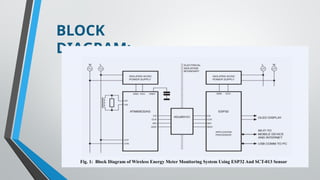
• In this project, an open-source and modular wireless energy monitoring system is
designed and implemented. A Wi-Fi-based IoT network has been designed which has
the capability of monitoring daily energy consumption in our homes through our
smartphones. In the IoT network, the current and voltage values have been measured
with the current sensor SCT-013 (up to 100A) connected to the ESP-32 development
board. Real power, apparent power and power factors can be calculated by using
measured current, voltage values and phase angle.
• These measured and calculated values have been sent to the ESP-32 development
board by software serial method. The ESP32 provides the cloud server-based user
interface where we can see these calculations and actual values. It uses a Wi-Fi access
point connection. Experimental studies prove that this system could be used in
general-purpose applications such as IoT energy monitoring systems for smart home
automation systems.
OBJECTIVE:
The objective of an IoT-based wireless energy meter monitoring system is to monitor
and analysis energy consumption in real-time to help users reduce their energy usage
and save money:
• Collect data: IoT-based smart meters use sensors to collect data on energy usage and
transmit it to a cloud database.
• Analysis data: The data is processed and analysised to provide insights into energy
consumption patterns.
• Identify areas for improvement: Users can use the data to identify areas for
improvement, such as faulty or energy-intensive appliances.
• Reduce energy losses: The data can help prevent energy losses and conserve energy.
• Detect energy theft: The system can detect and screen for energy theft.
BLOCK
DIAGRAM:
Fig. 1: Block Diagram of Wireless Energy Meter Monitoring System Using ESP32 And SCT-013 Sensor
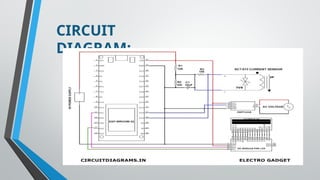
CIRCUIT
DIAGRAM:
LIST OF
COMPONENTS:
• ESP-32 Development Board
• SCT-012 Current Sensor
• ZMPT-101B Voltage Sensor
• 10uF/25V Capacitor
• 10KΩ Resistor (x2)
• 100Ω Resistor
• 5 Volt Power Supply/Power Adaptor
• Connecting Wires
ADVANTAGES:
Wireless energy meter monitoring systems based on IoT technology offer
many advantages, including:
• Real-time data-
IoT-based meters provide instant data on energy consumption, allowing users
to make informed decisions about how to reduce energy usage.
• Remote access-
Users can access their energy usage data from anywhere with an internet
connection, using a smartphone or other device.
• Cost savings-
Users can identify areas of excessive energy consumption and take action to
reduce energy waste, which can lead to lower energy bills.
• Improved efficiency-
•IoT-based meters can help users identify energy-inefficient equipment and
implement strategies to improve efficiency.
• Predictive maintenance-
IoT-based meters can analysis energy usage trends to identify potential faults
with appliances and gadgets before they become serious problems.
• Environmental advantages-
By reducing energy consumption, IoT-based meters can help to lower
greenhouse gas emissions and mitigate the impact of climate change.
CONCLUSION:
• Wireless Energy Meter Monitoring System using IoT is a
revolutionary technology that has the potential to transform
the way we consume & track energy. By providing real-time
monitoring and control of energy consumption, it can help
users to reduce their energy usage, save money, and
promote sustainable energy consumption.
FUTURE SCOPE:
• The demand for electricity is one of the most important things in our daily life to
develop technology. A grid loading is made for two types of people, residential
and commercial both. So operators have to do load distribution keeping in mind
the two types of consumers. Smart Homes are designed with this in mind and to
reduce energy consumption. Nowadays, smart homes have doing an important
role in smart grids. Therefore, we need to control the energy consumption in
those houses.
• Today, the Internet of Things (IoT) has captured a wide range of areas such as the
automotive industry, logistics, hospitals, smart grids, metro cities and smart
homes.We can classify the IoT into two categories i.e., the Internet of Industrial
Things (IoT) and the Internet of Consumer Things (IoT). In this project, IoT
systems have been discussed in brief.
THANK YOU

WEM-MS electrical engineering PPT-1.pptx

  • 1.
    WIRELESS ENERY METER MONITORINGSYSTEM (BASED ON IOT TECHNOLOGY) Under the guidance of Mr. Manvendra Singh PRESENTED BY: 1. Prashant Panwar (2231000030) 2. Kaushal Pal Singh (2131000021) 3. Amit Kumar (2231000006) 4. Satish (2231000042)
  • 2.
    CONTENTS: • INTRODUCTION • OBJECTIVE •BLOCK DIAGRAM • CIRCUIT DIAGRAM • LIST OF COMPONENTS • ADVANTAGES • CONCLUSION • FUTURE SCOPE
  • 3.
    INTRODUCTIO N: • In thisproject, an open-source and modular wireless energy monitoring system is designed and implemented. A Wi-Fi-based IoT network has been designed which has the capability of monitoring daily energy consumption in our homes through our smartphones. In the IoT network, the current and voltage values have been measured with the current sensor SCT-013 (up to 100A) connected to the ESP-32 development board. Real power, apparent power and power factors can be calculated by using measured current, voltage values and phase angle. • These measured and calculated values have been sent to the ESP-32 development board by software serial method. The ESP32 provides the cloud server-based user interface where we can see these calculations and actual values. It uses a Wi-Fi access point connection. Experimental studies prove that this system could be used in general-purpose applications such as IoT energy monitoring systems for smart home automation systems.
  • 4.
    OBJECTIVE: The objective ofan IoT-based wireless energy meter monitoring system is to monitor and analysis energy consumption in real-time to help users reduce their energy usage and save money: • Collect data: IoT-based smart meters use sensors to collect data on energy usage and transmit it to a cloud database. • Analysis data: The data is processed and analysised to provide insights into energy consumption patterns. • Identify areas for improvement: Users can use the data to identify areas for improvement, such as faulty or energy-intensive appliances. • Reduce energy losses: The data can help prevent energy losses and conserve energy. • Detect energy theft: The system can detect and screen for energy theft.
  • 5.
    BLOCK DIAGRAM: Fig. 1: BlockDiagram of Wireless Energy Meter Monitoring System Using ESP32 And SCT-013 Sensor
  • 6.
  • 7.
    LIST OF COMPONENTS: • ESP-32Development Board • SCT-012 Current Sensor • ZMPT-101B Voltage Sensor • 10uF/25V Capacitor • 10KΩ Resistor (x2) • 100Ω Resistor • 5 Volt Power Supply/Power Adaptor • Connecting Wires
  • 8.
    ADVANTAGES: Wireless energy metermonitoring systems based on IoT technology offer many advantages, including: • Real-time data- IoT-based meters provide instant data on energy consumption, allowing users to make informed decisions about how to reduce energy usage. • Remote access- Users can access their energy usage data from anywhere with an internet connection, using a smartphone or other device. • Cost savings- Users can identify areas of excessive energy consumption and take action to reduce energy waste, which can lead to lower energy bills.
  • 9.
    • Improved efficiency- •IoT-basedmeters can help users identify energy-inefficient equipment and implement strategies to improve efficiency. • Predictive maintenance- IoT-based meters can analysis energy usage trends to identify potential faults with appliances and gadgets before they become serious problems. • Environmental advantages- By reducing energy consumption, IoT-based meters can help to lower greenhouse gas emissions and mitigate the impact of climate change.
  • 10.
    CONCLUSION: • Wireless EnergyMeter Monitoring System using IoT is a revolutionary technology that has the potential to transform the way we consume & track energy. By providing real-time monitoring and control of energy consumption, it can help users to reduce their energy usage, save money, and promote sustainable energy consumption.
  • 11.
    FUTURE SCOPE: • Thedemand for electricity is one of the most important things in our daily life to develop technology. A grid loading is made for two types of people, residential and commercial both. So operators have to do load distribution keeping in mind the two types of consumers. Smart Homes are designed with this in mind and to reduce energy consumption. Nowadays, smart homes have doing an important role in smart grids. Therefore, we need to control the energy consumption in those houses. • Today, the Internet of Things (IoT) has captured a wide range of areas such as the automotive industry, logistics, hospitals, smart grids, metro cities and smart homes.We can classify the IoT into two categories i.e., the Internet of Industrial Things (IoT) and the Internet of Consumer Things (IoT). In this project, IoT systems have been discussed in brief.
  • 12.