+
Wellness Coaching
+
An Overview
 Who is a Wellness Coach?
 A Psychotherapist, a Counselor and a Wellness
Coach…What’s the difference?
 Plan of Action
 Why Hospitals?
 Why wellness centres?
 How will it benefit you?
 Conclusion
+
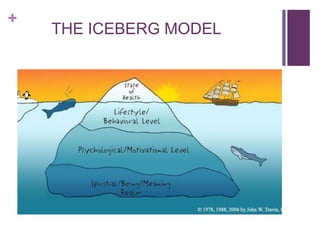
THE ICEBERG MODEL
+
Who is a Wellness Coach?
 Helps the client find the motivation and tools to achieve their
physical and emotional goals.
 Helps find solutions to their various dilemmas (which prevent
them from leading a healthy and stress free life).
+
A Psychiatrist, a Counselor and a Wellness
Coach….What’s the difference?
+
A Psychotherapist
 Well trained professionals
 Psychotherapists focus more on gaining insight into chronic
physical and emotional problems.
 They focus is on the patient's thought processes and way of
being in the world rather than specific problems.
+
A Counselor
 Counselors spend more time examining the past, looking for
solutions to emotional concerns and seeking a diagnosis.
 Counselors generally denote a relatively brief treatment that is
focused most upon behavior.
 They often target a particular symptom or problematic situation
and offer suggestions and advice for dealing with it.
+
A Wellness Coach
 Coaches suggest that the relationships they establish with
clients are also more collegial in nature.
 Coaches and clients work in a less structured environment as a
team rather than setting up a “doctor-patient” relationship.
 Coaches help people improve their performances and enhance
the quality of their lives.
+
Plan of Action
 Conduct Sessions with the client(s) in person or virtually (via
Skype) which can range from 30 minutes to 1 hour.
 Figure out their Goals and Objectives.
 Define their Goals and Challenges through powerful
questioning.
+
Plan of Action
 Design the Plan of Action required to achieve their Goals.
 Provide with help & support along the way.
+
Why Hospitals?
 Targeting 4 Areas in the Hospital:
 The Maternity Department
 The Oncology Department
 The Out Patient Department
 The Staff of the Hospitals
As Well As The Wellness Centres
+
How will it Benefit You?
 Intangible:
 Helping and guiding Mothers with a Holistic approach in overcoming
problems such as ‘Baby Blues’.
 Helping the Cancer patients by focusing on the where they are in
their Cancer experience, where they want to be and how they can
get there.
 Helping young and middle aged people improve their quality of life
and also help them lead a healthy life.
 Help the staff and employees make the Hospitals a better and less
stressful place for themselves and the patients.
 Helping people coming to the wellness centres in leading a better
quality life and achieving their health goals.
 In attaining overall wellness in a holistic way.
+
How will it Benefit You?
 Tangible:
 Wellness Coaching offers a unique service to both Patients and
Employees.
 This service leads to both parties having a pleasant and life
assuring experience at Hospitals.
 This will increase foot fall which leads to greater Revenue.
+
Conclusion
 To conclude, Wellness Coaching does not only help day to day
patients cope with their health but also reassures their faith in
life. Unlike a psychotherapist or a counselor.
 It makes sure that the employees work more productively and
efficiently at the hospital making it a pleasant experience
everyone.
 All it has to offer is better well being and increased business.
+
Thank You

Wellness Coaching

  • 1.
  • 2.
    + An Overview  Whois a Wellness Coach?  A Psychotherapist, a Counselor and a Wellness Coach…What’s the difference?  Plan of Action  Why Hospitals?  Why wellness centres?  How will it benefit you?  Conclusion
  • 3.
  • 4.
    + Who is aWellness Coach?  Helps the client find the motivation and tools to achieve their physical and emotional goals.  Helps find solutions to their various dilemmas (which prevent them from leading a healthy and stress free life).
  • 5.
    + A Psychiatrist, aCounselor and a Wellness Coach….What’s the difference?
  • 6.
    + A Psychotherapist  Welltrained professionals  Psychotherapists focus more on gaining insight into chronic physical and emotional problems.  They focus is on the patient's thought processes and way of being in the world rather than specific problems.
  • 7.
    + A Counselor  Counselorsspend more time examining the past, looking for solutions to emotional concerns and seeking a diagnosis.  Counselors generally denote a relatively brief treatment that is focused most upon behavior.  They often target a particular symptom or problematic situation and offer suggestions and advice for dealing with it.
  • 8.
    + A Wellness Coach Coaches suggest that the relationships they establish with clients are also more collegial in nature.  Coaches and clients work in a less structured environment as a team rather than setting up a “doctor-patient” relationship.  Coaches help people improve their performances and enhance the quality of their lives.
  • 9.
    + Plan of Action Conduct Sessions with the client(s) in person or virtually (via Skype) which can range from 30 minutes to 1 hour.  Figure out their Goals and Objectives.  Define their Goals and Challenges through powerful questioning.
  • 10.
    + Plan of Action Design the Plan of Action required to achieve their Goals.  Provide with help & support along the way.
  • 11.
    + Why Hospitals?  Targeting4 Areas in the Hospital:  The Maternity Department  The Oncology Department  The Out Patient Department  The Staff of the Hospitals As Well As The Wellness Centres
  • 12.
    + How will itBenefit You?  Intangible:  Helping and guiding Mothers with a Holistic approach in overcoming problems such as ‘Baby Blues’.  Helping the Cancer patients by focusing on the where they are in their Cancer experience, where they want to be and how they can get there.  Helping young and middle aged people improve their quality of life and also help them lead a healthy life.  Help the staff and employees make the Hospitals a better and less stressful place for themselves and the patients.  Helping people coming to the wellness centres in leading a better quality life and achieving their health goals.  In attaining overall wellness in a holistic way.
  • 13.
    + How will itBenefit You?  Tangible:  Wellness Coaching offers a unique service to both Patients and Employees.  This service leads to both parties having a pleasant and life assuring experience at Hospitals.  This will increase foot fall which leads to greater Revenue.
  • 14.
    + Conclusion  To conclude,Wellness Coaching does not only help day to day patients cope with their health but also reassures their faith in life. Unlike a psychotherapist or a counselor.  It makes sure that the employees work more productively and efficiently at the hospital making it a pleasant experience everyone.  All it has to offer is better well being and increased business.
  • 15.

Editor's Notes

  • #4 What we see as the current reality is only the tip of the iceberg.It is only the 10% of the reality that is visible. The root cause is submerged deep within us. Hence we have to take a multi diemensional approach and holistic outlook while coaching.
  • #5 Those goals might include: Improving their Diet, lower stress levels, quite smoking, improve quality of life, etc.
  • #8 Progress is often slow and painful in counseling, but it is typically “rapid and usually enjoyable” in coaching.
  • #9 Coaches are trained to listen, to observe and to customize their approach to individual client needs. They seek to elicit solutions and strategies from the client; they believe the client is naturally creative and resourceful. The coach’s job is to provide support to enhance the skills, resources and creativity that the client already has.
  • #13 We offer Intangible and Tangible benefits.