Week 1 Outline
Please turn on
your speakers
and click the
sound icon.
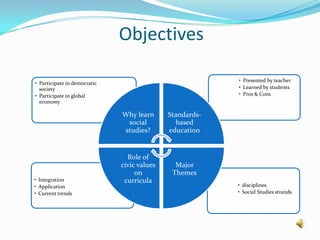
Objectives
• disciplines
• Social Studies strands
• Integration
• Application
• Current trends
• Presented by teacher
• Learned by students
• Pros & Cons
• Participate in democratic
society
• Participate in global
economy
Why learn
social
studies?
Standards-
based
education
Major
Themes
Role of
civic values
on
curricula
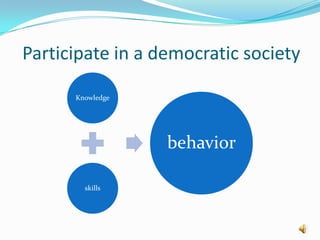
Participate in a democratic society
Knowledge
skills
behavior
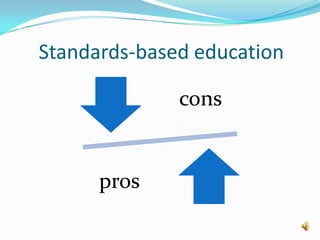
Standards-based education
cons
pros
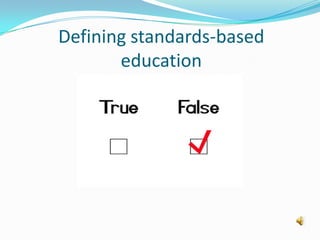
Defining standards-based
education
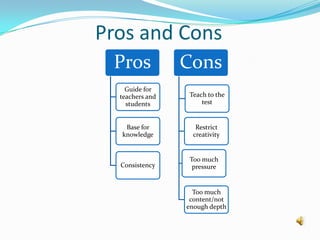
Pros and Cons
Pros
Guide for
teachers and
students
Base for
knowledge
Consistency
Cons
Too much
pressure
Restrict
creativity
Teach to the
test
Too much
content/not
enough depth
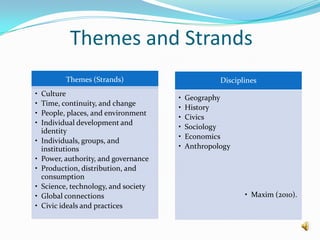
Themes and Strands
Themes (Strands)
• Culture
• Time, continuity, and change
• People, places, and environment
• Individual development and
identity
• Individuals, groups, and
institutions
• Power, authority, and governance
• Production, distribution, and
consumption
• Science, technology, and society
• Global connections
• Civic ideals and practices
Disciplines
• Geography
• History
• Civics
• Sociology
• Economics
• Anthropology
• Maxim (2010).
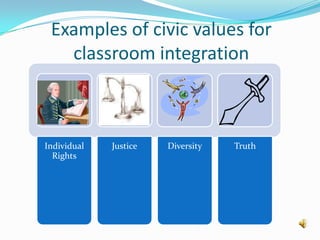
Examples of civic values for
classroom integration
Individual
Rights
Justice Diversity Truth
Approaches to integrating civic-
based education
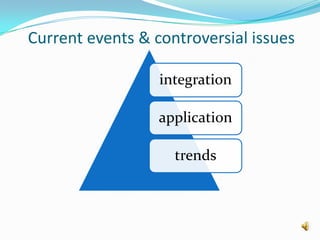
Current events & controversial issues
integration
application
trends
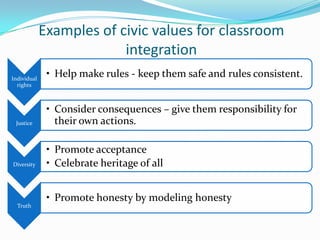
Examples of civic values for classroom
integration
Individual
rights
• Help make rules - keep them safe and rules consistent.
Justice
• Consider consequences – give them responsibility for
their own actions.
Diversity
• Promote acceptance
• Celebrate heritage of all
Truth
• Promote honesty by modeling honesty
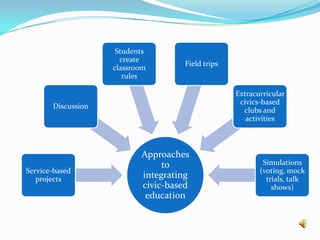
Approaches
to
integrating
civic-based
education
Service-based
projects
Discussion
Students
create
classroom
rules
Field trips
Extracurricular
civics-based
clubs and
activities
Simulations
(voting, mock
trials, talk
shows)
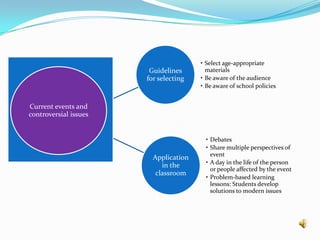
Guidelines
for selecting
• Select age-appropriate
materials
• Be aware of the audience
• Be aware of school policies
Application
in the
classroom
• Debates
• Share multiple perspectives of
event
• A day in the life of the person
or people affected by the event
• Problem-based learning
lessons: Students develop
solutions to modern issues
Current events and
controversial issues
Link to strands for
week 1 assignment
http://www.socialstudies.org/standards/strands
References
 Chapin, J. R. (2009). Elementary social studies: A practical
guide (7th ed.). Boston, MA: Pearson.
 Fitchett, P. G., & Heafner, T. L. (2010). A National
Perspective on the Effects of High-Stakes Testing and
Standardization on Elementary Social Studies
Marginalization. Theory & Research In Social
Education, 38(1), 114-130.
 Kohler, M. P., & Christensen, L. M. (2010). Nurturing young
social studies learners' notions of democracy. Social
Studies Research & Practice, 5(2), 115.
 Maxim, G. W. (2010). Dynamic social studies for
Constructivist classrooms: Inspiring tomorrow’s social
scientists (9th ed.). Boston. Allyn & Bacon.

Week 1 lecture

  • 1.
    Week 1 Outline Pleaseturn on your speakers and click the sound icon.
  • 2.
    Objectives • disciplines • SocialStudies strands • Integration • Application • Current trends • Presented by teacher • Learned by students • Pros & Cons • Participate in democratic society • Participate in global economy Why learn social studies? Standards- based education Major Themes Role of civic values on curricula
  • 3.
    Participate in ademocratic society Knowledge skills behavior
  • 4.
  • 5.
  • 6.
    Pros and Cons Pros Guidefor teachers and students Base for knowledge Consistency Cons Too much pressure Restrict creativity Teach to the test Too much content/not enough depth
  • 7.
    Themes and Strands Themes(Strands) • Culture • Time, continuity, and change • People, places, and environment • Individual development and identity • Individuals, groups, and institutions • Power, authority, and governance • Production, distribution, and consumption • Science, technology, and society • Global connections • Civic ideals and practices Disciplines • Geography • History • Civics • Sociology • Economics • Anthropology • Maxim (2010).
  • 8.
    Examples of civicvalues for classroom integration Individual Rights Justice Diversity Truth
  • 9.
    Approaches to integratingcivic- based education
  • 10.
    Current events &controversial issues integration application trends
  • 11.
    Examples of civicvalues for classroom integration Individual rights • Help make rules - keep them safe and rules consistent. Justice • Consider consequences – give them responsibility for their own actions. Diversity • Promote acceptance • Celebrate heritage of all Truth • Promote honesty by modeling honesty
  • 12.
  • 13.
    Guidelines for selecting • Selectage-appropriate materials • Be aware of the audience • Be aware of school policies Application in the classroom • Debates • Share multiple perspectives of event • A day in the life of the person or people affected by the event • Problem-based learning lessons: Students develop solutions to modern issues Current events and controversial issues
  • 14.
    Link to strandsfor week 1 assignment http://www.socialstudies.org/standards/strands
  • 15.
    References  Chapin, J.R. (2009). Elementary social studies: A practical guide (7th ed.). Boston, MA: Pearson.  Fitchett, P. G., & Heafner, T. L. (2010). A National Perspective on the Effects of High-Stakes Testing and Standardization on Elementary Social Studies Marginalization. Theory & Research In Social Education, 38(1), 114-130.  Kohler, M. P., & Christensen, L. M. (2010). Nurturing young social studies learners' notions of democracy. Social Studies Research & Practice, 5(2), 115.  Maxim, G. W. (2010). Dynamic social studies for Constructivist classrooms: Inspiring tomorrow’s social scientists (9th ed.). Boston. Allyn & Bacon.