INTRO


 TASK


PROCESS


EVALUATION
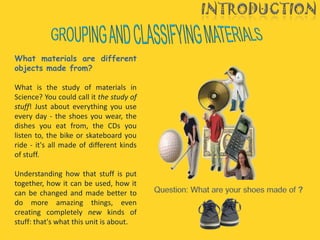
What materials are different
objects made from?

What is the study of materials in
Science? You could call it the study of
stuff! Just about everything you use
every day - the shoes you wear, the
dishes you eat from, the CDs you
listen to, the bike or skateboard you
ride - it's all made of different kinds
of stuff.

Understanding how that stuff is put
together, how it can be used, how it
can be changed and made better to
do more amazing things, even
creating completely new kinds of
stuff: that's what this unit is about.
The teacher needs your help! You’re a
                    detective…

       In this unit “GROUPING AND CLASSIFYING
      MATERIALS” you’ll learn about many things you
        use every day! You’ll need a little notebook to
      take notes and a pen… Elementary! Like Sherlock
                        Holmes said.


Explore materials with these fun activities!
Activities:

              1.- Answer the question that you’d find in the introduction.

              2.- You have to observe 6 objects and write the name of the
              material. If you have doubts ask someone else. Write the
              answers in your notebook then draw another object of the same
              material

              3.- Read the article that you will find in this page
              http://www.sciencekids.co.nz/sciencefacts/metals.html . Ask
              your parents, friends or neighbors to list at least 10 materials
              that they know.

              4.- Solve this crossword online
              http://www.englishmedialab.com/crosswords/what's%20it%20
              made%20of/index.html

              5.- Print this exercise and fill in the gaps. http://www.esl-
              galaxy.com/vocabsheets/What%20are%20they%20made%20of.
              pdf
6.- Watch this video (write comments)
http://www.sciencekids.co.nz/videos/experiments/egginabottle.html


7.- Choose any object to write a paragraph about the correspondent material
and print it. You may add more information or images. Look at this sample:

Text Pattern

This _____________ is made of ______________.
Many things are made of ____________________.
For example: _______________, __________________and
__________________.

Use one of the materials below:
Glass / plastic/ wood /metal / paper / wool
8.- What’s it made of? Online Wordsearch
http://www.englishmedialab.com/wordsearch/what's%20it%20
made%20ofws/index.html

9.- What is your favorite material? Why? (notebook)

10.- What did you learn? (print)
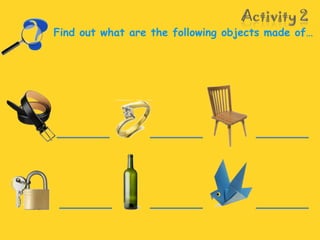
Find out what are the following objects made of…
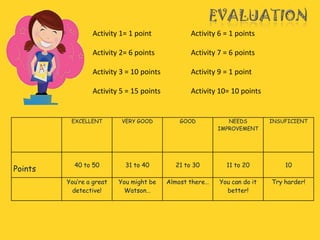
Activity 1= 1 point             Activity 6 = 1 points

                 Activity 2= 6 points            Activity 7 = 6 points

                 Activity 3 = 10 points          Activity 9 = 1 point

                 Activity 5 = 15 points          Activity 10= 10 points


          EXCELLENT        VERY GOOD          GOOD           NEEDS        INSUFICIENT
                                                          IMPROVEMENT


           40 to 50         31 to 40        21 to 30        11 to 20          10
Points
         You’re a great   You might be    Almost there…   You can do it   Try harder!
           detective!      Watson…                          better!
Webquest

Webquest

  • 2.
  • 3.
    What materials aredifferent objects made from? What is the study of materials in Science? You could call it the study of stuff! Just about everything you use every day - the shoes you wear, the dishes you eat from, the CDs you listen to, the bike or skateboard you ride - it's all made of different kinds of stuff. Understanding how that stuff is put together, how it can be used, how it can be changed and made better to do more amazing things, even creating completely new kinds of stuff: that's what this unit is about.
  • 4.
    The teacher needsyour help! You’re a detective… In this unit “GROUPING AND CLASSIFYING MATERIALS” you’ll learn about many things you use every day! You’ll need a little notebook to take notes and a pen… Elementary! Like Sherlock Holmes said. Explore materials with these fun activities!
  • 5.
    Activities: 1.- Answer the question that you’d find in the introduction. 2.- You have to observe 6 objects and write the name of the material. If you have doubts ask someone else. Write the answers in your notebook then draw another object of the same material 3.- Read the article that you will find in this page http://www.sciencekids.co.nz/sciencefacts/metals.html . Ask your parents, friends or neighbors to list at least 10 materials that they know. 4.- Solve this crossword online http://www.englishmedialab.com/crosswords/what's%20it%20 made%20of/index.html 5.- Print this exercise and fill in the gaps. http://www.esl- galaxy.com/vocabsheets/What%20are%20they%20made%20of. pdf
  • 6.
    6.- Watch thisvideo (write comments) http://www.sciencekids.co.nz/videos/experiments/egginabottle.html 7.- Choose any object to write a paragraph about the correspondent material and print it. You may add more information or images. Look at this sample: Text Pattern This _____________ is made of ______________. Many things are made of ____________________. For example: _______________, __________________and __________________. Use one of the materials below: Glass / plastic/ wood /metal / paper / wool
  • 7.
    8.- What’s itmade of? Online Wordsearch http://www.englishmedialab.com/wordsearch/what's%20it%20 made%20ofws/index.html 9.- What is your favorite material? Why? (notebook) 10.- What did you learn? (print)
  • 8.
    Find out whatare the following objects made of…
  • 9.
    Activity 1= 1point Activity 6 = 1 points Activity 2= 6 points Activity 7 = 6 points Activity 3 = 10 points Activity 9 = 1 point Activity 5 = 15 points Activity 10= 10 points EXCELLENT VERY GOOD GOOD NEEDS INSUFICIENT IMPROVEMENT 40 to 50 31 to 40 21 to 30 11 to 20 10 Points You’re a great You might be Almost there… You can do it Try harder! detective! Watson… better!